forest, to work on site with Renoir, Sisley and Bazille (pp. 20–21). The latter then joined him at the Saint-Siméon inn in Honfleur, where Monet worked with Boudin and Jongkind and perfected his outdoor training: ‘In such company, there is much to learn.’50 Monet adopted their subject matter, shared their point of view and used the same framing as that of his masters, whose art of composition was rooted in a centuries-old tradition. The student attuned himself to those he admired: his guides, but also Jean-BaptisteCamille Corot, whose work he knew perfectly well,51 Daubigny, whom he met, as well as Courbet, with whom he soon became friends.52 His painting benefited greatly from this: in breadth, freedom and quantity. Between 1858 and 1863, only sixteen canvases were recorded. In 1864, he painted about thirty. Aware that he was starting a new chapter in his life, he began signing his paintings ‘Claude Monet’. A painter was born.
The time had come to present himself at the official Salon. Monet was quite ambitious. He wanted to demonstrate the breadth of his talent, illustrate the range of his expertise and quickly produce a work with the impact of a manifesto. Accepted for the first time in 1865, he omitted to fill in the entry ‘student of’ on his record. Personal quarrel or objection on principle? He did not mention Gleyre, as Renoir, Sisley and Bazille did. Nor did he mention Boudin – whom he nonetheless acknowledged in a letter from 1860: ‘Yours truly, your student and friend’53 –
or Jongkind, regularly accepted since 1848. Monet declared himself without a master. Pure fiction. An act of opposition that others practised. A way of symbolising the new.
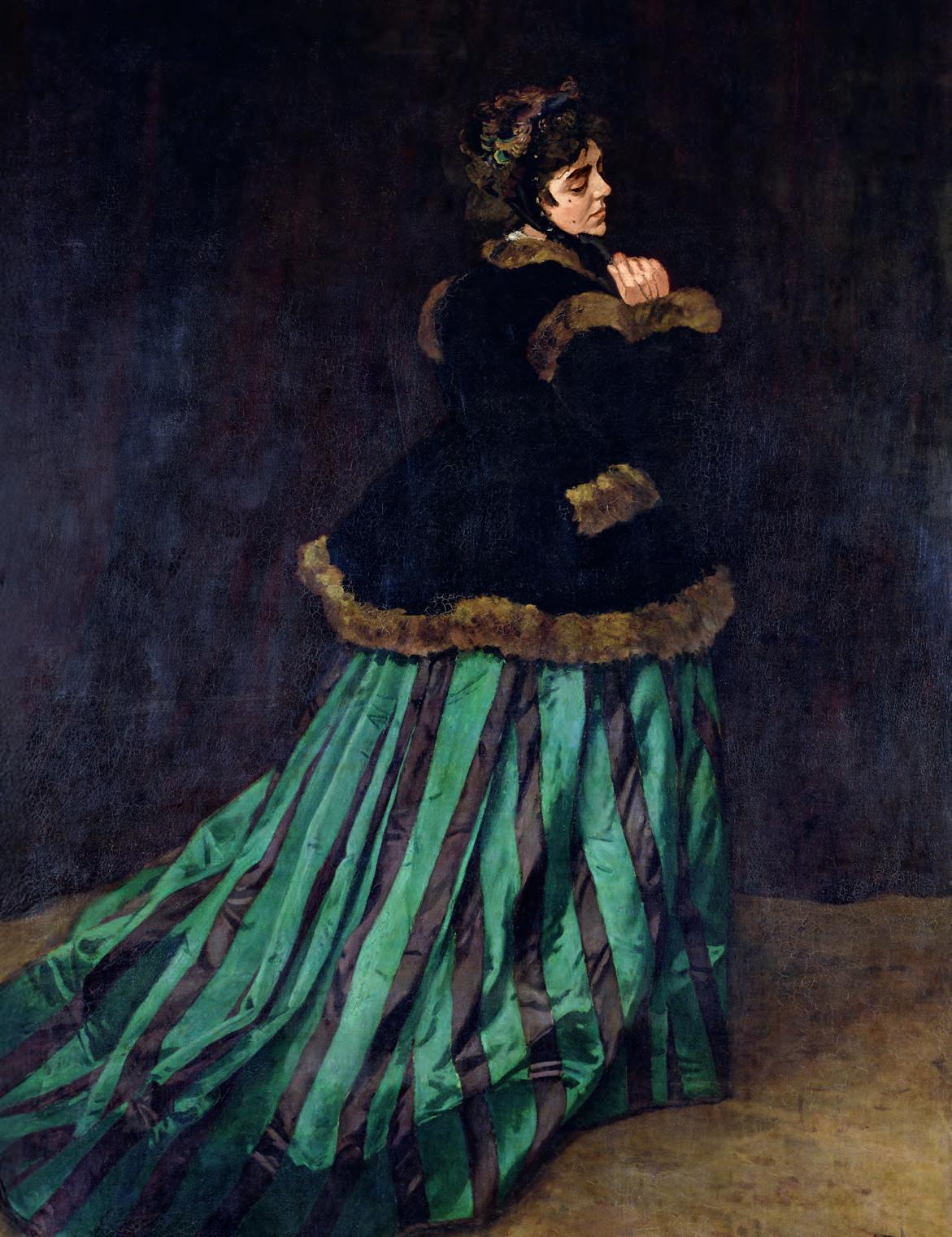
He got off to a promising start. In 1865, his two seascapes Embouchure de la Seine à Honfleur [Mouth of the Seine at Honfleur]54 and La Pointe de la Hève à marée basse [La Pointe de la Hève at Low Tide] (pp. 16–17) caught the eye of critics. In 1866, Monet opted for a landscape (Forêt de Fontainebleau [Forest of Fontainebleau])55 and a life-size full-figure portrait, La Femme à la robe verte [The Woman in the Green Dress] (p. 26), which depicted his companion, a nineteen-yearold model from Lyon, Camille-Léonie Doncieux. The work caused a sensation. Émile Zola praised it: ‘Here is a temperament, here is a man among a crowd of eunuchs.’56 As proof of its success, the painting – of which a small replica was commissioned from Monet – was soon acquired by the editor of the magazine L’Artiste, Arsène Houssaye. In the spring of 1866, the sky was the limit. Monet was dreaming of new successes and of a painting that would make history and be symbolic of his time
He had already made a first attempt – and by no means a minor one – starting in 1865, just two years after Manet’s Déjeuner sur l’herbe. Rather than the subversive iconography of the former, he had preferred the more amenable spectacle of an elegant gathering of his contemporaries picnicking in the shade of a beech grove. He had paid particular attention to the treatment of the undergrowth, the
12,100 francs in 1872; 24,800 francs in 1873; 10,654 francs in 1874; 9,765 francs in 1875; 12,319 francs in 1876; 15,197 francs in 1877; 12,503 francs in 1878; 12,285 francs in 1879. With twenty-nine paintings in 1872 and thirty-four in 1873, Durand-Ruel was his main client.92 However, when his business took a temporary downturn, the latter was forced to suspend his bulk purchases between 1874 and 1880. Monet was then reduced to going door-todoor, directly canvassing certain clients of the gallery and a few other enthusiasts whom history would call enlightened. Monet’s account books list twenty-nine names,93 including the baritone JeanBaptiste Faure, the extravagant lace merchant and insatiable collector Ernest Hoschedé, the empathetic homeopathic doctor Georges de Bellio and the writer and critic Théodore Duret, to which should be added his close friends and acquaintances: Gustave Caillebotte, Édouard Manet and his brother Gustave, to name just three of his main benefactors. Monet quickly set up a system of advances that allowed him to collect income on paintings that had not yet been painted. The process favoured batch sales at preferential prices. Regularly short of money from 1874 onwards, he could now deal with emergencies and pay bills that could not be postponed. Such was the sad reality that comes out in his correspondence. The year 1877 was a particularly difficult one; as a result, Monet sold eighty-six paintings at an average price of 177 francs. Yet, with an average annual income of 13,702 francs between 1872 and
1879, Monet’s resources exceeded the 9,000 to 10,000 francs that an average employee would earn yearly,94 and are far higher than the 1,000 francs annual remuneration received by a third of civil servants.95 Marianne Alphant has pointed out that in 1871, Zola received 6,000 francs per year for delivering two novels to the publisher Charpentier. In 1875, the serial publication of L’Assommoir earned him 9,000 francs, and Flaubert, ruined, had joined the Mazarine Library in 1879 for 3,000 francs per year.96 However, no matter how difficult it was for Monet to pay off his outstanding debts, he would never again want for bread as he had in Bougival, and, if the collection of his everyday bills are anything to go on, he would never again deprive himself of any bourgeois comfort.97
As for the Paris Salon, Monet simply gave up on it and refused to submit his paintings to the jury in 1872 and 1873. When the idea of organising a new Salon des Refusés came up in 1873, he revived the idea long debated in artistic circles of an independent exhibition, without a jury or awards, which the painters would organise themselves and fund out of their own pockets. In response to an article by Paul Alexis published in L’Avenir national [The National Future] calling for the creation of a trade association for artists, Monet put himself forward as a spokesperson and announced, on 12 May 1873, the creation of a ‘Society’ of painters, sculptors, engravers . . . The journalist stated that:
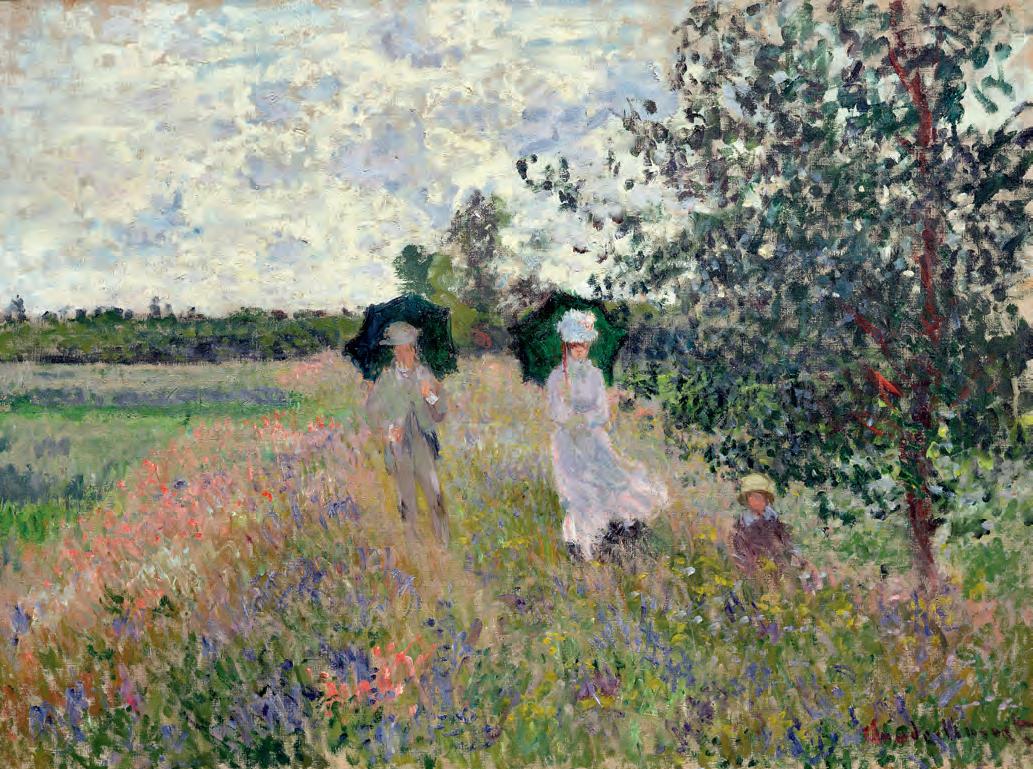
En promenade près d’Argenteuil [A Walk near Argenteuil], 1873
La Liseuse [The Reader], 1872 Oil on
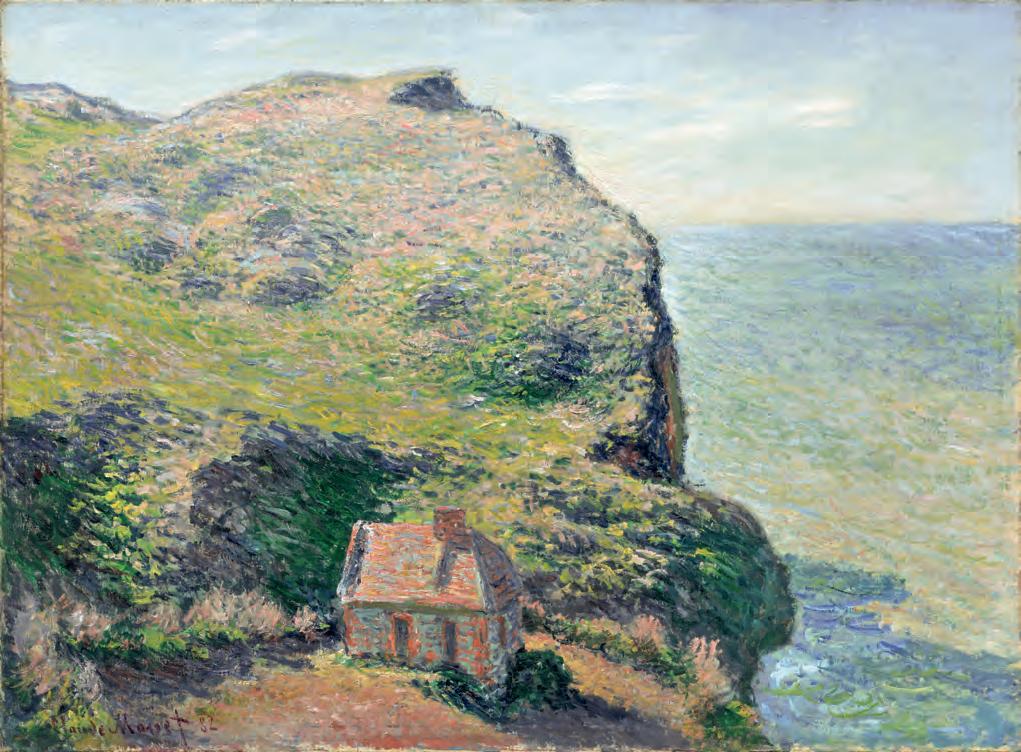
four months, during which Monet worked tirelessly and ultimately produced around forty paintings (a considerable number compared to the sixty-four paintings recorded in 1872,156 the most productive year spent in Argenteuil). Thus, in just over a quarter of a year, Monet produced the bulk of a year’s output. Back in Giverny, he would often apply the finishing touches to these works in the barn-studio that he expanded in 1885. For the rest of the year, he could
devote himself to his family, his business affairs and tending his flower garden, though without ever ruling out the possibility of setting up his easel near Le Pressoir, whose landscape delighted him. It was also during this period that Monet definitively quit collaborative painting. After exploring between Genoa and Marseille with Renoir for a few days in December 1883, and setting up his easel once again next to his colleague’s in Monaco, Monet decided to
Durand-Ruel in this regard made this crystal clear:
I ask you to tell no one [Monet’s emphasis] about this trip, not because I want to be mysterious, but because I want to do it alone [his emphasis again]. As much as I enjoyed travelling as a tourist with Renoir, I would find it irksome to do it together
for work. I have always worked better in solitude and according to my own impressions.157
The time of painting in pairs was now over. From this point on, Monet’s development diverged markedly from that of his colleagues, taking a course that led him to the limits of Impressionism and beyond.
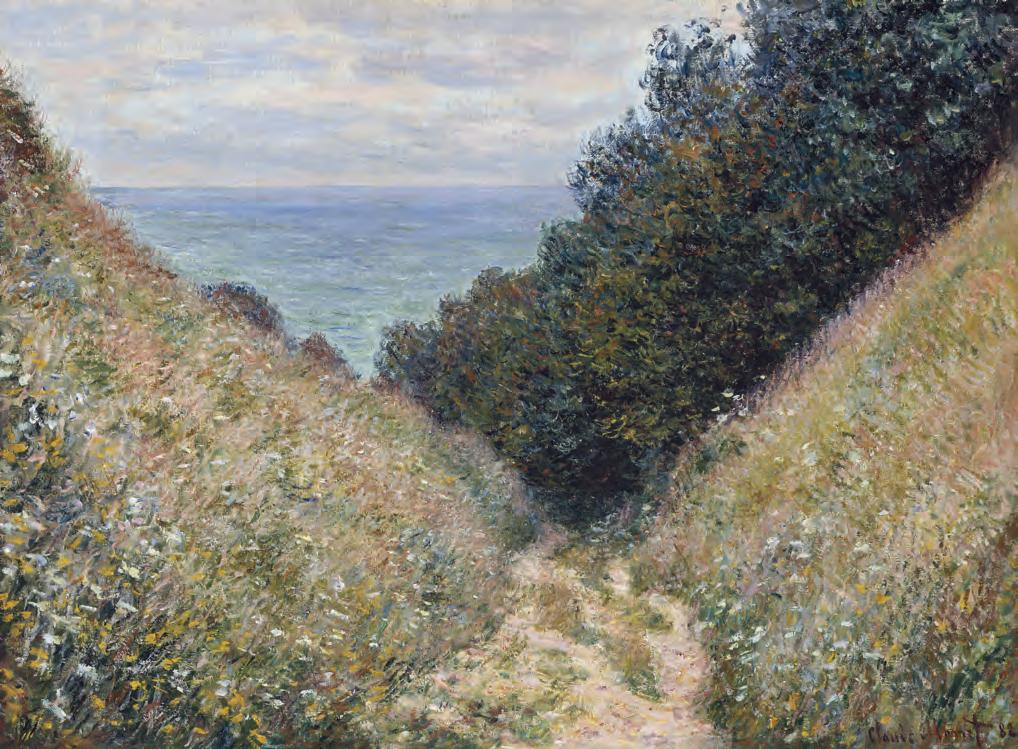
Promenade sur la falaise, Pourville [Cliff Walk at Pourville], 1882
Oil on canvas, 65 × 81 cm
Chicago, The Art Institute of Chicago, W 758
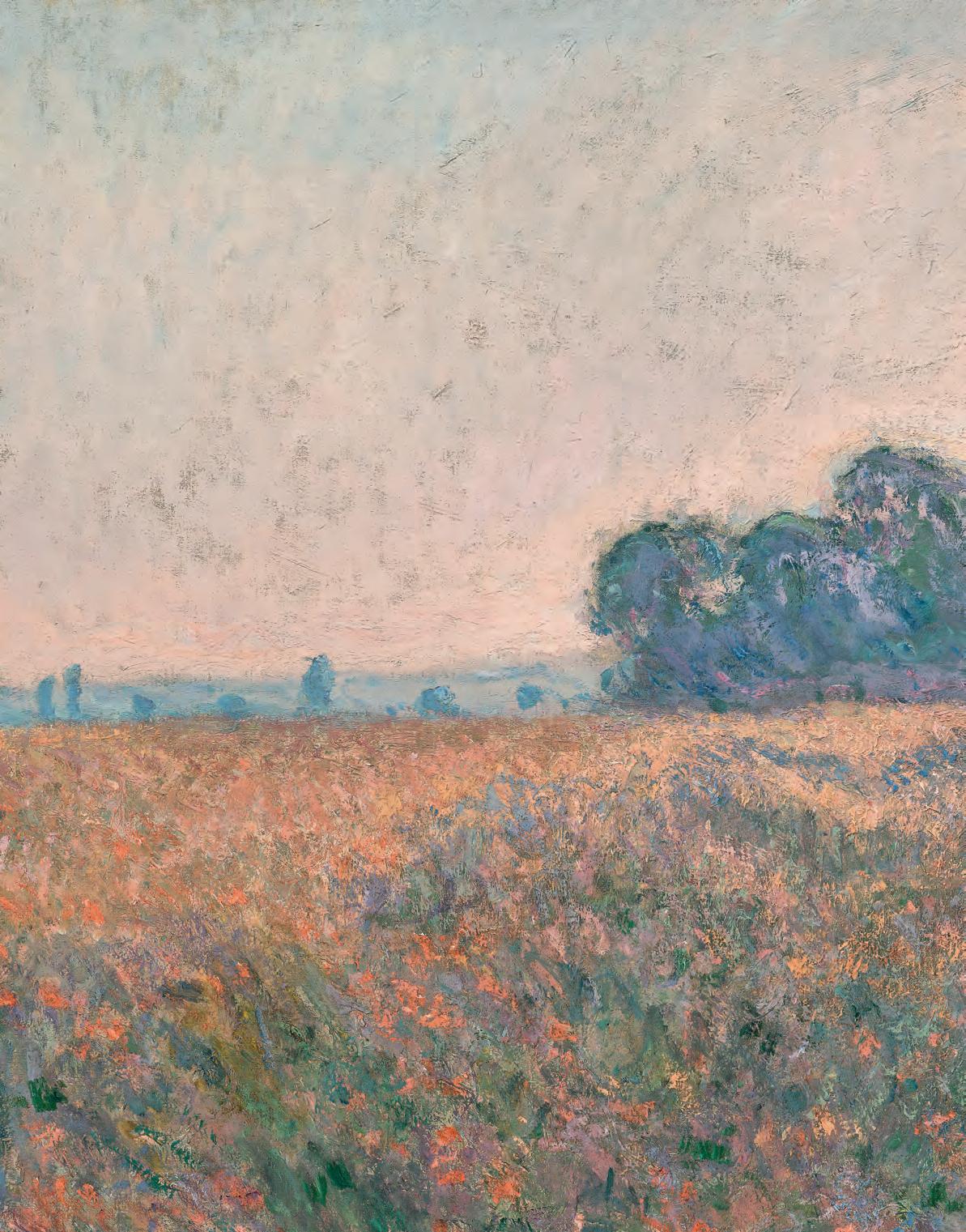
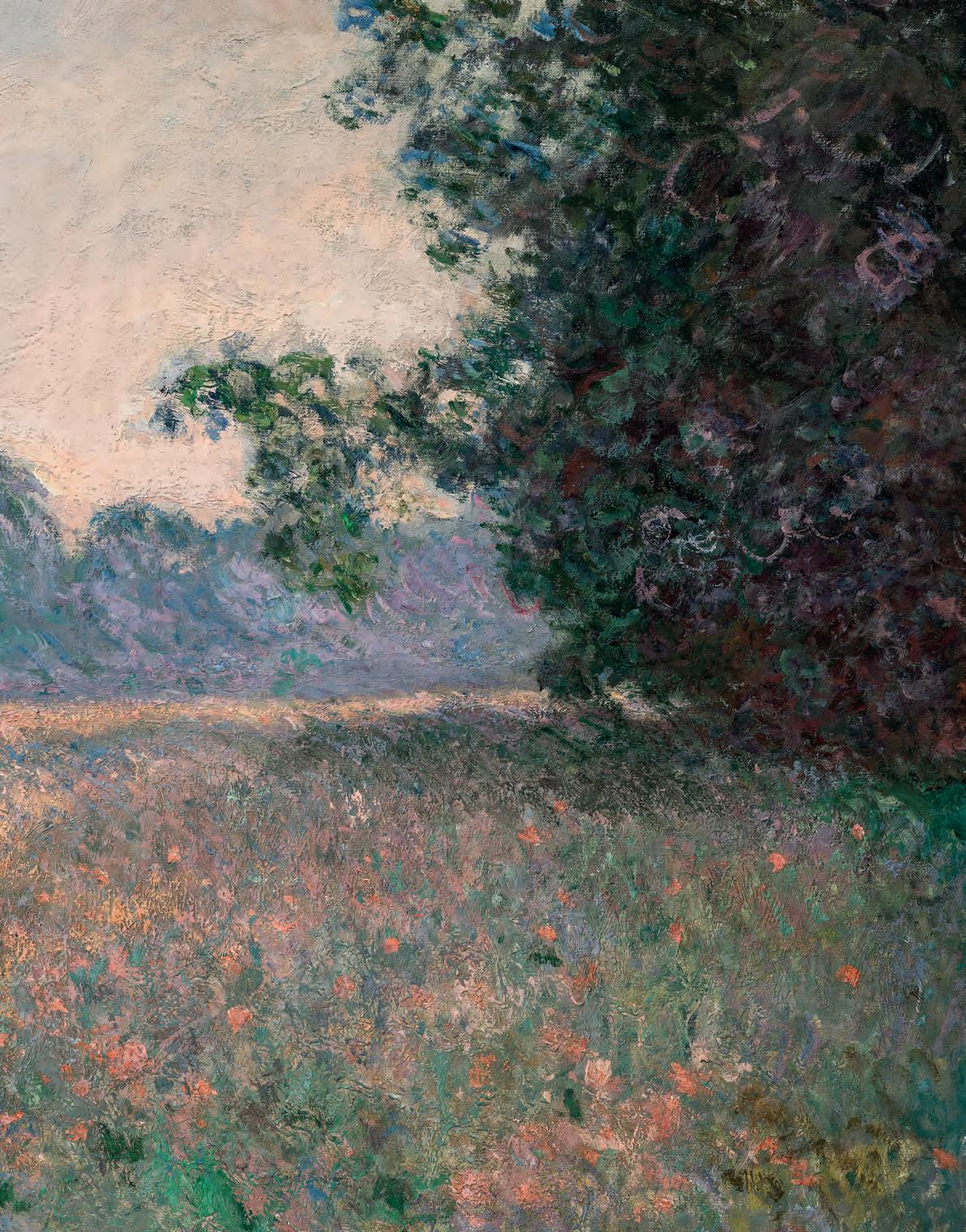
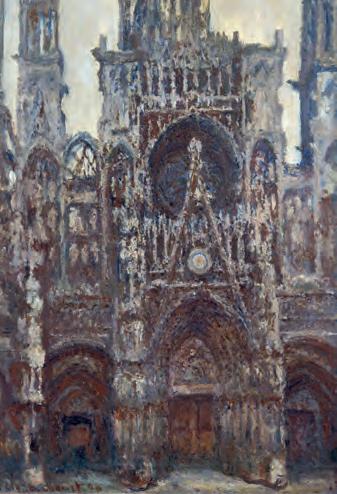
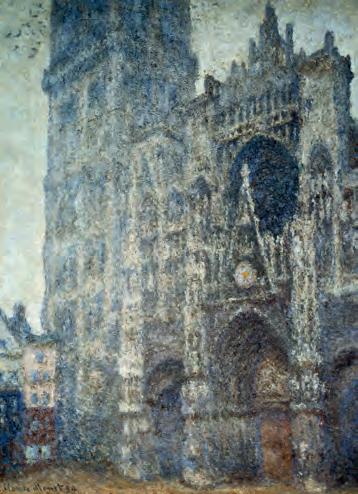
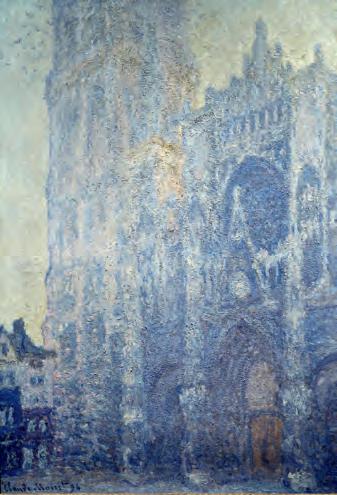
painter had faced resistance from his neighbours. He had already had to pay dubious taxes, such as for a right of way through the fields to access the banks of the Epte or even for skating rights to allow the children to play on the frozen marsh in the mid-winter . . .259In his most exasperated moments, while struggling with his ‘Cathedrals’, Monet wanted to have done with it: ‘To hell with the people of Giverny, the engineers. I give the land to whoever wants it.’260 ‘Don’t hire anything, don’t order any fencing, throw the aquatic plants into the river, they will grow there.’261 He had to write to the prefect of Eure, to explain that the flowers he wanted to cultivate were harmless and grew wild in the region.262 He had to submit a petition in support of the pond, consult experts and obtain administrative approval to divert the stream . . . in order to (finally!) grow water lilies. It was a complete headache! Once the obstacles were overcome, the work progressed well: earthmoving, digging, planting. On 30 October 1893, Berthe Morisot and her daughter Julie Manet were in
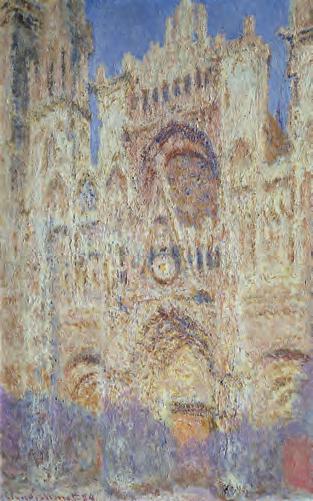
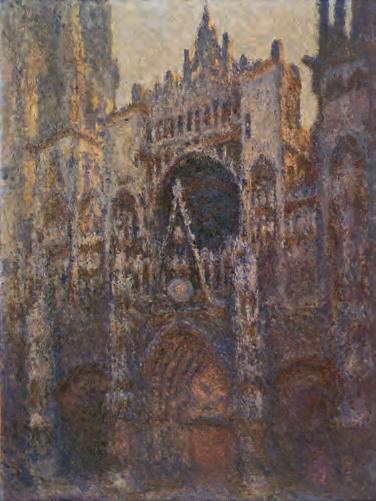
Giverny. The latter describes in her journal the astonishing ‘Cathedrals’: ‘They are magnificent, some entirely purple, others white, yellow, with a blue sky, pink with a slightly green sky, then one in the fog, two or three in the shadow at the bottom, illuminated by rays of sunlight on the towers.’263 She mentioned the improvements to Le Pressoir, including the pond: ‘The pond with its green bridge looks Japanese.’264 The location and perimeter of the water garden were drawn out. A first step had been taken. Nature now had to do its work, the plants had to grow, the trees had to become tall, and the water lilies had to colonise the still waters. The time for painting had not yet come.
The beginning of 1894 also marked the passing of some of the Impressionists’ early supporters: Georges de Bellio died on 26 January, old Tanguy (whose portrait by Van Gogh265 saved him from oblivion) on 6 February, and Gustave Caillebotte on 21 February. Caillebotte’s bequest to the state, which would form the basis of the national French Impressionist collections, sparked controversy
Le Portail vu de face, harmonie brune [The Entrance Seen from the Front, Brown Harmony], 1892
Oil on canvas, 107 × 73 cm
Paris, Musée d’Orsay, W 1319
Le Portail et la tour d’Albane; temps gris [The Entrance to the Albane Tower, Grey Weather], 1894
Oil on canvas, 90 × 73 cm
Rouen, Musée des Beaux-Arts, W 1345
Le Portail et la tour d’Albane, effet du matin [The Entrance to the Albane Tower, Morning Effect], 1894
Oil on canvas, 106 × 73 cm
Paris, Musée d’Orsay, W 1346
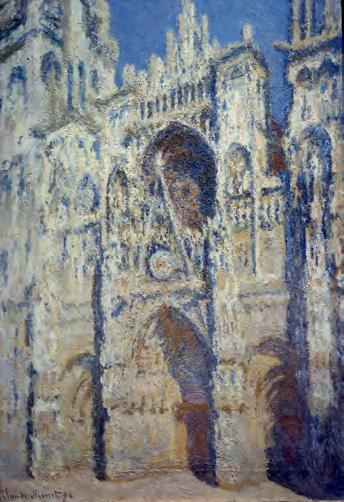
and made headlines. Personally involved because some of his works were included, Monet took a back seat to Renoir, who acted as the executor of the will, but offered to help organise the retrospective tribute to the creator of Raboteurs de parquet [The Floor Scrapers], which would be exhibited at the Durand-Ruel gallery.
Depending on the date chosen for this tribute,266 and more generally on DurandRuel’s availability, Monet planned to exhibit his ‘Cathedrals’ in the spring of 1894. However, a disagreement about money led the painter to postpone. Perhaps encouraged by the prices that some of his works had been fetching in public sales,267 Monet asked for 15,000 francs for each painting in the series. That was a significant figure, relative to the 22,000 francs that Le Pressoir had cost him. Durand-Ruel flatly refused and by way of explanation, gave him an overview of the market in their correspondence. Appearances could be deceptive. The market was saturated by too many old works. Supply outstripped demand, so
much so that Durand-Ruel was regularly forced to maintain the prices of works offered at public auction by purchasing them himself. Monet had no qualms in playing off his dealer against others, and made approaches to Boussod et Valadon, Montaignac, as well as Joyant and Manzi. The gallery owners closed ranks, provoking Monet’s anger at what he called a ‘cartel’.268 But he had to compromise. The painter thus suggested selling his less important ‘Cathedrals’ for a slightly lower price before the exhibition, but without letting on. Isaac de Camondo would acquire four in this way (pp. 190 right, 191 left, and 194). In any case, by September 1894, the date of the exhibition had still not been set.
Jacques Hoschedé, the eldest of Monet’s stepsons, had been living in Norway for six months as a maritime broker. This probably explains Monet’s decision to undertake the five-day journey to Christiania (now Oslo) by train and boat. Hardly had he stepped off the boat when he was being fêted as a master. The newspapers reported his every
Le Portail et la tour d’Albane, plein soleil [The Entrance to the Albane Tower, Full Sun], 1894
Oil on canvas, 107 × 73 cm Paris, Musée d’Orsay, W 1360
La Cathédrale de Rouen [Rouen Cathedral], 1894
Oil on canvas, 100 × 65 cm
Moscow, Pushkin Museum, W 1326
Le Portail [The Entrance], 1894
Oil on canvas, 100.3 × 65.5 cm
Weimar, Staatliche Kunstsammlungen, W 1357
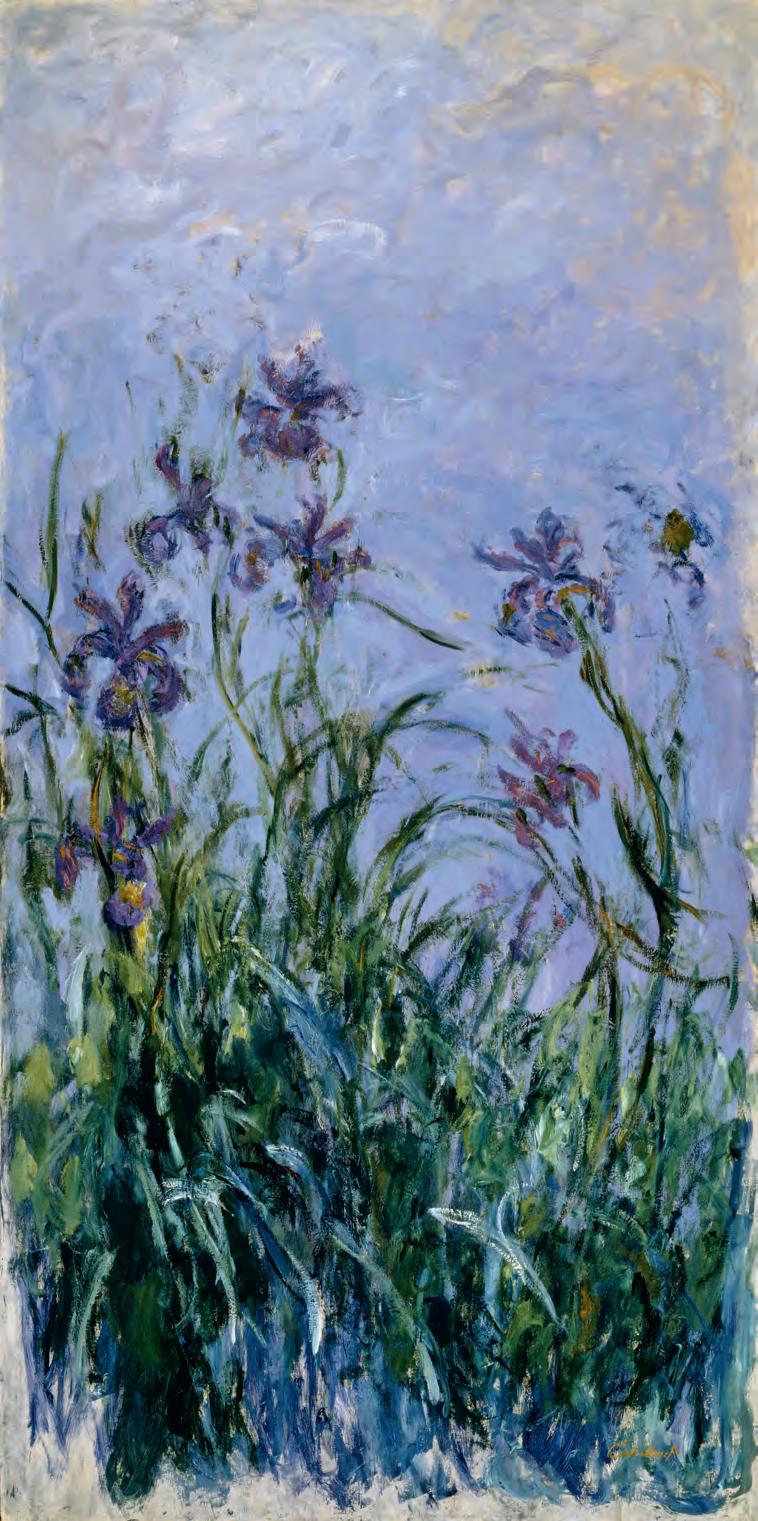
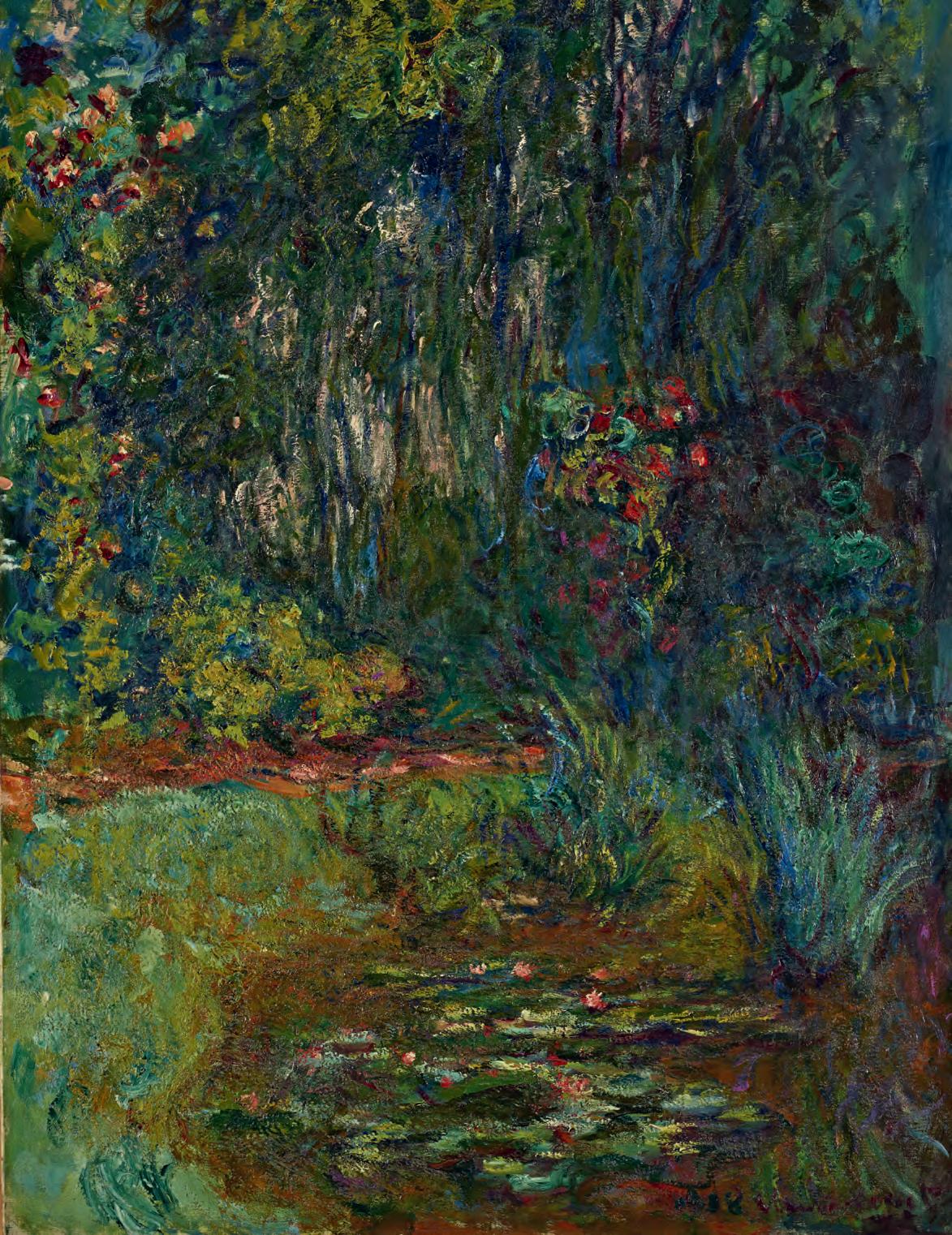
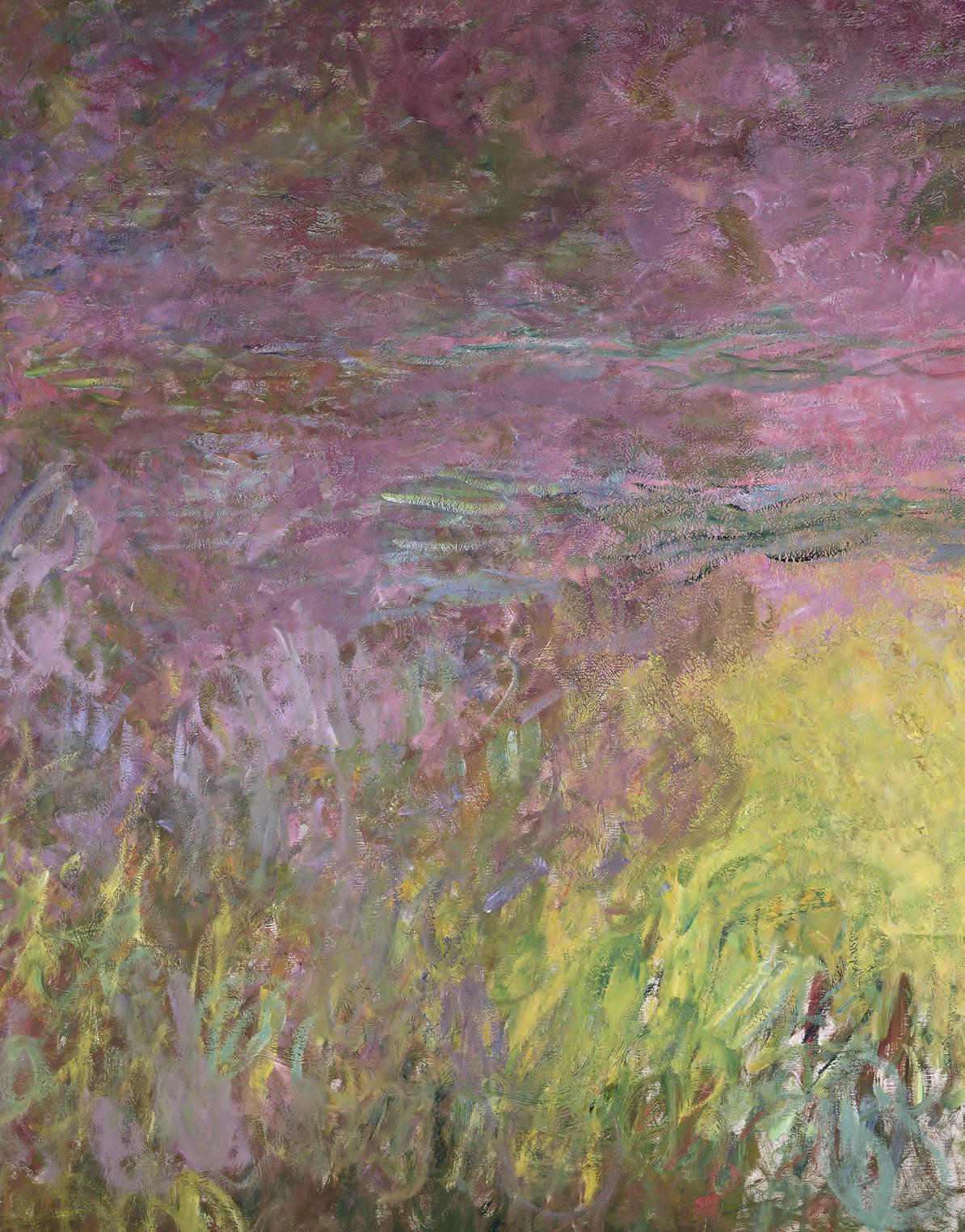
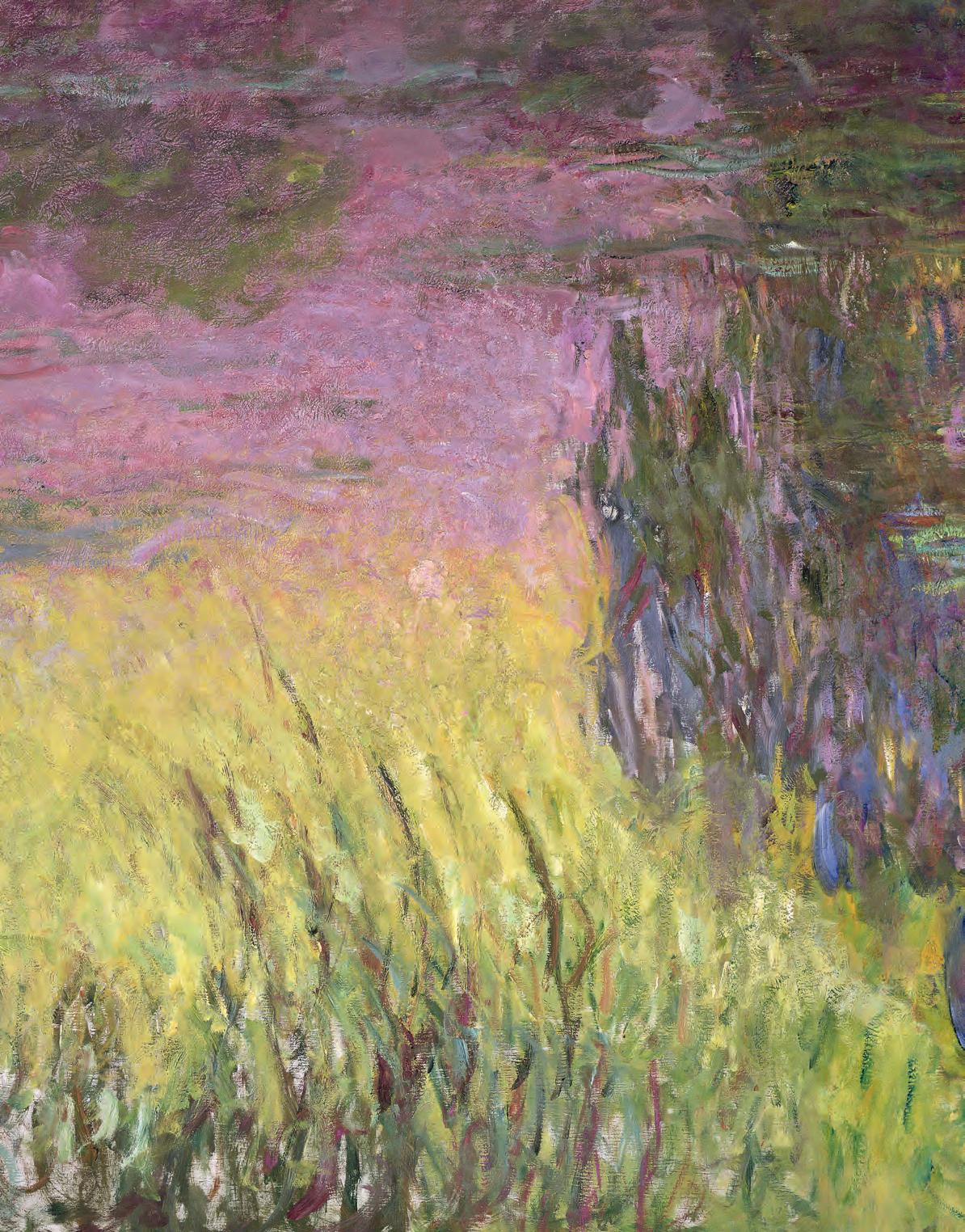
Purchased with funds from the Sarah Graham Kenan Foundation and the North Carolina State Art Society (Robert F. Phifer Bequest) / Bridgeman Images: p. 208
akg–Images: pp. 88–89, 148–149, 166, 175 bottom, 191 right, 193, 222
Photo © Allen Memorial Art Museum / R.T. Miller, Jr. Fund / Bridgeman Images: p. 45 Stefano Bianchetti / Bridgeman Images: pp. 42–43
Bridgeman Images: cover, pp. 2, 5, 10–11, 14, 21, 22, 24, 26, 29, 30, 32–33, 34–35, 40, 48, 51, 56–57, 59 top, 61, 63, 67, 68–69, 74–75, 78, 86–87, 98–99, 100–101, 102–103, 104, 113, 119, 121, 131, 138, 142–143, 146–147, 152–153, 162 right, 164–165, 175 top, 182, 191 centre, 194, 200, 213, 223, 227, 231, 236, 237, 245, 249, 250–251, 252–253, 254–255, 258–259, 260–261 top, middle and bottom, 262–263 top, 264–265, 266–267, 268–269, 270–271 © Frank Buffetrille. All rights reserved. 2025 / Bridgeman Images: p. 219 Buyenlarge / SuperStock / Bridgeman Images: p. 72
Chicago, The Art Institute of Chicago / CC0: pp. 38, 174 top, 209
Chicago, The Art Institute of Chicago, Gift of Mrs Harvey Kaplan / CC0: pp 242–243
Chicago, The Art Institute of Chicago, Gift of Mr and Mrs Chauncey B. Borland / CC0: p. 150
Christie’s Images / Bridgeman Image: pp. 18–19, 52–53, 58 bottom, 79, 92–93,
151, 154–155, 163 right, 170–171, 178–179, 198–199, 204–205, 207, 226, 246
© Collection Nahmad: pp. 214–215
Photo © The Courtauld / Bridgeman Images: pp. 158–159
© Fine Art Images / Bridgeman Images: pp. 46–47, 58 top, 183, 186–187, 195, 240, 241, 262–263 top
© Fitzwilliam Museum / Bridgeman Images: p. 184
© GrandPalaisRmn (Musée de l’Orangerie): pp. 262–263 bottom
© Granger / Bridgeman Images: p. 218
© Harvard Art Museums, Collection of Maurice Wertheim Bequest, Class 1906 / Bridgeman Images: pp. 106–107
Hasso Platner Collection: p. 141
Index Fototeca / Bridgeman Images: p. 163 left
© Israel Museum, Jerusalem / Bridgeman Images: p. 233
© Photo Josse / Bridgeman Images: pp. 13, 20, 25, 31, 36–37, 54–55, 64–65, 71, 81, 91, 116, 120, 124–125, 134–135, 145, 190, 191 left
Kimbell Art Museum / Bridgeman Images: pp. 16–17
Le Havre, Musée d’Art Modern André Malraux © MuMa Le Havre / Florian
Kleinefenn: p. 127
Lefevre Fine Art Ltd, London / Bridgeman Images: p. 6
Mondadori Portfolio / Electa / Bridgeman Images: p. 123
© Musée d’Art et d’Histoire, Ville de Genève. Photo: Bettina Jacot–
Descombes: p. 247
© Musée d’Orsay, Dist. GrandPalaisRmn / Patrice Schmidt: pp. 262–263 middle bottom
© Museo Nacional Thyssen–Bornemisza, Madrid / Bridgeman Images: p. 189 top
Photo © 2025 Museum of Fine Arts, Boston / Gift of Samuel Dacre Bush / Bridgeman Images: pp. 156–157
Photo © 2025 Museum of Fine Arts, Boston. All rights reserved / 1951 Purchase Fund / Bridgeman Images: p. 83
Photo © 2025 Museum of Fine Arts, Boston. All rights reserved / Mrs Susan Mason Loring Bequest / Bridgeman Images: p. 133
Photo © 2025 Museum of Fine Arts, Boston. All rights reserved / Denman Waldo Ross Collection / Bridgeman Images: p. 162 left
Photo © 2025 Museum of Fine Arts, Boston. All rights reserved / Gift of Miss Aimee and Rosamond Lamb in Memory of Mr and Mrs Horatio Appleton Lamb / Bridgeman Images: p. 174 bottom
Photo © 2025 Museum of Fine Arts, Boston. All rights reserved / Juliana Cheney Edwards Collection / Bridgeman Images: pp. 210–211
Photo
© 2025 Museum of Fine Arts, Boston. All rights reserved / Gift of Edward Jackson Holmes / Bridgeman Images: p. 230
Photo © 2025 Museum of Fine Arts,
Boston. All rights reserved / Alexander Cochrane Bequest / Bridgeman Images: pp. 238–239
© National Galleries of Scotland / Bridgeman Images: p. 181
© The National Gallery, London, Dist. GrandPalaisRmn / National Gallery
Photographic Department: pp. 110–111
© NPL – DeA Picture Library / Bridgeman Images: pp. 108–109, 256–257
Luisa Ricciarini / Bridgeman Images: pp. 59 bottom, 76
© Leonard de Selva / Bridgeman Images: pp. 84–85
Potter Palmer Collection / Bridgeman Images: inside cover, p. 140
Philadelphia, The Barnes Foundation: p. 80
Philadelphia, Philadelphia Museum of Art, Charlotte Dorrance Wright Bequest, 1978 / Bridgeman Images: pp. 160–161 Philadelphia, Philadelphia Museum of Art, The William L. Elkins Collection: p. 132 © Shelburne Museum / Gift of the Electra Havemeyer Webb Fund, Inc. / Bridgeman Images: pp. 128–129, 221 Walker Art Gallery, National Museums Liverpool / purchased with the aid of the V&A Purchase Grant Fund in 1962 / Bridgeman Images: p. 189 bottom
Washington, National Gallery of Art / CC0: pp. 94–95, 114
Washington, The Kreeger Museum: p. 203 © Peter Willi / Bridgeman Images: pp. 73, 97, 232
© 2025, 2026 Éditions Hazan World copyright reserved
ISBN: 978 1 78884 379 9
First published in French under the title Monet –par-delà l’horizon in 2025 by Éditions Hazan © 2025 Éditions Hazan editionshazan@hachette-livre.fr
This translation published by ACC Art Books in 2026 by agreement with Éditions Hazan © 2026 ACC Art Books
All rights reserved. No part of this publication may be reproduced, stored in a retrieval system, or transmitted in any form or by any means electronic, mechanical, photocopying, recording or otherwise, without the prior permission of the publisher
A CIP catalogue record for this book is available from the British Library
EU GPSR Authorised Representative: Easy Access System Europe Oü, 16879218
Address: Mustamäe tee 50, 10621 Tallinn, Estonia Email: gpsr@easproject.com Tel: +358 40 500 3575
French Edition
Design (excluding cover): Sylvie Milliet Design (including cover): Jean-Marc Barrier Director, Éditions Hazan: Jérôme Gille
Editor: Soline Massot, assisted by Anne-Claire Juramie
Production: Francis Verdelet and Justine Veillon Reprographics: Hyphen Media, Bergame
English Edition
Publisher: James Smith
Editor: Sue Bennett
Translator: David Watson
Production: Steve Farrow
Outside front cover
Le Chemin au milieu des iris [The Path Among the Irises], 1914–1917, Oil on canvas, 200.3 × 180 cm New York, The Metropolitan Museum of Art, W 1828
Inside front cover
Bordighera, 1884, Oil on canvas, 65 × 80.8 cm Chicago, The Art Institute of Chicago, W 854
Author’s Acknowledgements
I would like to express my sincere thanks to Jérôme Gille, director of Éditions Hazan for her trust, as well as to Soline Massot, my editor, for her crucial contribution and unwavering support:
Dominique Lobstein, my mentor, who introduced me to writing and followed the evolution of this manuscript, Marianne Alphant, Ségolène Le Men, Paul Hays Tucker, Charles Stuckey, Rodolphe Walter, Daniel Wildenstein for their inspiring writing, Jean-Louis Goubin,† Jacques Taddei† and my friend François Desfachelles† who opened the doors to the Musée Marmottan Monet, Giverny and their archives, for me.
Not forgetting the permanent secretaries of the Académie des Beaux-Arts: Arnaud d’Hauterives,† Laurent Petitgirard and the directors of the Musée Marmottan Monet; my dear friend Patrick de Carolis and his successor, Érik Desmazières. My gratitude also goes to all those who contributed to this work through their presence and support:
Printed in China by Toppan Leefung Printing Ltd for ACC Art Books Ltd, Woodbridge, Suffolk, UK www.accartbooks.com
Dominique d’Arnoult, Christian Baraja, Noël Bariatti, Sarah Belmont, Olivier Blanckart, Vicky Colombet, Claire Durand-Ruel, Flavie DurandRuel, Laurent Echaubard, Aurélie Gavoille, Jennifer Gimblet, Claire Gooden, Elizabeth Gorayeb, Claire Guinet, Simon Kelly, Teresa Krasny, Marc Larock, Erik Lasalle, Géraldine Lefebvre, Antoine Lefort, Anne-Sophie Luyton, Laurène Marin, Laurence Monsenego, Alexis Morat, Clémence Morat-Mathieu, David Nahmad, Manon Paineau, Véronique Pelloie, Pascal Perrin, Sophie Pietri, Laurent Riberolles, Florence Sonier, Alain Tapié, Giulia Trabaldo Togna, Guy Wildenstein and Vanessa Wildenstein