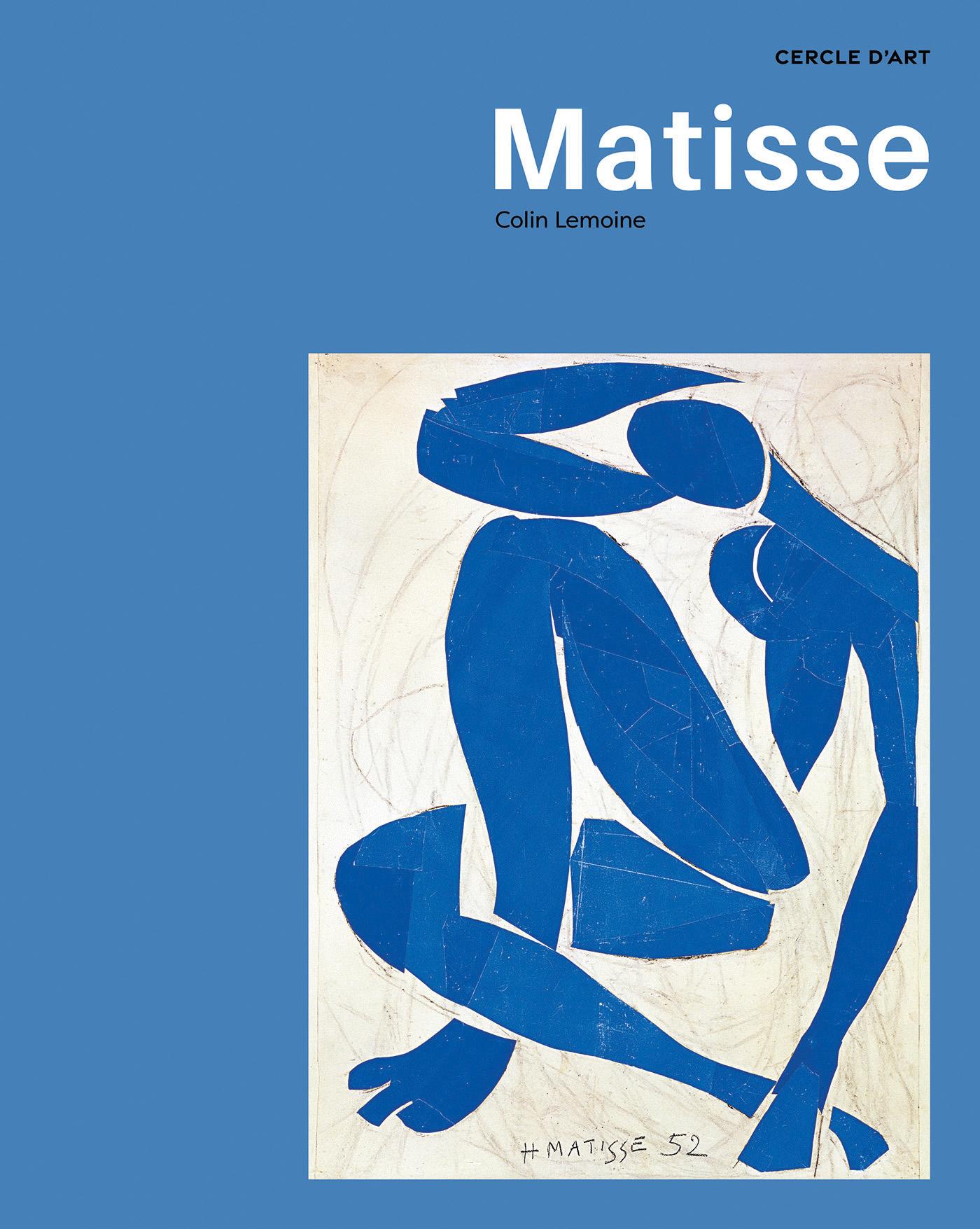
Still Life with Soup Tureen 1900
Oil on canvas, 97 × 82 cm
St Petersburg, Hermitage Museum
06
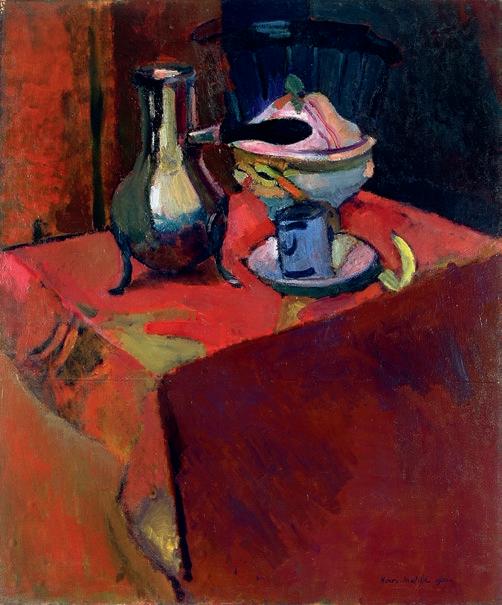
Corner of the Artist’s Studio 1912 Oil on canvas, 191.5 × 114 cm Moscow, Pushkin Museum
When he joined the ateliers of first William Bouguereau and then Gustave Moreau, the young Henri Matisse discovered didactic elevation and wondered about the integration of a figure into a space, in the manner of Paul Cézanne, whose programmatic masterpiece
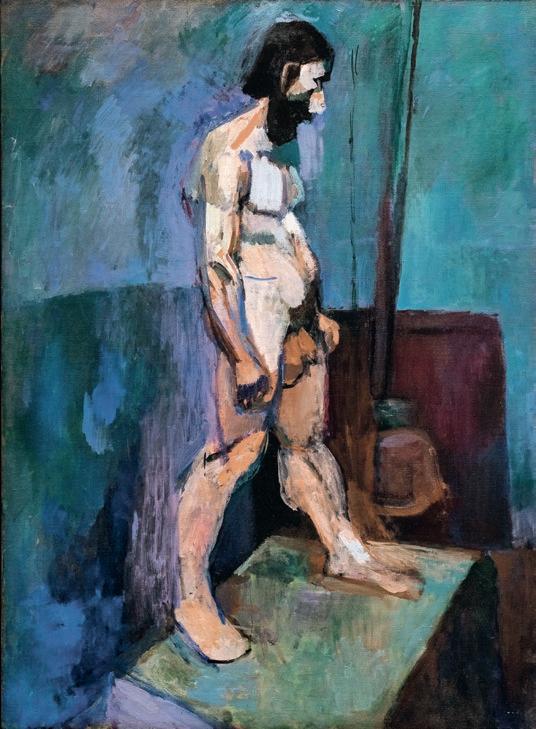
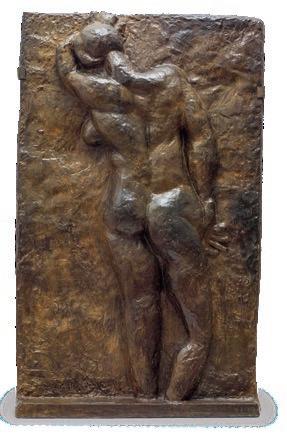
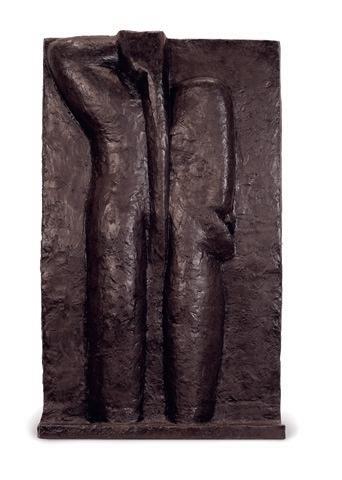
– Three Bathers (1879–82) – he acquired in 1899. Set in an interior of mauve and bluegreen tones, his Male Model (c. 1900) 08 is a pale, statuesque figure whose face is hidden from view: the aim here was not to create a portrait but to recreate a structure. All that matters is the stability and distribution of the model’s masses, which Matisse would soon explore in greater depth in the round ( The Serf , 1900–03 12 ). A few years later, The Green Stripe (1905) 09 would transform Amélie’s face into a two-colour mask in which yellow and pink are separated axially by a thick green streak. Broad, vivid brushstrokes stir up pure colour, while impastoed commas release an intrepid gesturality.
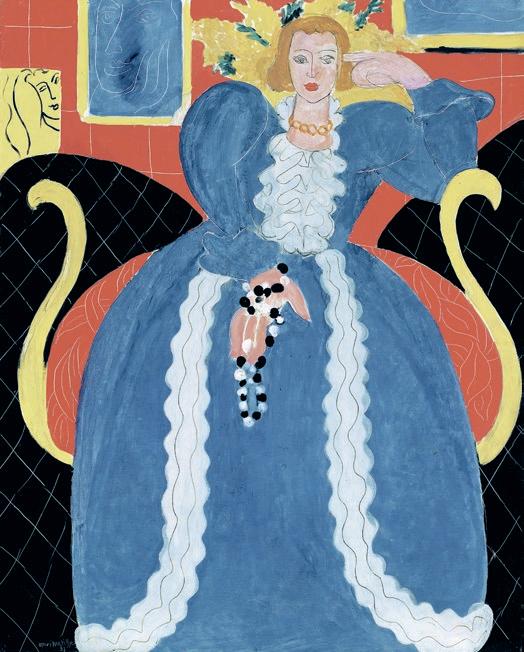
Thunderous colours roar. Wild rose pink, strident green, cobalt blue, livid white, raw orange: Woman with a Hat 10 , painted that same year, becomes the pretext for a pyrotechnic display, undoubtedly freed from optical veracity, but possessed of a wholly phenomenological truth. Matisse manages to turn a codified image – his wife Amélie, a milliner wearing a bourgeois hat – into an incendiary painting, which he exhibited in the famous Room VII of the 1905 Salon d’Automne, at a time when German Expressionism was unleashing similar pigmentary convulsions. Twenty years later, when the influence of Jean-Auguste-Dominique Ingres infused his work, Matisse would depict his model Henriette, with her Byzantine grace and saffron skin, absorbed in melancholy enhanced by bright, pearly colours, streaked with decorative netting ( Woman with a Veil , 1927 11 ). Body and motif, subject and object – indistinct.
20
21
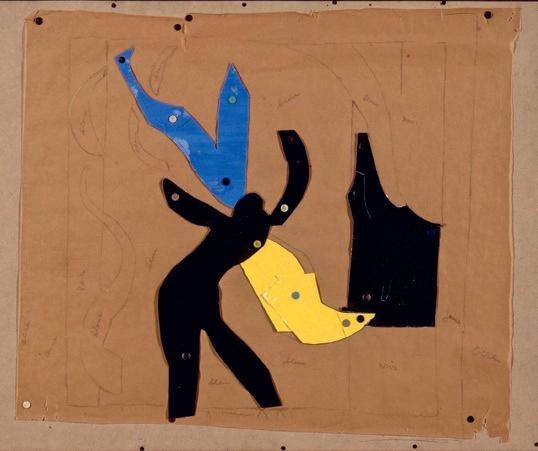
Dancer 1937
Design for the stage curtain for the ballet Rouge et noir
Graphite pencil, gouache on cut paper, pinned to tracing paper mounted on cardboard, 58.5 × 69.8 cm
59
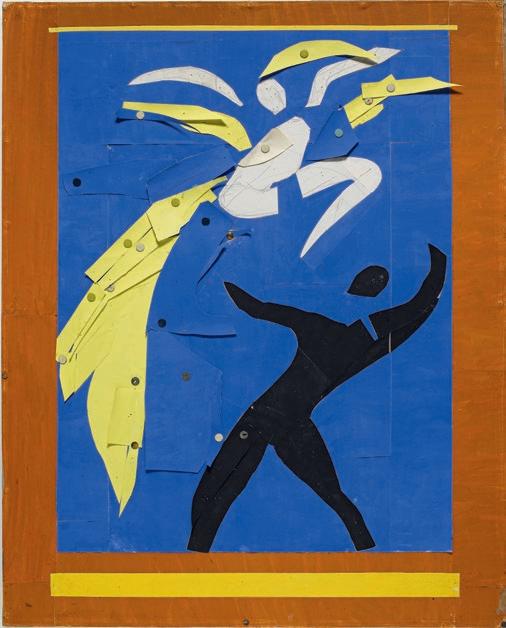
Two Dancers 1938
Design for the stage curtain for the ballet Rouge et noir
Gouache on cut and pinned paper, pasted on cardboard pasted on a frame, 80.2 × 64.7 cm Paris, Musée national d’art moderne, Centre Pompidou
62
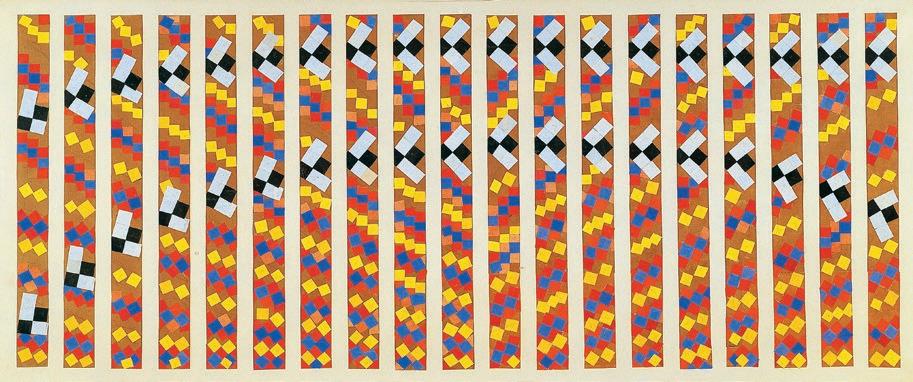
Photo credits
akg-images 13, 49, cover
akg-images / Album / Oronoz 12
BPK, Berlin, Dist. GrandPalaisRmn / Achim Kukulies 23
Bridgeman Images 02, 04-07, 10, 22, 24, 26-30, 34, 36-38, 40, 42, 45-46, 51, 60, 67
Bridgeman Images / ACME Imagery / SuperStock 08, 43
Bridgeman Images / Archives Charmet p. 92
Bridgeman Images / Art Institute of Chicago / Charles H. and Mary F. S. Worcester Collection 50
Bridgeman Images / Baltimore Museum of Art / The Cone Collection, Baltimore, Maryland 52
Bridgeman Images / Barnes Foundation 25, 47-48, p. 93
Bridgeman Images / Christie's Images 21, 64
Bridgeman Images / Fine Art Images 11, 33, 62
Bridgeman Images / Minneapolis Institute of Art p. 94
Bridgeman Images / NPL - DeA Picture Library 39, 65
Bridgeman Images / Peter Barritt / SuperStock 44
Bridgeman Images / Peter Willi. All rights reserved 2025 31, 54, 60
Bridgeman Images / Phaidon Press 01, 03, 32
Bridgeman Images / Philadelphia Museum of Art 41, 53, 55-57
Bridgeman Images / San Francisco Museum of Modern Art 09
Bridgeman Images / The Phillips Collection, Washington, USA 35
Centre Pompidou, MNAM-CCI / Bibliothèque Kandinsky / Fonds Hélène Adant p. 95
Centre Pompidou, MNAM-CCI, Dist. GrandPalaisRmn / Audrey Laurans 16-17
Centre Pompidou, MNAM-CCI, Dist. GrandPalaisRmn / Georges Meguerditchian 66
Centre Pompidou, MNAM-CCI, Dist. GrandPalaisRmn / Philippe Migeat, Christian Bahier 18-20, 58-59
GrandPalaisRmn / Adrien Didierjean 14-15
GrandPalaisRmn / Gérard Blot 63
Director Thomas Vivien
Copy editor
Sylvie Poignet
Production
Axelle Hautbout
Photogravure Point 11, Paris
Paper
G-print, 150 g/m2 (inside)
Wibalin Buckram, 135 g/m2 (cover)
The paper used in this book is made from natural fibres sourced from sustainably managed forests.
Printed in August 2026 by Pollina Printing in France