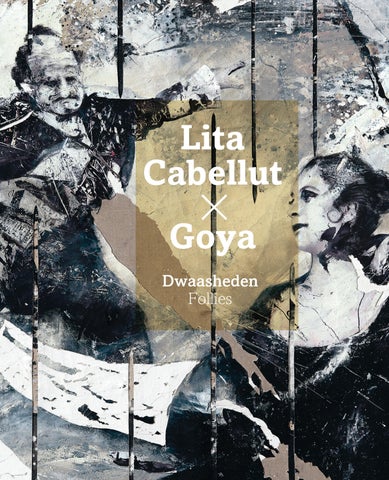
Lita Cabellut × Goya
Ralph Keuning
Wanneer begint verf te spreken? Lita Cabellut behoort tot een generatie kunstenaars die inmiddels evenveel achterom als vooruit kan kijken. Een omvangrijk oeuvre nodigt uit tot reflectie, terwijl de behoefte om nieuwe wegen te verkennen onverminderd aanwezig blijft. Juist dan dient zich een fundamentele vraag aan. Welke gedachte loopt als een rode draad door een in tientallen jaren opgebouwd kunstenaarschap? En in welke richting beweegt dat kunstenaar schap zich verder? Bij Cabellut begint het antwoord niet in haar atelier, maar in een museum. Als jong meisje groeide zij op in Barcelona, ver verwijderd van de wereld van de kunst. Toen zij voor het eerst in een museumzaal het werk van Francisco de Goya zag, gebeurde er iets wat zij
later vaak heeft beschreven. Zij voelde zich aangekeken, gezien. Alsof een hele reeks mensen op een doek hun armen naar haar uitstrekten. Een omarming die eeuwen overbrugde, mogelijk gemaakt door een kunstenaar die dit moment in haar leven vooruit leek te hebben gedacht. Dat deze ontmoeting beslissend is geweest voor haar kunstenaarschap, staat buiten twijfel. Hier ervoer zij de bijzondere kracht van de schilderkunst, het vermogen van verf om een levende mens te raken. Misschien ontstond daar ook het verlangen dat haar kunstenaarschap nog altijd draagt. Niet het verlangen te schilderen als Goya, maar om schilderijen te maken die doen wat Goya’s schilderijen met haar deden.
When does paint start to speak? Lita Cabellut belongs to a generation of artists who can now look back on their work as much as they look towards the future. A mature oeuvre invites reflection, but the need to explore new paths remains undiminished. It is precisely at this point that a fundamental question arises: what idea represents the common thread in an artistic career built over decades? And what direction is that career now about to take? In Cabellut’s case the answer started to emerge not in her studio, but in a museum. She grew up in Barcelona, far removed from the art world. When she first saw the work of Francisco de Goya hanging in a museum, she experienced something that she would often refer to later. She felt looked at, seen, as if an
6
entire series of people on a canvas were reaching out to her. An embrace across centuries, mediated by an artist who seemed to have foreseen this moment in her life. There is no doubt that this encounter had decisive importance for her career as an artist. It was at this point that she experienced the extraordinary power of painting, the ability of paint to touch a living being. Perhaps it was there that a desire first took shape that is still inherent in her artistic practice. Not a desire to paint like Goya, but to create paintings capable of doing to others what Goya’s paintings had done to her. It is a delight to talk to Lita Cabellut about art. Ultimately, the conversation repeatedly returns to human beings. To
Dwaasheden | Follies
the unique value of each individual life. To emotion as the force that connects people. Perhaps this comes from her own life. Cabellut has had to fight her way through life, so her work displays a particular interest in people’s state of mind, raw and unpolished. She tries to understand people, to embrace them, just as Goya’s figures did in that museum. She closes in on their vulnerability, their contradictions and their scars, full of compassion yet while retaining the analytical distance of an observer. Despite her great admiration for Goya, who has been a constant in her artistic practice, she never tries to paint like he did. Goya’s art also started with people. He was interested in war, violence, abuse
7
Lita Cabellut × Goya
Ralph Keuning
Wanneer begint verf te spreken? Lita Cabellut behoort tot een generatie kunstenaars die inmiddels evenveel achterom als vooruit kan kijken. Een omvangrijk oeuvre nodigt uit tot reflectie, terwijl de behoefte om nieuwe wegen te verkennen onverminderd aanwezig blijft. Juist dan dient zich een fundamentele vraag aan. Welke gedachte loopt als een rode draad door een in tientallen jaren opgebouwd kunstenaarschap? En in welke richting beweegt dat kunstenaar schap zich verder? Bij Cabellut begint het antwoord niet in haar atelier, maar in een museum. Als jong meisje groeide zij op in Barcelona, ver verwijderd van de wereld van de kunst. Toen zij voor het eerst in een museumzaal het werk van Francisco de Goya zag, gebeurde er iets wat zij
later vaak heeft beschreven. Zij voelde zich aangekeken, gezien. Alsof een hele reeks mensen op een doek hun armen naar haar uitstrekten. Een omarming die eeuwen overbrugde, mogelijk gemaakt door een kunstenaar die dit moment in haar leven vooruit leek te hebben gedacht. Dat deze ontmoeting beslissend is geweest voor haar kunstenaarschap, staat buiten twijfel. Hier ervoer zij de bijzondere kracht van de schilderkunst, het vermogen van verf om een levende mens te raken. Misschien ontstond daar ook het verlangen dat haar kunstenaarschap nog altijd draagt. Niet het verlangen te schilderen als Goya, maar om schilderijen te maken die doen wat Goya’s schilderijen met haar deden.
When does paint start to speak? Lita Cabellut belongs to a generation of artists who can now look back on their work as much as they look towards the future. A mature oeuvre invites reflection, but the need to explore new paths remains undiminished. It is precisely at this point that a fundamental question arises: what idea represents the common thread in an artistic career built over decades? And what direction is that career now about to take? In Cabellut’s case the answer started to emerge not in her studio, but in a museum. She grew up in Barcelona, far removed from the art world. When she first saw the work of Francisco de Goya hanging in a museum, she experienced something that she would often refer to later. She felt looked at, seen, as if an
6
entire series of people on a canvas were reaching out to her. An embrace across centuries, mediated by an artist who seemed to have foreseen this moment in her life. There is no doubt that this encounter had decisive importance for her career as an artist. It was at this point that she experienced the extraordinary power of painting, the ability of paint to touch a living being. Perhaps it was there that a desire first took shape that is still inherent in her artistic practice. Not a desire to paint like Goya, but to create paintings capable of doing to others what Goya’s paintings had done to her. It is a delight to talk to Lita Cabellut about art. Ultimately, the conversation repeatedly returns to human beings. To
Dwaasheden | Follies
the unique value of each individual life. To emotion as the force that connects people. Perhaps this comes from her own life. Cabellut has had to fight her way through life, so her work displays a particular interest in people’s state of mind, raw and unpolished. She tries to understand people, to embrace them, just as Goya’s figures did in that museum. She closes in on their vulnerability, their contradictions and their scars, full of compassion yet while retaining the analytical distance of an observer. Despite her great admiration for Goya, who has been a constant in her artistic practice, she never tries to paint like he did. Goya’s art also started with people. He was interested in war, violence, abuse
7
Lita Cabellut × Goya
Lita Cabellut Portret van Goya | Portrait of Goya, 2026 gemengde materialen | mixed media
30
Dwaasheden | Follies
31
Lita Cabellut × Goya
Lita Cabellut Portret van Goya | Portrait of Goya, 2026 gemengde materialen | mixed media
30
Dwaasheden | Follies
31
Lita Cabellut × Goya
Francisco de Goya Dwaasheden 1 | Follies 1 Vrouwelijke dwaasheid | Feminine Folly, 1875-1877 (2e editie) ets, aquatint en droge naald op papier | etching, aquatint and drypoint on paper, 33 × 50 cm
34
Lita Cabellut Vrouwelijke dwaasheid | Feminine Folly, 2026 gemengde materialen op doek | mixed media on canvas, 240 × 230 cm
Dwaasheden | Follies
35
Lita Cabellut × Goya
Francisco de Goya Dwaasheden 1 | Follies 1 Vrouwelijke dwaasheid | Feminine Folly, 1875-1877 (2e editie) ets, aquatint en droge naald op papier | etching, aquatint and drypoint on paper, 33 × 50 cm
34
Lita Cabellut Vrouwelijke dwaasheid | Feminine Folly, 2026 gemengde materialen op doek | mixed media on canvas, 240 × 230 cm
Dwaasheden | Follies
35
Lita Cabellut × Goya
Francisco de Goya Dwaasheden 3 | Follies 3 Belachelijke dwaasheid | Ridiculous Folly, 1875-1877 (2e editie) ets, aquatint, droge naald en polijstnaald op papier | etching, aquatint, drypoint and burnisher on paper, 33 × 50 cm
38
Lita Cabellut Belachelijke dwaasheid | Ridiculous Folly, 2024 gemengde materialen op doek | mixed media on canvas, 200 × 215 cm
Dwaasheden | Follies
39
Lita Cabellut × Goya
Francisco de Goya Dwaasheden 3 | Follies 3 Belachelijke dwaasheid | Ridiculous Folly, 1875-1877 (2e editie) ets, aquatint, droge naald en polijstnaald op papier | etching, aquatint, drypoint and burnisher on paper, 33 × 50 cm
38
Lita Cabellut Belachelijke dwaasheid | Ridiculous Folly, 2024 gemengde materialen op doek | mixed media on canvas, 200 × 215 cm
Dwaasheden | Follies
39
Lita Cabellut × Goya
Lita Cabellut Regelloze dwaasheid/Huwelijksdwaasheid | Disorderly Folly/Matrimonial Folly, 2023 gemengde materialenk | mixed media, 45 × 37 × 23 cm
50
Lita Cabellut Regelloze dwaasheid/Huwelijksdwaasheid | Disorderly Folly/Matrimonial Folly, 2023 gemengde materialenk | mixed media, 40 × 30 × 23 cm
Dwaasheden | Follies
51
Lita Cabellut × Goya
Lita Cabellut Regelloze dwaasheid/Huwelijksdwaasheid | Disorderly Folly/Matrimonial Folly, 2023 gemengde materialenk | mixed media, 45 × 37 × 23 cm
50
Lita Cabellut Regelloze dwaasheid/Huwelijksdwaasheid | Disorderly Folly/Matrimonial Folly, 2023 gemengde materialenk | mixed media, 40 × 30 × 23 cm
Dwaasheden | Follies
51
Lita Cabellut × Goya
Lita Cabellut Algemene dwaasheid | General Folly, 2023 gemengde materialen | mixed media 140 × 220 × 110 cm
Lita Cabellut Algemene dwaasheid/Perpetuum mobile | General Folly/ Perpetuum mobile, 2026 gemengde materialen | mixed media 46x ø 40cm
Lita Cabellut Algemene dwaasheid (study)| General Folly (study), 2023 gemengde materialen op doek | mixed media on canvas 80 × 80 cm
56
Lita Cabellut Algemene dwaasheid | General Folly, 2023 gemengde materialen | mixed media 45 × 45 × 23 cm
Dwaasheden | Follies
57
Lita Cabellut × Goya
Lita Cabellut Algemene dwaasheid | General Folly, 2023 gemengde materialen | mixed media 140 × 220 × 110 cm
Lita Cabellut Algemene dwaasheid/Perpetuum mobile | General Folly/ Perpetuum mobile, 2026 gemengde materialen | mixed media 46x ø 40cm
Lita Cabellut Algemene dwaasheid (study)| General Folly (study), 2023 gemengde materialen op doek | mixed media on canvas 80 × 80 cm
56
Lita Cabellut Algemene dwaasheid | General Folly, 2023 gemengde materialen | mixed media 45 × 45 × 23 cm
Dwaasheden | Follies
57
Lita Cabellut × Goya
Francisco de Goya Dwaasheden 13 | Follies 13 Manier van vliegen | A way of Flying, 1875-1877 (2e editie) ets en aquatint op papier| etching and aquatint on paper, 33 × 50 cm
68
Lita Cabellut Manier van vliegen | A way of Flying, 2024 gemengde materialen | mixed media, 250 × 126 × 10 cm
Dwaasheden | Follies
69
Lita Cabellut × Goya
Francisco de Goya Dwaasheden 13 | Follies 13 Manier van vliegen | A way of Flying, 1875-1877 (2e editie) ets en aquatint op papier| etching and aquatint on paper, 33 × 50 cm
68
Lita Cabellut Manier van vliegen | A way of Flying, 2024 gemengde materialen | mixed media, 250 × 126 × 10 cm
Dwaasheden | Follies
69
Lita Cabellut × Goya
Lita Cabellut De loyaliteit (drieluik) | Loyality, 2024 gemengde materialen op doek | mixed media on canvas, 250 × 145 cm p.p.
80
Dwaasheden | Follies
81
Lita Cabellut × Goya
Lita Cabellut De loyaliteit (drieluik) | Loyality, 2024 gemengde materialen op doek | mixed media on canvas, 250 × 145 cm p.p.
80
Dwaasheden | Follies
81
Lita Cabellut × Goya
Francisco de Goya Dwaasheden 19 | Follies 19 Bekende dwaasheid/Wat een krijger | Well - Known Folly / What a Warrior, 1875-1877 (2e editie), ets en fijne aquatint op papier| etching and fine grain aquatint on paper, 30,5 × 44 cm
86
Lita Cabellut Bekende dwaasheid | Well - Known Folly, 2026 gemengde materialen op doek | mixed media on canvas, 250 × 145cm
Dwaasheden | Follies
87
Lita Cabellut × Goya
Francisco de Goya Dwaasheden 19 | Follies 19 Bekende dwaasheid/Wat een krijger | Well - Known Folly / What a Warrior, 1875-1877 (2e editie), ets en fijne aquatint op papier| etching and fine grain aquatint on paper, 30,5 × 44 cm
86
Lita Cabellut Bekende dwaasheid | Well - Known Folly, 2026 gemengde materialen op doek | mixed media on canvas, 250 × 145cm
Dwaasheden | Follies
87
Lita Cabellut × Goya
Francisco de Goya Dwaasheden 21 | Follies 21 Dwaasheid der dwazen/dwaasheid met stiertjes | Fool’s Folly / Little Bulls Folly, 1875-1877 (2e editie), ets, aquatint, droge naald en polijstnaald op papier| etching, aquatint, drypoint and burnisher on paper, 30,5 × 44 cm
90
Lita Cabellut Dwaasheid met stiertjes | Little Bulls Folly, 2024 gemengde materialen | mixed media, 230 × 70 × 70 cm
Dwaasheden | Follies
91
Lita Cabellut × Goya
Francisco de Goya Dwaasheden 21 | Follies 21 Dwaasheid der dwazen/dwaasheid met stiertjes | Fool’s Folly / Little Bulls Folly, 1875-1877 (2e editie), ets, aquatint, droge naald en polijstnaald op papier| etching, aquatint, drypoint and burnisher on paper, 30,5 × 44 cm
90
Lita Cabellut Dwaasheid met stiertjes | Little Bulls Folly, 2024 gemengde materialen | mixed media, 230 × 70 × 70 cm
Dwaasheden | Follies
91
Colofon/Credits
Deze uitgave verschijnt ter gelegenheid van de tentoonstelling Lita Cabellut × Goya in Museum Jan, Amstelveen. Van 22 september 2026 t/m 24 januari 2027. This edition was published on the occasion of the exhibition Lita Cabellut × Goya in Museum Jan, Amstelveen. From 22 September 2026 to 24 January 2027. Uitgave/Publishers Waanders Uitgevers, Zwolle Museum Jan, Amstelveen Auteur/Author Ralph Keuning, Eloy Martínez de la Pera, Marieke Uildriks Coördinatie/Coordination Christine Riphagen, Marta Gil Guerrero, Virginia Villalobos Arévalo Vertaling/Translation Sue McDonnell, Marta Gil Guerrero, Christine Riphagen Fotografie/Photography Studio Tromp, Lluc Queralt (pag.6), Eddy Wenting (pag. 30-31, 57) Illustratieverantwoording/Illustration Credits Titels etsen Goya volgens vertaling Museum Boijmans Van Beuningen. Titles Engravings, from Catalogue Raisonné: Goya: Engravings and Lithographs. (1964, Tomás Harris) Ontwerp/Design Harald Slaterus Druk/ Printing Wilco Art Books, Amersfoort Lithografie/ Lithography Benno Slijkhuis, Wilco Art Books © 2026 Waanders Uitgevers b.v., Zwolle; Museum Jan, Amstelveen; Lita Cabellut; de auteurs
96
Alle rechten voorbehouden. Niets uit deze uitgave mag worden verveelvoudigd, opgeslagen in een geautomatiseerd gegevensbestand, of openbaar gemaakt, in enige vorm of op enige wijze, hetzij elektronisch, mechanisch, door fotokopieën, opnamen, of enige andere manier, zonder voorafgaande schriftelijke toestemming van de uitgever. All rights reserved. No part of the content of the book may be reproduced or transmitted in any form or by any means, electronic or mechanical, including photography, recording or any other information storage and retrieval system, without the prior written permission of the publisher. De uitgever heeft ernaar gestreefd de rechten van de illustraties volgens wettelijke bepalingen te regelen. Degenen die desondanks menen zekere rechten te kunnen doen gelden, kunnen zich alsnog tot de uitgever wenden. The publisher has made every effort to acknowledge the copyright of works illustrated in this book. Should any person, despite this, feel that an omission has been made, they are requested to inform the publisher of this fact. Van werken van beeldend kunstenaars, aangesloten bij een CISAC-organisatie is het auteursrecht geregeld met Pictoright te Amsterdam. © c/o Pictoright Amsterdam 2026 Copyright on works of visual artists affiliated to a CISAC organisation has been arranged with Pictoright in Amsterdam. © c/o Pictoright Amsterdam 2026 ISBN 9789462627345 NUR 644 www.waanders.nl www.litacabellut.com www.museumjan.nl Met dank aan / With thanks to Chris Bouwer