CONTENTS Editor’s note
Ramification and Irrigation
Acknowledgements and Thanks
The Brain revised
Preface with a Very Brief Outline of the History of the Drawings
Tongue, Lips and Sounds
Introduction Anatomy as Natural Philosophy
Diaphragm and Respiration, with Thoughts about the Nature of “Spirits”
In his Own Words
Urinogenital Organs and the “Mysteries of the Womb”
Initial Ambitions
The Heart
Body and Soul
Further investigations
Mapping the Surface
Index of drawings
Early Investigations: Life and Death, the Brain, Nerves, Necks and Muscles The Foot of a Bear Bones and Brains The Music of Proportion Musclemen “Pen-men” Muscles, Tendons, Ligaments, Bones (and Old Men): the Human Machine
9
CONTENTS Editor’s note
Ramification and Irrigation
Acknowledgements and Thanks
The Brain revised
Preface with a Very Brief Outline of the History of the Drawings
Tongue, Lips and Sounds
Introduction Anatomy as Natural Philosophy
Diaphragm and Respiration, with Thoughts about the Nature of “Spirits”
In his Own Words
Urinogenital Organs and the “Mysteries of the Womb”
Initial Ambitions
The Heart
Body and Soul
Further investigations
Mapping the Surface
Index of drawings
Early Investigations: Life and Death, the Brain, Nerves, Necks and Muscles The Foot of a Bear Bones and Brains The Music of Proportion Musclemen “Pen-men” Muscles, Tendons, Ligaments, Bones (and Old Men): the Human Machine
9
AUTHORS
DESCRIPTION
Martin Kemp is Emeritus Research Professor in the History of Art at Oxford University and a Fellow of the British Academy. He has written and broadcast extensively on imagery in art and science spanning the Renaissance to the present day. He speaks on issues of visualization and lateral thinking to a wide range of audiences and is considered one of the world’s foremost experts on Leonardo da Vinci, who has been the subject of many of his articles, essays, and books, including Leonardo (Oxford University Press, 2004). Kemp has also published on imagery in the sciences of anatomy, natural history, and optics, as in The Science of Art: Optical Themes in Western Art from Brunelleschi to Seurat (Yale University Press, 1990). He was trained in Natural Sciences and Art History at Cambridge University and the Courtauld Institute of Art at the University of London. From 1993 to 1998 he was Wolfson Research Professor at the British Academy. For more than twenty-five years he was based in Scotland, at the University of Glasgow and at the University of St. Andrews. He has held visiting posts in Princeton, New York, North Carolina, Los Angeles, and Montreal. Kemp has curated a series of exhibitions on Leonardo as well as on other themes, including Spectacular Bodies at the Hayward Gallery in 2000, Leonardo da Vinci: Experience, Experiment, Design at the Victoria and Albert Museum in 2006, and Seduced: Art and Sex from Antiquity to Now at the Barbican Art Gallery in 2007. He was also a guest curator for Circa 1492 at the National Gallery of Art in Washington, DC, in 1991.
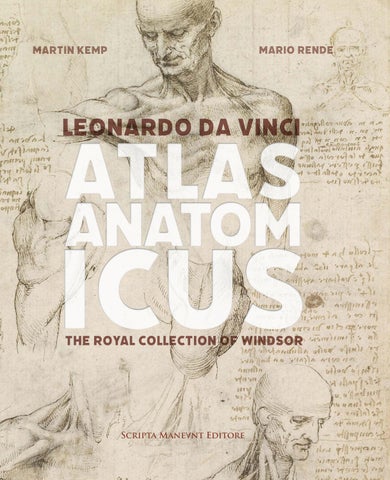
Leonardo da Vinci's Anatomical Atlas brings together the complete corpus of the artist's anatomical drawings held at the Royal Library at Windsor Castle, the world’s richest collection of the great artist’s works on paper. According to Count Galeazzo Arconati, who gave other Leonardo manuscripts to the Ambrosiana Library in Milan, the drawings concerning nature, anatomy, and color, have been “in the hands of the King of England before 1640.” The collection has been recorded as being in the possession of Queen Mary II, in 1690, a year after she and her husband, William III, ascended the throne as joint monarchs. The collection comprises all the known anatomical drawings by Leonardo. Three hundred images the human body by the great artist, made between about 1485 and 1510–15, are showcased in this magnificent volume. Based on the artist's
Mario Rende is a Professor of Human Anatomy, teaching a degree course in Medicine and Surgery at the University of Perugia. He is the author of numerous book chapters and teaching atlases on human anatomy and has edited the translations of anatomy teaching texts in the field of anatomy. He is currently one of three national coordinators of the Prometheus project. Giampaolo Guida is an internal medicine doctor and homeopath, with a background in medical genetics. He has successfully practiced for over thirty years, while also cultivating his interest in music, literature, and the history of Renaissance sacred art. He is a Knight of the Republic of Italy.
own anatomical dissections, they show his evolving understanding of physiology. The drawings demonstrate, as well, Leonardo's progress from technical mastery of his subject to consummate draftsmanship. The commentary on this astonishing body of work is by Professor Martin Kemp of Oxford University, a leading international authority of Leonardo da Vinci, who explains the uniqueness of the painter’s stroke and the refined figurative transposition. One of the most renowned Italian Anatomists, Professor Mario Rende of the University of Perugia, analyses the significance of these works from a medical-scientific angle, revealing the insights, the research methodology, and the experimental and analytical approach of the Genius of Vinci. Moving between art and anatomy, between unsurpassed illustrative display and avantgarde Renaissance scientific research, the work thus provides an in-depth and comprehensive look at an indispensable aspect of the Great Master's story.
AUTHORS
DESCRIPTION
Martin Kemp is Emeritus Research Professor in the History of Art at Oxford University and a Fellow of the British Academy. He has written and broadcast extensively on imagery in art and science spanning the Renaissance to the present day. He speaks on issues of visualization and lateral thinking to a wide range of audiences and is considered one of the world’s foremost experts on Leonardo da Vinci, who has been the subject of many of his articles, essays, and books, including Leonardo (Oxford University Press, 2004). Kemp has also published on imagery in the sciences of anatomy, natural history, and optics, as in The Science of Art: Optical Themes in Western Art from Brunelleschi to Seurat (Yale University Press, 1990). He was trained in Natural Sciences and Art History at Cambridge University and the Courtauld Institute of Art at the University of London. From 1993 to 1998 he was Wolfson Research Professor at the British Academy. For more than twenty-five years he was based in Scotland, at the University of Glasgow and at the University of St. Andrews. He has held visiting posts in Princeton, New York, North Carolina, Los Angeles, and Montreal. Kemp has curated a series of exhibitions on Leonardo as well as on other themes, including Spectacular Bodies at the Hayward Gallery in 2000, Leonardo da Vinci: Experience, Experiment, Design at the Victoria and Albert Museum in 2006, and Seduced: Art and Sex from Antiquity to Now at the Barbican Art Gallery in 2007. He was also a guest curator for Circa 1492 at the National Gallery of Art in Washington, DC, in 1991.
Leonardo da Vinci's Anatomical Atlas brings together the complete corpus of the artist's anatomical drawings held at the Royal Library at Windsor Castle, the world’s richest collection of the great artist’s works on paper. According to Count Galeazzo Arconati, who gave other Leonardo manuscripts to the Ambrosiana Library in Milan, the drawings concerning nature, anatomy, and color, have been “in the hands of the King of England before 1640.” The collection has been recorded as being in the possession of Queen Mary II, in 1690, a year after she and her husband, William III, ascended the throne as joint monarchs. The collection comprises all the known anatomical drawings by Leonardo. Three hundred images the human body by the great artist, made between about 1485 and 1510–15, are showcased in this magnificent volume. Based on the artist's
Mario Rende is a Professor of Human Anatomy, teaching a degree course in Medicine and Surgery at the University of Perugia. He is the author of numerous book chapters and teaching atlases on human anatomy and has edited the translations of anatomy teaching texts in the field of anatomy. He is currently one of three national coordinators of the Prometheus project. Giampaolo Guida is an internal medicine doctor and homeopath, with a background in medical genetics. He has successfully practiced for over thirty years, while also cultivating his interest in music, literature, and the history of Renaissance sacred art. He is a Knight of the Republic of Italy.
own anatomical dissections, they show his evolving understanding of physiology. The drawings demonstrate, as well, Leonardo's progress from technical mastery of his subject to consummate draftsmanship. The commentary on this astonishing body of work is by Professor Martin Kemp of Oxford University, a leading international authority of Leonardo da Vinci, who explains the uniqueness of the painter’s stroke and the refined figurative transposition. One of the most renowned Italian Anatomists, Professor Mario Rende of the University of Perugia, analyses the significance of these works from a medical-scientific angle, revealing the insights, the research methodology, and the experimental and analytical approach of the Genius of Vinci. Moving between art and anatomy, between unsurpassed illustrative display and avantgarde Renaissance scientific research, the work thus provides an in-depth and comprehensive look at an indispensable aspect of the Great Master's story.
12
13
12
13
14
15
14
15
Ringraziamenti
Acknowledgements and Thanks
Martin Kemp
Martin Kemp
Q
16
W
uando Federico Ferrari mi ha contattato in merito alla possibilità di una nuova edizione dei disegni anatomici di Leonardo conservati a Windsor, ne sono stato al contempo attratto e dubbioso: attratto dalla prospettiva di lavorare di nuovo con Scripta Maneant, il cui impegno in libri pregiati è rinomato, e dubbioso perché in merito è già stata pubblicata più di una buona edizione. Mi spiegò che voleva pubblicare i disegni suddividendoli in gruppi corredati da commento, con un’introduzione generale. Questa visione editoriale mi ha spinto a ripensare il modo in cui i disegni anatomici di Leonardo siano abitualmente concepiti e quindi ad organizzarli visivamente, come se si trattasse di una mostra divisa in più sale. I gruppi di disegni, qui esposti, sono concepiti in base a ciò che ritengo essere il pensiero di Leonardo e al loro sviluppo. L’esplorazione leonardiana degli argomenti anatomici è stata plasmata dalla sua filosofia del corpo umano e, più in generale, della natura, anziché da esigenze legate alla pratica medica contemporanea. Accogliendo il suggerimento di Federico e rielaborando la presentazione dei disegni, ho scoperto una nuova modalità comunicativa di Leonardo con noi posteri a distanza di mezzo millennio. Oltre Federico Ferrari di Scripta Maneant, che ha concepito questa edizione supportandola pazientemente, vorrei ringraziare anche Laura Lopardo per lo scrupoloso lavoro organizzativo e redazionale, compreso il diligente controllo della foliazione dei disegni e delle fonti delle citazioni. Ha portato ordine nel disordine. Desidero inoltre ringraziare Giorgio Armaroli e Gianni Grandi per l’impegno profuso nella realizzazione di questo magnifico volume. Il mio team di supporto, composto da Caroline Dawnay e Kat Aitken di United Agents, e il mio assistente personale, Judd, che si accertano che i miei progetti rimangano in carreggiata. Con un progetto che pone grossi problemi organizzativi, non ultimo la coesistenza di cinque o più sistemi di numerazione diversi nei vari cataloghi, Judd ha lavorato a stretto contatto con me controllando sempre la corretta corrispondenza tra immagine e didascalia. Ha anche riportato alcune delle citazioni chiave di Leonardo. L’Introduzione, che espone la natura del mio approccio, è stata letta da Samantha Jessel e Tania Corriea, e sono grato che sia risultata chiara anche a lettori critici, seppur non specialisti.
hen I was approached by Federico Ferrari about the possibility of a new edition of Leonardo’s anatomical drawings at Windsor, I was both attracted and dubious – attracted by the prospect of working again with Scripta Maneant, whose commitment to very handsome books is renowned, and dubious because there has been more than one good edition. He explained that he wanted to package the drawings in sets punctuated by commentaries, and with an overarching introduction. I took this as an invitation to re-think the way we experience the anatomies, organising them visually, rather in the manner of an exhibition with different rooms. The organisation I devised was informed by chronology and by bodily systems, but not dogmatically so. The sets are devised according to what I discern to be Leonardo’s ways of thinking, and the development of those ways. His exploration of themes was shaped by his philosophy of the human body and more broadly of nature, rather than serving the needs of contemporary medical practice. I found, in other words, that reworking the mode of presentation, as Federico suggested, resulted in a different way for Leonardo to speak to us after half a millennium. In addition to Federico Ferrari at Scripta Maneant , who conceived this edition and provided patient support throughout, sincere thanks should go to Laura Lopardo, for her scrupulous organisational and editorial work, including her diligent checking of the folios for images and the sources of quotations. She brought order into disorder. I should also like to acknowledge Giorgio Armaroli and Gianni Grandi for their efforts to create such a handsome volume. My support team of Caroline Dawnay and Kat Aitken at United Agents, and my Personal Assistant, Judd, ensure that my projects remain on track. With a project that poses big organisational problems, not least with five or more different numbering systems in the various catalogues, Judd has worked closely with me checking that we had the right image and caption in each case. She also copied out some of the key Leonardo quotes. The Introduction, that set out the key to my approach, was read by Samantha Jessel and Tania Corriea, and I am grateful that it made sense to critical readers who were not specialists.
(A fronte) Feto in un utero aperto, interdigitazioni della placenta e dell’utero, diagrammi degli strati dell’utero, sfera su un pendio e diagramma ottico. Penna e inchiostro, gessetti nero e rosso e lavatura su carta, 30,4 × 22,0 cm. RL 19102r / K&P 198r. Dettaglio, intero p. 341.
(Opposite) Foetus in an opened womb, interdigitations of the placenta and womb, diagrams of the layers of the womb, a sphere on a slope and optical diagram. Pen and ink, black and red chalks and wash on paper, 30.4 × 22.0 cm. RL 19102r / K&P 198r. Detail, entire p. 341.
17
Ringraziamenti
Acknowledgements and Thanks
Martin Kemp
Martin Kemp
Q
16
W
uando Federico Ferrari mi ha contattato in merito alla possibilità di una nuova edizione dei disegni anatomici di Leonardo conservati a Windsor, ne sono stato al contempo attratto e dubbioso: attratto dalla prospettiva di lavorare di nuovo con Scripta Maneant, il cui impegno in libri pregiati è rinomato, e dubbioso perché in merito è già stata pubblicata più di una buona edizione. Mi spiegò che voleva pubblicare i disegni suddividendoli in gruppi corredati da commento, con un’introduzione generale. Questa visione editoriale mi ha spinto a ripensare il modo in cui i disegni anatomici di Leonardo siano abitualmente concepiti e quindi ad organizzarli visivamente, come se si trattasse di una mostra divisa in più sale. I gruppi di disegni, qui esposti, sono concepiti in base a ciò che ritengo essere il pensiero di Leonardo e al loro sviluppo. L’esplorazione leonardiana degli argomenti anatomici è stata plasmata dalla sua filosofia del corpo umano e, più in generale, della natura, anziché da esigenze legate alla pratica medica contemporanea. Accogliendo il suggerimento di Federico e rielaborando la presentazione dei disegni, ho scoperto una nuova modalità comunicativa di Leonardo con noi posteri a distanza di mezzo millennio. Oltre Federico Ferrari di Scripta Maneant, che ha concepito questa edizione supportandola pazientemente, vorrei ringraziare anche Laura Lopardo per lo scrupoloso lavoro organizzativo e redazionale, compreso il diligente controllo della foliazione dei disegni e delle fonti delle citazioni. Ha portato ordine nel disordine. Desidero inoltre ringraziare Giorgio Armaroli e Gianni Grandi per l’impegno profuso nella realizzazione di questo magnifico volume. Il mio team di supporto, composto da Caroline Dawnay e Kat Aitken di United Agents, e il mio assistente personale, Judd, che si accertano che i miei progetti rimangano in carreggiata. Con un progetto che pone grossi problemi organizzativi, non ultimo la coesistenza di cinque o più sistemi di numerazione diversi nei vari cataloghi, Judd ha lavorato a stretto contatto con me controllando sempre la corretta corrispondenza tra immagine e didascalia. Ha anche riportato alcune delle citazioni chiave di Leonardo. L’Introduzione, che espone la natura del mio approccio, è stata letta da Samantha Jessel e Tania Corriea, e sono grato che sia risultata chiara anche a lettori critici, seppur non specialisti.
hen I was approached by Federico Ferrari about the possibility of a new edition of Leonardo’s anatomical drawings at Windsor, I was both attracted and dubious – attracted by the prospect of working again with Scripta Maneant, whose commitment to very handsome books is renowned, and dubious because there has been more than one good edition. He explained that he wanted to package the drawings in sets punctuated by commentaries, and with an overarching introduction. I took this as an invitation to re-think the way we experience the anatomies, organising them visually, rather in the manner of an exhibition with different rooms. The organisation I devised was informed by chronology and by bodily systems, but not dogmatically so. The sets are devised according to what I discern to be Leonardo’s ways of thinking, and the development of those ways. His exploration of themes was shaped by his philosophy of the human body and more broadly of nature, rather than serving the needs of contemporary medical practice. I found, in other words, that reworking the mode of presentation, as Federico suggested, resulted in a different way for Leonardo to speak to us after half a millennium. In addition to Federico Ferrari at Scripta Maneant , who conceived this edition and provided patient support throughout, sincere thanks should go to Laura Lopardo, for her scrupulous organisational and editorial work, including her diligent checking of the folios for images and the sources of quotations. She brought order into disorder. I should also like to acknowledge Giorgio Armaroli and Gianni Grandi for their efforts to create such a handsome volume. My support team of Caroline Dawnay and Kat Aitken at United Agents, and my Personal Assistant, Judd, ensure that my projects remain on track. With a project that poses big organisational problems, not least with five or more different numbering systems in the various catalogues, Judd has worked closely with me checking that we had the right image and caption in each case. She also copied out some of the key Leonardo quotes. The Introduction, that set out the key to my approach, was read by Samantha Jessel and Tania Corriea, and I am grateful that it made sense to critical readers who were not specialists.
(A fronte) Feto in un utero aperto, interdigitazioni della placenta e dell’utero, diagrammi degli strati dell’utero, sfera su un pendio e diagramma ottico. Penna e inchiostro, gessetti nero e rosso e lavatura su carta, 30,4 × 22,0 cm. RL 19102r / K&P 198r. Dettaglio, intero p. 341.
(Opposite) Foetus in an opened womb, interdigitations of the placenta and womb, diagrams of the layers of the womb, a sphere on a slope and optical diagram. Pen and ink, black and red chalks and wash on paper, 30.4 × 22.0 cm. RL 19102r / K&P 198r. Detail, entire p. 341.
17
18
19
18
19
Un occhio di riguardo
An Eye for
Giampaolo Guida
Giampaolo Guida
F
F
(A fronte) Studi sul sistema vascolare del fegato. Penna e inchiostro, gessetto nero su carta, 19,2 × 14,1 cm. RL 19039v / K&P 61v. Dettaglio, intero p. 231.
(Opposite) Studies of the vascular system of the liver. Pen and ink, black chalk on paper, 19.2 × 14.1 cm. RL 19039v / K&P 61v. Detail, entire p. 231.
in dai primi albori della civiltà umana, l’Arte ha assunto un ruolo fondamentale e del tutto precipuo: quello di porsi come tramite tra immanente e trascendente. Prima ancora della Filosofia e di ogni Scienza, l’uomo ha trovato nel gesto artistico la via più diretta per accedere al “fuori da sé”, all’anima, a Dio forse. Soltanto successivamente, elaborando in misura razionale l’intuizione dell’arte, l’uomo è giunto alla sistemazione per così dire scientifica, del proprio pensiero. La medicina fra tutte le scienze è quella che più di ogni altra ha manifestato, e continua ancor oggi a mostrare, la sua ascendenza artistica. Non a caso l’espressione Arte Medica è giunta fino alla nostra era di esasperato tecnicismo e superspecializzazione, con intatta valenza. Profonda e autentica perché radicata nell’humus fertile e fruttifero dell’essenza umana. Le origini della medicina greca, sulla quale la nostra attuale si fonda, risalgono attraverso Ippocrate, ad Asklepio e allo stesso Apollo, proprio a volerne significare la discendenza divina. Ippocrate di Kos altro non aveva fatto all’inizio se non riconoscere e assimilare l’immane potenza vivificatrice che la natura benedetta di quell’isola sapeva trasmettere. Allo stesso modo Galeno, Avicenna e con loro una nutrita schiera di scienziati dotati di “occhio artistico” seppero leggere la verità sfogliando ammirati le pagine del libro della Natura. Ed ecco che ad ore 3 di notte del 15 Aprile 1452, schiude il suo sguardo al mondo il Genio forse più grande di tutti. Leonardo da Vinci. Mi piace pensare che quello sguardo predestinato abbia ritrovato nella bellezza sublime del paesaggio toscano lo stimolo indispensabile allo sviluppo del suo formidabile potenziale indagatore. Indagine i cui effetti possiamo fortunatamente continuare ad ammirare nell’opera che il Maestro ci ha lasciato. Tutto però prende origine da quel momento, da quel meraviglioso incontro tra una Natura sublime e generosa, quanto perfetta, e un occhio capace di coglierne l’intima essenza. Forse il segreto di Leonardo è tutto qui racchiuso nel semplice ma, per le conseguenze che comporta, preziosissimo aforisma: “Non fa’ scienza sanza sperienza”. Sperimentare dunque sempre, in continuazione, senza dare mai nulla
22
rom the earliest dawn of human civilisation, Art has assumed a fundamental and altogether primary role: that of acting as an intermediary between the immanent and the transcendent. Even before Philosophy and every Science, man has found in the artistic gesture the most direct way to access the ‘outside of himself ’, the soul, God perhaps. Only later, by rationally elaborating the intuition of art, did man come to the accommodation, so to speak scientifically, of his own thought. Of all the sciences, medicine is the one that more than any other has shown, and continues to show today, its artistic ancestry. It is not by chance that the expression Medical Art has come down to our era of exasperated technicality and super-specialisation, with intact value. Deep and authentic because it is rooted in the fertile and fruitful humus of the human essence. The origins of Greek medicine, on which our current one is based, go back through Hippocrates, to Asklepios and Apollo himself, precisely to signify its divine descent. In the beginning, Hippocrates of Kos had done nothing other than recognise and assimilate the immense life-giving power that the blessed nature of that island could transmit. In the same way, Galen, Avicenna and with them a host of scientists with an ‘artistic eye’ were able to read the truth as they turned the pages of Nature’s book in admiration. And so, at 3 a.m. on 15 April 1452, perhaps the greatest Genius of all opened his eyes to the world. Leonardo da Vinci. I like to think that that predestined gaze found in the sublime beauty of the Tuscan landscape the indispensable stimulus to develop its formidable investigative potential. An investigation whose effects we can fortunately continue to admire in the work that the Master left us. Everything, however, originates from that moment, from that marvellous encounter between a Nature that is as sublime and generous as it is perfect, and an eye capable of capturing its intimate essence. Perhaps Leonardo’s secret is all here enclosed in the simple but, for all its consequences, very precious aphorism: “Do not do science without experience”. Therefore, always experimenting, continuously, never taking anything
23
Un occhio di riguardo
An Eye for
Giampaolo Guida
Giampaolo Guida
F
F
(A fronte) Studi sul sistema vascolare del fegato. Penna e inchiostro, gessetto nero su carta, 19,2 × 14,1 cm. RL 19039v / K&P 61v. Dettaglio, intero p. 231.
(Opposite) Studies of the vascular system of the liver. Pen and ink, black chalk on paper, 19.2 × 14.1 cm. RL 19039v / K&P 61v. Detail, entire p. 231.
in dai primi albori della civiltà umana, l’Arte ha assunto un ruolo fondamentale e del tutto precipuo: quello di porsi come tramite tra immanente e trascendente. Prima ancora della Filosofia e di ogni Scienza, l’uomo ha trovato nel gesto artistico la via più diretta per accedere al “fuori da sé”, all’anima, a Dio forse. Soltanto successivamente, elaborando in misura razionale l’intuizione dell’arte, l’uomo è giunto alla sistemazione per così dire scientifica, del proprio pensiero. La medicina fra tutte le scienze è quella che più di ogni altra ha manifestato, e continua ancor oggi a mostrare, la sua ascendenza artistica. Non a caso l’espressione Arte Medica è giunta fino alla nostra era di esasperato tecnicismo e superspecializzazione, con intatta valenza. Profonda e autentica perché radicata nell’humus fertile e fruttifero dell’essenza umana. Le origini della medicina greca, sulla quale la nostra attuale si fonda, risalgono attraverso Ippocrate, ad Asklepio e allo stesso Apollo, proprio a volerne significare la discendenza divina. Ippocrate di Kos altro non aveva fatto all’inizio se non riconoscere e assimilare l’immane potenza vivificatrice che la natura benedetta di quell’isola sapeva trasmettere. Allo stesso modo Galeno, Avicenna e con loro una nutrita schiera di scienziati dotati di “occhio artistico” seppero leggere la verità sfogliando ammirati le pagine del libro della Natura. Ed ecco che ad ore 3 di notte del 15 Aprile 1452, schiude il suo sguardo al mondo il Genio forse più grande di tutti. Leonardo da Vinci. Mi piace pensare che quello sguardo predestinato abbia ritrovato nella bellezza sublime del paesaggio toscano lo stimolo indispensabile allo sviluppo del suo formidabile potenziale indagatore. Indagine i cui effetti possiamo fortunatamente continuare ad ammirare nell’opera che il Maestro ci ha lasciato. Tutto però prende origine da quel momento, da quel meraviglioso incontro tra una Natura sublime e generosa, quanto perfetta, e un occhio capace di coglierne l’intima essenza. Forse il segreto di Leonardo è tutto qui racchiuso nel semplice ma, per le conseguenze che comporta, preziosissimo aforisma: “Non fa’ scienza sanza sperienza”. Sperimentare dunque sempre, in continuazione, senza dare mai nulla
22
rom the earliest dawn of human civilisation, Art has assumed a fundamental and altogether primary role: that of acting as an intermediary between the immanent and the transcendent. Even before Philosophy and every Science, man has found in the artistic gesture the most direct way to access the ‘outside of himself ’, the soul, God perhaps. Only later, by rationally elaborating the intuition of art, did man come to the accommodation, so to speak scientifically, of his own thought. Of all the sciences, medicine is the one that more than any other has shown, and continues to show today, its artistic ancestry. It is not by chance that the expression Medical Art has come down to our era of exasperated technicality and super-specialisation, with intact value. Deep and authentic because it is rooted in the fertile and fruitful humus of the human essence. The origins of Greek medicine, on which our current one is based, go back through Hippocrates, to Asklepios and Apollo himself, precisely to signify its divine descent. In the beginning, Hippocrates of Kos had done nothing other than recognise and assimilate the immense life-giving power that the blessed nature of that island could transmit. In the same way, Galen, Avicenna and with them a host of scientists with an ‘artistic eye’ were able to read the truth as they turned the pages of Nature’s book in admiration. And so, at 3 a.m. on 15 April 1452, perhaps the greatest Genius of all opened his eyes to the world. Leonardo da Vinci. I like to think that that predestined gaze found in the sublime beauty of the Tuscan landscape the indispensable stimulus to develop its formidable investigative potential. An investigation whose effects we can fortunately continue to admire in the work that the Master left us. Everything, however, originates from that moment, from that marvellous encounter between a Nature that is as sublime and generous as it is perfect, and an eye capable of capturing its intimate essence. Perhaps Leonardo’s secret is all here enclosed in the simple but, for all its consequences, very precious aphorism: “Do not do science without experience”. Therefore, always experimenting, continuously, never taking anything
23
24
25
24
25
14. Vulva e muscoli associati e cinque studi di feto. Penna e inchiostro, gessetti nero e rosso e lavatura su carta, 30,4 × 21,3 cm. RL 19101r / K&P 197v
14. The vulva and associated muscles, and five studies of a foetus. Pen and ink, black and red chalks and wash on paper, 30.4 × 21.3 cm. RL 19101r / K&P 197v
26
15. Studi di ossa e muscoli del braccio, della parete dell’utero e tre studi di feto nel grembo materno. Penna e inchiostro, gessetto nero su carta, 28,7 × 21,1 cm. RL 19103v / K&P 196v
15. Studies of the bones and muscles of the arm, the wall of the uterus, and three studies of a foetus in the womb. Pen and ink, black chalk on paper, 28.7 × 21.1 cm. RL 19103v / K&P 196v
27
14. Vulva e muscoli associati e cinque studi di feto. Penna e inchiostro, gessetti nero e rosso e lavatura su carta, 30,4 × 21,3 cm. RL 19101r / K&P 197v
14. The vulva and associated muscles, and five studies of a foetus. Pen and ink, black and red chalks and wash on paper, 30.4 × 21.3 cm. RL 19101r / K&P 197v
26
15. Studi di ossa e muscoli del braccio, della parete dell’utero e tre studi di feto nel grembo materno. Penna e inchiostro, gessetto nero su carta, 28,7 × 21,1 cm. RL 19103v / K&P 196v
15. Studies of the bones and muscles of the arm, the wall of the uterus, and three studies of a foetus in the womb. Pen and ink, black chalk on paper, 28.7 × 21.1 cm. RL 19103v / K&P 196v
27
25. Muscolatura della spalla e del braccio, con schema del movimento rotatorio della mano. Penna e inchiosto, gessetto nero e lavatura su carta, 28,9 × 20,1 cm RL 19013r / K&P 144r
25. Musculature of the shoulder and arm, with a diagram of the rotational motion of the hand. Pen and ink, black chalk and wash on paper, 28.9 × 20.1 cm. RL 19013r / K&P 144r
30
26. Dissezione del braccio e delle spalle, delle ossa della caviglia e del piede e della laringe. Penna e inchiosto, gessetto nero e lavatura su carta, 28,9 × 20,1 cm. RL 19013v / K&P 144v
26. Dissection of the arm and shoulders, the bones of the ankle and foot, and larynx. Pen and ink, black chalk and wash on paper, 28.9 × 20.1 cm. RL 19013v / K&P 144v
31
25. Muscolatura della spalla e del braccio, con schema del movimento rotatorio della mano. Penna e inchiosto, gessetto nero e lavatura su carta, 28,9 × 20,1 cm RL 19013r / K&P 144r
25. Musculature of the shoulder and arm, with a diagram of the rotational motion of the hand. Pen and ink, black chalk and wash on paper, 28.9 × 20.1 cm. RL 19013r / K&P 144r
30
26. Dissezione del braccio e delle spalle, delle ossa della caviglia e del piede e della laringe. Penna e inchiosto, gessetto nero e lavatura su carta, 28,9 × 20,1 cm. RL 19013v / K&P 144v
26. Dissection of the arm and shoulders, the bones of the ankle and foot, and larynx. Pen and ink, black chalk and wash on paper, 28.9 × 20.1 cm. RL 19013v / K&P 144v
31
L’
Atlante Anatomico di Leonardo da Vinci raccoglie il corpus completo dei disegni anatomici dell’artista conservati presso la Royal Collection di Windsor. Tra arte e anatomia, tra insuperabile esposizione illustrativa e ricerca scientifica rinascimentale d’avanguardia, l’opera consente così di osservare in profondità e in modo esaustivo un aspetto imprescindibile della storia del Grande Maestro. / The Anatomical Atlas of Leonardo da Vinci collects the complete corpus of the artist's anatomical drawings preserved at the Royal Collection in Windsor. Between art and anatomy, between unsurpassed illustrative exhibition and cutting-edge Renaissance scientific research, the work thus allows us to observe in depth and exhaustively an essential aspect of the history of the Great Master. /
© Scripta Maneant Edizioni 2025 Il marchio Scripta Maneant è di proprietà di Scripta Maneant Group, Bologna, Italia. The Scripta Maneant brand is owned by Scripta Maneant Group, Bologna, Italy. Via dell’Arcoveggio, 74/2 | 40129 - Bologna - Italy | Tel. +39 051 223535 Numero verde / Toll-free Number 800 144 944 www.scriptamaneant.it | segreteria@scriptamaneant.it