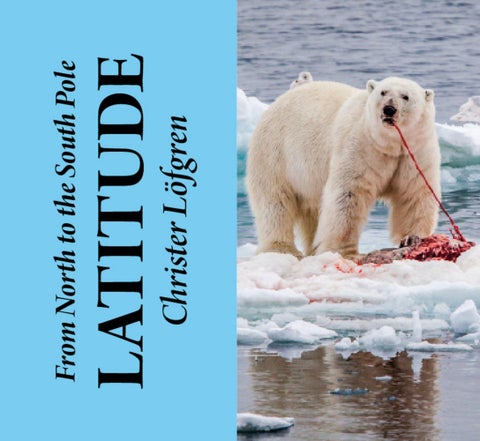
Nr 1 A geographic position – Latitude Latitude represents the horizontal position in a geographic system. It is rendered by lines running parallel to the equator. Its counterpart is longitude, which one finds shown as the vertical lines on the same maps. Every country’s culture is affected by its latitude and the clima te that it creates. How one dresses, drives a car, hunts, eats and sleeps are all influenced by the geographic position at which that person’s habitat lies. In the context of global warming, latitude is an essential factor in the wine industry. Given this, the search for the right grapes in new ”terroirs” is a reminder of climate change. In the Northern Hemi sphere, wine districts such as Bordeaux, Rioja, and others are con fronted with an increase in temperature and changes in the climate pattern. Consequently, wine producers are searching for new soil to explore in more northerly areas—for instance, Denmark, Sweden, Finland, and Norway—where grapes such as Solaris and Rondo thrive in a colder climate.
Nr 1 A geographic position – Latitude Latitude represents the horizontal position in a geographic system. It is rendered by lines running parallel to the equator. Its counterpart is longitude, which one finds shown as the vertical lines on the same maps. Every country’s culture is affected by its latitude and the clima te that it creates. How one dresses, drives a car, hunts, eats and sleeps are all influenced by the geographic position at which that person’s habitat lies. In the context of global warming, latitude is an essential factor in the wine industry. Given this, the search for the right grapes in new ”terroirs” is a reminder of climate change. In the Northern Hemi sphere, wine districts such as Bordeaux, Rioja, and others are con fronted with an increase in temperature and changes in the climate pattern. Consequently, wine producers are searching for new soil to explore in more northerly areas—for instance, Denmark, Sweden, Finland, and Norway—where grapes such as Solaris and Rondo thrive in a colder climate.
View of The South Pole
View of The North Pole
from the north to the south pole In the documentary group of photography, one type is travelphotography. This type is undertaken by a rare crowd of photog raphers who travel all around the world, some with assignments, and others on their own expense. They can easily be mistaken for amateurs photographers, but on the contrary, their work is comprehensive and well directed, which makes it a body of work. Today, when the word ”globalization” unites or separates, and there is increasing interaction of countries, cultures, and people, the world does not seem the same. The differences between states seen through the eye of the camera make a clear statement of diversity and cultural pluralism. The body of work takes years to fulfill, with numerous questions asked and experiences to be condense into an exhibition or a book. The social and cultural aspects, as well as the economic, have a profound impact on the modern way of living. Migration is not something new in history, but today we have a more complicated situation with the internet, bitcoins, inexpensive airway tickets, and photography that emphasize the globalization impact. Nations like Bangladesh, Vietnam, China, Brazil, and India show a new face to the world. China, for example, surpassed the United States of America as a premier economic trader, with post offices around the earth crumbling with Chinese imports of goods. Also, China manages to produce and build 53 airports in one year, unheard of in humanity. Articles like ” Travel Photography Tips” or ”Top 10 Rules of Travel Photography” even ”Get paid to travel: become a travel photographer”
are simulating or imitating the self-conscious and hard working travel photographer with a destine and a goal to show the true nature of the world. The separation of the amateur and the actual travel photographer, only to be found in the body of work. Of course, major influences derived from monumental photographers like Henry Cartier Bresson, William Eugene Smith, Sebastião Salgado and others is a significant voice and support for becoming a motivated and influential photographer. There is no geographical limitation to travel photography, mainly the cost of moving by airplane, living, and possibilities like catch the last vehicle to the South Pole before the temperature is dropping below astonishing 60 Celsius. Also get used to the high altitude of 3000 meters. It is the coldest place on earth, temperature dropping below -80 Celsius in July. Still, people are working there, and coming back every year, for their experimentation on research facilities like the Atmospheric Research Observatory or the South Pole Telescope. If you are lucky someone will allow you to enter the station, and show you around. Don’t forget you have to bring your one food for the stay. In the North Pole, there is even more to consider, polar bears, the Arctic sea and caveating. You have to travel by icebreakers, probably nuclear. Two weeks is an entire trip, there and back, just to stay only for a couple of hours. The North Pole is situated in the middle of Arctic Ocean contrary to the South Pole, located on a continental land mass. In the middle of summer, the temperature is a couple of degrees over zero, with a record high of 14 Celsius.
Maybe you will find your self with Grizzly bears in the Kam chatka peninsula, instructed by the expert not to be afraid (51.41 N Russia). Or, perhaps, going down in a bunker in Vietnam searching for remains from the Vietnam War. The world is a prominent place; it will take time and effort to concur. In general, it is ”wanderlust” that drives the travel photographer, similar to the never-ending touring rock star, to investigate the earth with the camera as a primary tool. The human aspect always in the center; people, cultures, and linguistics, all immense. In the world today there is +7000 languages documented, but every two weeks endangered languages disappear from earth not to recur. An always changing world. The approach is systematic, and the long collecting of trips, stories, and events makes the genuine travel photographer. This photographer is usually equipped with light equipment: camera body, two lenses, and accessories, for compactness and convenience. These can be fit into a cabin case, so there is no need for checking in baggage. Fast trans portation to the starting point, all ready to go. Long excursions in remote areas demand something else: research, maps, new equipment, help from natives and a right spirit when something goes wrong. When a booking of the hotel did not go through or when the plane left without you has to be fixed with a smile. Adventure traveling is a new way of getting out of your comfort zone, but it should not be compare with the travel photographer. Buying a trip from an agency that has you booked from five in the morning to late in the evening with no
breathing time for thinking is just kindergarten for the plentiful. There is an immense list of travelers in history, from the fourth century BC to modern time. Xuanzang (602- 664), a Buddhist monk, the first real travel writer who documented his trips with paper and pencil, would have loved to have a camera on his journeys. Consider if Marco Polo (1254–1324) had had a camera onboard his ship--what a sensation it would have been! Currently, we have people like Anthony Bourdain, with a film team, bombarding your television with street food culture from all around the globe. With outer space as the final experience, costing a fortune, travelers will proclaim their uniqueness. The necessity of documenting the always changing world with photography seems more crucial than ever when cultures are globalized. In countries like Peru or Tibet, you can see sneakers and T-shirts instead of traditional clothing. The change is immense, heartbreaking, and seen all around the globe. How will it affect us in the long term, and when will it become irreversible? What’s clear is that the change is happening at a rapid speed. The coverage in travel photography is usually free from political bias. Nevertheless, it is as important as ordinary coverage, or sometimes more, because it presents a more objective description, free to be interpreted in many ways, used in studies and for education, and stored for the future. The travel photographer has the drive that gives her or him an advantage: ”It has to be done.”
90.00 N NORTH POLE 86.10 N ARCTIC OCEAN 80.76 N RUSSIA – FRANZ JOSEF LAND 80.69 N RUSSIA – FRANZ JOSEF LAND
A geographic position – Latitude
80.47 N RUSSIA – FRANZ JOSEF LAND 78.74 N NORWAY – SVALBARD
74.01 N CANADA – PRINCE LEOPOLD LAND
70.95 N RUSSIA – WRANGEL LAND 72.70 N CANADA – POND INLET 71.97 N CANADA – SOMERSET ISLAND
68.99 N RUSSIA – MURMANSK 66.19 N GREENLAND– ILULISSAT
68.03 N NORWAY – NUSFJORD 66,16 N RUSSIA – UELEN
64.14 N ICELAND – REYKJAVIK 67.84 N SWEDEN – JUKKASJÄRVI
69.10 N CANADA – CAMBRIDGE BAY 66.93 N GREENLAND – SISIMUT 63.01 N ICELAND – HVERAGERDI
63.08 N RUSSIA – KIZHI
53.21 N RUSSIA – KAMCHATKA
58.47 N SWEDEN – ÖRÖ
53.12 N RUSSIA – KAMCHATKA
56.52 N RUSSIA – TOMSK
59.27 N SWEDEN – MÅLA 59.22 N SWEDEN – HEDENSÖ
52.98 N RUSSIA – KAMCHATKA
55.69 N DENMARK – COPENHAGEN
52.72 N RUSSIA – KAMCHATKA 51.58 N RUSSIA – KAMCHATKA
55.00 N RUSSIA – SIBIRIA
53.55 N GER MANY – HAMBURG
51.41 N RUSSIA – KAMCHATKA
50.45 N UKRAINE – KIEV 43.13 N RUSSIA – VLADIVOSTOK
45.46 N ITALY – VENICE
48.87 N RUSSIA – KURILE ISLAND
45.38 N ITALY – VERONA
48.88 N RUSSIA – KURILE ISLAND 39.03 N NORTH KOREA– PYONGYANG
48.88 N RUSSIA – KUNASHIR
34.48 N CHINA – TIBET 34.09 N CHINA – TIBET 32.15 N CHINA – TIBET 27.67 N NEPAL – BAKTAPUR 27.65 N NEPAL – CHANGU NARAYAN
20.04 N CUBA – SANTIAGO DE CUBA 23.13 N CUBA – HAVANNA
27.53 N NEPAL – CHITWAN
12.43 N NICARGUA – LEON
23.22 N INDIA – MADHYA PRADESH
11.48 N NICARGUA – OMETEPE ISLAND
12.35 N NICARGUA – JUAN VENADO
19.03 N INDIA – MUMBAI
11.93 N NICARGUA – GRANADA
11.91 N INDIA – PONDICHEERY
26.19 N CHINA – YUNNAN 25.30 N CHINA – YUNNAN 21.13 N VIETNAM 21.05 N VIETNAM - HANOI 15.87 N VIETNAM - HOI AN
13.41 N CAMBODIA - ANKOR WAT
10.46 N COSTA RICA – TORTUGUERO
00.86 S ECUADOR –GALAPAGOS
35.68 N JAPAN– TOKYO
27.51 N BHUTAN 27.34 N BHUTAN
24.97 N CHINA – YUNNAN 23.50 N INDIA – BANDHAVGARH
36.20 N JAPAN– NAGANO
28.65 N CHINA – TIBET
00.01 S ECUADOR –AMAZONAS
19.14 S NAMIBIA 21.23 S NAMIBIA
24.17 S NAMIBIA - DEADVLIE
21.75 S NAMIBIA - CAPE CROSS 24.09 S NAMIBIA
Word Origin and History for latitude In Latin, the old word ”latitudo”(14c) means ”breadth, width, extent, size.” In the context of maps, it is defined, geographically, as an imaginary line around the earth, running parallel to the planet’s equator, where the equator is the 0 degree, and the north (N) and south (S) poles have a latitude of 90°. The distance of a degree latitude is about 111 km. So, the figures, for the north is 90.00 N, and the south is 90.00 S. London is on the latitude 50°30 N, and Cape town is on 33°55 S at the South hemisphere.
19.97 S BOTSWANA –OKAVANGO 20.65 S BOTSWANA –OKAVANGO 39.63 S NEW ZEALAND - CAPE KIDNAPPERS 43.54 S NEW ZEALAND - CHRISTCHURCH 62.92 S ANTARCTICA – DECEPTION ISLAND 63.80 S ANTARCTICA – ELEPHANT ISLAND
51.22 S UNITED KINGDOM – THE FALKLAND ISLAND
64.22 S ANTARCTICA
51.69 S UNITED KINGDOM – THE FALKLAND ISLAND 46.83 S NEW ZEALAND - STEWART ISLAND
64.45 S ANTARCTICA – PORT LOCKROY 64.55 S ANTARCTICA
54.44 S UNITED KINGDOM – SOUTH GEORGIA 84.05 S ANTARCTICA – UNION GLACIER
90.00 S ANTARCTICA – SOUTH POLE
51.41 N Russia Kamchatka
51.41 N Russia Kamchatka
PICTURE INDEX |
PICTURE INDEX From 48.88 N to 10.46 N
48.88 N Russia
48.88 N RUSSIA Kurile Islands A male fur seal watches over his swimming harem. The male can weigh over 1,000 kg, while the females weigh only 150 kg.
35.68 N Japan
45.46 N Italy
Kurile Island
Tokyo
Venice
45.46 N ITALY Venice A small boatyard in Venice that manufactures and renovates gondolas.
34.48 N China Tibet
34.48 N CHINA Tibet Winter in Tibet at over 4,000 meters altitude, the sheep don’t have much greenery to eat.
35.68 N JAPAN Tokyo The cluster of Tokyo Central Railway Station
34.09 N China Tibet
34.09 N CHINA Tibet A curious monk in the Langmusi monastery.
28.65 N China Tibet
45.43 N Italy
44.38 N Russia
Verona
45.43 N ITALY Verona Opera performance in Verona taking place in the Arena di Verona, which dates to Roman times. The entire performance takes place in the open air.
39.03 N NORTH KOREA Pyongyang The great leaders in North Korea are everywhere and see everything, they are also in all subway cars.
39.03 N North Korea Pyongyang
39.03 N NORTH KOREA Pyongyang Snow clearing by hand in front of the great leader.
27.67 N NEPAL Baktapur Cremation in Baktapur where the body goes up in smoke and the ash is spread in the river below. Note the foot!
Chitwan
Nagano
36.20 N JAPAN Nagano Snow monkeys take an open-air hot spring bath in Jigokuani
27.67 N Nepal Baktapur
27.67 N NEPAL Baktapur Watchdogs on an early morning in Baktapur
27.65 N Nepal Changu Narayan
27.65 N NEPAL Changu Narayan Goat head on a barrel after a religious sacrifice in the temple.
27.53 N Nepal
36.20 N Japan
Pyongyang
39.03 N NORTH KOREA Pyongyang ”Happy faces” on the bus from a happy population in North Korea.
Baktapur
27.67 N NEPAL Baktapur Monk taxi in Nepal.
39.03 N NORTH KOREA Pyongyang A reminder of how East Germany looked in the 1960s.
39.03 N North Korea
28.65 N CHINA Tibet Palcho Monastery in Gyantse built in the mid 1400s.
27.67 N Nepal
Pyongyang
Pyongyang
43.13 N RUSSIA Vladivostok Using a pedal boat to go around a sculpture in the Pacific Ocean.
32.15 N CHINA Tibet Housing for the thousands of monks in the monastery Larong Gar.
39.03 N North Korea
39.03 N North Korea
43.13 N Russia Vladivostok
Baktapur
Tibet
Vladivostok
43.13 N RUSSIA Vladivostok Russian sailors after a heavy evening.
44.38 N RUSSIA Kunashir Basalt pillars on the beach on the island of Kunashir, which is the southernmost island of the Kurile Archipelago.
27.67 N Nepal
32.15 N China
43.13 Russia
Kunashir
27.53 N NEPAL Chitwan The boy rests on a hand operated harvester.
27.51 N Bhutan
27.51 N BHUTAN A Buddhist nun is praying with her chin on her newly crafted clay man.
27.34 N Bhutan
27.34 N BHUTAN Drying red peppers in large amounts.