MICHAEL RUNKEL
MICHAEL RUNKEL
Life between the Nile and the savannah
10 The Jie 20 Bull Riding 28 The Rashaida
The Tuareg
The Gerewol
The Camel Caravans 66 The Muhamiba 76 The Muali
Khosain 104 The Larim
The Mursi
The Mundaris
The Toposa
Creator of the Universe
The Sultan
The Wagenia
The Yaka
The Pygmies
Life between forests, prairies and horizons
310 The Mohana 4 Foreword
180 The Kuna 190 The Yanomani
Island worlds between ocean and tradition
202 The Dani 210 The Vine Jumpers 218 The Yapese 228 The Haenyo 238 The Sing
Life between taiga and steppe
248 The Evenki
The Nenzen 270 The Buzkashi
Colorful cultures between tradition and change
The Apanti 286 The Flower Men 294 The Chin 302 The Kayan
318 Index 320 Imprint
The Mundari, a Nilotic people in South Sudan, live along the White Nile in a landscape shaped by the cycle of extreme dry seasons and short, intense rainy periods. This rhythm shapes their culture and their close bond with the cattle, which have been at the heart of their social, economic, and spiritual life for generations.
Compared to bigger Nilotic groups like the Dinka or Nuer, the Mundari today almost seem like a quiet alternative: smaller, more compact, less shaped by outside influences. There’s also none of the touristy overlays you see with the Maasai—everything feels more original, more direct, and you can see it in their daily life and rituals.
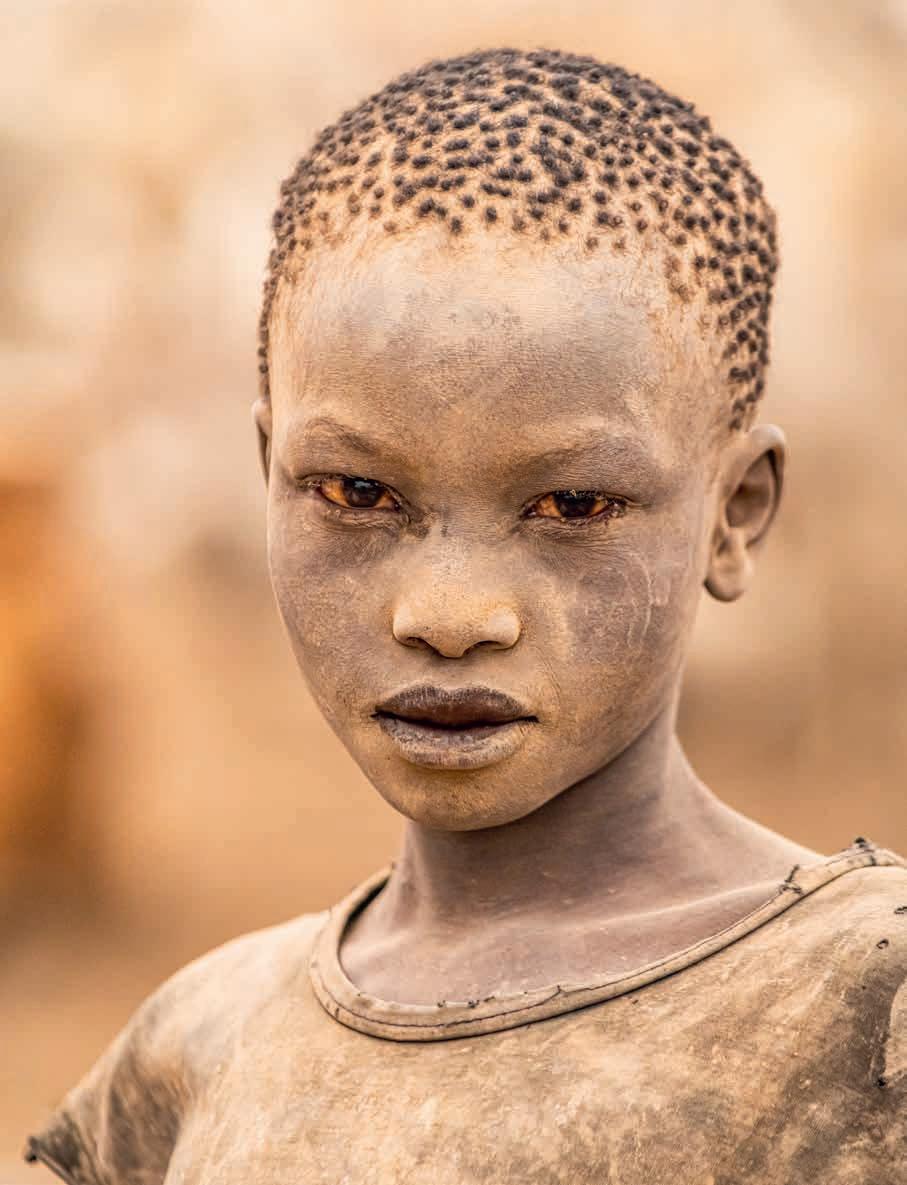
During a two-week trip in 2019, I experienced the Mundari camp in the first light of day: men moving through rising clouds of dust, covering their skin with ash, and getting the cows ready for the day. The closeness between people and animals was more intense than I’d seen in other nomadic cultures—almost like they were breathing together, holding the community close.
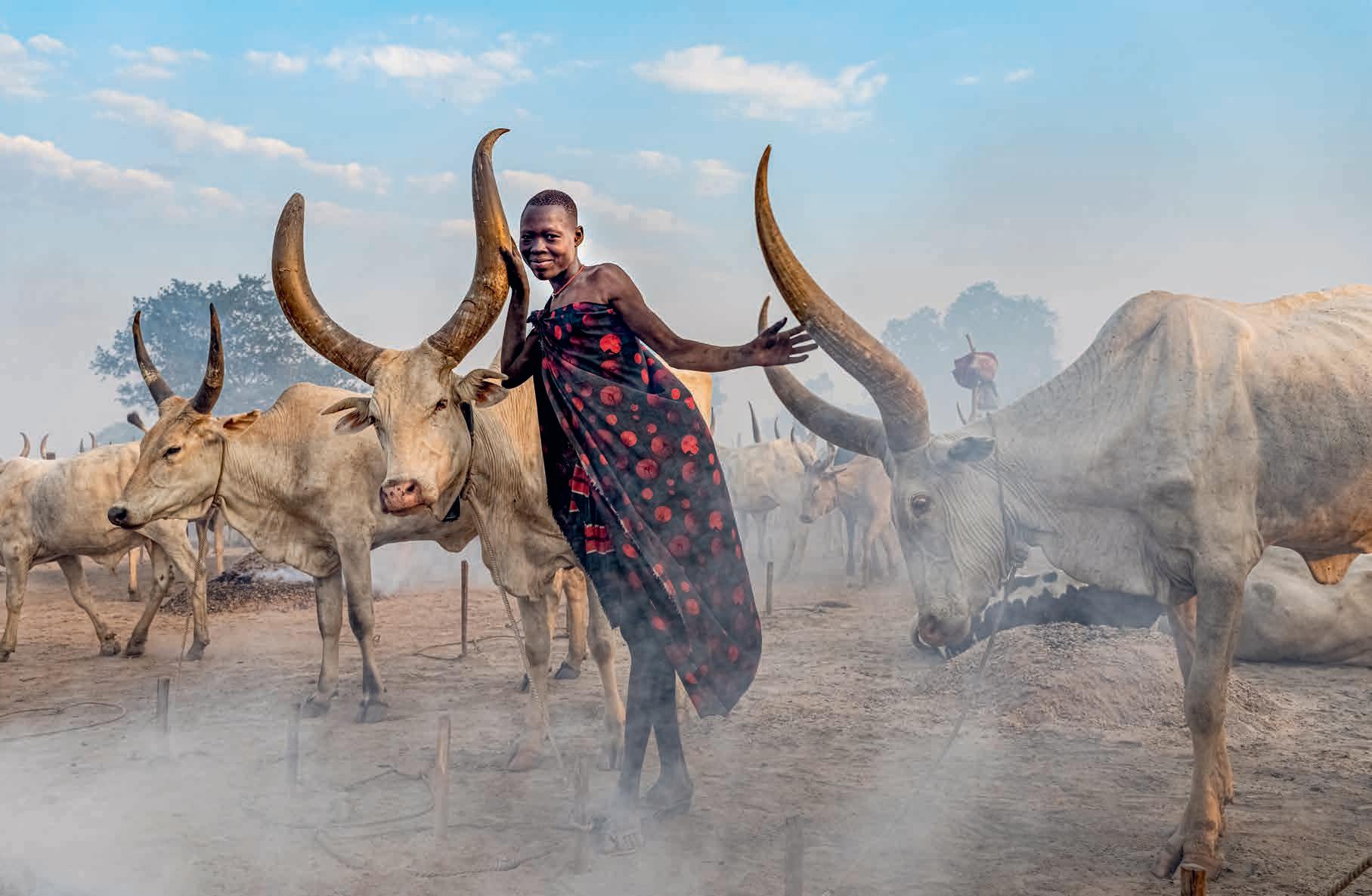
The herd isn't just property—it’s their livelihood, social status, and spiritual center all at once.
In a landscape that swings between drought and flooding, access to water decides the daily survival of people and animals.
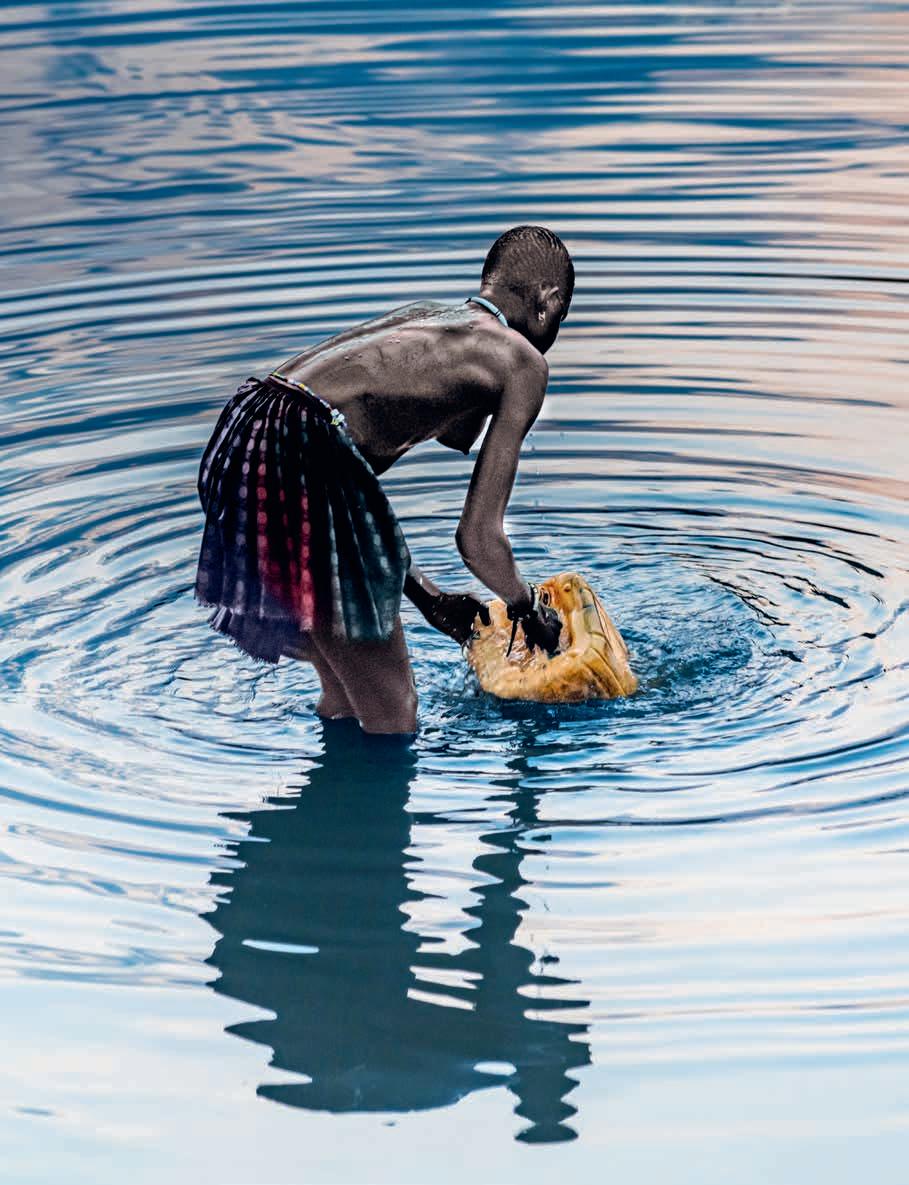
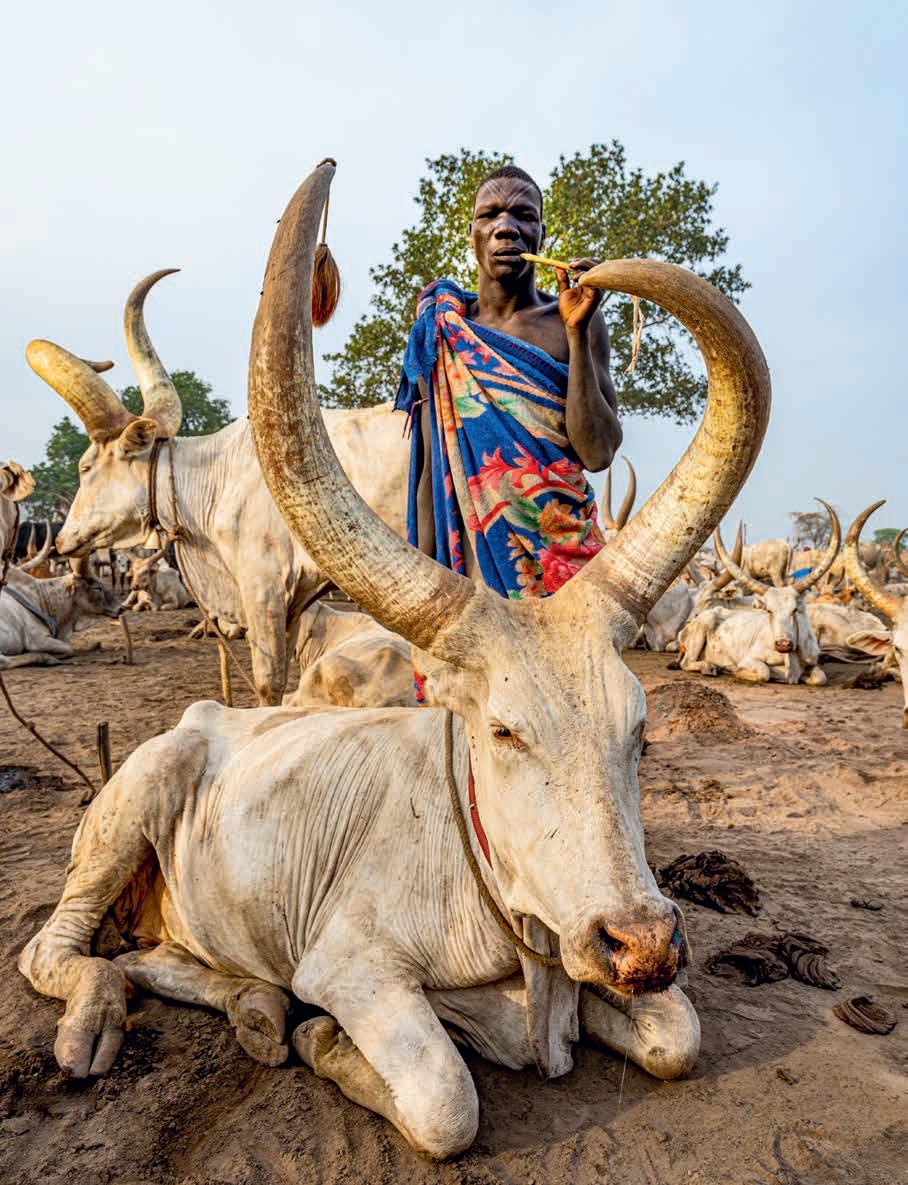
The close bond shows in everyday life: The animals are companions, wealth, and part of a centuries-old social order.
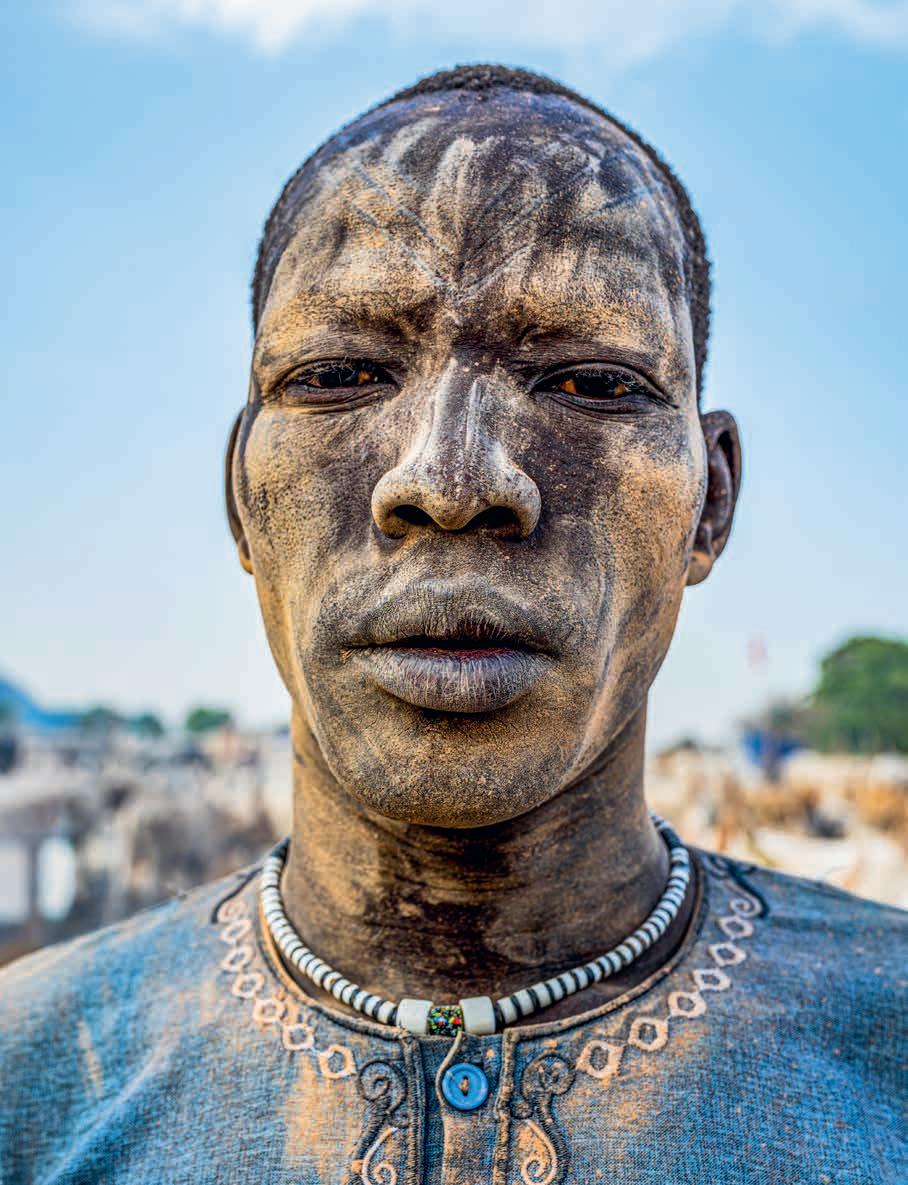
The delicate patterns on his clothes and the jewelry around his neck point to tradition and belonging.
The journey took hours over dirt roads that are barely passable in the rainy season. The region is considered security-fragile: armed groups, nighttime raids, political tensions. But in the camp itself, there was a surprising calm, shaped by the deeply rooted hospitality of the Mundari.
The dry season brings heat over forty degrees, parched pastures, and shrinking waterholes—conditions that force people and herds to keep moving. The rainy season quickly transforms the savannah, but also brings floods and insect plagues. These extreme changes make the Mundari especially vulnerable to climate change and shape their whole rhythm of life.
The Mundari are organized into clans, with leadership roles passed down through families. Most decisions are made by the elders, whose authority comes from their experience and their responsibility for the herds. But these traditional structures are under growing geopolitical pressure: conflicts over grazing land, armed groups, and unstable politics restrict migration routes. Many regions can only be crossed with caution—or not at all—which threatens their mobility, supplies, and cultural continuity.
Spiritually, the Mundari look to the god Ngun, who watches over people, animals, and nature. Offerings and blessings mark transitions, seasons, and hard times, showing the close link between religion and cattle herding.
The transition to adulthood takes young Mundari into the savannah for weeks. There, they learn strength, endurance, singing, dancing, and responsibility. The camps are marked by tall poles with painted cattle skulls—a symbol of courage, community, and connection to ancestors.
Milk is the main food—fresh, fermented, or as yogurt. Blood is sometimes added, while meat is only eaten at important celebrations. A technique typical for the Mundari is blowing into a cow’s vagina to stimulate milk production. This practice is seen as purely functional and shows just how deep their knowledge of animal behavior goes. Isolation and outside influences
South Sudan, Central Equatoria
HABITAT
Savannah along the White Nile
POPULATION GROUP
Nilotes
MAIN ECONOMY
Cattle breeding (cows)
DIET
Mainly milk, yogurt, sometimes blood; meat for ritual occasions
SOCIAL STRUCTURE
Clan-based; herd size defines status
BELIEF
Worship of the god Ngun
MOBILITY
Seasonal migrations depending on climate and water sources
CLIMATE
Extreme dry seasons, short rainy periods
THREATS
Climate change, conflicts over grazing land, political instability, young men leaving
SPECIAL FEATURE
Cattle determine status, relationships, and wealth. The size of the herd decides marriages, obligations, and alliances— livestock is the tribe's social currency. Daily life happens right around the animals. People sleep near the herd to protect them and move with them through the savannah. A mix of ash, cow dung, and water protects skin and cattle from sun and bugs; the men’s orange-dyed hair is both decoration and mosquito repellent. Cow urine is also seen as cleansing and is traditionally used for care.
Close human-animal relationship and strong ritual cattle culture
Even though they're close to the capital Juba, the Mundari camps feel like islands from another time: darkness at night, hardly any machines, barely any electricity. But modern things are slowly creeping in—some cell phones, plastic containers, motorcycles. The community stays secluded, but not untouched.
Challenges and Threats
Climate change, political instability, conflicts over grazing land, and young people leaving make their way of life more and more fragile. Some elders say that old migration routes are now blocked. At the same time, city life draws young men away—a quiet loss that threatens traditional knowledge.
One of the most impressive moments happened one evening by the fire: A young man, his face gray with ash and his hair dyed orange, showed me a scratched-up smartphone where he kept photos of his favorite ox—“so I don’t forget him.” That sentence captured all the tension between tradition and modern life, between staying the same and changing.
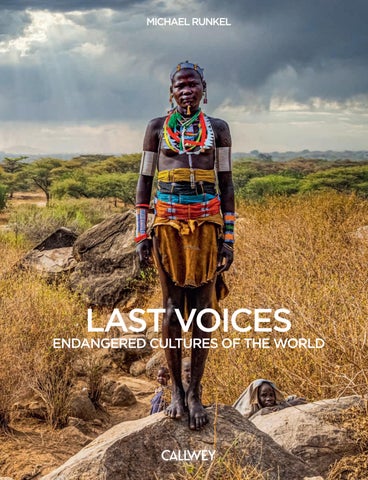
They live in the rainforests of the Amazon, in the vastness of the Arctic, on remote islands in the Pacific, in the highlands of Ethiopia. Their traditions go back thousands of years—but with every generation, a bit of this knowledge lost.
Michael Runkel, one of the most well-traveled people in the world, went searching. Over the years, he has more than thirty peoples, whose ways of life are rapidly changing in the tension between modernity and tradition. He talked to elders, took part in rituals and captured moments that, in just a few years, won't happen like this anymore.
This Callwey book shows the interplay of people, nature, and ancient knowledge. Each chapter tells the story of a culture: how it lives, what it believes in, which customs it keeps—and which ones quietly disappear.
Personal travel stories, surprising encounters, and solid background knowledge show the cultural diversity of our planet.