media /ˈmiːdijə/
plural form of
medium /ˈmiːdijəm/
noun
• any raw material or mode of expression used in an artistic or creative activity: four pictures were set in the walls.., mosaics, they seemed—but he did not examine their medium closely.
• any physical material used for recording or reproducing data, images, or sound: in the process of registering sounds, the recording medium being transparent ribbon coated with an opaque substance.
• an intervening substance through which a force acts on objects at a distance or through which impressions are conveyed to the senses; any substance considered with regard to its properties as a vehicle of light or sound: the air, which is the medium of musick and of all sounds.
• a pervading or enveloping substance; the substance in which an organism lives; one's environment, conditions of life, or usual social setting: the aetherial medium (wherein all the stars and planets do swim).
Oxford English Dictionary, 3rd Edition
64 digital plantations alenda y. chang
the visual commons nina lager vestberg 86 spectral sections david salomon 70 opaquing contemplation daniel coombes
ice-core media susan schuppli
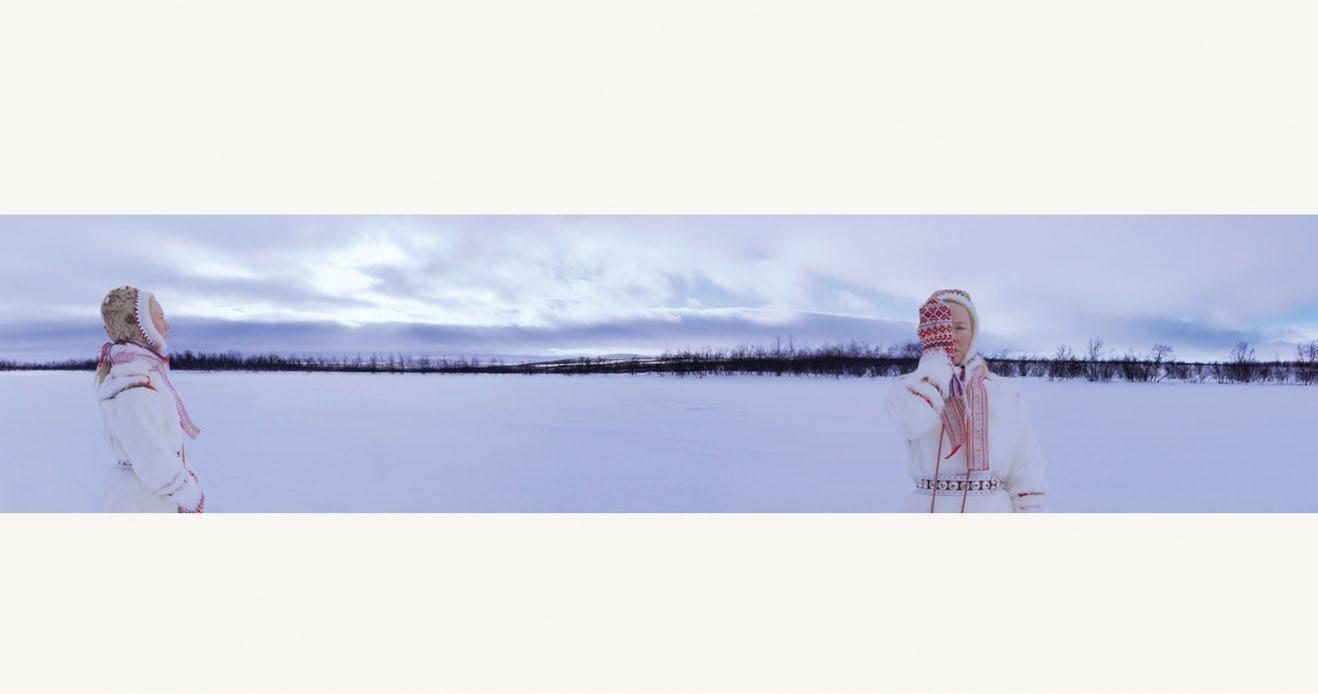
immersive worlds and indigeneity alison griffiths
78 media architecture on the horizontal plane dave colangelo
94 postscript to brutalist earth bryan norton
100 fossil fabulation rania ghosn
108 a tribute to richard weller image credits Upcoming Issues
Abelardo Gil-Fournier is an artist and researcher whose work explores the entanglement of media and matter. With a background in physics and a PhD in art, his practice spans installation, image, and computation. He has exhibited internationally and co-authored Living Surfaces (2024) with Jussi Parikka. He is currently a Leonardo grantee of the BBVA Foundation.
Jussi Parikka is a professor in Digital Aesthetics and Culture at Aarhus University and visiting research professor at the University of Southampton (Winchester School of Art). He is the author and editor of several books, most recently the co-authored Lab Book (2022), Operational Images (2023), and with Abelardo Gil-Fournier, Living Surfaces (2024).
The surfaces of the planet are made of light. Such light is not only for illumination; it does not simply “make visible.” Light is the intensive force that links the sun and the Earth into a circulation of matter and energy. This circulation is atmospheric, even foundational to atmospheres. Such circulation includes other forces, too. A space of mediation is involved; loops beget loops. Oxygen and ozone cycles emerged during the socalled Great Oxidation period, some two billion years ago, as cyanobacteria became agents of photosynthesis. The fossil layer had to wait until the extensive land colonization by plants during the Devonian period, 400 million years ago, when sunlight “sank” below the surface as fossils and the carbon cycle. Light remakes landscapes across deep time, across surfaces, across loops.
Light involves other agents, too. The large-scale extraction of energy from the Earth’s fossil reserves and its consequences for the planet is the most obvious example of planetary-scale time being burned into an intensive reformatting of the surface and the atmosphere. This loop involves humans. In Anthropocene history, this is no longer the same techno-temporal stack as Natural History (as a knowledge and logistics infrastructure)
ART, DIGITAL AESTHETICS
once was.1 Instead, technical agents, or technical media, are added into the loops: some built upon capturing light, some upon capturing reflections of visible and invisible energy. A technical stack of sensing emerges as the cause and condition of large-scale change.
Our recent book, Living Surfaces, focuses on these interacting loops that become articulated across vegetal surfaces, some at a landscape scale.2 We are interested in the spatial and temporal stabilization of the planet’s vegetal surfaces through image practices. The concept of surface, as explored by Giuliana Bruno, is a space of material tensions shaping image formation and modulating its effects.3 In Living Surfaces, we extend this concept to an environmental scale, although “environmental” is a term that does not explain scale but is implied in multiscalar loops. Images become a layer and a loop that articulate the problem of light in a particular way: they become analytical operators as well as interfaces.4 In other words, an image of a landscape is its potential operationalization – analyzing an image as a landscape surface assumes the possibility of intervention. The photosensitive capture of light, including photography,
and scientific applications like photometric measurement, have occupied a central place in knowledge about vegetal surfaces since the 19th century. However, gradually, remote sensing became at least as significant: the visual and the invisible spectrum of radiation, alongside the “invisual” circulation of light as data.5 Yet another loop.
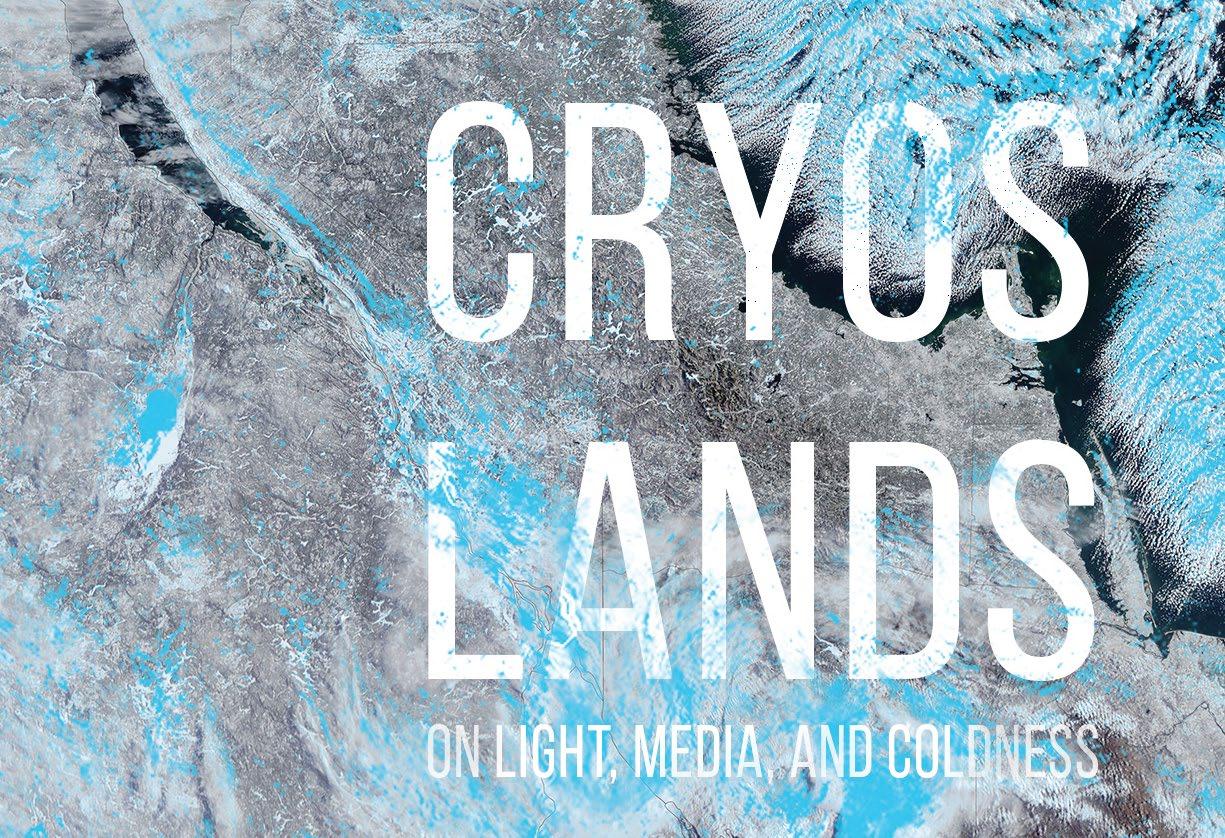
This essay is about light, remote sensing, and cryospheric landscapes central to planetary loops. Light emerges as a radiant force of energy and information, recirculated as images through material surfaces such as agriculture or forests. Light binds together so-called nature and so-called media. The fabricating function of remote sensing, lidar, and other light media beyond visible radiation has become a backbone for Earth observation and, thus, planetary-scale computation. This technological evolution has been especially significant since the 1970s, with the military use of satellite sensing. This narrative is not so much about a species-level history of humans as it is about a particular military-industrial complex and its role as a central agent in reformatting the planet. Today’s climate crisis introduces an excess of light that “overexposes” the circulation of images and surfaces.
and indigeneity
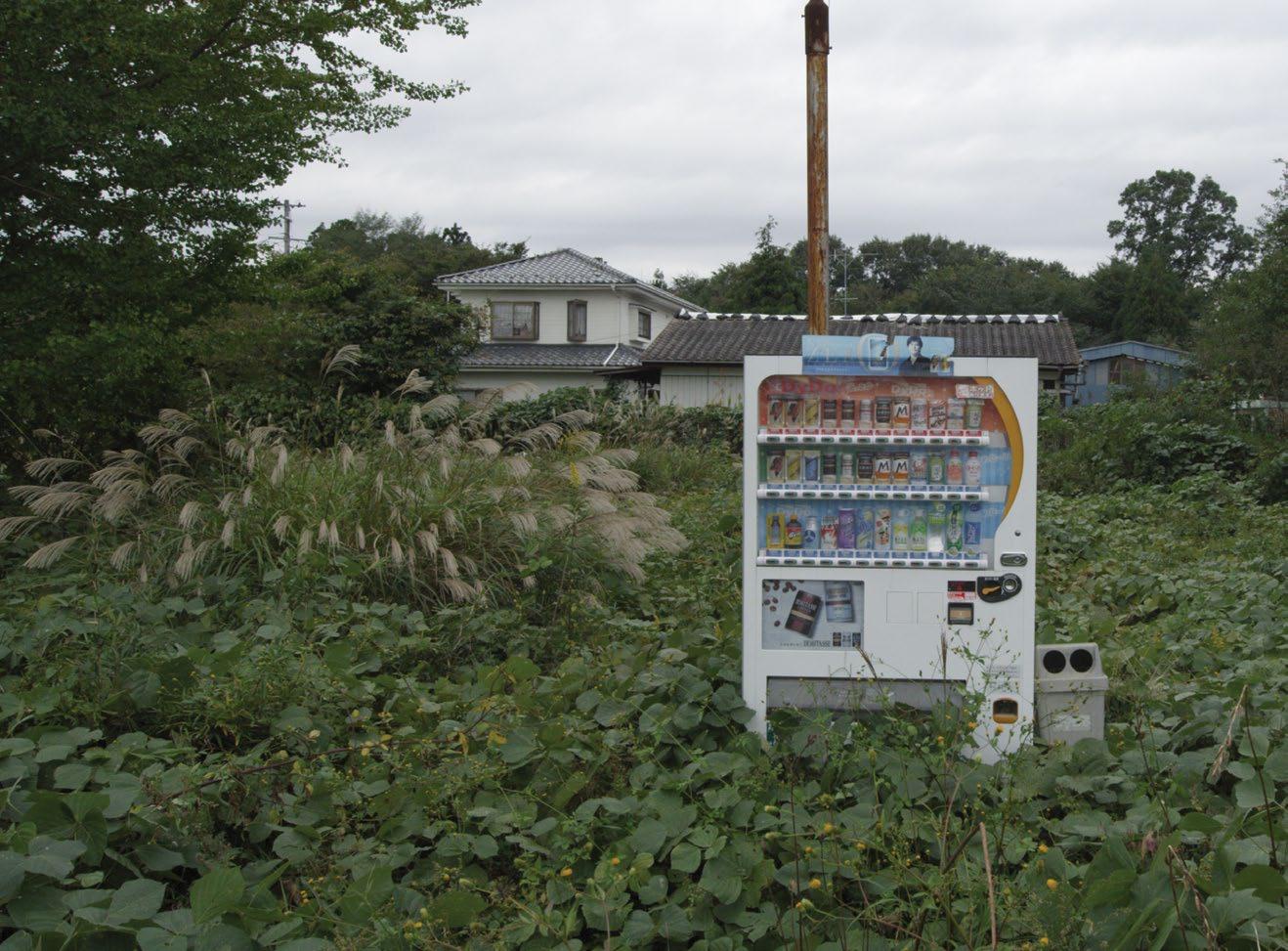
These observations serve as an unfortunate but undeniably timely reminder that media have become more than the passive vessels through which we contemplate landscapes and each other. Medium, and media, can describe substrates for growth, formal materials, and intervening substances for everything from ghostly visitations to the five o’clock news. Today, the rapid expansion of the nascent field of environmental media studies is, perhaps, proving that we have much to gain by broadening our definition of media beyond traditional categories of mass media to include our bodies, the planet, and even the air we breathe.3 For some, this redefinition of “media” is a gross misuse of the term; for others, it is a salutary acknowledgment that humans have never stood apart from their environments, that what affects the land and water and animals and plants will inevitably affect us as well.
Nature ex situ
Video game environments are another kind of environmental media that, no doubt, seem even further removed from nature than photographic ad campaigns. However, game worlds have much to tell us about ecological relations, or the lack thereof, starting with the provenance of the countless 3D models that populate games and the ever-growing digital surround in cinema, television, art, architecture, and other industries. Artists and designers increasingly aspire to a level of environmental modeling that mimics the real world, whether through painstaking hand work, scanning, or the purchase of prefabricated assets. The environments that we now see and interact with every day on our smartphones, tablets, television screens, and computers (or giant airport kiosks designed to look like touchscreens) thus exert an undeniable influence on how we conceptualize nature and our place within it.
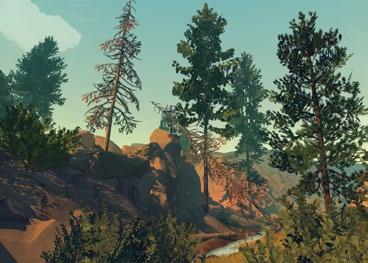
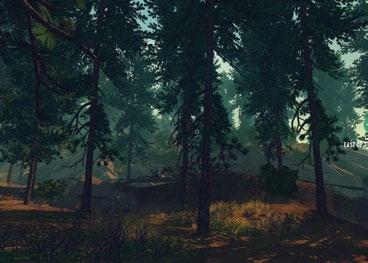
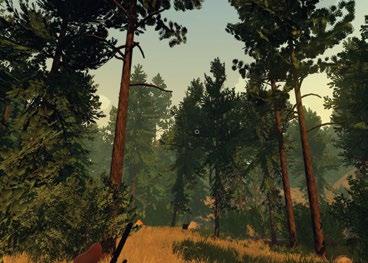
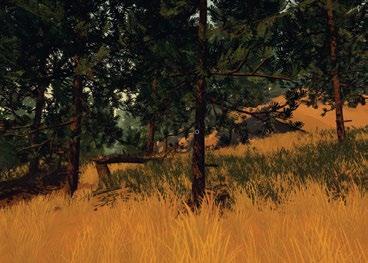
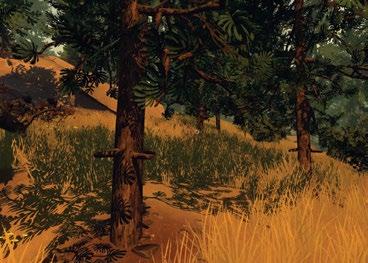
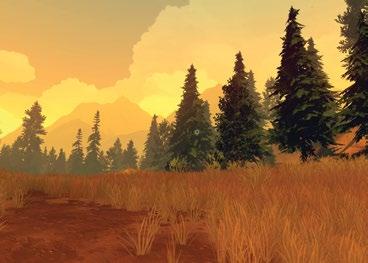
Take the game Firewatch (Campo Santo, 2016), which simulates the Shoshone National Forest in Wyoming as a backdrop to the main character’s plot arc as a summer fire lookout. The game was widely celebrated for its environmental realism even as, for practical reasons, artist Jane Ng individually modeled only 23 distinct types of trees, among them lodgepole pines, blue spruce, and aspen.4 Of these, 14 were the main workhorses, which were placed nearly 5,000 times across the game’s landscape, with the game’s developers trusting that players would be unlikely to notice identical trees when deployed with various degrees of rotation and pitch. When I learned this about the game, which I very much admire despite this sleight of hand, I felt a bit like I did when I first learned that American national forests are extensively logged—disappointed, albeit from a place of naivete.5 Since playing Firewatch, I have made it a habit to peruse popular marketplaces for 3D models, such as the Unity Asset Marketplace, Sketchfab, or TurboSquid, to get a rough sense of the accuracy and proportionality of “natural” assets compared with “built” environment assets such as furniture, vehicles, or buildings. Sometimes these models are produced by amateurs with professional aspirations. Others are made by seasoned artists, small studios, or entire companies dedicated to asset modeling. Although many of these producers
have taken laudable steps toward improving the quality and botanical accuracy of, say, tree models, the dominant approach remains one based on “good enough” approximations set at a tolerable price point for commercial sales, which results in substantial gaps in species and regional coverage. I have come to think of these digital asset libraries as plantations of the 21st century, monocultures of not just the species modeled but also the processes used to produce the models, which range from computer-assisted design software to photogrammetry and lidar scanning.
Naturally, the term “plantation” is not a comfortable one. In the United States, it is inevitably bound up with our country’s ignominious history of employing slave labor, particularly in the South. The dehumanizing commodification of enslaved Africans has always run parallel to the monocultural logic of the plantation—one crop, raised to the exclusion of all other species—both being systems designed for maximum profit with little regard for ecosystem or community health. It is with some trepidation that I deploy the term here to describe a more contemporary set of circumstances, although historical plantations are still with us in the pesticide-laced fields, robot factories, and migrant workforces of modern agriculture. What I am referring to instead is the proliferation of digital models created to serve as nature ex situ, whether in the increasingly computer-generated worlds of professional cinema, television, architecture, and video games or the countless amateur projects for which a quick internet search yields pages of highly portable stock images.6
Like real plantations, digital plantations highlight only what is most valuable as a commercial product. This fact might explain the numerous apple species packs in SpeedTree (a leading digital vegetation catalog and design tool) and the conspicuous absence of trees common to other parts of the world, like mulberry or guava – or the presence of Cannabis sativa but not khobeza, the weedy variety of mallow that has been a staple of the famine diet of Palestinians during the war in Gaza. For me, these plant libraries are akin to the “floating islands” examined by Jussi Parikka and Abelardo Gil-Fournier at the beginning of their book Living Surfaces, trees sent wholesale by barge or cargo ship that speak to the isolation of species, their “synthetic natures” reflective of complex logistics and changes in land use.7 As seen in the epigraph to this essay, Anna Tsing, who popularized the term Plantationocene, views plantations as “machines of replication,” that is, “simplified ecologies” in which “life worlds are remade as future assets.”8 Assets are, for Tsing, “disentangled things” removed from the landscapes from which they come.9 However, they are not just alienated from the land – they are also alienated from the people who labor there, the rest of their complex ecosystems, and the other particularities of actual places, including the possibility of chance encounters. Tsing uses the word “asset” in the financial sense of speculative investment but could just as easily be talking about digital assets given the way in which they are created, stored, and, later, staged as platforms for future play and profit.
1 Anna Tsing, “Earth Stalked by Man,” The Cambridge Journal of Anthropology 34, no. 1 (2016): 4.
2 Christina Dunbar-Hester, Oil Beach: How Toxic Infrastructure Threatens Life in the Ports of Los Angeles and Beyond (University of Chicago, 2023).
3 For a sampling of pivotal work in this area, see John Durham Peters, The Marvelous Clouds: Toward a Philosophy of Elemental Media (University of Chicago, 2015); Melody Jue, Wild Blue Media: Thinking Through Seawater (Duke University Press, 2020); and Yuriko Furuhata, Climatic Media: Transpacific Experiments in Atmospheric Control (Duke University Press, 2022).
4 Alenda Y. Chang, “Between Plants and Polygons: SpeedTrees and an Even Speedier History of Digital Morphogenesis,” electronic book review (December 15, 2019), https://doi. org/10.7273/wtdf-7w30.
5 Oliver Milman, “US Forest Service failing to protect old growth trees from logging, critics say,” The Guardian (August 1, 2024), https://www.theguardian.com/environment/ article/2024/aug/01/us-forest-service-oldgrowth-trees-deforestation-logging.
6 Alenda Y. Chang, “Where the Model Ends,” Configurations 32, no. 2 (Spring 2024): 213–27.
7 Abelardo Gil-Fournier & Jussi Parikka, Living Surfaces: Images, Plants, and Environments of Media (MIT Press, 2024).
8 Tsing, “Earth Stalked by Man,” 2.
9 Ibid., 4.
10 Some will argue that digital archives are ideal because of their ability to float freely across the computing cloud in redundant ways; however, they could also end up fortress-like, along the lines of the Getty Museum’s well-known assertion that its cunningly constructed campus is the “safest place for art during a fire.” See Caitlin Shamberg & Annelisa Stephan, “Why the Getty Center Is the Safest Place for Art During a Fire” (October 29, 2019), https://blogs.getty. edu/iris/getty-center-art-library-collectionssafe-fire/.
11 Bernard K. Means, “Gone These Hundred Years: Digital Zooarchaeology of the Passenger Pigeon (Ectopistes migratorius),” the Virtual Curation Laboratory blog, Virginia Commonwealth University (September 1, 2014), https://vcuarchaeology3d.wordpress. com/2014/09/01/.
12 Xan Sarah Chacko, “The Vault Is a Bunker, the Arsenal Are Seeds,” LA+ Interdisciplinary Journal of Landscape Architecture, no. 19 (2024): 48.
13 Elizabeth Callaway, Eden’s Endemics: Narratives of Biodiversity on Earth and Beyond (University of Virginia Press, 2020), 10.
Opposite: Identical trees in Firewatch, which appear different because of rotation and pitch.
were often surveyor-artists, especially in the case of the New Zealand Company (a joint-stock land settlement group from England). Like landscape architects, these surveyor-artists represented future landscape conditions through drawing plants, perspectives, and plan views.
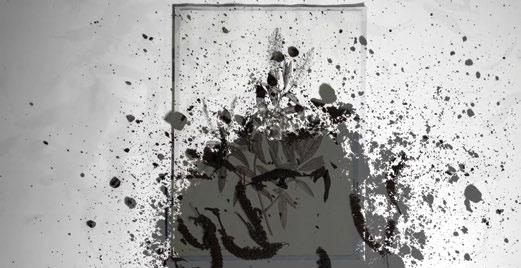
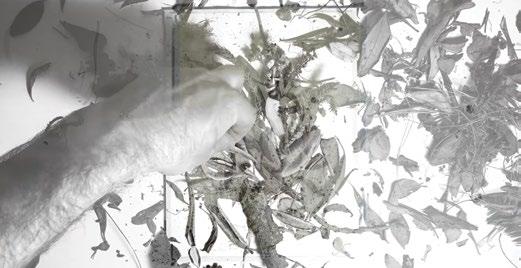
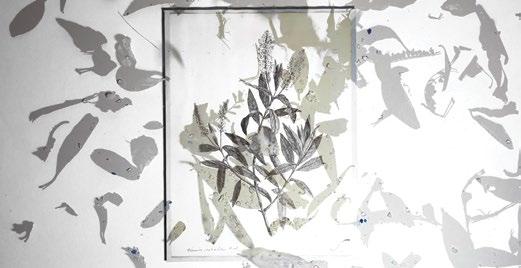
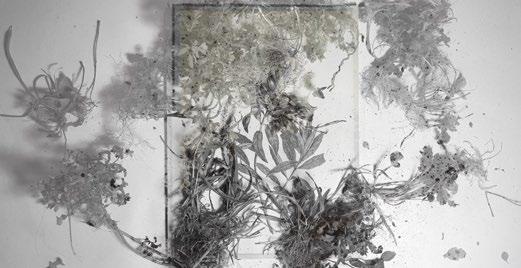
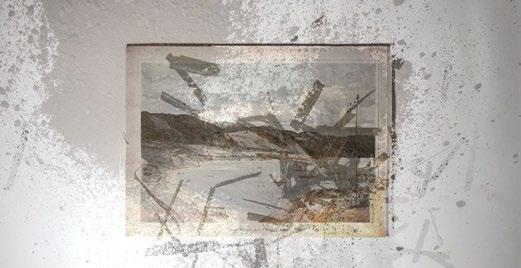
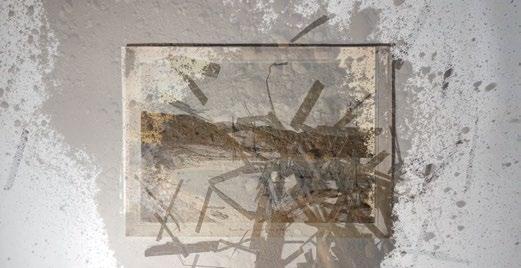
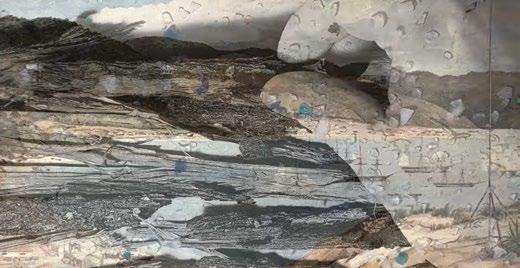
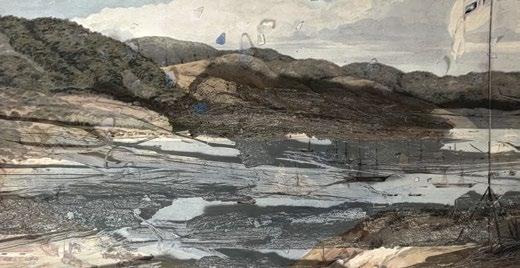
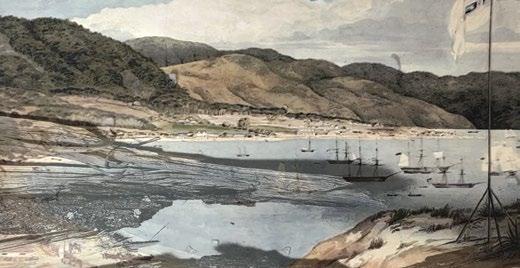
The initial idea for this work came from examining botanical engravings of plant specimens collected in Aotearoa by the botanists Joseph Banks and Daniel Solander, which the botanical illustrator Sydney Parkinson initially sketched. I noticed that the plants were depicted without the accompanying environmental media, such as soil, roots, and insects, the way they would have been found. This prompted my experimentation with adding absentee materials to the drawing and using simple video editing effects to simulate how the environmental media were extracted from the land. The practice of removal was, of course, not limited to botanical images or art in general. Indigenous peoples and nonhuman species were also removed from their lands or had it illegally taken. Mirzoeff reminds us of the William Blake quote, “Empire follows Art, & not vice versa as Englishmen suppose.”11 This was the case in Aotearoa: first came art, and then came Empire, although—in the case of the images shown here—they are interlinked.
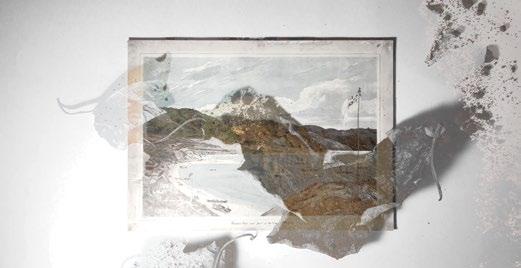
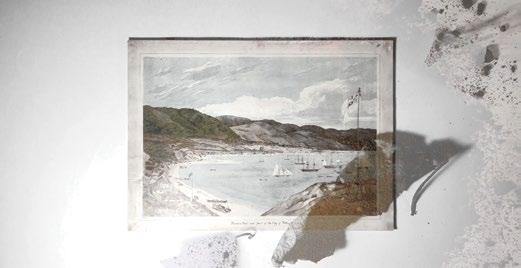
A Dash of Home comprises three acts, each with four scenes. These acts use colonial images from the 18th and 19th centuries, initially created in Aotearoa. The first image, Hebe salicifolia (G. Forster) Pennell, is a copper engraving produced in 1895 from a Sydney Parkinson illustration. Parkinson was a botanical artist on board Cook’s Endeavour, which arrived in Aotearoa in 1769. Act 2 features William Mein Smith’s 1840 plan for Wellington. Smith arrived on the New Zealand Company ship, the Cuba, in 1840. The third image is an 1841 landscape watercolor of Wellington, titled Thorndon Flat and part of the city of Wellington, made by the surveyor-artist Charles Heaphy, who arrived on the ship the Tory in 1839. Both Smith and Heaphy were surveyor-artists for the New Zealand Company.
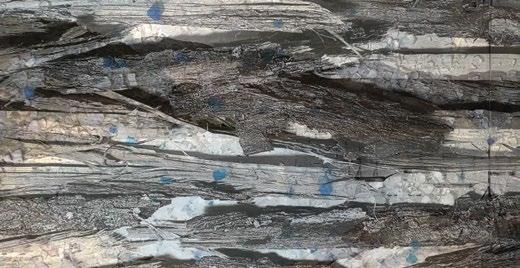
This work critically and creatively reflects on the visual contemplation of Māori land by Pākehā settlers, both past and present. As a Pākehā, I attempt to modestly alter the transparency of the imperial screen by disrupting the perceived neutrality of truth-to-nature media. Like the previous image iterations, which used a translatory medium, primarily copper engraving and lithographic print, my iteration utilizes video. The three acts of the video present the base images chronologically. However, the scenes within the acts are not narrative-based. Instead, each scene represents a different attempt to puncture the screen. Any teleological function embedded in the existing images is countered by contemplating them as a series. The
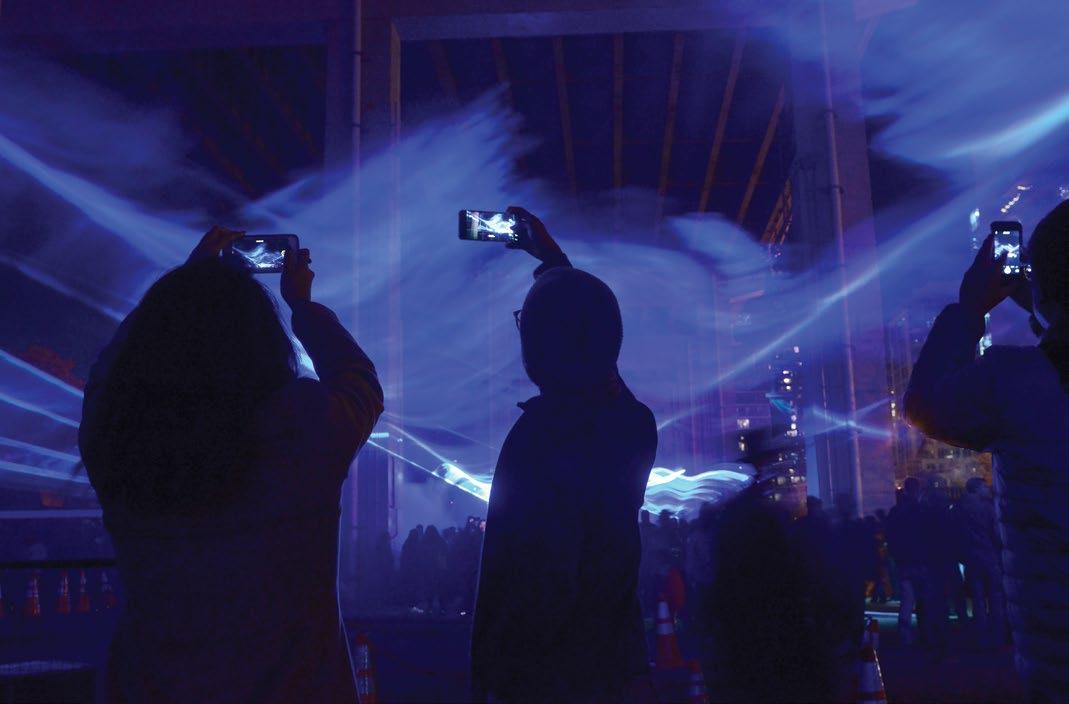
topographic media. It created a story to be walked in and lived amongst. It eschewed the perceivable limits, devices, and/or frames typical of most screen-based media and of more vertically oriented media architecture such as the CN Tower, which also glowed blue, in the distance.
The concept of the post-screen, and examples like WATERLICHT, leave us to wonder: what happens when screen/non-screen boundaries dissolve? What takes over the attentioncentering function once performed by the frame? Is it interaction? Personal connection? A sense of horizontally distributed pervasiveness or coordinated action? And what are the potentials and pitfalls associated with the new morphological resonances emerging between virtuality and materiality in media/cities?
Theater and scenography, the design of theatrical scenery, might offer some perspective on the impacts and effects of encroaching virtualizations aided and expressed by expanded media architectural infrastructure across landscapes and horizontal planes. In Beyond Scenography, Hann argues that theater’s ongoing movements away from its orthodoxies into more immersive and intermedial practices make theater and scenography well placed as proxies for the spatialized semiotics and narratives that abound in a post-screen milieu.18 Stage design’s familiarity with the interplay of space with sound, light, colors, pictures, and text also contributes to its usefulness as a framework for understanding media architecture.19 Hann proposes that new “scenographic traits score ongoing processes of worlding through discrete interventional acts of ‘place orientation,’ where orientation is inclusive of haptic proxemics and orders of knowledge.”20 In other words, scenographics better represent the “fast architecture” of screen/space environments in which place orientation (and re-orientation) occurs through encounters of media and embodied subjectivity. For Hann, this amounts to a shift in authority in landscape and architecture. As Hann notes, “Seriousness in architecture is all too often bound to an inferred or explicit monumentality” that gains “authority through endurance.”21 Instead, a scenographic architecture is more oriented to the rhythms of refresh rates and the accelerated rituals of digital communication that are increasingly temporary, provisional, and device and location specific.22 In this way, media architecture on the horizontal plane is, for better or worse, anti-facade: it does not aim to conceal or disguise, but instead to orient an audience to ephemeral stories that are written for and read in embodied motion, and that are made temporarily sticky by the personalization, coordination, timeliness, and that tie in to lifeworld events that media architectural infrastructure afford.23
Advancements in advertising exemplify and entrench conditions of post-screen scenographic landscape media architecture. A 2023 Uber Eats campaign entitled “Iftar Incoming” incorporated the actual time until sunset into digital ads placed dynamically in specific screen locations across the UK. The locations were algorithmically selected to maximize the customized ad’s exposure to a specific customer profile compiled from location and purchasing data. In this case, the ads were served to hungry, tech-savvy observers of Ramadan waiting for sundown to break their fast. Scheduled deliveries for Uber Eats increased by 21.2%.24 The month-long campaign rolled out across a network of DOOH advertising screens. These screens, like the digital screens of Piccadilly Circus, the Wi-Fi-enabled kiosks of the LinkNYC or LinkPHL networks, or digital displays at bus shelters, in shopping malls, and in the restrooms of bars and restaurants in cities around the world, have become more numerous and sophisticated.25 While on the surface they appear as mere display technologies, many DOOH screens can gather data about the people and conditions in their vicinity. By coordinating contextual data with other purchasing and location data from cellphones, cameras, and other sensors in the “smart city,” publishing platforms for advertising can incorporate parameters such as age, income, family status, location, dwell times, weather, and traffic data into the buying and selling of ads.26 Thus, the way ads like the Uber Eats “Iftar Incoming” campaign in London are served in the public space are now replicating the way targeted ads are delivered
9 Dylan Robinson, “Public Writing, Sovereign Reading: Indigenous Language Art in Public Space,” Art Journal 76, no. 2 (2017), 85.
10 Mother London, “Uber Eats Iftar Incoming” https://motherlondon.com/work/uber-eatsiftar-incoming/ (accessed November 20, 2024).
11 Shannon Mattern, “Deep Time of Media Infrastructure,” in Lisa Parks & Nicole Starosielski (eds), Signal Traffic: Critical Studies of Media Infrastructures (University of Illinois Press, 2015); see particularly 96.
12 Ibid., 96.
13 Ibid., 102.
14 Ng, The Post-Screen Through Virtual Reality, Holograms and Light Projections
15 Ibid., 16.
16 Ibid., 26.
17 Studio Roosegaarde, “WATERLICHT.”
18 Hann, Beyond Scenography
19 Gernot Böhme, “Atmosphere as the Subject Matter of Architecture,” in Philip Ursprung (ed.), Herzog & de Meuron: Natural History (Lars Müller Publishers, 2002), 406, quoted in ibid., 119.
20 Hann, Beyond Scenography, 2.
21 Ibid., 121.
22 See Scott McQuire, Geomedia: Networked Cities and the Future of Public Space (Polity, 2016); Nanna Verhoeff, Mobile Screens: The Visual Regime of Navigation (Amsterdam University Press, 2012); Adriana de Souza e Silva & Jordan Frith, Mobile Interfaces in Public Spaces: Locational Privacy, Control, and Urban Sociability (Routledge, 2012).
23 Ng, The Post-Screen Through Virtual Reality, Holograms and Light Projections, 28.
24 Martin J. Rose, “Iftar Incoming,” https:// martinjrose.com/project/iftar-incoming (accessed December 4, 2024).
25 Cities.Link, “Link,” https://www.cities.link/ (accessed November 20, 2024).
26 Rob Kitchin, “The Ethics of Smart Cities and Urban Science,” Philosophical Transactions of the Royal Society A 374, no. 2083 (2016): 1–15; Shapiro, Design, Control, Predict
27 Dave Colangelo & Zach Melzer, “On Emptiness: Spacing in Media Architecture,” in Erica Stein, Germaine R. Halegoua & Brendan Kredell (eds), The Routledge Companion to Media and the City (Routledge, 2023), 154–66.
28 Malcolm McCullough, “On the Urbanism of Locative Media [Media and the City],” Places 18, no. 2 (2006): 29. Quoted in Cresswell, Place, 148.
29 Robinson, “Public Writing, Sovereign Reading,” 85.
Opposite: WATERLICHT, Studio Roosegaarde. The Bentway, October 2018.
BRYAN NORTON
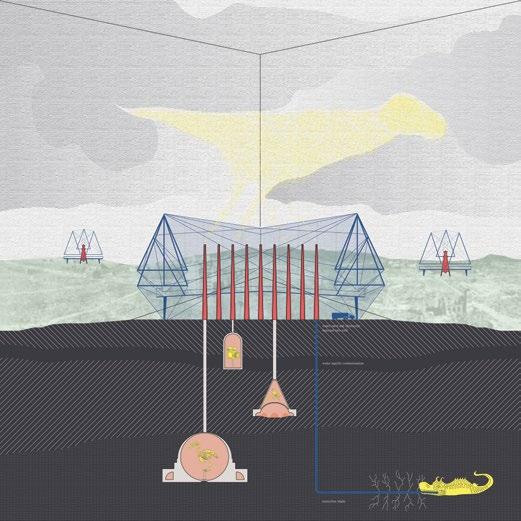
The Way of Dinosaurs
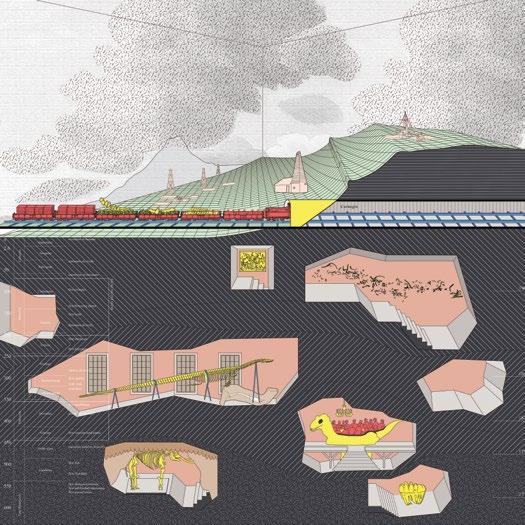
Act I: Carnegie Quarry (Exhumation)
In the West, paleontology and mining, two birds of a feather Dinosaurs and fossil fuels were extracted together
The Gold Rush and Bone Wars, a race to unearth Fossilized landscapes, exploited for their worth
Manifest Destiny steamrolled west on steel rail
Staked out mineral rights and land grants at scale
Settlers declared ancestral land a possession free to take Digging up matter that took millions of revolutions to make
Western Expansion built a still world of specimens inside With Andrew Carnegie as one philanthropic guide Slabs of deep time, packed up and shipped in crates East from the Quarry to museums across states
To stamp THE MOST COLOSSAL ANIMAL EVER ON EARTH with his name Camp Carnegie would be Andrew’s claim to fame Diplodocus carnegii was resurrected from below On Independence Day, beginning with one giant toe
Old bones tell of five mass extinctions so far
Of the latest, one dinosaur was cast a world star Dippy! A symbol of the Revolutionary War Pittsburgh: the stage for the star-spangled dinosaur
Act II: Carnegie Building (Manufacture)
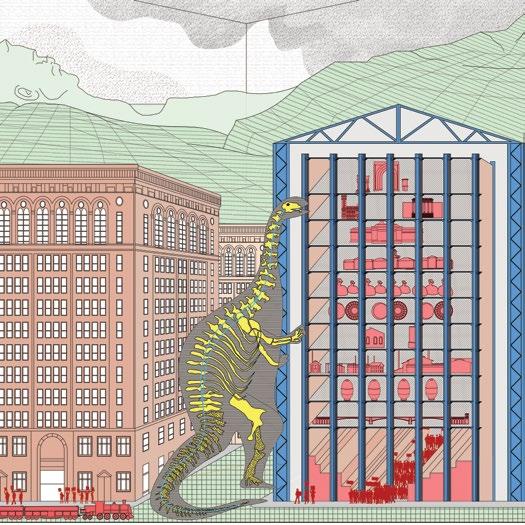
The terrible reptile does not stand on its own
A steel beam cast grips the curves of each bone Fossils of bones combined with shellac, iron, and steel Stirred up debate on what was fake and what was real
The steel beast joined together some creatures Sculpting new parts to fill in missing features Upward from there, in vertical integration
A towering Dinomania industrialist creation
Beams and column sections rolled out on repeat As skyscrapers rose up and down the street
Among these, the Carnegie Steel Company towerthe headquarters for his eminent wealth and power
Dark skies, sun up to sun down, laboring without break Workers fed the machine with sweat and much ache
A single holiday they received on the 4th of July
On the day Dippy was found, let the fireworks fly
On a fiery effort to halt exploitation, they bled And went on strike over Independence Day at Homestead Workers demanded plant safety and fair wage For the open-hearth furnace to continue to rage
Act III: Carnegie Museum (Reproduction)
Carnegie’s Palace of Culture was to settle
Social heat bubbling at degrees of molten metal
When Carnegie Steel merged into the largest corporation
The richest man in the world turned to philanthropic donation
His Gospel of Wealth—a handbook for a life of excess— Professed: inequality is essential to progress
Libraries, parks, and museums were The Crowning of Labor or the duty of a man of wealth to his less privileged neighbor
The House That Dippy Built was the robber baron’s view
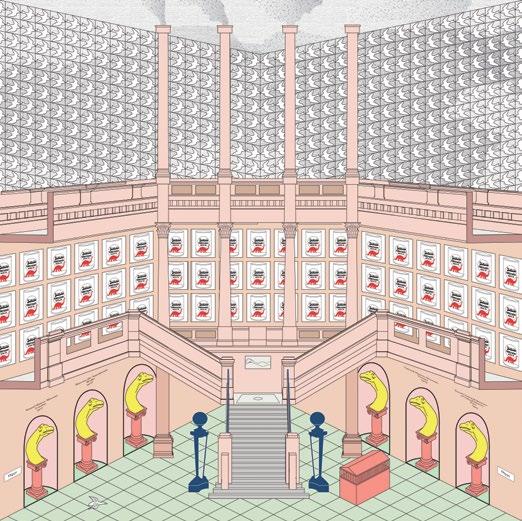
To fit the large skeleton, the Museum further grew Dippy was the centerpiece of the Grand Staircase
Bringing the world to workers who labor at the base
When the King asked for his own, it was surely no trouble
For the British Museum, they would simply make a double Plaster copies of Dippy were cast from a mold
And repeated for many heads of state to behold
The Hall of Architecture that Dippy stands beside Shaped a plaster world where old masters reside
The factory system and the industrial revolution
Reproduced uneven wealth and mass pollution
Act IV: Carnegie World (Extinction)
A FREE TO THE PEOPLE museum came at great cost
Lands and lives damaged, and many species lost Hell with the lid taken off, carbon out in the air
A trove of toxic harm, what a legacy to bear
After most dinosaurs went extinct, only birds remained
Now, many in turn are taxidermy mounts, neatly framed
In A Fable for Tomorrow, was a spring with no voices the canary in a coal mine to caution human choices
Pipelines and Pipe Dreams: a colossal fracking mess
Calling Natural Gas “Green Energy” puts more under stress
Drilling land in Pennsylvania for remaining carbon stores
Sends more living to museums, the way of dinosaurs
As life is held still, the Earth continues its motion
A world beyond fossil fools is the burning revolution
Birds, people, and critters, all together in mammoth size
A flock of climate action lights up the darkened skies
The Cloud Factory pumping soot out of stacks is removed from service with tiny, mighty acts
Land titles are restructured to leave fossils buried deep
Carbon is tucked in rocky beds and settles back to sleep