NADJA SCHAER
NADJA SCHAER
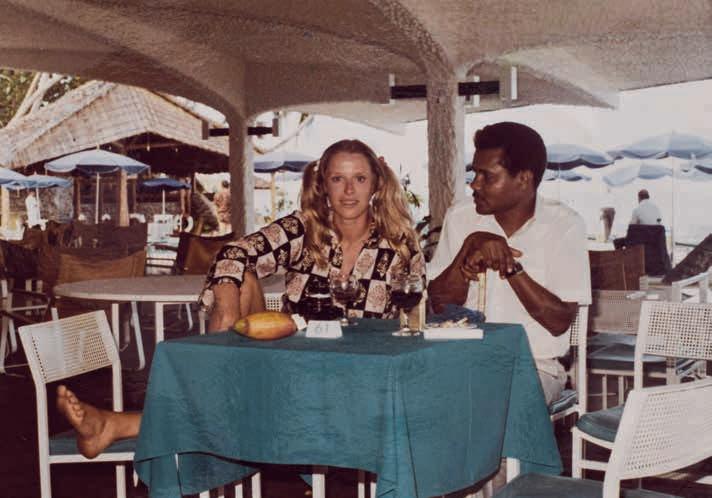
During Iris’s vacation in the Seychelles, her youthful charm and style won the hearts of the islanders and she found a new passion. “Back then, I bought myself a Nikon and started snapping photos. Tourism was still in its infancy and the Creole islanders had never seen anyone take pictures before, so there was enormous curiosity,” she says. Her photos were technically flawed, but highly expressive: “Sometimes out of focus, sometimes extreme closeups. Here’s a sunset. Africa! I thought ‘OK then, if you’re so talented, go off and learn it properly.’”

Iris von Arnim’s rainbow sweater completely captured the mood of the 1970s. During the era of student protests and peace movements, the rainbow symbol—already described in the Old Testament as a sign of peace—took on a whole new meaning. Iris von Arnim’s handknitted design was also an emblem of authenticity and nonconformity. It chimed with a desire for individuality, far from the strict morals and staid, sensible clothing of the social establishment. Fittingly, the designer wore her own sweaters, set off by her wild mane of curls, and asked friends to be models for her first designs.
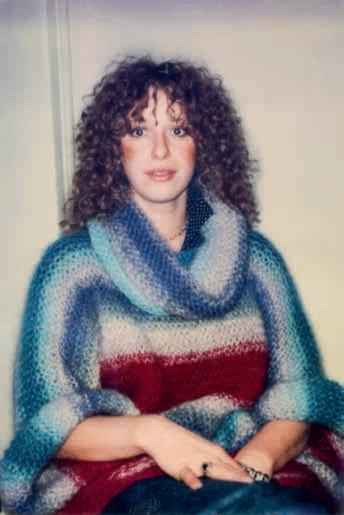
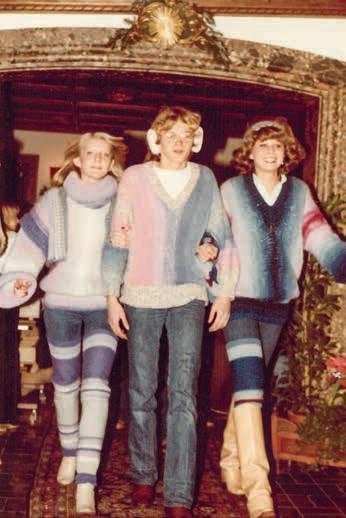
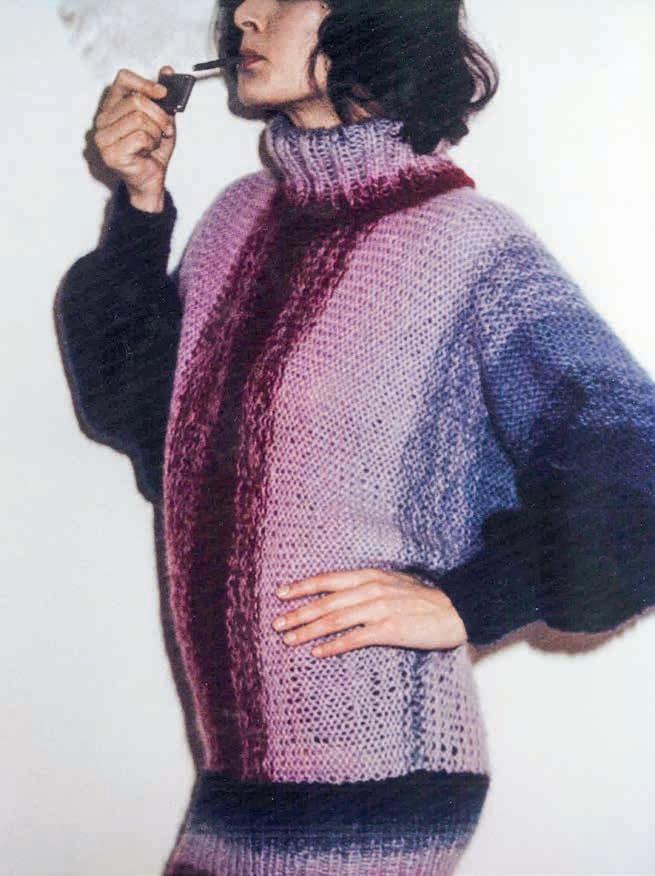
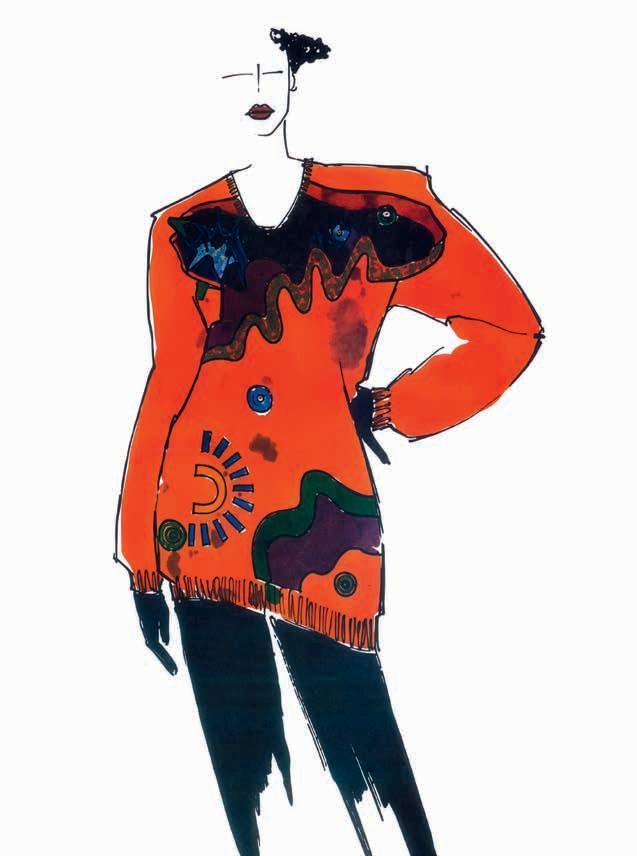
Iris von Arnim used soft wools to create wearable works of art that showcased her fascination with modern painting in every stitch.
“Fashion is always changing. You need a feel for when it’s time for something new. For me, the whole Rainbow Sweater idea eventually got old, and I needed new inspiration,” says Iris von Arnim. As her next move, she created intarsia sweaters with artistic motifs. Intarsia technique is considered one of the most challenging methods for creating motifs in knitwear. It involves knitting different colored areas like a mosaic, fitting them together perfectly to form bold largescale motifs in an almost painted effect. To maximize the impact, the designer drew inspiration from the art world: “My templates came from Picasso, Matisse, and all the way to Russian avantgarde,” Iris discloses. “Since I never went to fashion school, I taught myself everything at the start by tracing images from art books and turning them into intarsia patterns.”
Far from being innate, her interest in art only really developed in her midtwenties, when she moved to Stuttgart to attend photography school. During her studies, friends had arranged for her to stay with publishers Ursel and Gerd Hatje— an art historian, and a businessman who had found
ed his own art publishing house, Hatje Cantz Verlag, in 1945. “Their apartment had works by Pollock, Max Ernst, and Léger on the walls,” Iris von Arnim recalls. In addition, art critics and artists, including Christo, were always coming and going at the Hatjes’ home. “I was immersed in art, soaking up everything about the subject like a sponge,” Iris says.
By combining knitting and painting in a totally new way, the designer finally succeeded in creating a completely fresh look that revolutionized the knitwear of the time. “Knits were not seen as fashion, and definitely not as luxury. Knits were functional, and actually pretty boring,” sighs Iris. “My colorful motif sweaters stood out because they were unique; there was nothing like them on the market. At the Düsseldorf fair, buyers from the finest fashion houses in Germany fought over my sweaters.”
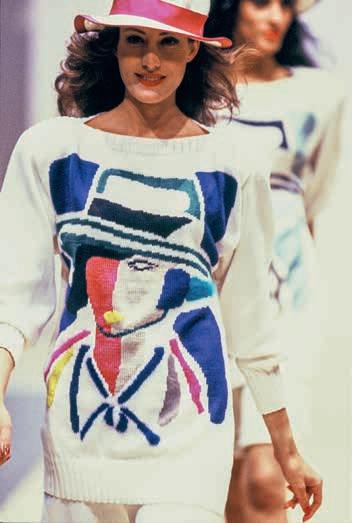
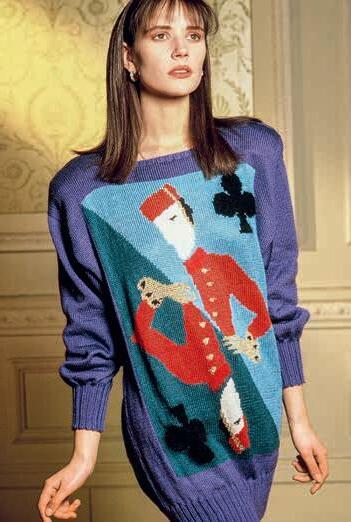
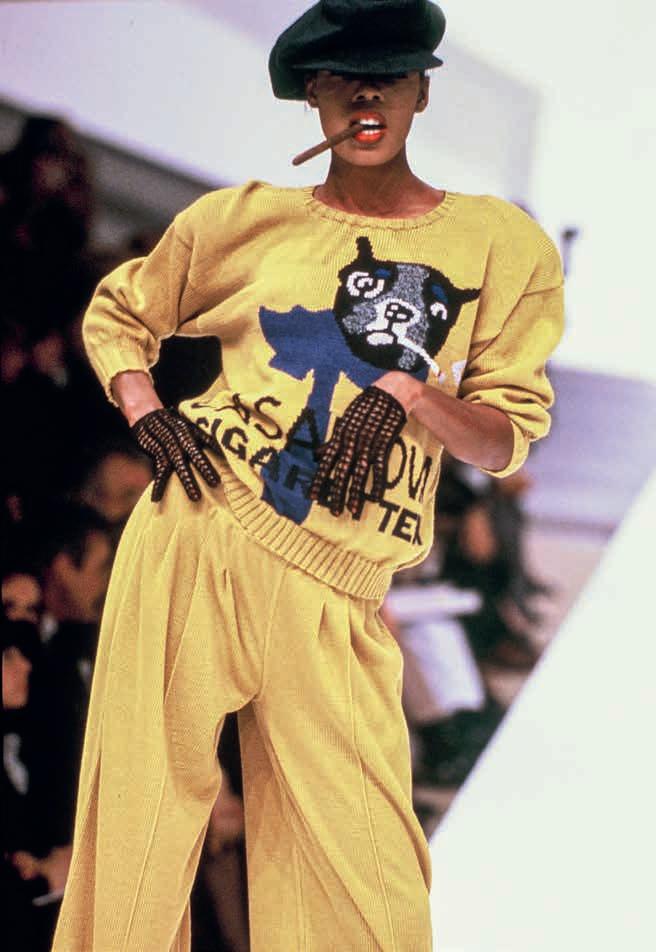
The iconic designs from back then are still a hit today. The Casanova sweater featuring a pug smoking a cigarette—originally inspired by a tobacco advertisement—made its debut in summer 1989 and was reissued for the brand’s 35th anniversary. The next season brought a remake of the Abbey sweater from summer 1986, with a design inspired by a fashion sketch from Swedish illustrator Mats Gustavson. The Queen of Spades, first shown in the Spring | Summer Collection 1987, is making a comeback for the 50th anniversary, this time as a motif on a cashmere scarf.
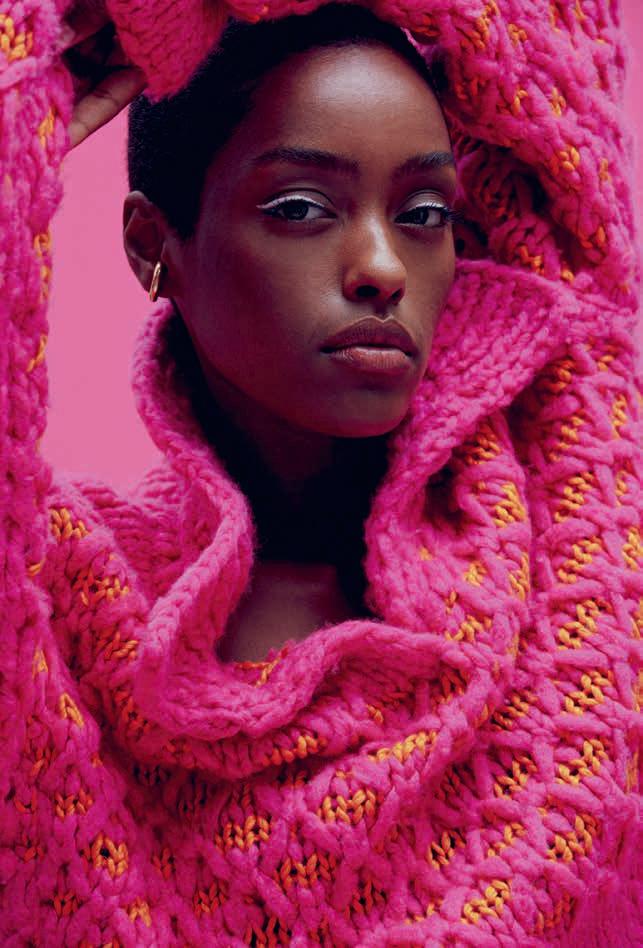
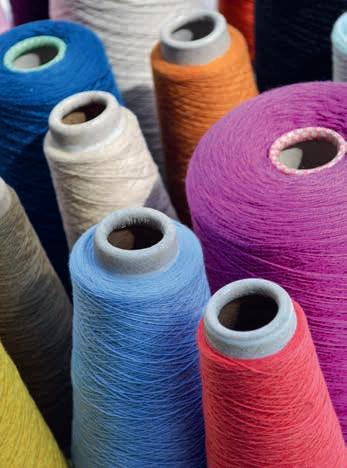
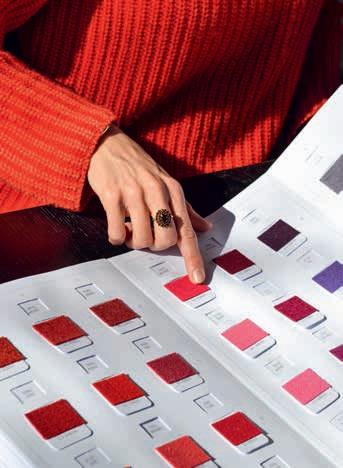
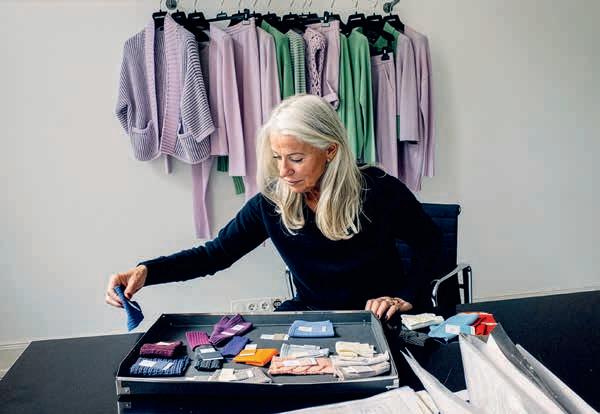
Colors are a foremost design elements for Iris von Arnim—and, of course, they really shine in cashmere. “Any color looks even richer in cashmere than in plain merino wool,” advises the designer. “It’s a natural product, and the yarn is ultra-fine and fluffy, so it refracts the light and creates a special radiance.” In her collections, Iris tempers vibrant hues with the neutral tones of gray, beige, alabaster, or ecru that she also loves to wear herself. She is extremely discerning when it comes to trendy colors, only allowing truly flattering shades into the collection.
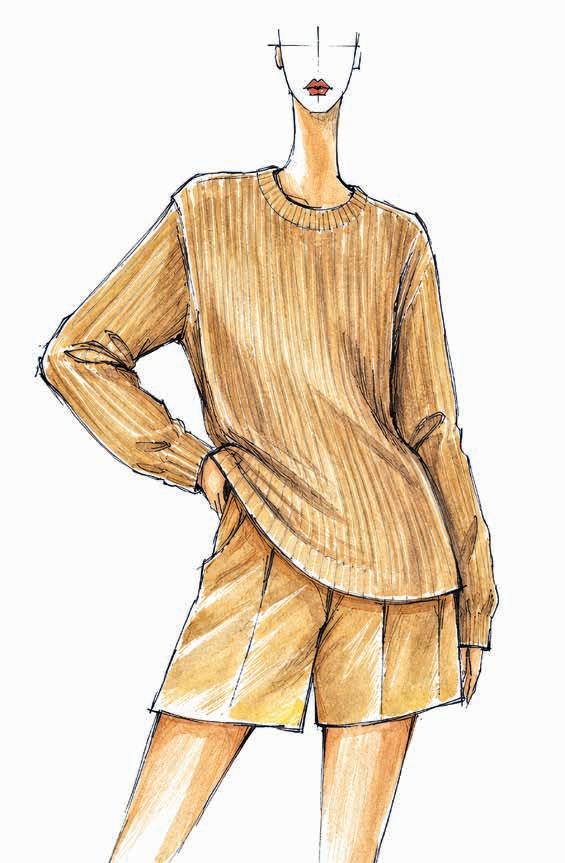
Showcasing knitting at its finest, the chunky cardigan stitch ribbed sweater brings together Iris von Arnim’s standards of comfort and timeless elegance, while presenting impressively sophisticated style and a unique wearing experience.
“ Cardigan stitch cashmere sweaters are to me what white blouses are to Jil Sander,” explains Iris von Arnim. “I have never created my fashion solely for the runway, but to make the wearer feel good.” Brioche knit is known for its highvolume, highly textured, and stretchy ribbed structure. While its German name of “Patent” emphasizes its clever construction and highly functional characteristics, French and Englishspeakers named the knit after traditional brioche pastries because the texture resembles the fluted edge of the Parisian specialty and the stitches are as fluffy as the risen dough.
Unlike simpler knit patterns, brioche knit has a distinctively deeper, more threedimensional texture because each stitch is actually knitted twice with extra crossover yarn. As a result, the stitch uses up to 50 percent more wool than regular stockinetteknit pieces. The stitches appear far thicker and fluffier, and store warmth more effec
tively than regular knits. As another special feature, pieces in full cardigan stitch have identical right and wrong sides; this enhances the look of sweaters with turndown collars or turnedback cuffs, while also elevating the appearance of accessories such as scarves, where both sides are on show.
While the cardigan stitch in classic ribbed texture is one of Iris von Arnim’s signature looks, she also employs eyecatching honeycomb, purl, and piqué textures in her cardigan stitch designs. She experiments with the yarn ply (the number of individual threads twisted together) as a style element: “The more threads you use, the heavier and more expensive a piece becomes—and the more photogenic,” the designer explains.
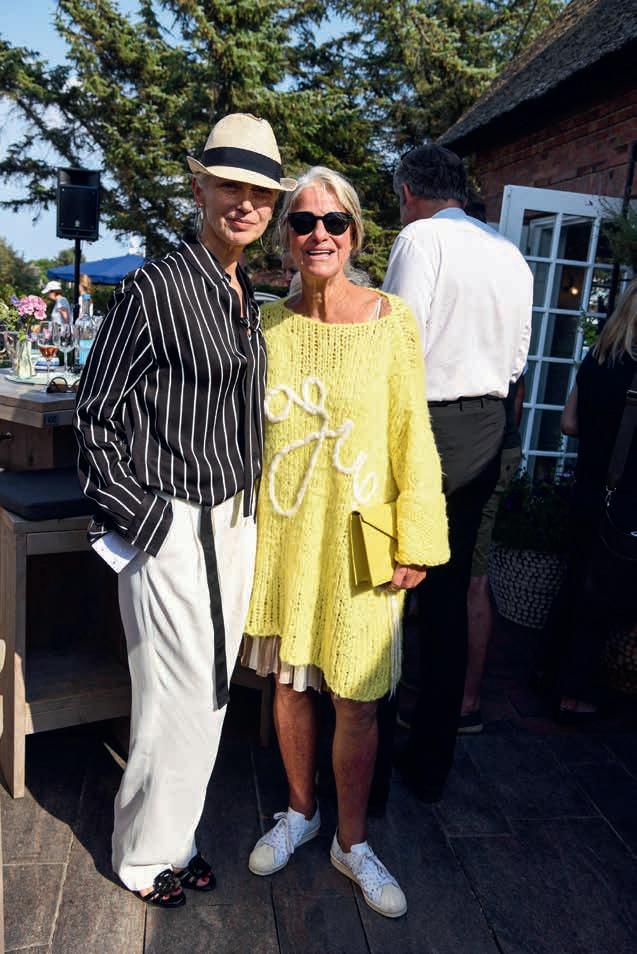
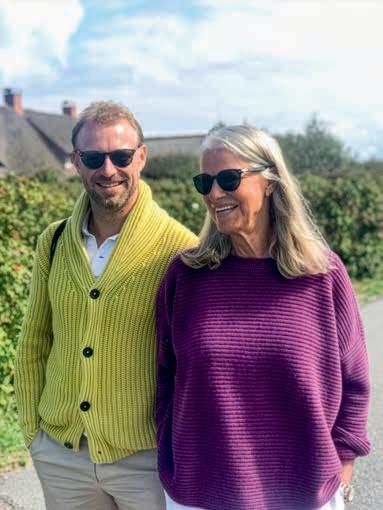
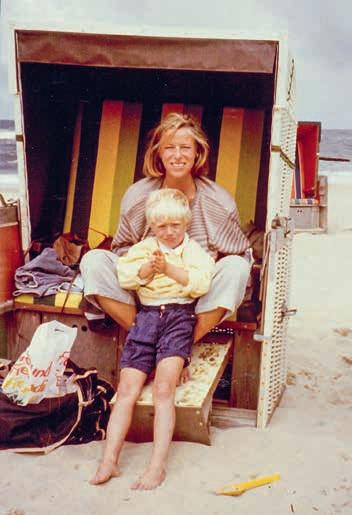
The island of Sylt has become a second home for Iris von Arnim since she celebrated her first successes there in the 1970s. When here, she enjoys spicing up her usually muted color palette with bright shades. Perhaps the most striking example is the oversized yellow sweater she designed as a limited edition for the Vogue loves Kampen shopping festival in 2018, which she wore at the kickoff event with then editor-in-chief Christiane Arp. “I feel my style fits Sylt like a glove. Chunky knit is deep in the DNA of my label; my knitwear is five-ply and tenply, which was pretty comfortable for Sylt temperatures in the early days,” says the designer.
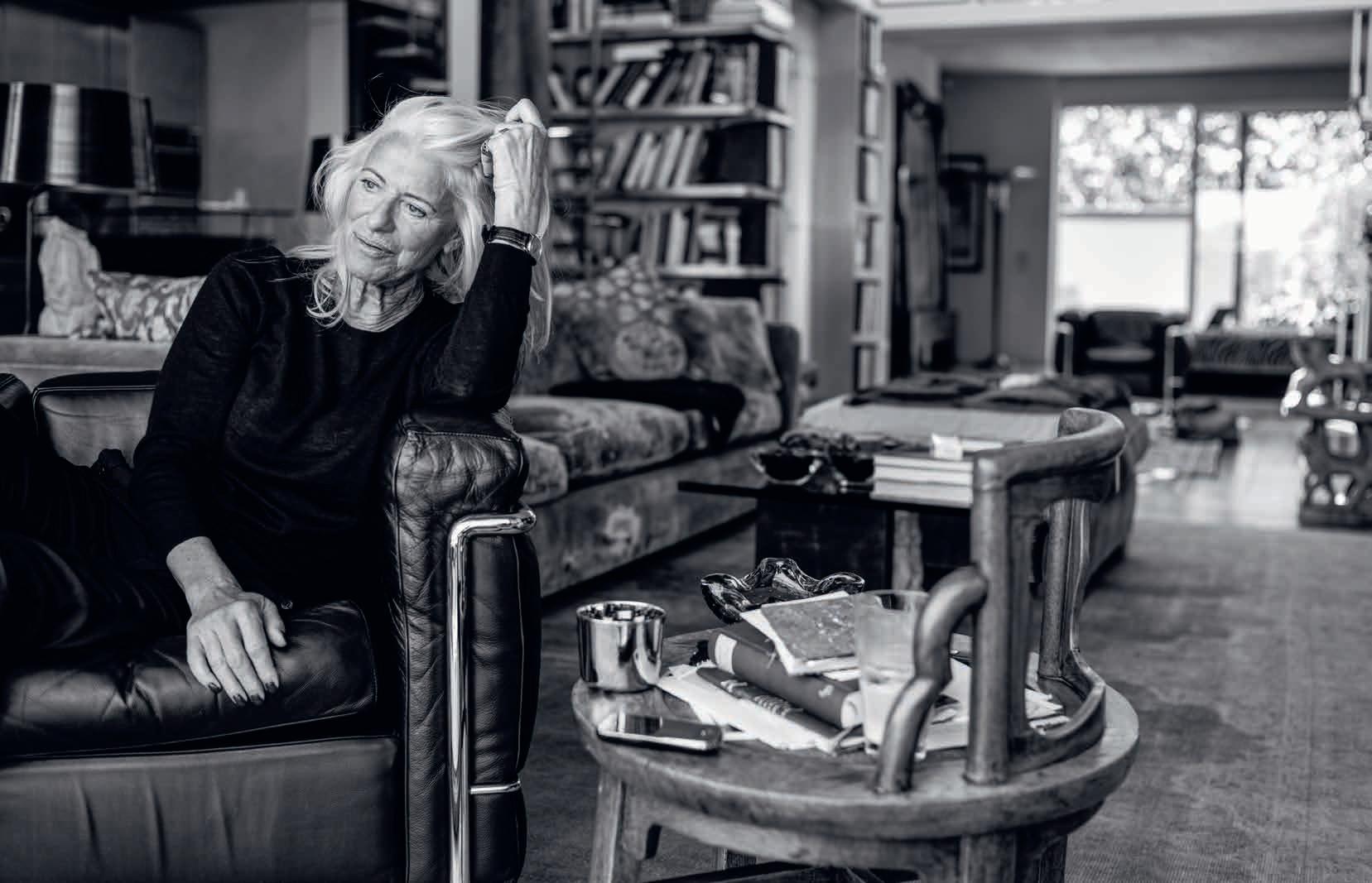
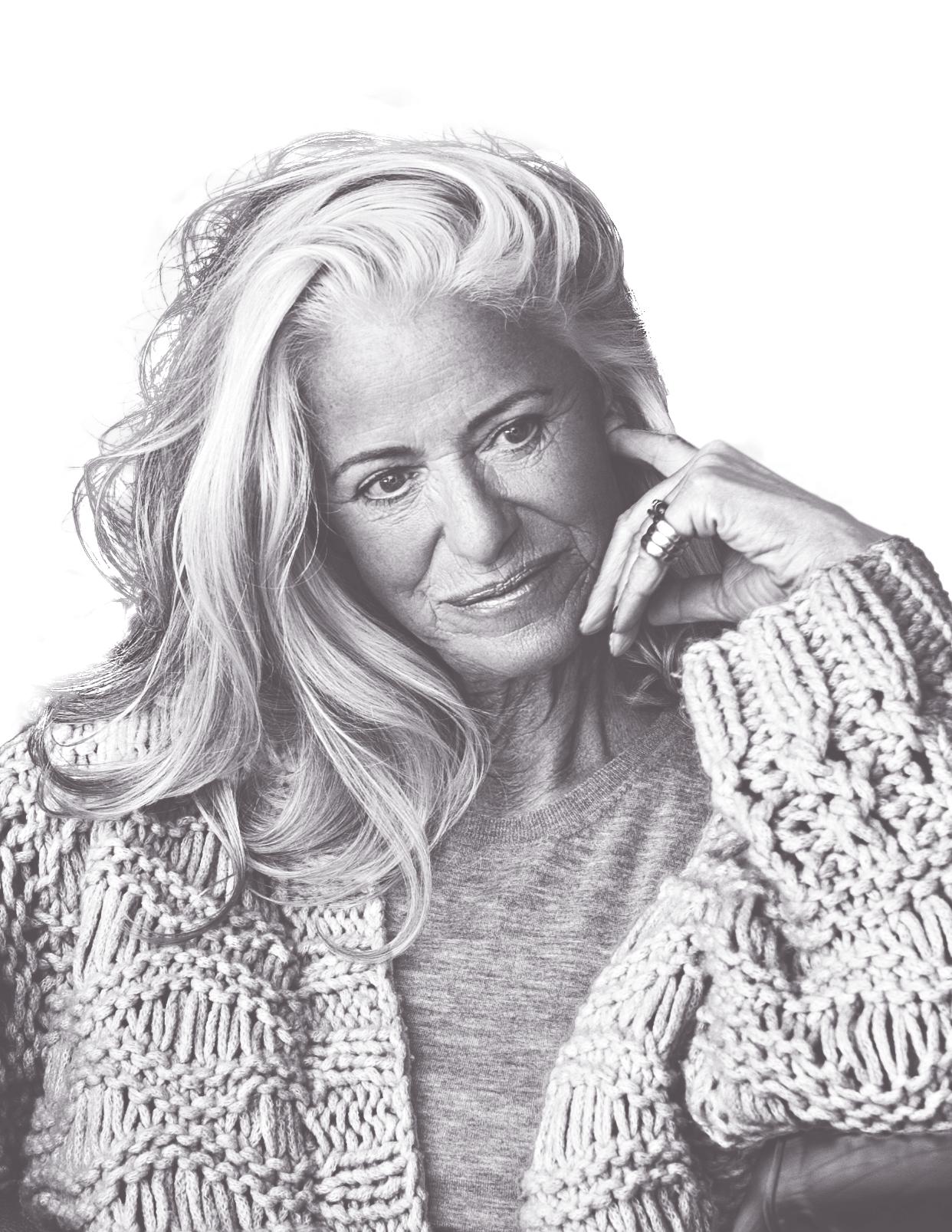
For more than five decades, Iris von Arnim has shaped the world of cashmere with a signature all her own.
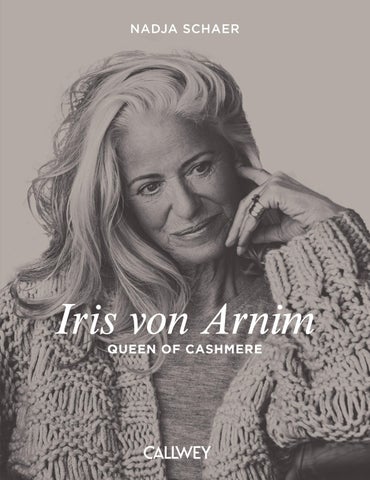
Long before “quiet luxury” became a defining concept in fashion, she stood for timeless elegance, exceptional materials, and an attitude that outlasts trends. This Callwey book invites readers on a journey through her life, her inspirations, and her work. Through a rich selection of archival images—some published here for the first time—alongside private photographs and selected designs, it creates an intimate portrait of a woman who redefined luxury knitwear in Germany.
Iconic sweaters, cardigans, and coats tell a story of creativity, craftsmanship, and the courage to follow one’s own path. A book about style— and about how true elegance only grows more beautiful with time.