7
Why We Collect
9
Foreword
Contents
Dominic Jellinek
PART I Pleasure and Pain
PLEASURE 15
Chapter 1 The Thrill of the Chase
23
Chapter 2 Novelty and Discovery
31
Chapter 3 Social Benefits
PAIN 41
Chapter 4 Fakes
49
Chapter 5 Damage and Loss
59
Chapter 6 Collecting Gone Awry
65
CASE STUDY I THE PAST Pleasure and Pain The Order of Cincinnati Mystery
PART II Enhancing Pleasure Through Understanding Ourselves
81
Chapter 7 Neural and Behavioral Economics
87
Chapter 8 Brain Mechanisms at Work
93
Chapter 9 The Collector’s Decision
101 Chapter 10 The Irrationality of It All 113 CASE STUDY II THE PRESENT Using Neuroscience and Behavioral Economics to Interpret Historic Archives The Eli Lilly–C. T. Loo Story
PART III Collector Experiences
125 Chapter 11 Bargains 129 Chapter 12 Art as an Investment 139 Chapter 13 Museum Relationships 147 Chapter 14 Collection Dispersal 157 CASE STUDY III THE FUTURE Using Neuroscience and Behavioral Economics Beyond Collecting My Guest Curator’s Story 179 Epilogue Why I Wrote this Book: Beyond Freud 180 Appendix Psychological Reinforcers 183 Author Biography
188 Acknowledgments
186 For Further Reading
189 Image Credits
187 Glossary
190 Indexes
Foreword
When Dr. Shirley Mueller asked me to write the foreword to this book, I was honored. This was because she was included in my book with Roy David, Provenance: Collectors, Dealers & Scholars: Chinese Ceramics in Britain & America, and, clearly we have interests in common. What I did not expect of her book, however, was that it would be so different from ours. Instead, Inside the Head of a Collector: Neuropsychological Forces at Play breaks entirely new ground as it delves not into collectors per se, but into their minds. It also incorporates her recent exhibit “Elegance from the East: New Insights from Old Porcelain” at the Indianapolis Museum of Art at Newfields, to extend these concepts. To accomplish this, Shirley uses new information from the sciences of neuroeconomics and behavioral economics to help us understand collectors’ behavior. Essentially, she combines knowledge from her prior careers to make sense of what happens while acquiring, owning, and dispersing of art and antiques. The scientific concepts involved are explained in terms that are easy to understand and accompanied by helpful drawings and illustrations. Shirley had two careers, and you could argue that Chinese export porcelain is her third, intertwined with the others over the last two and a half decades. Her first was as a practicing neurologist, then as a financial advisor. During this later period, she particularly tried to understand how people make financial decisions as she was writing a weekly column for Physician’s Money Digest. In this book, she used all these disciplines to delve into the mysteries of why collectors collect and why they make the decisions they do. Inside the Head of a Collector: Neuropsychological Forces at Play is divided into sections that explore the varied motivations of the collector and even look into the morbid results of overly obsessive behavior. Dr. Mueller’s own collecting operates differently. It is a carefully considered intellectual activity restricting the area to be covered and attempts to ensure that rational choices are made in the market. She also discusses how collectors often fail to make thoroughly thoughtout decisions and uses some examples from her own experience to illustrate this. Why do collectors collect? Dr. Mueller pursues this question in many ways. She talks about the intellectual rewards, the opportunities for social interaction, and the ability to own and enjoy works 9
of art from the standpoint of their beauty, as well as the thrill of the hunt. Historical examples help us understand that the passion of collecting was driven by the same processes in the past as it is today. The other side of the coin shows the difficulties which can beset a collector, whether a novice or one with many years’ experience. Any serious Chinese ceramics enthusiast or art and antiques collector will be all too aware of the problem of fakes, a dilemma which has always existed, but has become increasingly sophisticated over the last thirty years. Mueller gives us her own insights in this regard. She also examines the reasons a collector values the authentic over the copy, however good the latter may be. Another fear that haunts the collector of ceramics is that of damage, and here Mueller provides several examples, including one of earthquakes (particularly relevant to collectors west of the Rocky Mountains) and, perhaps even more immediately dramatic, the collapse of glass shelves in a display cabinet. Loss in transit is always a risk, and insurance payments, sadly, can rarely fully compensate for the emotional loss of a treasured possession. Dr. Mueller also does not shirk the issue of collecting as a form of madness, exploring the question of hoarding worthless articles as the extreme end of this spectrum. Collecting, of course, does not occur in a vacuum. Collectors interact with other collectors, museums, and dealers. Mueller discusses the benefits and the vicissitudes of these interactions and how we might understand them. Finally, how is a collection to be dispersed when that time comes? A collection is a very personal thing, an extension of the collector’s personality, and it may be a bitter moment for the collector or her family to see it sold piecemeal. I am asked this question myself and am obliged to explain that in the early twenty-first century, museums are unlikely to take large accumulations, even as a gift. For this conundrum, Mueller offers innovative approaches. Apart from the fascinating scientific drawings, this book is illustrated with high-quality color images of many of the ceramics and works of art that come under discussion. The detailed photographs of the Order of Cincinnati service are of special interest as they show clearly the difference between the decoration on genuine pieces and that on fakes with recently added enameling; this has never before been illustrated in such detail. Additionally, short panels of text give 10
FOREWORD
SCIENTIFIC MOMENT Others might have made a different choice. Researchers at the University of Southern California Brain and Creativity Institute suggest people have dissimilar risk preferences when they make decisions under uncertainty. The researchers measured risk tolerance versus intolerance on volunteers while using Functional Magnetic Resonance Imaging (fMRI) in real time, which measures brain bloodflow changes related to a specific stimulus.
A
They found a brain area associated with riskaverse behavior and another connected with an appetite for risk, both located in the prefrontal cortex. This finding suggests we are inherently prone to one behavior or the other depending on how the two balance out.
B
DMPFC
150
r = .83, p < .001
150
Effect size (Win–Loss)
Effect size (Risky–Safe)
200
VMPFC
100 50 0 -50 -100 0.2
0.4
0.6
0.8
1
100 50 0 -50
r = .87, p < .001
-100 0.2
Risk preference
0.6
0.8
1
Risk preference
3 Dorsal Medial Posterior
negative correlations between risk
Gui Xue et al. “Functional Dissociations of
Frontal Cortex (dmPFC) and
preference and activation in the
Risk and Reward Processing in the Medial
Ventral Medial Posterior Frontal
dmPFC (A), and positive correlation
Cortex (vmPFC) activation. fMRI
between risk preference and
correlation of individual risk
activation (B) in the vmPFC.
preference. Regions show significant
18
0.4
THE THRILL OF THE CHASE
Prefrontal Cortex,” Cerebral Cortex 19, no. 5 (May 1, 2009): 1019–27; https://doi.org /10.1093/cercor/bhn147. © 2008, Oxford University Press
4 Chinese export porcelain underglaze blue jar from the Hatcher Wreck, 1643
That is, until the following year when I opened the January, 1997, newsletter of the Oriental Ceramic Society (OCS) of London and spied an article entitled, “Porcelain in the Clouds: Oriental Ceramics depicted on the ceilings at Charlottenburg,” authored by Phillip Allen, a respected member of the OCS. In it, he included porcelain painted on the ceiling of another palace fifty miles northwest of Berlin, the seventeenth-century Oranienburg Palace. And there, in the central area of the painted ceiling, was a lidded container like one of the two I purchased in Haarlem the summer before! Now, the two porcelains on our living room shelf were not so invisible. Now, I moved them, so Ernie couldn’t jump up to them. Now, I realized I had a treasure, though when I purchased them neither I nor the dealer really knew how important they were. The fruits of my chase had suddenly become doubly important. The porcelains must be tea caddies. This is, in part, because the decoration is like that of pieces on the 1643 Hatcher Wreck,1 which also displayed tea leaves as part of the motif. In addition, since the lids are different — one blue on white, and the other white on blue — the assumption is that one was for black tea and the other for green. THE THRILL OF THE CHASE
19
20
THE THRILL OF THE CHASE
5 (opposite): Augustus Terwesten, ceiling of the Oranienburg Palace, 1697 6 (right): Pieter van den Berge, Afternoon, engraving, 1700 6A (upper far right): Detail of shelf with tea caddy from Afternoon (fig. 6) 7 (lower far right): Detail of Chinese export porcelain decoration (see fig. 1)
This is further suggested by an engraving showing the taking of tea by Pieter van den Berge, 1700, in which a similar porcelain is on a shelf above the gentleman’s hat. The only other caddies like these of which I am aware are in Burghley House in Stamford, England,2 Kensington Palace in London,3 and in the collection of Augustus the Strong in Dresden, Germany.4 This stellar association means my caddies are indeed special. In summary, not only can the search for art and antiques be enjoyable and exciting, but the result can be satisfying as well. Here, I found two treasures in a most unexpected place. If it can happen to me, it can happen to anyone, and, that is one of the major joys of collecting.
NOTES 1. The Hatcher Wreck refers to a ship that went down off the coast of Jarkata in 1643. The cargo, which contained Chinese export porcelains, was recovered by Captain Michael Hatcher in 1983. 2. See Gordon Lang, An Inventory of the Goods in Burghley House . . . (Stamford, UK: Burghley House, 1983), p. 68, fig. 158.
THE THRILL OF THE CHASE
3. See the cover of Mark Hinton and Oliver Impey, Kensington Palace and the Porcelain of Queen Mary II (London: Christie’s, in collaboration with the Ashmolean Museum, Oxford, and the Historic Royal Palaces, 1998). 4. From personal observation during a visit to storage in the Zwinger Palace, Dresden, June 16, 2018.
21
CHAPTER TWO
1 (opposite): Chinese export porcelain famille rose plate depicting the Arms of Dobree incorrectly executed, 1755
Novelty and Discovery
Novelty stimulates our brains because we are looking for rewards. When we see something new, we don’t know whether it will give us a reward or not, but it interests us until we find out. Nico Bunzeck and Emrah Düzel, “Absolute Coding of Stimulus Novelty in the Human Substantia Nigra/VTA”1
Look at me, the large, not-to-be missed porcelain cried out. And, I did. My response was very similar to what I felt when cats would meow and dogs would bark at me at an animal shelter. I was drawn in because they commanded attention — not just anyone’s, but mine. This huge Chinese export porcelain punch bowl beckoning to me was made for the English market in 1744.2 It had a curious inscription on it, the likes of which I had never seen: between the a and the s of Haeslingfield, an e was inserted as though it was a superscript. Or, more correctly, apparently the original spelling of Haeslingfield was faulty and the e was inserted to rectify the situation. This engaging and unintended error sparked a reaction deep within me — one beyond being impressed with the mass of the bowl itself. What I was seeing in the corrected error was unexpected and different. It was unique, unusual — a discovery. I didn’t know it then, but my novelty center was stimulated. Just recently discovered well
2 Chinese export porcelain famille rose punch bowl named for the ship painted in the interior, Haeslingfield, and inscribed “Edward Butcher, 1744.” Courtesy The Fine Arts Museum, San Francisco
23
3 The interior of the Haeslingfield bowl showing e as a superscript between the a and s. Courtesy The Fine Arts Museum, San Francisco
after my own “ah ha!” experience, a special part of the brain lights up when an oddball is thrown at it like this corrected error. That is certainly what happened to me that day. This event gave my brain such a kick, I have been looking to repeat the experience ever since by collecting examples of mistakes on Chinese export porcelain. In addition to my excitement in the novelty of errors, it is the part of my collection that fellow collectors gravitate toward more than any other. This is a reward in itself!
SCIENTIFIC MOMENT NOVELTY The brain center associated with the perception of novelty is technically called the substantia nigra/ ventral tegmental area (SN/VTA). It responds to the new and is awash with dopaminergic neurons,
which are part of the reward system and can influence behavior. Stimulation of this center can lead to additional exploration in anticipation of a further reward. Substantia Nigra
VTA
24
NOVELTY AND DISCOVERY
4 The substantia nigra and the ventral tegmental area (VTA)
MY TAKE ON THE ATYPICAL BEHAVIOR OF THE SALESPERSON This uncommon behavior of a store attendant discouraging me from making a purchase is difficult to explain. It surprised me and caught me totally unaware. In retrospect, the only explanation I can imagine is that he had less of an investment than the
owner. In that position, his personal feelings about the piece must have fleetingly overwhelmed him and his alliance was briefly transferred to me as he tried to warn me away from buying the teapot he found offensive.
This must have vexed the buyer, but not so much that he destroyed the piece. The person from whom I purchased the teapot was troubled by the decoration; he tried to discourage me from buying it saying, “It is too ugly.” Despite his opposition, however, I remained committed to the purchase. Though he was right — the porcelain was not attractive — the intriguing mistake tweaked my novelty center. I was hooked. The teapot became mine. 12 Circle of Hendrik Rietschoof, Shipping in a stiff breeze off Dordrecht, oil on canvas, early 18th century. The Dutch flag is visible on the mast of the ship on the right.
WHY THESE ERRORS OCCURRED There were so many opportunities for mistakes on Chinese export porcelain when Europeans ordered porcelain to their own taste rather than Chinese. Initially, the order originated between a European client and a ship’s captain or order specialist called the supercargo. Then, they traveled to China three thousand miles away, a journey of nine months. Once in China, the supercargo gave the order to a Chinese intermediary in Canton. This would require an interpretation of the European instructions to a Chinese person accurately, though neither one may have been proficient in the other’s language. After that, the order was sent 600 miles to Jingdezhen, where it was executed in a workshop. The supervisor was instructed by the intermediary from Canton. Then, once manufactured, the merchandise was taken 600 miles back to Canton and inspected. If the pieces were not as requested, they could be refused. If accepted, the product was sent the 3,000 miles back to Europe on another nine-month journey. This entire process took two to three years. Each repetition of the instructions for the order, sometimes successful and at other times not, increased the chance for error. For more detail on this subject, please see the Selected Reference at the end of this chapter. NOVELTY AND DISCOVERY
27
13–15 Chinese export gouaches from an album belonging to Lord Grenville, prime minister of England, 1806–1807, late 18th century (upper: Turning of bowls; center: Painting in underglaze blue; lower: Destroying unsuitable porcelains)
28
NOVELTY AND DISCOVERY
CHAPTER FOURTEEN
Collection Dispersal
[Collections] become a part of the life of their owners, a part of him — or herself. Renée Steenbergen, The Collectors of Lieuwe Kingma1
1 (opposite); Chinese export porcelain
The fate of a collection left to a museum can be unpredictable, as demonstrated by the destiny of two historic collectors, Hans Syz and Benjamin Altman. However, there are other ways to dispose of a collection. This chapter addresses not only traditional methods, but also a very different option — one that allows a collection to be visible, even though no longer physically intact.
grisaille and gold plate, depicting the Resurrection, c. 1745
PAST COLLECTORS: HANS SYZ (1894–1991) Hans Syz was a collector and scholar of Asian and Meissen p orcelain.2 He also was a psychiatrist who did research in human behavior. In these ways, I feel aligned to him: as a physician who practiced in a parallel field to his, neurology; as a writer regarding neuro and behavioral economics, both endeavoring to explain human behavior; and, as a collector of Chinese export porcelain.3 It is because of this commonality that my heart is pierced when I think of what happened to his beloved collection after he transferred it to the Smithsonian Institution in 1963 (the Smithsonian’s National Museum of History and Technology). Syz directed his collection specifically to the nation’s capital, at the time feeling it would be insulated from international conflict as it was outside of Europe.4 Perhaps he was right in this regard, but he was wrong in another. He could not shelter his beloved collection from a shift in the direction of the Smithsonian. When Syz gave his gift, it was welcomed. The ceramics hall opened in 1966, and his collection resided in a new, purpose-built building. Later, however, the focus of the museum turned toward American history and technology, rather than European, and by the late 1970s, this realignment was in full swing. Jefferson Miller, then chief curator of Ceramics and Glass, protested in a 1979 memo that the Master Exhibits Plan was set up to “reduce the exhibition area for ceramics and glass to one quarter of its present space.”5 It was after this time that I saw Syz’s collection there, perhaps sometime in the 1980s. Though it was in a hard-to-find location in 147
2 Chinese export porcelain famille verte plate, c. 1725–30, originally in the Hans Syz Collection at the Smithsonian, now in the Metropolitan Museum of Art, New York
3 Gallery 201 (located on the right side of the upper grand staircase) in the Metropolitan Museum of Art contains several Hans Syz pieces (including fig. 2) as well as those from other donors.
the museum, it was a fantasyland for me. Syz ably demonstrated the patterns of trade between China, Japan, and European factories, especially Meissen, through his porcelains. One can conjecture that the diminished space for his collection was why, in 1978, Syz coauthored The Hans Syz Collection, Meissen Porcelain and Hausmalerei, published by the Smithsonian.6 The book and three further volumes were originally planned when the collection was first moved to Washington. Sadly, the remaining volumes never materialized. 148
COLLECTION DISPERSAL
166
167
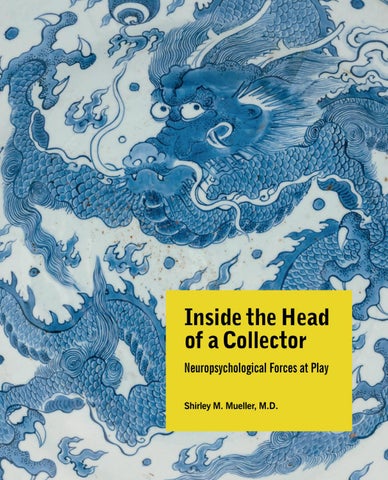
Copyright © 2019 All rights reserved. No part of this publication may be reproduced or transmitted in any form or by any means, electronic or mechanical, including photocopy, recording, or any information storage or retrieval system, without permission in writing from the publisher. Every effort has been made to identify and acknowledge copyright holders for the images reproduced in this publication. Any errors or omissions will be corrected in subsequent editions. ISBN 978-0-9996522-7-5 Published by Lucia | Marquand, Seattle www.luciamarquand.com Distributed by ACC Art Books, New York www.accartbooks.com Details: Front cover: Chinese export porcelain underglaze blue charger, 1573–1620 (see p. 42, fig. 4) Back cover: (upper) Chinese export porcelain underglaze blue garniture, 1662–1723, from the exhibit "Elegance from the East: New Insights into Old Porcelain" (see p. 161, fig. 7); (center) see p. 143, fig. 3; (lower) Chinese export porcelain underglaze blue and famille rose Order of Cincinnati plate (see p. 67, fig. 3) pp. 2–3: Chinese export porcelain famille rose saucers, 1775 (see p. 51, fig. 4) p. 37: Chinese export porcelain charger, 1600 (see p. 34, fig. 6) p. 57: Chinese export porcelain famille rose Foo Dog teapot, 1730 (see p. 49, fig. 2) pp. 76–77: Chinese export porcelain platter, Fitzhugh border p. 85: Chinese export porcelain famille rose teapot, c. 1735 (see p. 80) pp. 121–22: Wang Meng (Chinese, about 1308–1385), Retreat at the Foot of Mt. Hui (detail), Yuan dynasty, 1320–1385; ink on paper; title written by Qian Kui (1313–1384); Indianapolis Museum of Art at Newfields, Gift of Mr. and Mrs. Eli Lilly, 60.50. Courtesy of the Indianapolis Museum of Art at Newfields pp. 174–75: Gallery VI from “Elegance from the East: New Insights into Old Porcelain” pp. 176–77: Lacquer tea caddy, c. 1780
Color management by iocolor, Seattle Printed and bound in China by Artron Art Printing