CONT E NTS
9
FOREWORD
REGGIE WATTS 10
INTRODUCTION
A DDI SOMEKH 38
WHAT IS LAUGHING?
AN I N T E R N AT I O N AL SU R VE Y 90
THE ROAD TO TIMBUKTU A. G. VERMOUTH 156
GOFF THE EMOTIONAL HISTORY OF THE HEADDRESS A CONVERSATION WITH
MARY HOLMES
204
STORIES AND TRAVELOGUES
ADDI SOMEKH AND CHARLES ECKERT
New York City
8
FOREWORD REGGIE WATTS THE POWER OF A BALLOON comes from its vulnerability: there is only a thin layer of rubber between its life and death. The fact that a balloon can pop at any moment, even under the most favorable conditions, forces people to be in the moment. Unconsciously, we know we are looking at something that is here only right now, and we feel that more than we think it. Add some crazy improv-twisting to this already mesmerizing matter and we cross into the realm of the fantastic and surreal. Addi’s hats are part performance art, part engineering, part magic. Despite having zero long-term commercial value, his creations are invaluable in their ability to surprise, delight, and communicate to humans of all ages and languages. There is a beauty in the fact that a cheap, disposable party novelty in the hands of a well-trained and well-intentioned practitioner has the power to bring out and display the personality of a complete stranger. And Charlie’s photos don’t merely capture the smiles and laughter; they illuminate an aura, revealing in a frozen moment in time the dignity at the core of a person’s soul. Taken as a whole, these photos show us a paradox of simplicity and complexity—so many people, cultures, aesthetics, politics, and belief systems, with one indelible thread of joy unifying them all. And what is this thing we call “joy”? A mysterious force from somewhere in the universe: primal, elusive, and totally absorbing when it hits. Joy cannot be summoned, nor can it be prevented. The energy from joy can recharge us. When reality is at its most harrowing and heartbreaking, joy can bring the counterbalance that reminds us life is worth living. Our lives as human beings on this planet are not a whole lot longer than the life of a balloon hat—compared to the Grand Canyon, we are balloons! So with our brief time here, may we rejoice in the unexpected, the colorful, and the ephemeral. May we remember that simple acts can produce the most profound connections. And, most important, may we all cultivate and share the signal, in order to survive within the static.
Maharatasan, Thailand
GOFF
11
INTRODUCTION ADDI SOMEKH
A WELL-MADE BALLOON HAT seems to have magical powers. For a start, it transcends language barriers. It can create laughter without words. Its ephemeral nature makes people feel grounded in the moment. A balloon hat has no long-term value, making it not worth stealing or hoarding. And it’s a powerful social lubricant that doesn’t produce a hangover. But most important, a balloon hat can make people happy while sparking connection between complete strangers. This book is the product of a long-running series of balloon hat experiments in cross-cultural communication. Between 1996 and 2002, photographer Charles Eckert and I got to perform these experiments in 35 countries. We used more than 100,000 balloons and shot more than 10,000 photographs on slide film. Our modus operandi was to travel far off the beaten path, surprise people with custom-made balloon hats, and document their reactions in pictures. The key was to show up with good intentions, connect, and improvise. This simple approach yielded an astonishing variety of results. And our random international sharing of ephemeral balloon art opened a portal to cultures and personalities, serendipity and joy. It was Charlie who came up with the idea of doing this project, though he said it as a lark, and since it
was only the second time we had ever met, he didn’t think I would take him seriously. The year was 1994, in New York City. I was finishing up graduate school without even a vague idea of what to do next. Though I had a natural talent for making balloon hats that captured people’s intangible energy, I also felt shame and embarrassment over the fact that my only real talent in life was essentially being a novelty act. Charlie was living a much more mundane and repetitive existence, working in Manhattan and commuting from Queens, assembling shelving in people’s closets (or as he says it, “organizing their useless crap so they had more room to buy more useless crap”). Our paths crossed thanks to our mutual friend Jason Brown. I remember Jason telling me that though Charlie had never studied photography, he was taking unique and beautiful photos of people and landscapes. But Charlie was the opposite of a self-promoter, and the only way one could see his photos (this was before the wide use of the Internet or digital photography) was to go to his house in Queens to view the leather-bound portfolio that sat on his desk. When I finally made it out to his place and picked up the portfolio, I was mesmerized by his raw, emotionally complex imagery. A few weeks later, Charlie and I met again, this time in my apartment in the middle of Manhattan, on Halloween. Charlie and Jason knew about a cool
party, but we needed costumes to get in. I said, “I make balloon hats. Don’t worry, we’ll get in.” I quickly busted out some hats, and we put them on and headed downtown. On the way there, people on the street started clapping as we walked by. For Charlie, born and raised in New York City, this was a revelation. “You could be bleeding on the sidewalk and people would just walk right past you,” he told me later. “I had never experienced people actually clapping before.” As fate would have it, Charlie missed the last train back to Queens that night, so he wound up crashing on the floor of my apartment. The next morning, the conversation quickly turned to the strange effect the balloon hats had had on habitually cynical and dismissive New Yorkers. “If those balloons affected people here like that,” Charlie said, “it would be amazing to go around the world and make balloon hats for people and take photos of them.” I knew at that moment we needed to try this idea. It didn’t matter if we had only a one-in-a-billion chance to make it work. At least we had to try. While the idea might sound like a wild dream, actually making it happen involved a lot of practical planning and the nuts and bolts of mundane logistics. We knew the why, but everything else was unknown. Where do we go? When do we go, and how do we get there? What do we do once we’re there? What kind of equipment do we need? How
GOFF
many balloons do we take? And how many rolls of film? And, maybe most dauntingly, what do we do with all the photos when we get back? Working in our favor was the fact that, though we barely knew each other, we realized we could agree on aesthetics, which was vital. We were both selftaught and both improvisers, so though we worked with different media, we thought a lot alike. As things became more real, we agreed on three working principles that would set the foundation of our collaboration: 1. I stick to the balloons, and Charlie sticks to photography. 2. We split money and responsibilities 50/50. 3. We don’t fall in love with the same woman. Next, we needed to test the idea to see if it had legs. Charlie’s mom was a flight attendant who was able to get us free plane tickets, and I cashed bar mitzvah money that had been sitting in the bank since I was thirteen. Again, we turned to our practical sides to come up with some simple criteria for success: 1. Will people like the balloons? 2. Will people like the photos when we come home? 3. Will we get along and be able to work together? If—and only if—all three answers were yes, we would keep going. We decided that our first trip, in the spring of
21
Somewhere in Mongolia
GOFF
21
Somewhere in Mongolia
GOFF
29
28
Sofara, Mali
GOFF
San Antonio, Texas
29
28
Sofara, Mali
GOFF
San Antonio, Texas
45
44
“In our way, life, besides being harsh, is supposed to be enjoyable too. Like our old folks—they tell stories and they laugh and enjoy themselves. So laughing is an expression of an emotion, but it also teaches at the same time.” — Oliver Sulley, Wounded Knee, South Dakota
GOFF
45
44
“In our way, life, besides being harsh, is supposed to be enjoyable too. Like our old folks—they tell stories and they laugh and enjoy themselves. So laughing is an expression of an emotion, but it also teaches at the same time.” — Oliver Sulley, Wounded Knee, South Dakota
GOFF
89
88
Clockwise from top left: Grackë, Serbia; Rajasthan, India; San Francisco; Da Nang, Vietnam
GOFF
caption
Clockwise from top left: Rio Acre, Brazil; London; Chicago; Tokyo
89
88
Clockwise from top left: Grackë, Serbia; Rajasthan, India; San Francisco; Da Nang, Vietnam
GOFF
caption
Clockwise from top left: Rio Acre, Brazil; London; Chicago; Tokyo
120
Bluefields, Nicaragua
GOFF
120
Bluefields, Nicaragua
GOFF
167
166
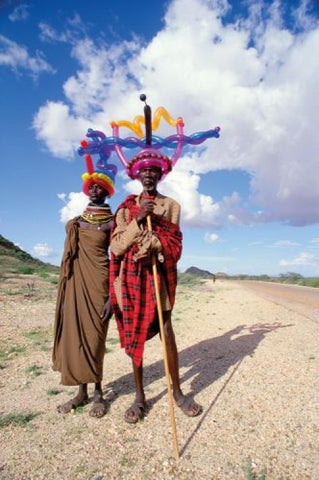
Turkana, Kenya
GOFF
Joshua Tree, California
167
166
Turkana, Kenya
GOFF
Joshua Tree, California
183
GOFF
Buffalo, Wyoming
183
GOFF
Buffalo, Wyoming
Published by Goff Books, an imprint of ORO Editions Executive publisher: Gordon Goff www.goffbooks.com info@goffbooks.com © 2021 Addi Somekh All rights reserved. No part of this book may be reproduced, stored in a retrieval system, or transmitted in any form or by any means, including electronic, mechanical, photocopying of microfilm, recording, or otherwise (except that copying permitted by Sections 107 and 108 of United States Copyright Law and except by reviewers for the public press) without written permission from the publisher. You must not circulate this book in any other binding or cover, and you must impose this same condition on any acquirer. Graphic designer: A. G. Vermouth Text and images: Addi Somekh, Charles Eckert, A. G. Vermouth, Noah Thomas, Reggie Watts Copy editor/proofreader: Phil Freshman Goff Books project coordinator: Jake Anderson 10 9 8 7 6 5 4 3 2 1 First Edition Library of Congress cataloguing data available upon request. World Rights: available. ISBN: 978-1-951541-15-6 Color separations and printing: ORO Group Ltd. Printed in China. International distribution: www.goffbooks.com/distribution Goff Books makes a continuous effort to minimize the overall carbon footprint of its publications. As part of this goal, Goff Books, in association with Global ReLeaf, arranges to plant trees to replace those used in the manufacturing of the paper produced for its books. Global ReLeaf is an international campaign run by American Forests, one of the world’s oldest nonprofit conservation organizations. Global ReLeaf is American Forests’ education and action program that helps individuals, organizations, agencies, and corporations improve the local and global environment by planting and caring for trees.
GOFF