Angeline Scherf Cordélia de Brosses
“He did everything artistically.”1 The Discovery of Gustave Fayet, the Artist “His name is Gustave Fayet; yesterday, he was an unknown, but he will be famous tomorrow, once people have seen his works.” Gustave Geffroy (1923a)
Portrait of Gustave Fayet, c. 1920 Photograph Archives familiales Gustave Fayet
Gustave Fayet (1865–1925) is now recognized as one of the most distinctive figures on the French art scene at the turn of the twentieth century. For many years he was renowned essentially as a collector, but today he is also emerging as a passionate artist, designer, and entrepreneur who found his calling in the decorative arts. The rediscovery of this aspect of his personality has been made possible by the opening of a significant collection of family archives, housed at Abbaye de Fontfroide. Born into a family from Béziers that had made its fortune in viticulture, Fayet represents a rare type of entrepreneur-artist. His creative activity, initially as a painter, was undertaken in a context where the traditional hierarchy between fine arts and decorative arts was being challenged. True to the spirit of synthesis pervading the European decorative avant-gardes, he embraced a growing number of fields—ceramics, stained glass, textiles, wallpaper, and carpets—with the ambition of creating a “total work of art.” Fayet’s career developed within a particularly dense intellectual and artistic network in which his encounters with various “mentors” decisively influenced his direction. Fayet became acquainted with Siegfried Bing, the founder of the Maison de l’Art Nouveau in Paris, around 1900. Bing provided him with a model for the modern organization of the decorative arts based on collaboration between artists and artisans. An unusual mix of connoisseur, artist, collector, art critic, patron, and businessman,2
he was a role model, stimulating Fayet’s own artistic and entrepreneurial spirit. A few years later, just before World War I, he frequented Paul Poiret.3 The couturier and his Atelier Martine exemplified a new economic model that combined creative design with mass production. However, the most decisive inf luence was Odilon Redon. His friendship played an essential role in the emergence of Fayet’s evocative formal vocabulary and his spiritual awakening. Finally, his encounter in the last years of his life with the writer André Suarès, who was literary advisor to Jacques Doucet, introduced him to the world of artist’s books, a field in which he became involved as an illustrator. Suarès would later write the most deeply affecting of all the tributes to Fayet, his “In memoriam” (Suarès 1926a). What emerged from all this is the portrait of a unique creator—at once entrepreneur, collector, and artist—whose work bears witness to the profound aesthetic transformations that shaped Europe between 1880 and 1925.4 Fayet began his artistic practice as an amateur painter, exhibiting landscapes of the Languedoc region at various regional shows as well as at the Paris Salon.5 The influence of Rosicrucian symbolism is evident in Fayet’s early pastels and paintings of seascapes and mountain landscapes with their intense lighting effects and absence of human figures (p. 22). In these compositions he sought to capture the signs of nature’s mystery, following in the footsteps of artists such as William Degouve de Nuncques, Fernand Khnopff, József Rippl-Rónai, Charles Dulac, and Alphonse Osbert.
Gustave Fayet Autoportrait (detail), c. 1901 Self-Portrait Oil and charcoal on cardboard, 73 × 50 cm Private collection, MAGFF.2012.0022
21
Angeline Scherf Cordélia de Brosses
“He did everything artistically.”1 The Discovery of Gustave Fayet, the Artist “His name is Gustave Fayet; yesterday, he was an unknown, but he will be famous tomorrow, once people have seen his works.” Gustave Geffroy (1923a)
Portrait of Gustave Fayet, c. 1920 Photograph Archives familiales Gustave Fayet
Gustave Fayet (1865–1925) is now recognized as one of the most distinctive figures on the French art scene at the turn of the twentieth century. For many years he was renowned essentially as a collector, but today he is also emerging as a passionate artist, designer, and entrepreneur who found his calling in the decorative arts. The rediscovery of this aspect of his personality has been made possible by the opening of a significant collection of family archives, housed at Abbaye de Fontfroide. Born into a family from Béziers that had made its fortune in viticulture, Fayet represents a rare type of entrepreneur-artist. His creative activity, initially as a painter, was undertaken in a context where the traditional hierarchy between fine arts and decorative arts was being challenged. True to the spirit of synthesis pervading the European decorative avant-gardes, he embraced a growing number of fields—ceramics, stained glass, textiles, wallpaper, and carpets—with the ambition of creating a “total work of art.” Fayet’s career developed within a particularly dense intellectual and artistic network in which his encounters with various “mentors” decisively influenced his direction. Fayet became acquainted with Siegfried Bing, the founder of the Maison de l’Art Nouveau in Paris, around 1900. Bing provided him with a model for the modern organization of the decorative arts based on collaboration between artists and artisans. An unusual mix of connoisseur, artist, collector, art critic, patron, and businessman,2
he was a role model, stimulating Fayet’s own artistic and entrepreneurial spirit. A few years later, just before World War I, he frequented Paul Poiret.3 The couturier and his Atelier Martine exemplified a new economic model that combined creative design with mass production. However, the most decisive inf luence was Odilon Redon. His friendship played an essential role in the emergence of Fayet’s evocative formal vocabulary and his spiritual awakening. Finally, his encounter in the last years of his life with the writer André Suarès, who was literary advisor to Jacques Doucet, introduced him to the world of artist’s books, a field in which he became involved as an illustrator. Suarès would later write the most deeply affecting of all the tributes to Fayet, his “In memoriam” (Suarès 1926a). What emerged from all this is the portrait of a unique creator—at once entrepreneur, collector, and artist—whose work bears witness to the profound aesthetic transformations that shaped Europe between 1880 and 1925.4 Fayet began his artistic practice as an amateur painter, exhibiting landscapes of the Languedoc region at various regional shows as well as at the Paris Salon.5 The influence of Rosicrucian symbolism is evident in Fayet’s early pastels and paintings of seascapes and mountain landscapes with their intense lighting effects and absence of human figures (p. 22). In these compositions he sought to capture the signs of nature’s mystery, following in the footsteps of artists such as William Degouve de Nuncques, Fernand Khnopff, József Rippl-Rónai, Charles Dulac, and Alphonse Osbert.
Gustave Fayet Autoportrait (detail), c. 1901 Self-Portrait Oil and charcoal on cardboard, 73 × 50 cm Private collection, MAGFF.2012.0022
21
Sophie Basch
“Certain Ways of Seeing and Feeling”: Atmospheric Japonisme Within the wake of one of the nineteenth century’s major artistic trends—that of the Japonisme born in the 1860s and “made fashionable by the Goncourt brothers” as the fount of “a new art” (Raynaud 1920, 10)—where exactly should we situate Gustave Fayet’s own oeuvre? It was those very Goncourt brothers, described by Ernest Raynaud as the arbiters of taste, to whom the stylistics specialist Leo Spitzer ascribed the emergence of the concept of ambiance, which has played a growing role in contemporary philosophy subsequent to articles by Gernot Böhme and Bruce Bégout on the aesthetics of sensory experience (Spitzer 1942, 1; Böhme 2020; Bégout 2020). This “atmospheric” dimension is crucial to an understanding of Fayet’s activities within the spirit of his times.
View of Stéphane Mallarmé’s Japanese-style study in Valvins (destroyed by a shell in 1944), reproduced in Les Nouvelles littéraires, June 20, 1936, p. 8
The decline of Japonisme Given its twists and shifts, the atmospheric Japonisme specific to the “second generation” (Koechlin 1930, 2) of aficionados of Far Eastern art around 1890 manifests as post-Japonisme.1 The period was not one of discovery but of incorporation, as is so apparent in the work of Fayet the painter, potter, and decorator. Fayet profited from the dispersion of the major collections of early promoters of Japanese arts by making acquisitions at the Goncourt and Gillot sales in 1897 and 1904, respectively (Aitken 2025, 18)—even as Siegfried Bing, the main Paris dealer in Japanese art, shifted to Art Nouveau in 1895—but Fayet was getting his start at a time described by JeanPaul Bouillon as the “Symbolist moment” (1992, 11; see also Jumeau-Lafond 2019), founded on a quest for synesthesia, correspondences, and concordance in a spirit of universal unity imbued with vaguely esoteric doctrines. This idealist atmosphere crucially determined the
role played by Japan in Fayet’s decorative oeuvre, marked by symbolism inspired by the poetry of Stéphane Mallarmé. As a contemporary and client of Charles Vignier—a poet who shifted from writing literature to selling and publishing refined catalogues of Japanese works (earning the title of “an unrepentant Mallarmean in search of the rare word” from Georges Salles, the Louvre’s first curator of its department of Asian art) (Salles 1934, 104)—Fayet was an heir to the period when the Symbolist constellation absorbed Japonisme. When did this mutation begin? According to critic Arsène Alexandre, the extensive exhibition of Japanese prints organized by Bing at the École des Beaux-Arts in 1890 represented both a high point and a conclusion: “Japan, it must be repeated, has given all it could to our art: it taught our painters to lighten their palette, to look to outdoor light rather than studio lighting, and to observe living nature rather than conventional nature…. Since we are able to be excellent French [artists], we have no need to become questionable Japanese ones…. Japonisme has entered the public sphere and … has no further need of recommendation” (1890, 2). French-style Japonisme Alexandre was shocked that the likes of George Auriol, Henri Rivière, and Henri de Toulouse-Lautrec were still being described as “Japanese,” later asserting that “nothing is more absurd. Those artists employ expressive means certainly implemented by the Japanese, but one has the right, after all, to also employ a truly modern, French feeling” (1893, 2). Meanwhi le, Benjam in Guinaudeau, commenting on the “fleeting visions” of the Utagawa Hiroshige prints that Bing showed at Galerie Durand-Ruel in 1893, apologized for his own boldness:
Maison Babani Madeleine Fayet’s kimono (detail), n.d. Embroidered silk, L. 150 cm (approx.) Private collection
31
Sophie Basch
“Certain Ways of Seeing and Feeling”: Atmospheric Japonisme Within the wake of one of the nineteenth century’s major artistic trends—that of the Japonisme born in the 1860s and “made fashionable by the Goncourt brothers” as the fount of “a new art” (Raynaud 1920, 10)—where exactly should we situate Gustave Fayet’s own oeuvre? It was those very Goncourt brothers, described by Ernest Raynaud as the arbiters of taste, to whom the stylistics specialist Leo Spitzer ascribed the emergence of the concept of ambiance, which has played a growing role in contemporary philosophy subsequent to articles by Gernot Böhme and Bruce Bégout on the aesthetics of sensory experience (Spitzer 1942, 1; Böhme 2020; Bégout 2020). This “atmospheric” dimension is crucial to an understanding of Fayet’s activities within the spirit of his times.
View of Stéphane Mallarmé’s Japanese-style study in Valvins (destroyed by a shell in 1944), reproduced in Les Nouvelles littéraires, June 20, 1936, p. 8
The decline of Japonisme Given its twists and shifts, the atmospheric Japonisme specific to the “second generation” (Koechlin 1930, 2) of aficionados of Far Eastern art around 1890 manifests as post-Japonisme.1 The period was not one of discovery but of incorporation, as is so apparent in the work of Fayet the painter, potter, and decorator. Fayet profited from the dispersion of the major collections of early promoters of Japanese arts by making acquisitions at the Goncourt and Gillot sales in 1897 and 1904, respectively (Aitken 2025, 18)—even as Siegfried Bing, the main Paris dealer in Japanese art, shifted to Art Nouveau in 1895—but Fayet was getting his start at a time described by JeanPaul Bouillon as the “Symbolist moment” (1992, 11; see also Jumeau-Lafond 2019), founded on a quest for synesthesia, correspondences, and concordance in a spirit of universal unity imbued with vaguely esoteric doctrines. This idealist atmosphere crucially determined the
role played by Japan in Fayet’s decorative oeuvre, marked by symbolism inspired by the poetry of Stéphane Mallarmé. As a contemporary and client of Charles Vignier—a poet who shifted from writing literature to selling and publishing refined catalogues of Japanese works (earning the title of “an unrepentant Mallarmean in search of the rare word” from Georges Salles, the Louvre’s first curator of its department of Asian art) (Salles 1934, 104)—Fayet was an heir to the period when the Symbolist constellation absorbed Japonisme. When did this mutation begin? According to critic Arsène Alexandre, the extensive exhibition of Japanese prints organized by Bing at the École des Beaux-Arts in 1890 represented both a high point and a conclusion: “Japan, it must be repeated, has given all it could to our art: it taught our painters to lighten their palette, to look to outdoor light rather than studio lighting, and to observe living nature rather than conventional nature…. Since we are able to be excellent French [artists], we have no need to become questionable Japanese ones…. Japonisme has entered the public sphere and … has no further need of recommendation” (1890, 2). French-style Japonisme Alexandre was shocked that the likes of George Auriol, Henri Rivière, and Henri de Toulouse-Lautrec were still being described as “Japanese,” later asserting that “nothing is more absurd. Those artists employ expressive means certainly implemented by the Japanese, but one has the right, after all, to also employ a truly modern, French feeling” (1893, 2). Meanwhi le, Benjam in Guinaudeau, commenting on the “fleeting visions” of the Utagawa Hiroshige prints that Bing showed at Galerie Durand-Ruel in 1893, apologized for his own boldness:
Maison Babani Madeleine Fayet’s kimono (detail), n.d. Embroidered silk, L. 150 cm (approx.) Private collection
31
Angeline Scherf Olivier Schuwer
The Origins of a Passion: Fayet’s Early Career as a Painter
Gustave Fayet La Fileuse (d’après Rudolf Lehmann), 1880 The Spinner (After Rudolf Lehmann) Graphite on paper, 57 × 40 cm Private collection
By a happy coincidence, one of the very earliest examples of Gustave Fayet’s work as an artist is a Fileuse (left), a drawing of a spinner copied from a painting by Rudolf Lehmann. The year was 1880, and the future artist and collector, then fifteen years old, had no idea of the success that he would enjoy some forty years later as a producer of fabrics and carpets. While it does not foreshadow the success of La Dauphine, this copy does show us that Fayet began drawing at a very young age, long before his ventures into the decorative arts. In the 1890s, he even pursued an early artistic interest as an amateur painter, regularly exhibiting his landscapes of the Languedoc at regional and Parisian art salons. It is essential to study this formative period of Fayet’s career if we are to understand the emergence of his artistic vocation—within the context of the nineteenth-century southern wine-growing bourgeoisie—and his discovery of the “decorative” through his exposure to the Parisian avant-gardes. In a nineteenth century conducive to the development of painting as a pastime, the Fayets were particularly representative of the class of enlightened “amateurs” who explored the world of plein-air painting and gradually made their way into the artistic salons (see Viraben 2020). For Gustave’s father and uncle—both heads of wine businesses—art was a distraction, but a serious one, which they pursued methodically. In their youth, Gabriel and Léon Fayet moved in professional artistic circles, spending time with their teacher Charles-François Daubigny and cultivating a friendship with Adolphe Monticelli, a painter from Marseille. In the second half of the 1860s, they showed sufficient technical skill to convince the demanding jury of the annual Paris Salon to
exhibit their works, in which the teachings of the Barbizon School were adapted to the landscape of the Languedoc. It was in this environment that Gustave Fayet grew up, with a father and an uncle who taught him both how to manage wineries and how to handle the brush—simultaneously, how to cultivate and how to paint the landscape. By presenting himself as “his father’s student” in the salon catalogues, the young Fayet demonstrated his loyalty and attachment to this family tradition. Although he never attended any art academy, the painter did follow a rigorous training in his home at 9 rue du Capus in Béziers, based on principles derived from the official teachings of the fine arts schools. From the preliminary practice of drawing to the technique of oil painting, Fayet began by copying the masters, particularly from interpretive engravings he found in art publications, then gradually turning to painting from nature, which he did in watercolor or oil on canvas. While he dabbled in the still life, creating realistic portraits of flowers, Fayet the painter preferred to work outdoors (p. 44). As a journalist from Le Petit Méridional noted in 1893, “Mr. Fayet fils is deeply devoted to his art. He is frequently seen heading out at dawn to a spot in the countryside to devote himself to his favorite work” (Méridional 1893). The early works he exhibited at the art salons in Montpellier (1889, 1891), Narbonne (1893), Carcassonne (1894), and Marseille (1891, 1893, 1894, 1897) depict his native region—the vineyards, the Libron Valley, Bayssan, and the Étang de Vendres—in landscapes often praised by the local press (“Mr. Gustave Fayet is one of the most notable landscape painters at this exhibition” 1). While he retained the topographical features of the landscape, Fayet
Gustave Fayet Les Pins rouges (detail), 1900–1901 Red Pines Oil on canvas, 60 × 73 cm Private collection
43
Angeline Scherf Olivier Schuwer
The Origins of a Passion: Fayet’s Early Career as a Painter
Gustave Fayet La Fileuse (d’après Rudolf Lehmann), 1880 The Spinner (After Rudolf Lehmann) Graphite on paper, 57 × 40 cm Private collection
By a happy coincidence, one of the very earliest examples of Gustave Fayet’s work as an artist is a Fileuse (left), a drawing of a spinner copied from a painting by Rudolf Lehmann. The year was 1880, and the future artist and collector, then fifteen years old, had no idea of the success that he would enjoy some forty years later as a producer of fabrics and carpets. While it does not foreshadow the success of La Dauphine, this copy does show us that Fayet began drawing at a very young age, long before his ventures into the decorative arts. In the 1890s, he even pursued an early artistic interest as an amateur painter, regularly exhibiting his landscapes of the Languedoc at regional and Parisian art salons. It is essential to study this formative period of Fayet’s career if we are to understand the emergence of his artistic vocation—within the context of the nineteenth-century southern wine-growing bourgeoisie—and his discovery of the “decorative” through his exposure to the Parisian avant-gardes. In a nineteenth century conducive to the development of painting as a pastime, the Fayets were particularly representative of the class of enlightened “amateurs” who explored the world of plein-air painting and gradually made their way into the artistic salons (see Viraben 2020). For Gustave’s father and uncle—both heads of wine businesses—art was a distraction, but a serious one, which they pursued methodically. In their youth, Gabriel and Léon Fayet moved in professional artistic circles, spending time with their teacher Charles-François Daubigny and cultivating a friendship with Adolphe Monticelli, a painter from Marseille. In the second half of the 1860s, they showed sufficient technical skill to convince the demanding jury of the annual Paris Salon to
exhibit their works, in which the teachings of the Barbizon School were adapted to the landscape of the Languedoc. It was in this environment that Gustave Fayet grew up, with a father and an uncle who taught him both how to manage wineries and how to handle the brush—simultaneously, how to cultivate and how to paint the landscape. By presenting himself as “his father’s student” in the salon catalogues, the young Fayet demonstrated his loyalty and attachment to this family tradition. Although he never attended any art academy, the painter did follow a rigorous training in his home at 9 rue du Capus in Béziers, based on principles derived from the official teachings of the fine arts schools. From the preliminary practice of drawing to the technique of oil painting, Fayet began by copying the masters, particularly from interpretive engravings he found in art publications, then gradually turning to painting from nature, which he did in watercolor or oil on canvas. While he dabbled in the still life, creating realistic portraits of flowers, Fayet the painter preferred to work outdoors (p. 44). As a journalist from Le Petit Méridional noted in 1893, “Mr. Fayet fils is deeply devoted to his art. He is frequently seen heading out at dawn to a spot in the countryside to devote himself to his favorite work” (Méridional 1893). The early works he exhibited at the art salons in Montpellier (1889, 1891), Narbonne (1893), Carcassonne (1894), and Marseille (1891, 1893, 1894, 1897) depict his native region—the vineyards, the Libron Valley, Bayssan, and the Étang de Vendres—in landscapes often praised by the local press (“Mr. Gustave Fayet is one of the most notable landscape painters at this exhibition” 1). While he retained the topographical features of the landscape, Fayet
Gustave Fayet Les Pins rouges (detail), 1900–1901 Red Pines Oil on canvas, 60 × 73 cm Private collection
43
View of the cloister, Abbaye de Fontfroide, Narbonne
View of the visiting room, Abbaye de Fontfroide, Narbonne
63
View of the cloister, Abbaye de Fontfroide, Narbonne
View of the visiting room, Abbaye de Fontfroide, Narbonne
63
Olivier Schuwer
Gustave Fayet’s “Blotting Papers”: From the Serendipity of a Stain to the Blossoming of the “Gardens of Fantasy” “Let your mind wander; think of me, watch the fly that will land on the teacher’s wart, make beautiful ink blots in your notebooks. A beautiful blot can be the starting point for a beautiful drawing.” Gustave Fayet (1925)
Odilon Redon Deux jeunes femmes au milieu des fleurs, 1912 Two Young Women Among Flowers Oil on canvas, 62.2 × 51.4 cm Museum of Fine Arts, Houston, inv. 85.308
In Fleurs, Gustave Fayet mischievously takes on the role of the indulgent grandfather, encouraging his grandchildren to cover their school notebooks with drawings rather than pay attention in class. “Your grandfather … & I … do you know who we are? Shh, don’t say it: children just like you,” adds André Suarès in his preface (1925a). Between the lines, Fayet speaks of himself and his relationship to creativity by associating art with distraction—the vital need that, as Blaise Pascal might have said, “turns us away from what is essential.” Such, precisely, was Fayet: a man who, by indulging in the pleasure of the “blotch,” cultivated this seemingly paradoxical ability that allowed him to combine his role as businessman with his all-consuming passion for creation—his rational entrepreneurial mind with the almost childlike joy of freely inventing improbable forms, as if drawn “in a state of hypnosis and hallucination.”1 “Before you start painting again,” Redon told him, “think carefully; don’t rush” (Fayet 1924a). Although he never stopped sketching in his notebooks, the artist-collector, following the advice of his mentor and friend, waited a long time before picking up the paintbrush he had set aside in 1902. Fayet was already a mature man, approaching fifty, when, at the beginning of the 1910s, he purchased new painting supplies. 2 At this point in his career as an entrepreneur, artist, and collector, his time was mainly taken up with managing his mining investments (see Bartolotti and Daumalin 2025). His artistic
activity, now more sporadic, focused on Fontfroide, where he continued to develop the property by completing the installation of Odilon Redon’s decorative works and founding the Verrerie des Sablons with Richard Burgsthal. As he himself suggested in a letter to his biographer RenéLouis Doyon, Fontfroide was very much the businessman’s “recreation”—a distraction where, far from the contingencies of Paris, he could “turn away from the essential” to bring about his artistic rebirth: How powerful were the spiritual stirrings during my long stays at Fontfroide! What dreams! What strange forms were glimpsed and immediately vanished during the endless winter nights and the drowsiness of the scorching summer hours. Visions sometimes joyful and sometimes terrif ying. Glimpses of an unknown world, of almost formless beings stirring in the darkness or in the bright light.3 The artist’s words could describe this watercolor on blotting paper—the oldest known to us—signed and dated 1912 (p. 82). In its visual radicality, this image ushered in a new form, opening the most important chapter of Fayet’s career. The contrast with his early works is striking. Where his oil paintings on canvas displayed a meticulous style, developed within a creative process we assume to have been slow, his “blotting papers” give the impression of spontaneity and speed of execution. The perfectly composed space of the Languedoc landscapes gives way to a floating world of colored patches: no more perspectives, lines, or contours, but instead a primordial chaos, verging on abstraction. Only a few f lower-butterf lies—these “strange forms glimpsed and immediately vanished”— seem to emerge from or sink into the watery substance of
Gustave Fayet Motif abstrait (detail), 1912 Abstract Motif Watercolor on blotting paper, 43.5 × 28.4 cm Private collection, MAGFF.2017.0441
83
Olivier Schuwer
Gustave Fayet’s “Blotting Papers”: From the Serendipity of a Stain to the Blossoming of the “Gardens of Fantasy” “Let your mind wander; think of me, watch the fly that will land on the teacher’s wart, make beautiful ink blots in your notebooks. A beautiful blot can be the starting point for a beautiful drawing.” Gustave Fayet (1925)
Odilon Redon Deux jeunes femmes au milieu des fleurs, 1912 Two Young Women Among Flowers Oil on canvas, 62.2 × 51.4 cm Museum of Fine Arts, Houston, inv. 85.308
In Fleurs, Gustave Fayet mischievously takes on the role of the indulgent grandfather, encouraging his grandchildren to cover their school notebooks with drawings rather than pay attention in class. “Your grandfather … & I … do you know who we are? Shh, don’t say it: children just like you,” adds André Suarès in his preface (1925a). Between the lines, Fayet speaks of himself and his relationship to creativity by associating art with distraction—the vital need that, as Blaise Pascal might have said, “turns us away from what is essential.” Such, precisely, was Fayet: a man who, by indulging in the pleasure of the “blotch,” cultivated this seemingly paradoxical ability that allowed him to combine his role as businessman with his all-consuming passion for creation—his rational entrepreneurial mind with the almost childlike joy of freely inventing improbable forms, as if drawn “in a state of hypnosis and hallucination.”1 “Before you start painting again,” Redon told him, “think carefully; don’t rush” (Fayet 1924a). Although he never stopped sketching in his notebooks, the artist-collector, following the advice of his mentor and friend, waited a long time before picking up the paintbrush he had set aside in 1902. Fayet was already a mature man, approaching fifty, when, at the beginning of the 1910s, he purchased new painting supplies. 2 At this point in his career as an entrepreneur, artist, and collector, his time was mainly taken up with managing his mining investments (see Bartolotti and Daumalin 2025). His artistic
activity, now more sporadic, focused on Fontfroide, where he continued to develop the property by completing the installation of Odilon Redon’s decorative works and founding the Verrerie des Sablons with Richard Burgsthal. As he himself suggested in a letter to his biographer RenéLouis Doyon, Fontfroide was very much the businessman’s “recreation”—a distraction where, far from the contingencies of Paris, he could “turn away from the essential” to bring about his artistic rebirth: How powerful were the spiritual stirrings during my long stays at Fontfroide! What dreams! What strange forms were glimpsed and immediately vanished during the endless winter nights and the drowsiness of the scorching summer hours. Visions sometimes joyful and sometimes terrif ying. Glimpses of an unknown world, of almost formless beings stirring in the darkness or in the bright light.3 The artist’s words could describe this watercolor on blotting paper—the oldest known to us—signed and dated 1912 (p. 82). In its visual radicality, this image ushered in a new form, opening the most important chapter of Fayet’s career. The contrast with his early works is striking. Where his oil paintings on canvas displayed a meticulous style, developed within a creative process we assume to have been slow, his “blotting papers” give the impression of spontaneity and speed of execution. The perfectly composed space of the Languedoc landscapes gives way to a floating world of colored patches: no more perspectives, lines, or contours, but instead a primordial chaos, verging on abstraction. Only a few f lower-butterf lies—these “strange forms glimpsed and immediately vanished”— seem to emerge from or sink into the watery substance of
Gustave Fayet Motif abstrait (detail), 1912 Abstract Motif Watercolor on blotting paper, 43.5 × 28.4 cm Private collection, MAGFF.2017.0441
83
Anaëlle Vaissié
From Working with Paul Dumas to Founding Della
Gustave Fayet Floral study for a shawl, 1916–1921 Watercolor on blotting paper, 48 × 37 cm Private collection, MAGFF.2013.0137
It was perhaps thanks to his encounter with businessman Paul Dumas, which probably took place in 1916, 1 that Gustave Fayet steered his talent toward textiles. Dumas and his brother, Alfred, inherited a business founded by their father, Pierre-Alexandre Dumas, to print and sell artist-designed fabrics and wallpaper (Clouzot 1928b), located on rue Notre-Dame-des-Victoires in Paris. Between 1916 and 1921, Fayet supplied Dumas with several hundred watercolors (left), whose paternity he intended to protect: he insisted that the manufacturer’s label include the phrase, “after a watercolor by Mr. Fayet.”2 His relationship with Dumas nevertheless slackened over time—Fayet sent five last designs to Dumas on June 26, 1921, and received a final payment on July 1922.3 Indeed, by that time Fayet was involved in other projects, including the Della fashion house. Della was founded in 1920 by two industrialists, Gabriel Dayné and Umberto Della Casa. Fayet was a shareholder and board member, as was his friend Fernand Dumas, a banker and businessman from Perpignan. Located at 19 rue des Mathurins in the 9th arrondissement of Paris, the company aimed to “purchase, sell, prepare, and manufacture all types of lingerie, dress, furs, and apparel for women as well as, more generally, all articles of clothing, furnishings, interior decoration, and novelties, plus the acquisition of all relevant designs” (p. 101).4 A boutique for both fashion and interior decoration, a place of both manufacture and sale, Della was inspired by the protean businesses launched by Paul Poiret, in particular his Atelier Marine, founded in 1911 (Carron de la Carrière 2025). Della became known for “its blouses and lingerie” (M. 1923), but also made dresses, suits, and “gala wear,”5 at least some of which seem to have been designed by Fayet himself, in collaboration with his first workshop, which helped him to get his
designs right.6 The boutique was fitted out by Louis Süe, who created “a small black-and-white sitting room in the depths of the building” to host “private teas from 5 to 7 p.m.” 7 Meanwhile, the mezzanine served as a showcase for carpets made by Atelier de la Dauphine. Della, like Atelier de la Dauphine, survived the death of Fayet but ultimately went out of business in 1934.
1 Letter from Gustave Fayet to “ces demoiselles” (his wife and daughters), June 23, 1917. 2 Gustave Fayet, notebook entries for February 2 and 3, 1919, AF. 3 Gustave Fayet, notebook entry for July 29, 1922. 4 Maison Della, commercial registration, no. 1193, August 10, 1920. D31U3 1915, Archives de Paris, Paris. 5 Letter from Gustave Fayet to André Suarès, post-scriptum address to Mme. Betty, August 12, 1924, AF. 6 Letter from Gustave Fayet to Madeleine Fayet, June 1922, AF. 7 Letter from Gustave Fayet to “ces demoiselles” [his wife and daughters], August 29, 1920, AF.
Maison Della Wallpaper designed by Gustave Fayet for the Château de la Dragonne (detail), 1920–1925 Wallpaper, W. 6 m Private collection, MAGFF.2013.0458
100
Anaëlle Vaissié
From Working with Paul Dumas to Founding Della
Gustave Fayet Floral study for a shawl, 1916–1921 Watercolor on blotting paper, 48 × 37 cm Private collection, MAGFF.2013.0137
It was perhaps thanks to his encounter with businessman Paul Dumas, which probably took place in 1916, 1 that Gustave Fayet steered his talent toward textiles. Dumas and his brother, Alfred, inherited a business founded by their father, Pierre-Alexandre Dumas, to print and sell artist-designed fabrics and wallpaper (Clouzot 1928b), located on rue Notre-Dame-des-Victoires in Paris. Between 1916 and 1921, Fayet supplied Dumas with several hundred watercolors (left), whose paternity he intended to protect: he insisted that the manufacturer’s label include the phrase, “after a watercolor by Mr. Fayet.”2 His relationship with Dumas nevertheless slackened over time—Fayet sent five last designs to Dumas on June 26, 1921, and received a final payment on July 1922.3 Indeed, by that time Fayet was involved in other projects, including the Della fashion house. Della was founded in 1920 by two industrialists, Gabriel Dayné and Umberto Della Casa. Fayet was a shareholder and board member, as was his friend Fernand Dumas, a banker and businessman from Perpignan. Located at 19 rue des Mathurins in the 9th arrondissement of Paris, the company aimed to “purchase, sell, prepare, and manufacture all types of lingerie, dress, furs, and apparel for women as well as, more generally, all articles of clothing, furnishings, interior decoration, and novelties, plus the acquisition of all relevant designs” (p. 101).4 A boutique for both fashion and interior decoration, a place of both manufacture and sale, Della was inspired by the protean businesses launched by Paul Poiret, in particular his Atelier Marine, founded in 1911 (Carron de la Carrière 2025). Della became known for “its blouses and lingerie” (M. 1923), but also made dresses, suits, and “gala wear,”5 at least some of which seem to have been designed by Fayet himself, in collaboration with his first workshop, which helped him to get his
designs right.6 The boutique was fitted out by Louis Süe, who created “a small black-and-white sitting room in the depths of the building” to host “private teas from 5 to 7 p.m.” 7 Meanwhile, the mezzanine served as a showcase for carpets made by Atelier de la Dauphine. Della, like Atelier de la Dauphine, survived the death of Fayet but ultimately went out of business in 1934.
1 Letter from Gustave Fayet to “ces demoiselles” (his wife and daughters), June 23, 1917. 2 Gustave Fayet, notebook entries for February 2 and 3, 1919, AF. 3 Gustave Fayet, notebook entry for July 29, 1922. 4 Maison Della, commercial registration, no. 1193, August 10, 1920. D31U3 1915, Archives de Paris, Paris. 5 Letter from Gustave Fayet to André Suarès, post-scriptum address to Mme. Betty, August 12, 1924, AF. 6 Letter from Gustave Fayet to Madeleine Fayet, June 1922, AF. 7 Letter from Gustave Fayet to “ces demoiselles” [his wife and daughters], August 29, 1920, AF.
Maison Della Wallpaper designed by Gustave Fayet for the Château de la Dragonne (detail), 1920–1925 Wallpaper, W. 6 m Private collection, MAGFF.2013.0458
100
Paul Poiret (attributed to) Off-white and black beaded neo-Grecian robe after a design by Victor Lhuer (detail), n.d. Embroidered and beaded silk tulle Private collection
Left to right: Jacques Doucet (attributed to) Neo-Grecian robe with a red amphora pattern on a black background, n.d. Silk tulle and silk satin Private collection
Paul Poiret (attributed to) Off-white and black beaded neo-Grecian robe after a design by Victor Lhuer, n.d. Embroidered and beaded silk tulle Private collection
Paul Poiret Neo-Grecian robe with red and black flowers, c. 1910 Embroidered silk muslin with beads and silk satin Private collection
Paul Poiret (attributed to) Off-white and black beaded neo-Grecian robe after a design by Victor Lhuer (detail), n.d. Embroidered and beaded silk tulle Private collection
Left to right: Jacques Doucet (attributed to) Neo-Grecian robe with a red amphora pattern on a black background, n.d. Silk tulle and silk satin Private collection
Paul Poiret (attributed to) Off-white and black beaded neo-Grecian robe after a design by Victor Lhuer, n.d. Embroidered and beaded silk tulle Private collection
Paul Poiret Neo-Grecian robe with red and black flowers, c. 1910 Embroidered silk muslin with beads and silk satin Private collection
Atelier de la Dauphine Carpet designed by Gustave Fayet, 1920–1925 Wool, 265 × 170 cm Private collection
Atelier de la Dauphine Carpet designed by Gustave Fayet, 1920–1925 Wool, 258 × 178 cm Private collection, MAGFF.2013.0469
Atelier de la Dauphine Carpet designed by Gustave Fayet, 1920–1925 Wool, 265 × 170 cm Private collection
Atelier de la Dauphine Carpet designed by Gustave Fayet, 1920–1925 Wool, 258 × 178 cm Private collection, MAGFF.2013.0469
Gustave Fayet Weaving draft G21, 1920–1925
Gustave Fayet Weaving draft G74, 1920–1925
Watercolor on paper 138 × 95 cm Private collection
Watercolor on paper, 168 × 123 cm Private collection
Gustave Fayet Weaving draft G25, 1920–1925 Watercolor on paper, 119 × 76 cm Private collection
134
Gustave Fayet Weaving draft G21, 1920–1925
Gustave Fayet Weaving draft G74, 1920–1925
Watercolor on paper 138 × 95 cm Private collection
Watercolor on paper, 168 × 123 cm Private collection
Gustave Fayet Weaving draft G25, 1920–1925 Watercolor on paper, 119 × 76 cm Private collection
134
Antoine de Rosny
Fayet and Suarès: Under the Sign of the Book
Gustave Fayet Project for a cover for Poèmes japonais by André Suarès, 1923 Pencil on paper Archives familiales Gustave Fayet
The friendship between Gustave Fayet and André Suarès was no less rich and intense for being brief. A marriage of art and literature was its origin, its driving force, and its culmination. Prior to World War I, the owner of Abbaye de Fontfroide had read the writings of the “Condottiere”1 with great enthusiasm, in concert with his friend Odilon Redon, who most likely introduced Fayet to Suarès’s work. However, it was not until October 1923 that the two men met, instigated by Fayet’s dream of illustrating a book by Suarès, which the author’s positive reaction made possible. In a matter of months, Fayet completed drawings designed to accompany the “Japanese poems” of his new friend (left), who heaped praise on the illustrations. Unfortunately, the publication never saw the light of day due to Fayet’s sudden death in September 1925.2 The blossoming of their human and artistic friendship did spur the launch of other projects, however. As a connoisseur of book production, Suarès provided Fayet with shrewd advice on the publication of Le Nuage messager, which featured Fayet’s color illustrations for the Kalidasa poem. Those illustrations were not unrelated to the exclusive carpets Fayet was designing at the time (pp. 163–165), and the catalogue for an exhibition of those carpets had a foreword penned by Suarès, who praised the swirling atmosphere of reverie and harmony toward which Suarès’s own poetry inclined (Suarès 1925b). The creative collaboration of artist and writer was truly consummated, however, in Fleurs (p. 169), a rare, valuable booklet that is a combination of calligraphy, children’s tale, and an imagined herbarium (Fayet 1925). Just as Fayet offered Suarès the ornamentation of his artful flora, Suarès adorned his own books with wonderful dedications to Fayet, and went so far as to give the latter the manuscript of his book on Debussy, decorated
with finely drawn musical quotations. One final little book then served as a gravestone for the friend who tragically died just two years after their formative encounter: the incredibly moving In Memoriam (Suarès 1926a), which Suarès offered like a bouquet of chrysanthemums to the man with whom he shared an artistic friendship as luminous as it was fleeting.
1 From the title of Suarès’s celebrated book, Voyage du condottière (1910). 2 The volume of poetry was not published until 1928, by Léon Pinchon. Unillustrated, it was titled Soleil de jade.
Kalidasa, Gustave Fayet Le Nuage messager (details), 1925 Gouache on paper, 17 × 26 cm Private collection, MAGFF.2018.7001 to MAGFF.2018.7076
162
Antoine de Rosny
Fayet and Suarès: Under the Sign of the Book
Gustave Fayet Project for a cover for Poèmes japonais by André Suarès, 1923 Pencil on paper Archives familiales Gustave Fayet
The friendship between Gustave Fayet and André Suarès was no less rich and intense for being brief. A marriage of art and literature was its origin, its driving force, and its culmination. Prior to World War I, the owner of Abbaye de Fontfroide had read the writings of the “Condottiere”1 with great enthusiasm, in concert with his friend Odilon Redon, who most likely introduced Fayet to Suarès’s work. However, it was not until October 1923 that the two men met, instigated by Fayet’s dream of illustrating a book by Suarès, which the author’s positive reaction made possible. In a matter of months, Fayet completed drawings designed to accompany the “Japanese poems” of his new friend (left), who heaped praise on the illustrations. Unfortunately, the publication never saw the light of day due to Fayet’s sudden death in September 1925.2 The blossoming of their human and artistic friendship did spur the launch of other projects, however. As a connoisseur of book production, Suarès provided Fayet with shrewd advice on the publication of Le Nuage messager, which featured Fayet’s color illustrations for the Kalidasa poem. Those illustrations were not unrelated to the exclusive carpets Fayet was designing at the time (pp. 163–165), and the catalogue for an exhibition of those carpets had a foreword penned by Suarès, who praised the swirling atmosphere of reverie and harmony toward which Suarès’s own poetry inclined (Suarès 1925b). The creative collaboration of artist and writer was truly consummated, however, in Fleurs (p. 169), a rare, valuable booklet that is a combination of calligraphy, children’s tale, and an imagined herbarium (Fayet 1925). Just as Fayet offered Suarès the ornamentation of his artful flora, Suarès adorned his own books with wonderful dedications to Fayet, and went so far as to give the latter the manuscript of his book on Debussy, decorated
with finely drawn musical quotations. One final little book then served as a gravestone for the friend who tragically died just two years after their formative encounter: the incredibly moving In Memoriam (Suarès 1926a), which Suarès offered like a bouquet of chrysanthemums to the man with whom he shared an artistic friendship as luminous as it was fleeting.
1 From the title of Suarès’s celebrated book, Voyage du condottière (1910). 2 The volume of poetry was not published until 1928, by Léon Pinchon. Unillustrated, it was titled Soleil de jade.
Kalidasa, Gustave Fayet Le Nuage messager (details), 1925 Gouache on paper, 17 × 26 cm Private collection, MAGFF.2018.7001 to MAGFF.2018.7076
162
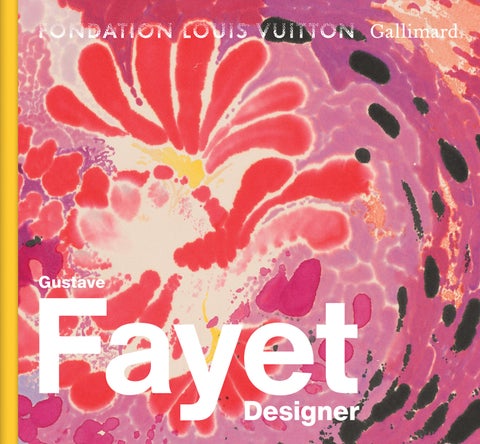
Images in cover and at the beginning of each section Cover Gustave Fayet Motif abstrait (detail), 1916 Abstract Motif Watercolor on blotting paper, 28 × 44 cm Private collection, MAGFF.2017.0472 Page 2 Gustave Fayet Motif abstrait (detail), 1918 Abstract Motif Watercolor on blotting paper, 37 × 28 cm Private collection, MAGFF.2013.0301 Page 19 Gustave Fayet Motif abstrait (detail), 1916 Abstract Motif Watercolor on blotting paper, 28 × 44 cm Private collection, MAGFF.2017.0472 Page 29 Gustave Fayet, Louis Paul Group of Vases, 1896–1900 Glazed stoneware, variable dimensions Private collection Page 59 Panoramic view of the Abbaye de Fontfroide, Narbonne Page 81 Gustave Fayet Motif abstrait (detail), 1918 Abstract Motif Watercolor on blotting paper, 42 × 25 cm Private collection, MAGFF.2018.0441 Page 111 Atelier de la Dauphine Purple carpet designed by Gustave Fayet for Léon Losseau’s home in Mons (detail), 1922–1925 Wool, D. 230 cm Léon Losseau’s townhouse, Mons (Belgium) Page 147 Odilon Redon Le Jour (detail), 1910–1911 Day Distemper on canvas, 200 × 650 cm Library, Abbaye de Fontfroide, Narbonne
© Fondation Louis Vuitton, Paris, 2026 www.fondationlouisvuitton.fr © Éditions Gallimard, Paris, 2026 5, rue Gaston-Gallimard – 75007 Paris securitedesproduits1@madrigall.fr www.gallimard.fr This book is set in Or Lemmen (Or Type) and Gotham (Hoefler & Co.) Interior paper: Magno Volume 130 g/m2 The paper used in this book is made from natural fibers, renewable and recyclable, sourced from sustainably managed forests. Photoengraving: Hyphen (Italy) Printed in September 2026 by Printer Trento for Maestro, Trento (Italy) Legal deposit: October 2026 ISBN: 978-2-07-315884-0 Edition number: 689181