Sylvie Patry
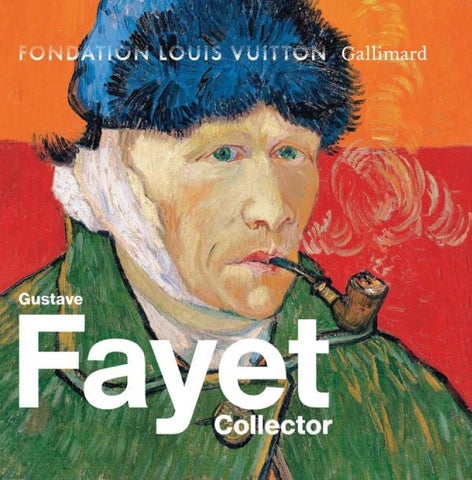
Who has heard of Gustave Fayet? “Art is the Supreme Objective, high, salutary, and holy; it causes new life to bloom; in the art lover, it produces only exquisite delight, but through the artist’s torment it creates a new seed for a new sowing.” Odilon Redon1 Gustave Fayet “did everything with art. His collections are the proof of this.”2 So noted the writer André Suarès in his eulogy for his friend, who died suddenly in late September 1925, at the age of only sixty. The press paid tribute to “a great collector,”3 “universally known in all artistic circles” (Duplessis de Pouzilhac 1925, n.p) and to the “art lover whose rich collection of modern paintings was justly renowned” (Fréchet 1926, 76). La Gazette de l’hôtel Drouot made reference to the masterpieces he owned by Van Gogh, Gauguin, Renoir, Redon, “and still closer in time to us, Bonnard and Signac,” while other articles also mentioned Adolphe Monticelli. This list reflects the loans that Fayet had recently made to a major exhibition devoted to fifty years of French art.4 The public had been able to admire what was already the “icon” of his collection, Van Gogh’s Autoportrait à la pipe. This is one of the artist’s most striking self-portraits, painted in January 1889 in Arles (detail left and p. 203). After a violent disagreement with Paul Gauguin, with whom he had wanted to establish a “studio of the South,” he experienced a crisis during which he mutilated or cut off his left ear. When he returned from hospital, he went back to work, as this self-portrait makes clear. Van Gogh depicted himself wearing a fur hat, which not only helped to protect him from the cold but also kept the substantial bandage in place. He painted himself maimed in this way twice, although we cannot be sure which version came first. In one of these, the framing
is wider. Van Gogh’s face, in three-quarter view, is flanked by a canvas resting on an easel and a brightly colored Japanese print (p. 174). The interior of the yellow house in Arles is easily recognized. This painting had been in the collection of the painter and collector Antoine de La Rochefoucauld since 1896, after being displayed in Ambroise Vollard’s gallery in Paris the previous year. In the other version, owned by Fayet, Van Gogh is smoking a pipe, which for him was a sign of relaxation and rediscovered calm. Every contextual element has disappeared. The face stands out against a background divided into two areas of flat color, orange and bright red. The tight framing focuses attention on the artist’s gaze, his blue eyes aligning with the line that separates the areas of orange and red. Van Gogh stares out at us with an expression that combines distress and determination. Despite the similar circumstances and subject, this version is radically different from the other one: concise and less realistic, it concentrates on the essentials, drawing the viewer in like a magnet. After intense negotiations, Fayet bought the Autoportrait à la pipe in March 1902 and never parted with it, hanging it in his bedroom in each of his subsequent homes. The work was among his most frequent loans, and thus became closely associated with his name. After Fayet’s death, the dealer Paul Rosenberg bought it in November 1928, shortly after selling, in October, the Autoportrait à l’oreille bandée to the great English collector Samuel Courtauld (1889, p. 174). This passing of the baton, so to speak, is significant: Fayet was a pioneer while Courtauld followed in his wake, setting out to provide England with the collection of modern French paintings that the country lacked at that time. The Autoportrait à l’oreille bandée would go on display in London when the Autoportrait à la pipe could no longer be viewed in France. After the exceptional loan of the
Vincent van Gogh Autoportrait à l’oreille bandée (Autoportrait à la pipe), detail, January 1889
25
Sylvie Patry
Who has heard of Gustave Fayet? “Art is the Supreme Objective, high, salutary, and holy; it causes new life to bloom; in the art lover, it produces only exquisite delight, but through the artist’s torment it creates a new seed for a new sowing.” Odilon Redon1 Gustave Fayet “did everything with art. His collections are the proof of this.”2 So noted the writer André Suarès in his eulogy for his friend, who died suddenly in late September 1925, at the age of only sixty. The press paid tribute to “a great collector,”3 “universally known in all artistic circles” (Duplessis de Pouzilhac 1925, n.p) and to the “art lover whose rich collection of modern paintings was justly renowned” (Fréchet 1926, 76). La Gazette de l’hôtel Drouot made reference to the masterpieces he owned by Van Gogh, Gauguin, Renoir, Redon, “and still closer in time to us, Bonnard and Signac,” while other articles also mentioned Adolphe Monticelli. This list reflects the loans that Fayet had recently made to a major exhibition devoted to fifty years of French art.4 The public had been able to admire what was already the “icon” of his collection, Van Gogh’s Autoportrait à la pipe. This is one of the artist’s most striking self-portraits, painted in January 1889 in Arles (detail left and p. 203). After a violent disagreement with Paul Gauguin, with whom he had wanted to establish a “studio of the South,” he experienced a crisis during which he mutilated or cut off his left ear. When he returned from hospital, he went back to work, as this self-portrait makes clear. Van Gogh depicted himself wearing a fur hat, which not only helped to protect him from the cold but also kept the substantial bandage in place. He painted himself maimed in this way twice, although we cannot be sure which version came first. In one of these, the framing
is wider. Van Gogh’s face, in three-quarter view, is flanked by a canvas resting on an easel and a brightly colored Japanese print (p. 174). The interior of the yellow house in Arles is easily recognized. This painting had been in the collection of the painter and collector Antoine de La Rochefoucauld since 1896, after being displayed in Ambroise Vollard’s gallery in Paris the previous year. In the other version, owned by Fayet, Van Gogh is smoking a pipe, which for him was a sign of relaxation and rediscovered calm. Every contextual element has disappeared. The face stands out against a background divided into two areas of flat color, orange and bright red. The tight framing focuses attention on the artist’s gaze, his blue eyes aligning with the line that separates the areas of orange and red. Van Gogh stares out at us with an expression that combines distress and determination. Despite the similar circumstances and subject, this version is radically different from the other one: concise and less realistic, it concentrates on the essentials, drawing the viewer in like a magnet. After intense negotiations, Fayet bought the Autoportrait à la pipe in March 1902 and never parted with it, hanging it in his bedroom in each of his subsequent homes. The work was among his most frequent loans, and thus became closely associated with his name. After Fayet’s death, the dealer Paul Rosenberg bought it in November 1928, shortly after selling, in October, the Autoportrait à l’oreille bandée to the great English collector Samuel Courtauld (1889, p. 174). This passing of the baton, so to speak, is significant: Fayet was a pioneer while Courtauld followed in his wake, setting out to provide England with the collection of modern French paintings that the country lacked at that time. The Autoportrait à l’oreille bandée would go on display in London when the Autoportrait à la pipe could no longer be viewed in France. After the exceptional loan of the
Vincent van Gogh Autoportrait à l’oreille bandée (Autoportrait à la pipe), detail, January 1889
25
Odilon Redon Simone Fayet en communiante, 1908
Odilon Redon Portrait de Simone Fayet à la poupée, 1906
Pastel on paper, 75 × 45 cm Private collection
Pastel on paper, 75 × 40 cm Private collection
44
45
Odilon Redon Simone Fayet en communiante, 1908
Odilon Redon Portrait de Simone Fayet à la poupée, 1906
Pastel on paper, 75 × 45 cm Private collection
Pastel on paper, 75 × 40 cm Private collection
44
45
Léa Saint-Raymond
The Economics of a Collection If one were to list the reasons why people collect things, it would read like Cyrano de Bergerac’s famous “nose tirade.” Economic reasons: “A lottery with this for the grand prize!” (Rostand 1951, 45). One can of course take an investor’s view of a collection, an asset that will appreciate in value: successful speculation will generate a capital gain.1 Social reasons: “For a perfumer, what a shopwindow!” The activity of “display-case collectors”2 is a form of ostentation3 aimed at integrating the collector into a social group or setting them apart from one (Bourdieu 1984), or a way of transforming economic capital into cultural and symbolic capital. Viewed from this angle, patronage is not neutral: like all forms of philanthropy, selflessness is self-serving (Bourdieu 1996, 149–167). Psychological reasons: Do we not tend to collect things that resemble us, a case of conch shells for tritons? The autobiographical and emotional dimension is a common denominator of many explanations, which put the emphasis on “falling in love” with certain artists or objects (see Baudrillard 1996; Derlon and Jeudy-Ballini 2008). Gustave Fayet certainly falls within this spectrum. His collection is governed by economic, social, and psychological factors, but to what extent? To assess this, we need to place the collector’s activity within a broader context, both at the individual level and in relation to his contemporaries. This perspective is now possible thanks to the meticulous and scholarly work serving to reconstruct this ensemble and its evolving configuration.4 How did Fayet’s collection function? Of what economy did it partake? Does it denote what was a markedly atypical practice for the first quarter of the twentieth century? Comparative study paints a picture of a collector who acted like a businessman, managing to acquire works at very low prices, but one whose activities were far from an isolated case in the Languedoc region.
Collecting as a businessman Was Gustave Fayet a collector in a hurry? In the space of ten years, he acquired nearly 450 works of art, including some 250 paintings, about thirty pastels, and nearly forty sculptures and ceramics.5 This voracious collecting was fueled by the inheritance he received from his father, who died on January 19, 1899, and it began to wane in 1909, after the sudden death from peritonitis of his elder son, Gabriel, at the age of sixteen, but also for a variety of complex reasons (Abbadie 2015, 227 and 243). The peak years were 1905 and 1906, which added forty-two and fifty-seven paintings to the collection, respectively. Then the pace slowed, with “only” twenty-one paintings in 1908— Fayet, in fact, was forced to rein in his spending in order to finance the restoration of Abbaye de Fontfroide, which he had acquired in January that year (Andoque 2015, 136). Between 1910 and his death, he added fifty-five works to his collection, including twenty-eight paintings and two pastels (see the online catalogue). Chronologically, the slowdown in acquisitions corresponds to the “end of the rentiers,” a social category which, until 1913–1914, had accumulated wealth due to the absence of income tax and the stability of the franc (see Piketty 2001). Such a volume of purchases, made over such a short period of time, brings to mind the ambition of Kojiro Matsukata, who, between 1916 and 1924, assembled a collection of nearly four hundred paintings, drawings, and sculptures by “modern” Western artists (see Kawaguchi and Jingaoka 2019; Métraux 2019). Unlike the Japanese industrialist, however, Fayet had no goal of opening a museum that would serve to train young artists. While Matsukata steadily expanded his collection with a political objective in mind, Fayet could readily part with pieces for personal reasons. During the heyday of his collection,
Kees van Dongen La Cuirasse d’or, detail, c. 1907
51
Léa Saint-Raymond
The Economics of a Collection If one were to list the reasons why people collect things, it would read like Cyrano de Bergerac’s famous “nose tirade.” Economic reasons: “A lottery with this for the grand prize!” (Rostand 1951, 45). One can of course take an investor’s view of a collection, an asset that will appreciate in value: successful speculation will generate a capital gain.1 Social reasons: “For a perfumer, what a shopwindow!” The activity of “display-case collectors”2 is a form of ostentation3 aimed at integrating the collector into a social group or setting them apart from one (Bourdieu 1984), or a way of transforming economic capital into cultural and symbolic capital. Viewed from this angle, patronage is not neutral: like all forms of philanthropy, selflessness is self-serving (Bourdieu 1996, 149–167). Psychological reasons: Do we not tend to collect things that resemble us, a case of conch shells for tritons? The autobiographical and emotional dimension is a common denominator of many explanations, which put the emphasis on “falling in love” with certain artists or objects (see Baudrillard 1996; Derlon and Jeudy-Ballini 2008). Gustave Fayet certainly falls within this spectrum. His collection is governed by economic, social, and psychological factors, but to what extent? To assess this, we need to place the collector’s activity within a broader context, both at the individual level and in relation to his contemporaries. This perspective is now possible thanks to the meticulous and scholarly work serving to reconstruct this ensemble and its evolving configuration.4 How did Fayet’s collection function? Of what economy did it partake? Does it denote what was a markedly atypical practice for the first quarter of the twentieth century? Comparative study paints a picture of a collector who acted like a businessman, managing to acquire works at very low prices, but one whose activities were far from an isolated case in the Languedoc region.
Collecting as a businessman Was Gustave Fayet a collector in a hurry? In the space of ten years, he acquired nearly 450 works of art, including some 250 paintings, about thirty pastels, and nearly forty sculptures and ceramics.5 This voracious collecting was fueled by the inheritance he received from his father, who died on January 19, 1899, and it began to wane in 1909, after the sudden death from peritonitis of his elder son, Gabriel, at the age of sixteen, but also for a variety of complex reasons (Abbadie 2015, 227 and 243). The peak years were 1905 and 1906, which added forty-two and fifty-seven paintings to the collection, respectively. Then the pace slowed, with “only” twenty-one paintings in 1908— Fayet, in fact, was forced to rein in his spending in order to finance the restoration of Abbaye de Fontfroide, which he had acquired in January that year (Andoque 2015, 136). Between 1910 and his death, he added fifty-five works to his collection, including twenty-eight paintings and two pastels (see the online catalogue). Chronologically, the slowdown in acquisitions corresponds to the “end of the rentiers,” a social category which, until 1913–1914, had accumulated wealth due to the absence of income tax and the stability of the franc (see Piketty 2001). Such a volume of purchases, made over such a short period of time, brings to mind the ambition of Kojiro Matsukata, who, between 1916 and 1924, assembled a collection of nearly four hundred paintings, drawings, and sculptures by “modern” Western artists (see Kawaguchi and Jingaoka 2019; Métraux 2019). Unlike the Japanese industrialist, however, Fayet had no goal of opening a museum that would serve to train young artists. While Matsukata steadily expanded his collection with a political objective in mind, Fayet could readily part with pieces for personal reasons. During the heyday of his collection,
Kees van Dongen La Cuirasse d’or, detail, c. 1907
51
historian Olivier Schuwer, this might be seen as a direct allusion to Van Gogh’s experience in Arles (2025, 143), working “at midday, in the full heat of the sun … revel[ing] in it like a cicada.”9 Fayet thereby associated Mireille’s death with Vincent’s bedazzlement—both were consumed by the light they contemplated. Fayet’s olive and cypress trees, mown fields, and tormented clouds testify to an eye haunted by the memory of Van Gogh. This album should not, however, be seen as a simple tribute or attempt to claim artistic lineage some thirty years later. Rather, it should be understood as a dialogue in which Mistral’s Provence finds its visual translation through Van Gogh’s view. From this angle, Fayet might feel he was perhaps the sole person able to accomplish that task, given not just his artistic and technical abilities but also his Provençal “atavism,” as he wrote in 1922 to his son Léon. “I had [already] read Mireille, but now I rank that book among the finest. I’ve plunged into Provençal literature and I feel like a fish in water. Is that due to atavism?”10 Indeed, the Fayet family had Provençal roots, and although it had lived in the Béziers area for three generations by the time Gustave was born, it never cut ties to Provence, in the image of Fayet’s great-grandfather and great-uncle who had fully participated in the region’s revival. Now that Mirèio had been read again by eyes that adored Vincent, Fayet’s production of this series in 1922 represented not just a chance to work for the Félibre cause promoted by his forebears, but also to inscribe Van Gogh’s modernity upon Provence. In so doing, Fayet made himself heir to a double tradition: Mistral’s regionalism, rooted
in local language and landscape; and the “southern school” invented by Van Gogh when identifying himself with the heritage of Marseille artist Monticelli. Monticelli rather than Cézanne? Monticelli, appreciated by both bourgeois collectors and independent artists, enjoyed an important status in Fayet’s eyes. Like many affluent art lovers, Fayet’s father Gabriel and uncle Léon collected works by Monticelli during the Second Empire, and even painted in the artist’s company according to family lore recounted by Fayet when interviewed by a journalist (Charensol 1924). Van Gogh certainly would have applauded the announcement of Fayet’s donation, in January 1911, of two works by Monticelli to France’s national collection. The Louvre’s acceptance of Monticelli’s Promenade dans un parc au crépuscule (c. 1883, right) and Baigneuses (n.d., above) is an underappreciated event in the historiographies of both Fayet and Monticelli. It was the prestigious collector’s sole gift to the nation during his career, and it also placed the artist from Marseille among the old masters, establishing a new posterity. For Fayet, donating two Monticellis to the Louvre assumed a symbolic dimension: by bequeathing two paintings to the nation, the collector was adding the Fayet name to the prestigious list of Louvre donors. In addition, he was crowning a promotional campaign that began with Gabriel and Leon’s patronage of Monticelli and extended to the exhibition organized in 1902 by the Société des Beaux-Arts in Béziers in the Marseille artist’s honor. Finally—and above
all—although it may have been too early to hope that Gauguin, Cézanne, Redon, and Van Gogh would enter the Louvre, hanging Monticelli on the museum’s walls was a disguised tribute to four masters of modernist painting who all admired the southern colorist. Fayet’s message was clear, and was perfectly grasped by the collector Gabriel Frizeau, who wrote to Redon, “Monticelli in the Louvre … awaiting the next step.”11 When Fayet began illustrating Mirèio, he had already radically reduced his collection, reorganizing it around two poles, one “Symbolist” (Redon and Gauguin) and the other “Matterist” (the Monticelli–Van Gogh duo with the silken, sensual quality of their colorful impasto). As part of this reorganization, Fayet was obliged to make choices, and he notably divested works by Cézanne around 1908–1910, a time not only when the artist’s value was swiftly rising but also when Fayet had to finance the purchase and renovation of the Abbaye de Fontfroide. Yet Fayet still kept Cézanne “in mind” in his illustrations of 1922, as witnessed by the plate depicting the hills around Aix-en-Provence, which was perhaps a later addition since it was probably done in 1923 on the path leading to Costebrune, his villa in the Var region (p. 73). It was not the first time Fayet went to Aix in an effort to learn from Cézanne, which had annoyed his friend Fabre, who back in 1903 had already written, “You have once again discovered Cézanne at Jas [de] Bouffan. When will you discover him in Cézanne himself? You know we have an old dispute to settle on this subject.”12 According to Fabre, Fayet didn’t always grasp the classical import and theoretical scope of Cézanne, then a lively subject of critical debate within painterly circles. True enough, there is little of Cézanne in the construction of this plate. The winding path lined with cypresses is closer to Van Gogh’s approach, although Fayet also borrowed Gauguin’s interest in ambivalent imagery and an aesthetics of suggestion. The hill is like a face, as also be seen in Gauguin’s Breton and Marquesan landscapes. The recumbent giant looking skyward might even be the god Cézanne, a “mountain” that Fayet henceforth viewed from afar. Under the sun of Fontfroide Redon’s influence on Fayet was crucial on the redirection of his gaze, on his artistic practice, and on his policy of recentering and orienting his collection. For example, we know that in 1911 Redon wished that a group show could be organized of his works along with those by Gauguin, Van Gogh, and Monticelli.13 We might note, along the way, not only that Cézanne was not included but above all that Fayet’s collection was being reorganized around those four colorists at that very time. Just when Fayet was donating Monticellis to the Louvre, Redon was executing the interior decoration of the library at Fontfroide, commissioned three years earlier by its new owner. At a time when critical and theoretic debate on color focused on painterly experiments carried out in southern France first by Paul Signac and HenriEdmond Cross and then by the Fauvists, Redon also intended
Adolphe Monticelli Les Baigneuses, n.d.
Adolphe Monticelli Promenade dans un parc au crépuscule, c. 1883
Oil on wood, 48 × 101 cm Musée d’Orsay, Paris, don Gustave Fayet, 1911, RF 1769
Oil on wood, 46 × 65.5 cm Musée d’Orsay, Paris, don Gustave Fayet, 1911, RF 1770
74
75
historian Olivier Schuwer, this might be seen as a direct allusion to Van Gogh’s experience in Arles (2025, 143), working “at midday, in the full heat of the sun … revel[ing] in it like a cicada.”9 Fayet thereby associated Mireille’s death with Vincent’s bedazzlement—both were consumed by the light they contemplated. Fayet’s olive and cypress trees, mown fields, and tormented clouds testify to an eye haunted by the memory of Van Gogh. This album should not, however, be seen as a simple tribute or attempt to claim artistic lineage some thirty years later. Rather, it should be understood as a dialogue in which Mistral’s Provence finds its visual translation through Van Gogh’s view. From this angle, Fayet might feel he was perhaps the sole person able to accomplish that task, given not just his artistic and technical abilities but also his Provençal “atavism,” as he wrote in 1922 to his son Léon. “I had [already] read Mireille, but now I rank that book among the finest. I’ve plunged into Provençal literature and I feel like a fish in water. Is that due to atavism?”10 Indeed, the Fayet family had Provençal roots, and although it had lived in the Béziers area for three generations by the time Gustave was born, it never cut ties to Provence, in the image of Fayet’s great-grandfather and great-uncle who had fully participated in the region’s revival. Now that Mirèio had been read again by eyes that adored Vincent, Fayet’s production of this series in 1922 represented not just a chance to work for the Félibre cause promoted by his forebears, but also to inscribe Van Gogh’s modernity upon Provence. In so doing, Fayet made himself heir to a double tradition: Mistral’s regionalism, rooted
in local language and landscape; and the “southern school” invented by Van Gogh when identifying himself with the heritage of Marseille artist Monticelli. Monticelli rather than Cézanne? Monticelli, appreciated by both bourgeois collectors and independent artists, enjoyed an important status in Fayet’s eyes. Like many affluent art lovers, Fayet’s father Gabriel and uncle Léon collected works by Monticelli during the Second Empire, and even painted in the artist’s company according to family lore recounted by Fayet when interviewed by a journalist (Charensol 1924). Van Gogh certainly would have applauded the announcement of Fayet’s donation, in January 1911, of two works by Monticelli to France’s national collection. The Louvre’s acceptance of Monticelli’s Promenade dans un parc au crépuscule (c. 1883, right) and Baigneuses (n.d., above) is an underappreciated event in the historiographies of both Fayet and Monticelli. It was the prestigious collector’s sole gift to the nation during his career, and it also placed the artist from Marseille among the old masters, establishing a new posterity. For Fayet, donating two Monticellis to the Louvre assumed a symbolic dimension: by bequeathing two paintings to the nation, the collector was adding the Fayet name to the prestigious list of Louvre donors. In addition, he was crowning a promotional campaign that began with Gabriel and Leon’s patronage of Monticelli and extended to the exhibition organized in 1902 by the Société des Beaux-Arts in Béziers in the Marseille artist’s honor. Finally—and above
all—although it may have been too early to hope that Gauguin, Cézanne, Redon, and Van Gogh would enter the Louvre, hanging Monticelli on the museum’s walls was a disguised tribute to four masters of modernist painting who all admired the southern colorist. Fayet’s message was clear, and was perfectly grasped by the collector Gabriel Frizeau, who wrote to Redon, “Monticelli in the Louvre … awaiting the next step.”11 When Fayet began illustrating Mirèio, he had already radically reduced his collection, reorganizing it around two poles, one “Symbolist” (Redon and Gauguin) and the other “Matterist” (the Monticelli–Van Gogh duo with the silken, sensual quality of their colorful impasto). As part of this reorganization, Fayet was obliged to make choices, and he notably divested works by Cézanne around 1908–1910, a time not only when the artist’s value was swiftly rising but also when Fayet had to finance the purchase and renovation of the Abbaye de Fontfroide. Yet Fayet still kept Cézanne “in mind” in his illustrations of 1922, as witnessed by the plate depicting the hills around Aix-en-Provence, which was perhaps a later addition since it was probably done in 1923 on the path leading to Costebrune, his villa in the Var region (p. 73). It was not the first time Fayet went to Aix in an effort to learn from Cézanne, which had annoyed his friend Fabre, who back in 1903 had already written, “You have once again discovered Cézanne at Jas [de] Bouffan. When will you discover him in Cézanne himself? You know we have an old dispute to settle on this subject.”12 According to Fabre, Fayet didn’t always grasp the classical import and theoretical scope of Cézanne, then a lively subject of critical debate within painterly circles. True enough, there is little of Cézanne in the construction of this plate. The winding path lined with cypresses is closer to Van Gogh’s approach, although Fayet also borrowed Gauguin’s interest in ambivalent imagery and an aesthetics of suggestion. The hill is like a face, as also be seen in Gauguin’s Breton and Marquesan landscapes. The recumbent giant looking skyward might even be the god Cézanne, a “mountain” that Fayet henceforth viewed from afar. Under the sun of Fontfroide Redon’s influence on Fayet was crucial on the redirection of his gaze, on his artistic practice, and on his policy of recentering and orienting his collection. For example, we know that in 1911 Redon wished that a group show could be organized of his works along with those by Gauguin, Van Gogh, and Monticelli.13 We might note, along the way, not only that Cézanne was not included but above all that Fayet’s collection was being reorganized around those four colorists at that very time. Just when Fayet was donating Monticellis to the Louvre, Redon was executing the interior decoration of the library at Fontfroide, commissioned three years earlier by its new owner. At a time when critical and theoretic debate on color focused on painterly experiments carried out in southern France first by Paul Signac and HenriEdmond Cross and then by the Fauvists, Redon also intended
Adolphe Monticelli Les Baigneuses, n.d.
Adolphe Monticelli Promenade dans un parc au crépuscule, c. 1883
Oil on wood, 48 × 101 cm Musée d’Orsay, Paris, don Gustave Fayet, 1911, RF 1769
Oil on wood, 46 × 65.5 cm Musée d’Orsay, Paris, don Gustave Fayet, 1911, RF 1770
74
75
Paul Signac La Voile verte (Venise), 1904
Paul Signac Venise, la voile jaune, 1904
Oil on canvas, 65.2 × 81.2 cm Musée d’Orsay, Paris, donation sous réserve d’usufruit Ginette Signac, 1976
Oil on canvas, 72 × 91 cm Centre Pompidou, musée national d’Art moderne – Centre de création industrielle, Paris, donation d’Adèle et George Besson en 1963, en dépôt au musée des Beaux-Arts et d’Archéologie de Besançon
148
149
Paul Signac La Voile verte (Venise), 1904
Paul Signac Venise, la voile jaune, 1904
Oil on canvas, 65.2 × 81.2 cm Musée d’Orsay, Paris, donation sous réserve d’usufruit Ginette Signac, 1976
Oil on canvas, 72 × 91 cm Centre Pompidou, musée national d’Art moderne – Centre de création industrielle, Paris, donation d’Adèle et George Besson en 1963, en dépôt au musée des Beaux-Arts et d’Archéologie de Besançon
148
149
Kees van Dongen Joaquina, c. 1910 Oil on canvas, 64.5 × 53.5 cm Collection of Leslie Lewis and Christina Lewis
Kees van Dongen Le Manteau de Manille, c. 1910–1911 Oil on canvas, 100 × 81 cm Collection S. & P. Traboulsi
Kees van Dongen Joaquina, c. 1910 Oil on canvas, 64.5 × 53.5 cm Collection of Leslie Lewis and Christina Lewis
Kees van Dongen Le Manteau de Manille, c. 1910–1911 Oil on canvas, 100 × 81 cm Collection S. & P. Traboulsi
Paul Gauguin Maruru (Merci), 1893–1894 Wood engraving on oriental paper, 25.3 × 42 cm Private collection
250
Paul Gauguin Maruru (Merci), 1893–1894 Wood engraving on oriental paper, 25.3 × 42 cm Private collection
250
Odilon Redon Ophélie, 1908–1909 Oil on vellum paper, 64.5 × 50.6 cm Private collection Odilon Redon Femme et Enfants de profil (de l’Hommage à Léonard de Vinci), before April 1910 Gouache on vellum paper, 21 × 20.5 cm Private collection
Odilon Redon Ophélie, 1908–1909 Oil on vellum paper, 64.5 × 50.6 cm Private collection Odilon Redon Femme et Enfants de profil (de l’Hommage à Léonard de Vinci), before April 1910 Gouache on vellum paper, 21 × 20.5 cm Private collection
Eight years after Odilon Redon’s death, the journal CAP. Critique Art Philosophie asked Gustave Fayet to write about his friend. Fayet had rarely spoken publicly about his collection; his “Souvenirs sur Odilon Redon,” illustrated with woodcuts by Paul Gauguin taken from his own collection, is an exception. In the article, he recounts his meeting with Redon, paying vivid tribute to the man who introduced him to the “idea of the spiritual” and establishing a dialogue between the two main artists of his collection: “The entrance of these highly spiritual works into my home obliged me to relinquish certain realist works. I kept only my Gauguins. Gauguin! Redon! Those two beings, who were as unlike as possible, admired one another without ever meeting.”
378
379
Eight years after Odilon Redon’s death, the journal CAP. Critique Art Philosophie asked Gustave Fayet to write about his friend. Fayet had rarely spoken publicly about his collection; his “Souvenirs sur Odilon Redon,” illustrated with woodcuts by Paul Gauguin taken from his own collection, is an exception. In the article, he recounts his meeting with Redon, paying vivid tribute to the man who introduced him to the “idea of the spiritual” and establishing a dialogue between the two main artists of his collection: “The entrance of these highly spiritual works into my home obliged me to relinquish certain realist works. I kept only my Gauguins. Gauguin! Redon! Those two beings, who were as unlike as possible, admired one another without ever meeting.”
378
379
Gustave Fayet’s collection, as seen by L’Amour de l’art in April 1925 Before falling into obscurity, Gustave Fayet’s collection was renowned among his contemporaries. In keeping with a practice common at the time, the Fayet family’s Paris apartment, located on rue de Bellechasse, was open to visitors, and many artists, art critics, and collectors came to admire the works installed there. Beginning in 1912, Fayet also hosted guests at his château in Igny. Jean-Gabriel Goulinat, a restorer and painter, visited Igny in 1925. A short time later, he published an article discussing Gustave Fayet’s collections in the well-known journal L’Amour de l’art. Published just a few month’s before the collector’s sudden death, this valuable testimony is thus a final tribute. Goulinat praises Fayet for “the love [that] guides most of his instinctive choices.” He describes how the collection is shown throughout the home. Both the text and the illustrations highlight the central place of Adolphe Monticelli, but above all of Vincent van Gogh, Paul Gauguin, and Odilon Redon.
382
383
Gustave Fayet’s collection, as seen by L’Amour de l’art in April 1925 Before falling into obscurity, Gustave Fayet’s collection was renowned among his contemporaries. In keeping with a practice common at the time, the Fayet family’s Paris apartment, located on rue de Bellechasse, was open to visitors, and many artists, art critics, and collectors came to admire the works installed there. Beginning in 1912, Fayet also hosted guests at his château in Igny. Jean-Gabriel Goulinat, a restorer and painter, visited Igny in 1925. A short time later, he published an article discussing Gustave Fayet’s collections in the well-known journal L’Amour de l’art. Published just a few month’s before the collector’s sudden death, this valuable testimony is thus a final tribute. Goulinat praises Fayet for “the love [that] guides most of his instinctive choices.” He describes how the collection is shown throughout the home. Both the text and the illustrations highlight the central place of Adolphe Monticelli, but above all of Vincent van Gogh, Paul Gauguin, and Odilon Redon.
382
383
Section introductions pp. 48–49: Unknown, Gustave and Yseult Fayet in the barn at the Château d’Igny, c. 1915 (p. 5) pp. 90–91: Eugène Druet, The Fayet family’s salon, rue Bellechasse à Paris, detail, 1906 (p. 4) p. 92: Henri de Toulouse-Lautrec, Rousse (La Toilette), 1889 (p. 117) p. 170: Vincent van Gogh, Les Grands Platanes (Paveurs à Saint-Rémy), 1889 (p. 201) p. 204: Paul Gauguin, Trois Tahitiens, 1899 (p. 259) p. 272: Odilon Redon, La Voile grise, c. 1900–1905 (p. 308) p. 314: Odilon Redon, La Nuit, 1910–1911 (pp. 338– 339) p. 354: Ricardo Viñes, Simone, Antoine, Yseult, Gustave, and Léon Fayet with Odilon Redon, at Fontfroide, August–September 1910 (p. 317) Cover Vincent van Gogh, Autoportrait à l’oreille bandée (Autoportrait à la pipe), detail, January 1889 (p. 203) Paul Gauguin, Trois Tahitiens, detail, 1899 (p. 259)
© Fondation Louis Vuitton, Paris, 2026 www.fondationlouisvuitton.fr © Éditions Gallimard, Paris, 2026 5, rue Gaston-Gallimard – 75007 Paris securitedesproduits1@madrigall.fr www.gallimard.fr This book is set in Brown and Tiempos. Interior paper: Magno Volume 130 g/m2 The paper used in this book is made from natural fibers, renewable and recyclable, sourced from sustainably managed forests. Photoengraving: Hyphen (Italy) Printed in August 2026 on the presses of Printer Trento for Maestro, Trento (Italy).
Printed in Italy Legal deposit: October 2026 ISBN: 978-2-07-315881-9 Edition number: 689 175
460