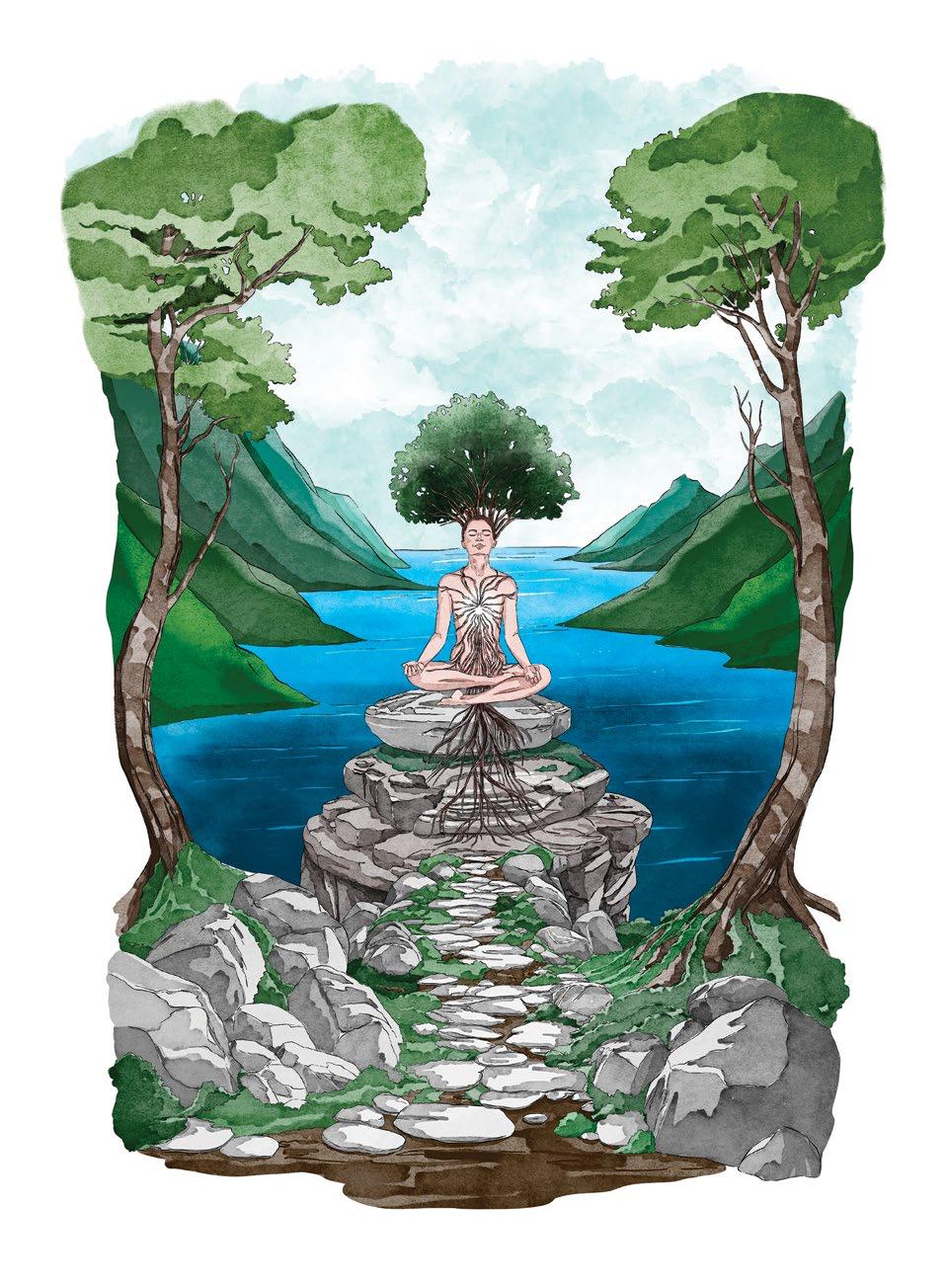
mersion in nature, both inside and outside yourself, to awaken your feelings, to recall the secret language of the moon, the stars, the trees and the crystals, to reintegrate your divine and animal selves within you, your masculine and feminine powers, to reconnect to the cycles and reclaim what you may have forgotten, but keep inside, like a seed in a state of quiescence, ready to sprout and flourish. When I think of wellness, I think of connection first; we humans are part of the whole, our bodies are part of the earth’s body, and we are the siblings of all visible and invisible beings that populate it, which is why feeling disconnected and isolated causes us to suffer and get ill. We’re unfit for this!
Reconnection and getting back to feeling “at one” with the whole is a journey taken in baby steps that may last a lifetime, yet it will transform you from the very start. It’s about reconnecting those threads that, as humans or as individuals, we severed and that are waiting for nothing less than to be reattached and intertwined with a new consciousness, creating a beautiful new tapestry. For me, writing this book was a journey of celebration in which to honor the path that has led me to feeling whole, connected and part of the sentient cosmos. It hasn’t always been so; indeed, I can say it was a difficult and demanding journey, simultaneously necessary and salvific, a path studded with practices, intuitions, challenges, insights, deaths and rebirths. A journey where I was able to put together transformative tools and practices, visions and possibilities by traversing them one by one.
Looking back, I see the road I traveled; there was a time when I felt lost and disconnected, directionless.
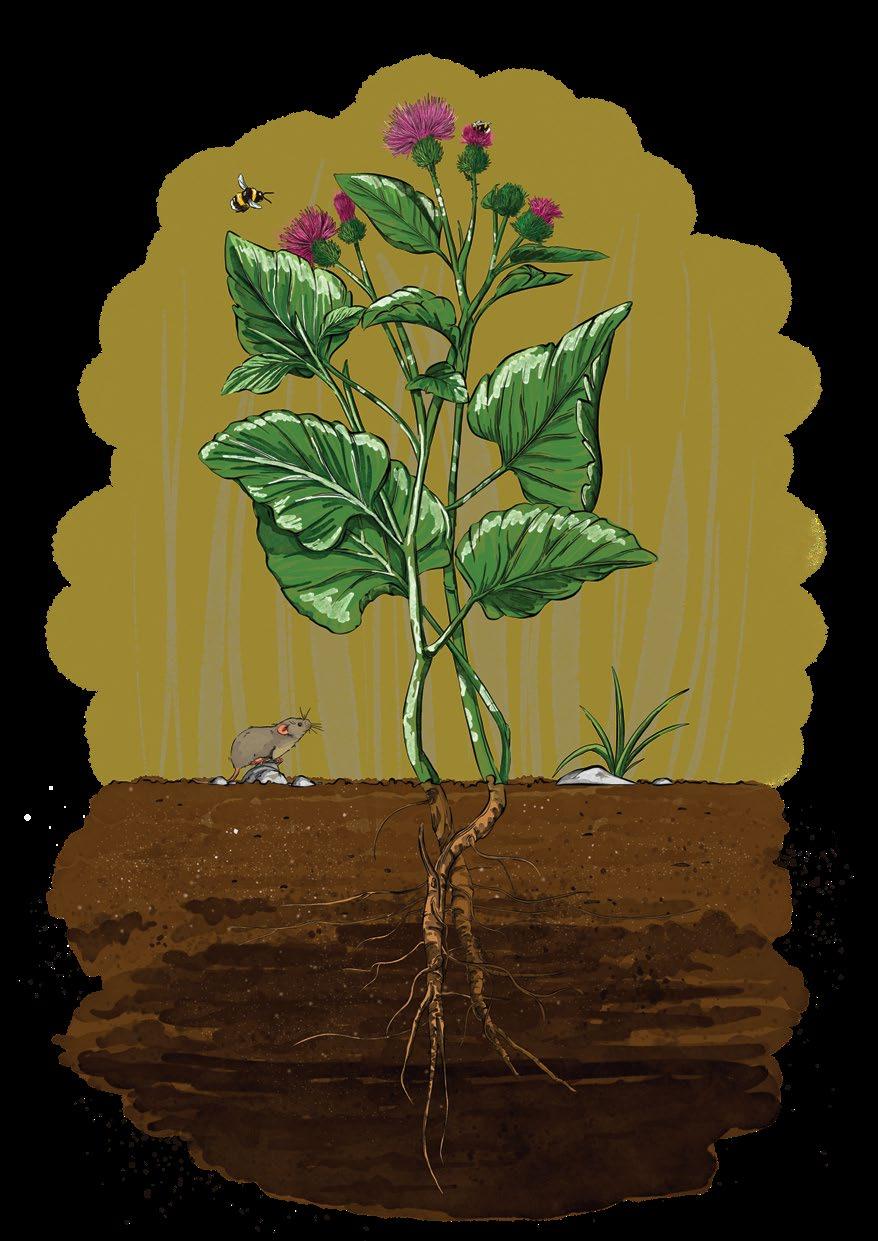
Burdock Root
ARCTIUM LAPPA
Native to Europe and Asia, this common plant grows in temperate regions and belongs to the Asteraceae family.
It has a tall stem, large leaves and purple flowers, though it’s mainly the root (a taproot several feet in length) that is used in Western and Chinese medicine as a detoxifying remedy capable of cleansing the blood and detoxifying the liver, feeding the reproductive, immune and nervous systems, while also recommended for skin problems such as psoriasis, eczema and acne.
Its energy is grounding, nourishing and stabilizing. It strengthens and nourishes, helping us to get to the root of a problem and cleanse ourselves in depth. From a physical point of view, it has the ability to unburden us by assisting in the elimination of toxins and by rebalancing the metabolism; from an emotional point of view, it unblocks any emotional stagnation even if connected to a distant past. In this process, burdock root accompanies us with its stable energy and safe presence.
It can be prepared by infusing the fresh or dried roots overnight, or it can be used in soups, broths and mashed vegetables.
FOCUS
Seeds
FOCUS
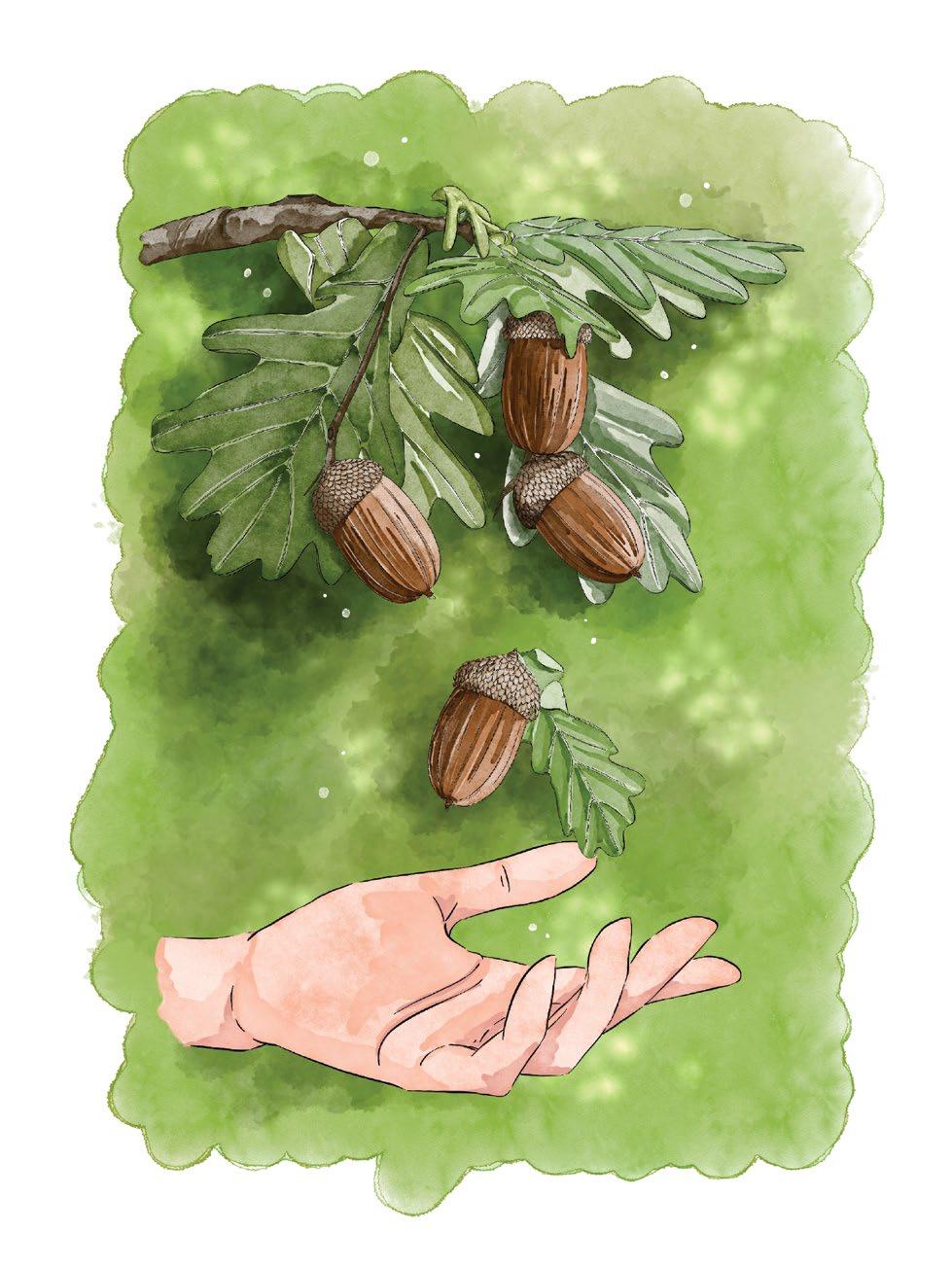
Seeds symbolize potential, survival and rebirth. They are the hope that a new beginning is always possible, they are the guardians of the cycles, of the beginning and the end, but they also teach us that the end is never final and that the death of something brings about the rebirth of something else. They are small and mysterious and contain a multitude of data; in each seed, there is a plant that has yet to manifest itself, though it’s already there.
A seed can remain dormant for a long time, waiting for the right conditions to develop and thrive, and this is a great teaching: that everyone requires optimal conditions and loving care to evolve.
In his Acorn Theory, psychologist and philosopher James Hillman argued that each of us comes into the world with an innate image that defines them. Their uniqueness demands to be realized and expressed, just like an acorn exists to manifest into a majestic oak, and can never create a larch or a beech. Think of yourself as a seed with all the potential to express something extraordinary and perhaps dormant, awaiting the conditions to develop and thrive. What might these conditions be? How might you awaken your hidden potential and connect with your most authentic self?
Traveling with a Cyclical Diary
Keeping a diary to observe ourselves in relation to what is happening within and around us can be a beautiful journey of self-examination for a time or a life-long ritual that supports us; in any event, it’s a useful tool for reconnection and awareness.
A cyclical diary considers the seasonal and lunar cycles, as well as our inner, hormonal cycles and how these changes affect our emotions, psyche and physiology. To better understand the cyclical patterns, begin by numbering the days from the new moon, or the first day of your period, continuing in ascending order until the next new moon or the first day of bleeding, when a new cycle starts with day one. In your journal, always note the season, the weather, the lunar phase in which you are and write down any changes you notice around you, like new buds on the trees, ice on the hood of the car, the flowering mimosa, the falling leaves...
If you are a woman of childbearing age, note what phase of your hormonal cycle you’re in and describe how you feel overall, in terms of energy, mood, libido, appetite, mental focus, physical strength and what the dominant daily emotions are.
Write down dreams, physical changes, any symptoms and special events. You don’t need to write much, though you’re welcome to; the journal is a tool for self-examination, which after a few months should provide you with a lot of useful information, giving you a new perspective about yourself, while also helping you organize your life in harmony with the flow of cyclical energy.
Learning How to Embrace the End from Mushrooms
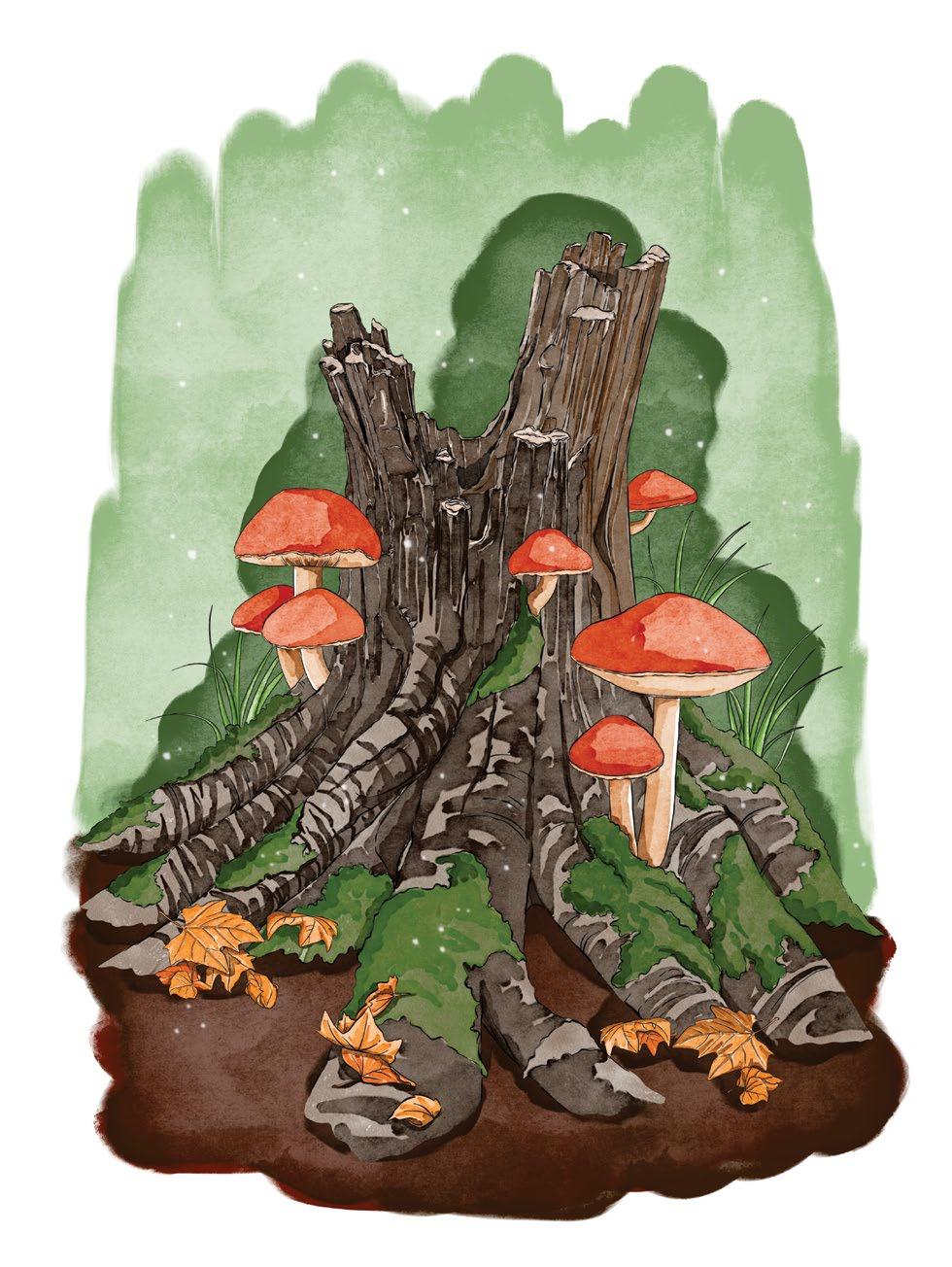
The mushroom kingdom is a mysterious and immense place, a land between animal and plant life, a fascinating world that sometimes causes restlessness. Mushrooms live in the earth, the air, inside us; they can be minuscule but they are also among the largest living creatures on the planet. They have the ability to break down organic matter as well as stone or plastic, and they regenerate damaged ecosystems, affecting the atmospheric composition, neutralizing toxins and even reducing radiation, such as the fungus that appeared inside the Chernobyl reactor.
In popular culture, they have always been linked to magic and the supernatural, for their appearance and sudden growth and for the psychedelic effects of some species, used by shamans and healers in many areas of the world.
They can be healing and nourishing, but also harmful and lethal.
Their essence speaks to the relationship with nature, cooperation and collaboration; they reconnect us to the invisible network linking our body to the earth and our brain to the cosmos and the universe.
In nature their role is to transform and alchemize what is dead, inhabiting the places of decay, the deep darkness of the earth, the realms of dreams and visions. They teach us how life is reborn from death, how nothing is created and nothing is destroyed, but everything is transformed; if nothing dies, nothing can be born. In the life-death-life cycle, death is but a transition to another state that must be embraced and passed through as part of a continuous cycle, thanks also to the fungi, custodians of transformation.
Immerse Yourself in the Moment, Experience the Wonder
The state of being present is defined by pure and simple perception, not necessarily without thoughts or emotions, but rather, without attachment or identification with them. One simply observes what is happening in a neutral way.
It may seem like something complex to achieve, given that for many of us, the state of mind is that of a “crazy monkey bitten by a tarantula”—as they say in Yoga—in reality, it’s a natural and spontaneous state that is easily recognizable in animals.
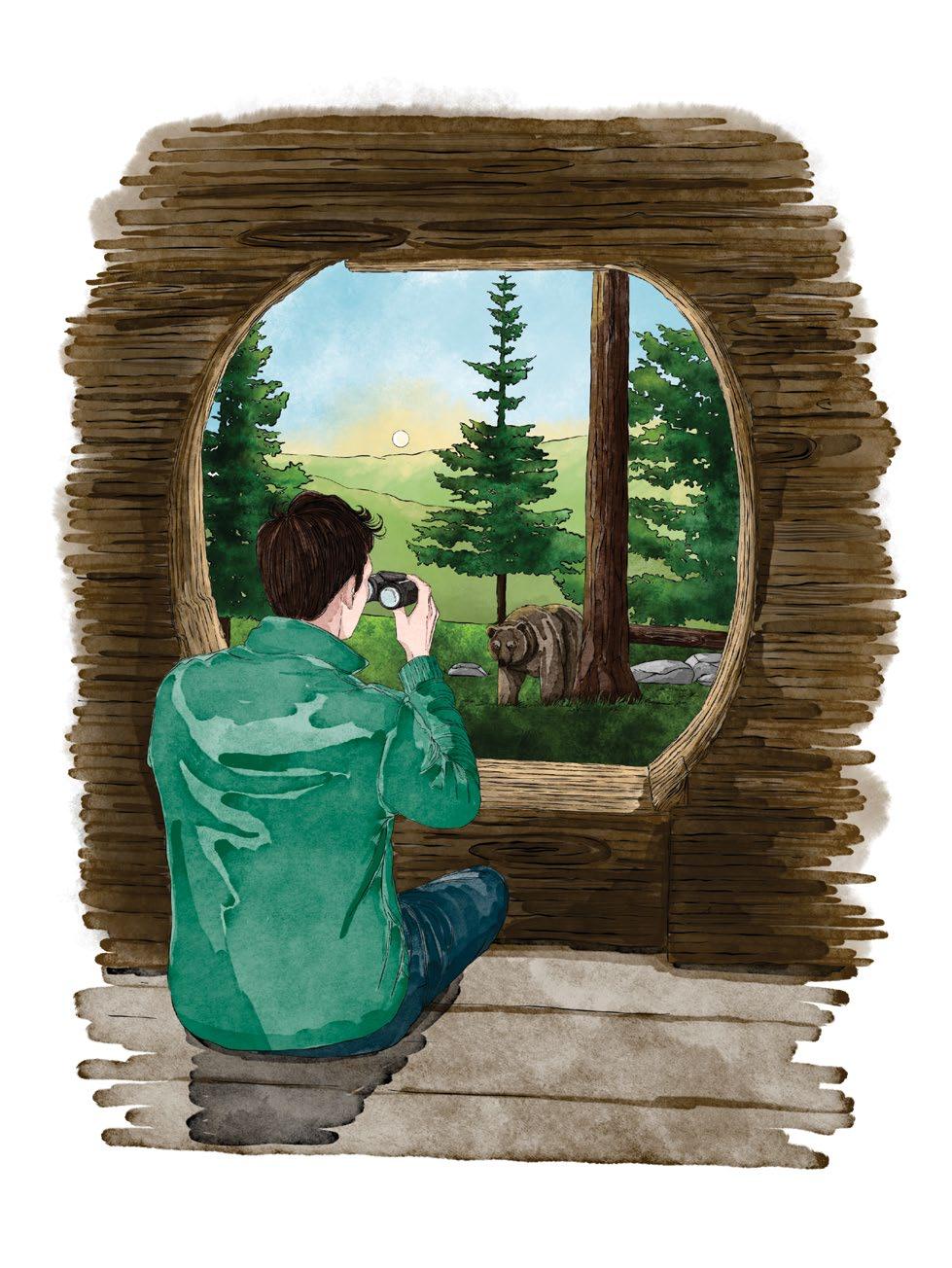
Recall a time when you had an intense experience, maybe before the magnificent colors of a sunset, encountering a wild animal in nature, contemplating an artwork... Remember how you were totally unified with the experience. The mind is a wonderful tool when used appropriately, yet it’s never in the present; it’s always in the past, comparing experiences, or in the future, trying to predict or control what will happen. When you are present, however, you are able to live the experience and immerse yourself in pure perception.
You can train yourself to practice being present by paying close attention to what you are doing, like washing dishes. Focus all your attention on your body, your breath and the action you are performing; the movement of your hands, the feeling of water on your skin, its sound, the consistency of the sponge, the smell of detergent and the foam that is created. As soon as the mind wanders, gently lead it back to the here and now every time. Incorporate more opportunities to be present in your daily life; to awaken presence is to awaken your spontaneous, wild and infinite side and fully enjoy the wonder of this moment.
Breathing the Sun and Moon
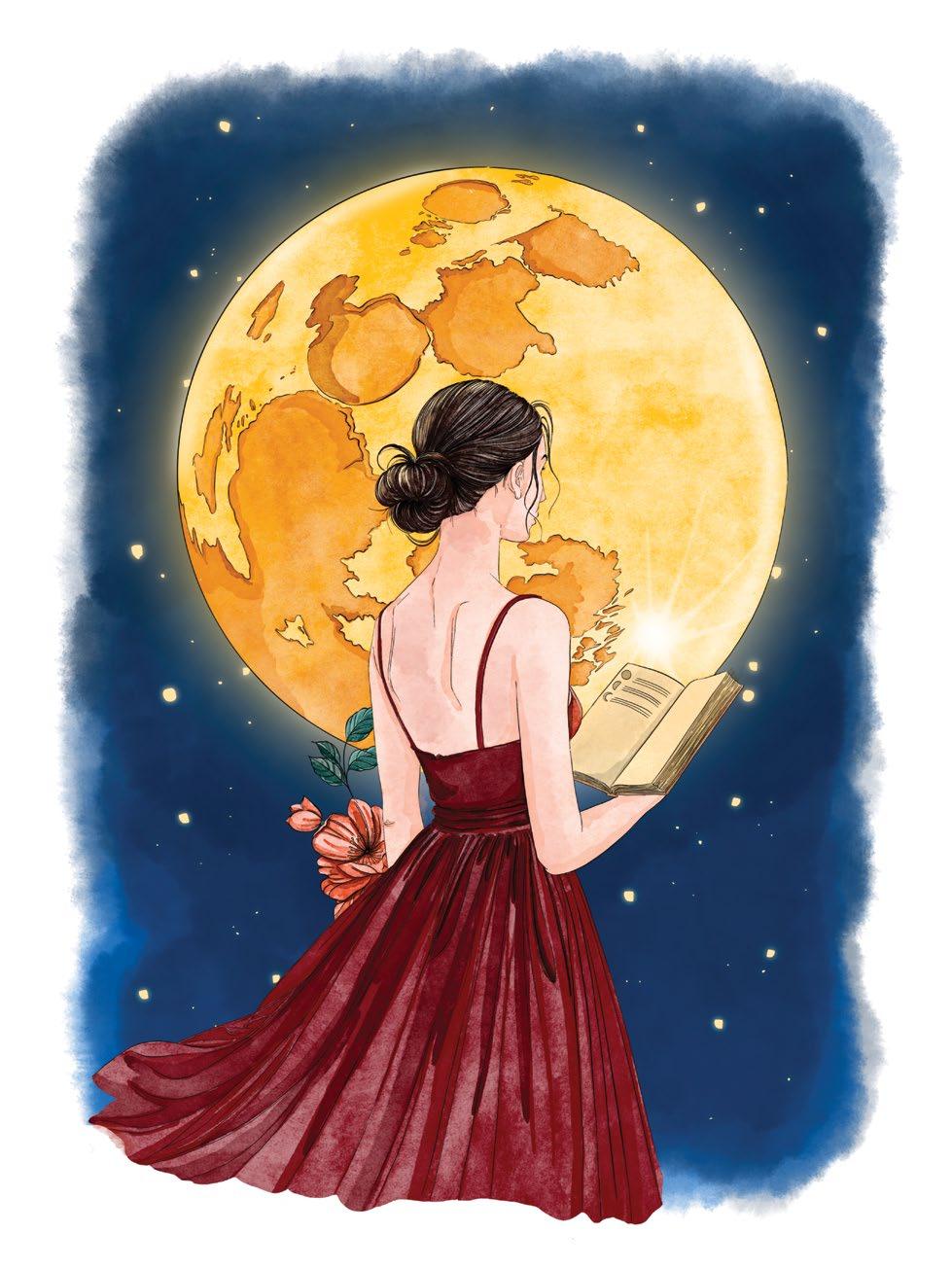
The Yoga tradition teaches us that there are two important energy channels in the body called Ida and Pingala; one is connected to lunar energy and the other to solar energy.
Developing a connection with lunar energy allows you to feel fresh, calm and nourished. It may help you develop your intuition, feel rooted and invigorated; additionally, its lenitive qualities promote sleep and ameliorate stress levels. You can practice by focusing on your exhalations, extending them and breathing continuously through the left nostril (blocking the right one), where Ida nadi comes to a head. The energy of the sun brings enthusiasm, inspiration and a sense of purpose. You can practice by focusing on inhaling and breathing through your right nostril, to strengthen the connection with Pingala nadi, the solar channel culminating in this nostril. Nadi shodana is a breath, the purpose of which is to balance these two forces within you and to purify all the nadis, or energy channels, which in the subtle physiology of Yoga, are said to be 72,000.
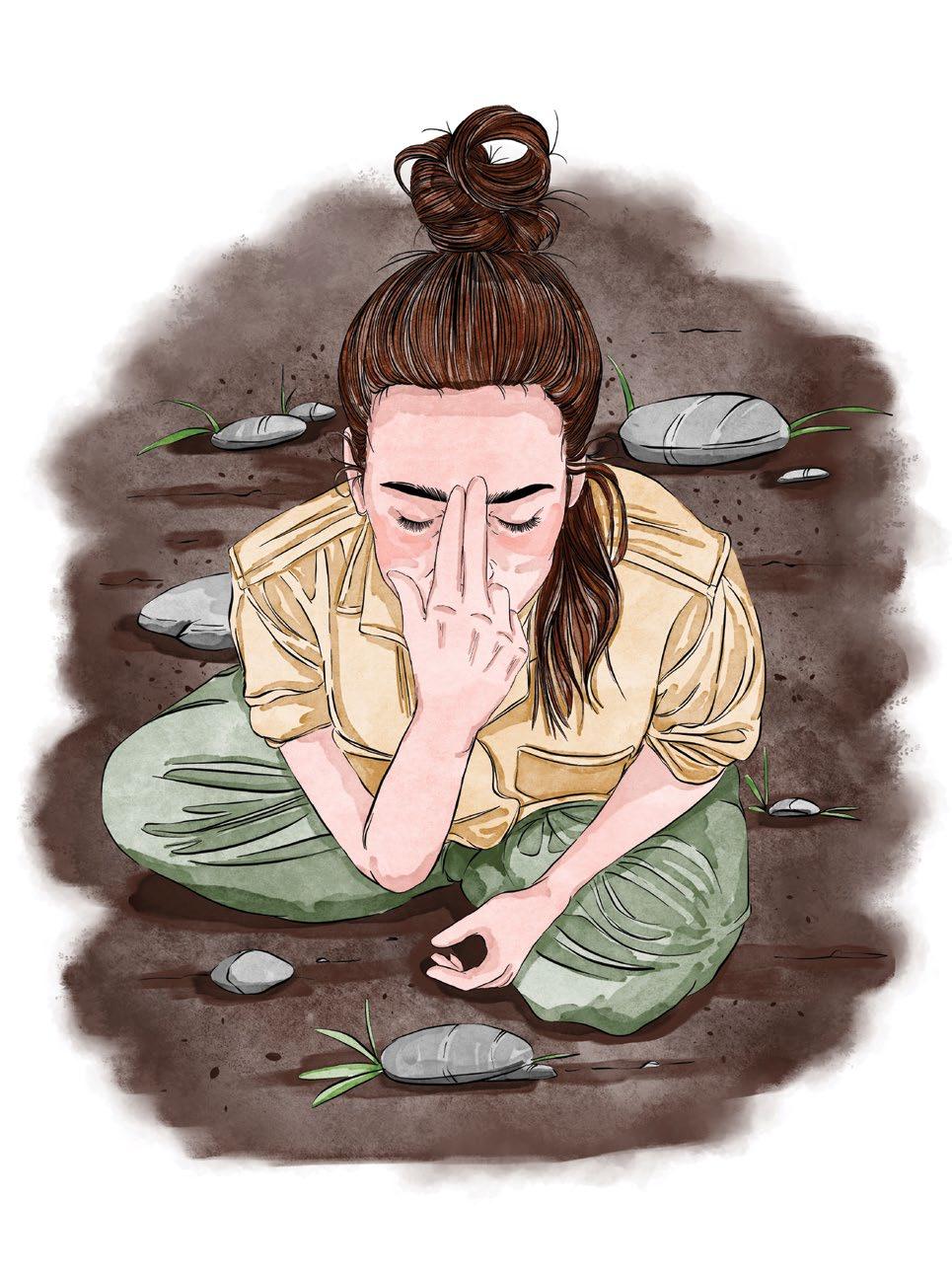
Choose a comfortable position that allows you to keep your spine elongated without causing tension, then rest the index and middle fingers of your right hand in the middle of your eyebrows, and alternate closing one nostril at a time. Cover the right nostril with the thumb to inhale slowly from the left; then cover the left nostril with the ring and little finger to exhale from the right, and reverse, inhaling from the right nostril and exhaling from the left nostril. Repeat this cycle alternating several times, keeping the inhalation time equal to that of the exhalation. Keep your eyes closed and visualize the path of the air flowing through you, with the energy of the sun and moon.
Bless Your Food
Blessing the food you are about to eat is a powerful way to connect with all the beings who contributed to grow, cook and serve what you eat. It’s a gesture through which we can acknowledge and give thanks, remembering that we’re part of the food chain and an ecosystem, that all our actions have an impact and effect, and that we nourish ourselves on the lives of other beings, whatever our food choices. Eating is a magical act in which we transform what was other than us into a part of us; we assimilate it and take on its vitality.
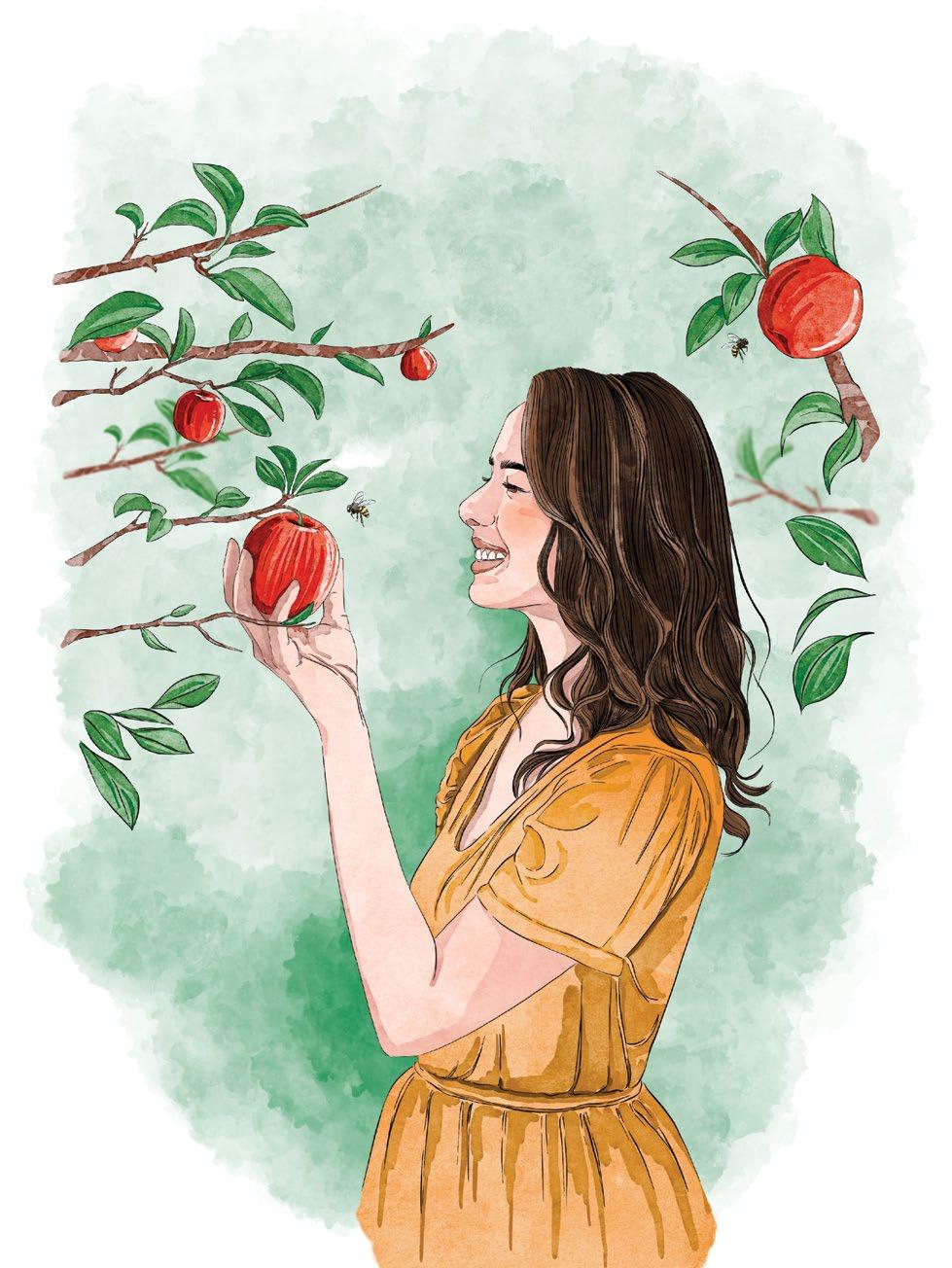
What is on our plate has a story; there was a time when someone planted seeds in the ground and the rain watered them so they would sprout, then the sun fed them and made them grow, and when the fruit was ripe, someone harvested it with their hands and labor. If you eat animal products, remember that you are nourishing yourself off the life of sentient beings; this is an enormous gift that should be honored and never taken for granted. Give thanks to those who cooked using the raw materials to create uniquely magic flavors and textures. Pause before this marvel and take time to retrace the journey that the food has made to your plate. Observe the dish, inhale its aromas and take in the colors so you can be present for what you’re about to do: nourish yourself.
Remember that through this practice, we celebrate our connection with all that is alive, the elemental forces and the earth’s body. Always celebrate our planet’s abundance and prosperity, the fruits of which sustain life. Honor is part of the cycle of life.
Gracefully Embracing the Passage of Time
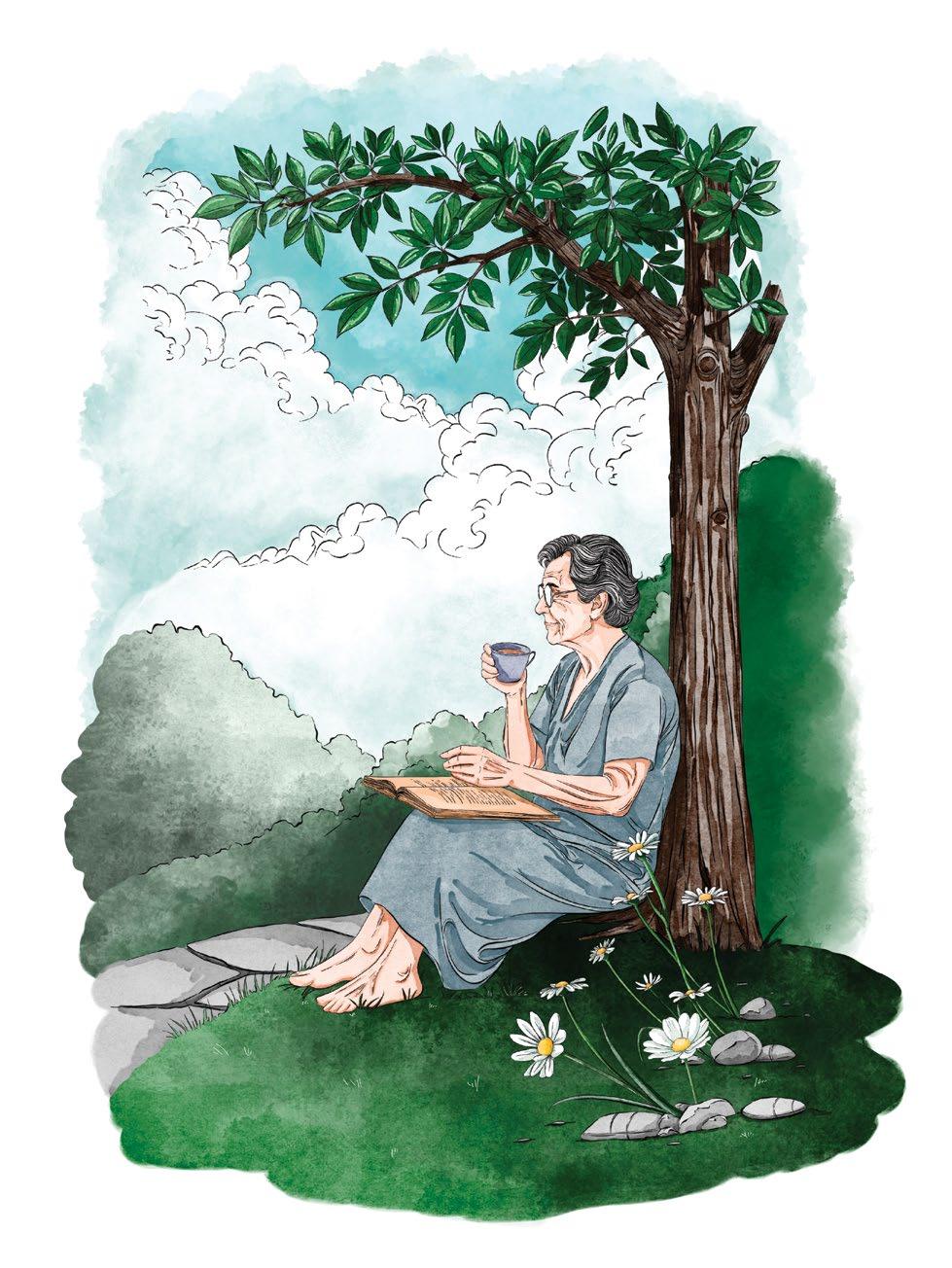
Taoism sees aging as a natural part of life, a process to be embraced rather than rejected.
The Taoist philosophy has a deep understanding of the natural cycles, and aging is seen as a reflection of these cycles, not something to be feared or fought, but rather, an opportunity for personal growth and spiritual development. By embracing the wisdom that comes with age, we can access a deeper understanding of ourselves and the world around us. The underlying vision is that our growth is always an evolutionary path; if nature diminishes our strength and physical prowess, in exchange it gives us added vision and wisdom. As we age, we gain a wealth of knowledge and experiences that can guide us in making wiser decisions and living more authentically. With age comes a wider perspective, a deeper understanding of what really matters in life.
By embracing the wisdom of age, we can let go of the need for external affirmation and focus more on living in line with our values and desires. Of course, in order to age gracefully, a healthy lifestyle with adequate exercise, nutrition and meditation, as well as conscious rest, are all essential. There are also many important plants, such as sea buckthorn, rich in antioxidants and fatty acids; Ginkgo biloba and Centella asiatica, which promote brain function and microcirculation; ginseng, which increases vitality and energy; and astragalus, which supports a healthy heart. Above all, let’s accept the passage of time as an evolutionary process that nature has designed for us.