LES BORDES, FRANCE
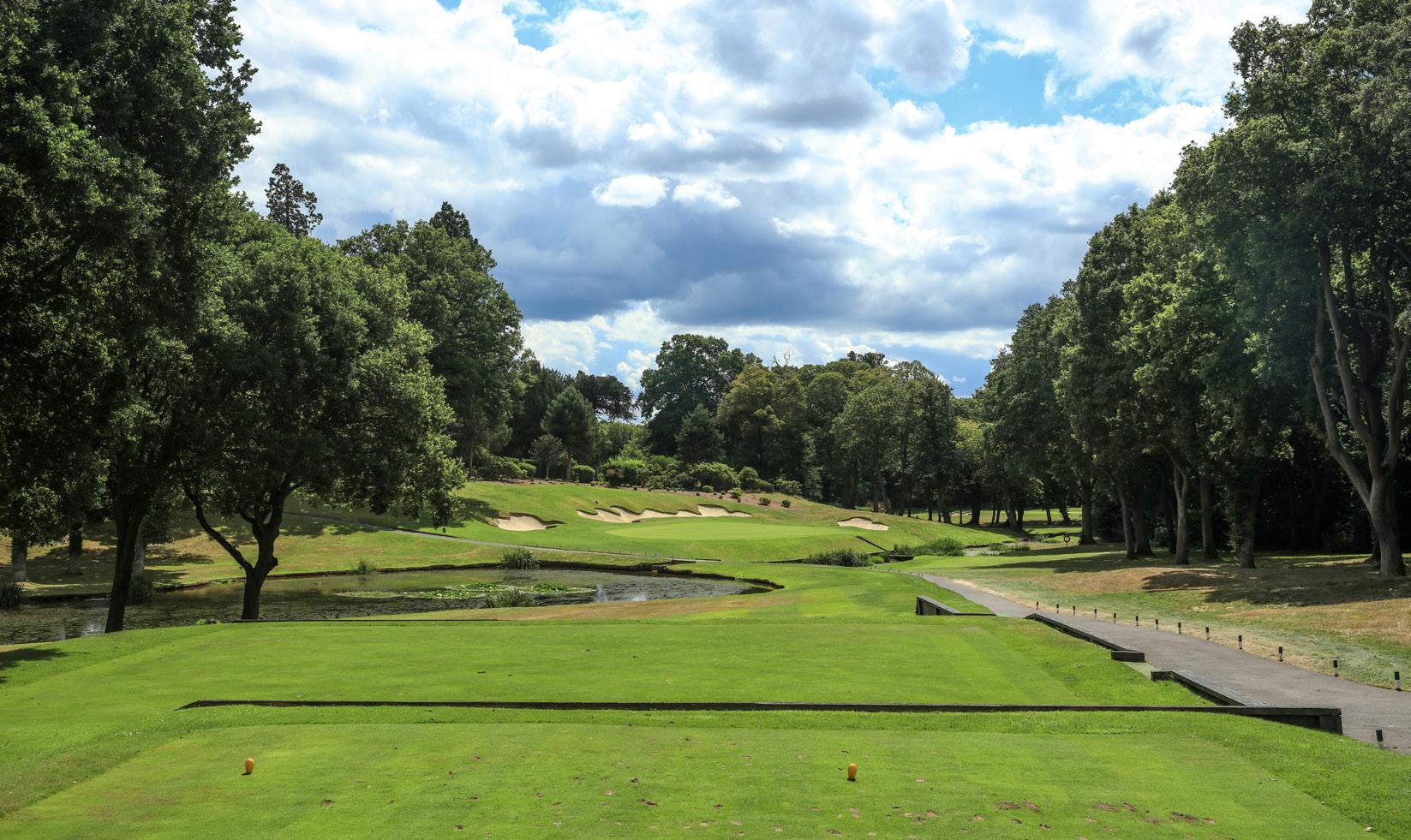
The two courses, the Old Course built in 1987 and the New Course built in 2021, were created by Robert Van Hagge and Gil Hanse, two design heavyweights whose individual signatures are clearly recognizable.
The Old Course is a demanding parkland layout featuring a complex of lakes and numerous hazards. The New Course, with its impressive inland-links style set in heathland, recalls classic golf architecture that works gently with the natural landscape. In 2024, Scottie Scheffler prepared for the Olympics here and went on to win the gold medal in Paris just days later. Strategy rather than brute force is required. The fairways, especially on the New Course, are firm and fast.
On the Old Course, hole 14 is particularly memorable. It is a par 5 measuring more than 550 yards with an island green. Aggressive play requires complete confidence, yet laying up is no simple option either, as bunkers and thick rough await. On the New Course, hole 18 is unforgettable. The tee shot is framed by trees, and the green is guarded by water on the left and three bunkers on the right.
BAD RAGAZ, SWITZERLAND
Bad Ragaz delights golfers and gourmets alike. At the heart of the humble spa town stands the Grand Resort Bad Ragaz, which operates several hotels and restaurants among the best in Switzerland, as well as two golf courses. Luxury, style, and history, golf has been played here since 1905, shaping every stay. Since 1997, professionals from the European Senior Tour have returned regularly for the Swiss Seniors Open. Amateurs are equally welcome. The championship course is forgiving, flat, and relatively short, making it ideal for walking. The greens are not overly severe and invite confident approach shots. The key is keeping tee shots reasonably straight and positioning drives carefully on doglegs to ensure the proper angle for the second shot. The overall package of location, atmosphere, hospitality, cuisine, and golf is compelling. Culinary excellence is a defining strength. Across the resort’s three flagship hotels, restaurants hold a combined six Michelin stars and 59 Gault Millau points.
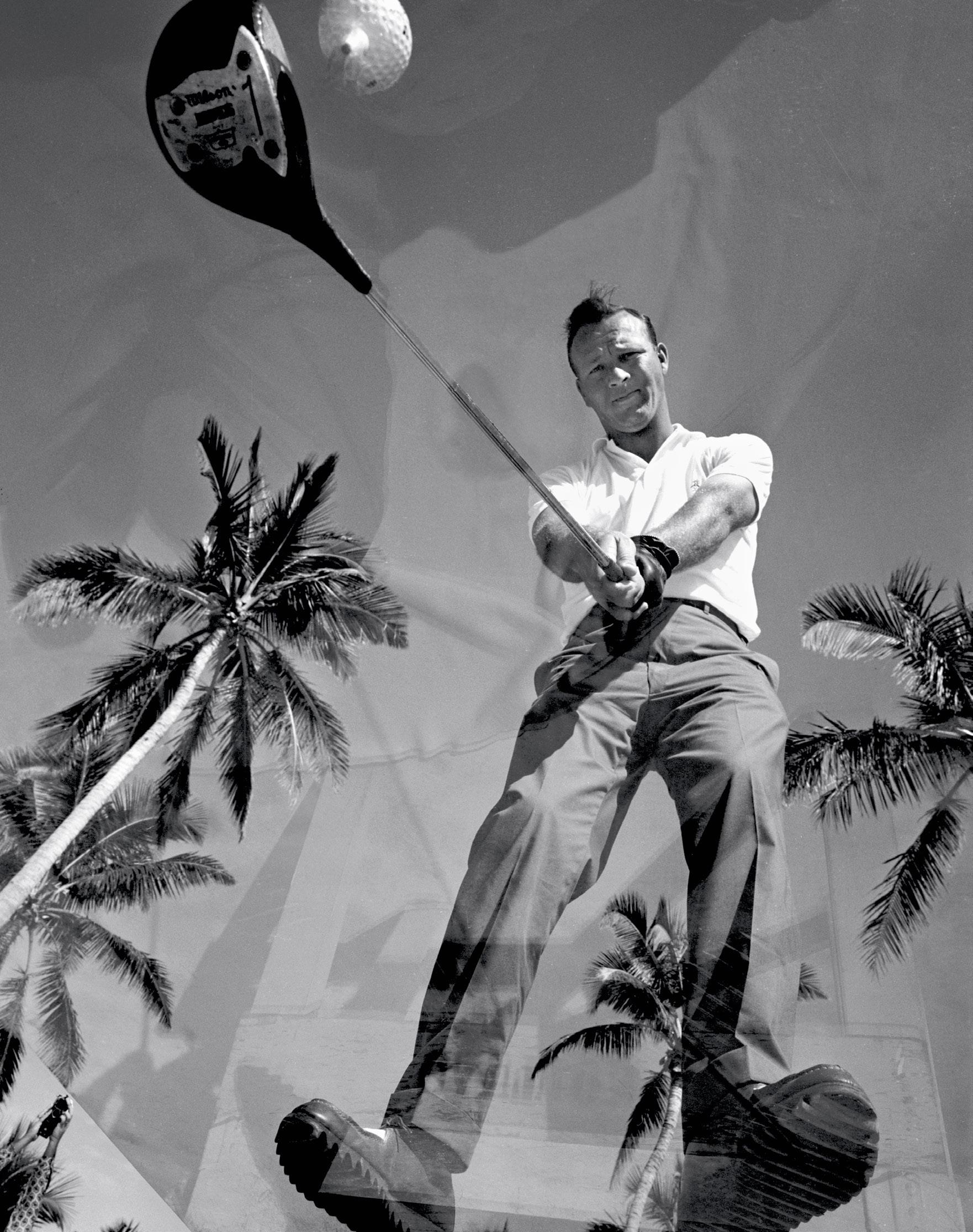
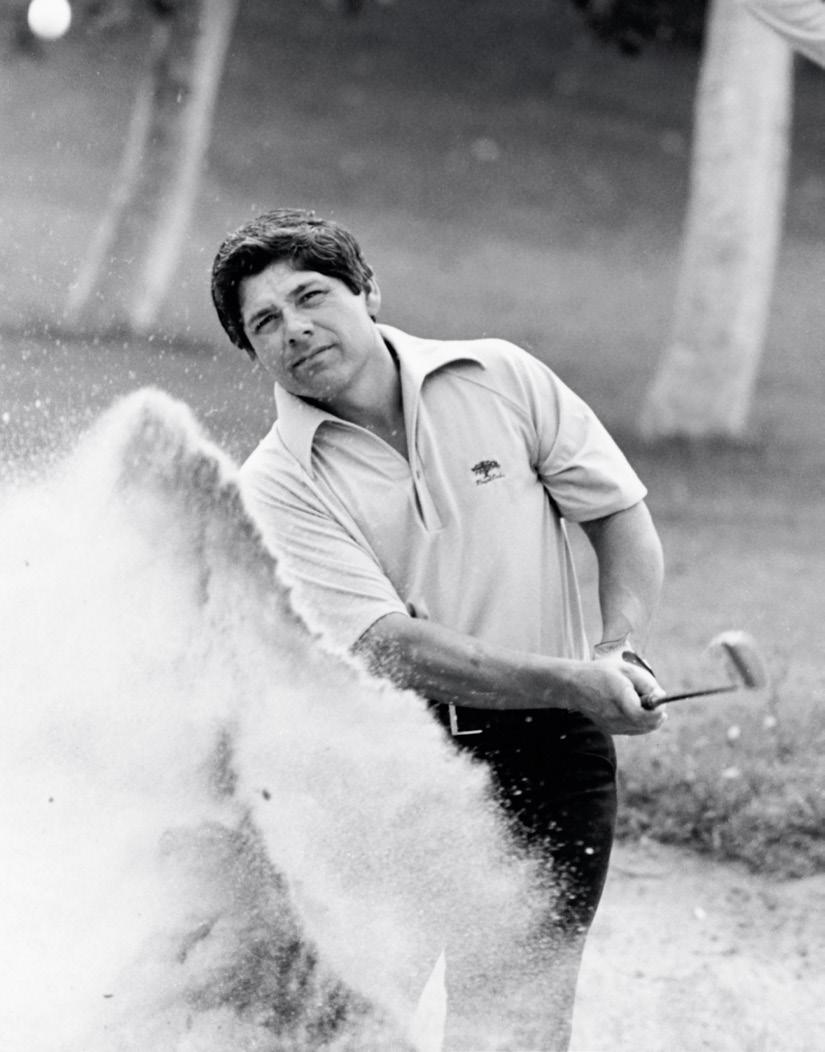
Jack Nicklaus does it. Bernhard Langer does it. Tiger Woods has joined them. Many former and even active players have moved into course design, including Ernie Els, Colin Montgomerie, Nick Faldo, and Tom Weiskopf. In this regard, professional golfers are fortunate. Hardly any other sport offers athletes the chance to compete for significant prize money well into their 60s. Eventually, when tournament life slows down, a second career often awaits: designing courses in some of the world‘s most beautiful places. Designers are paid handsomely for their expertise. If you want a course by Gary Player or Jack Nicklaus, prepare to invest several million dollars - the design fee alone. Construction costs are extra. The benefit for investors is clear. A legendary name adds tremendous appeal. Usually, the designer attends the opening and strikes the ceremonial first tee shot, drawing extra media attention.
Jack Nicklaus has designed more than 400 courses worldwide, including Muirfield Village, host of the Memorial Tournament on the PGA Tour, PGA National in Florida with its famous Bear Trap, and the spectacular Cabo del Sol Ocean Course on Mexico’s coast. Arnold Palmer’s most recognized creations include Bay Hill in Florida, as well as Tralee and The K Club in Ireland. The latter hosted the Ryder Cup in 2006, an honor that represents a true distinction for any course architect. Gary Player, the third member of the Big Four, has created roughly 300 courses around the globe, among them the distinctive Fancourt in his native South Africa and Thracian Cliffs in Bulgaria. Perhaps the most strategically positioned in business terms, however, is Greg Norman. The Australian, who dominated the golf world in the 1980s, operates across multiple sectors, cre-
ating a seamless commercial network. The pro shops at his courses carry his clothing line. The club restaurants stock his wines. The surrounding hotels and vacation villas are developed by companies within his organization. The Earth Course in Dubai and the Medalist Golf Club in Florida both bear his
Anyone who wants a course designed by Gary Player or Jack Nicklaus must pay millions of dollars
signature. Tiger Woods has already opened his first course in the United States, Bluejack National in Texas. Its wide fairways and towering pines recall Augusta National Golf Club, where he won the Masters five times. He has also designed a second course in Mexico. Few doubt that he will succeed as a designer, although many fans would still prefer to see him on the greens rather than at the drawing board for a few more years. For golf purists, the courses designed by Ben Crenshaw deserve special mention. The two-time Masters champion works closely with Bill Coore to create understated, classical layouts without unnecessary ornamentation. Their portfolio includes Sand Hills in Nebraska, Cabot Cliffs in Canada, and Bandon Dunes in Oregon. Artificial waterfalls and similar extravagances have no place in Crenshaw’s traditional approach.
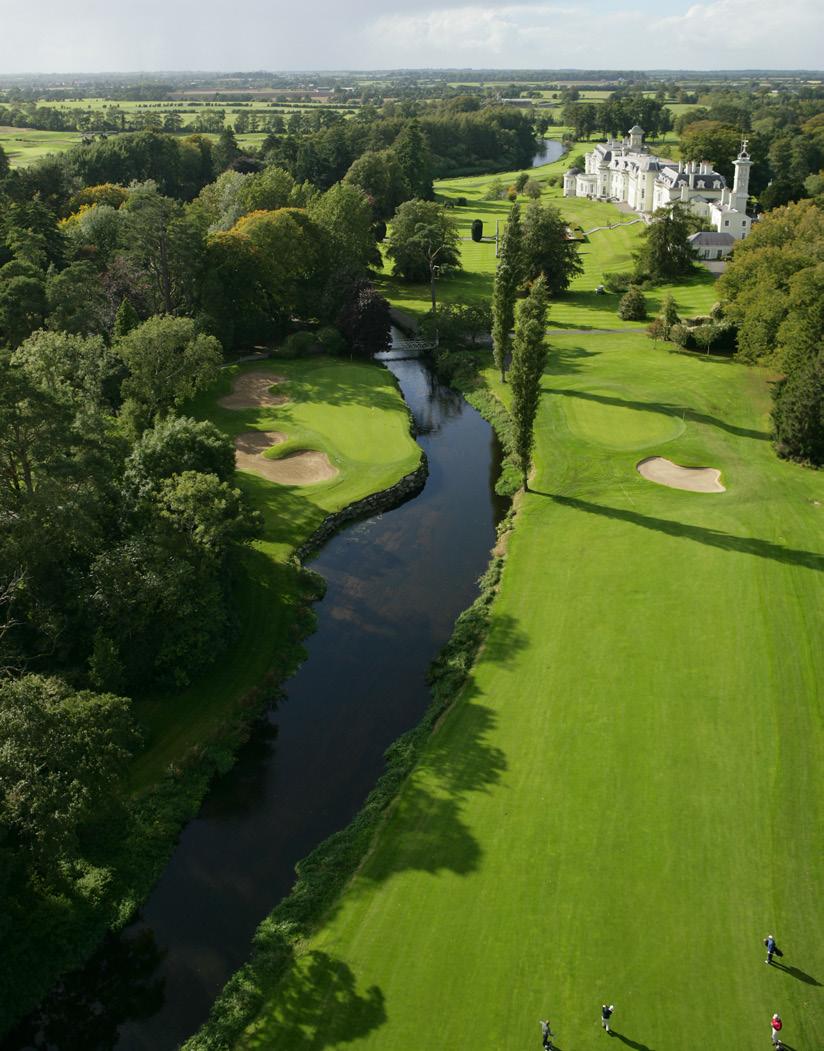
Left and next page: The K Club in in Straffan, County Kildare, Irland is one of Arnold Palmer’s most recognized courses.
The Golf Book by
Stefan Maiwald
This book was conceived, edited, and designed by teNeues.
Text: © Stefan Maiwald, 2026. All rights reserved.
Editorial Coordination by Stefanie Schuhmacher, Seitenmeisterei
Production by Sandra Jansen-Dorn, teNeues
Design Concept by Jan Haux
Layout by Stefanie Schuhmacher, Seitenmeisterei
Color Separation by Robert Kuhlendahl, teNeues
Proofreading by Benine Mayer, teNeues
Translation by Lara von Dehn
Printed in Italy by Printer Trento S.r.l.
Produced in Europe
Published by gestalten, Berlin 2026
ISBN 978-3-96171-748-4
1st printing, 2026
© teNeues, an Imprint of Die Gestalten Verlag GmbH & Co. KG, Berlin 2026
All rights reserved. No part of this publication may be reproduced or transmitted in any form or by any means, electronic or mechanical, including photocopy or any storage and retrieval system, without permission in writing from the publisher. No part of this book may be used or reproduced in any manner for the purpose of training artificial intelligence technologies or systems. This work is reserved from text and data mining (Article 4(3) Directive (EU) 2019/790).
Respect copyrights, encourage creativity!
For more information, and to order books, please visit www.teneues.com and www.gestalten.com
Die Gestalten Verlag GmbH & Co. KG
Mariannenstrasse 9–10 10999 Berlin, Germany hello@gestalten.com
Krefeld Office
Uerdinger Str. 265 / Villa Pattberg 47800 Krefeld, Germany verlag@teneues.com
teNeues Press Department press@gestalten.com
Bibliographic information published by the Deutsche Nationalbibliothek. The Deutsche Nationalbibliothek lists this publication in the Deutsche Nationalbibliografie; detailed bibliographic data is available online at www.dnb.de