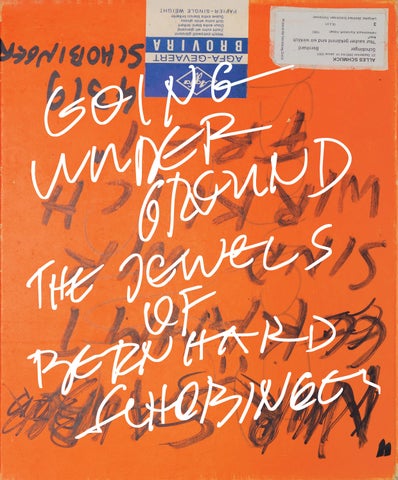
Going Underground: The Jewels of Bernhard Schobinger
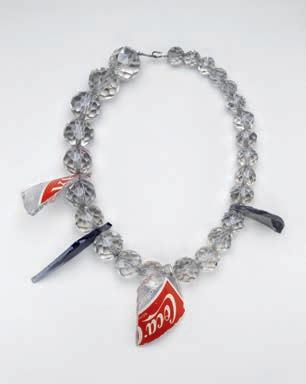
Cat. 15. Shards from Moritzplatz
Berlin (Scherben vom Moritzplatz Berlin) Necklace, 1983–84. Antique crystal beads, television bulbs, German Coca-Cola bottle shards, silver, and steel wire, 8 × 6 × 1 in. (20.3 × 15.2 × 2.5 cm). The Museum of Fine Arts, Houston, Helen Williams Drutt Collection, museum purchase funded by Gail and Louis K. Adler in honor of Fayez Saro m, 2002.4062.
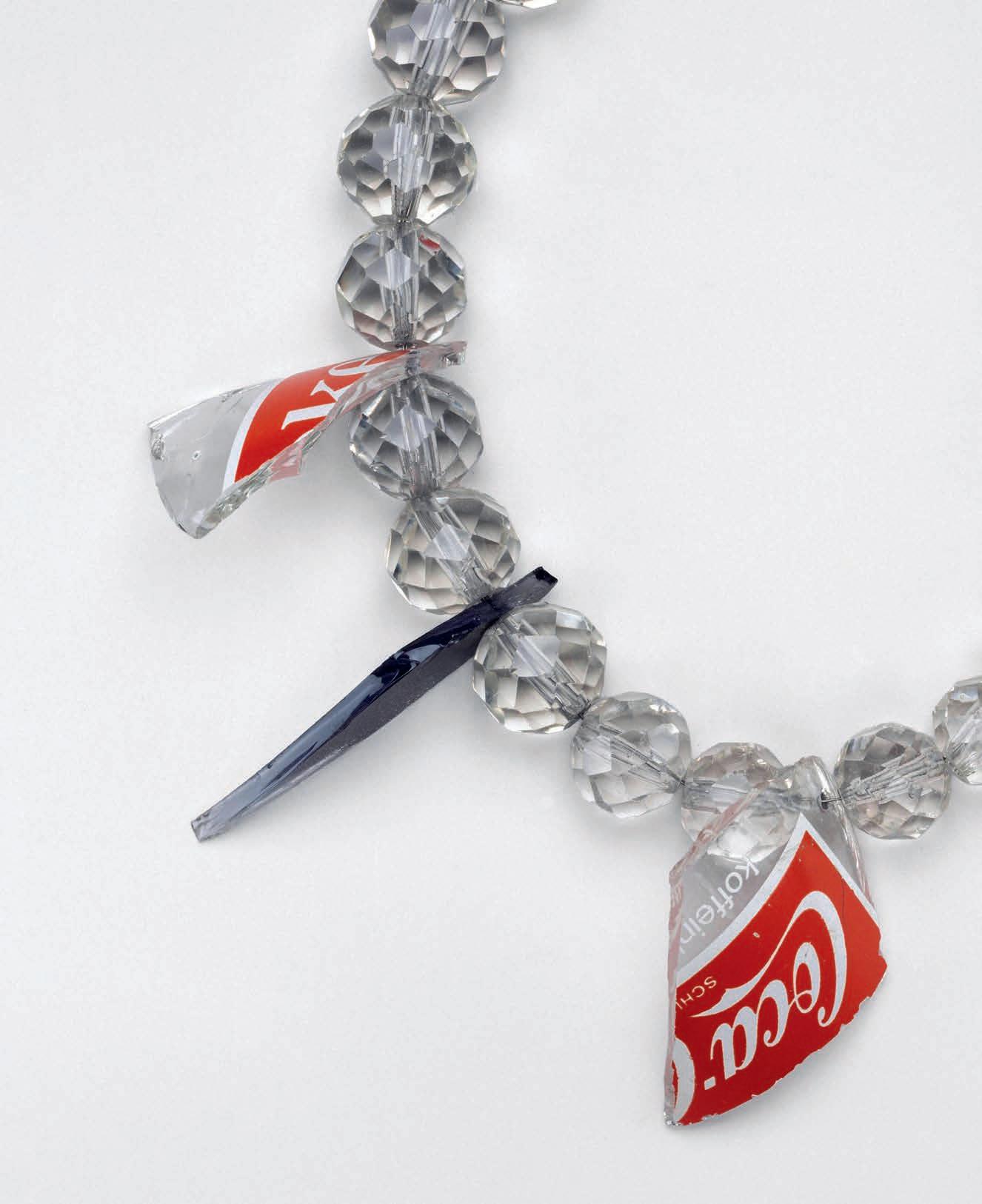
Shards from Moritzplatz Berlin (Scherben vom Moritzplatz Berlin) Necklace, 1983–84 (cat. 15), captures Berlin’s underground scene just a few years later when a new tension had emerged in his work. Unlike NYC 1980, a reliquary of a moment in time, here the revolution of “antiaesthetics” is in direct conversation with greater notions of history.26 Schobinger gathered the necklace’s shattered Coca-Cola bottles and television bulbs from Moritzplatz, the last West Berlin stop on the U8 line in the shadow of the Berlin Wall. This “no-man’s-land” was a punk gathering spot and a short walk away from clubs like SO36, then run by the German artist Martin Kippenberger (1953–1997) from the Neue Wilde group of Neo-Expressionists.27 In this necklace, Schobinger’s street “trophies” are joined by antique glass beads, placing the past next to the present.28
Scholars often comment on Schobinger’s embrace of punk music and its cultural ethos as well as his acknowledgment of Dadaism playing a role in his conception of art’s possibilities. In his seminal book Lipstick Traces: A Secret History of the 20th Century, Greil Marcus explores the often referenced but rarely explained a nity between Dada and British punk. Describing that a nity as “a check” written by the former and cashed by the latter, Marcus highlights the shared antiestablishment, anti-authority, antibourgeois sentiments that were a direct response to their times: the meat grinder of World War I and the postwar decay of the 1970s. The punks and Dadaists created poetry, performance, music, and fashion that rejected commonly held cultural values as bankrupt and responsible for the societal catastrophes of each era.
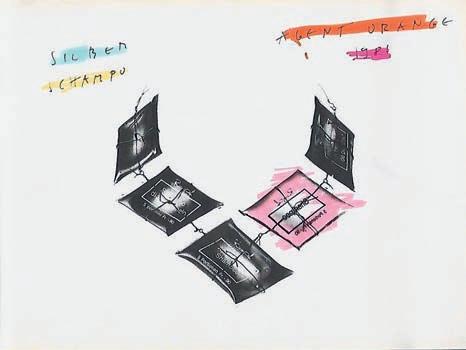
A self-published catalogue from 1981 Eiszeit-Juwelentraum(a): Subjekte 1977–1981 (Ice Age Jewel Dream: Subjects 1977–1981) serves as a record of Schobinger’s answer to the narratives of both movements. It was printed in black and white; however, for some copies he adopted the strategies of the culture’s artist-made zines, yers, and self-released singles and hand-colored the images with a felt-tip pen ( g. 3.2).29 Schobinger’s design, including the haphazardly placed text, situated his jewelry within the punk ethos. The earrings, bracelets,
Fig.3.2. Agent Orange, 1981, in the 1981 book Eiszeit-Juwelentraum(a): Subjekte 1977–1981, designed by Bernhard Schobinger.
Cat. 15.
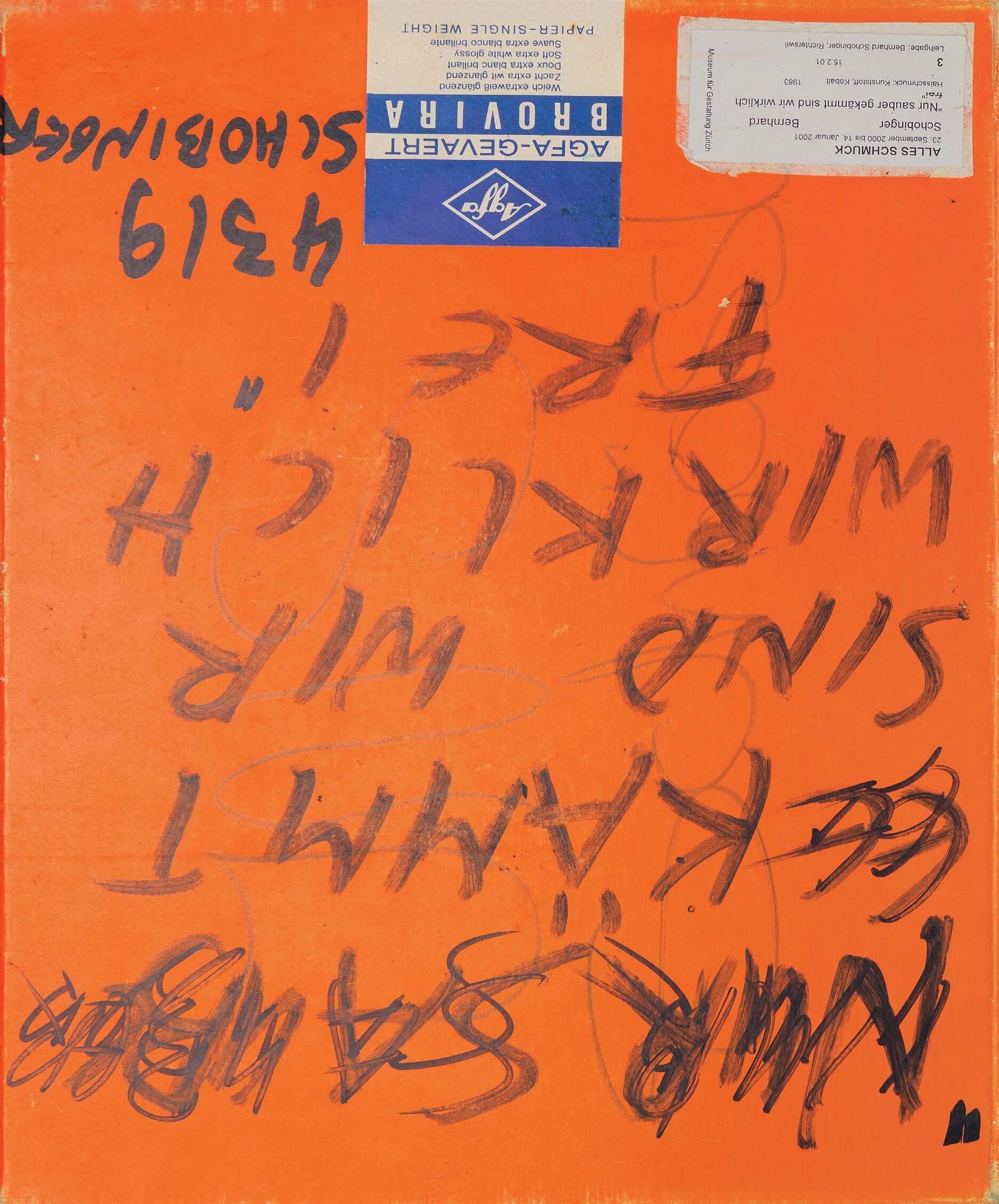
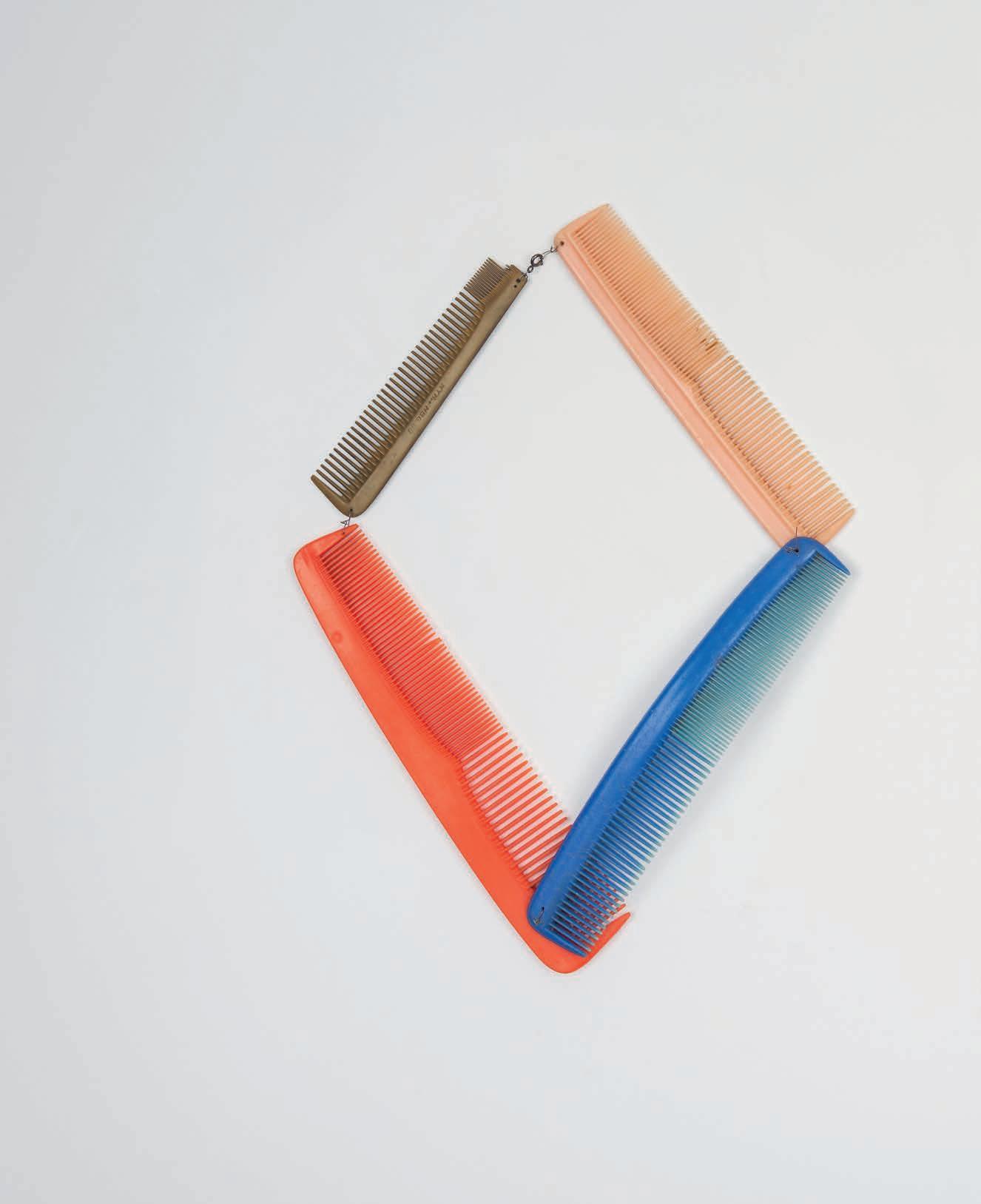
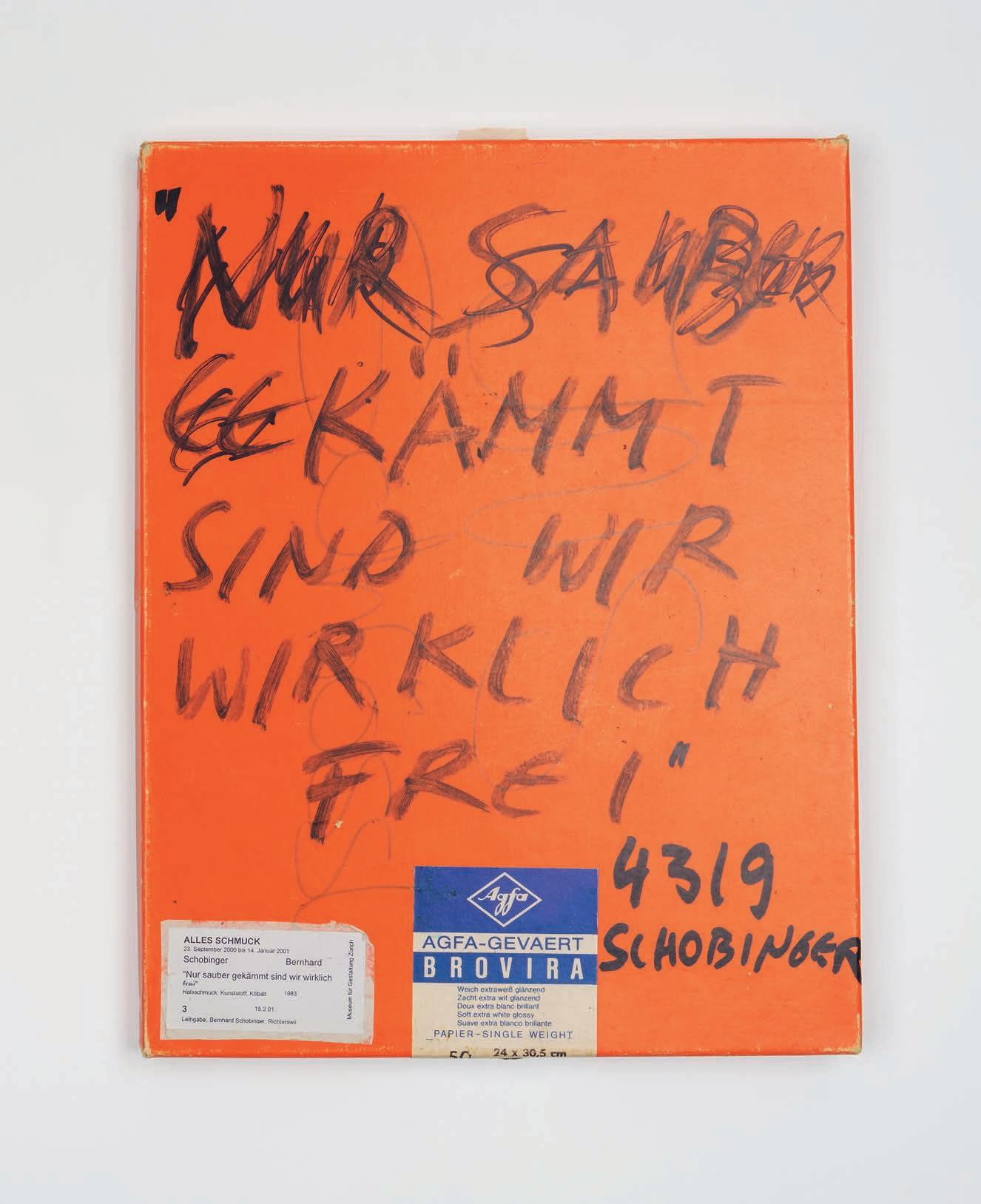
Cat. 16. Only Combed Clean Are We
Truly Free (Nur sauber gekämmt sind wir wirklich frei ) and Box, 1983.
Plastic combs and cobalt wire, 3 ⅜ × 3⅜ × ⅜ in. (8.8 × 8.8 × 1 cm), box: 8½ × 7 × 2 in. (21.6 × 17.8 × 5 cm).
Collection of the artist.
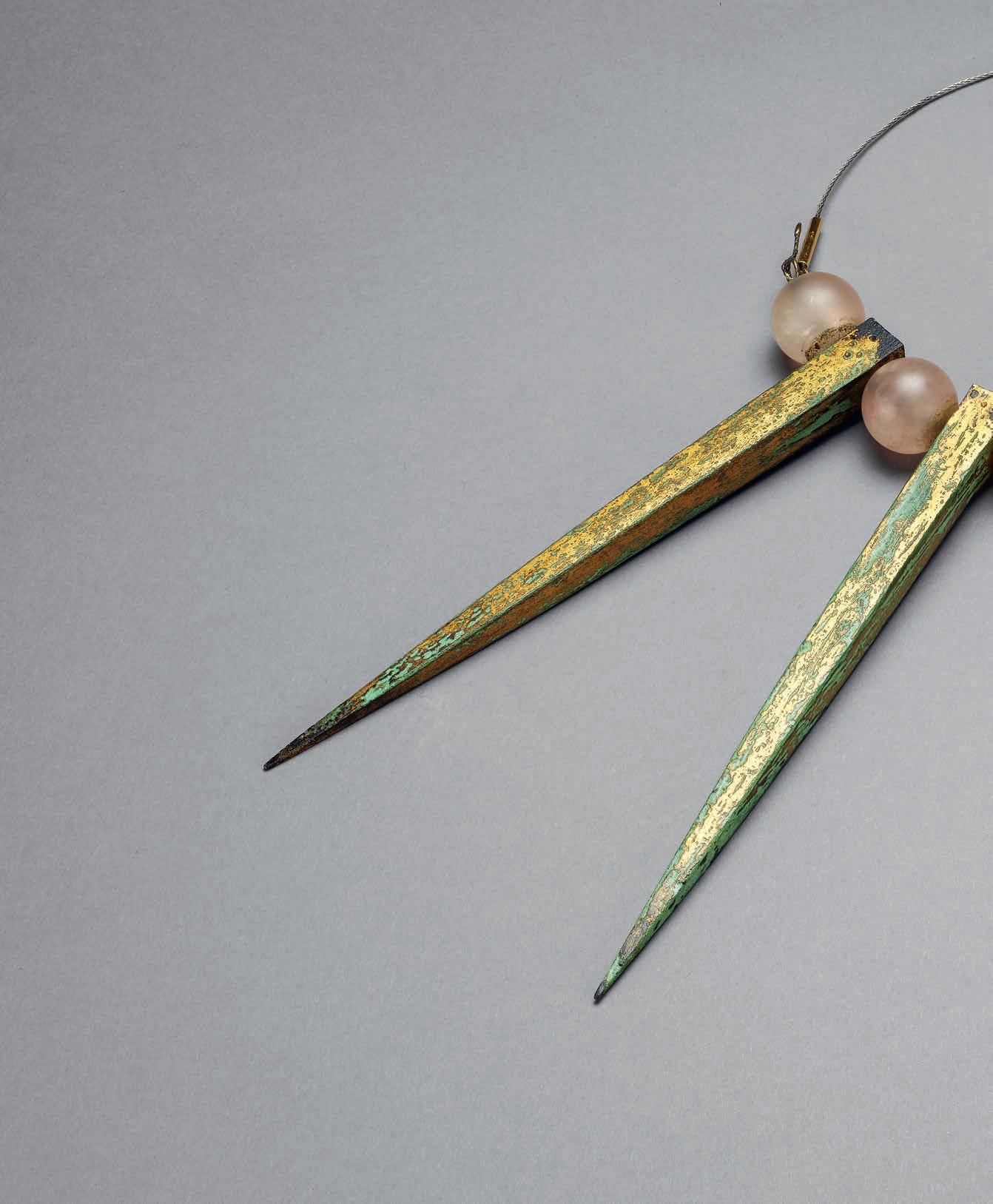
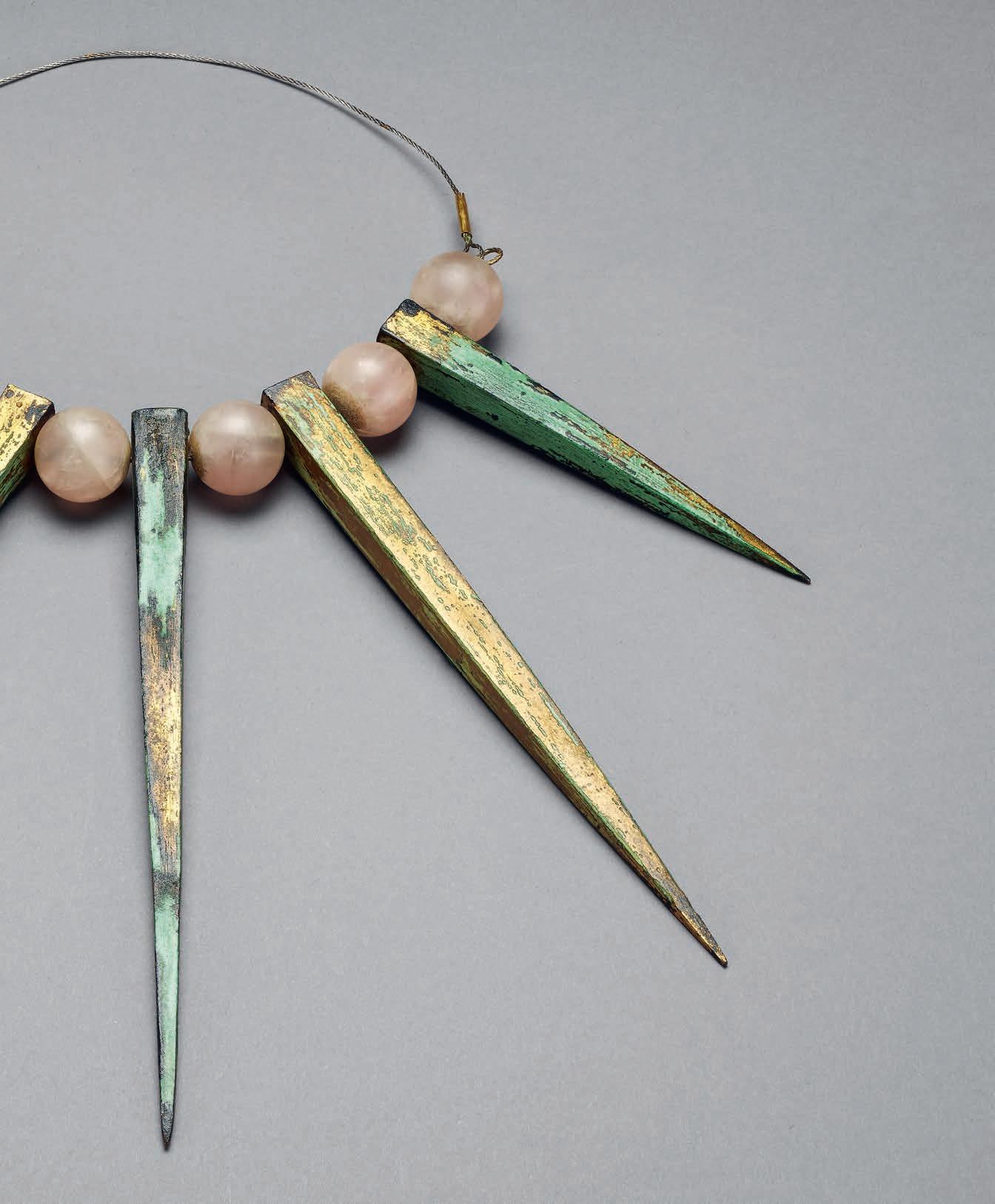
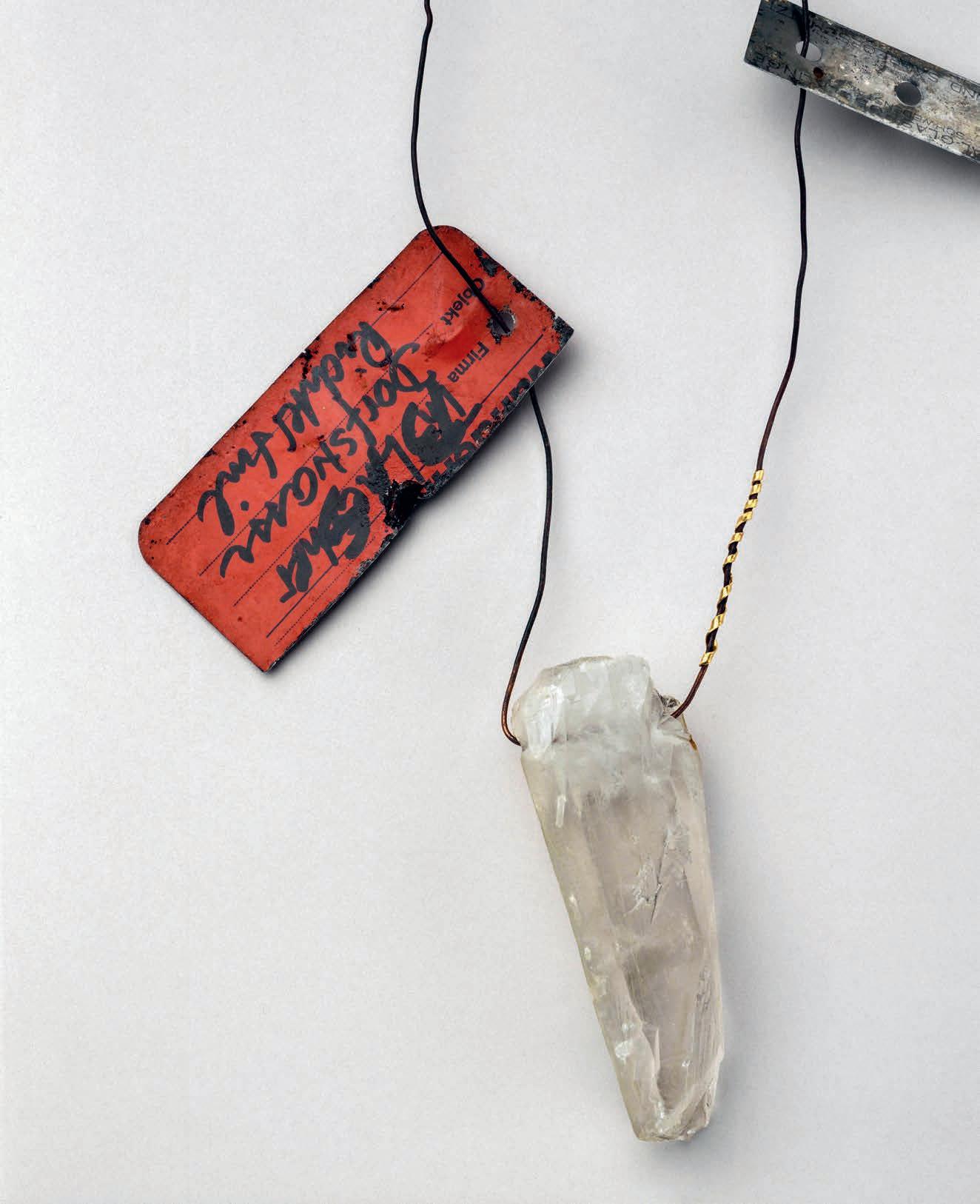
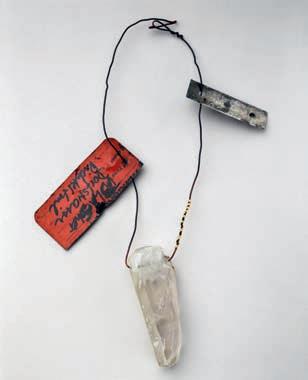
Cat. 20. Necklace with Red Sheet Metal and Blade (Halsschmuck mit rotem Blech und Klinge), 1994. Tin, quartz, iron, gold, copper wire, metal sheet from steel, paint, and ink, 13 × 6½ × 1⅜ in. (33 × 16.5 × 3.4 cm). The Museum of Fine Arts, Houston, Helen Williams Drutt Collection, museum purchase funded by the Caroline Wiess Law Foundation, 2002.4065.
21.
2019.
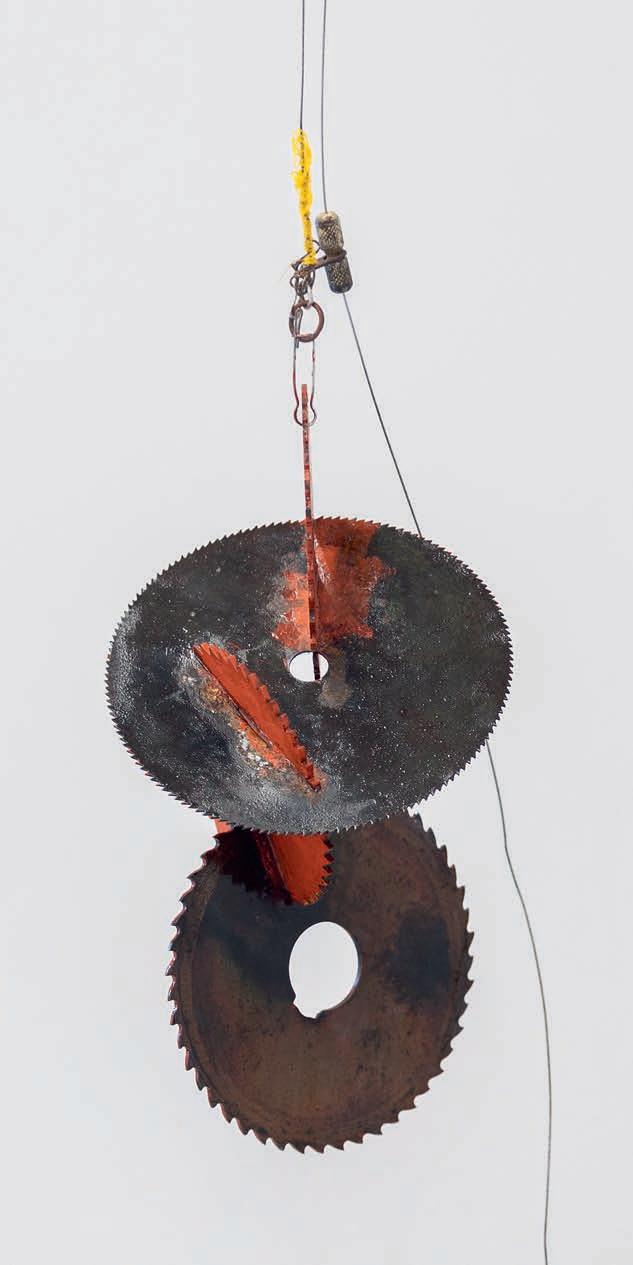
Cat. 22. Saw Blade Hanger, 2017. Steel saw blades, stainless steel shing cable, and Japanese urushi lacquer, 35⅜ × 4¾ in. (90 × 12 cm).
Collection of the artist.
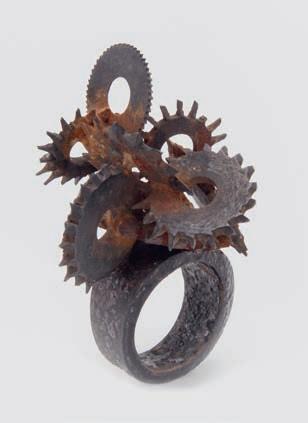
Cat.
Saw Ring (Sägenring),
Steel, bronze, and enamel, 2 ¼ × 1½ × 1½ in. (5.7 × 3.8 × 3.8 cm).
Helen Williams Drutt Family Collection, US.
Cat. 20.
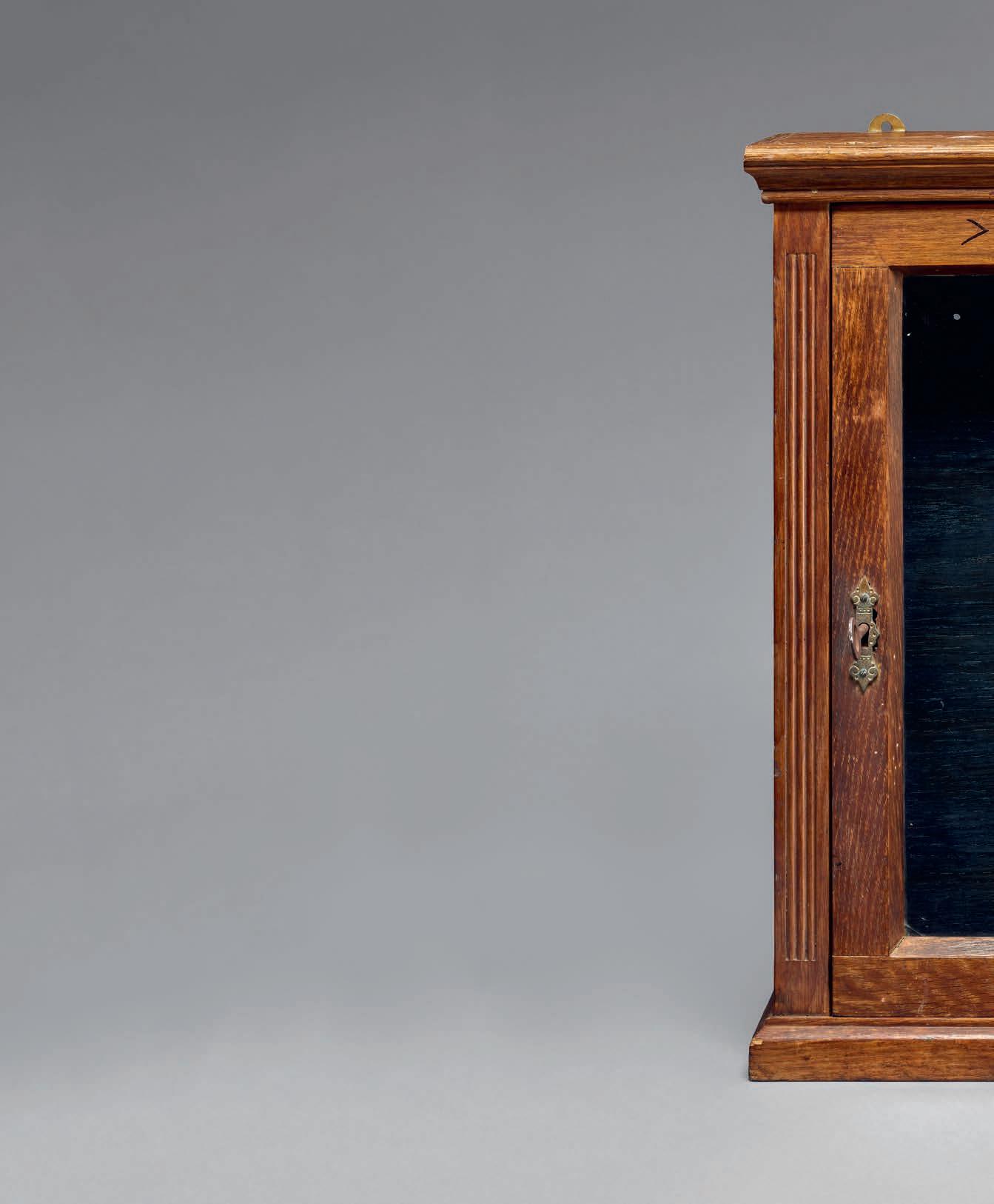
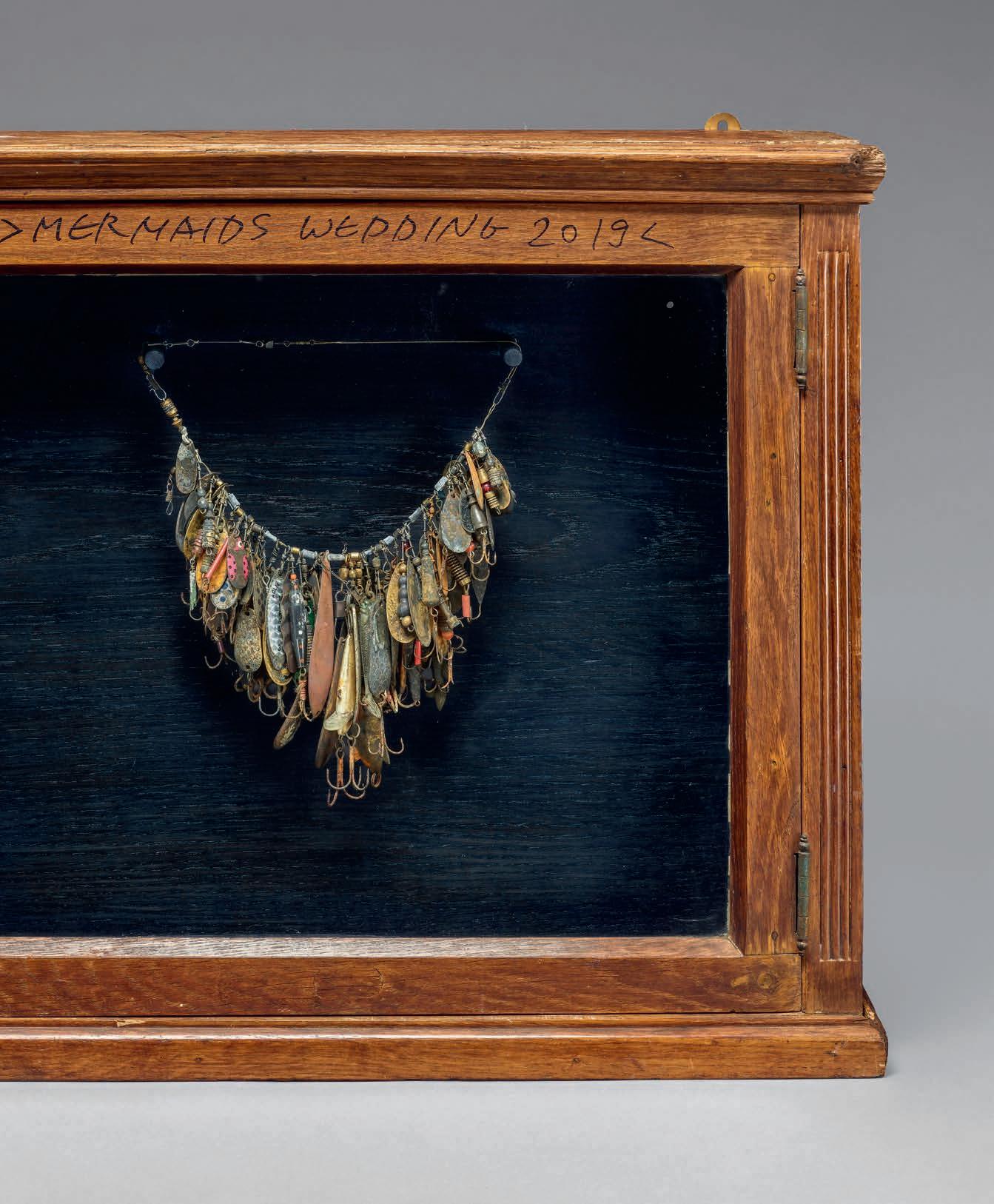
Cat. 42. Mermaids Weddingand Vitrine, 2019.
Antique shing tools, hooks, and spinners,
necklace: 8½ × 7 × 2 in. (21.6 × 17.8 × 5 cm),
vitrine: 17⅝ × 20½ × 4½ in. (44.8 × 52.1 × 11.4 cm).
The Museum of Fine Arts, Houston, gift of the Rotasa Collection Trust, 2025.620.
Cat. 54. Bunny Ring (Haeschen Ring) and Box, 2008. Topaz, ruby, diamonds, yellow gold, white gold, pearls, and metal in a wooden box with accessories kit, ring: 1⅜ × 1 × ⅞ in.
(3.3 × 2.5 × 2.3 cm), box: 2 × 5 × 3⅞ in.
(5.1 × 12.7 × 9.9 cm). The Museum of Fine Arts, Houston, promised gift of the Rotasa Collection Trust.
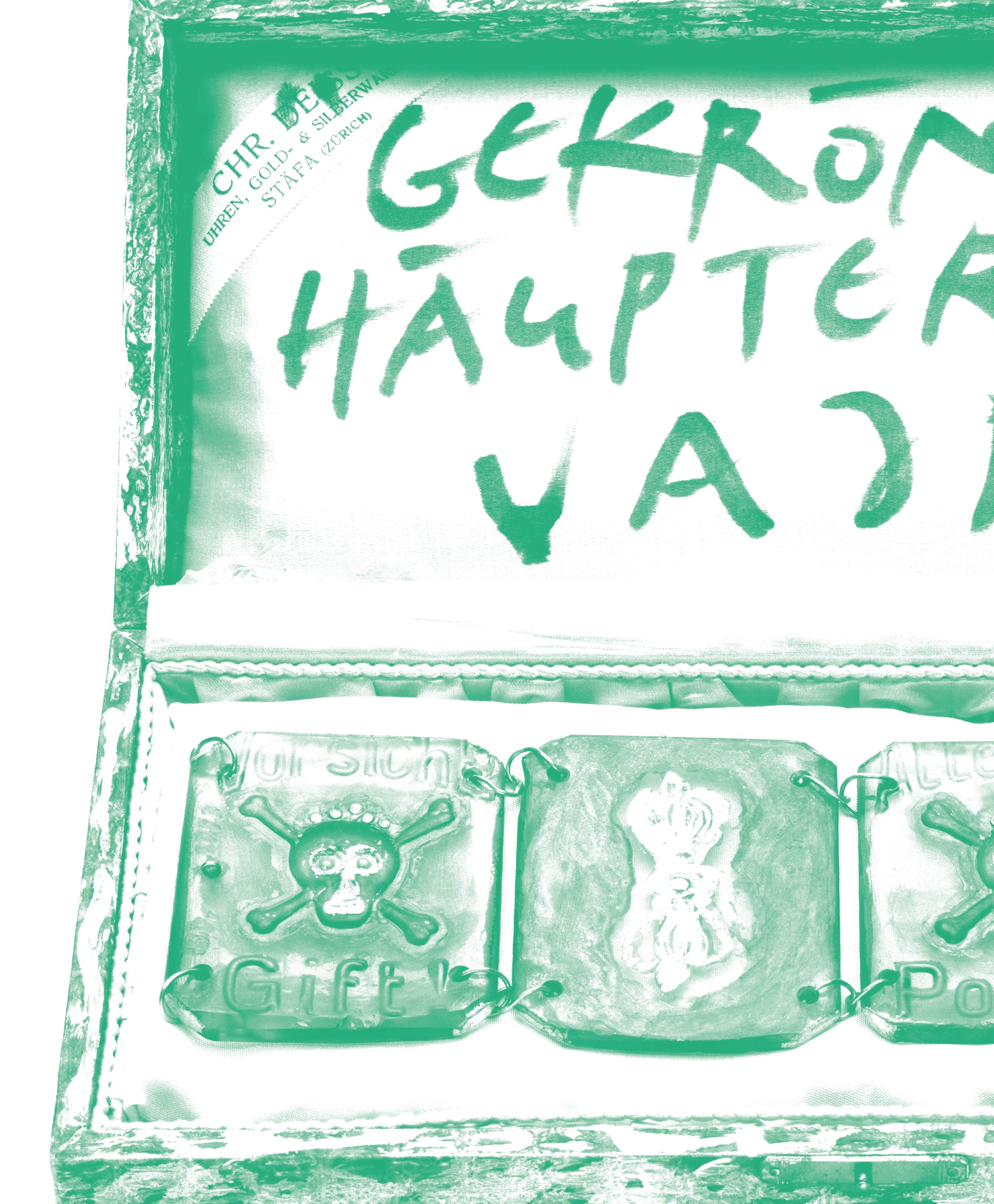
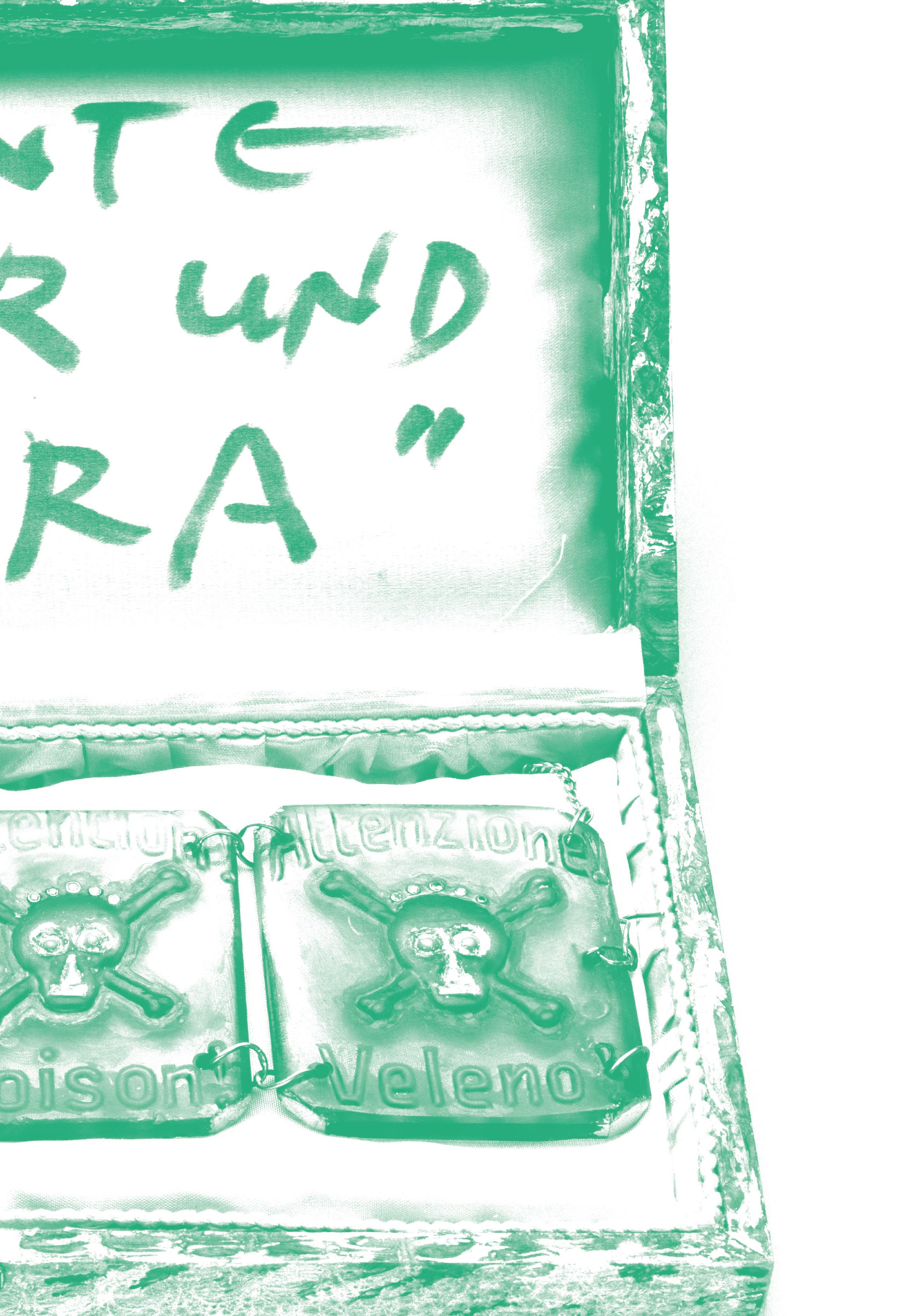
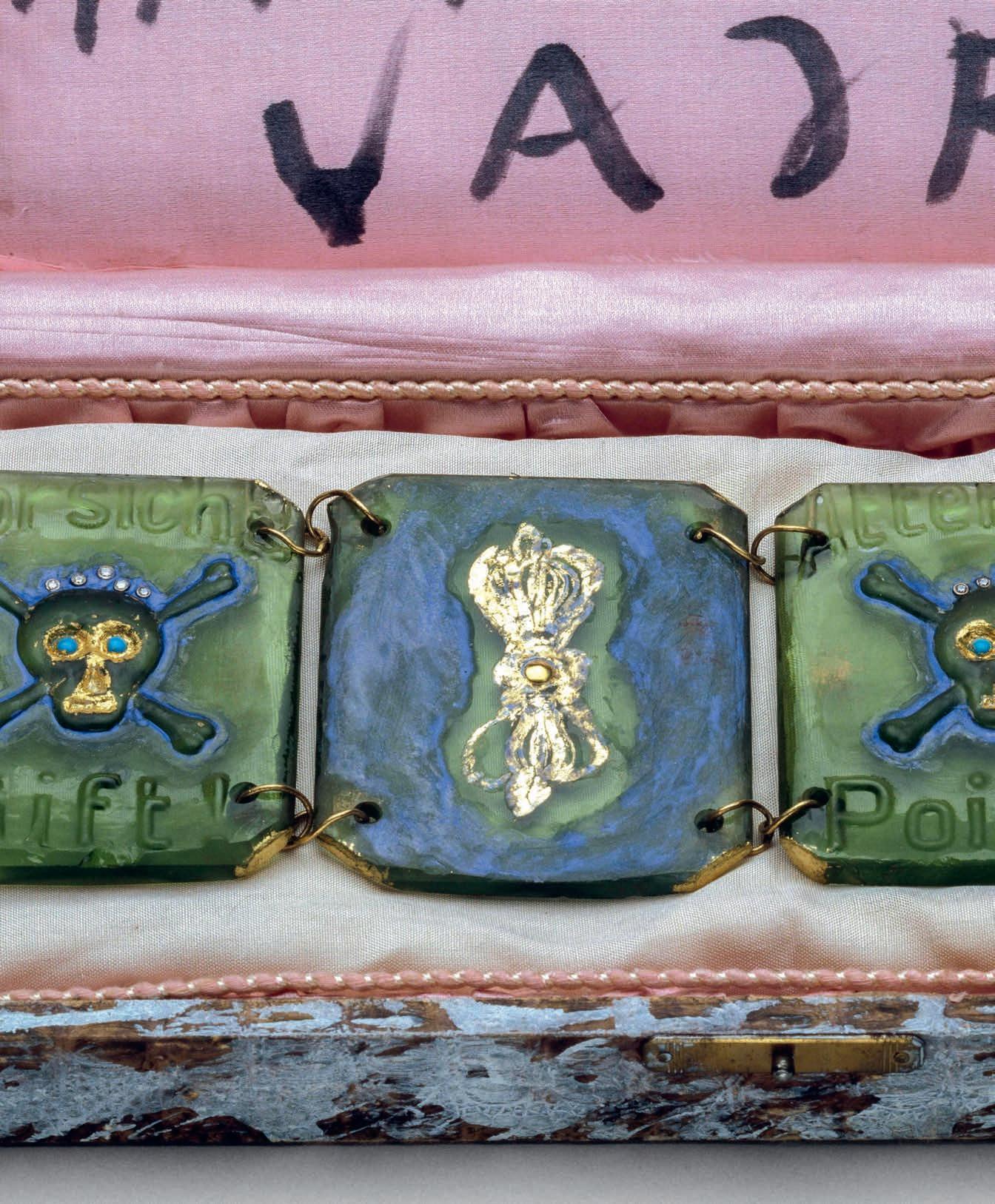
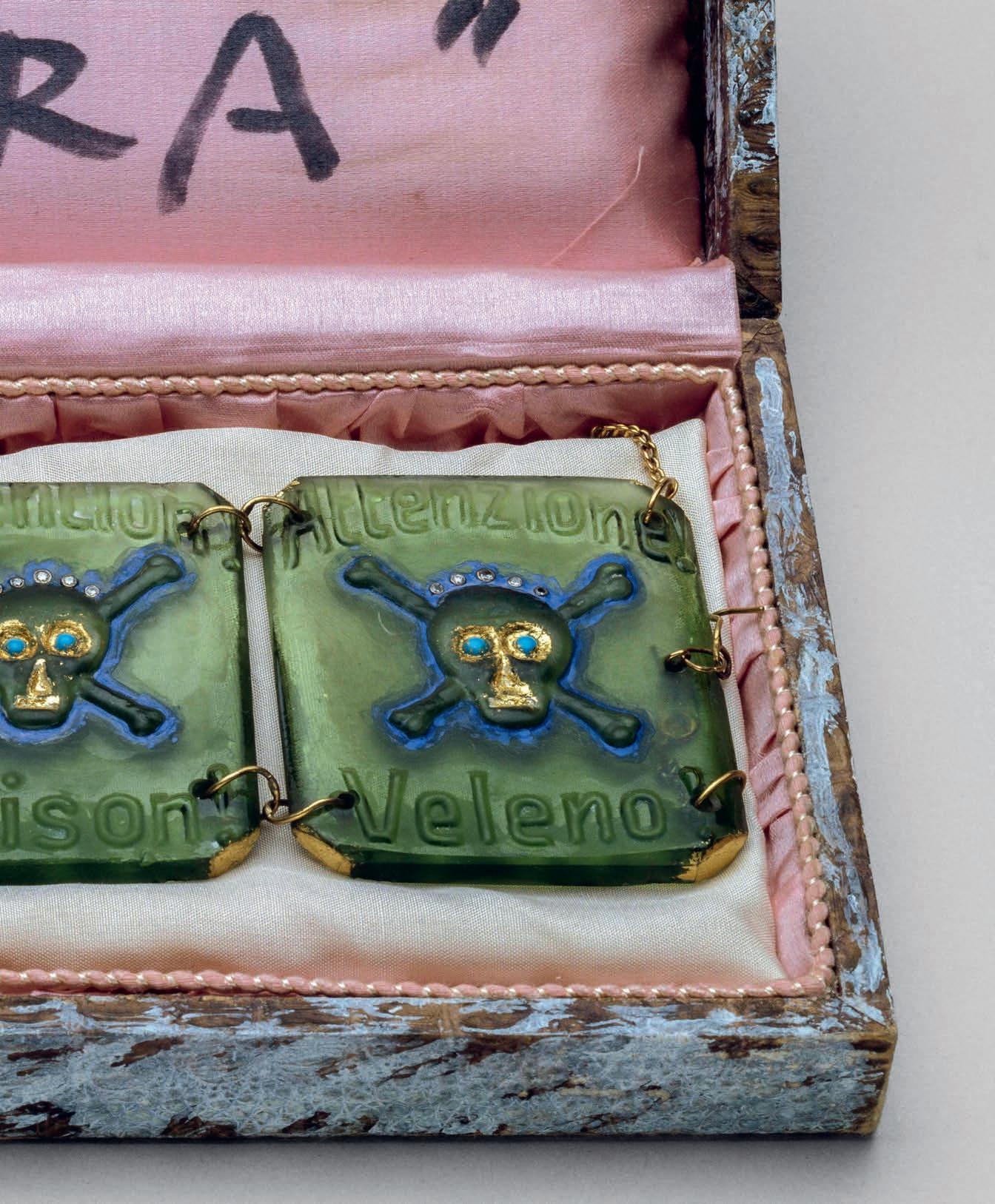
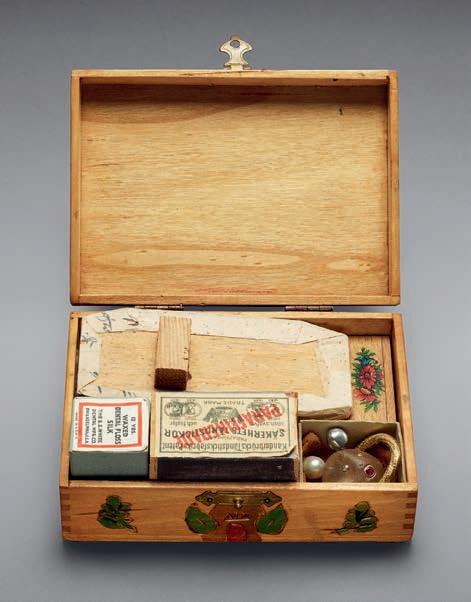
Many of the artist’s jewels are accompanied by display and storage boxes. In most instances, his boxes contain a single jewel. However, on occasion, they may hold a series of treasures (for example, Bunny Ring [Haeschen Ring], cat. 54). As with the titles for his jewelry, the boxes usually relate to the intellectual and material content of the works.63 However, he admits that sometimes chance or happenstance play a role: “The German word Zufall (coincidence) describes it aptly. Something comes to you from somewhere.”64
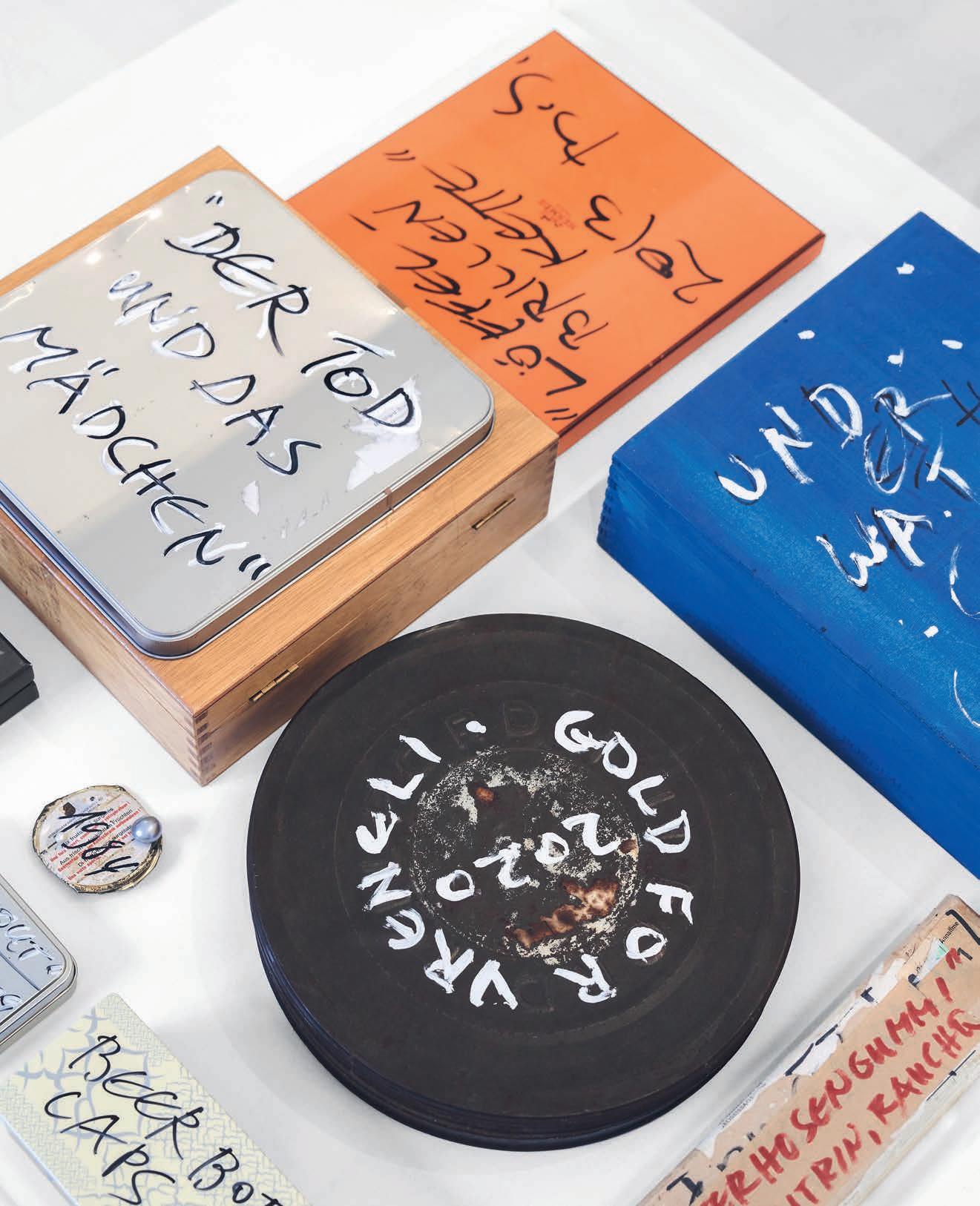
Schobinger’s boxes serve as commentary on his opposition to commercial jewelry and its systems of value and presentation. “For a long time, there have been more or less elaborately manufactured cases for the presentation and storage of jewelry such as rings, necklaces, bracelets, etc.,” he remarks. “More recently, these boxes have been o ered on the specialist market as cheap, anonymous massproduced goods, usually with an ugly design and poor function. I was never able to identify with this from the outset and found my own personal alternative.”65 The seriousness with which he takes the artistic nature of his boxes was re ected in many of his exhibitions when he displayed them without jewels, most recently at the 10 Corso Como Gallery in Milan ( g. 3.6).
Fig.3.6.Jewelry boxes on display in the Bernhard Schobinger: Democracy of Materials exhibition at 10 Corso Como Gallery, Milan, 2025–26.