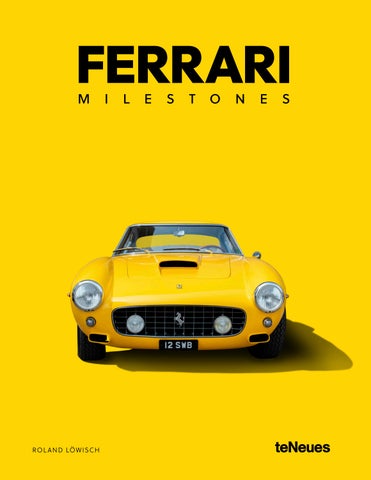
FERRARI MILESTONES
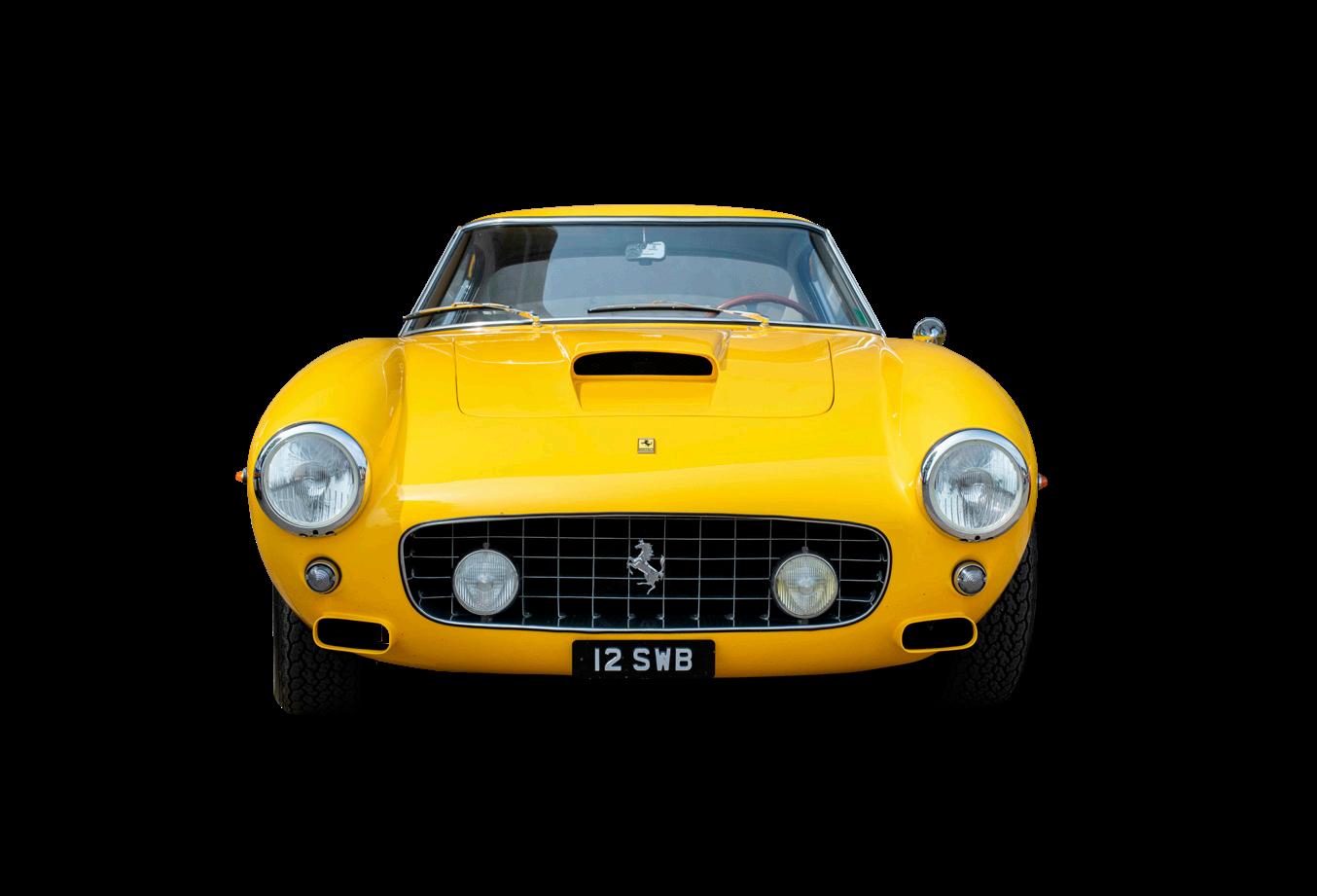
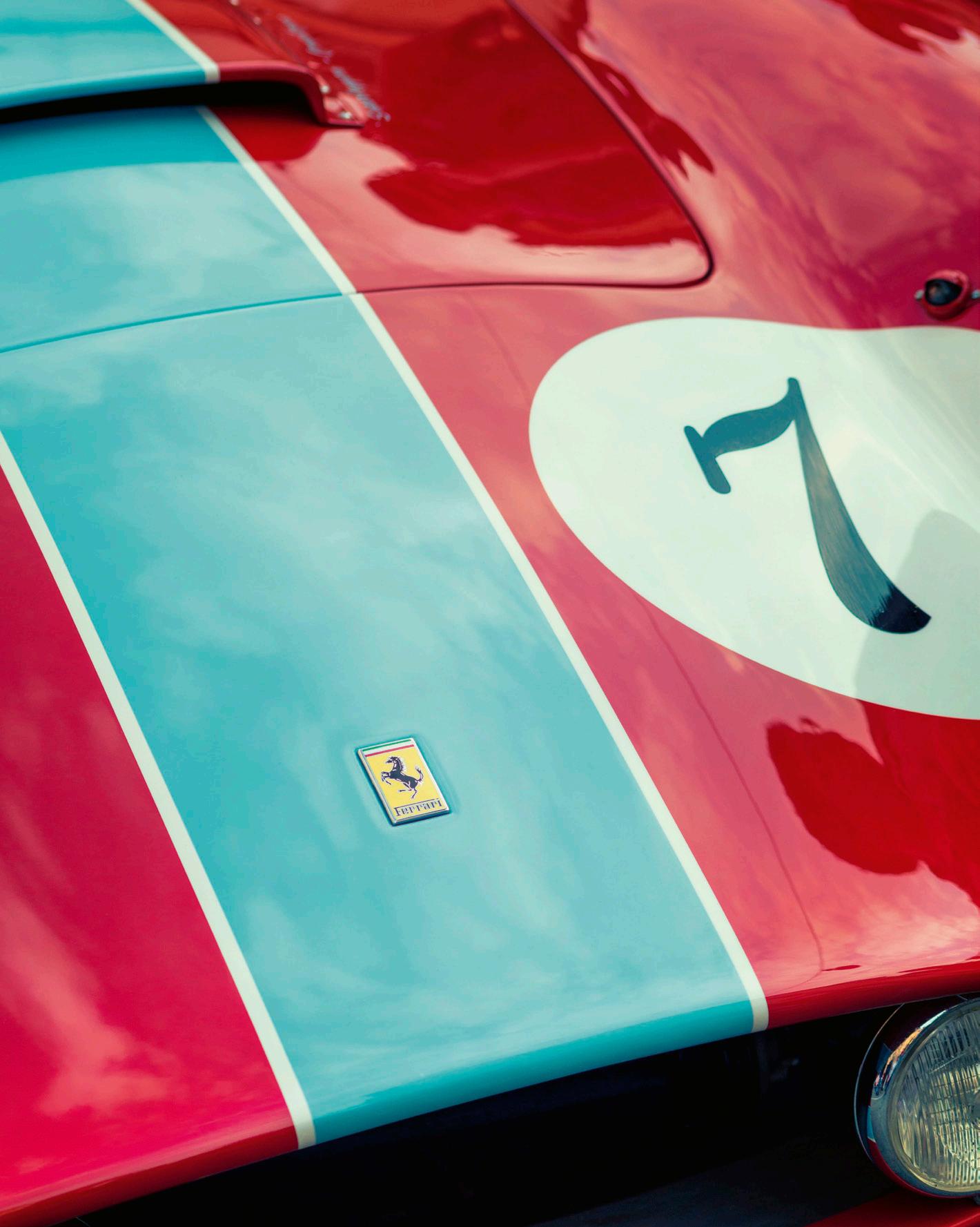
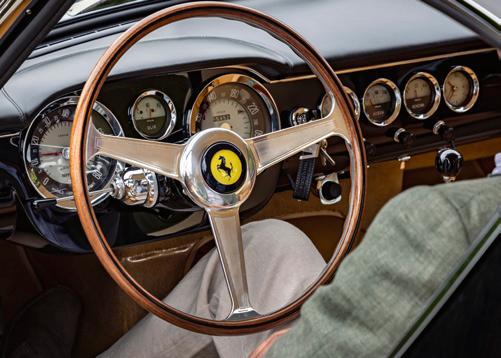
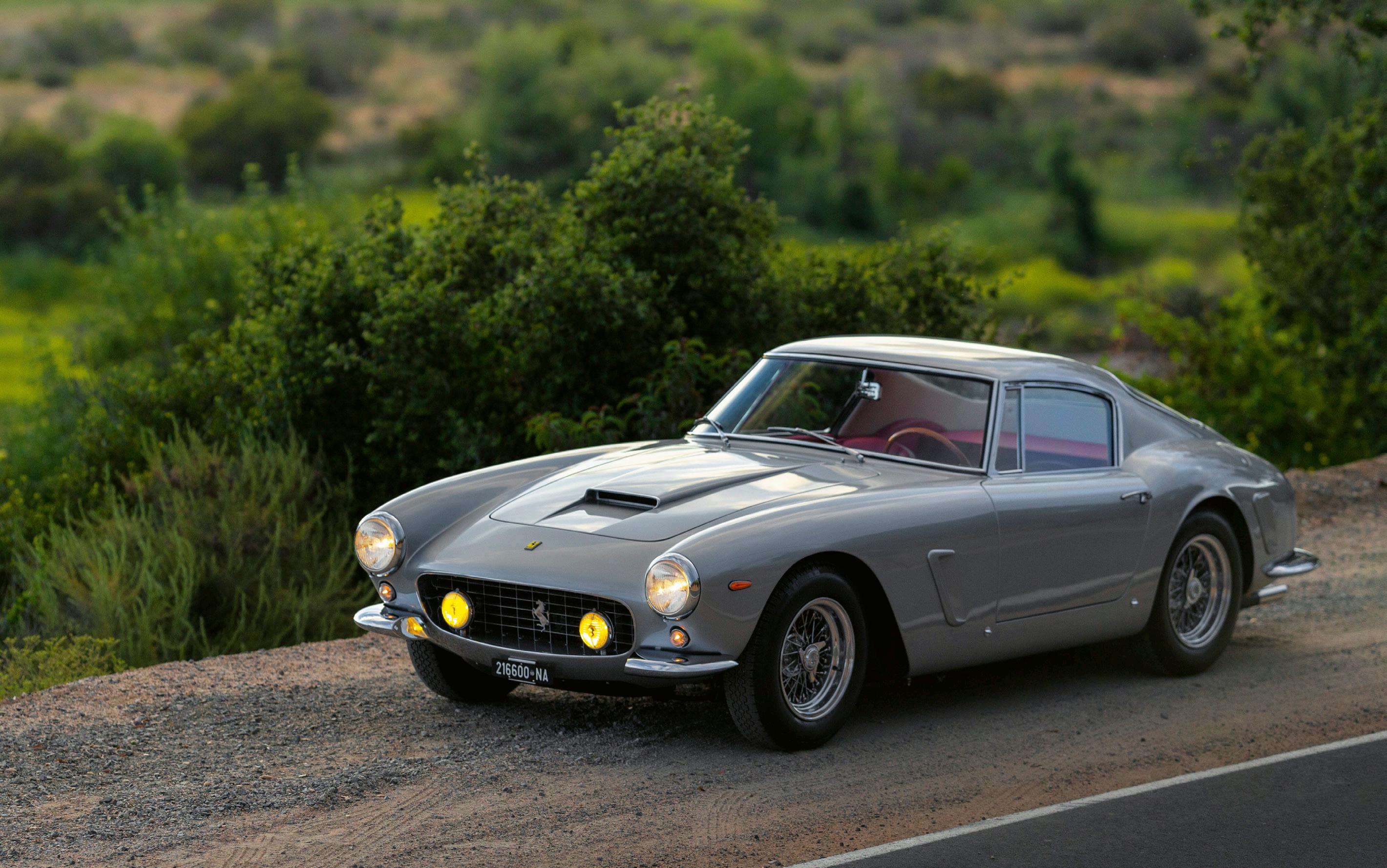
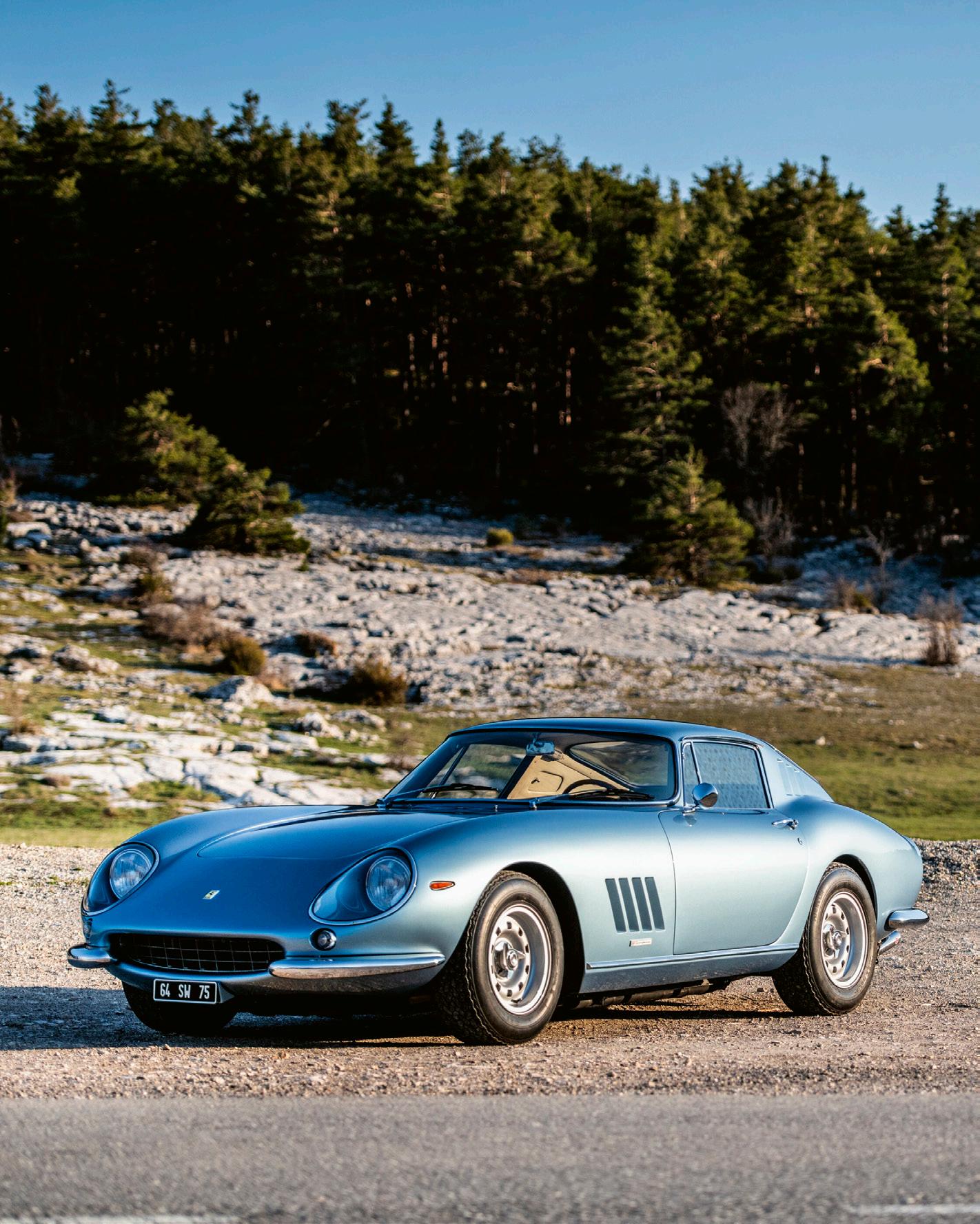
SOME REGARD THE 275 GTB AS THE LAST TRULY CLASSIC FERRARI, DEFINED BY ITS CAPTIVATING DESIGN, ASSURED HANDLING, AND, OF COURSE, THE COLOMBO V12. OTHERS SEE IT AS FERRARI’S STEP INTO THE MODERN ERA, THANKS TO FULLY INDEPENDENT SUSPENSION AND, FOR THE FIRST TIME, A TRANSAXLE LAYOUT.
With the 275 GTB—the successor to the 250 series and the Ferrari 330—favourite designer Pininfarina surpassed himself, delivering a car that balances elegance and aggression with remarkable confidence. The engineering matched the optics. Beneath the sculpted bodywork sits a V12 enlarged to just under 3.3 liters, producing 280 hp. More significant still is the state-of-the-art rear suspension, with double wishbones with coil springs, hydraulic telescopic shock absorbers, and stabilizers replacing the traditional live axle. In this construction the transmission is mounted at the rear, creating the transaxle configuration and improving weight distribution. Disc brakes are fitted at all four corners, dissipating the energy as needed for maximum reliability. To keep curb weight around 1,100 kilograms, the doors and front and rear hoods are made of aluminum, with steel used elsewhere; only a handful are built entirely from lightweight alloy. Early versions of the 275 GTB feature the so-called “short nose,” which later proved to generate insufficient front-end downforce at high speeds. That just wasn’t enough grip. Subsequent “long nose” versions allowed drivers to exploit the car’s claimed top speed of 258 km/h with greater confidence.
MANCHE MEINEN, DER 275 GTB SEI DER LETZTE KLASSISCHE FERRARI – MIT BETÖRENDEM DESIGN, GUTEM FAHRVERHALTEN UND NATÜRLICH MIT DEM COLOMBO V12. ANDERE SEHEN IN IHM EINEN AUFBRUCH IN MODERNE ZEITEN – MIT EINZELRADAUFHÄNGUNG RUNDUM UND ERSTMALS IN EINER TRANSAXLE-AUSLEGUNG.
Ferraris Lieblingsdesigner Pininfarina hat sich beim 275 GTB, dem Nachfolger der 250er-Reihe und auch des Ferrari 330, mal wieder selbst übertroffen – der neue Renner aus Maranello gerät so elegant wie aggressiv. Damit die Technik auch das hält, was die Optik verspricht, wird natürlich wieder der V12 verbaut, inzwischen auf knapp 3,3 Liter Hubraum vergrößert und 280 PS stark. Noch wichtiger aber ist, dass ins Heck des Ferrari – wie bereits vorne vorhanden – endlich auch eine hochmoderne Einzelradaufhängung mit doppelten Dreieckquerlenkern, Schraubenfedern, hydraulischen Teleskopdämpfern und Stabilisatoren einzieht, die Starrachse ist damit endlich Geschichte. Diese Konstruktion im Heck trägt das Getriebe –was mit dem Motor vorne als Transaxle-Anordnung bezeichnet wird. Vorteil unter anderem: Angleichung der Gewichtsverteilung vorne und hinten. Zugleich ziehen Scheibenbremsen in alle vier Räder ein, um bei Bedarf die Energie zuverlässig zu vernichten. Um 1100 Kilo Wagengewicht zu erreichen, werden Türen sowie die Hauben vorne und hinten aus Aluminium gefertigt, der Rest besteht aus Stahl. Nur wenige Sondermodelle werden ganz aus Leichtmetall hergestellt. Anfangs wird der 275 GTB als „short nose“ gebaut, wobei sich herausstellt, dass bei diesen Exemplaren der Abtrieb an der Vorderachse zu gering ist, was sich durch zu wenig Bodenkontakt bei hohen Tempi bemerkbar macht. Es folgen „long nose“-Exemplare, bei denen kein Pilot mehr Angst bekommt, wenn er die möglichen 258 km/h ausfährt.
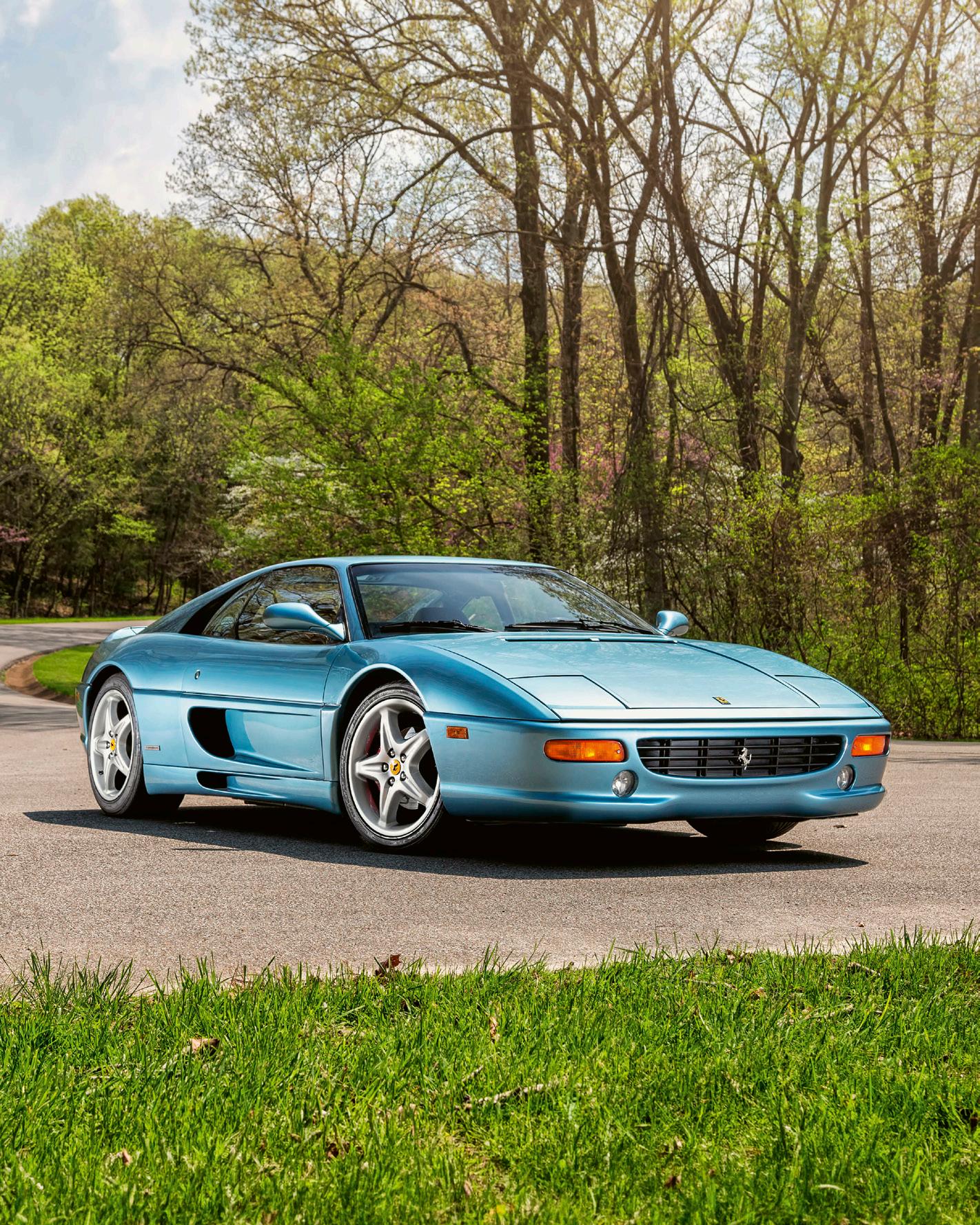
THE F355 BECAME FERRARI’S NEW ENTRY-LEVEL MODEL AND QUICKLY ESTABLISHED CLEAR SEPARATION FROM THE 348. THAT SHIFT WAS DRIVEN BY SUBSTANTIAL TECHNICAL ADVANCES, THE LATER INTRODUCTION OF A SEQUENTIAL GEARBOX, AND GOOSE-BUMP-GIVING ENGINE NOTE.
With the F355 Berlinetta and the Targa version introduced in parallel, Ferrari marked a significant step forward in engineering. The changes began with the engine: the 3.5-liter V8 featured double overhead camshafts, titanium connecting rods, and five valves per cylinder. At the time, it was Ferrari’s most complex V8 and widely regarded as its best sounding. The 1.35-ton coupe accelerates to 100 km/h in 4.7 seconds, missing the maximum speed of 300 km/h only by a narrow margin. From 1997 onward, buyers could order an optional Formula 1—style sequential gearbox in place of the standard six-speed manual, making the F355 the first production car to offer this technology and enabling notably faster gear changes. Further refinements included a flat underbody, a steel monocoque with a dedicated engine subframe, internally ventilated disc brakes at all four corners, and electronically adjustable suspension. Ferrari added a Spider version in 1995, and in 1996 the F355 Challenge models appeared for the Ferrari Challenge racing series. With just over 11,000 units built, the F355 stands as one of the brand’s higherproduction models.
DER F355 IST DAS NEUE EINSTIEGSMODELL VON FERRARI. ER SOLL DEN 348
VERGESSEN LASSEN – WAS ER PROBLEMLOS SCHAFFT. UNTER ANDEREM DURCH VIELE NEUE TECHNISCHE GIMMICKS, EIN SEQUENZIELLES SCHALTGETRIEBE UND EINEN GÄNSEHAUT ERZEUGENDEN SOUND.
Mit dem F355 Berlinetta und der zeitgleich verfügbaren Targa-Version macht Ferrari einen großen Techniksprung. Das beginnt beim Motor – der 3,5-Liter-V8 besitzt nicht nur doppelte obenliegende Nockenwellen und Pleuel aus Titan, sondern auch fünf Ventile pro Zylinder. Damit ist es der aufwendigste V8 von Ferrari bisher und derjenige mit dem besten Sound. Das 1,35 Tonnen schwere Coupé sprintet in 4,7 Sekunden auf 100 km/h und verpasst als Vmax nur knapp die 300-km/h-Marke. Ein besonderes Gimmick ist ab 1997 das optionale sequenzielle Schaltgetriebe im Stile der Formel 1, das anstatt der serienmäßigen Sechsgang-Handschaltung geordert werden kann. Noch kein anderes Serienauto verfügt vorher über diese Technik, die besonders schnelle Schaltvorgänge ermöglicht. Zudem sorgen die Ingenieure für einen geschlossenen Unterboden, ein Stahl-Monocoque mit einem Rahmen für die Motoraufnahme, für innenbelüftete Scheibenbremsen rundum und für ein elektronisch verstellbares Fahrwerk. 1995 bietet Ferrari noch eine Spider-Version zusätzlich an, und auch für die Rennfans ist gesorgt, als 1996 die F355 ChallengeFahrzeuge für die Ferrari-Challenge-Rennserie gebaut werden. Gut 11.000 Exemplare sind bei Ferrari schon fast eine Großproduktion.
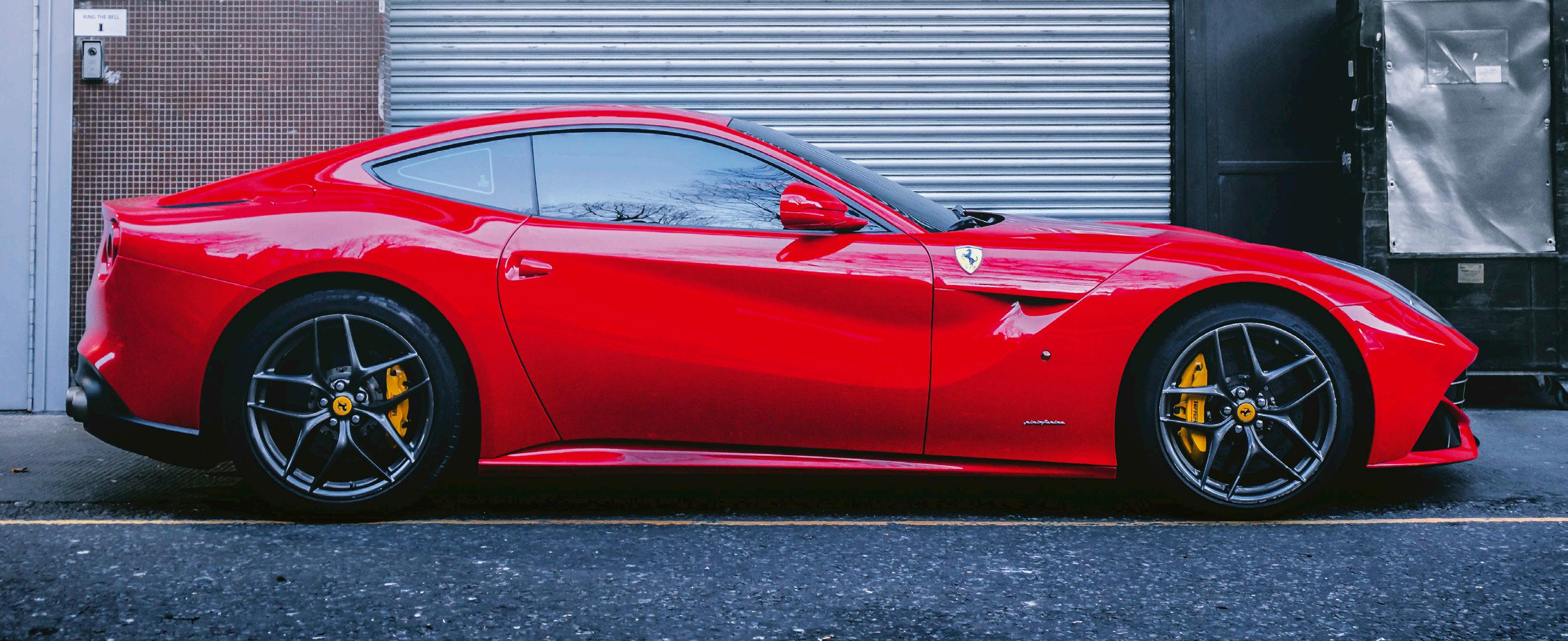
ENGINE: V12
DISPLACEMENT: 6,262 CCM
POWER: 545 KW (740 HP) AT 8,250 RPM
MAX. TORQUE: 690 NM AT 6,000 RPM
WEIGHT: 1,525 KG
0–100 KM/H: 3.1 SEC.
TOP SPEED: 340 KM/H
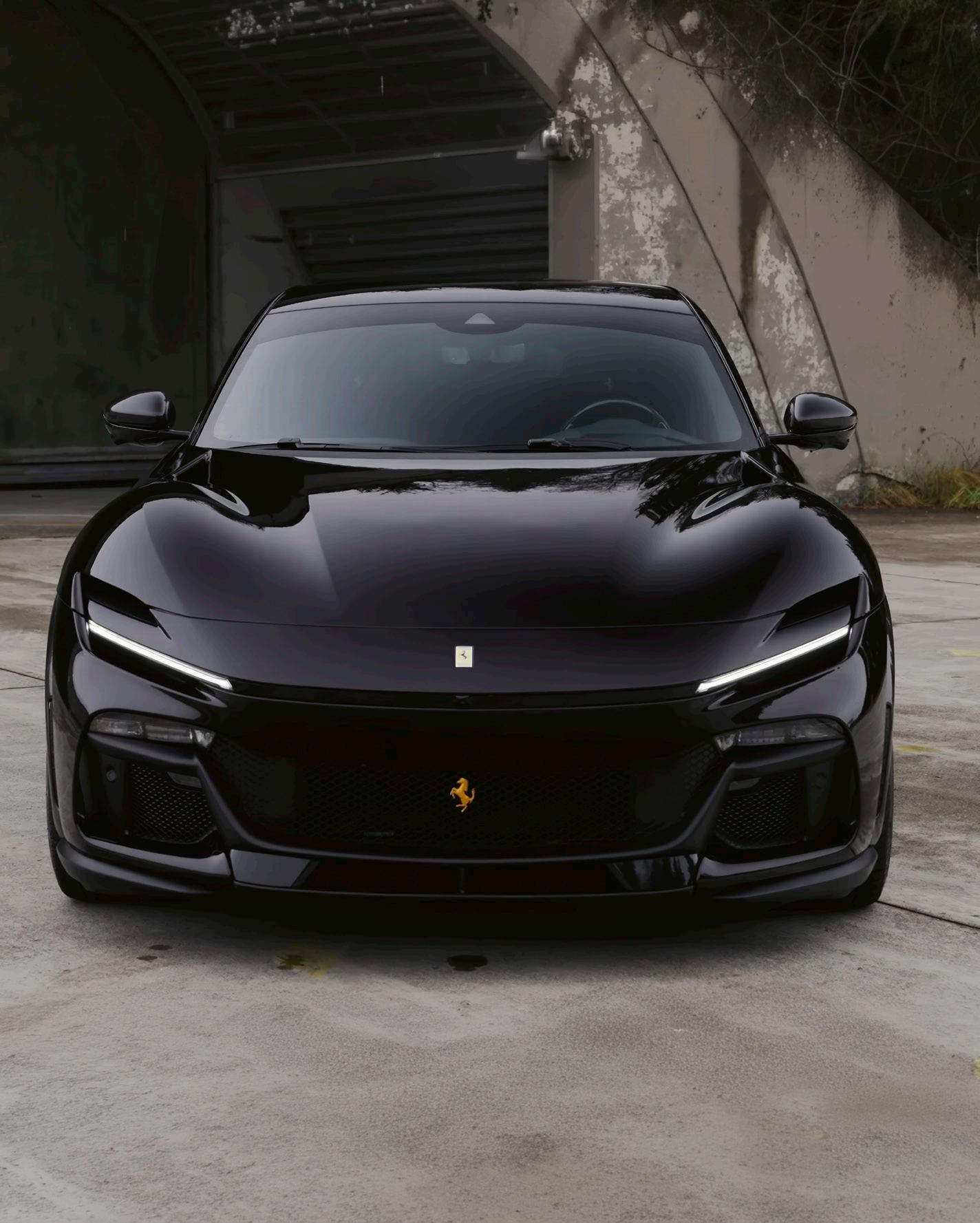
A HIGH-RIDING FERRARI WITH FOUR DOORS WOULD ONCE HAVE SEEMED UNTHINKABLE. CHANGING EXPECTATIONS, AN AGING CUSTOMER BASE, AND CLEAR MARKET OPPORTUNITIES HAVE MADE IT INEVITABLE. FERRARI HAS ARRIVED IN THE SUV ERA, EVEN IF IT PREFERS NOT TO USE THE TERM.
In the past, “everyday usability” was occasionally invoked in connection with certain Ferrari models, though usually with a degree of irony. Typically, one would drop into heavily contoured sports seats. While dropping in is still manageable later in life, getting out can be a decidedly less elegant maneuver. Ferrari could not ignore this reality forever. The Purosangue is aimed in part at long-standing customers who value easier access and the comfort of an SUV though Ferrari insists on calling it a “Ferrari sports car.” Whatever the label, the result is a car that is genuinely suitable for everyday use. Four doors, with rear-hinged rear doors, allow easy entry. Four individual seats provide elevated comfort for all occupants, and the raised seating position, with 185 millimeters of ground clearance, is notably easier on the joints. Inside, Ferrari incorporates a significant share of recycled materials, while the luggage compartment offers 473 liters of capacity. At around €380,000, expectations are understandably high, and the Purosangue meets them. All-wheel drive, all-wheel steering, an eight-speed dual-clutch transmission, and extensive electronic systems come as standard. To the satisfaction of traditionalists, Ferrari also fits a naturally aspirated V12 producing 725 hp. Despite a curb weight of more than two tons, the Purosangue accelerates to 100 km/h in 3.3 seconds and reaches a top speed of 310 km/h. In that sense, Ferrari’s own assessment as a sports car is not without merit. The Purosangue overreaches slightly on the controls, however: The extensive use of touch-sensitive surfaces on the steering wheel and the near-elimination of conventional switches has met with mixed reactions, a direction Ferrari quietly revises in later models.
O TEMPORA, O MORES – EIN HOCHGELEGTER FERRARI MIT VIER TÜREN?
DIE ZEITEN ERFORDERN ES, DIE ÄLTER WERDENDEN KUNDEN FREUT ES, UND DIE MARKE WITTERT EIN GUTES GESCHÄFT. WILLKOMMEN IM SUV-ZEITALTER.
Tatsächlich taucht in der Vergangenheit immer mal wieder das Wort „Alltagstauglichkeit“ bei dem einen oder anderen Ferrari-Modell auf – letztlich hätte man den Begriff jedes Mal in Gänsefüßchen setzen müssen. Ein Beispiel: Normalerweise fällt man tief in supergeformte Sportsitze, was man auch noch in fortgeschrittenem Alter tun kann – nur das Aussteigen wirkt weniger elegant. Da kommt selbst Ferrari nicht drumherum, auch den älter gewordenen Freunden des Hauses ein SUV anzubieten, der natürlich nicht so heißen darf: Der Purosangue ist nach eigener Definition ein „Ferrari Sports Car“. Wie auch immer – richtig ist: Das Auto ist alltagstauglich, und zwar voll und ganz. Vier Türen (hinten nach hinten öffnend) sorgen für bequemen Einstieg, vier Einzelsitze für perfekten Komfort aller Mitfahrer, die erhöhte Position (185 Millimeter Bodenfreiheit) für geschonte Gelenke. Im Interieur sind viele recycelte Materialien verbaut, der Kofferraum schluckt 473 Liter Gepäck. Für rund 380.000 Euro kann man allerdings noch mehr verlangen – und bekommt es: Allradantrieb, Allradlenkung, Achtgang-Doppelkupplung, jede Menge Elektronik und zur Freude aller Hardcore-Ferraristi einen V12-Saugmotor mit 725 PS, der das gut zwei Tonnen schwere Auto verlässlich in 3,3 Sekunden auf 100 km/h katapultiert und erst bei 310 km/h den Vortrieb einstellt. Insofern haben die Macher (auch) Recht: Der Purosangue ist durchaus ein Ferrari Sports Car. Nur bei der Bedienung geht Ferrari einen Schritt zu weit: Das neue Konzept vieler Sensorflächen auf dem Lenkrad und der weitgehende Verzicht auf normale Schalter kommt nicht so gut an – bei späteren Modellen rudert Ferrari wieder zurück.
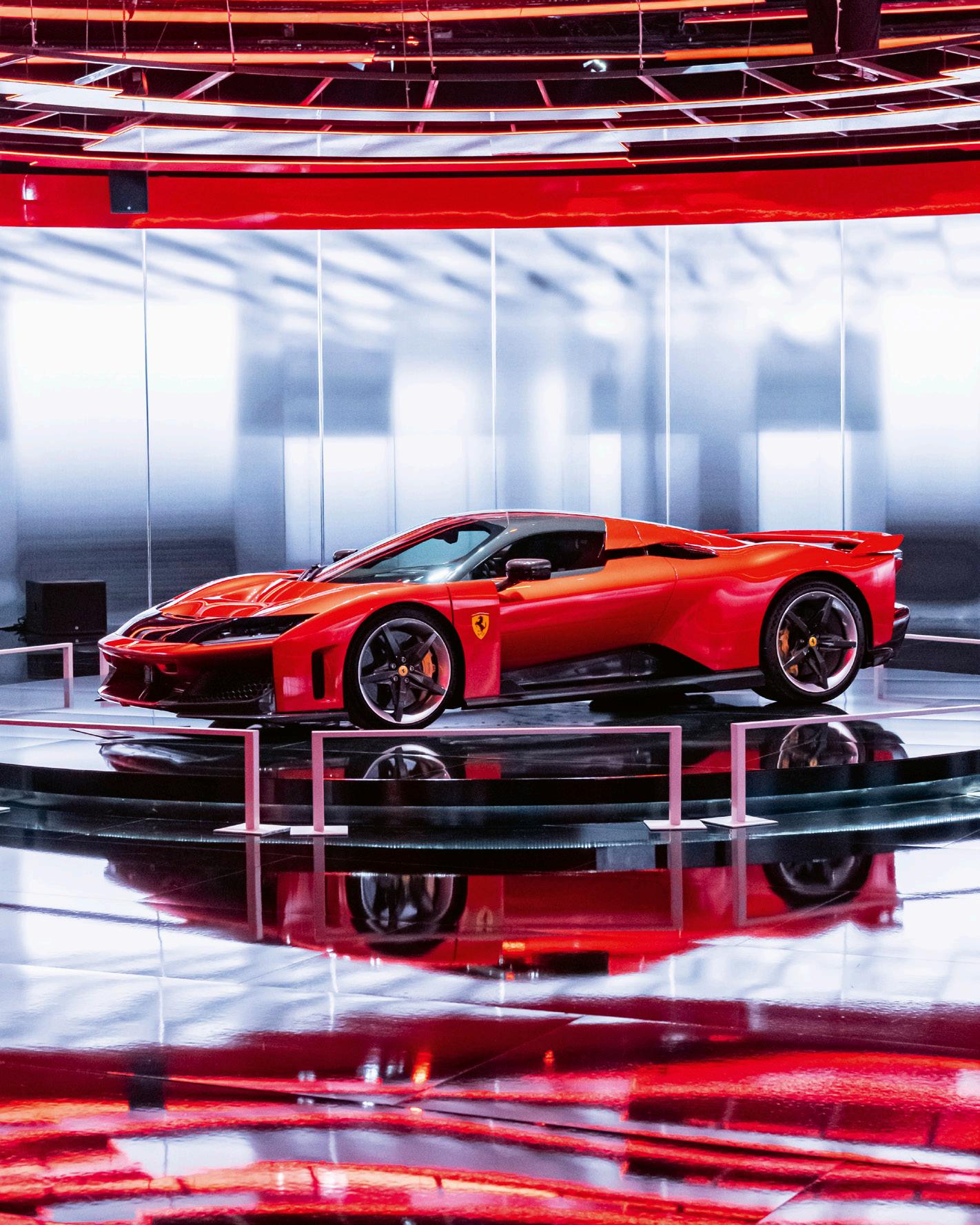
FERRARI IS NOT THE ONLY MANUFACTURER TO BUILD CARS THAT APPEAL PRIMARILY TO THE DRIVER, BUT IT IS SINGLE-MINDED IN THE PURSUIT. THE F80, CONCEIVED AS THE SUCCESSOR TO THE LAFERRARI, IS EFFECTIVELY A “1+ CAR”. THE PASSENGER SEAT IS REDUCED TO A FIXED, MINIMALLY PADDED SHELL. WITH 1,200 HP, THE PRIORITIES ARE CLEAR.
Ferrari’s new flagship model F80, limited to 799 units, is unusual in more ways than its seating layout. The name alone invites comparison with the F40 and F50. Although its presentation does not coincide neatly with a company anniversary, Ferrari gives the designation a retrospective logic. The name refers to the final car, planned to be built in 2027, the year of Ferrari’s 80th anniversary. The drivetrain is distinctive: A three-liter twin-turbo V6 producing 900 hp on its own is paired with three electric motors, two on the front axle, providing all-wheel drive, and a third supporting the rear axle. Cutting-edge, hyper-innovative. Combined output totals 1,200 hp and 1,092 Nm of torque, which is reflected in the acceleration figures. The sprint to 100 km/h takes just over two seconds and 200 km/h is hit in under six. Top quoted speed is 350 km/h, making the F80 the fastest road-going Ferrari to date. (Who would want to be a passenger at that speed, anyway?) Among the car’s key technical advances is the Multimatic suspension system, a fully electronic damper setup first introduced in the Purosangue. It works in close coordination with the active aerodynamics, which generate up to a gigantic 1,050 kilograms of downforce at 250 km/h. The price alone emphasizes that the F80 is not intended for broad appeal: Each unit costs €4.3 million.
AUCH ANDERE HERSTELLER BAUEN AUTOS, DIE HAUPTSÄCHLICH
TEN ERFREUEN SOLLEN, ABER NICHT SO KONSEQUENT WIE FERRARI: DAS NEUE SUPERCAR F80 ALS NACHFOLGER DES LAFERRARI IST EIN „1+-SITZER“. DAS HEISST: DEM BEIFAHRER BLEIBT NUR EINE NICHT VERSTELLBARE, MINIMAL GEPOLSTERTE NOTSCHALE. NA DANN: VIEL SPASS MIT 1200 PS.
Ferraris neues, auf 799 Exemplare limitiertes Topmodell, der F80, ist in jeder Hinsicht ungewöhnlich – nicht nur in Sachen Sitzkonfiguration. Nehmen wir den Namen: F80 – klingt gut in einer Reihe mit F40 und F50. Weil es zur Präsentation im Jahr 2025 aber leider gerade nicht zu einem Ferrari-Jubiläum passt, wird es passend gemacht: Der Name weist auf das letzte zu bauende Exemplar im Jahre 2027 hin, denn dann wird der 80. Geburtstag der Marke gefeiert. Aber der Antrieb überrascht nicht minder: Ein für sich schon 900 PS starker Dreiliter-V6-Biturbo wird flankiert von drei Elektromotoren. Zwei davon sitzen an der Vorderachse (weswegen der F80 Allradantrieb hat), einer hinten. Hochmodern, hochinnovativ. Zusammen sorgt der Antrieb für gewaltige 1200 PS und 1092 Newtonmeter Drehmoment. Der Sprint ist in gut zwei Sekunden erledigt, von 0 auf 200 km/h vergehen weniger als sechs Sekunden. Will da wirklich noch jemand daneben sitzen – erst recht bei 350 km/h Spitze? So schnell war noch kein Straßen-Ferrari vorher. Zu den wichtigsten Neuerungen gehört auch die „Multimatic“ – ein vollelektronisches Dämpfersystem, erstmals eingezogen in den Purosangue. Es arbeitet eng zusammen mit der aktiven Aerodynamik, die für gigantische 1050 Kilo Abtrieb bei 250 km/h sorgt. Dass das Auto nichts für jedermann ist, sieht man allein schon am Preis: 4,3 Millionen Euro pro Stück.
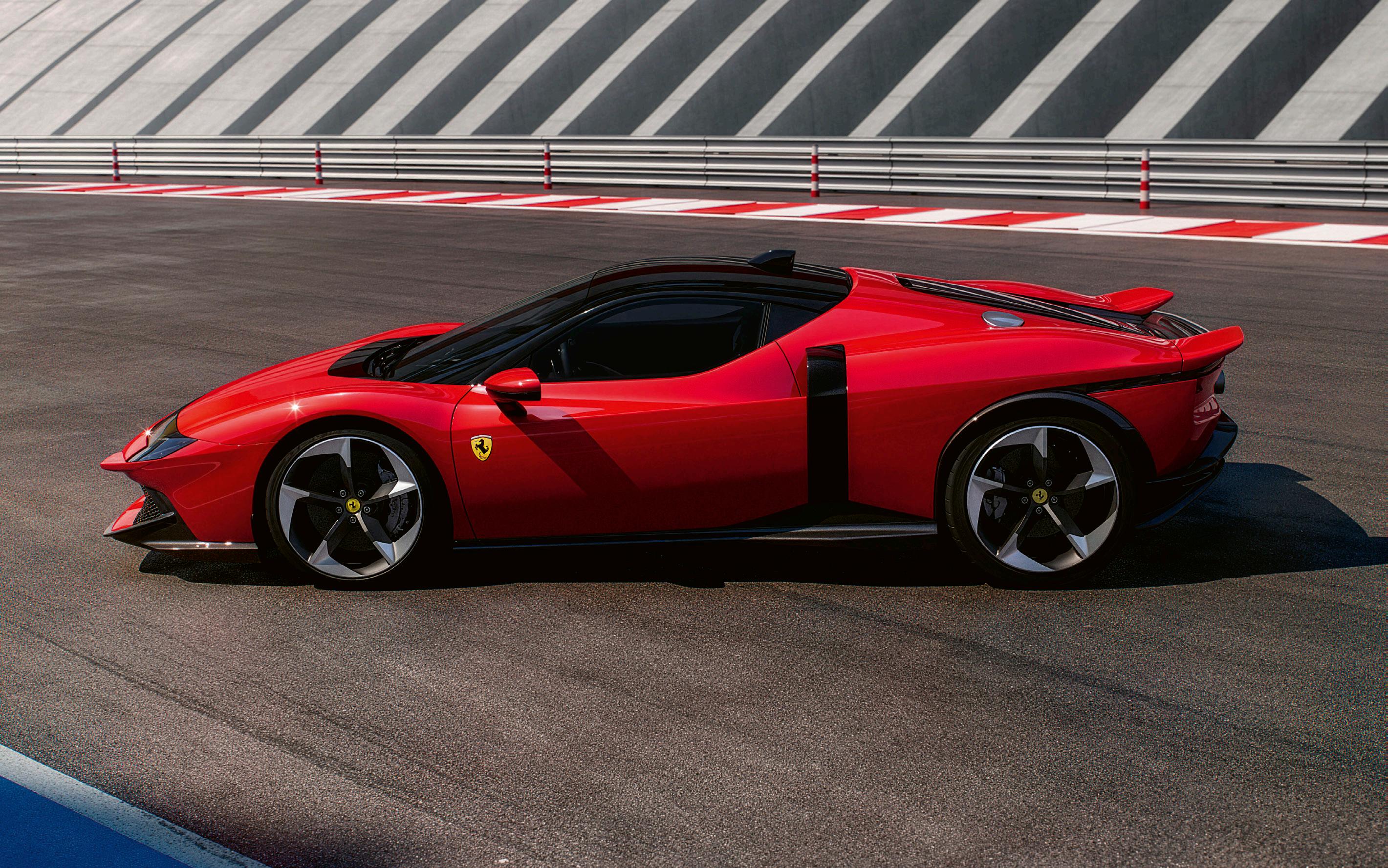
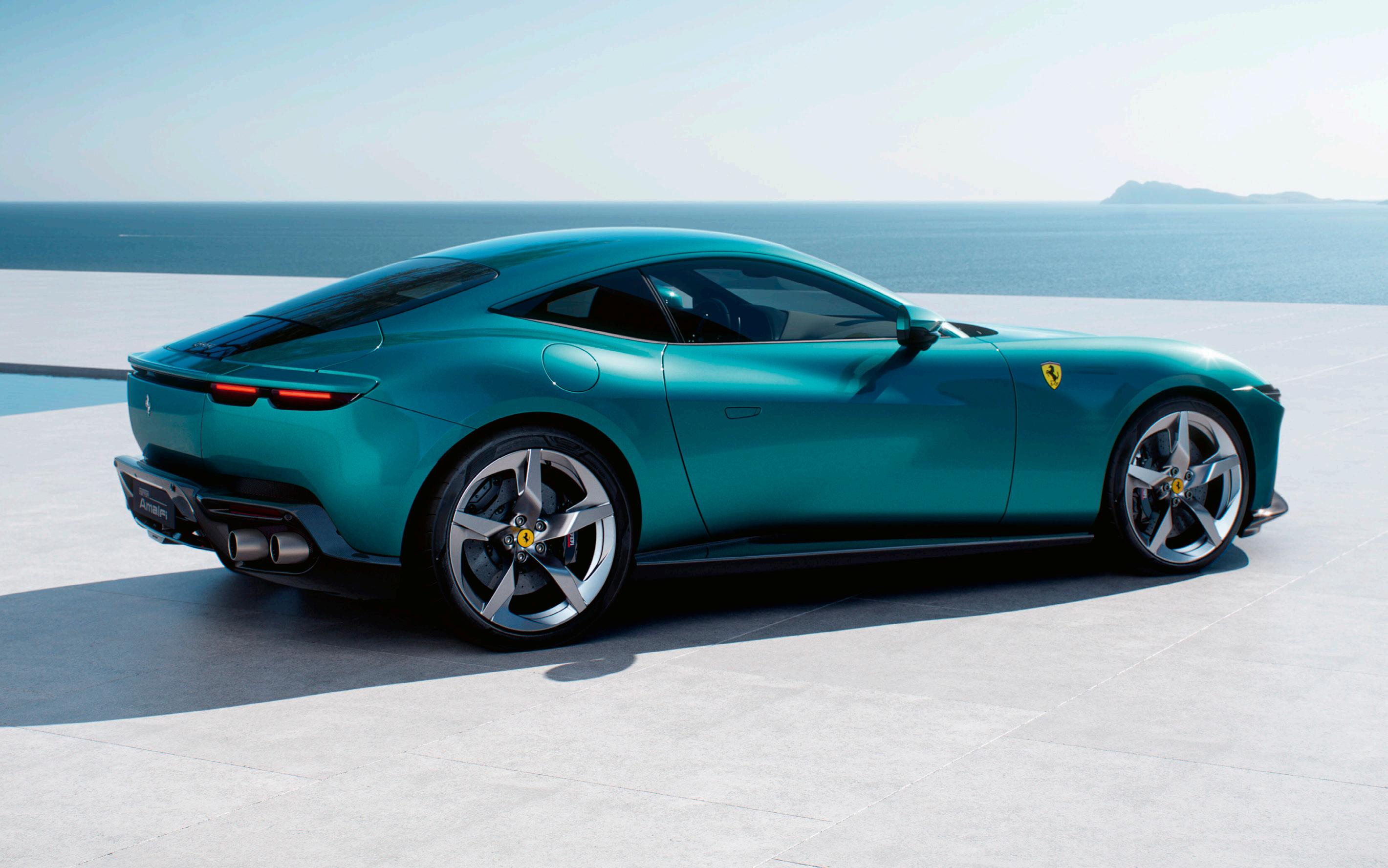
“WE DON’T DO RETRO.”
FERRARI’S CHIEF DESIGNER FLAVIO MANZONI ON THE 849 TESTAROSSA (2025)
© teNeues, an Imprint of Die Gestalten Verlag GmbH & Co. KG, Berlin 2026
TEXTS by Roland Löwisch
EDITORIAL MANAGEMENT: Eva Stadler
TRANSLATION by John A. Foulks
PROOF READING: Anja Klaffenbach, Ingra Orthober
DESIGN: Eva Stadler
LAYOUT: Michaela Fischer
PRODUCTION: Sandra Jansen-Dorn, gestalten
IMAGE EDITING: Jens Grundei
Printed in the Czech Republic by Finidr
Produced in Europe
FSC LOGO
Published by gestalten, Berlin 2026
ISBN 978-3-96171-766-8
1st printing, 2026
All rights reserved. No part of this publication may be reproduced or transmitted in any form or by any means, electronic or mechanical, including photocopy or any storage and retrieval system, without permission in writing from the publisher.
No part of this book may be used or reproduced in any manner for the purpose of training artificial intelligence technologies or systems. This work is reserved from text and data mining (Article 4(3) Directive (EU) 2019/790).
Respect copyrights, encourage creativity!
PICTURE CREDITS
Cover: © mauritius images / Tim Gainey / Alamy / Alamy Stock Photos
For more information and to order books, please visit www.teneues.com and www.gestalten.com
Die Gestalten Verlag GmbH & Co. KG Mariannenstraße 9–10 10999 Berlin, Germany hello@gestalten.com
Krefeld Office
Uerdinger Strasse 265 / Villa Pattberg 47800 Krefeld, Germany verlag@teneues.com
teNeues Press Department press@gestalten.com
Bibliographic information published by the Deutsche Nationalbibliothek. The Deutsche Nationalbibliothek lists this publication in the Deutsche Nationalbibliografie; detailed bibliographic data is available online at www.dnb.de
instagram.com/teneuespublishing
www.teneues.com
3 Sjoerd van der Wal / Getty Images News via Getty Images; 4, 6 mauritius images / Giordano Aita / Alamy / Alamy Stock Photos; 7 Jim Monk / iStock Editorial / Getty Images Plus via Getty Images; 8, 11 Bernard Cahier / Hulton Archive via Getty Images; 12 Klemantaski Collection / Hulton Archive via Getty Images; 17 Martyn Lucy / Getty Images Sport via Getty Images; 19 Klemantaski Collection / Hulton Archive via Getty Images; 20–23 Heritage Images / Hulton Archive via Getty Images; 25–29 Patrick Ernzen; 31 Heritage Images / Hulton Archive via Getty Images; 32 Peter Fox / Getty Images Sport via Getty Images; 34 Bernard Cahier / Hulton Archive via Getty Images; 37 Klemantaski Collection / Hulton Archive via Getty Images; 39 dimcars / Shutterstock; 41–45 picture alliance / Cover Images | Remi Dargegen © Courtesy of RM Sotheby's // Cover Images; 46–49 Rémi Dargegen; 51 Richard Bord / Getty Images; 52, 53 mauritius images / Automotive Details / Alamy / Alamy Stock Photos; 54 Alex Halada / iStock Unreleased via Getty Images; 56–57 Rémi Dargegen; 59–63 FernandoV / Shutterstock; 64–69 Virgiliu Andone; 71–73 JoshBryan / Shutterstock; 74–78 National Motor Museum / Heritage Images / picture alliance; 80 mauritius images / Phil Talbot / Alamy / Alamy Stock Photos; 82, 84 Martyn Lucy / Getty Images News via Getty Images; 85 Scott Sim / Alamy Stock Photo; 87, 88 FernandoV / Shutterstock; 90–95 Rémi Dargegen; 96,98 JoshBryan / Shutterstock; 100 mauritius images / Alamy Stock Photos / IPA, Independent Photo Agency Srl; 102 Alexandre Prevot / Shutterstock; 104–109 mauritius images / SpeedNbeauty / Alamy / Alamy Stock Photos; 110 Brandon Woyshnis / Shutterstock; 112 picture alliance / Heritage Images / Simon Clay; 114, 116 National Motor Museum / Heritage Images / Hulton Archive via Getty Images; 118–123 mauritius images / Phil Talbot / Alamy / Alamy Stock Photos; 125–129 Zuumy / Shutterstock; 130, 132 Cristi Mitu / Shutterstock; 134 Max Earey / Shutterstock; 137 RMT51 / Shutterstock; 138–141 Brandon Woyshnis / Shutterstock; 142 mauritius images / Alamy Stock Photos / ALLSTAR TRAVEL, Allstar Picture Library Ltd; 144, 145 pio3 / Shutterstock; 147–149 JustPhotos22 / Shutterstock; 150 Vincenzo Pinto / AFP via Getty Images; 152,153 Bepsimage / iStock Editorial / Getty Images Plus via Getty Images; 154 George Clerk / AFP via Getty Images; 156 Martyn Lucy / Getty Images Sport via Getty Images; 158 Sport car hub / Shutterstock; 160 dimcars / Shutterstock; 161 Sport car hub / Shutterstock; 162 Camerasandcoffee / Shutterstock; 164, 165 Alexandre Prevot / Shutterstock; 166 carspotter__bg / Shutterstock; 168, 169 Zuumy / Shutterstock; 171 mauritius images / Alamy Stock Photos / Sergio Azenha; 172 Martyn Lucy / Getty Images News via Getty Images; 175 Michael Dodge / Getty Images News via Getty Images; 177 svetjekolem / Shutterstock; 178 mauritius images / Alamy Stock Photos / ZarkePix; 181–183 Zuumy / Shutterstock; 185–192 Martyn Lucy / Getty Images News via Getty Images; 194 Martyn Lucy / Getty Images Sport via Getty Images; 196 mauritius images / Alamy Stock Photos / Jason Harris; 198 VG1 / Shutterstock; 200 Harman01828 / Shutterstock; 203, 204 picture alliance / Cover Images | Ferrari/Cover Images; 206, 207 Mike Mareen / Shutterstock; 208–213 picture alliance / Cover Images | Ferrari / Cover Images; 215–217 Fyuzu / Shutterstock; 218–223 picture alliance / Cover Images | Ferrari / Cover Images