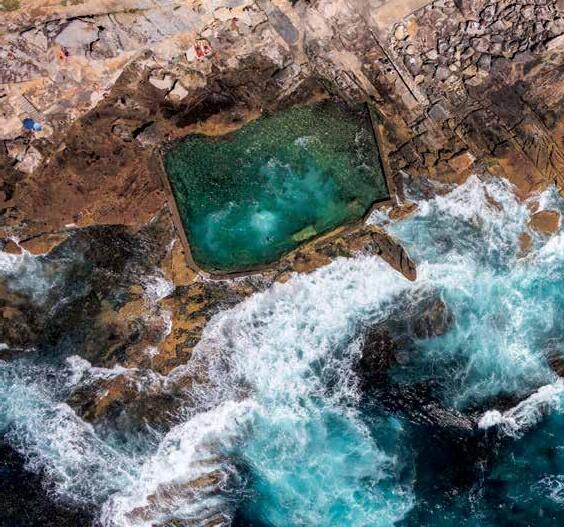
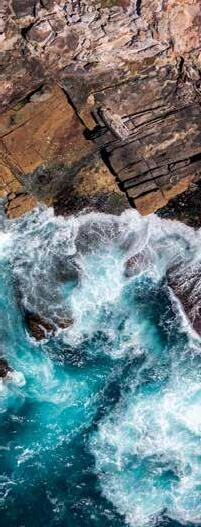
This series of texts was written in Maroubra, a diverse beachside suburb on the south-east coast of Sydney.
The name ‘Maroubra’ may derive from the Dharug word ‘murab-ara,’ ‘loud-noise-having’ or ‘like thunder,’1 referring perhaps to the loudness of the surf crashing against the rocks which characterises the rugged landscape. It is a beautiful and dramatic meeting of water and land, a long beach framed by windswept peninsulas. In the rock carvings at the northern headland, there is evidence of the presence of the Muru-ora-dial Aboriginal People, who camped and fished at Maroubra many years ago.
The Bidjigal and Gadigal people are the traditional custodians of this coastal land of Sydney, which includes Maroubra, and I acknowledge their custodianship of this land and waters and pay my respects to their Elders past, present and emerging.
Over the last 230 years, Aboriginal and Torres Strait Islander peoples have been systematically dispossessed, disempowered and marginalised.
European occupation and settlement imposed a modern conception of land and animal life purely in instrumental terms of possession, ownership and exploration. Lost has been the concept of custodianship and human interconnectedness with the land. Deep pre-modern cultural knowledge has been systematically and fatally undermined, overridden, or worse, commodified.
An Acknowledgement of Country represents deference to the deep histories of this place that are beyond our modern understanding. It is an acknowledgement of the injustices and oppression that have been suffered by First Nations peoples of Australia.
It is an acknowledgement and deference of respect and regret for social, cultural and environmental damage, pain and destruction beyond repair.
1 Jeremy Steele, ‘Morooberra, the person, and Maroubra, the place,’ Sydney Aboriginal Language Insights (blog), 2011, http://naabawinya.blogspot.com/2011/05/morooberra-person-and-maroubra-place.html.
However, such acknowledgements must seem a little thin or even veiled at a time when the injustice, suffering and destruction are continuing.

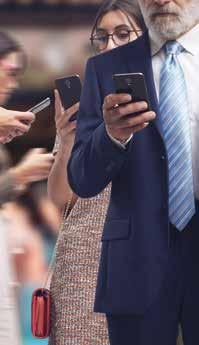
4 “The smartphone is the main information [medium] of our time. It not only makes things superfluous but also dereifies the world by reducing it to information. We present our smartphones everywhere, and even delegate our perception to these apparatuses. We perceive reality through the filter of the screen. The digital window dilutes reality into information that we register. There is no physical contact with reality. Reality is deprived of its presence. We no longer perceive the material vibrations of reality. Perception is disembodied. The smartphone de-realizes the world.”
Byung-Chul Han, Non-things, trans. Daniel Steuer (Cambridge, UK: Polity Press, 2022), 42.
2 Rebecca Moody, ‘Screen Time Statistics,’ Comparitech, 2023, https:// www.comparitech.com/tv-streaming/ screen-time-statistics/.
3 Gloria Mark, Attention Span: A Groundbreaking Way to Restore Balance, Happiness and Productivity (New York: Hanover Square Press, 2023), 10–12.
We are living in an age of distraction, an age in which attention itself has become the primary terrain of cultural and economic struggle.
Contemporary life is overwhelmed by the omnipresence of the digital screen and the incessant demands it makes for our attention. An entire generation is being raised from birth with the intimacy of a digital portal, always close, always comforting, and always ready to suck attention away from the trials and tribulations of the real world. The dependence and addiction created by such false comfort condemn us to increasing levels of social alienation, isolation, manipulation and inner despair from which we will only more desperately seek the placation of endless distraction.
Distraction and Disorientation
We seem to be living in a state of increasing distraction and disorientation. The presence of digital screens in our daily lives has proliferated, and the time we spend on them is increasing year by year.
In 2023, ‘the average person spent a total of 6 hours and 37 minutes looking at a screen each day (for internet-connected activities). This includes 2 hours and 31 minutes scrolling through social media channels, 1 hour and 38 minutes of streaming music, and 1 hour and 12 minutes of listening to podcasts. And the majority of this (3 hours and 46 minutes) is spent on mobiles.’2
It is hardly surprising then that, as we spend more time on screens, flipping almost subconsciously between emails, apps and updates, our attention spans are correspondingly shortening. Almost twenty years ago, the average duration of focused attention to an on-screen activity was approximately 2.5 minutes or 150 seconds; ten years ago, it had reduced to 75 seconds, and two years ago it was only 47 seconds.3
This is the nature of the communications and information technology we have developed, a technology that induces and then feeds a deepening state of dislocation, disorientation and distraction.
The architect must embrace the paradox of seeing, and have the discipline to find a way to create a space, within the sea of endless distractions that loudly and sometimes subtly demand constant attention. But this must also be a space apart from a mind full of disappointment, insecurity and desperation – a mind that loudly demands a compensation of wilful, personal identity in architectural form. Only in this momentary fragile space, almost impossible to create within contemporary professional processes and indeed contemporary life, can the nascent life of the architectural project be discovered, fostered and truly live.
Detachment and Re-attachment
To see clearly may require both distance and return; a momentary detachment from the noise of contemporary life, followed by a renewed attachment to the essential conditions of human existence.
How can this space of seeing be found? It would seem to require both a detachment from the familiar, incessant, demanding distractions of our professional lives, and an attachment or re-attachment to the essential and the specifics of our human condition, perhaps a sense of a restoration of connection with this world that has been lost in contemporary life. There may be a form of architecture that can support us in this process, an architecture of detachment, and an architecture of re-attachment.
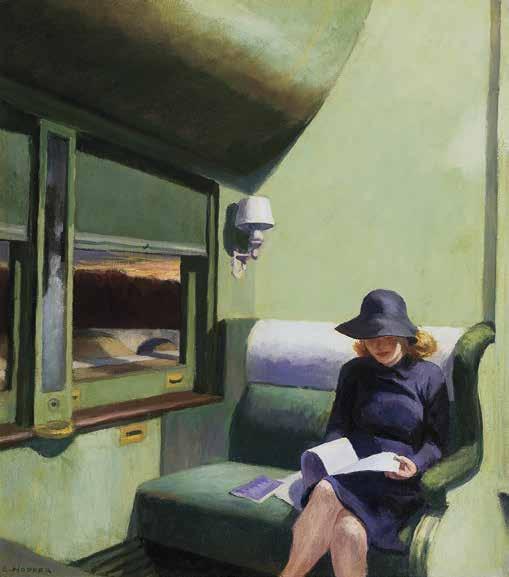
The architecture of detachment is perhaps almost literal; it is associated with movement, distance and separation. It turns us inward, is generic and restricted in form, detaching us and confining our view to a fleeting glimpse. It is the architecture of movement and detachment, the train carriage, the bus seat, the aeroplane and the car. In these tight mobile architectural spaces, our mind is set a little free from the pressures of the everyday, from the stresses embedded in a location, in our homes or places of work.
Architecture of Concentration
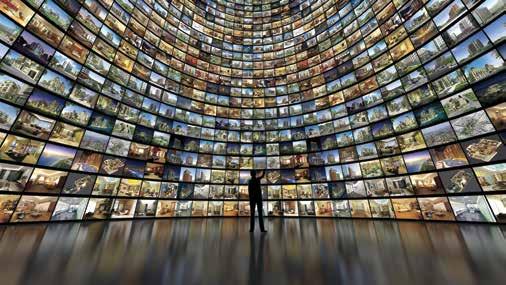
Our time is dominated by the addictive distractions of social, information and communication technology that bend and deform authentic human interconnection for commercial consumption and concentrated interest, and leave in their wake human isolation, social dysfunction, anxiety, apathy and self-obsession. We desperately need a form of antidotal architecture – an architecture capable of resisting distraction.
We need an architecture that supports resistance to addictive, demanding distraction; that supports authentic sociability absent the distortions of fabricated screens of perfection; and that supports reflection and concentration, and ultimately a meaningful communion with the natural world.
Such an architecture of concentration will not necessarily be spaces of solitude or isolation. There is, for example, a collective camaraderie of silence in the great library reading rooms that support individual yet shared concentration and focus. The challenges to our concentration and authentic sociality are all-pervasive, insidious and addictive; any resistance will then surely require projects of mutual support and community.
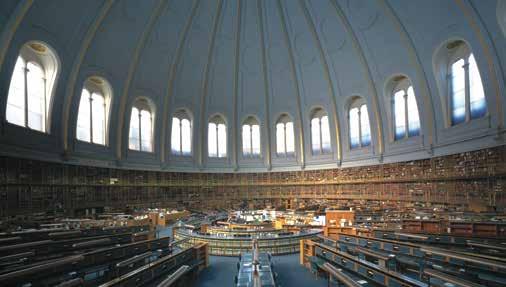
Life and Flow
To do something of any real consequence, meaning and substance, to do something well, requires focused attention. More than this, it is only through such concentration and focus that we can lose ourselves, step beyond the embattled limits of ourselves and be in the flow, in life itself.
The quantitative intensity of screen media and communications technology, combined with the placelessness and perpetual nomadic nature of contemporary existence, makes focused concentration and attention, which are the gateways to flow, almost inaccessible. In contemporary life, these doors seem to close a little more each day, but we fail to notice, our attention perpetually distracted to the extent that this gateway seems to be tragically even beyond our interest.
The architect’s task may be to wedge this doorway open, to preserve and protect spaces of authentic sociability and concentration from the infection of distraction. And then perhaps push it open a little more with every project we undertake.
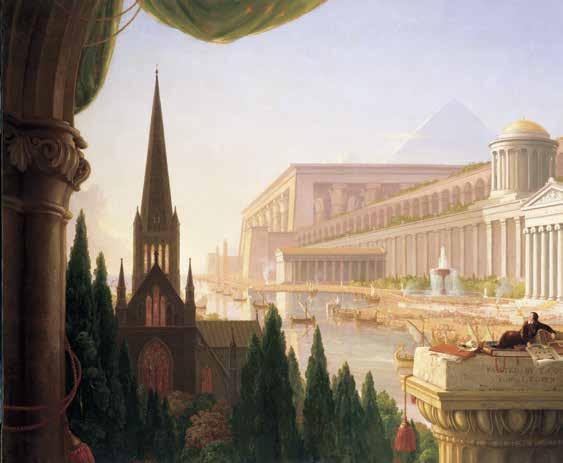

What are the dreams of the architect?
When the architect descends into deep sleep, what is it that occupies the strange space of their dreams? Is it a dream of architectural perfection, of an architecture realised on its own terms, finally free of the distortions and distractions of clients’ demands and budgets, free from the limitations of authority approvals and the objections of builders, and most of all free from the pollution of use and need, to finally realise an autonomous architecture of aesthetic perfection? Is this the dream of the architect?
The iconic painting The Architect’s Dream by Thomas Cole would seem to suggest so. It seems to capture the wistful wanting for formal perfection and independence that is surely an inevitable dream when the reality is the architect is condemned to a world of compromise in the wakeful practice of architecture.
In the foreground of this monumental painting, the architect reclines on a platform atop a vast column poised on books and plans of the craft of architecture, while visions of the great path of western architecture, Egyptian, Greek, Roman and Gothic, rise in visions of utter perfection, with nature merely a decorative counterpoint or supportive stage to such artistic purity. Cole painted this famous work in 1840 for Ithiel Town, an accomplished American architect who worked in each of these ‘styles.’ Perhaps if Cole could have included our contemporary visions of architectural future within his dream of perfection, it would have been the curvilinear white minimalist forms of a world washed and purified, clean and clear of ambiguity and complexity, that seem to be ubiquitous in our filmatic dreams of the future.
Or are these dreams of a mere architectural perfection too limited for the sleeping architect? Is it a more expanded dream of social transformational perfection that can fill the architect‘s restful mind, a dream of a perfect world, an architectural utopia to heal humanity and shape it to an ideal form – a city of towers in parkland to heal us from the crowded, dirty sites of history, or a city of a synthesised, patronising vernacular to heal us of the isolation of a city without history?
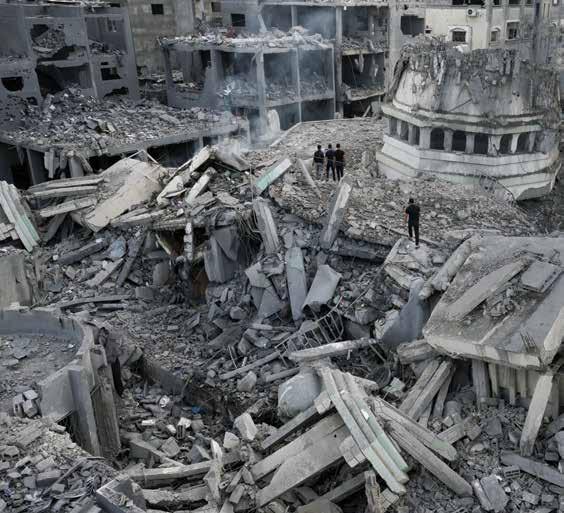
22 Palestinians inspect the rubble of the Yassin Mosque destroyed after it was hit by an Israeli airstrike at Shati refugee camp in Gaza City, early Monday, 9 October, 2023.
It is hard to think clearly in moments of extraordinary violence and destruction – hard to pull away from the scenes of needless human suffering; hard to witness, through virtual windows into the world, such disturbing events that we are powerless to stop. In such moments, we might ask: what role does the architect have in the struggle for survival and restoration?
Our daily tasks and concerns seem of little relative significance; what seemed urgent and important yesterday seems inconsequential, even frivolous today.
As architects, it may cause us to question the seemingly trivial nature of our work and concerns relative to the desperate urgency of essential human shelter and protection for those trapped within the rubble of bombed cities or for the homeless refugees fleeing the violence.
Such a desperate human need can return our attention and understanding of architecture to the most basic needs of protection, shelter, and the survival of human community. The true essential nature of architecture must be the construction of bulkheads against human suffering and oppression; this must surely come first among the duties of the architect – roofs to keep the rain and the cold from those struggling in the ruined cities and towns, and walls to protect and defend against needless violence.
The essentiality of human protection and shelter as the primary mission of architecture might make us think of our own rarefied architectural concerns as profligate and relative extravagances.
Perhaps we might even think that architecture, as we conceive it, far beyond the essentials that we take for granted, is itself an indulgence, reserved for those who have the fortune and luxury to live without such existential fear of violence and oppression.

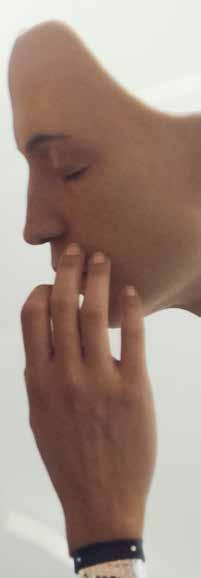
Consciousness has long been something of a blind spot in our science, hard to deny but easy to ignore; hard to explain, yet easy to intuit.
In recent years, we have seen a renewed focus on how consciousness might be explained and how central it may be to our understanding of our world and the nature of our existence.
Perhaps there is also a growing sense of urgency in understanding consciousness beyond a mere human consciousness as we attempt to come to terms with the ethical and environmental issues of our time.
As we try to understand how we value forms of life or even define life, we must extend it not only to the breadth of the natural world and natural systems, but also our own transformations of our world in the form of our inventions, automations, manufacturing, and particularly in the form of artificial intelligence.
All these developments press upon our limited definitions of consciousness.
In our modern world, we have tended to divide its inhabitants into two groups, those possessing consciousness and those who do not; more simply put, ‘persons’ and ‘things.’ Persons are afforded significant protections and rights, while non-persons or things are assigned almost none and are viewed in purely instrumental terms, their existence reduced to their use-value by the first group; they are there to be used and used up.
The boundary between these two groups is surprisingly subtle and often rests on relatively small differences.
Material Locale
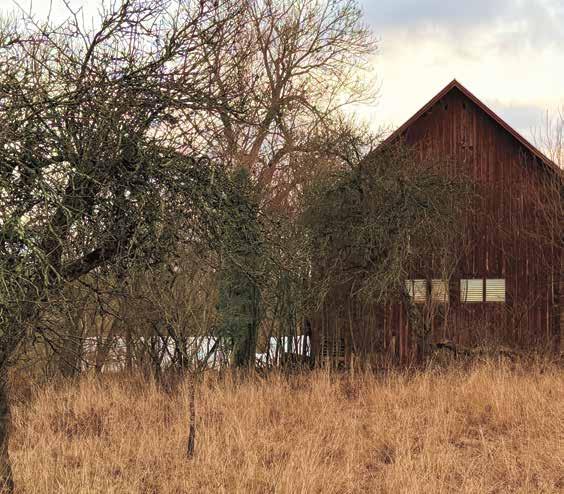
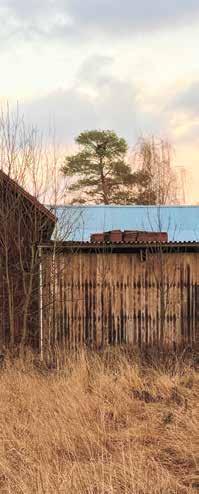
Falun is a town of remarkable material authenticity, approximately 250 kilometres north of Stockholm. At the centre of the town and the primary source of its prosperity is the copper mine Falu Gruva, which has operated for more than a thousand years and at its peak produced two-thirds of Europe’s copper. The mine and the town of Falun sit in a vast area of pine forest fed by a series of idyllic lakes.
The architecture of Falun, the human dwelling, is that of the ‘Red House,’ röda stugan, arranged in rational grids interwoven with parkland and bisected by the river that connects Lakes Tisken and Varpen. These village buildings, barns and farmhouses are all made from the materials of the land of Falun, close, essential and immediate. They are a wooden architecture of walls and pitched roofs, harvested from the local pine forest. The distinctive red colour finish is a paint, Falun Red, Falu Rödfärg, made from the tailings of the copper mine with an iron oxide pigment, mixed with linseed oil, with the copper, iron ochre, silica and zinc forming a preserving, protective coating for the timber.
This simple, materially consistent, well-proportioned and constructed ‘red-house’ architecture creates a cohesive, culturally authentic and meaningful settlement that has become characteristic of the region of Dalarna and indeed Sweden.
International modernism became hegemonic, flattening cultural differentiation and human connections to the land while undermining the environment and First Nations communities through ignorance and indifference. First Nations peoples all over the world were oppressed, disempowered and enslaved, forcibly alienated from the land of which they are a part – land that was delineated into Euclidean geometries of private ownership for food production. The rational empowered enlightenment brought an entirely different attitude and understanding to the land and the life of the natural world of the First Nations people. It was reduced to a mere resource devoid of all meaning, there only to be used and exploited.
The forcible alienation of First Nations people was complemented by a slow and insidious sense of alienation in the colonisers who forever struggle to form a meaningful interrelationship with the land they occupy, use up and degrade. But this alienated Western humanity was intoxicated with scientific progress and technology, and refused to look back at the wreckage, focused only forward, and unleashed technological and scientific innovation on a scale that, in the twentieth century, almost killed us all.
2 Martin Heidegger, ‘Building Dwelling Thinking’, trans. A. Hofstadter, in Poetry, Language, Thought (New York: Harper & Row, 1971), 145–61.