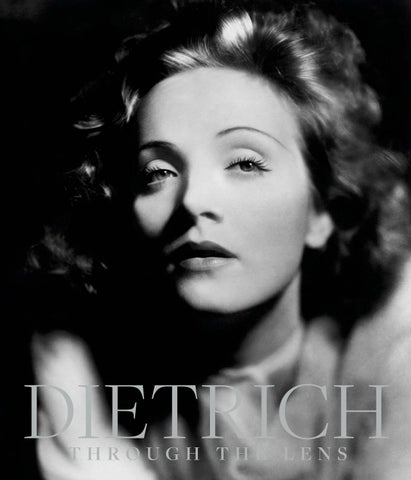
DIETRICH
THROUGH THE LENS
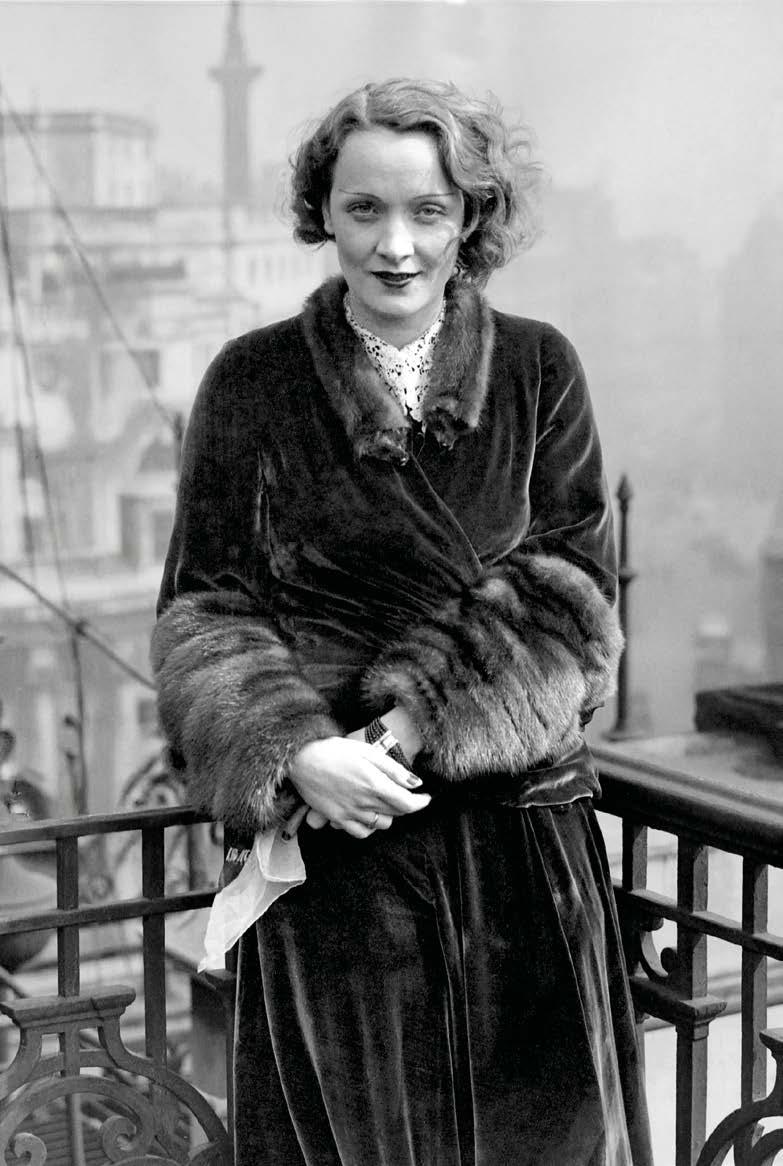
Right: Marlene Dietrich’s first photograph in London, March 1931
Introduction by
Gail Crowther
4–5
Finding Marlene Dietrich by Terence Pepper
6–55
PORTFOLIOS:
Eugene Robert Richee
56–81
Don English
82–97
William Walling Jr
98–109
Eve Arnold
110–131
Lawrence Fried
132–157
Norman Parkinson
158–171
Douglas Kirkland
172–181
Terry O’Neill
182–197
Photographers’ Biographies
198–199
INTRODUCTION
Gail Crowther, author and academic
“I have been photographed to death.” – Marlene Dietrich
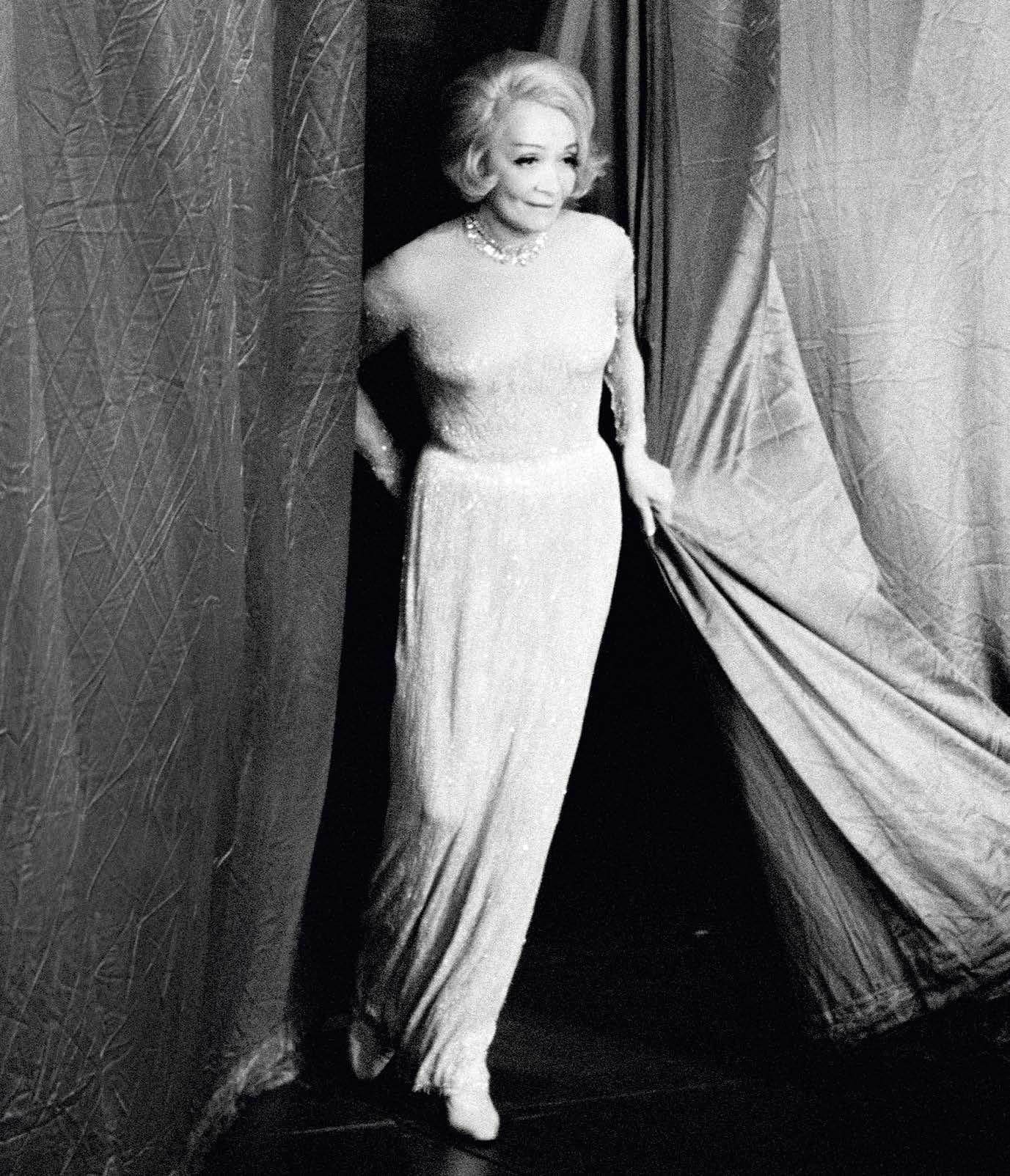
As though carved from a column of ivory, shimmering and resplendent, Marlene Dietrich emerges from behind the stage curtains of a London theatre, roses strewn at her feet. It does not matter that the year is 1975, because photography has the power to freeze time, to negate chronology, leaving us in the ‘there-then’. Marlene is as vivid and shimmering as she was when Terry O’Neill pressed his camera shutter and immortalised her curtain call.
The collections of photographs in this book each offer their own celebration of Dietrich. Andy Warhol claimed that the best thing about a picture is that it never changes, even when the people in it do. Yet we see across these pages Dietrich changing constantly: from a young actor in Berlin during her early years, through to her Hollywood life... and on to her cabaret career performing in the Café de Paris and as ringmaster hosting a circus show... then her career as a recording artist in the studio, at premieres, and on the stage... along with examples of more traditional portraiture. As well as Terry O’Neill, photographers such as Eugene Robert Richee, Don English, William Walling Jr., Eve Arnold, Lawrence Fried, Norman Parkinson and Douglas Kirkland capture Dietrich at these very different moments in her life. And
capturing her image was not as straightforward as it sounds. Having been taught how to light herself by director Josef von Sternberg during their first collaboration The Blue Angel (1930), Dietrich perfected the art of knowing exactly how she wanted to look, usually taking charge of not only her lighting, but her clothes, hair, make-up, and even post-photographic production. Beware the photographer who attempted to shoot her image without her consent, as a member of the paparazzi discovered at his peril in Orly Airport, Paris, in 1975. Dietrich attacked him with her handbag!
Yet, as these photographs show, by controlling every aspect of her image, Dietrich was able to successfully build an immaculate, untouchable persona. Eve Arnold was summoned to a recording studio in 1952 to photograph Dietrich laying down the songs she had been performing to Allied soldiers during the war. At around midnight, Dietrich burst into the studio with the actor Jean Gabin on one arm and her astrologer on the other. Dressed in a cocktail dress and heels, and recording throughout the night, Dietrich’s seemingly off-guard, at-work poses look a little more deliberate when one analyses her perfectly constructed shapes, legs and hair.
John Berger argues that the strangeness of photography lies
I have been photographed to death
MARLENE DIETRICH
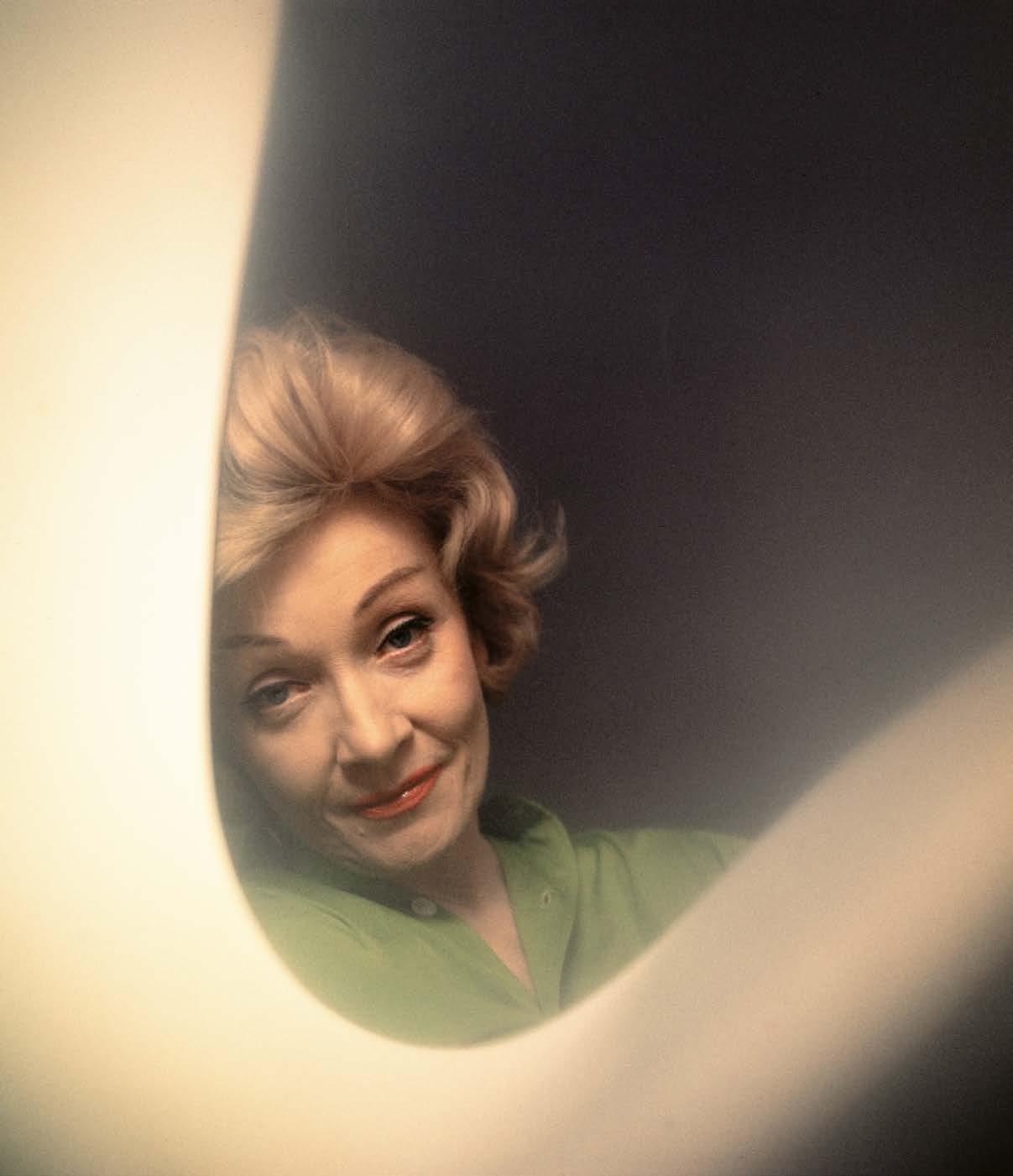
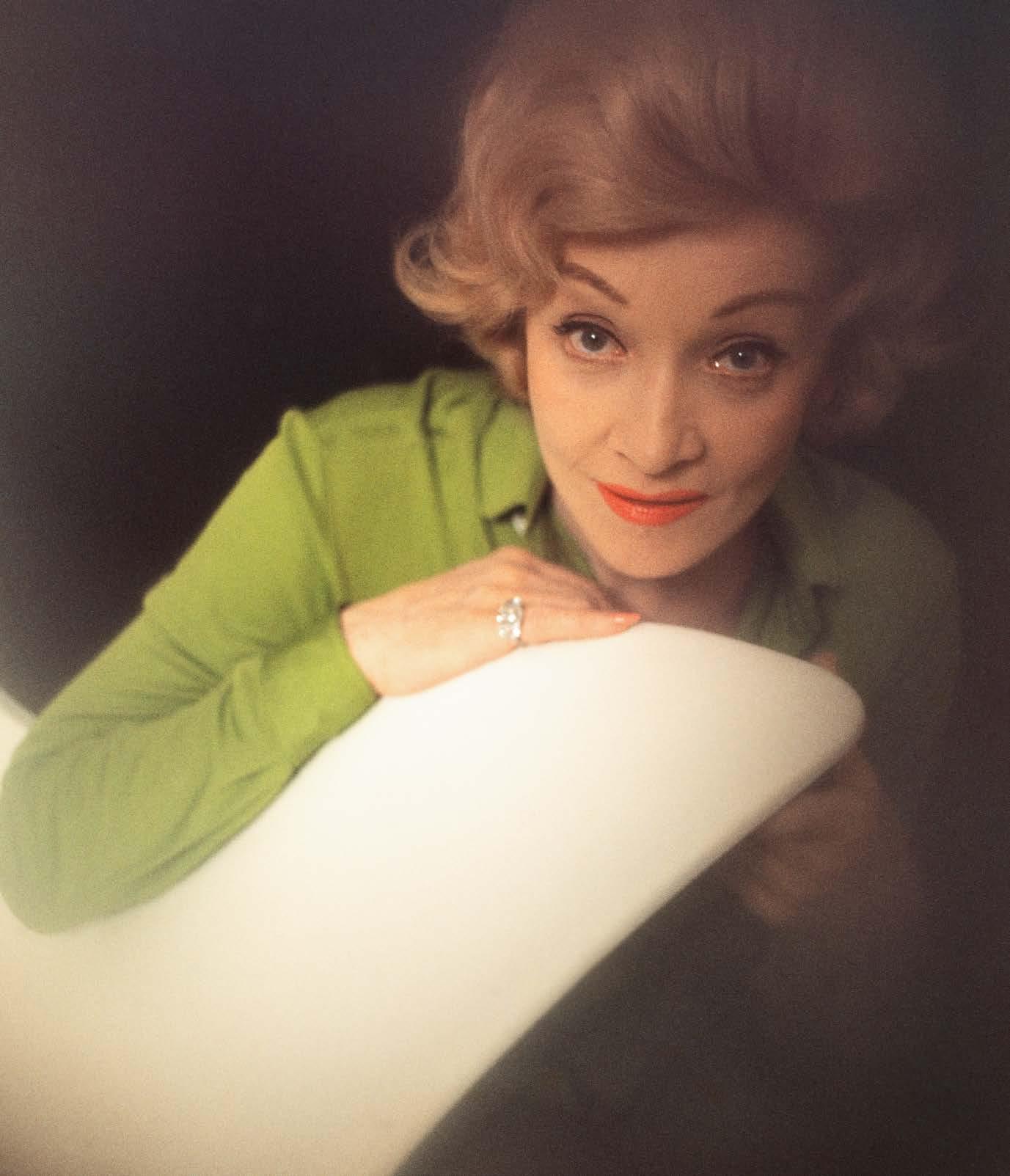
in its primary raw materials of light and time. Yet one feels that these images have a third raw material – Dietrich herself, orchestrating all three elements to produce, along with the photographer, something rather wonderful. It is more than an activity, or a moment, or even a life. It is even more than the power of storytelling. Perhaps, like all great art, there is an element of mystery; not by chance, for great photographs, like all art, are carefully constructed. But this does not mean that they cannot equally capture a flare of something elusive. Looking at Douglas Kirkland’s portrait of Marlene taken on New Year’s Day, 1961 – resplendent in green, every curve, shape, even the position of her hands – it is hard to say what makes this a great image, beyond the fact that it just is.
Photography, too, has a purpose beyond capturing a likeness or a constructed image. It does not exist in a vacuum but plays a powerful part in social, cultural and political moments. An individual also passes through these moments, as Marlene herself did. Her career spanned decades, took many different forms and moved across continents. During the war years, she performed around much of the world and suffered the trauma of being disowned by the country of her birth. On repeated occasions she explained why she could never support Nazi ideology.
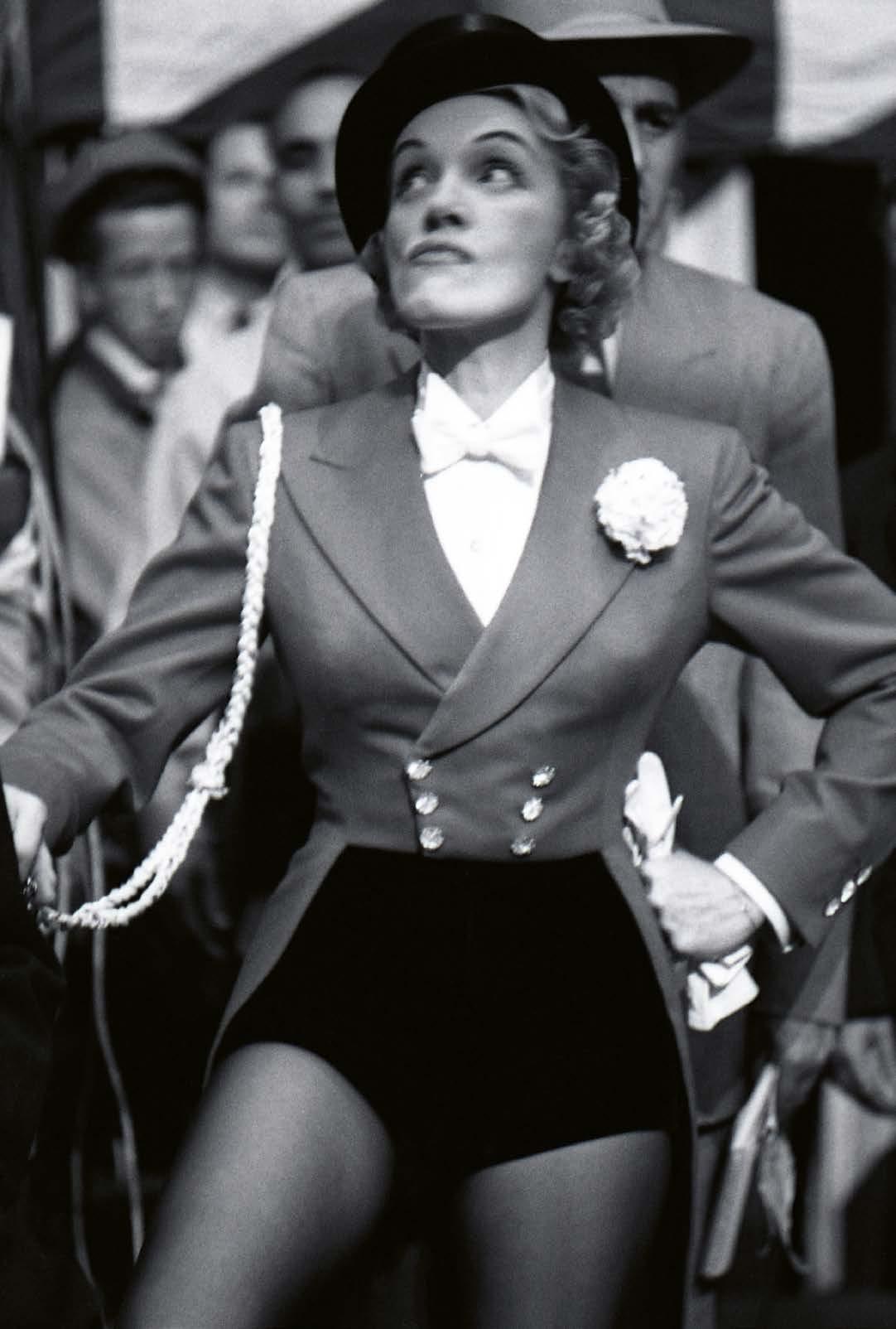
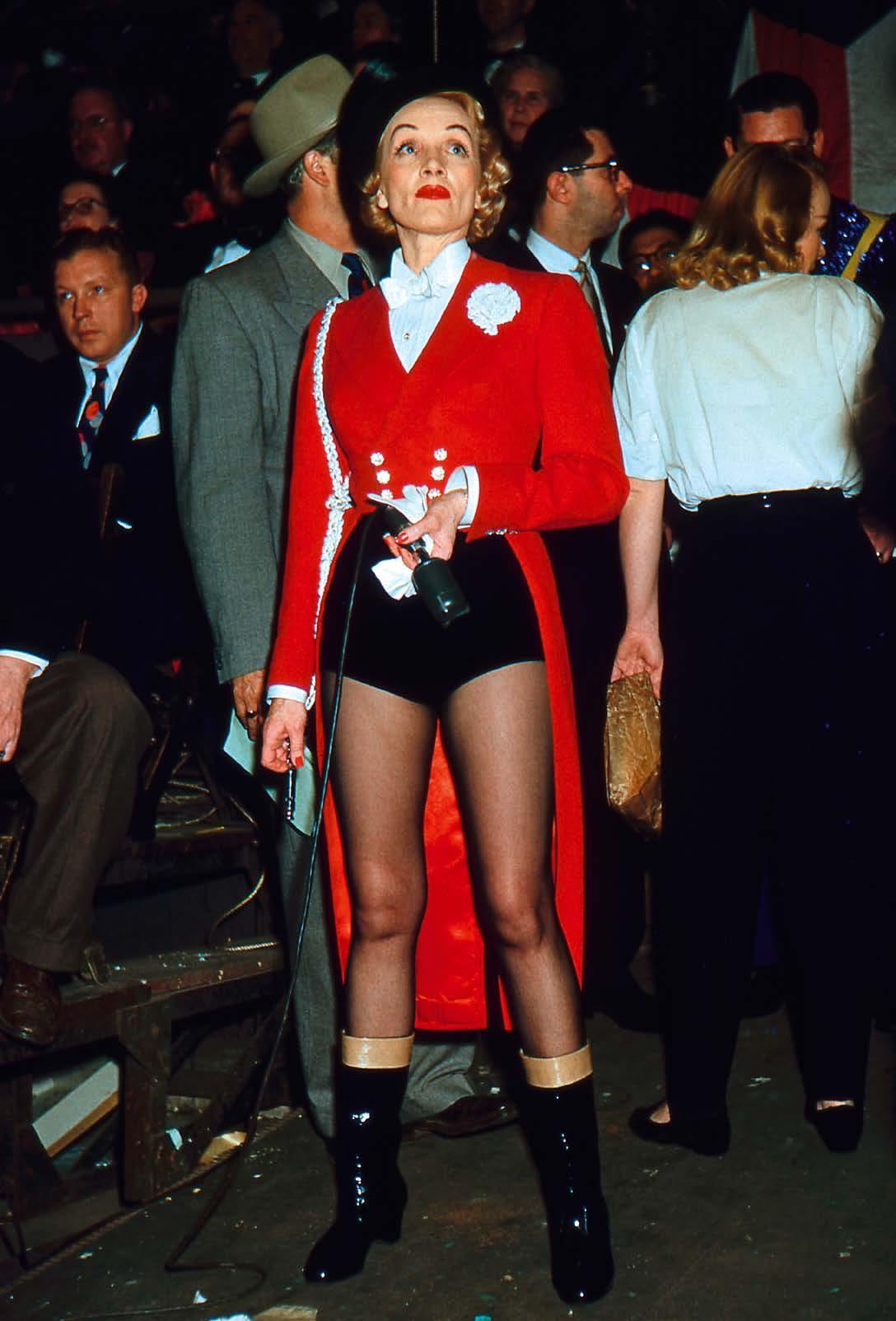
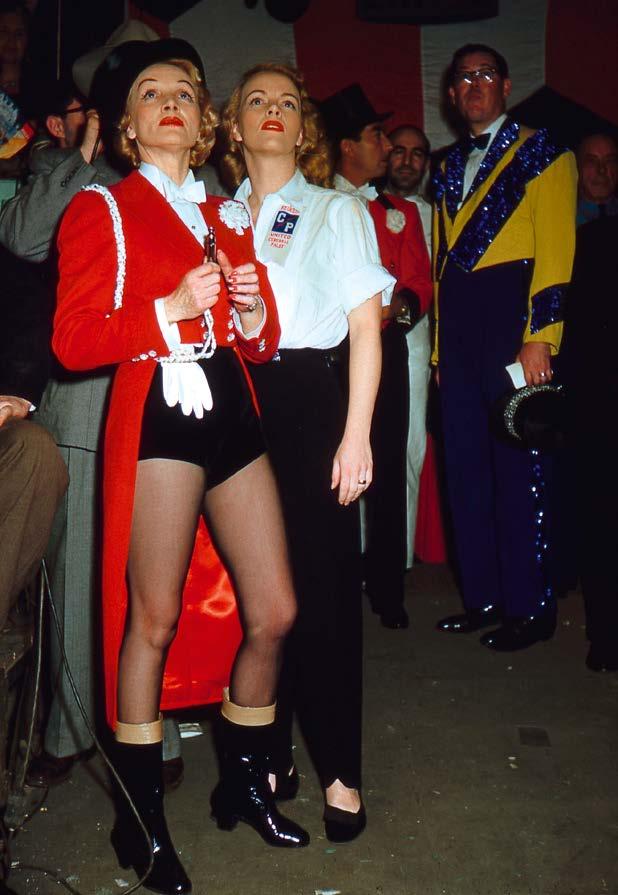
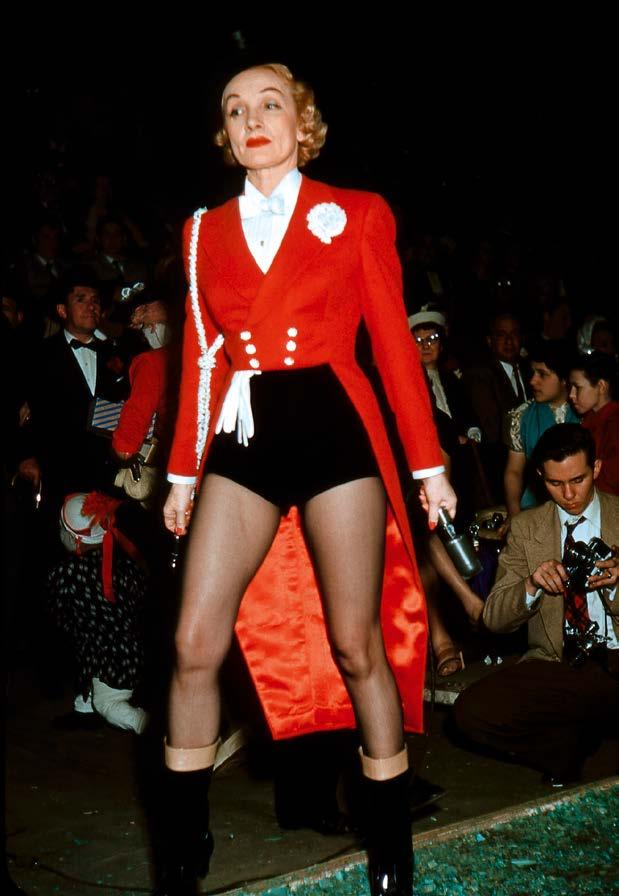
This book does justice not only to the longevity of her career but the diversity of her talent. If we need evidence of this, it can be found in Lawrence Fried’s 1954 images of Dietrich as ringmaster at a cerebral palsy benefit performance of the Ringling Brothers and Barnum & Bailey Circus in Madison Square Garden. No doubt whipping everyone into shape, Dietrich is simply dazzling in jaunty black top hat, red tails, and white corsage. There are echoes of Norman Parkinson’s images from the Café de Paris, but here we have a more playful Dietrich – in some shots, quite literally clowning about. Eugene Robert Richee offers us spectacular studio shots from Dietrich’s Hollywood debut playing Amy Jolly in Morocco (1930). Clad in a tuxedo and top hat, smoking a cigarette, Marlene gazes provocatively into the camera lens. Don English and William Walling Jr., also working in a studio setting, reveal a blonde, beautifully lit Dietrich wrapped in a black feather boa or a polka-dot scarf.
Geoff Dyer felt that photography was a bit like a seesaw tipping us into the past and then bringing us back into the present. As you flick through the pages of this book, enjoy the dizzying time-travel where Marlene will always be waiting, seductive cigarette at the side of her mouth, inviting you into her glamour and mystery.
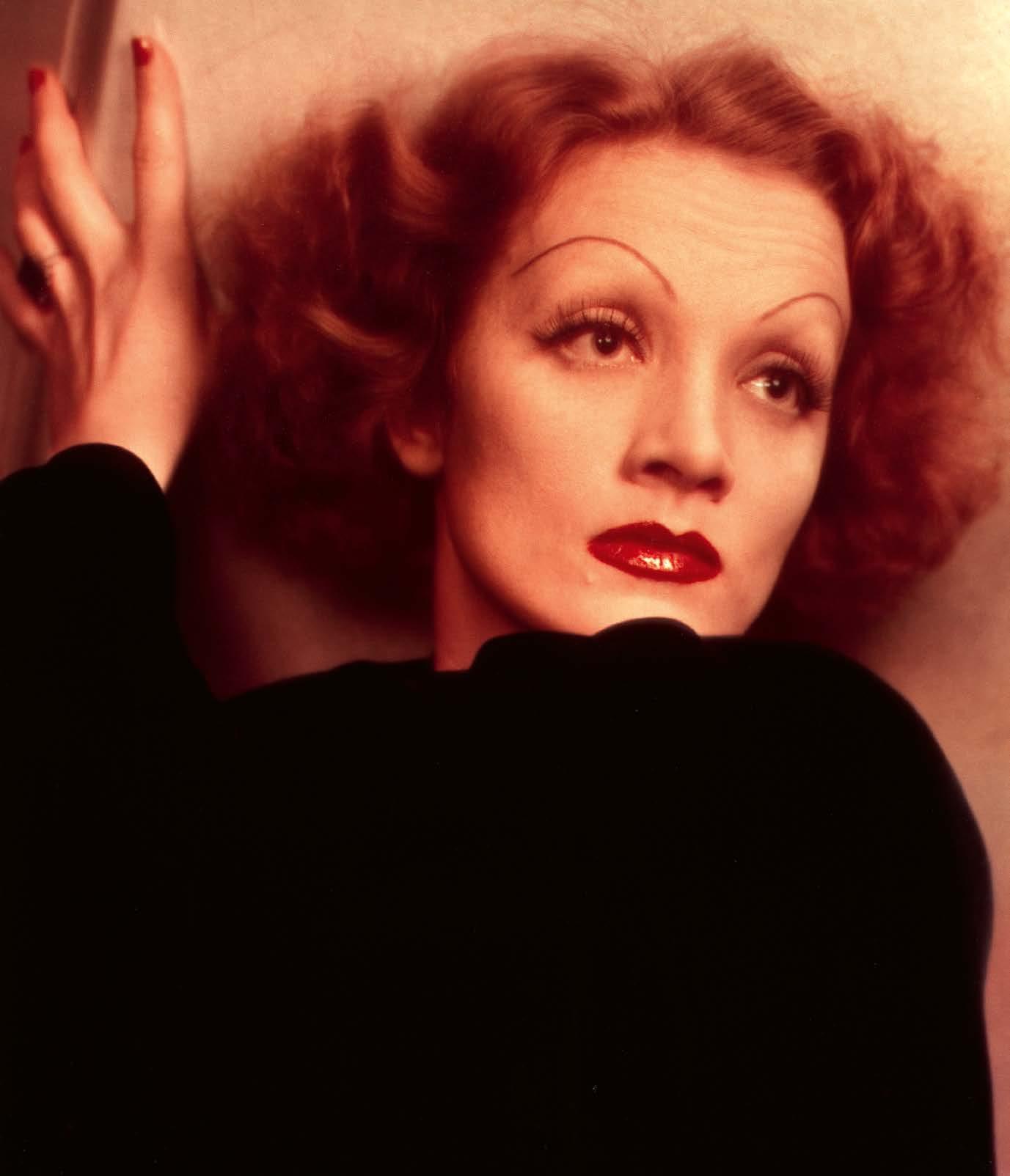
Left: In late 1935, Dietrich was photographed by Australian-born photographer Anton Bruehl (1900–1982) for ‘Vanity Fair’ magazine. Bruehl travelled to Hollywood to shoot Dietrich in colour, just as she was completing work on ‘Desire’, and the resulting portrait first appeared in the December issue. It has since become iconic, featuring on several book covers
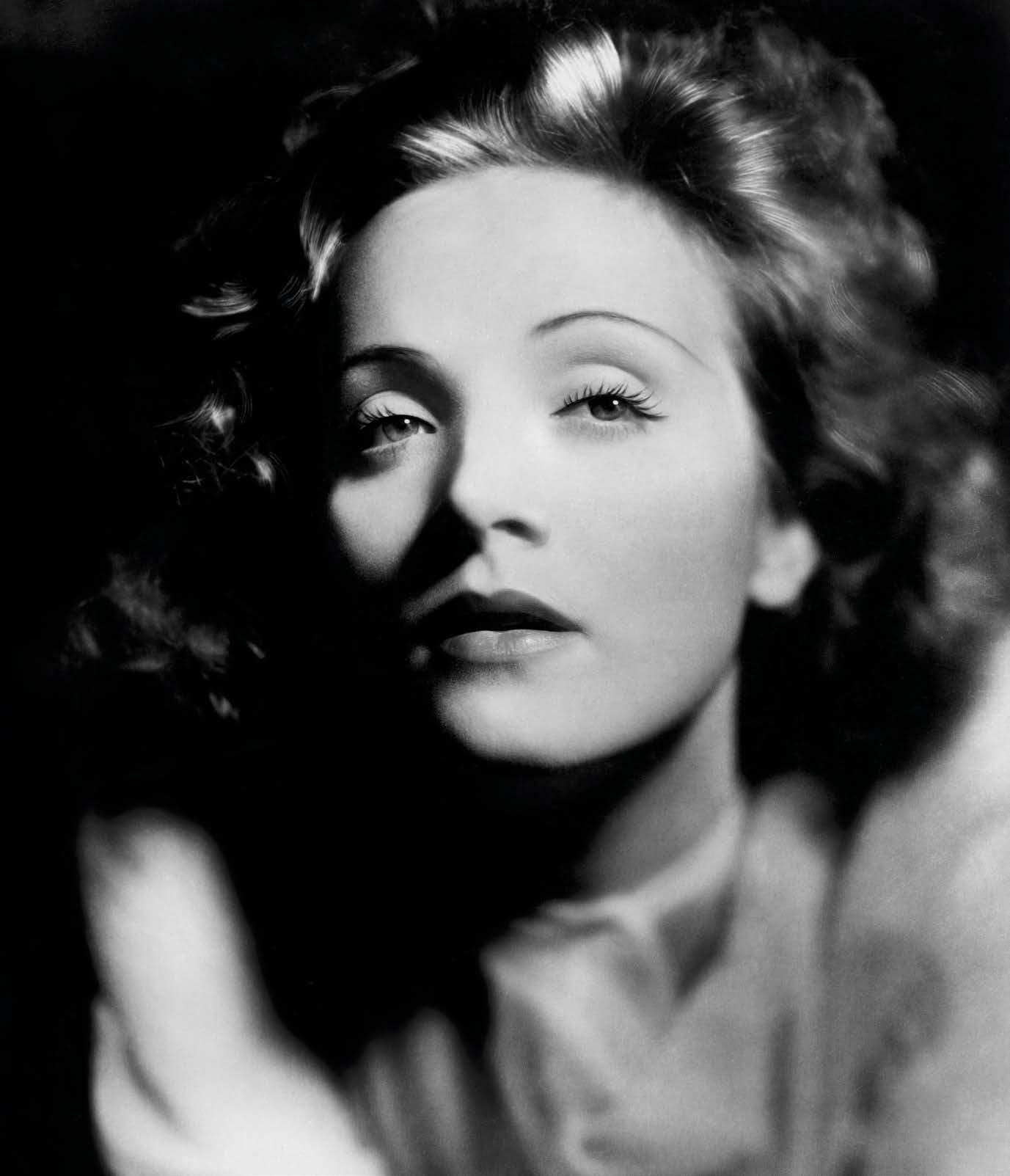
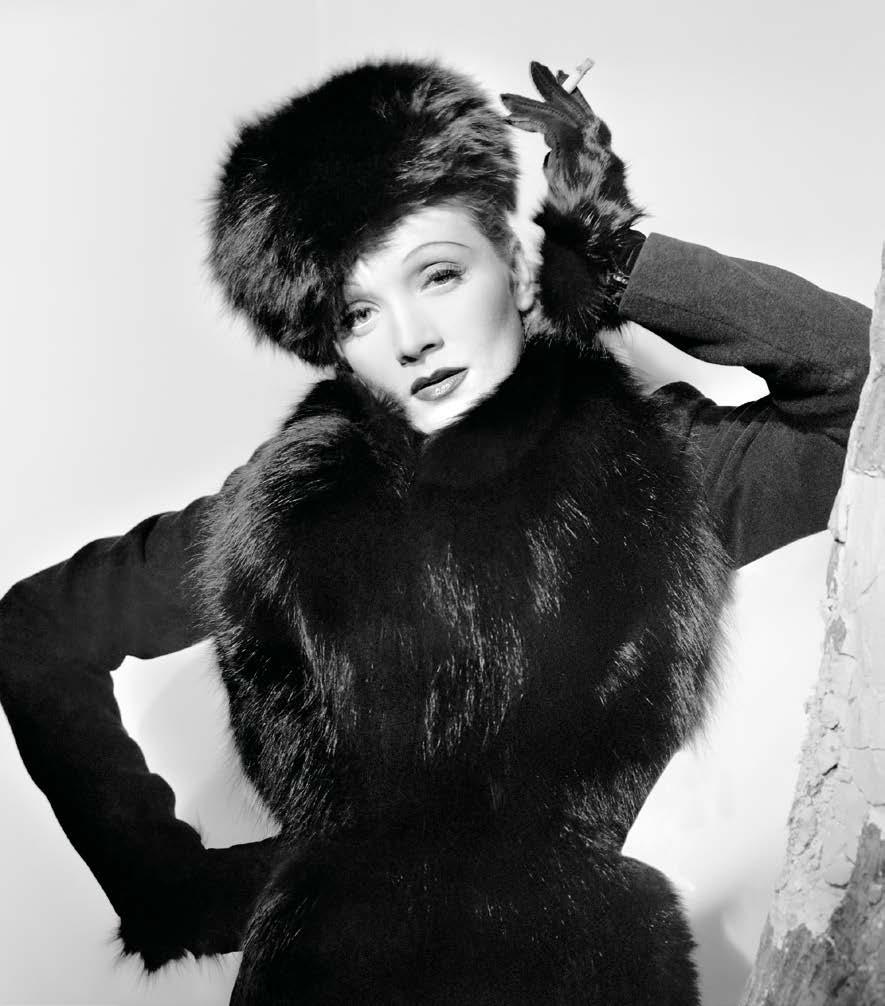
Above: Cecil Beaton (1904–1980) photographed Dietrich during ‘Knight Without Armour’s’ production (London Film Productions) at Denham Studios, Buckinghamshire, with the resulting image published in British ‘Vogue’ in October 1936, alongside a Beaton co-written article with the headline: ‘Hitch Your Wardrobe to a Star’. Beaton wrote: ‘Hers is the beauty of quietness, of glances and movements so occasional that they have the rarity of jewels flashing in a dark place... Now she has changed into her Schiaparelli outfit, enormously furred, with a hat in the magnificent Moscow manner: her eyes are drowned in the limitless Russian horizons. That new silhouette, so bulky and modern, can still possess ultimate glamour’
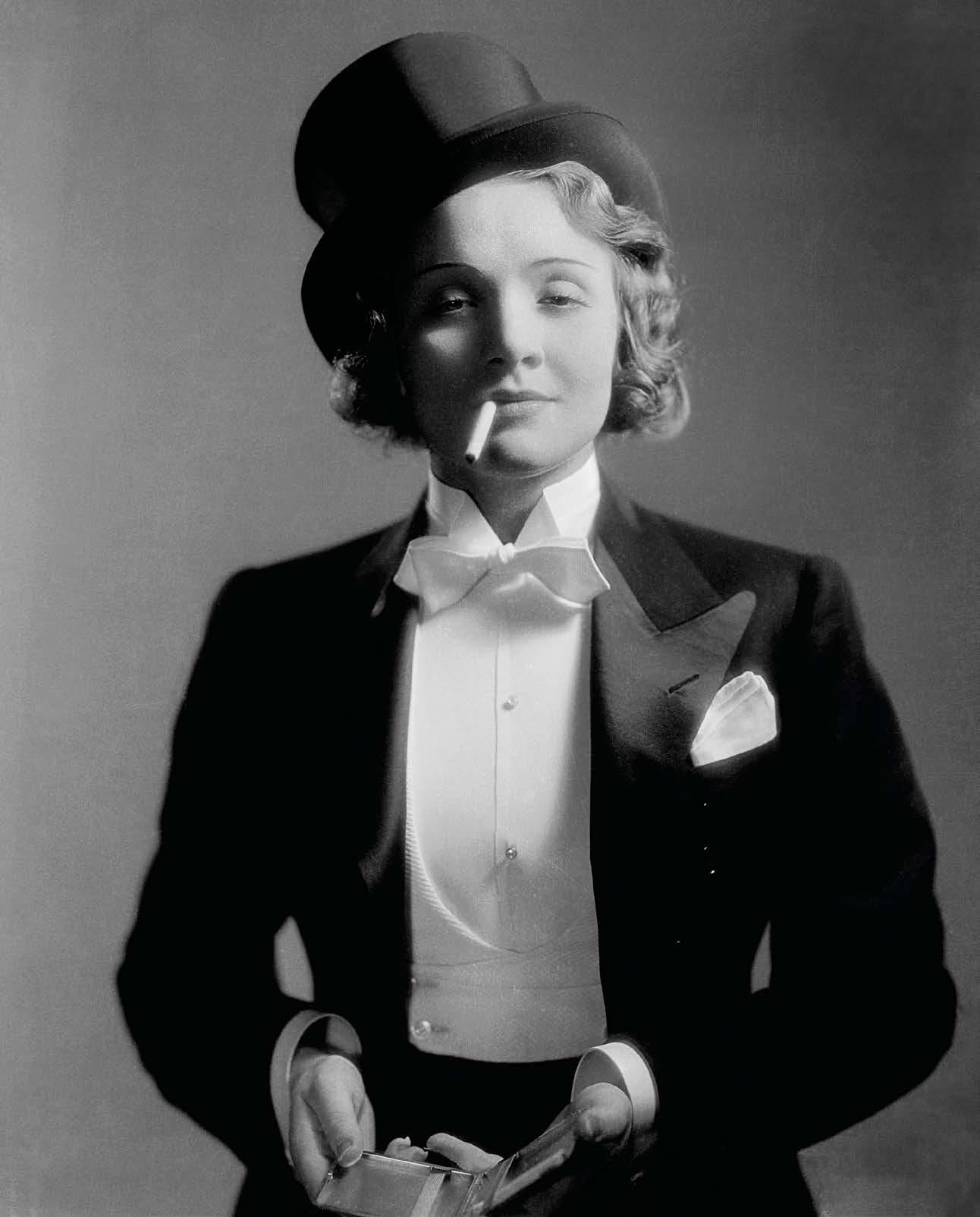
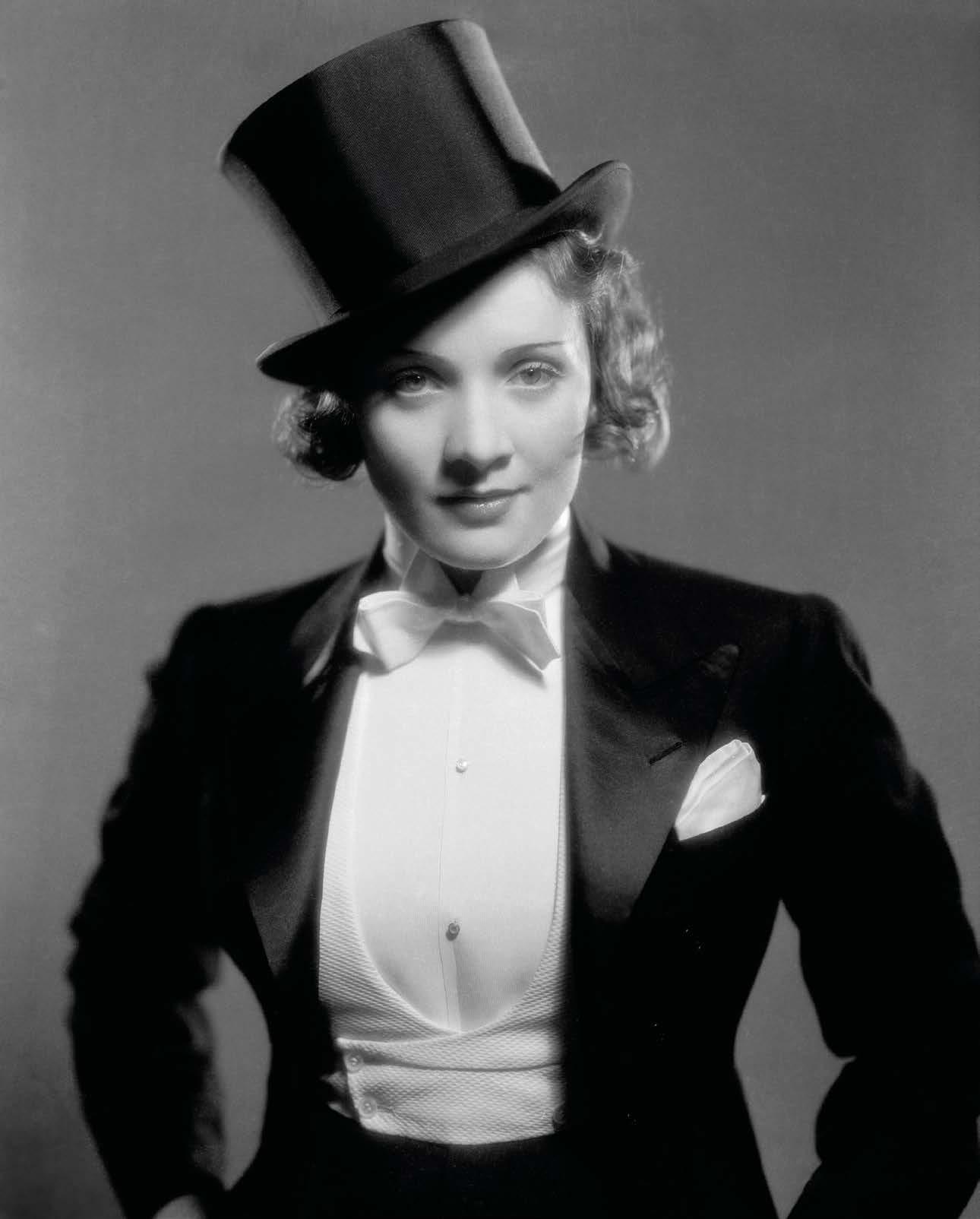
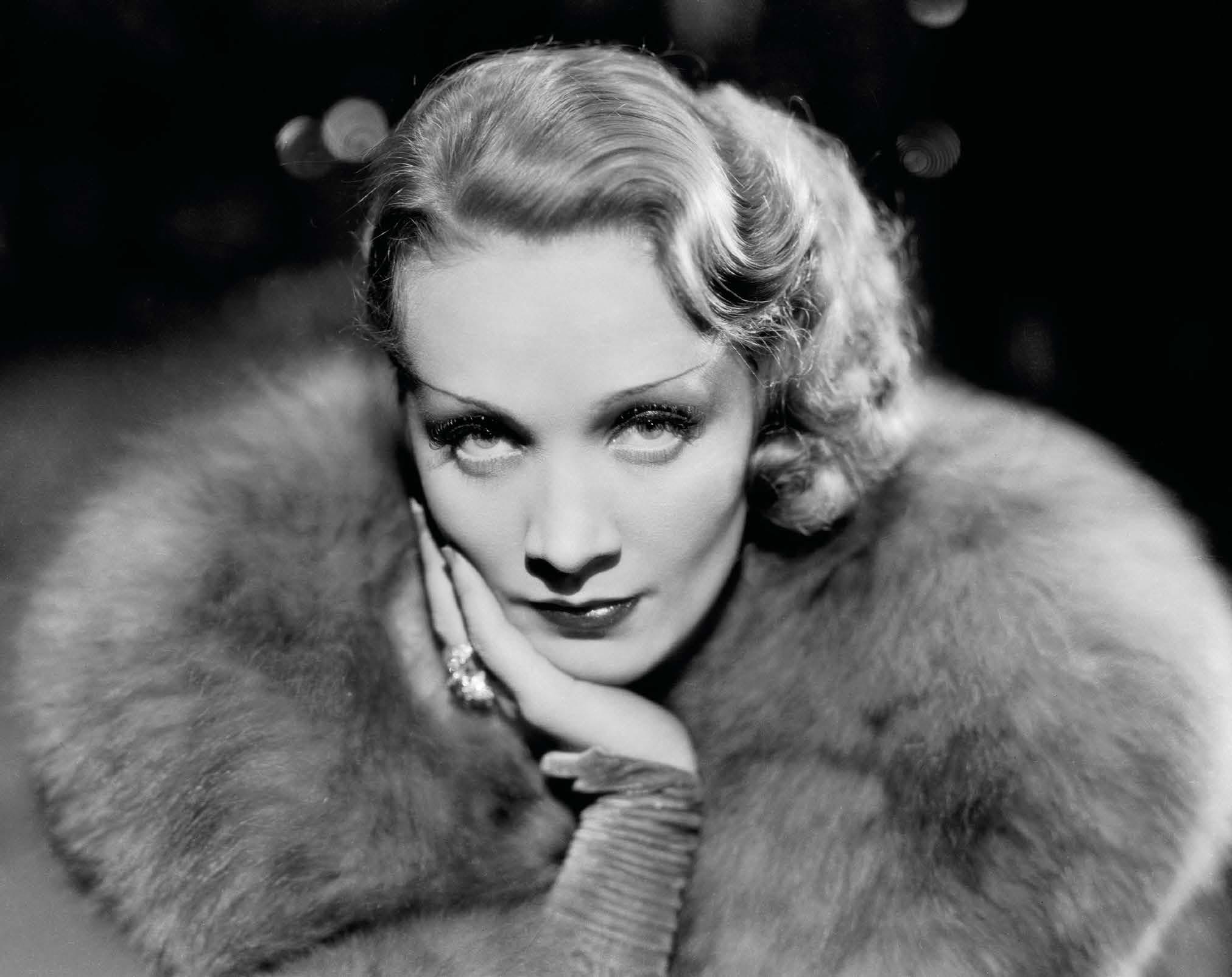
William Walling Jr. (1904–1983), also known as ‘Richard Walling’, was an American photographer noted for his stylish 1930s and 1940s portraits of movie stars. Walling was born in Brooklyn, and his father, Will Walling, was an actor of the silent era who inspired Walling to pursue a brief career as an actor himself.
According to a friend of his, Walling began work as a caretaker at Famous Players–Laskey (later to become Paramount Pictures) after being hired by the legendary director Cecil B. DeMille. Seven days a week, Walling pushed a mop over concrete floors as wet 35mm movie films drip-dried above his head. He soon worked his way up through the photography department, becoming an assistant cameraman on the William Fox Sunshine Comedies. When the studio required a juvenile lead to play opposite Janet Gaynor, they auditioned every youngster on
the lot. Walling got the job and worked as a silent screen actor between about 1926 and 1929.
By the end of the 1920s, the silent movie industry was drying up due to the economic crash and the advent of the ‘talkies’. Fortunately, the photographer Elmer Fryer, who worked at Warner Bros. Pictures, called Walling and offered him a job as a photographer at the studio. He went on to work for Paramount and Universal Studios.
It was during his tenure at Paramount that Walling photographed Marlene Dietrich. Their sessions were usually conducted under the supervision of Josef von Sternberg. One of Walling’s most striking shots of Dietrich was taken during the filming of von Sternberg’s picture The Devil is a Woman , which was significant for being the last collaboration between Dietrich and von Sternberg.
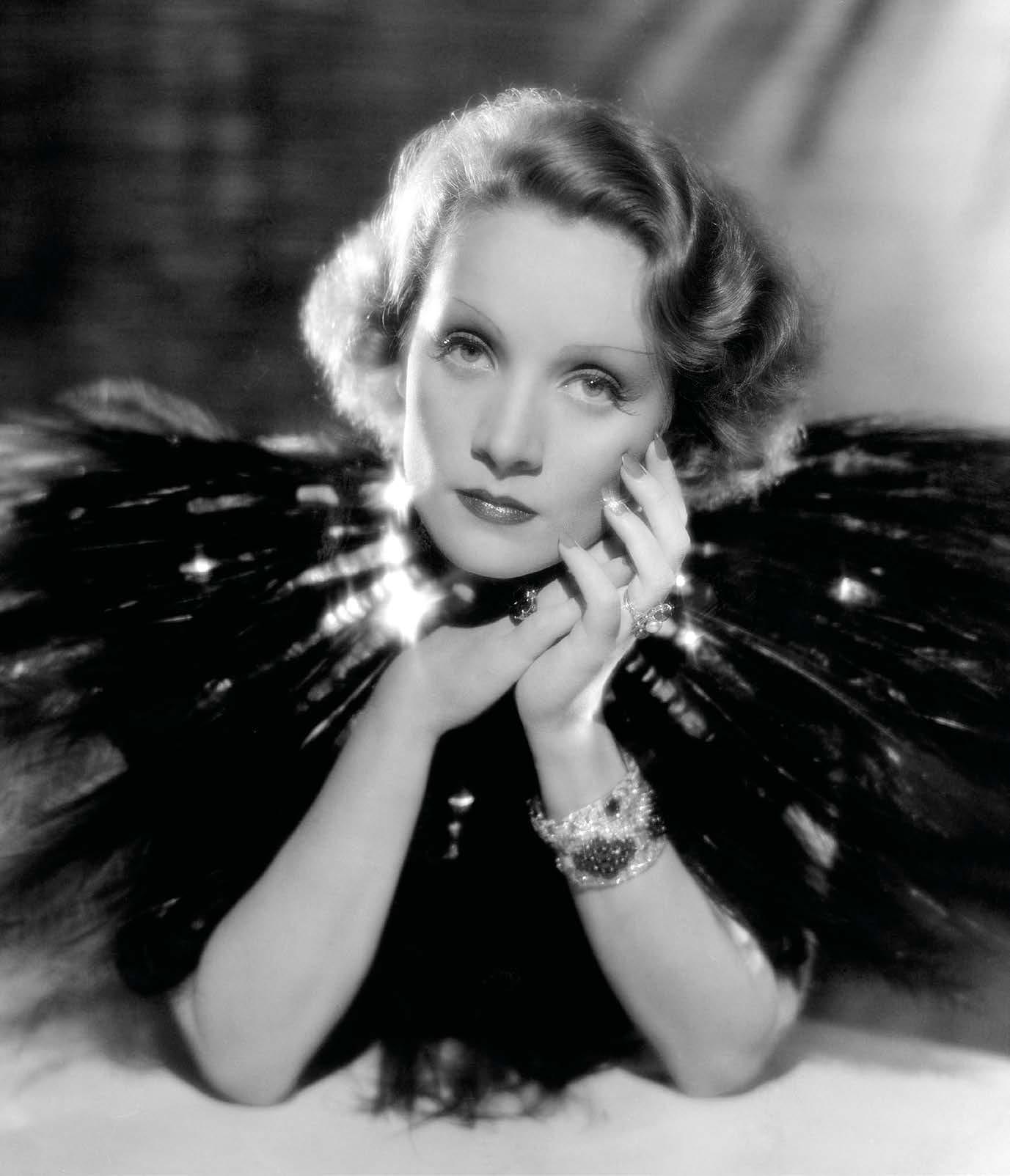
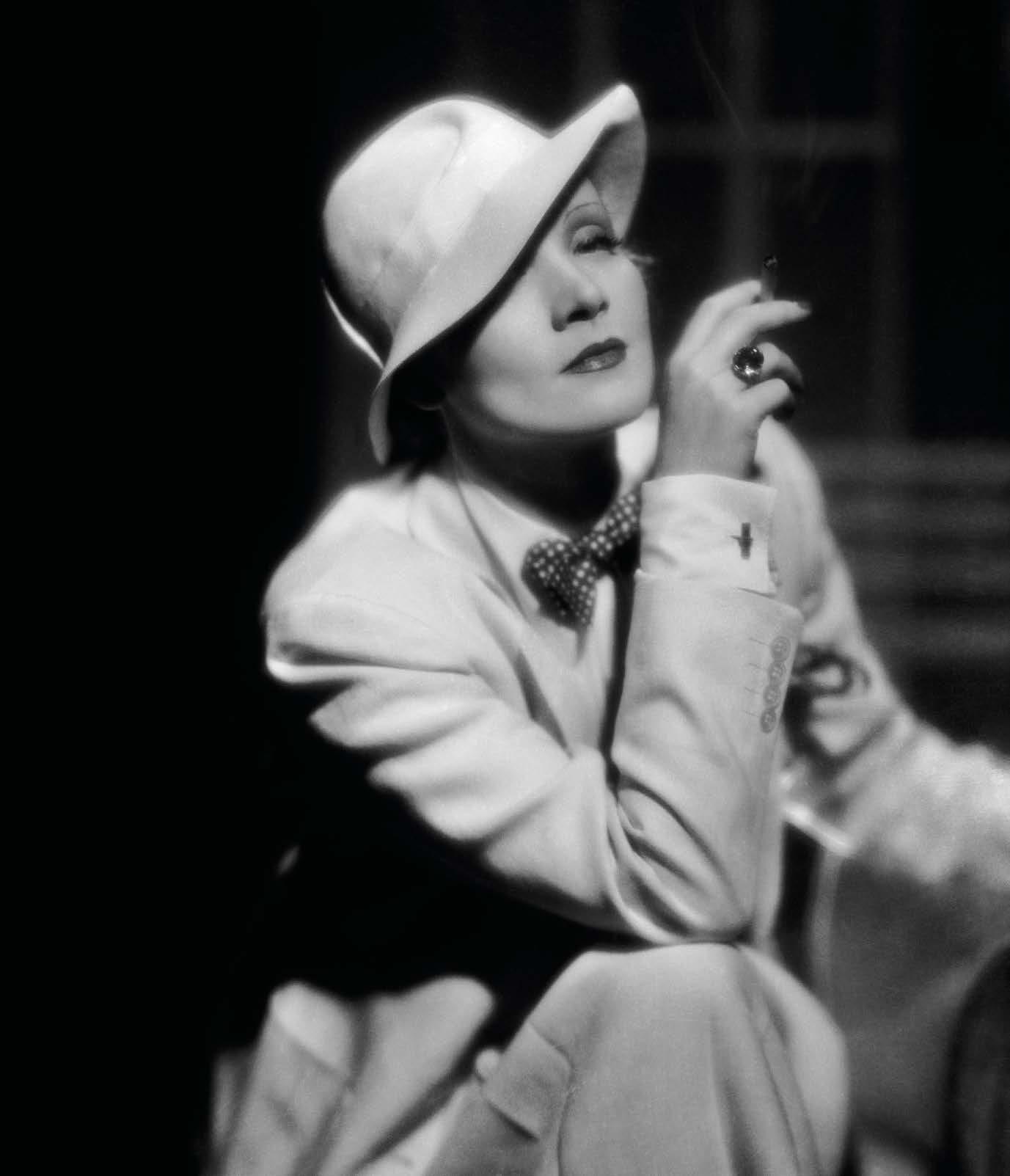
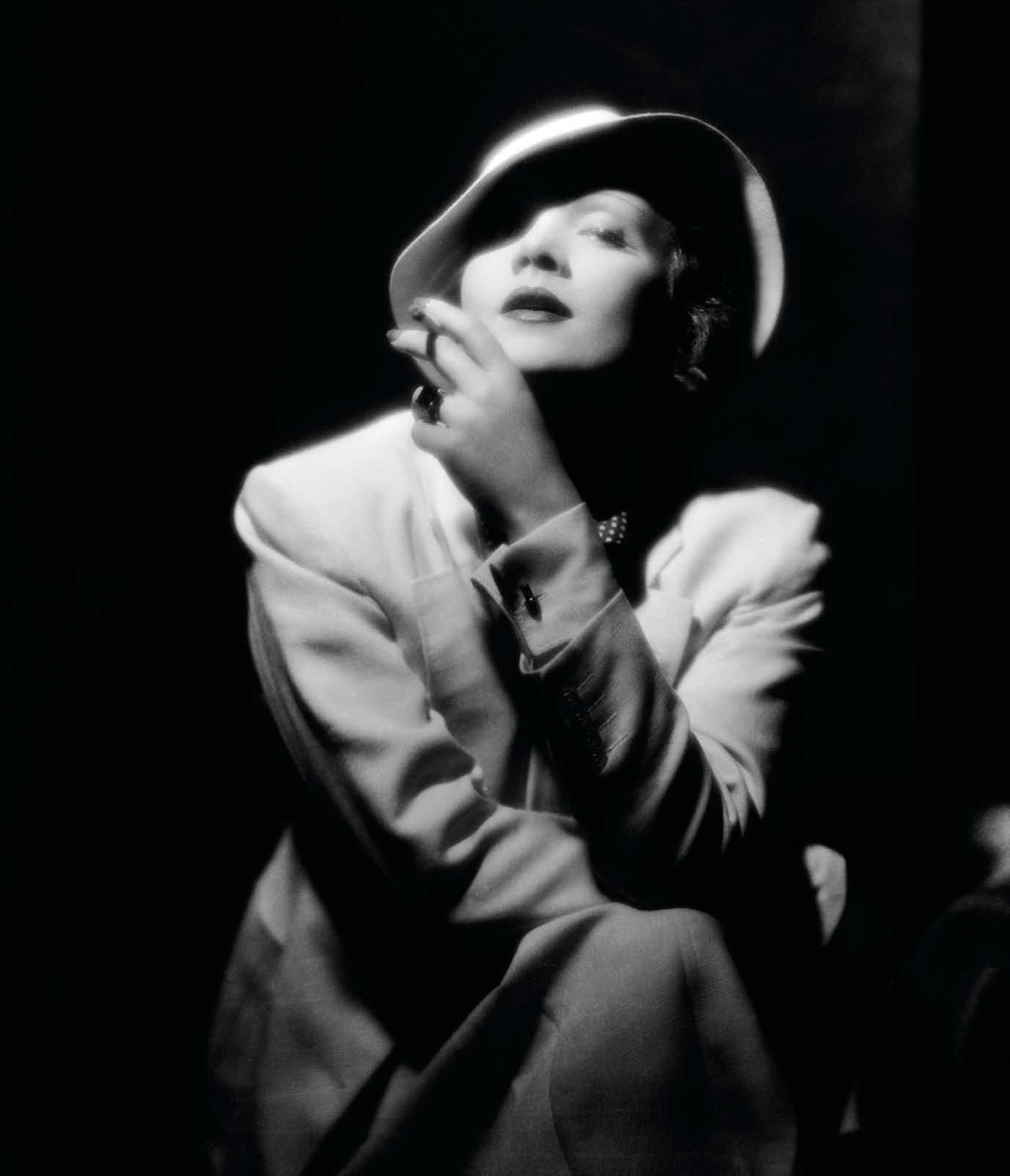
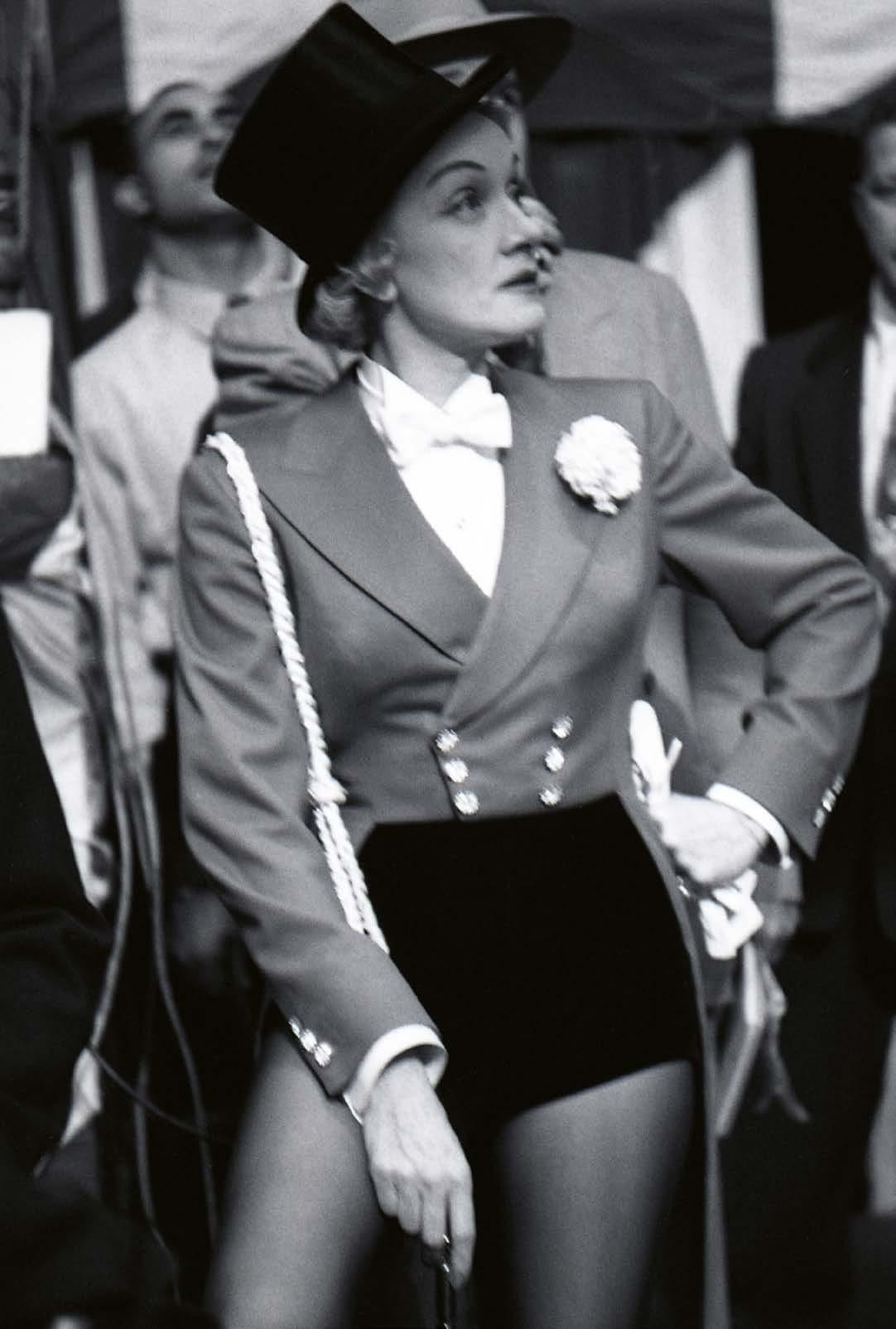
Marlene Dietrich remains one of the most enigmatic figures of twentieth-century cinema. This collection brings together rare and iconic photographs spanning her extraordinary career, from glamorous studio portraits and film-set moments to intimate encounters away from the spotlight.
ESSAY BY: Terence Pepper OBE
INCLUDING PORTRAITS BY WORLD RENOWNED PHOTOGRAPHERS:
Clarence Sinclair Bull
Cecil Beaton
George Hurrell
Lin Mayberry
Lee Miller
Cornel Lucas
Angus McBean
John Engstead
PORTFOLIOS BY:
Eugene Robert Richee
Don English
William Walling Jr
Eve Arnold
Lawrence Fried
Norman Parkinson
Douglas Kirkland
Terry O’Neill