RICHARD STRAUSS – GUNDULA JANOWITZ, BERLINER PHILHARMONIKER, HERBERT VON KARAJAN
KRAFTWERK
RAY BARRETTO
AVERAGE WHITE BAND (AWB)
PHILIP GLASS
EDGAR FROESE
BULGARIAN STATE RADIO & TELEVISION FEMALE
VOCAL CHOIR
TELEVISION
STEVE REICH
LINTON KWESI JOHNSON
1980s
GLENN BRANCA
LAURIE ANDERSON
ROBERT WYATT
VARIOUS ARTISTS
PETER FRAMPTON
TAHRA MINT HEMBARA PIXIES
1990s
MORRISSEY
BRITPOP? NOT QUITE…
NINE INCH NAILS
AIR
2000s
GRANDADDY
SPLATTERCELL (DAVID TORN)
THE LANGLEY SCHOOLS MUSIC PROJECT
THE POLYPHONIC SPREE
BUSI MHLONGO
ARCADE FIRE
THE “5” ROYALES
LCD SOUNDSYSTEM
DANIEL JOHNSTON
TV ON THE RADIO
KEVIN AYERS
MARIA SCHNEIDER ORCHESTRA
DONNY McCASLIN
ALGIERS
KENDRICK LAMAR
(OR CHOOSING YOUR FAVOURITE BOWIE ALBUM)
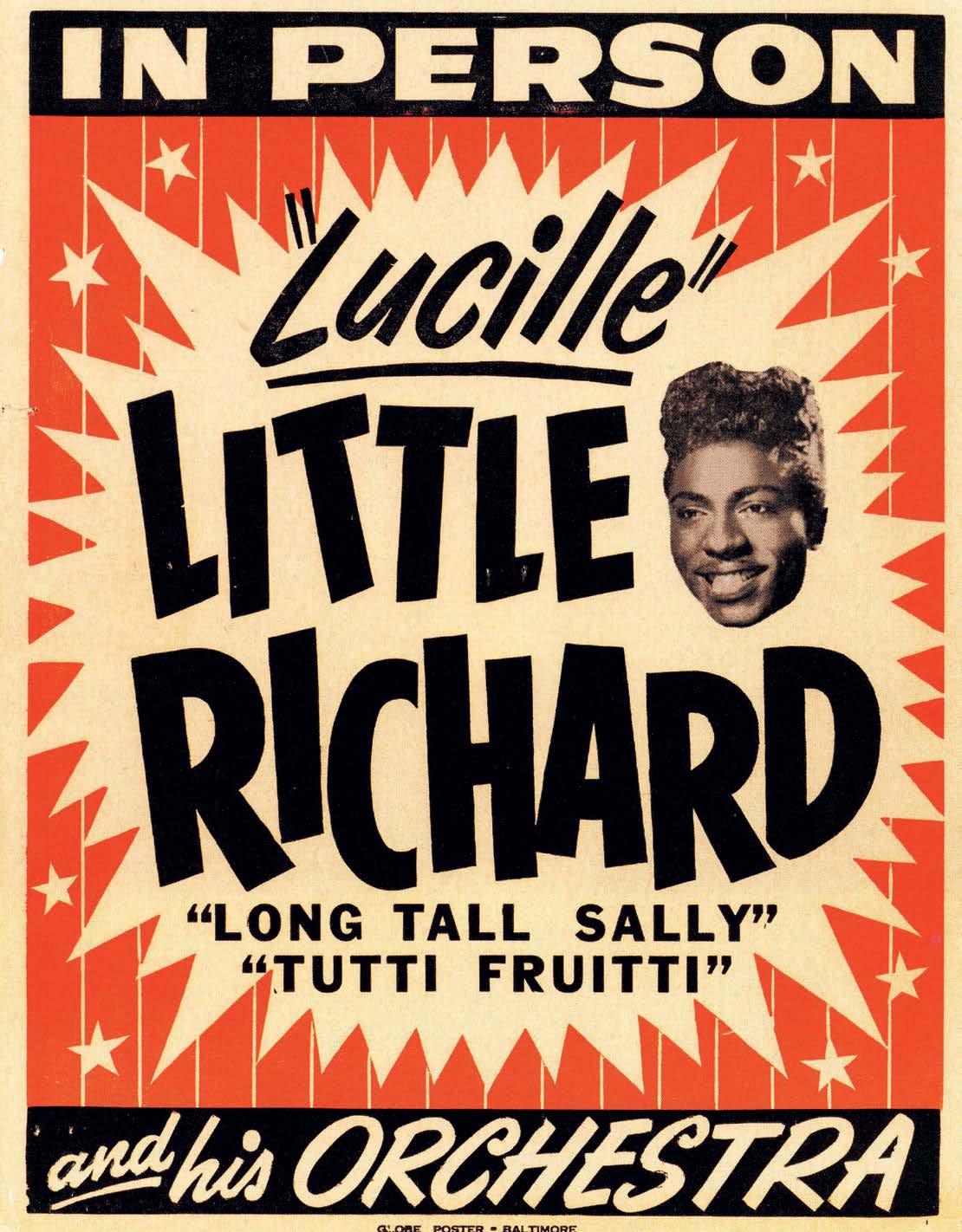
LITTLE RICHARD*
“TUTTI FRUTTI” (1955)
“SHE’S GOT IT” (1956)
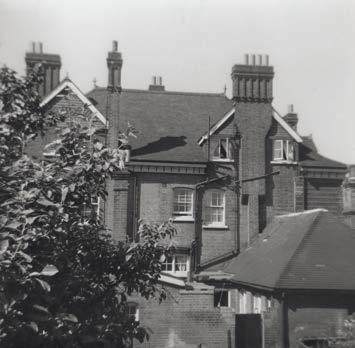
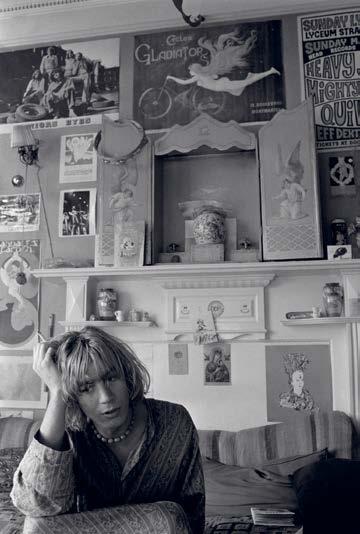
I discovered the earth-shattering, mind-blowing impact of rock’n’roll in David’s little bedroom at 4 Plaistow Grove, Bromley. The bedroom was at the back of the house overlooking a small garden. At the end of the garden was the back of The Crown pub, from which you could sometimes hear crates of glass bottles being stacked up or moved around. In those days, bottles had a value; when returned to the pub or off-licence, you would get a few pennies back. Sometimes kids would climb over the walls of establishments like this to liberate a few bottles and recycle the process –of course, not us!
David brightened his room by putting up pictures and posters from some of the American comics and magazines that his father used to buy him. David’s dad (Haywood Stenton Jones) worked in public relations at the well-known children’s charity Dr. Barnardo’s. As well as posters, he would also bring David a selection of 78 rpm discs of the latest American releases, heard and played for the first time by Alan Freed on Radio Luxembourg. Two compositions epitomised the raw energy of rock’n’roll: Little Richards’ “Tutti Frutti” and “She’s Got It” heralded just over 2 minutes each of pure joy each, delivered in a new and exciting, not to mention explosive, way. It’s not an exaggeration to say that the impact of those performances on both David and me was life changing. Another Little Richard song, “True Fine Mama” (1957), was among a list of tracks that David was considering playing for a possible radio interview, which was uncovered by the V&A East Storage in 2025.
I seem to remember Little Richards’ image adorning the walls of David’s bedroom. With his gold-lamé drape jacket, black bouffant hair and heavy make-up, he certainly awakened the minds of two eight- or nine-year-old schoolboys from Bromley. GM
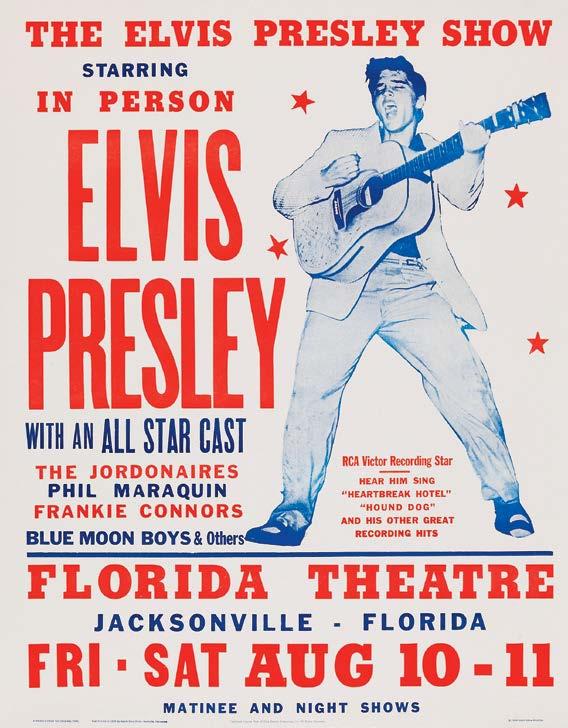
ELVIS PRESLEY
“HOUND DOG” (1956)
In 2002, I attended a dinner party at David and Iman’s New York apartment. The other dinner guests were an array of interesting folk, including Lou Reed, Laurie Anderson, Fran Lebowitz and Moby. Much to my embarrassment, David brought up the occasion when I melted his copies of “Hound Dog” by Elvis Presley and “I’m Not a Juvenile Delinquent” by Frankie Lymon & The Teenagers. He’d lent me the aforementioned 78s, which I had left on a table in the sunniest south-facing room at my mother’s house, only to find them resembling a melted sculpture by Salvador Dalí sometime later. A few years after the dinner, around 2009 when I met my wife Jo, we found her parents’ collection of old 78s. Within that box of oldies were pristine copies of those records that I’d inadvertently melted. Some 50 years late, I had a lined box made and sent them off to David in New York, who was delighted, amused and somewhat stunned. GM
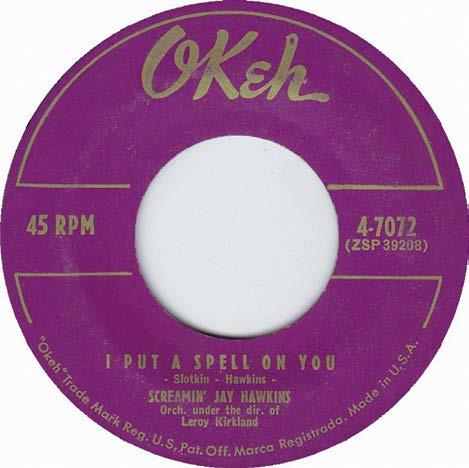
SCREAMIN’ JAY HAWKINS
“I PUT A SPELL ON YOU” (1956)
One of the records (a 78 rpm) that David’s dad brought home was this wild and extraordinarily inventive performance from Screamin’ Jay Hawkins. He sang, or rather ‘rasped’, “I Put a Spell on You”, all the while cackling like some demented banshee. Apparently, Jay was going to lay the track down as a blues ballad which, up until then, was what he was known for. But just before recording started, the producer Arnold Maxin ordered some chicken and ribs, which they washed down with copious amounts of alcohol. It’s been said that Hawkins and the band couldn’t even remember what it was they’d recorded until they played it back the next day, only to hear some pretty wild and scary stuff. This was a light bulb moment for Hawkins, who had accidentally stumbled upon a new and unique act to take on the road. No more blues ballads for good old Jay; now it was smoke, black capes and coffins all the way!
When I put the record onto the deck of my mother’s radiogram with the volume turned up high, she exclaimed (quite loudly): “Take that thing off!”
I suspect David’s mother Peggy would have had a similar response, since she favoured a really cheesy English ballad singer called Dickie Valentine (it’s all in the name!). To be fair to my Mum, most of the radio stations in America banned Jay’s offering from their turntables, too. GM
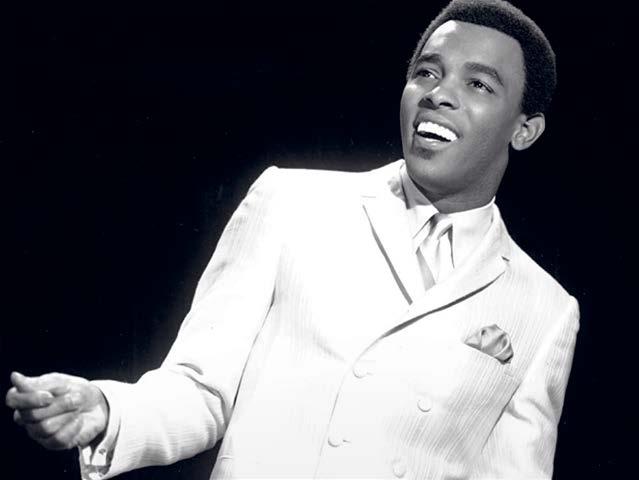
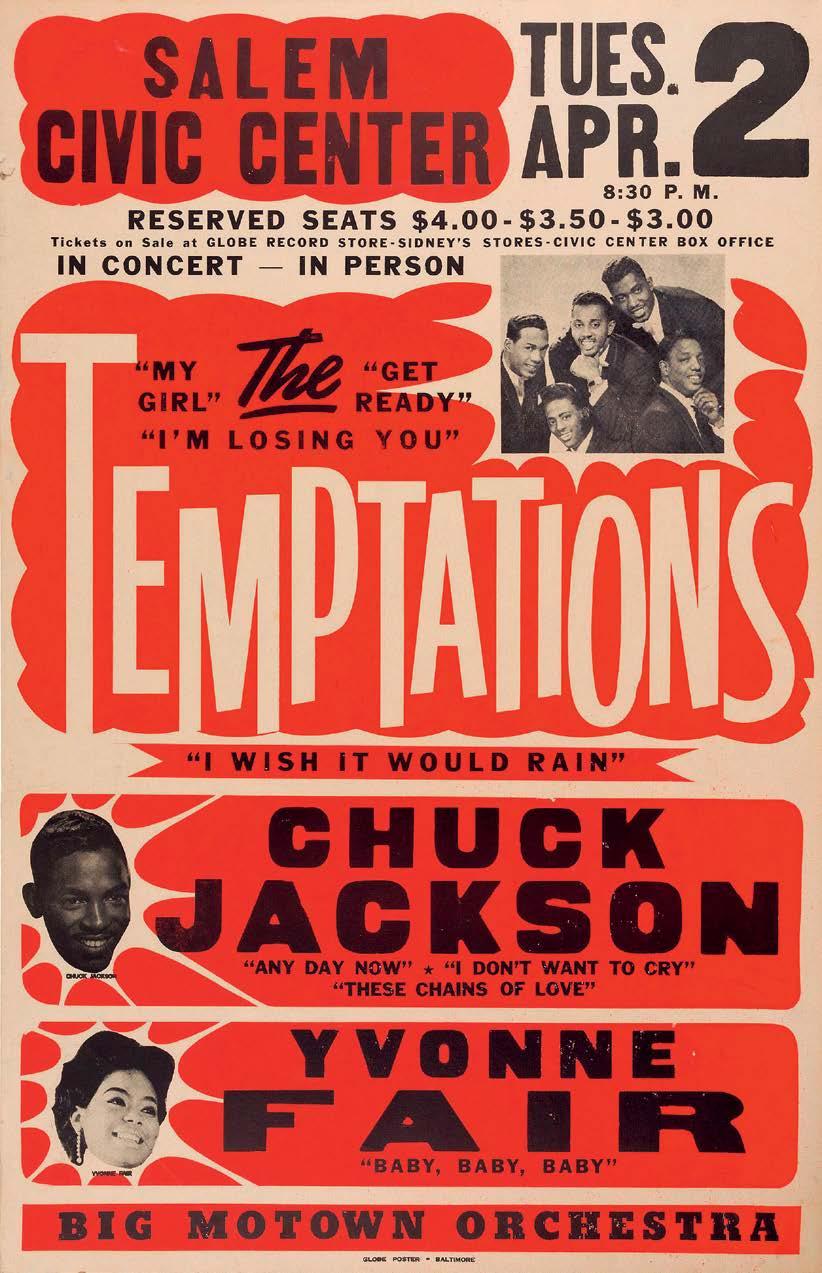
CHUCK JACKSON
“I KEEP FORGETTIN’ ” (1962)
It was a given that David would record “I Keep Forgettin’ ” at some point. Written by Leiber, Stoller and Garfield, the original version – and still my favourite (sorry pal) – was released in 1962 and sung beautifully with a wonderful arrangement by Chuck Jackson. David and I would often remember Chuck’s powerful performance with great admiration, launching into our own spontaneous version. David’s version (he had previously considered recording it for a planned Pin Ups II , which finally never saw the light of day) was included on his 1984 album Tonight. Not only did he tackle the difficult Jackson cover but he also took on the near impossible challenge of The Beach Boys’ “God Only Knows”. Whether you like the Tonight album or not, you’ve got to admire the boy’s chutzpah! GM
AVERAGE WHITE BAND (AWB)
“PICK UP THE PIECES” (1974)
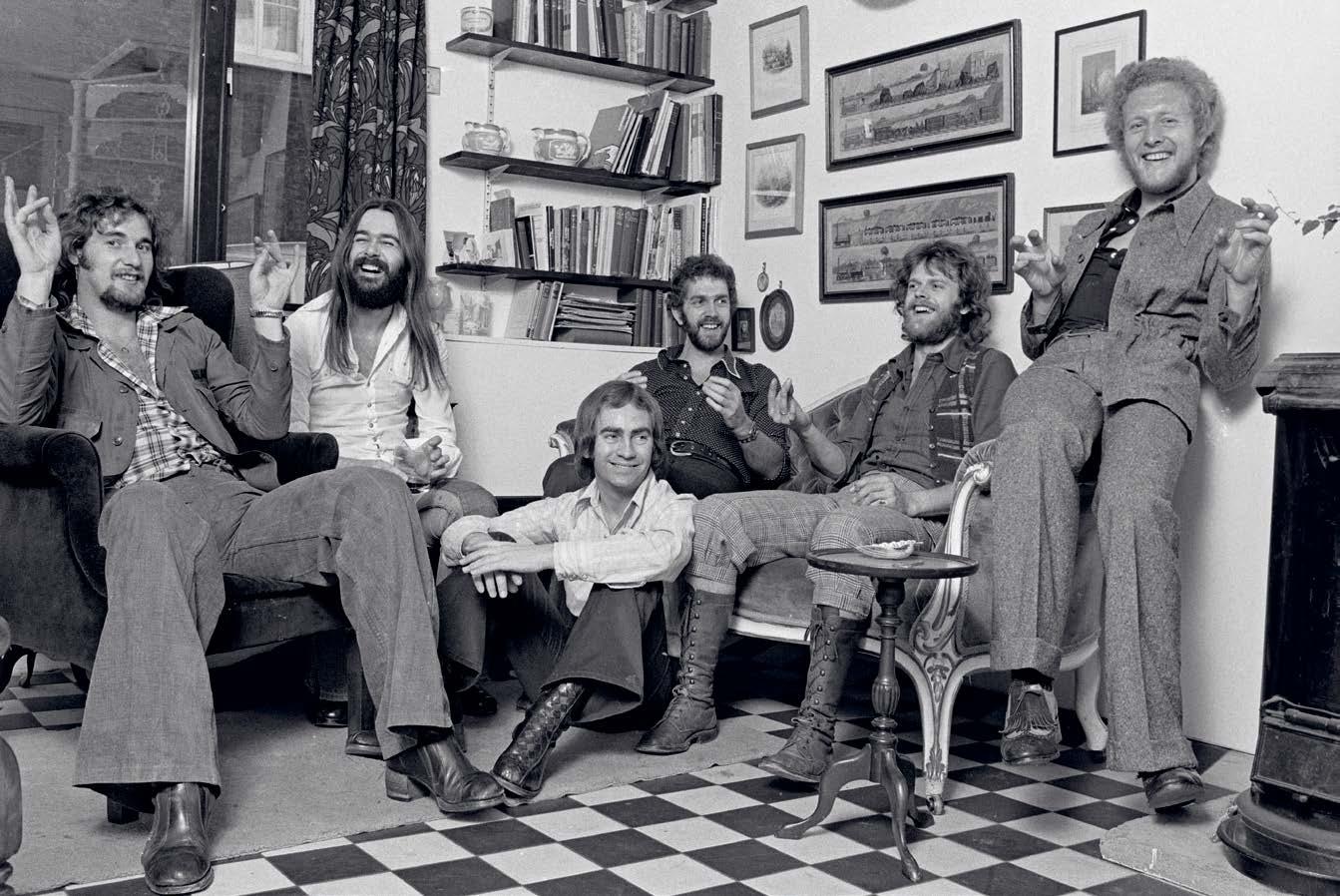
I could not convince drummer Dennis Davis that AWB was not only white but Scottish! I used to travel from hotel to hotel and gig to gig with a tape player and a Fender Champ amp. The Champ would normally be used as a practice amp for guitarists, but I used it to amplify my sounds at the many hotels we used on the road. “No man,” said Dennis, as he listened to the wonderful fatback drumming of Robbie McIntosh on “Pick Up the Pieces”. We hung out with AWB at the Sunset Marquis hotel in LA around September 1974, and later in Albuquerque while David was filming The Man Who Fell to Earth (see overleaf). They were all great guys. Sadly, at a party that September, just as the band were enjoying huge success, Robbie McIntosh fatally overdosed on what he believed to be cocaine but was in fact heroin. Alan Gorrie would have suffered the same fate had it not been for Cher and others who kept him awake by walking and dragging him around, keeping him conscious until medical help arrived. GM
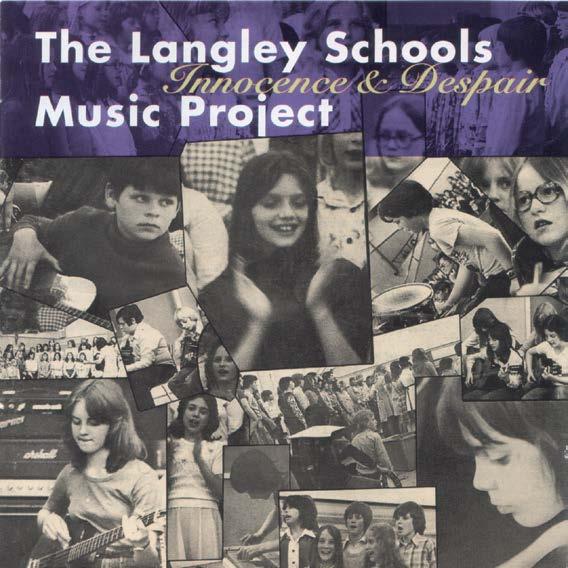
THE LANGLEY SCHOOLS MUSIC PROJECT
INNOCENCE & DESPAIR (2001)
We would advise all those who, under the pretext of paying tribute to him, have been butchering David Bowie’s songs since his death, to listen to the version of “Space Oddity” on this album he loved, recorded by children in 1976 and 1977. The cover of the Major Tom hymn is not technically perfect, but it is by far the most poignant version of the song after the original. On the initiative of their music teacher, Hans Fenger, other covers (of songs by the Beach Boys and Paul McCartney) were recorded live by these Canadian teenagers. Released on two LPs at the time, they were reissued on CD in 2001. The following year, for his Meltdown festival, Bowie asked Fenger to bring children from schools in the Lambeth area of London to perform some of the songs from Innocence & Despair. And once again, innocence filled the room while despair stayed at the door. JS
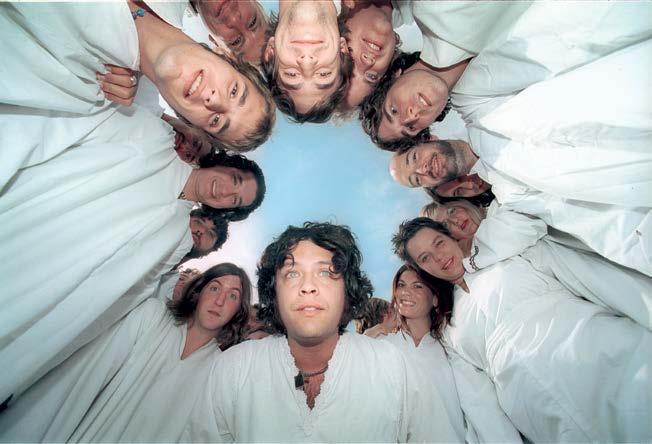
THE POLYPHONIC SPREE
THE BEGINNING STAGES OF… (2002)
When I first met Tim DeLaughter in 1996, he was the lead singer of Tripping Daisy, a wild and woolly American college rock band. They were a fantastic bunch, but hardly anyone knew about them. After his best friend and Tripping Daisy’s guitarist, Wes Berggren, died, Tim had a choice: disappear or become even bigger as a tribute to his friend. And, so, The Polyphonic Spree was born, a truly unique group that comprised both a collective of musicians and a choir, all wearing white robes on stage. Musically, DeLaughter and his band offer a kind of kaleidoscopic pop that is inspired by the greatest, very catchy and would not escape the sonar of David Bowie. When The Polyphonic Spree’s debut album was released in May 2002, they had already been invited to play at Meltdown. A power cut disrupted their set, but Tim and his people completed it without amplification, a cappella! The group was also invited by Bowie to open some shows of the A Reality tour in 2004 and then at the High Line festival in New York. I feel sure that wherever he is, Berggren watched the whole thing and thought it was pretty cool... JS
KEVIN AYERS
THE UNFAIRGROUND (2007)
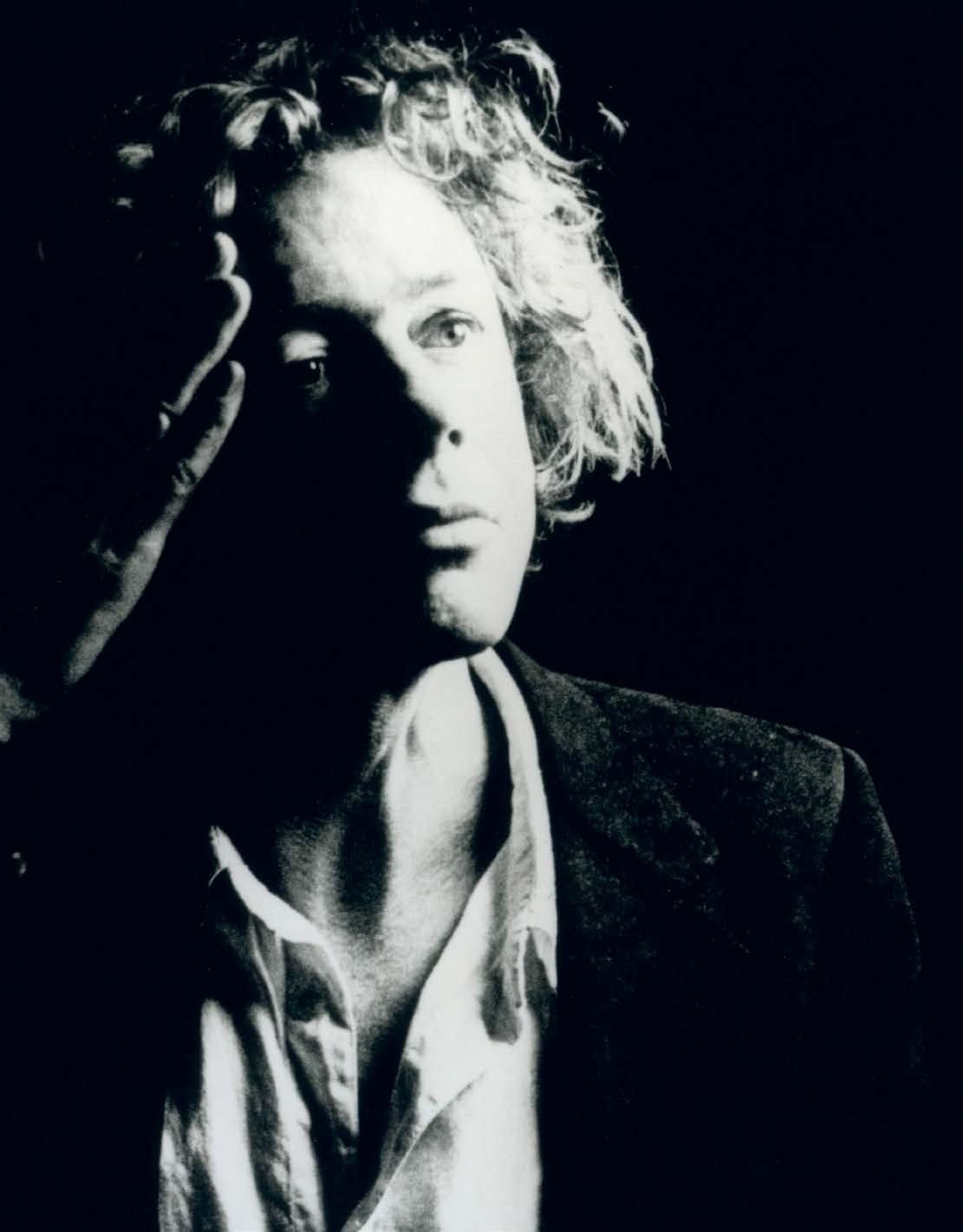
David Bowie took great pleasure in discussing the art he loved, but he also loved finding out what appealed to those he was talking to. He asked some journalists he knew what they were listening to at the time of the interview. So, when I emailed him in autumn 2007 to tell him about the release of this magnificent album by Kevin Ayers, which was sadly to be his last, it took him only a couple of days to reply. In a few well-chosen words, Bowie explained that he had been impressed by the way the ex-Soft Machine member had managed to reflect on his life and tackle serious subjects without overdoing it on this record. David also commented that he would have loved to work with Ayers – whose solo discography resembles a gallery of paintings – but that life had not given them the opportunity (which is too bad as they had both talked about it in Bowie’s Berlin flat in 1976). In the last sentence of the email, David asked me to send him my review of The Unfairground (he knew a little French), which he wanted to read when he listened to the album again. JS
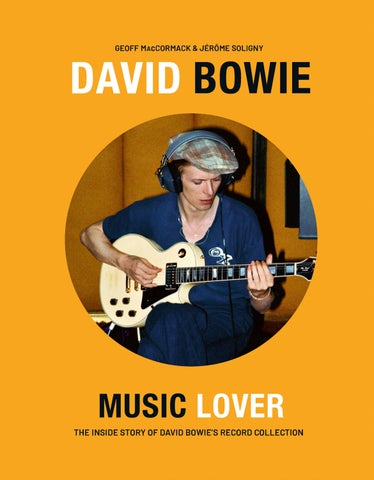
DAVID BOWIE WAS THE ORIGINAL INFLUENCER. FOR FIVE DECADES, HIS SONGS HELPED SHAPE THE LANDSCAPE OF POPULAR MUSIC. BUT WHAT DID HE LISTEN TO? WHICH ARTISTS, SONGS AND ALBUMS DID BOWIE TUNE IN TO THROUGHOUT HIS LIFE?
THIS BOOK, THE FIRST OF ITS KIND, REVEALS MORE THAN 100 ARTISTS THAT MADE IT ONTO BOWIE’S TURNTABLE.
DAVID BOWIE: MUSIC LOVER IS A COMPELLING MIX OF PERSONAL INSIGHT AND EXPERT COMMENTARY, JOINTLY WRITTEN BY BOWIE’S LIFELONG FRIEND, COLLABORATOR AND LISTENING COMPANION, GEOFF M AC CORMACK, AND JÉRÔME SOLIGNY, AUTHOR OF THE SEMINAL RAINBOWMAN , WHO KNEW BOWIE FOR 25 YEARS.
FROM CLASSICAL TO BRITPOP, ELECTRONICA TO DELTA BLUES, THE BOOK EXPLORES BOWIE’S ECLECTIC PLAYLIST, REDOLENT OF THE DECADES HE LIVED THROUGH BUT ALSO OF HIS DEEP INTEREST IN ALL GENRES AND ERAS OF MUSIC. IT’S A STORY THAT BEGINS WITH LITTLE RICHARD ON BOWIE’S CHILDHOOD DANSETTE RECORD PLAYER, AND ENDS WITH KENDRICK LAMAR, A GO-TO LISTEN DURING THE RECORDING OF BLACKSTAR
AN INDISPENSABLE GUIDE FOR BOWIE FANS AND ALL MUSIC LOVERS.