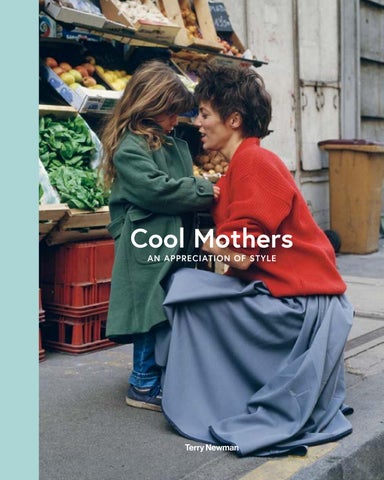
Cool Mothers
AN APPRECIATION OF STYLE
Terry Newman
82. 88. 94. 100. 104. 110. 116. 122.
Acknowledgements
Introduction
Vivienne Westwood, Bridget and Serena Rees, and Cora Corré
Rosita, Angela and Margherita Missoni
Kate and Lila Moss
Lali Dzhinikashvili and David Koma
Mary Davidson, Sadie Frost and Iris Law
Anna Wintour and Bee Schaffer
Oracene Price, Venus and Serena Williams
Agnes and Herbie Mensah
Louella Risi, Courtney Love and Frances Bean Cobain
Kathy Sledge and Kristen
Gabrielle Lightfoot
Andrea and Taylor Swift
Cissy and Whitney Houston
Cynthia Germanotta and Lady Gaga
Ivy Vickers, Eileen Magus and Pauline Black
Yoko Ono and Sean Lennon
Joséphine Fauriaux and Louise Bourgeois
Lydia Corbett, aka Sylvette David, and Alice Corbett
Julia Warhola and Andy Warhol
128. 136. 140. 148. 156. 164. 172. 180. 188. 196. 204. 212. 218. 224. 232. 238.
Judy Campbell, Jane Birkin, Charlotte
Gainsbourg and Lou Doillon
Nicole Flender and Timothée Chalamet
Marcheline Bertrand and Angelina Jolie
Diahann Carroll and Suzanne Kay
Sara Sothern, Elizabeth Taylor and Naomi deLuce Wilding
Judy Garland, Liza Minnelli, Lorna and Joey Luft
Ingrid Bergman and Isabella Rossellini
Josephine Baker and her Rainbow Tribe
Lulu and Madeleine Guinness, and Tara Kelway-Bamber
Marietta and Penelope Tree
Rhoda, Lady Birley, and Maxime and Loulou de la Falaise
Edith and Edina Ronay
Vivian Baxter, Maya Angelou and Guy Johnson
Diana, Princess of Wales, Prince William and Prince Harry
Bibliography Picture Credits
Rosita, Angela and Margherita Missoni
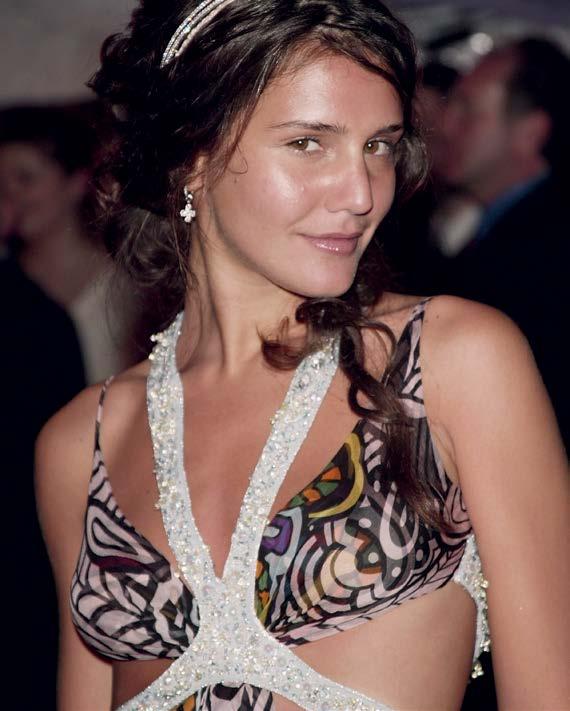
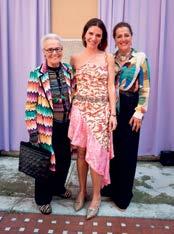
The House of Missoni, along with its signature chevron knitwear, has a unique place in fashion history. From Diana Vreeland to Anna Piaggio, the greats of style have always appreciated the originality and pace of the luxury Italian fashion brand. Founded in 1953 by Rosita and Ottavio in Italy’s textile capital, Gallarate, near Milan, it has been dominated by three generations of women, who have pioneered an artistic approach to business and fashion. The Missoni ladies and their clothes tell both a personal and collective story.
Angela Missoni, daughter of Rosita and mother to Margherita, is president of Missoni and an archetypal bohemian mama. In her mid-60s, she is an unaffected beauty and arrives for an interview with her hair long and flowing, wearing a smock top, vintage rings on her fingers and a smudge of mascara. She grew up in a female-centric family where life was open to possibilities, and what she chose, at the age of 23, was to become a young mother. “It was nature, I remember first telling my mum when I was 15 that I was going to have a child at 18 and she almost fainted, but she didn’t try and dissuade me. I was driven, and while it was my rebellion to become a parent, it was also a very natural thing to do coming from my environment which was so non-judgemental”, she says. She spent time at home with her children, Margherita, Francesco and Theresa, before going to work at the family brand for over 20 years, where she ran the celebrated Italian fashion label as creative director and commercial head, developing its cultural and creative DNA with skill and integrity. “I think the fact of being a mother opened my heart to be more understanding of the rest of the world. It made me more aware of how life is.”
As a child who was a teenager in the 1970s, she was surrounded by women who were unapologetic feminists and who forcefully demanded a family and a career.
“I saw a life where you could be a mother, breastfeed and still fight for women’s rights; you didn’t need to choose one or the other. We were the first generation to push for maternity leave; I know I was privileged – I had a great support network and lived in a house five minutes from the Missoni factory and Rosita’s house – but I was always thinking forward.”
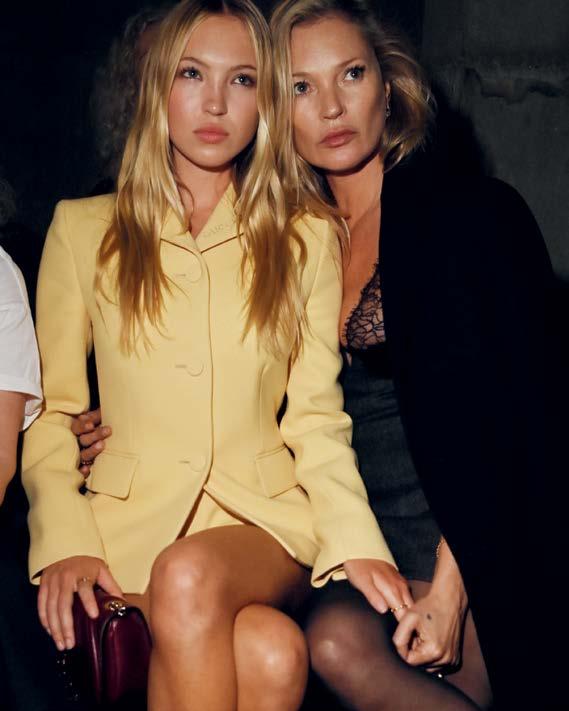
Kate and Lila Moss
“I’m always going into my mum’s drawer and stealing her old rock T-shirts. My favourite is a Rolling Stones one I wear all the time.”
Lila Moss, Vanity Fair, 2020
When you are the world’s greatest supermodel it’s easy to presume everything must be easy, but being a mum is a responsibility no one is born knowing how to manage. You find your own way and Kate Moss’s way is, to date, a masterclass of chic individualism. When she was expecting her daughter, Lila, she didn’t start going to bed early; instead, she got into training for night feeds by sitting for one of Britain’s most famous artists: “I had an easy pregnancy. Sitting for Lucian Freud every night until two in the morning for months and months was as close as I came to ‘preparing’ for parenthood, although I did randomly spot a copy of What to Expect When You’re Expecting in our library the other day, so I guess I must have read it at some point” (Vogue, 2023a).
Equally, some might think that being the daughter of a style icon is a tricky learning curve, but Lila Moss has risen to the challenge with grace and elegance. Negotiating a successful career as a budding supermodel on her own terms, she has appeared on high-profile magazine covers and campaigns, including for Vogue and DKNY. She has led an unparalleled life immersed in the highest echelons of the fashion world and developed a critic’s eye of what looks good. Growing up, she had the best role model and wardrobe to plunder:
“I was always dressing up in my mum’s closet. I also looked up to my mum in the sense that I’d want her black vests from Saint Laurent, or I’d wear black leggings and all black and grey. I was so particular from day one. We were actually talking yesterday, me and my mum, about how all the arguments we had when I was younger were about clothes and me not wanting to wear white socks” (Carlson, 2024).
Fashion has clearly been a two-way conversation in the Moss household since Lila was little. While Kate began modelling for John Galliano back in 1992, today it’s his vintage trench coats, found by Lila in Paris boutiques, that catch her eye. Even back in 2014, when she launched a Topshop collection and Lila was not yet a teenager, Kate disclosed that she valued her daughter’s flourishing sense of style, telling Harper’s Bazaar: “She’s very good. I do trust her instinct” (quoted in The Daily Mail, 2014).
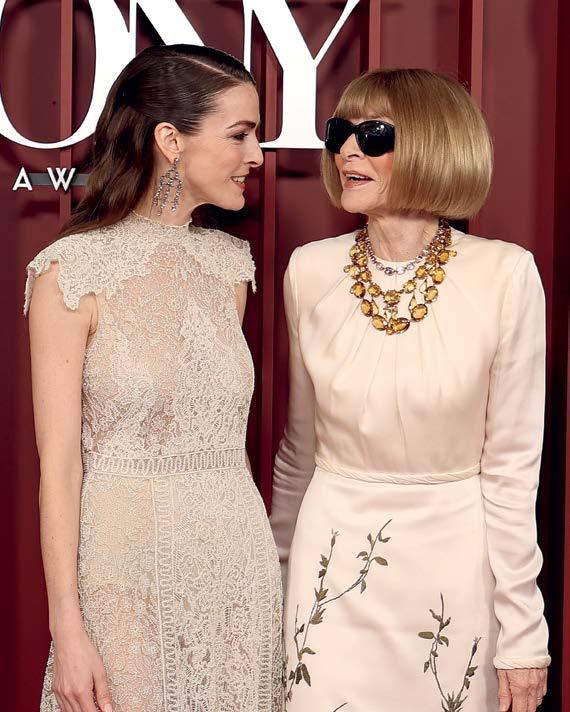
Anna Wintour and Bee Schaffer
Editor-in-chief of American Vogue for 37 years, Anna Wintour’s personal style is a crisp antidote to trends: her fashion identity does what she wants it to, not what the catwalk tells her. She is hardworking and no nonsense, and so is her look. Style is about telling the world who you are, and her thick, blownout bobbed hair, conspicuous sunglasses, Bill Blass shoulder pads, knee-length pencil skirts, confidently printed dresses and weighty jewellery have all helped broadcast who she is. Her clothes tell us she takes her job seriously, knows what she likes and is focused. Of course, the woman who became the most powerful person in fashion for decades wears only the very best labels and a nod from her is akin to a gladiatorial win, but she takes her own sartorial advice. When commenting on what a daunted interviewee might best wear, she reflected:
“It’s so interesting to me how people dress…Sometimes you feel they’re wearing clothes that they just bought that morning, or maybe the night before, and not something that in any way suits their personality and who they are…You have to dress for yourself. It’s the same for any job you might be going for. I think it doesn’t do yourself a service to fake it”
(Petrarca, 2019).
A devoted mother, she brought her daughter Bee to work with her from a young age and, albeit in the front row of fashion shows, has been photographed being openly affectionate to her. The jarring equation that you can’t be a strong career woman and a caring parent is one that critically persists when you are high profile. ‘Nuclear’ Wintour – the devil who wears Prada – has never been celebrated for her maternal
side, though she took time off and later worked from home when she had both her children, and has famously supported young designers. She has also led by example, having worked alongside editors who today blaze similar trails, such as Carine Roitfeld and Vanessa Kingori, and thus has roundly demonstrated how, in an industry that historically reveres youth, there is a place for older women, too.
Anna began honing her sartorial savoir-faire when she became a Saturday girl at Barbara Hulanicki’s legendary London boutique, Biba, taking a job there when it first opened in 1964 while she was still attending North London Collegiate School – an establishment known for its driven parents and highachieving pupils. Moving into journalism, she took a position as an editorial assistant at Harper’s & Queen magazine in 1970 and she spent the next few years learning how high fashion worked and attending couture shows in Paris. Images taken at the time show a girl with bobbed hair, who already mirrored the mother and grandmother she is today. She bears a striking resemblance to Joan Didion, a writer who had had worked at American Vogue almost a decade earlier – the very magazine Anna would become celebrated for editing. When she eventually got the job as editor-in-chief in 1988 and set about revolutionising it, she had given birth to Bee less than a year earlier.
The contradictions inherent in mothering, looking immaculate and thriving in a new career, is a challenge many women have faced. Reports of 7am hairstylists post-5am tennis matches may make her sound like a machine, but Wintour makes time for her priorities: “I think it’s very important for children to understand that women work and that it’s
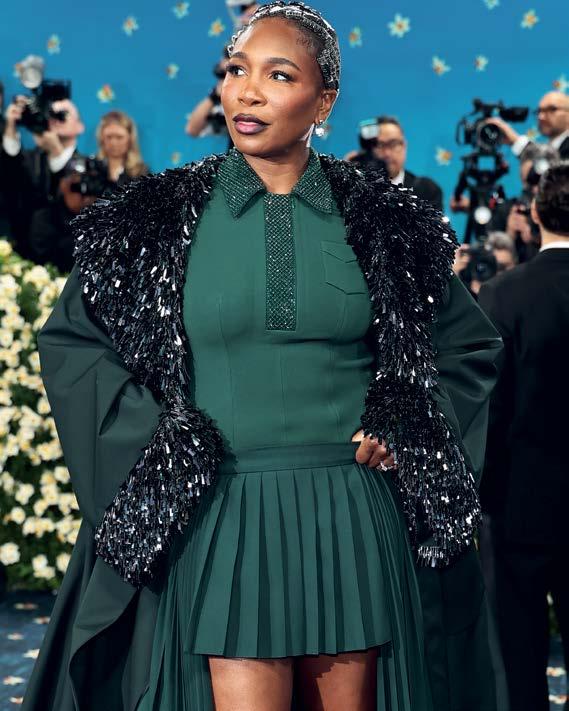
Oracene Price, Venus and Serena Williams
Today, Venus and Serena Williams are celebrated for being style setters as much as they are for being tennis stars. Both women have blazed an international trail of sporting success while their wardrobes on court have revolutionised the traditional silhouettes the game was known for, opting to wear corsets, denim and catsuits instead of time-honoured tennis whites. According to Serena, “seeing myself and my sister on the big stages of Wimbledon and the US Open being ourselves and wearing great outfits and looking our best, really changed women’s sports—which is crazy” (Lesavage, 2024). Being themselves is something mum Oracene Price instilled at an early age. In an interview in 2019, Serena said: “We were not afraid to wear braids. We weren’t afraid to be Black in tennis. And that was different” (Ford, 2019). Venus shared an Instagram post on her own thoughts, saying:
“Wearing braids and beads, unbeknownst to us at the time as children, was an opportunity to share our beautiful and rich heritage with the world. It gave other African American women and children pride to wear their natural hair even before the natural hair movement sprouted decades later” (@venuswilliams, 2021).
Price is famous as the legendary mother of Venus and Serena Williams. She is equally famed for busting her own fashion moves and, practising what she preaches, being uniquely herself, too. Most recently, she was seen sitting front row at the Gucci Spring 2025 menswear show looking stylish in a cotton-and-lace shirt and slingbacks. She serves up chic in the same way her daughters hit the ball
– by smashing it. Tennis lovers are familiar with her stand-out red lipstick and corkscrew blonde curls, often topped with many kinds of hats – from formal British bowlers to baseball caps and straw trilbys – practical and smart accessories she has donned while watching her daughters win. Her most famous accessory, however, is her signature sunglasses, à la her good friend Anna Wintour, which she candidly admitted in 2010 to Tennis Australia allowed her to go to sleep without anyone noticing.
The girls’ interest in fashion, inspired by Price, began at an early age and both went on to study fashion design at The Art Institute of Fort Lauderdale. Venus told Fashionista in 2023: “As a kid, I remember trying to sew clothes for my doll. My mom used to sew, and I always wanted to learn. If I had more free time, or any free time, I would definitely spend time sewing” (Bossi, 2023). Serena remembers her mother’s talents, too, and how she “used to watch [Oracene] put those old Vogue patterns on the floor and cut out the outfits” (Friedman, 2022). These early fashion tips from Oracene equipped the girls to set their own style trends, and then watch as the world followed.
In 2023, Serena was named Fashion Icon of the Year by the Council of Fashion Designers of America, saying at the time: “I explored fashion and style as a way to distinguish myself. In many ways for me, the tennis courts became my runway” (Drenon, 2023). Oracene’s inclusive philosophy has helped pave the way for bright young talents to be themselves, too. In an interview with Sheinelle Jones on the Today programme, the tennis mum affirmed: “We are all made different. We all have different looks. And if you really look, everybody is beautiful, and one size don’t fit all” (Today, 2019).
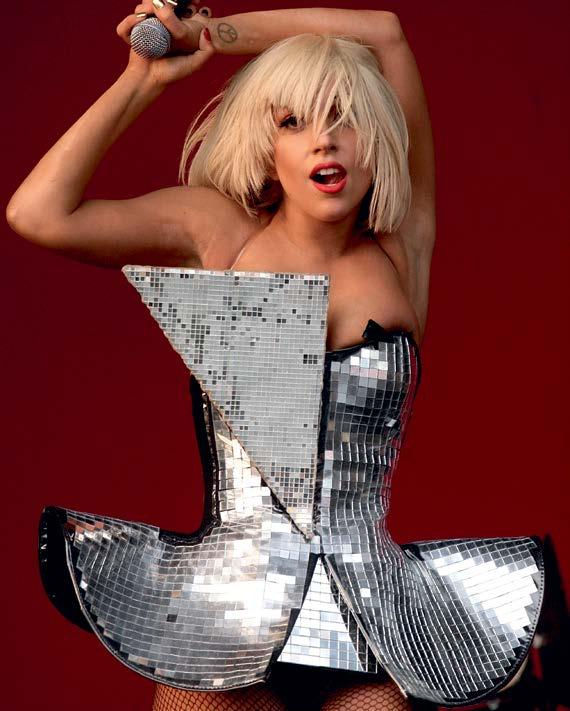
Cynthia Germanotta and Lady Gaga
When Lady Gaga was cast as Patrizia Reggiani in Ridley Scott’s 2021 film House of Gucci, she told the film’s costume designer, Janty Yates, that she wanted to look like her mother, Cynthia Germanotta. Yates revealed:
“I was kind of nervous about talking to LG about this because I know her taste is wide and huge, but on the very first Zoom we did with Ridley…she said she wanted to dress like her mother. It was wonderful because, obviously, her mother didn’t wear meat dresses, and her mother is 100 percent Italian” (Fraser, 2021).
Yates described Germanotta as a mother who “carried a certain flair…a woman who’d wear something, just to shop” (Nofi, 2021). This is translated in the film, which is set throughout the 1970s and early ’80s, with a series of outfits that are powerful, glitzy and glossy. Lady Gaga’s own dress sense has equal flair, and her wardrobe doesn’t just speak of fashion but identity and values. At the 2009 MTV Video Music Awards, Lady Gaga performed her track ‘Paparazzi’ in a jewel-encrusted white bra, briefs and towering boots, every inch the architect of her own image. As the song built, fake blood began to spill, shifting the mood from glossy pop spectacle to something far more pointed. It was a cool, deliberate evaluation of fame as a blood sport, with Gaga cast not as victim but as provocateur in control of the narrative. A year later in September 2010 she wore her infamous ‘meat dress’ made out of steak. It was a creation by Franc Fernandez, sharply styled by Nicola Formichetti and again transformed fashion into fierce commentary,
with Gaga revealing to Ellen DeGeneres that it was her rebuke of the US military’s ‘Don’t Ask, Don’t Tell’ policy (Cochrane, 2010). Gaga’s principles are rooted in the ideals her mother, Cynthia Germanotta, has instilled in her and, in turn, the ideals instilled in Cynthia by Gaga’s grandmother, Ronnie. Germaotta explains how Ronnie “taught me that a parent should foster their children’s creativity and individuality and encourage their passions, not just their successes. And she taught me to be tough, that struggle was just a part of lif” (Germanotta, 2018).
Today, Germanotta is a youthful, chic silver-blonde, often to be seen wearing Born This Way Foundation merchandise emblazoned with its kindness-giving slogans. “The Foundation started way back when my daughter was young. She was uniquely different when she was growing up and that wasn’t always appreciated by her peers”, explained Germanotta in a 2024 interview with The Project
With Germanotta’s support, Lady Gaga’s career has helped to reconstruct the rules of belonging; she is ‘Mother Monster’ shining a light on her own outsider status – and the ‘Little Monster’ fans who walk their own line, too – making it not just okay to be different, but joyous. Germanotta is co-founder of the Born This Way Foundation, along with her daughter, which began in 2012 with a mission to “empower and inspire young people to build a kinder, braver world that supports their mental health”, and is work that was born out of something personal. According to Gaga:
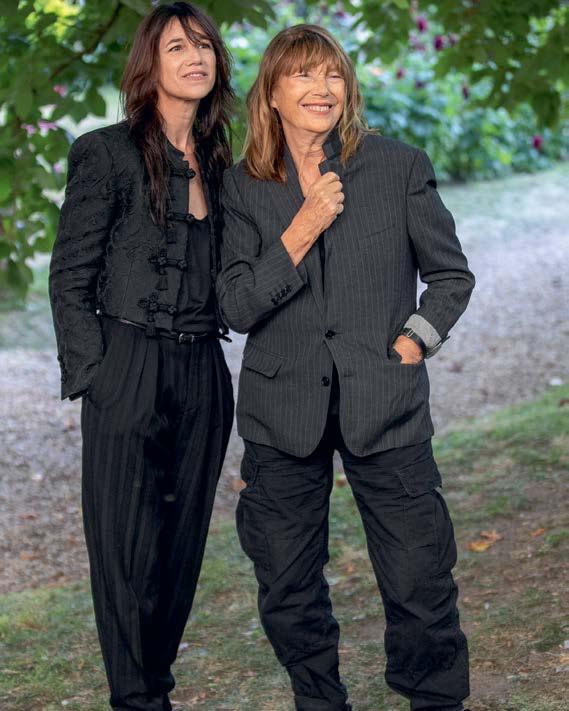
Judy Campbell, Jane Birkin, Charlotte Gainsbourg and Lou Doillon
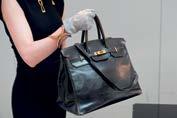
A highly coveted accessory, the Hermès Birkin bag was designed by the luxury fashion house as a solution to a problem Jane Birkin had as a mother. She couldn’t find a bag better than her signature basket to carry all the things she needed to look after her children. She wanted something practical with ‘pockets’ that could hold everything. It’s an issue many a parent has had trouble with but, unlike Jane, few had the issue solved by the chairman of Hermès.
Jean-Louis Dumas, the great-grandson of founder Thierry Hermès, met Birkin on an aeroplane and hatched a plan to create just the thing. In 1984, the useful and luxurious handbag debuted. Since then, the Birkin bag has become the stuff of legends, a sought-after piece you can only seem to buy if you have a good relationship with the brand and spend good money with them. To some extent, the bag’s concept is the antithesis of Jane’s celebrated simple styling, as her fashion sense was somewhat anti-fashion. During her lifetime and beyond, she became the personification of not trying too hard – a dichotomy many designer brands find hard to manifest. When she passed away in 2023, the then president of France, Emmanuel Macron, called her a “French icon” who “embodied freedom”. Birkin’s pedigree nevertheless owed something to her distinctive fusion of London and Parisian chic, and the way she mixed and matched each culture.
Born in England, Birkin enjoyed a privileged childhood attending boarding school and growing up in the wealthy neighbourhood of Chelsea, just around the corner from the King’s Road. It was the Swinging Sixties and this area of London was the epicentre of cool. Birkin’s father, the grandson of a baronet, was a naval officer and war hero, while her
mother, Judy Campbell, was a famous actress and singer, celebrated as playwright Noel Coward’s muse. Photographs of Campbell onstage and off during her 1940s heyday paint a picture of an elegant woman who wore sweetheart-necked gowns, tidy suits and pussycat-bow blouses, all while smiling widely and showing off the distinctive gapped front teeth that her daughter Jane would also become renowned for.
Although Jane worked as a model for a while, photographed by the likes of Norman Parkinson for American Vogue, Jane followed in her mother’s footsteps and began working as an actress in London, appearing in Michelangelo Antonioni’s iconic 1966 film Blowup. She moved to Paris in 1969 upon meeting her soon-to-be long-term partner Serge Gainsbourg on the set of the movie Slogan (1969). Shortly after, she relocated to France permanently.
Today her style is still celebrated the world over, largely as the quintessence of ‘French girl chic’, and she is much imitated by women who crave the nonchalant, uncomplicated grace she made her own. Birkin’s wardrobe of undemanding classics was,
Left: Jane Birkin with her daughter Charlotte Gainsbourg. Right: The famous Hermès Birkin bag.
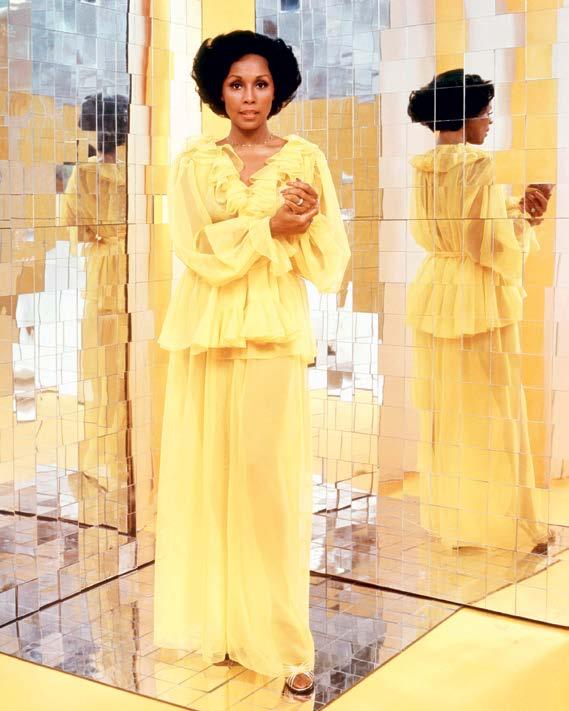
Diahann Carroll and Suzanne Kay
“I think my mother proved you don’t have to give up your sensuality and love of life as a mother. She had fun and never allowed others to define her.”
Suzanne Kay, 2025
Diahann Carroll’s legendary career was equally matched by her superstar wardrobe. The Oscarnominated actress was a forerunner who broke so much new ground that she said, “after a while, I felt like I was the first Black woman to open a door, so I said let’s drop the first Black woman, please” (Today, 2017). But it’s hard not to overstate her significance as an important role model and a remarkable talent, who navigated life with elegance, determination and resilience while always looking impeccable. The Bonhams sale of her estate in 2020 included Chanel jackets, Bob Mackie gowns, Giorgio Armani suits, Manolo Blahnik shoes, Gucci boots, Cartier watches and diamond and platinum jewellery: all her go-to daywear.
Carroll’s daughter, writer and filmmaker Suzanne Kay enthuses: “My favourite outfit of my mother’s might be the pink dress she wore to the 1969 Oscars. I wish I knew the designer. She looked like an angel and the blush pink perfectly complimented her skin.” That night at the award ceremony, Carroll glided onto the stage in her studded diamante gown and told the world: “Where else but in Hollywood could a girl from the Bronx come out on a night like this and introduce a boy from Brooklyn: Tony Curtis?”

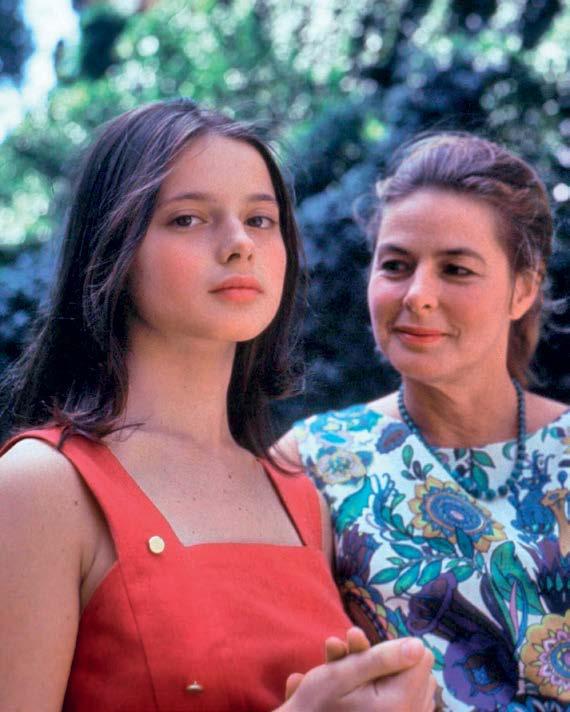
Ingrid Bergman and Isabella Rossellini
In February 1950, just shy of two weeks before Stromboli was released, the film’s main actress, Ingrid Bergman, gave birth to her second child, Renato. Her son’s father was the film’s director, Roberto Rossellini, though she was still married to her first husband Petter Lindström, with whom she’d had a daughter, Friedel Pia Lindström. It was a moment of scandal for the Swedish actress, who lived her life in Hollywood in a way that many men of the town took for granted. Her sexual emancipation and uninhibited lifestyle were criticised to such an extent that she was ostracised from America. Divorcing Lindström and marrying Rossellini three months after her son was born, Bergman would go on to have twin daughters Isabella and Isotta with Rossellini before their marriage ended in 1957.
Bergman’s work, including Casablanca (1942) and Spellbound (1945), continues to be considered as some of the most enduring and iconic films ever made. The clothes in Casablanca were designed by Orry-Kelly, the legendary Australian costumer, and although created for her character, Ilsa Lund, Bergman might have chosen the outfits in real life, they suited her so well. A short, white evening dress, a lace, puffed-sleeve gown and a chic plaid suit paired with a French beret were worn by Bergman with consummate elegance. But of all the stage clothes she wore, her black outfits in the 1948 production Joan of Arc were the distinctive fashion moment that inspired Maria Grazia Chiuri in her Spring/Summer 2024 Dior collection, with her emphasis on feminism and strong women.
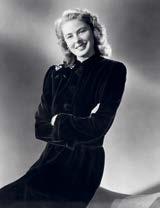
Bergman largely avoided toeing the line when it came to behaving in the way starlets of her time were expected to, let alone a mother of four. From her gamine, boyish haircut to her easy androgynous sensuality, she didn’t conform to the stereotypical prototype that prevailed. “This is how I look, take it or leave it”, she famously told film producer David Selznick, who suggested she have a Hollywood makeover when she first arrived in LA (Sayej, 2015). But there were some concessions that had to be made. Her daughter Isabella revealed in a Harper’s Bazaar interview that “actresses in Hollywood had
Diana, Princess of Wales, Prince William and Prince Harry
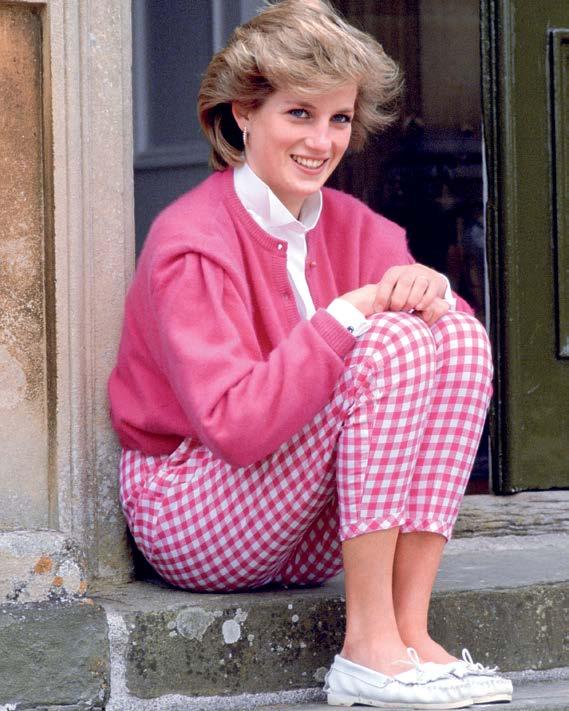
A mother’s effect on a child is rooted in their own changing stories of innocence and experience. Lady Diana Spencer’s life in the global media spotlight was tracked from ‘Shy Di’ to the ‘People’s Princess’, and along with it a wardrobe that metamorphosed as she did. It is fascinating to see how this transformation also affected the clothes she chose to dress her children in and how an empowering relationship with fashion – something that strengthened her character – also infused and reorientated the world of her children in a way the British royal family could never have anticipated.
Diana’s wardrobe when she was a young mother reflected the environment and social boundaries she lived within. As the 11th great-granddaughter of Mary, Queen of Scots, and daughter of an earl, Diana had the lineage of the landed gentry. In July 1981, when she married then Prince Charles, the heir to the British throne, it was natural that she would continue to adorn herself in the traditional raiment of girls of her class – clothes that held codes of power. However, it was at this time that this style of clothing was roundly satirised by Peter York in his legendary book, The Official Sloane Ranger Handbook (1982). ‘Sloane’ is a term used to describe an upper-middleand upper-class person, characterised by The New York Times as someone who “emigrated to spend the weekend in the country houses of friends and relatives” (Brown, 1984). It flew off the shelves, not just because of York’s laser-sharp reading of class but also because, in a canny move, Diana was its cover girl. She was, however, a ‘Super-Sloane’ – no ordinary posh miss. “She wasn’t a nice upper-middle-class girl. She was an absolute, oak-tall aristocrat. When the first Earl [of Spencer] got married, the diamonds on his shoes were worth – in contemporary money – £3m”, York told The Guardian newspaper in 2020 (Cochrane, 2020).
After attending the Institut Alpin Videmanette, a finishing school in Switzerland, Diana bought a flat with an inheritance from her great-grandmother and shared it with friends she’d met on the ski slopes or been to school with. They all wore a similar ‘sloany’ uniform of pie-crust-collared blouses and cardigans or lambswool tank tops, accessorised with velvet headbands and pearls, changing their loafers for Hunter wellington boots and Barbour jackets when in the country. It was a classic upper-class look that in many respects was a generational hand-me-down. Wearing conservative, slightly frumpy fashion was not an unfamiliar habit for monied families. A 2016 Harper’s Bazaar feature points out that “it was not until 1946, the year before she became engaged to Philip Mountbatten, that Princess Elizabeth was allowed to select her own clothes. Marion Crawford, her governess, observed that her taste followed her mother closely: silk or thin-wool frocks with matching coats, in pastel shades” (Eastoe, 2016). Some years later in 2024, British Vogue reported that it was in fact Diana’s mother, Frances Shand Kydd, who often bought her daughter’s clothes: “She frequently wore dowdy garden-party hats from milliner John Boyd and blousy, floral dresses courtesy of Donald Campbell” (Maitland, 2024).
The unconscious cultural and symbolic habitus of the aristocracy and royal family was one that Diana had been surrounded by from birth; it was her heritage. When she was first married, her clothes were created by haute-couture designers such as Catherine Walker, Bruce Oldfield and Victor Edelstein, signalling her status as future queen. At first, she dressed sons Harry and William in outfits that rigidly replicated not just her rank, but their own. In January 1988, Diana dressed her boys, aged just three and five at the time, in matching pale-blue tweed coats. As they played on a vintage fire engine

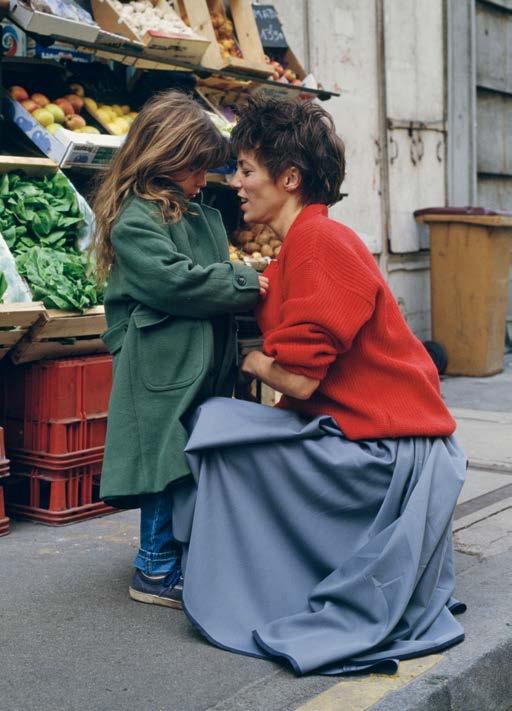
Some mothers are punk. Others are hippies, chic power dressers or freespirited bohemians. Many resist labels altogether. These richly illustrated pages offer a joyful celebration of our mothers’ clothes and how their style choices –practical, political or deeply personal – left a lasting imprint on the culture around us.

Cool Mothers:
An Appreciation of Style places maternal style exactly where it belongs: at the centre of fashion history. A jacket, a handbag, a hair clip, a bracelet worn every day for decades… these details define our mothers as women of their time, subtly revealing the person beyond the role of motherhood, what they resisted, what they embraced, and how they balanced selfhood with responsibility.
Perfect for mothers, fashion lovers and anyone interested in the rich intersection of motherhood, identity and dress. Featuring such distinctly stylish mothers as Angela Missoni, Elizabeth Taylor, Josephine Baker, Princess Diana, Vivienne Westwood, Courtney Love and many others.