006
“A city isn’t so unlike a person. They both have the marks to show they have many stories to tell. They see many faces. They tear things down and make new again.” —Rasmenia Massoud, author of Broken Abroad
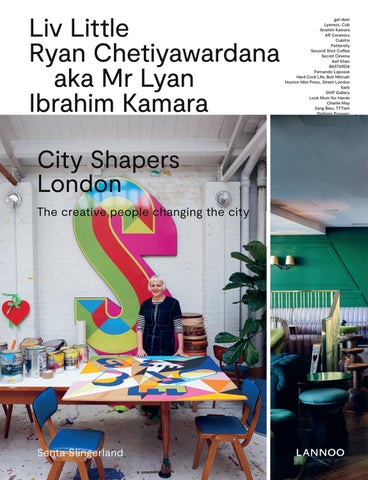
City Shapers
London
A city is shaped by the people who live in it. It’s they who create a city’s culture and give it its unique flavour, moulded by their needs, interactions, habits and ambitions.
London is hailed by many as one of the most diverse and inclusive cities in the world. While this is something to be proud of, it’s clear that a lot work is still ahead to ensure everyone has an equal place and voice in this sprawling metropolis. But things are changing, and people of all ages, colours, gender or sexual identities, and belief systems are increasingly carving out places that reflect them.
A city is nothing without its communities of people who work every day to make the city more liveable, more inclusive and, essentially, more interesting. A city isn’t just a reflection of the tastes of a distinct few, at the top of its proverbial pyramid, but rather a mirror of all its inhabitants, their distinct backgrounds, interests and skills. In the words of author Jane Jacobs, “cities have the capability of providing something for everybody, only because, and only when, they are created by everybody.” The ever-evolving shaping of a city is born out of necessity and desire: the constant need for change to accommodate new ideas, technologies and people, and the thirst for making things better. Without the people who are willing to put their all on the line, without the bravery to reinvent what’s already there and think up completely new things, a city is just a collection of buildings, parks and rivers, with roads in between that connect them. City Shapers London is a discovery of the people who are shaping one of the world’s most dynamic and taste-making cities in the world. The people in this book are the ones who are imaginative enough to be turning London into an inspiring playground for others to play, experiment and relish in. Their innovations and modi operandi are changing how Londoners drink, eat, dress, work, enjoy art and are entertained. These City Shapers are not an exclusive list of people, of course. Rather, they are a sample of the incredible and generous minds that make this city what it is and what makes other cities around the world look to it. In choosing these creatives and entrepreneurs, one criterion was key: to pick people with a true vision of how to do things differently, to change things for the better. This book celebrates those who had the guts and vision to try something new, in the belief that the city would be better for it.
This book celebrates them: the game changers, the change makers, the boundary breakers, the brave, the crazy … those who make London one the most creative cities in the world.
007
006
“A city isn’t so unlike a person. They both have the marks to show they have many stories to tell. They see many faces. They tear things down and make new again.” —Rasmenia Massoud, author of Broken Abroad
City Shapers
London
A city is shaped by the people who live in it. It’s they who create a city’s culture and give it its unique flavour, moulded by their needs, interactions, habits and ambitions.
London is hailed by many as one of the most diverse and inclusive cities in the world. While this is something to be proud of, it’s clear that a lot work is still ahead to ensure everyone has an equal place and voice in this sprawling metropolis. But things are changing, and people of all ages, colours, gender or sexual identities, and belief systems are increasingly carving out places that reflect them.
A city is nothing without its communities of people who work every day to make the city more liveable, more inclusive and, essentially, more interesting. A city isn’t just a reflection of the tastes of a distinct few, at the top of its proverbial pyramid, but rather a mirror of all its inhabitants, their distinct backgrounds, interests and skills. In the words of author Jane Jacobs, “cities have the capability of providing something for everybody, only because, and only when, they are created by everybody.” The ever-evolving shaping of a city is born out of necessity and desire: the constant need for change to accommodate new ideas, technologies and people, and the thirst for making things better. Without the people who are willing to put their all on the line, without the bravery to reinvent what’s already there and think up completely new things, a city is just a collection of buildings, parks and rivers, with roads in between that connect them. City Shapers London is a discovery of the people who are shaping one of the world’s most dynamic and taste-making cities in the world. The people in this book are the ones who are imaginative enough to be turning London into an inspiring playground for others to play, experiment and relish in. Their innovations and modi operandi are changing how Londoners drink, eat, dress, work, enjoy art and are entertained. These City Shapers are not an exclusive list of people, of course. Rather, they are a sample of the incredible and generous minds that make this city what it is and what makes other cities around the world look to it. In choosing these creatives and entrepreneurs, one criterion was key: to pick people with a true vision of how to do things differently, to change things for the better. This book celebrates those who had the guts and vision to try something new, in the belief that the city would be better for it.
This book celebrates them: the game changers, the change makers, the boundary breakers, the brave, the crazy … those who make London one the most creative cities in the world.
007
012
Liv Little
beauty brand Glossier to produce an eight-page advertising spread featuring five black women with luscious afros, accompanied by the specially created tagline ‘That’s why her hair is so big, it’s full of secrets.’ At £10 per issue, the physical magazine is affordable enough to reach its desired audience, but expensive enough to feel like a collectible. A relic of a moment in time.
gal-dem
“ There’s money to be made from giving voice to people of colour. When people see themselves represented, they invest.”
gal- dem has collected a strew of accolades, including the Comment Awards’ Site of the Year, an Honour for Media from the Gay Times, and a Georgina Henry Award for the recognition and promotion of female talent in journalism. “That was a special one for us, because it’s basically the BAFTAs of the press world. Awards don’t mean too much to us personally, but they are important for how others perceive you.” In August 2018, gal- dem reached a new audience with the takeover of The Guardian newspaper’s weekend magazine. The gal- dem team generated ideas for the articles and commissioned writers, illustrators, photographers and stylists. The issue was exclusively created by—and only featured— women and non-binary people of colour, with actor Michaela Coel gracing the cover (shot by Rosaline Shahnavaz, see p. 260) and contributions by vlogger Dina Tokio, author Chidera Eggerue and politician Diana Abbott. It received a huge response from social media, including tweeted photos from the ‘Hamilton the Musical’ cast of themselves reading the issue in their dressing rooms. It was a great success for The Guardian, resulting in more requests for back copies than they had seen in years and the first time they sold standalone copies. The magazine sold 7,000 more issues that weekend than on any other given weekend. “If that doesn’t prove that there’s money to be made from giving voice to people of colour, I don’t know what does. When people see themselves represented, they invest,” Liv points out. The collaboration between the two publications started as a conversation between its deputy editors: Charlie from gal- dem and Ruth Lewy from the newspaper. It was six months in the making. In an article on The Guardian website, Melissa Denes, the editor of Guardian Weekend
Magazine, describes what the newspaper learned from the experience: “We could do much better when it comes to commissioning writers and creatives of colour—not just because we want to better reflect our readership and the people that don’t read us yet, to produce a richer magazine, but because there is so much talent out there. This was a strong reminder that it’s a megaphone and it matters who you give it to.” These days, aside from producing the online and printed magazine, gal- dem ’s business model allows the team to tap into other skill sets: providing marketing insight and content to brands such as Nike and Ace&Tate, who are keen to reach a different, younger or more diverse audience, and programming events at established cultural venues, including The British Film Institute, Barbican, Victoria&Albert Museum and the Tate. To coincide with Penguin Random House’s release of Michelle Obama’s book Becoming in late 2018, gal- dem launched a pop-up bookstore with books written exclusively by women and nonbinary people of colour. The temporary structure also hosted a variety of events, including a panel discussion on black motherhood, workshops on mental health and confidence, and an exhibition of photographs from Obama’s life. The proceeds were donated to the Black Cultural Archives, the UK’s only repository of black history.
012
Liv Little
beauty brand Glossier to produce an eight-page advertising spread featuring five black women with luscious afros, accompanied by the specially created tagline ‘That’s why her hair is so big, it’s full of secrets.’ At £10 per issue, the physical magazine is affordable enough to reach its desired audience, but expensive enough to feel like a collectible. A relic of a moment in time.
gal-dem
“ There’s money to be made from giving voice to people of colour. When people see themselves represented, they invest.”
gal- dem has collected a strew of accolades, including the Comment Awards’ Site of the Year, an Honour for Media from the Gay Times, and a Georgina Henry Award for the recognition and promotion of female talent in journalism. “That was a special one for us, because it’s basically the BAFTAs of the press world. Awards don’t mean too much to us personally, but they are important for how others perceive you.” In August 2018, gal- dem reached a new audience with the takeover of The Guardian newspaper’s weekend magazine. The gal- dem team generated ideas for the articles and commissioned writers, illustrators, photographers and stylists. The issue was exclusively created by—and only featured— women and non-binary people of colour, with actor Michaela Coel gracing the cover (shot by Rosaline Shahnavaz, see p. 260) and contributions by vlogger Dina Tokio, author Chidera Eggerue and politician Diana Abbott. It received a huge response from social media, including tweeted photos from the ‘Hamilton the Musical’ cast of themselves reading the issue in their dressing rooms. It was a great success for The Guardian, resulting in more requests for back copies than they had seen in years and the first time they sold standalone copies. The magazine sold 7,000 more issues that weekend than on any other given weekend. “If that doesn’t prove that there’s money to be made from giving voice to people of colour, I don’t know what does. When people see themselves represented, they invest,” Liv points out. The collaboration between the two publications started as a conversation between its deputy editors: Charlie from gal- dem and Ruth Lewy from the newspaper. It was six months in the making. In an article on The Guardian website, Melissa Denes, the editor of Guardian Weekend
Magazine, describes what the newspaper learned from the experience: “We could do much better when it comes to commissioning writers and creatives of colour—not just because we want to better reflect our readership and the people that don’t read us yet, to produce a richer magazine, but because there is so much talent out there. This was a strong reminder that it’s a megaphone and it matters who you give it to.” These days, aside from producing the online and printed magazine, gal- dem ’s business model allows the team to tap into other skill sets: providing marketing insight and content to brands such as Nike and Ace&Tate, who are keen to reach a different, younger or more diverse audience, and programming events at established cultural venues, including The British Film Institute, Barbican, Victoria&Albert Museum and the Tate. To coincide with Penguin Random House’s release of Michelle Obama’s book Becoming in late 2018, gal- dem launched a pop-up bookstore with books written exclusively by women and nonbinary people of colour. The temporary structure also hosted a variety of events, including a panel discussion on black motherhood, workshops on mental health and confidence, and an exhibition of photographs from Obama’s life. The proceeds were donated to the Black Cultural Archives, the UK’s only repository of black history.
Andrea Román
AR Ceramics
Andrea Román attributes her love of clay to growing up in Mexico and the influence that its pottery communities had on her when she was a child. Despite completing a degree in Industrial Design where she learned how to work with a wide variety of different materials and tools, her most valued tool has always been her hands. “I love being able to control every element and see a completely finished product appearing from my hands. And clay is the perfect material for that —so easy to manipulate and transform.”
improving quality of life through design solutions. She focused on graphic design and crafts and thrived under his tutelage. But Andrea dreamed of pursuing a master’s in Glass & Ceramics at London’s Royal College of Art. Her boyfriend and future husband, meanwhile, wished to enter Imperial College London. They applied to their respective colleges and were both accepted; however, only her partner was successful in his application for funding from the Mexican government. Unable to afford the fees, Andrea stayed behind in Mexico and they embarked on a long-distance relationship. “A year later, we were at breaking point. Either we went our separate ways or I moved to London. It was Ariel who pushed me to take the leap and told me his door would always be open if I wanted to return to Mexico.”
As a ceramics designer working under the name AR Ceramics, Andrea creates utilitarian pieces in a style that has become her trademark: simple, straight lines, unglazed finishes and a neutral, nude colour palette. She prefers to only use glaze when the functionality of the piece demands it, and celebrates the natural properties of clay by experimenting with marbling and texture. References to stone, sand and soil are combined in timeless shapes that function as cups, bowls, vases, soap dishes, incense holders, planters and plates that have not escaped the attention of popular restaurants—such as the much-acclaimed Hide Restaurant in Mayfair—and hotels, as well as shops and, increasingly, ceramics-obsessed Londoners. “There’s a revival of crafts happening here. People are not just into making things themselves, they also have the desire and means to invest in handmade products that will last longer.” “A restaurant might order 200 plates, expecting them to be chip resistant and dishwasher safe. But even when I tell them they’re not designed for restaurants and they’re five times more expensive than porcelain, they still make that investment because handmade tableware has that added value. And London diners appreciate it.” Her move to London was a tumultuous one. When a ceramics teacher at the Universidad Nacional Autónoma de México encouraged her to pursue ceramics and ensured that one of her end-ofyear pieces—a spinning cup—was entered in the 2013 Biennial of Utilitarian Ceramics in Mexico City, Andrea received an Honourable Mention. This won her a position working with Mexican designer Ariel Rojo, who runs a studio focused on
“ People have the desire and means to invest in handmade products that will last longer.”
She made the move and scoured London for a job in product design. But everywhere Andrea went she was told she was “too much of a free spirit.” Missing working with her hands, she discovered the Turning Earth ceramics studio in Hoxton. “Places like that, and Kiln Rooms, give
039
Andrea Román
AR Ceramics
Andrea Román attributes her love of clay to growing up in Mexico and the influence that its pottery communities had on her when she was a child. Despite completing a degree in Industrial Design where she learned how to work with a wide variety of different materials and tools, her most valued tool has always been her hands. “I love being able to control every element and see a completely finished product appearing from my hands. And clay is the perfect material for that —so easy to manipulate and transform.”
improving quality of life through design solutions. She focused on graphic design and crafts and thrived under his tutelage. But Andrea dreamed of pursuing a master’s in Glass & Ceramics at London’s Royal College of Art. Her boyfriend and future husband, meanwhile, wished to enter Imperial College London. They applied to their respective colleges and were both accepted; however, only her partner was successful in his application for funding from the Mexican government. Unable to afford the fees, Andrea stayed behind in Mexico and they embarked on a long-distance relationship. “A year later, we were at breaking point. Either we went our separate ways or I moved to London. It was Ariel who pushed me to take the leap and told me his door would always be open if I wanted to return to Mexico.”
As a ceramics designer working under the name AR Ceramics, Andrea creates utilitarian pieces in a style that has become her trademark: simple, straight lines, unglazed finishes and a neutral, nude colour palette. She prefers to only use glaze when the functionality of the piece demands it, and celebrates the natural properties of clay by experimenting with marbling and texture. References to stone, sand and soil are combined in timeless shapes that function as cups, bowls, vases, soap dishes, incense holders, planters and plates that have not escaped the attention of popular restaurants—such as the much-acclaimed Hide Restaurant in Mayfair—and hotels, as well as shops and, increasingly, ceramics-obsessed Londoners. “There’s a revival of crafts happening here. People are not just into making things themselves, they also have the desire and means to invest in handmade products that will last longer.” “A restaurant might order 200 plates, expecting them to be chip resistant and dishwasher safe. But even when I tell them they’re not designed for restaurants and they’re five times more expensive than porcelain, they still make that investment because handmade tableware has that added value. And London diners appreciate it.” Her move to London was a tumultuous one. When a ceramics teacher at the Universidad Nacional Autónoma de México encouraged her to pursue ceramics and ensured that one of her end-ofyear pieces—a spinning cup—was entered in the 2013 Biennial of Utilitarian Ceramics in Mexico City, Andrea received an Honourable Mention. This won her a position working with Mexican designer Ariel Rojo, who runs a studio focused on
“ People have the desire and means to invest in handmade products that will last longer.”
She made the move and scoured London for a job in product design. But everywhere Andrea went she was told she was “too much of a free spirit.” Missing working with her hands, she discovered the Turning Earth ceramics studio in Hoxton. “Places like that, and Kiln Rooms, give
039
Fabien Riggall Secret Cinema
Pioneering news ways of experiencing cinema
Fabien Riggall Secret Cinema
Pioneering news ways of experiencing cinema
Catherine Borowski and Lee Baker
SKIP Gallery
they provide incredible shows but equally, they suck up the majority of the funding out there. They operate within the confines of their universe. You need to be in the know to share in it. We want to offer a diversity of art that people stumble upon, even those people who know nothing about art.” Lee adds that “when you go for art council funding, you have to justify every step of the way and your idea has to have a pathway to public good. It also needs to have Instagram potential and be so visual that it can lose its subtlety. Historically, art was just about pure expression. In David Shrigley’s words, ‘Art is thought made real.’ But now the many conditions put upon artists have made participation in art really very hard.”
It. A skip outside the shop’s new Duke Street entrance will host a series of sculptures, installations and performances by London artists Sarah Maple, Richard Woods and Paul Kindersley, who was part of the 2018 Hayward Gallery show DRAG: Self Portraits and Body Politics. Contemporary visual artist Claire Pearce will take over one of Selfridge’s changing rooms. The subjects tackled will range from identity, body politics and gender to ecology, mental health, authenticity, cultural history, cosmetics and ridiculousness.
SKIP will collaborate with Selfridge’s in March 2019 on the month-long show Like It Or Lump
For Catherine, the collaboration is a marker of positive change: “There is an increasing desire to do things differently. In that respect, we aren’t unique. We just want to encourage artists to go for it: to take over a space and to make their vision happen in any way they can.”
147
Catherine Borowski and Lee Baker
SKIP Gallery
they provide incredible shows but equally, they suck up the majority of the funding out there. They operate within the confines of their universe. You need to be in the know to share in it. We want to offer a diversity of art that people stumble upon, even those people who know nothing about art.” Lee adds that “when you go for art council funding, you have to justify every step of the way and your idea has to have a pathway to public good. It also needs to have Instagram potential and be so visual that it can lose its subtlety. Historically, art was just about pure expression. In David Shrigley’s words, ‘Art is thought made real.’ But now the many conditions put upon artists have made participation in art really very hard.”
It. A skip outside the shop’s new Duke Street entrance will host a series of sculptures, installations and performances by London artists Sarah Maple, Richard Woods and Paul Kindersley, who was part of the 2018 Hayward Gallery show DRAG: Self Portraits and Body Politics. Contemporary visual artist Claire Pearce will take over one of Selfridge’s changing rooms. The subjects tackled will range from identity, body politics and gender to ecology, mental health, authenticity, cultural history, cosmetics and ridiculousness.
SKIP will collaborate with Selfridge’s in March 2019 on the month-long show Like It Or Lump
For Catherine, the collaboration is a marker of positive change: “There is an increasing desire to do things differently. In that respect, we aren’t unique. We just want to encourage artists to go for it: to take over a space and to make their vision happen in any way they can.”
147
Fred Higginson, Rose Stallard and Kate Higginson
Print Club London
Down a cobblestoned alley in the heart of Dalston, East London—home to some of the city’s most creative minds, artists and entrepreneurs—is a colourful, buzzing screen printing studio and coworking space called Print Club, run by husbandand-wife duo Fred and Kate Higginson, and illustrator Rose Stallard. “Our space is welcoming to people who want to get their hands dirty and make a mess, and that’s rare in London,” says Rose. “We have managed to create a creative space which isn’t judgemental and brings together hobbyists and professional artists.”
up an artist studio that provided affordable workspace for fine artists. Rose was working as an illustrator at the time and rented one of Fred’s spaces. Working mainly with a computer, she felt a need to get her hands dirty again, and predicted that a lot of people felt similarly. “It was a time where so much art was digital. There also weren’t a lot of screen printing studios around because they are expensive to manage: the beds and exposure units need a lot of space and you need technicians to help work the equipment. So I felt there was a gap in the market for an affordable screen printing facility,” Rose explains.
Print Club London supports artists by providing equipment and space, and selling its members’ artwork online. The studio also teaches the art of screen printing, offering two workshops a week. “We had great support from artists from the start. Dalston as a location was a great pull, and they loved the idea of us celebrating and popularising a very old art form,” Kate says. Their manual Screen Printing: The Ultimate Studio Guide from Sketchbook to Squeegee (Thames & Hudson, 2017) provides step-by-step tutorials and workshops by several of the world’s best-known screen printers. Print Club launched in 2007 after Fred moved down to London from Norwich, Norfolk, to set
“ Andy Warhol wasn’t a great craftsman but he made his ideas come to life beautifully with screen printing.”
She proposed the idea of opening one to Fred, and together they amassed the necessary equipment from different parts of London, some of it given to them and some purchased. Six months later, Kate joined them to look after the business side. “The beauty of screen printing,” Kate explains, “is that it lends itself really well to artistic expression. It elevates work, be it photography, collage, clothes or bags. You don’t need be an exquisite fine artist to create extraordinary work. It’s more about the idea. Andy Warhol wasn’t a great craftsman, for example, but he made his ideas come to life beautifully with screen printing.” Fred continues: “Street artists love it because they can use their stencils in a screen printing process and create different types of art that are reproducible.” Rose adds: “You can learn the basics in just one day, but then the journey only begins. At the start you make mistakes, but sometimes they can look really good–you learn to play with the medium.” In 2008, the team put on the first-ever Blisters show—now one of the country’s largest poster exhibitions, attracting around 2,000 people to the MC Motors warehouse in Dalston every year for the one-night event. On the first night, they sold each poster at £35, with 35 editions per poster, taking a surprising £30,000 in cash, something they were completely unprepared for. “We were stuffing it in poster rolls and back pockets, scared we’d get robbed because we had advertised everywhere that we were only taking cash,” Kate recalls.
235
Fred Higginson, Rose Stallard and Kate Higginson
Print Club London
Down a cobblestoned alley in the heart of Dalston, East London—home to some of the city’s most creative minds, artists and entrepreneurs—is a colourful, buzzing screen printing studio and coworking space called Print Club, run by husbandand-wife duo Fred and Kate Higginson, and illustrator Rose Stallard. “Our space is welcoming to people who want to get their hands dirty and make a mess, and that’s rare in London,” says Rose. “We have managed to create a creative space which isn’t judgemental and brings together hobbyists and professional artists.”
up an artist studio that provided affordable workspace for fine artists. Rose was working as an illustrator at the time and rented one of Fred’s spaces. Working mainly with a computer, she felt a need to get her hands dirty again, and predicted that a lot of people felt similarly. “It was a time where so much art was digital. There also weren’t a lot of screen printing studios around because they are expensive to manage: the beds and exposure units need a lot of space and you need technicians to help work the equipment. So I felt there was a gap in the market for an affordable screen printing facility,” Rose explains.
Print Club London supports artists by providing equipment and space, and selling its members’ artwork online. The studio also teaches the art of screen printing, offering two workshops a week. “We had great support from artists from the start. Dalston as a location was a great pull, and they loved the idea of us celebrating and popularising a very old art form,” Kate says. Their manual Screen Printing: The Ultimate Studio Guide from Sketchbook to Squeegee (Thames & Hudson, 2017) provides step-by-step tutorials and workshops by several of the world’s best-known screen printers. Print Club launched in 2007 after Fred moved down to London from Norwich, Norfolk, to set
“ Andy Warhol wasn’t a great craftsman but he made his ideas come to life beautifully with screen printing.”
She proposed the idea of opening one to Fred, and together they amassed the necessary equipment from different parts of London, some of it given to them and some purchased. Six months later, Kate joined them to look after the business side. “The beauty of screen printing,” Kate explains, “is that it lends itself really well to artistic expression. It elevates work, be it photography, collage, clothes or bags. You don’t need be an exquisite fine artist to create extraordinary work. It’s more about the idea. Andy Warhol wasn’t a great craftsman, for example, but he made his ideas come to life beautifully with screen printing.” Fred continues: “Street artists love it because they can use their stencils in a screen printing process and create different types of art that are reproducible.” Rose adds: “You can learn the basics in just one day, but then the journey only begins. At the start you make mistakes, but sometimes they can look really good–you learn to play with the medium.” In 2008, the team put on the first-ever Blisters show—now one of the country’s largest poster exhibitions, attracting around 2,000 people to the MC Motors warehouse in Dalston every year for the one-night event. On the first night, they sold each poster at £35, with 35 editions per poster, taking a surprising £30,000 in cash, something they were completely unprepared for. “We were stuffing it in poster rolls and back pockets, scared we’d get robbed because we had advertised everywhere that we were only taking cash,” Kate recalls.
235
Colophon
MARKED is an initiative by Lannoo Publishers. www.marked-books.com
JOIN THE MARKED COMMUNITY on @booksbymarked. Or sign up for our MARKED newsletter with news about new and forthcoming publications on art, interior design, food & travel, photography and fashion as well as exclusive offers and MARKED events on www.marked-books.com. Author: Senta Slingerland Editing: Heidi Steffes Photography: James Merrell Graphic design: Marjolein Delhaas If you have any questions or comments about the material in this book, please do not hesitate to contact our editorial team: markedteam@ lannoo.com. Š Lannoo Publishers, Tielt, Belgium, 2019 D/2019/45/ – NUR 450 ISBN: 978 94 014 5431 5 www.lannoo.com All rights reserved. No part of this publication may be reproduced or transmitted in any form or by any means, electronic or mechanical, including photocopy, recording or any other information storage and retrieval system, without prior permission in writing from the publisher.
#AREYOUMARKED
240