All rights reserved. No part of this publication may be reproduced in any manner whatsoever. The texts and illustrations in this book have been chosen independently and solely for editorial purposes by the company Watchprint.com Sàrl. Breitling SA is in no way involved in or responsible for these choices.
ISBN 978-2-940506-66-8
Author: Gerard Tubb
Historic Advisor: Fred Mandelbaum
Editor: Natasha Mekhail
Publishing Manager: Anne-Lise Ensminger
Contributing Editor: Philip Blumer
Collection Advisor: Ralf Messmer
Watch Photographer: Elias Hartmann
Photo Editor: Simona Girella
Research Catalogers: Tanja Jedlitschka, Christoph Kainzner
Design: Images3
Printing: Graphius, Belgium
See our watch and jewelry-themed publications on our website, www.watchprint.com
CHRONOMAT TIMELINE 1983
Since 1983, the Chronomat has been refined from every angle. This timeline traces that evolution, inside and out, focusing on stainless-steel models for consistency. While it includes various strap and bracelet options, the focus remains on the dial, case, and movement. The selection shows core models only, which dictates the defining functionality of the model: time, chronograph, and date.
The Chronomat’s life cycle reveals how early consistency eventually gave way to new demands and shifting trends before returning to its roots. Today’s models unite everything that has made the Chronomat remarkable—distinction, robustness, versatility—while also serving as a canvas for creativity and collaboration.
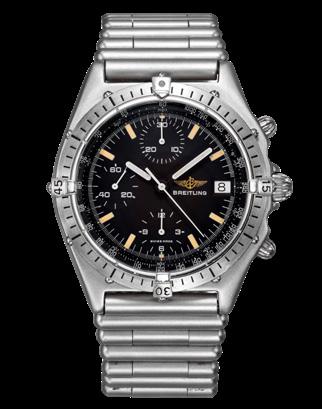
FRECCE TRICOLORI CHRONOGRAPH
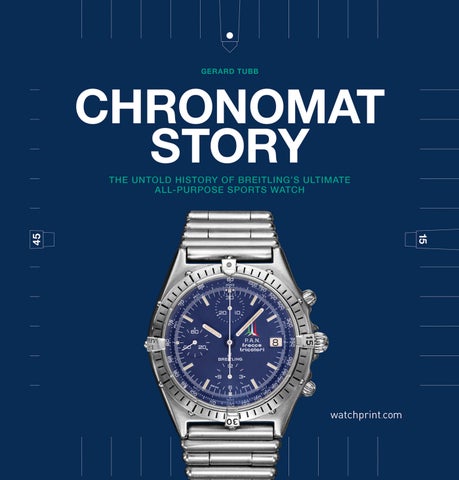
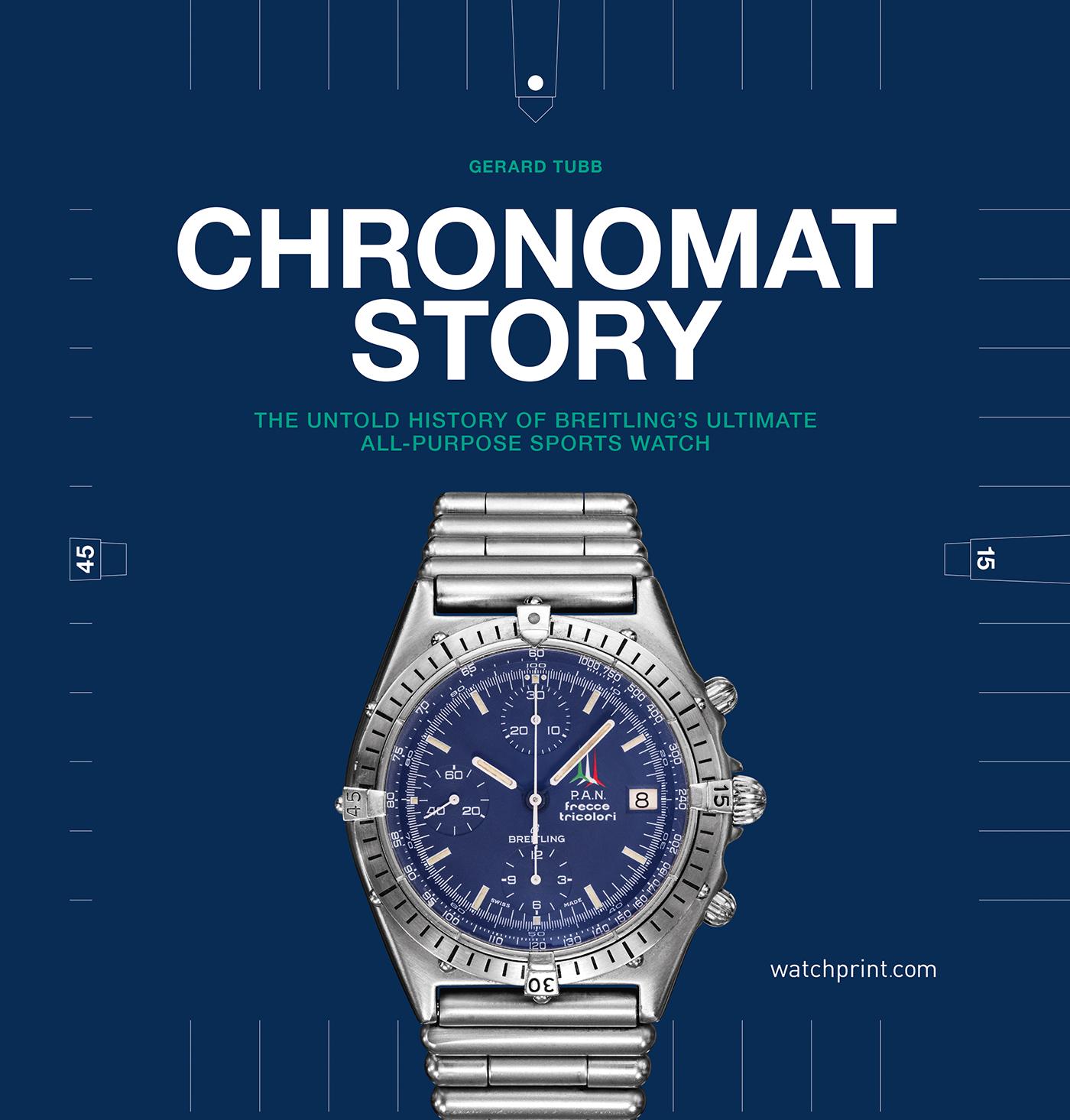
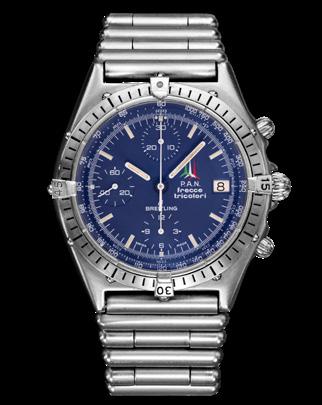
Developed for Italy’s Frecce Tricolori aerobatic team, the automatic chronograph that kickstarted Breitling’s resurgence under Ernest Schneider. Built to military specifications in 1983 and gifted to the squadron in 1984. It was exclusive to DPW, the private label that commissioned the design.
REF. 80950
1987 1985 1984
CHRONOMAT
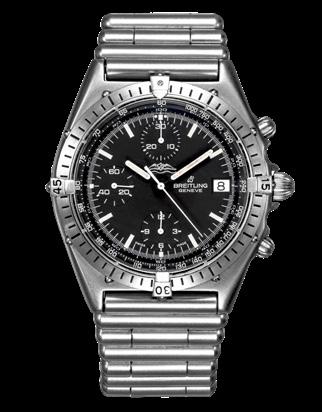
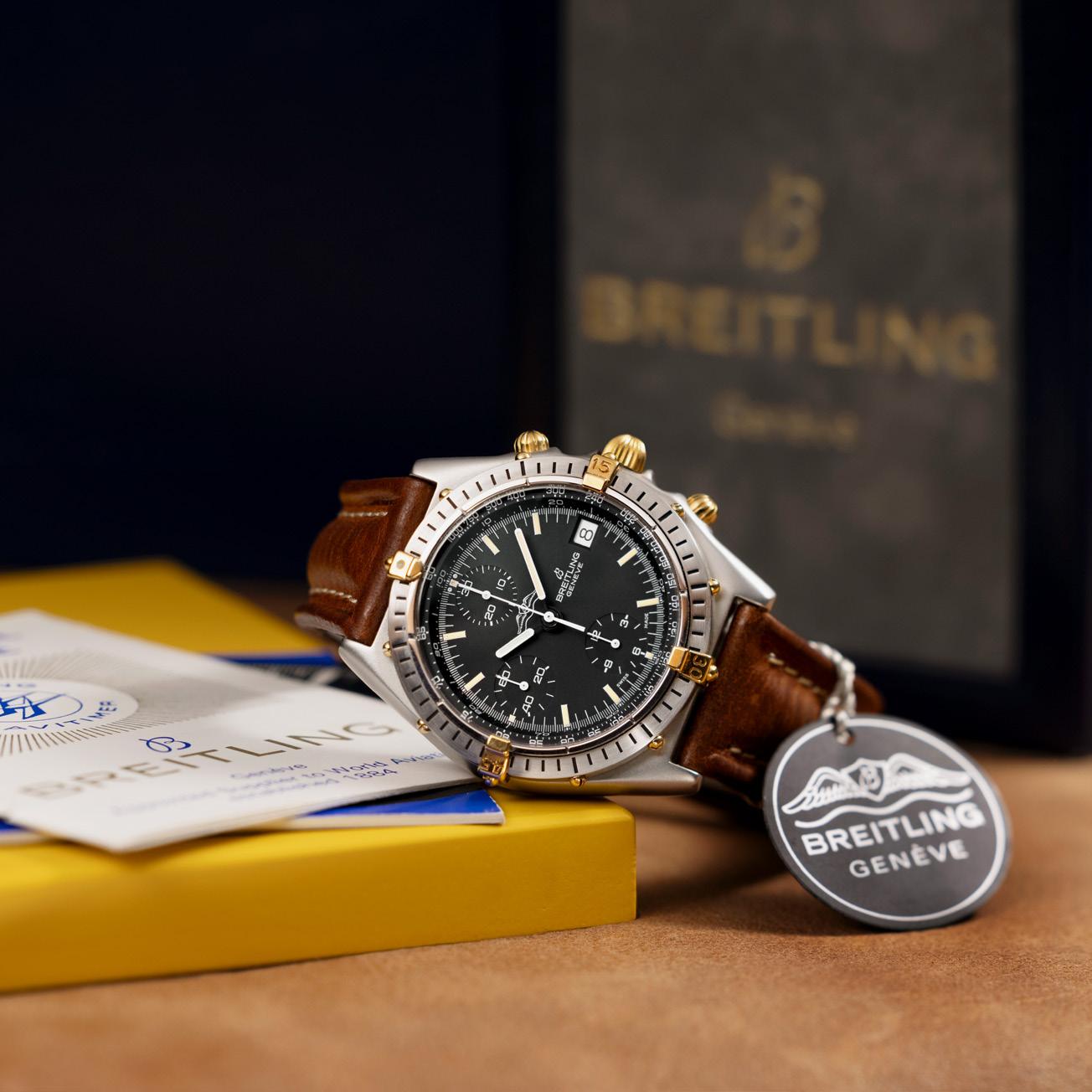
Identical to the squadron’s watch except for the dial color, logo, and caseback. With the AOPA-style logo and lumed dots flanking the 12 o’clock index, it was produced for less than a year. There were six dial combinations in stainless steel and two-tone.
CHRONOMAT
The 1985 catalog introduced Breitling’s wings-and-anchor logo. The dial evolved alongside it with bigger subdials and removal of the lumed dots at 12 o’clock. A small DPW run followed, distinguished by a blue dial and the Frecce Tricolori logo.
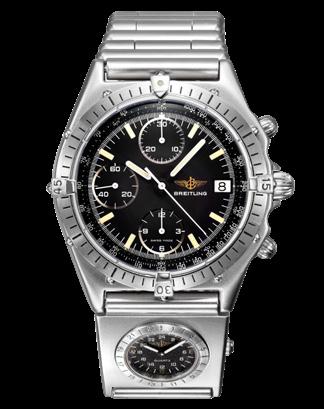
CHRONOMAT
Contrasting rings surrounded the subdials. This example shows the UTC module introduced the same year. The reference number changed to 81.950 in 1988, then to 13047 in 1989, when a prefix letter was added to denote the case material. REF. 81950 A
An unexpected phone call Grenchen, Switzerland, 1978
If you love airplanes like Ernest Schneider did, an office in Grenchen was hard to beat. On the edge of Switzerland’s Jura mountains with their spectacular scenery and fresh mountain air, it had an all-important airport where he could park his Beechcraft Bonanza plane. For the aviator-entrepreneur, it was the perfect base for his growing watch company, Sicura.
“Ernest Schneider commutes by private plane between [Sicura’s] four assembly factories at
Grenchen, Bonfol, Salvan, and Melano,” the company catalog proudly proclaimed. “The designs of this dynamic collection are inspired by Mr. Schneider and are appreciated most by the 16 to 35 year age group.”
The expensive plane was a symbol of the success the 57-year-old had earned since he spoke at the 1968 La Chaux-de-Fonds meeting on the threat of foreign competition. He had been better equipped to capitalize on the
1. The spectacular scenery of the Jura Mountains was on the doorstep of Ernest Schneider’s office. It was the perfect backdrop for flights in the private plane he adored.
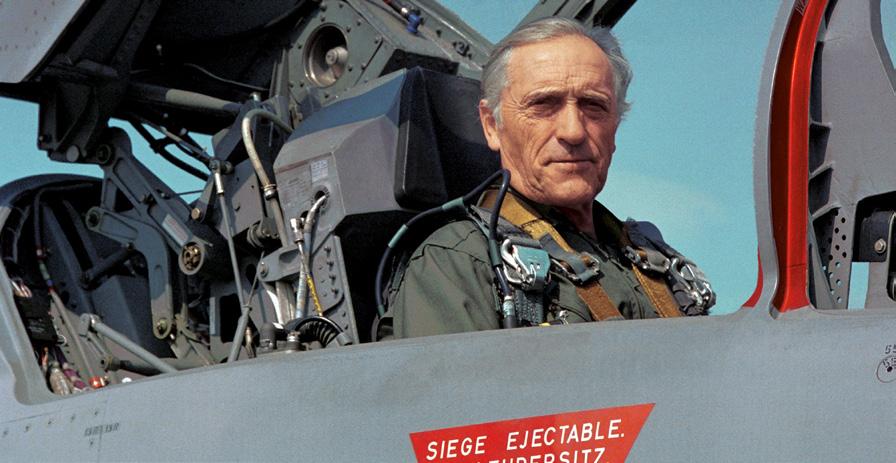
2. Ernest Schneider was obsessed with flying, and in awe of aerobatic pilots.
Italian flair
The big question about the Chronomat has always been: Where did it come from? How did Ernest Schneider’s tiny Breitling team that lacked any professional designers create an all-new watch that shocked the industry in 1984 and has continued to turn heads ever since? The answer lies in Schneider’s energetic efforts to turn a profit.
The Frecce Tricolori request was the third commission to reach Breitling in just a few months. The other two could not have been more different. One was a fashion watch for the sportswear label Ellesse. The other was a technically demanding professional dive watch. Without these two projects, the Chronomat as we know it would never have been created.
The Ellesse commission was a coup for Breitling—the sportswear brand was both high profile and the height of fashion. At the Wimbledon tennis tournament the previous summer, both Women’s Singles finalists had worn prominently-branded Ellesse clothing.
To create the watch, Ellesse engaged Claudio Giovagnoni, an architect and the co-founder
of a trendy Italian design studio called Archap. “I decided to entrust its production to Breitling,” Giovagnoni recalled. “We thought it appropriate to involve a watchmaking expert as consultant, and chose Gino Macaluso.”
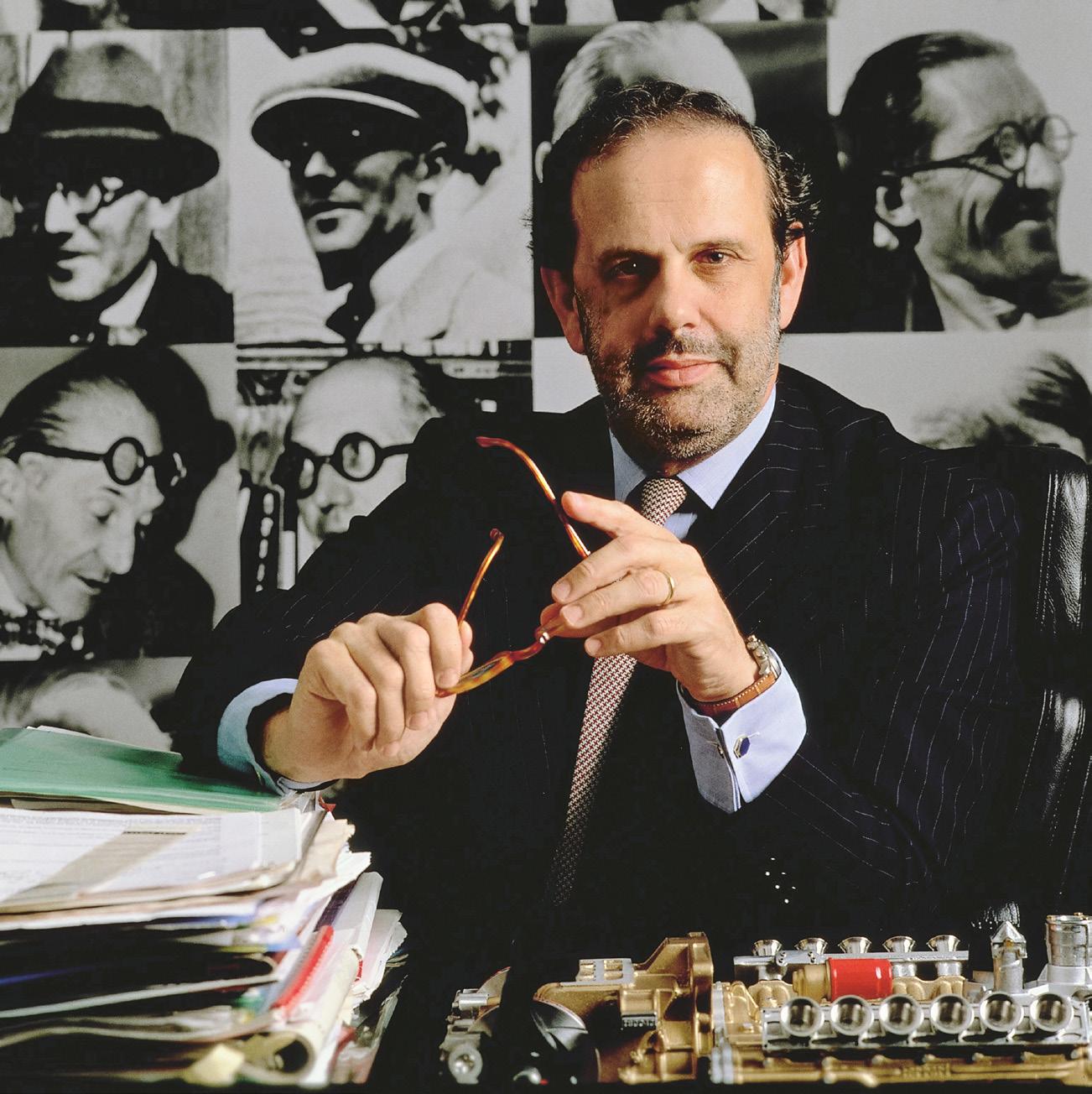
A trained architect, former rally champion, and the son of a watch distributor, Macaluso had stepped into the family business when his father died in the mid 1970s. He was 34 when Giovagnoni introduced him to Schneider. Once again in the history of the Chronomat, the stars aligned. Not only were two professional designers working closely with Schneider in the crucial months of the Chronomat’s creation, but Macaluso was ideally positioned to seize the opportunities it offered, on the way to becoming one of the most influential figures in Swiss watchmaking.
Macaluso, pictured in the 1990s.
Gino
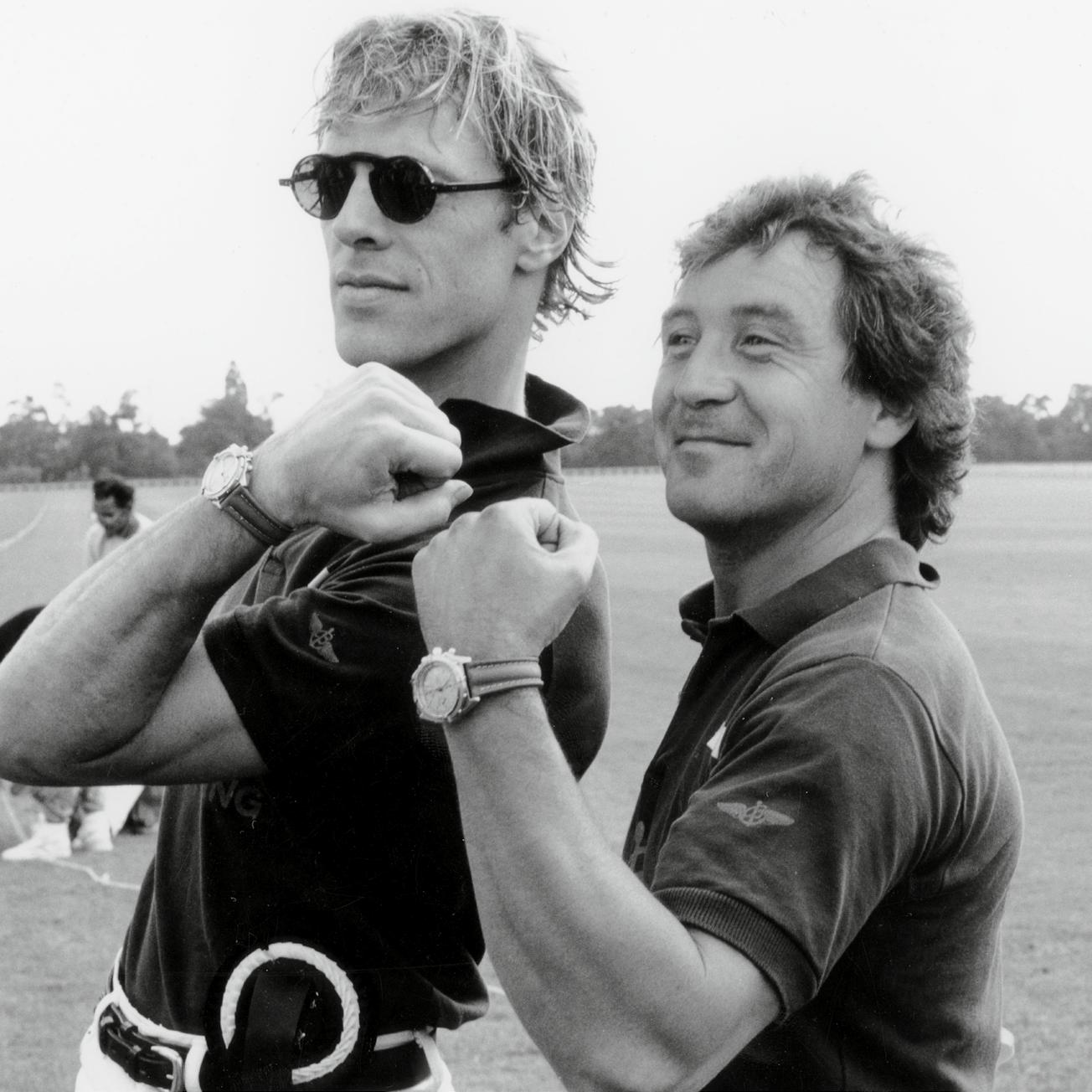
Drummers Stewart Copeland of the Police (left) and Kenney Jones of the Who with their winners’ Chronomats at the 1988 All Stars Rock and Roll Polo Day in Berkshire, England.
In the U.K., Schneider went all out for high society. Renowned watch collector Prince Ernst of Hanover set up The Watch Gallery in London with his wife, Grace Kelly’s daughter Princess Caroline of Monaco. Breitling was added to their stable—either to complement the aristocratic connections of Macaluso and Parodi in Italy, or because of them.
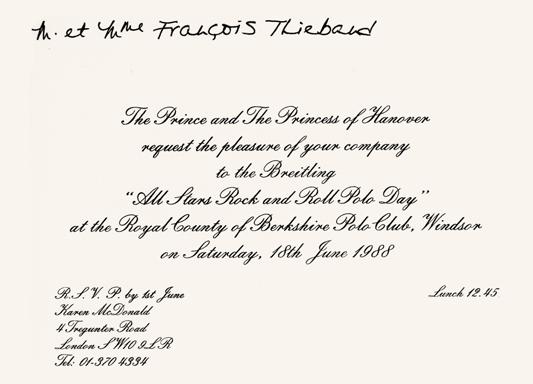
“You might see Michael Schumacher there, negotiating in the downstairs bar over a glass of champagne, or Madonna popping in to hold the hand of Guy Ritchie,” reported Tatler magazine. One of Prince Ernst’s first Breitling events was the All Stars Rock and Roll Polo Day in 1988 at the Royal County of Berkshire Polo Club founded by music mogul Bryan Morrison.
Dressed in Breitling polo shirts, the winning team—comprising Morrison, Genesis
Guitarist Mike Rutherford, and drummers
Kenny Jones of The Who and Stewart Copeland of Police—collected Chronomats, while invited guests went home with their monogrammed invitations from The Prince and Princess of Hanover.
Around the Mediterranean, demand followed the travels of the fashionable jet set. When the managers of an English high-street jewelry chain attended a sales conference in Mallorca in 1989, they gazed with amazement at the Chronomats in the windows of highend jewelers. One of them was watch specialist Jonathan Scatchard “They had black dials, with brown straps,” he recalled. “And we said, ‘Nobody’s ever done that before!’”
High society connections raised the Chronomat’s image across Europe. In the U.K., Breitling was promoted by Prince Ernst of Hanover and his wife Princess Caroline of Monaco.
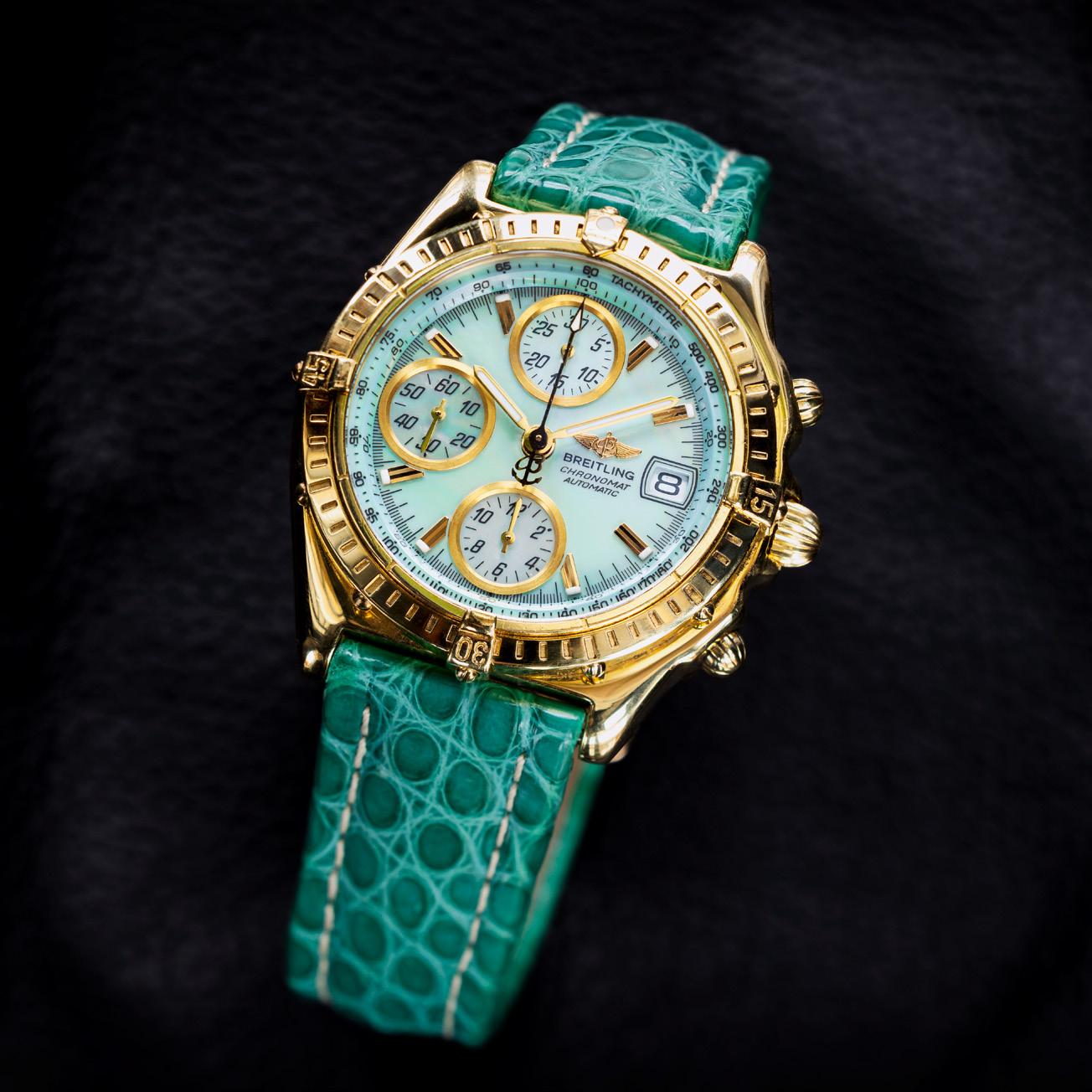
1. Chronomat GT, ref. K13050.1, 1997, 18k gold.
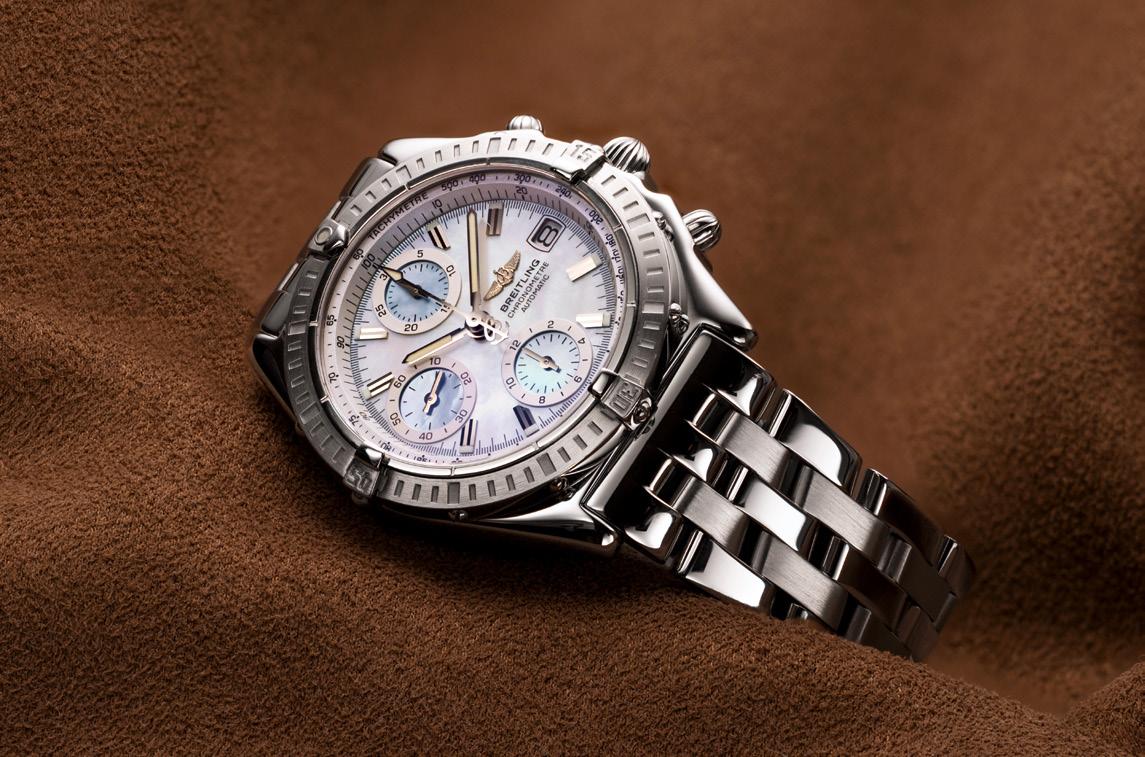
2. Chronomat, limited edition, ref. A13352, 2001
2.
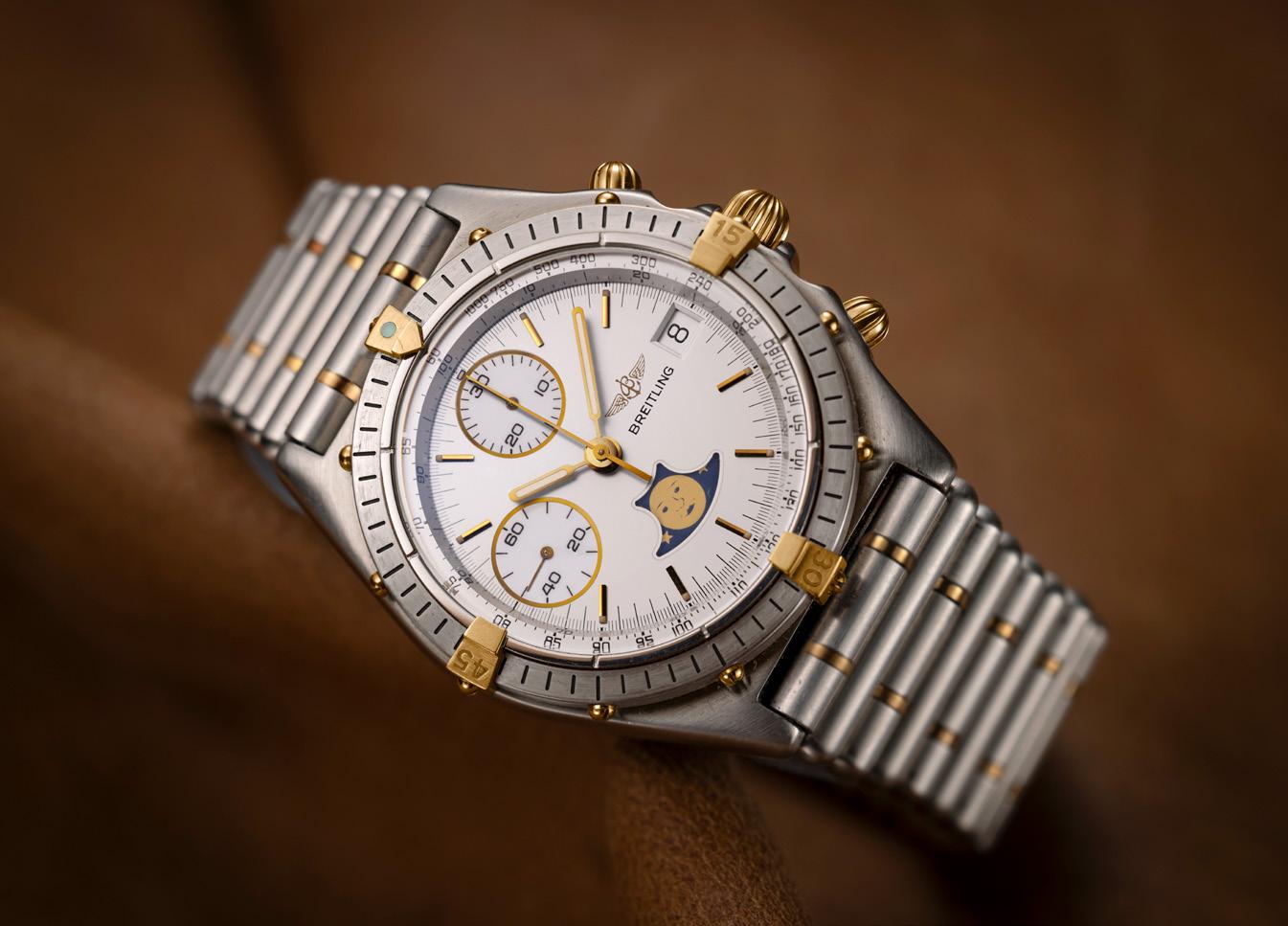
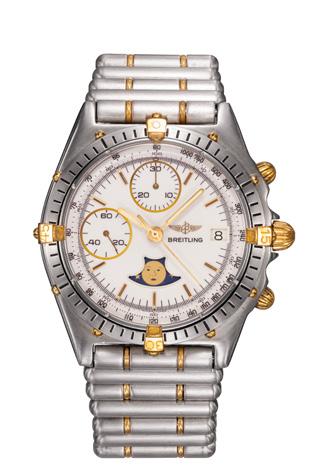
Chronomat La Luna 1989
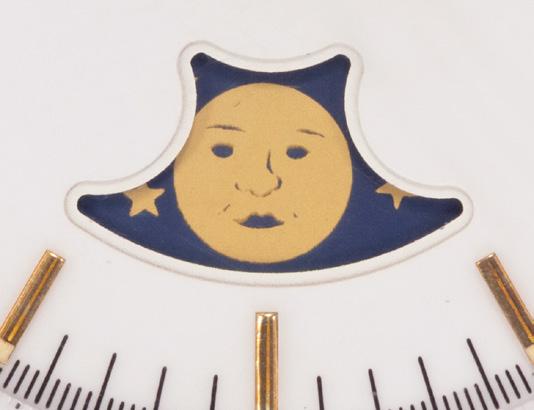
Like all pre-1990s Chronomats, the La Luna carried the 81950 reference, despite being aesthetically and functionally distinct from the core models. Its 6 o’clock hour subdial was replaced with a moonphase aperture.
Launched at the end of the decade, it came in a two-tone case with black or white dials. Uncommon and unusual, the La Luna stood out for pairing the Chronomat’s sporty character with a decidedly dressier complication.
2024
Super
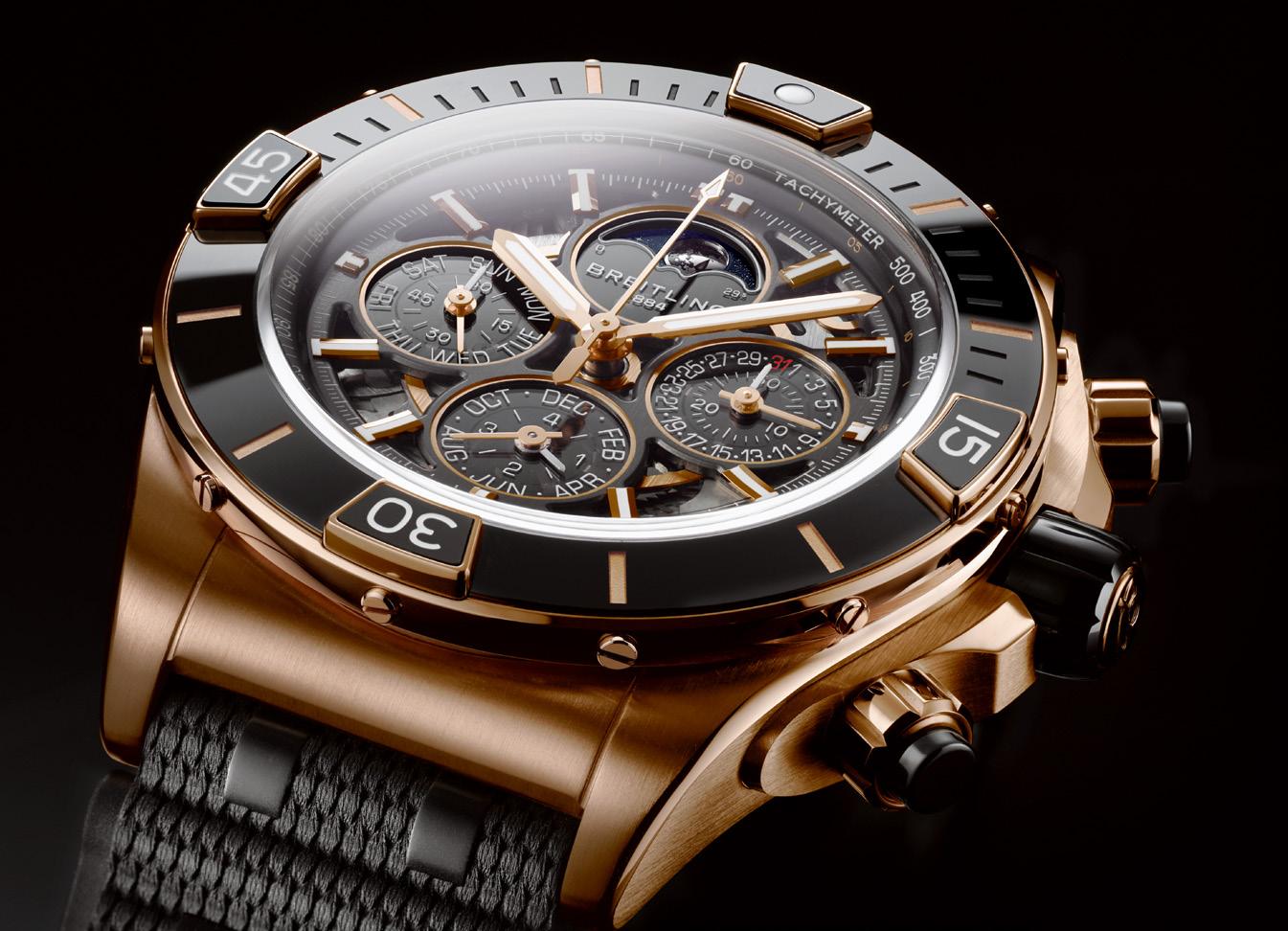
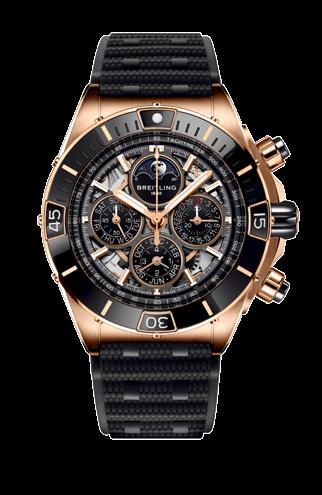
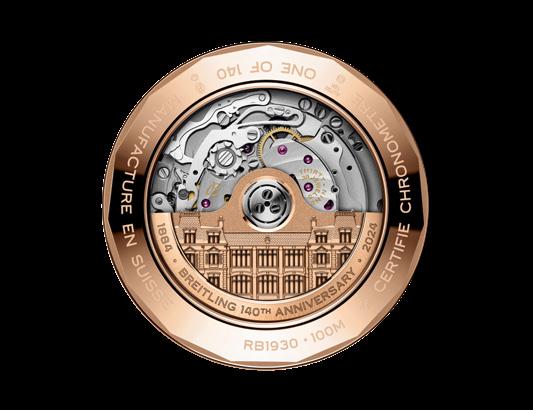
Chronomat B19 140th Anniversary Edition
To mark its 140th anniversary, Breitling introduced three commemorative pieces: a Navitimer, a Premier, and this Super Chronomat. What set it apart was the debut of the B19 caliber, a perpetual calendar chronograph with a moonphase at 12 o’clock. The combination of these complications is usually reserved for the industry’s top price bracket, where such movements are almost always manually
wound. The B19, by contrast, is automatic with a remarkable 96-hour power reserve, a particularly practical feature for a perpetual calendar that takes time to set. The watch also stood out for its case design. Compared to the standard Chronomat, it grew from 42 to 44mm and added a ceramic bezel insert and screw-down pushers. Most strikingly, it featured a skeletonized dial—the first of its kind for Breitling.
COLLECTOR’S TOOLBOX
The following pages provide the information required to identify automatic Chronomats from the launch in 1984 to 2009, a timeframe that covers the neo-vintage ETA 7750 and Breitling caliber B13 powered models.
This is the first time that variations to dials, hands, and casebacks have been identified and assigned to a production date, providing an invaluable resource for collectors and enthusiasts alike.