Table of Contents
02
Pioneers in Ecological Restoration / 90
Preface Portraits of Chinese Wild Plants: Deciphering the Codes of Life across the Vast Lands of China / 11
01
Rare Plants Life Ark: The Last Refuges of Endangered Plants / 18
6
Pioneer Plants
Taraxacum mongolicum / 93
Ampelopsis humulifolia / 119
Phragmites australis / 95
Lindernia antipoda / 121
Commelina communis / 97
Medicago minima / 123
Parthenocissus tricuspidata / 99
Potentilla supina / 125
Pennisetum alopecuroides / 101
Paederia foetida / 127
Humulus scandens / 103
Cyperus serotinus / 129
Pueraria montana / 105
Equisetum ramosissimum / 131
Chamerion angustifolium / 107
Kummerowia striata / 133
Lespedeza bicolor / 109
Cynanchum thesioides / 135
Imperata cylindrica / 111
Oxybasis glauca / 137
Meconopsis punicea / 21
Michelia wilsonii / 55
Chenopodium album / 113
Tribulus terrestris / 139
Cypripedium tibeticum / 23
Ormosia hosiei / 57
Setaria faberi / 115
Portulaca oleracea / 141
Cypripedium macranthos / 25
Acer amplum subsp. catalpifolium / 59
Chorispora tenella / 117
Funaria hygrometrica / 143
Paphiopedilum gratrixianum / 27
Emmenopterys henryi / 61
Cypripedium guttatum / 29
Urophysa rockii / 63
Oyama sinensis / 31
Eurycorymbus cavaleriei / 65
Geodorum eulophioides / 33
Antiaris toxicaria / 67
Paris polyphylla / 35
Dendrobium nobile / 69
Paris verticillata / 37
Bletilla striata / 71
Cephalotaxus oliveri / 39
Adoxa moschatellina / 73
Ficus microcarpa / 149
Astragalus sinicus / 165
Abies beshanzuensis / 41
Tetradoxa omeiensis / 75
Rhizophora apiculata / 151
Marsilea quadrifolia / 167
Cercidiphyllum japonicum / 43
Helleborus thibetanus / 77
Thyrocarpus glochidiatus / 153
Hemisteptia lyrata / 169
Picea brachytyla / 45
Asarum forbesii / 79
Pontederia vaginalis / 155
Cirsium arvense / 171
Rhododendron calophytum / 47
Asarum heterotropoides / 81
Pontederia korsakowii / 157
Vicia unijuga / 173
Davidia involucrata / 49
Orobanche pycnostachya / 83
Kyllinga polyphylla / 159
Plants of the Polygonaceae / 174
Acer flabellatum / 51
Ceropegia paohsingensis / 85
Eriocaulon buergerianum / 161
Plantago asiatica / 185
Rosa chinensis var. spontanea / 53
Linnaea borealis / 87
Eriocaulon cinereum / 163
Plantago depressa / 187
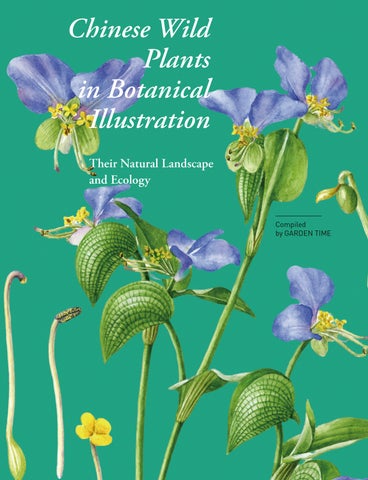
Chinese Wild Plants in Botanical Illustration
03
Improver Plants Land Doctors: Plants that Heal Damaged Ecosystems / 146
Table of Contents
7
Table of Contents
02
Pioneers in Ecological Restoration / 90
Preface Portraits of Chinese Wild Plants: Deciphering the Codes of Life across the Vast Lands of China / 11
01
Rare Plants Life Ark: The Last Refuges of Endangered Plants / 18
6
Pioneer Plants
Taraxacum mongolicum / 93
Ampelopsis humulifolia / 119
Phragmites australis / 95
Lindernia antipoda / 121
Commelina communis / 97
Medicago minima / 123
Parthenocissus tricuspidata / 99
Potentilla supina / 125
Pennisetum alopecuroides / 101
Paederia foetida / 127
Humulus scandens / 103
Cyperus serotinus / 129
Pueraria montana / 105
Equisetum ramosissimum / 131
Chamerion angustifolium / 107
Kummerowia striata / 133
Lespedeza bicolor / 109
Cynanchum thesioides / 135
Imperata cylindrica / 111
Oxybasis glauca / 137
Meconopsis punicea / 21
Michelia wilsonii / 55
Chenopodium album / 113
Tribulus terrestris / 139
Cypripedium tibeticum / 23
Ormosia hosiei / 57
Setaria faberi / 115
Portulaca oleracea / 141
Cypripedium macranthos / 25
Acer amplum subsp. catalpifolium / 59
Chorispora tenella / 117
Funaria hygrometrica / 143
Paphiopedilum gratrixianum / 27
Emmenopterys henryi / 61
Cypripedium guttatum / 29
Urophysa rockii / 63
Oyama sinensis / 31
Eurycorymbus cavaleriei / 65
Geodorum eulophioides / 33
Antiaris toxicaria / 67
Paris polyphylla / 35
Dendrobium nobile / 69
Paris verticillata / 37
Bletilla striata / 71
Cephalotaxus oliveri / 39
Adoxa moschatellina / 73
Ficus microcarpa / 149
Astragalus sinicus / 165
Abies beshanzuensis / 41
Tetradoxa omeiensis / 75
Rhizophora apiculata / 151
Marsilea quadrifolia / 167
Cercidiphyllum japonicum / 43
Helleborus thibetanus / 77
Thyrocarpus glochidiatus / 153
Hemisteptia lyrata / 169
Picea brachytyla / 45
Asarum forbesii / 79
Pontederia vaginalis / 155
Cirsium arvense / 171
Rhododendron calophytum / 47
Asarum heterotropoides / 81
Pontederia korsakowii / 157
Vicia unijuga / 173
Davidia involucrata / 49
Orobanche pycnostachya / 83
Kyllinga polyphylla / 159
Plants of the Polygonaceae / 174
Acer flabellatum / 51
Ceropegia paohsingensis / 85
Eriocaulon buergerianum / 161
Plantago asiatica / 185
Rosa chinensis var. spontanea / 53
Linnaea borealis / 87
Eriocaulon cinereum / 163
Plantago depressa / 187
Chinese Wild Plants in Botanical Illustration
03
Improver Plants Land Doctors: Plants that Heal Damaged Ecosystems / 146
Table of Contents
7
02
Cypripedium tibeticum Terrestrial orchid Family: Orchidaceae Height:15–35cm (6–14 inches) Flowers: May to August Habitat: Open montane meadows, grassy slopes and forest margins Rare Plant / Ecological Specialist & Ornamental Potential
Ice queen of high altitudes
Plants that survive on the high plateau display remarkable adaptations to cold, wind and intense sunlight. Cypripedium tibeticum grows at elevations of 2,300–4,200 metres (7,546–13,780 feet) across the eastern Himalaya and southwestern China. The distinctive floral pouch varies in colour among populations, ranging from pink to deep maroon or nearly black. Pale markings around the opening help guide pollinators towards the entrance. Like other lady’s slipper orchids, the flower functions as a trap: visiting insects, particularly bumblebees, are lured into the pouch and must exit past the reproductive structures, thereby effecting pollination. Although best known for its striking appearance, the species has occasionally been used in regional herbal practice. Preparations of the root have been applied to reduce swelling or promote diuresis, but its use is limited and poorly documented compared with more established medicinal orchids. Wild populations of this high-mountain species remain vulnerable to habitat disturbance and collecting.
Cypripedium tibeticum
22
Chinese Wild Plants in Botanical Illustration
Cypripedium tibeticum
23
16
Acer flabellatum Deciduous shrub or small tree Family: Sapindaceae Height: Up to 10 metres (30 feet) Flowers: June Habitat: Montane broadleaved forests and forest margins Rare in China / Ornamental Potential
Winged seeds, wandering futures
Acer flabellatum is an attractive deciduous maple with distinctively fanshaped leaves and delicate flower clusters that develop into winged samaras, lending graceful movement to the tree. Each samara bears a single papery wing and is paired with another, together resembling miniature helicopter propellers. As they fall, they spin and drift slowly to the ground, using the wind to disperse their seeds far from the parent tree where they will not compete for resources. This elegant mechanism allows seedlings to establish across newly available ground. In China, Acer flabellatum is a locally uncommon maple confined to particular forest habitats within a relatively restricted range. Softly rounded in form, the tree may reach about 10 metres (30 feet) in height. Its reddish-brown wood is described as fine-grained, a characteristic typical of many maples.
Acer flabellatum
50
Chinese Wild Plants in Botanical Illustration
Acer flabellatum
51
22
Urophysa rockii Herbaceous perennial Family: Ranunculaceae Height: 5–20cm (2–8 inches) Flowers: December to March Habitat: Moist limestone cliffs and rock fissures near streams Rare Plant / Endemic & Ecological Specialist
Rediscovered after eighty years
Urophysa rockii survives on only a thin layer of mineral substrate and water seeping from rock crevices, a highly specialised limestone karst habitat that severely limits its distribution. Endemic to China, it is known from very few localities in northern Sichuan, where populations are small and vulnerable to disturbance. The species is regarded as critically endangered in the wild. First collected in 1925, Urophysa rockii then disappeared from botanical records for nearly eight decades until its remarkable rediscovery in 2005. This long absence contributed to its reputation as one of China’s rarest and most enigmatic plants. The brilliantly coloured flowers of Urophysa rockii change subtly with the seasons, as do its distinctive fan-shaped leaflets. At first glance the blooms appear to have ordinary petals, but the showy sky-blue lobes are in fact petaloid sepals. Emerging directly from rock faces, the flowers form a striking display with their central cluster of yellow stamens. The leaves are also known to contain aromatic compounds, suggesting potential for further scientific study.
Urophysa rockii
62
Chinese Wild Plants in Botanical Illustration
Urophysa rockii
63
01
Ficus microcarpa Tree Family: Moraceae Height: Up to 20–30 metres (65–100 feet) Flowers: May to June Habitat: Forest margins, rocky slopes, coastal plains and urban environments Improver Plant / Soil Stabiliser & Canopy Former
Where a whole forest springs from a single tree
Ficus microcarpa, distributed across tropical and subtropical regions, can reach heights of 30 metres (100 feet), with trunks approaching 2 metres (7 feet) in diameter when reinforced by fused prop roots. Its branches are dotted with lenticels that give rise to aerial roots, which descend vertically until they reach the ground, where they take hold and thicken, forming additional supporting trunks. As this process repeats, a single long-lived tree can generate more than 1,000 prop roots, creating the impression of a forest sustained by one parent tree. This remarkable growth form underpins its ecological value. Its extensive root network stabilises soil over a wide area, while its vast, interconnected crown moderates temperature, retains moisture and creates shaded, sheltered conditions. For these reasons it is widely planted along roadsides and in open landscapes, contributing to environmental resilience as well as human comfort. Ficus microcarpa also appears in regional materia medica. Preparations of the roots, bark and leaves are used traditionally for inflammation and skin complaints, and modern studies report antimicrobial and antioxidant activity in extracts. In this way, its role extends beyond soil and shade, supporting both landscape and community.
Ficus microcarpa
148
Chinese Wild Plants in Botanical Illustration
Ficus microcarpa
149
05
Pontederia korsakowii Semi-aquatic perennial Family: Pontederiaceae Height: 30–70cm (12–28 inches) Flowers: July to August Habitat: Marsh margins, shallow wetlands, pond edges and rice fields Improver Plant / Wetland Stabiliser & Fodder
Beauty beneath the rain
Pontederia korsakowii is closely associated with seasonal rainfall. Its Chinese name is derived from a blending of Japanese words meaning ‘rain’ and ‘long-blooming flowers’, reflecting its tendency to flower vigorously during the plum rain season. In parts of Southeast Asia, related species are gathered fresh to adorn representations of the Thai water goddess Mae Phra Khongkha during the Songkran Festival. Beyond its visual appeal, Pontederia korsakowii plays a practical role in wetland ecosystems. Growing along shallow, waterlogged margins, its root system helps stabilise soft sediments, slow water movement and trap suspended particles. Through these interactions, the plant contributes to clearer water and nutrient buffering during periods of heavy rainfall, supporting wetland resilience. In parts of China, it is also harvested for use as green fodder in wetland farming systems. In regional herbal practice, the whole plant has been used for heat-related conditions and minor respiratory complaints. Although described in general terms as cooling and detoxifying, Pontederia korsakowii does not occupy a prominent place in the classical materia medica.
Pontederia korsakowii
156
Chinese Wild Plants in Botanical Illustration
Pontederia korsakowii
157
04
Dianthus chinensis Herbaceous perennial Family: Caryophyllaceae Height: 30–50cm (12–20 inches) Flowers: May to June Habitat: Hillsides, grasslands, forest margins and open ground Indicator Plant / Medicinal & Ornamental
Admired by gardeners and geologists
Species of Dianthus, including Dianthus chinensis, are botanical sources of the traditional Chinese medicinal herb Qu Mai. In classical herbal practice Qu Mai has long been used to promote diuresis, clear damp-heat and regulate blood circulation. It is recorded in classical materia medica texts, including the Ming dynasty Compendium of Materia Medica. In geological field observations, Dianthus chinensis has sometimes been noted on mineral-rich soils, and its occurrence has occasionally been discussed as a possible indicator of gold-bearing ground when considered alongside other environmental evidence. Beyond these associations, Dianthus chinensis is widely cultivated as an ornamental garden plant. Its bright, fringed flowers and tolerance of cool climates have made it a familiar feature of gardens across much of the temperate world.
Dianthus chinensis
210
Chinese Wild Plants in Botanical Illustration
Dianthus chinensis
211
03
Mimosa pudica Subshrub Family: Fabaceae Height: 30–100cm (12–39 inches) Flowers: March to October Habitat: Roadsides, grassland, field margins and disturbed ground Invasive Plant / Ornamental Escape & Prolific Seeder
Sensitive leaves, stubborn spread
Native to tropical America, Mimosa pudica is now widely naturalised in southern China and other warm regions. It favours open, disturbed habitats where it can form low, spiny thickets. The species is known as the sensitive plant because its leaflets fold rapidly when touched. This movement is controlled by specialised swollen joints called pulvini at the base of the leaf stalk, its branches and the individual leaflets. Rapid changes in water pressure within these structures cause the leaflets to close and the whole leaf to droop. Beyond its curiosity value, the species spreads effectively through abundant hard-coated seeds that persist in soil. Its prickly stems deter grazing, and dense growth can suppress neighbouring vegetation. In some regional herbal traditions, mashed leaves are applied externally to treat minor skin conditions. The plant contains bioactive compounds including mimosine. Internal use therefore requires caution, as toxicity has been reported in livestock when consumed in large quantities.
Mimosa pudica
220
Chinese Wild Plants in Botanical Illustration
Mimosa pudica
221
21
Erigeron canadensis Annual Family: Asteraceae Height: 50–100cm (20–39 inches) Flowers: May to September Habitat: Disturbed ground, field margins, roadsides and urban wasteland Invasive Plant / Agricultural Weed & Wind Dispersal
Small seeds with big reach
Native to North America, Erigeron canadensis is now widely naturalised across China and many other regions of the world. It produces vast numbers of lightweight seeds equipped with fine hairs, allowing them to travel long distances on the wind. This capacity enables rapid colonisation of newly disturbed soils, construction sites and cultivated fields. In agricultural settings, dense stands can compete strongly with crops for light, nutrients and moisture. The species is also notable for its increasing resistance to commonly used herbicides in some regions, complicating field management. Experimental studies suggest that plant extracts may inhibit the germination of neighbouring species, although its success is primarily attributed to prolific seed production and ecological adaptability. In some regional herbal practice, Erigeron canadensis is described as bitter and cool in nature. It is associated with functions such as clearing heat, resolving dampness, promoting blood circulation and reducing swelling, and has been used locally for conditions including dysentery and minor traumatic injury. Tender stems and leaves may also be used as fodder, though such uses do little to offset its agricultural impact.
Erigeron canadensis
262
Chinese Wild Plants in Botanical Illustration
Erigeron canadensis
263
13
Rosa laevigata Climbing shrub Family: Rosaceae Height: Up to 5 metres (16 feet) Flowers: April to June Habitat: Sunny scrub, woodland margins and streamside thickets Nectar Plant / Mid-Season Forage & Medicinal
White blooms along sunny edges
A spiny, evergreen climber, Rosa laevigata bears large, single white flowers that stand out against glossy foliage. Flowering from mid- to late spring, its open blooms expose numerous yellow stamens and accessible nectar, attracting bees and other insects as woody shrubs come into prominence in the seasonal succession. The dried fruit, known in traditional Chinese medicine as Jin Ying Zi, is recorded in classical materia medica as an astringent herb used to stabilise and consolidate, particularly in conditions involving excessive fluid loss. Traditionally described as sour and astringent in taste, it is associated with securing essence and supporting the body’s regulatory functions. The bristly hips are rich in sugars and vitamin C and have been incorporated into traditional food preparations in some regions. Beyond its medicinal value, the plant’s vigorous climbing habit and striking, fragrant flowers have made it a valued ornamental species in suitable climates.
Rosa laevigata
310
Chinese Wild Plants in Botanical Illustration
Rosa laevigata
311