YINKA ILORI, JANE ATFIELD & JAREH DAS
YINKA ILORI & MARTINO GAMPER
CHAIRS
Two Become One Parables
It Started with a Parable This Is Where It Started Because the Truth Is Bitter If Chairs Could Talk Home Affairs
Do Good Because of Tomorrow A Swimming Pool of Dreams Types of Happiness
Individual Chair Experiments There Is Good in All of Us
Iya Ni Wura
INDEX OF WORKS
JULIANKNXX: CHAIRMAN (No Dey Carry Last)
BIOGRAPHY
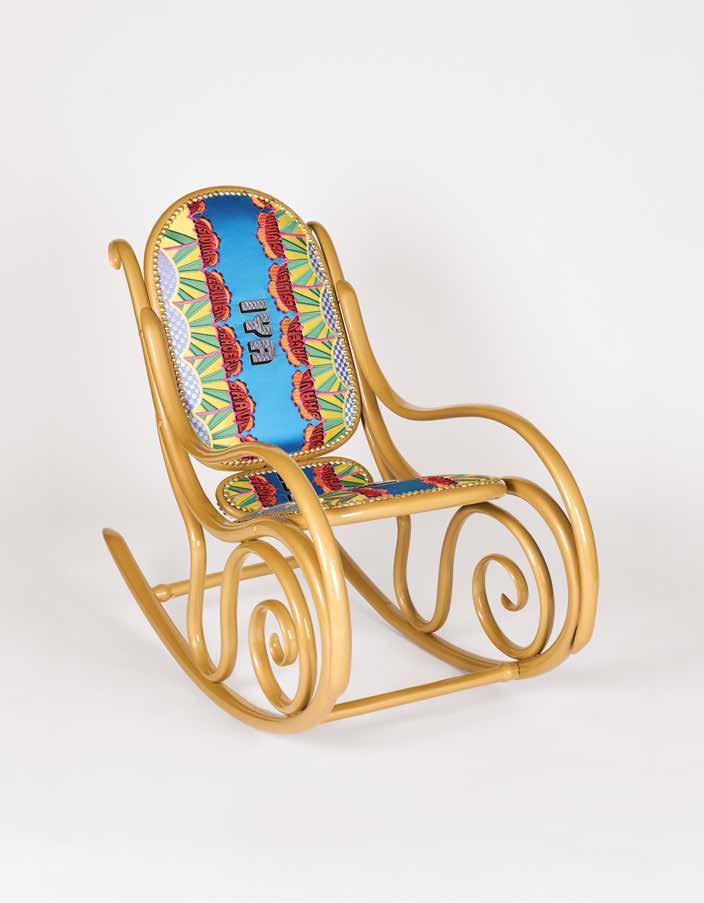
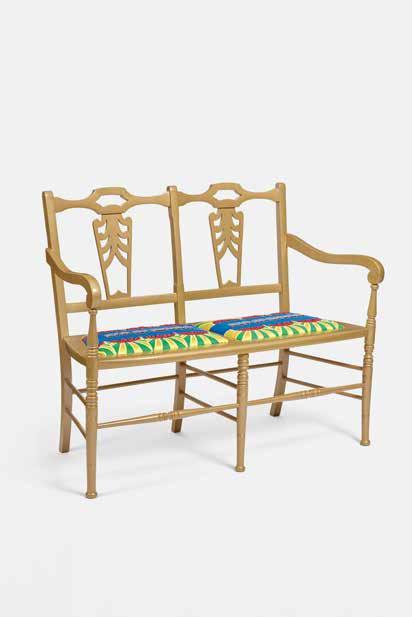
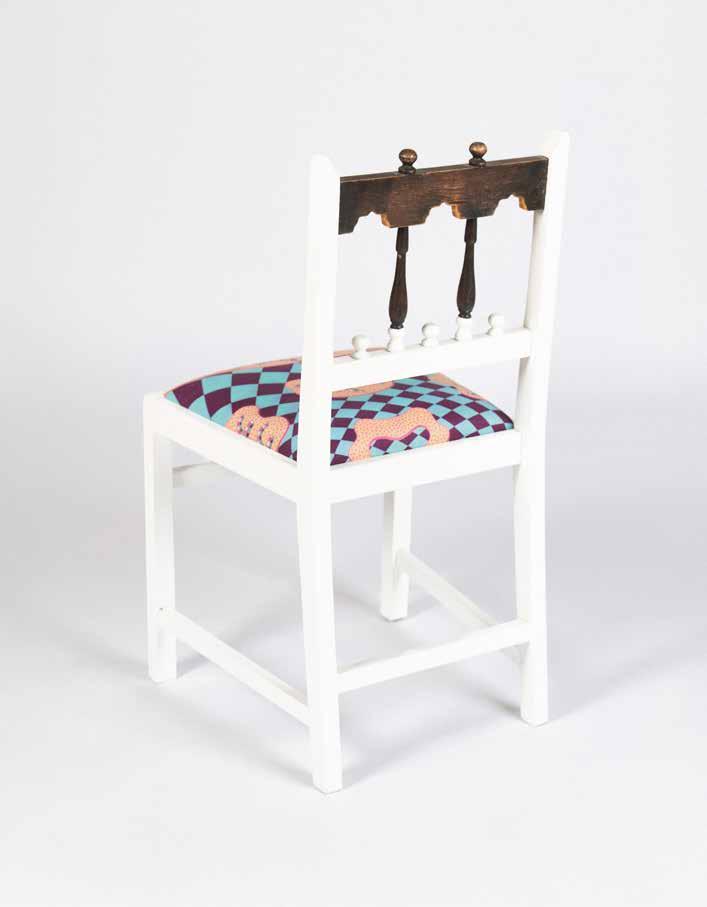
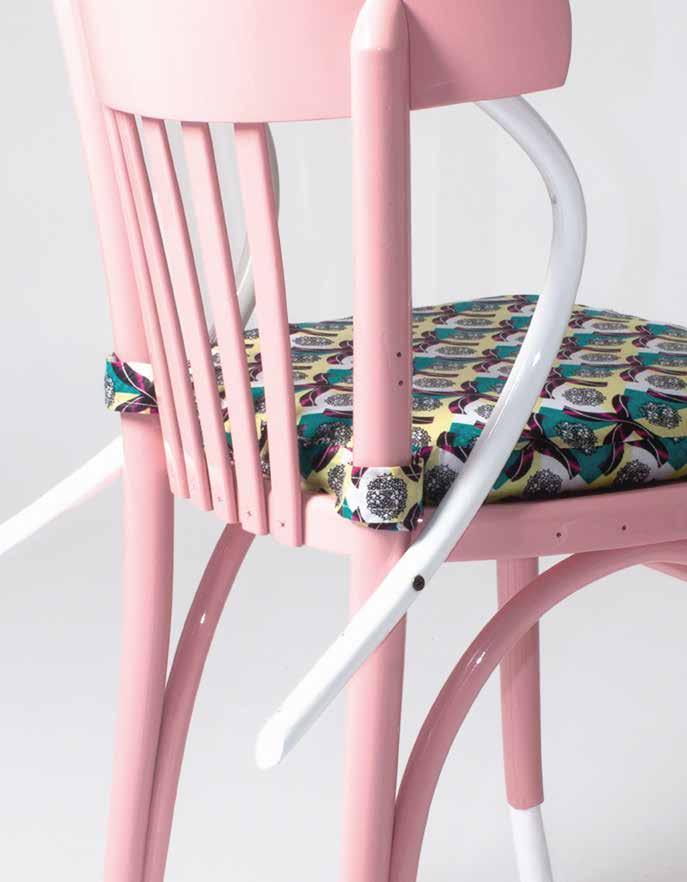
Here, Martino Gamper’s project 100 Chairs in 100 Days is a key catalyst. By reshaping discarded chairs into inventive hybrids, Gamper exposed the narrative possibilities of everyday furniture. For Ilori, this opened a door to thinking critically about design as a form of storytelling. He took this principle and infused it with Nigerian parables, African textiles, colour sensibilities, and diasporic humour. The result was an aesthetic that was not merely functional but also narrative, with each chair serving as a character, a proverb, or a chapter in a larger story of cultural resilience.
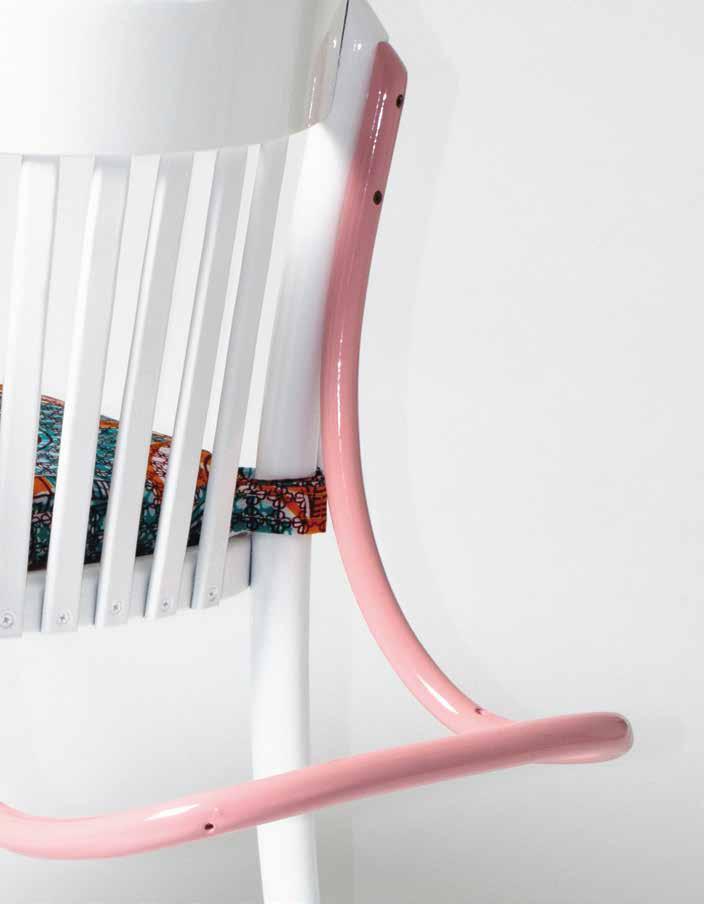
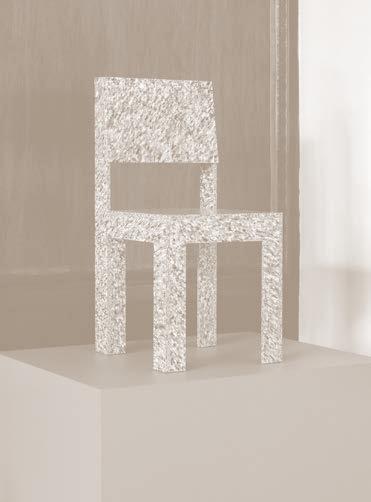
Mentorship and influence are also woven through Ilori’s journey. At university, Jane Atfield’s Our Chair project challenged students to reimagine a standard RCP2 chair (Img. 1) with recycled plastics, asking them to confront questions of sustainability and identity. Atfield’s insistence that material choices are both ethical and aesthetic planted seeds that continue to grow in Ilori’s practice. To upcycle is to acknowledge both scarcity and creativity; it is to insist that design has social, political, and ecological stakes. Ilori has carried this conviction into every project, from his first reassembled chairs to public commissions that reshape entire streetscapes with colour.
Colour itself is Ilori’s most exuberant language. His palette is not merely decorative but communicative, drawing from textiles, the bustle of Lagos markets, and the visual vibrancy of multicultural inner-city London. He uses colour to craft spaces of joy, to resist drab conformity, and to assert presence. In his hands, colour is emotion, rhythm, and resistance. It becomes a way of affirming that design can be a source of collective happiness as much as it is a tool for critical reflection.
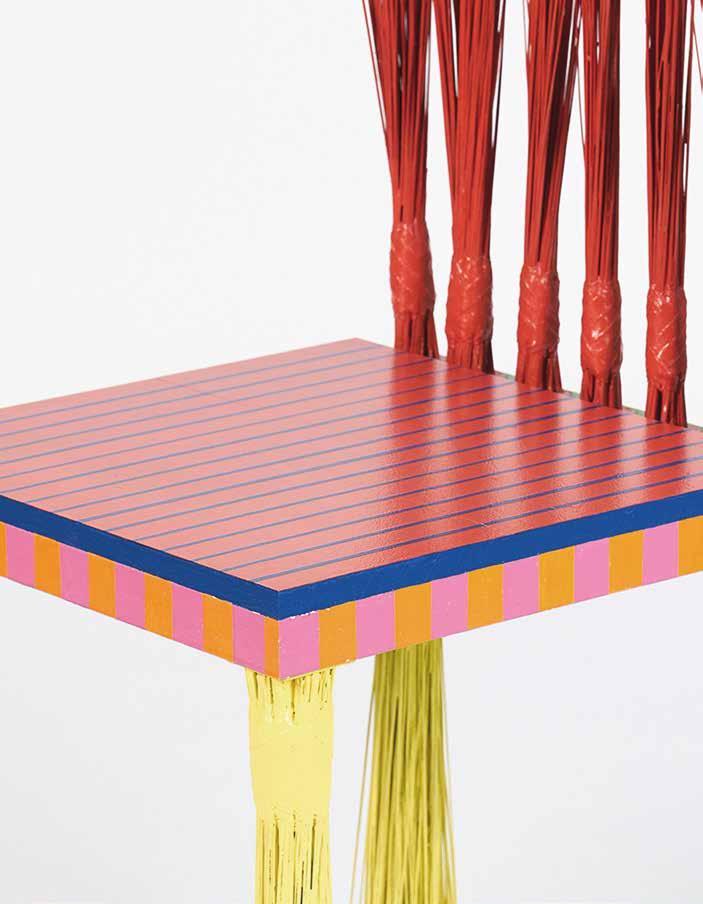
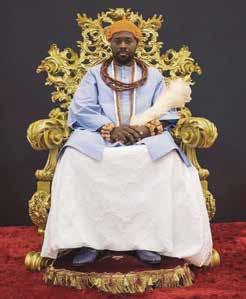
Chairs also stage power. The Nigerian photographer George Osodi captured this vividly in his portraits of Nigerian monarchs, Nigerian Monarchs (2006 — 2017), which challenge colonial-era photographs by instead capturing regional rulers in his home country, where thrones become extensions of sovereignty, embodying both theatricality and authority. To sit on such a throne is to be seen, revered, perhaps even feared. Ilori’s work engages with this history while reimagining it. He celebrates the dignity of both throne and stool, acknowledging that every seat can carry majesty. By elevating discarded furniture into sculptural statements, he collapses hierarchies: the humble plastic or wooden chair, when reimagined, can be as regal as any gilded throne.(Img. 2)
At the same time, Ilori’s chairs remind us of the importance of community. To gather around chairs is to gather around stories. The scratches, stitches, and welds of a chair become archives of touch and time. In this sense, his practice is not just about furniture, but about relationships—between people, between cultures, and between past and present. He designs not just for the solitary sitter but for collective memory. His chairs are invitations: sit, converse, imagine, belong. This is perhaps why Ilori’s work resonates so strongly in both gallery and street contexts. In museums, his chairs disrupt conven-
tional design narratives by foregrounding diasporic joy and play. In public spaces, they animate everyday life, transforming crossings, staircases, and playgrounds into theatres of colour and connection. His designs reflect a philosophy that rejects the separation between art and life. For Ilori, the chair is not only an object to be looked at but also a proposition about how we might live together.
The question then becomes: What stories do our chairs tell? Who gets to sit, and how? What happens when we elevate the overlooked and dignify the ordinary? Ilori’s work urges us to consider these questions. He demonstrates that design is never neutral, that even the most familiar objects carry histories of power, exclusion, aspiration, and joy. By reframing chairs as storytellers, he expands the possibilities of what design can mean and who it can serve.
As you turn these pages, take a seat. Consider the thrones, stools, and hybrids assembled here, reimagined by Yinka Ilori’s chairs. Remember the childhood chairs that shaped your own sense of self, the gatherings they witnessed, the authority or intimacy they signalled. Reflect on how a chair might carry a proverb, a song, or a joke. And allow Ilori’s practice to remind you that design is not only about objects but about the lives we live in their presence.
A chair is never just a chair. It is a memory, a story, a community, a throne. In Ilori’s hands, it is also a vision of joy, resilience, and possibility.
Welcome to the world of the Chairman.
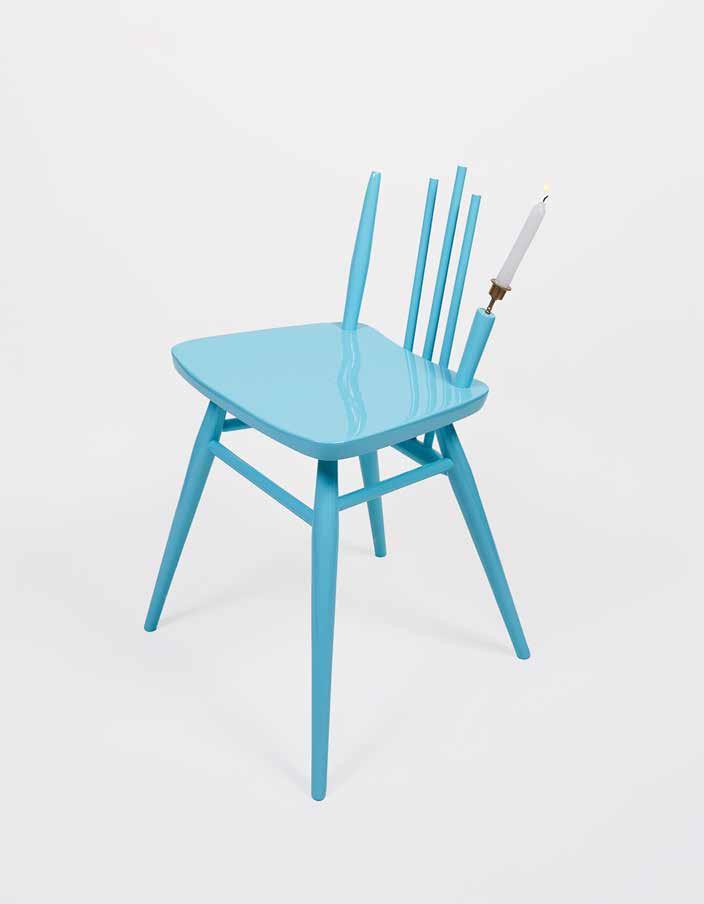
Let There Be Light reminds us not to judge others. Each rod, set at a different height, represents an individual on their own journey. The smallest rod holds a candle, its quiet light symbolising self-growth and the potential for transformation. Together, they affirm that every path has value and that focusing on your own journey allows others the space to shine in theirs.
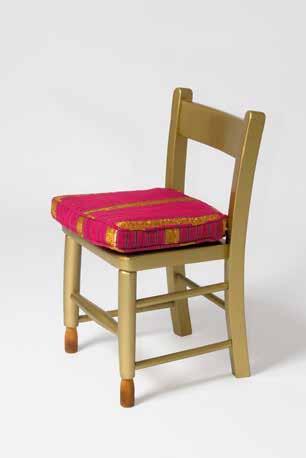
L Oba Kekere (Yoruba for “Small King”) features a standard design upholstered with traditional Nigerian Aso Oke fabric from Ondo State, Yinka’s mother’s homeland, lending the piece its cultural significance. One leg is cut off to reflect hierarchical status, with wooden pieces added back in to restore balance. Its intentionally shortened height, reminiscent of a child’s chair, symbolises the societal position of youth or those considered “small” within a hierarchy.
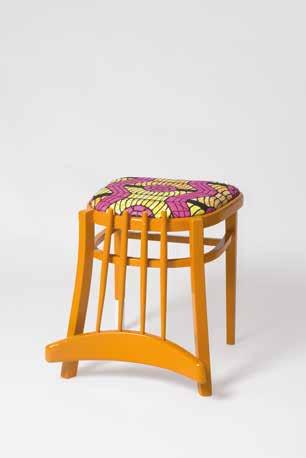
R Osumare (Yoruba for “Rainbow”) explores acceptance and the importance of embracing differences. Inspired by a friend opening up about his sexuality and masculinity, it reflects the emotional journey of finally expressing feelings that were long kept inside. The turned-down backrest symbolises the judgement people often face, being told their feelings are “wrong” when they are valid. The piece raises questions about sexuality and faith, challenging who has the authority to decide what is right or wrong.
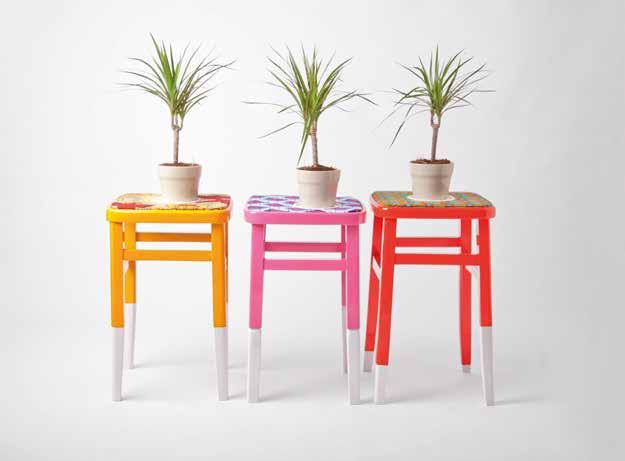
Baba Ibeta I–III are adorned in African wax print (Ankara), featuring a white cut-out representing the yam’s sweet interior. Drawing from the parable, “No matter how hot your anger is, it cannot cook yams,” the work explores patience and transformation, with plants symbolising growth.
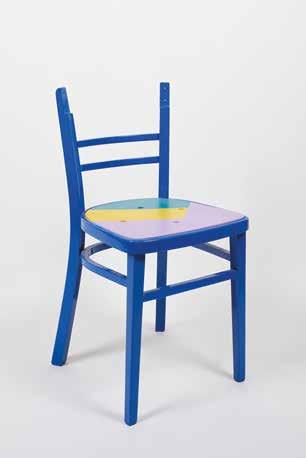
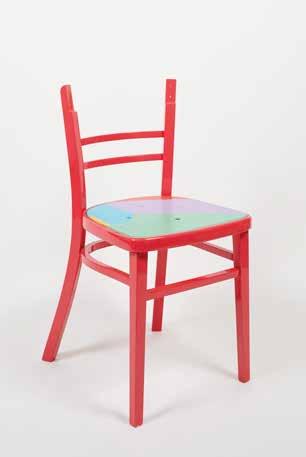
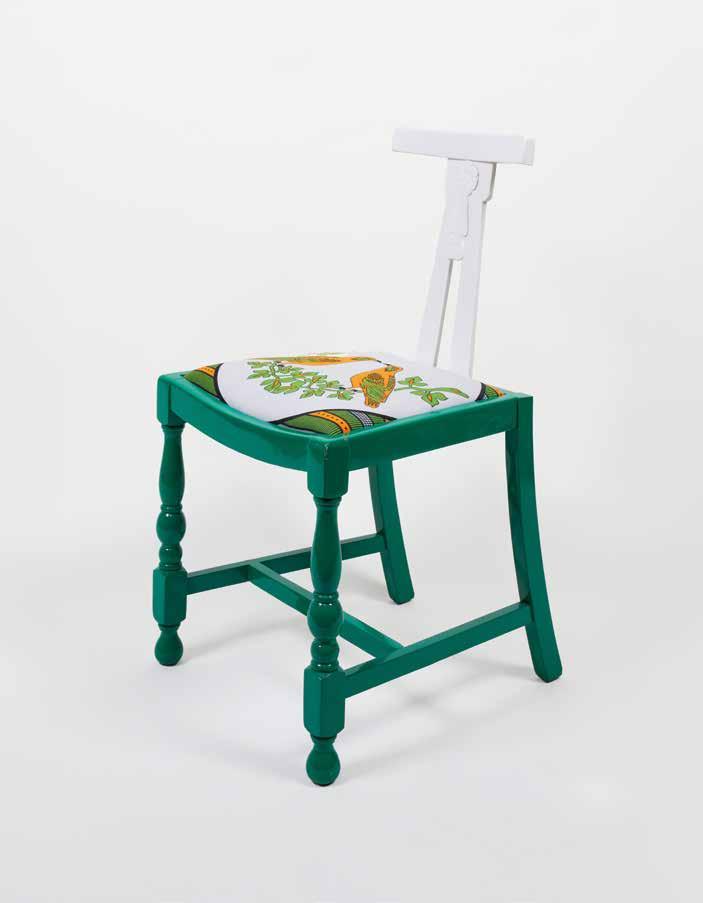
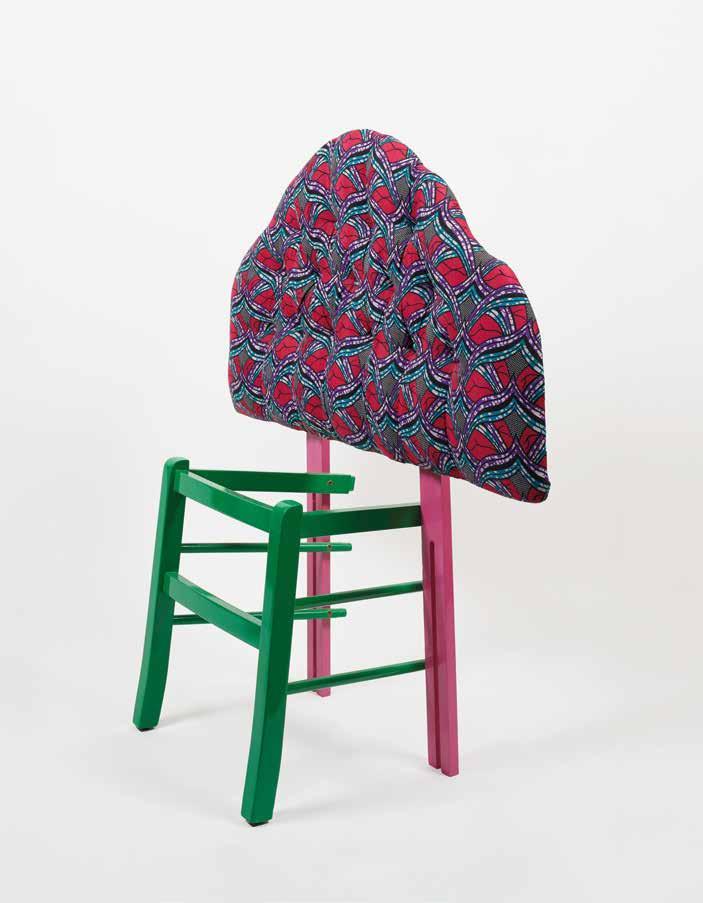
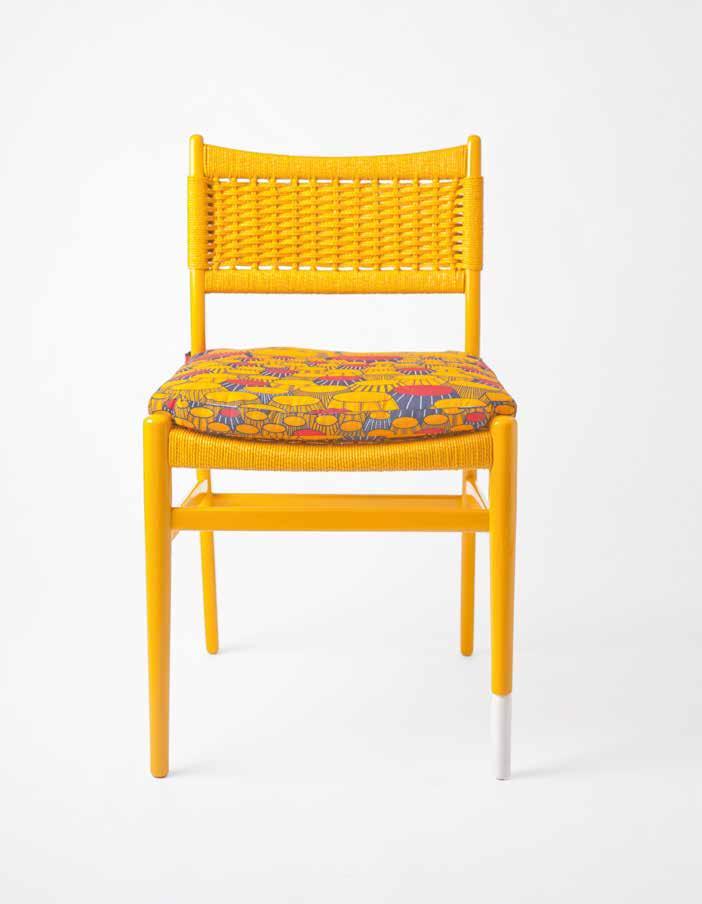
Eye Elóge (Yoruba for “Bird of Praise”) was inspired by the power and beauty of the peacock—an animal whose full brilliance isn’t always visible at first glance. Much like a performance, its beauty unfolds over time. This chair celebrates that concept: it’s not just about function or structure, but about the moment when elegance emerges. The backrest becomes the stage for this transformation, revealing its ornamental form only after the core skeleton is in place.
L In Your Own Time ‘Ni Akoko Fe’ radiates boldness and unapologetic energy, in contrast to earlier hidden narrative designs. Each chair embodies affirmation, resilience, and self-discovery while honouring Yinka’s parents’ migration from Nigeria to London and their unwavering optimism.
R Heavy Love ‘Ife Eru’ –
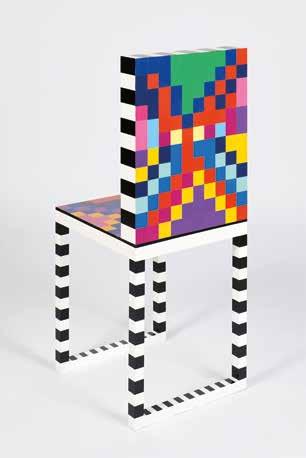
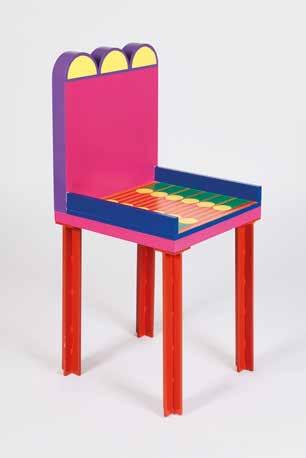
2023 Paint Me a Picture ‘Ya Mi Awonan Kan’ reconstructs visual memories of Nigeria from Yinka’s childhood, featuring vibrant frames that pay tribute to his upbringing and ancestral home stories.
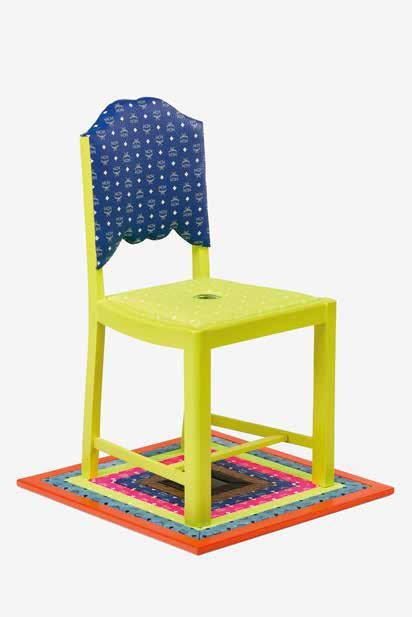
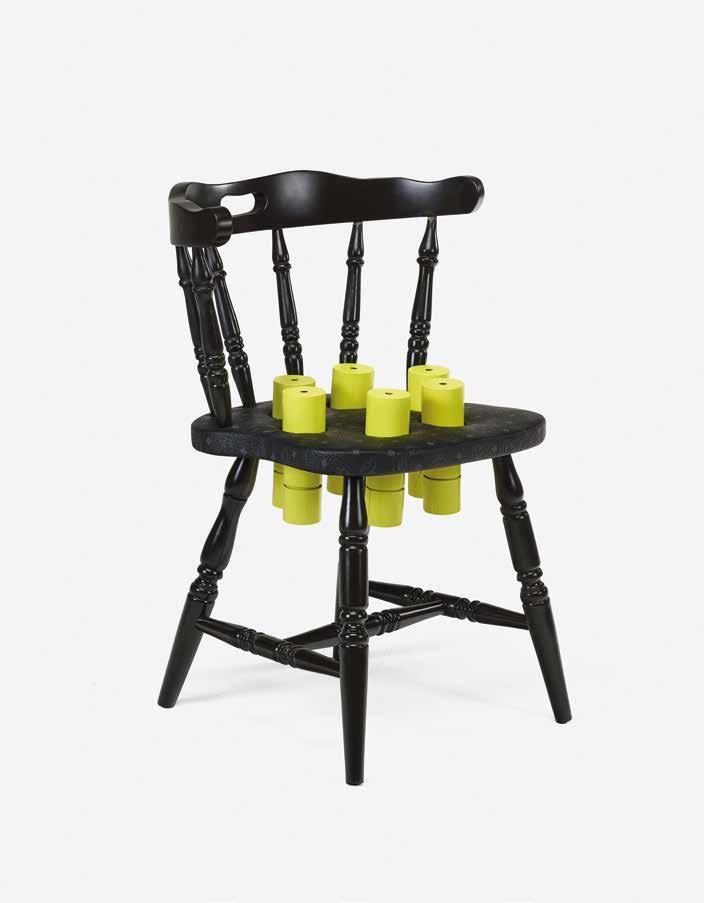
We Are Magic ‘Idan Ni Wa’ features telescopes, celebrating the resilience, magic, and triumphs inherent in Black culture, embodying strength and enchantment.
2023 Bright Shining Star ‘Iraw Didan’ is inspired by the idea of being a “bright shining star”–this chair reflects faith and determination, with lights representing parental belief in their children’s potential. W
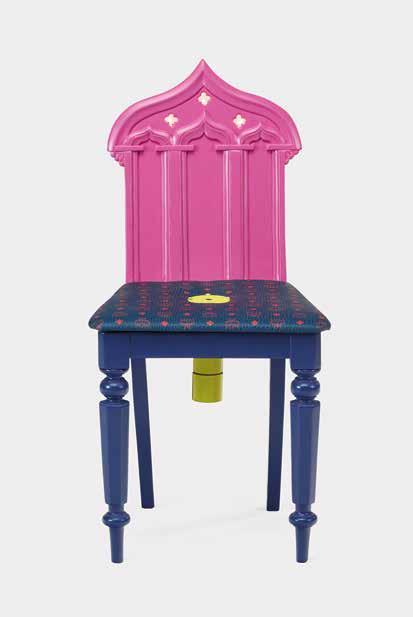
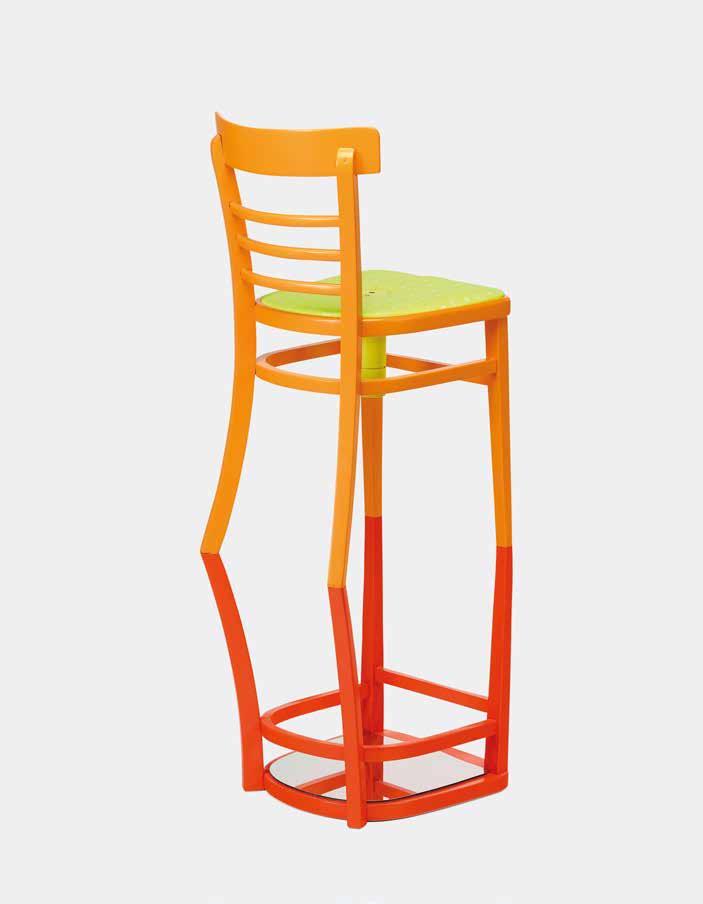
Point of Reflection ‘Ojuami Ti Otito’ symbolises Yinka Ilori’s selfdiscovery, reflection, and pride in cultural heritage, inviting viewers to reflect on their own stories through mirrored forms and unique structure.