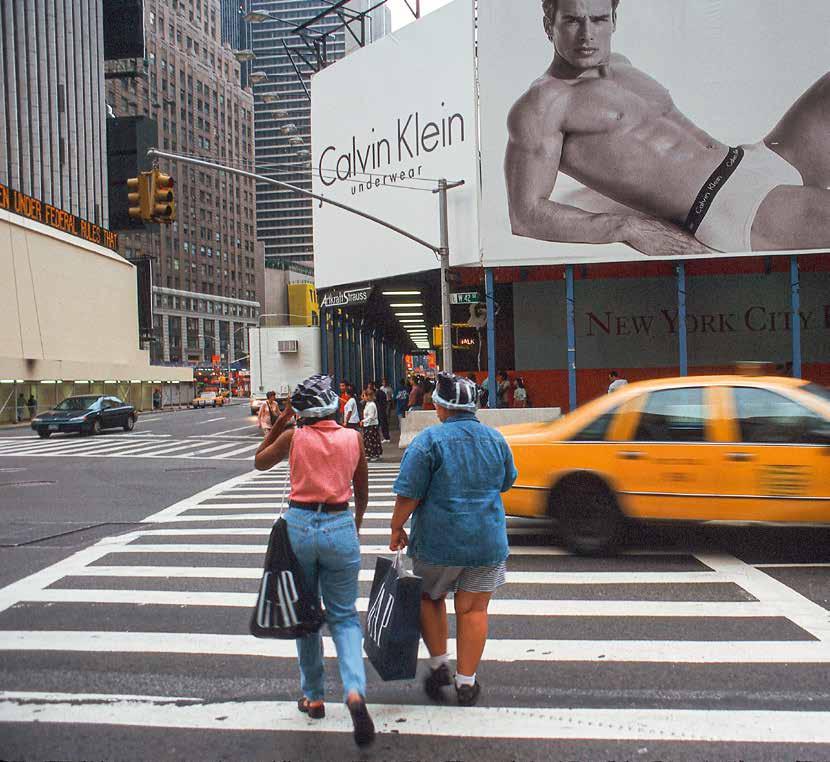
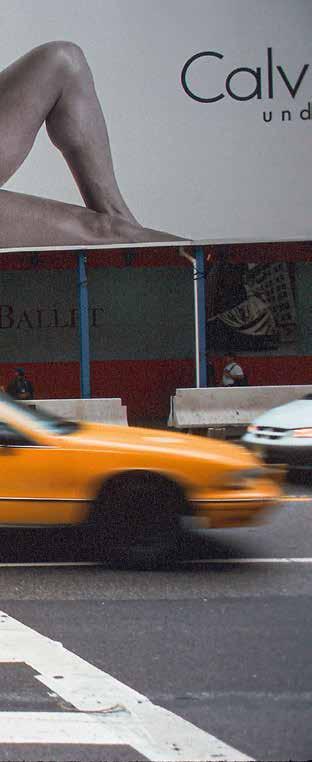
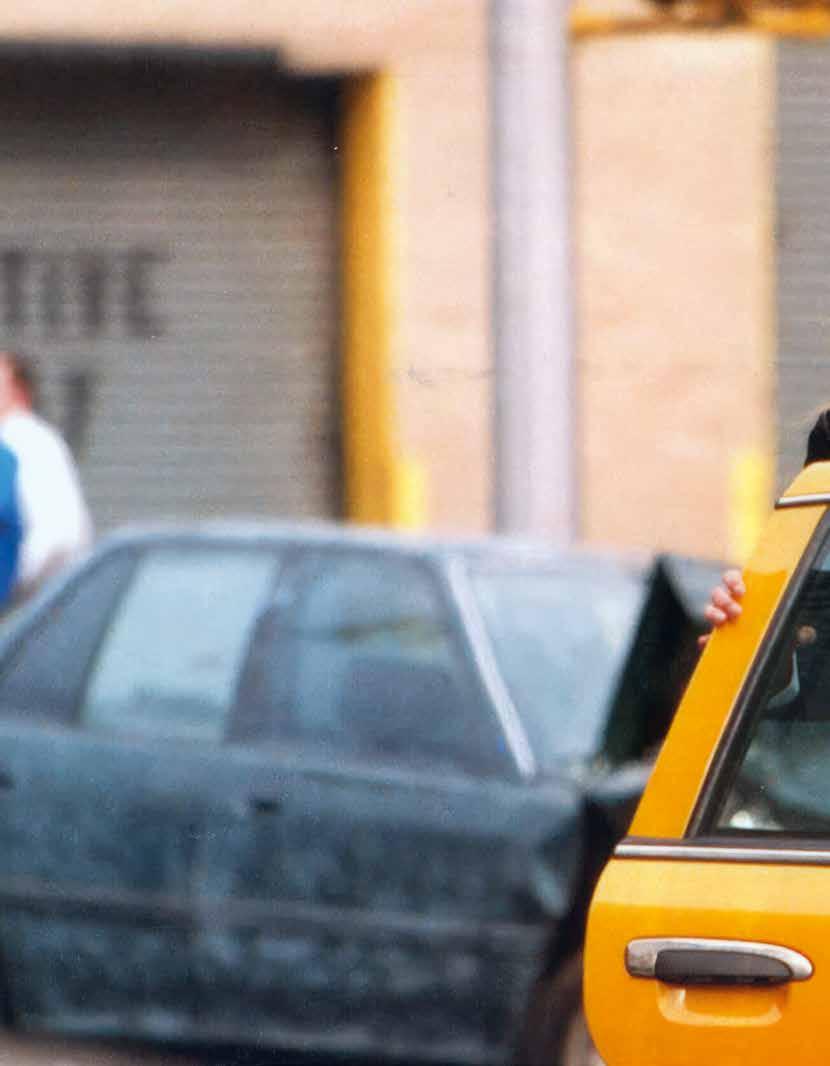
A Calvin Klein Underwear ad, Avenue of the Americas, New York, 1998. Two women cross the street below an enormous billboard for Calvin Klein’s underwear line. The nineties in New York teemed with giant billboards plastered over skyscrapers. Klein’s black-and-white aesthetic was so omnipresent that it was part of the cityscape—like the yellow taxis adding a splash of color as they sped by.
THE JEANS
Bootcut, carpenter, or straight leg: Denim as a staple for everyday looks
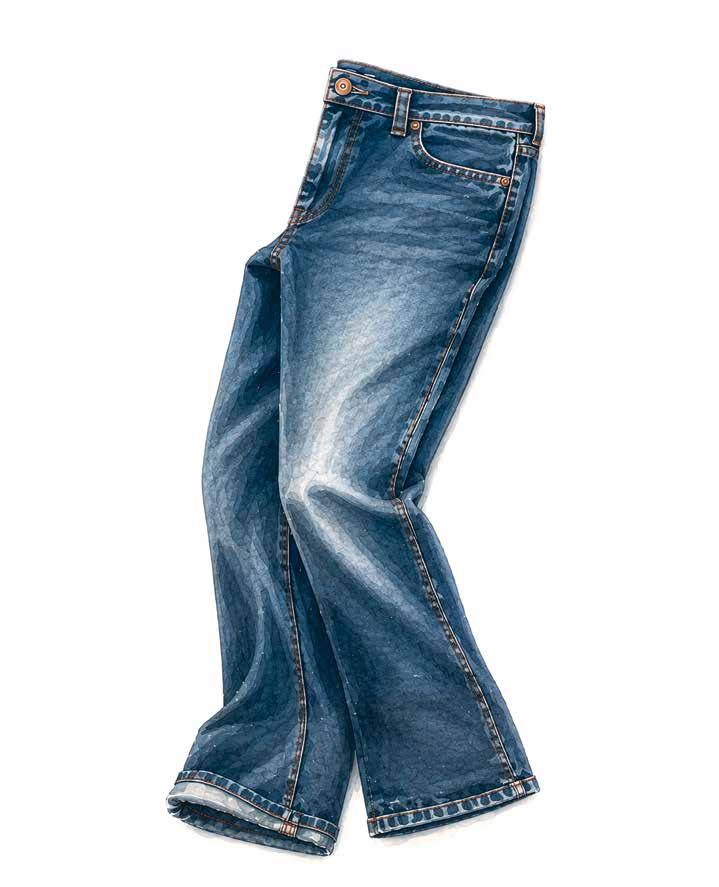
On May 20, 1873, Levi Strauss, a fabric merchant from Bavaria, and Jacob Davis, a tailor from Reno, Nevada, filed a patent for reinforcing work pants with copper rivets. They were aimed at gold miners, lumberjacks, and railroad workers— guys who needed tough pants. The fabric itself, a sturdy cotton weave, had its roots in two European cities. As “jean,” it was used in Genoa for sails and sailors' pants. Nîmes offered an even tougher fabric, which the English called “de Nîmes”—now elided into “denim,” and the origin of what is probably the most democratic piece of modern clothing. Trends in jeans occurred in waves, each one changing their significance. In the fifties, jeans became movie stars when Marlon Brando sported classic Levi’s 501s with a leather jacket in “The Wild One,” while James Dean rolled up his jeans in “Rebel Without a Cause” to create an image of youthful rebellion that would define a generation. Jeans as the polar opposite of dads’ flannel suits, a wearable symbol of breaking away.
In the sixties, when counterculture swept the world, students chose denim to wear on demonstrations. After Woodstock, jeans became the uniform of a generation rebelling against the Vietnam War and their parents’ rules. In the seventies, jeans became a canvas for self-expression, a riot of flares, acid wash finishes, fringing, and patchwork. Gloria Vanderbilt and Calvin Klein were the first to see denim’s luxury potential. Soon after Klein launched his first jeans campaign in 1978, he put fifteen-year-old Brooke Shields in front of the camera wearing denim and nothing but denim. Her suggestive line about nothing coming between her and her Calvins became iconic. Denim was no longer reserved for workers—it became a promise of stylishness.
The eighties introduced jeans io designer stores, and stonewashed finishes to washing machines. The nineties split the market as never before, with baggy jeans for the grunge scene, carpenter styles for skaters, and low-rise for pop stars. At the same time, the masses still wore denim not as a trend, but as a staple, in straight cut with no special washes or gimmicks. Jeans as a neutral base that let everything else shine.
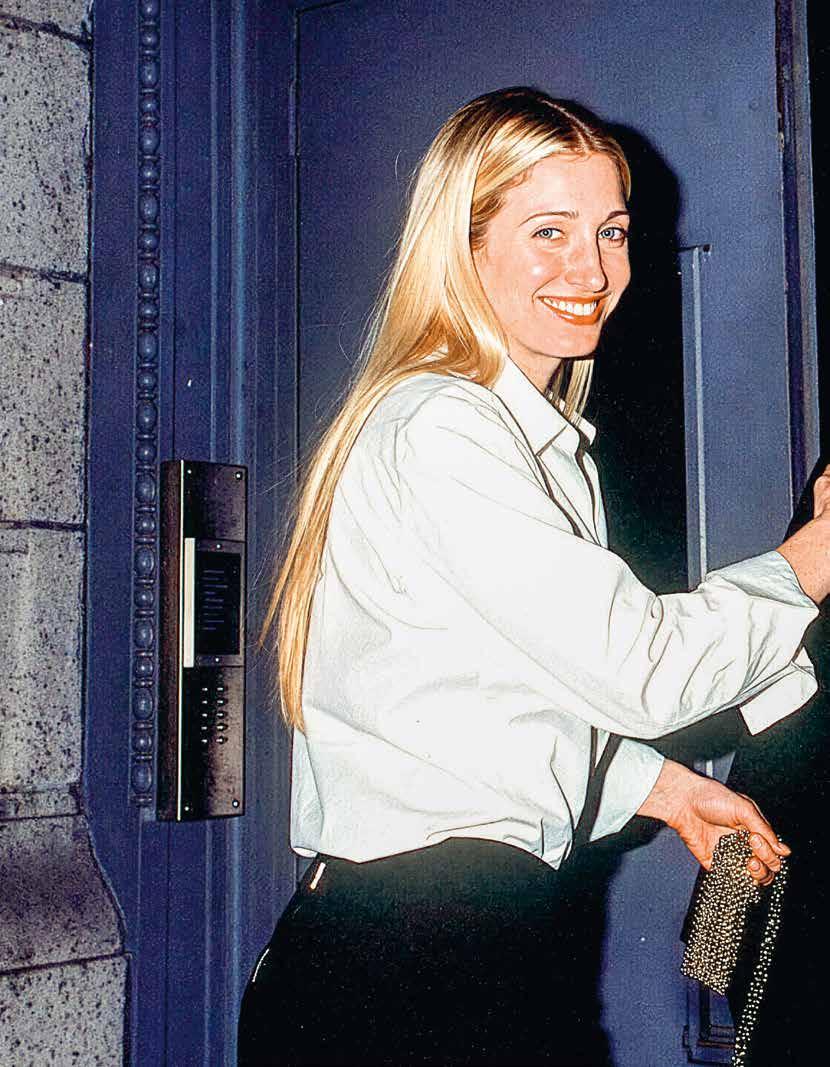
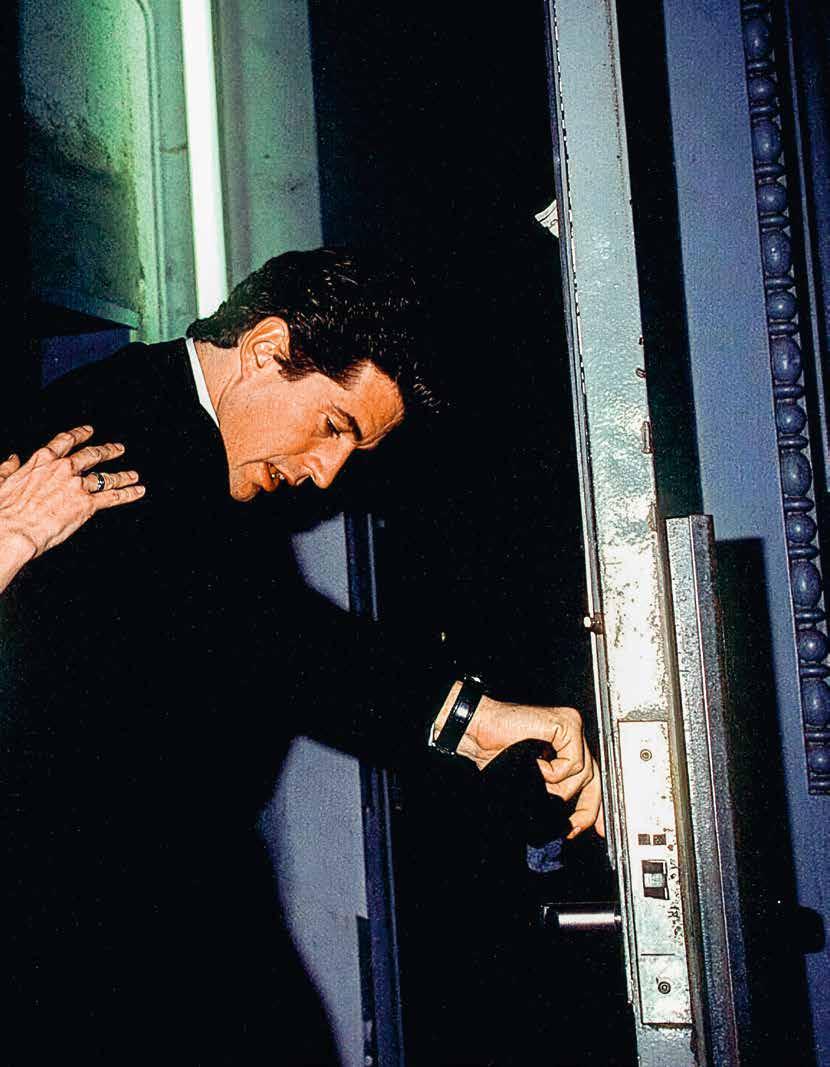
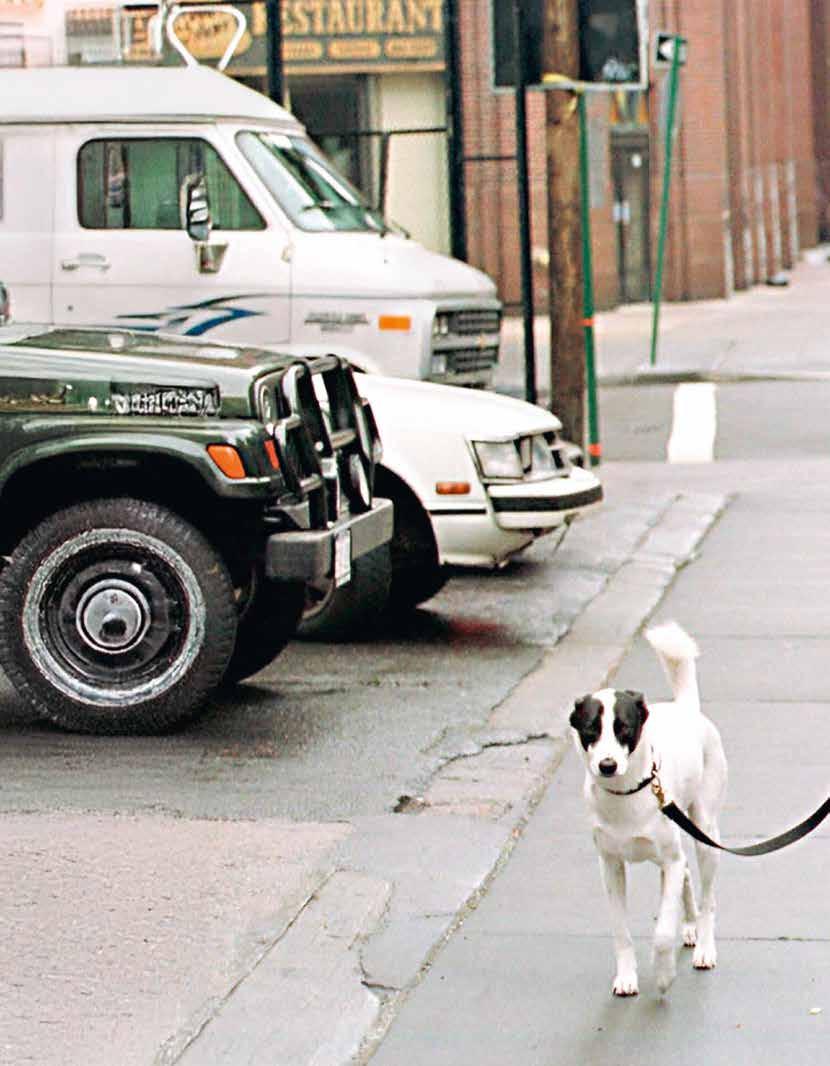
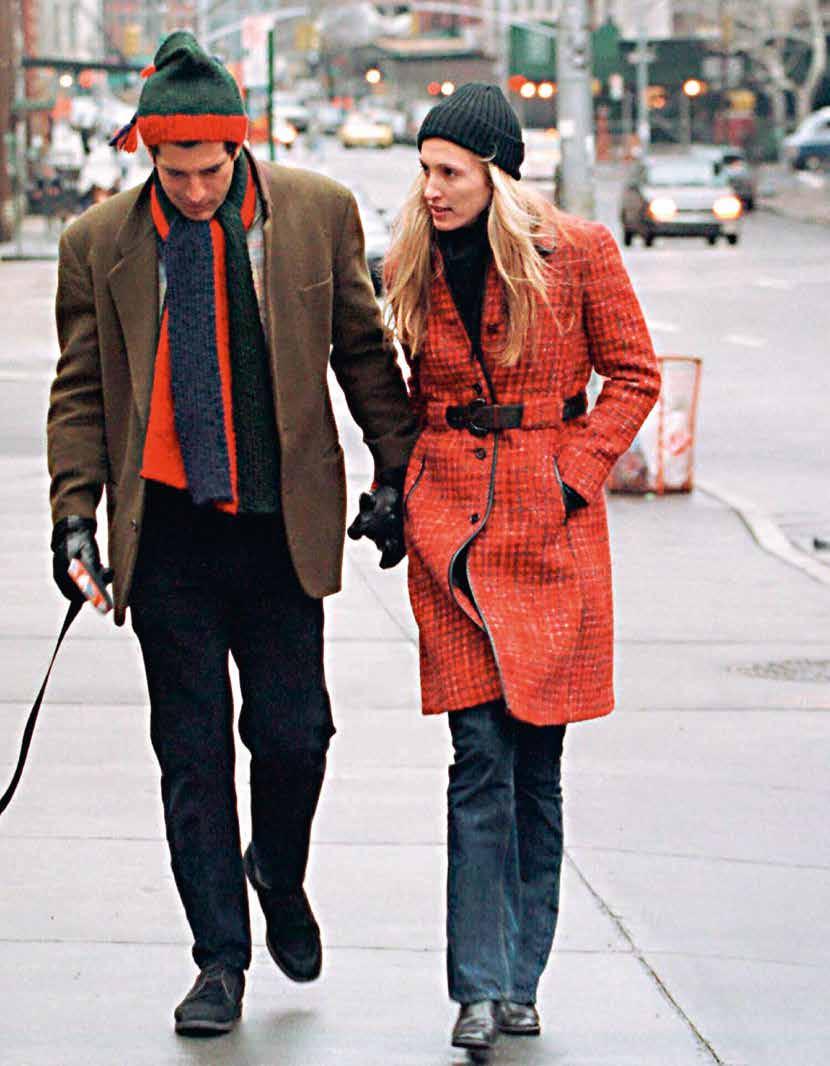
Carolyn Bessette Kennedy was in the latter group. Her jeans—generally bootcut or carpenter style, otherwise straight-leg—were in indigo or faded blue, without washes or add-ons. She teamed her Levi 517s, which she usually hunted down in vintage stores, with designer coats or a Gap top. Jeans were the more muted elements of Carolyn’s ensembles, but also the foundation that made everything else work. There are so many paparazzi shots, the main drivers of her legacy as a style icon, that show Carolyn in denim—outside her Tribeca loft, walking her dog Friday, heading to brunch at Bubby’s. Mere visual fragments of her daily life, but the repetition creates a rhythm—and a system. For Carolyn, jeans were no mere casualwear or statement pieces, but a timeless constant around which her personal style revolved.
THE COAT
From Prada to Ann Demeulemeester, from vintage to couture—Carolyn's new armor
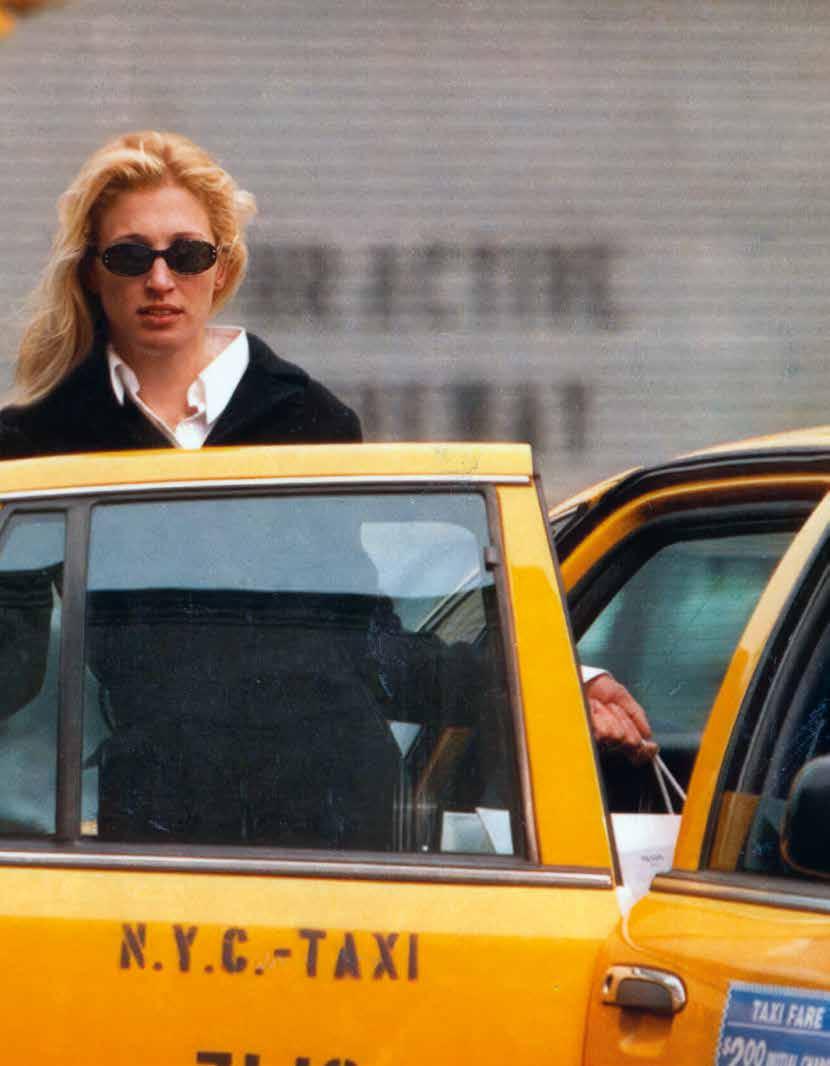
New York takes its coats more seriously than probably any other city in the world. Walk places—which is virtually a must in Manhattan— and you are trailed by a string of judgements of your outerwear. The coat is the first thing to be noticed when you step out of a cab or the subway, and the last thing to be remembered when you disappear into the crowd. In a city where the sidewalk is a stage, outerwear instantly becomes a calling card—or, in Carolyn Bessette Kennedy’s case, both a style tool and a shield.
The history of the coat is as old as clothing itself. In the ancient world, Greeks and Romans would throw a chlamys over their shoulders—a rectangular piece of fabric that was more gesture than garment: a layer between the body and the world. In medieval times, the coat became a symbol of power; kings wore fur-lined coats to signal their status, the length revealing the wearer’s rank. In the 17th and 18th centuries, European nobility showed up in “justaucorps” and “redingotes”: close-fitting richly embellished outerwear that kept the wearer warm as well as showing off his wealth.
Once again, the military was the true driver of revolution. The trenchcoat, invented for the trenches of World War I, was the first piece of clothing to treat function and form as equals. It featured waterproof gabardine, shoulder tabs for rank, a belt for cinching, and ease of movement thanks to its length. Thomas Burberry patented his design in 1912. After the war, the trench moved from the battlefield to the wardrobe. Humphrey Bogart wore one in “Casablanca,” Audrey Hepburn in “Breakfast at Tiffany’s.” The trenchcoat became the universal outerwear of the 20th century and was worn with everything, from jeans to evening gowns.
Wool coats developed in parallel, finding their shape in the postwar years. Christian Dior created a fitted calf-length cut with soft shoulders in 1947. In the fifties, Cristóbal Balenciaga took the opposite direction, with cocoon coats that encased the body and ignored the waist. In the sixties, André Courrèges designed a short coat to accompany the miniskirt; maxi lengths made a comeback in the seventies, while the eighties brought power shoulders and plenty of camel, a shade always associated with a certain type of bourgeois seriousness.
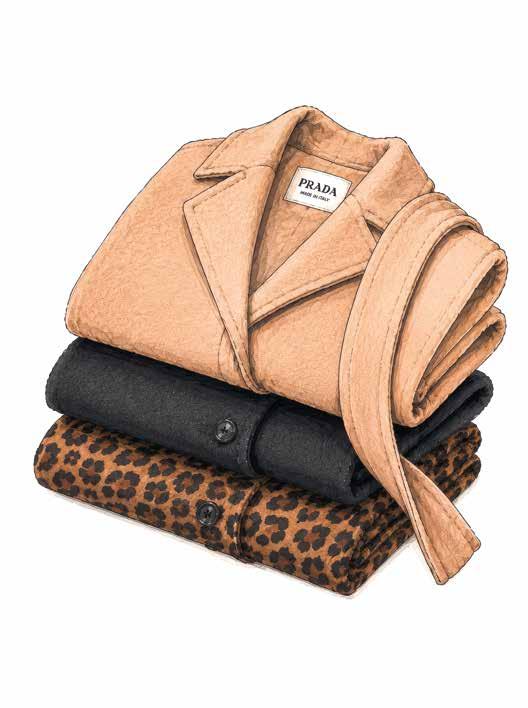
In the nineties, Miuccia Prada, who had debuted with her first ready-to-wear collection in 1988, shook up the market. She reimagined the coat as intellectual, a touch subversive, both simple and conceptual, and introduced fine wool, patch pockets, and crisp tailoring inspired by classic craftsmanship. The Prada coat of the nineties was neither decorative nor showy. It was a statement of restraint, worn by women who needed no brand logo on their coat because the cut spoke for itself. Bessette-Kennedy described it thus: “Those are rich girls’ coats—girls who get into cars, get out of them, go into restaurants, and go back into cars.” A description that sounded like stage directions for her life.
In fact, Carolyn’s coat collection was actually quite extensive—all the more remarkable given the minimalism apparent in the rest of her wardrobe. RoseMarie Terenzio remembers only a tiny built-in closet: sweaters and bags folded on top, hanging goods in the middle, shoes on the bottom. She kept her coats separately in the living room. Her outerwear choices were as carefully thought out as her color palette. One of the most iconic pieces was a Prada wool-angora blend camel coat with patch pockets and matching belt,
THE DRESSES
Off-duty florals to formal evening gowns—the wide range
The dress is the oldest—and simplest— piece in a woman’s wardrobe. A single piece of fabric that wraps around the body without making the division between top and bottom. Its existence can be traced all the way back to ancient times, when Greek women wore “peplos” and “chitons”—draped rectangles of wool or linen, held together with pins. Garments that covered the whole body but still allowed the wearer to move freely. This basic idea endured for millennia; only the details—fabrics, cuts, and meanings—constantly evolved.
In medieval times, dresses were social signposts, their length, fabric, and decorations making the wearer's status obvious. In the Renaissance, corsets shaped the upper body and gave dresses an architectural structure. The 18th century brought hoop skirts that turned the body into a sculpture. The 19th century slowly freed women from these restrictive practices—first with the empire line, then by declaring corsets unhealthy. When Paul Poiret banned the corset from his fashion in 1906 and embraced flowing, oriental-inspired robes instead, the era of dresses with built-in freedom of movement that would later dominate the 20th century really took off.
In the twenties, Coco Chanel shortened the hemline. She simplified the silhouette so radically that her 1926 “little black dress” became one of the most influential dresses in all of fashion history. In the thirties, Madeleine Vionnet invented the bias cut. By setting the fabric diagonally to the weave and allowing it to glide down the body, this technical revolution finally freed fabric from its structure. The dress as second skin. Jean Harlow and Veronica Lake were soon seen in white satin bias-cut evening gowns reminiscent of lingerie.
While Christian Dior caused a stir from 1947 on with his voluminous New Look—a
nostalgic design in the middle of postwar optimism—the sixties ditched thosee flared hips in favor of Mary Quant’s revolutionary miniskirt, André Courrèges’ futuristic A-line designs, and Paco Rabanne’s flexible metal creations, all showing what a dress could also be. The seventies was the moment of the maxi dress—and Diane von Fürstenberg’s wrap dresses. The eighties brought shoulder pads and sequins, the nineties both minimalism and playfulness.
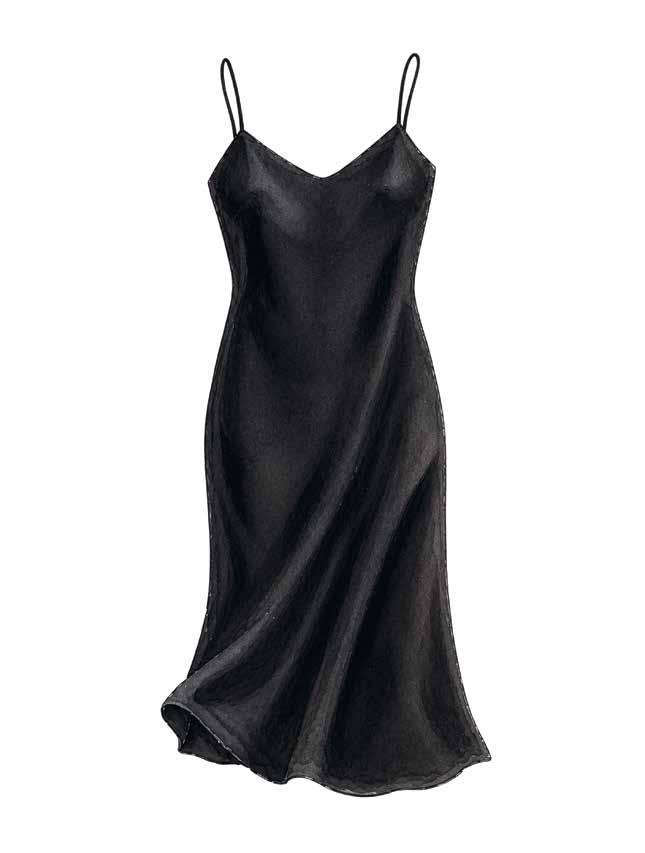
The latter characteristic applied to Carolyn; when it came to dresses, she went for a much wider range of colors than the rest of her wardrobe would suggest. During the day, she would appear in a camellia print summer dress from Karl Lagerfeld’s 1996 Cruise collection for Chanel, her only documented nod to color and print—and so untypical for her that it stood out even more. At night, Carolyn entered a different fashion world. One of her most famous evening gowns was a black tube dress with long velvet gloves by Japanese designer Yohji Yamamoto. At a time when stars were outdoing each other on the red carpet in heavily embroidered Galliano gowns or snake-print Versace, Carolyn stuck to minimalism. No embellishments, no train, no logo—only groundbreaking tailoring. White House receptions, Kennedy galas, Cartier in Geneva: Carolyn wore dresses when she felt like it, not merely because the occasion called for it.
Puppies, always swearing by their comeback. In warmer weather, she opted for leather loafers from Prada and Blahnik, which she wore—always, no exceptions—without socks.
But what set Carolyn’s shoe choices apart from other style icons was not the high-end designs, but the casual styles. In Hyannis Port, Havaianas flip-flops—Brazilian rubber sandals that were regarded a fashion crime in New York— were part of her standard outfit. Soon, she was spotted wearing them on the streets of Manhattan too. One new item in her shoe collection came from John; after previously deliberately avoiding sneakers in daily life, Bessette-Kennedy was suddenly wearing them, seemingly adopting his love for activewear. She borrowed from his far sportier wardrobe, with Nike Air Streak, Adidas Stan Smith, and Airwalks 19oz. She was also rarely seen—at least where cameras were around—in Converse Chuck Taylors.
As her L.L. Bean tote bag was to her purses, flip-flops and sneakers were the counterpoints to the more luxurious designs in her shoe collection, from Prada to Blahnik. Carolyn’s shoe closet followed the same rule as the rest of her wardrobe: Every piece had a purpose, nothing was just for show. Her shoes never screamed for attention, but were the foundation of her harmonious, considered outfits.
“You could be hanging from a cliff by your fingernails and John would say, ‘Come on, let’s go! What are you waiting for?’”
Carolyn Bessette Kennedy, 1999
The wedding dress
No piece of clothing has to live up to more expectations than the wedding dress. It is one of the few designs in a (woman’s) wardrobe that is intended for just one moment, one of the most symbolic in Western culture. Choosing a wedding dress is not simply about cuts or fabrics, but about an overall look that says who you are—or want to be. The tradition of the white wedding dress is actually newer than one would expect. Before the 19th century, brides simply wore their best dress, whatever color it was. In Finland, women got married in black, in China in red, and in medieval Europe, the bride picked whatever best showed off her status: heavy brocades, fur trim, gold embroidery. Color did not matter; price did. White was not a symbol of purity; in fact, in the French royal family it was actually the color of mourning at the time.
This only changed on February 10, 1840, when 20-year-old Queen Victoria of England married her cousin Albert of Saxe-Coburg in a white dress made of Spitalfields silk covered with Honiton lace—a choice that was less symbolic than aesthetic, aimed at showcasing the beauty of the white lace. Illustrations of the wedding were published in newspapers and fashion magazines all over Europe, and set off a chain reaction. Within a few decades, the white wedding dress became the standard—first for the upper class, then, as industrialization and the rise of the middle class progressed, for everyone. The idea of white as a symbol of virginity only came later.
The 20th century turned the wedding dress into a mirror of its era. In the twenties hemlines
rose to the knee, reflecting the “garçonne” style of the day. The thirties saw lengths growing longer again, this time in Madeleine Vionnet’s flowing bias cut. The war years brought simpler creations artfully crafted from rationed fabrics; some brides even married wearing uniforms or borrowed dresses. Grace Kelly married in 1956 in a dress by Helen Rose. Made from 136 yards of lace and 27 meters of tulle and bedecked with hundreds of pearls, it set the benchmark for wedding dresses throughout the decades that followed.
In the eighties, wedding dresses reached peak volume and spectacle. Diana Spencer’s dress, designed by David and Elizabeth Emanuel, which she wore down the aisle at St. Paul’s Cathedral on July 29, 1981, had a train 25 feet long. Instead of her wearing the dress, it was more the other way around! It was a gown designed for a billion TV viewers, rather than for the bride herself. This was the era of excess, and wedding dresses took it to the max. Then came September 21, 1996—and with it, everything was about to change.
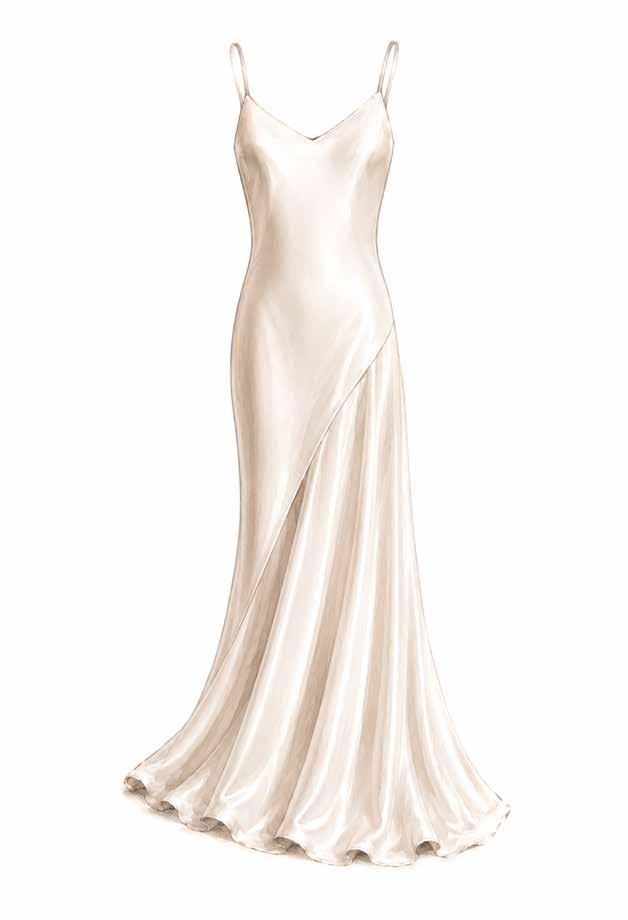
On that day, Carolyn Bessette married the son of former US President John F. Kennedy at the First African Baptist Church on Cumberland Island, a small island off the coast of Georgia. 40 guests, candlelight, no press, and just one photographer: Denis Reggie, Ted Kennedy’s brother-in-law. The ceremony was delayed by two hours because Carolyn’s dress needed last-minute adjustments. She also had to pull it on over her head, requiring her makeup to be touched up too. Bessette was married in a bias-cut slip dress of pearly white silk crepe, with a cowl neckline
Narciso Rodriguez, a historic chapel, and reimagined bridal fashion
THE MAKE-UP
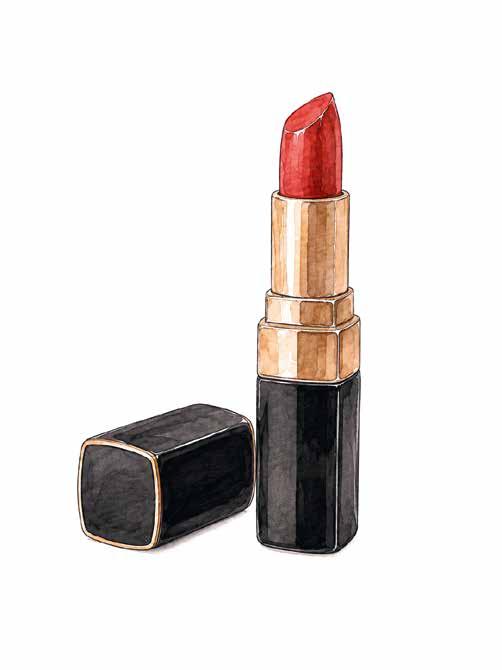
Her natural signature—slim brow, red lip, scarcely-there mascara
It is a mask that pretends not to be a mask at all. Makeup instantly transforms the face without wanting to admit it—and that is exactly where its real power lies. Everything we don or apply is a decision about who we want to be: visible or invisible, approachable or distant, conformist or rebellious. The history of cosmetics is thus ultimately not a story of vanity, but an interaction and relationship between ourselves and the world. The origins of makeup extend as far back as ancient times. In ancient Egypt, both women and men drew lines of dark kohl around their eyes—not just as beautification, but as protection from the sun and as a spiritual defense against the “evil eye.” Cleopatra also used ground lapis lazuli and malachite on her eyelids; red ochre was used as blush and lip color. In ancient Greece, white lead powder was the beauty ideal: the paler the skin, the higher the status. Roman women adopted the idea, but added lip color made from cinnabar—a mercury sulfide that was as toxic as it was coveted. In medieval times, the church condemned all forms of cosmetics as sin and deception; changing the face was interfering with God’s work. But makeup did not simply disappear, it just went underground. Women used it in secret; the art was to make it unnoticeable. The Renaissance marked a return of obvious cosmetics, when Venetian courtesans flaunted white lead powder, red cheeks, and tinted lips. Elizabeth I adopted the white mask as her signature look. In the 18th century, make-up reached a theatrical peak. Beauty spots, wigs, powdered faces—cosmetics were layered on as thick as the social conventions they reflected. The modern era launched with a movieworthy twist. In the 19th century, reformers preached natural beauty and rejected make-up as immoral—a puritanism that only faded when
moving pictures came along and makeup became mainstream. From 1910 onward, Polish immigrant Max Factor developed special cosmetics for the cameras in Hollywood, and then made them available to the masses. By the thirties, lipstick was barely remarked on any more, the market divided up between the big-name cosmetics companies— Revlon, Elizabeth Arden, and Helena Rubinstein. Lipstick became an everyday accessory, as natural as carrying a handbag.
Every successive decade had its own face. The fifties were Marilyn Monroe’s red lip and Audrey Hepburn’s dark brows. The sixties were encapsulated by Twiggy’s painted lashes and eye makeup as an art form of their own. The seventies were glitter, disco, and David Bowie—the face as performance. And then came the eighties’ power make-up, with contoured cheekbones, dark lip liner, and blue eyeshadow. In the nineties, the minimalist trend in fashion (rubbing shoulders with other, much more garish fashions) took over the face; Calvin Klein campaigns showed models with bare skin and unmade-up eyes, and Kate Moss became the symbol of an era that elevated rumpled imperfection to the ideal. The “no-make-up make-up”—which, despite the name, could still take hours to apply—became the new standard. It was one of the most elaborate forms of “natural look” ever produced by the cosmetics industry.
Carolyn Bessette Kennedy peerlessly mastered this look. During the day, she kept it real—no foundation, no blush, no visible eyeshadow, no mascara. The transformation, usually in the evening, drew on a minimum of products, including Studio Fix Powder from Mac Cosmetics. Carole Radziwill writes in her memoir about Carolyn that she would dab it on once to
ODE FROM THE RUNWAY
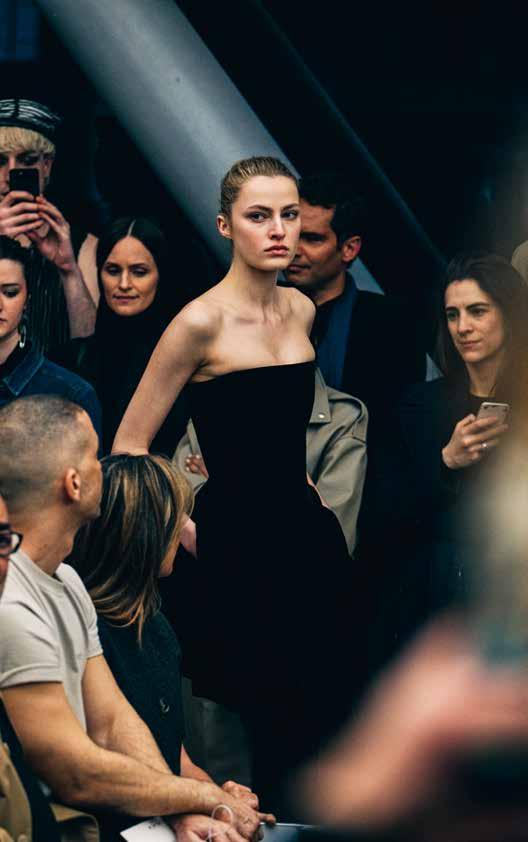
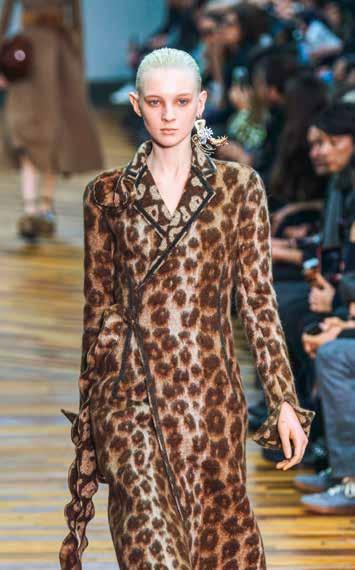
Like a fashion reincarnation, the black tube dress shown on the Alaïa Autumn/ Winter 2026 runway (left) seemed to echo Carolyn Bessette Kennedy’s own minimalist language. Its cut and emphatic absence of colour recalled the column dress from Yohji Yamamoto’s Autumn/Winter 1998 collection, which Carolyn wore in 1998 with long velvet gloves to the gala celebrating the reopening of Grand Central Terminal. The styling, too—the sleek bun drawing focus to the model’s features—appeared to reference Bessette Kennedy. That same season, her signatures also surfaced on the MM6 Maison Margiela runway: a look composed of a V-neck sweater, pencil skirt and knee-high leather boots read like a contemporary ode to Carolyn’s first press appearance after her wedding to JFK Jr., when she stepped in front of the cameras as Mrs Kennedy in a sand-coloured pencil skirt, black cashmere sweater and brown boots. Phoebe Philo had already invoked her as early as 2014 in her Céline show (above): a floor-length leopard-print coat recalled Carolyn’s vintage Paris find. Even today, Bessette Kennedy’s aesthetic continues to resonate throughout the fashion industry, where it is constantly being reinterpreted, refined and carried forward by the world’s leading luxury houses.
Carolyn Bessette Kennedy never sought the spotlight—and yet she became the most defining style icon of her generation.
Long before she entered America’s most famous family in 1996, Carolyn Bessette Kennedy had already embodied a new kind of American elegance: restrained, self-assured, and possessed of a clarity that never goes out of style. In just a few years, she developed an aesthetic entirely her own—free of logos, indifferent to trends—that designers from Prada to The Row still reference today, and that a generation who never knew her has made entirely their own. This Callwey volume brings together iconic photographs and defining articles that shaped her image, tracing the unmistakable language of her style: from the influences of her early years to the garments, accessories, and choices that gave her look its lasting power. A book about a woman who proved that less isn’t just more—it’s forever.