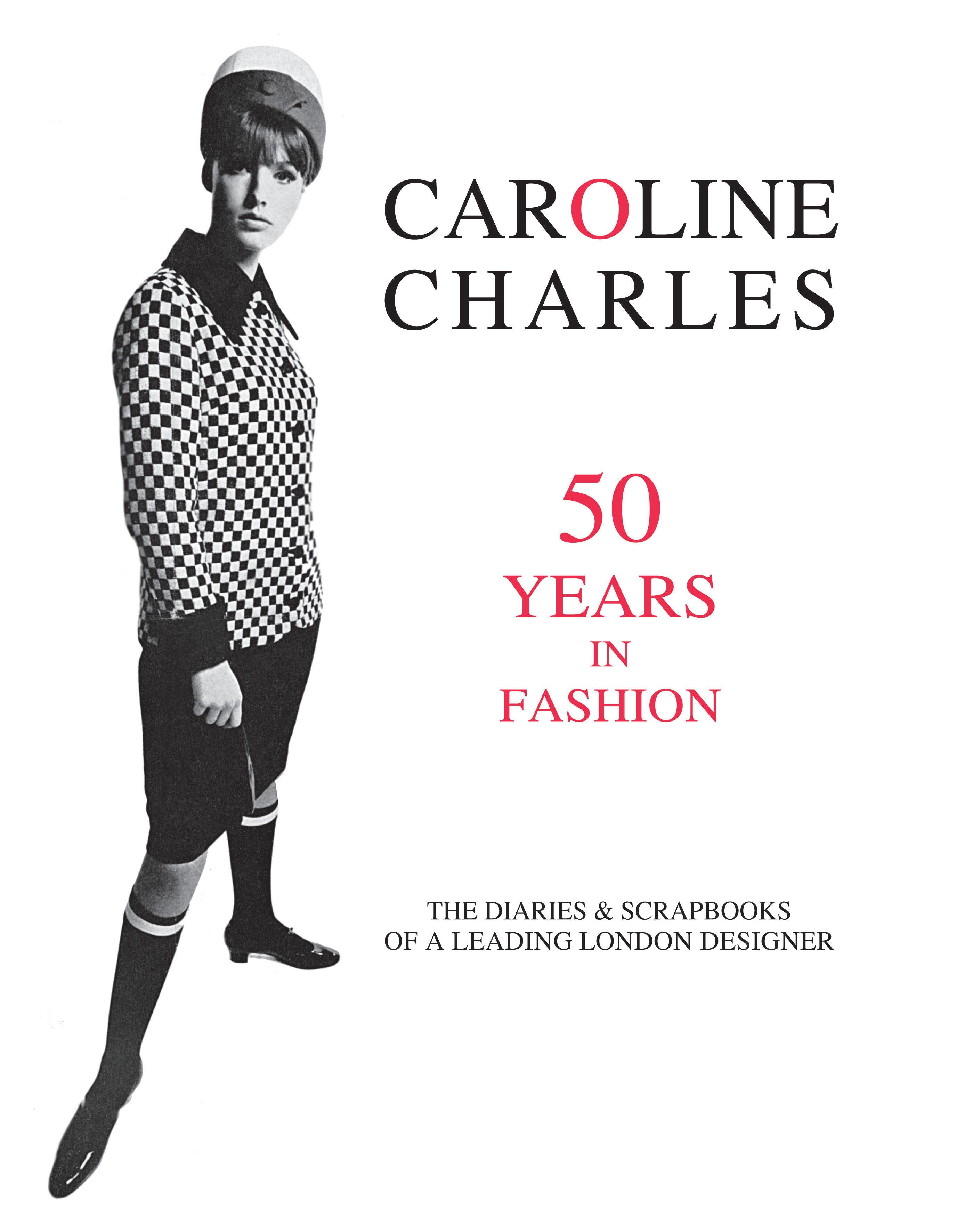
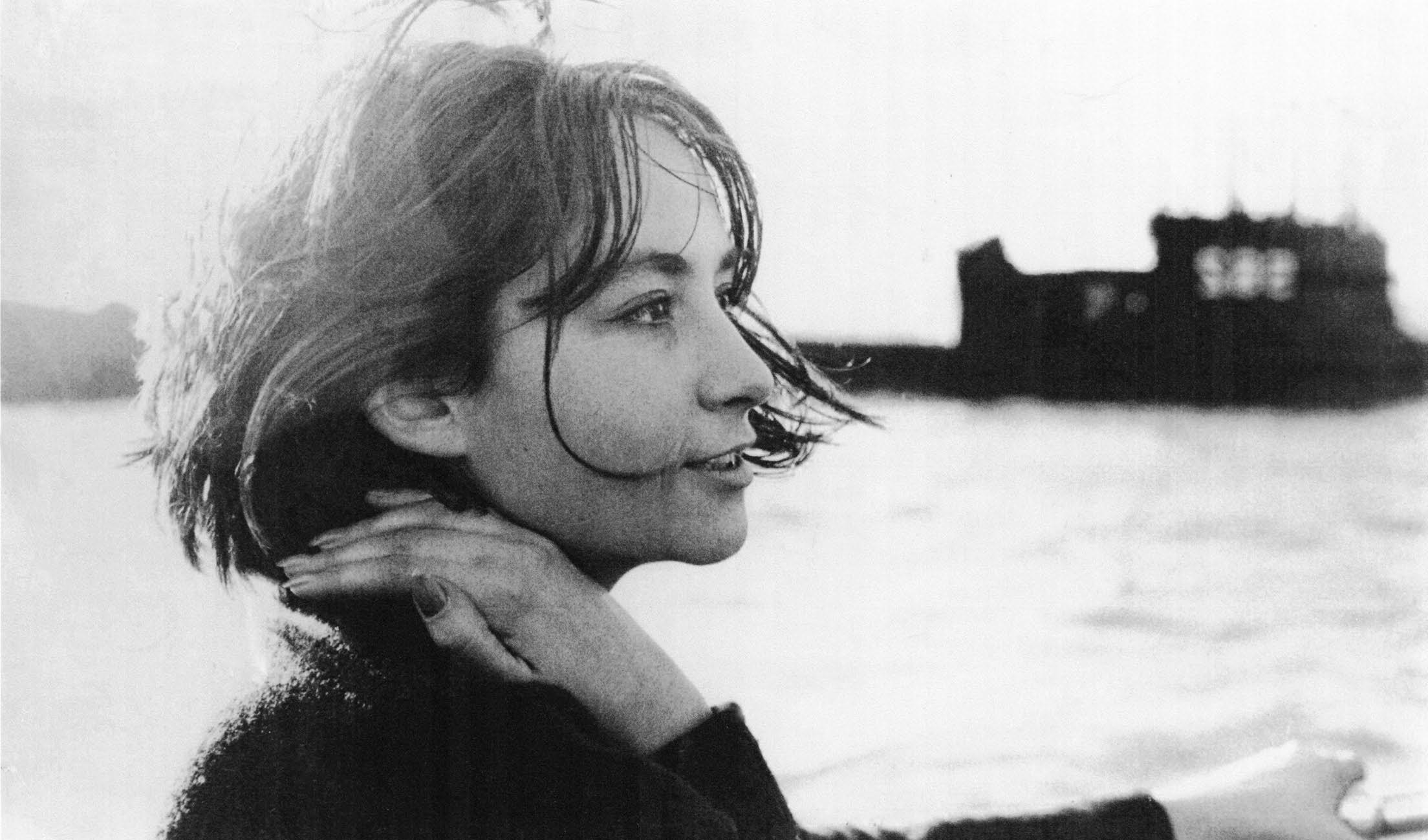
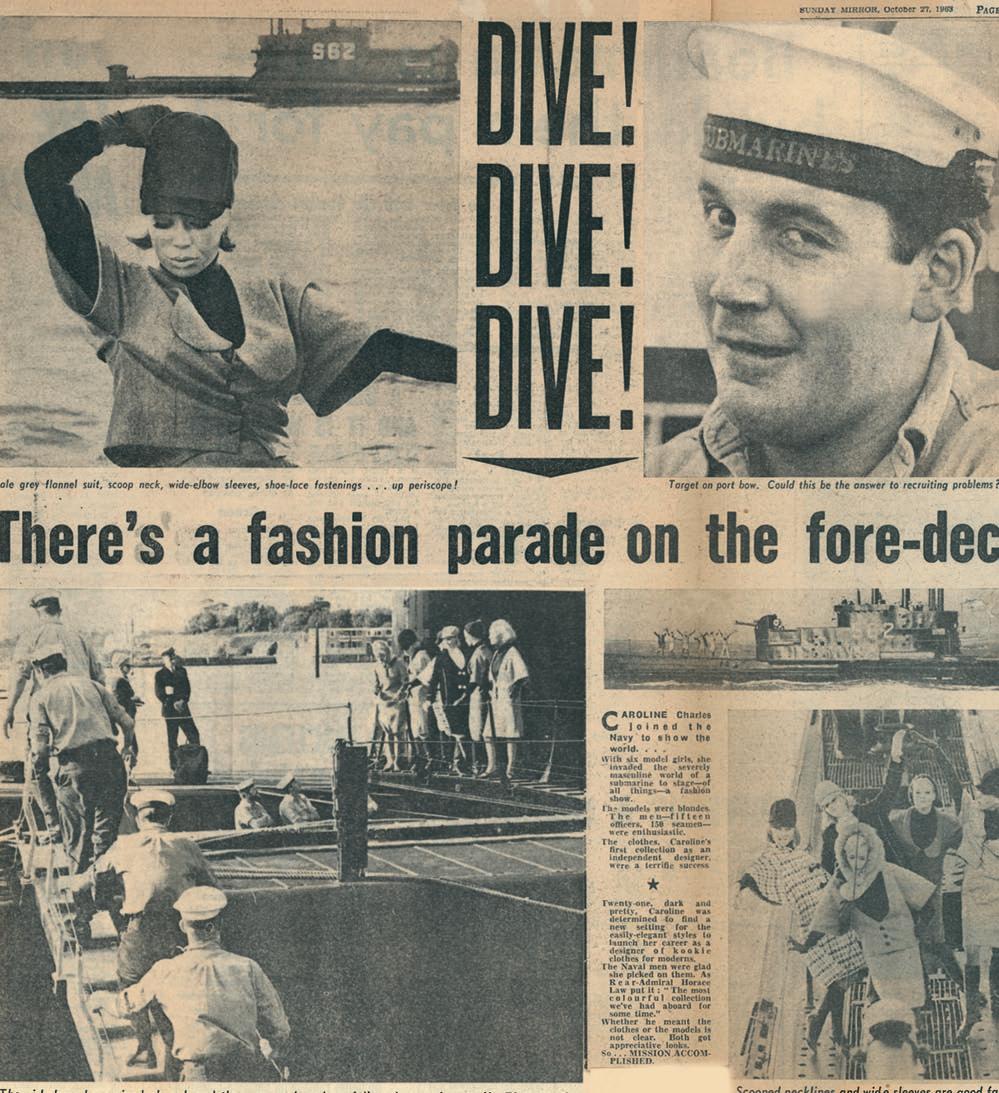
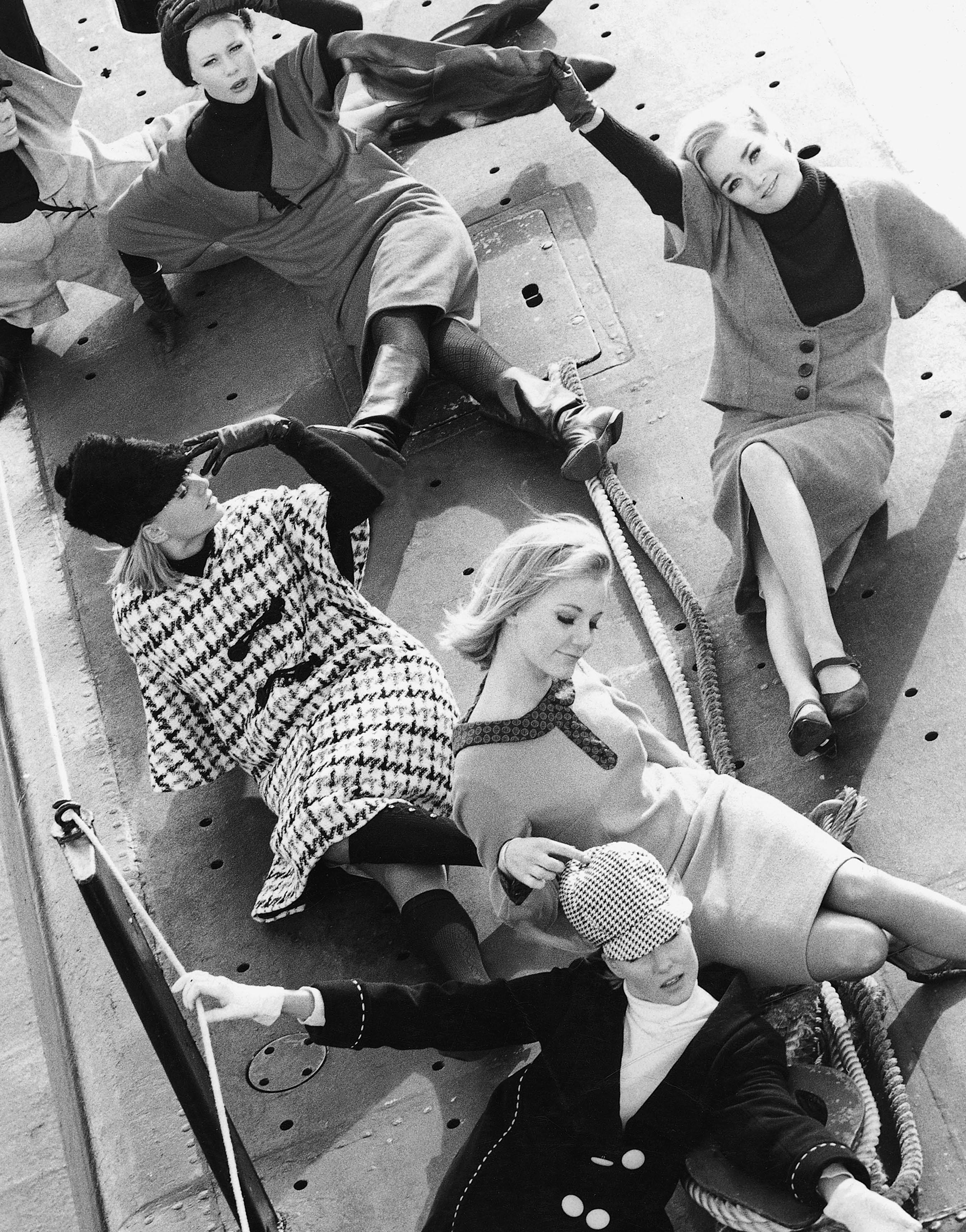
We made the first Caroline Charles samples in a Chelsea attic. The collection was launched in September 1963 with a photo shoot of six model girls on a submarine in Portsmouth Harbour. The Navy was very welcoming and piped us aboard, though the photographer made us pose on an alarmingly slippery deck before we were all allowed to go below.
After the sophisticated, sexy and womanly clothes of the ’50s, the inspiration for the ’60s was Youthquake. An ingénue Lolita look was sexy, but in an apparently innocent and amusing way. It felt different, free and slightly dressing-up box. We were not dressing to be seen as future wives, but assumed this disguise of the dolly bird. It was tongue-in-cheek.
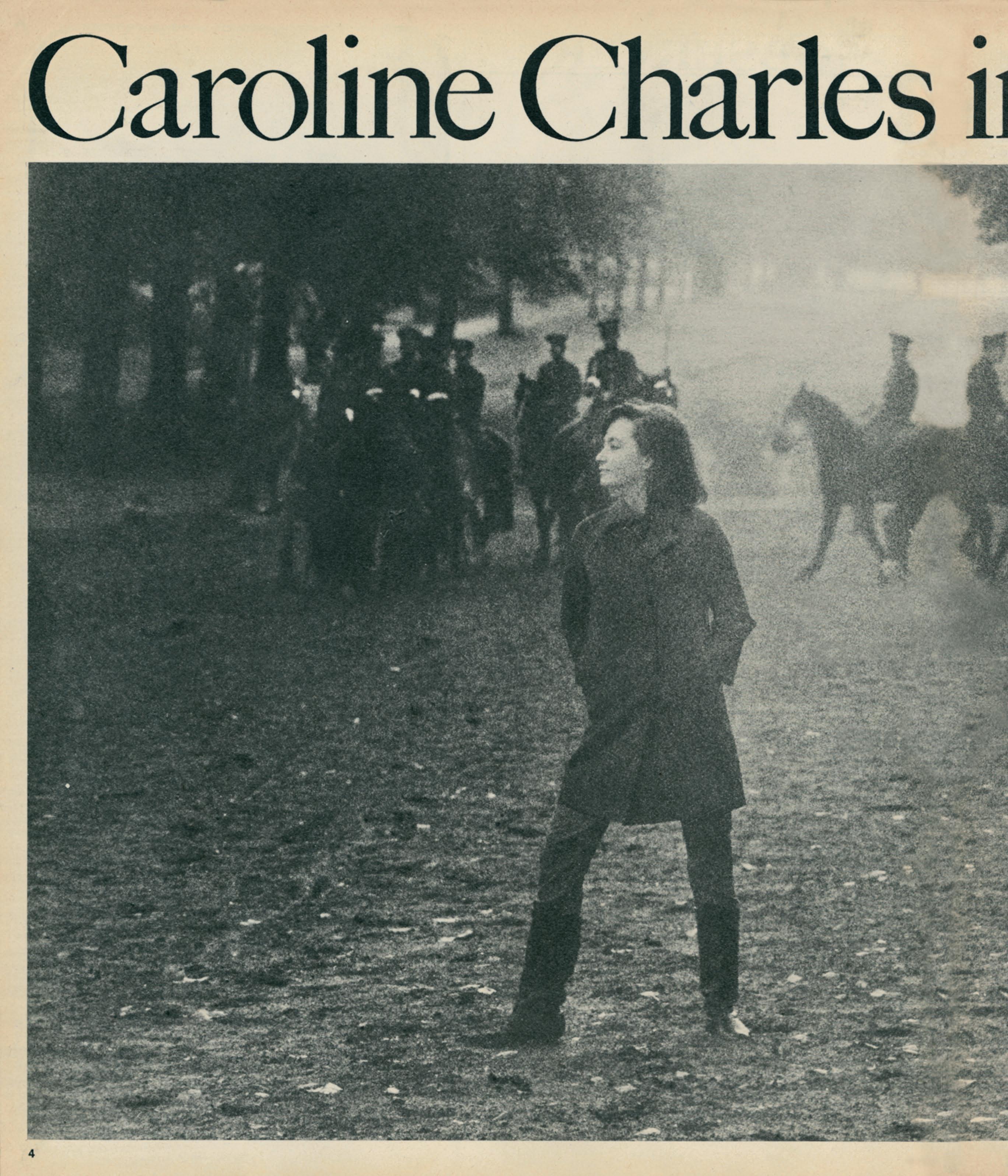
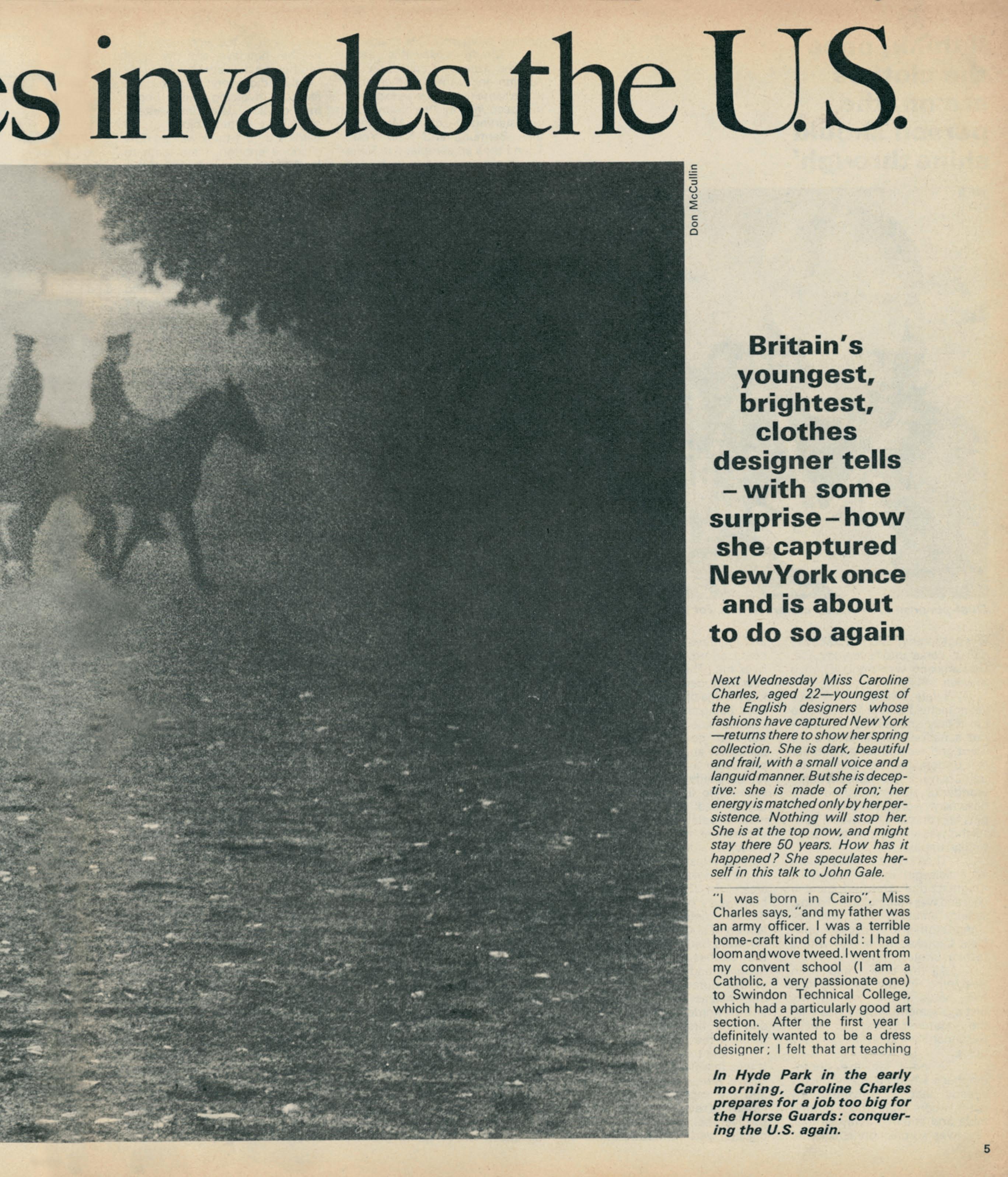
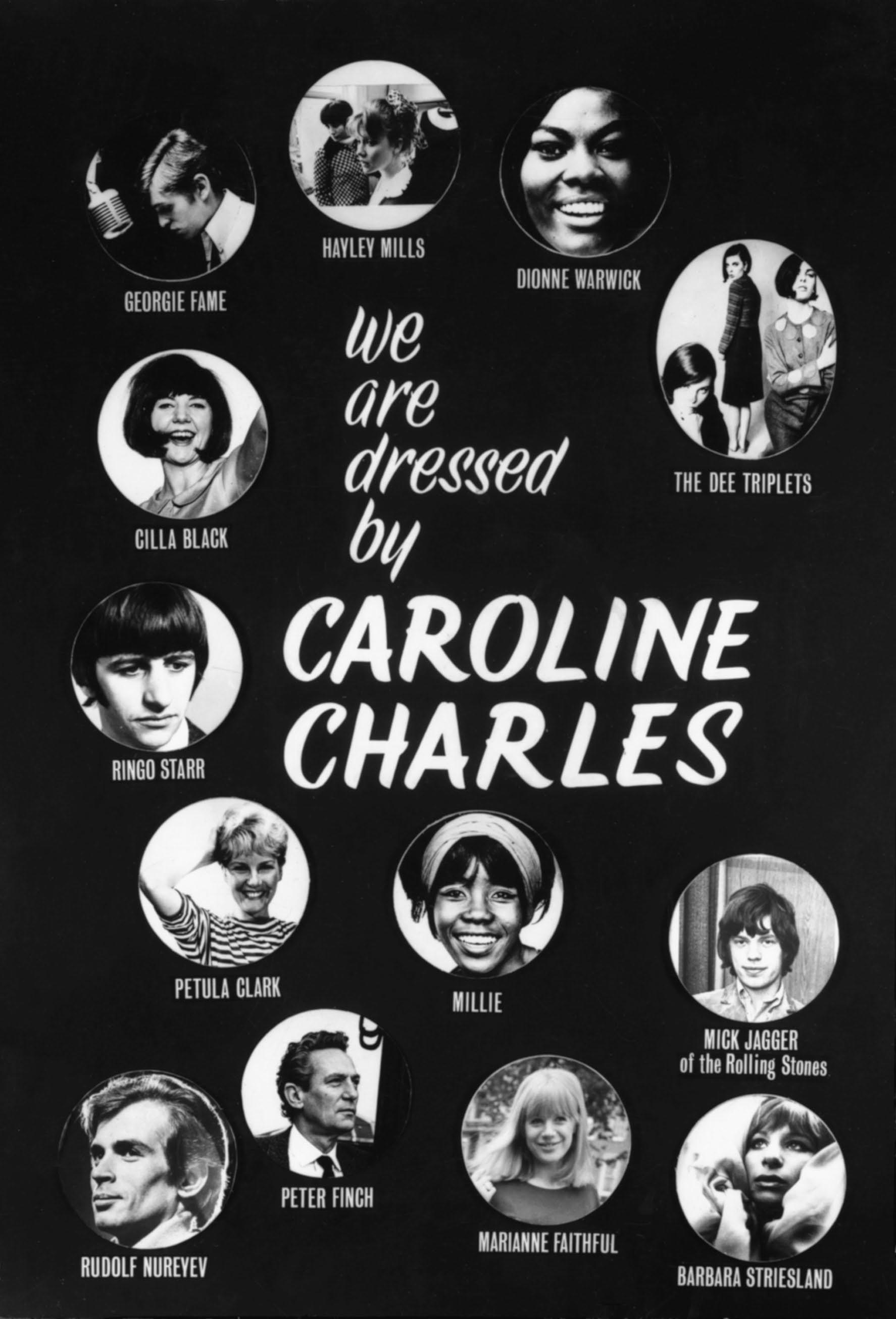
OPPOSITEPAGE:
Caroline Charles promotional postcard, USA, 1960s
RIGHT:
Popstar Millie with C.C. for a dress fitting
BELOWLEFT:
Actress Jane Asher in pinstripe jacket
BELOWMIDDLE:
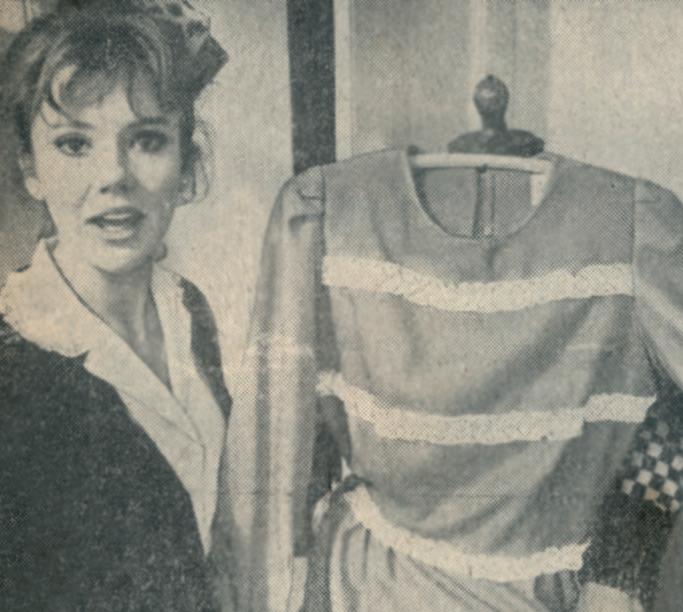
Actress Hayley Mills
BELOWRIGHT:
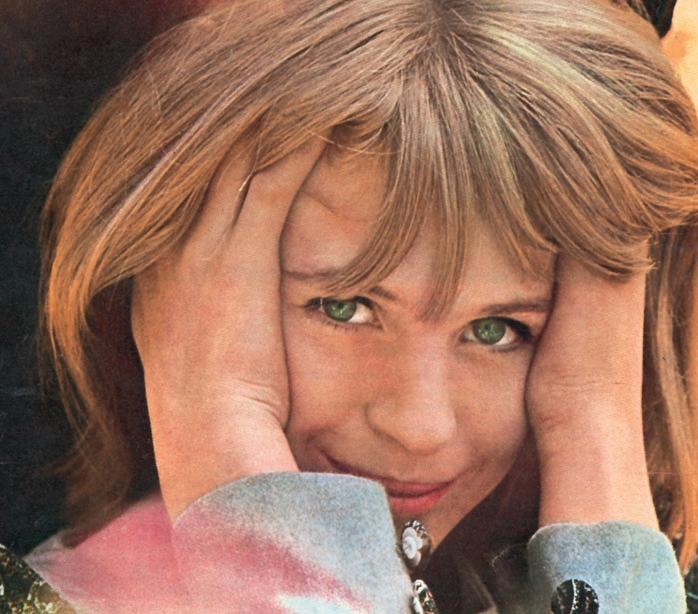
Singer Marianne Faithfull, Nov 1964
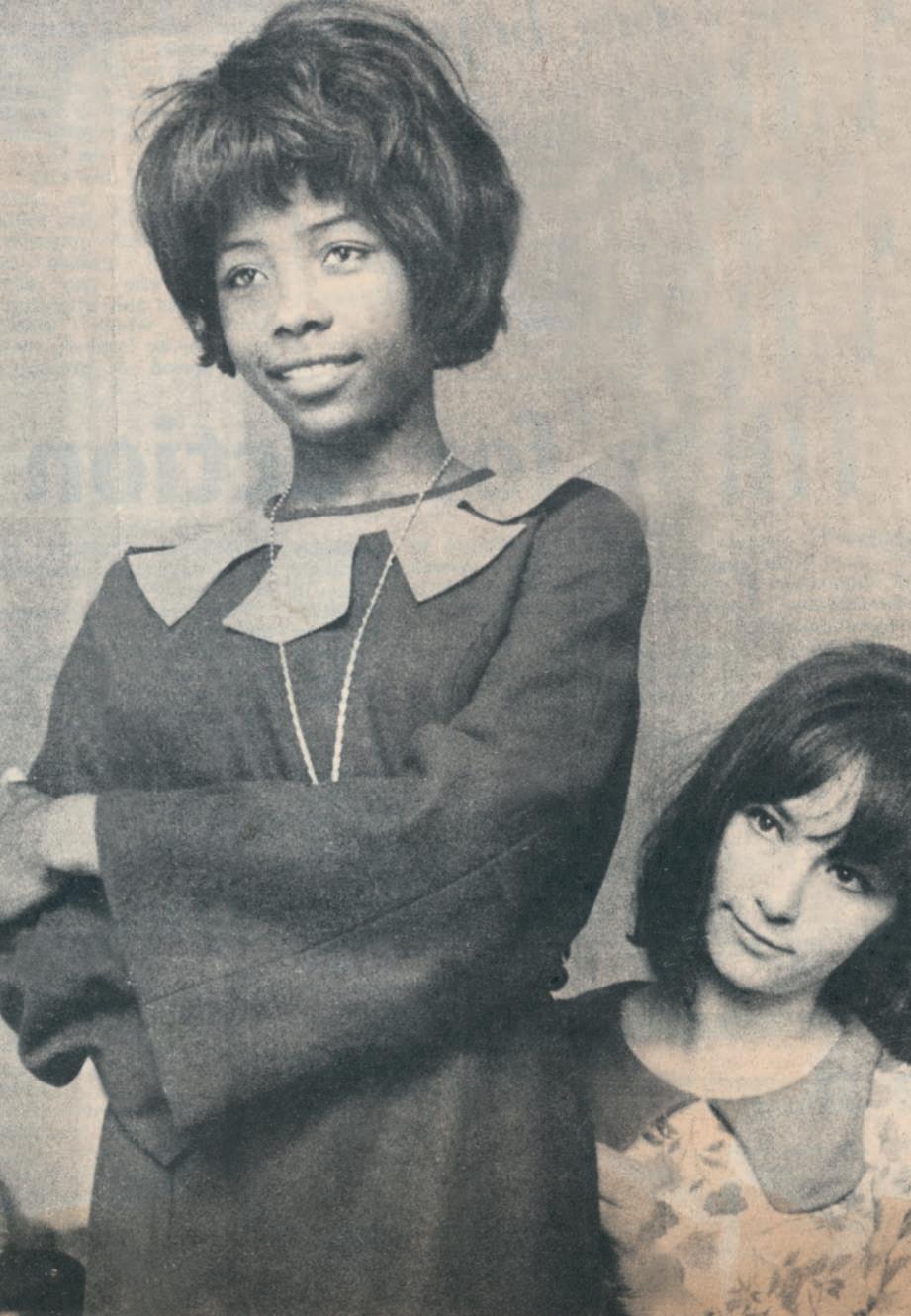
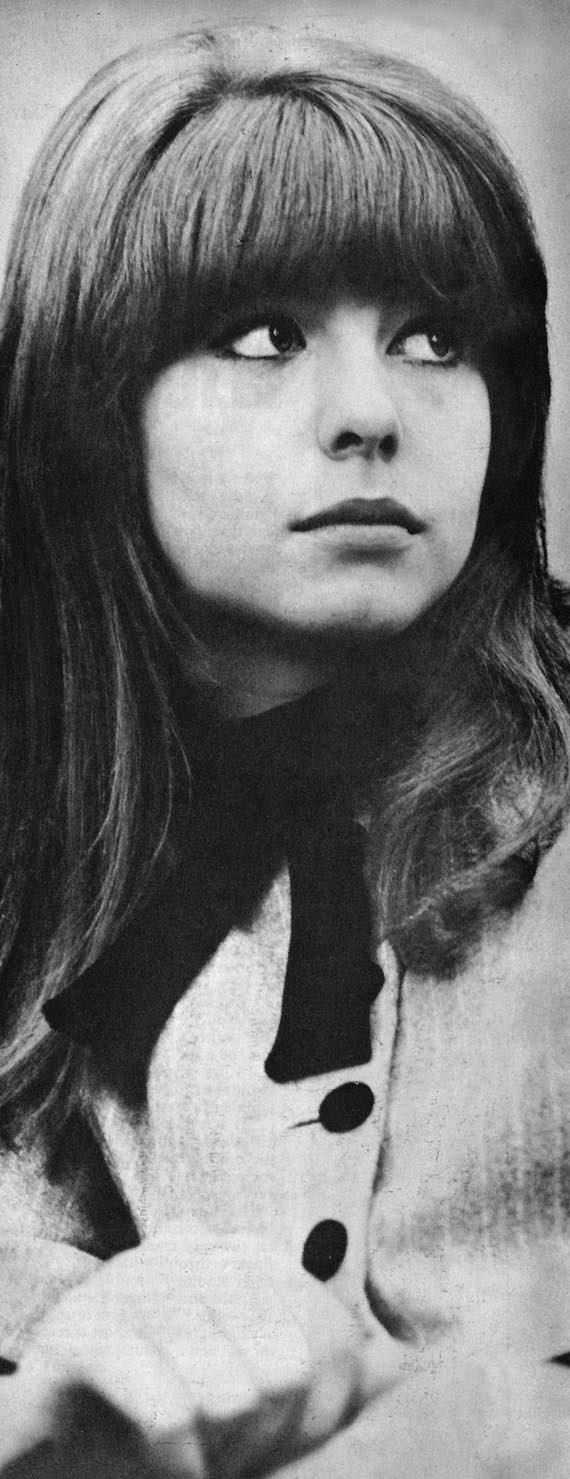
My clothes seemed to suit the new generation of rising stars. Marianne Faithfull, for one, had lots of the new collection. Marianne was really pretty and had a very sweet voice. I went on her first local English tour, briefly, to somewhere like Norwich, to hold her hand. Millie and Lulu were the latest pop singers and we dressed them in short A-line shift dresses; both Hayley Mills and Jane Asher, still young actresses at the time, had Caroline Charles clothes.
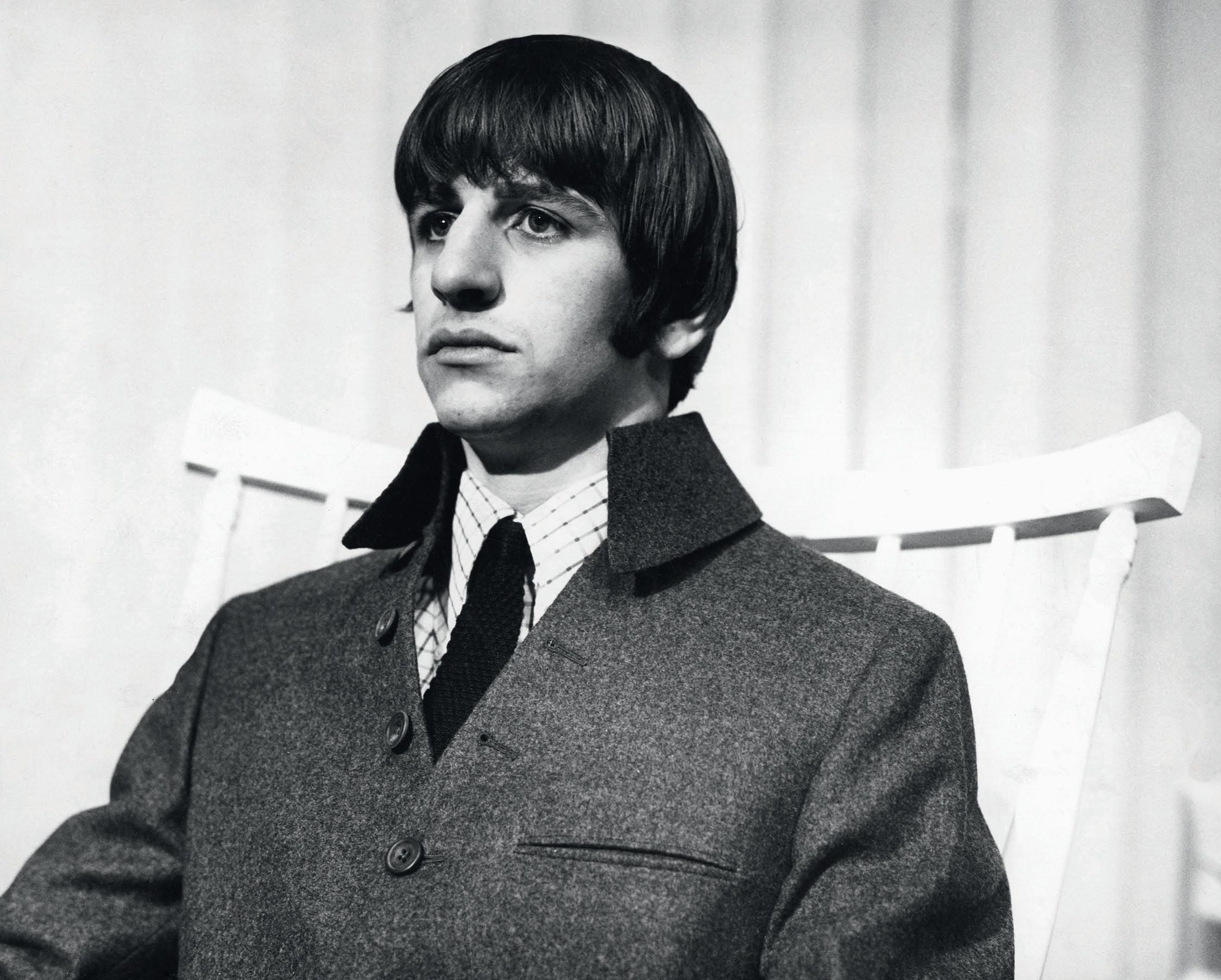
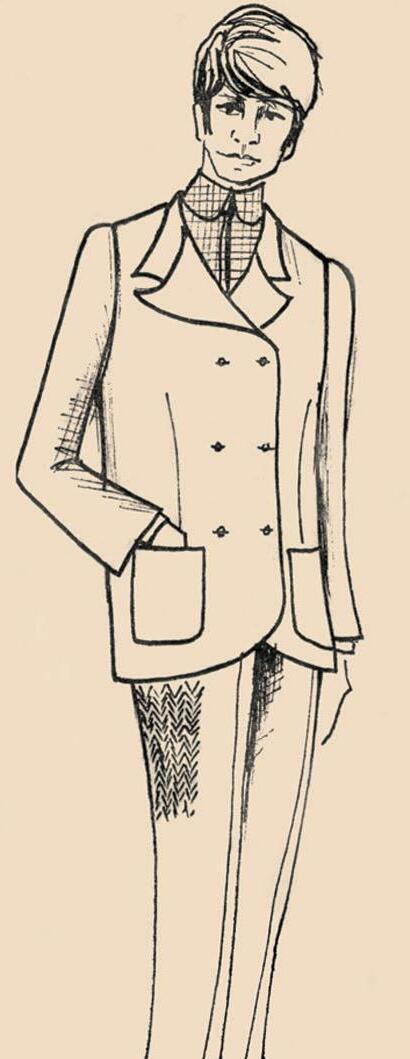
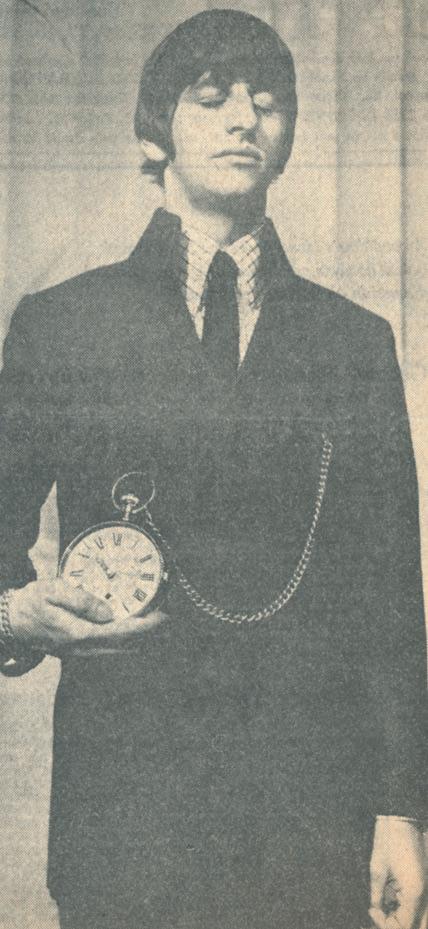
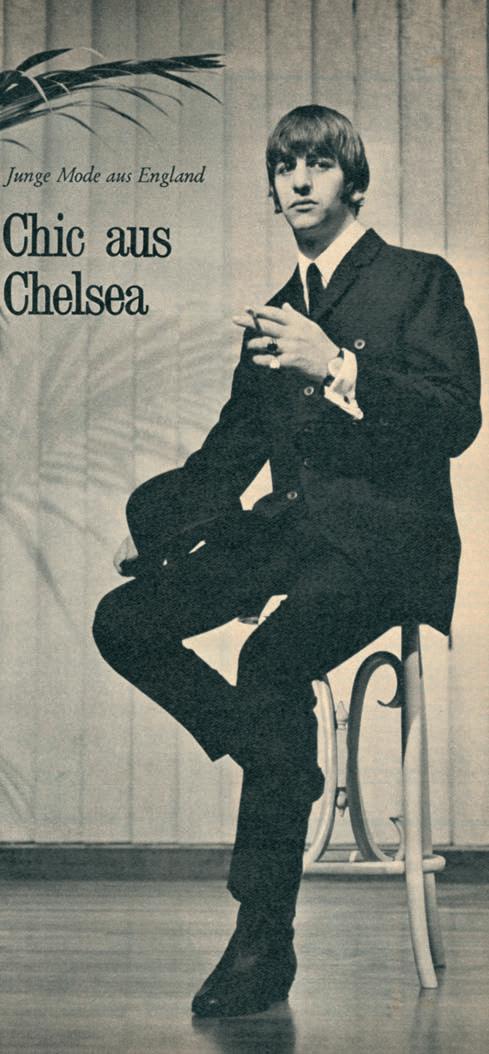
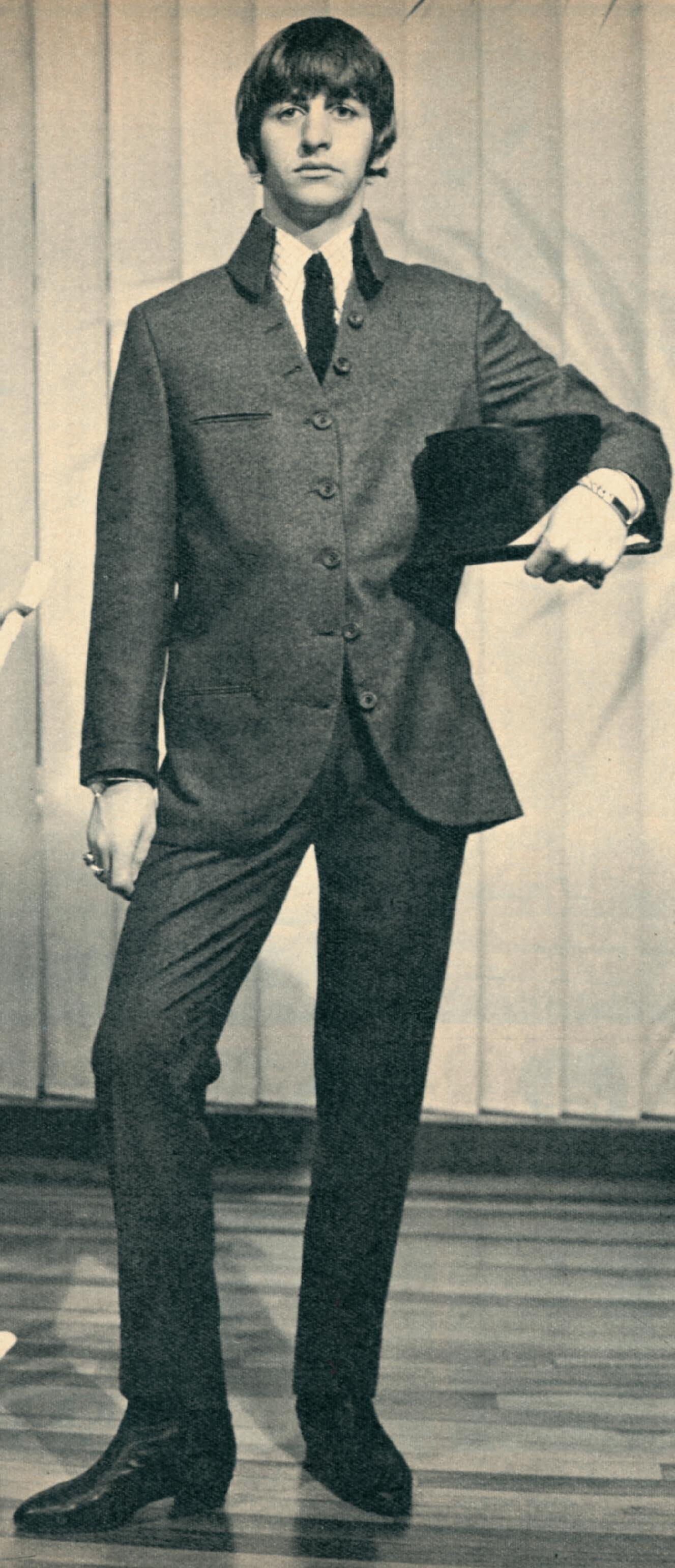
Ringo Starr had just announced his engagement to Maureen Cox, so I was sent round to where he was living in a flat on Cadogan Place (next to the Carlton Towers Hotel), to find out if he’d like some suits. I really wanted Ringo to look like a dandy, and he did: using top-quality Saville Row men’s fabrics and tailoring techniques and changing the designs to a Beau Brummell mood. He was extremely easy to work with and Maureen was lovely. They seemed to spend a lot of time watching television or drying their hair with hand driers, which must have been new. There wasn’t any grandeur, at least in London, they were just a normal couple.
It was great being backstage with the Beatles. I stood in the wings at Finsbury Park Astoria watching and listening to one of their concerts. The Fab Four all seemed to be having a good time and you could hear what they were really singing, as opposed to the screaming out front, which was ear-splitting and completely drowned out the songs. It was quieter with George Martin running a recording session in Abbey Road when I visited.
ABOVE:
C.C.ʼs sketch for Ringoʼs suit
MIDDLE, RIGHT & FARRIGHT: Ringo, London 1964
LEFT:
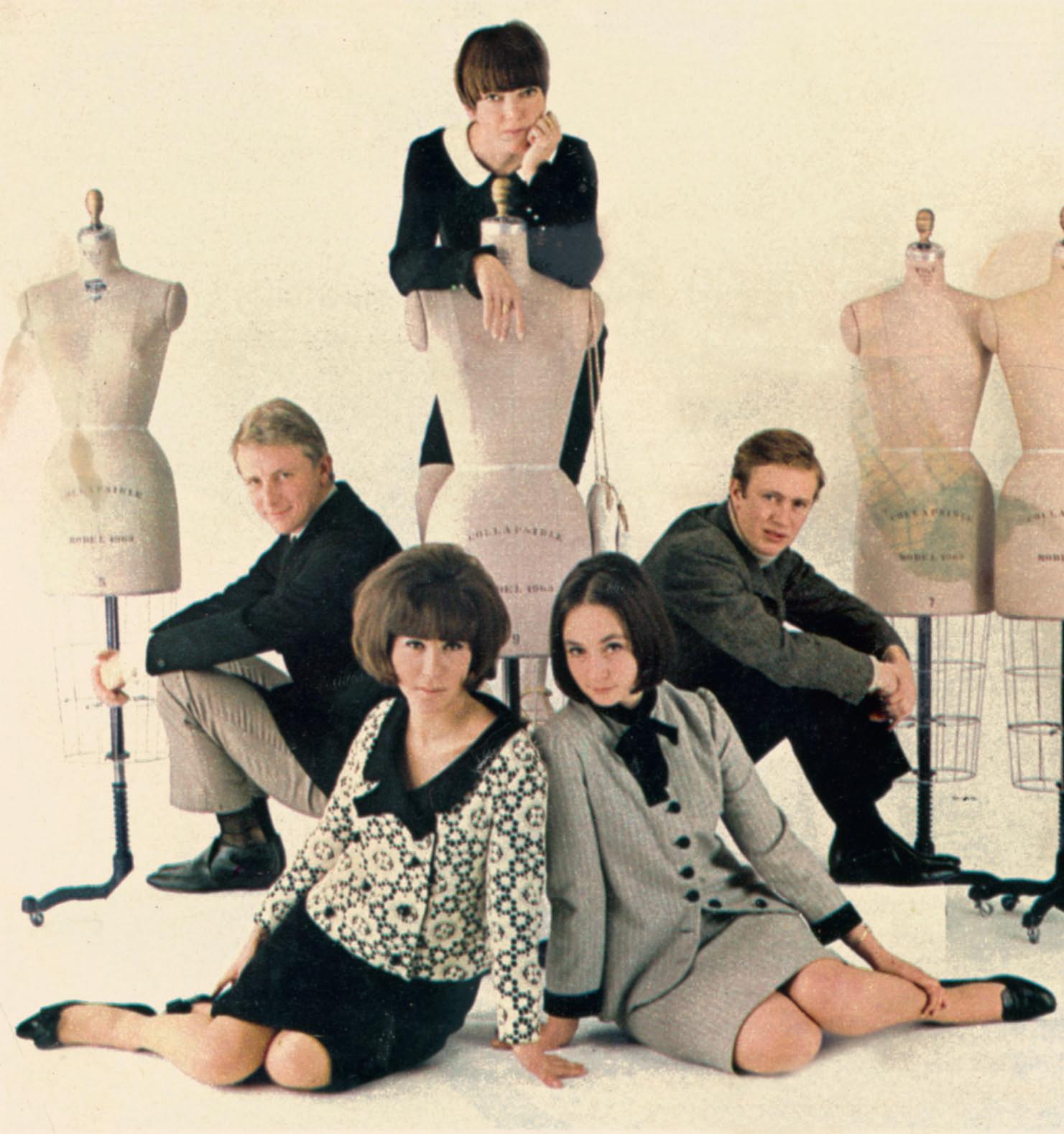
SEATED, FROMLEFTTORIGHT: ʻYoung London designersʼ, Gerald McCann, Angela Cash, C.C., Tony Armstrong; STANDINGATBACK: Mary Quant, 1965, Seventeen magazine
OPPOSITERIGHT:
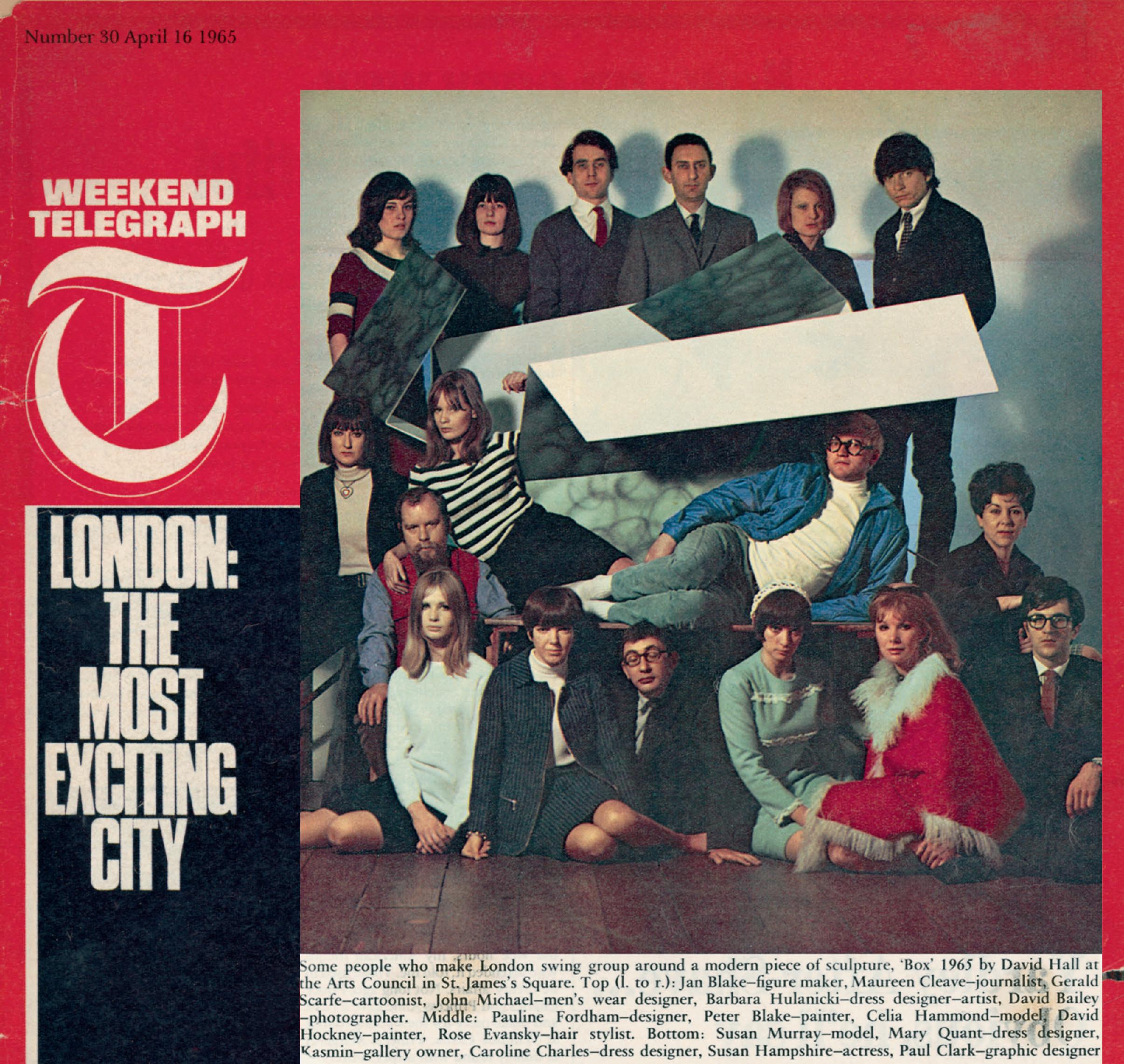
ʻThe people who make London swingʼ, article in London 1965, Weekend Telegraph
OPPOSITE PAGE:
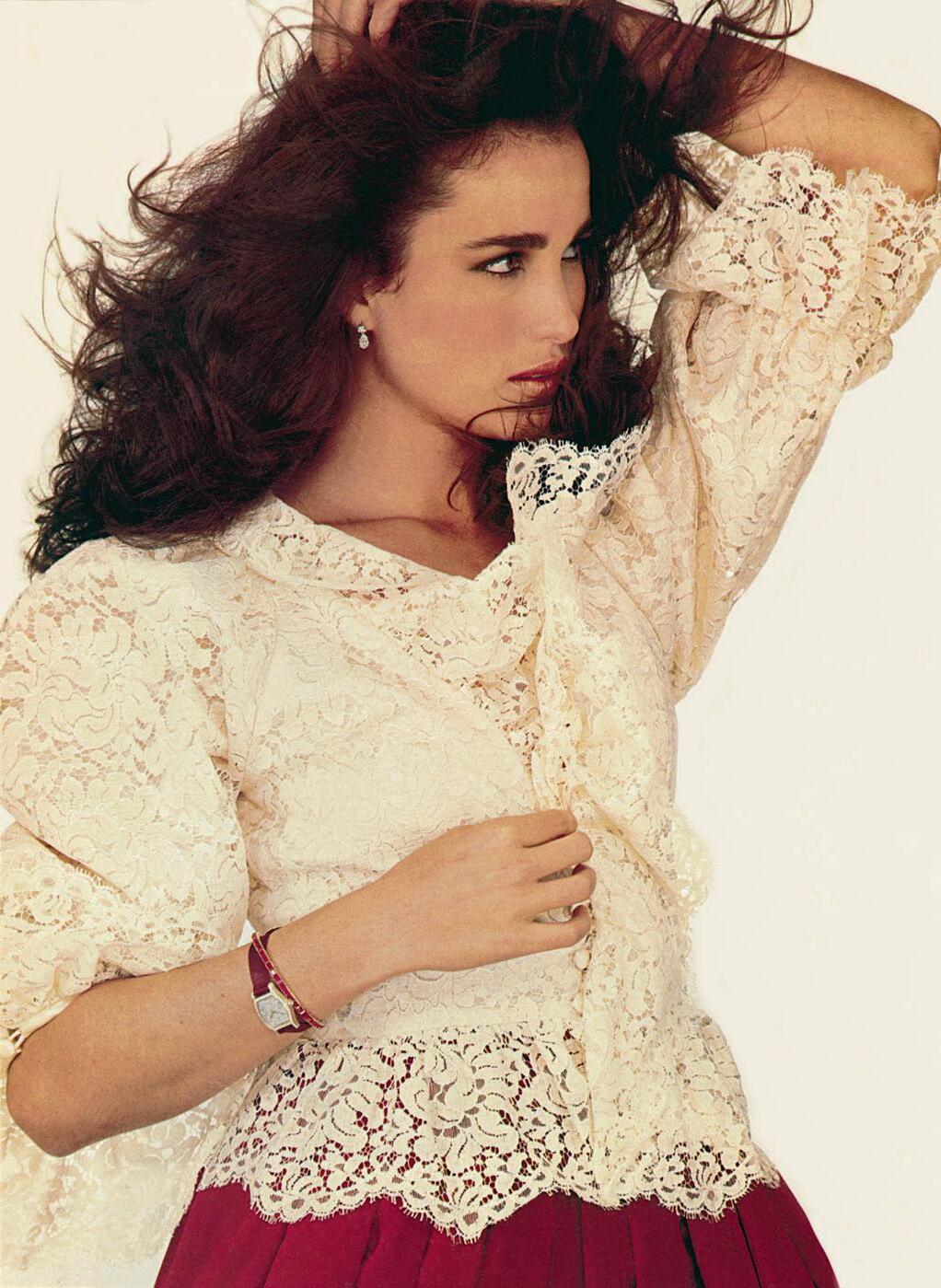
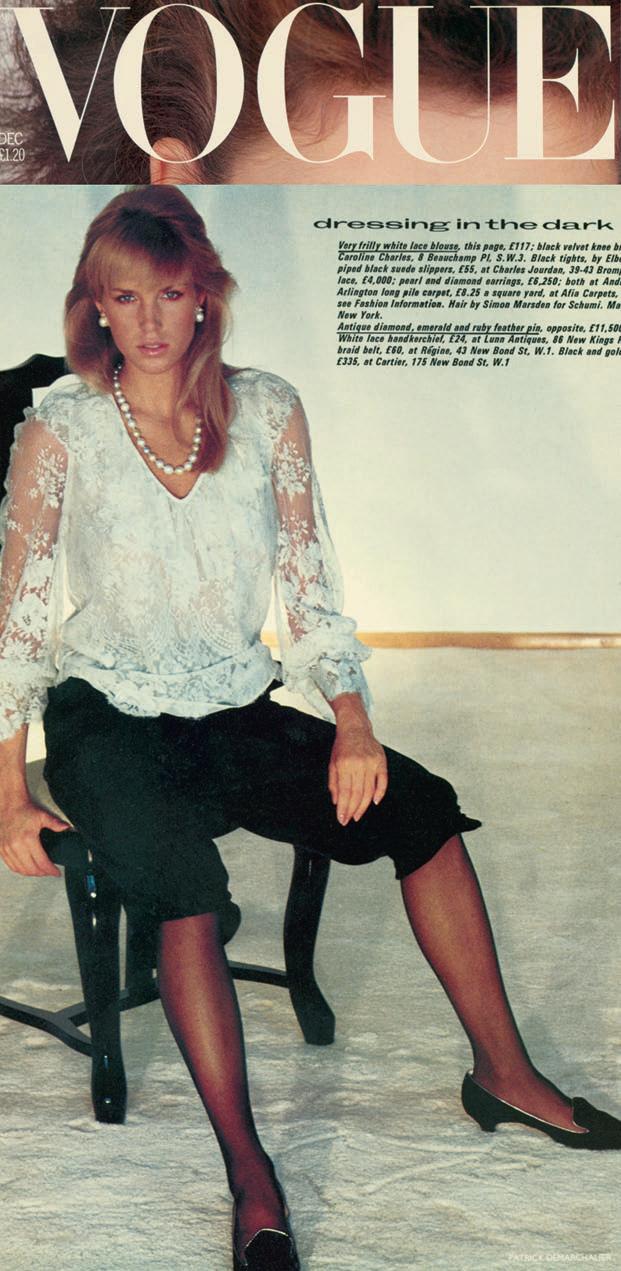
LEFT, TOPANDBELOW:
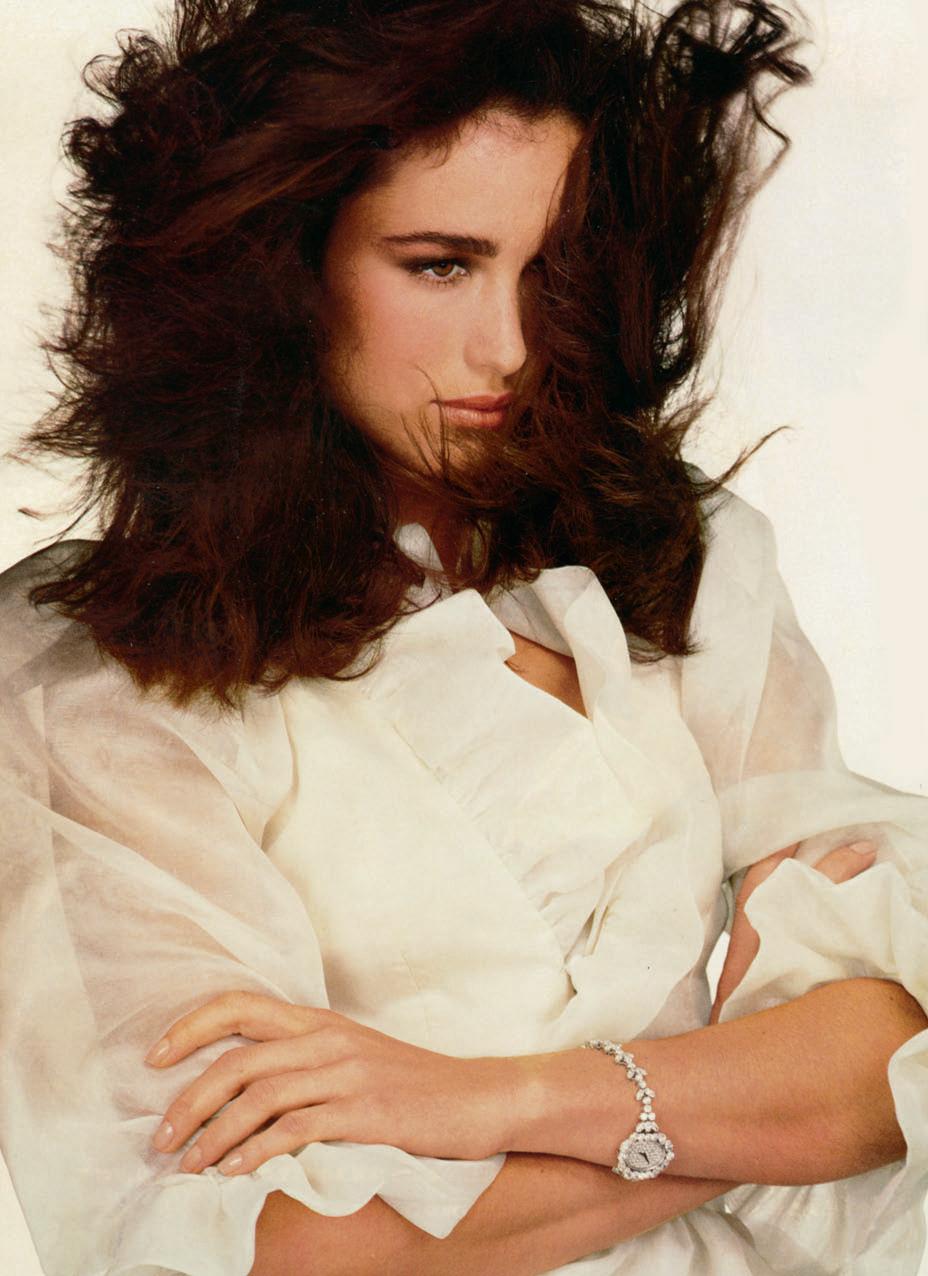
Albert Watson photographed actress Andie MacDowell in a Caroline Charles silk & lace blouse, 1988
ABOVE:
Lace blouse & knickerbockers, Demarchelier/Vogue © The Condé Nast Publications Ltd
RIGHT:
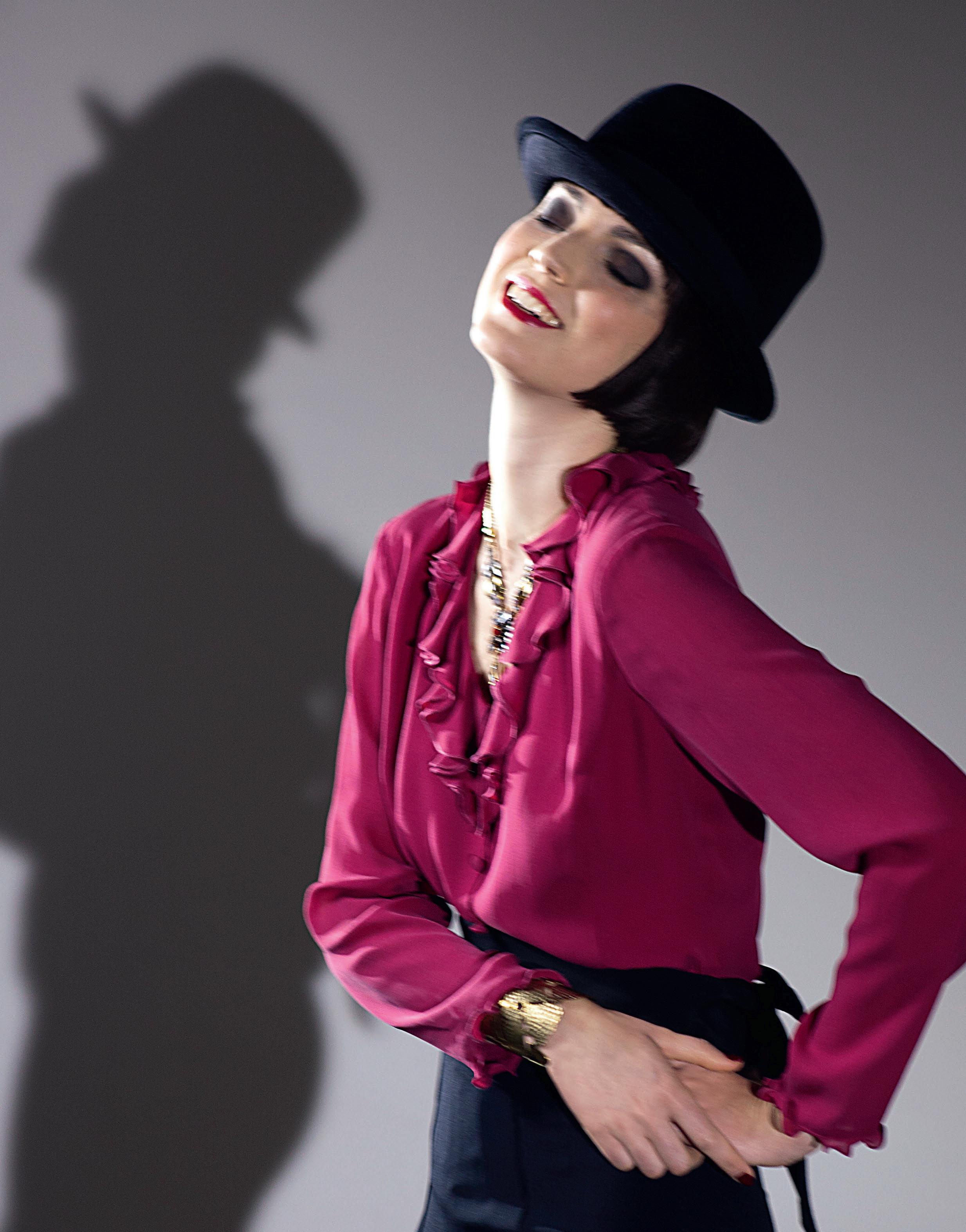
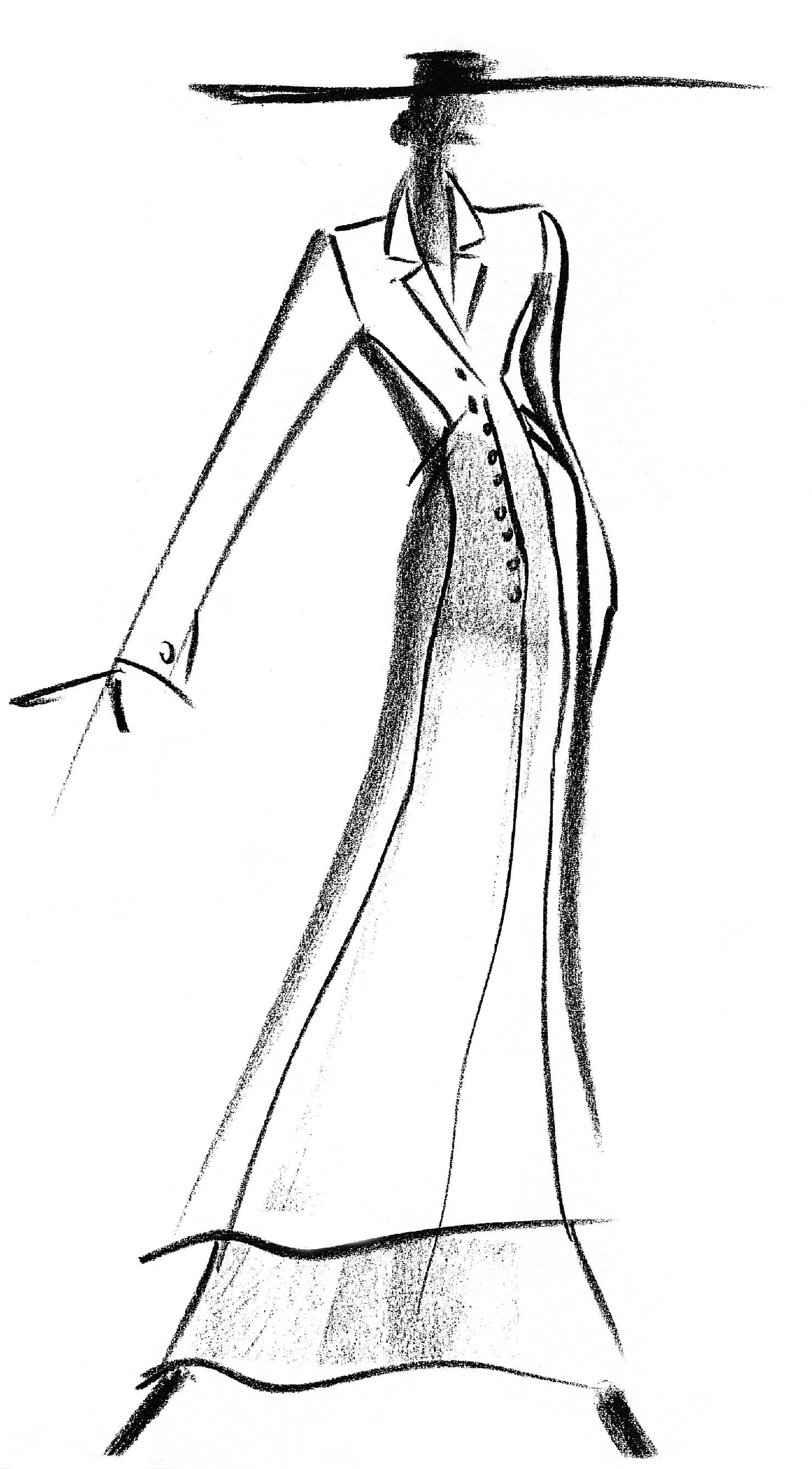
Caroline Charles studio sketch, ruffled blouse and long skirt, 1988
OPPOSITEPAGE:
Ruffled lace blouse, velvet skirt and lace bloomers, 1988, Robyn Beeche

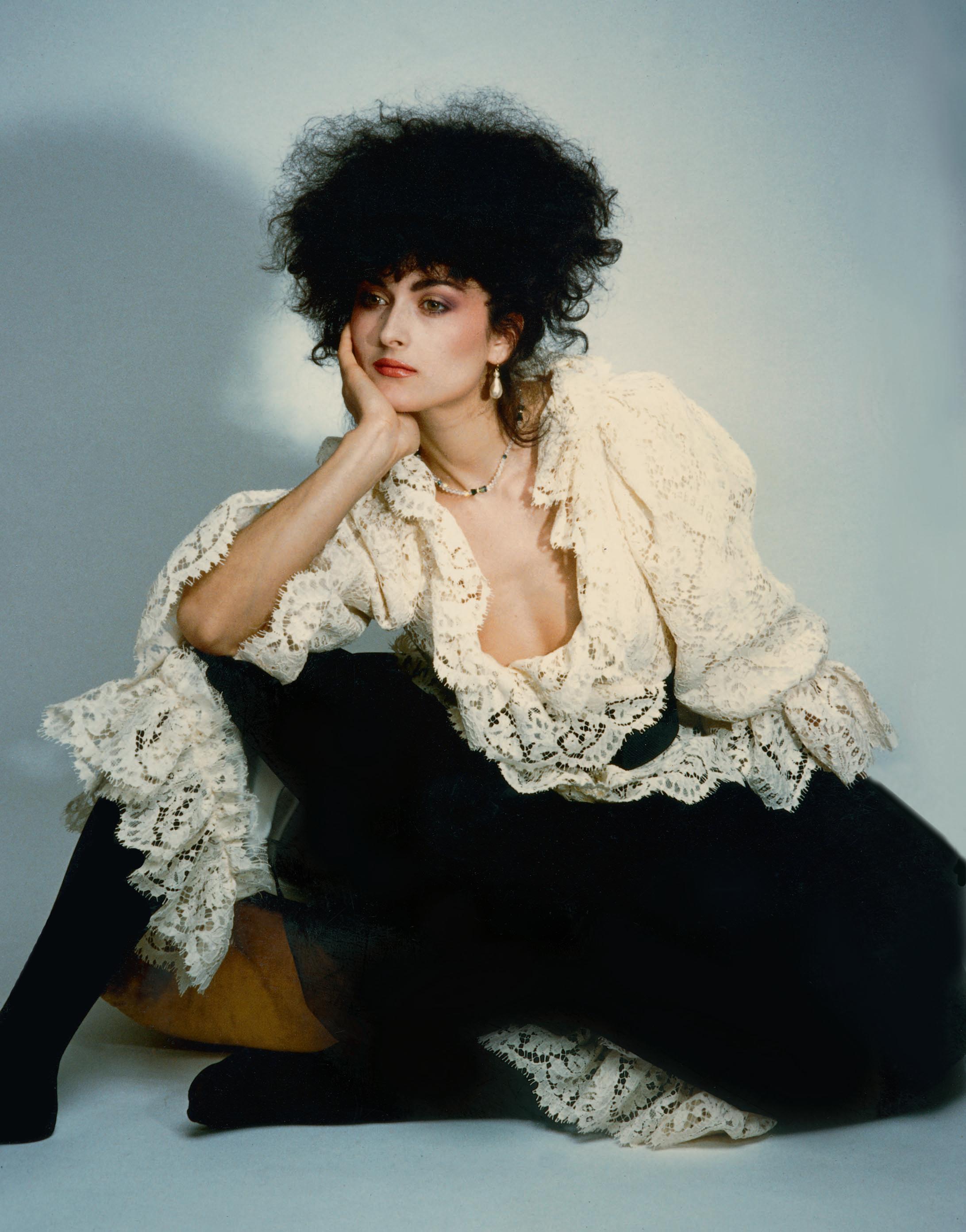
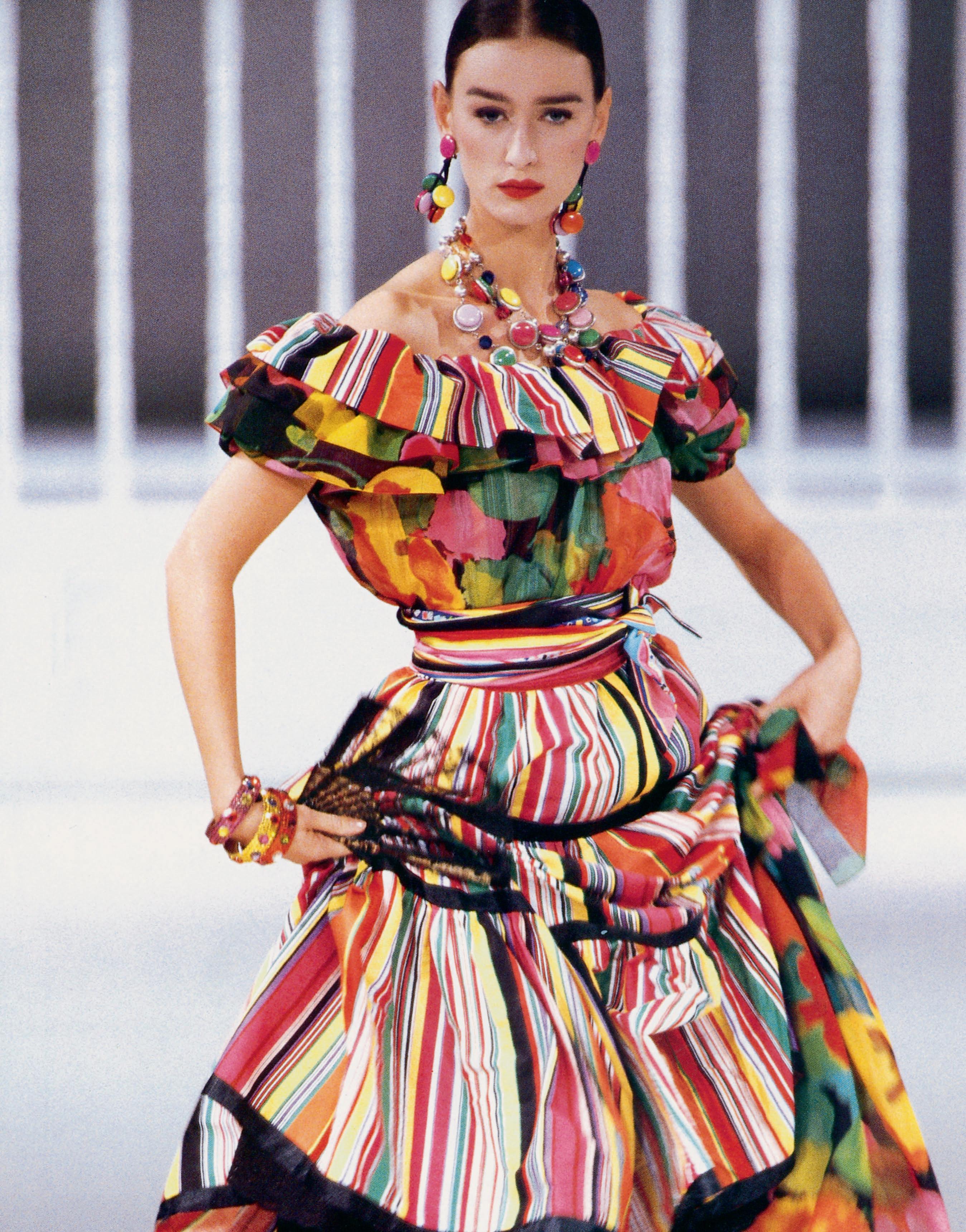
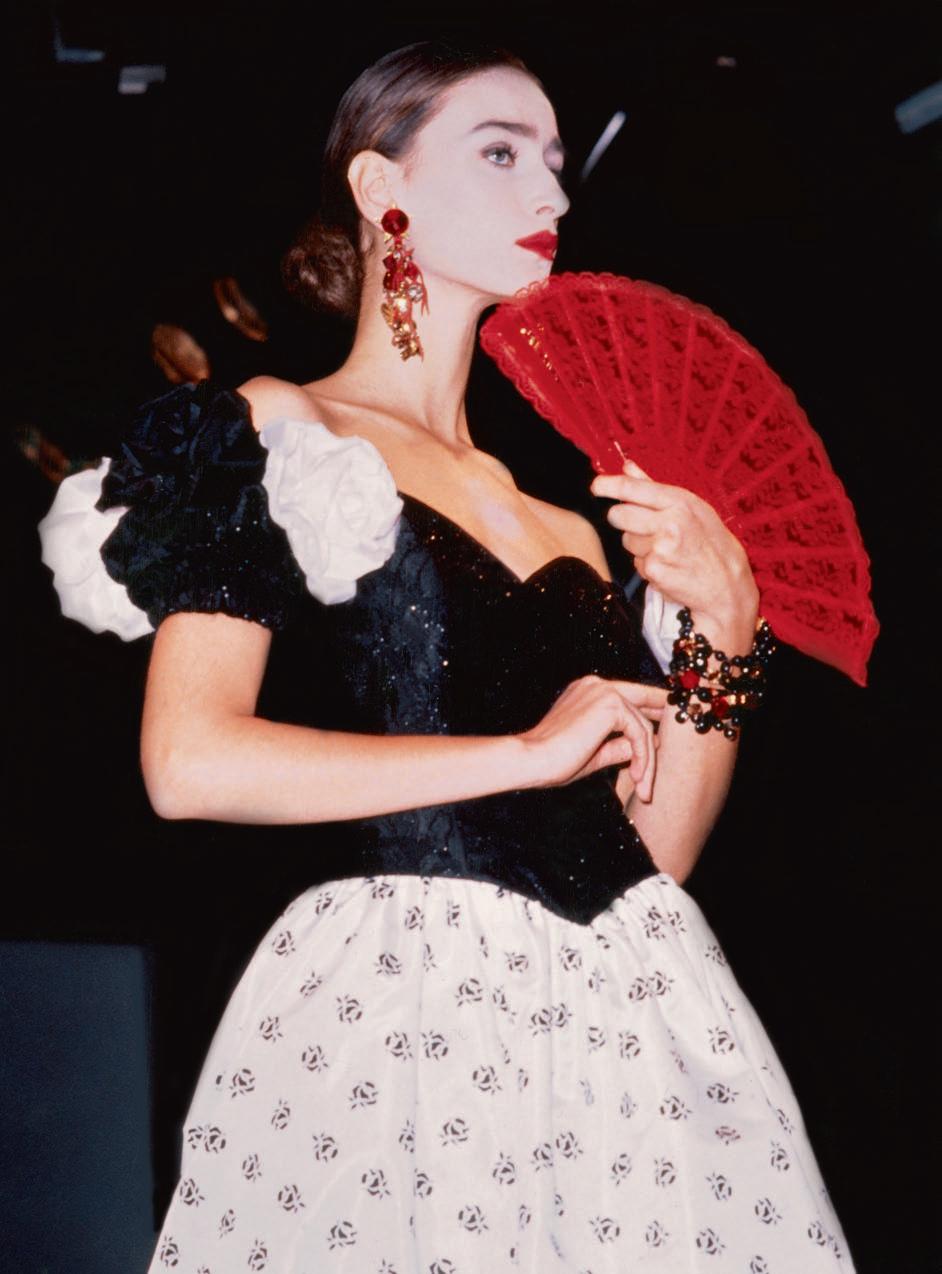
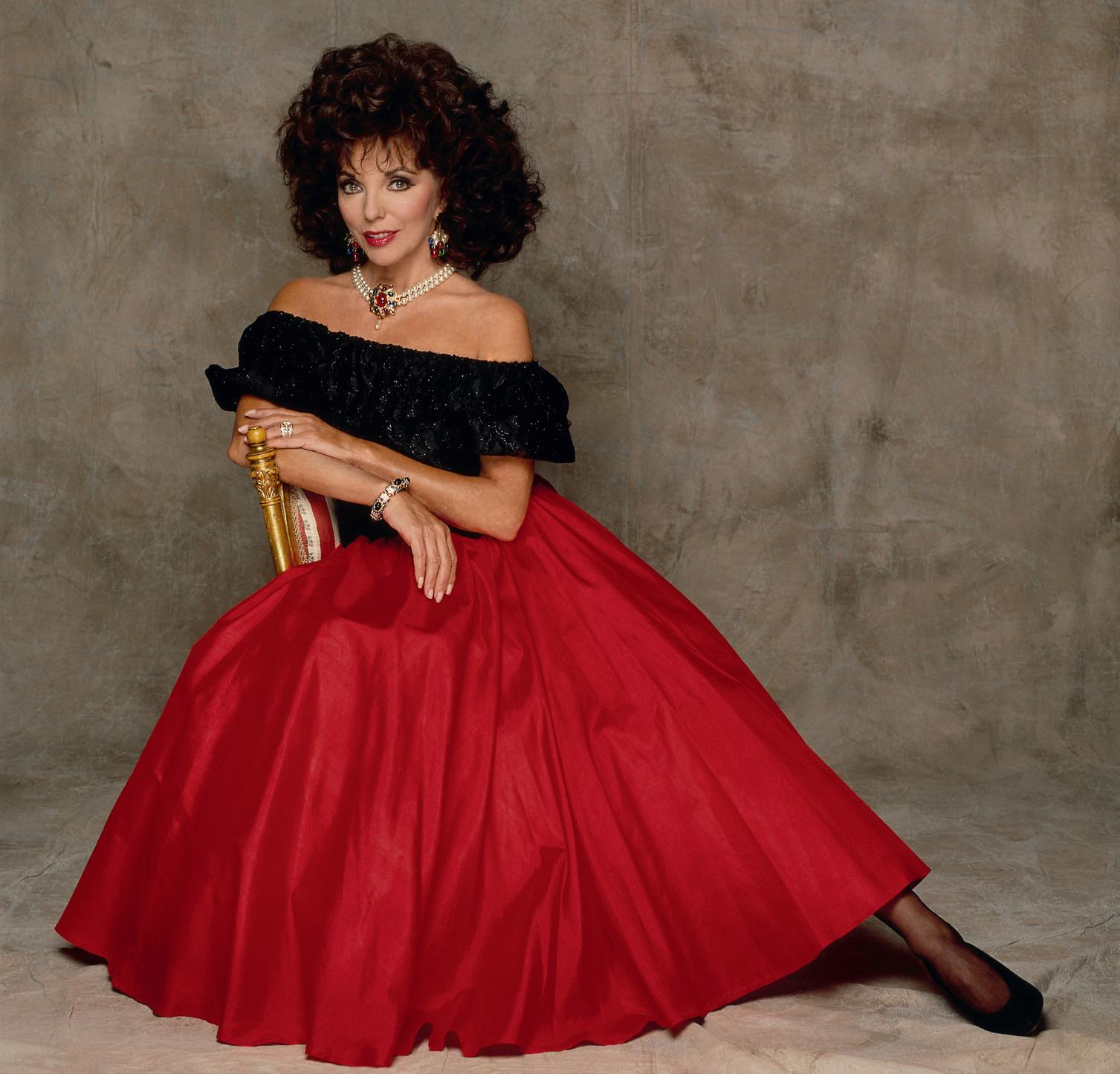
The eighties are famous for wide shoulders and Joan Collins’s smouldering in TV classic Dallas. Our collections during this decade had gently gathered material at the shoulder to create width and we added a mix of longer pleated skirts and short, leather, tight, pencil skirts. There were elegant long slim dresses for charity evenings or private dances and touches of new romantic ruffled shirts. During various seasons we were inspired by gaucho culottes and then again Mexico and South of France and English gardens.
OPPOSITEPAGE:
Cotton stripes and bright florals on the catwalk, 1989, Catwalking
ABOVE:
A Spanish mood on the catwalk, 1989, Catwalking
RIGHT:
1989
The new shop in Tokyo was ready for the builders to start work. We went to look at it and to put on a show in the British Embassy, which we shared with the Dunhill men’s collection. The Embassy gave us a very good tea party and the guests and press were welcoming. In Japan there is always a very serious and respectful approach to top fashion. After a quick working trip to Florence we gave a Christmas party in our Bond Street building, Vogue gave a party at the Cobden Club in W10, and the fashion awards were celebrated with a dinner at the Albert Hall.
We started designing a new working woman collection to add to our existing ones. This was a good project and to this day I still wear some of the original pieces. Linen blends and fine stretch worsteds in navy with white t-shirts – perfect. Vogue happily thought so as well and Mary Portas, our PR, and Alexandra Shulman, the Editor, arranged a good page of editorial for this collection.
1997: After the Caroline Charles show in February the collection went to New York with appointments to show to a new breed of buyer – the personal shopper. These people buy for private clients and are a considerable force, so much so, that large stores now employ their own. To a lesser extent it replaces the attention and service offered by couture, but with ready-towear clothes and prices to match.
London seemed to deserve a fashion museum, and there was a perfect site about to be free to house this venture. The Museum of Mankind in Burlington Gardens was a great building and perfectly situated between Bond Street and Savile Row. What could be better? The work needed to raise the funds and make it happen was extensive and though many leading people were supportive, it became obvious that this was a full-time job and not one for a working designer.
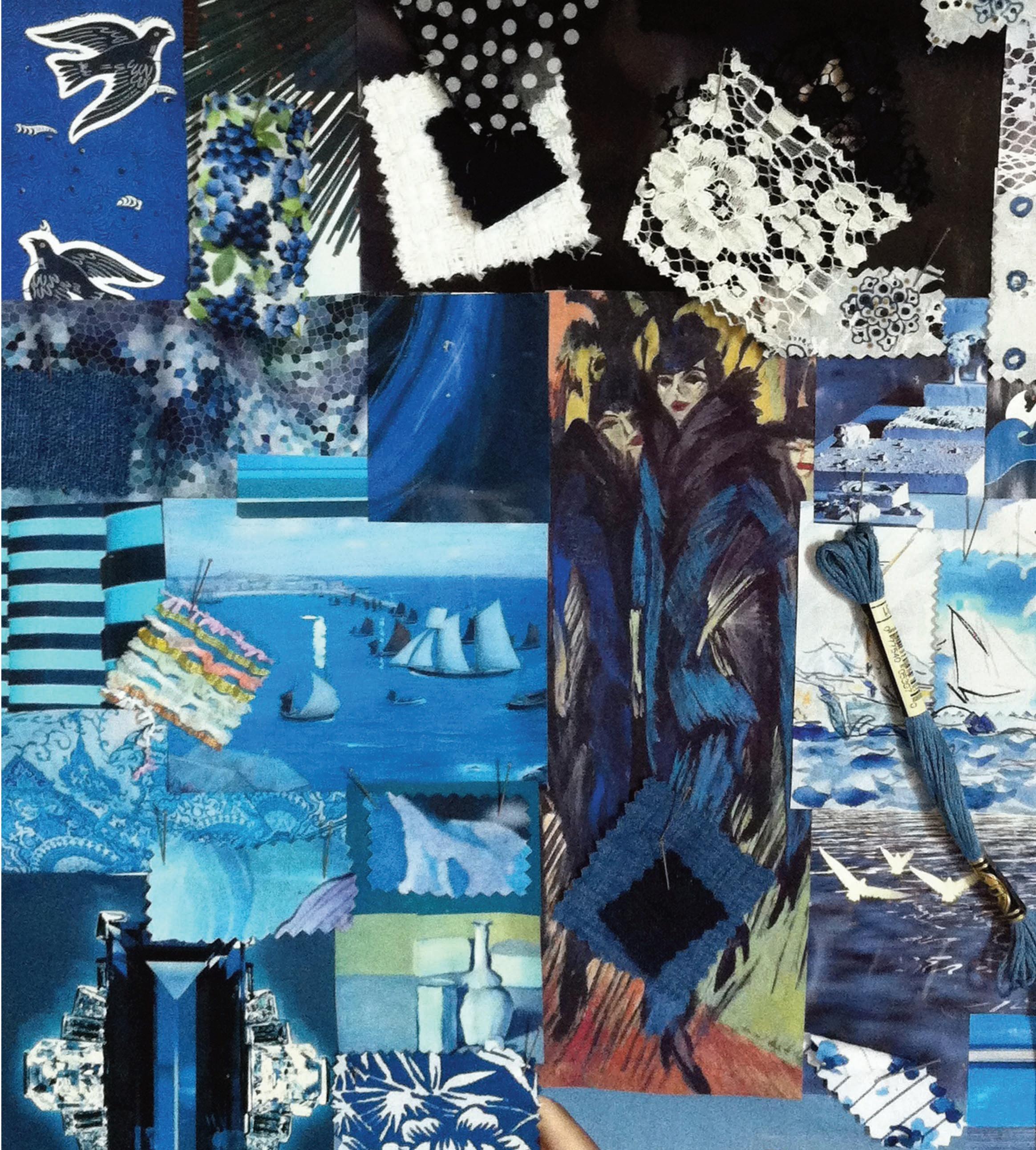
MAINIMAGE: Colourboard, Spring-Summer 1997
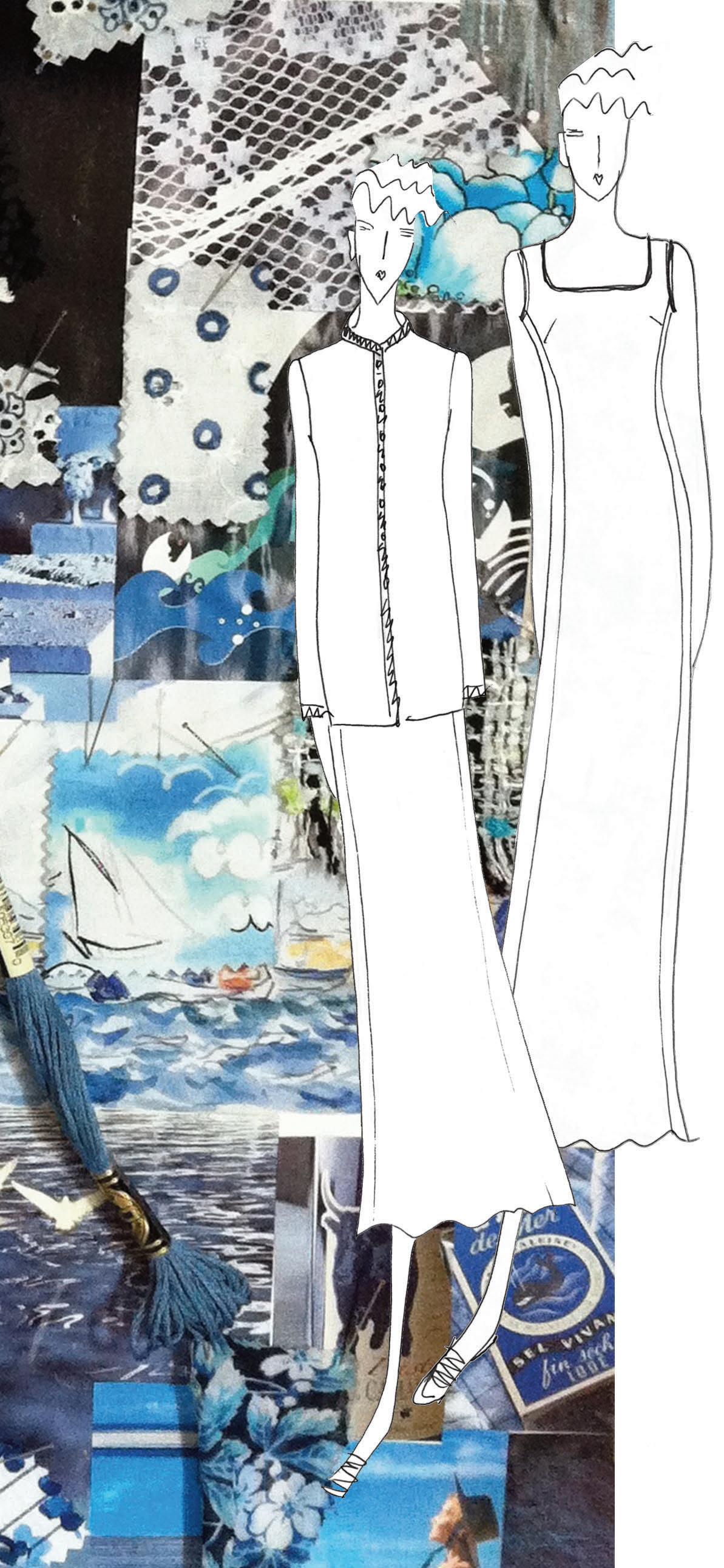
Caroline Charles studio sketches for the Spring-Summer 1997 collection
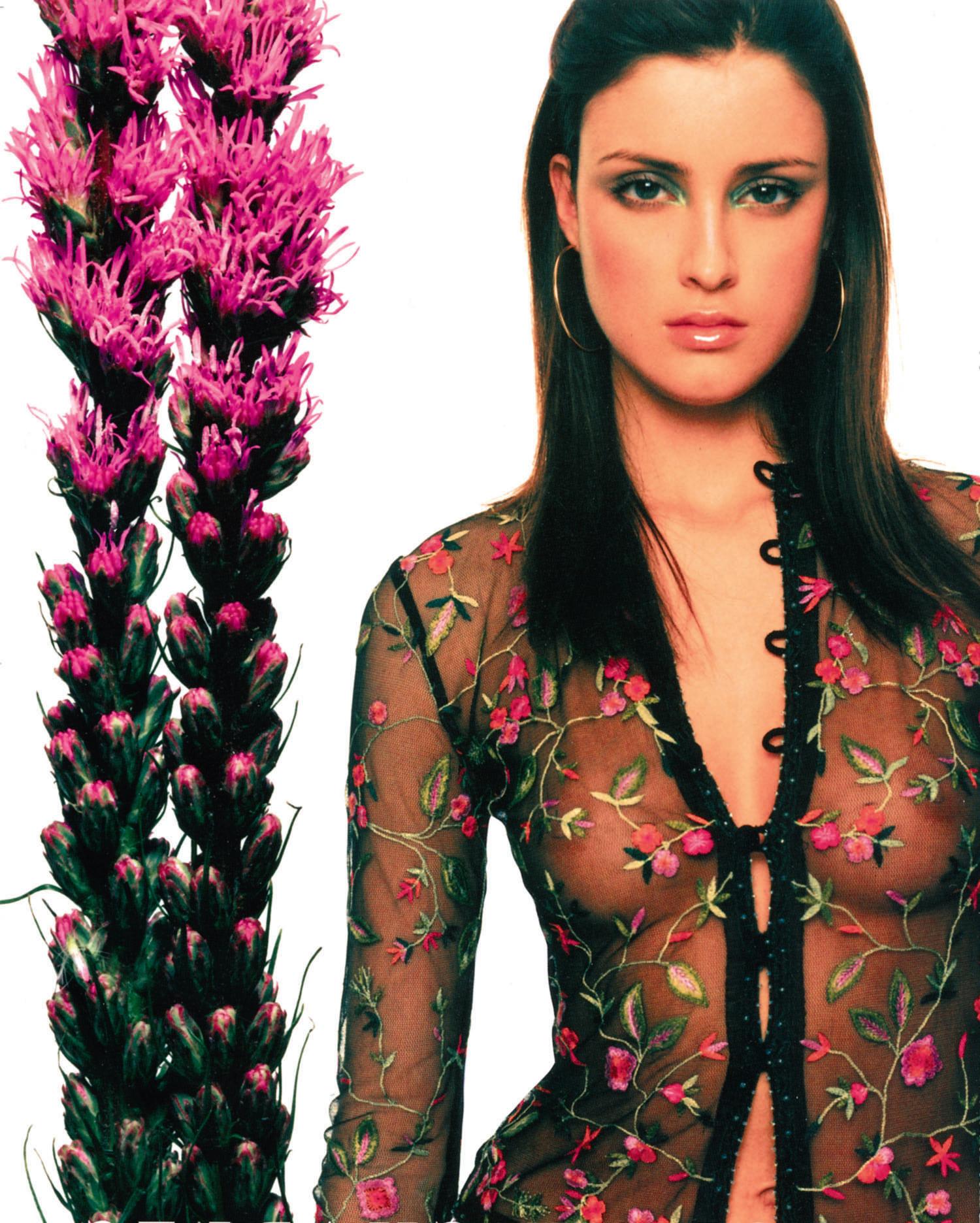
2000: The sense of excitement of this new century was everywhere. We decided that a spring cruise or holiday collection was called for. We set off for Mauritius in February to study the needs of women in a glamorous resort, only to find this was cyclone season, and there were strong winds and constant downpours and floods for a week. The Guardian newspaper had commissioned a travel piece so that was written and ran as a double page spread headed, ‘Fashion Victim’.
The next lot of trips that spring were to our fashion shows across the country. Caroline Charles customers are always really good to meet as they express lots of opinions about the collections and their favourite pieces. We have dressed many
PREVIOUSSPREAD:
Hampton Court, Autumn-Winter 2000, Helen Lyon
BOTH PAGES:
Spring-Summer, 2001, David Woolley
Caroline Charles signature embroidered tunics, David Woolley
people for important events in their lives and it is fun to hear the stories.
Emboldened by a good year, we decided to have a celebration dinner at San Lorenzo in Beauchamp Place. Mara, the hostess of our neighbourhood’s favourite restaurant, organised the party with a special menu, and wonderful velvet red roses. All the staff had a great evening – it was such a good idea.
The new century had started with good will and confidence and the New Labour Government had given the country a prosperous feeling. Rightly or wrongly, but buoyed by this mood, we decided to start looking at towns in the UK where we could open shops of our own.
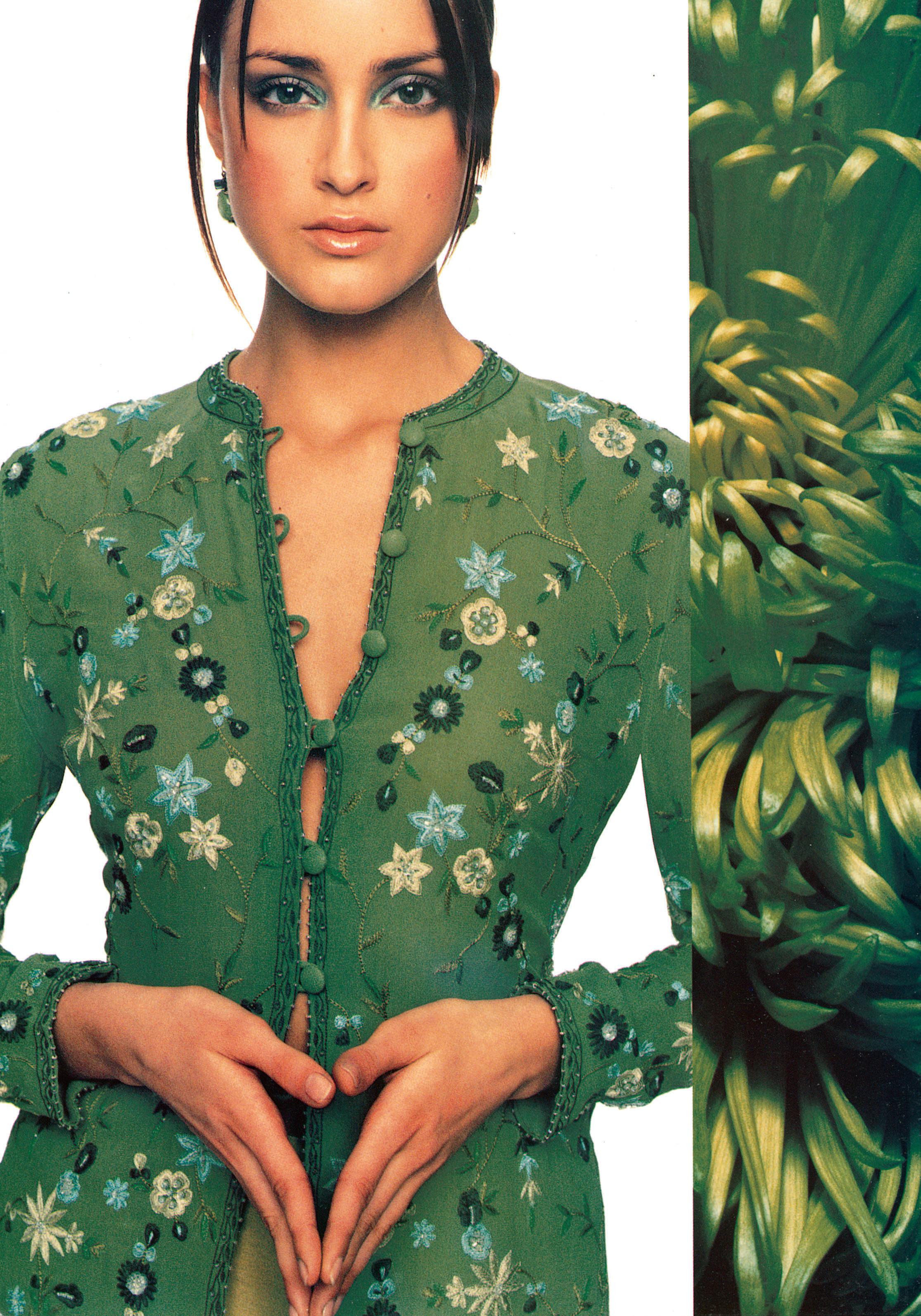
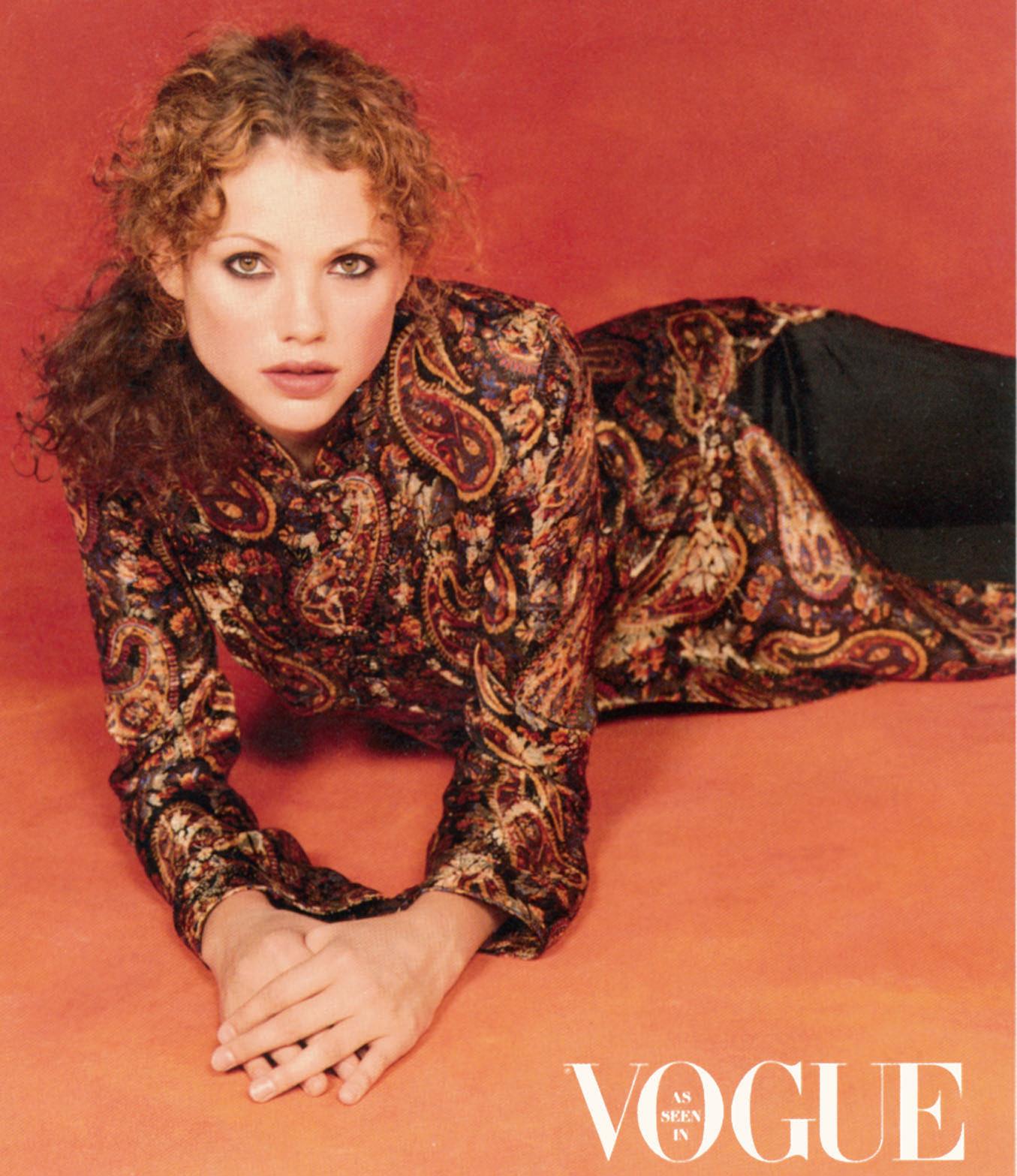
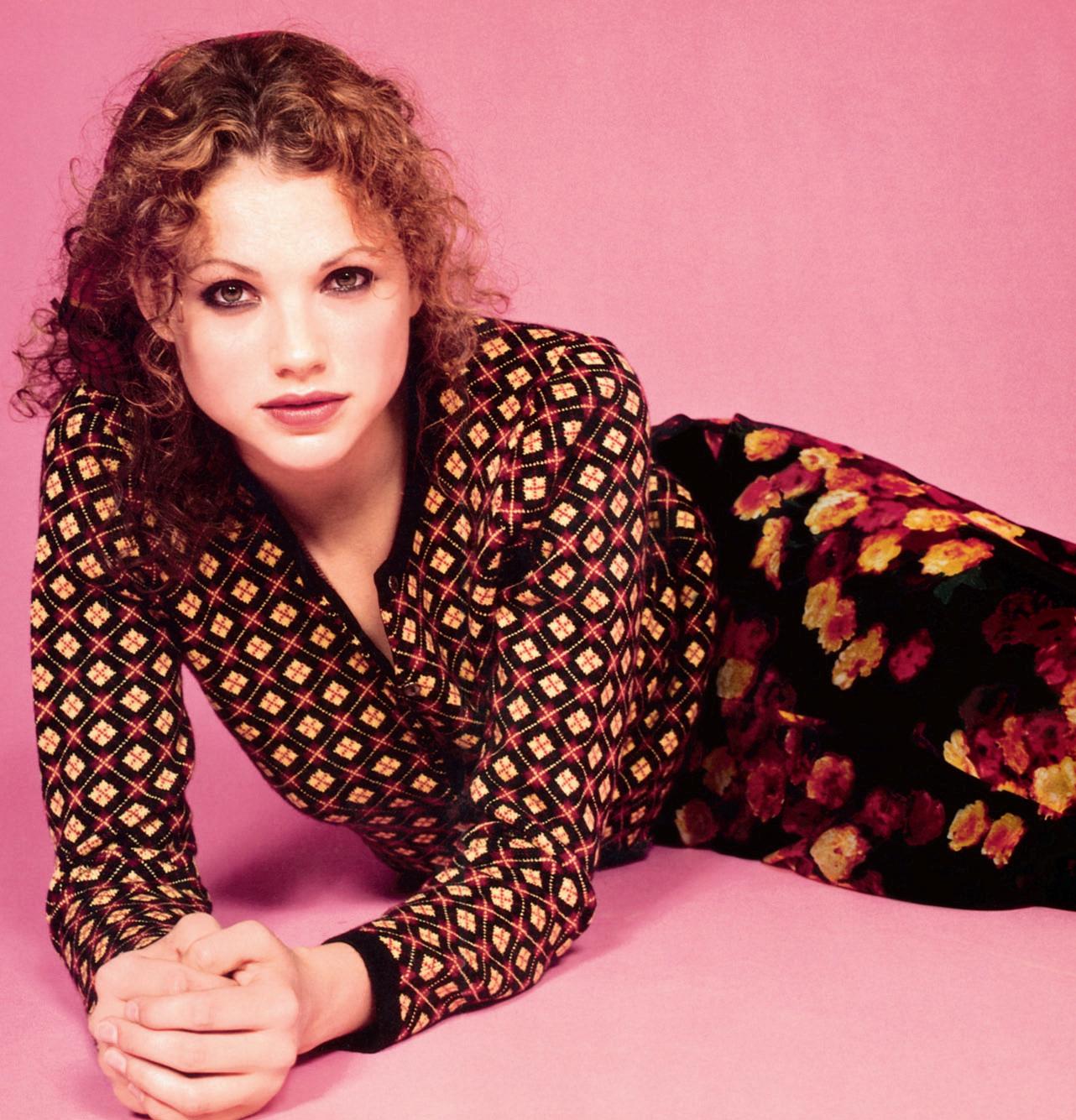
THISPAGE:
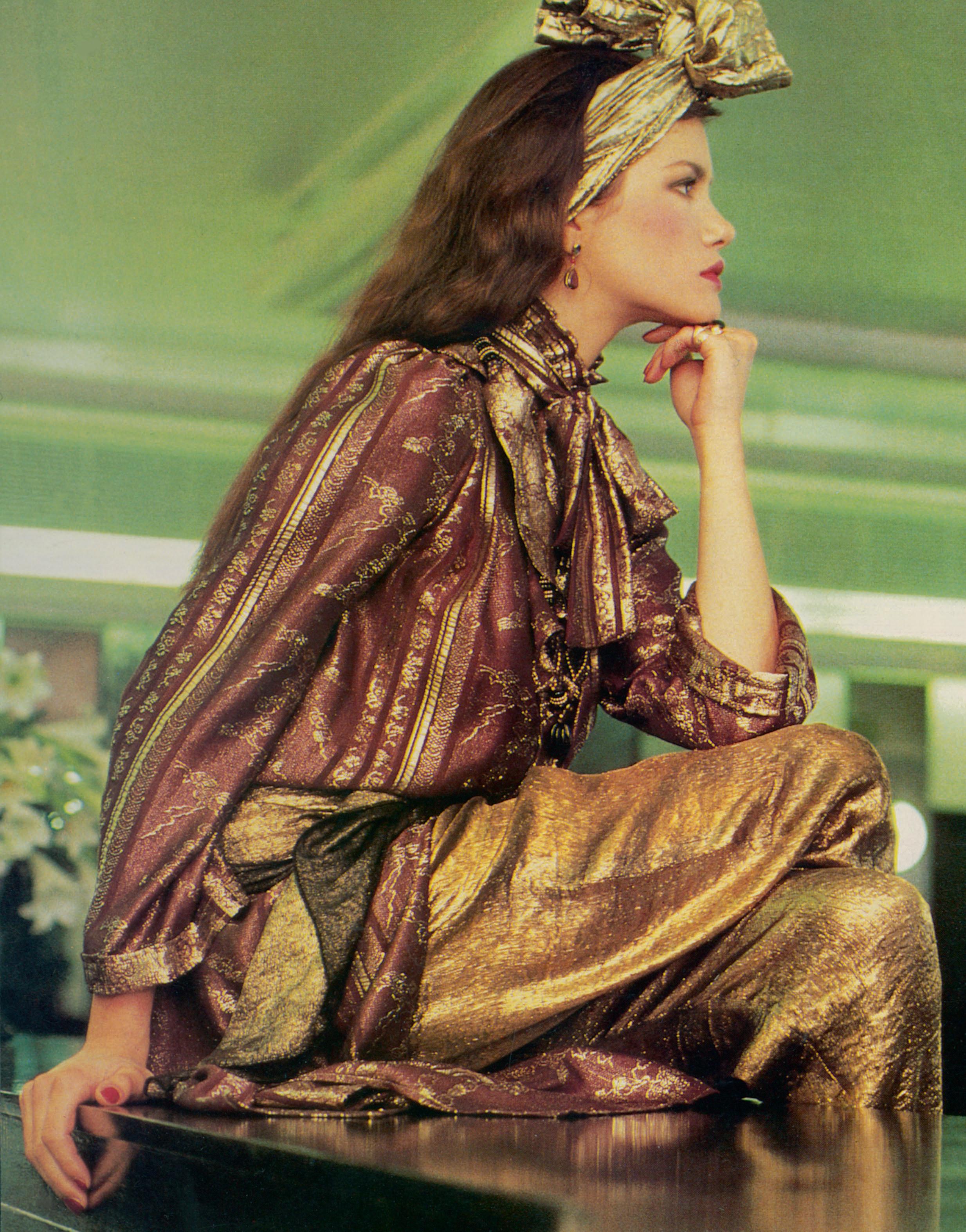
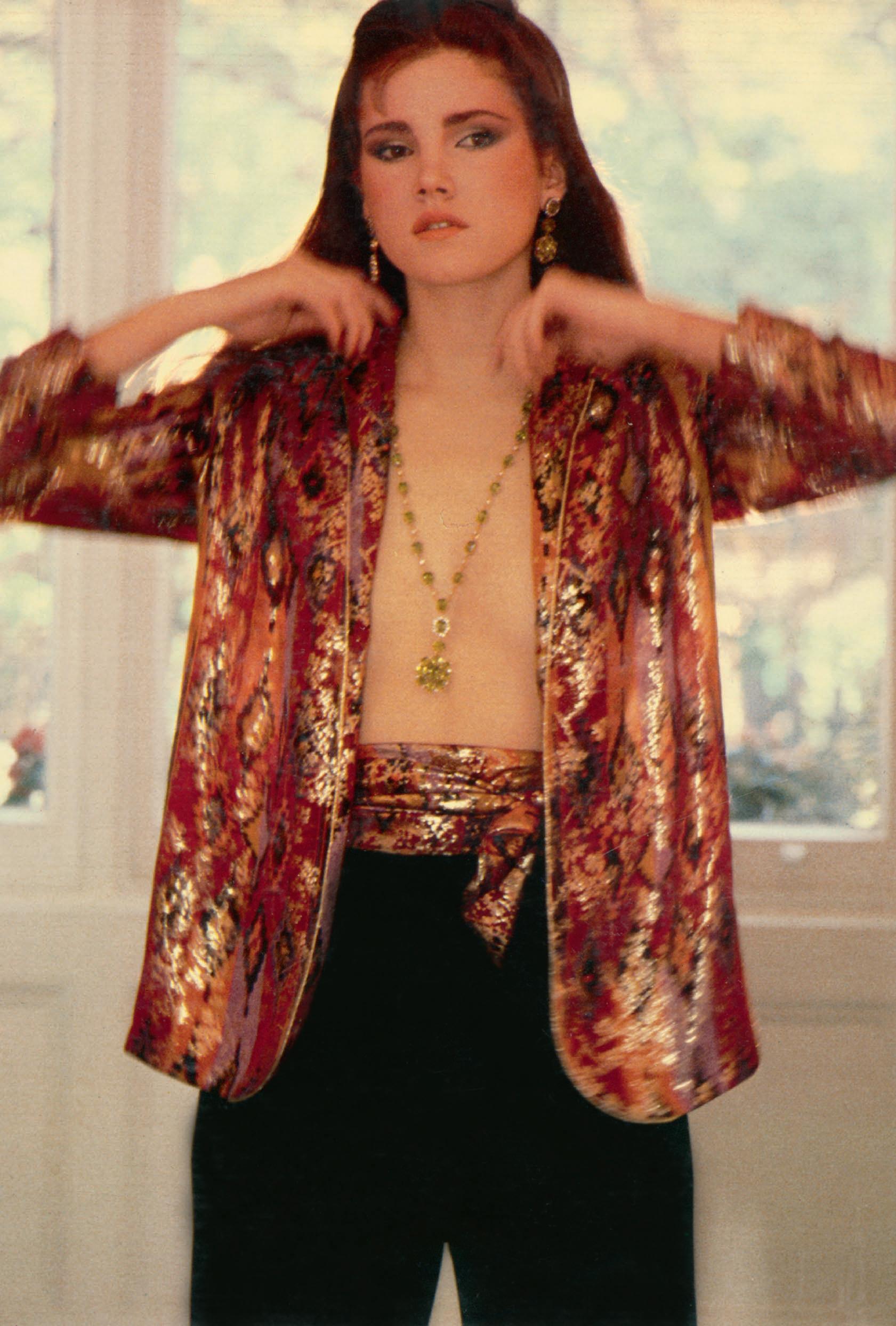
Images from the Caroline Charles Autumn-Winter Collection, 1997, Willy Camden
ABOVELEFT:
Silk and lamé woven paisley tunic
BELOWLEFT:
Argyll pattern cardigan knitted to match the colours in the silk georgette skirt
OPPOSITEPAGE:
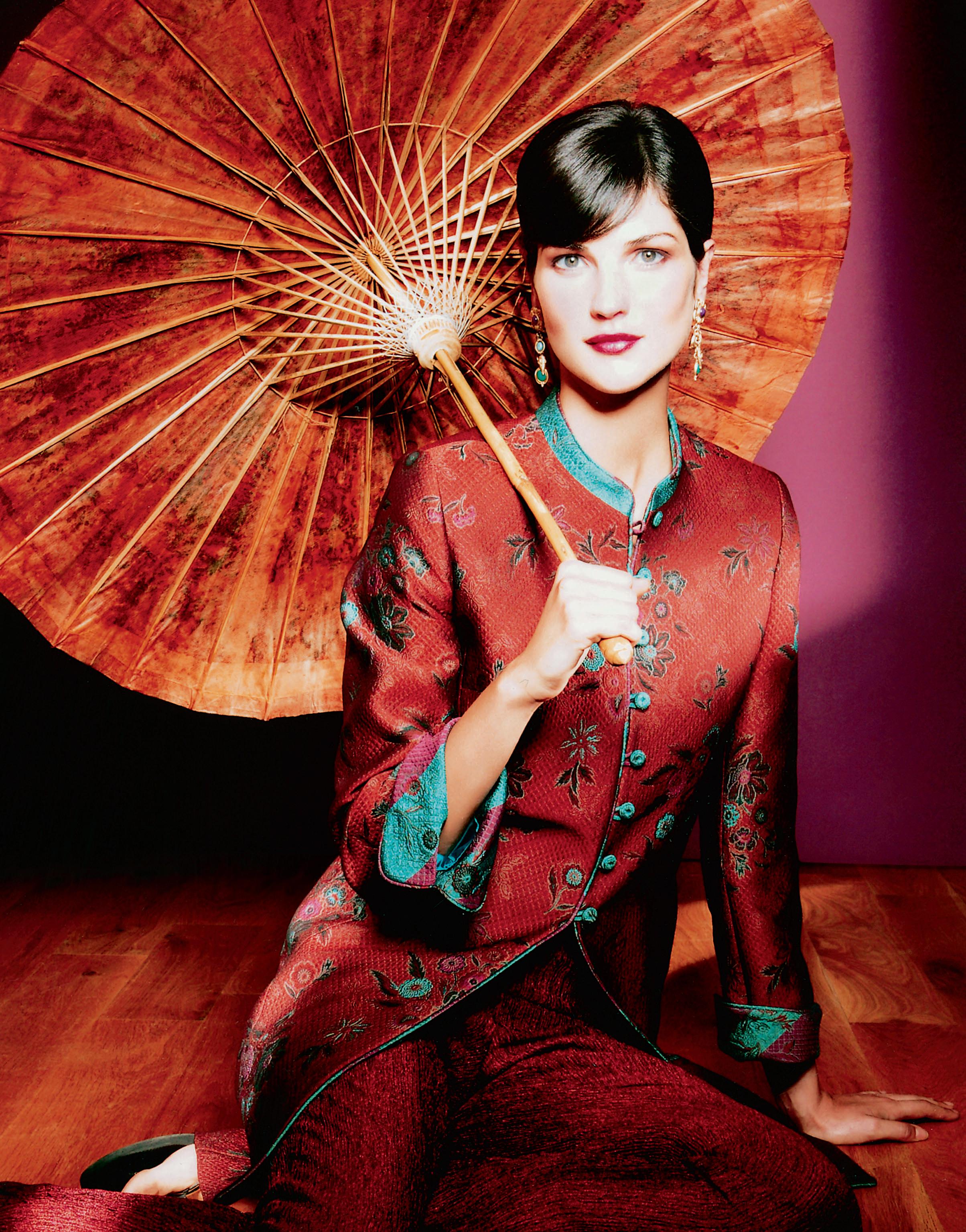
Brocade Oriental coat, 2003, Paul Westlake
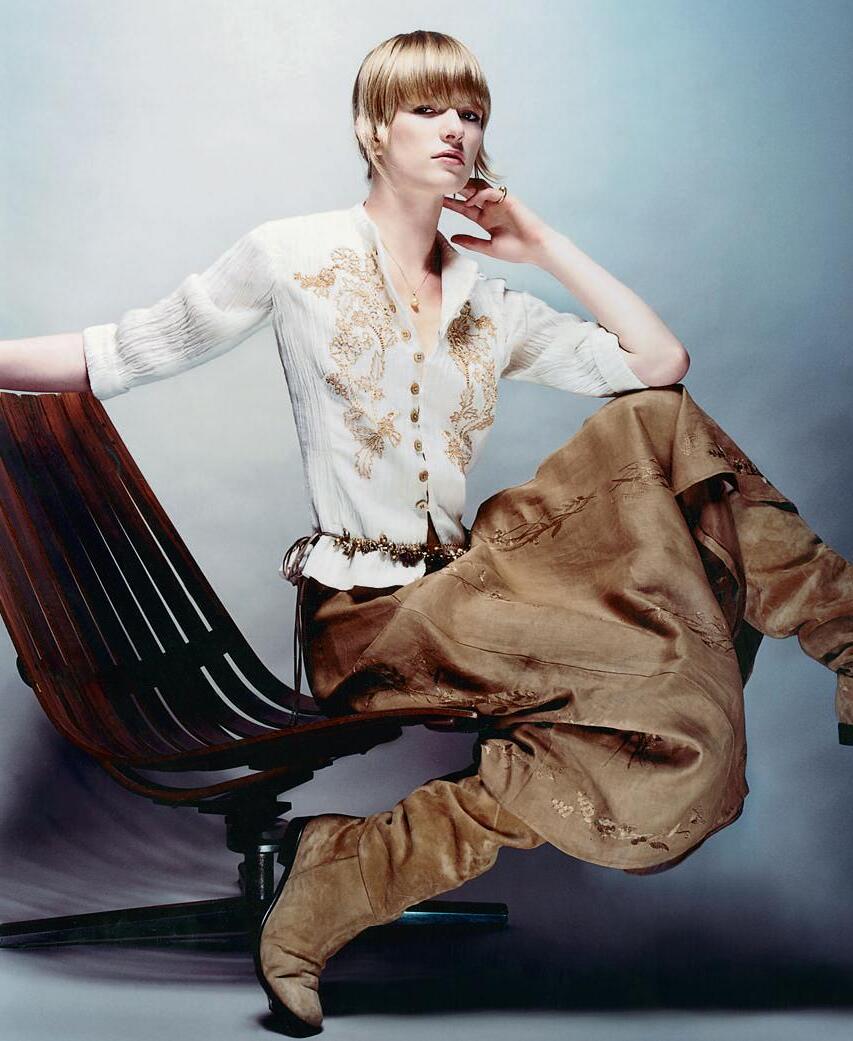
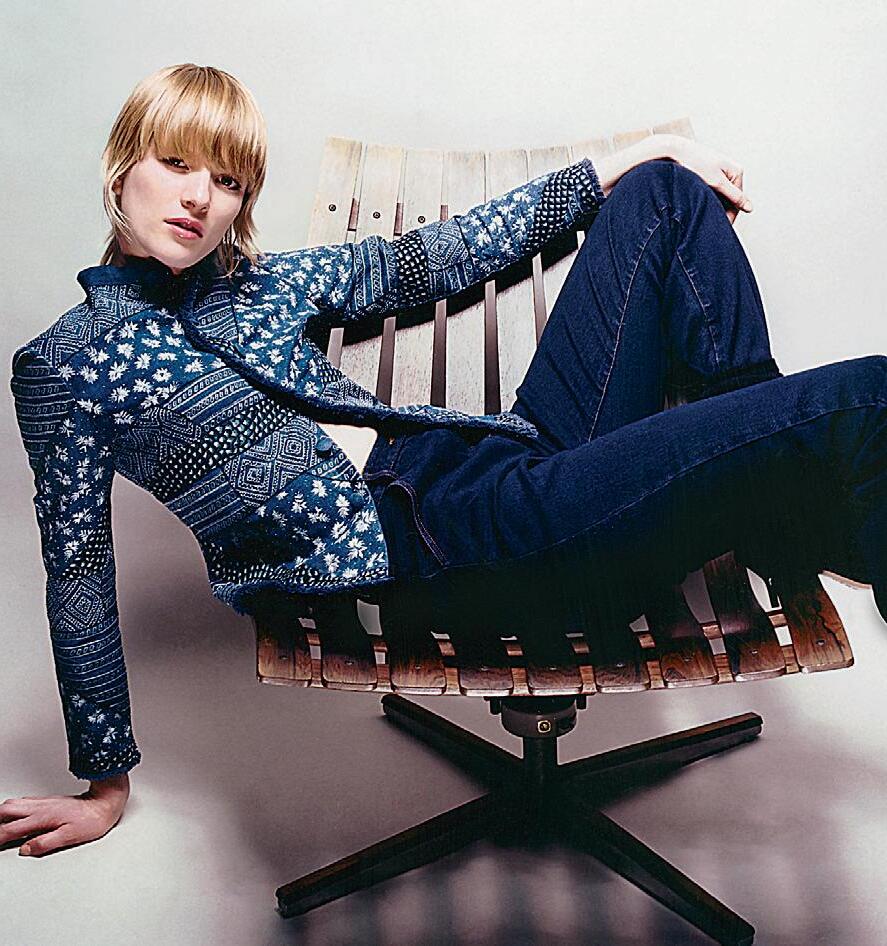
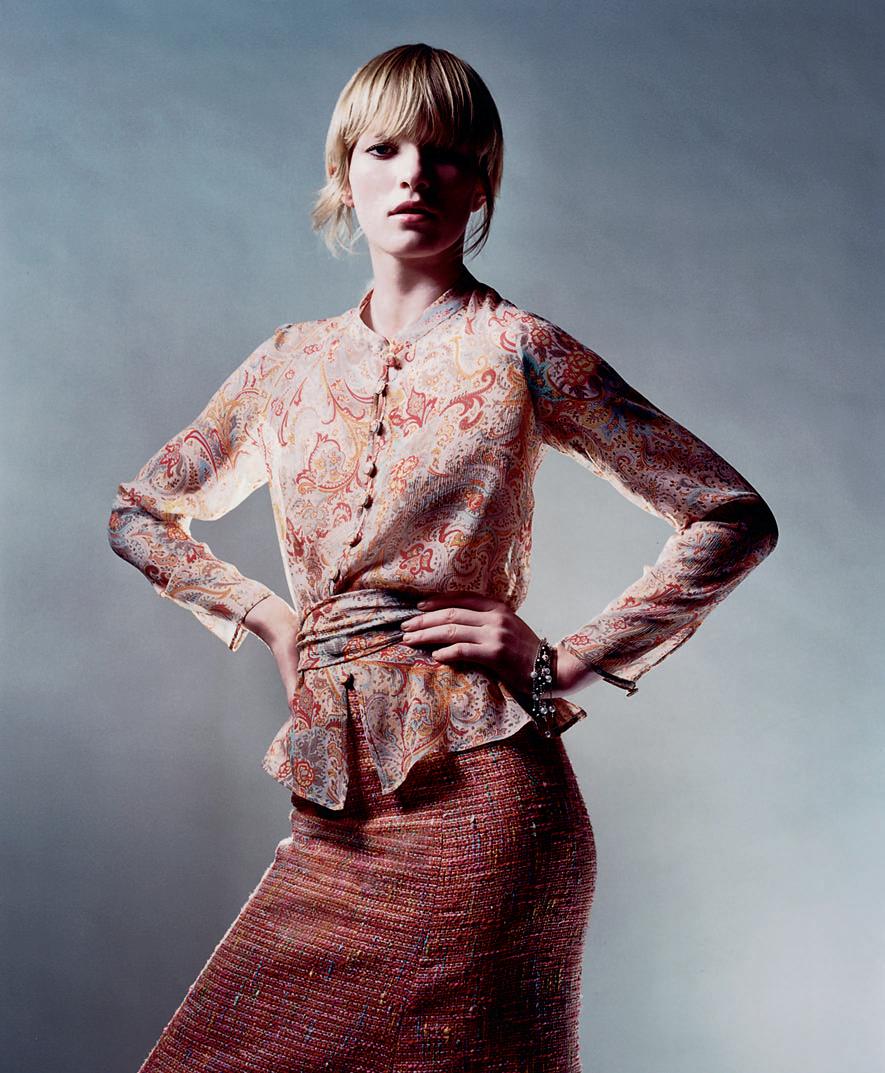
Spring-Summer 2003, Jason Hetherington
OPPOSITEPAGE:
Hand-embroidered cardigan, 2003
THISPAGE:
TOP:
Cotton blouse with wooden beads and toffee linen skirt with matching embroidery, 2003
MIDDLE:
Embroidered denim jacket and jeans, 2003
BELOW:
Paisley silk printed blouse with a tweed skirt. A classic Caroline Charles combination, 2003
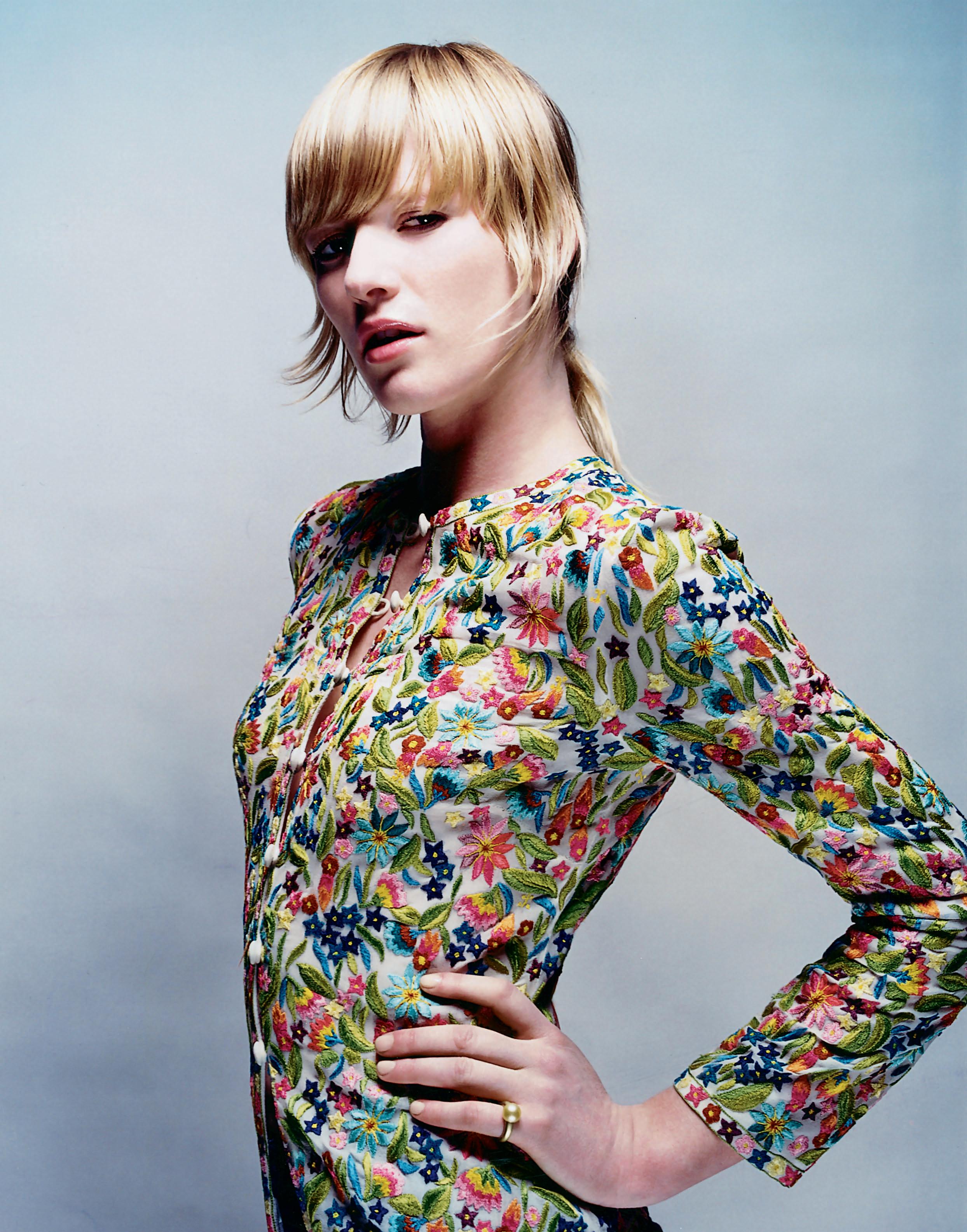
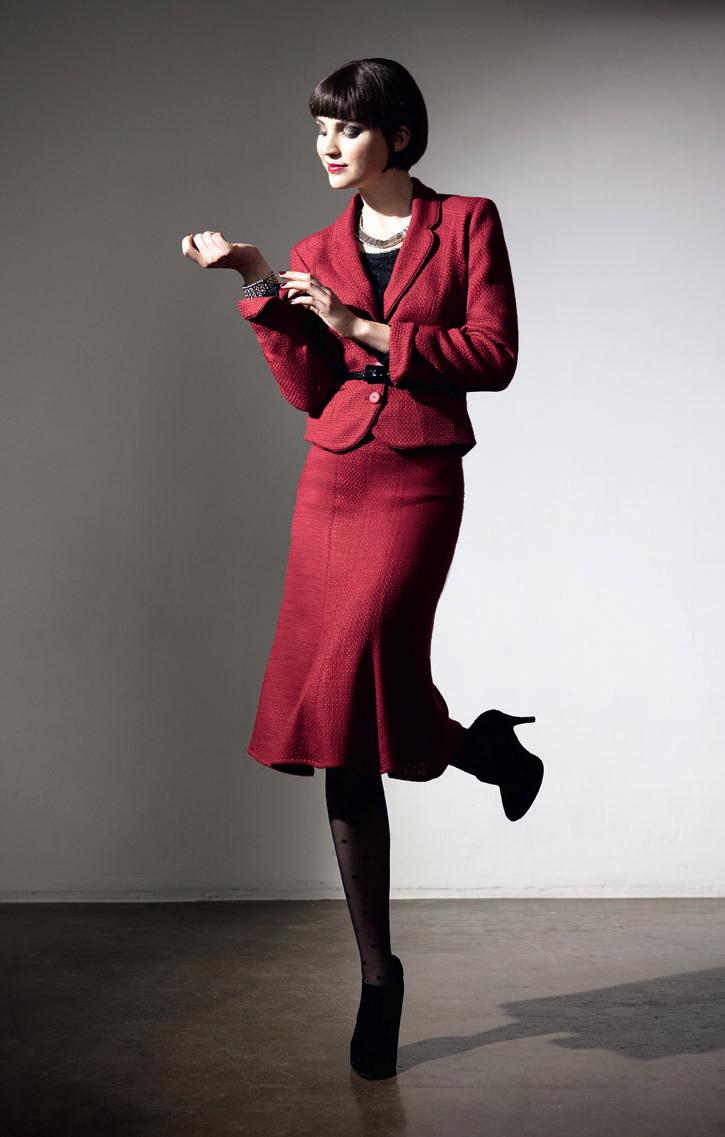
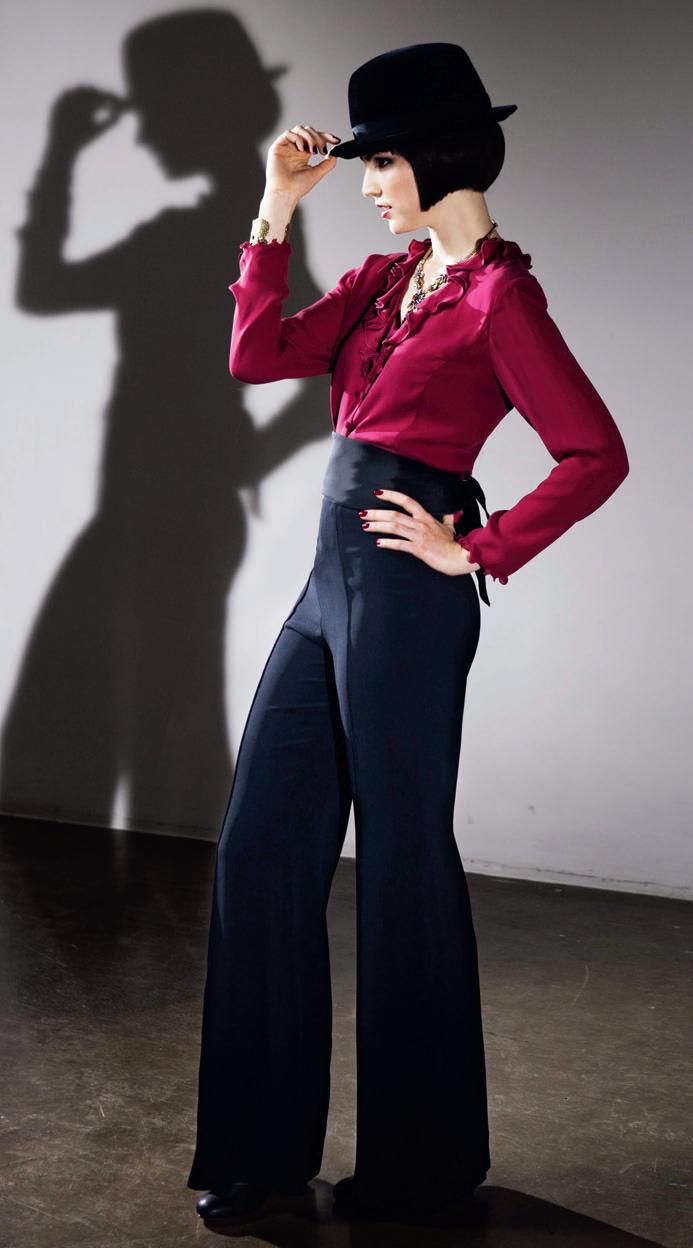
Autumn-Winter 2011/12, David Goldman
IRW: You mentioned how you have taken a clientele with you –from the working woman to Diana, Princess of Wales. Is that something you are proud of?
CC: With the Princess of Wales it was a working uniform that she needed. She was very professional and I loved that about her. I think the whole way through we have taken women with us, women and their daughters and their granddaughters because the clothes fill a need. They are the treat of course.
IRW: And you have continued to expand, working with Harrods and your own stores, as your career has gone on. Thatʼs quite a feat in itself.
CC: I find the business side interesting. Itʼs just as creative, of course, in a different way. There is the joy of doing it. Thatʼs very valuable to us.
IRW: A very British thing is the combination of the practicality and pragmatism – what am I wearing this for? And the theatricality and flamboyance of our eccentrics. That collision. CC: Yes. That collision is the London spark. The French are glamorous and the Italians are very good at what they do. But no country has as many art schools as we do and the fashion graduates work in international brands.
IRW: Do you think your story could have happened anywhere else but London?
CC: No, I definitely feel that this is my town and if you read about the history of London itʼs all about embracing difference. Itʼs the melting pot that London is. I love all the elements of London – even when itʼs raining.