Foreword
If I could tell you one thing: Don’t be jealous. Don’t let this book make you feel like your life is boring. Like all the best parties are happening without you. First of all, Dafydd and I aren’t always invited to the parties we make art about, but more on that fascinating dynamic later! What I want you to know up front and above all else, is that, yes, truly—just like you—I was once sick to my fucking guts with envy when I thumbed through the exquisite Oxford ball photography of British living legend Dafydd Jones. Are all the better parties always in a different place? A different time? Should I have been born thirty years earlier? Seventy? A century? Two?! That I am now writing the introduction for his Cambridge book is the honor of a lifetime—even makes me feel a flicker of deep gratitude I was born into exactly this one. You see, it’d be impossible to over-exaggerate how large Dafydd looms in the Oxbridge psyche. Most students know his work by name, but all of us have seen the famous photographs. David Cameron and Boris Johnson in their Buller tails, boats burning, a palanquin-ed Nigella Lawson, fireworks fanning out like weeping willows, party crashers punished like peasants in black tie, couples embraced in sleep and dew at dawn. And of course, my favorite—the image I asked for in return for writing this: Hugh Grant at the absolute peak of his sly and stuttering sex appeal, dressed like a young satyr with grapes and leopard skins and twisted wicker horns, whispering into the neck of a girl with orchids in her hair. But still! I had questions about the man who could take such photographs! Was he a party animal himself? How did he always seem to ingratiate himself into the white-hot molten core of whatever party was going on around him? How did he always get such good shots?
Caroline Calloway, Madingley Hall, 4.35 a.m., 24 June 2025
They say never meet your heroes, but suddenly mine’s wife was making me lunch. We were in East Sussex, at Dafydd’s compound by the sea where his dark rooms and archives are housed in a nearby cottage on the property, a few days before our week of balls in Cambridge was about to begin. I had invited a handful of friends of all genders, sexual orientations, races, ages, and socioeconomic backgrounds. And I wish I could say all whitehaired British men of Dafydd’s age are up to greet a social situation like this with the same open-hearted warmth and generosity of spirit that he did. But they’re not. They’re just not. In fact I’ve seen it all go horribly wrong before— had it go all horribly wrong all over me as some old man with a plummy accent and a signet ring condescended to me, or dismissed me, or—the worst—openly pitied or mocked me when I told him that I write about girlhood and I take photos of girlhood and I do all of this on my iPhone because I have enough Instagram followers to make this work. A lot of white-haired British men of Dafydd’s age have very old-fashioned ideas about what the quality of such creative output must be like (slop) and very sexist ideas about what kind of woman would choose this life. Think: attention-whore, narcissist. Never: Artist. But not Dafydd! He listened to my stories about Instagram and Cambridge in the mid 2010’s with the same rapt attention our group gave him when he told us his significantly more interesting anecdotes about working for Tatler’s Tina Brown and Vanity Fair’s Graydon Carter in the late 80’s. From the moment he met my friends Dafydd was kind, gracious, ushering us through his renovated farmhouse with a bubbling tray of coupes and flutes, pointing out his vegetable beds and his binders full of favorite photographs, all the while smiling sheepishly under our very American barrage of compliments. He was quieter than I expected. Almost shy. And I realized all at
Magdalene May Ball, 15 June 1983
Magdalene May Ball, 15 June 1983
Trinity Hall May Ball, 1983
6 a.m., Trinity May Ball, 18 June 1984
Trinity Hall May Ball, 1983
6 a.m., Trinity May Ball, 18 June 1984
Survivors, Clare May Ball, 10 June 1985
Survivors, Clare May Ball, 10 June 1985
Jane Iveson and Simon Feather, Magdalene May Ball, 15 June 1983
Pitt Club Ball, February 1988
Jane Iveson and Simon Feather, Magdalene May Ball, 15 June 1983
Pitt Club Ball, February 1988
Raff Brodie and Mark Scott dancing during the Pembroke May Ball, 14 June 1988
Raff Brodie and Mark Scott dancing during the Pembroke May Ball, 14 June 1988
Magdalene May Ball, 25 June 2025
Judith Murray and Angus Main, Magdalene May Ball, 18 June 1997
Magdalene May Ball, 25 June 2025
Judith Murray and Angus Main, Magdalene May Ball, 18 June 1997
Magdalene May Ball, 21 June 2023
Magdalene May Ball, 21 June 2023
Magdalene May Ball, 21 June 2023
Magdalene May Ball, 21 June 2023
Magdalene May Ball, 21 June 2023
Magdalene May Ball, 21 June 2023
Jasmine and Chloe Chang Gao, St John’s May Ball, 24 June 2025
Jasmine and Chloe Chang Gao, St John’s May Ball, 24 June 2025
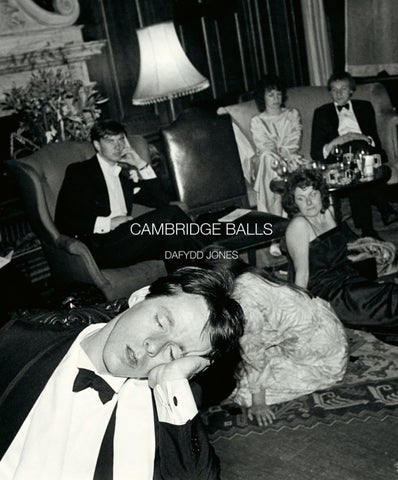
A young couple balance precariously atop a cabinet. Eggshell slips from the sopping clothes of a gatecrasher. Now-familiar faces lose themselves in dance. Since his first visit in 1981, Dafydd Jones has been snapping the May Balls at Cambridge University, where he is treated each year to an extraordinary marathon of all-night parties and antics. ‘[Dafydd] blends in to the point of invisibility so he can get close to the action.’ Caroline Calloway
ISBN: 978-1-78884-356-0
9 781788 843560 www.accartbooks.com
53500 £25.00/$35.00