10 Asta Nørregaard’s Artistic Philosophy and Network
Vibeke Waallann Hansen
28 Asta Nørregaard’s Book of Portraits: For the Sake of the Future
Wenche Volle
46 Asta Nørregaard’s Pastels
Kari Greve
64 Religious Subjects Painted by Asta Nørregaard
Ellen J. Lerberg
72 Portraits as “Cultural-Historical Documents”
Ellen J. Lerberg
84 A Touch of Beauty: Asta Nørregaard’s Portrait of Katti Anker Møller
Hege Duckert
98 In Search of an Identity: From Frogner to Chicago
Trine Nordkvelle
108 Asta Nørregaard – Painting Fashion
Hanne Eide
116 “I Paint Pretty Dresses”
Janne H. Arnesen
138 “The City’s Eminent and Worthy Men”
Ellen J. Lerberg
145 Exhibited Works
241 Appendix
242 About the Authors
244 Asta Nørregaard Timeline
250 Photo Credits – Exhibited Works
252 Illustrations
254 Selected Bibliography
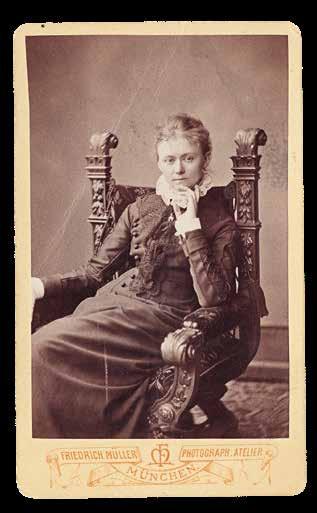
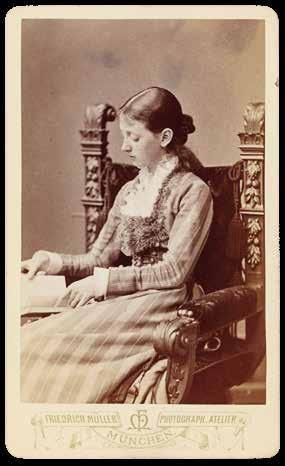
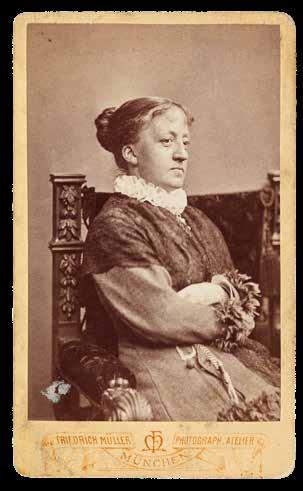
ties became closely enmeshed, and in Norwegian art history their careers are often viewed in the context of each other. But this relationship was one that, naturally enough, took time to develop, and during the Munich years they were all more or less fresh acquaintances in a wider circle of Nordic artists and writers, and at this time it seems that it was Backer and Nørregaard who were particularly close. In October 1878 Backer moved in with her sister and her family in Paris, and a few months later she wrote to Peterssen and asked him to “greet Asta Nørregaard from me, and tell her that she is the most endearing person I have ever known, something that I will write more about to her myself as soon as I am able”.22 In Christiania, Munich, Paris, and later in Kristiania as well, the two of them spent a good deal of time together.
Even though Backer, Kielland, and Nørregaard were often in each other’s company and kept in touch throughout their lives, Norwegian art history has often emphasized the negative reviews and articles about Nørregaard, with scholars seeing such feedback as a sign that the artistic community at large kept her at a distance.23 To be sure, she herself had a hand in creating this image of a strong-willed, independent outsider. In her ongoing correspondence with the Runeberg couple, she often found it opportune to vent her anti-modernism. For example, in the letter quoted above concerning the supper she organized for her fellow female artists, she notes that Backer had brought along a pair of statuettes by the Danish sculptor Kai Nielsen,
someone you may perhaps know, and who recently had an exhibition here. The exhibition was praised to the skies with much hullaballoo; I myself did not think all that much of the exhibition, it all seemed rather affected to me – although the man himself clearly possessed a great deal of skill.”24
Clearly, what she is highlighting here is that her artistic judgements were a minority view. But when seen as a whole, her preserved letters to the Runebergs reveal that she was certainly included and was part of a wide-ranging circle of acquaintances and colleagues in her hometown. In this correspondence, which spans from 1888 to 1920, Backer is one of the people that Nørregaard refers to most frequently. It is clear that she kept abreast of what both Backer and Kielland were up to, and even though the latter two were a pair on the Norwegian art scene, Nørregaard’s career was also in a way interwoven with theirs. In time, the three of them gained a shared identity as “the foremost representatives of female Norwegian painting”.25
22 15.01.1879, letter from Harriet Backer to Eilif Peterssen, the National Library of Norway, Oslo, Brevs. 209. The adjective Backer used for Nørregaard was rareste, which in modern Norwegian means “strangest”, but Backer’s meaning here seems rather to be “sweetest” or “most endearing” – a friendly soul like Backer would hardly have planned to write a latter to a good friend to say she was odd or peculiar.
23
Wichstrøm, Asta Nørregaard, 37.
24
17.04.1916, letter from Asta Nørregaard to Walter Runeberg.
25
Marie Høgh and Fredrikke Mørck, Norske kvinder: En oversigt over deres stilling og livsvilkaar i hundreaaret 1814–1914 (Kristiania: Berg & Høgh’s forlag, 1914), 333.
Religious paintings
Portræter includes a comprehensive list of works and a preface that is something of a manifesto. But which works did Nørregaard choose to reproduce and thus highlight in the two versions of her book? In the 1911 edition, the painting Waiting for Christ (1881) serves as the frontispiece, that is the image that opens the book, and it is the only work reproduced in colour (cat. 2). The painting, which depicts a religious scene, was accepted and shown at the Salon in Paris in 1881.24 In the picture’s foreground lies a young woman in white, surrounded by women and men with various ailments who are waiting for Christ and hoping to be healed. Christ himself is barely visible in the background, encircled by a light, almost like a halo. Nørregaard mastered a complex figural representation with dramatic shifts between light and dark. The painting was shown that same year at Christiania Kunstforening, and was highly praised.25 The painting’s success led to a commission for a new altarpiece for the church in Gjøvik, as Nørregaard had demonstrated that she was ready to execute such a large-scale religious painting.
In both the 1911 and 1914 editions of Portræter, the altarpiece is highlighted in the list of works in a large, bold font, along with the specification Luke 4:18, which was the biblical passage that inspired Nørregaard’s imagery. Thus, Waiting for Christ created important ripple effects in Nørregaard’s artistic career, so it seems hardly coincidental that she chose to open her retrospective book with precisely this picture.26
In the studio: Paris 1883
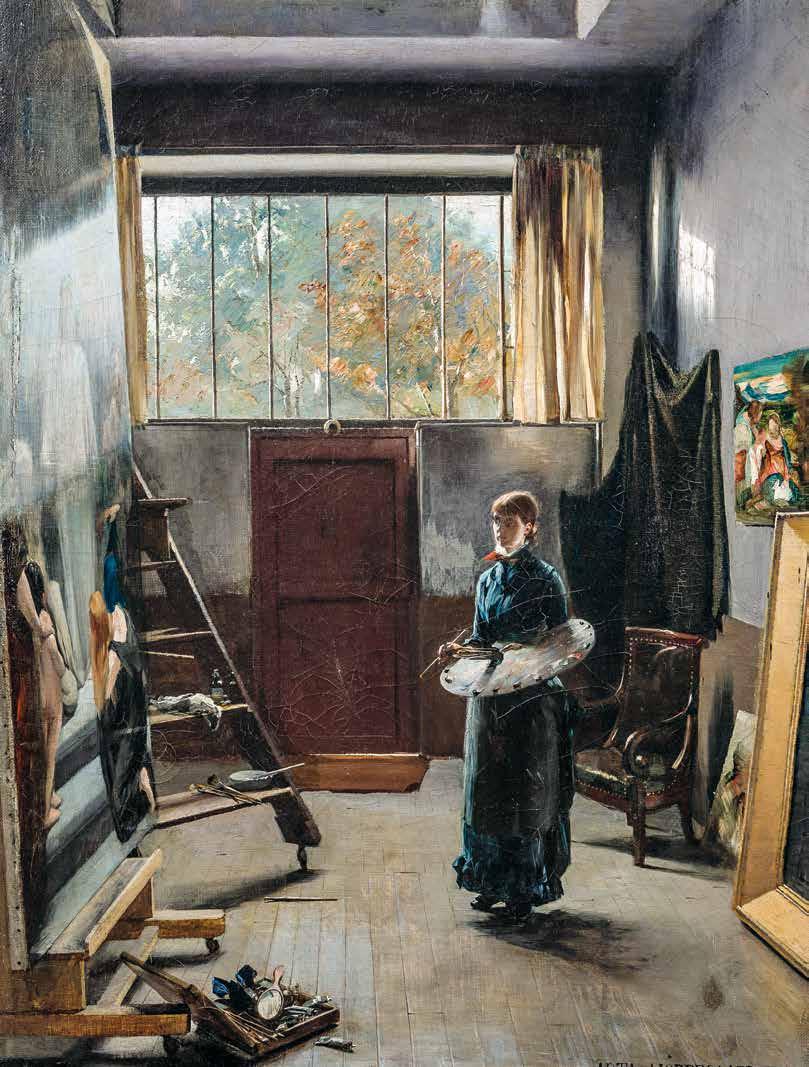
One particular painting that Nørregaard does not highlight in either edition of Portræter, however, is the one that has subsequently become her best-known work, namely In the Studio (1883) (ill. 3). Here, Nørregaard depicts herself in her studio in Paris as she works on the altarpiece for Gjøvik Church. Standing full-length in the middle of the spacious room with a brush and a palette, she gazes pensively at the monumental altarpiece that is standing upright on a custom-made easel. She seems small compared to the painting that stretches up towards the ceiling. The adjacent ladder suggests just how laborious it is to work on such a large-scale painting. The room is a modern studio, high under the ceiling and with light streaming in from a large window with simple bars.
Much has been written about this picture and how Nørregaard depicts herself as an artist.27 She is surrounded by all the paraphernalia associated with painting as an occupation, such as works in progress, frames, tools, mirrors, drapery, and an upholstered chair (vacant in wait of models to be portrayed?). Thus, it is not about a woman whose hobby is painting, or about the act painting itself as a bourgeois, feminine pastime: rather, Nørregaard depicted herself here as a professional artist, entirely on a par with
Ill. 3 From the studio (detail), 1883
24
“IX. ‘L’attende de Christ’; larger figure painting in oil; painted in 1881; exhibited at the Salon in Paris; belongs to Mrs M. Plahte, Høvik.” Nørregaard, Portræter (1911), xiii. “M. Plahte” is Marie Plahte, née Birch (1852–1937), who was Nørregaard’s friend for life after going to school together.
25
See Wichstrøm, Asta Nørregaard, 53; see also Ellen J. Lerberg in this publication.
26
Marie Plahte subsequently sold the painting, which was then acquired by the National Museum in 1998. In regard to Waiting for Christ, Nørregaard makes a change in Portræter (1914): the painting is no longer a frontispiece in colour, nor is it reproduced in black-and-white, but is only included in the list of works. In Portræter (1914), a pen drawing of the altarpiece for Gjøvik Church is depicted in order to highlight the prestigious commission.
27
See Wichstrøm, Asta Nørregaard, 44–46 and 66–72; Anne Wichstrøm, “Asta Nørregaard: Aspects of Professionalism”, Woman’s Art Journal 23, no. 1 (2002): 3–10, https://doi.org/10.2307/1358961; Carina Rech, “Revisiting Asta Nørregaard in the Studio”, Kunst og Kultur 101, no. 1–2 (2018), 49–67; Carina Rech, Becoming Artists: Self-Portraits, Friendship Images and Studio Scenes by Nordic Women in the 1880s (Gothenburg: Makadam Förlag, 2021), 255–66
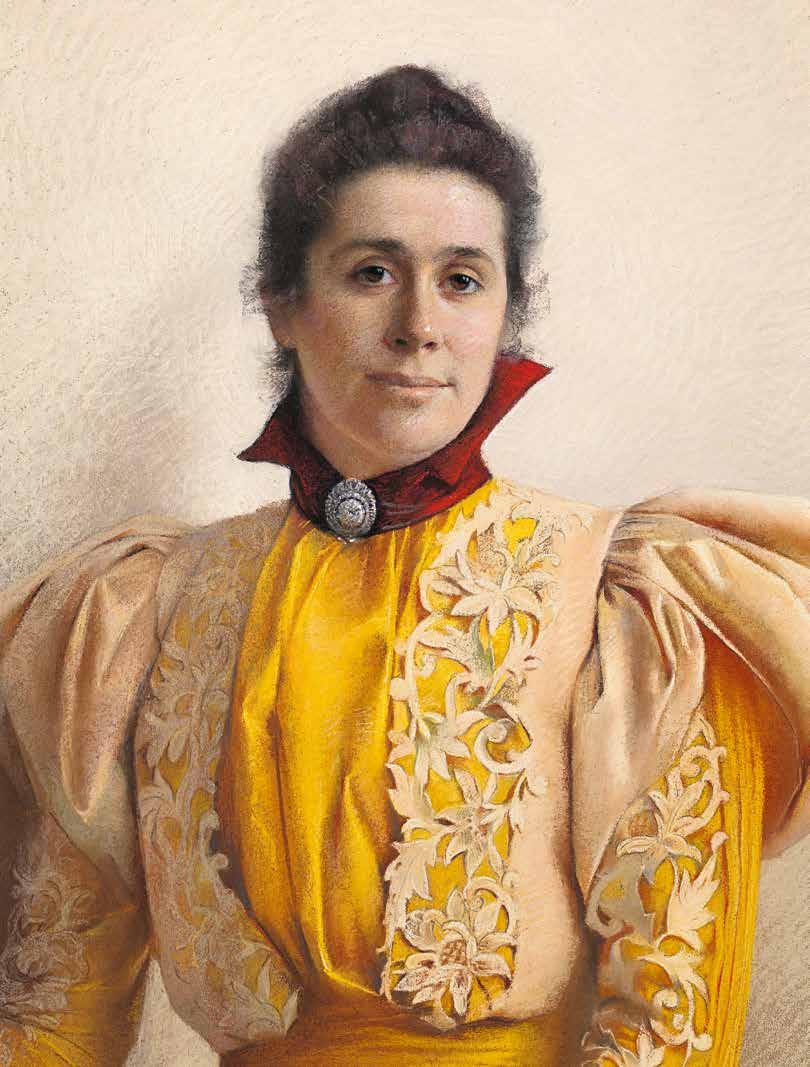
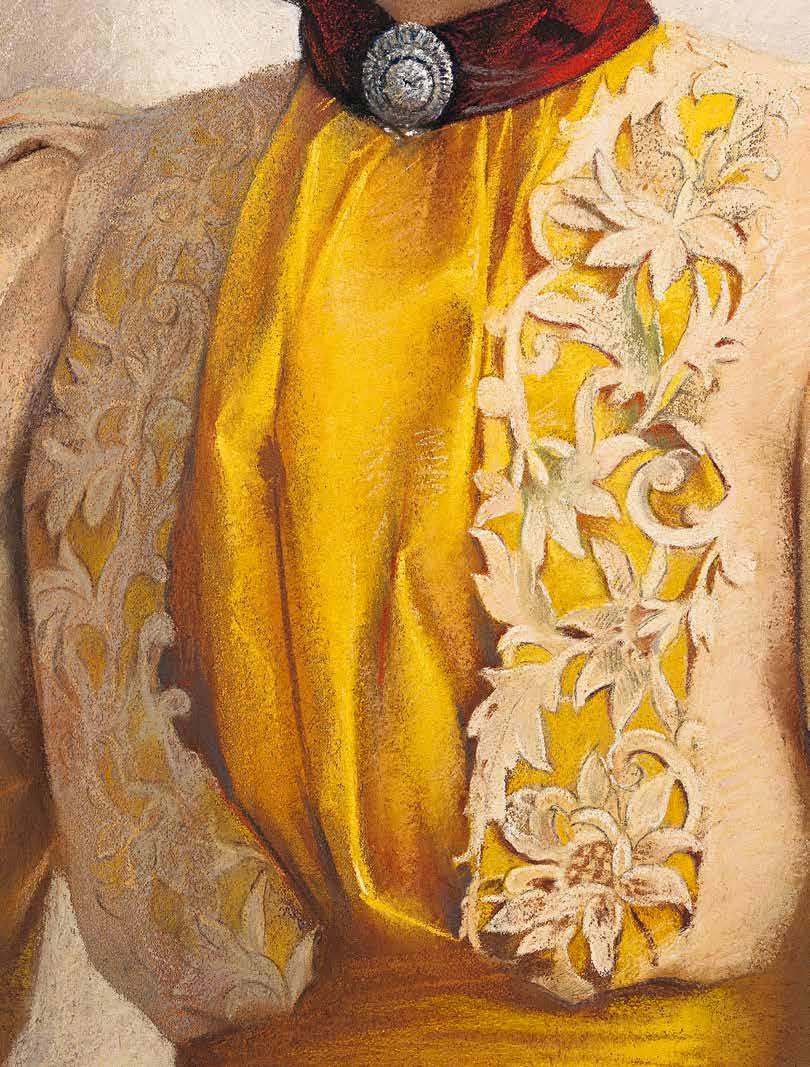
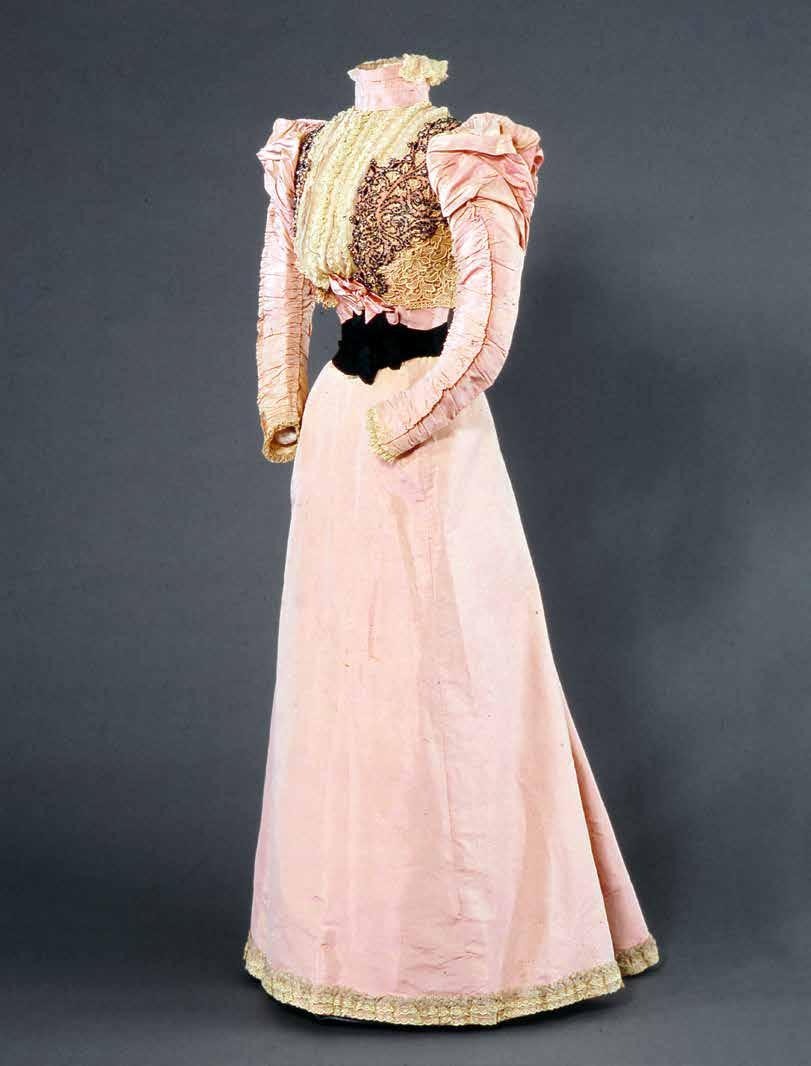
Thomas Fearnley, the Hoffjegermester, or master of the royal hunt (a purely honorary court title) – sits serenely and looks at us, while we observe her (cat. 27). She is wearing what is undoubtedly a gorgeous dress, but look at how Nørregaard depicts the sitter with various elements that also bring her inner self to the fore, such as the polar bear hide that alludes to wild, untamed nature. The famous polar explorer Fridtjof Nansen (1861–1930) was not only the era’s most prominent celebrity, but a close friend of the Fearnley family – perhaps the polar bear hide was a gift from him to Thomas Fearnley, who was a keen hunter himself? The springtime lilacs in the vase suggest delicacy and beauty. The East Asian screen in the background – or is it rather silk wallpaper? – signals that Mrs Fearnley knows how to surround herself with the latest in interior design. Conversely, Pauline Rosine Kiær (1870–1950) (ill. 3) is depicted against a much more neutral background, one that makes her outfit stand out more clearly. Pauline Kiær, née Stang, grew up in a home of art lovers. In the early twentieth century, her brother, the shipping magnate Jørgen Breder Stang (1874–1950), even amassed one of Norway’s foremost collections of French art, including key works by Cézanne, Gauguin, and Renoir (later dispersed among the Courtauld Institute in London, the Museum of Fine Arts in Boston, and other collections).
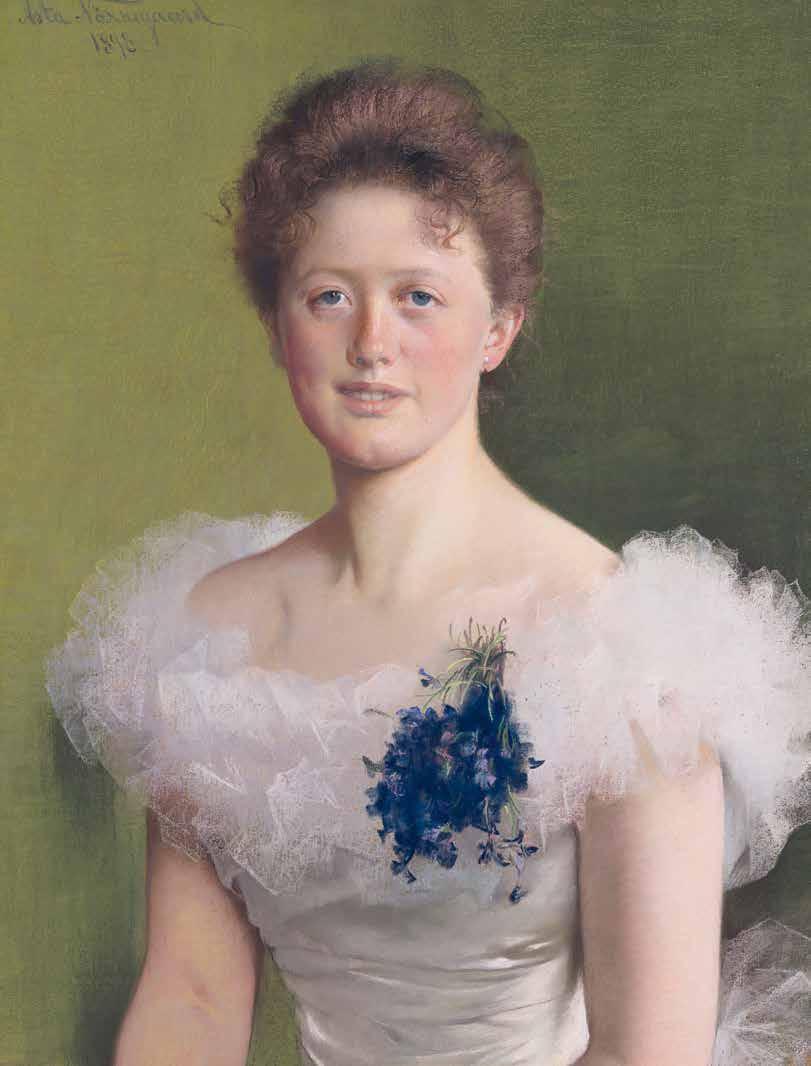
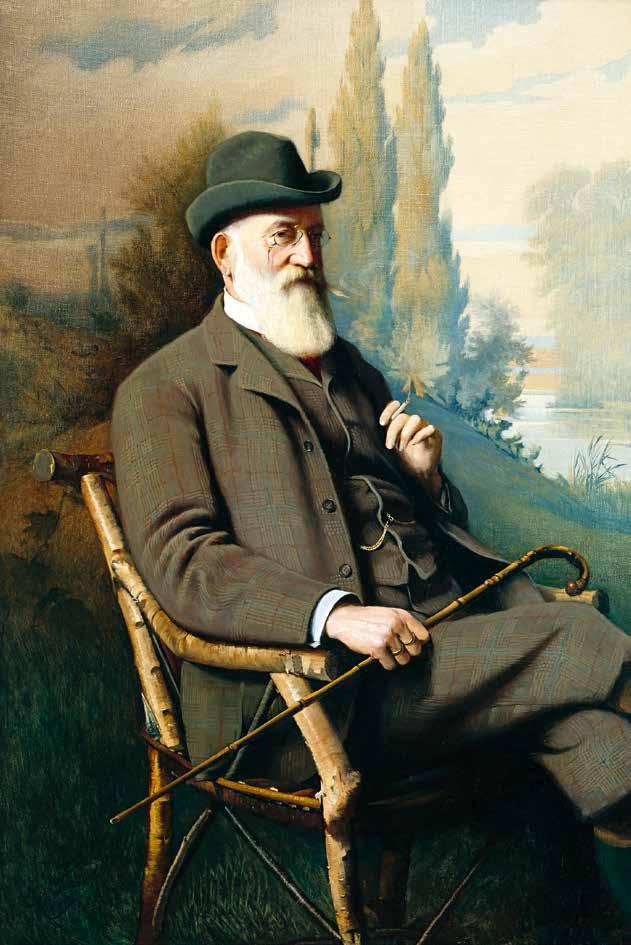
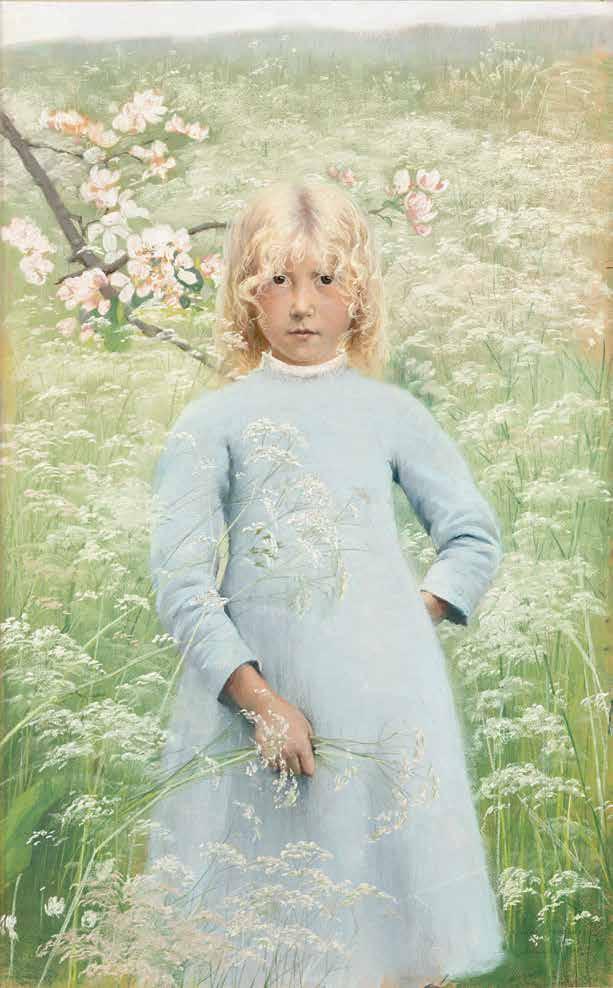
Nørregaard’s portrait backgrounds seem to fall into three categories: a realistic rendering of a setting charged with meaning, as in the portrait of Mrs Fearnley; a more neutral background, as in the portrait of Pauline Rosine Kiær; or an imaginary landscape. Such landscapes were akin to those found in contemporary portrait photos, where, for example, a person being portrayed with their brand-new bicycle might, in the photographer’s studio, be placed in front of backdrop showing a landscape with a road. These imaginary backgrounds could be pure landscapes or include classical ruins or other architectural elements. According to Nørregaard’s biographer Anne Wichstrøm, such landscape backgrounds in her portraits were “painted freehand and not based on any particular model”.5 I would argue, however, that they were in fact based on ready-made backgrounds, such as those that photography studios regularly used. This is suggested by the way that the exact same landscape turns up in the background in several of Nørregaard’s portraits. If Wichstrøm’s theory is correct, one would have imagined that Nørregaard’s backgrounds would have shown greater variation. For example, the same background was obviously used in both the portrait of Nils Anker Stang Dahl (1895–1966) and Helga Dahl (1896–1995) and in the portrait of Cathrine Andrea Burckhardt (1860–1956) (ill. 4). It does not appear that neither Nørregaard nor the sitters had a preference in regard to the background landscapes and their content. It is conceivable, for example, that the landscape behind the aforementioned Thomas Fearnley, the honorary master of the royal hunt (ill. 5), might have been used to reveal something
5 Anne Wichstrøm, Asta Nørregaard: En livshistorie (Oslo: Pax, 2011), 168.
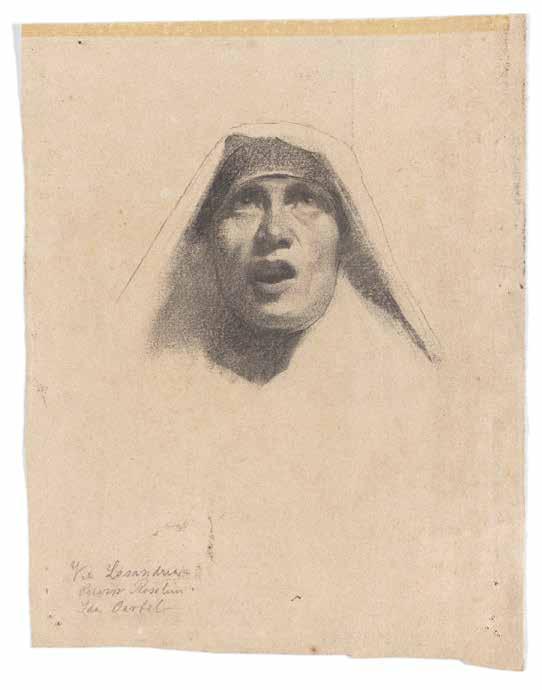
Cat. 16
Nun, probably 1889
Charcoal on paper, 312 × 238 mm
The National Museum, Oslo NMK.2023.0451
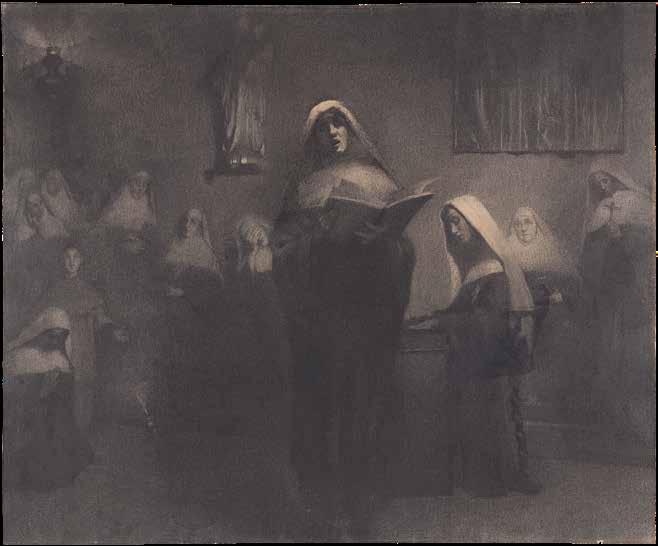
NMK.2025.0413
This publication is published on the occasion of the exhibition
Asta Nørregaard. Truth and Beauty
28.05.2026–18.10.2026
At The National Museum of Art Architecture and Design
Editor: Kristian Wikborg Wiese
Curator and Curatorial Editor: Wenche Volle
Copy Editor: Helene Wynn
Photo Editor: Therese Husby
Translated from Norwegian and Swedish (Hanne Eide: The Fashion Painter) by Stig Oppedal
Design: Modest [Rune Døli]
Repro: JK Morris, Sweden
Print: Livonia Print, Latvia
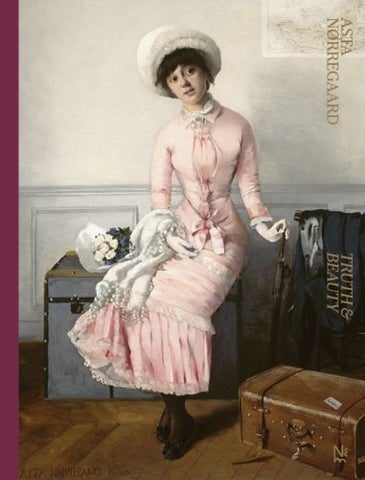
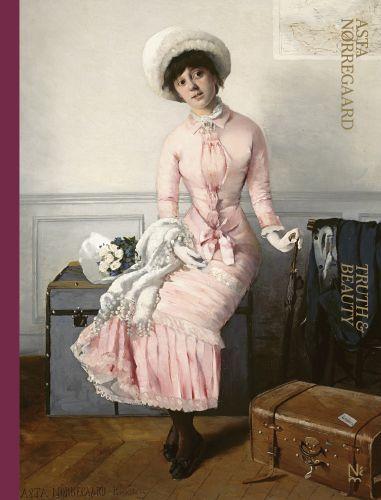
Cover: Maggie Ready to Travel, 1881. Photo: The National Museum / Jaques Lathion. Privately owned
ISBN 978-82-8154-174-0
© Nasjonalmuseet for kunst, arkitektur og design 2026
Postboks 2021 Vika, 0125 Oslo
Tel. (+ 47) 21 98 20 00 www.nasjonalmuseet.no
This material is protected by copyright law. Without explicit authorisation, reproduction is only allowed in so far as it is permitted by law or by agreement with the copyright holders.