ADVENTURE ACTIVITY BOOK
Ashmole & Beetle’s Ashmolean Adventure Activity Book
Copyright © Ashmolean Museum, University of Oxford, 2026
Image © Ashmolean Museum, University of Oxford
Ashmole & Beetle illustrations by Mini Grey
Text by Dr Alicia Dell Williamson
British Library Cataloguing in Publications Data
A catalogue record for this book is available from the British Library
ISBN: 978-1-910807-77-4
All rights reserved. No part of this publication may be transmitted in any form or by any means, electronic or mechanical, including photocopy, recording or any storage and retrieval system, without the prior permission in writing of the publisher.
Book design and other illustration by Dynamo Ltd
Image credit p.29: iStock.com/Grafissimo
Printed and bound by XXXXX
For further details of Ashmolean titles please visit: www.ashmolean.org/shop
ASHMOLEAN MAGIC
It's after hours at the Ashmolean Museum. Everyone has left and the big blue doors are locked tight, but inside the galleries, the magic has only just begun. Because each night as darkness falls, the art and archaeology inside wakes up, and pictures and objects become gateways to amazing destinations – the moments in time where each was found or made! There are two curious creatures who live in the Museum, and they love to time-travel through its galleries. They do get in a few scrapes along the way though!
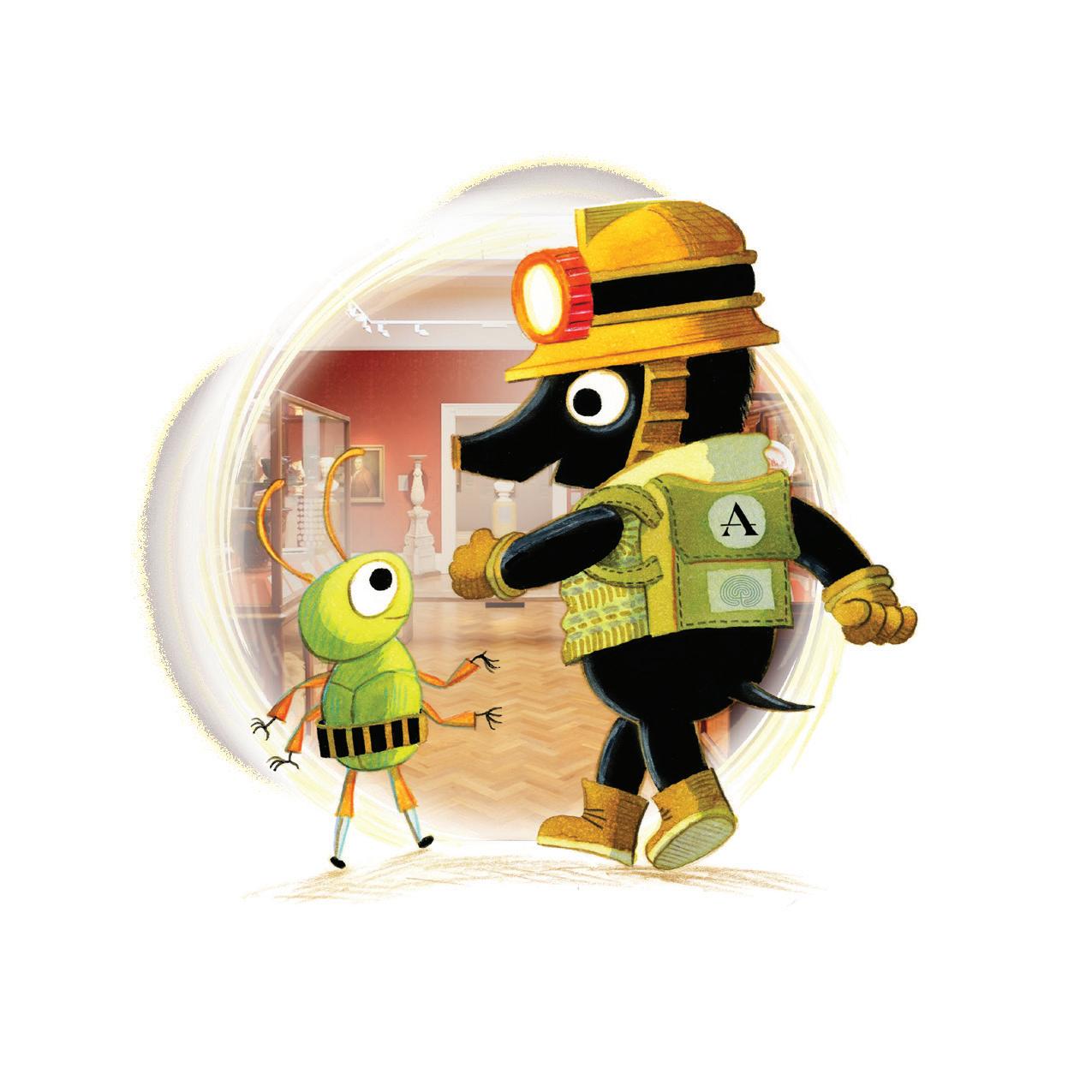
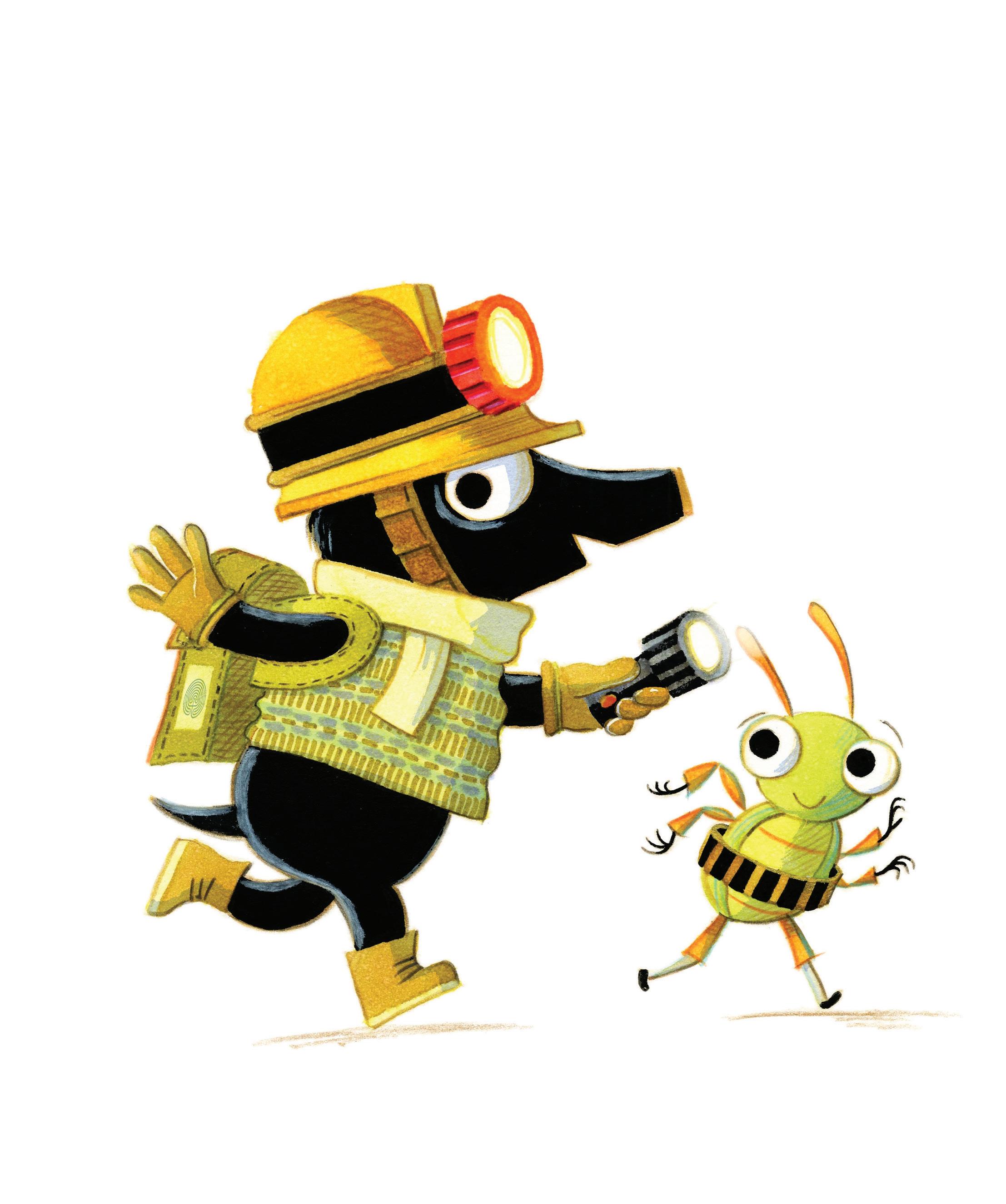
Hi! I'm Ashmole, and this is Beetle. We live in the Ashmolean, Britain's oldest public museum. It's full of treasures, and we can't wait to explore them with you. Thankfully I'm active at night because that's when the Museum really comes alive. Every artwork and artefact is a portal to fascinating people and places! Let's visit some and see where they take us...

Meet the musical priestess mummified inside this case on page 8
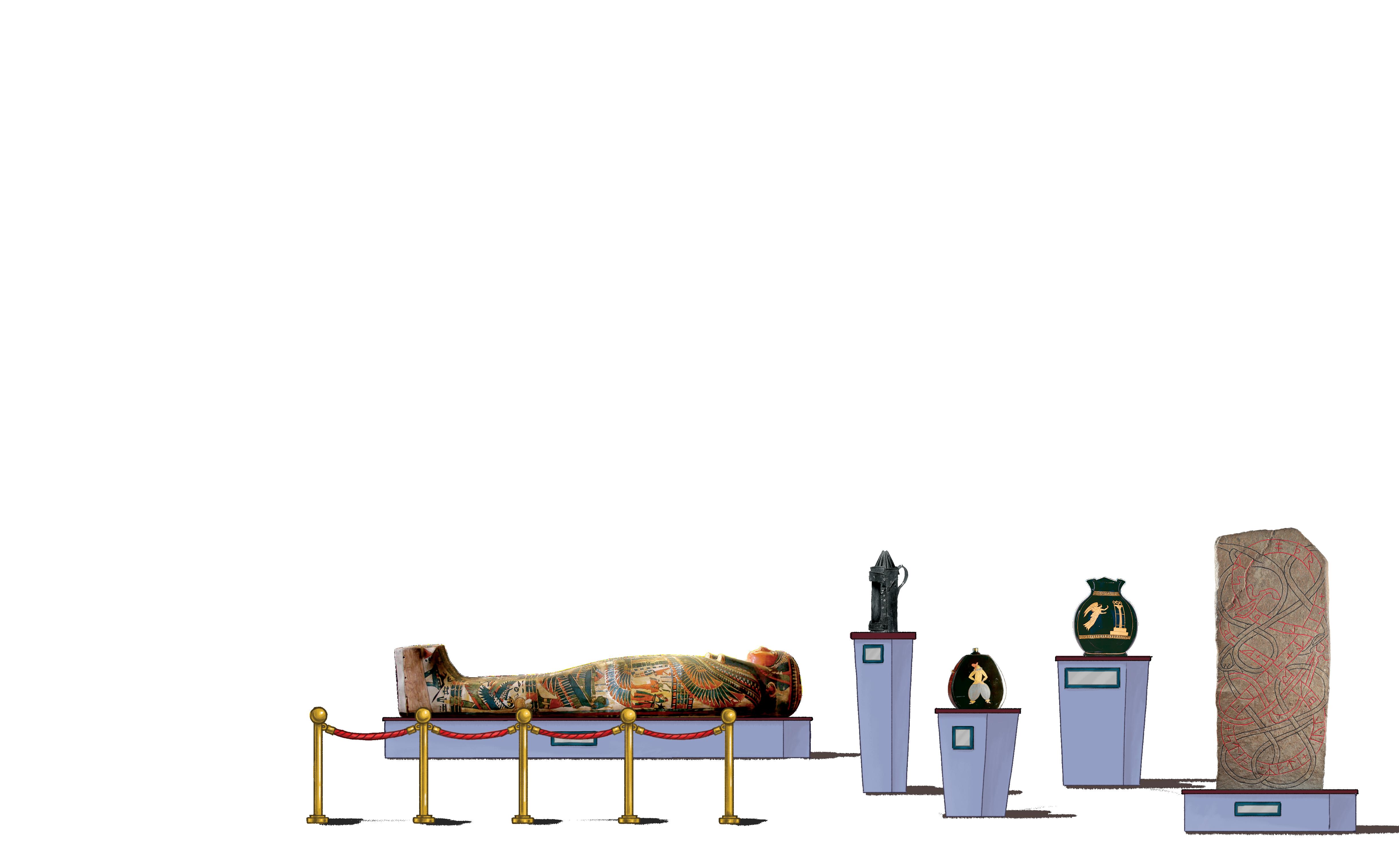
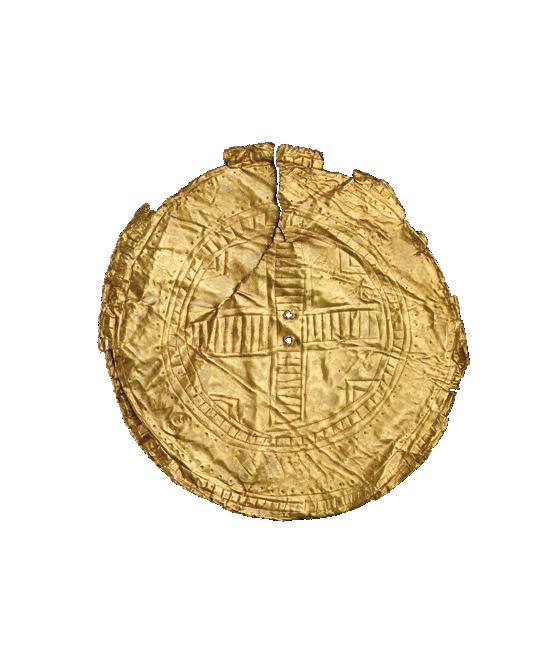
To explore an Irish Bronze-Age burial site, see page 26 For ancient Indian gaming fun, go to page 16
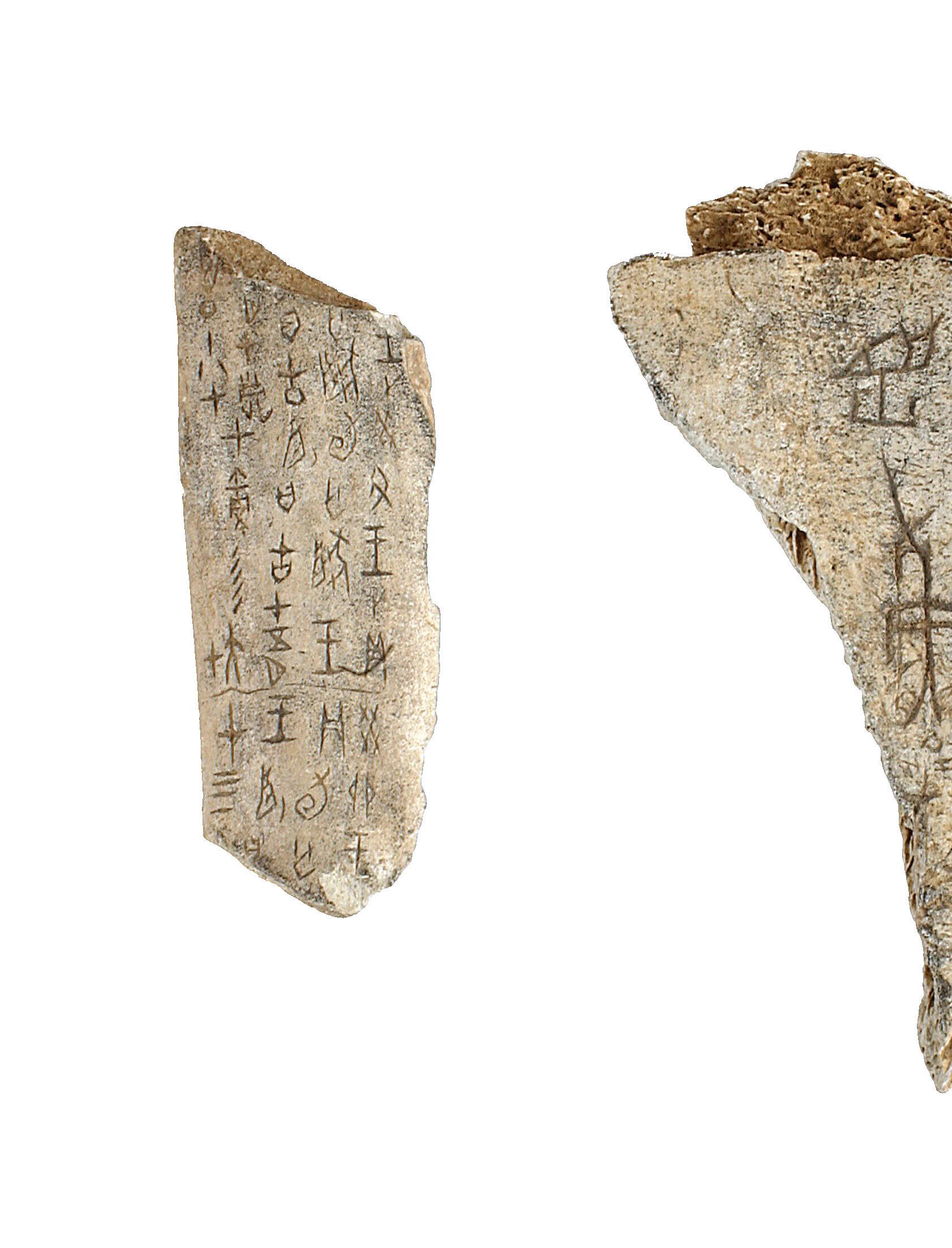
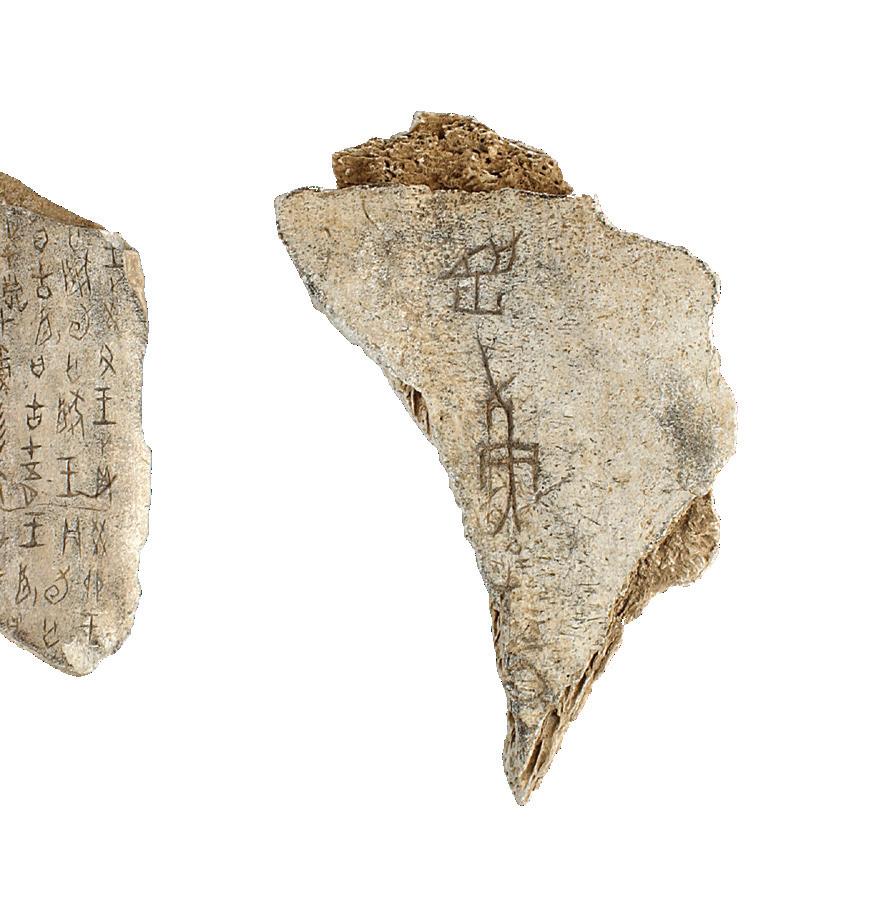
To divine some Chinese oracle bones, see page 20
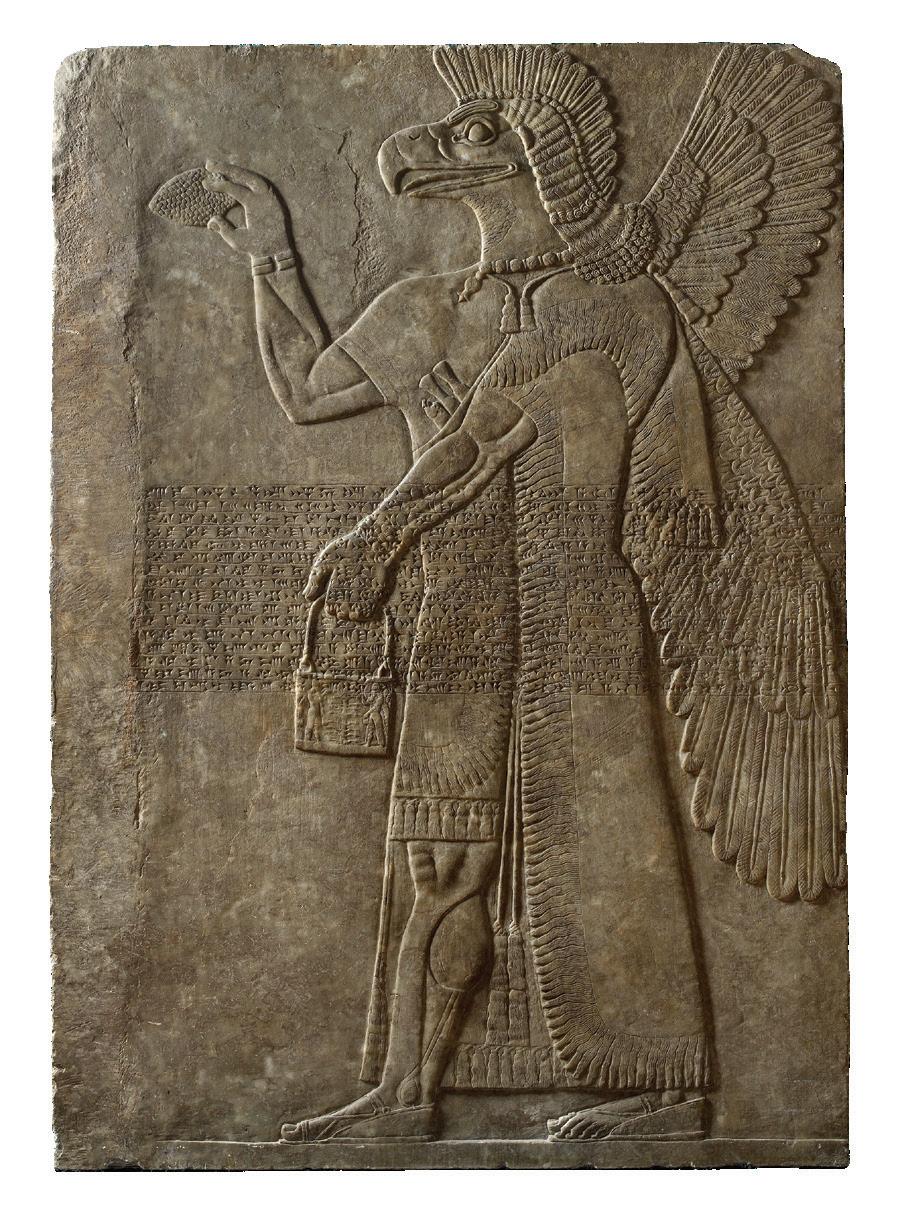
Find out what this spirit was guarding on page 28
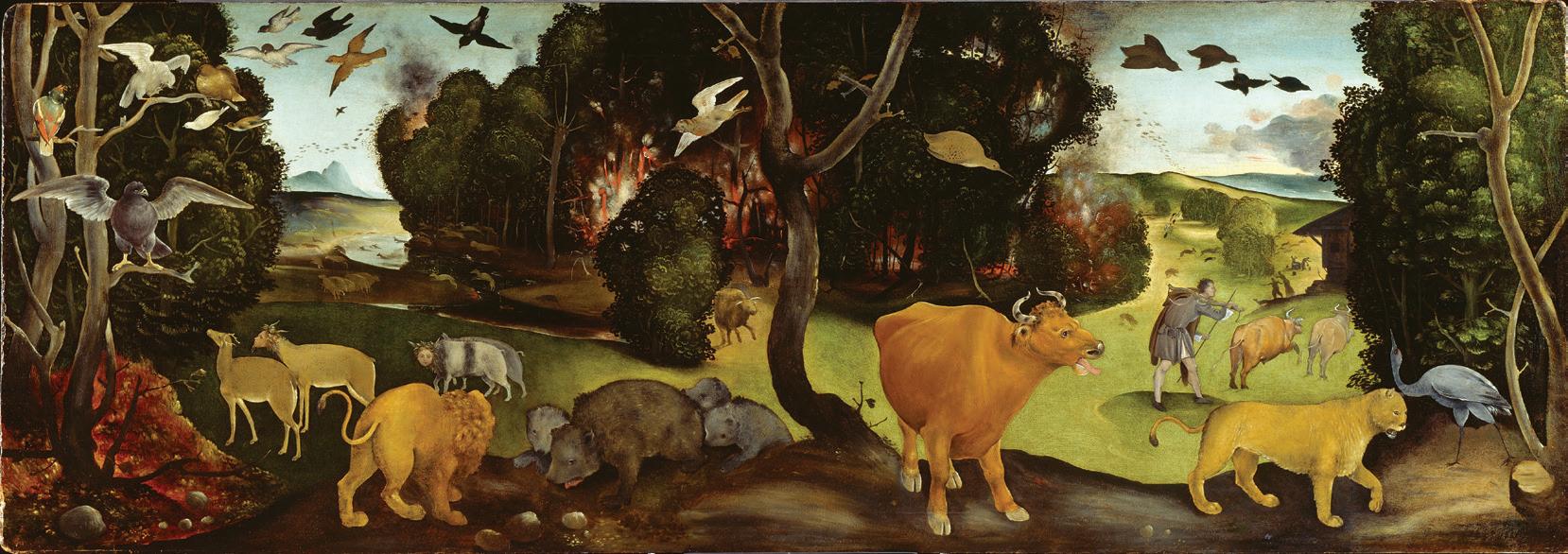
Get ready to flee the flames in this peculiar painting on page 18
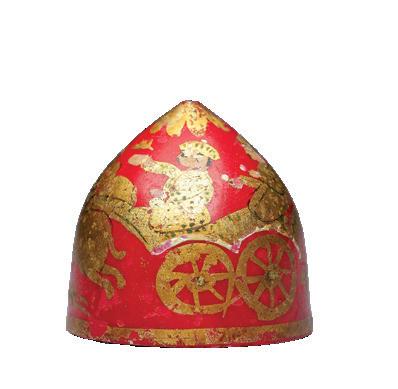
Find out who used this lantern for devious purposes on page 6
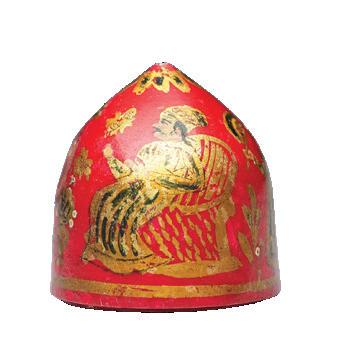
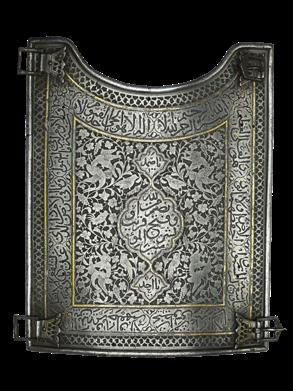
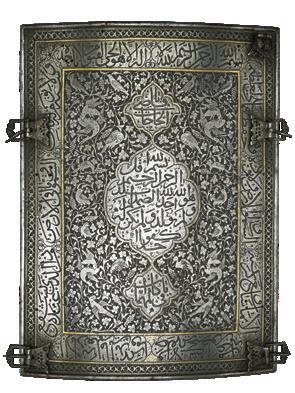
Admire some artful Persian armour on page 10
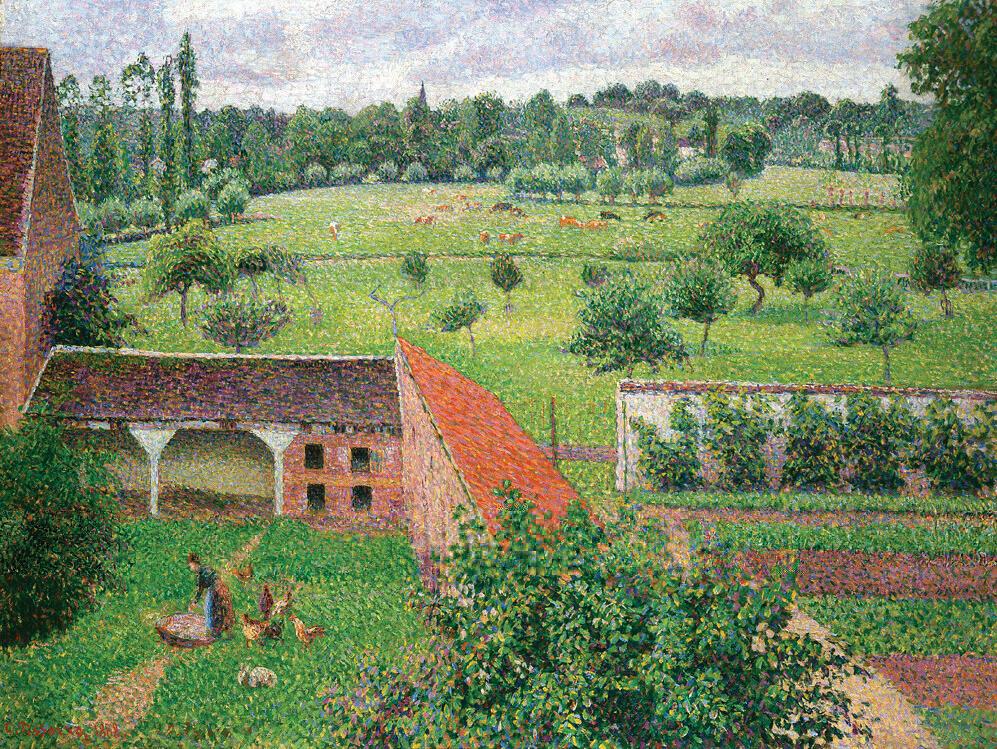
Get a view of a famous artist's garden on page 22
Learn about the trend of Japanese Nanban art on page 24
Explore what this Greek jug was made for on page 12
Go to page 14 to decode some Viking runes
MUSIC IN THE AFTERLIFE
Everything goes dark, then Ashmole and Beetle begin to hear something – a soft jangling, the sweet strumming of a lute and above it all, a beautiful voice. They follow the music to step into a shimmering Field of Reeds. It's a picture-perfect version of ancient Egypt’s Nile Valley…
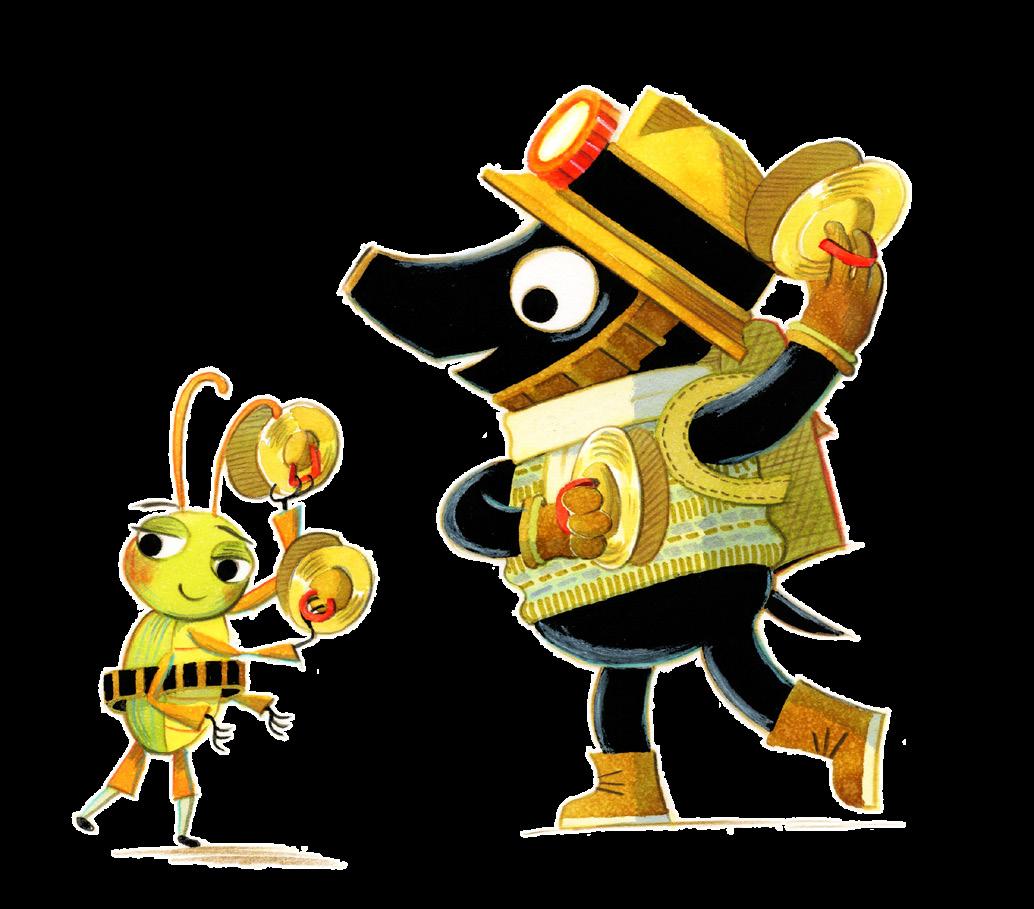
Nice to see you too, dear Beetle –and welcome to the afterlife! As you know, in life I was a musician-priestess, who sang to praise the king of gods, Amun. Now I get to sing and play for Him for eternity. Care to join me on the finger cymbals?
This coffin was made around 2,800 years ago in the Egyptian city of Thebes to hold the remains of a powerful woman. Like goddesses and royals, she is pictured with a vulture crown. The beautiful decorations on her coffin include a falcon that represents Re, a god associated with eternal rebirth.
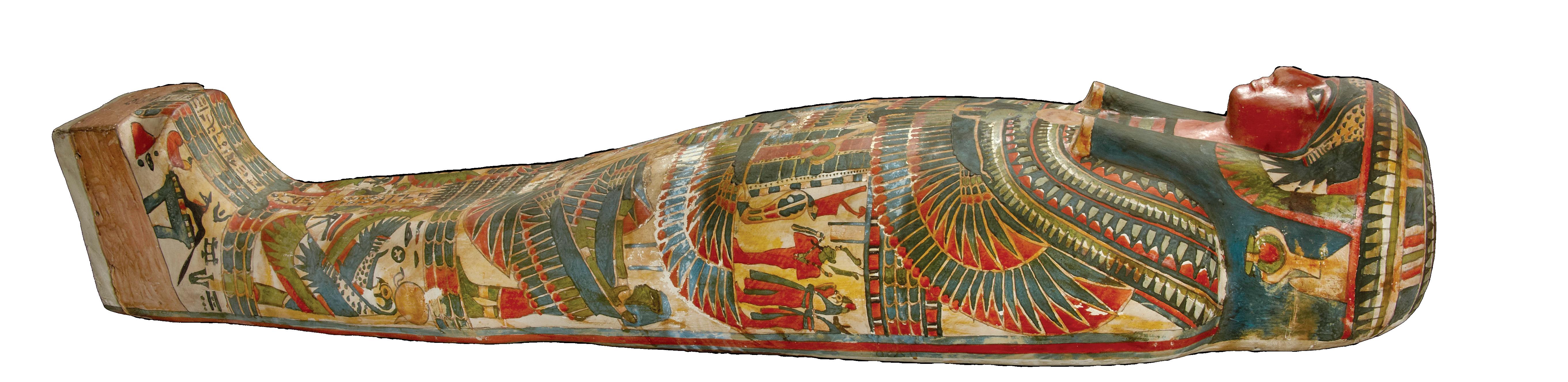
Coffin of Meresamun
Beetle is such a fan!
SCARAB TO THE RESCUE!
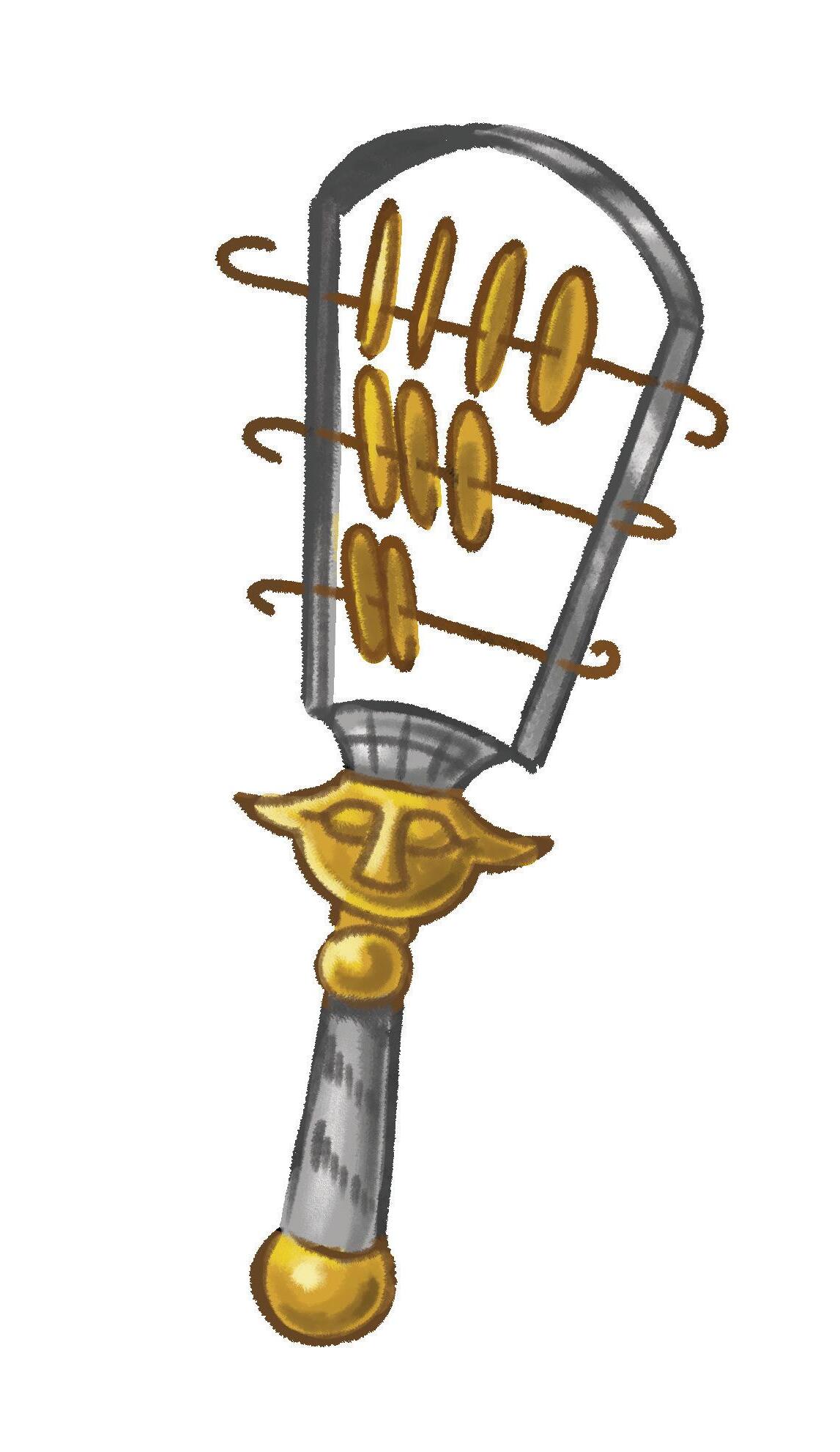
The gods have agreed to send you back to the land of the living if you can name their favourite instruments – the very ones played by Meresamun! Beetle knows what they are called, can you use his hieroglyphic code to find the correct answers?
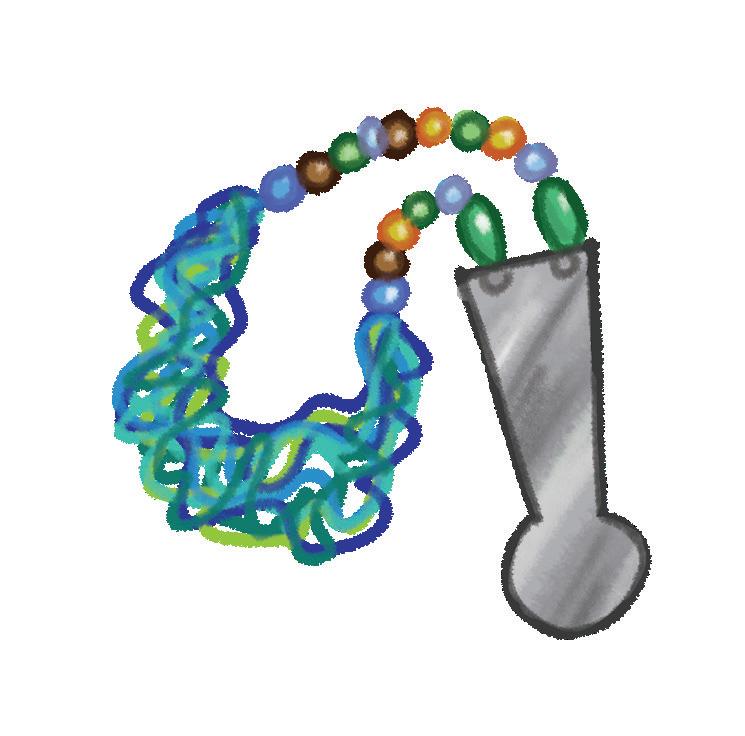
Pitch perfect!
Ashmole and Beetle are a bit sad to leave paradise, but it’s time to face the music and crack on with your mission...
CRACKING VICTORY
Ashmole and Beetle hear the roar of cheering. It’s the fifth century bce, and they find themselves in a Greek agora – a bustling public square. Crowds of people have turned up to see a precious jug being dedicated to the gods by a general, a hero of the Peloponnesian War.
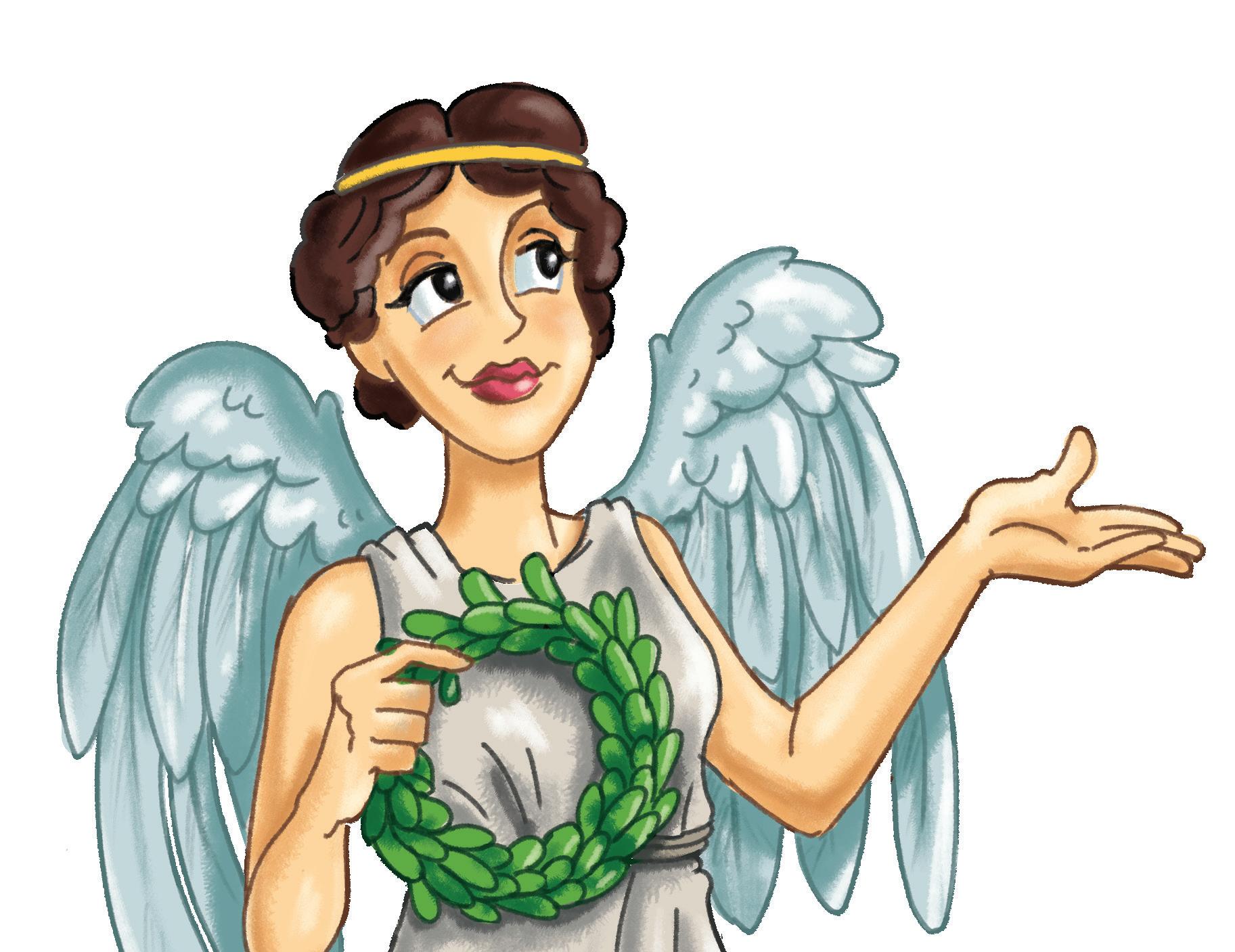
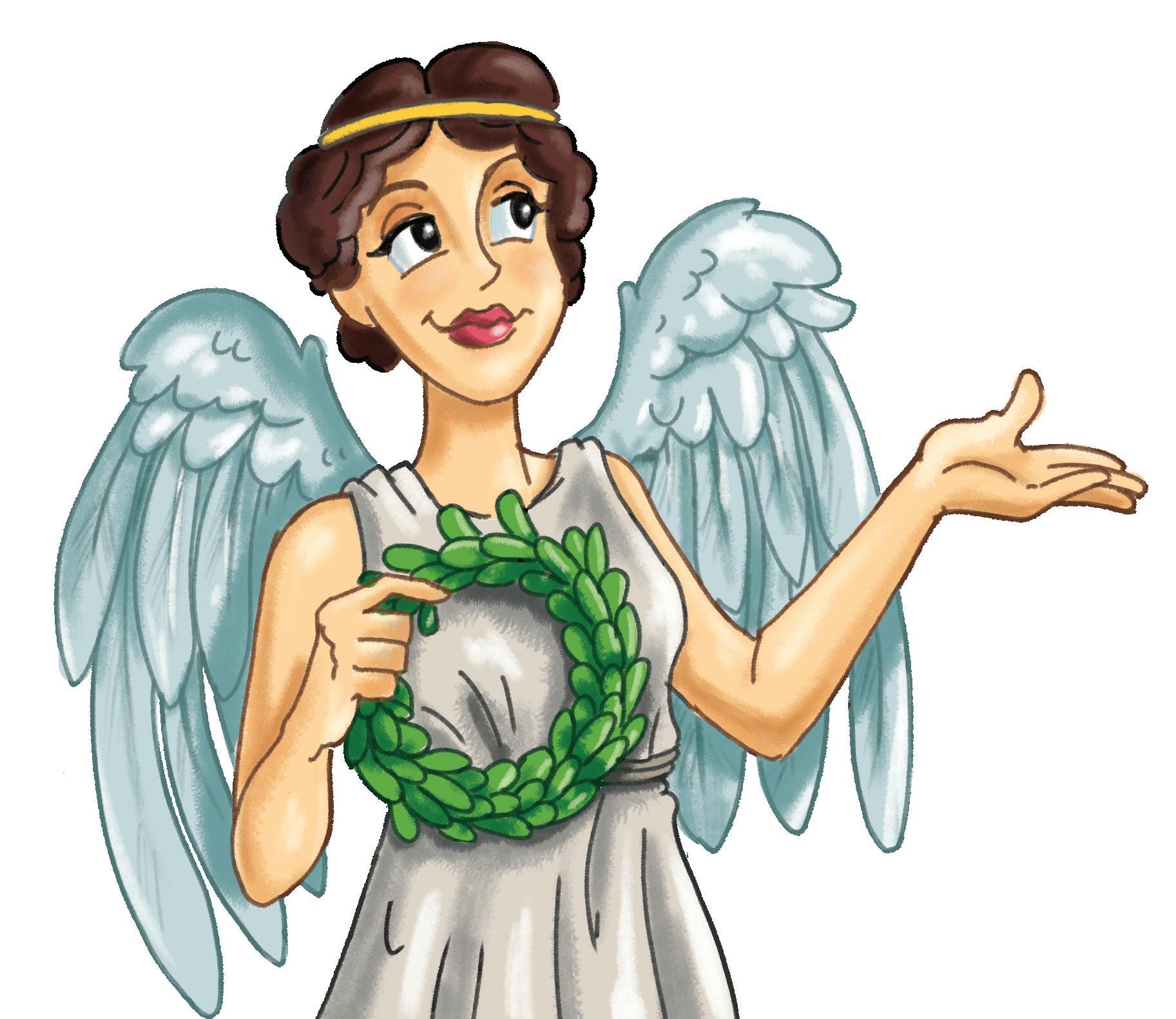
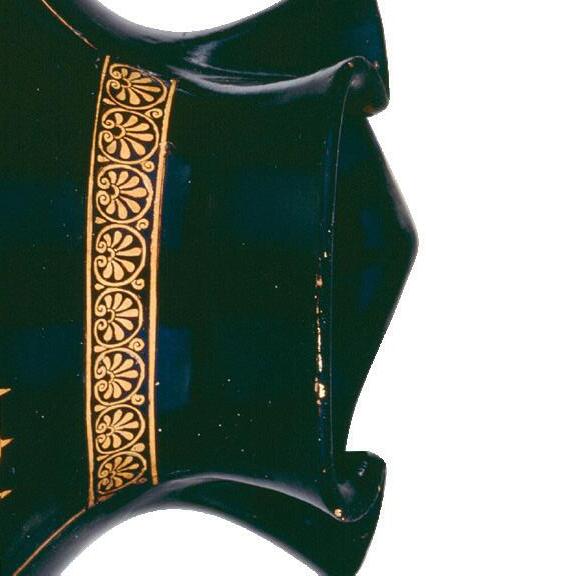
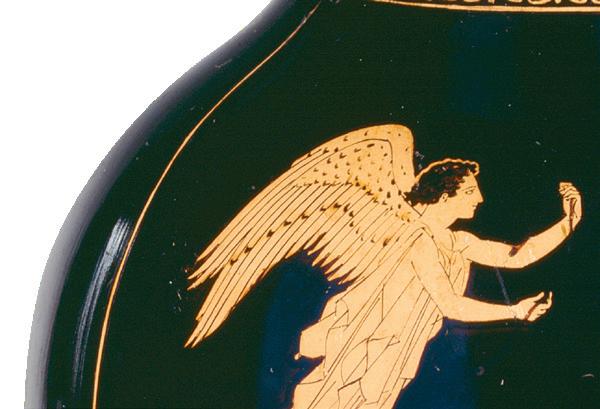
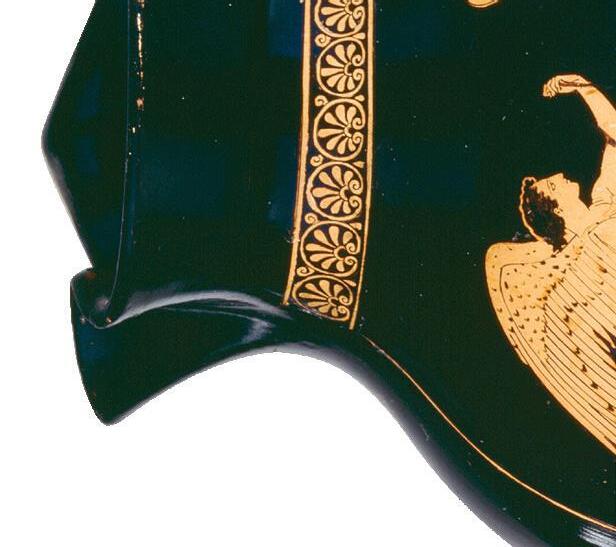
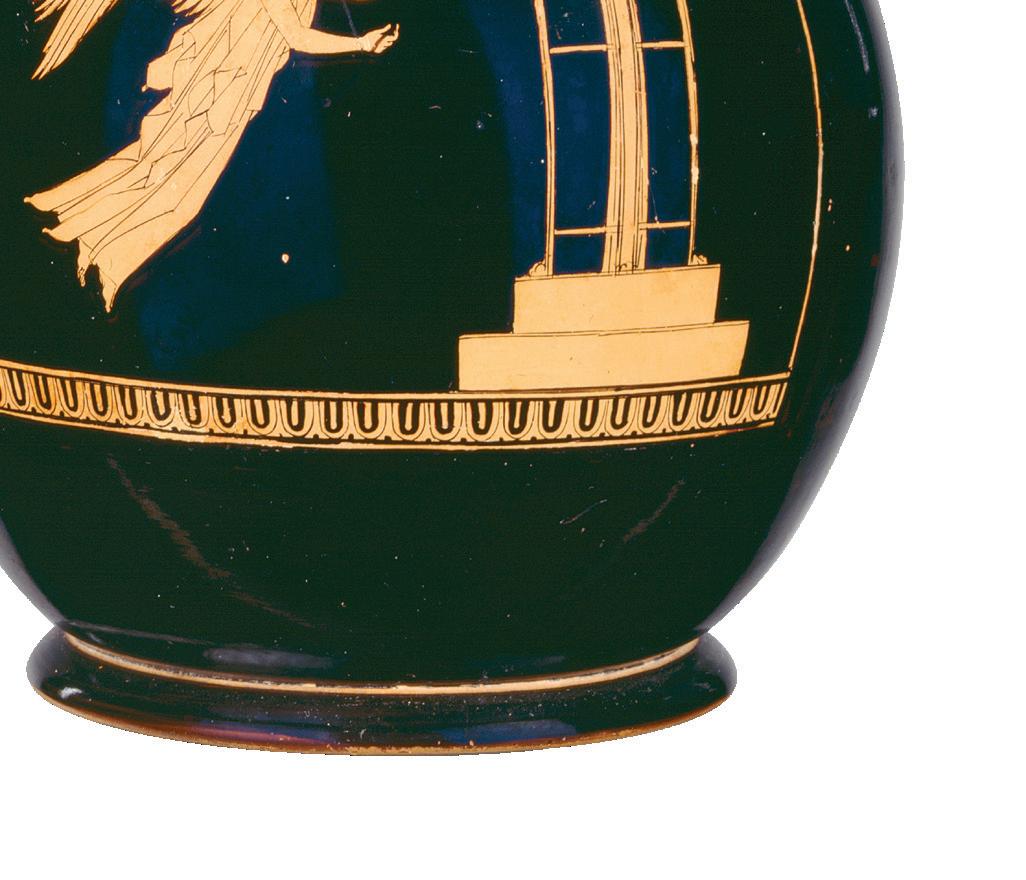
Nike here, the winged Goddess of Victory. Yes, the same deity who inspired the footwear brand! When people get big wins, I swoop in to help celebrate by crowning them with laurels or delivering a palm branch, ribbon or a tripod. What’s a tripod, you ask? Only the most prized prize in Greece! It’s a three-legged bronze or gold stand. The huge one on this fine pot is for a battle won!
Attic red-figure pottery jug depicting Nike
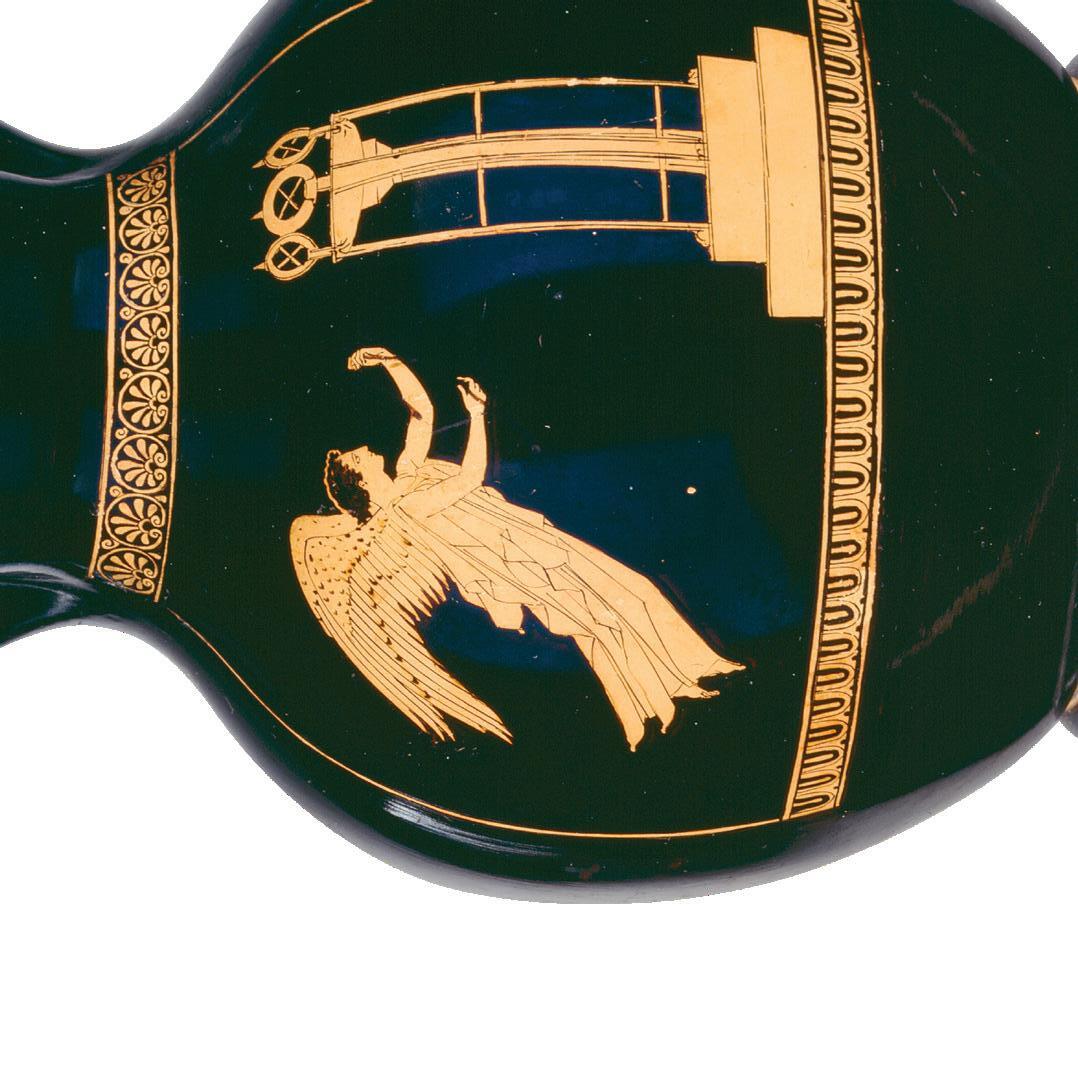
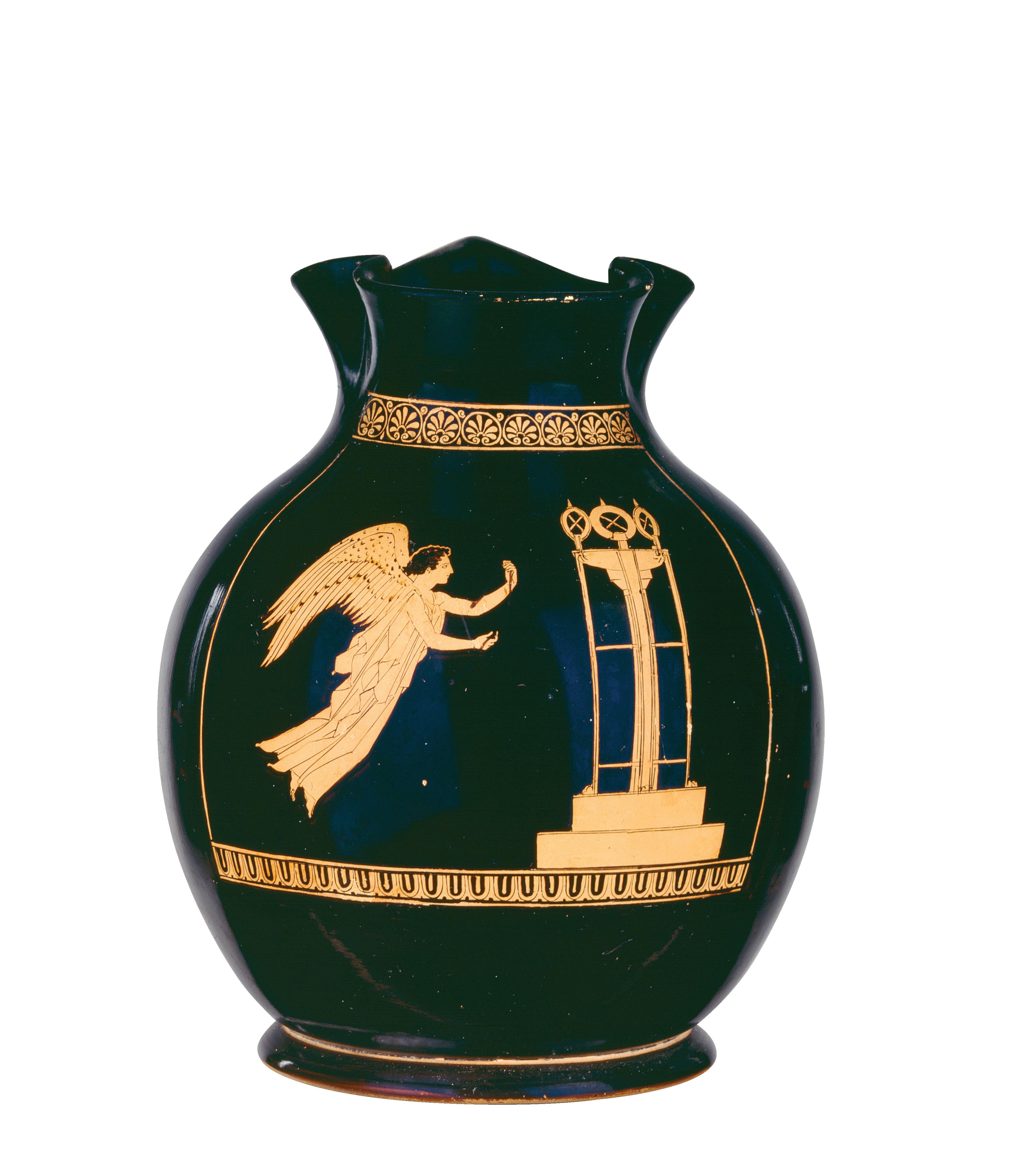
This ceremonial pot is a wine jug known as an oinochoe. It is made using a method invented in Attica in Greece. The details come from the red clay the pot is made from while the lines and background are painted black.

JUG JUMBLE...
Oh no – the general’s pot has tumbled off its pedestal. What an awful loss! Can you help Ashmole and Beetle piece the prized jug back together? Write in the letter of the correct piece next to each number in the pot below.
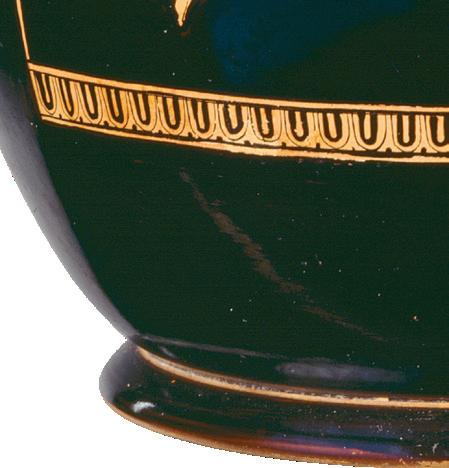
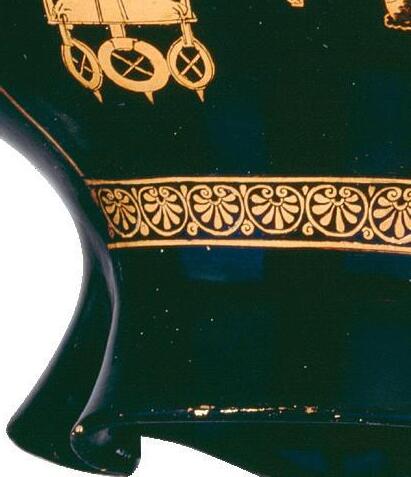
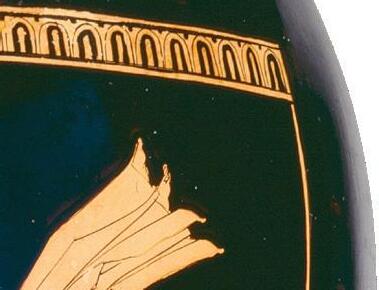
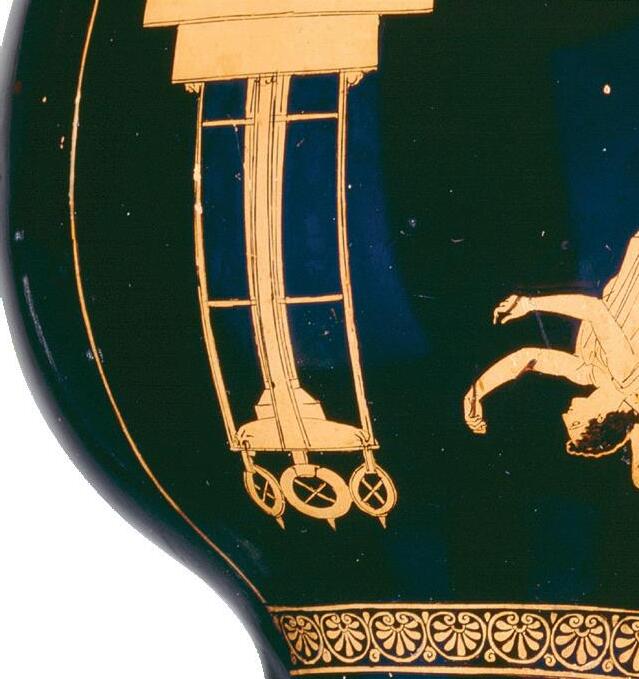
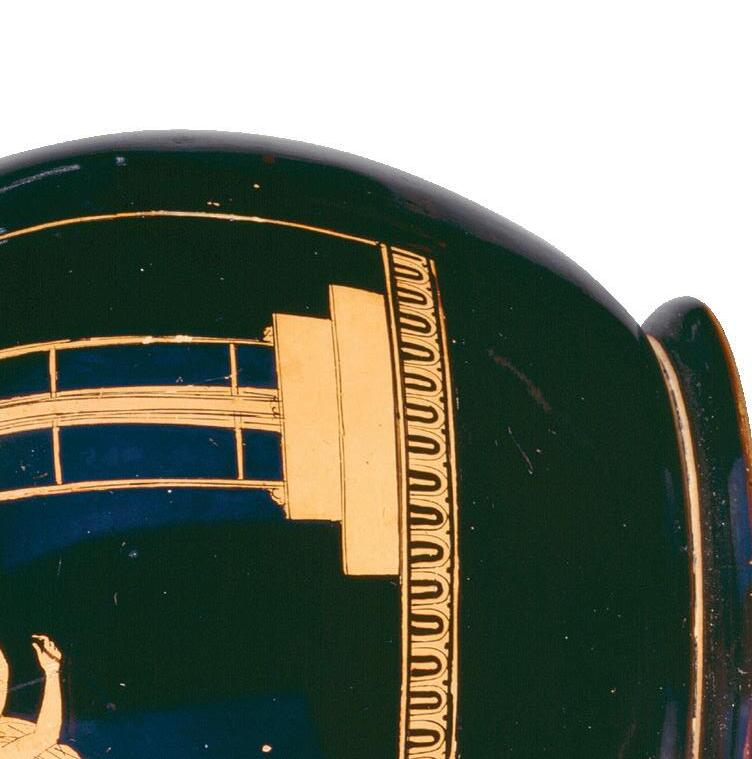
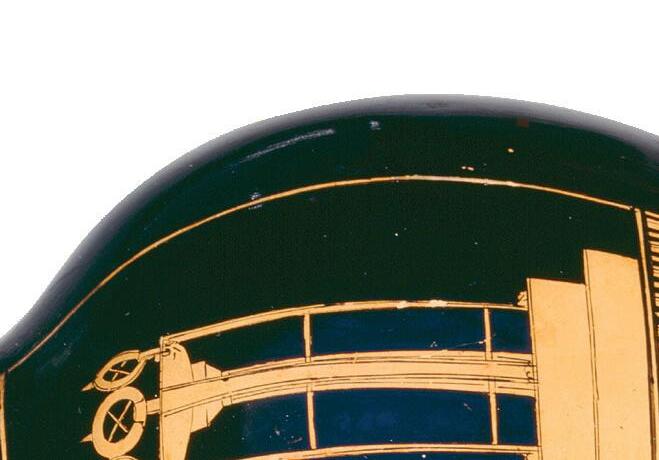
What a triumph.
Ashmole and Beetle for the win! You’ve helped them restore the Nike pot to its former glory. Shall we ride the wings of victory to the next challenge?
RUNE RIDDLES
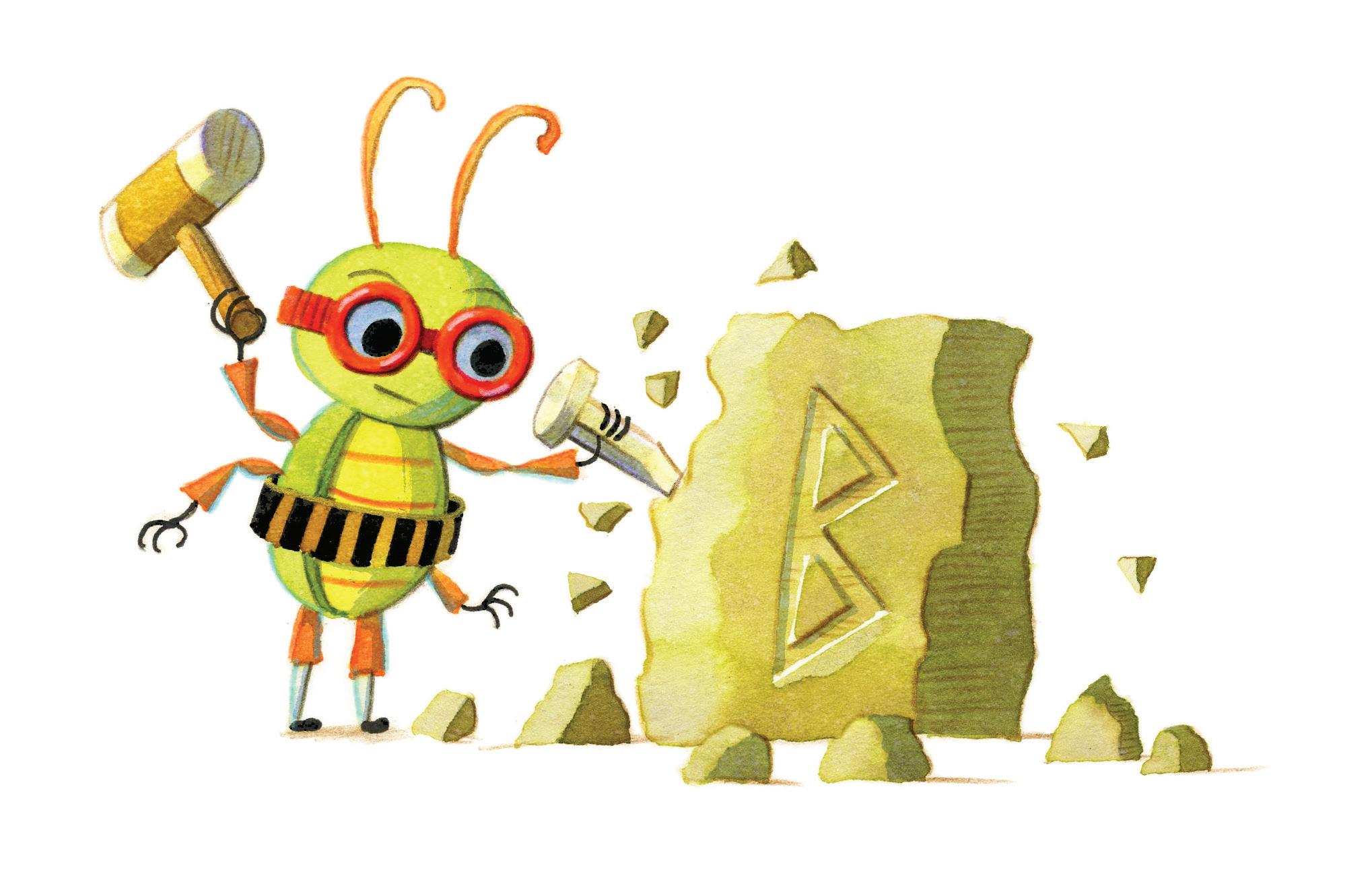
Chink! Chink! Chink! Ashmole and Beetle are in a runemaster’s workshop in Uppland, Sweden. He and his apprentices are chiselling runes – and animals with bodies like knotted ribbons – onto impressive granite slabs. Looks like studying these symbols is the key to your next task!
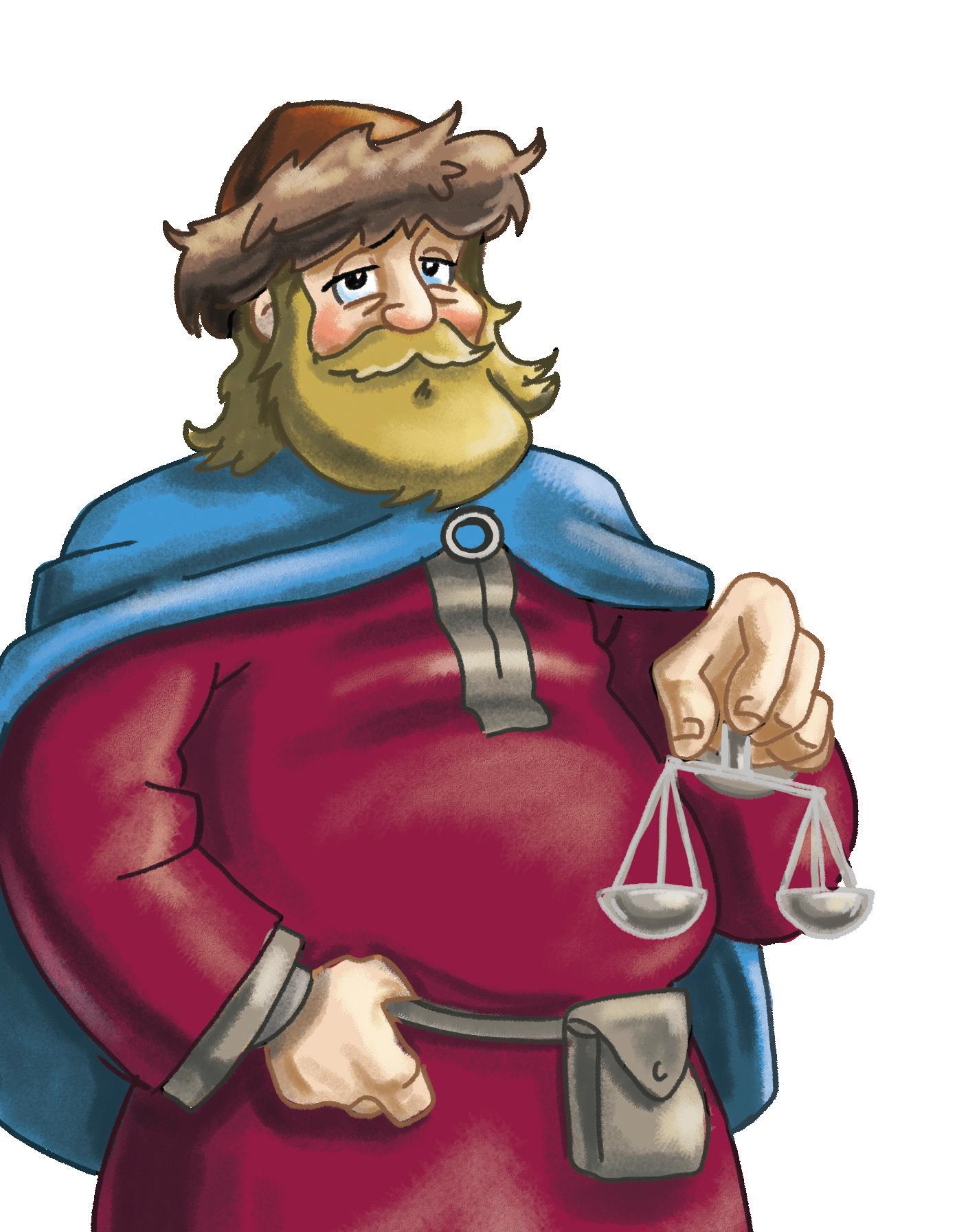
Many rune stones are memorials to people who have died. I had this stone inscribed with runes in honour of my dad, Ígulbjǫrn. He did a roaring trade in squirrel fur!
Rune stone from Uppland
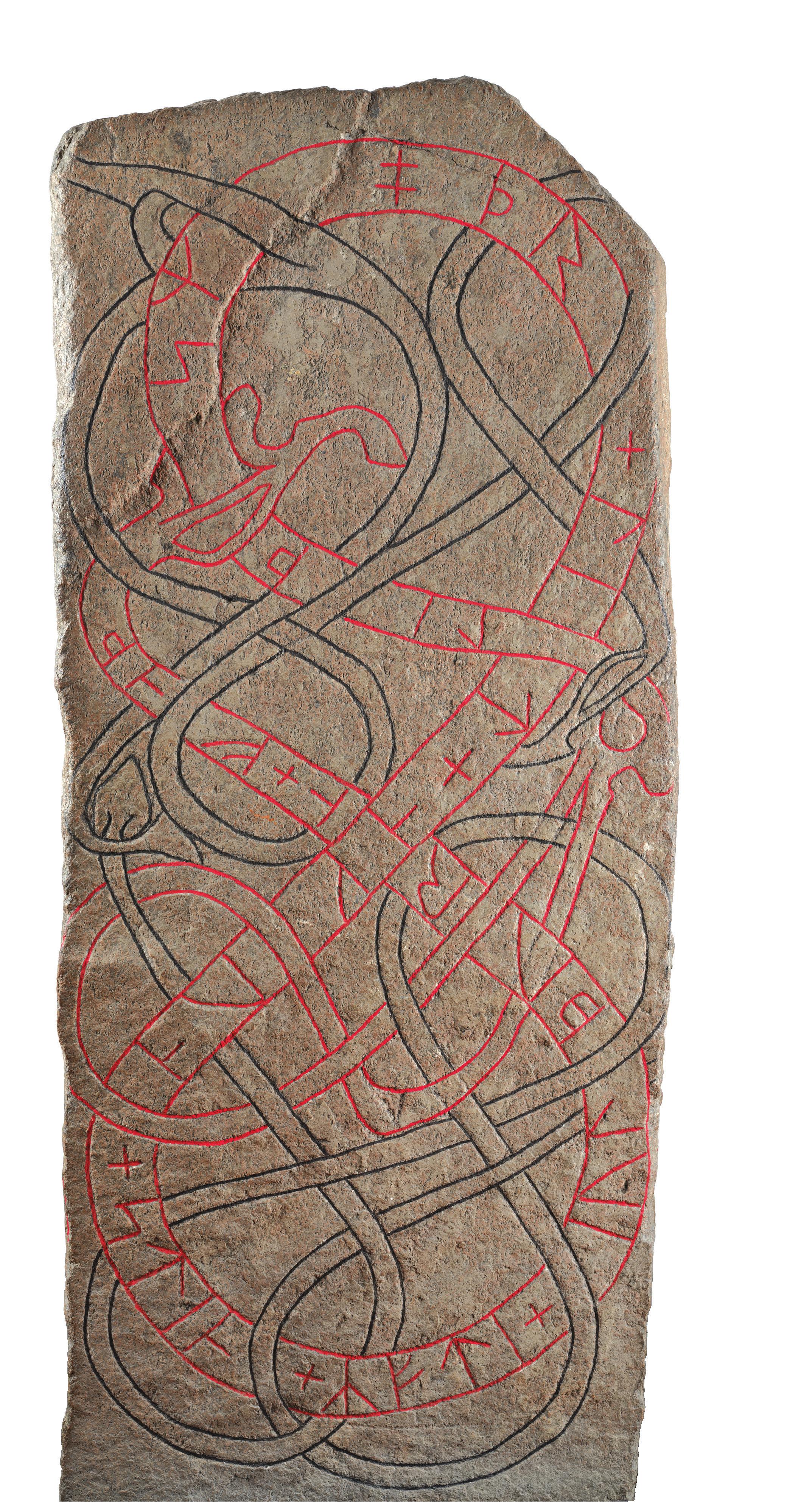
Vikings used a special alphabet called futhark. Its letters, called runes, were carved into objects to share messages and stories. The earliest-known Norse runes date back to the first century ce, but this particular stone is from the end of the Viking Age, around 1100. L i ð s m a ð r
READY TO TRANSLATE?
The runemaster has some riddles to test our friends. Uncover the answers by using Beetle’s cheat sheet to decode the letter represented by each rune.
f u th o r k h
f u th o r k h
n i a s t b m
f u th o r k h
n i a s t b m
f u th o r k h
n i a s t b m
n i a s t b m
l e g y d
l e g y d
1. What goes up but never comes down?
l e g y d
l e g y d
2. What is always in front of you, but yet you cannot see it?
3. The more of this there is, the less you see. What is it?
You’re a runemaster!
Well done with cracking an ancient alphabet. Now you can write Norse inscriptions of your own! But first, it’s off to another game…
CHAUPAR PUZZLER
Ashmole and Beetle find themselves in a courtyard overlooking the shimmering waters of Lake Pichola. Its sunny shores are lined with marble palaces like the one they’re peeping out from. They’ve been transported to India in the 1700s, and they’re about to be introduced to a favourite royal pastime…
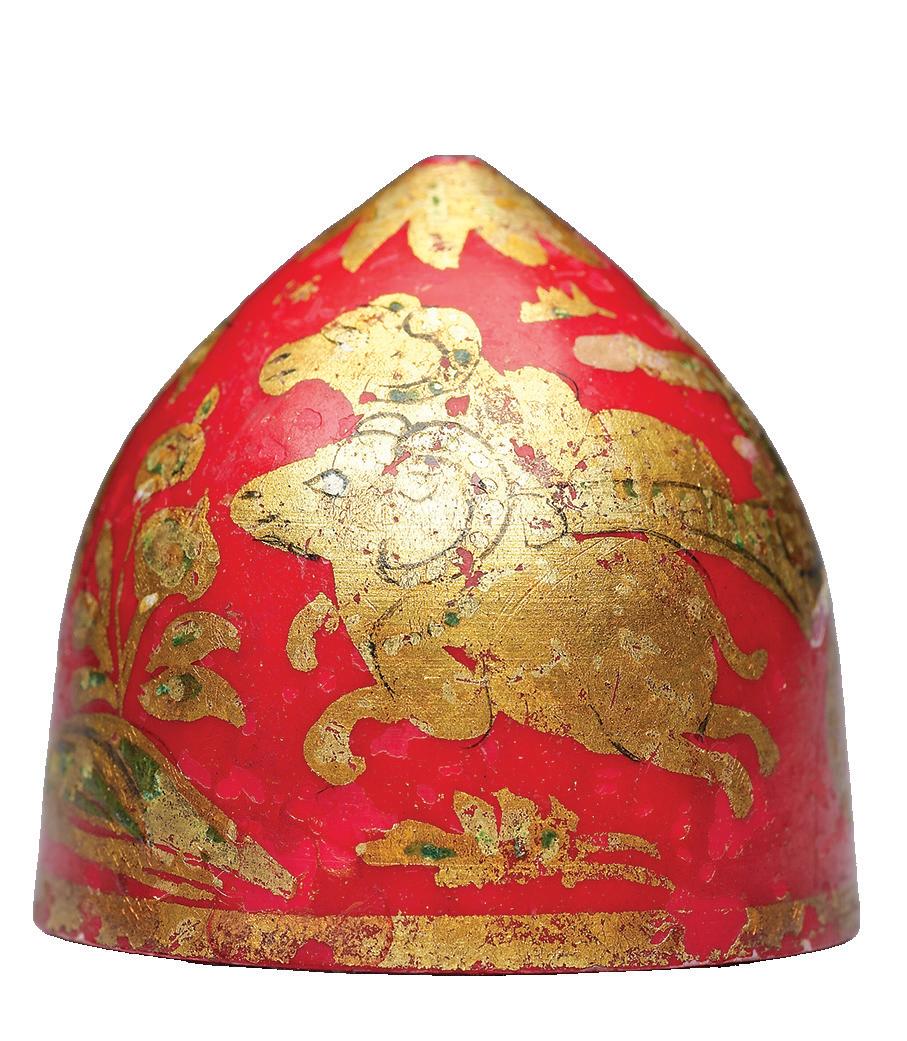
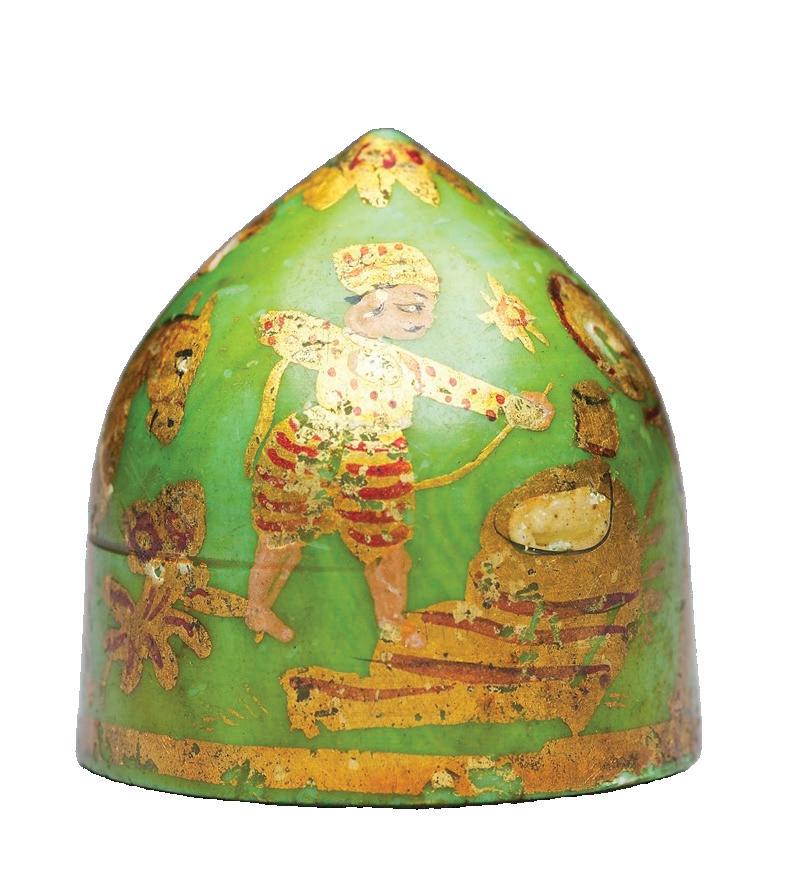
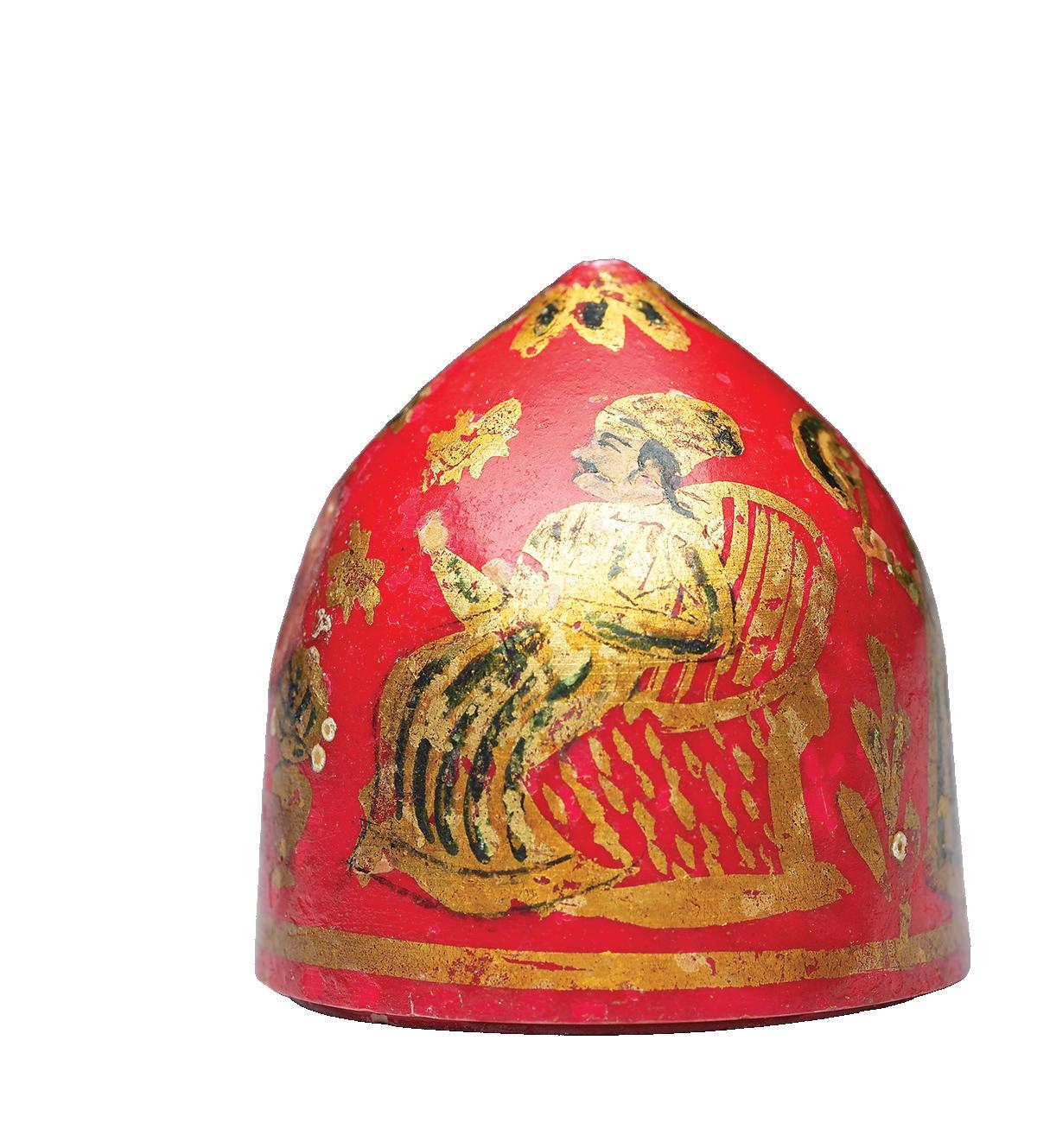
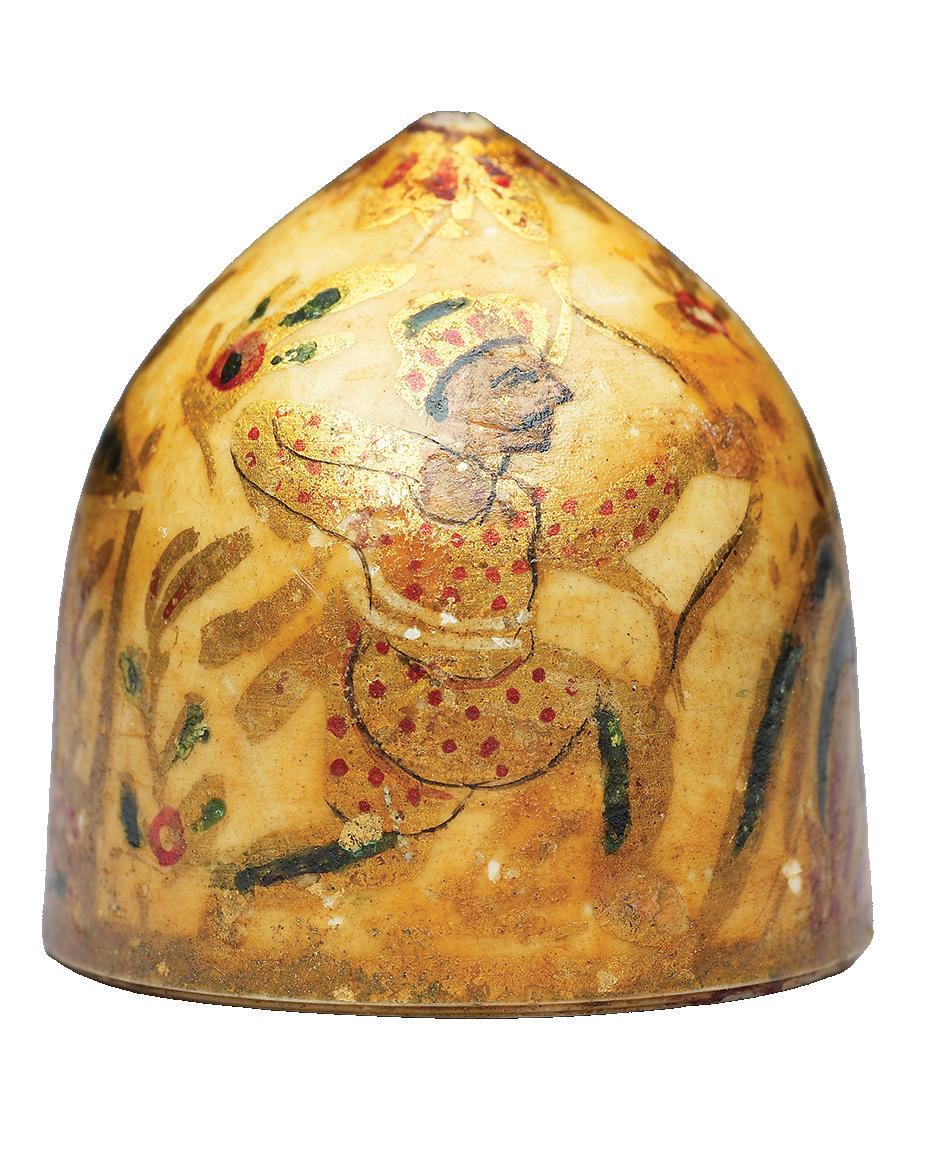
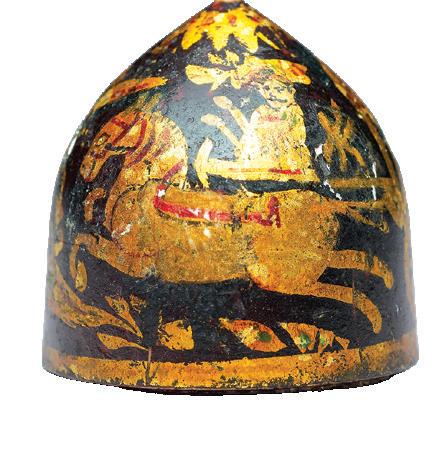
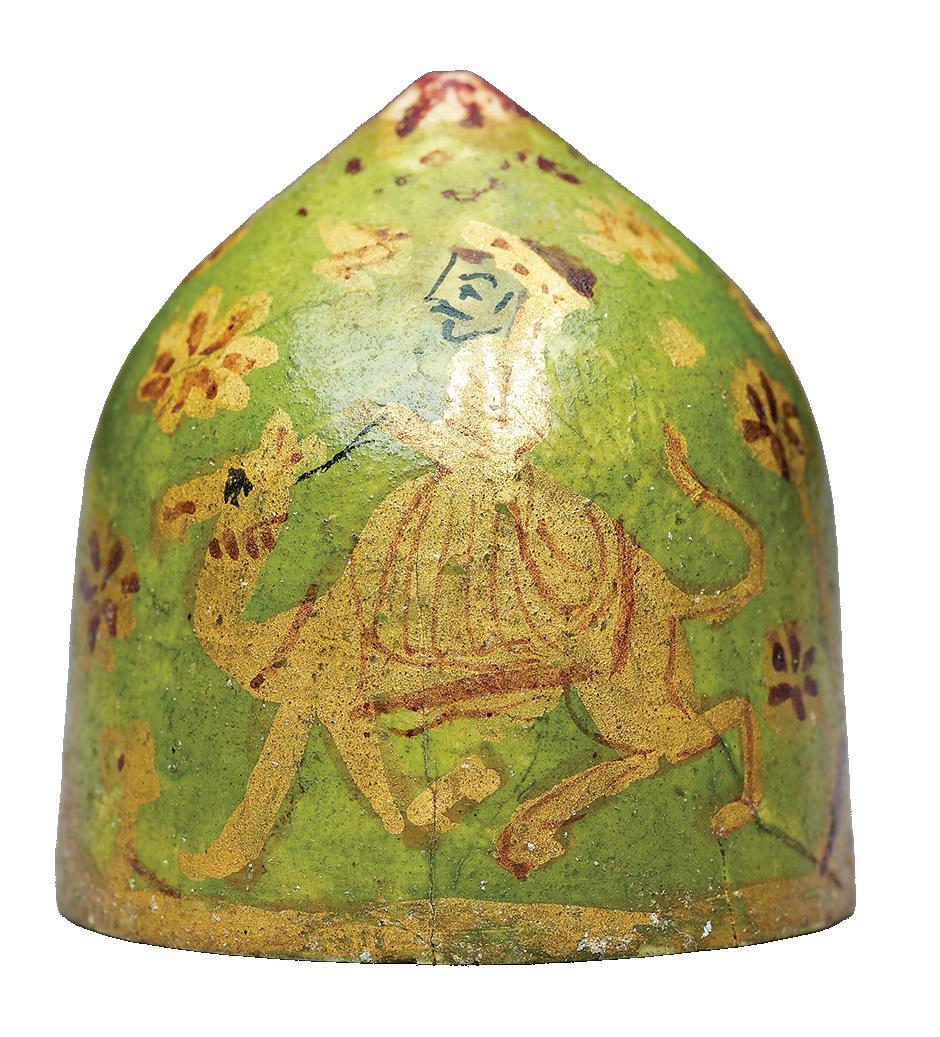
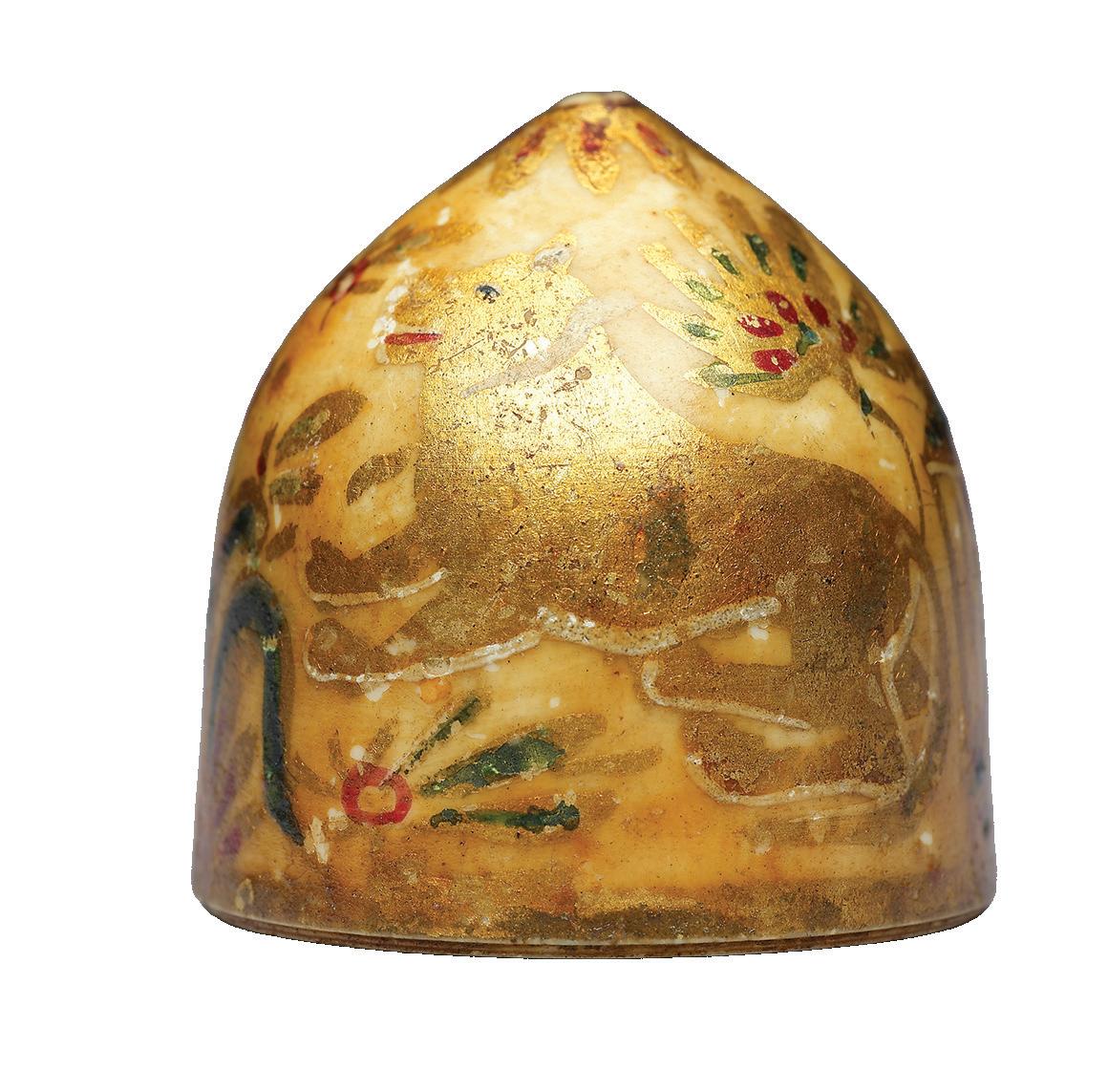
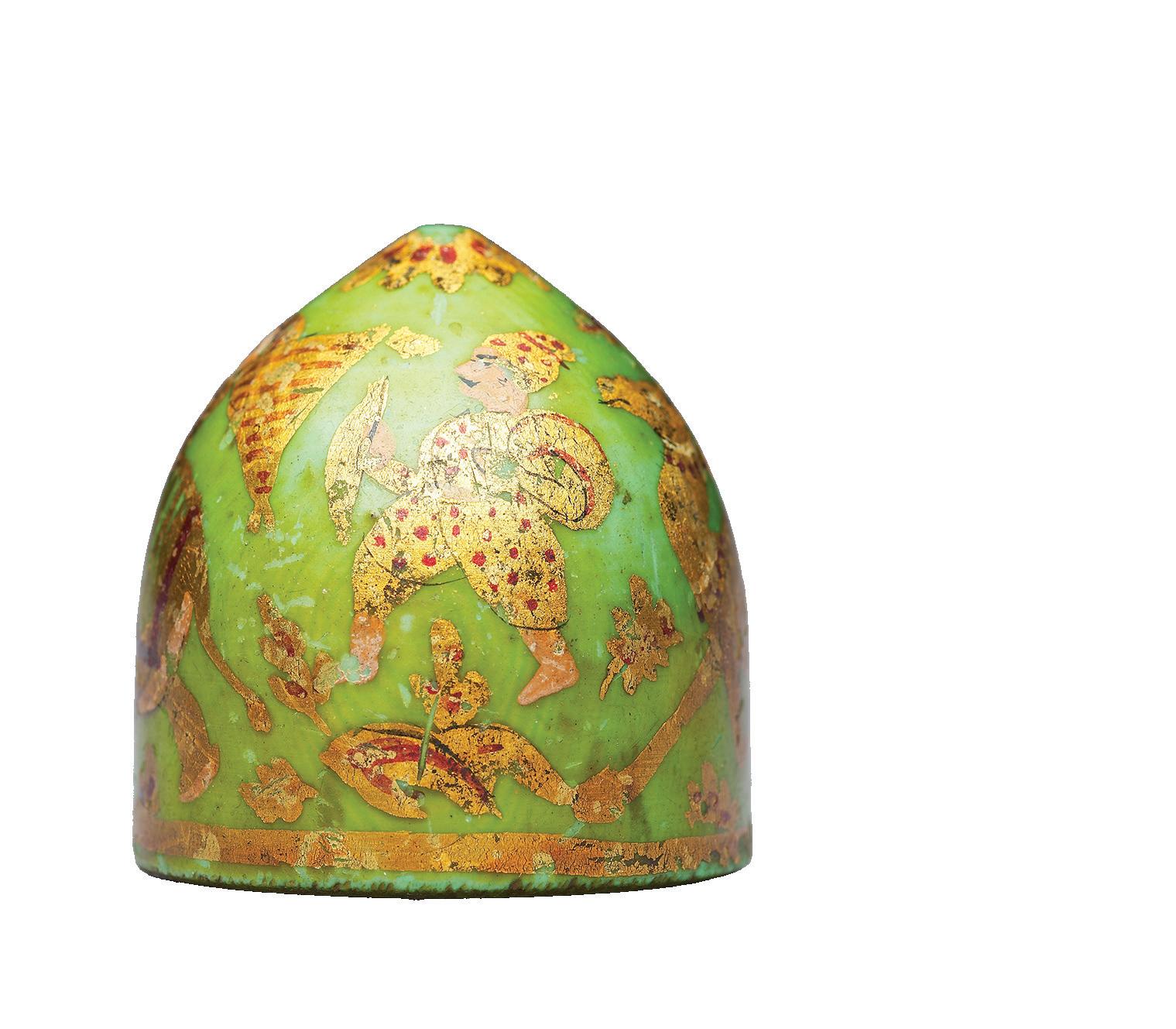
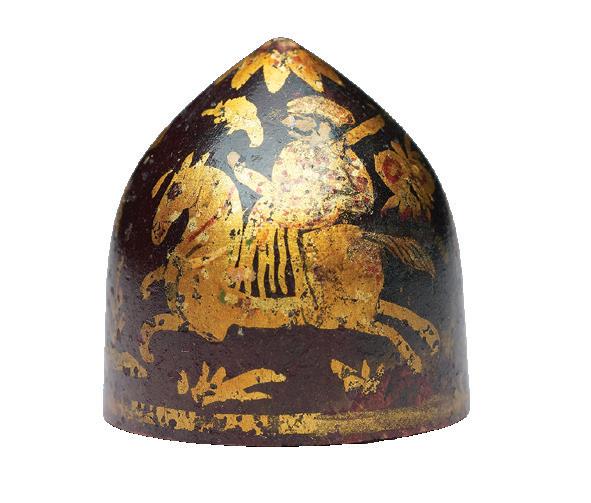
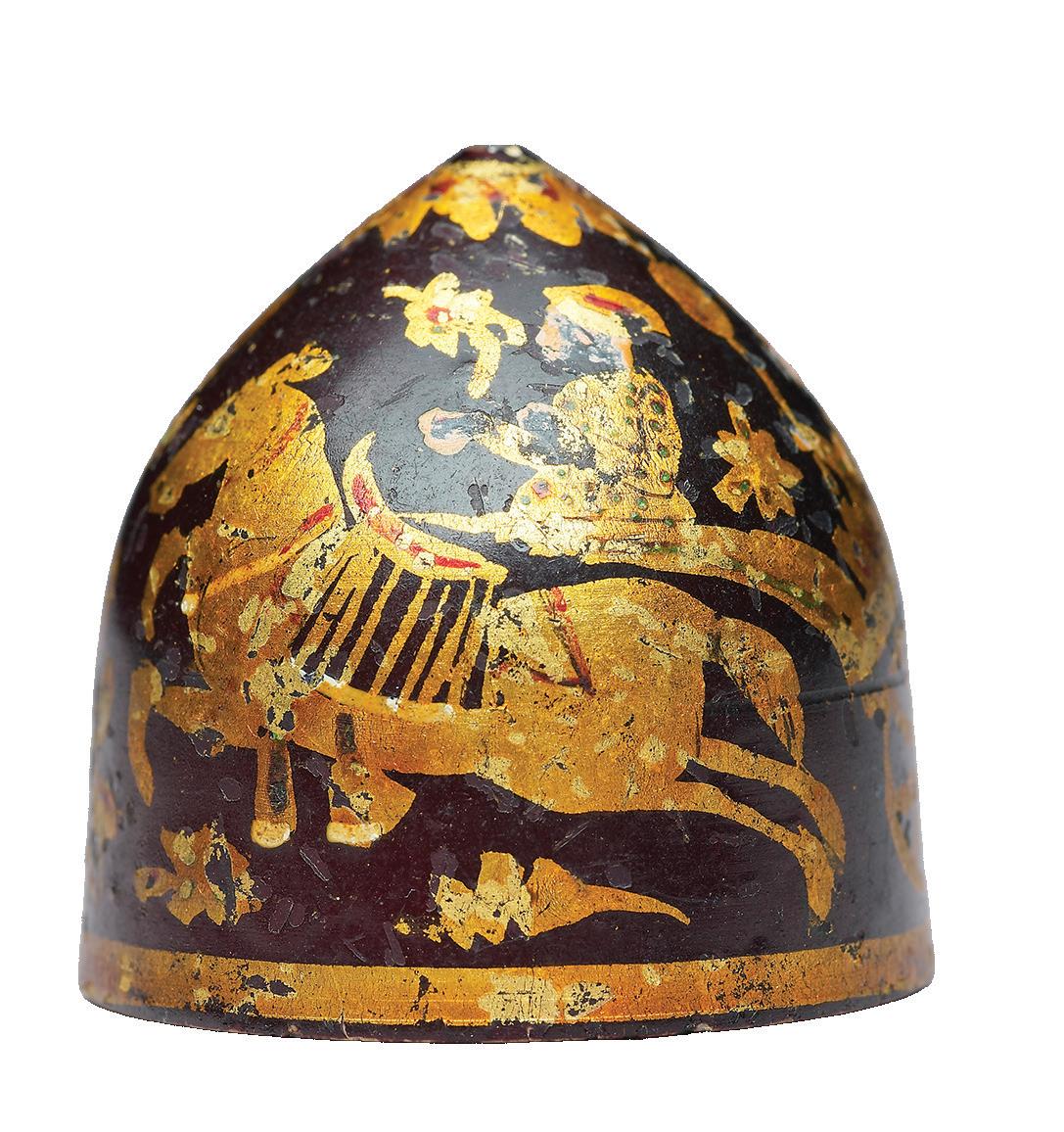
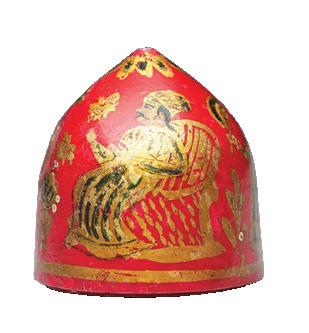
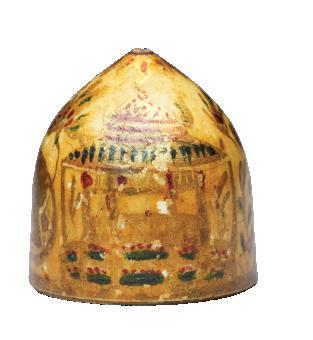
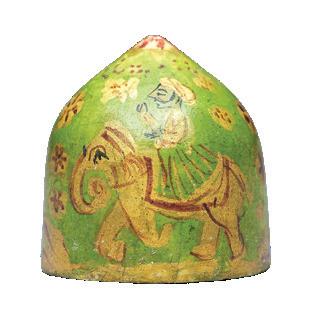
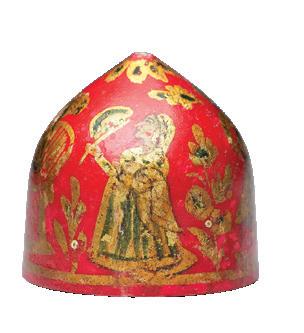
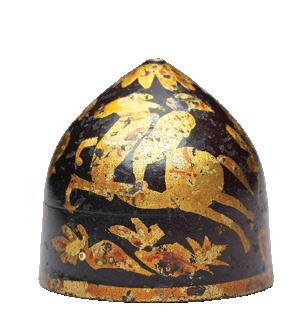
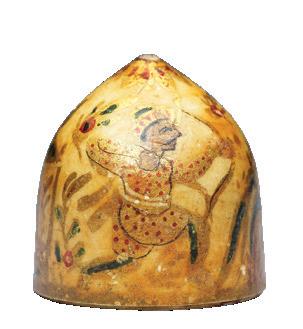
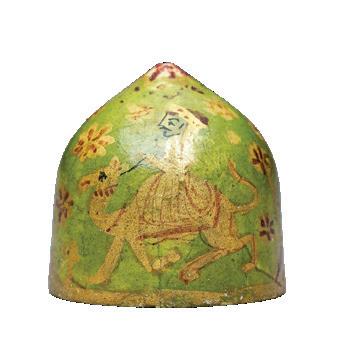
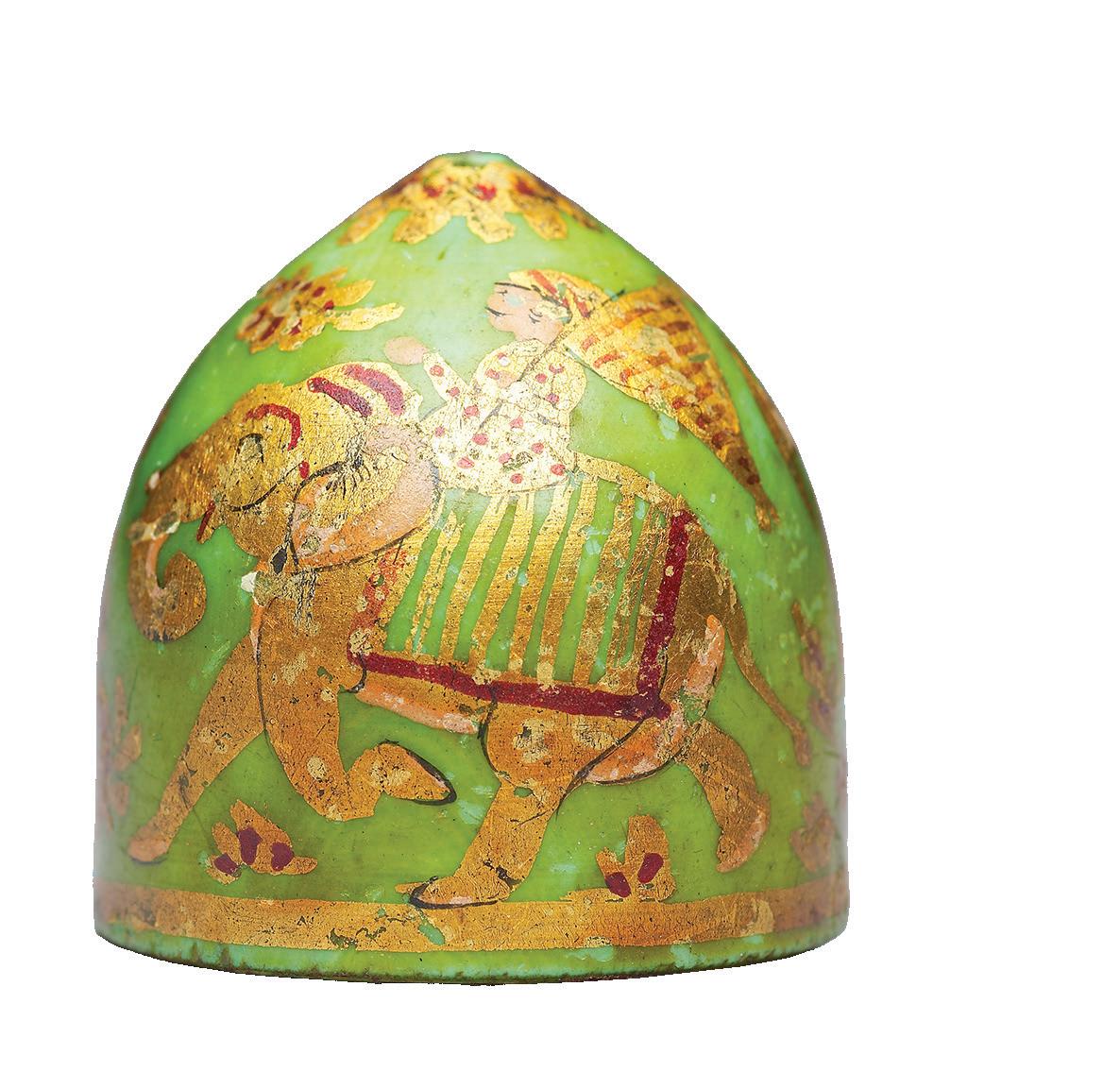
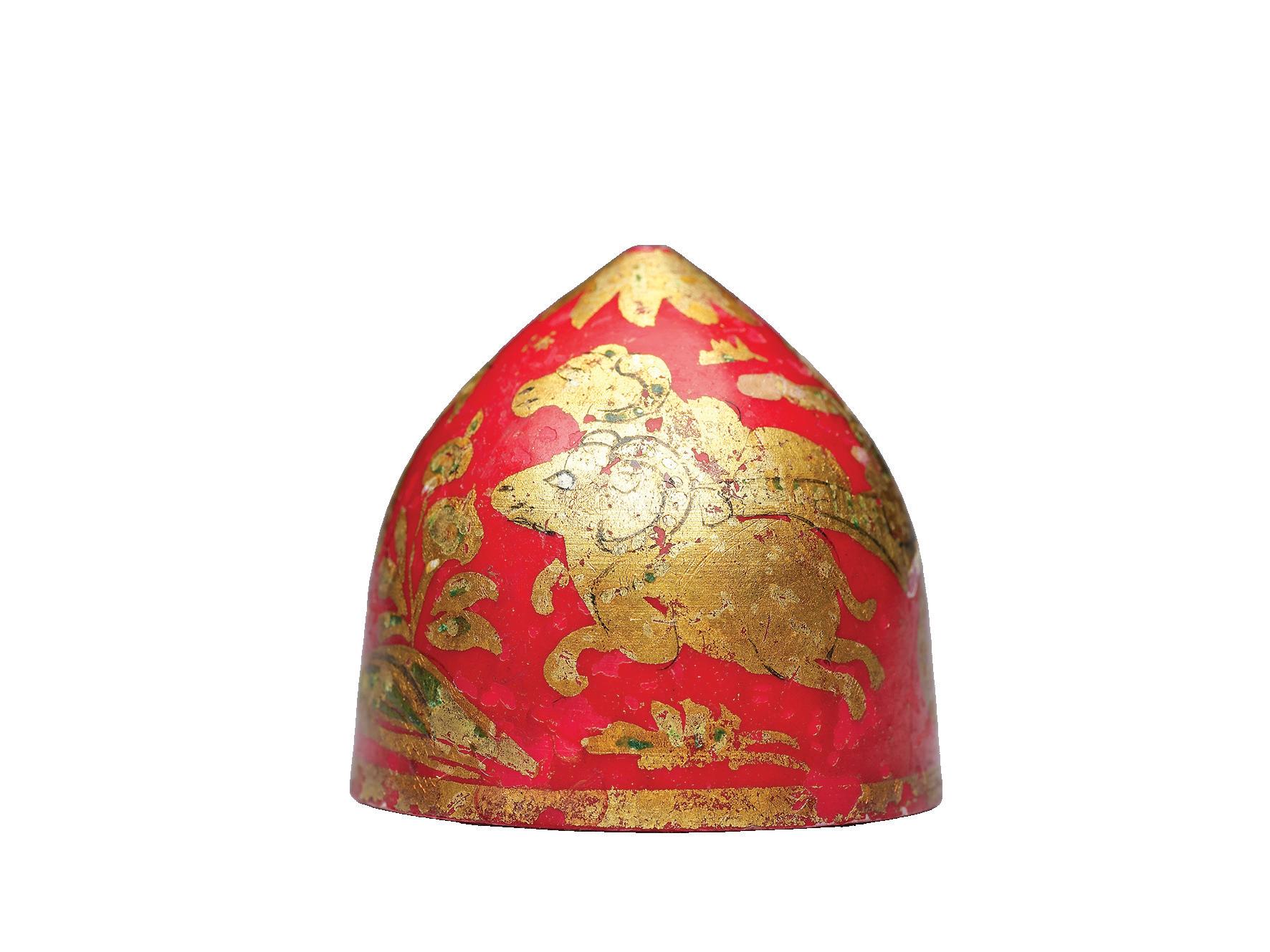
Chaupar game pieces
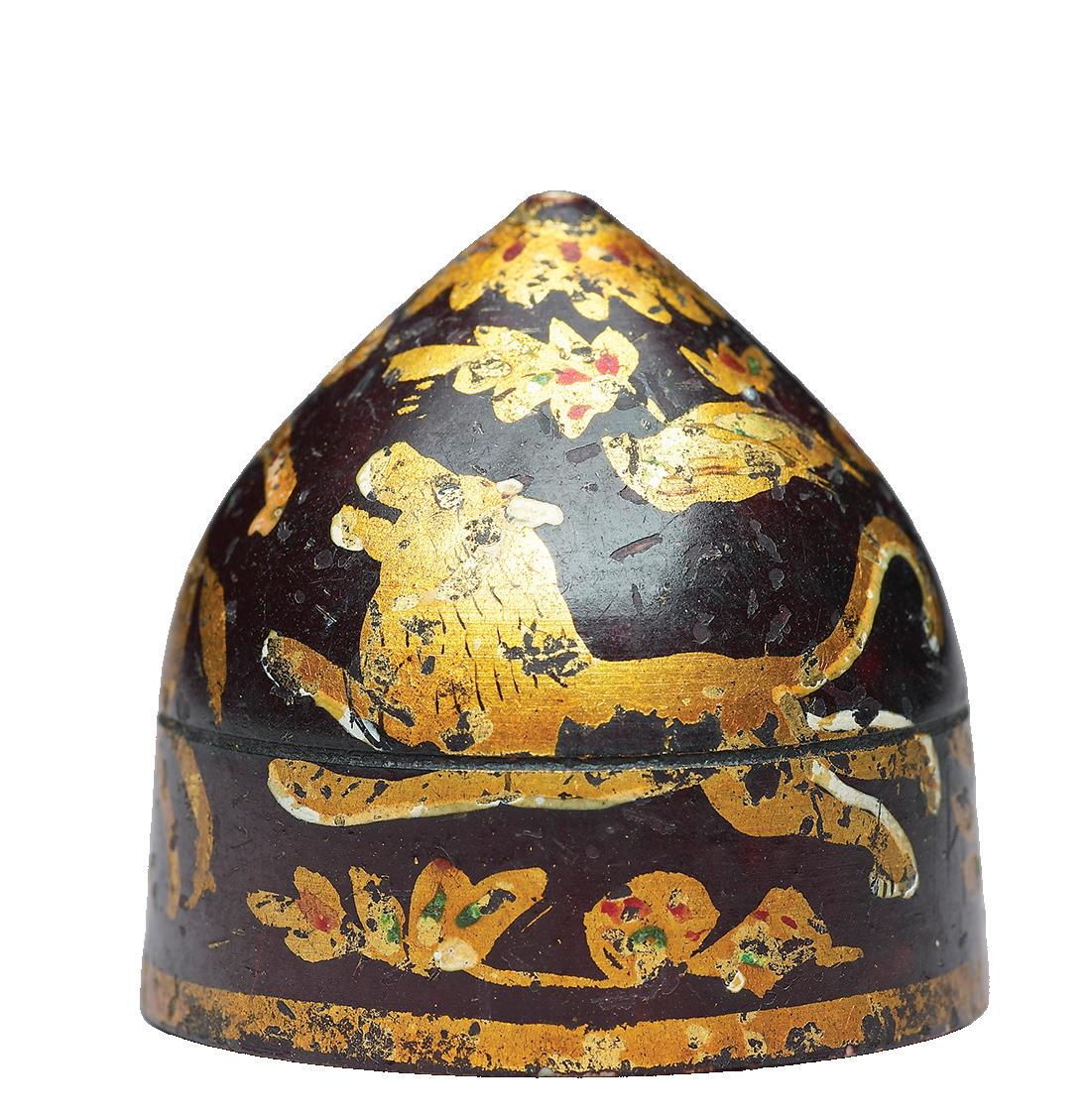
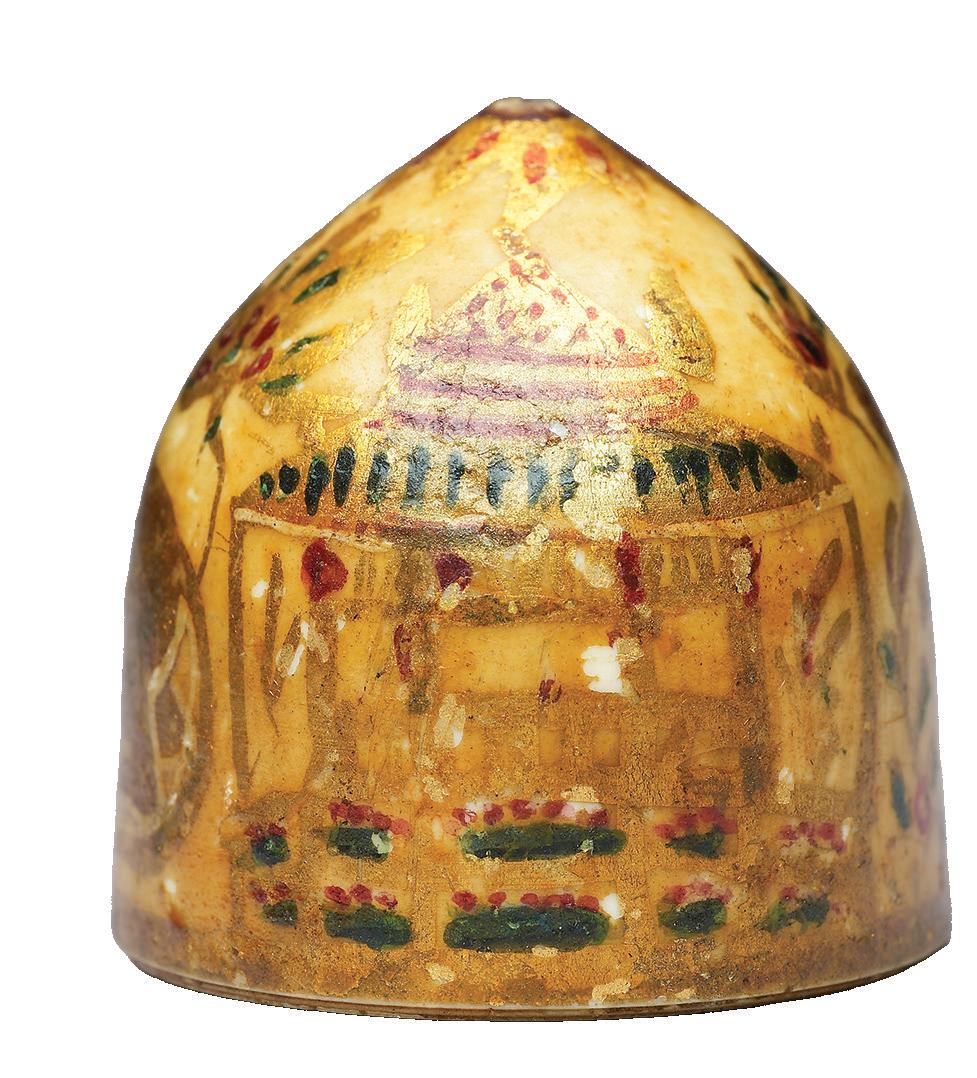
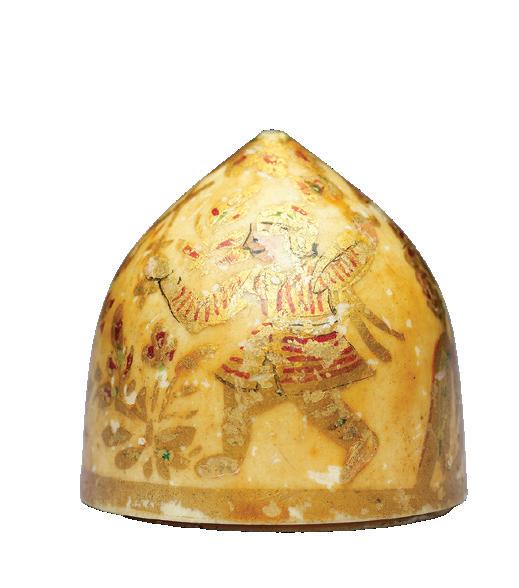
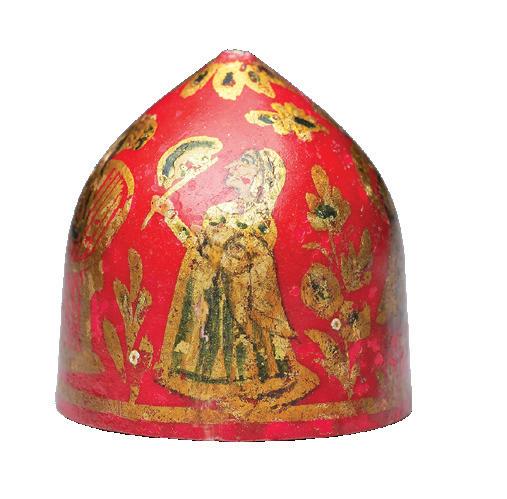
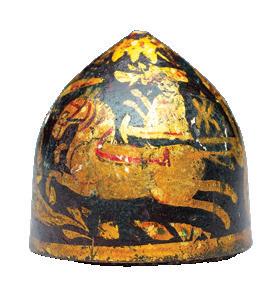
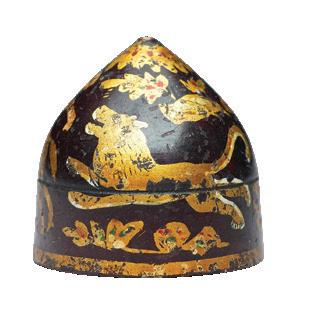
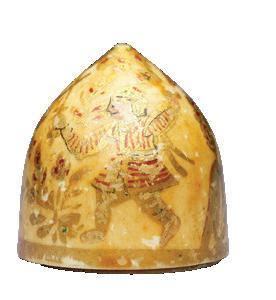
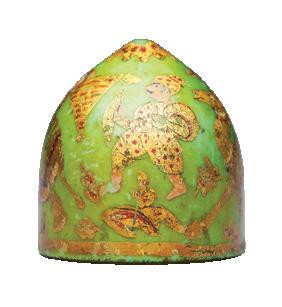
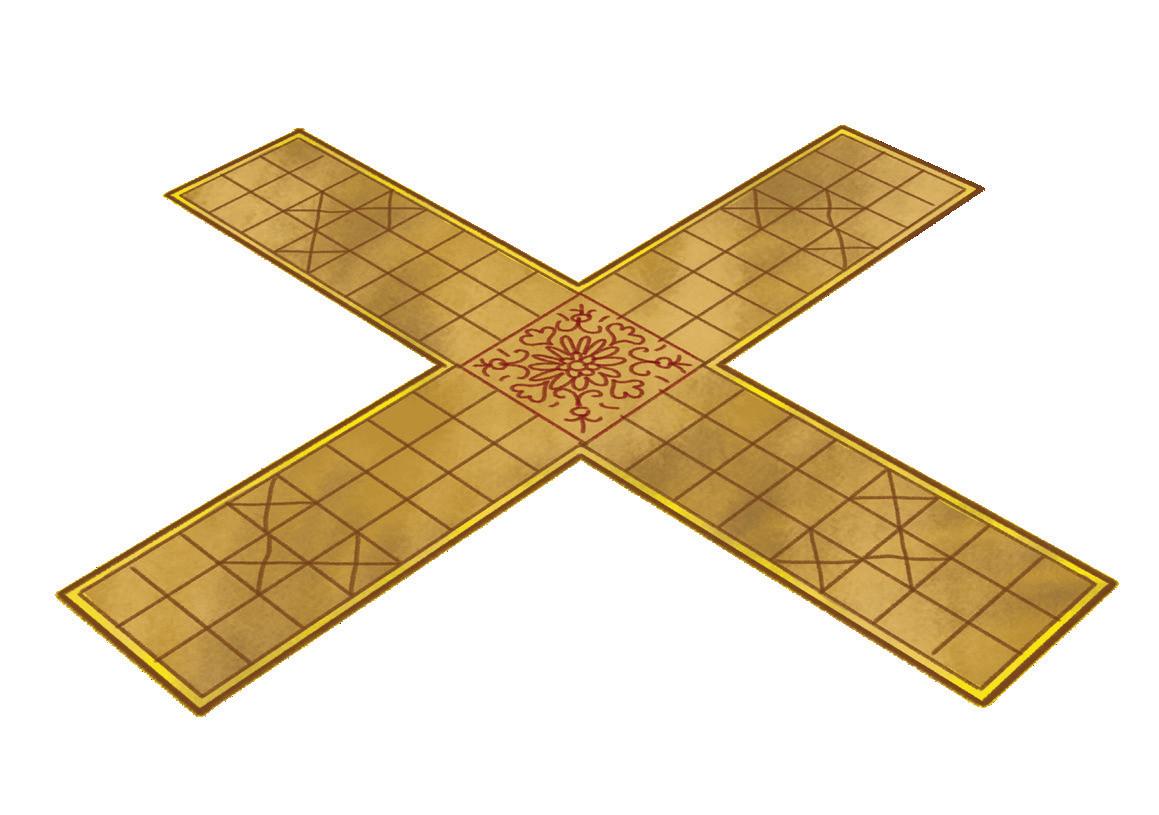
Chaupar is an ancient game from India. It was very popular in the courts of the Mughal Empire, from 1527 to 1857. It is played with a cross-shaped board and four sets of four game pieces in red, green, gold, and black. Courtiers had fancy pieces like this, made of ivory and decorated with scenes from court life.
GAME ON!
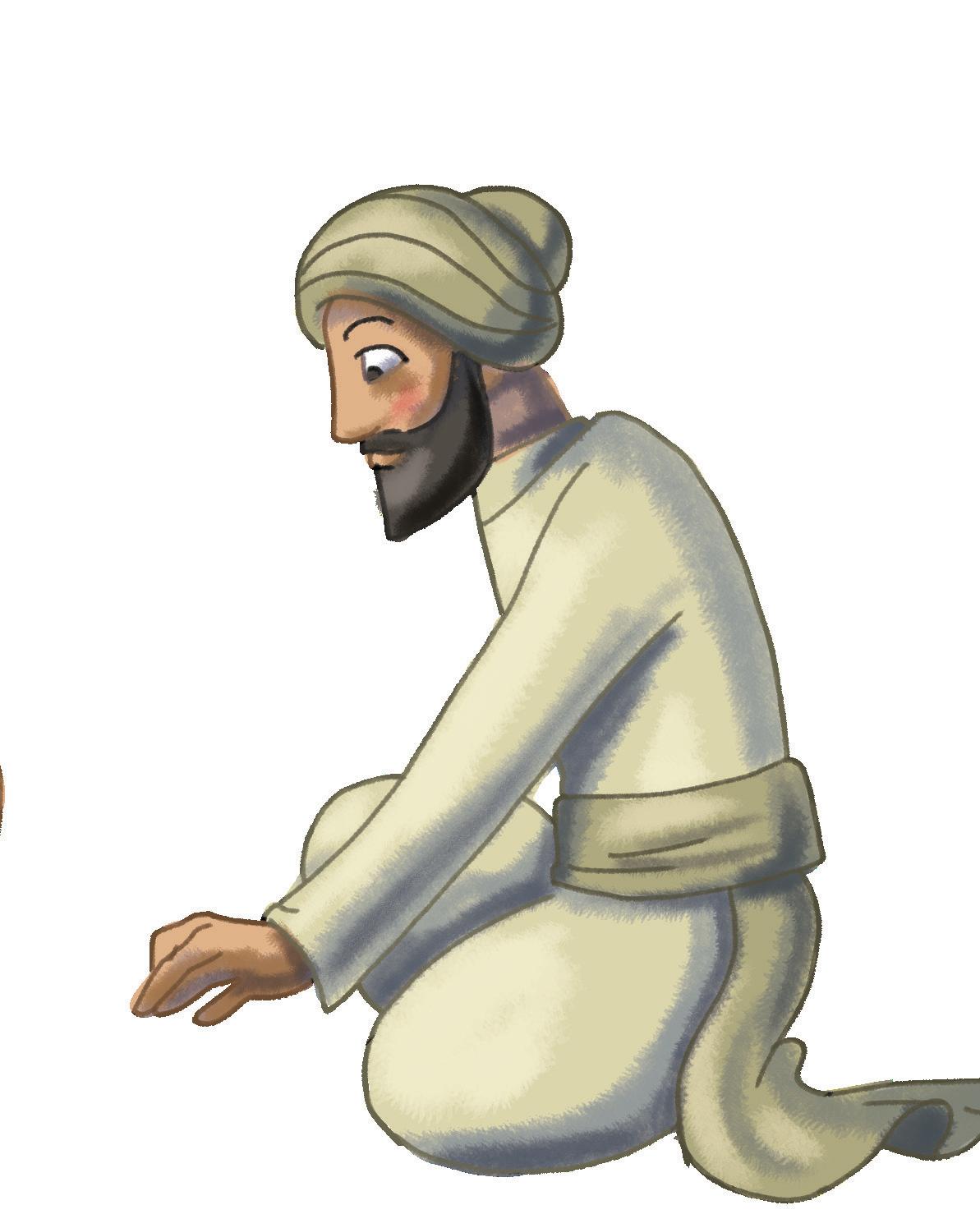
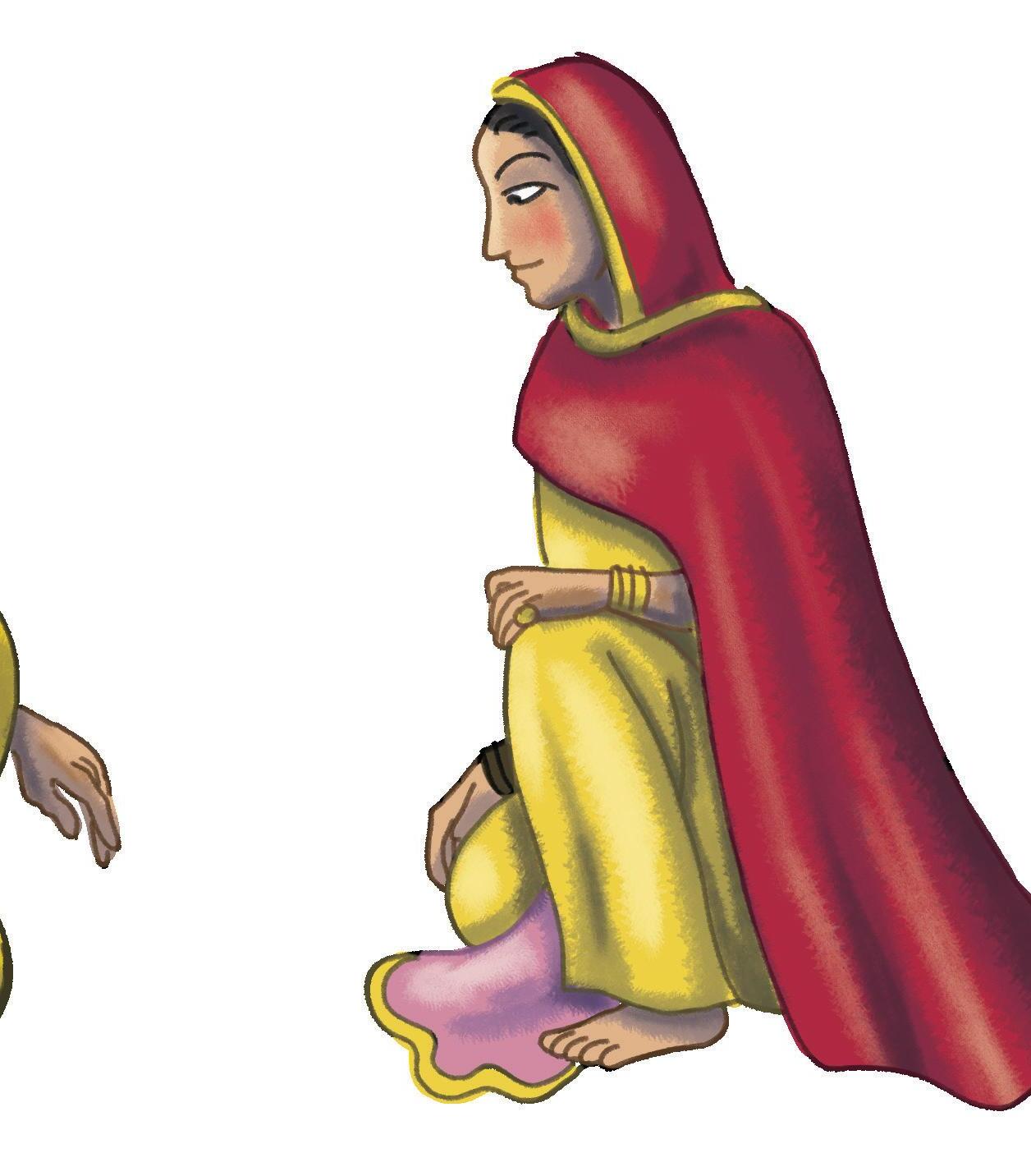
These courtiers are about to play chaupar. You can win this game and proceed to the next if you can work out which colour of game pieces each is playing with. Read their clues, then look closely at the pieces to match each courtier with the correct set.
Wow, it's like Ludo but trickier!
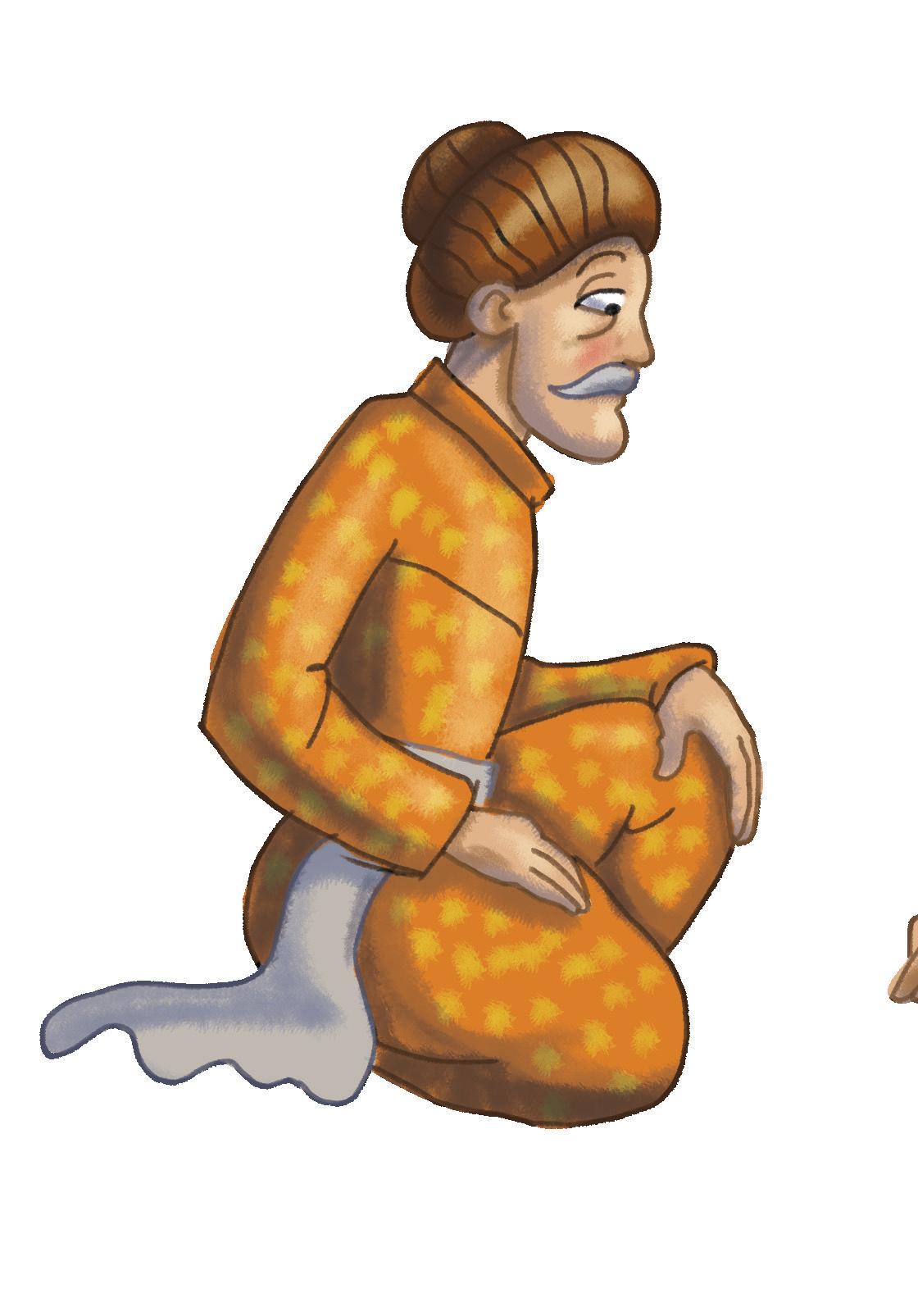
1. My set is the most equine of the bunch. I’m playing with the colour
2. Mine is graced with the only female character. I’m playing with the colour
4. My set features the biggest of riding animals. I’m playing with the colour
3. My pieces show a powerful predator and a building. I’m playing with the colour .
Piece of cake!
As the courtiers sit down to their match, it’s time for leave Lake Pichola for a less serene scene…
THE FOREST FIRE
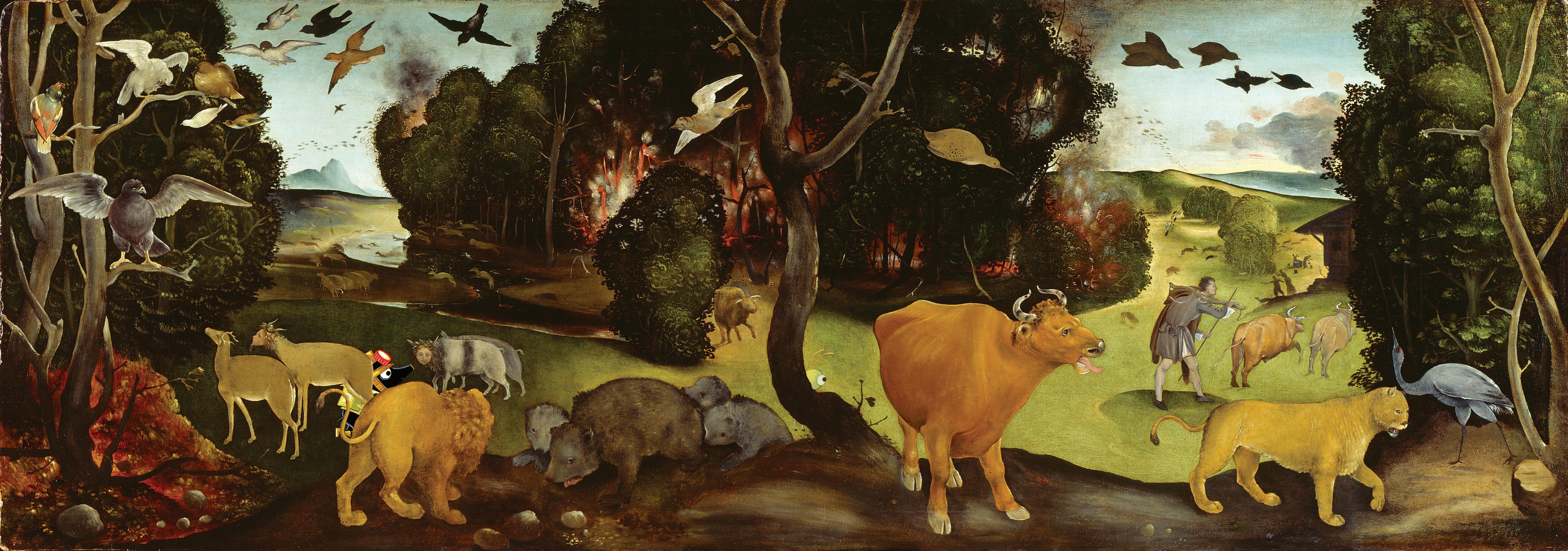
Ashmole and Beetle have stumbled into a wild scene – a burning woods filled with animals, people, and mysterious half-human creatures. They’re trapped inside The Forest Fire by Piero di Cosimo, who loved to paint fantastical worlds. But what is really happening here? No one knows for sure. Can you help them make sense of the scene and find their way out?
MOVE FAST!
Can you spot these six real or mythical creatures? Hurry, the fire is spreading quickly!
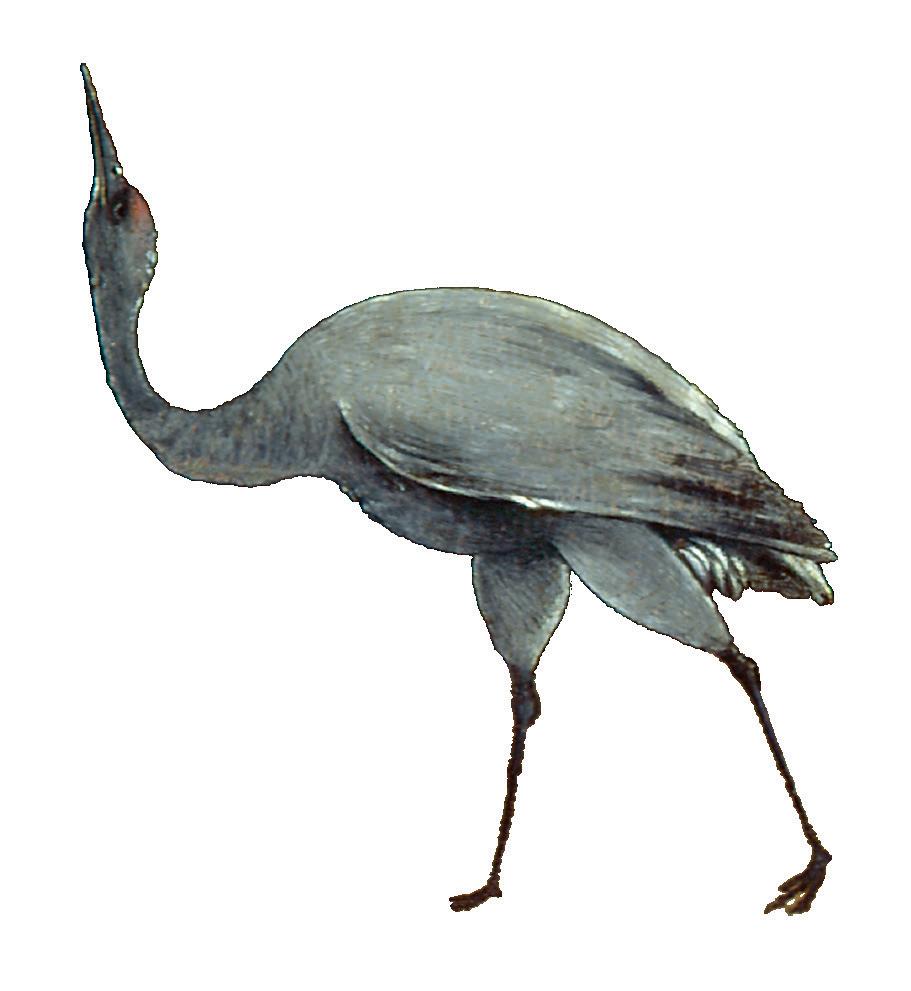
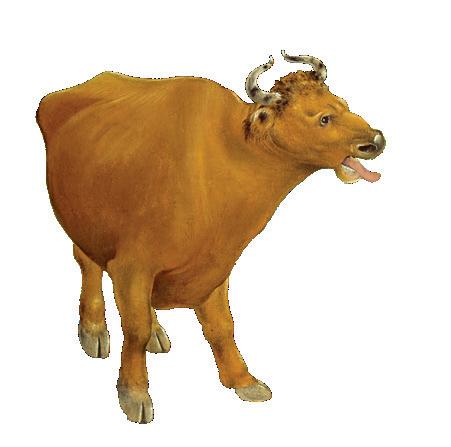
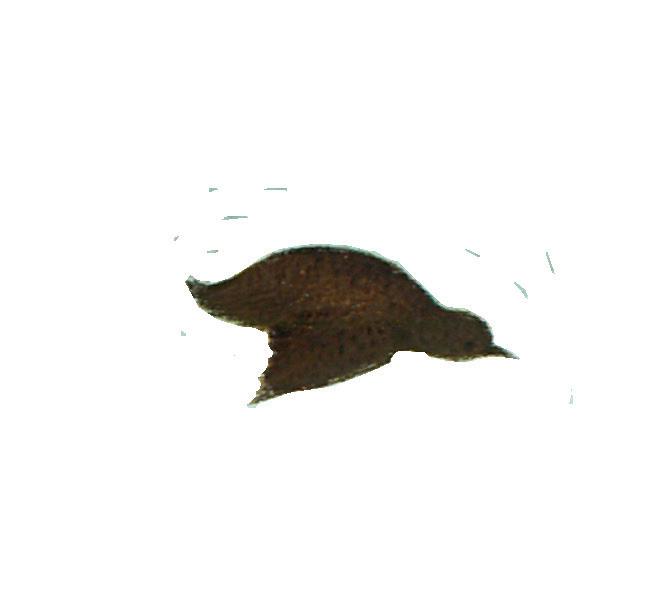
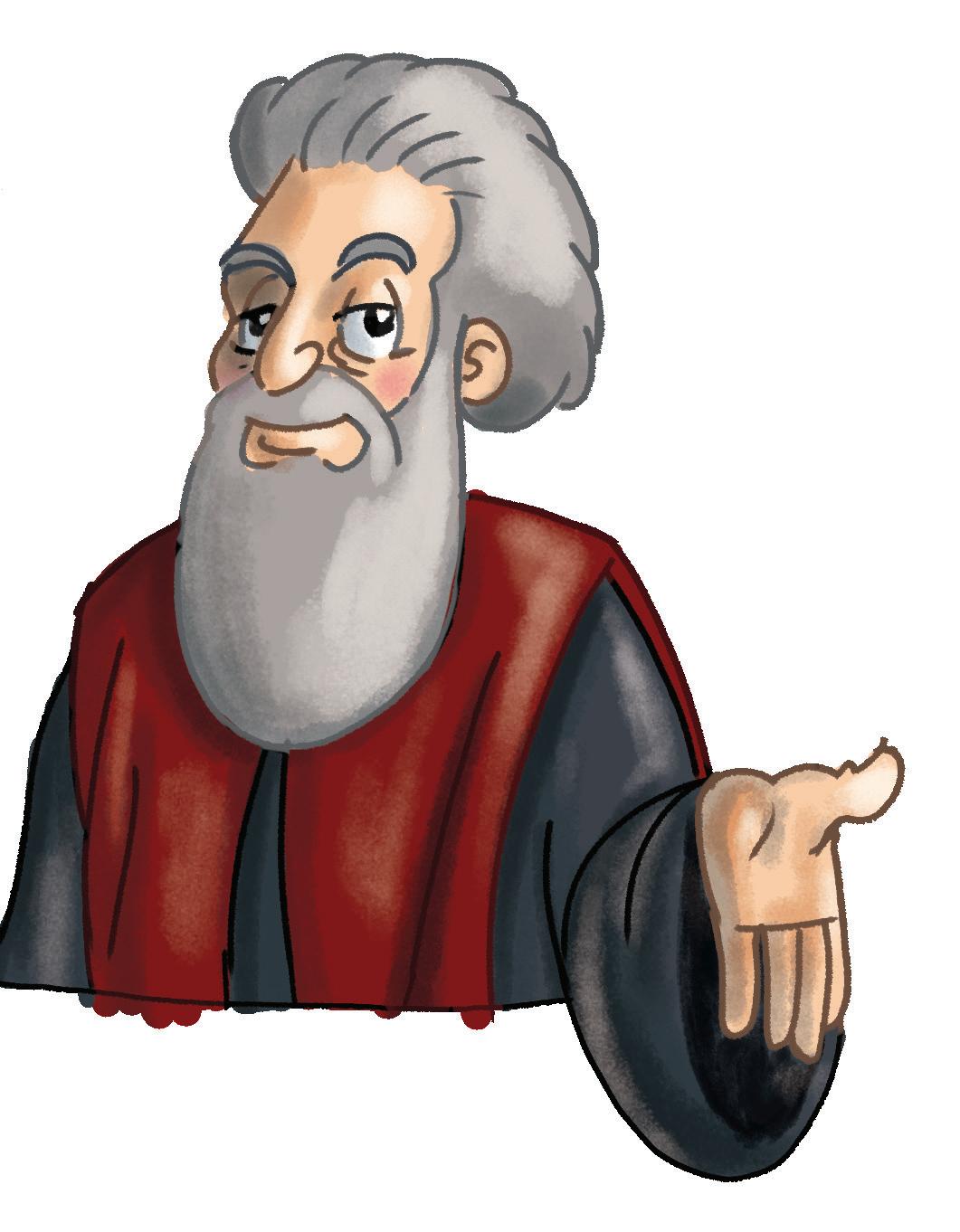
Hi, I’m Piero di Cosimo, and this is my creation. I am an Italian Renaissance painter known for my imaginative artwork. I love nature, hard-boiled eggs, and spending time alone. People say I’m very odd, though I can’t imagine why!
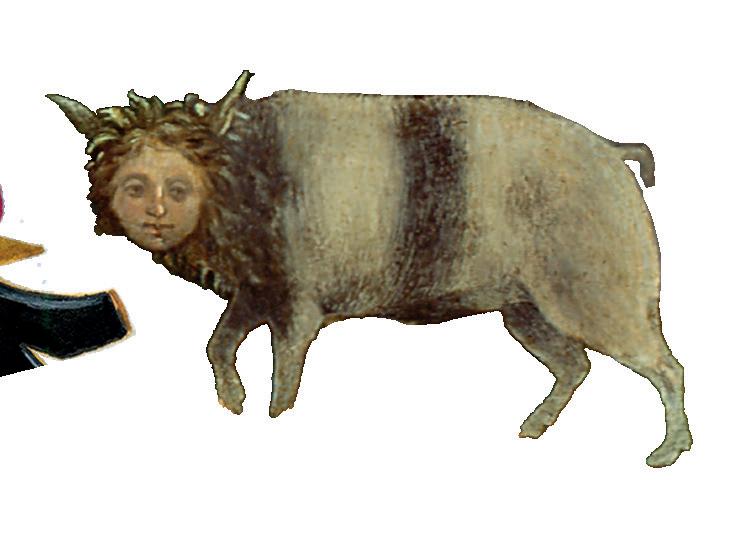
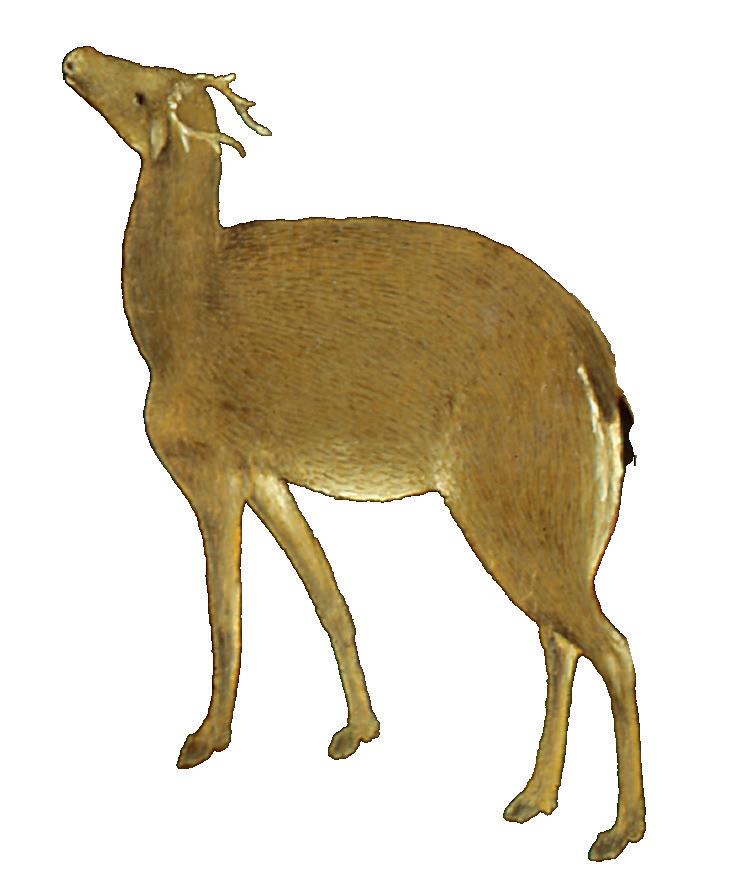
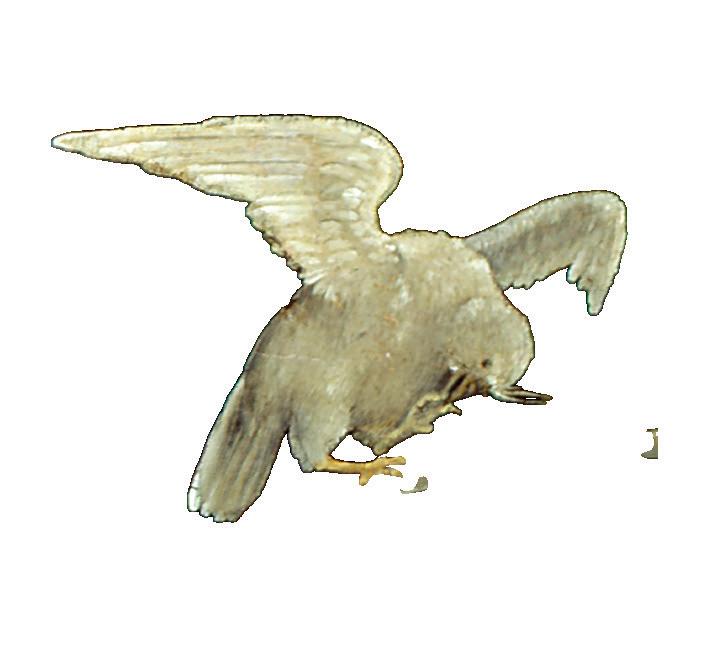
All done?
Make sure you’ve found Ashmole and Beetle, too, and then let’s blaze out of here – more wonders await...
Piero di Cosimo
CRACK THE QUESTION
Talk about time travel! Ashmole and Beetle have ventured back more than 3,000 years to the Huanghe (Yellow River) valley in China. They’re about to see a Shang divination ceremony using oracle bones – can you help them figure out what the priests are trying to predict?
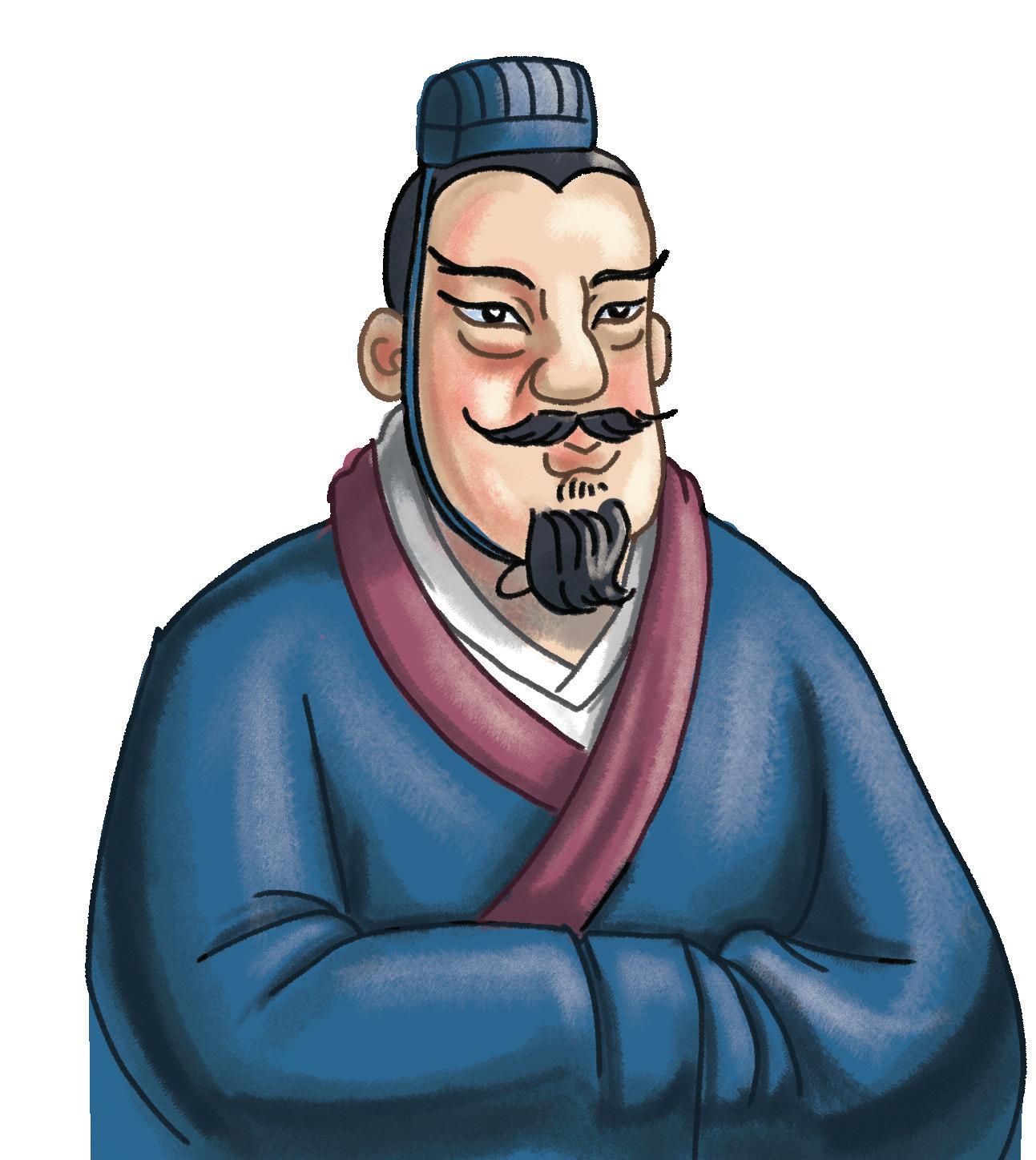
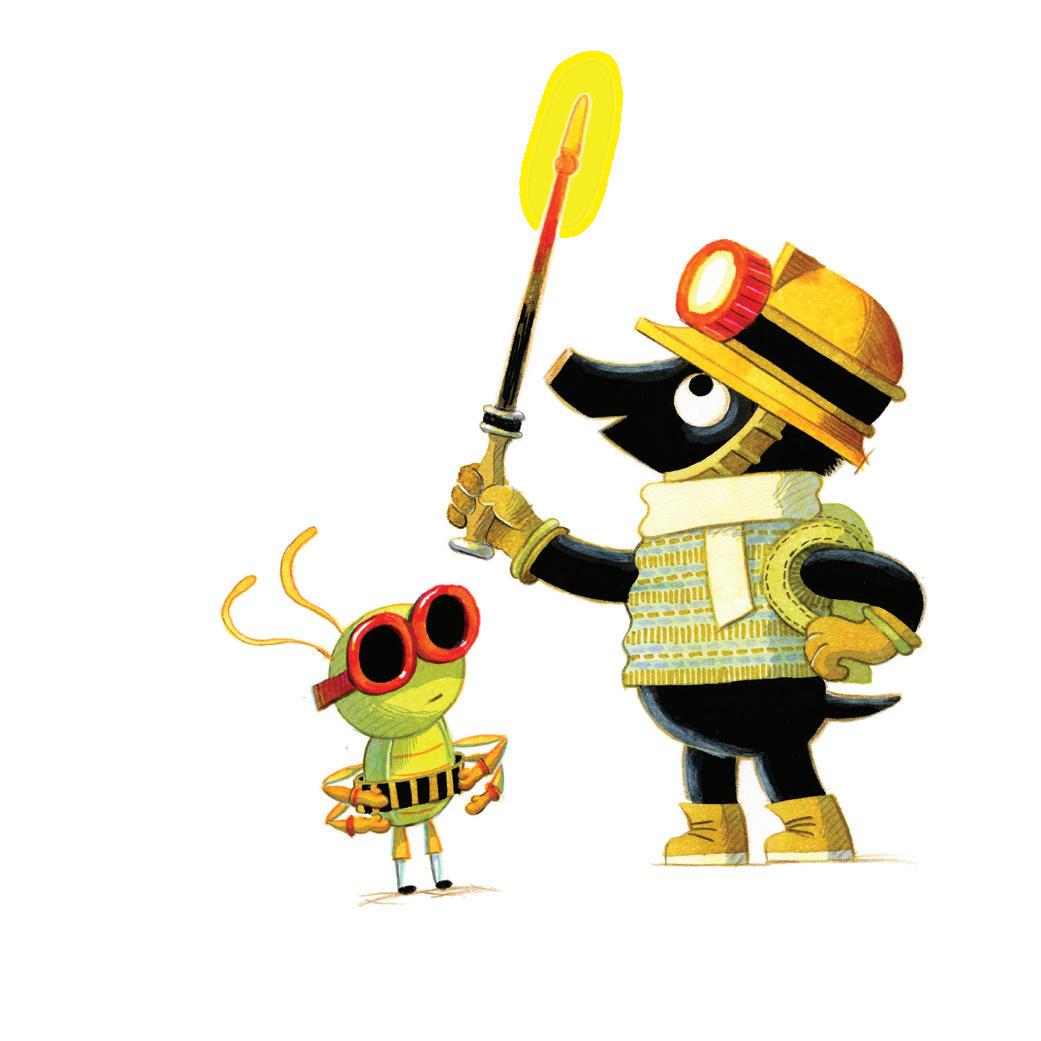
I’m king of the Shang dynasty and also its chief diviner! Me and my priests interpret oracle bones to see the future. We inscribe the bones with questions, then heat them with pokers till they crack. How they break gives us our answer. Not to brag, but I’m truly divine when it comes to divining.
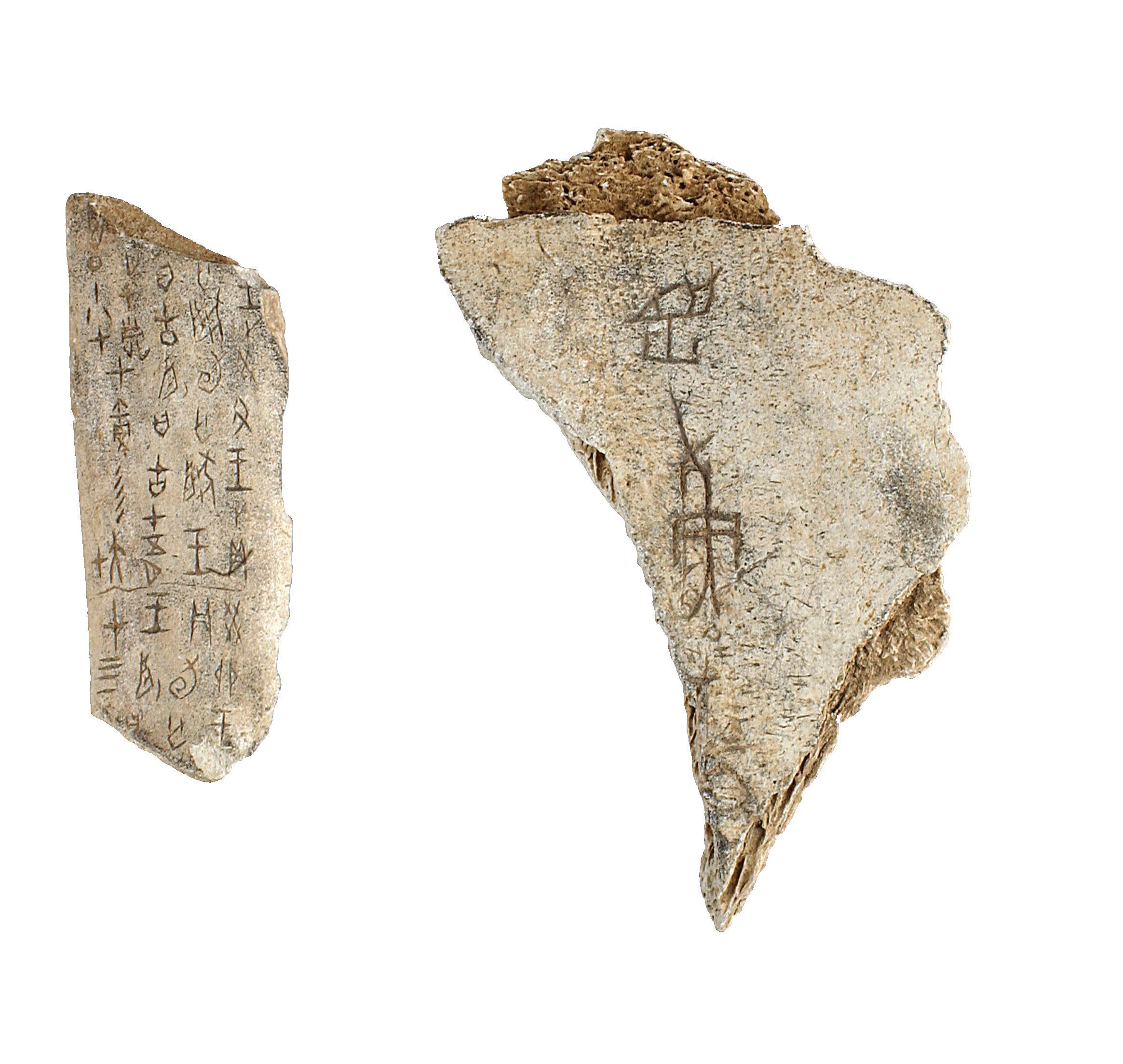
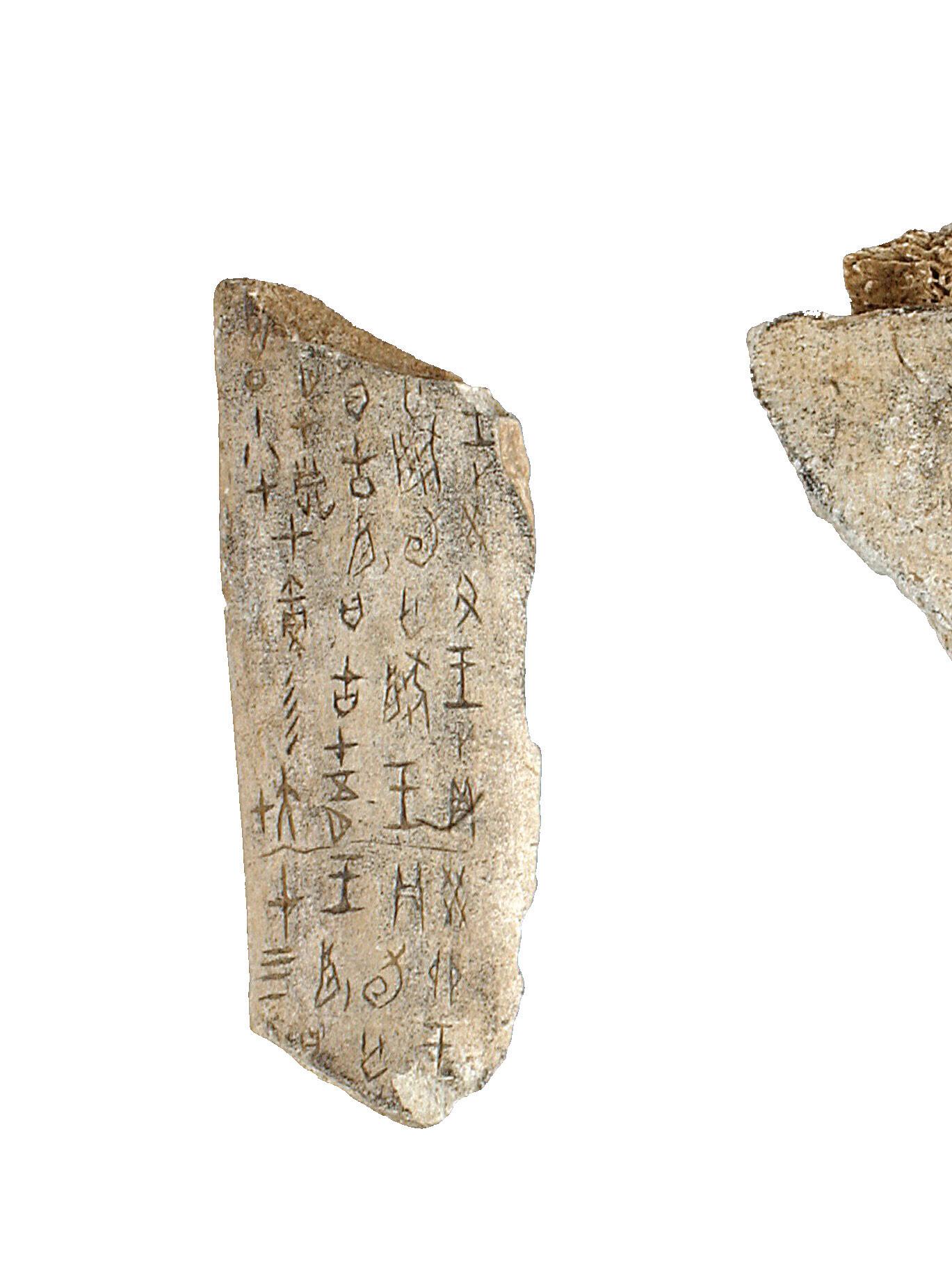
Oracle bones were made from ox shoulder bones or the underside of a turtle shell. They are inscribed with the first known form of Chinese writing, dating to 1250 bce. The characters are pictograms, so each symbol is a pictorial representation of a word.
Fragments of oracle bones that have been cracked
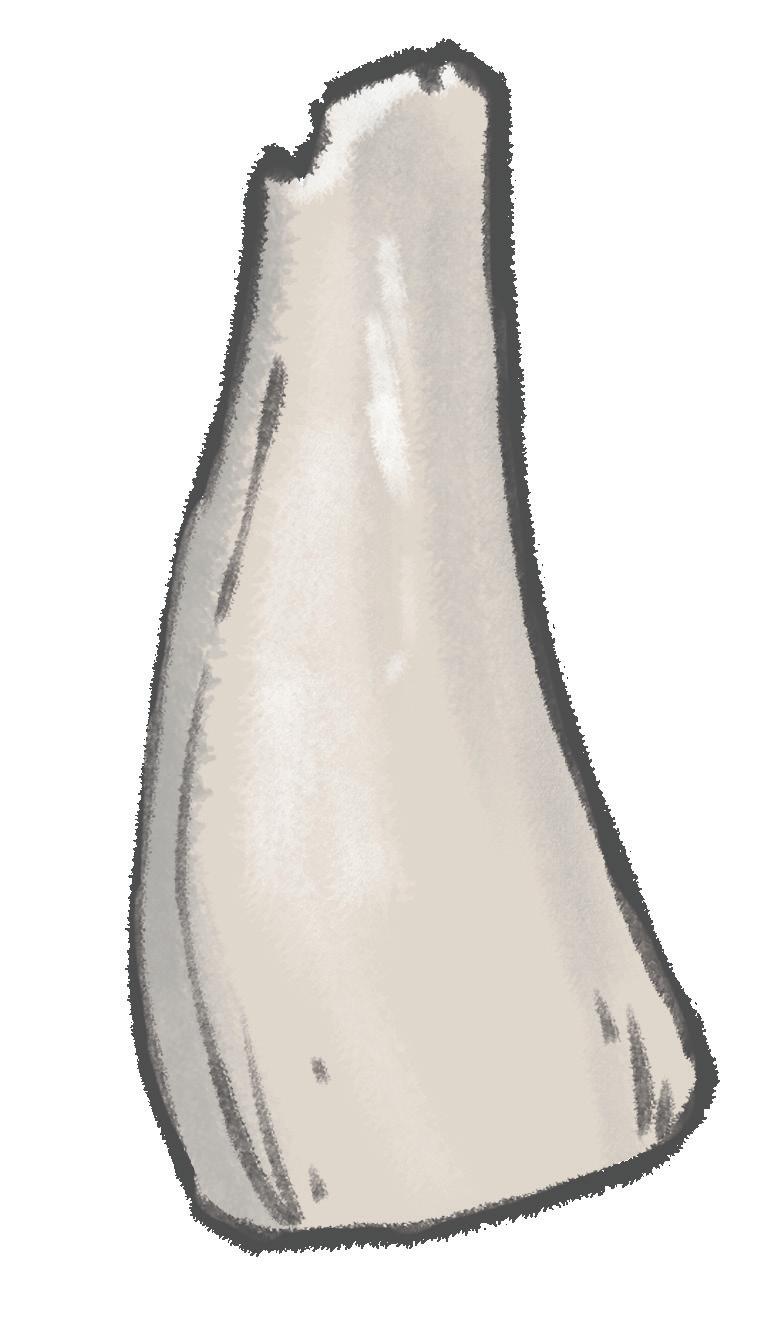
Wu D i n g
ORACLE INQUIRY
Can you work out what the question is on these bones? Look at the meanings of the characters, then match each bone with the question that it’s asking.
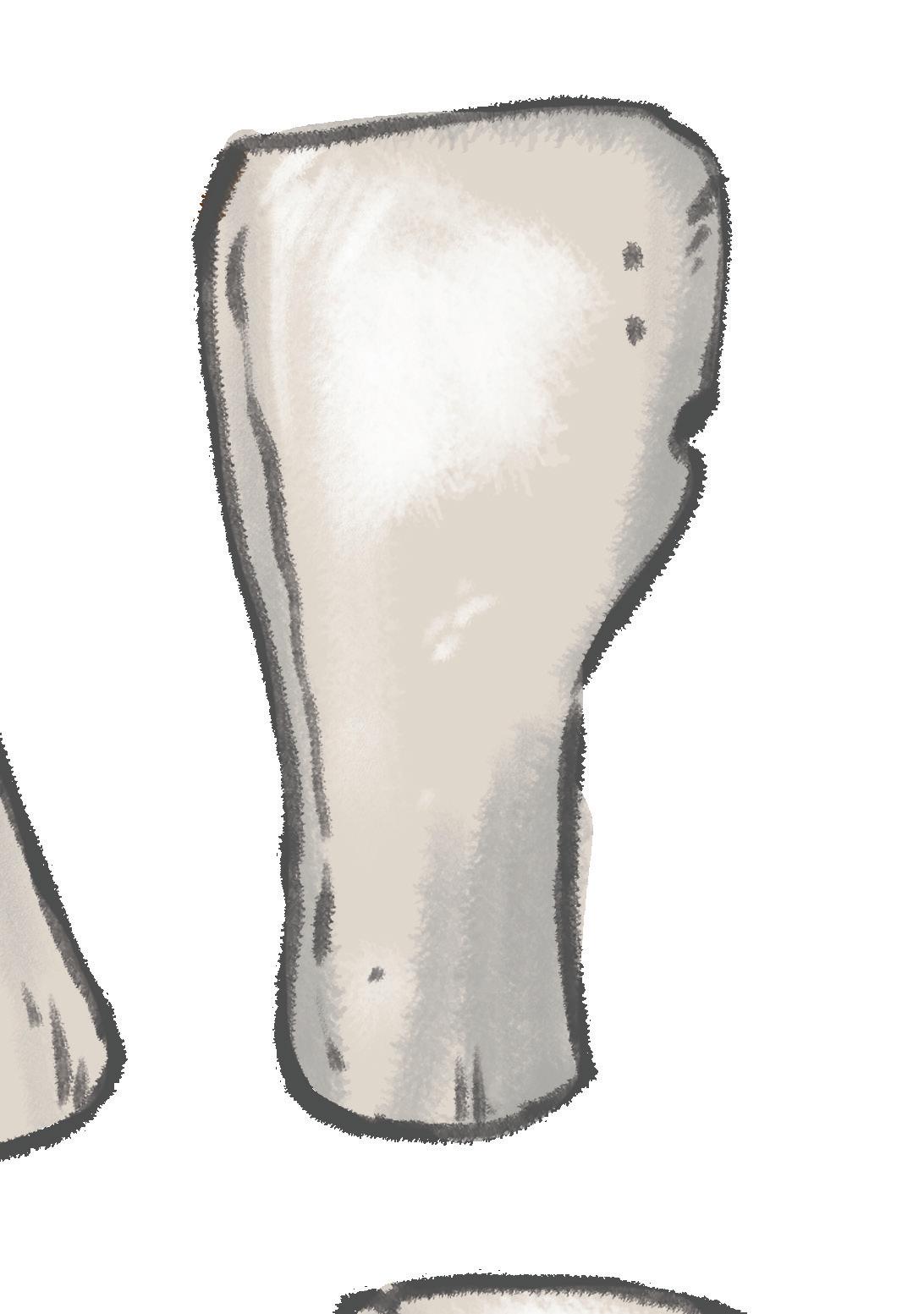
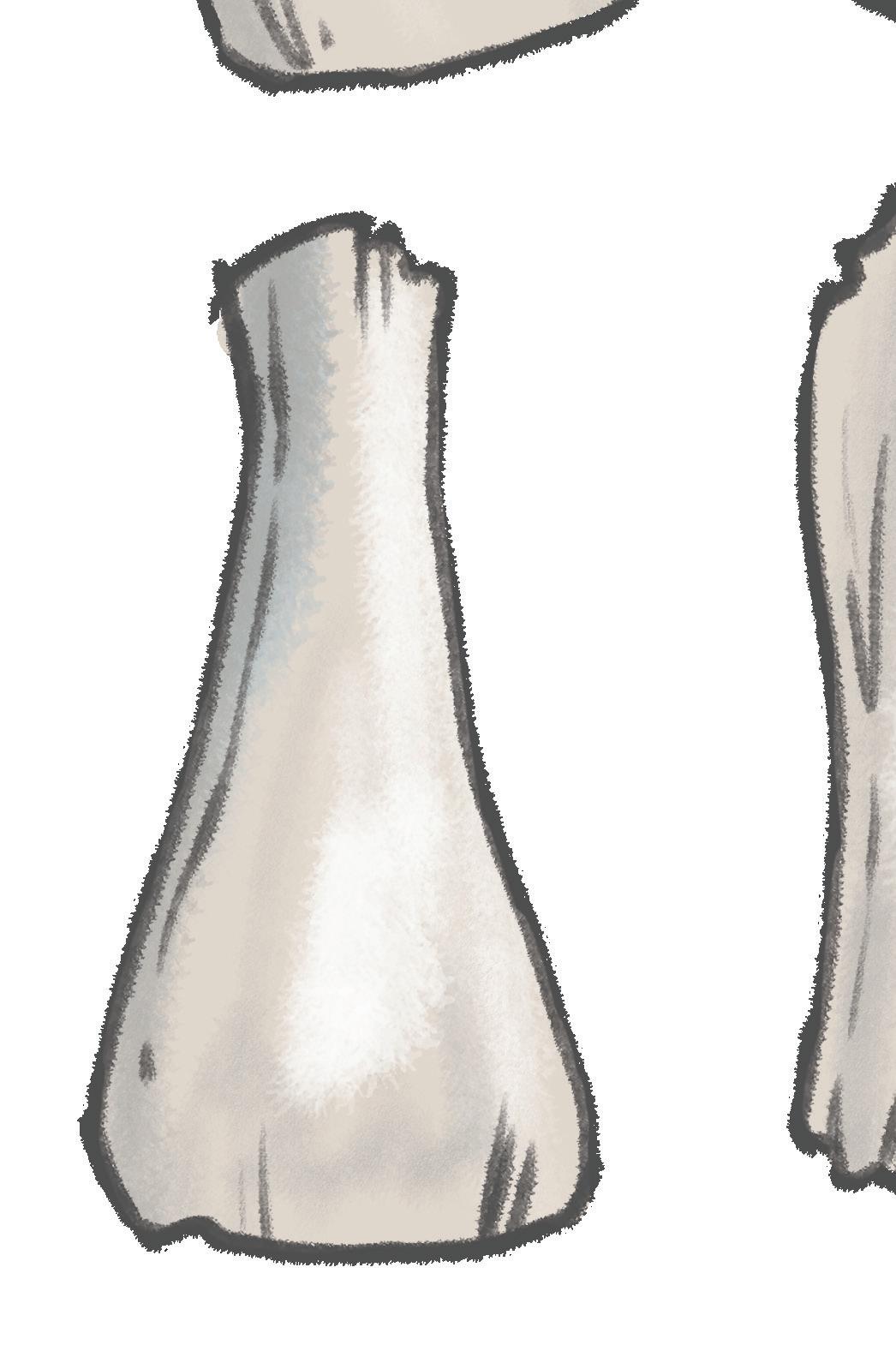
Will the King father five children?
Will rain come to the fields in the south?
Is cow meat a good sacrifice for the ancestors?
Should I bring 1,000 men with me to the mountain?
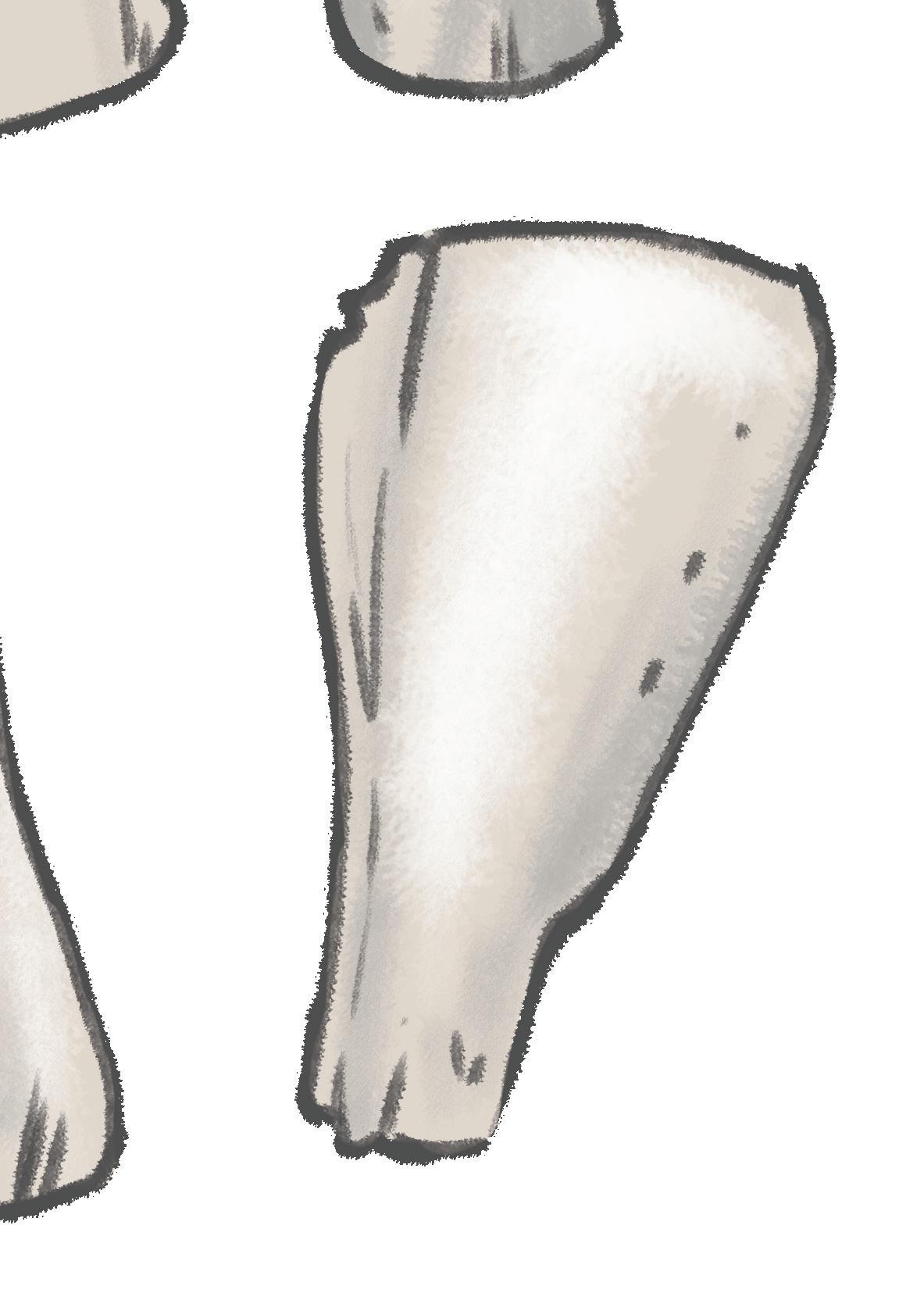
How
divine!
You might not have all the answers, but at least you know the questions! No bones about it: you still have a few more challenges in your future…
TRADE SECRETS
Suddenly Ashmole and Beetle feel a spray of sea air and are amazed to find themselves aboard a towering ship. The year is 1600, and the galleon they’re on is headed for the port of Nagasaki where the Portuguese and the Japanese have been trading since the 1540s. They need to find a certain sailor to help navigate them back to the Museum. Can you track him down in the crowd?
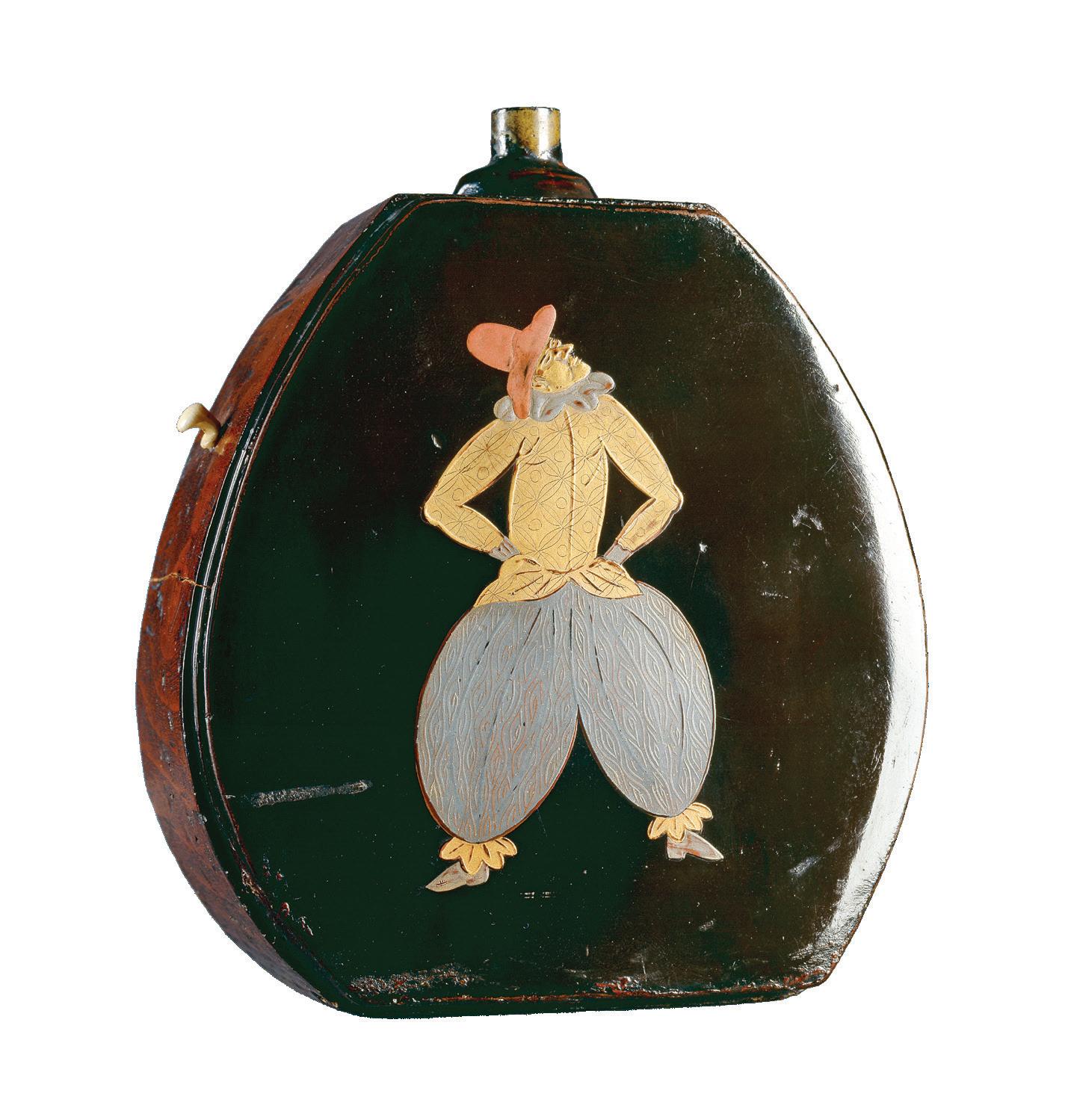
Japan’s first contact with Europeans in the 16th century sparked a trend for ‘Nanban’ art, which showed these new visitors in lively and sometimes exaggerated ways. This lacquered wood flask shows a man in Portuguese fashion, including baggy bombacha trousers. So stylish!

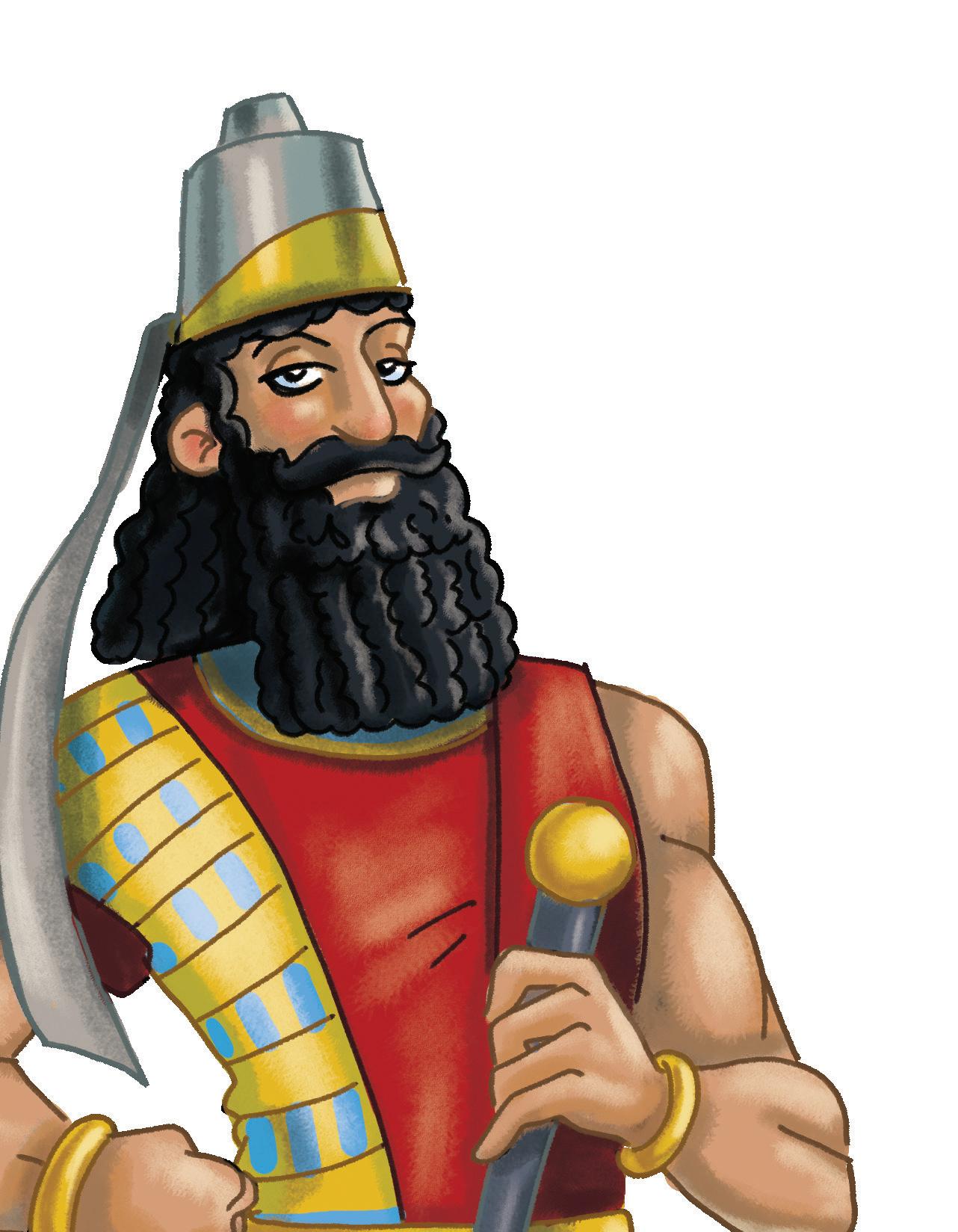
I’m a shogun, or military ruler of Japan – a very famous one, if I do say so myself! When Europeans such as these Portuguese traders arrived, they brought new ideas and religions with them. I was concerned about how they might affect Japan, so when I came to power in 1603, I began limiting contact with other countries. Later shoguns followed my lead, and Japan remained mostly closed to the outside world for around 250 years.
Tokugawa Ieyasu
Nanban gunpowder flask
ALL HANDS ON DECK!
Ashmole and Beetle are desperate to find the figure on the flask in this Nanban-style scene. Can you help them spot his billowing blue trousers amongst all the Portuguese and Japanese traders?
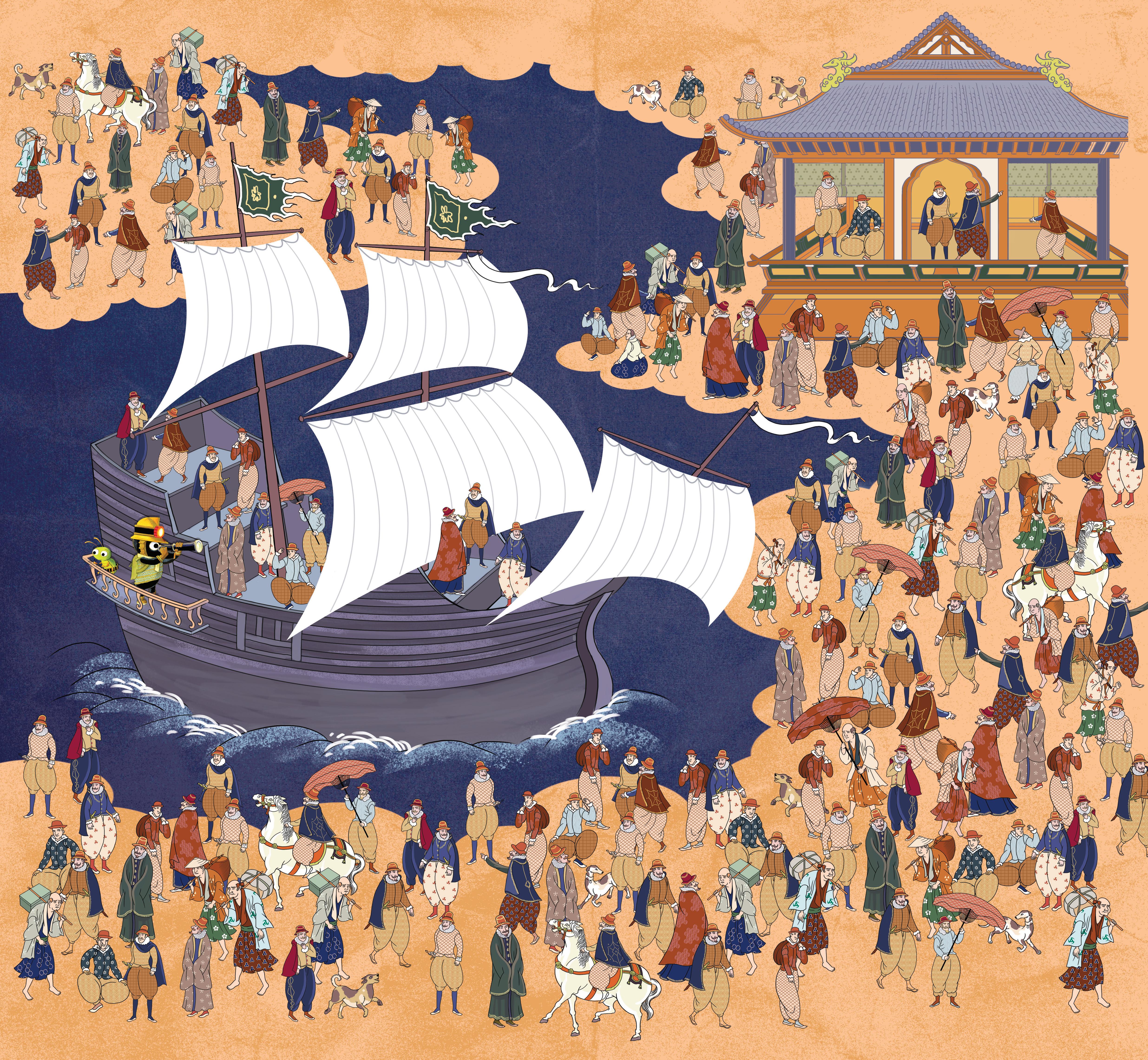
You’re a standout.
You found him! He was kind of hard to miss, right? Now anchors aweigh and off to the next port of call…
GOLD STANDARD
Is this a farm field? Yes! But that grassy mound in the middle of it is a Bronze-Age burial site. Ashmole and Beetle are in the heart of County Donegal, Ireland, where more than 4,000 years ago, farming communities began doing the first known metalwork on the island. Read the instructions on the opposite page to help them solve an archaeological puzzle.
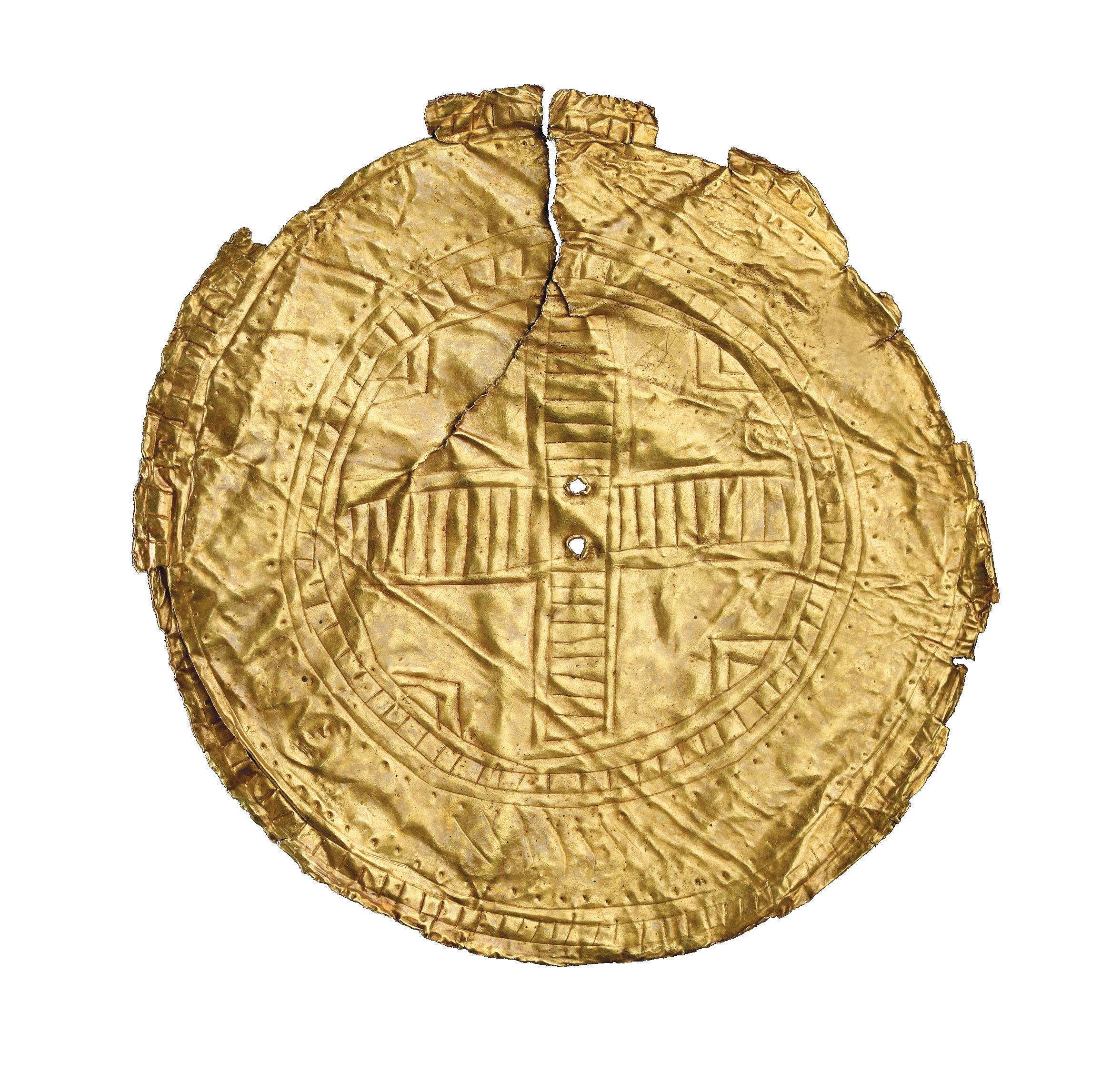
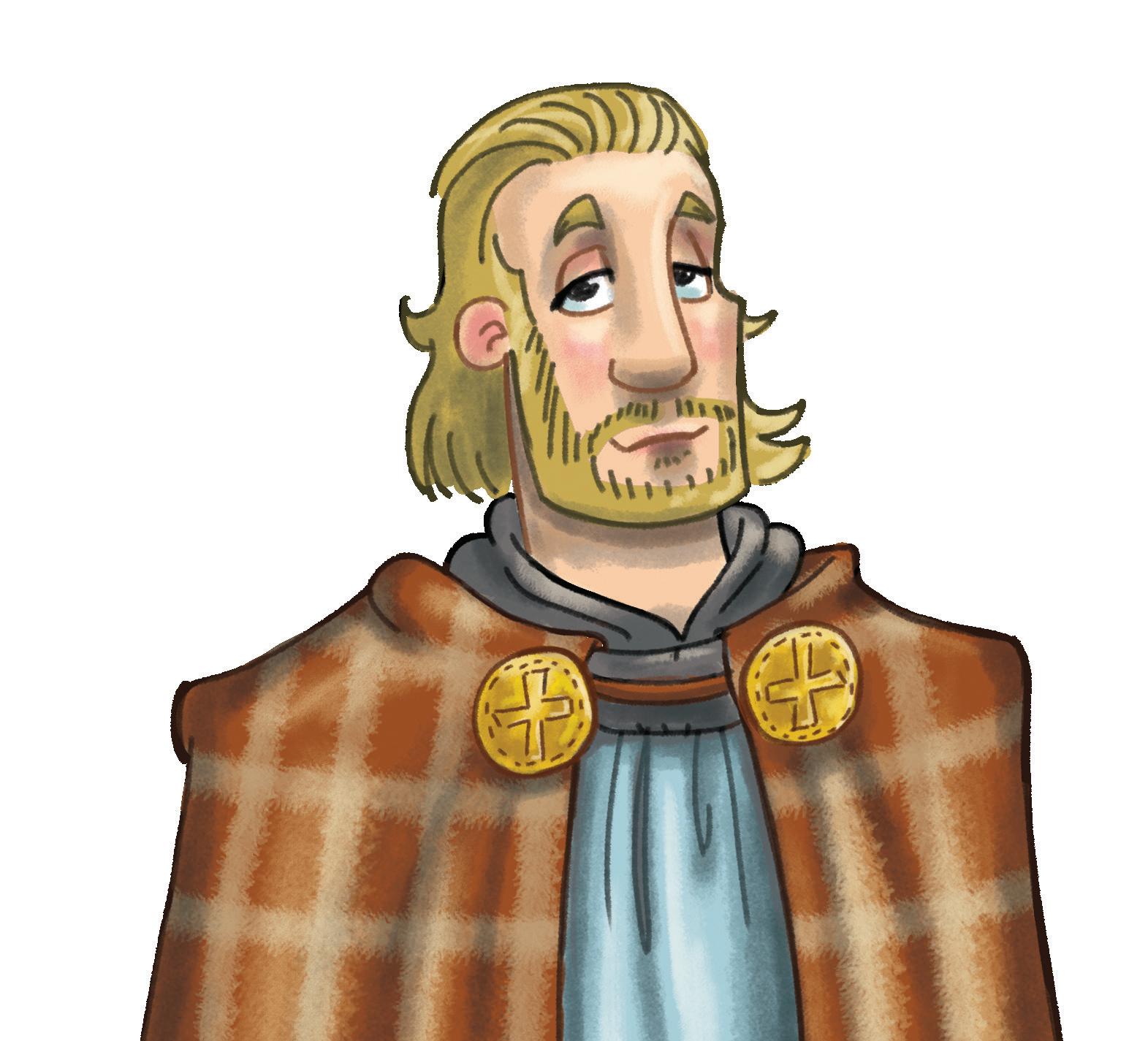
There’s an old Irish song about a 'man of a gigantick stature' – me! – who was buried with a heap of gold. The myth led people to search for my grave, and one such dig in Ballyshannon in 1669 led to the discovery of this priceless disc!
Ballyshannon sun disc
This thin, shiny sheet of hammered gold is called a ‘sun disc’. It was made around 2500 bce, making it one of the earliest gold objects found in Britain and Ireland. Sun discs have been discovered in burial sites as special objects that were placed with the dead. In life, people may have worn them as decorations - fancy!
Giant of legend
ONE OF A KIND
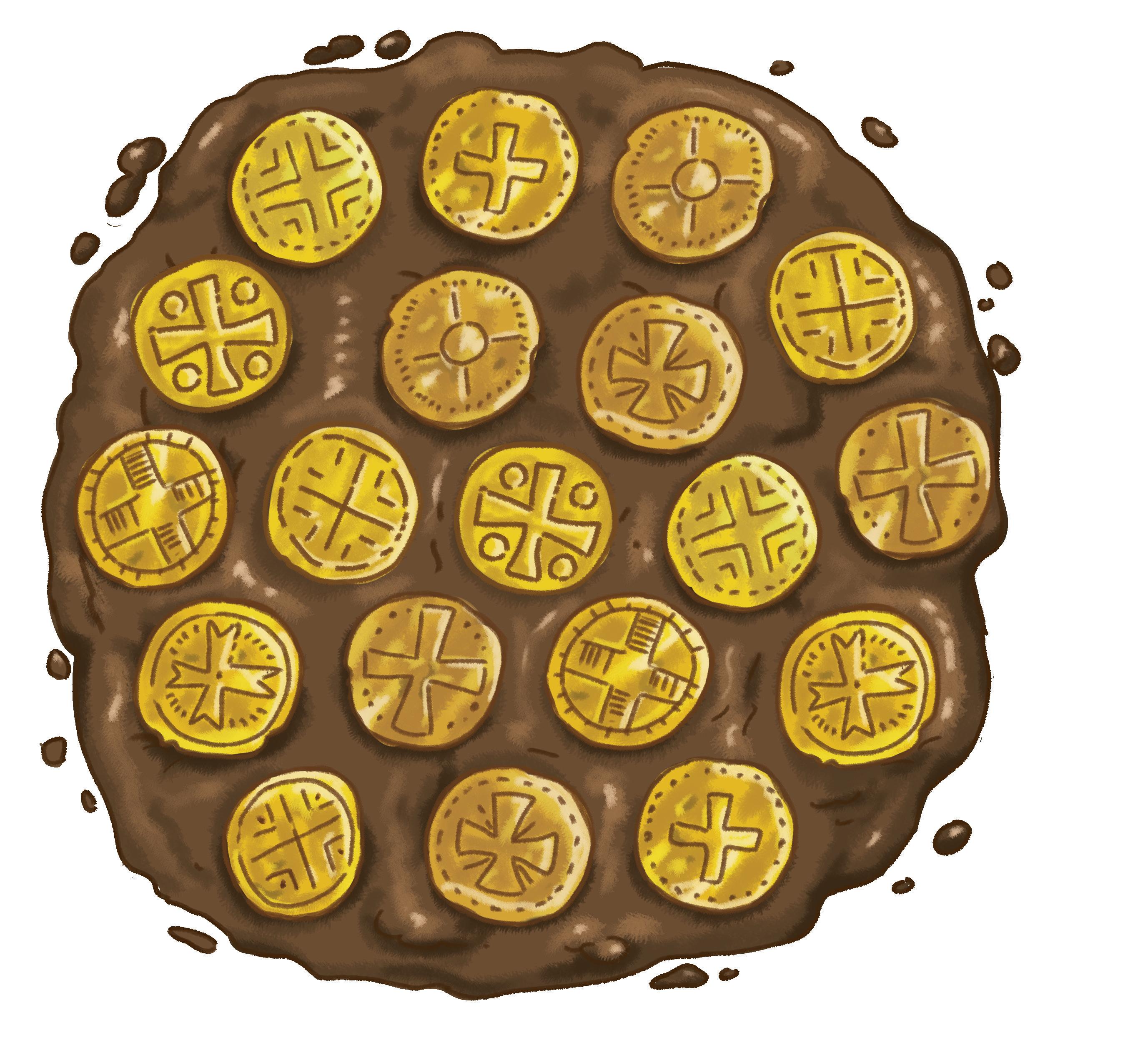
Ashmole and Beetle are surveying this rich Bronze-Age burial site. The Ballyshannon sun disc was originally one of a pair, and many sun discs have been found that way. Look closely at the sun discs below, and circle all the matching pairs to find the odd one out.
You’ve struck gold! And there's just one more stop in your museum adventure.
We hope you have enjoyed this book.

For more information on activities for children at the Ashmolean, please visit: https://www.ashmolean.org/families