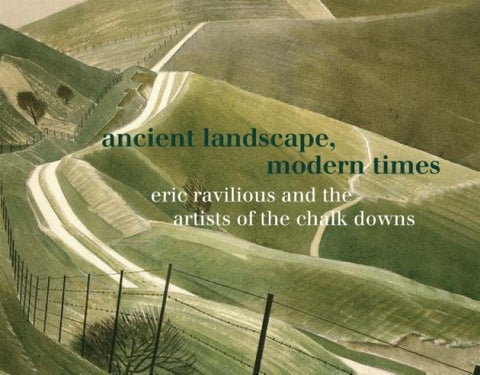
ancient landscape, modern times
ancient landscape, modern times
ancient landscapes, modern times
2
foreword
3
ancient landscapes, modern times
2
foreword
3
ancient landscapes, modern times
4
foreword
5
ancient landscapes, modern times
4
foreword
5
ancient landscapes, modern times
6
foreword
7
ancient landscapes, modern times
6
foreword
7
ancient landscapes, modern times
8
foreword
9
ancient landscapes, modern times
8
foreword
9
ancient landscapes, modern times
foreword
ancient landscape, modern times eric ravilious and the artists of the chalk downs
10
PALLAS ATHENE
11
ancient landscapes, modern times
foreword
ancient landscape, modern times eric ravilious and the artists of the chalk downs
10
PALLAS ATHENE
11
CONTENTS Ancient Landscape, Modern Times James Russell 15 I. From Rottingdean to Sutton Veny 69 II. Wittenham 77 III. Whiteleaf 83 IV. Wood engraving 91 V. Furlongs and beyond 99 VI. Paul Nash megaliths 111 VII. Chalk figures 117 VIII. War 125 IX. Return to Wittenham 133 Afterword Chris Stephens 139 Artists’ biographies 164 List of illustrations 168 Notes 172 John Nash, Dorset Landscape, 1915
Index of works 174
CONTENTS Ancient Landscape, Modern Times James Russell 15 I. From Rottingdean to Sutton Veny 69 II. Wittenham 77 III. Whiteleaf 83 IV. Wood engraving 91 V. Furlongs and beyond 99 VI. Paul Nash megaliths 111 VII. Chalk figures 117 VIII. War 125 IX. Return to Wittenham 133 Afterword Chris Stephens 139 Artists’ biographies 164 List of illustrations 168 Notes 172 John Nash, Dorset Landscape, 1915
Index of works 174
ancient landscape, modern times
Ancient Landscape, Modern Times
In December 1939, shortly before his appointment as
James Russell
lage of Uffington, just north of the Berkshire Downs.
an official war artist, Eric Ravilious travelled to the vilWalking up to the Iron Age hill fort on the ridge with his drawing board in a canvas satchel, he found a vantage spot looking across the steep valley known as The Manger, and over to the White Horse. Completed back home in Essex, the resulting watercolour gives a vivid sense of place and atmosphere. Rain falls from a pale grey sky over chalky grassland that is rough and tufty in the foreground but becomes, at a distance, smooth and sinuous, almost muscular. Cut into the hilltop, the horse itself is immediately recognisable, but this is a view visible from no terrestrial vantage point. Ravilious must have studied an aerial photograph, probably one reproduced on a postcard. He was an avid collector and sender of postcards.
Eric Ravilious, The Vale of the White Horse, 1939 (detail)
14
The closer we look, the more clearly we can appreciate that this is not a topographical watercolour of the 15
ancient landscape, modern times
Ancient Landscape, Modern Times
In December 1939, shortly before his appointment as
James Russell
lage of Uffington, just north of the Berkshire Downs.
an official war artist, Eric Ravilious travelled to the vilWalking up to the Iron Age hill fort on the ridge with his drawing board in a canvas satchel, he found a vantage spot looking across the steep valley known as The Manger, and over to the White Horse. Completed back home in Essex, the resulting watercolour gives a vivid sense of place and atmosphere. Rain falls from a pale grey sky over chalky grassland that is rough and tufty in the foreground but becomes, at a distance, smooth and sinuous, almost muscular. Cut into the hilltop, the horse itself is immediately recognisable, but this is a view visible from no terrestrial vantage point. Ravilious must have studied an aerial photograph, probably one reproduced on a postcard. He was an avid collector and sender of postcards.
Eric Ravilious, The Vale of the White Horse, 1939 (detail)
14
The closer we look, the more clearly we can appreciate that this is not a topographical watercolour of the 15
ancient landscape, modern times
ancient landscape, modern times
18th-century school but a modern painting that takes an ancient motif and turns it into something thrillingly new. But why, we might ask, was Ravilious painting watercolours on the ramparts of an Iron Age hill fort as Britain braced itself for violent confrontation with Nazi Germany? The short answer is that he had been asked to paint watercolours of chalk hill figures and Iron Age monuments in preparation for a new children’s book on the subject. But when you ask why the book had been proposed at all, and to Ravilious in particular, a much more interesting story begins to emerge. It features a group of artists, connected in a variety of ways, who explored the chalk hills on a quest to remake the tradition of landscape painting for the modern age. They did so against a backdrop of rapid modernisation in life and in art, and in the context of fevered national enthusiasm for the mysteries of the deep past. In April 1911 the 21-year-old Paul Nash wrote to his friend and mentor Gordon Bottomley that he had just 16
Leslie Moffat Ward, The Long Man of the Downs, 1943 (detail)
17
ancient landscape, modern times
ancient landscape, modern times
18th-century school but a modern painting that takes an ancient motif and turns it into something thrillingly new. But why, we might ask, was Ravilious painting watercolours on the ramparts of an Iron Age hill fort as Britain braced itself for violent confrontation with Nazi Germany? The short answer is that he had been asked to paint watercolours of chalk hill figures and Iron Age monuments in preparation for a new children’s book on the subject. But when you ask why the book had been proposed at all, and to Ravilious in particular, a much more interesting story begins to emerge. It features a group of artists, connected in a variety of ways, who explored the chalk hills on a quest to remake the tradition of landscape painting for the modern age. They did so against a backdrop of rapid modernisation in life and in art, and in the context of fevered national enthusiasm for the mysteries of the deep past. In April 1911 the 21-year-old Paul Nash wrote to his friend and mentor Gordon Bottomley that he had just 16
Leslie Moffat Ward, The Long Man of the Downs, 1943 (detail)
17
ancient landscape, modern times
ancient landscape, modern times
returned from Rottingdean (just east of Brighton), ‘where I have been spending a most happy week at the Nicholsons’.1 He went on to explain that the well-known portrait painter William Nicholson’s son Ben was at the Slade, where Nash was also studying. They had been enjoying the Easter holidays together, painting, drawing and tobogganing on the snowy downs. In those days you could walk down the garden path from the Nicholsons’ house and straight onto the chalk, as William Nicholson himself often did. In fact Nicholson senior was in the midst of a prolonged study of the downs, in the course of which he made numerous oil sketches, small works that focus on the simple contours of the landscape and the light flooding over it, reflected from the surface of the unseen sea beyond. He had first visited Rottingdean in 1899, to draw Rudyard Kipling for a lithographed portrait. Kipling, who had himself been introduced to the village by Edward Burne-Jones, lived in Sussex for the rest of 18
William Nicholson, On the Downs, Rottingdean, 1910
19
ancient landscape, modern times
ancient landscape, modern times
returned from Rottingdean (just east of Brighton), ‘where I have been spending a most happy week at the Nicholsons’.1 He went on to explain that the well-known portrait painter William Nicholson’s son Ben was at the Slade, where Nash was also studying. They had been enjoying the Easter holidays together, painting, drawing and tobogganing on the snowy downs. In those days you could walk down the garden path from the Nicholsons’ house and straight onto the chalk, as William Nicholson himself often did. In fact Nicholson senior was in the midst of a prolonged study of the downs, in the course of which he made numerous oil sketches, small works that focus on the simple contours of the landscape and the light flooding over it, reflected from the surface of the unseen sea beyond. He had first visited Rottingdean in 1899, to draw Rudyard Kipling for a lithographed portrait. Kipling, who had himself been introduced to the village by Edward Burne-Jones, lived in Sussex for the rest of 18
William Nicholson, On the Downs, Rottingdean, 1910
19
ancient landscape, modern times
ancient landscape, modern times
his life. In verse he rejoiced that he had found his way to this ‘fair ground’, rhapsodising about ‘our blunt, bow-headed, whale-backed Downs’, ‘Bare slopes where chasing shadows skim.’2 In 1907 Nicholson began sketching these ‘bare slopes’. As an exhibition catalogue of the time noted, it was unusual for artists to paint the downs because of their severity and lack of picturesque features,3 but this simplicity clearly attracted Nicholson and he continued in this vein until the First World War. Given that Nash almost certainly saw these sketches in the house when he visited in 1911, it is quite possible that it was Nicholson who opened his eyes to downland as a possible subject, albeit one he would approach in a different way. Paul’s drawings and watercolours were at this point focused on William Nicholson, The Downs, Rottingdean, 1909
20
the garden of his family home in Iver Heath, Buckinghamshire, and the landscape immediately surrounding it, but a year after his visit to Rottingdean he discovered an important new place. 21
ancient landscape, modern times
ancient landscape, modern times
his life. In verse he rejoiced that he had found his way to this ‘fair ground’, rhapsodising about ‘our blunt, bow-headed, whale-backed Downs’, ‘Bare slopes where chasing shadows skim.’2 In 1907 Nicholson began sketching these ‘bare slopes’. As an exhibition catalogue of the time noted, it was unusual for artists to paint the downs because of their severity and lack of picturesque features,3 but this simplicity clearly attracted Nicholson and he continued in this vein until the First World War. Given that Nash almost certainly saw these sketches in the house when he visited in 1911, it is quite possible that it was Nicholson who opened his eyes to downland as a possible subject, albeit one he would approach in a different way. Paul’s drawings and watercolours were at this point focused on William Nicholson, The Downs, Rottingdean, 1909
20
the garden of his family home in Iver Heath, Buckinghamshire, and the landscape immediately surrounding it, but a year after his visit to Rottingdean he discovered an important new place. 21
ancient landscape, modern times
ancient landscape, modern times
The Wells family, cousins on his father’s side, were a boisterous, outdoorsy crew who liked hunting and shooting. They lived in Wallingford, an easy walk from the twin dome-shaped hills known as the Wittenham Clumps. According to Nash’s later testimony it was while gazing from a nearby vantage point at these rounded outcrops of the Chilterns that he realised what kind of artist he should be: a student of place, or rather the spirit of place. Surrounded by wild woods and bearing evidence of Iron Age habitation, the ancient, mysterious Clumps were, as he put it, ‘the Pyramids of my small world’.4 The comparison is telling, because Nash’s generation was in thrall to the astonishing archaeological discoveries being made in Egypt, such as the opening of Queen Nefertiti’s tomb in 1905. Fascination for ancient Egypt helped fuel the burgeoning interest in British archaeology, which was centred primarily on downland sites. The idea that the past lingered in the chalk hills 22
Paul Nash, The Wood on the Hill (Wittenham Clumps), 1912 (detail)
23
ancient landscape, modern times
ancient landscape, modern times
The Wells family, cousins on his father’s side, were a boisterous, outdoorsy crew who liked hunting and shooting. They lived in Wallingford, an easy walk from the twin dome-shaped hills known as the Wittenham Clumps. According to Nash’s later testimony it was while gazing from a nearby vantage point at these rounded outcrops of the Chilterns that he realised what kind of artist he should be: a student of place, or rather the spirit of place. Surrounded by wild woods and bearing evidence of Iron Age habitation, the ancient, mysterious Clumps were, as he put it, ‘the Pyramids of my small world’.4 The comparison is telling, because Nash’s generation was in thrall to the astonishing archaeological discoveries being made in Egypt, such as the opening of Queen Nefertiti’s tomb in 1905. Fascination for ancient Egypt helped fuel the burgeoning interest in British archaeology, which was centred primarily on downland sites. The idea that the past lingered in the chalk hills 22
Paul Nash, The Wood on the Hill (Wittenham Clumps), 1912 (detail)
23
ancient landscape, modern times
as it did nowhere else was well established. As Kipling put it in 1907, ‘The wise turf cloaks the white cliff edge, / As when the Romans came.’5 Twenty years earlier the itinerant naturalist Richard Jefferies had expressed a similar sentiment. Sitting with his back against an Iron Age burial mound on a summer’s day, he felt suddenly a connection to the spirit of the man whose body was interred in the tumulus; I could understand and feel his existence the same as my own. He was as real to me two thousand years after interment as those I had seen in the body.6 Jefferies inspired similar musings in Edward Thomas, while Paul Nash was one of many young urbanites to lose themselves in the world described by the mystic Arthur Machen in The Hill of Dreams (1907). In this semiPaul Nash, Pyramids in the Sea, 1912 (detail)
autobiographical novel a boy exploring the earthworks of a Roman fort experiences strange fantasies and at one 25
ancient landscape, modern times
as it did nowhere else was well established. As Kipling put it in 1907, ‘The wise turf cloaks the white cliff edge, / As when the Romans came.’5 Twenty years earlier the itinerant naturalist Richard Jefferies had expressed a similar sentiment. Sitting with his back against an Iron Age burial mound on a summer’s day, he felt suddenly a connection to the spirit of the man whose body was interred in the tumulus; I could understand and feel his existence the same as my own. He was as real to me two thousand years after interment as those I had seen in the body.6 Jefferies inspired similar musings in Edward Thomas, while Paul Nash was one of many young urbanites to lose themselves in the world described by the mystic Arthur Machen in The Hill of Dreams (1907). In this semiPaul Nash, Pyramids in the Sea, 1912 (detail)
autobiographical novel a boy exploring the earthworks of a Roman fort experiences strange fantasies and at one 25
ancient landscape, modern times
ancient landscape, modern times
point travels back in time to see the place as a living settlement. The Wittenham Clumps were as much Nash’s ‘hills of dreams’ as they were his pyramids, but his brother John had no such fanciful ideas about the landscape around Wallingford. Having left school and taken a job as a cub reporter on a local newspaper, John Nash began making art alongside his older brother, doing so with an innocent eye and a feel for landscape that brought him immediate success. Separated during the First World War, while both served with the Artists Rifles, the brothers were reunited in the spring of 1918 when they were commissioned as official war artists. They painted their memorials to the horrors of trench warfare in a former herb-drying shed in Chalfont St Peter, a village in the Chilterns not far from Iver Heath. There John also painted his glorious hymn to salvation, The Cornfield (1918), John Nash, The Cornfield, 1918 (detail)
26
a work that began for both brothers a two-year period of immersion in downland pastoral. 27
ancient landscape, modern times
ancient landscape, modern times
point travels back in time to see the place as a living settlement. The Wittenham Clumps were as much Nash’s ‘hills of dreams’ as they were his pyramids, but his brother John had no such fanciful ideas about the landscape around Wallingford. Having left school and taken a job as a cub reporter on a local newspaper, John Nash began making art alongside his older brother, doing so with an innocent eye and a feel for landscape that brought him immediate success. Separated during the First World War, while both served with the Artists Rifles, the brothers were reunited in the spring of 1918 when they were commissioned as official war artists. They painted their memorials to the horrors of trench warfare in a former herb-drying shed in Chalfont St Peter, a village in the Chilterns not far from Iver Heath. There John also painted his glorious hymn to salvation, The Cornfield (1918), John Nash, The Cornfield, 1918 (detail)
26
a work that began for both brothers a two-year period of immersion in downland pastoral. 27
ancient landscape, modern times
running head
IX. Return to Wittenham
In the summer of 1943 Nash’s old friend the television producer Lance Sieveking asked Paul and Margaret to show him the sights of Dorset, a county for which he had responsibility as the BBC’s Regional Programme Director. During the war, opportunities like this were scarce, and the Nashes embarked with delight on a trip that took them to Maiden Castle and other downland sites. Sieveking wrote later, That we were not arrested seems little short of miraculous. We had with us in that small motor-car everything (except weapons) that ought to have aroused the gravest suspicions. Three civilians who constantly stopped at points commanding extensive views of hills, valleys, bridges, cliffs, and all manner of pla-
Paul Nash, Landscape of the Bagley Woods, 1943 (detail)
132
ces which could be of military importance.6 Sieveking recalled Nash constantly using field glasses (binoculars) and remarking that this allowed him to see 133
ancient landscape, modern times
running head
IX. Return to Wittenham
In the summer of 1943 Nash’s old friend the television producer Lance Sieveking asked Paul and Margaret to show him the sights of Dorset, a county for which he had responsibility as the BBC’s Regional Programme Director. During the war, opportunities like this were scarce, and the Nashes embarked with delight on a trip that took them to Maiden Castle and other downland sites. Sieveking wrote later, That we were not arrested seems little short of miraculous. We had with us in that small motor-car everything (except weapons) that ought to have aroused the gravest suspicions. Three civilians who constantly stopped at points commanding extensive views of hills, valleys, bridges, cliffs, and all manner of pla-
Paul Nash, Landscape of the Bagley Woods, 1943 (detail)
132
ces which could be of military importance.6 Sieveking recalled Nash constantly using field glasses (binoculars) and remarking that this allowed him to see 133
ancient landscape, modern times
Paul Nash, Landscape of the Bagley Woods, 1943
Paul Nash, Landscape of the Moon’s Last Phase, 1944
137
ancient landscape, modern times
Paul Nash, Landscape of the Bagley Woods, 1943
Paul Nash, Landscape of the Moon’s Last Phase, 1944
137
ancient landscape, modern times
List of illustrations
pp. 1, 107 & 150–1 Eric Ravilious, Wiltshire Landscape, 1937, watercolour and pencil on paper, 42 x 54 cm. Private collection pp. 2–3 & 142 Eric Ravilious, Train Landscape, 1940, watercolour and pencil on paper with collage, 44.1 x 54.8 cm. Aberdeen Art Gallery pp. 4–5 & 73 William Nicholson, Judd’s Farm, 1912, oil on panel, 33 x 41 cm. Towner Collection, Eastbourne pp. 6–7, 106 & cover Eric Ravilious, Chalk Paths, 1935, watercolour on paper, 47 x 56.5 cm. Private collection pp. 8–9 & 161 Paul Nash, Event on the Downs, 1934, oil on canvas, 51 x 61 cm. Government Art Collection pp. 10–11 & 56–7 Eric Ravilious, Beachy Head, 1939, watercolour and pencil on paper, 51 x 61 cm. Government Art Collection pp. 12–13 & 81 John Nash, Dorset Landscape, 1915, watercolour, chalk and graphite on paper, 41.3 x 38.7 cm. Tate pp. 14–15 & 119 Eric Ravilious, The Vale of the White Horse, 1939, graphite and watercolour on paper, 45.1 x 32.4 cm. Tate
168
pp. 16–17 & 120 Leslie Moffat Ward, The Long Man of the Downs, 1943, etching on paper, 56 x 40 cm. Russell-Cotes Gallery, Bournemouth pp. 18-19 William Nicholson, On the Downs, Rottingdean, 1910, oil on canvas, 41 x 51 cm. With Christie’s 23 November 2017 p. 20–1 William Nicholson, The Downs, Rottingdean, 1909, oil on canvas, 30 x 40 cm. With Christie’s 26 May 2011 pp. 22–3 & 76 Paul Nash, The Wood on the Hill (Wittenham Clumps), 1912, ink, chalk and watercolour on paper, 34 x 33.4 cm. Ashmolean Museum, Oxford pp. 24 & 78 Paul Nash, Pyramids in the Sea, 1912, ink and watercolour on paper, 33.6 x 29.8 cm. Tate pp. 26–7 & 82 John Nash, The Cornfield, 1918, oil on canvas, 68.6 x 76.2 cm. Tate p. 29 Eric Ravilious, Firle Beacon, 1927, watercolour, ink and pencil on paper, 40 x 49.5 cm. Museum Wales pp. 30–1 Eric Ravilious, Pond at Birling Manor Farm, East Dean, 1925, watercolour and pencil on paper, 29 x 38.5 cm. Towner Collection, Eastbourne pp. 32–3 & 109 Tirzah Garwood, Etna, 1944, oil on board, 33 x 52.7 cm. Private collection p. 34 Paul Nash, Wood on the Downs, 1929, oil on canvas, 71.1 x 91.4 cm.
running head Aberdeen Art Gallery pp. 36–7 & 98 Eric Ravilious, Interior at Furlongs, 1939, watercolour and pencil on paper, 35 x 43 cm. Private collection, on loan to the Towner Collection, Eastbourne pp. 38–9 & 74 William Nicholson, On the Downs (Wiltshire Landscape), 1924, oil on canvas, 53.5 x 59.5 cm. Leeds Art Gallery p. 40 Eric Ravilious, Windmill, 1934, watercolour and pencil on paper, 35 x 43 cm. Private collection pp. 43 & 103 Peggy Angus, Asham Cement Works, 1934, oil on canvas, 59 x 49 cm. Private collection p. 45 Denis Constanduros, Long Man of Wilmington, 1932, colour lithograph poster, 73 x 114.8 cm. The Shell Archive pp. 46–7 Paul Nash, Stones at Avebury, 1942, photograph. Tate p. 49 O. G. S. Crawford and Alexander Keiller, Avebury from Wessex from the Air, 1928 pp. 52–3 Paul Nash, Maiden Castle, Dorset, 1935–6, photograph, 37.5 x 44 cm (framed), Government Art Collection p. 55 Eric Ravilious, White Horse, dummy for a Puffin Picture Book, 1939–41, pencil on paper with some tipped-in photographs, 18.2 x 22.2 cm. Wiltshire Museum, Devizes
pp. 58–9 Dell and Wainwright, Henry Moore’s Recumbent Figure at Bentley Wood. House at Bentley Wood, Halland, East Sussex: the terrace with sculpture by Henry Moor, 1938, photograph. RIBA, London pp. 60–1 & 121 Eric Ravilious, The Wilmington Giant (The Long Man of Wilmington), 1939, watercolour on paper, 44.2 x 54.8 cm. Victoria and Albert Museum, London pp. 62–3 & 124 Eric Ravilious, Shelling by Night, 1941, watercolour and chalk on paper, 44.5 x 54.6 cm. Tate pp. 64–5 & 131 Paul Nash, Tail of a German Plane Under the Cliff, 1940, watercolour on paper, 39.7 x 58 cm. Ashmolean Museum, Oxford pp. 66–7 & 137 Paul Nash, Landscape of the Moon’s Last Phase, 1944, oil on canvas, 63.5 x 76.2 cm. Walker Art Gallery, Liverpool pp. 68–9 & 71 William Nicholson, The Windmill, Brighton Downs, 1910, oil on canvas, 33 x 40.5 cm. Nottingham Art Gallery pp. 72 & 148–9 William Nicholson, Cliffs at Rottingdean, 1910, oil on canvas, 33 x 41.5 cm. Southampton Art Gallery p. 75 William Nicholson, Snow in the Horseshoe, 1927, oil on canvas board, 32.4 x 40 cm. Hazlitt Holland-Hibbert
p. 80 John Nash, Haymaking, 1913, watercolour on paper, 39.4 x 48.1 cm. The Courtauld, London p. 85 John Nash, Summer in Whiteleaf Woods, 1919, watercolour on paper, 27.3 x 37.5 cm. Bucks Museum, Aylesbury p. 86 Paul Nash, The Paths, 1919, watercolour on paper, 37 x 28 cm. Private collection p. 87 John Nash, Whiteleaf, c. 1928, watercolour on paper, 38.1 x 50.8 cm. Victoria and Albert Museum, London pp. 88 & 154–5 Paul Nash, Whiteleaf Cross, 1931, watercolour on paper, 36.8 x 54.6 cm. Bucks Museum, Aylesbury p. 89 John Nash, The Road up to Whiteleaf, 1937, oil on canvas, 51 x 76 cm. Manchester Art Gallery p. 90 Eric Ravilious, Sussex Church, 1924, wood engraving, 25 x 18.5 cm (sheet size). Private collection, on loan to the Towner Collection, Eastbourne p. 92 Eric Ravilious, Sussex Landscape, 1931, wood engraving, 13.2 x 16.3 cm. Private collection p. 94 Eric Ravilious, Children in a Park, 1926, wood engraving, 16.7 x 12 cm. Private collection pp. 95 & 153 Tirzah Garwood, The Train Journey, 1929–30, wood en-
graving on paper, 19 x 14 cm. Private collection pp. 96–7 Eric Ravilious, Aquarius, Taurus and Sagittarius from Almanack 1929, 1928, wood engravings, each 10.1 x 6.5 cm. Private collection p. 100 Eric Ravilious, Cement Works, 1934, watercolour, pencil and chalk on paper, 46.3 x 58 cm. Manchester Art Gallery p. 102 Eric Ravilious, The Cement Pit, 1934, pencil, watercolour, pencil and heightening and scratching out on paper, 46 x 56.5 cm. Jenna Burlingham Gallery, Hampshire p. 104 Eric Ravilious, Caravans, 1936, watercolour and pencil on paper, 45 x 56 cm. Fry Art Gallery, Saffron Walden pp. 105 & 140–1 Eric Ravilious, Mount Caburn, 1935, watercolour, pen and pencil on paper, 47 x 58.2 cm. Private collection p. 108 Eric Ravilious, The Causeway, Wiltshire Downs, 1937, watercolour on paper, 44.2 x 54.8 cm. Victoria and Albert Museum, London p. 110 Paul Nash, Avebury Sentinel, 1933, photograph, 53.2 x 38.2 cm (framed). Government Art Collection pp. 112–13 Paul Nash, Avebury, Wiltshire, 1942, photograph. Tate pp. 114 & 156–7 Paul Nash, Landscape
169
ancient landscape, modern times
List of illustrations
pp. 1, 107 & 150–1 Eric Ravilious, Wiltshire Landscape, 1937, watercolour and pencil on paper, 42 x 54 cm. Private collection pp. 2–3 & 142 Eric Ravilious, Train Landscape, 1940, watercolour and pencil on paper with collage, 44.1 x 54.8 cm. Aberdeen Art Gallery pp. 4–5 & 73 William Nicholson, Judd’s Farm, 1912, oil on panel, 33 x 41 cm. Towner Collection, Eastbourne pp. 6–7, 106 & cover Eric Ravilious, Chalk Paths, 1935, watercolour on paper, 47 x 56.5 cm. Private collection pp. 8–9 & 161 Paul Nash, Event on the Downs, 1934, oil on canvas, 51 x 61 cm. Government Art Collection pp. 10–11 & 56–7 Eric Ravilious, Beachy Head, 1939, watercolour and pencil on paper, 51 x 61 cm. Government Art Collection pp. 12–13 & 81 John Nash, Dorset Landscape, 1915, watercolour, chalk and graphite on paper, 41.3 x 38.7 cm. Tate pp. 14–15 & 119 Eric Ravilious, The Vale of the White Horse, 1939, graphite and watercolour on paper, 45.1 x 32.4 cm. Tate
168
pp. 16–17 & 120 Leslie Moffat Ward, The Long Man of the Downs, 1943, etching on paper, 56 x 40 cm. Russell-Cotes Gallery, Bournemouth pp. 18-19 William Nicholson, On the Downs, Rottingdean, 1910, oil on canvas, 41 x 51 cm. With Christie’s 23 November 2017 p. 20–1 William Nicholson, The Downs, Rottingdean, 1909, oil on canvas, 30 x 40 cm. With Christie’s 26 May 2011 pp. 22–3 & 76 Paul Nash, The Wood on the Hill (Wittenham Clumps), 1912, ink, chalk and watercolour on paper, 34 x 33.4 cm. Ashmolean Museum, Oxford pp. 24 & 78 Paul Nash, Pyramids in the Sea, 1912, ink and watercolour on paper, 33.6 x 29.8 cm. Tate pp. 26–7 & 82 John Nash, The Cornfield, 1918, oil on canvas, 68.6 x 76.2 cm. Tate p. 29 Eric Ravilious, Firle Beacon, 1927, watercolour, ink and pencil on paper, 40 x 49.5 cm. Museum Wales pp. 30–1 Eric Ravilious, Pond at Birling Manor Farm, East Dean, 1925, watercolour and pencil on paper, 29 x 38.5 cm. Towner Collection, Eastbourne pp. 32–3 & 109 Tirzah Garwood, Etna, 1944, oil on board, 33 x 52.7 cm. Private collection p. 34 Paul Nash, Wood on the Downs, 1929, oil on canvas, 71.1 x 91.4 cm.
running head Aberdeen Art Gallery pp. 36–7 & 98 Eric Ravilious, Interior at Furlongs, 1939, watercolour and pencil on paper, 35 x 43 cm. Private collection, on loan to the Towner Collection, Eastbourne pp. 38–9 & 74 William Nicholson, On the Downs (Wiltshire Landscape), 1924, oil on canvas, 53.5 x 59.5 cm. Leeds Art Gallery p. 40 Eric Ravilious, Windmill, 1934, watercolour and pencil on paper, 35 x 43 cm. Private collection pp. 43 & 103 Peggy Angus, Asham Cement Works, 1934, oil on canvas, 59 x 49 cm. Private collection p. 45 Denis Constanduros, Long Man of Wilmington, 1932, colour lithograph poster, 73 x 114.8 cm. The Shell Archive pp. 46–7 Paul Nash, Stones at Avebury, 1942, photograph. Tate p. 49 O. G. S. Crawford and Alexander Keiller, Avebury from Wessex from the Air, 1928 pp. 52–3 Paul Nash, Maiden Castle, Dorset, 1935–6, photograph, 37.5 x 44 cm (framed), Government Art Collection p. 55 Eric Ravilious, White Horse, dummy for a Puffin Picture Book, 1939–41, pencil on paper with some tipped-in photographs, 18.2 x 22.2 cm. Wiltshire Museum, Devizes
pp. 58–9 Dell and Wainwright, Henry Moore’s Recumbent Figure at Bentley Wood. House at Bentley Wood, Halland, East Sussex: the terrace with sculpture by Henry Moor, 1938, photograph. RIBA, London pp. 60–1 & 121 Eric Ravilious, The Wilmington Giant (The Long Man of Wilmington), 1939, watercolour on paper, 44.2 x 54.8 cm. Victoria and Albert Museum, London pp. 62–3 & 124 Eric Ravilious, Shelling by Night, 1941, watercolour and chalk on paper, 44.5 x 54.6 cm. Tate pp. 64–5 & 131 Paul Nash, Tail of a German Plane Under the Cliff, 1940, watercolour on paper, 39.7 x 58 cm. Ashmolean Museum, Oxford pp. 66–7 & 137 Paul Nash, Landscape of the Moon’s Last Phase, 1944, oil on canvas, 63.5 x 76.2 cm. Walker Art Gallery, Liverpool pp. 68–9 & 71 William Nicholson, The Windmill, Brighton Downs, 1910, oil on canvas, 33 x 40.5 cm. Nottingham Art Gallery pp. 72 & 148–9 William Nicholson, Cliffs at Rottingdean, 1910, oil on canvas, 33 x 41.5 cm. Southampton Art Gallery p. 75 William Nicholson, Snow in the Horseshoe, 1927, oil on canvas board, 32.4 x 40 cm. Hazlitt Holland-Hibbert
p. 80 John Nash, Haymaking, 1913, watercolour on paper, 39.4 x 48.1 cm. The Courtauld, London p. 85 John Nash, Summer in Whiteleaf Woods, 1919, watercolour on paper, 27.3 x 37.5 cm. Bucks Museum, Aylesbury p. 86 Paul Nash, The Paths, 1919, watercolour on paper, 37 x 28 cm. Private collection p. 87 John Nash, Whiteleaf, c. 1928, watercolour on paper, 38.1 x 50.8 cm. Victoria and Albert Museum, London pp. 88 & 154–5 Paul Nash, Whiteleaf Cross, 1931, watercolour on paper, 36.8 x 54.6 cm. Bucks Museum, Aylesbury p. 89 John Nash, The Road up to Whiteleaf, 1937, oil on canvas, 51 x 76 cm. Manchester Art Gallery p. 90 Eric Ravilious, Sussex Church, 1924, wood engraving, 25 x 18.5 cm (sheet size). Private collection, on loan to the Towner Collection, Eastbourne p. 92 Eric Ravilious, Sussex Landscape, 1931, wood engraving, 13.2 x 16.3 cm. Private collection p. 94 Eric Ravilious, Children in a Park, 1926, wood engraving, 16.7 x 12 cm. Private collection pp. 95 & 153 Tirzah Garwood, The Train Journey, 1929–30, wood en-
graving on paper, 19 x 14 cm. Private collection pp. 96–7 Eric Ravilious, Aquarius, Taurus and Sagittarius from Almanack 1929, 1928, wood engravings, each 10.1 x 6.5 cm. Private collection p. 100 Eric Ravilious, Cement Works, 1934, watercolour, pencil and chalk on paper, 46.3 x 58 cm. Manchester Art Gallery p. 102 Eric Ravilious, The Cement Pit, 1934, pencil, watercolour, pencil and heightening and scratching out on paper, 46 x 56.5 cm. Jenna Burlingham Gallery, Hampshire p. 104 Eric Ravilious, Caravans, 1936, watercolour and pencil on paper, 45 x 56 cm. Fry Art Gallery, Saffron Walden pp. 105 & 140–1 Eric Ravilious, Mount Caburn, 1935, watercolour, pen and pencil on paper, 47 x 58.2 cm. Private collection p. 108 Eric Ravilious, The Causeway, Wiltshire Downs, 1937, watercolour on paper, 44.2 x 54.8 cm. Victoria and Albert Museum, London p. 110 Paul Nash, Avebury Sentinel, 1933, photograph, 53.2 x 38.2 cm (framed). Government Art Collection pp. 112–13 Paul Nash, Avebury, Wiltshire, 1942, photograph. Tate pp. 114 & 156–7 Paul Nash, Landscape
169
ancient landscape, modern times of the Megaliths, 1937, lithograph, 58.1 x 83.5 cm (sheet size). Wiltshire Museum, Devizes p. 115 Paul Nash, Circle of the Monoliths, 1937–8, oil on canvas, 78.7 x 104.1 cm. Leeds Art Gallery p. 116 Frank Dobson, The Giant, Cerne Abbas, 1931, colour lithograph poster, 76.2 x 114.4 cm. The Shell Archive p. 118 Paul Nash, The White Horse, Uffington, c. 1937, photograph. Tate p. 122 William Nicholson, The White Horse, Westbury, 1928, oil on panel, 33 x 40 cm. Private collection p. 123 Eric Ravilious, The Westbury White Horse, 1939, watercolour on paper, 44.5 x 54.6 cm. Private collection, on loan to the Towner Collection, Eastbourne p. 127 Eric Ravilious, Firing a 9.2 Gun, 1941, watercolour and pencil on paper, 41.2 x 52.7 cm. Imperial War Museum, London p. 128 Eric Ravilious, Bombing the Channel Ports, 1941, watercolour and pencil on paper, 38.7 x 48.8 cm. Imperial War Museum, London p. 129 Eric Ravilious, Coastal Defences, 1940, watercolour and pencil on paper, 45.7 x 60.9 cm. Imperial War Museum, London p. 130 Paul Nash, Encounter in the Afternoon, 1940, watercolour on paper,
170
38.1 x 57.2 cm. Manchester Art Gallery pp. 132–3 & 136 Paul Nash, Landscape of the Bagley Woods, 1943, oil on canvas, 56 x 86.3 cm. Glynn Vivian Art Gallery, Swansea p. 134 Paul Nash, March Landscape, 1944, oil on canvas, 69.8 x 84.8 cm. Sheffield Museum pp. 138 & 145 E. R. Frampton, The South Downs near Eastbourne, c. 1910, tempera on card, 33 x 41.6 cm. Russell Cotes Art Gallery and Museum, Bournemouth p. 162 Eric Ravilious, Tea at Furlongs, 1939, watercolour and pencil on paper, 35 x 43 cm. Fry Art Gallery, Saffron Walden p. 166 Paul Nash, Stonehenge Study I, 1933, photograph, Tate Endpapers adapted from the endpapers to H. J. Massingham, English Downland (London and Malvern, 1936)
running head
Image credits
pp. 19, 20 & 107 courtesy Christie’s p. 29 Museum Wales pp. 30–1, 56–7, 73, 90, 98 & 123 Towner Eastbourne pp. 34 & 140 provided by Aberdeen City Council (Archives, Gallery & Museums Collection) p. 40 Alamy p. 45 Denis Constanduros Estate, © Shell Brands International AG. Image from Shell Heritage Art Collection, The Hague pp. 46–7, 78, 112–3, 118, 119, 124 & 166 photographs: Tate p. 49 Internet Archive pp. 52–3, 110 & 161 UK Government Art Collection pp. 55 & 114 Wiltshire Museum, Devizes pp. 58–9 Architectural Press Archive/ RIBA Collections RIBA Ref No: RIBA8975 p. 71 Nottingham City Museums and Galleries p. 72 UK Southampton City Art Gallery/ Desmond Banks/Bridgeman Images pp. 74 & 107 Leeds Museums and Galleries, UK/Desmond Banks/Bridgeman Images
p. 75 courtesy Hazlitt Holland-Hibbert pp. 76 & 131 Ashmolean Museum, University of Oxford p. 80 The Courtauld, London (Samuel Courtauld Trust)/Bridgeman Images pp. 81 & 82 © Estate of John Northcote Nash (Bridgeman copyright), photograph: Tate p. 85 © Estate of John Northcote Nash (Bridgeman copyright), Discover Bucks Museum Collection p. 86 Pallant House Gallery, Chichester, UK p. 87 © Estate of John Northcote Nash (Bridgeman copyright), Victoria and Albert Museum, London p. 88 Discover Bucks Museum Collection pp. 89, 100 & 130 courtesy of Manchester City Galleries pp. 92, 94, 95 & 96–7 courtesy publisher p. 102 courtesy Jenna Burlingham Gallery, Hampshire p. 103 © 2026 Estate of Peggy Angus. All rights reserved, DACS pp. 104 & 162 The Fry Art Gallery, Saffron Walden p. 105 courtesy Offer Waterman pp. 106, 109 & 122 private collection/ Bridgeman Images pp. 108 & 121 Victoria and Albert Museum, London p. 115 Leeds Museums and Galleries, UK / Bridgeman Images
p. 116 Frank Dobson Estate, © Shell Brands International AG. Image from Shell Heritage Art Collection, The Hague pp. 120 & 145 reproduced with the kind permission of the Russell-Cotes Art Gallery and Museum, Bournemouth pp. 127, 128 & 129 IWM p. 134 Sheffield Museums Trust p. 136 Glynn Vivian Art Gallery/Bridgeman Images p. 137 courtesy National Museums Liverpool, Walker Art Gallery
171
ancient landscape, modern times of the Megaliths, 1937, lithograph, 58.1 x 83.5 cm (sheet size). Wiltshire Museum, Devizes p. 115 Paul Nash, Circle of the Monoliths, 1937–8, oil on canvas, 78.7 x 104.1 cm. Leeds Art Gallery p. 116 Frank Dobson, The Giant, Cerne Abbas, 1931, colour lithograph poster, 76.2 x 114.4 cm. The Shell Archive p. 118 Paul Nash, The White Horse, Uffington, c. 1937, photograph. Tate p. 122 William Nicholson, The White Horse, Westbury, 1928, oil on panel, 33 x 40 cm. Private collection p. 123 Eric Ravilious, The Westbury White Horse, 1939, watercolour on paper, 44.5 x 54.6 cm. Private collection, on loan to the Towner Collection, Eastbourne p. 127 Eric Ravilious, Firing a 9.2 Gun, 1941, watercolour and pencil on paper, 41.2 x 52.7 cm. Imperial War Museum, London p. 128 Eric Ravilious, Bombing the Channel Ports, 1941, watercolour and pencil on paper, 38.7 x 48.8 cm. Imperial War Museum, London p. 129 Eric Ravilious, Coastal Defences, 1940, watercolour and pencil on paper, 45.7 x 60.9 cm. Imperial War Museum, London p. 130 Paul Nash, Encounter in the Afternoon, 1940, watercolour on paper,
170
38.1 x 57.2 cm. Manchester Art Gallery pp. 132–3 & 136 Paul Nash, Landscape of the Bagley Woods, 1943, oil on canvas, 56 x 86.3 cm. Glynn Vivian Art Gallery, Swansea p. 134 Paul Nash, March Landscape, 1944, oil on canvas, 69.8 x 84.8 cm. Sheffield Museum pp. 138 & 145 E. R. Frampton, The South Downs near Eastbourne, c. 1910, tempera on card, 33 x 41.6 cm. Russell Cotes Art Gallery and Museum, Bournemouth p. 162 Eric Ravilious, Tea at Furlongs, 1939, watercolour and pencil on paper, 35 x 43 cm. Fry Art Gallery, Saffron Walden p. 166 Paul Nash, Stonehenge Study I, 1933, photograph, Tate Endpapers adapted from the endpapers to H. J. Massingham, English Downland (London and Malvern, 1936)
running head
Image credits
pp. 19, 20 & 107 courtesy Christie’s p. 29 Museum Wales pp. 30–1, 56–7, 73, 90, 98 & 123 Towner Eastbourne pp. 34 & 140 provided by Aberdeen City Council (Archives, Gallery & Museums Collection) p. 40 Alamy p. 45 Denis Constanduros Estate, © Shell Brands International AG. Image from Shell Heritage Art Collection, The Hague pp. 46–7, 78, 112–3, 118, 119, 124 & 166 photographs: Tate p. 49 Internet Archive pp. 52–3, 110 & 161 UK Government Art Collection pp. 55 & 114 Wiltshire Museum, Devizes pp. 58–9 Architectural Press Archive/ RIBA Collections RIBA Ref No: RIBA8975 p. 71 Nottingham City Museums and Galleries p. 72 UK Southampton City Art Gallery/ Desmond Banks/Bridgeman Images pp. 74 & 107 Leeds Museums and Galleries, UK/Desmond Banks/Bridgeman Images
p. 75 courtesy Hazlitt Holland-Hibbert pp. 76 & 131 Ashmolean Museum, University of Oxford p. 80 The Courtauld, London (Samuel Courtauld Trust)/Bridgeman Images pp. 81 & 82 © Estate of John Northcote Nash (Bridgeman copyright), photograph: Tate p. 85 © Estate of John Northcote Nash (Bridgeman copyright), Discover Bucks Museum Collection p. 86 Pallant House Gallery, Chichester, UK p. 87 © Estate of John Northcote Nash (Bridgeman copyright), Victoria and Albert Museum, London p. 88 Discover Bucks Museum Collection pp. 89, 100 & 130 courtesy of Manchester City Galleries pp. 92, 94, 95 & 96–7 courtesy publisher p. 102 courtesy Jenna Burlingham Gallery, Hampshire p. 103 © 2026 Estate of Peggy Angus. All rights reserved, DACS pp. 104 & 162 The Fry Art Gallery, Saffron Walden p. 105 courtesy Offer Waterman pp. 106, 109 & 122 private collection/ Bridgeman Images pp. 108 & 121 Victoria and Albert Museum, London p. 115 Leeds Museums and Galleries, UK / Bridgeman Images
p. 116 Frank Dobson Estate, © Shell Brands International AG. Image from Shell Heritage Art Collection, The Hague pp. 120 & 145 reproduced with the kind permission of the Russell-Cotes Art Gallery and Museum, Bournemouth pp. 127, 128 & 129 IWM p. 134 Sheffield Museums Trust p. 136 Glynn Vivian Art Gallery/Bridgeman Images p. 137 courtesy National Museums Liverpool, Walker Art Gallery
171