Esalen Institute
Where techies reboot
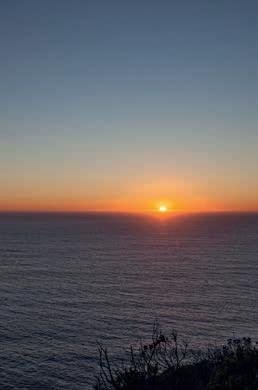
The hot springs at Esalen, a few miles south of the Henry Miller Library in Big Sur, drew the attention of local Native Americans in approximately 2600 b.c. In the late 19th century, a fellow named Thomas Slate founded a small settlement on the spot. Nearly a century after that, in the 1960s, The Esalen Institute was founded as “a leading center for exploring and realizing human potential through experience, education, and research.” Joan Baez lived in a cabin on the property, and ‘gonzo’ journalist Hunter S. Thompson briefly managed the place. Author Henry Miller also lived close by, and noted in his book, Big Sur and the Oranges of Hieronymus Bosch, that this particular paradise, meaning the expanse of Big Sur in general, doesn’t suit everyone.
Critics of Esalen dismiss it as the Oz of touchy-feely or else question its corporatization. Proponents point to the illuminati who have always come to Esalen, from Joseph Campbell to Robert Reich.
This holistic notion has had increasing appeal for the gold barons of the era, whose industry has recently been caught up in a series of sex and political scandals and, worse, calls for regulation.
Ben Tauber, the executive director at Esalen and a former product manager at Google, once charged with improving Google Hangouts and other social products, has been quoted as saying, “There’s a dawning consciousness emerging in Silicon Valley as people recognize that their conventional success isn’t necessarily making the world a better place. The CEOs, inside they’re hurting. They can’t sleep at night.” One of the courses offered at Esalen addresses ‘Depression and Tech.’
There are other similar centers, such as 1440 Multiversity near Santa Cruz. The goal is to “recognize that the blazing success of the Internet catalyzed powerful connections, yet did not help people connect to themselves.”
ADDRESS Esalen Institute, 55000 CA-1, Big Sur, CA 93920, +1 (831)667-3000, www.esalen.org, info@easalen.org TIP Stop by at the Henry Miller Memorial Library and browse the bookstore, dedicated to the late American writer and former Big Sur resident (48603 Highway One, Big Sur, CA 93920, www.henrymiller.org).
The PEZ Museum
From tchotchkes to ‘bad toys’
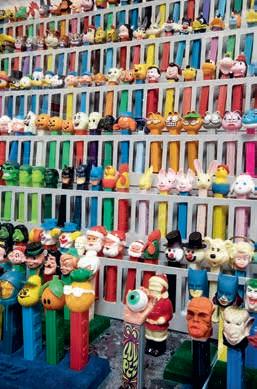
In 1927, a wealthy Austrian inventor named Eduard Haas III developed the first breath mint, which he imagined might help break the smoking habit. Twenty years later, he invented a plastic dispenser in the shape of the cigarette lighter filled with peppermint-flavored candies. PEZ is an acronym taken from the German, pfefferminze. The dispenser is distinguished by the spring-loaded character heads. In the 1960s, PEZ heads included Disney characters, and these days, Star Wars figures. In 1952, Haas opened a subsidiary in America that continues to produce new flavors and designs, all with cultural echoes. New designs come out every month, and with popularity has come collector conventions, auctions, and a museum.
The world’s only known PEZ museum is located on a side street in Burlingame. The museum is two blocks from the train station in a two-room former computer repair shop. In the front room, walls are filled with Pez figures, including all the 800 unique dispensers made since 1950, including an 8-foot-tall PEZ dispenser in the shape of a snowman that dispenses other PEZ dispensers. In the back room is the museum. A 15-minute tour is $3 and given by Gary Doss, proprietor and PEZ aficionado, who 20 years ago decided to close his computer store to open the PEZ Museum. You can also buy discontinued and new PEZ dispensers, as well as entire collections.
The museum features not only all things PEZ, including Mr. Doss’ favorite, the Psychedelic Eye, but also an issue of the first comic book, early incarnations of erector sets, Lincoln Logs, and a Mr. Potato Head. But the hallmark of the museum is most certainly the ‘banned toys,’ or as Mr. Doss puts it, “bad toys.” These include very sharp steel lawn darts, a 1951 Atomic Energy Laboratory complete with radioactive material, and a Teletubby who seems to be saying, “Bite my butt.”
ADDRESS 214 California Drive, Burlingame, CA 94010, +1 (650)347-2301, www.burlingamepezmuseum.com, garydosspez@yahoo.com TIP The Burlingame train station is actually quite fascinating. Built in 1894 in the Spanish-Colonial-revival style, it’s listed as a California Historical Landmark (290 California Drive, Burlingame, CA 94010, www.caltrain.com/stations/burlingamestation.html).
Foster City
Where the blue waters flow
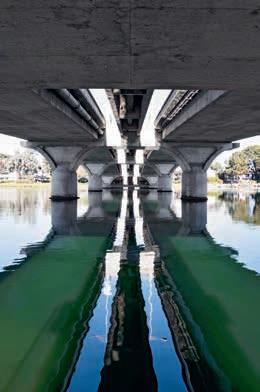
Foster City is located by the South Bay on the periphery of Silicon Valley. It is a planned suburban community built on landfill at the western approaches to the San Mateo Bridge, which runs across the bay to Hayward and beyond. It’s named after T. Jack Foster, who bought Brewer Island – which consisted of four square miles of dairy farms and salt ponds – for $200,000 in 1958. Foster dredged the wetlands for six years to form 230 acres of lagoons and pumped 18 million cubic yards of mud and sand onto the island, raising it slightly above sea level.
Snake-shaped canals and lagoons, which are lined with homes whose backyards often include a small dock and a patio overlooking the water, are the trademark of Foster City, a town with 30,000 residents boasting less than one murder per decade. The city injects up to 150 gallons of nontoxic dye into the water each month from April to October to block ultraviolet light, thus preventing the growth of algae, and particularly the widgeon grass, that might otherwise entangle sailboat rudders, paddle boarders, and swimmers. Hence, the color of the water is always vibrant cerulean. The canals are about six feet deep, and the depth is controlled by pumps.
The area includes a number of parks. On Wednesday nights from March through October, Leo Ryan Park hosts ‘Off the Grid’ events with food trucks. On Friday evenings there is live music at the Leo Ryan Park Amphitheater. Shorebird Park offers access to the Bay Trail, a favorite walk for locals that is also enjoyed by cyclists, runners, and all kinds of athletes. The levee is also very popular for windsurfing, kayaking, and other water sports. There is a section of the Shells Beach with a pathway through a forest of tall grass that takes you to the Shells Dirt Jumps with dunes made from piles of solidified dirt and salt that attracts and encourages all kinds of bicyclists to catch some air.
ADDRESS Foster City, CA 94404, www.fostercity.org TIP Visit Foster City Recreation Center for information about the outdoor activities in the area (650 Shell Boulevard, Foster City, CA 94404, www.fostercity.org/parksrec).
The Carolands
Intimations of American grandeur
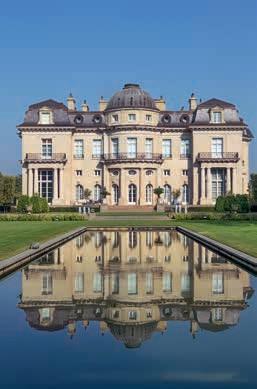
Harriet Pullman was the always exquisitely dressed, if melancholyeyed daughter of George Pullman, who developed the first railway sleeping car. In 1892, Harriet left the East Coast to settle in San Francisco with her husband, Francis Carolan. He owned 550 acres in Hillsborough, 20 miles south of the city, and Harriet, one of the richest women in the world at that time and a devout Francophile, decided that would be the ideal spot to build a 65,000-square-foot American chateau.
She commissioned the notable French architect Ernest Sanson, who offered a design with faint echoes of the Palace of Versailles. The four-and-a-half-story Carolands house includes one hundred rooms, two elevators, nine master bedrooms, endless galleries, and the finest garden. It was largely completed in 1916, the year after Harriet and Frank Carolan divorced. And so began the tortured life of a mansion from the Gilded Age, an encyclopedia of Beaux-Arts architecture that was bought and sold over and over. Little by little, the original property shrank to just five acres. For years, the house was all but abandoned, and some would insist haunted, not least because of the rape and murder of a young woman by a night watchman. But then someone always stepped in to save the place. A local psychiatrist and her husband were the last owners, and in 2012 the house was turned over to a private foundation.
Hillsborough, with its stunning views of the bay, is spread out over the hilly slopes above Burlingame and prides itself on large homes, but Carolands is the biggest and, according to one source, the 84th largest home in America. Hearst Castle at San Simeon is 12th on the list and remains the largest house in California.
You’ll gain even more insights on the small-group tours of Carolands when they are offered, usually two or three times a month. Its popularity has led to a lottery system for tickets.
ADDRESS 565 Remillard Drive, Hillsborough, CA 94010, www.carolands.org, info@calolands.org TIP Near Hillsborough is Sawyer Camp Trail, a beautiful, six-mile trail located in the San Andreas Fault rift valley (parks.smcgov.org/sawyercamp-segment).
Page Mill Road
Find Foothills Park
Stanford University is bracketed by two East-West roads: Page Mill Road on the south and Sand Hill Road on the north. The latter, in particular the part that runs through Menlo Park, is the Wall Street of Silicon Valley, the Venture Capital capital that opened in 1972. Sand Hill Road is also home to the Stanford Linear Accelerator Center, otherwise known as the SLAC National Accelerator Lab (see ch. 31).
Page Mill Road runs east to west past the Stanford campus toward the coastal range. Incidentally, just before you reach Highway 280, you’ll see the Frenchman’s Tower, a 30-foot-tall, red brick battlement behind a wire fence. It has no windows, no doors, and remains an eccentric’s folly built in 1875. There are still stories of underground tunnels.
Follow Page Mill Road under the freeway up a curvy, steep, sixmile stretch to the crest. The trek is an ironman’s bicycle thrill on the way up and a suicidal run on the way down. At the top, turn left to see Santa Cruz or right to see San Francisco. It’s a gorgeous drive in either direction, and there are plenty of trails and overlooks. Visit the open space preserves at Monte Bello and Los Trancos and the Portola Redwoods State Park on the west side of the range, the site of the original Page (saw) mill.
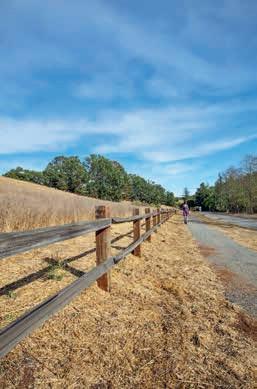
But here’s the gem. Halfway up Page Mill road, you come to beautiful Foothills Park. The park is open to Palo Alto residents only, who are required to show proof of residence to a ranger at the entrance kiosk. It is the only park in California with this rule. So take a professor to picnic lunch one afternoon during the week, preferably in winter. The charm is that few people go there, although there’s a lake for bass fishing and it is also home to mountain lions and bobcats.
It’s just a few miles from the center of Palo Alto to this stunning park with only the sound of an occasional frog. Otherwise, absolute silence!
ADDRESS Foothills Park, 11799 Page Mill Road, Los Altos Hills, CA 94022, +1 (650)329-2423, www.cityofpaloalto.org/gov/depts/csd/parks/preserves/foothills/ default.asp, open.space@cityofpaloalto.org TIP Check out the legendary Hewlett Packard Laboratories with their beautiful mosaic decorations on the side walls, which include the original HP rhomboid logo (1501 Page Mill Road, Palo Alto, CA 94304, www8.hp.com/us/en/contact-hp/office-locations.html).
The Stanford Theatre
Restoring Hollywood’s golden age
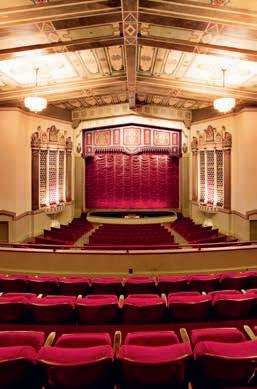
Among the notable old movie palaces in the Bay Area, you think of the Rialto in Sebastopol, the Castro in San Francisco, and the Stanford Theatre in Palo Alto, on University Avenue. The theater’s niche is the golden age of cinema, between 1920 and 1965. It’s the perfect portal to appreciate the founders of Hollywood, such as cinematographer Arthur Edeson, director Alfred Hitchcock, and, of course, Garbo, Kelly, and Cooper – and many others.
The Stanford Theatre was built in 1925 for $300,000 and originally had 1,454 seats, now reduced to 1,175. The theater was exquisitely restored in the late 1980s by the David and Lucile Packard Foundation, which bought it for nearly $8 million and put in another $6 million. The restoration holds closely to the Greek-Assyrian style expressed by the original architects, Weeks and Day. They were top in their profession in the 1920s and designed some of San Francisco’s great hotels, including the Huntington, the Mark Hopkins, and the Sir Francis Drake Hotel.
Charles Peter Weeks (1870 – 1928), with a small mustache over a tight mouth, was a ‘design moralist’ and a blasting critic of San Francisco’s turn-of-the-century architectural practices, which he derided and believed increased the devastation caused by the 1906 earthquake. Weeks married a member of New York’s beau monde, Beatrice Woodruff, on the day after her divorce from an attorney whom she accused of cruelty, including the time he kissed her on a public street. Five years later, Weeks died from a heart attack. Later, Beatrice married the great horror actor Bela Lugosi, but the marriage lasted only a year.
Before and after the 7:30pm show, local organ masters still perform on the theater’s Mighty Wurlitzer. Among them, David Hegarty, best known for his long association with the Castro Theater, and for his film music transcriptions from Hollywood’s golden age.
Rossotti’s Alpine Inn
Where the internet was born
E. Rossotti’s Beer Garden opened in 1852, along Los Trancos Creek in Portola Valley. It became a popular stagecoach stop first known as Casa De Tableta and later, the Alpine Inn. The inn was a dive bar and social refuge, established by a San Jose mayor who saw the value of a roadside tavern offering amenities beyond city ordinances – alcohol, tobacco, card games, and possibly other delights. The history is vague but rich. One time, a student from Stanford moved the bed from his dorm room up to the inn because he spent so much time there. And, according to lore, a ghost occasionally appeared by the barbecue pit.
The inn’s most remarkable bit of history is its unexpected link to Silicon Valley. On August 27, 1976, the Stanford Research Institute (SRI) sent out its “bread truck,” a van configured into a mobile radio lab. Engineers chose the inn as a place to set up a node on the Packet Radio Network (PRNET). They ran a line from the van to a terminal placed on one of the wooden tables in the courtyard and then typed out and sent a report to Boston, which was, at least in a “ceremonial sense,” the very first Internet transmission!
The inn is the second oldest continually operating road house in the state. It has had multiple owners, but it retains a loyal clientele of Stanford students, bikers, and locals.
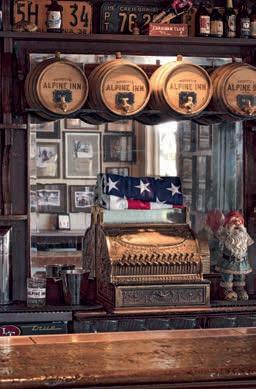
In 2018, new management renamed it, Rossotti’s Alpine Inn or “Zot’s.” All the original wooden tabletops, picnic tables, and benches where patrons carved their names and initials have been converted into paneling outside and booths inside. The indoor bar looks almost the same as always. Note an opening in the floor that leads to an underground space used during Prohibition to store booze. Old license plates, historic photos, and beer bottles decorate the walls. Outside, the beer garden hosts a 1942 Dodge Farm truck outfitted with a wood-fired pizza oven.
ADDRESS 3915 Alpine Road, Portola Valley, CA 94028, +1 (650) 854-4004, www.alpineinnpv.com TIP Take the 11-mile hike on Spring Ridge Trail to the Windy Hill Open Space Preserve, where you can watch hang gliders and enjoy views of the peninsula. The trail is open to cyclists and equestrians too (www.openspace.org/ preserves/windy-hill).
Avaya Stadium
Eat, drink, pray, win
There are three professional sports teams in Silicon Valley, all take their names from the major cities at both ends of the valley. And so the San Francisco 49ers, a National Football League team, whose home is in Levi Stadium in Santa Clara, the San José Sharks, a National Hockey League team that plays at ‘the shark tank’ in downtown San José, and The San José Earthquakes, a Major League Soccer team based near the San José airport.
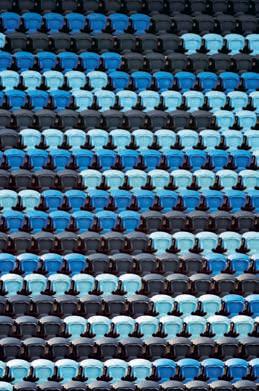
The Earthquakes, founded in 1994, play in Avaya Stadium, named after the $3.2-billion maker of Internet telephony systems. The company, which went in and out of Chapter 11 in 2017, created the first ‘cloud-enabled’ stadium, offering what were then revolutionary features: Wi-Fi, a real-time fan app, and a digitized ‘fan engagement wall,’ with multimedia content and aggregated social media feeds.
The stadium opened in 2015 with just 18,000 seats – most stadiums hold 22,000 seats. Marketing strategists found that larger venues rarely sold out, which meant fewer people renewed season tickets, trusting that same-day tickets would be available. The team also uses larger facilities, at Levi Stadium or Stanford Stadium, to build on top of their core audience, a ‘casual audience,’ in the hope that some might become season ticket holders.
To further entwine its audience, the team supports several fan support clubs, in the European tradition, drawing from communities of Eastern Europeans and Hispanics, as well as ‘founding’ families and tailgaters. In a 56-page online document called a Brand Constitution, the team says the club’s identity represents “a winning heritage, blue-collar, and our passionate and diverse community.” Note also a motto, “Unity, Devotion, Heritage,” which suggests the kind of personal values you might find in a church, school, social club, or political party. In America, sports have become the Fifth Estate.
San José Museum of Quilts & Textiles
Living in the material world
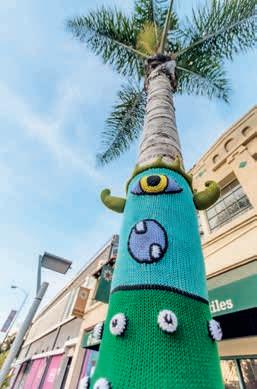
Whatever patterns may come to mind when you think of quilting, it’s worth noting that this is definitely not your grandma’s quilt museum. This museum presents textiles that expand our notions of the material world, quite literally. All that is made of fiber, from ancient weavings to contemporary paper sculpture, are among the exhibits.
Since 2010, the museum has hosted the International TECHstyle Art Biennial (ITAB), which presents work by artists who employ various technologies in creating fiber-based work. Using Silicon Valley’s resources on the tech side of the work has helped to attract a global community of artists to the event. The connection between textile manufacturing and what would become computer technology dates to the early 19th century, when Joseph Marie Jacquard (1752 – 1834), a French weaver from Lyon, used punch cards to develop automated looms to create complex patterns. Textiles were the first material to be widely produced in the Industrial Revolution and continue to reflect digital technologies. Exploring the tension between hand-made versus machine-made textiles is an ongoing theme among artists here.
The museum is equally devoted to the social history of quilting. The Bay Area was a center of the resurgence of quilting arts in the 1970s, and the work of artists like Miriam Nathan Roberts are featured here. Through the Social Justice Sewing Academy, an arts education project for local students, the museum teaches sewing and promotes quilting as a means of youth engagement.
As one of the most ancient and tangible mediums of design, textiles carry profound cultural messages. The collection of textiles at the museum include tribal and traditional works. For a small fee, aficionados can schedule a private tour of the archived collection.
ADDRESS 520 South 1st Street, San José, CA 95113, +1 (408)971-0323, www.sjquiltmuseum.org, info@sjquiltmuseum.org TIP The Lace Museum in Santa Clara is much smaller, but also well worth visiting (552 South Murphy Avenue, Sunnyvale, CA 94086, www.thelacemuseum.org).
Triton Art Museum
A horseman’s dream
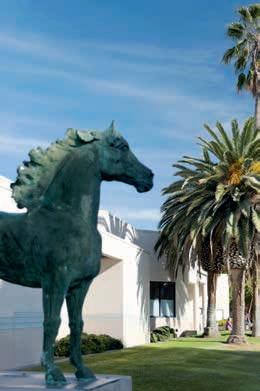
W. Robert Morgan was a lawyer, horse rancher, and, later in life, a devotee of the arts. In 1965, in San José, he and his wife founded the Triton Art Museum, named after his favorite horse, Triton. The horse was immortalized in a 1,000-pound, life-sized bronze sculpted by Alexandrovich Schnittmann. Triton, mane flying, has stood heroically outside the museum since 1966, save the night in 1985 when pranksters from the local high school tore the horse off its pedestal and tried to carry it away, causing substantial damage to the piece.
The museum was eventually moved from San José to Santa Clara, just across the street from city government offices, and next to the performing arts center used by the Santa Clara Players. The museum is a little-known gem in the valley. The permanent collection includes such acclaimed local and regional artists as Randall Shiroma, Vicki Walsh, Lucas Blok, Doug Glovaski, and Deborah Oropallo. In recent years it has held exhibitions of work by Jennifer Sturgill, winner of the museum’s 2017 Statewide Competition and Exhibition, mixed media artist Beverly Rayner, Silvia Poloto, and surrealist Eduardo Carrillo. The museum is also renowned for its bronze sculpture garden, and includes works by Sharon Loper, among others.
On the museum grounds, you will also find the historic JamisonBrown House, a two-story home built in 1866 in the vernacular Italianate style. The house was home to several prominent San José families. One local myth is that the veranda, which was taken from another famous house called New Park, was the site where Jack London, who actually was friends with the owner, wrote much of Call of the Wild.The house features more than 100 different kinds of wood, including such rarities as zebra wood, Brazilian rosewood, Burma ironwood, and Cuban mahogany. Check the website for enticing events at the museum.
ADDRESS 1505 Warburton Avenue, Santa Clara, CA 95050, +1 (408)247-2438, www.tritonmuseum.org/index.php TIP Visit the peaceful Mission Garden located behind the historic Mission Santa Clara de Asis at Santa Clara University (500 El Camino Real, Santa Clara, CA 95053).
THE AUTHOR

Floriana Petersen’s first book, 111 Places in San Francisco That You Must Not Miss, has become one of the city’s best-selling guidebooks. Floriana, who lives in San Francisco, grew up in Slovenia, where she studied art history and developed a lifelong passion for all things beautiful and unusual. She is a noted designer of both residential and commercial interiors (www.forianainteriors.com). She loves to spend weekends exploring the Bay Area, honing her detective’s instinct for finding buried treasures waiting to be discovered.
THE PHOTOGRAPHER

Steve Werney was born and raised in the San Joaquin Valley. He moved to the Bay Area to become a carpenter, and he has been sharpening his skills in San Francisco as a designer and builder for many years now. In 2010, he widened his focus to include photography. One of his projects was 111 Places in San Francisco That You Must Not Miss. He utilizes Canon brand cameras, which were also the brand his father used. Regarding his work, one photography critic noted, “While often abstracting the urban architectural form, Mr. Werney celebrates the meditative isolation of the objects.”
The information in this book was accurate at the time of publication, but it can change at any time. Please confirm the details for the places you’re planning to visit before you head out on your adventures.