Subminimum wage reform is state focus
Moving disabled people out of subminimum wage work and into better-paying jobs is the goal of an $10.5 million initiative announced September 16. State grants to service providers throughout Minnesota will help people earn competitive wages and ultimately, live more independently.
The funding for the program was approved by the Minnesota Legislature in 2021 and is now being allocated by the Minnesota Department of Human Services (DHS).
“Many people with disabilities want to be part of the general workforce, but have not had the opportunity,” said DHS Commissioner Jodi Harpstead. “Working-age Minnesotans with disabilities should have the chance to work and earn a competitive wage if they want to.”
Provider Reinvention Grants will go to 22 employment services providers. The University of Minnesota’s Institute on Community Integration will also receive funding to provide statewide technical assistance, engaging with job seekers and their families, and helping providers with training and toolkits.
The subminimum wage issue is one that sparks controversy within Minnesota’s disability community. A longstanding federal law has allowed Minnesotans with an array of disabilities to be paid less than the federal minimum wage. The law was enacted during the Great Depression as a way to help disabled people find employment.
The practice is criticized as unfair and d iscriminatory by advocates, and is called out as a violation of the federal Americans with Disabilities Act Pay is typically just pennies on the dollar for menial jobs.

A state task force report indicated that between 4,500 to 6,000 Minnesotans made less than minimum wage in 2021.
But others have contended that if subminimum wage work is eliminated, some disabled people will miss out on needed social and work opportunities. Day activity centers and employment centers sometimes pay subminimum wages.
The grants are expected to be used for a wide variety of supports and services.
Eight employment service providers will receive grants to phase out subminimum wages by April 1, 2024. They are Floodwood Services & Training, Floodwood; Pine Habilitation and Supported Employment (PHASE), Sandstone; Hope Haven, Rock Valley, Iowa, for an employment center in Worthington; Rise, Spring Lake Park; Rising Phoenix, Wadena; TSE Inc., Roseville; Advance Opportunities, Marshall; and Employment Enterprises, Little Falls.

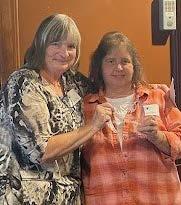
Fourteen employment service providers will receive funding to support more people in reaching employment goals. They are Accord, St. Paul; Arrowhead Community Employment, Duluth; Empower
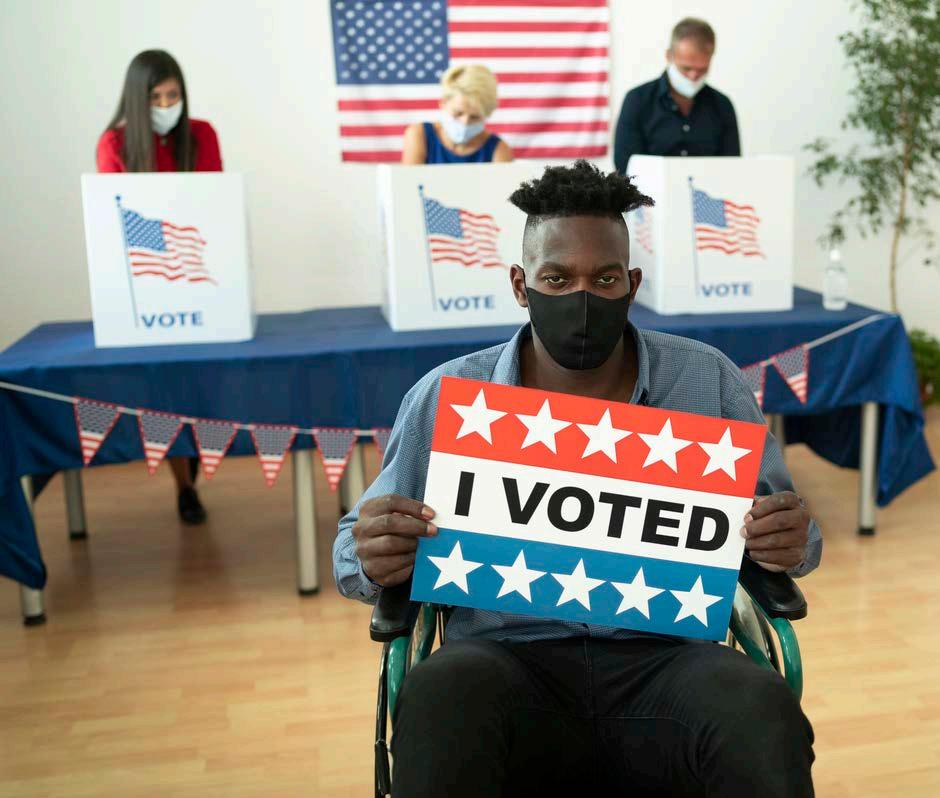
Voters who need help casting ballots will find available assistance
A trip to the polls to cast a ballot is an autumn rite of passage for many of us. Absentee and early voting provide convenience but going to the polls is a chance to take part in Election Day and see friends and neighbors.
Minnesota voters with disabilities need to be mindful of regulations that can affect how they vote and what types of assistance are available.
Rev UP MN in September hosted a forum on voting, with Justin Page from the Minnesota Disability Law Center covering a wide range of elections-related topics. The center provides information on voting for disabled Minnesotans and can step in to help if someone has troubled voting . It
also relies on a cadre of volunteers to check polling places statewide during elections, to make sure that locations are accessible.
“Voting is a right, not a privilege,” said Page. He wants voters to be aware of what is and isn’t legal in terms of assistance. Voters should not hesitate to ask for help when voting.
One tip is for voters to prepare to go to the polling place. Voters typically won’t find themselves in the long waiting lines that are characteristic of presidential years so the reminders to bring water and any needed medications aren’t germane this fall.
But voters who need to register at their polling placed do need to have specific
NEWS DIGEST
Attend Access Press event Page 3
Hear him out Page 4
Use the Access Press Directory to find help Page 6-7
Mental health town hall Page 9
AARM honorees Page 5
New Fairview hospital obtains final approval from state

A new, $62 million St. Paul hospital that will serve people with mental illness is moving ahead, despite red flags raised by advocates and even the Minnesota Department of Health (MDH) itself. State officials determined in September that opening the new hospital would be in the public interest, given Minnesota’s shortage of inpatient mental health beds.
The Fairview Health Services/Acadia Healthcare facility is granted an exemption to Minnesota’s current moratorium on hospital beds. The new 144-bed hospital is to be built in St. Paul on a site north of the capitol complex. The site has been occupied for decades by various Bethesda health care facilities. Bethesda originally opened as a community hospital in 1883. Its facilities most recently served as a Ramsey County homeless shelter, closing in the spring.
The new hospital will have capacity for 144 beds, with 120 new beds and 24 held for future use.
Minnesota lawmakers approved the new facility during the 2022 session, then left the final decision on the facility in MDH’s hands.
Plans for the new hospital were announced in 2020 by Fairview. Response was mixed. Proponents point out the state’s severe shortage of beds, which means people have to wait for treatment or travel long distances for mental health services. They also cite Fairview’s long record of service in the community.
Some mental health and health care advocates cite the potential problems with the way the hospital proposal was structured, citing the need for facilities that provide comprehensive health care. Another red flag is the involvement of Tennessee-based Acadia and problems that company has had in other states.
Fairview has repeatedly made the case for the facility’s need, stating that “We know this crisis will not be solved by one hospital. It will take the concerted efforts of health
care providers, community partners and others coming alongside local, county and state officials to ensure that we meet the needs of our patients and communities into the future.” Fairview officials called the planned facility “a significant and important step forward for our community.”
MDH has determined that the project is in the public interest because it provides additional inpatient mental health beds in the midst of a bed capacity crisis. But
Voting at the polls is easy with assistance.
A rendering of the proposed hospital.
NONPROFIT ORG. U.S. POSTAGE PAID TWIN CITIES, MN PERMIT NO. 4766 ISTOCK
VOTING HELP To page 3 Volume 33, Number 10 WWW.ACCESSPRESS.ORG October 2022
APPROVAL To page 3 REFORM To page 3 FAIRVIEW
When it comes to assistive technology, government should lead and not follow. That is not always the case. We tip our hats to the online news site Politico for shedding light on the complex and frustrating issues that disabled federal employees continue to face.
Politico did extensive reporting on lack of compliance with a part of the 1973 Rehabilitation Act known as Section 508. Congress made Section 508 of the act mandatory in 1998. This change was and still is meant for federal agencies to make technology accessible. But that hasn’t happened from what anyone can tell.
This is all despite President Joe Biden’s June 2021 directive that federal agencies make accessibility improvements, assuring that accommodations can be asked for, opportunities for advancement and hiring can increase, and physical accessibility barriers will be reduced.
According to a 2021 report by the Washington. D.C.-based Information Technology and Innovation Foundation, about 30 percent of the most-used federal websites don’t meet accessibility standards. That affects the public, too.
The foundation promotes the use of technology in policy solutions. It found that websites including weather. gov, energystar.gov and census.gov, failed automated accessibility tests. Its report recommends that the federal General Services Administration (GSA) create an accessibility testing lab to ensure sites are compliant and make other changes in accessibility testing.
The scope of impacts on federal employees must be equally frustrating. There’s little to no enforcement. Agencies simply aren’t taking the time or spending the money to comply.
The U.S. Senate Aging Committee heard testimony over the summer about the ongoing problems federal employees have faced. The National Federation for the Blind, Temple University’s Institute on Disabilities, National Association for the Deaf, private law firms and other groups representing elders and people with disabilities are among those speaking out about the issues of public website access and the need for federal employee accommodations.
Getting technology in place is one challenge our community faces. Another is what appears to be lack of access to information.
The Department of Justice hasn’t made public any of the biennial reports that Congress mandated on compliance with Section 508. The last report Politico found was in September 2012. At that time fewer than half of the federal agencies had compliance plans in place. Agencies with plans in place had budgeted, on average, $35,000 to implement accommodations needed.
HISTORY NOTE
That is just ridiculous and unacceptable on so many levels. For one thing, the reports should be public information. Period. Without the reports, we don’t know if federal agencies have made needed changes over the past decades.
And $35,000 is a pittance in the scheme of federal spending. Even adjusted for inflation, we’d bet the coffee budgets for some federal agencies are larger than that amount.
Here’s another reporting issue: Nor are mandated agency reports to the Office of Management and Budget (OMB) available to all. It’s required that 24 agencies file reports twice a year about the accessibility of their technological infrastructure. But those reports aren’t public.
The access issues have generated much back and forth between members agency leaders. Over the summer Senate Aging Committee Chair Bob Casey (D-Pa.) and ranking member Tim Scott (R-S.C.) contacted Veterans Affairs Secretary Denis McDonough and Attorney General Merrick Garland about the accessibility of VA websites. That prompted debate over how accessible VA websites are for disabled veterans. The VA is now conducting daily accessibility scans.
Others have objected to the blackout on OMB reports.
Politico was also able to document cases where federal employees with disabilities couldn’t do their work or even order lunch in a federal cafeteria due to lack of accommodations. Lack of accommodations that were not costly were spelled out. All it would have taken in one case was to put a lever on a copy machine. Another was to add compatible software to programs.
If the federal government isn’t in compliance with Section 508, and if we cannot get timely and public reports, that sends a terrible message to other units of government.
It sends a terrible message to private employers. We need compliance in the private sector so that we can have work opportunities. But if the federal government sets a bad example, then what?
Read the story at https://www.politico. com/news/2022/08/21/congress-people-withdisabilities-00052955
One in four of us has a disability. One in four. What does it mean for us when information on accommodations isn’t available at the federal level? What does it mean for people with disabilities seeking employment at the federal level, when their work needs cannot be met?
It took an international pandemic to prove that virtual and hybrid workplaces could be successful for all. We cannot let those gains be rolled back. Changes are needed at the federal level for our leaders to indeed lead and for us to work.
Groundbreaking 1972 conference brought demands for change
The notion of strength in number has always been popular. Fifty years ago this month, a large coalition of groups representing people with disabilities presented state leaders with a list of demands. The demands were outlined at the Governor’s Conference on Handicapped Persons.
Although some of the language used in media coverage might make us cringe today, we also must recognize that the 1972 event represented a major step for self-advocates. The federal Rehabilitation Act was still a year away from passage, with the protection and advocacy system in the Developmental Disabilities Assistance and Bill of Rights Act not seeing passage until 1975. The Education For All Handicapped Children Act was also passed in 1975, with the Civil Rights of Institutionalized Persons Act following in 1980.
Although disabled Minnesotans had some rights our counterparts in other states lacked in 1972, our world was hardly a level playing field. We were years away from deinstitutionalization and steppedup efforts for community integration. We lacked many basic accommodations. We didn’t even have curb cuts.
It's striking to realize that the Americans with Disabilities Act (ADA) was 18 years away from that 1972 gathering.
“It is the first time that private and government organizations for the handicapped have banded together, organizers said.” The Minneapolis Star reported that more than 2,000 people attended the day-long conference at the Radisson South in Bloomington, with about 1,500 organization and government staff members on hand.
At the conference, several people shared their stories of what people with disabilities faced. Ruth Erickson described how she wasn’t hired as a teacher in rural North Dakota because of her arthritis. Erickson also recalled her days working as a clerk at a college. College trustees didn’t want “normal students” to see her.
Obtaining insurance of all types, including health insurance, was an obstacle. Erickson told the group that although she’d been driving for 20 years and never had an accident, her auto insurance provider required that a doctor or nurse ride with her on a test trip and make a report to the company. Otherwise, her policy would not be renewed, despite her passing the test on her first try.
Leroy Marshall bought a house in south Minneapolis in 1962, but his cerebral palsy prevented him from obtaining mortgage insurance. “If I had died, the house would have gone back to the bank
instead of to my family,” he said.
Gov. Wendell Anderson was leading state government at that time. He heard the presentation, which included calls for:
*An equal rights provision in the state constitution, barring discrimination against people with physical and cognitive disabilities, in housing, education, employment, public facilities and accommodations.
*Having people with disabilities among groups served by the state’s Human Rights Commission.
*Having people with disabilities treated fairly under state guardianship laws and the state Hospitalization and Commitment Act.
*All polling places must be accessible to people with disabilities.
*Good prenatal care should be provided to low-income families to prevent conditions leading to infants being disabled at birth.
Special medical treatment for disabled children from low-income families. The coalition called for medical care to be provide at reduced cost.
*State agencies dealing with the handicapped should have representation by the handicapped.
*The excess costs of education students with disabilities in local school districts should be assumed by the state.
*Community based living quarters should be provided as an alternative to state institutionalization, with the state paying 90 percent of the costs of caring for developmentally disabled and emotional disturbed children in private facilities
*The bureaucracy of the present human services system should be regionalized and a uniform system of administering medical and other assistance grants should be developed
The session ended with Anderson and other state leaders making a series of recommendations. Anderson agreed with the call for antidiscrimination measures and expanded special education and health support systems. He also called for health insurance providers to provide insurance at reasonable rates for clients who are disabled.
Erickson said that for years she had come to expect outright discrimination. “The handicapped for too long just sat back, expecting others to do things for them,” Erikson told the St. Cloud Daily Times “ But now we’re fighting.”
The History Note is a monthly column produced in cooperation with the Minnesota Governor’s Council on Developmental Disabilities. Past History Notes and other disability history may be found at www.mnddc.org
EDITORIAL: Editorial submissions and news releases on topics of interest to persons with disabilities, or persons serving those with disabilities, are welcomed. We reserve the right to edit all submissions. Editorial material and advertising do not necessarily reflect the view of the editor/publisher of Access Press.
DEADLINE: 15th of each month.
CIRCULATION/DISTRIBUTION: Distributed the 1st of each month through more than 200 locations statewide. Approximately 750 copies are mailed to individuals, including political, business, institutional and civic leaders.
SUBSCRIPTION: Free and accessible to anyone in MInnesota, visit www.accesspress.org to subscribe.
ABOUT ACCESS PRESS: A monthly newspaper pub lished for persons with disabilities by Access Press, Ltd.

POSTMASTER: Send address changes to Access Press, PO Box 40006, Industrial Station, St. Paul, MN 55104-8006

INQUIRIES AND ADDRESS CHANGES should be directed to: Access Press, PO Box 40006, Industrial Station, St. Paul, MN 55104-8006; 651-644-2133; email: access@accesspress.org Website: accesspress.org

When it comes to assistive technology, government must lead and not follow
One in four of us has a disability. Changes are needed for our leaders to lead and for us to work.
October 2022 Volume 33, Number 10 Pg 2
Executive Director ....................................................................................................................................................................... Holly Anderson Editor Jane McClure Development and Marketing ......................................................................................................................................................................... Web and Operations Manager Tricia Donovan Board of Directors Mohamed Alfash, John Clark, Mark Daly, Brendan Downes, Erica Fair, Shannah Mulvihill, Walt Seibert, Joel Ulland, Kay Willshire Cartoonist Scott Adams Production ........................................................... In-Fin Tuan Website: accesspress.org email: access@accesspress.org phone: 651-644-2133 Co-Founder/Publisher Wm. A. Smith, Jr. (1990-96) Co-Founder/Publisher/ Editor-in-Chief Charles F. Smith (1990-2001) Editor-in-Chief/Executive Director Tim Benjamin (2001-2020)
EDITORIAL
Access Press invites community to learn about digital update
Access Press has news of our own! Learn about our new website and hear other plans for the future. Access Press Presents: Digital Transformation.
The virtual free event is 6 p.m. Tuesday, November 15. It’s a chance for readers old and new to catch up with Access Press staff and board members. It’s also an opportunity to make a taxdeductible donation to Minnesota’s disability news source. Event sponsors are needed. Contact Executive Director Holly Anderson at 651-644-2133 ext. 3 or holly@accesspress.org
Get the event link at www.accesspress. org
“We are really excited to have this opportunity to present this type of program to the community and for everyone to show their commitment to Access Press,” said Joel Ulland, Access Press board chair.
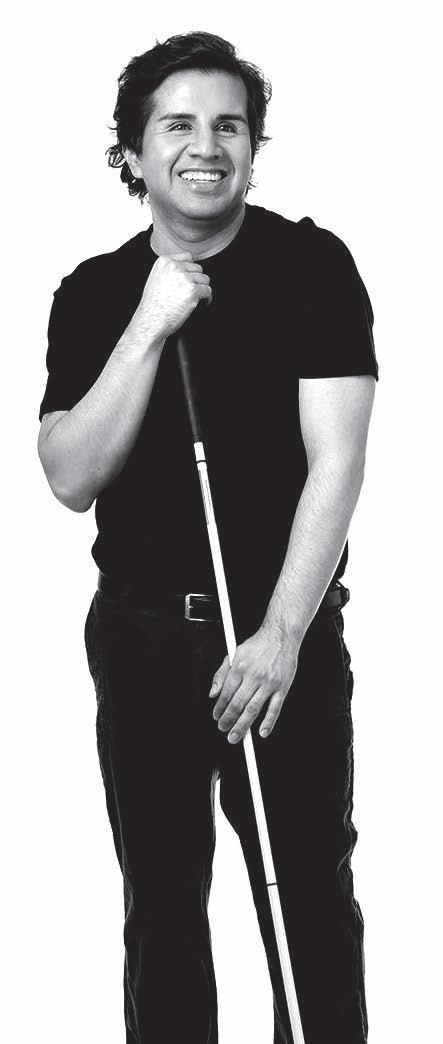
The event will feature Belo Miguel Cipriani, a digital inclusion strategist who became passionate about making online spaces accessible after a tragedy. In 2007, Cipriani was blinded as a result of being attacked by a group of men in San Francisco’s Castro District. He sustained irreparable retinal nerve damage after receiving multiple facial blows.
After the attack Cipriani, a former systems engineer and technical recruiter, began to use various assistive technologies for people with visual disabilities. JAWS (Jobs Access With
APPROVAL
From page 1
the state’s analysis indicates that the new facility won’t replace the comprehensive services previously offered at St. Joseph’s, the state’s oldest hospital. That St. Paul facility was closed and reopened as a wellness center earlier this year.
“There will be significant inpatient care gaps remaining after the establishment of the facility that other providers will need to fill,” MDH stated in a news release.
“For example, the new facility lacks an emergency department for receiving patients undergoing a mental health crisis, and because it does not offer a full complement of medical care, it will only serve a subset of mental health patients. “
Staffing levels are another concern MDH and members of the public raised. The facility is scheduled to operate under a leaner staffing model than is the norm nationally and in Minnesota.
VOTING HELP
From page 1
documentation in hand if they do not have a neighbor or family member in the same precinct to vouch for them.
Election judges must verify identity and residency – who the voter is and where the voter lives. The state defines which documents are needed to prove both. Go to https://www.sos.state.mn.us/elections-voting/ register-to-vote/register-on-election-day/
Once a voter is registered or signed in, election judges provide a ballot. Page emphasized that voting is private and that others should not ask a voter for whom they voted. But not every voter can vote by themselves.
People with disabilities may need help filling out a ballot. Help is available with set parameters.
Voters can bring a friend, family member or direct support staff with them to the polling place to help with a ballot. When bringing a helper, be ready to hear election judges ask the helper, “Are you assisting or influencing?” Helpers are to fill out a ballot with the candidates the voter supports, and to not tell the voter for whom to vote.
A voter can also ask the head election judge for help. The judge will assign two election judges to assign, so that there is oversight and improper influence is avoided. The judges will be from different parties.
Every polling place should have a wheelchair-accessible table to vote in privacy.
Machines are available for disabled voters
Speech) utilizes synthesized speech and Braille to allow users to read information as it is displayed on a computer screen.
He also uses a digital recorder to document his thoughts and an application that reads back to him what he is typing on his laptop. With the use of assistive technology, Cipriani has been able to reinvent himself as a writer and digital access consultant.
Through his digital access consulting firm, Oleb Media, Cipriani has helped countless organizations including Access Pres s build inclusive websites and apps. HuffPost referred to him as an “Agent of Change,” and SF Weekly named him one of the best disability advocates.
In 2018 Cipriani founded the publishing house Oleb Books, which focuses on publishing writers with disabilities. His own books and articles on disability issues have received numerous awards and international recognition. His debut book, Blind: A Memoir, was released in 2011. The nonfiction memoir that chronicles the events surrounding the attack and his recovery. The memoir received the LGBT Rainbow Awards Honorable Mention in 2012 for Best Debut Novel and Best Non-Fiction, and also received an honorable mention from the Eric Hoffer Book Awards.
Cipriani is a longtime columnist and talk show host, who has focused on both career advice and on his life as a gay blind man in San Francisco. In 2017 “Seeing in
“The public review of this proposal shows how much need there is for additional mental health beds in Minnesota,” said MDH Commissioner Jan Malcolm. “As we seek to address the acute shortage we are facing, we hope this review highlights the need for policy makers, health care organizations, mental health care providers, employers and insurers, and patients to work on solutions to fully meet the state’s mental health needs.”
MDH worked with mental health care stakeholders and the public through presentations, letters and a June public meeting held to collect comments and feedback. Sixty-seven written comments revealed a variety of perspectives. Those who commented included four other regional health systems, 10 community/ social services organizations, 27 providers, two unions, and 24 patients and family members.
Many of those who commented recognized the need for additional beds
to mark their ballots. Every polling place in Minnesota is supposed to have a ballot marking machine for use by people with disabilities. Minnesota’s polling places will have one of four different kinds of machines, Page said. The machines are designed so voters with various types of disabilities can use them.
Some polling places may still have the longtime Automark machines. Some of those machines are 20 or more years old. “It’s kind of clunky,” Page said of the Automark. While the old machines get the job done, one complaint is that Automarks are breaking down more and more.
Other ballot marking machines are the Omni, Imagecast and Verify Touchwriter. Local election offices can tell voters in advance what is available. Information is also available on the Minnesota Secretary of state website. While the machines are all different and a change may take some getting used, Page said any of the four will aid voters.
Machines can read a ballot to vote, help with marking and even allow screens to be turned off for more privacy. Machines can also let a voter know if a ballot is marked incorrectly.
Not able to go into a polling place but still need to vote on Election Day? Page suggested the option of curbside voting, Read about polling place accessibility at when a voter drives or is driven to the polling places. Judges then bring the ballot outside and have it marked. To give a polling place notice, Page suggesting calling the local election office and having
the Dark,” a monthly Bay Area Reporter column, received an honorable mention from the Katherine Schneider Journalism Award for Excellence in Reporting on Disability. He also has hosted a weekly talk show segment where he shared tips and advice on career moves.
He has worked as a writer-in-residence, lecturer and teacher. In 2018 Cipriani joined the community faculty at Metropolitan State University in the Twin Cities where he teaches creative writing.
He is a sought-after speaker and is an equal rights advocate for the LGBT, disabled, and BIPOC communities.
Former Congressman Tony Coelho, a primary author and sponsor of the Americans with Disabilities Act (ADA), called Cipriani an important voice in disability writing.
In 2020, he was appointed by Gov. Tim Walz to the Minnesota Council on Disability.
Cipriani holds a Bachelor of Science degree in information systems from Notre Dame de Namur University in Belmont, California in 2001. He returned to the university to study with Jacqueline Berger and fiction writer, Kerry Dolan, earning a Master of Fine Arts degree in 2010.
He also received a Master of Arts degree in culture and spirituality from Holy Names University in 2012, and a Doctor of Education in organizational leadership from University of the Pacific in 2019.
and acknowledge that Fairview is a trusted health provider that would aid an underserved population. The biggest concern raised by opponents is that the new facility wouldn’t serve all patients in need, based on limited medical capabilities and limited access with no emergency department.
Reviews found that most of the increased patient load from the closure of the emergency department and beds at St. Joseph’s Hospital had already been absorbed by surrounding hospitals, although it is placing a strain on emergency rooms and inpatient mental health units.
For their part, state lawmakers have indicated that they expect close, ongoing scrutiny of how the new facility will impact care delivery and the economics of inpatient mental health services in the community. MDH has been directed to monitor patient and payer mix, transfers and patient flow for inpatient mental health care in the state.
staff notify the precinct workers.
“The last thing we want to have happen is for individuals to use curbside voting and just have to wait for an excessive amount of time,” said Page.
Read about polling place accessibility at https://www.sos.state.mn.us/electionsvoting/election-day-voting/polling-placeaccessibility/
Read about ways to get assistance while voting and ballot marking machines at https://www.sos.state.mn.us/electionsvoting/election-day-voting/get-help-voting/
Election coverage is funded by the Minnesota Council on Nonprofits.
REFORM
From page 1
Inclusion, Excelsior; Kaposia, Little Canada; Lutheran Social Service of Minnesota, St. Paul; MRCI, Mankato; Midwest Special Services Inc., St. Paul; NorthStar Community Services, Cloquet; Productive Alternatives, Fergus Falls; Reach for Resources, Minnetonka; REM Heartland, Mankato; Residential Services of NE MN, Duluth; Trillium Works, Duluth; and Udac, Duluth.

A task force is studying subminimum wages. The group was established by state lawmakers in 2021, and members are to submit a report to state lawmakers in February 2023. Recommendations are to be made for what to do if subminimum wages are phased out by August 2025.
The task force is to identify benefits to the state in eliminating subminimum wages, barriers to eliminating subminimum wages and potential solutions, ongoing funding and resource strategies, strategies to increase wages and improve work opportunities and develop a plan to evaluate, measure and track progress. The task force must also engage and educate people who would be affected and advise DHS on plans for limiting subminimum wages in the disability waivers.
More than a dozen states have already prohibited subminimum wages.
Legislative issues coverage is by Editor Jane McClure.
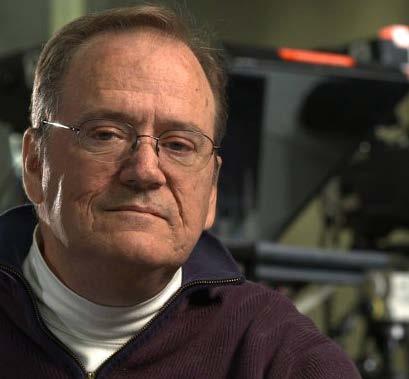
Belo Miguel Cipriani
October 2022 Volume 33, Number 10 Pg 3
OUR COMMUNITY
by Mark Daly
Most people have no idea how to communicate with those of us who don’t hear well. Many lose their patience when they need to repeat themselves. An alarming number will turn downright rude, treating people with hearing loss like they’re fools when conversations become difficult.
I recently experienced that worst sort of treatment at, of all places, a government services center. More about that in a moment.
I readily accept the fact that a large portion of the responsibility for whether a conversation goes smoothly depends on me – or anyone else with a hearing disability. But it’s not difficult to converse with someone who doesn’t hear well.
Whenever I meet someone new, the first time I have any trouble understanding what they’re saying, I quickly say, “I’m sorry, I’m hard of hearing.” Oftentimes, I’ll also point to one of my hearing aids.
Those without experience speaking with people who have hearing loss will frequently begin to shout or lean in and attempt to speak directly into one of my ears. Neither technique is helpful.
What those of us who don’t hear well need others to do is 1) slow down, 2)
annunciate, and 3) look directly at us.
Consciously or otherwise, most of us with hearing loss eventually learn to lip read. If you’re speaking too fast or we can’t see your face, it doesn’t help to speak louder. Missing the first few words of what you’re saying often makes it impossible to understand the rest of your intended message because all context is lost.
To maximize my ability to communicate with others, in just the past five years, I’ve spent more than $10,000 on two sets of hearing aids with Bluetooth technology that sync to my cell phone. Even the best health insurance plans pay $0 for hearing aids. They’re considered a “luxury item” – not a necessity. This, even though 30 million Americans experience hearing loss.
I’ve also had to invest in an expensive headset to participate in Zoom meetings at work and with family members who live far away. I like to believe that I do everything I can to participate fully in the world. The monetary cost is far less than the price I’d pay if I were forced to live an isolated life.
Now, back to that awful experience at the government services center.
Like every Minnesotan who owns a car, once a year I receive notice from the
state’s driver and vehicle Services (DVS) that it’s time to renew my license plate tabs. Upon receiving such a notice a few months ago, I promptly mailed a check to pay for my new tabs.
Three weeks later, I received a letter from the DVS stating they couldn’t send me my new tabs because I had “elected to keep my driver’s information private.”
That was untrue. Regardless, after calling the DVS and waiting more than an hour on the phone – twice – I did as instructed: I filled out an online form confirming that I did not want my driver’s information to be private. And then I waited - more than a month. The new tabs never arrived. The old tabs had long since expired and I worried that I’d be pulled over by a police officer and ticketed.
So, with copies of documents in hand, I carefully drove to a suburban DVS office and asked for help.
I explained the situation and handed the documents to a DVS agent. She scowled and said I should have arrived earlier. It was 2:30 in the afternoon. They closed at 4 p.m. She then began speaking quickly, alternately looking down at the papers and over at the clock – everywhere but at me.
I said, “I’m sorry. I don’t hear well,”
pointing at my hearing aids. “I don’t understand the problem. I filled out the forms …”
“You should have arrived earlier,” she interrupted, clearly annoyed with me for forcing her to repeat herself. Then she apparently scolded me for something else that I couldn’t understand, treating me like a child and shoving the documents back at me.
A line began to form behind me. I started to ask the DVS agent if she was sure that nothing could be done, but she refused to look me in the eye. Embarrassed, I left.
The next morning, I returned to the service center at 8:30 a.m. Fortunately, I was greeted by a different agent. Early in our conversation, I explained that I was hard of hearing. “That’s okay,” she said, smiling while looking directly at me. “I know what it’s like. I don’t hear so well either.”
Five minutes later, I walked out of the service center with new tabs in hand. More importantly, I’d finally been heard.
Mark Daly is a longtime Minnesota journalist and communications professional. He serves on the Access Press Board of Directors.
Minnesota human services organizations recognized for outstanding efforts

Seven Minnesota human services organizations are being recognized for their commitment to providing housing, economic assistance, food, health care and other essential services to the state’s residents. The first award presentation was to Housing Matters in Bemidji, for its work to address the community’s growing housing crisis.
Housing Matters’ mission is for every disabled person experiencing long-term homelessness to have a stable living environment in the community of their choosing, whether living alone or with family members. Housing Matters helped address Bemidji’s growing housing crisis by developing a community-site supportive housing model that led to more supportive housing initiatives. The organization also provides Housing Stabilization Services, the state Medicaid benefit launched in July 2020 to help people find and keep housing.
The Bemidji group is one of the winners of the Commissioner’s Circle of Excellence Awards from the Minnesota Department of Human Services. The awards honor outstanding organizations, counties and tribes for initiatives and innovations that address critical needs in Minnesota’s communities. This is the eleventh year of the awards, which DHS started in 2012.
“Each year, we select groups that demonstrate an unwavering commitment to the well-being of Minnesotans,” said DHS Commissioner Jodi Harpstead. “We are so grateful for the work these organizations are doing to help advance our mission by delivering health care, housing support, economic assistance and other services to their neighbors to enable them to live full lives in community.”
Some winners focus on disability issues. This year’s other winners are:

• American Indian Cancer Foundation, St. Paul
• C.A.R.E. Clinic, Red Wing
• Hallie Q. Brown Community Center, St. Paul
• Hennepin County Human Services Emergency Preparedness Unit
• Hennepin Healthcare, Minneapolis
• Scott County Family Resource Centers, three locations

American Indian Cancer Foundation, St. Paul: The foundation works with tribal nations across the state to address cancer inequities in American Indian
communities. In six years of operation, AICAF has provided support and education around policy, systems and environmental change related to healthy eating, tobacco, well-being and physical activity. AICAF participates in DHS’ Supplemental Nutrition Assistance Program Education grant, supporting the Ode’imini Giizis Farmers Market in Nett Lake. The market increases access to healthy and traditional foods to elevate food sovereignty, farming and a place to trade.
C.A.R.E. Clinic, Red Wing: The clinic provides low-cost or free dentistry, medical and mental health care in Goodhue County, playing a vital role in making health care more accessible.
By focusing on dental care, C.A.R.E. spotlights an overlooked but critical health concern: Poor oral health has been linked to poor mental and overall health, including heart health. Through a comprehensive health care approach, C.A.R.E. ensures that people get the services they need to maintain basic health.
Hallie Q. Brown Community Center, St. Paul: The community center strives to improve quality of life in the community by providing access to critical human services, fostering and promoting personal growth, and developing community leadership. The Basic Needs Program, one of six core program areas, includes a food shelf and clothing bank. It also features a community support navigator who connects constituents with housing,
mental health and legal assistance. Operating in a neighborhood whose residents come from a range of racial and ethnic backgrounds, Hallie Q. Brown tailors services to meet the diverse needs of their clientele.
Hennepin County Human Services Emergency Preparedness Unit: The county mobilized a multi-faceted operation to provide temporary housing for more than 1,000 Afghan arrivals, coordinating initial services and supports while permanent housing was being secured for each household. This response brought together human services, emergency response and refugee resettlement agencies to facilitate a smooth transition for Afghan evacuees coming to Minnesota. With the help of dedicated organizations and passionate community volunteers, the unit supplied more than 75,000 meals and 50,000 masks.
Hennepin Healthcare, Minneapolis: This comprehensive, integrated health system includes a hospital, 10 primary care clinics, 36 specialty clinics and community programs for low-income, uninsured/underinsured and vulnerable populations. The award recognizes three innovative efforts to improve health equity:
• The Pediatric Mobility Clinic was a direct response to the precipitous decline in essential childhood vaccinations and other preventive care for at-risk populations of color. It began operating early in the COVID-19 pandemic.
• The Redleaf Center houses Hennepin
Healthcare’s Mother-Baby Program, which includes a range of mental health and parenting support for families before and after having a baby. This includes the Mother-Baby Day Hospital, Minnesota’s first and only partial hospital program for perinatal women with mental illness.
• The Talent Garden offers a comprehensive set of events, programs and initiatives designed to connect young people of color with clinicians, with a goal of building interest and providing support for pursuing careers in health care.
Scott County Family Resource Centers, three locations: Launched in 2021, the centers provide a universal access point for families for services including parenting support, early literacy, financial literacy, mental and chemical health services, and assistance such as rental support. A program of the county’s Children’s Services Department, the centers offer support in parenting skills, early childhood development and literacy skills, and navigating domestic violence services.
Family Resource Centers are co-located with three community organizations: Jordan Area Food Shelf, Shakopee Library and Savage Library.
October 2022 Volume 33, Number 10 Pg 4
FROM
Please listen to me and understand: I’m hard of hearing, not dumb HANDI MEDICAL SUPPLY T MANKATO
ARRM, an association representing more than 200 direct care providers and supporting service providers for people with disabilities in Minnesota, is proud to recognize six direct service professionals (DSPs) with the ARRM Cares Award. The award is given annually to honor the top care workers in the state.
Award winners have significantly enhanced the life of a person, or persons, whom they support, and demonstrate an outstanding level of professional integrity, creative and person-centered service, and ability to connect their clients with family and community support networks, called “natural supports.”
Like all DSPs, ARRM Cares honorees perform a diverse array of job functions, from healthy lifestyle support to employment assistance to health care. Award winners represent the highest standard of quality.
Association members nominate their top DSPs for the ARRM Cares Award, from which winners are selected by a committee of member representatives. In 2022, 178 nominations were received, from every corner of the state.
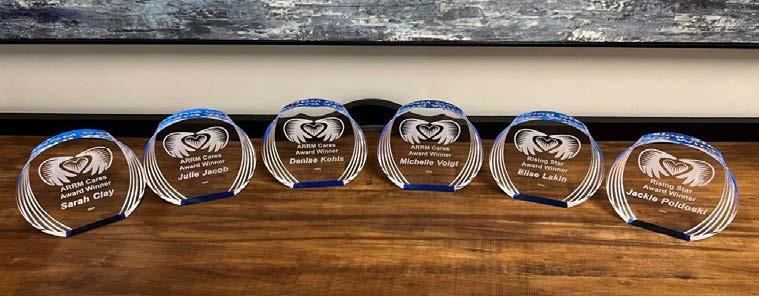
The 2022 ARRM Cares winners are: Sarah Clay, Sevita - REM Ramsey
Julie Jacob, Living Well Disability Services
Denise Kohls, Presbyterian Family Foundation

Elise Lakin, CCRI
Jackie Poldoski, DRCC
Michelle Voigt, Thrive Behavioral Network
Lakin and Poldoski are winners of in the ARRM Cares Rising Star Award category. The Rising Star Award was created in 2021 and is specifically reserved for direct support professionals with three years or less of service.
“The past few years have been incredibly challenging for direct support professionals and the people they support. Throughout it all, these incredible DSPs showed an inspiring
level of commitment, drive, and compassion in every aspect of their work.
They represent the gold standard in direct care,” said ARRM President Stacy Roe.
Each ARRM Cares winner was recognized at an event hosted by their employer throughout September.
The six winners were chosen from a field of finalists. They are Katie Hensel, EON Inc.; Stacy Jaycox, CCRI; Keith Johnson, Accord; Douglas Myster, Lakes Homes and Program Development; Pam
Norman. Hammer Residences/Northeast Residences; and Jaylynn Yonker, Harry Meyering Center. These nominees have given three or more years of services.
Rising Star nominees are Sam Franta, TLC of Duluth Inc.; Logan Her, ACR Homes Inc.; and Hallie Nupdal, CCRI.
ARRM also honored Sen. Jim Abeler (R-Anoka) as the recipient of the ARRM President's Award for Legislative Leadership.
Throughout his time in state government, Abeler has been an
unyielding advocate for people with disabilities and the workforce that support them. His commitment to working across the political divide to put the needs of Minnesota's most vulnerable first is the gold standard in public service.
ARRM is the Association of Residential Resources of Minnesota, a nonprofit association of more than 200 provider organizations, businesses and advocates. Members are dedicated to leading the advancement of home and community-based services supporting people living with disabilities in their pursuit of meaningful lives.
Pull up a chair! Youth project restores a landmark project
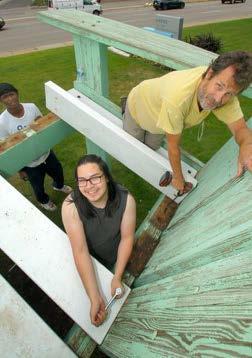
With hands-on work provided by young people working toward creating a better future for themselves and the community, the six-foot-tall Giant Green Chair located at the northwest corner of Bde Maka Ska in Minneapolis got some attention.
The project is a unique collaboration of Lakeside Center , artist Joel Sisson and Elpis Enterprises. Sisson was the originator of the original Green Chair project.
The Green Chair at Bde Maka Ska was part of the original Green Chair project that began in south Minneapolis during the early 1990s. The project was a way for the neighborhood young people to create a better community. With guidance from Sisson, young people around the Twin Cities built Adirondack chairs and gave two to each house on two blocks. The project was re-ignited by Elpis Enterprises with Sisson’s guidance in the summer of 2020 after the murder of George Floyd.
During the summer of 2020, Sisson worked closely with Elpis Enterprise’s trainees to build Adirondack chairs (using the jigs
from the 1990s project). The trainees built the chairs and used a sales model of a third chair donated to the community for every two chairs sold.
The recent project involved replacing seat boards and repainting the big chair.
Elpis Enterprises summer interns from both Step Up (Minneapolis) and Right Track (St. Paul) helped with this project as part of their summer internship.
The sale of regular-sized cedar Adirondack chairs help support this program and can be purchased online through Elpis Enterprises. Workshops on chair building are also offered by Elpis.
Elpis Enterprises is a nonprofit organization that uses its social enterprises to support young people

with lived experiences that can make it difficult to enter the workforce and launch a career pathway that will provide family-sustaining wages. Many of the trainees are experiencing homelessness or have unstable housing. Program participants have included youth people with disabilities., Elpis Enterprises provides paid work experiences that offer opportunities for trainees to build skills, experiences, and connections. Its social enterprises include customized decorated/ imprinted apparel and similar items, as well as a product-centered woodworking enterprise. Elpis also offers community-based do it yourself workshops.
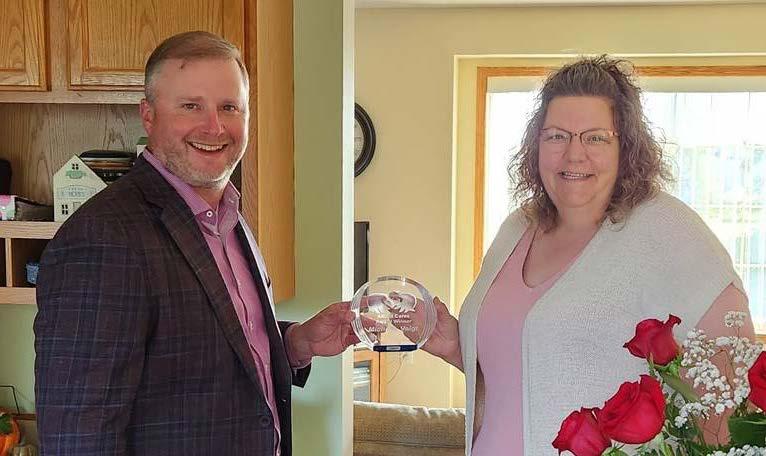
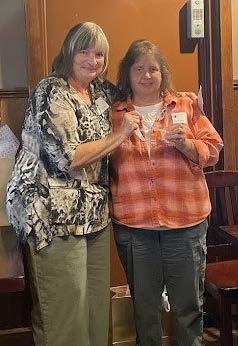
Thrive Behavioral Network President Jeff Bradley presents the ARRM Cares Award to Michelle Voigt
Jackie Poldoski: Michelle Hooey, DRCC Executive Di rector and ARRM Board Member, congratulates ARRM Cares Rising Star Award winner Jackie Poldoski.
Crews gave the Giant Green Chair some attention.
October 2022 Volume 33, Number 10 Pg 5
PEOPLE & PLACES Be part of our Access Press Directory NEXT EDITION: FEB 2023 For more details, call 651-644-2133 Direct support professionals make a difference, are honored ARRM Invest in pity free, disability journalism. Make your tax-deductible gift today! 651-644-2133 access@accesspress.org
ELPIS
Diane
Bangsberg
Anita
Donald Bania Paul Bauer & Pat Cretilli
Dena Belisle Margo Casey Joanna & Richard Cortright Rosebud Elijah Rollin & Marilyn Gates




Vicki Gerrits
Mike Gude Anne L. Henry Ellen & Skip Houghton
James & Darlene Krogseng Jane Larson Barbara Laughlin Johnson Ginny McDermott
Tom & Ky Milne

Brian Musselman Daniel Ness
John & Kristen Overby Annette M.
Mark Payette

Hilary &

Wick
October 2022 Volume 33, Number 10 Pg 6 ADVOCACY Advocating Change Together V-651-641-0297 act@selfadvocacy.org www.selfadvocacy.org Cow Tipping Press V -507-521-2278 bboyce@cowtippingpress.org www.cowtippingpress.org MCIL V-651-646-8342 F-651-603-2066 www.mcil-mn.org Mid-Minnesota Legal Aid - Minnesota Disability Law Center V-612-334-5970 mndlc@mylegalaid.org mylegalaid.org/our-work/disability MN Consortium for Citizens with Disabilities V-651-274-2098 info@mnccd.org www.mnccd.org MN Governor's Council on Developmental Disabilities V - 651-274-2098 admin.dd@state.mn.us mn.gov/mnddc SMILES Center for Independent Living V -507-345-7139 smiles@smilescil.org https://smilescil.org Upstream Arts V -612-331-4584 info@upstreamarts.org www.upstreamarts.org/ ASSISTED LIVING Desnol Healthcare Services V-763-210-8684 info@desnolhealthcare.com www.desnolhealthcare.com Opportunity Partners V-952-938-5511 info@opportunities.org www.opportunities.org AUTISM SERVICES ACCORD V-612-224-9101 info@accord.org www.accord.org Accra V-952-935-3515 TF-866-935-3515 www.accracare.org Fraser V 612-861-1688 fraser@fraser.org www.fraser.org Opportunity Partners V-952-938-5511 info@opportunities.org www.opportunities.org BRAIN INJURY ACCORD V-612-224-9101 info@accord.org www.accord.org Opportunity Partners V-952-938-5511 info@opportunities.org www.opportunities.org Restart, Inc. V-952-767-3350 viannc@restarticmn.org www.restartincmn.org CASE MANAGEMENT Fraser V 612-861-1688 fraser@fraser.org www.fraser.org CHEMICAL HEALTH Avivo V -612-752-8000 contact@avivomn.org www.avivomn.org COMMUNITY LIVING Fraser V 612-861-1688 fraser@fraser.org www.fraser.org LSS Host Homes V-651-255-2363 hosthomes@lssmn.org www.lssmn.org/hosthomes MCIL V-651-646-8342 F-651-603-2066 www.mcil-mn.org Opportunity Partners V-952-938-5511 info@opportunities.org www.opportunities.org Reach for Resources V-952-200-3030 F-952-229-4468 www.reachforresources.org CONSUMER-DIRECTED COMMUNITY SUPPORTS Accra V-952-935-3515 TF-866-935-3515 www.accracare.org EDUCATION Avivo V -612-752-8000 contact@avivomn.org www.avivomn.org Fraser V 612-861-1688 fraser@fraser.org www.fraser.org Upstream Arts V-612-331-4584 info@upstreamarts.org www.upstreamarts.org ACCESS PRESS DIRECTORY www.truefriends.org | 952.852.0101 | info@truefriends.org True Friends provides life-changing experiences to children and adults with disabilities through a variety of programs at five Minnesota locations. Locations Camp Courage Maple Lake, MN Camp Eden Wood Eden Prairie, MN Camp Friendship Annandale, MN Camp Courage North Lake George, MN Where experiences & all abilities adventures are ope n Programs• Camp • Travel • Horse Therapy • Team Building • Respite • Retreat Centers Thank You for the gifts in memory of Tim Benjamin
Achterling Jeff
&
Boucher
Pantel
Stuart Ratner Robert & Beverly Reid Mike Schwartzbauer Walt Seibert Laurene Tomaszewski Joel Ulland Cathy
Linda Wolford Leslie Zaricor Richard Ziton Invest in pity free, disability journalism. Make your tax-deductible gift today! 651-644-2133 access@accesspress.org 651-644-2133 access@accesspress.org Tim Benjamin Access Press Executive Director and Editor 2001-2020 Reach our valued readers! 651-644-2133
GOLD
Kim Kang
Ronna Linroth
Brandon Miller
Shannah Mulvihill
James & Cynthia Musselman
In memory of James J. Benjamin
Debra J. Shriver
Joel Ulland
Robyn Wade
Just Comfort
SILVER
Jeff and Anita Bangsberg
Alexandra Bartolic
Dena Belisle
Tim Benjamin
In memory of James J. Benjamin Yoshiko Dart
Rosebud Elijah and Julee Quarve-Peterson
Robert Paul Gregory
Pamela Hochrein
Judy Hunt
Steven Kuntz
Rick Macpherson
Gene Martinez
Brian Musselman
Manley & Ann Olson
Annette M. Pantel
Hilary & Stuart Ratner
Walter J. Seibert
Amanda & Mark Tempel
Colleen Wieck
BRONZE ($75-$149)
Holly Anderson
Gretchen Bratvold
Leo and Sue Bulger
Richard Cloud
Dean Doering
Craig J Dunn
Ellie Emanuel Lee Ann and Dale Erickson
Kent Fordyce Claudia Fuglie
Lael Gatewood
Vicki Gerrits
Marjorie Goldberg
Mike Gude Terry Hagenah
Anne L. Henry Ellen & Skip Houghton
FRIEND
Nora Aileen Beall
Paul Bauer & Pat
Cretilli
Tom Clark
Joanna & Richard Cortright
Ellie Emanuel Steve & Jo Ann Erbes
Nancy N. Eustis
Steve Erbes
Vicki Gerrits Ann Griffith Phil Jacobsma
Laura Johnson Barb Kane
ACCESS

Catherine Hunter Margaret Imdieke Cross & Stewart Cross
Kim Keprios
Megan Keyser Jane Larson
Steve Larson John Marty Tom & Ky Milne Eric S Nelson Annette M. Pantel
Mark Payette Stephanie Schwartz
Jon Skaalen
John G Smith
Laurene Tomaszewski Cathy Wick Leslie Zaricor
Mark Knutson
Tag Krogseng Sandi Lane Daniel Ness
William & Joen Overby Annette M. Pantel Mike Schwartzbauer Ann C Roscoe Dayna Schaefer
Alina Schroeder Stephanie Schwartz Dick VanWagner Linda Wolford Richard Ziton
Paul, MN 55104-8006
www.reachforresources.org
October 2022 Volume 33, Number 10 Pg 7 EMPLOYMENT/VOCATION Avivo V -612-752-8000 contact@avivomn.org www.avivomn.org Courage Kenny Rehabilitation Institute V-612-863-4200 www.allinahealth.org/ couragekenny MRCI V-507-386-5656 referrals@mymrci.org www.mymrci.org Opportunity Partners V-952-938-5511 info@opportunities.org www.opportunities.org ProAct V-651-686-0405 aballard@proactinc.org www.proactinc.org Reach for Resources V-952-200-3030 F-952-229-4468 www.reachforresources.org WACOSA V-320-251-0087 info@wacosa.org www.wacosa.org INFORMATION/REFERRAL RESOURCES ADA Minnesota; a program within MCIL V-651-603-2015 711 relay service www.adaminnesota.org LEGAL Mid-Minnesota Legal Aid - Minnesota Disability Law Center VMEDICAL SUPPLIES/EQUIPMENT Gillette Children's V -651-291-2848 publications@gillettechildrens. com www.gillettechildrens.org Handi Medical Supply V-651-644-9770 F-651-644-0602 www.handimedical.com HME Medical Shop V - 800-258-6313 customerservice@hmemedicalshop.com www.hmemedicalshop.com Numotion V-763-571-9176 chris.simms@numotion.com www.numotion.com MENTAL HEALTH Accra V-952-935-3515 TF-866-935-3515 www.accracare.org Avivo V -612-752-8000 contact@avivomn.org www.avivomn.org ACCORD V-612-362-4400 info@accord.org www.accord.org Fraser V - 612-861-1688 fraser@fraser.org www.fraser.org National Alliance on Mental Illness (NAMI) V-651-645-2498 TF-888-826-4435 www.namimn.org Reach for Resources V-952-200-3030 F-952-229-4468 www.reachforresources.org MOVIES/PERFORMING ARTS/SPECTATOR Young Dance V-612-423-3064 info@youngdance.org www.youngdance.org RECREATION Courage Kenny Rehabilitation Institute V-612-863-4200 www.allinahealth.org/ couragekenny Reach for Resources V-952-200-3030 F-952-229-4468
Wilderness Inquiry V-612-676-9400 info@wildernessinquiry.org www.wildernessinquiry.org RECREATION-HOBBIES/CLUBS/SOCIAL GROUPS Courage Kenny Rehabilitation Institute V-612-863-4200 www.allinahealth.org/ couragekenny Reach for Resources V-952-200-3030 F-952-229-4468 www.reachforresources.org RECREATION-TRAVEL/CAMPING Wilderness Inquiry V-612-676-9400 info@wildernessinquiry.org www.wildernessinquiry.org REHABILITATION: PHYSICAL, OCCUPATIONAL, SPEECH, AUDIOLOGY, TECHNOLOGY Courage Kenny Rehabilitation Institute V-612-863-4200 www.allinahealth.org/ couragekenny Gillette Children's V -651-291-2848 publications@gillettechildrens. com www.gillettechildrens.org RESIDENTIAL/GROUP HOME PROGRAMS LSS Host Homes` V-651-255-2363 hosthomes@lssmn.org www.lssmn.org/hosthomes Opportunity Partners V-952-938-5511 info@opportunities.org www.opportunities.org Restart, Inc. V-952-767-3350 viannc@restarticmn.org www.restartincmn.org SERVICE ANIMALS Helping Paws V - 952-988-9359 info@helpingpaws.org www.helpingpaws.org Pawsitive Perspectives Assistance Dogs (PawPADs) V-612-643-5671 info@pawpads.org www.PawPADS.org SKILLED NURSING FACILITIES ACCORD V-612-362-4400 info@accord.org www.accord.org SUPPORTS - OTHER TYPES Interact Center for the Visual and Performing Arts V-651-209-3575 advancement@interactcenter.org https://interactcenter.org Highland Friendship Club V-651-340-0711 info@ highlandfriendshipclub.org www. highlandfriendshipclub. org Phoenix Alternatives, Inc. (PAI) V-651-846-9274 www.paimn.org TECHNOLOGY Gillette Children's V -651-291-2848 publications@gillettechildrens. com www.gillettechildrens.org VISION IMPAIRMENT Minnesota Commission of the Deaf, DeafBlind & Hard of Hearing (MNCDHH) V-651-431-5961 mncdhh.info@state.mn.us www.mn.gov/deaf-commission WAIVER CASE MANAGEMENT ACCORD V-612-362-4400 info@accord.org www.accord.org Accra V - 952-935-3515 jwhite@tunheim.com www.accrahomecare.org Reach for Resources V-952-200-3030 F-952-229-4468 www.reachforresources.org Thanks to ALL OF YOU for supporting Access Press BENEFACTOR ($1000 & up) Janice Chevrette Handi Medical Lynda Milne Tamarack Habilitation Tech, Inc. Kay Willshire MAIL YOUR SPONSORSHIP AND SUBSCRIPTION TO : Access Press, LTD. PO Box 40006, Industrial Station, St.
($500-$999)
($150-$499)
($50-$74)
PRESS DIRECTORY
Opportunity Partners, a Twin Cities disability services nonprofit, celebrated the opening of a new location for its Karlins Center with an official ribbon cutting recently. The center offers day and enrichment services to adults with autism and other disabilities.
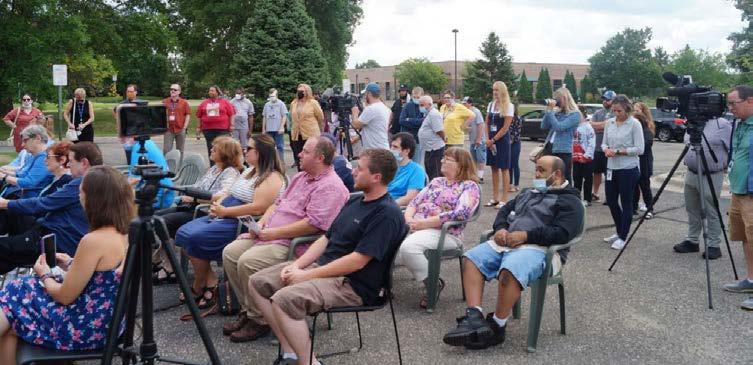

“Karlins Center is an important day service location for adults who benefit from close interactions with staff through a variety of inclusive activities,” said Opportunity Partners President and CEO
Grants to assist those with dementia

Eleven Minnesota organizations will be able to increase awareness of Alzheimer’s disease and related dementias, promote early diagnosis and connect caregivers to resources, thanks to grants from the Minnesota Board on Aging. The board is granting almost $750,000 to the organizations for 2023 projects.
“These funds support not only people with Alzheimer’s and other forms of dementia, but their family and friends, who play such a critical role in caregiving,” said Kari Benson, board executive director. “Alzheimer’s alone impacts some 100,000 Minnesotans over age 65—a number that will grow 20 percent by 2025.”
Grant recipients are:
A.C.E. of Southwest Minnesota, Slayton, $57,000, for a series of dementia education events, early identification screenings with area health care providers, caregiving support activities, and health and wellness education offerings in Cottonwood, Lincoln, Lyon, Murray, Nobles, Redwood and Rock counties.
Central Minnesota Dementia Community Action Network, St. Cloud, $150,000, for continued work in developing a community-based Dementia Resource Center promoting dementia prevention strategies among all primary and specialty care clinicians, facilitating more primary care clinicians providing full-spectrum dementia care, increasing access and use of dementia care resources for families living with dementia, and expanding an online Dementia Resource Directory.
CLUES, St. Paul, $50,000, for reaching Latiné older adults to support caregiving in the Twin Cities metro area, Austin and Willmar with culturally specific dementia education, early screening and diagnosis options. Funds also connect those providing care to resources and tailored individual and group services and education.
Faith Community Nurse Network of the Greater Twin Cities, Mahtomedi, $130,007, to equip Metro Faith Community Nurses to offer dementia education, resources and wellness assessments that normalize early risk and detection screens, and evidencebased health, wellness and caregiving support services.
Granite Falls Living at Home Block Nurse Program, Granite Falls, $18,500, for increasing awareness of dementia in the surrounding communities, including Upper Sioux Community; promoting early detection and identification of dementia in-home assessments; presentations to area organizations and faith communities; and connecting persons with dementia and their caregivers with direct services and meaningful social events.
Koochiching Aging Options, International Falls, $31,389, for increasing
Bill Schultz.
Opportunity Partners-Karlins Center has been operating since 1996 in Plymouth in a leased space and relocated to a new building during the summer. The new building, which is owned by the organization, was renovated with the needs of people served in mind. It features larger and brighter spaces and a more inviting and comfortable environment.
Opportunity Partners-Karlins Center was named for Miriam Karlins, a founding
one-to-one assistance from a dementia care support service, offering additional memory cafés for people with dementia and those caring for them while expanding dementia friends awareness and education sessions throughout Koochiching County.
Lao Advancement Organization of America, Inc., Minneapolis, $49,906, for culturally specific information about dementia and caring for people with dementia to health care providers in three Greater Minnesota communities; increase dementia education information among ethnic Lao, including trainings for employees/volunteers of Lao business and organizations; create bilingual resources in print or video format and on Facebook and YouTube; host quarterly social events for people with dementia and family and friends helping care for them.
North Shore Area Partner, Silver Bay, $19,500, for training staff, board members and volunteers as well as area health/social work/law enforcement and civic leaders about the value of brain health, nutrition, exercise and socialization while decreasing stigma and misinformation around dementia; for creating dementia friends action teams and establishing a memory café; and for introducing dementia-friendly concepts to local leaders and policy makers.
Northwoods Caregivers, Bemidji, $77,316, for continued work with dementia outreach, education and support for previously underserved populations (area Native Americans and LGBTQ+ population, and rural residents), with an emphasis on normalizing early identification and screening tools, caregiving support groups, and through dementia education sessions offered at community health fairs, conferences and gatherings.
Sewa-aifw Inc., Brooklyn Center, $74,999, for increasing awareness of Alzheimer’s and other dementias within the South Asian community, continuing early identification through screening in the community and referrals to culturally aware health care providers for cognitive assessment testing, and promoting wellness by connecting family and friends caring for people with dementia to each other and to services, education and resources.
Volunteers of America-Minnesota, Edina, $90,954, to enhance and expand services that identify, educate and support diverse populations facing the challenges of Alzheimer’s disease and related dementias and those that care for them. Activities include providing culturally appropriate memory and chronic disease screening/ testing and facilitated connections to needed services, broader community education about dementia through outreach, and helping family and friends providing care to better manage their own health through evidence-based education and individual support.
member of the organization and a lifelong advocate for people with disabilities. She was an active Opportunity Partners board member, parent and volunteer. Her daughter, Sandra, was served by the organization for many years.
“Miriam’s accomplishments over the years were monumental, resulting in sweeping societal changes for people with disabilities,” Schultz said.
Numerous staff and people served by the organization attended the ribbon cutting,

The Arc announces board members
The Arc Minnesota and Arc’s Value Village are honored to announce the election of Tim Allen of Dominium as a new co-chair of the organization’s board. He joins co-chair Nate Scott. The board also welcomes newcomers Bryan Boyce, Muneer Karcher-Ramos and Roy Adams.
“The Arc Minnesota is near and dear to me,” said Allen. His family has utilized its resources. Allen has been on the board since 2010, and served as chair for the 2019 gala. “As a strong and stable organization, now is the time for the Arc Minnesota to work towards realizing our new vision, grow to serve more Minnesotans.”
Bryan Boyce of Cow Tipping Press and Muneer Karcher-Ramos of St. Paul’s Office of Financial Empowerment were elected to the board during the 2022 annual meeting.
Roy Adams of Ramsey County Community Corrections was appointed to the board by CEO Andrea Zuber.
“For me, joining the Arc Minnesota board was very personal,” said KarcherRamos, whose son is autistic. “I’ve served on lots of different boards where I am [an] expert or that align with my career. As I looked to join this board, my first foot forward was personal—the work of the Arc impacts my son, our family, and the broader disability community.”
Drawing from the principles of disability justice, the Arc Minnesota’s values framework and feedback from key stakeholders, the board of directors help inform and guide the organization’s work. Board members provide essential support and guidance through lived experience as people with disabilities, family members of people with disabilities, service providers, and more. Additionally, they help make sure the Arc Minnesota connects with every region, honoring the unique
in addition to the Karlins family, Plymouth Mayor Jeff Wosje and Sen. Ann Rest (DFL-New Hope).
“All in all, Opportunity Partners is a positive part of our community .. Plymouth is a more inclusive, stronger city, thanks to the presence of Opportunity Partners,” Wosje said.
Currently, 34 people are served at Opportunity Partners-Karlins Center, with more expected to enroll as additional staff are hired.
communities that exist across the state.
“I believe we will live in unique times, and I am honored to be in a position to impact the future of the narrative surrounding disability justice and racial justice,” said Adams.
The Arc Minnesota is a statewide nonprofit organization that works to promote and protect the human rights of people who have intellectual and developmental disabilities, actively supporting them and their families in a lifetime of full inclusion and participation in their communities.



October 2022 Volume 33, Number 10 Pg 8
Opportunity Partners hosts ribbon cutting for new day service center Everyone was excited to cut the ribbon for the new facility.. OPPORTUNITY PARTNERS PEOPLE & PLACES A large crowd attended the event. What are your hopes & dreams? Discover your path! Contact us today! 651 646 8342 www.mcil mn.org Live your most independent life, follow your path! What are your hopes & dreams? Discover your path! Contact us today! 651-646-8342 www.mcil-mn.org 530 North Robert St, Saint Paul MN 55101 Live your most independent life, follow your path! Responsive PCA Choice Services Independent Living Services ADA Information Covid Community Coordination Transitional and Housing Services Contact us today! www.mcil-mn.org 651-646-8342 530 North Robert Street Saint Paul, MN 55101 Make the news! Receiving an award? Joining a board? Moving to new space? Winning a race? Filling a top post? Send us your “boast”! Marking a key date? Please don’t be late! Access Press welcomes submissions for the People and Places pages. Submissions are due by the 15th of each month. Questions? Call 651-644-2133 or email access@accesspress.org
REGIONAL
Student mental health is focus
Hennepin County Commissioner Kevin Anderson has spent the past several weeks working with constituents on student mental health issues. The effort culminated in a town hall and panel discussion in September.
Dr. Mark Sander, senior clinical psychologist for Hennepin County and director of school mental health for Hennepin County and Minneapolis Public Schools, discussed the impact of the county’s expanded school-based mental health program in serving the public.
“School mental health is there to support all students’ needs, giving them what they need, when they need it. It means access to high-quality care and reducing stigma,” said Sander.
“We have 22 different mental health agencies that have a therapist in over 231 schools across Hennepin County,” said Sander. “Over 197 full-time therapists are mental health providers in schools, and we still need more. How do we make sure we’re funding all of it? Hennepin County used some of their pandemic response money – $2.2 million – to expand into 24 more schools to get us to every school in the county having one provider. Even with that, we’ve heard from other schools that they need more than one therapist.”
Cameron Monson provides therapy services at a middle school within Hennepin County District 7. Monson highlighted issues facing providers in the school settings, such as therapist shortages, and shared thoughts on how to improve services.
“Advocacy is really important. We help the teachers with different skills they can use. A lot of students we see don’t have the coping skills to work through things. Trauma responses happened not just for the student but also for the parent,” said Monson.
Osseo Area Schools Superintendent Cory McIntyre shared insights on how teachers and school staff work with students experiencing mental health challenges.
“School mental health is about prevention and intervention. We have to deal with both really well,” said McIntyre. “Our challenge in schools is to meet every step of that continuum. Our students have struggled coming back to school, with a sense of belonging, with a sense of increased stress and increased isolation. Our goal is to have all our students leaving our system to do whatever it is they choose and be awesome at it.”
Erik Fadden, director of public safety for the City of Plymouth,
CFSS implementation faces delays
The Minnesota Department of Human Services (DHS) continues to work to launch Community First Services and Supports (CFSS), but exactly when that will happen isn’t known. The flexible healthcare program will replace Minnesota’s Personal Care Assistance (PCA) and the Consumer Support Grant (CSG).
It was announced recently that DHS will not launch CFSS before April 1, 2023.
DHS anticipates the Centers for Medicare & Medicaid Services (CMS) will need additional time to approve the CFSS state plan amendments after DHS made changes that CMS requested.
DHS has emphasized that delays in implementing CFSS won’t affect anyone’s ability to continue receiving services, or to access assessments needed to start services. But there are worries that the delays could affect long-sought assistance such as a 2021 state law change that provides flexibility for people with disabilities who need to be driven to destinations by a personal care attendant.
The process of review and approval between DHS and CMS has been slowed by the COVID-19 pandemic. A town hall meeting on the transition and delays was held almost a year ago.
State plan amendments were submitted to the CMS in March, providing time for CMS to review the amendments, request changes and approve the plans. After receiving questions DHS submitted additional information over the summer. Additional questions were sent to DHS in September,.
DHS cannot provide a specific launch date for CFSS until CMS approves, but will continue to provide updates as more information becomes available.
(Source: Minnesota DHS)
Disabled veterans need assistance
Minnesotan disabled veterans who cannot drive are facing a shortage of volunteer drivers. The drivers, through the Disabled American Veterans (DAV) program, provide free rides to medical appointments
In 2021 18,981 veterans in Minnesota took advantage of the program. But a severe shortage of volunteers is causing problems.
“When the [Veterans Affairs] shut down all of their in person [appointments during the pandemic] we lost some volunteer drivers from that same time,” Department Adjutant Stephen Whitehead for DAV Minnesota said.
oversees the police and fire department for the city. Fadden, who has been in his position since February 2021, discussed experiences responding to the mental health of residents they serve.
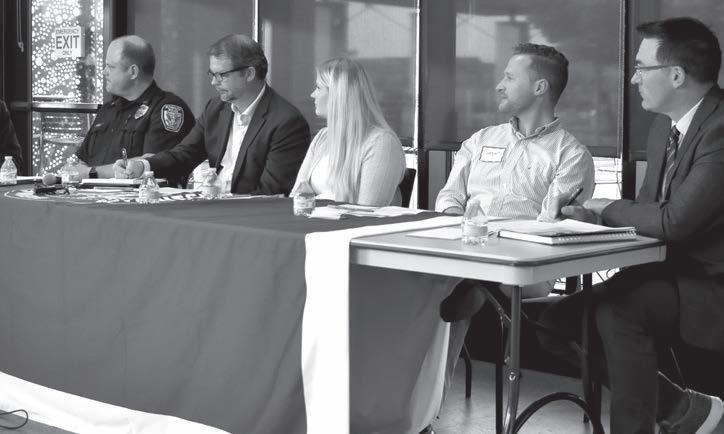
“When it comes to mental health … any big incident, whether it’s at school or an incident a child is having at home, there are often factors and warning signs that someone saw,” said Fadden. “(Police) play an important role just having a seat at the table to discuss the warning signs and help school staff and parents work through it.”
Lauren Bialon, a parent of three girls, told the story of her oldest daughter’s mental health crisis and steps her family had to take to get through it. After her family’s experience, she has been helping other parents advocate for their children to access mental health services.
“School mental health is teaching students how to ground themselves, how to focus themselves when they are in crisis or semi-crisis, how to handle their emotions. There are some really big feelings going on in middle school, in high school,” said Bialon. “Social media plays a huge role in our kids’ lives these days. It’s toxic. It’s unhealthy for a developing brain. Our kids are shoved into some sort of account all day long. They are constantly being directed with information that tells them they are not good enough, that they don’t meet the standard. That’s a huge part of it.”
The panel discussion is available on YouTube, at https://www. youtube.com/watch?v=Izo1jeAuNmo
According to DAV Minnesota, during that time they lost 30% of their volunteer drivers.
“Now [we’re] trying to ramp up our volunteers again to meet the demand because the VA is opening the doors up to doing a lot more in person appointments,” Whitehead said.
As of early September, DAV Minnesota has 145 volunteer drivers – that’s 150 fewer than their goal of 295 drivers.
The issue is statewide, and is especially acute in Greater Minnesota Southeast Minnesota only has 10 drivers, with other regions having just 20 to 25 drivers. The metro area has about 70 drivers.
“If you only have an hour, a couple hours a month, we can make that work,” Whitehead said.
On top of helping the DAV’s program and getting veterans to the care they need and deserve — some lifesaving as this is the only way they can get there — Whitehead said you also make connections, create conversations, and build relationships.
“[Sometimes a] veteran just starts talking about his or her service and you hear about what this ride really means to them and how it’s helping them improve their life actually to be able to get to the appointment,” Whitehead said. “It gives you chills and think about the impact that you’re having on the veteran.”
One metro volunteer driver who stepped away during the pandemic, but is now back on the road is Army veteran Gary Beatty. He enjoys meeting other veterans.
“You get to see some of the guys that really, really gave it their all. And, to be able to help them [is] a pleasure,” Beatty said.
A connection he made in early September was with George Griller. The Air Force veteran is blind and uses the DAV transportation program about every week.
(Source: KSTP-TV)
Questions raised about oversight
A September 20 legislative committee meeting raised difficult questions about the oversight of housing grants, some of which serve people with disabilities. The discussion included talk of reorganizing or breaking up the Minnesota Department of Human Services (DHS).
The Senate committee reviewed DHS internal processes for ensuring that money awarded to local government agencies and nonprofits actually go to the people they are intended to help. A legislative auditor's report found extensive violations of state legal requirements in the oversight
of grants meant to help marginalized populations, including homeless people and people struggling with mental illness, during the COVID-19 pandemic.
The auditor's review found no evidence of misspent funds or fraud, but also could
provide no assurance that fraud didn't occur.
Legislators were pointed in their criticism, repeating past calls for the agency to be split up into smaller parts to improve accountability. In a display of frustration,
Sen. Jim Abeler, (R-Anoka), who heads the committee, waved a stack of old audit reports critical of DHS to underscore his view that the agency has become too large to manage effectively.
“The trust of the public is what's at stake here," Abeler said. "And I have to say it's not a new discussion.”
In testimony, DHS Commissioner Jodi Harpstead defended the agency's track record of disbursing aid to people in need, while suggesting that excessive regulation may be partly to blame for the agency's recent problems. She highlighted the cumbersome grant-making process, in which DHS must go through more than 80 steps required under state law. Those rules should be streamlined, she argued, so that money can get into the hands of providers faster — particularly in emergencies like the pandemic.
"I will say, once again, that the department manages over $20 billion in funding," Harpstead told lawmakers. "To look at this one audit and declare that DHS is a mess or in trouble is grossly unfair to the caring and competent people at the Department of Human Services."
Still, Harpstead signaled her openness to legislators' calls for a possible restructuring of DHS.
DHS has more than 7,000 employees, spent $23 billion in the last fiscal year, and oversees programs that serve 1.2 million Minnesotans, including Medical Assistance, mental health care and childcare assistance.
Harpstead said that recently retired Deputy Commissioner Chuck Johnson has returned to the agency on a temporary basis to focus on reorganizing the agency. She and Johnson plan to develop recommendations to DFL Gov. Tim Walz on the structure of DHS.
(Source: Star Tribune)
Albright Townhomes Minneapolis 612-824-6665 1 BR
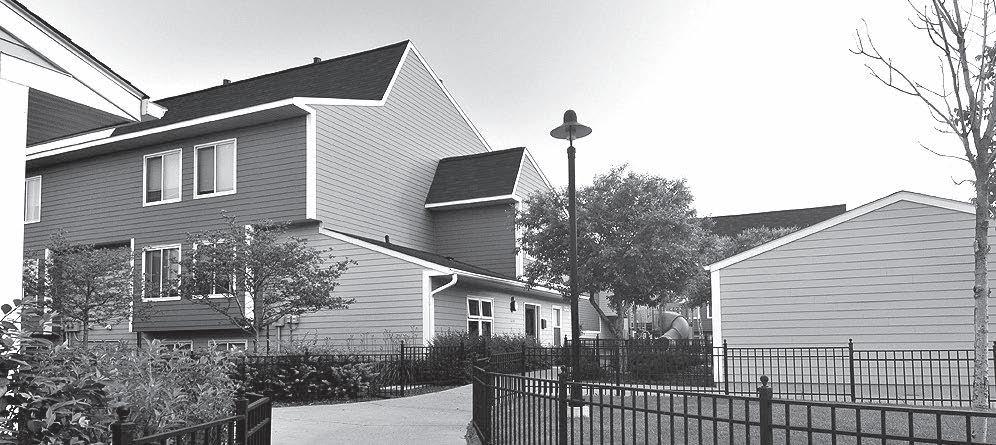
Cornerstone Creek Apartments Golden Valley 763-231-6250 1 & 2 BR (for developmentally disabled individuals)
Diamond Hill Townhomes Minneapolis 612-736-9341 2 & 3 BR
Elliot Park Apartments Minneapolis 612-338-3106 2 BR
Franklin Lane Apartments Anoka 763-427-7650 1 & 2 BR
Hanover Townhomes St. Paul 651-292-8497 1 BR
Hilltop Manor Eveleth 218-744-5169 1 BR
Hopkins Village Apartments Hopkins 952-938-5787 1 & 2 BR
Village Apartments Hopkins 952-938-5787 1 & 2 BR
Lincoln Place Apartments Mahtomedi 651-653-0640 2 BR
Olson Towne Homes Minneapolis 612-377-9015 1 BR
Park Plaza Apartments Minneapolis 612-377-3650 1 & 2 BR
Prairie Meadows Eden Prairie 952-941-5544 2 & 3 BR
Raspberry Ridge Hopkins 952-933-3260 1 BR
Slater Square Apartments Minneapolis 612-340-1264 EFF & 1BR
Spirit on Lake 612-724-3029 1 & 2 BR
Talmage Green Minneapolis 612-623-0247 2 BR
Trinity Apartments Minneapolis 612-721-2252 1 BR (sr)
Unity Place Brooklyn Center 763-560-7563 2 BR
Vadnais Highlands Vadnais Heights 651-653-0640 3 BR
Visitation Place 651-647-2550 1, 2 3 BR
Willow Apartments Little Falls 320-632-0980 1 BR
Woodland Court Apartments Park Rapids 888-332-9312 1 BR
HOUSING FOR VETERANS AT RISK OF HOMELESSNESS
Veteran's East Apartments Minnneapolis 612-208-1712
Veteran's & Community Housing Minnneapolis 612-333-0027 EFF
October 2022 Volume 33, Number 10 Pg 9
EFF
TRELLIS MANAGEMENT MAY BE ACCEPTING APPLICATIONS for our accessible waiting lists at the following affordable communities: We may be accepting applications for our large number of mobility impaired accessible units. Please call us for more information.
NEWS
Volunteer readers sought
Radio Talking Book is seeking volunteers to record books and periodicals for broadcast. This a fun and rewarding volunteer opportunity. Contact Roberta Kitlinski at 651-539-1423 or roberta. kitlinski@state.mn.us to learn more.
Use an app to hear programs
Radio Talking Book is not just for listeners with visual disabilities. It can be an asset for people whose disabilities limit hand movements, making it difficult to read a book.
The sampling published monthly in Access Press doesn’t represent the full array of programming. More programs and books are available.
Enjoy programming anytime and anywhere on a hand-held mobile device, for either iOS or Android. Visit the Apple App Store for iOS, or Google Play for Android, and download the Minnesota Radio Talking Book app.
Listen to RTB’s live or archived programs online at www.mnssb.org/rtb Books broadcast on the Minnesota Radio Talking Book Network are available for loan through the Minnesota Braille and Talking Book Library in Faribault. The catalog is at www.mnbtbl.org, click on the link Search the Library Catalog. Call the Minnesota Braille and Talking Book Library at 800-722-0550, Mon-Fri, 9 am - 4 pm CST for details.
For more Minnesota Radio Talking Book Network news, go to the Facebook site Minnesota Radio Talking Book. Audio information about the daily book listings is also on the National Federation for the Blind (NFB) Newsline. Register for the NFB Newsline by calling 651-539-1424.

The NFB-NEWSLINE service provides access to more than 500 magazines and newspapers, plus information on COVID-19 in the “Breaking News” section. To learn more, visit www.nfb.org/ programs-services/nfb-newsline.
Donate to the State Services for the Blind at mn.gov/deed/ssbdonate
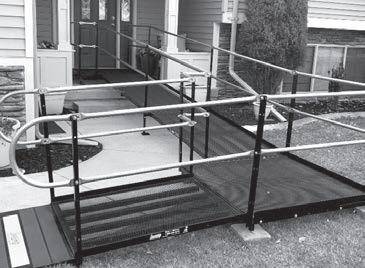
The morning news
Minnesota Radio Talking Book Network
Minnesota Radio Talking Book broadcasts the Star Tribune and Pioneer Press live every morning from 8 a.m. to 10 a.m.
Listeners are asked to weigh in about content. Is anything missing? Contact acting station manager Joseph Papke at 651-539-2316 or joseph.papke@state.mn.us
Chautauqua*
Monday – Friday 6 a.m.
Reality+, nonfiction by David J. Chalmers, 2022. A leading philosopher takes a mindbending journey through virtual worlds,
AROUND THE DIAL
Access Press is interested in listing regularly scheduled broadcast, cablecast or podcast programs by and for people with disabilities.
Programming needs to have a tie to Minnesota or the Upper Midwest.
Around the Dial is published on a spaceavailable basis. Anyone with questions can contact jane@accesspress.org
Disability Viewpoints
An award-winning public access television show by and for people with disabilities, Mark Hughes and his team of co-hosts feature current news, inter esting people and groups, and events in Minnesota’s disability community. The show is produced by volunteers at St. Paul Neighborhood Network. Some shows are archived on YouTube, so search for Dis ability Viewpoints on that web channel to find past shows. Visit the show’s Facebook page, and www.spnn.org
Disability and Progress
KFAI Radio, 6-7 p.m. Thu. Host Sam Jasmine and her guests explore a wide range of topics that are important to people with disabilities. Shows are now available on podcast.
Ask the smart speaker to play Disability and Progress podcast for the latest episode. For easier access, download the app to a smart
illuminating the nature of reality and our place within it. Read by Lannois Neely. 22 broadcasts; begins Mon, Oct. 10.
Past is Prologue*
Monday – Friday 11 a.m.
What It Took to Win: A History of the Democratic Party, nonfiction by Michael Kazin, 2022. The story of the United States’ most enduring political party and its long, imperfect and newly invigorated quest for “moral capitalism.” Read by Carol McPherson. 19 broadcasts; begins Mon, Oct. 3. – L, R
Voices from Pejuhutazizi, nonfiction by Teresa Peterson & Walter LaBatte Jr., 2022. A rich trove of stories told by five generations of a Dakota family. Read by Stevie Ray. Eight broadcasts; begins Mon, Oct. 31.
Bookworm*
Monday – Friday 12 p.m.
Wildcat, fiction by Amelia Morris, 2022. An uproariously funny, surprisingly touching story of one woman’s journey through motherhood and female friendship, in a society that plays fast and loose with information. Read by Karen Ray. Nine broadcasts; begins Thu, Oct. 6.
Groundskeeping, fiction by Lee Cole, 2022. An indelible love story about two very different people navigating the entanglements of class and identity and coming of age in an America coming apart at the seams. Read by Don Lee. 12 broadcasts; begins Wed, Oct. 19.
The Writer’s Voice*
Monday – Friday 1 p.m.
The Milk Lady of Bangalore (rebroadcast), nonfiction by Shoba Narayan, 2018. A writer returns to India from Manhattan and forms a bond with the local milk lady. Read by Esmé Evans. Eight broadcasts; begins Tue, Oct. 4.
Bourdain: The Definitive Oral Biography, nonfiction by Laurie Wollever, 2021. An unprecedented behind-the-scenes view into the life of Anthony Bourdain from the people who knew him best. Read by Glenn Miller. 12 broadcasts; begins Mon, Oct. 17. – L
Choice Reading*
Monday – Friday 2 p.m.
Polite Society (rebroadcast), fiction by Mahesh Rao, 2019. When Ania, a young New Delhi woman, plays matchmaker she discovers how things seldom go as planned in matters of the heart. Read by Kristi Fuller. 11 broadcasts; begins Tue, Oct. 4. – L
Marrying the Ketchups, fiction by Jennifer Close, 2022. An irresistible comedy of manners about three generations of a Chicago restaurant family and the deep-
phone and hear shows on demand. Or hear Disability and Progress stream live, just tell the smart speaker to play KFAI radio. KFAI is at 90.3 FM in Minneapolis and 106.7 FM in St. Paul. Listeners outside of the Twin Cities, or those looking for a past show, will find the show’s archives online at www.kfai.org
Email disabilityandprogress@samjasmine. com with questions and suggestions, or call 612-341-3144. Postal mail can be sent to KFAI, 1808 Riverside Ave. S., Disability and Progress, Box 116, Minneapolis MN 55454.
Disability Channel Minnesota
Disability Landscape/Disability Channel Minnesota is available on a YouTube channel. Mark Knutson, Charlie Brose and their team are regularly posting shows. They are looking for contributors to the channel. An upcoming guest is Holly Anderson, the executive director of Access Press. Contact them at disabilitychannelmn@gmail.com
Conor’s Corner
Conor’s Corner by Conor O’Meara can be heard at 10 a.m. Mon, replayed 8 a.m. Sat, at 94.1 or WFNU.org Frogtown Community Radio. The show can also be found on Spotify and Mixcloud. Find the radio station at www.wfnu.org
The on-air studio line, offered 10-11 a.m. Mon, is 651-313-5125.
O’Meara conducts a wide range of interviews, talks about what is going on in his life and even sings a little Elvis Presley when the time is right. T-shirts from the show are for sale at the St. Paul Highland Park Lund’s & Byerly’s store.
HoodWave Disability Radio Daniel and Leah Hood produce HoodWave
fried, beer-battered, cream cheese-frosted love that feeds them all. Read by Holly Sylvester. 11 broadcasts; begins Wed, Oct. 19. – L
Afternoon Report*
Monday – Friday 4 p.m.
The Right: The Hundred-Year War for American Conservatism, nonfiction by Matthew Continetti, 2022. A magisterial intellectual history of the last century of American conservatism and its impact on the present. Read by John Potts. 17 broadcasts; begins Mon, Oct. 3. – L
Fascism: A Warning (rebroadcast), nonfiction by Madeleine Albright, 2018. A personal and urgent examination of Fascism in the twentieth century and how its legacy shapes today’s world, written by the first woman to serve as U.S. secretary of state. Read by Michele Potts. Nine broadcasts; begins Wed, Oct. 26.
Night Journey*
Monday – Friday 7 p.m.
Such a Pretty Smile, fiction by Kristi DeMeester, 2021. A heart-stopping tourde-force about powerful women, angry men, and all the ways in which girls fight against the forces that try to silence them.
Read by Pat Kovel-Jarboe. 11 broadcasts; begins Mon, Oct. 3. – L, V, G
A Thousand Steps, fiction by T. Jefferson Parker, 2022. Sixteen-year-old Matt doesn’t believe that his missing older sister is just another runaway hippie chick, enjoying a summer of love. Not after another missing girl turns up dead on the beach. Read by Andrea Bell. 11 broadcasts; begins Tue, Oct. 18. – L, V
Off the Shelf*
Monday – Friday 8 p.m.
The Dreamers (rebroadcast), fiction by Karen Thompson Walker, 2019. A college student thinks she’s caught the flu. In fact, she has a mysterious illness that causes its victims to fall into a deep sleep, leading to death. Read by Marylyn Burridge. 10 broadcasts; begins Mon, Oct. 3.
The Orchard, fiction by Kristina GorchevaNewberry, 2022. Four teenagers grow inseparable in the last days of the Soviet Union—but not all of them will live to see the new world arrive in this powerful debut novel, loosely based on Anton Chekhov’s The Cherry Orchard. Read by Jodi Lindskog. 12 broadcasts; begins Mon, Oct. 17. – L, S
Potpourri*
Monday – Friday 9 p.m.
The Enchanted Hour (rebroadcast), nonfiction by Meghan Cox Gurdon, 2018.
Disability Radio. They work with Conor’s Corner and are looking for organizations and people with disabilities who want to have their shows air on the online station. Anyone who wants to be a part of HoodWave can contact them. Find HoodWave radio at https://www.hoodwave. org/p/hoodwave-disability-radio-live/ or www.hoodwave.org
Cup of Council
Cup of Council is a podcast launched by speech language pathologist/Minnesotan Amy Gundlach and two of her colleagues, who call themselves “the council.” They cover a wide array of disability-focused topics. Learn more at www.facebook.com/ groups/cupofcouncilpodcast/
Disability Viewpoints
Disability Viewpoints is an award-winning public access television show by and for
A look at how reading aloud makes adults and children smarter, happier, healthier, more successful and more closely attached, even as technology pulls in the other direction. Read by Yelva Lynfield. 11 broadcasts; begins Mon, Oct. 10.
The Last Bookseller, nonfiction by Gary Goodman, 2021. A wry, unvarnished chronicle of a career in the rare book trade during its last Golden Age. Read by Jim Ahrens. Five broadcasts; begins Tue, Oct. 25.
Good Night Owl*
Monday – Friday 10 p.m.
How I Learned I’m Old (rebroadcast) Nonfiction by Romney S. Humphrey, 2019. A collection of humorous essays—with a smattering of serious insights—that tell the tale of about what happens when middle age mysteriously departs and old age claims its territory. Read by Susan Niefeld.
Five broadcasts; begins Mon, Oct. 3. – L
FKA USA, fiction by Reed King, 2019. Set in a satirical, dystopian future, a young orphan is tapped by the President to deliver a talking goat to a laboratory in San Francisco. Read by Peter Danbury. 17 broadcasts; began Mon, Oct. 10. – L, V, S
RTB After Hours*
Monday – Friday 11 p.m.
Death and Other Happy Endings (rebroadcast) Fiction by Melanie Cantor, 2019. When Jennifer Cole’s doctor gives her only three months to live, she reaches out to three people who each had once broken her heart. Read by Holly Sylvester. 11 broadcasts; begins Tue, Oct. 18. – S
Weekend Program Books
Your Personal World, 1 p.m. Sat, presents Good Anxiety by Dr. Wendy Suzuki, read by Beverly Burchett, followed by How To Not Die Alone by Logan Ury, read by Beverly Burchett.
For the Younger Set, 11 a.m. Sun, presents Pony by R. J. Palacio, read by John Schmidt, followed by The Ogress and the Orphans by Kelly Barnhill, read by Pat Muir.
Poetic Reflections, noon Sun, presents Postcolonial Love Poem by Natalie Diaz, read by Mary Knatterud, followed by The King’s Touch by Tom Sleigh, read by Jim Ahrens.
The Great North, 4 p.m. Sun, presents Diesel Heart by Melvin Whitfield Carter Jr., read by John Mandeville – L, V, S, R.
people with disabilities. Mark Hughes and his team of cohosts feature current news, interesting people and groups, and events in Minnesota’s disability community. The show is produced by volunteers. Find the program at MCN 6 at 7:30 p.m. Wednesdays, on YouTube @ Disability Viewpoints and on community access channels. Some older shows are also archived on YouTube. Visit the show’s Facebook page at www.facebook.com/ disabilityviewpoints
October 2022 Volume 33, Number 10 Pg 10
RADIO TALKING BOOK All times listed are Central Standard Time. Abbreviations V – violent content R –racial epithets L – strong language S –sexual situation G – gory descriptions For your FREE estimate, call 800-649-5215 651-399-3075 Learn more at amramp.com Changing our customers’s lives, one ramp at a time. • Low cost • FREE home evaluations • Rent or buy • Installed in days “It is important that our clients who struggle with stairs are able to maintain their freedom, dependence and community ties.”
Rise Gala is Oct. 27
The Celebrate Rise Gala is 5-8 p.m. Thu, Oct. 27 will be held at the Minneapolis Marriott Northwest. The event includes dinner, a moving program, live auction, social hour, games and more. Tickets available for purchase now and must be purchased by Fri, Oct. 7. The event will once again hosted by local author and advocate Nancy Lyons. Anyone is welcome to participate in an online silent auction at the event website linked above beginning at noon, Thu Oct. 20. All donations support Rise's Advancing Lives Fund, providing important supports and resources to people in times of need. FFI: one.bidpal.net/celebraterise2022
Fall Fling—Dance Party
Young Dance presents Fall Fling 3-6 p.m. Sat, Oct. 15. Activities will be outdoors in the Fairview Business Center parking lot, 655 Fairview Ave N. St. Paul. In the event of rain, the event will continue inside the building at each partner's location. The free, outdoor celebration celebrates Young Dance’s 35 years of transforming lives through movement by bringing together numerous community partners for an event for the whole family. Performances and interactive demonstrations will be led by Young Dance, CAAM Chinese Dance Theater, Ripple Effect Community Fitness, Smiling Drum, St. Paul Ballet, and Youth Performance Company, plus there will be a family-friendly makers' market including Tough Cookies Art, addis/Decolonize Clay, NordEast Cookie Co., StartseedUrban, and more. Attendees can play games, blow bubbles, make art, eat cake, and of course dance
The full list of partners includes the Arc of Minnesota, CAAM Chinese Dance
Poetz is remembered
A celebration and remembrance of Clifford Poetz, a pioneer in the self-advocacy movement and lifelong disability rights activist, is 1-3 p.m. Sat, Nov. 5 at the Spirit of St. Stephen’s, 5011 31st Ave. S, Mpls, in the New Branches building. The service will include an opening and closing prayer, readings, a eulogy, and an opportunity to share stories. Refreshments will be served. The event will livestreamed on YouTube (https://youtu.be/JHpe4-eEWCA).
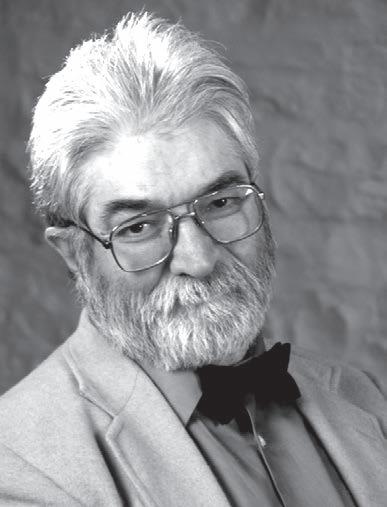
Poetz not only defined self-advocacy, he set the example and opened the door for countless others to take up the cause of disability rights. At the time Poetz became an activist, about 200,000 Minnesotans were still living in institutions. Since 2001 Poetz served as community liaison with the Research and Training Center on Community Living within the University of Minnesota’s Institute on Community Integration (ICI). He was a past Access Press Charlie Smith Award winner.
Theater, Element Gym, Co-Motion, Ripple Effect Community Fitness, Smiling Drum, St. Paul Ballet, Young Dance, and Youth Performance Company. Young Dance highlights the work of those who make art accessible to all, audio description and an ASL interpreter will be provided. Seating and wheelchair-accessible parking will be available. FFI: https://youngdance.org/ Pentatonix at PACER
PACER Center’s annual benefit is Sat, Nov. 5 at Mpls Convention Center. Enjoy an array of activities and the music of a cappella superstars Pentatonix. The evening will include an exciting live auction and a huge silent auction featuring sports tickets and memorabilia, exciting getaways, fabulous experiences, jewelry,
OPPORTUNITIES
CONFERENCES
Attend state conference
The National Alliance for the Mentally Ill (NAMI )Minnesota hosts its state conference Sat., Nov. 5 at St. Paul RiverCentre. The theme is Charting a New Future. Learn how to reduce mental health disparities and advance health equity from the opening keynote speaker Dr. Kisha B. Holden. Then choose from 18 breakout sessions on a wide variety of current mental health topics, including children and screen time, the important role of peer specialists, the impact of war on mental health, and many more. Check online for rates and registration information. FFI: www.namimn.org
PUBLICATIONS
Anniversary is marked
The Minnesota Governor's Council on Developmental Disabilities announces release of a new publication celebrating the 10th Anniversary of the first Olmstead Planning Committee efforts. A legal settlement agreement was approved in December 2011 with the state, and required appointment of an Olmstead Planning Committee in 2012. The Planning Committee met and recommended to then-DHS Commissioner Lucinda Jesson that the Governor consider appointing
an Olmstead Subcabinet. Gov. Mark Dayton signed Executive Order 13-01 appointing the first Olmstead Subcabinet. The report provides a 10-year summary of achievements and is based upon review of Olmstead reports and interviews with key informants. FFI:
CHILDREN AND FAMILIES PACER workshops sampling
PACER Center offers many useful free or low-cost workshops and other resources for families of children with any disabilities. Workshops are online and livestreamed at this time. Advance registration is required for all workshops. At least 48 hours’ notice is needed for interpretation. Check out PACER’s website and link to the newsletter of statewide workshops that allows participants to pick and choose sessions designed for their needs.
Back to School Stress: Tools and Apps to Minimize School Stressors is 2-3 p.m. Thu, Oct. 13. School is back in session and elementary and high school student may experience increased stress. The workshop explores tools and apps you or your child can use to decrease stressors and distractions.
Proactive Crisis Planning for Children with Mental Health Challenges is 6:308 p.m. Tue, Oct. 18. When children or teenagers experience escalating behaviors at school, a proactive crisis plan can
and much more. Event tickets are now available. FFI: www.pacer.org
Two AuSM events

Autism Society of Minnesota (AuSM) has two events coming up. Ignite Inclusion is 7-9 p.m. Wed, Oct. 19 at Brother Justus Whiskey Company, Mpls. The in-person event replaces the past galas. Enjoy live and silent auctions, activities, craft cocktails and appetizers, and much more. Preregistration and cost information are online.
The 5th Annual AuSM Connections Jigsaw Puzzle Competition will be inperson and virtual. 9 a.m.-3:30 p.m. Sat, Nov. 5. Contests at Mall of America Huntington Bank Rotunda and on Zoom will compete to see who is fastest. to put their jigsaw puzzling passion to the test by competing for the fastest puzzle
completion time. Different competitions offered. The competition will include an autism resources fair at MOA. Cost is $60 per team. Virtual teams can have their puzzle shipped for an additional $10. Register by Fri, Oct. 21 to have puzzles shipped. Dollars raised support programs and services for the local autism community. Sponsors are needed. FFI: www.ausm.org
Open Flow Forum
The Artists with Disabilities Alliance meets via Zoom 7-9 p.m. the first Thu of the month. Upcoming dates Oct. 6 and Nov. 3. Virtually join artists with disabilities and supporters to share visual art, writing, music, theater and artistic efforts or disability concerns. Facilitators are Tara Innmon, Kip Shane and Springboard for the Arts. The gatherings are fully accessible. Anyone needing special accommodations should contact Andy Sturdevant at host organization Springboard for the Arts. Funding is available for access needs. FFI: 651-2940907, resources@springboardforthearts.org
Less to Enjoy!
The Enjoy listings are for arts events as well as banquets and fundraisers for disability services organizations. Schedules may be subject to change. Some venues still may have mask and vaccine requirements. Please check with a venue or organization before making plans.
See what is available through the Minnesota Access Alliance and its calendar, at https://mnaccess.org/
help support recovery and wellness. The session will provide information on strengths-based planning in the school setting. FFI: PACER, 952-838-9000, 800537-2237, www.pacer.org
INFO & ASSISTANCE
Learn about cohousing
Ann Zabaldo, co-developer of a grassroots built 43-unit intentional community in Washington, D.C., speaks live via Zoom at 7 p.m. Wed., Oct. 12. Zabaldo consults on a national level, and serves on the board of Mid Atlantic Cohousing. She lives with disabilities. A live Q&A will follow her talk. All are welcome, and Zabaldo’s talk is free. But only 100 people can attend.
Cohousing communities are designed for connection–individual homes plus shared spaces–and are co-designed and managed by the residents. There are 150 such communities in the US, with more being built.
The talk is hosted by Twin Cities Cohousing Network, an all-volunteer nonprofit devoted to raising awareness about and supporting co-creation of cohousing in our area.
FFI: bit.ly/ZabaldoOct22
They’re on the move
After more than 75 years on Lyndale and Franklin, Vision Loss Resources, DeafBlind Services Minnesota, and Contract Production Services are moving as of Sat, Oct. 1. Their new home is at 3230 Spruce Street, Little Canada MN 55117. Doors will be closed to the public until Mon, Oct. 10. FFI: 612-843-3439, 612-871-2222, info@ visionlossresources.org
Many classes available
NAMI Minnesota (National Alliance on Mental Illness) has set up a wide variety of free and in-person online mental health classes. Choices include Hope for Recovery, Transitions, Ending the Silence, Understanding Early Episode Psychosis for Families, In Our Own Voice, Family to Family, Positive Psychology, Creating Caring Communities, smoking cessation, a suicide prevention class called QPR –Question, Persuade and Refer, a special QPR class for Agricultural Communities and many more.
The classes are designed for family members and caregivers, persons living with a mental illness, service providers, and also the general public. Find a complete listing of these classes and how to join in by going to namimn.org and clicking on “Classes” or go straight to https://namimn.org/education-publicawareness/classes/scheduled/
in Minnesota:
Boardwalk Wayzata 952-473-0502
Dewey Place/The Pines Foley 320-968-7791
Highwood Homes Prior Lake 952-447-6961
Greenwood Wadena 218-631-2575

Mission Oaks Plymouth 763-559-5770
FIND YOUR NEW HOME WITH AT HOME APARTMENTS Call 651-224-1234 or visit
FOR SALE
FOR RENT
Rustic Creek Two Harbors 218-595-1018
Todd 27 Long Prairie 320-732-6154
Town Square East Grand Forks 218-773-3631
Victory Duluth 218-722-2629
Income and rent restrictions apply Metes & Bounds is an equal housing opportunity housing company
AtHomeApartments.com for an apartment or town home Equal Opportunity Housing
October 2022 Volume 33, Number 10 Pg 11
ENJOY ! Expand YOUR REACH Connect with our valued readers today Call today & learn how! Call 651-644-2133 ext. 2 Classified rates: $20 (first 12 words); $1/word beyond 12. Email classified to access@accesspress.org Deadline: 20th of each month. We will email total cost of classified ad. METES & BOUNDS MANAGEMENT Company manages the following Section 8 properties
CLASSIFIEDS
2014 Chrysler Town and Country Wheelchair Accessible Van White / Clean / No Accidents / Great Condition – 39,300 miles, $26,500 obo 651-329-9529
adults with qualifying disabilities.

Over 50 barrier-free apartment communities & homes throughout the Metropolitan Area, Greater Minnesota and the Midwest.

Locations also available in many other states. Income limits apply.
Immediate openings in Hibbing, Willmar and Hibbing, Minnesota
Affordable Senior Apartments
• For qualifying senior households age 62 or better.
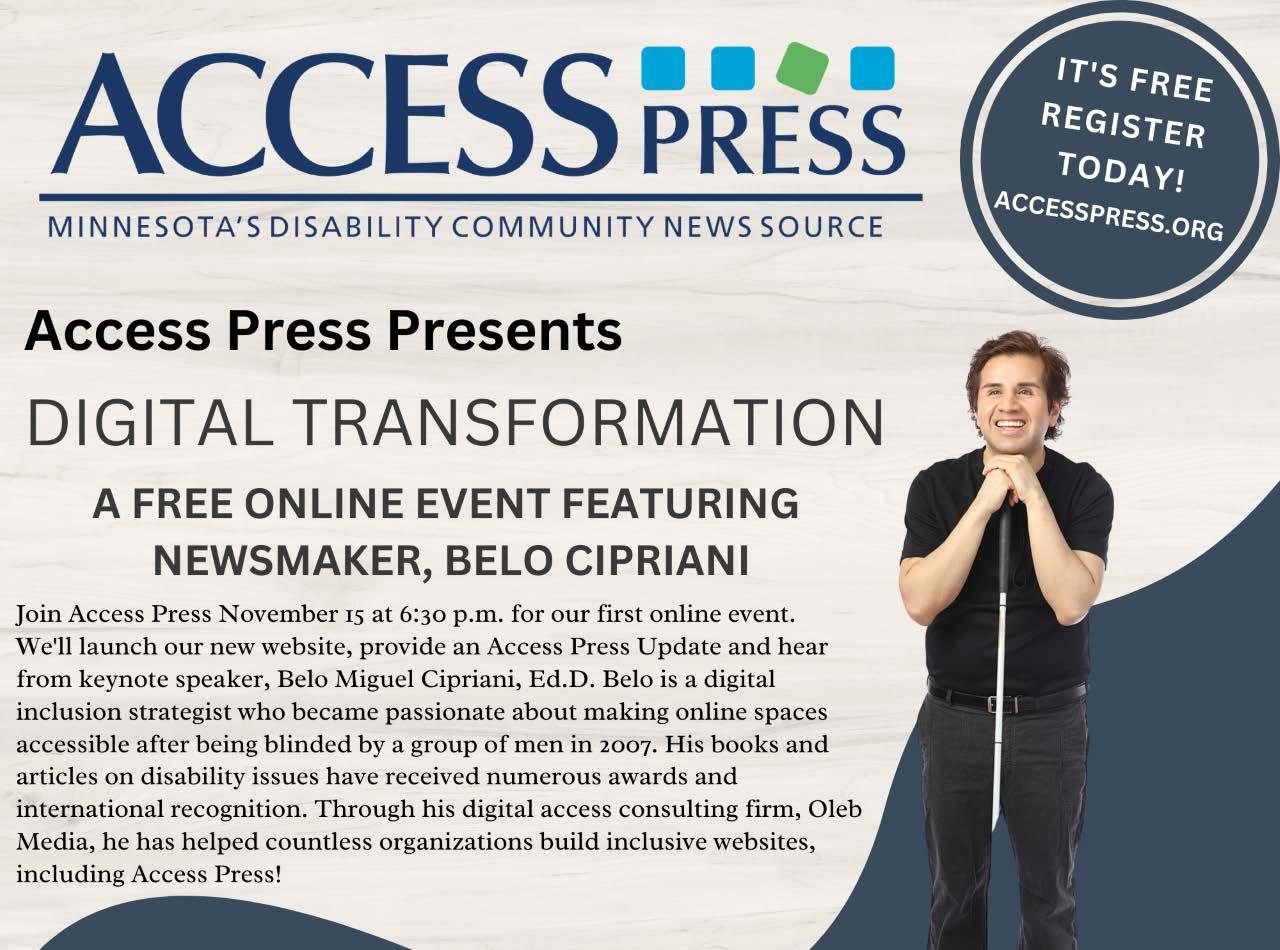
Metro & Greater MN locations available. Income limits apply.
• Accessible apartments, available for seniors in these locations.
Immediate openings in Worthington and Albert Lea, Minnesota



Housing with Care*
October 2022 Volume 33, Number 10 Pg 12 www.accessiblespace.org Accessible, Affordable Housing Accessible Space, Inc. Call 800-466-7722 TTY/TDD 800-627-3529 • For
•
•
•
•
•
• 24-hour Assisted Living Services • Independent Living Services • Resident Community Setting (Adult Foster Care) • Eligibility for or selection of ASI services is not required to qualify for housing. ASI services are not available in all locations Services openings. Call Today!ACCEPTING IMMEDIATE INTAKES Call: 800-829-7110 or Visit: MRCICDS.ORG Financial Management Service (FMS) | PCA Choice 245D Licensed | Community First Services and Supports (CFSS) MRCI Client Directed Services helps you get the most out of your self-directed care program by assisting you with Human Resources for your staff, paying bills, purchasing goods, managing your care budget, and more so that you can spend your time how you want. Spend your Day Your Way “I know that you guys are there, you’re going to help, you’re going to do it right and you know what you’re talking about.” – Linda W. | Client Representative | Ironton, MN
