Volume 34, Number 6
Emergency’s end means changes
T he federal COVID-19 public health emergency declaration ended on May 11. But COVID-19 is still with us and is still a threat, especially for those with disabilities or compromised immune systems. Learn what this means.
One thing will not change for a time. A new extension of a pandemic benefit will allow parents of children under age 18 and spouses to continue serving as personal care assistance (PCA) workers for their family members for another six months. The federal government approved the extension until November 11, 2023, and the final human services budget bill approved by the Minnesota Legislature and signed by Gov. Tim Walz May 24 includes funding for the extension.
D uring the wind-down of the federal public health emergency, the Minnesota Department of Human Services (DHS) asked to extend the personal care assistance benefit for family members, which has been in effect since early in the pandemic. The benefit was set to expire with the public health emergency on May 11. But just days beforehand, the federal Centers for Medicare and Medicaid Services (CMS) allowed Minnesota to apply for an extension, which was granted.
“ We wanted to do whatever we could to make sure services were not interrupted for people and their families,” said DHS Commissioner Jodi Harpstead. “We only learned that this option was possible in early May, and moved quickly to take advantage of it. We thank Governor Walz and the legislature for their cooperation, which was critical to making this possible.”
T he change applies to parents, stepparents and legal guardians of minors, as well as to spouses.
The Centers for Disease Control (CDC). Minnesota Department of Health (MDH) and other state and federal agencies are providing information on what is changing. The dropping of emergency status signals a change in how COVID-19 affects everyone’s life. More than 96 percent of Americans have either had the coronavirus, been vaccinated or both, according to the CDC. Prior exposure through recovery, vaccination or both convey some protection against severe disease. In addition, there are treatments available for those at high risk.

But the end of the federal public health emergency doesn’t mean letting down one’s guard. People who are at high risk for severe Covid-19 and their loved ones should protect themselves, staying updated on vaccines and boosters. Know available treatments and have a plan for any illness. People may still want to mask and do regular testing, and take other precautions to be taking for those
EMERGENCY To page 4
Objections to settlement are heard in federal court
by Jane McClure
A decision is expected soon on a federal lawsuit centered on living choices and the promises of Minnesota’s Olmstead Plan. A group of people with disabilities and their allies rallied May 12 outside of the St. Paul federal courthouse. They then heard argument centered on a proposed settlement in Murphy versus Harpstead.

Spectators filled overflow courtrooms to watch the proceedings and also watched online. Judge Donovan Frank took written comments for a week after the hearing. He will rule in 30 days.
A proposed settlement has been agreed to by the Minnesota Disability Law Center and the Minnesota Department of Human Services (DHS). Steve Schmidt, attorney for Disability Law Center, said the settlement was reached through “difficult, intense” negotiations

and that it will bring real change.
Assistant Attorney General Scott Ikeda spoke for DHS. In this case DHS is considered to be the client of the Attorney General’s office and doesn’t represent the state independently.
The proposed settlement and documentation are almost 40 pages long. The class action lawsuit covers people ages 18 and older who are eligible for and who have received a disability waiver, live in a licensed community residential setting, and have not been given the opportunity and choice to live in the most integrated residential setting appropriate to their needs.
The settlement was reached through mediation. It includes more than a dozen provisions that would have to be followed, to ensure that affected people know their rights to move out of their
COURT To page 12
2023 session provided transformational changes
Minnesotans with disabilities had plenty to celebrate when the 2023 Minnesota Legislature gaveled to a close May 22. A wide range of priorities made it in bills covering health and human services, education, public safety, housing and other areas.
Advocates hailed the session as one of the most productive in recent years, and one with long-lasting disability rights impacts. 2023 saw a record number of bills introduced, with hundreds focused on various disability issues. Disability groups have spent hours combing through bills to verify details, dates of startup and other issues.

Several disability community leaders were in the crowd May 24 to watch Gov. Tim Walz sign the “One Minnesota” budget into law. Made up of a dozen different bills, the $72 billion budget will dictate state spending for the next two years. Walz said the budget will have a “generational impact” on Minnesotans.
With a DFL governor and slim majorities
NONPROFIT ORG. U.S. POSTAGE PAID TWIN CITIES, MN PERMIT NO. 4766
WWW.ACCESSPRESS.ORG June 2023
Alexei Dickinson, signs at the ready, waited for the rally to start
SUBMITTED PHOTO
FILE PHOTO Access Press thanks issue spotlight Olmstead! THANK YOU SESSION To page 6 It's back! Access Press Charlie Smith Award Celebration and Tim Benjamin Tribute Save the date November 3 Details on Page 5
Rallies and their colorful signs were back this session.
TIM BENJAMIN
CHARLIE SMITH, JR.
Our catastrophic staffing shortage is the cloud hanging over everything
“Fix the system, not me.” Of all of the signs displayed at a recent rally, that is the one that resonates the most. It is so much more than words on tagboard, stapled to a stick.
Disabled people and their allies spoke out before a court proceeding that could change their lives. The recent hearing in U.S. District Court in St. Paul centered on a proposed class action settlement between the Minnesota Department of Human Services (DHS) and plaintiffs represented by the Disability Law Center.
As this editorial was written, we at Access Press and many others were awaiting Judge Donovan Frank’s decision.
The federal Olmstead versus L.C. decision looms over the Minnesota case. The 1999 U.S. Supreme Court decision was based on the Americans with Disabilities Act (ADA) and is one of the most importance disability rights decisions.
In that case, the high court ruled that people with disabilities have qualified rights to receive state funded supports and services in the community, instead of living in institutions. The Minnesota case was filed in 2016 because a group believed that Minnesota has not met that part of Olmstead.
Objectors to the proposed settlement had their day in court, saying that the pending pact doesn’t do enough for people with disabilities who want to get out of group homes and have a say about where they live.
We acknowledge that there are great group homes and corporate foster care homes in Minnesota, where workers go above and beyond, and where residents are treated well.
We also acknowledge that many places are struggling, if not utterly overwhelmed
by the catastrophic staffing shortage in our state. Too many homes lack staff and have high turnover of the staff they have. That affects levels of service. And it affects how residents are treated. Period.
Some of the stories from objectors are sad and powerful, and all come down to self-direction and personal choice. Consider being stuck at home, in your room, for days and weeks upon end. You spend hours and hours online because there’s nothing else to do.
You cannot watch a favorite TV show because you cannot afford a TV. The time your show is on isn’t convenient for staff to assist in getting you to the community room. Missing one’s favorite show may sound like a little thing. But sometimes little things become big things when they happen again and again.
You stay in your room because you
HISTORY NOTE
don’t want interactions with frustrated and overworked staff. Worse, you don’t ask for services you are entitled too, for fear of retaliation.
You don’t get out to a park or to see friends or go to a worship service. You miss community activities. A trip to Walmart, to wander a store for an hour while group home staff shop for groceries, is NOT an outing. A group “outing” that no resident chooses is NOT an outing.
Eating when the group home staff decide you are going to eat is NOT selfdirection and personal choice. Not being able to get to an appointment is NOT self-direction and personal choice.
Other stories were equally heartbreaking and infuriating, of people who had to scream for help before they could get any kind of assistance, of people who could not get proper care and
dignified, respectful treatment.
We were especially shocked by stories from those who fear retaliation for speaking out. They are rightfully worried about being asked to leave their living situations when there are so few options.
One of the attorney comments from the May 12 hearing also stuck with us. It was said that the court case is not the vehicle to fix the state’s dire staffing shortage. While we agree with that statement, the stark reality is that the staffing problems are the cloud hanging over everything. The system is broken.
We have a news article in this issue about the proposed changes the settlement would bring and we urge readers to consider those pending changes carefully. Will new requirements bring improvements and the community-based living situations so many of us want?
Frankly, we don’t know. There’s a lot at play here. One issue is Waiver Reimagine, which is to start in 2026. Waiver Reimagine is meant to consolidate four disability waiver programs and streamline the system. There is skepticism about that.
And of course, looming over everything is staffing, staffing, staffing. We know that the court case is not about staffing. But without adequate staffing, and staff getting paid what they need, all of the policies in the world won’t make a bit of difference. And what staff can be paid is up to elected officials.
“Fix the system, not me.” That’s all too true, in so many ways.
Vera Gammon, 'Minnesota's Helen Keller" was a very remarkable woman
Every month has many disability-focused events – a day, a week, even the entire month. We mark Helen Keller Deaf Blind Awareness Week in June with the story of Vera Gammon, the woman considered to be Minnesota’s Helen Keller.
Helen Keller was a deafblind American author, educator and disability rights activist. Her life story and that of her primary teacher, Anne Sullivan Macey, is told in the movie and play The Miracle Worker.
Keller and Sullivan visited Minnesota several times, and some visits included Gammon. A 1925 St. Paul Daily Globe article described one meeting. “The stretching out of hands in greeting is probably as old as humankind, but a new meaning came into the old custom Monday afternoon . . . For, in a quiet room, two women who, friends for five years, had never seen each other or heard each other’s voices.” The writer described how the two women talked using their fingers to spell
out words in each other’s palm.
So who was Vera Gammon?
Gammon was born in 1898. At the age of four, an illness left her blind. About two years later, she lost her hearing. One syndicated Minneapolis Journal newspaper article from 1911 stated, “At the age of ten she was little more than existing. She knew not a single word.”
Gammon’s life changed when she was placed at what is now the Minnesota State Academy for the Deaf (MSAD) in Faribault. In her first days there, she learned three words- ball, doll, bear. “Today, four years later, she has a vocabulary of over 3,000 words and is well versed in all general studies taken by school girls of her age. In addition, she sews nicely, makes all of the clothes for the many dolls she loves so, and operates the typewriter.”
The article describes her extraordinary sense of smell and how she used that ability to recognize friends and to know where she was. The article described her as having
a sense of smell that is “perhaps the most marvelous in the history of humanity.”
While many newspaper articles were in the realm of my goodness, look at this woman with disabilities, Gammon was quite accomplished. She became the first deafblind student to graduate from MSAD in 1919, completing her education with honors. Information posted by MSAD states that Gammon was known for her “bright mind and an insatiable desire for knowledge.” She expressed gratitude for her education and her “true and dear friends” at MSAD, saying “Only through my schooling have I come to enjoy all there is really worth having in life.”
She not only spelled to communicate, she also spoke and used sign language.
Gammon was a skilled embroiderer, lace-maker and crocheter, filling orders for shawls, lace-edgings, lace doilies and knitted articles, according to MSAD. Her sophisticated, detailed work won several prizes at the Minnesota State Fair. In
addition to her crafting talents, she was an excellent writer. The Companion, MSAD’s publication, featured many of her articles. She was remembered for always being “full of vitality” and “cheerful and industrious.”
The Vera Gammon Conference Room, Smith Hall, at MSAD is named for her.
Gammon led a full and interesting life, most of it in St. Paul’s Dayton’s Bluff neighborhood. After her mother died in the 1950s, she learned to cook, do ironing and other tasks through classes at the Minneapolis Society for the Blind.
In 1963 she met with a young actress who was playing Keller’s role in The Miracle Worker at Theater in the Round. She died in 1964. Keller, her friend and mentor, died four years later.
The History Note is a monthly column produced in cooperation with the Minnesota Governor’s Council on Developmental Disabilities. Past History Notes and other disability history may be found at www.mnddc.org
EDITORIAL: Editorial submissions and news releases on topics of interest to persons with disabilities, or persons serving those with disabilities, are welcomed. We reserve the right to edit all submissions. Editorial material and advertising do not necessarily reflect the view of the editor/publisher of Access Press.
DEADLINE: 15th of each month.
CIRCULATION/DISTRIBUTION: Distributed the 1st of each month through more than 200 locations statewide. Approximately 750 copies are mailed to individuals, including political, business, institutional and civic leaders.
Jane McClure
Board of Directors Tim S. Benjamin, John Clark, Adrienne Coatley, Mark Daly, Brendan Downes, Catherine Hunter, Jane Larson, Ann Roscoe, Kay Willshire (Chair) Business Operations and Advertising Manager ......................................................................................................... Mary Graba
SUBSCRIPTION: Free and accessible to anyone in MInnesota, visit www.accesspress.org to subscribe.
ABOUT ACCESS PRESS: A monthly newspaper published for persons with disabilities by Access Press, Ltd.

POSTMASTER: Send address changes to Access Press, PO Box 40006, Industrial Station, St. Paul, MN 55104-8006

INQUIRIES AND ADDRESS CHANGES should be directed to: Access Press, PO Box 40006, Industrial Station, St. Paul, MN 55104-8006; 651-644-2133; email: access@accesspress.org Website: accesspress.org
June 2023 Volume 34, Number 6 Pg 2
Editor ............................................................................................................................................................................................
Production
Digital
................................................................................................................................................................
In-Fin Tuan
Production
Tricia Donovan Website: accesspress.org email: access@accesspress.org phone: 651-644-2133 Co-Founder/Publisher Wm. A. Smith, Jr. (1990-96) Co-Founder/Publisher/ Editor-in-Chief Charles F. Smith (1990-2001) Editor-in-Chief/Executive Director Tim Benjamin (2001-2020)
EDITORIAL
Too many homes lack staff and have high turnover of the staff they have. That affects service. And it affects how residents are treated. Period.
Some of the stories from objectors are sad and powerful, and all come down to self-direction and personal choice.
Celebrate Olmstead Day with the Olmstead Implementation Office (OIO) on June 22! This year is the 24th anniversary of the groundbreaking 1999 U.S. Supreme Court decision Olmstead v. L.C. This ruling affirmed the right of Americans with disabilities to live in the most integrated settings possible and laid the foundation for Minnesota’s Olmstead Plan. This year's virtual celebration will focus on independent living, highlighting the belief that individuals with disabilities are experts of their own lives.
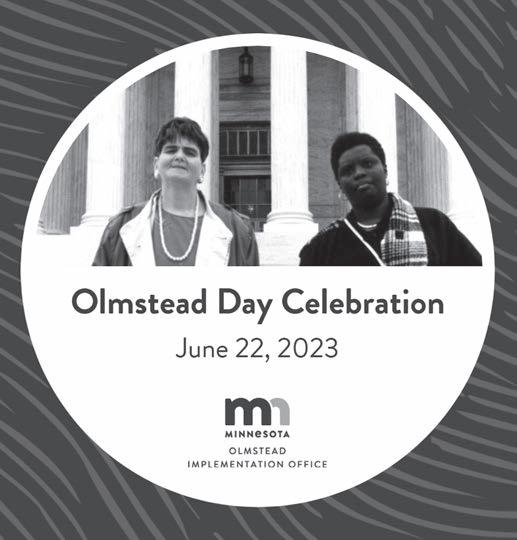
The lead plaintiffs of the Olmstead decision were Lois Curtis and Elaine Wilson, two women with mental illness and developmental disabilities who were confined to a psychiatric unit at the Georgia Regional Hospital. Although mental health professionals deemed them ready to live in community-based programs, they remained institutionalized for several years due to the hospital’s budget issues. They filed a lawsuit under the Americans with Disabilities Act (ADA) to be released from the hospital.
On June 22, 1999, the Supreme Court issued its landmark decision in Olmstead v. L.C. The ruling stated that segregating people with disabilities without a valid reason is discrimination, and public entities must provide community-based services when appropriate.
The catalyst for Minnesota’s Olmstead Plan was the Jensen Settlement Agreement. This settlement required the state of Minnesota to develop an Olmstead Plan. In 2013, Gov. Mark Dayton used his executive power to create the Olmstead Subcabinet and tasked its members — leaders of state agencies and other state organizations — with writing the Plan. They spent two years researching how to improve services, refining topics and goals, and seeking public input before officially adopting the Plan in 2015.
Minnesota’s Olmstead Plan is a roadmap with goals that the state must achieve for Minnesotans with disabilities to have the opportunity to live, learn, work and enjoy life in the communities they choose.
In short, the Olmstead Plan helps state agencies set and meet goals that will improve the quality of life for Minnesotans with disabilities. Currently, the Olmstead Subcabinet is discussing how to improve Minnesota’s Olmstead Plan. This is an opportunity to break down barriers for
people with disabilities and to hear from people with lived experiences on topics such as transportation, employment, and independent living.
Celebrating Olmstead Day 2023!
Olmstead Day 2023 will focus on independent living. Independent living is the belief that people with disabilities are experts of their own lives. People with disabilities can achieve their goals and live life as they best determine, including their housing, transportation, social life, employment, healthcare, and more. Independent living is also based on the belief that people with disabilities have the same human rights as non-disabled people and positively contribute to their community.
This is a day to celebrate people with disabilities in Minnesota and to learn new perspectives about independent living. The event will feature a welcome from Minnesota Housing Commissioner Jennifer Ho and a keynote address by Jesse Bethke Gomez, executive director of the Metropolitan Center for Independent Living (MCIL). Additionally, Jillian Nelson of the Autism Society of Minnesota (AuSM) will moderate a panel discussion, where self-advocates from across the state will share their personal experiences with independent living.
ASL and CART services will be provided, and you can request additional accommodations when you register. Celebrate diversity, inclusion, and the power of independent living with OIO on Thursday, June 22, 2023, from noon to 1:30 p.m. Register on their website: mn.gov/olmstead.
About the Olmstead Implementation Office




The Olmstead Implementation Office was created as part of the Minnesota Olmstead Plan. They track the State's progress on the Olmstead Plan goals and facilitate community engagement opportunities for people with disabilities, their families, and supporters to give ideas about how to make the Olmstead Plan better.


June 2023 Volume 34, Number 6 Pg 3
CHARLIE SMITH AWARD DETAILS FORTHCOMINGISSUE SPONSOR | OLMSTEAD
the Olmstead Decision:
step toward independence Celebrate with Access Press! SAVE THE DATE! Friday, November 3 University of Minnesota McNamara Center ######### Watch for ticket and table price information Questions? Contact us at access@accesspress.org We’ll see you at our awards banquet and community celebration!
Honoring
A
Success at capitol with closed captioning mandate gets a poetic response
Editor’s note: Activist Sonny Wasilowski has worked for a long time on legislation requiring that closed captioning be mandated on televisions in public places. He worked with Rep. Brian Daniels, (R-Faribault) on the legislation, which passed the House and Senate and went to Gov. Tim Walz for his signature. The closed captioning mandate in public places takes effect August 1, 2024. And while Access Press typically does not publish poetry, we are making an exception for this very creative commentary.

Get text messages about health insurance
Minnesotans who have Medical Assistance or MinnesotaCare can now get text messages about renewing their health insurance.
The Minnesota Department of Human Services is texting important updates and announcements. The messages will prompt people when it’s time to take action to keep their insurance.
“We want people to stay covered,” said Human Services Commissioner Jodi Harpstead. “Text messaging is a common-sense way to reach them with important information.”
Texts from DHS about insurance will always come from the number “28343.” The reminders are not interactive, and no one should respond by texting personal information.
Enrollees will receive renewal forms by mail. The text messages will notify them to watch their mail for the renewal packet and remind them to submit the
forms by the deadline.
Completing and sending the forms back as soon as possible with any necessary documentation will help people keep their insurance. DHS is also developing user-friendly ways to complete the renewal process by submitting documents online or over the phone.
Renewal notices went to about 100,000 people with Medical Assistance over the past month.
State, county and Tribal workers will check eligibility for over 1.5 million people with Medical Assistance and MinnesotaCare by May 2024. One in four Minnesotans has insurance through the programs. Losing insurance makes it harder to get health care and could worsen health disparities.
Find out more about renewals, including how to update contact information and get texts: https://mn.gov/ dhs/renewmycoverage/.
public health care program?
Minnesota has started verifying eligibility for people in public health care programs. Notices went to about 100,000 people who have Medical Assistance this month. By May 2024, state, county and Tribal workers will check eligibility requirements for 1.5 million people.

The Minnesota Department of Human Services (DHS) and its partners want people who qualify for the insurance to keep it. One in four Minnesotans has Medical Assistance or MinnesotaCare. Losing insurance makes it harder to get health care and could worsen health disparities.
“It is very important for people to keep their health insurance,” said DHS Commissioner Jodi Harpstead. “Please update your contact information so we can reach you and watch your mail for important information.”
People enrolled in Medical Assistance and MinnesotaCare usually must have their eligibility reviewed once a year to see whether they remain eligible. This
process is called a renewal.
Renewals stopped during the pandemic. That helped Minnesotans get health care, kept the uninsurance rate low and brought in billions of federal dollars to help the state cover health care costs and keep people insured. About 360,000 more people signed up for Medical Assistance and MinnesotaCare, an increase of more than 30%.
Medical Assistance renewals will continue each month. People who have MinnesotaCare will receive notices in the fall.
The renewal forms will arrive by mail. Completing them and sending them back as soon as possible with any necessary documentation will help people stay covered. The state is also developing user-friendly ways to complete the process over the phone or by submitting documents online.
Find out more about renewals, including how to update contact information: https://mn.gov/dhs/ renewmycoverage/
In silence's embrace, I dwell, A poet who cannot hear the knell, But through my hands, the words arise, A dance of verses, a gentle surprise.
Long at last, a change does bloom, In Minnesota's land, a welcomed room, Where televisions sing a newfound tune, Closed captions ablaze, they shall assume.
Oh, Minnesota, radiant and true, Your heart embraces the deafened few, No longer shall we strain our sight, For words shall dance in the glowing light.
In every home, in every abode, The screen becomes a language's ode, Captions unfurled, a bridge of words, A symphony of silence, soaring like birds.
Wasilowski is a self-advocate from Faribault.

EMERGENCY
From page 1
at high risk for severe outcomes from Covid-19 and for those who continue to prioritize avoiding the coronavirus.
“ The United States has mobilized and sustained a historic response to the COVID-19 pandemic,” the CDC stated. “As a nation, we now find ourselves at a different point in the pandemic – with more tools and resources than ever before to better protect ourselves and our communities.”
T he CDC is folding its emergency COVID-19 response activities into its existing structure and programs, as part of an ongoing transition to sustainable public health practices.
Vaccines, testing and treatment will still be available. The CDC indicates that the U.S. government will continue to provide free vaccinees for adults and children.
O ne change CDC officials note is that COVID-19 home tests may no longer be covered by insurance. Insurance providers will no longer be required to waive costs or provide free COVID-19 tests.
T he CDC does offer a no-cost COVID-19 testing locator, at https:// testinglocator.cdc.gov/ This service shows which community and pharmacy
No longer shall the dialogue hide, In muffled whispers, our hearts confide, Expressions unveiled, every line, Eyes and hands intertwine.
For the deaf and hard of hearing, A gift bestowed, forever endearing, Equal access to stories told, No barriers, no secrets to hold.
With gratitude, we embrace this decree, Minnesota's mandate, a victory decree, Long at last, the captions rise, In unity, our spirits shall harmonize.
So let us rejoice, with grateful hearts, For this landmark step, where inclusion starts, In Minnesota's tapestry, a thread is sewn, A world of words, forever known.
partners still offer such test. A fter the public health emergency expired on May 11, it was announced that the CDC’s Increasing Community Access to Testing or ICATT program will likely continue with a smaller site network that supports testing and disease surveillance needs at non-emergency levels. ICATT will continue to provide no-cost COVID-19 testing for people without health insurance with symptoms related to COVID-19 or who were exposed to someone with COVID-19. A list of ICATT sites can be found at https://testinglocator.cdc.gov/ Medication to prevent severe COVID-19, such as Paxlovid, will remain available for free while supplies last. After that, the price will be determined by the medication manufacturer and personal health insurance coverage. People still need to work with their healthcare providers in the event COVID-19 treatment is needed. The antiviral medication Paxlovid reduces the risk of hospitalization or death by about 80 percent if it’s taken within five days of symptom onset.
T he Minnesota Department of Health offers a very comprehensive website about COVID-19 resources. Learn more at https://www.health.state.mn.us/ diseases/coronavirus/index.html

HANDI MEDICAL SUPPLY
June 2023 Volume 34, Number 6 Pg 4 FROM OUR COMMUNITY
T MANKATO
Sonny Wasilowski
a
Eligibility
free, disability
Make your tax-deductible gift today! 651-644-2133 access@accesspress.org
In
is being checked Invest in pity
journalism.
A tradition returns
Access Press announces 2023 Charlie Smith Award celebration
A valued recognition for Minnesotans with disabilities is back. The Access Press Board of Directors is pleased to announce that the Charlie Smith Award and annual fundraiser and celebration returns in 2023. The event features a dinner, time to see friends and socialize, and the award presentation.
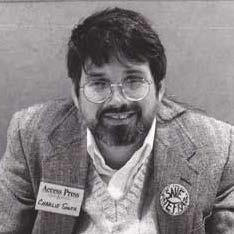
This year’s event not only honors Charlie Smith, Jr., the founder and first editor of Access Press. It will also be a time to celebrate the life and achievements of Tim Benjamin, who succeeded Smith as Access Press executive director/editor and served for many years. Benjamin died in 2022.
The event is Friday, November 3 at McNamara Center, University of Minnesota East Bank campus. Our lead sponsor is the University of Minnesota Institute on Community Integration. Save the date and watch for information on ticket costs.
Access Press will also seek banquet and table sponsors. Contact information is on page 12.
“We’re very pleased to bring the Charlie Smith Award back, and to honor the work of Tim Benjamin,” said Kay Willshire, president of the Access Press Board of Directors. “We are excited
to celebrate the legacy of two great disability-focused journalists. We look forward to seeing you there to support the important work of Access Press.”
“The COVID pandemic was very challenging for newspapers,” Willshire said. “Access Press was no exception. We are headed in a positive direction but we need our disability community’s support to continue providing news and information.”
A community-led process and open nomination period continues for the Charlie Smith Award. The Access Press Board reviews nominations and chooses the award winner. All nominees and the winner will be recognized in the September issue of Access Press.
The nomination period opens June 1 and continues through midnight, Monday, July 31. Email the newspaper at CSAnominations@accesspress.org to receive a form. A link to the form is also on the website, www.accesspress.org
If help is needed with a form call 651-644-2133 ext. 1 for assistance or accommodations.

Who can be considered for the Charlie Smith Award? Nominees can be one
person, a group of people or an entire organization. Nominees must be active in and have strong ties to Minnesota’s disability community, and go above and beyond to improve the lives of Minnesotans with disabilities. This type of work can take many forms. The award can go to prominent leaders or to people who work quietly behind the scenes.
Nominees must be living at the time of the nomination and not be people who have passed away.
Past winners cannot be nominated again Past nominees who didn’t win the award can be nominated again. People cannot nominate themselves.
People who submit nominations must submit contact information in case Access Press has additional questions about a nominee. Please send a high-resolution digital photo or an actual picture of the nominee. Otherwise, be prepared to tell the editor where a high-resolution picture can be obtained.
“It’s always enjoyable for board members and newspaper staff to read the nomination forms, and learn about the many talented people in our community,” said Editor Jane McClure. “It’s very humbling to see the many great things people are doing on our behalf.”
Smith died in 2001. The first award was given in 2003 at the Como Lakeside Pavilion. That space was outgrown quickly so the event moved to various hotel banquet facilities. The event was dropped in 2018 due to cost and staffing considerations.
A diverse group of Minnesotans was honored over the years. Here is a list of the past Charlie Smith Award winners.:
2017 – Mark Braun, Paralympian
2016 – Cliff Poetz, Institute on Community Integration
2015 – Jessalyn Akerman-Frank, Minnesota Commission for Deaf, Deafblind and Hard of Hearing
2014 – Christine Marble and Wendy Devore, Career Ventures
2013 – Cal Appleby, Augsburg College
2012 – Charles “Chuck” Van Heuvel, St. Paul School District

2011 – Jeff Bangsberg, Minnesota
Department of Health
2010 – Steve Kuntz, Minnesota
Department of Employment and Economic Development
2009 – Anne Henry, Minnesota
Disability Law Center
2008 – Pete Feigl, Co-Founder of Tilting at Windmills
2007 – Jim and Claudia Carlisle, People Enhancing People
2006 – John Smith, University of Minnesota ICI
2005 – Minnesota Consortium for Citizens with Disabilities (MNCCD)


2004 – Rick Cardenas, Co-Director of Advocating Change Together (ACT)
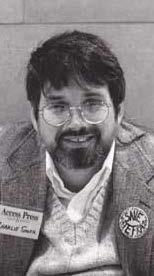
2003 – Margot Imdieke Cross, Minnesota State Council on Disability
"The Charlie Smith Award has been given to a number of deserving and distinguished people who have created a better life for members of our disability community,” said Kay Willshire, president of the Access Press Board. “By nominating a person for this award you are not only recognizing that person for individual contributions to our community, you are also shining a positive light on our community as a whole."
June 2023 Volume 34, Number 6 Pg 5
Charlie Smith, Jr.
FILE
For your FREE estimate, call 800-649-5215 651-399-3075 Learn more at amramp.com Changing our customers’s lives, one ramp at a time. • Low cost • FREE home evaluations • Rent or buy • Installed in days “It is important that our clients who
to maintain
freedom,
and community
Executive Director/Editor Tim Benjamin greeted guests at a past awards event.
PHOTOS
struggle with stairs are able
their
dependence
ties.”
Advertise with Access Press Call/Email Mary Graba 651-644-2133 mary@accesspress.org
Cliff Poetz
in the House and Senate, DFLers pushed through a complex and ambitious list of bills. Walz said that when looking back at the session, “History will tell the story.”
DFLers celebrated the session’s outcomes. Republicans were critical and questioned whether the state can sustain so many changes and their costs.

The session began with all eyes on a $17.5 billion surplus. While that record sum brought plenty of opportunities, it also caused much debate as to how and if it all should be spent.
The session’s start also brought forth a record number of proposals, including bills that disability service organizations tried to get passed for years. MNCCD, other consortiums and disability service organizations worked on dozens of bills, many of which did win approval.
Julia Page of the Arc Minnesota and Trevor Turner of Minnesota Council on Disability are leaders on policy issues for the Minnesota Consortium for Citizens with Disabilities (MNCCD). Page said that while there was a lot of change for the better this session, the surplus didn’t make things easier.
“It was a hard year,” said Page. With more money to go around, it seemed like that wouldn’t be the case. But there were many competing needs, not just in disability but from many other areas.
Turner agreed with that assessment. But both leaders noted that with measures that didn’t pass, there is momentum for future work.
“This was a session where we got a lot of great things done,” said Turner. “We’ll see a lot of transformational change.”
Increased Medicaid rates, additions in affordable and accessible housing, expanded voting measures, various bonding asks, improvements to broadband statewide, higher education inclusion, and numerous gains in mental health were pushed through. Elimination of parental fees tied to the TEFRA program is also hailed. Paid family and medical leave was signed into law, although it won’t start until 2026.
One measure passed is to require adult-sized changing tables in public restrooms,. That meant a change to state building codes, to provide accommodations for people who need them. All too often people have to lie on public restroom floors to be changed.
Several preK-12 special education measures passed. One key gain is the end of seclusion used as a punishment for disabled children. Another is the “recess for all” measure, which prevents the withholding of recess as a form of punishment.
Disability Waiver Rate System (DWRS) changes will bring an additional $87 million in the first biennium and an additional $225 million in the second biennium in new spending within DWRS. Inflationary changes and changes in data used for rate adjustments were also made.
The Minnesota Council on Disability saw its funding increased, to meet rising service needs. The state will also step up its disability hiring, with more specific goals.
The $6.2 billion two-year health and human services budget includes many changes including creation of a state department of a state department for children, youth and families.
But this bill was controversial as Nurses at the Bedside Act provisions to provide more staffing and other protections were stripped down in deference to Mayo Clinic opposition. That opposition extended to measures including the creation of a Health Care Affordability Board. The last-minute changes angered members of the Minnesota Nurses Association, who staged a sit-in at the capitol.
Frustration remains
There is still some frustration. While there were changes to the personal care assistance (PCA) program and waiver programs, there are questions as to whether or not those are enough to address longstanding problems. One change lifts the 40-hour household cap for parents of minors and spouses on Consumer-Directed Community Supports (CDCS) and Community First Services and Supports (CFSS), which will replace the PCA program. There’s also a measure to get more post-secondary students interested in PCA and direct support careers, and to provide incentives for doing so.
There’s also provisions for workforce recruitment and retention bonuses, with $90 million in one-time dollars. Advocacy groups are still digging into what this will mean and how it will operate.
“Regardless of what has been changed it’s still not enough,” said Vicki Gerrits of Minnesota First Community Solutions. There are worries that more service providers could drop PCA Choice or close altogether.

People with disabilities and their family members already have challenging times finding staffing or struggling to provide staffing themselves. Extension of a pandemic-related benefit to allow parents of children under age 18 and spouses to continue serving as PCA workers for their family members for another six months is welcomed by some.
The federal government approved the extension until November 11, 2023, and the final human services budget bill approved by state lawmakers makes that provisions. But it came so late, said Gerrits, that many families sought other care options.
There’s also disappointment that not all changes sought in the Medical Assistance for Employed People with Disabilities (MAEPD) program were adopted. “People are much more aware of the inequities in the program but they didn’t do anything about it,” said Jeff Nachbar of the Minnesota Brain Injury Alliance.
There is also unhappiness that elimination of subminimum wages was set aside in the final days of session.
Policy and finance additions
The state’s care crisis was an ongoing focus throughout the session, looming over human services financing and policy debates. The effort to address that is part of the financing and spending plan for the biennium.
Human services finance and policy legislation appropriated $14.11 billion, with $1.35 billion in new spending, for DHS for fiscal year 2024-2025.
“Our budget makes great strides to not only care for our most vulnerable Minnesotans, but also the workers who care for them in turn,” Sen. Mohamud Noor (DFL-Minneapolis) said in a statement.
State nursing homes will receive the largest increase in state history. After automatic reimbursement rate adjustments, they expect $847 million to reach the facilities over the next four years.
Lawmakers praised the budget for making “historic” investments in nursing homes, long-term care and in Minnesota’s care workforce. Proposed new nursing home spending includes $22.84 million for a 25 percent rate increase for home care nursing, $1.91 million for critical access nursing facilities, and $680,000 for a nursing facilities rate study.
Additional new spending includes
• $122.09 million for elderly waiver increases and consumer-directed community supports parity;
• $90 million for long-term workforce incentive grants (including nursing);
• $86.66 million for modifying the inflation adjustments to the disability waiver system;
• $46.59 million for disability and elderly waiver homemaker rate alignment;
• $12.1 million for HIV/AIDS support services.
Numerous rate increases are included. Effective Jan. 1, 2024, intermediate care facilities for persons with developmental disabilities would see a daily rate increase of $40, as well as minimum daily operating payment rates set at $275 for
Other changes would limit rent increases for certain properties to prevent mental health stress for seniors and people with disability, require DHS to conduct a sober home survey; add a Dec. 31, 2024 sunset to the opioid prescribing improvement program; and clarify spending requirements related to elderly waiver rate increases.
Mental health made gains
Minnesota’s Mental Health Legislative Network made a number of gains. But there was disappointment when the final health and human services bill had less funding for mental health needs than Walz had proposed in his budget. The funding for mental health is about $98 million per biennium which is less than what the governor requested and what the Mental Health Legislative Network wanted. The governor asked for $122.777 million in FY24/25 and $141.864 million in FY26/27.
National Alliance for the Mentally Ill (NAMI) Minnesota released a list of measures that did pass. Those include funding for 988, the suicide and crisis lifeline, with a telecom fee; increasing rates for mental health providers by 3 percent; increasing grant funds for first episode
of psychosis, crisis teams, school-linked mental health, cultural and ethnic minority infrastructure; and increasing funds to address the workforce shortage; putting the certified behavioral health centers back in SESSION To page 13
June 2023 Volume 34, Number 6 Pg 6
Albright Townhomes Minneapolis 612-824-6665 1 BR Cornerstone Creek Apartments Golden Valley 763-231-6250 1 & 2 BR (for developmentally disabled individuals) Diamond Hill Townhomes Minneapolis 612-736-9341 2 & 3 BR Elliot Park Apartments Minneapolis 612-338-3106 2 BR Franklin Lane Apartments Anoka 763-427-7650 1 & 2 BR Hanover Townhomes St. Paul 651-292-8497 1 BR Hilltop Manor Eveleth 218-744-5169 1 BR Hopkins Village Apartments Hopkins 952-938-5787 1 & 2 BR Village Apartments Hopkins 952-938-5787 1 & 2 BR Lincoln Place Apartments Mahtomedi 651-653-0640 2 BR Olson Towne Homes Minneapolis 612-377-9015 1 BR Park Plaza Apartments Minneapolis 612-377-3650 1 & 2 BR Prairie Meadows Eden Prairie 952-941-5544 2 & 3 BR Raspberry Ridge Hopkins 952-933-3260 1 BR Slater Square Apartments Minneapolis 612-340-1264 EFF & 1BR Spirit on Lake 612-724-3029 1 & 2 BR Talmage Green Minneapolis 612-623-0247 2 BR Trinity Apartments Minneapolis 612-721-2252 1 BR (sr) Unity Place Brooklyn Center 763-560-7563 2 BR Vadnais Highlands Vadnais Heights 651-653-0640 3 BR Visitation Place 651-647-2550 1, 2 3 BR Willow Apartments Little Falls 320-632-0980 1 BR Woodland Court Apartments Park Rapids 888-332-9312 1 BR HOUSING FOR VETERANS AT RISK OF HOMELESSNESS Veteran's East Apartments Minnneapolis 612-208-1712 EFF Veteran's & Community Housing Minnneapolis 612-333-0027 EFF TRELLIS MANAGEMENT MAY BE ACCEPTING APPLICATIONS for our accessible waiting lists at the following affordable communities: We may be accepting applications for our large number of mobility impaired accessible units. Please call us for more information. SESSION From page 1 Crowds were back in the rotunda. FILE PHOTO
MOHR Choice Awards salute outstanding service providers

Eight Minnesota day and employment service organizations were honored this spring with the 2023 Minnesota Organization for Habilitation and Rehabilitation (MOHR) Choice Award Winners. Winners have created innovative programs to positively affect the lives of people with disabilities.

This year’s winners include programs focused on art, building life skills and community engagement. “Every year we take the opportunity to highlight exceptional programs offered by MOHR members,” said Julie Johnson, MOHR Board Chair. “We look for programs that are deeply impactful and help individuals with disabilities engage with the community around them.”
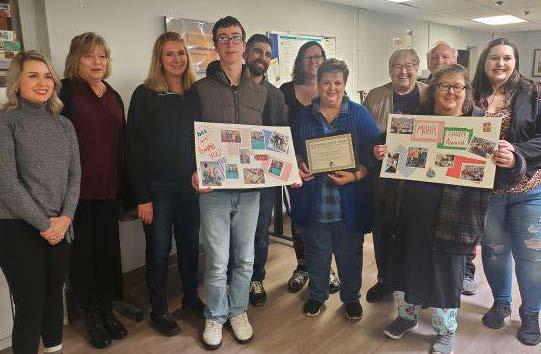
“The programs highlighted this year ensure that people living with disabilities are uplifted, celebrated and given the opportunity to use their skills to add value to their communities,” Johnson said.
Winners are:


Aitkin County DAC, Oakridge Homes, and Aitkin Community Education, Aitkin. The Better Together program is a collaboration of local partners focusing on bringing people of all abilities and ages together. It was created in 2021 to encourage more community integration between individuals with disabilities, the school district, and the broader community as well as provide more opportunities for individuals with disabilities. One example is the start of local Special Olympics opportunities. Functional Industries Inc. and Buffalo Community Center – Buffalo. The Buffalo Community Center has included more than 50 people served by Functional Industries with community activities including art classes, volunteering opportunities, wellness and exercise classes, and pool club. The goal was to create options and opportunities for people with disabilities to further integrate into the community.
MSS, St. Paul. MSS is the first disability service provider in Minnesota to offer formal art employment services




for artists with disabilities. The Art Employment Program support artists in their professional development and careers including individual art exploration or development services, as well as an “Explore Employment in the Arts” course. Almost 90 artists are involved. Mille Lacs County Area DAC, Milaca. Though Mille Lacs County Area DAC has been in the heart of Milaca for almost 50 years, staff recently discovered that not everyone knows of the center. The solution was to create the Hello Neighbor program. On a rotating basis, nine staff members help their clients put together a welcome basket, make a card and sign it. The Hello Neighbor program also welcomes new business to Milaca. Visits have been made to more than 60 neighborhood businesses and government entities.
DISABILITY PRIDE MONTH
Support Making July National Disability Pride Month









More than 61 million Americans identify as having a disability. Help us get Disability Pride designated as a national awareness month to give the disability community the moment in the spotlight it deserves.

June 2023 Volume 34, Number 6 Pg 7
Scan the QR code or visit gillette.mn/advocates to act now. www.truefriends.org | 952.852.0101 | info@truefriends.org True Friends provides life-changing experiences to children and adults with disabilities through a variety of programs at five Minnesota locations. Locations Camp Courage Maple Lake, MN Camp Eden Wood Eden Prairie, MN Camp Friendship Annandale, MN Camp Courage North Lake George, MN Where experiences & all abilities adventures are ope n Programs • Camp • Travel • Horse Therapy • Team Building • Respite • Retreat Centers PEOPLE
PLACES What are your hopes & dreams? Discover your path! Contact us today! 651-646-8342 www.mcil-mn.org Live your most independent life, follow your path! What are your hopes & dreams? Discover your path! Contact us today! 651-646-8342 www.mcil-mn.org 530 North Robert St, Saint Paul MN 55101 Live your most independent life, follow your path! Responsive PCA Choice Services Independent Living Services ADA Information & Referral Covid Community Coordination Transitional and Housing Services Contact us today! www.mcil-mn.org 651-646-8342 530 North Robert Street Saint Paul, MN 55101 Live your most independent life, follow your path!
&
OpportunityPartners
MSS
MOHR AWARDS To page 10
SUBMITTED PHOTOS
The Arc Minnesota gives kudos to its many 2023 leaders

The Arc Minnesota presented its 2023 Leader Awards as part of its annual conference in May. Individuals and organizations were feted for providing outstanding service in several areas. Winners reflected upon their work.
LeAnn Erickson received the individual leadership award for mission and vision. for her years of work in southwestern Minnesota. Her family has long ties to Arc. She has been an employee and her two sons have been greatly assisted. “Thanks to the Arc, our two adult sons with disabilities are living the dream. They own their own home, hire their staff and receive all of the support they need . . . together we made so many lives better.”
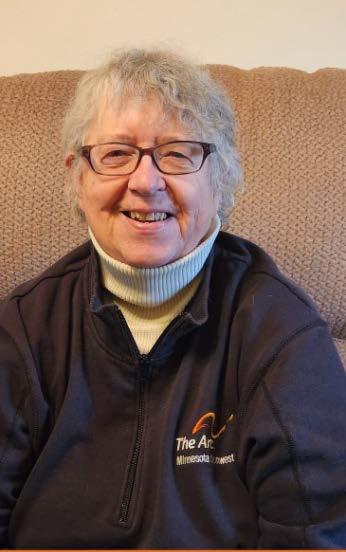
Jillian Nelson of the Autism Society of Minnesota (AuSM) was honored for her extensive work in civil and human rights. “As an autistic adult, it is a privilege to get to do this work for my community every day. I hope we can continue moving toward equity and dismantling systemic ablism and system racism to improve the quality of life for everyone.”
Shakopee-based Ultimate Sustainability and Benjamin Benson were given a community recognition award for their partnership with the Arc Value Village stores. “The lives of the participants within our group have been enriched through the work that is offered each week. We have seen great strides in focus and accomplishments of tasks from each of our participants as they have volunteered.”
Eva Johnson was also given a community recognition award for working with students who work at Arc Value Village. She works in Independent School District 917. “Students are provided with the opportunity to gain confidence and comfort in a retail setting while receiving a wide range of employment skills. . . Arc Value Village is a classroom in the community.”
The Multicultural Autism Action Network, Fatima Molas and Maren Christenson were honored for work in disability and racial justice. They said, “We look forward to continued work together toward meeting our shared goal of disability justice.”

Community recognition also goes to teacher Melissa Paulsen and the Bloomington Transition Center, part of Bloomington Public Schools. “I love the collaboration of sharing resources and tools between the school and Arc Value
Village so employees can experience success,” she said. Paulsen also cited the support of employees and how it creates a sense of belonging and inclusion.



St. Cloud-based diversity organization Unite Cloud was honored with a community recognition award for equity and belonging. A comment about the program was, “The mission of your work throughout the state is so needed – systems were built with certain people in mind but rarely do systems, at their core, concern themselves with the most
marginalized folks in mind."

Shelly McFadden Rohe was honored for self-advocacy and self-determination. She has been active on policy issues including housing. “Sometimes advocacy work can be slow and frustrating. I do this work because it matters. Disabled lives matter. To borrow a phrase for Rev. Teresa Soto, ‘All of us need all of us to make it.’”
Randall Oldenburg is the Intern Leader of the year. “When I arrived at the Arc Minnesota, I was a man in deep need of connection and purpose,” he said. "The Arc gave me all I was seeking, and so much more. The person I am now is not the same person who came to you last September.”
June 2023 Volume 34, Number 6 Pg 8 Wingspan Life Resources offers Rainbow Support Group for LGBTQ adults with Developmental Disabilities. We provide education, resources, peer support and monthly activities. Membership is free. Contact Deb Hofbauer, Program Director dhofbauer@wingspanlife.org 651-353-7747 wingspanlife.org Live life your way with AT. LEARN PLAY WORK CONNECT LIVE ASSISTIVE TE CH NO LO GY (AT) A collaboration of Minnesota STAR, Disability Hub MN and Senior LinkAge Line® Visit the lending library at mn.AT4all.com to browse and loan items today! Or call 1-888-234-1267 for more information about this free service. Try AT before you buy it! Borrow a device through the Minnesota STAR Program’s online AT lending library to try at home, school, work, or while you play. ASSISTIVE TECHNOLOGY, also known as AT, can help you do things that might otherwise be difficult or impossible to do on your own. PEOPLE & PLACES
LeeAnn Erickson
Multicultural Autism Action Network
ARC MINNESOTA
Pawsome Adventures offers training and support to southeastern Minnesota
Pawsome Adventures is a new non-profit organization. It is focused on canine training and service dog assistance. Pawsome Adventures has a canine nutritionist, a trainer and a disability consultant. Its areas of service include parts of southern Minnesota, northeastern Iowa and southwest Wisconsin.
Its focus is to assist service dog handlers and canine partners and other dog owners. Pawsome Adventures also brings awareness to businesses about how they can make their businesses more accessible for people with disabilities and service dogs.
Yet another service offered is photo sessions with service dogs and their people.
Classes are offered online and inperson. The nonprofit is also available to visit with groups and other groups, online or in person.
Amy Falk, co-founder of Pawsome Adventures, uses a wheelchair. She has
Rise program marks 30 years
R ise, Inc.’s Minnesota Employment Center celebrates 30 years’ service in 2023. The program began because people referred to Rise’s Vocational Rehabilitation Services (VRS) job programs were having difficulty maintaining employment.

“Communication issues or another concern would pop up, and people would quit. Then they would come back to VRS and start again. It became a cycle, and we realized there was a need for a program with a specific goal to support
job stability in the deaf community,” said MEC program manager Sheila Ritter. In 2015 MEC expanded outside the Twin Cities metropolitan area. Growth was slow, and many local organizations were skeptical that the new support services from MEC would last because other programs had not. “Supporting people in rural areas is very different from urban areas,” Ritter said. “Up until that point, there hadn’t been a person-to-person connection with people.”
L ong-team team members have helped provide stability.
M EC is continuing to change and grow to offer more person-centered support. In the summer of 2021, the St. Paul office relocated as a result of a new partnership with ThinkSelf, a deaf-led adult support organization that provides education, literacy expansion, goal setting and workforce readiness. Future initiatives will bring support programs in line with statewide changes that blend VRS services and waiver funding. Those plans are still being formed, but eventually could lead to additional growth, including more people to support, new
been involved in disability issues since childhood.
“I received my first service dog in 2018,” Falk said. “He has saved my life at least 3three times in that time. I know now what a difference a canine partner can make in a disabled person’s life. Since receiving him from a non-profit organization he’s enriched my life in so many ways. Now we are here to share our experiences with you as well as facilitate awareness and those people that may not be understanding of how life-changing a service dog can really be in someone’s life.”

Falk said she spent a long time trying to find a service dog for herself, and information about service dogs. That is where the idea for Pawsome Adventures came from.
The organization is raising funds to open a facility in Harmony, in southeastern Minnesota. Learn more at pawsomeadvertures.org
funding mechanisms and likely more team members too.
Robert Reedy, senior director of vocational services at Rise, said figuring out how many people could eventually be served is difficult because state data is currently unavailable. “Deaf people are underserved because there aren’t enough support people who are qualified to meet their needs,” Reedy said. “They haven’t always been able to receive services from someone who understands what it is like to work with someone who is deaf, deafblind, or hard of hearing.”
• For adults with qualifying disabilities.
• Over 50 barrier-free apartment communities & homes throughout the Metropolitan Area, Greater Minnesota and the Midwest.
• Locations also available in many other states. Income limits apply.
• Immediate openings in Hibbing, Willmar and Hibbing, Minnesota
Affordable Senior Apartments
• For qualifying senior households age 62 or better.
• Metro & Greater MN locations available. Income limits apply.
• Accessible apartments, available for seniors in these locations.
• Immediate openings in Worthington and Albert Lea, Minnesota


Housing with Care*
• 24-hour Assisted Living Services

• Independent Living Services

• Resident Community Setting (Adult Foster Care)
• Eligibility for or selection of ASI services is not required to qualify for housing. ASI services are not available in all locations Services openings. Call Today!

June 2023 Volume 34, Number 6 Pg 9
Accessible, Affordable Housing Accessible Space, Inc. Call 800-466-7722 TTY/TDD 800-627-3529
www.accessiblespace.org
Become a Tutor! Join.ReadingandMath.org PEOPLE & PLACES
Garret and Amy Falk
PAWSOME ADVENTURES
MOHR AWARDS

From page 7




Opportunity Partners’ Remote Services, Minnetonka. Started in 2020, Opportunity Partners’ Remote Services program helps people connect as a group to learn, explore, and engage in enrichment activities. The program creates space for people to socialize, learn new skills, discuss various topics and collaborate as a group on the different activities each week. The remote sessions consist of group social sessions, social hours and drop-in time. The program began three staff members and has since grown to six staff members serving about 80 people. Staff shortages mean the organization still can’t bring everyone back for in-person programming. However, there are immediate virtual openings for new people to join, whereas there are waiting lists for other programs.
PAI, White Bear Lake. In 2022, White Bear Center for the Arts teaching artist, Sylvia Roman, designed curriculum specific for PAI participants and classes. Connecting the Dots classes were held at all four PAI sites, with as many as 13 participants per class. The classes are part of PAI’s effort to expand its arts program, leading to a first-ever gallery exhibition of participant artwork at the arts center. Participants could show their work and take pride in their creativity and effort.
Rise, Spring Lake Park. Rise Vocation Evaluation Services is a partnership with the state of Minnesota offering paid work or vocational evaluations to eligible jobseekers with disabilities who have limited work experience. The program also helps workers re-enter the workforce. A Rise team member supervises the worker at a job site, ensuring quality work. The program is offered at 40 locations in Anoka and
Hennepin counties, with jobs in areas of janitorial, clerical, production, childcare, and food services/hospitality. A typical evaluation lasts about a month, and helps participants explore and find careers, TSE, Inc., Roseville. Choices For All is a program created by TSE in 2022 to increase community employment, eliminate TSE's use of its14(c) certificate, and to expand community enrichment activities for the people TSE serves. Although many of the people TSE serves seek community employment, many others choose to utilize day support services instead. TSE has partnered with several organizations including Every Plate, Dept of Indian Works, Kids in Need Foundation, and North St Paul Food Shelf, where TSE persons served as volunteers. All volunteer sites are repeated on a weekly basis in order to build naturally strong relationships with community members and give participants valuable life skills and lessons.
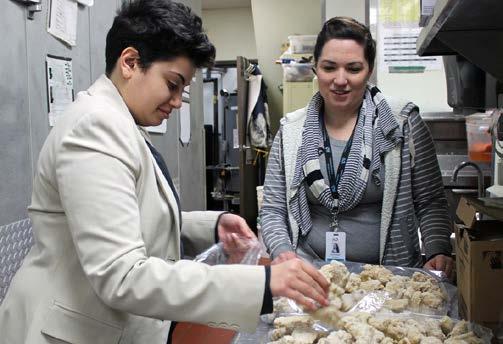
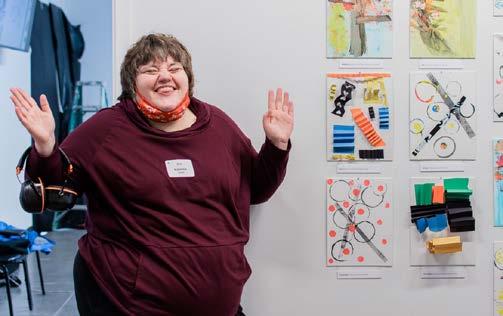

June 2023 Volume 34, Number 6 Pg 10
IT’S WHAT WE DO. Same-day and next-day appointments available, and shipping is free. PPNCS.ORG | 1.800.230.PLAN (7526) PEOPLE & PLACES
TELEHEALTH BIRTH CONTROL.
Reach our valued readers! 651-644-2133
PAI Rise SUBMITTED PHOTOS
Five PCA agencies are fined by Department of Labor
As part of a compliance initiative, the Minnesota Department of Labor and Industry (DLI) found five personal care assistance (PCA) agencies violated wage and hour laws, of which four did not pay or failed to correctly pay workers COVID-19-related funding. DLI recovered a total of more than $79,000 in back wages owed to 137 workers.
In its investigations, DLI's Labor Standards unit determined the PCA agencies it investigated failed to pay employees' wages for all the hours they worked at the correct rate of pay. It also found some of the PCA agencies did not correctly use temporary funds allowed by the Minnesota Legislature in 2020 to increase wages, salaries and benefits for direct support workers, such as PCA employees.
“Personal care assistants have physically and mentally demanding jobs and provide vital services to their fellow Minnesotans. They deserve to be paid all the wages they have earned,” said DLI Commissioner Nicole Blissenbach. “As part of this initiative, we found employers failed to pay employees for all hours worked and overtime for hours worked beyond 40 hours in a week. We are glad to get these workers the wages they are owed.”
DLI investigators found the PCA agencies committed the following violations:
• AbbeyCare Choice, Inc. made illegal deductions from employees' wages for hours they worked. DLI recovered $2,003 in back wages for four employees.
• Activeagingalliancecorporation.com, doing business as A-1 Reliable Home Care Inc., failed to pay the wages of some of its employees, including overtime wages, and failed to pay the COVID-19 temporary pay increase. DLI recovered $48,605.89 in back-wages for 42 employees.
• Bella Mente Inc. violated overtime and other pay requirements and did not correctly pay employees the COVID-19 temporary pay increase. DLI recovered $13,935.22 in back-wages owed to 53 employees.
Minnesota firm wins Idaho case
After a lengthy lawsuit, six families have settled their federal court claims against the state of Idaho for abuse, neglect and maltreatment of individuals with intellectual and developmental disabilities who resided at the Southwest Idaho Treatment Center.
Approved by the federal court in Boise, the settlement includes a $1.2 million payment and the state’s promises not to retaliate against the families, comply with all federal and state laws, and provide corrective plans to the families. It also allows DisAbility Rights Idaho unlimited access to the treatment center, records and investigative reports, and attendance at quarterly meetings. “This culminates a long legal road for families who suffered such unbelievable abuse, injury and death of their loved ones,” said Shamus O’Meara, counsel for the families with the law firm of O’Meara Wagner in Minneapolis. “We are proud to be part of an exceptional multi-state team advocating for this successful outcome for individuals with intellectual and developmental disabilities and their families.”
Co-counsel Char Quade, managing partner at CK Quade Law, in Boise, said, “This settlement speaks to the intolerance of mistreating individuals with developmental disabilities, requiring vital dialog with the disabilities community to ensure the proper operation and management of the state’s treatment center so that no further abuse or neglect will occur to our vulnerable citizens. No family should ever have to worry their loved one will be neglected, abused, or die when seeking services for them in the state of Idaho.”
The lawsuit followed DisAbility Rights’ 2018 investigative report, No Safe Place to Call Home, A Report on the Cycle of Abuse, Neglect and Injury at the Southwest Idaho Treatment Center, finding it “consistently failed to offer the treatment, services and protections that it is by law obligated to provide those in its care” resulting in “woefully inadequate response to acts of abuse and neglect, created a cycle of abuse, neglect, and injury, affecting every person at the facility from the moment they are admitted until their discharge or, in some cases, death.” The Idaho Legislature’s 2019 report also found the state “lacks a coherent vision for services to individuals with intellectual disabilities who are in
• Comfort at Home LLC did not properly pay the temporary COVID-19 pay increase to workers, overtime compensation and wages for all hours employees worked. DLI recovered $5,655.37 in back-wages owed to 10 workers.
• Trust Home Care LLC violated overtime and other pay requirements and did not correctly pay employees the COVID-19 temporary pay increase. DLI recovered $9,224.95 in back wages owed to 28 employees.
As part of this compliance initiative into the PCA industry, DLI found – and educated – any PCA employers that did not provide employee notices or change notices regarding wage rates as required by law.
DLI, in cooperation with the Minnesota Department of Human Services, continues to provide quarterly training to new PCA employers to inform them of their workplace rights and responsibilities.
DLI also continues to educate PCA workers about their rights and the agency's ability to assist them. For more information about laws relevant to the PCA industry, visit dli.mn.gov/pca-cfss.
crisis,” with management “winging it” without an effective approach to solving problems.
(Source: O’Meara Wagner)
Andersen works on inclusion
Window maker Andersen Corp. tried hard to counter tight labor market trends by making its workplace more inclusive, as an effort to hire more workers.
The company provided workers with onsite English classes, prayer rooms and foot baths. It made work hours more flexible, such as adding pick-your-own holidays. And it started to recruit at multicultural events.

Its latest efforts target the hard-ofhearing and deaf population in Minnesota, after discovering that it had a cluster of 13 workers sprinkled across its factories in Bayport, Cottage Grove and Dubuque, Iowa.
The discovery launched the Bayportbased company into overdrive. Today it is installing new communication technologies, hiring accessibility coaches and sign language interpreters, and actively recruiting deaf job candidates for the first time.
“Inclusiveness is ... an enabler for strong talent pipelines,” said Andersen spokeswoman Aliki Vrohidis.
The company must add adaptive technology to help with communication and make all work “environments, systems and processes more accessible for deaf or hard-of-hearing people.”
While Andersen did not provide details, all these steps come with a price tag estimated to exceed $100,000. Still, filling job openings — currently at 200 — is a must to keep expanding.

Despite news of recent corporate layoffs at companies such as 3M, Medtronic and Amazon, Andersen is among many Minnesota employers still grappling with the historically low unemployment rate and scrambling to find new workers to fill vacancies.
“I love this story so much because of how much Andersen has done and committed. It is a game-changer for the deaf community,” said Austin Beatty, program supervisor at the nonprofit Minnesota Employment Center For People Who Are Deaf, DeafBlind or Hard of Hearing (MEC).
“Sadly, we get calls only two or three times a year directly from an employer,” Beatty said. But Andersen reached out not
only to help new recruits but for advice on how to help the hard-of-hearing employees feel more included. The company, he said, also wanted to improve retention.
Mike Clark notices the supportive changes. He has worked for Andersen for 26 years, most recently as the company’s information technology director. He reads lips and doesn’t use sign language.
“When I started, it was definitely a different day and time,” he said. “I had to fend for myself. But in the last few years, we have expanded our inclusivity. We have invested in language staff. ... We are not perfect, but we are striving to be a better workplace and including our deaf workers in coming up with the solutions.”
(Source: Star Tribune)
Art center is for sale
A theater and arts venue in St. Paul’s Midway area is for sale, and could leave a big hole in the disability arts community there. The 40-seat Dreamland Arts theater, as well as the current owners' adjoining single-family home are connected by underground tunnel.
Kristin Pickering, a broker with Pickering Realty, listed the two properties for sale together with a combined asking price of $600,000.
“We're just marketing it at this point to the local arts community, hoping that it can stay as an arts venue of some sort,” said Pickering, who is also based in HamlineMidway.
The two-bedroom, two-bath house has been occupied by theater owners Leslye Orr and Zaraawar "Z" Mistry since 2005,
but “it would also be excellent rental property,” she said. “If housing was needed for visiting performers, it would be great for that, or office space.”
The commercial structure, which spans 4,200 square feet, dates to 1974. The twostory home was built in 1922, around the same time as much of the surrounding neighborhood.
Dreamland Arts, which Orr and Mistry opened together in September 2006, was named after a dilapidated movie theater in Secunderabad, a city in south-central India. The couple met while working at the Children's Theater Company in the early 1990s, where Mistry was an actor and Orr -- who has been legally blind since birth -was completing a two-year internship. Motivated by “the possibilities of disabilities,” Orr and Mistry purchased the Midway property together and hosted original works, including their own. In a notice advertising the property sale on the Dreamland Arts website, they said: After 17 years of running Dreamland Arts, we have decided to make a change, downsize and move into an apartment nearby. . . . We hope to find a buyer that will keep the theater building as a neighborhood arts asset for the community, and perhaps even keep it running as a theater venue. Dreamland will host five plays and events through June. A full calendar is available at dreamlandarts.com.
(Source: Pioneer Press)
Hagen finally is home
Cindy Hagen is finally home, after 294 days’ hospitalization. She was finally released from an Austin hospital, and allowed to go home to Mankato.
Hagen’s fight to go home made headlines recently. Her struggle galvanized fellow Minnesotans with disabilities. Hagen had been living at the Mayo Clinic hospital in Austin since last July after seeking treatment for an infection. Even after she was healthy enough to leave, she could not do so, because she could not retain enough staff to provide care at the apartment in Mankato where she had lived for 21 years.
After several failed attempts to move Hagen to a senior facility, a Blue Earth County District Court judge in January placed her under an emergency guardianship — which gave an outside entity control over virtually every aspect of Hagen's life. Hagen and her attorney argued that she was capable of making decisions on her own, and that a guardian was not necessary.
For four months, Hagen lived in fear that a guardian would move her to a nursing home or other institution far removed from Mankato. Confined to a room for 24 hours a day, with a window that looked out on a blank wall, Hagen felt her mental and physical health deteriorate, day by day. She had frequent panic attacks and nightmares of being kidnapped. But Blue Earth County Human Services asked the court to dismiss its guardianship petition — after Hagen met the terms of a legal agreement that called for her transition from the hospital to her home.
“It feels like I've been freed from prison,” said Hagen, who is quadriplegic from a childhood car accident. “But in prison, I would have enjoyed more civil liberties.”
(Source: Star Tribune)
June 2023 Volume 34, Number 6 Pg 11
REGIONAL NEWS
current homes and consider alternative settings. Providing this information and service would require specific steps to be followed in MnCHOICES assessments, specific tasks for case managers, and changes to the Community Based Services Manual. It would require more tracking of actions tied to housing choices and more information to be provided in a waiver recipient’s community support plan.

Within three months of the settlement agreement DHS would generate a report for each county of financial responsibility, identify disability waiver recipients who live in licensed community residential settings, and see if those people meet specific criteria. Detailed steps would have to be followed.
The agreement also calls for the plaintiff’s attorneys to be paid costs and fees of $1.138 million.
Schmidt said the agreement isn’t the end of the work on integration, but that it is part of the solution. He said it would change the disability waiver system for the better,.
Both Schmidt and Ikeda emphasized that the settlement is one of compromise, and both sides giving up things they wanted. Frank quizzed attorneys about details of the proposed settlement, and who would and would not be included.
Attorney Misti Okerlund spoke for the objectors, some of whom she said came forward at great personal risk and fear of retaliation. “Many, many others are languishing in this broken system,” she said.
Okerlund cited problems with various aspects of the settlement process, including notification and how it improperly places a burden on group home residents.
Sharing their stories
Alexei Dickinson was one of the speakers at the rally. Dickinson spent most of his life integrated into his community. But living in two different group homes changed that.
His homes were far from bus lines so he could not go places. Lack of staff meant residents couldn’t go anywhere unless it was as a group, with staff, to run staff errands. Dickinson wasn’t treated well. He finally was able to move in with family, find good staff and live how he chooses.
“We need to come together to speak the truth,” Dickinson said.
In the courtroom, Lauren Thompson, Lance Hegland and Kathy Ware spoke as objectors to the settlement. All are accomplished disability advocates
People who try to get out of group homes and into community-based settings fear retaliation, speakers said. Hegland said he is being evicted from his facility.
Hegland lives with spinal muscular atrophy. He described not getting medications, and crying in pain with no staff to help him. He was told he was not entitled to privacy and that staff didn’t have to help him if they didn’t want to. Hegland believes the settlement won’t help him.
Thompson has cerebral palsy. She was recently able to move out of a group home, but not before she dealt with
staffing issues, miscommunications and misunderstanding. The home had more than 40 workers in her time there.
“I only asked for the bare minimum (of services),” Thompson said. “I didn’t leave my room.” She had to remind herself that she is worthy of care.
Kathryn Ware has an adult son with disabilities. She is an RN and certified MnCHOICES assessor, and a former case manager. She questioned whether the settlement is adequate, saying the crisis in staffing must be addressed.
“People with disabilities deserve better,” said Ware. “They deserve to choose where to live . . . this agreement will solve none of that.”
Began in 2016
The lawsuit was filed in 2016 as a class action, with four lead plaintiffs. In the initial filing attorneys from Disability Law Center alleged that DHS is maintaining a “discriminatory” residential services system.
At that time the state had about 3,500 group homes. The lawsuit claimed that people with disabilities were being directed into group homes. People were not being given housing options that would have allowed them to live more independently and have more life choices.
Then-DHS Commissioner Emily Johnson Piper was the first lead defendant. She was replaced when Jodi Harpstead took the helm in 2019.
The case provides a look into what has happened to housing options for disabled Minnesotans. Minnesota began closing its largest residential facilities for people with disabilities in the 1970s, and promoting four-person group homes as a better choice. The smaller facilities were touted as providing more personal service and the ability to live in one’s home area close to family and friends.
Group homes are paid for through the state and federal health insurance program Medicaid, and what are called waiver services.
Who are the plaintiffs?
Three people are now lead plaintiffs: Tenner Murphy, Marrie Bottelson and Dionne Swanson. They and others in the class action described how their lives have been greatly limited by group home staff. They have been forced to go to bed as early as 7 p.m. or to eat supper at 4 p.m. due to staffing.
Murphy lives with cognitive and physical disabilities due to brain cancer. He has completed high school, enjoys hobbies including archery, and has many friends. He also enjoys walking and was walking on a regular basis before he moved to a group home in 2010. But staff there made him use a wheelchair because there weren’t people to assist him.
One issue raised is that Murphy has long been a very social person, but that other residents in his group home struggled to communicate. He has spent much time alone.
Best friends Bottelson and Swanson long wanted to share an apartment, and have space to create art. Both have cerebral palsy and other disabilities. They use motorized wheelchairs and need assistance with some life skills. At the time the case was filed, both women were their own legal guardians. They could live independently if they had proper services and supports.
A fourth plaintiff, a young woman
who had lived in four group homes in six years, dropped out of the case. Olmstead’s role
At the heart of the lawsuit is that Minnesota’s practices a violation of the 1999 U.S. Supreme Court ruling in the Olmstead versus L.C., et al case. That case, which has its roots in Alabama, was a landmark win for people with disabilities.
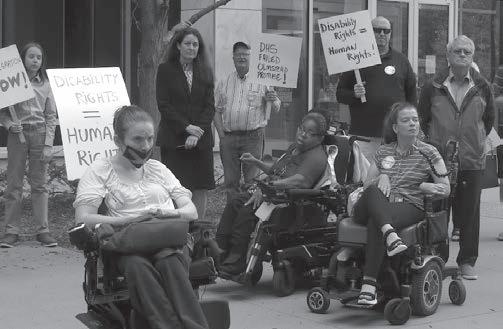

Olmstead requires states to make sure that people with disabilities receive services in integrated settings. Community-based services are to be provided when such services are appropriate and when they can be reasonably accommodated.
Minnesota was one of the last states to adopt an Olmstead plan. That happened as a result of a 2009 lawsuit centered on treatment of disabled people at the Minnesota Extended Treatment Options facility in Cambridge. Staff there was accused of using improper measures, such as seclusion and restraints, on residents. One resident had his arm broken after he touched a pizza box. Through Olmstead, Minnesota had planned to move 5,547 people into more integrated settings and to expand community alternatives by June 2019. One ongoing argument in the current court case is whether the state has met those goals.
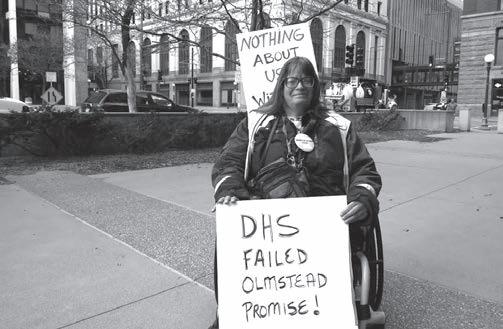
June 2023 Volume 34, Number 6 Pg 12
COURT From page 1 SUBMITTED PHOTOS Thanks to University of Minnesota Institute of Community Integration Our lead banquet sponsor! Support quality disability journalism and be a sponsor Honor the legacies of Charlie Smith, Jr. and Tim Benjamin Contact access@accesspress.org
Group members listened to speakers.
The group held signs before preparing to enter the federal courthouse.
Kari Sheldon, St. Paul, was an early arrival to the rally.
Nursing homes, state academies, True Friends are winners in bonding
As time ran out on the 2023 session, Minnesota legislators hammered together a $2.6 billion infrastructure and nursing home aid package. The agreement came together the final weekend of the session.
The aid to nursing homes is seen as critical, with Republican legislators sounding the alarm throughout the session. Several nursing homes around the state have closed or are in danger of closing, with 15 closures since 2021. Many are struggling to hire and retain staff.
The package pulled together puts aside $269.8 million in appropriates for fiscal year 2024, which begins on July 1. The measure, sponsored by Rep. Mohamud Noor (DFL-Minneapolis), sets aside grants of at least $225,000 to nursing homes. More money is available based upon a formula based on how many active beds are in a facility. Dollars go to nursing facilities in two equal lump sums on August 1 of both 2023 and 2024.
“This is a great opportunity for us to address the needs of our seniors,” said Noor. Direct payments to nursing facilities make up the largest portion of the bill’s appropriations, totaling $173.5 million. Another $75 million would go toward a workforce incentive grant program designed to help recruit and retain workers. The bill also earmarks $21.3 million in fiscal year 2024 and $15.2 million in fiscal year 2025 for a temporary daily rate add-on for facilities that would come to $12.32 per resident day. Administration of the programs adds up to an extra $1.2 million.
“Nursing homes had to do what they had to do, which is drain their reserves or take out lines of credit in order to pay people to keep their doors open as well
SESSION
From page 6
the demonstration project.
In other bills mental health advocates were successful in changing the definition of network adequacy; requiring health plans to cover psychiatric residential treatment facilities and psychiatric collaborative care; establishing a mental health parity enforcement office; changing the life insurance suicide clause to one year instead of two years; providing free phone calls from jail to case managers, etc.; and increasing funding for the Bridges housing program and the IPS employment program.
NAMI Minnesota has an extensive list legislative issues that passed on its website, at www.namimn.org
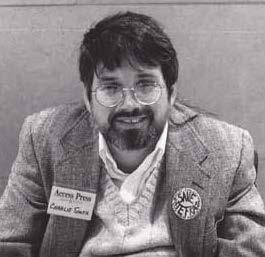
Cannabis is legal Minnesota adults will be able to legally use cannabis for recreation, as that measure was signed into law. “The day has finally arrived. Today is the day that we are going to vote here in the House for the last time to legalize cannabis and bring the change that many Minnesotans have wanted for a very long time,” said Rep. Zack Stephenson (DFL-Coon Rapids), the bill sponsor.
The change starts August 1.
Some people with disabilities have long used cannabis as a means of finding pain relief. It’s been legal here for medicinal purposes for several years, with new diseases and conditions added in an annual
as they could,” said Rep. Joe Schomacker (R-Luverne). “With this, they can really get back up and start hiring nurses. … Being able to free up some of those lines of credit and getting a little more breathing room in their operating costs and the cash flow issues that they’ve faced.”
An amendment added $18 million for partial reimbursements to hospitals for qualifying avoidable patient days.
review and approval process.
There will be several legal limits on marijuana use, and civil penalties for violations. Adults could possess up to two pounds of cannabis in their homes or no more than two ounces in public, They cannot not operate a motor vehicle while under the influence of cannabis; give cannabis to a person under age 21; or smoke or vape cannabis in a multifamily housing building, on the grounds of a child care facility or family or group family day care program.
There will also be an Office of Cannabis Management, licenses created for growers and sellers, and other regulations out in place. Opponents contend there isn’t enough time for the state’s law enforcement officers to get ready for the change.
Transportation rolls on Walz’s first-ever veto as governor came down May 25, when he nixed a bill that would have set minimum pay rates for Uber and Lyft drivers and provided them greater protection against being fired.
Uber said it would stop offering service in Greater Minnesota and only provide “premium service” in the Twin Cities if the bill became law. Walz instead will convene a working group to make recommendations for 2024.
“Rideshare drivers deserve fair wages and safe working conditions. I am committed to finding solutions that balance the interests of all parties, including drivers and riders,” Walz said in a statement. “This is not the
There is some flexibility for how nursing facilities can use the funding. For example, awards under the workforce incentive grant program could be used for hiring and retention bonuses, employee-owned benefits and employee contributions to a 401k, as well as professional development, child care, meals, transportation and housing needs of employees.
In addition, a $100 million loan
right bill to achieve these goals. I have spent my career fighting for workers, and I will continue to work with drivers, riders, and rideshare companies to address the concerns that this bill sought to address.”
The rest of the almost $9 billion transportation bill was signed into law. Not every measure in the bill is for people who drive. Metropolitan Council will get $230.3 million to build out and operate the Twin Cities’ transit system over the next two years, with funds going to Metro Mobility, which serves seniors and people with disabilities.
Starting in July and for the next 18 months, the Met Council must use sales tax proceeds to allow everyone authorized to ride Metro Mobility to ride any regular transit route for free, and to make two routes fare-free for a time. Those results will be reported to state lawmakers in February 2025.
And tucked into drivers’ license changes is a measure that allows 15-year-olds who must care for a disabled family members to be able to get a driver’s licenses. There’s also a change for veterans who are considered 100 percent disabled to be exempted from vehicle registration and delivery fees. A new delivery fee for some goods and services will have a surcharge added. Food, medicine and clothing are exempt from the charge.
Individuals had their day
In many cases, change happens because one person brings an issue forward. But sometimes those changes can take years.
program for financially distressed nursing facilities was included in the human services finance bill.
Nursing homes greatly struggled during the pandemic. That created more risks for people with disabilities, who often rely on nursing homes for respite care or when they lack staff. In some cases disabled people have been forced to move into homes longer-term.
The nursing home measures were part of a bonding bill, which was on its second time around this session. The first $1.9 billion package failed to gain a supermajority needed for passage. Different measures were debated as pressure for some kind of infrastructure package grew. That includes several disability-related requests. Under the final agreement, House and Senate Republican caucuses would each receive $100 million in cash for agreed-upon projects. Gov. Tim Walz and the House and Senate Democrats would each get $30 million more for their priorities.
One of the big winners in this year’s bonding package is True Friends, with $10 million for improvements at its Camp Courage facility.
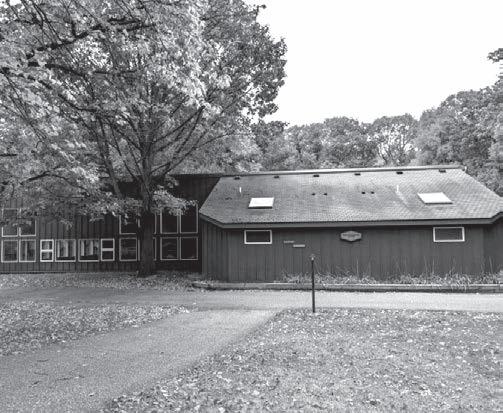
Minnesota state academies received $9.037 million, with $1.2 million of that going for asset preservation. Another $7.837 million is for dormitory predesign work and renovations. The focuses are on Kramer, Brandeen and Rode halls on the Minnesota State Academy for the Blind campus, and for Pollard Hall on the Minnesota State Academy for the Deaf campus. Both schools are in Faribault.
In the Department of Natural Resources (DNR allocation, there us $1.2 million for the design and construction of
To page 15
One of those persistent advocates is Joy Rindels-Hayden, an 87-year-old from Minneapolis. Rindels-Hayden never thought of herself as an activist. But after a fall and injuries while trying to board a bus in 2017, Rindels-Hayden devoted much of her time to seeking changes. She developed a partnership with the Minnesota Brain Injury Alliance. They debated ways to approach the issue and try to prevent more injuries.
The result of their work is four sentences in the transportation bill. Metro Transit drivers must receive mandatory training to help people with disabilities get onto and off of buses. Training would include situations where access is limited, such as the snow and ice conditions that caused Rindels-Hayden’s injuries.
“I didn’t know if I would live long enough to get this changed,” she said. The measure is known as “Joy’s bill.”
A veteran activist celebrating a win is Jeff Bangsberg, who finally saw a measure passed on PCA driving. It’s long been a problem that the PCA program doesn’t allow people with disabilities to have their caregivers drive them around.
The argument for the change is that having transportation is key to independent living, and that time spent driving should be considered as an “instrumental activity of daily living.”
“For Pete’s sake, it finally got in there,” Bangsberg said.
June 2023 Volume 34, Number 6 Pg 13
Know someone who has made a difference in the lives of Minnesotans with disabilities? Nominate that person for the Access Press Charlie Smith Award! Nominations are due at 5 p.m. Monday, July 31 Accommodations can be provided to submit awards. Get a nomination form by calling 651-644-2133 ext. 1 or emailing CSAnominations@accesspress.org
Know a deserving disability community member?
Co-Founder/Publisher Editor-in-Chief Charles F. Smith (1990-2001)
FILE PHOTO
True Friends can improve its camping facilities. BONDING
Still seeking volunteer readers
Minnesota Radio Talking Book continues to seek volunteers to record books and periodicals for broadcast. Prospective volunteers should contact Roberta Kitlinski at 651-539-1423 or roberta.kitlinski@state.mn.us
All about Radio Talking Book
The sampling published monthly in Access Press doesn’t represent the full array of programming on Radio Talking Book (RTB)
RTB is not just for listeners with visual disabilities. Anyone with difficulty reading or turning pages can enjoy the service. Hear programming on a mobile device, for either iOS or Android. Visit the Apple App Store for iOS, or Google Play for Android, and download the Minnesota Radio Talking Book app.
Listen to RTB’s live or archived programs online at www.mnssb.org/rtb
Books broadcast on the Minnesota RTB Network are available for loan through the Minnesota Braille and Talking Book Library in Faribault. The catalog is at www.mnbtbl.org, click on the link Search the Library Catalog. Call the Minnesota Braille and Talking Book Library at 800-722-0550, Mon-Fri, 9 am - 4 pm CST.
For updates, go to the Facebook site Minnesota Radio Talking Book. Audio information about the daily book listings is on the National Federation for the Blind (NFB) Newsline. Register for NFB Newsline by calling 651-539-1424. The NFBNEWSLINE service provides access to more than 500 magazines and newspapers. To learn more, visit www.nfb.org/programsservices/nfb-newsline
Donate to State Services for the Blind at mn.gov/deed/ssbdonate.
If listeners have ideas or feedback about books or programs broadcast, contact the staff. For newspapers and programs, contact Tony Lopez at tony.lopez@state.mn.us or 651642-0880. For books, contact Joseph Papke at joseph.papke@state.mn.us or 651-539-2316.
Callers from Greater Minnesota can reach staff by calling 1-800-652-9000 and ask for Lopez or Papke.
Chautauqua*
Monday – Friday 6 a.m.
Beyond Order, nonfiction by Jordan B. Peterson, 2021. A clinical psychologist offers further guidance on chaos and order along the perilous path of modern life. Read by Carol McPherson. 18 broadcasts; begins Tue, June 13.
Past is Prologue
Monday – Friday 11 a.m.
Prince Albert: The Man Who Saved the Monarchy (rebroadcast), nonfiction by A. N. Wilson, 2019. Queen Victoria’s husband exerted a major influence on the modernization of British society and restoration of the crown’s prestige. Read by Jeffrey Weihe. 18 broadcasts; begins Wed, June 7.
Bookworm*
Monday – Friday 12 p.m.
One Night Two Souls Went Walking, fiction by Ellen Cooney, 2020. A poetic story of wandering souls, filled with the beauty of human encounters and the sorrows of departure. Read by Don Lee. Seven broadcasts; begins Mon, June 5. All the Horses of Iceland, fiction by Sarah Tolmie, 2022. A hypnotic historical fantasy told in gorgeous and unusual literary prose about Iceland's unusual horses. Read by John Gunter. Three broadcasts; begins Wed, June 14.
Black Cloud Rising, fiction by David Wright Faladé, 2022. A compelling historical novel that takes us back to an extraordinary moment when enslaved men and women were shedding their bonds and embracing freedom. Read by Lisa Bromer. 10 broadcasts; begins Mon, June 19. – R
The Writer’s Voice*
Monday – Friday 1 p.m.
Aurelia, Aurélia, nonfiction by Kathryn Davis, 2022. An eerily dreamlike memoir about the way imagination shapes life, and how life shapes imagination. Read by John Schmidt. Three broadcasts; begins Mon, June 12.
The Crane Wife, nonfiction by C. J. Hauser, 2022. A memoir in essays that takes a frank and funny look at love, intimacy and self in the twenty-first century. Read by Pat KovelJarboe. Nine broadcasts; begins Thu, June 15. – L
Newsroom Confidential, nonfiction by Margaret Sullivan, 2022. A trusted champion and critic of American journalism delivers the story of her lifetime. Read by Bonnie Swenby. 10 broadcasts; begins Wed, June 28.
Choice Reading*
Monday – Friday 2 p.m. Outlawed (rebroadcast), fiction by Anna North, 2021. A riveting adventure story of a fugitive girl, a mysterious gang of robbers and their dangerous mission to transform the Wild West. Read by Jodi Lindskog. 10
broadcasts; begins Thu, June 8.
The Streel, fiction by Mary Logue, 2021. A young Irish immigrant gets caught up in a deadly plot in nineteenth-century Deadwood, South Dakota. Read by Greg Olson. Seven broadcasts; begins Thu, June 22.
Afternoon Report*
Monday – Friday 4 p.m.
Poverty, by America, nonfiction by Matthew Desmond, 2023. A provocative and compelling argument about why poverty persists in America: because the rest of us benefit from it. Read by Yelva Lynfield. Nine broadcasts; begins Wed, June 21.
Night Journey*
Monday – Friday 7 p.m.
Paperback Jack, fiction by Loren D. Estleman, 2022. A 1940s pulp writer gets targeted by Hollywood, Congress, and the mob for his authenticity. Read by Mike Tierney. Nine broadcasts; begins Mon, June 5.
Death Is a Real Killer, fiction by Randall J. Funk, 2021. A Twin Cities humor blogger teams up with an attractive contract killer to save her from being arrested for a crime she didn't commit. Read by Joshua Carlyle. 10 broadcasts; begins Thu, June 15. – L
A World of Curiosities, fiction by Louise Penny, 2022. The latest Chief Inspector Gamache mystery tackles a haunting case from the inspector’s past and the puzzles of a bricked up secret room. Read by Therese Murray. 14 broadcasts; begins Thu, June 29. – L
Off the Shelf*
Monday – Friday 8 p.m.
Vladimir, fiction by Julia May Jonas, 2022. A beloved English professor whose professor husband is facing a slew of accusations from former students, develops an obsession of her own. Read by John Schmidt. Nine broadcasts; begins Mon, June 5. – L Flight, fiction by Lynn Steger Strong, 2022. A novel about the systemic failings that are haunting Americans, but also to the ways in which family, friends, and strangers can support each other through the gaps. Read by Tom Speich. Seven broadcasts; begins Mon, June 19. – L
The Catch, fiction by Alison Fairbrother, 2022. A young journalist is left reeling and looking for answers after her father’s sudden death. Read by John Schmidt. Eight broadcasts; begins Wed, June 28. – L Potpourri*
Monday – Friday 9 p.m. Sweat (rebroadcast), nonfiction by Bill
Thanks to ALL OF YOU for supporting Access Press

BENEFACTOR ($1000 & up)
Janice Chevrette
Ronna Linroth
Brandon Miller
Lynda Milne
Joel Ulland
Kay Willshire
Tamarack Habilitation Tech, Inc.
GOLD ($500-$999)
Jeff Bangsberg & Anita Boucher
Anne L. Henry
Kim Kang
Steve Kuntz
Holly Anderson
Alexandra Bartolic
Dena Belisle
Tim S. Benjamin
Gretchen Bratvold
John & Marilyn Clark
Mark Daly
Yoshiko S. Dart
Anonymous
Rosebud Elijah
JoAnn Erbes
Jim Musselman
Debra J. Shriver
Robyn Wade
Courage Kenny
Just Comfort
SILVER ($150-$499)
Craig Dunn & Candy Hart
Anne L. Henry
Pam Hochrein
Judy Hunt
Rick & Susie MacPherson
Brian Musselman
Manley Olson
Mark W. Traynor & Jen Peterson
Julee Quarve-Peterson
Hilary and Stuart Ratner
Ken Rodgers
BRONZE ($75-$149)
Sarah Berg
Jesse Bethke-Gomez
Tom Clark
Richard Cloud
Margot Cross
Daniel Ness
Dawn R. Doering
Dean Doering
Craig J. Dunn
Anonymous
Ellen J. Emanuel
Steve & JoAnn Erbes
Dale Erickson
Claudia Fuglie
Lael Gatewood
Marjorie Goldberg
Mike Gude
Terry Hagenah
Ellen & Skip Houghton
Maren Hulden
Catherine Hunter
Kim Keprios
Megan Keyser
Steve Larson
Jane Larson
Michelle & John
LeBlanc
Gene Martinez
John Marty
Christopher Meyer
Tom & Ky Milne
Eric S. Nelson
Daniel Ness
Annette M. Pantel
Mark Payette
Carrie Salberg
Anita & Luther
Schermer/Granquist
Stephanie Schwartz
Jon Skaalen
Laurene Tomaszewski
Cathy Wick
Zekerya Yargici
Leslie Zaricor
Richard Ziton
FRIEND ($50-$74) Nora
Thomas Fogarty Ann Griffith
Lee Ann & Dale Erickson
Kent Fordyce
Vicki Garrets
Robert Gregory
Ann M. Roscoe
Walt Seibert
Amanda & Mark Tempel
Kay Willshire
Abbreviations
V – violent content R – racial epithets L – strong language S – sexual situation
G – gory descriptions
Hayes, 2022. Exercise is our modern obsession and was an ancient obsession, too. Read by John Gunter. Nine broadcasts; begins Mon, June 5.
Slaying the Dragon, nonfiction by Ben Riggs, 2022. The legendary tale of the rise and fall of the company that created the roleplaying game world. Read by Carl Voss. 13 broadcasts; begins Mon, June 19.
Good Night Owl*
Monday – Friday 10 p.m.
The Twilight Zone, fiction by Nona Fernández, 2022. An engrossing, incantatory novel about the legacy of historical crimes in Chile. Read by John Potts. Six broadcasts; begins Monday, June 5. – V
Sex with Presidents (rebroadcast), nonfiction by Eleanor Herman, 2020. A popular history that uncovers the bedroom secrets of American presidents and explores the surprising ways voters have reacted to their leaders’ sex scandals. Read by Diane Dahm. 14 broadcasts; begins Tue, June 13. – S
RTB After Hours*
Monday – Friday 11 p.m.
Book Lovers (rebroadcast), fiction by Emily Henry, 2022. Sparks fly between two literary agents out of their big-city element. Read by Carol McPherson. 13 broadcasts; begins Thu, June 1. – S, L
A Caribbean Heiress in Paris, fiction by Adriana Herrera, 2022. A historical romance about an heiress to a rum empire and her Scottish beau. Read by Mary Knatterud. 11 broadcasts; begins Tue, June 20. – S, L
Weekend Program Books
Your Personal World, 1 p.m. Sat, presents This Is How Your Marriage Ends by Matthew Fray, read by Beverly Burchett – L; followed by Toxic Positivity by Whitney Goodman, read by Beverly Burchett.
For the Younger Set, 11 a.m. Violet Made of Thorns by Gina Chen, read by Pat Muir; followed by Firekeeper’s Daughter by Angeline Boulley, read by Jan Anderson – L. Poetic Reflections, noon Sun, presents Turn Up the Ocean by Tony Hoagland, read by Mary Knatterud; followed by Cinderbiter by Martin Shaw and Tony Hoagland, read by Mary Knatterud.
The Great North, 4 p.m. Sun, presents A Private Wilderness by Sigurd F. Olson, read by Judith Johannessen.
SUPPORT ACCESS PRESS*
Friend $50+ Bronze $75+
Silver $150+ Gold $500+
Benefactor $1000
DATE: AMT. ENCLOSED $
June 2023 Volume 34, Number 6 Pg 14
651-644-2133 access@accesspress.org Mail your sponsorship to: Access Press, LTD. PO Box 40006, Industrial Station, St. Paul, MN 55104-5485
NAME ADDRESS CITY/STATE/ZIP PHONE EMAIL
Aileen Beall
Joanna & Richard Cortright
Paul Bauer & Pat Cretilli
Nancy N. Eustis
Laura Johnson Barb Kane Mark Knutson Tag Krogseng Sandy Lane Kenneth Latkin
McKee Twyla M.
William & Joan Overby Annette M. Pantel Sonja Peterson Donn Poll Alina Schroeder Mike Schwartzbauer Gwendolyn Short Diane Sprague Katherie Tomlinson Dick VanWagner Katheryn J. Ware Linda Wolford
Phil Jacobsma Dale Janiszeski
Andrea
Misselhorn
RADIO TALKING BOOK All times listed are Central Standard Time.
Raise a Glass
Friends of PACER Center host Raise a Glass, a toast to Pacer, at 5-8 p.m. Thu, June 22 at Nine Mile Brewing, 9555 James Ave. S., Suite 290, Bloomington. Celebrate summer and PACER’s work on behalf of children and young adults with disabilities and their families at a casual, open housestyle event. Guests of all ages are welcome for games, snacks, a food truck, and of course, beer. Advance ticket price is $25 and includes one drink, and $10 ticket price for non-drinker and under 21, includes one N/A beverage. Children 10 and under are free. Ticket prices increase after June 15. FF: www.pacer.org
All golf scramble
The 2023 Tee It Up FORE All Golf Scramble is Fri, June 23 at Blackberry Ridge Golf Course in Sartell. It is am annual fundraiser for thArc Minnesota Midstate Region and ARISE. ARISE (A Recreational Inclusion Support Endeavor) provides support for children with disabilities so they can access community recreation and leisure activities with their peers. ARISE works with families to determine the needs of each child and to personalize services.
FFI; Anne Redetzke, 320-316-3497, anneredetzke@arcminnesota.org
Post your event online
Access Press would like to move more of its event listings online, and that is possible with
Children and families
PACER Center workshops sampling
Many useful free or low-cost workshops and other resources are available for families of children with any disabilities. In-person and online and livestreamed re offered.workshops are offered. Advance registration is required for all workshops. At least 48 hours’ notice is needed for interpretation. Check out PACER’s website and link to the newsletter of statewide workshops that allows participants to pick and choose sessions designed for their needs. Access Press only provides a sampling of the many workshops offered.
BONDING
From page 13
accessibility improvements at state parks, recreation areas and wildlife management areas.
The Department of Human Services received $28.8 million. Of that amount there’s more than $24. 5 million for facilities work at the St. Peter campus, and another 410 million to provide regional behavioral health crisis facilities in Duluth and in Dakota County. Accessible playground projects received assistance, in Apple Valley ($1.41 million), Fridley ($500,00) and St. Paul ($2 million)
Accessible Space Inc. received $1.150 million to create accessible housing units in St. Paul.
our redesigned website. There is a word limit and we ask that those posting information include event costs as well as accommodations. Are ASL and AD offered? Is there companion seating? A quiet room? Fidgets?
Accommodations are much more than a ramp for many of us. That kind of information can help someone decide where or not to attend an event.
To post an event, go to www.accesspress. org, click the resources tab at top right, and go to the post an event line.
Consider that a small web or print ad can also generate interest in an upcoming event. For questions about ads, email ads@ accesspress.org

Access Press reserved the right to reject events if they do not meet our guidelines. Call the editor at 651-644-2133 ext. one or email jane@accesspress.org with events questions.
Open Flow Forum
The Artists with Disabilities Alliance meets via Zoom 7-9 p.m. the first Thu of the month. Upcoming dates are June 8 and July 6. Virtually join artists with disabilities and supporters to share visual art, writing, music, theater and artistic efforts or disability concerns. Facilitators are Tara Innmon, Kip Shane and Springboard for the Arts. The gatherings are fully accessible. Anyone needing special accommodations should contact Andy Sturdevant at host organization Springboard for the
Butterfly mural is celebrated
Achieve Services will celebrate its new butterfly murals at Blaine’s Northtown Mall Burlington Court, Door Five, at11 a.m.-1 p.m. Friday, June 23. The ribbon cutting and celebration spotlight murals created by artists with disabilities. The event is free and open to the public.

Visitors can meet the artists and take photos in front of Achieve’s beautiful butterfly wing murals. Achieve Services’ house band, Dance at Your Own Risk, will perform.
Achieve Services is a Blaine nonprofit organization serving adults with disabilities. Over the past few months, Achieve artists designed and painted five huge butterfly murals at the mall. The artists chose and provided ideas on the designs, colors and names of the butterflies.
Each butterfly mural is unique in its height, making it accessible for people of all different heights to take photos in front of its wings. Two of the butterfly designs are wheelchair accessible.
“It has been an honor and a privilege working on one of the largest collaborative art projects that’s ever been done in Anoka County,” said Joe Loskota, Achieve Program supervisor. He and his wife Tierza led the art project and helped bring participants to the mall to paint the butterflies. “We have had 40 artists with disabilities and 20 art facilitators that have helped make this project a resounding success.”.
The ribbon cutting will be held at 12:05 p.m. Dance at Your Own Risk will perform from 12:15 p.m. to 12:45 p.m. FFI: www.achieveservices.org/achievewings
Arts. Funding is available for access needs. FFI: 651-294-0907, resources@ springboardforthearts.org

Resources to Enjoy!
The Enjoy listings are for arts events as well as banquets, fundraisers and fun events by and for disability services organizations. Schedules may be subject to change. Some venues still may have mask and vaccine requirements. Please check with a venue or organization before making plans.
The Minnesota Access Alliance (MNAA) provides an Accessible Arts & Culture Calendar for arts patrons who use accessibility accommodations such as audio description, captioning, ASL interpreting and sensory-friendly accommodations. Link to more details at https://calendar.mnaccess.org. Be sure
to check the listing or venue to find out its COVID-19 protocol and if an advance reservation is needed for the accessibility service.
Accessible events can be submitted to the MNAA Calendar (and MinnesotaPlaylist. com). A list of other venues follows the event listings.
To receive a free monthly events calendar: email mactfactor@icloud.com and/or info@mnaccess.org. Ask for the entire events list or specific lists for ASL interpreting, captioning, audio description, sensory-friendly accommodations or disability-related topics.
For other accessibility resources or upcoming webinars presented by MNAA, sign up for emails at https://mnaccess.org
Glaze Haze at Interact
Interact Gallery hosts Glaze Haze, through June 14. The exhibition features sculptures, planters and masks by 26 artists, created in Interact’s ceramics studio. See the exhibit by appointment. Ask about accessibility and COVID protocols. The gallery is at 755 Prior Ave, N, Suite 002D (lower level), St. Paul. FFI: 651-756-1246
Assistive Technology Supports for Math is

2-3:15 p.m. Wed, June 21. Offered online.
Participants will learn about math tools that can help build math skills for all skill levels.
Tech for Teens Club Web Development
Part 1 – HTML and CSS is 10-11 a.m. Sat, June 24. Offered at PACER Center and virtually. In this STEM workshop, participants will learn the basics of website development and craft their own webpage using HTML and CSS. This event has been rescheduled from June 17.
Tech for Teens Club : Web Development
Part 2 – JavaScript is 11 a.m. to noon Sat, June 24. Offered at PACER Center and virtually. In part 2 of this STEM workshop
for teens, participants will learn more advanced website development skills and tools including learning to code JavaScript. This event has been rescheduled from June 17.
FFI: PACER, 952-838-9000, 800-5372237, www.pacer.org
Info & Assistance
Many classes available
NAMI Minnesota (National Alliance on Mental Illness) has set up a wide variety of free and in-person online mental health classes. Choices include Hope for Recovery, Transitions, Ending the Silence, Understanding Early Episode Psychosis for Families, In Our Own Voice, Family to Family, Positive Psychology, Creating Caring Communities, smoking cessation,
a suicide prevention class called QPR –Question, Persuade and Refer, a special QPR class for Agricultural Communities and many more.
NAMI Minnesota’s Online Support Groups moved to a new and improved platform, HeyPeers. HeyPeers provides a safe, easy to access environment exclusively designed for online support group meetings.
The classes and online support groups are designed for family members and caregivers, persons living with a mental illness, service providers, and also the general public. Find a complete listing of these classes and how to join in by going to namimn.org and clicking on “Classes” or go straight to https://namimn.org/educationpublic-awareness/classes/scheduled/
June 2023 Volume 34, Number 6 Pg 15
ENJOY !
OPPORTUNITIES Be part of our Access Press Directory Next edition: August 651-644-2133 METES & BOUNDS MANAGEMENT Company manages the following Section 8 properties in Minnesota. Income and rent restrictions apply Metes & Bounds is an equal housing opportunity housing company Boardwalk Wayzata 952-473-0502 Dewey Place/The Pines Foley 320-968-7791 Highwood Homes Prior Lake 952-447-6961 Greenwood Wadena 218-631-2575 Mission Oaks Plymouth 763-559-5770 Rustic Creek Two Harbors 218-595-1018 Todd 27 Long Prairie 320-732-6154 Town Square East Grand Forks 218-773-3631 Victory Duluth 218-722-2629 Classified rates: $20 (first 12 words); $1/word beyond 12. Email classified to access@accesspress.org Deadline: 20th of each month. We will email total cost of classified ad. FIND YOUR NEW HOME WITH AT HOME APARTMENTS Call 651-224-1234 or visit AtHomeApartments.com for an apartment or town home Equal Opportunity Housing CLASSIFIEDS FOR RENT
GRANTS ARE AVAILABLE to start your own employee-owned business! Who can apply?
Direct care professionals who care for the aging and people with disabilities.

The $162,000 grants come with technical assistance about how to start your business.

mccdmn.org/direct-support-professionalsemployee-owned-cooperative-program
June 2023 Volume 34, Number 6 Pg 16
