Special Olympics USA Games kicked off with spectacular opening ceremonies and left lasting memories for thousands
By Joey Carlson
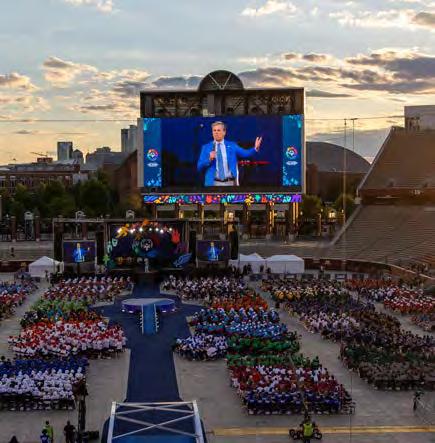
On June 20, 2026, Huntington Bank Stadium on the campus of the University of Minnesota was rocked by a celebration of pure joy: the 2026 Special Olympics USA Games Opening Ceremonies. The energy was all positive as the games officially got underway.
The event brought together nearly 3,000 athletes from every state in the country, who stayed for a week-long celebration of athletic excellence, inclusion, and the resilience of the human spirit.
A vibrant parade of champions
The evening launched with an unforgettable parade of athletes. One after another, individual state delegations filled the stadium floor in a dazzling sea of colorful uniforms. The upbeat music pulsing through the stadium matched the soaring spirits of the competitors, each getting their well-earned moment to shine in front of a roaring crowd.
Senator Amy Klobuchar and Minnesota Governor Tim Walz joined the Minnesota delegation as they entered the stadium.
Following the parade, Walz and his wife, Gwen Walz welcomed the delegations with a video message.
“Minnesota has always been a place where we look out for one another, where community means coming together,” Governor Walz said.
“This is a place where every person belongs.”
Star-studded anthem and Lovato’s rally
Taking the stage right after the parade, two-time Grammy nominee Demi Lovato brought an electrifying set of fan-favorite hits to the stadium, highlighting her long-standing advocacy for individuality and self-expression.
Athletes on the field danced and fans couldn’t stop cheering and smiling.
“I’ve always believed that being unapologetically who you are is the most powerful thing you can do,” Lovato noted about
the evening. “I’m so honored to be part of a night that celebrates these athletes who embody their strength and individuality every day.”
Honoring a legacy of inclusion
The deep historical roots of the inclusion movement were a beautiful focal point throughout the night. Christy Sovereign, CEO of the Games Organizing Committee, took the stage to share a personal story. Thirty-five years ago, Minnesota proudly hosted the 1991 International Special Olympics Games and her sister participated. Sovereign introduced a
retro video clip of her sister, Katie, who swam in those games at age 16.
Katie’s words from 1991 delighted the audience, “There may be a lot of pretty good swimmers... I know it, I’m one of them.”
Special Olympics International Chairman Tim Shriver followed with a high-energy address that brought the crowd to its feet.
Drawing inspiration from Lovato’s powerful performance, Shriver looked across the stadium floor and called the competing
IN THIS ISSUE
DOJ memo sparks concern Page 4
Access Press Directory Pages 6-7
Wilderness Inquiry welcomes all Page 8
Spokes Fighting Strokes Page 11
Minnesota celebrates Disability Pride Month and looks back at its history
By Jane McClure
July 4th is not the only “independence day” celebration this month. July 26, 1990 is seen by many people with disabilities as their independence day. That’s when President George H.W. Bush signed the Americans with Disabilities Act (ADA) into law.
Since then, Minnesotans have celebrated the ADA’s passage and, since 2015, Disability Pride Month every July. While the ADA and its promise are important, so too is the promotion of community pride and pride in who we are as disabled people.
How Minnesotans celebrate the ADA as a disability community has changed over the years. Many of the early events were more formal, with speeches, panel discussions and performances. The focus has shifted to more festive events with music, food and hands-on art activities.
The Minnesota History Center, Science Museum of Minnesota, Hamline University and state buildings including the Capitol have hosted past events, rallies and performances. A march from the History Center to the Capitol was followed by a large rally one year.
Virtual events took place during the COVID-19 pandemic.
Various groups including what is now the Council on Disability, Metropolitan Center for Independent Living and Advocating Change Together (ACT) led planning for the larger celebrations. The Arc Minnesota’s various chapters have also contributed or held events of their own.
Two of the longtime organizers of ADA events were Cindy Tarshish and the late Ann Roscoe.
Here’s a look back at those Minnesota celebrations and how Disability Pride Month began.
The beginning
Several Minnesotans were in Washington, D.C. for the signing of the ADA itself back in 1990 although the actual number of participants from the state isn’t known. Many have passed away.
Nationwide there was energy focused on disability rights as the signing came just weeks after the “Capitol Crawl” in March. More than 1,000 activists rallied at the U.S. Capitol. About 60 people abandoned their wheelchairs, walkers, canes and crutches to crawl up the building’s steps. It was a powerful show of civil disobedience and the need for equal access.
U.S. Sen. David Durenberger, one of the ADA champions, hosted a breakfast for about two dozen Minnesotans on signing day. He sponsored Leah Welch’s trip. Welch called the ADA “a really big step, long overdue.”
She had lived with polio-related disabilities since 1949 and used a wheelchair and respirator. Welch served as executive director of a personal care attendant agency, Independence and Crossroads. Minnesota’s ADA celebration was held several weeks later. More than 1,000 people gathered on August 17, 1990 at the Minneapolis Convention Center.
Senators Tom Harkin (D-Iowa) and David Durenberger (R-Minnesota) were thanked, as were others who worked to get the ADA passed. Durenberger said that passing the law was no small accomplishment, citing the years it took to get the ADA in place. Many Minnesotans and their advocacy organizations were involved.
Discussion of the law’s impacts varied. Some noted that Minnesota was ahead
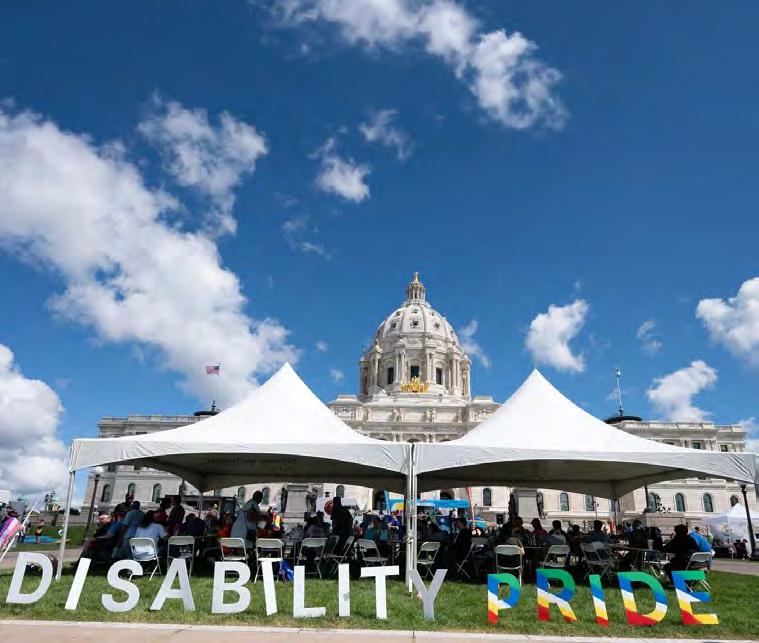
Disability Pride tent in front of the Minnesota State Capitol.
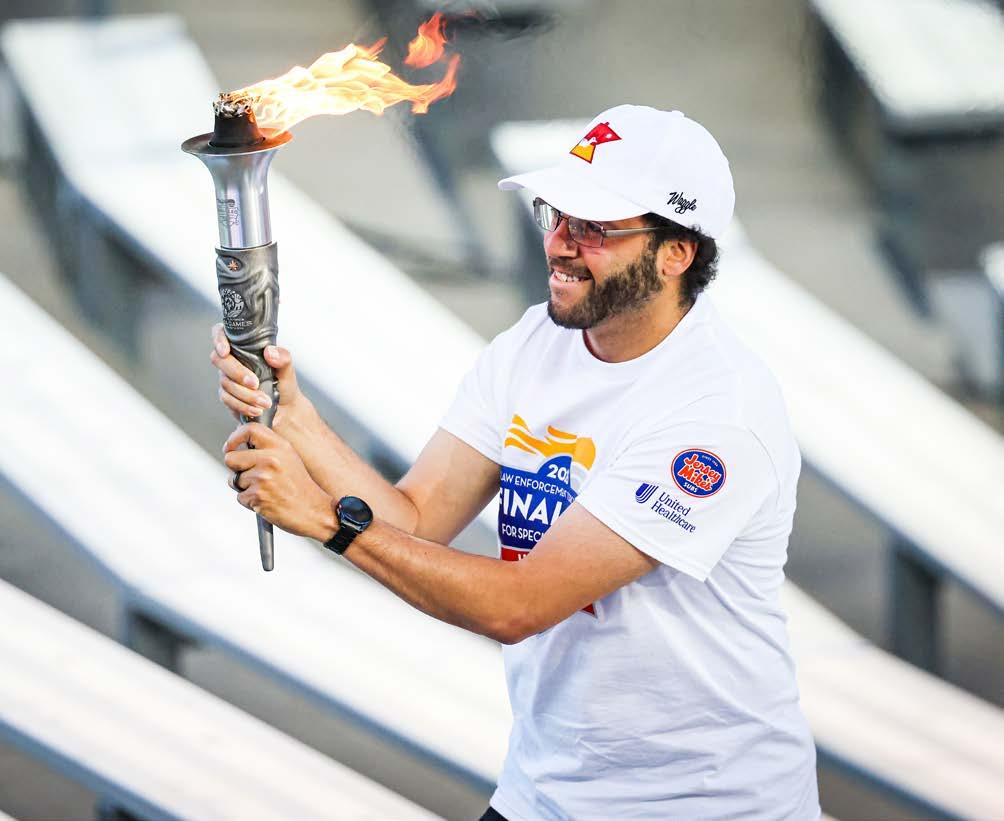
John Conway, an athlete from Saint Paul, Minnesota, was the final torch bearer and lit the cauldron.
Minnesota advocates push for national disability policy changes at Roll on Capitol Hill
By Joey Carlson
On June 24, 2026 disability advocates from across the country got together for United Spinal Association’s 14th annual Roll on Capitol Hill (ROCH).
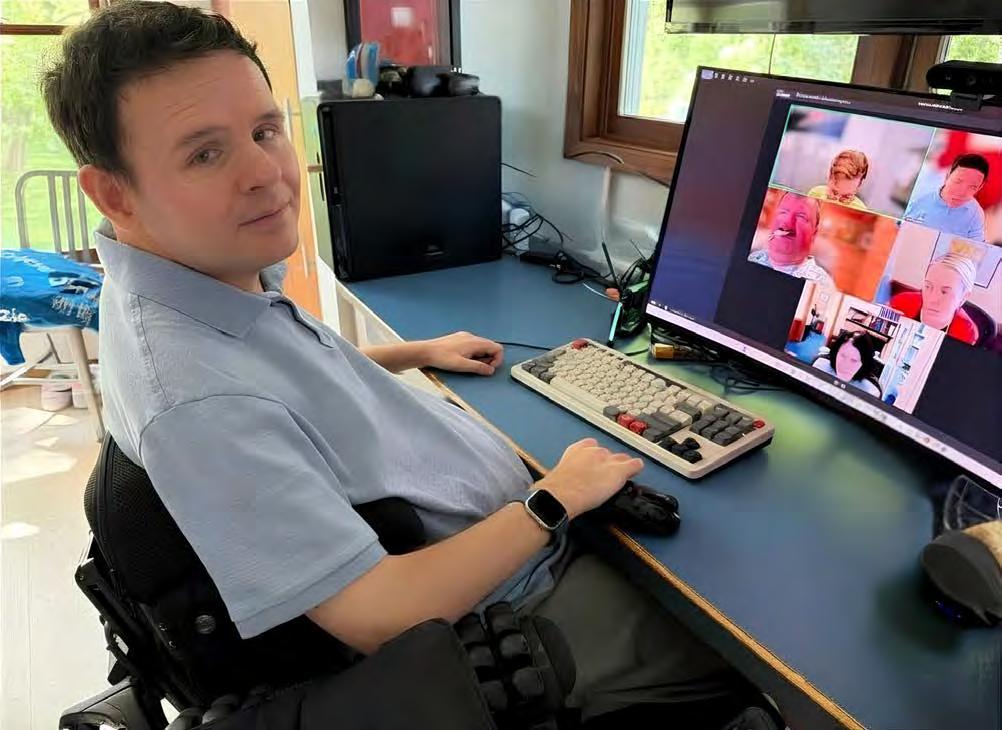
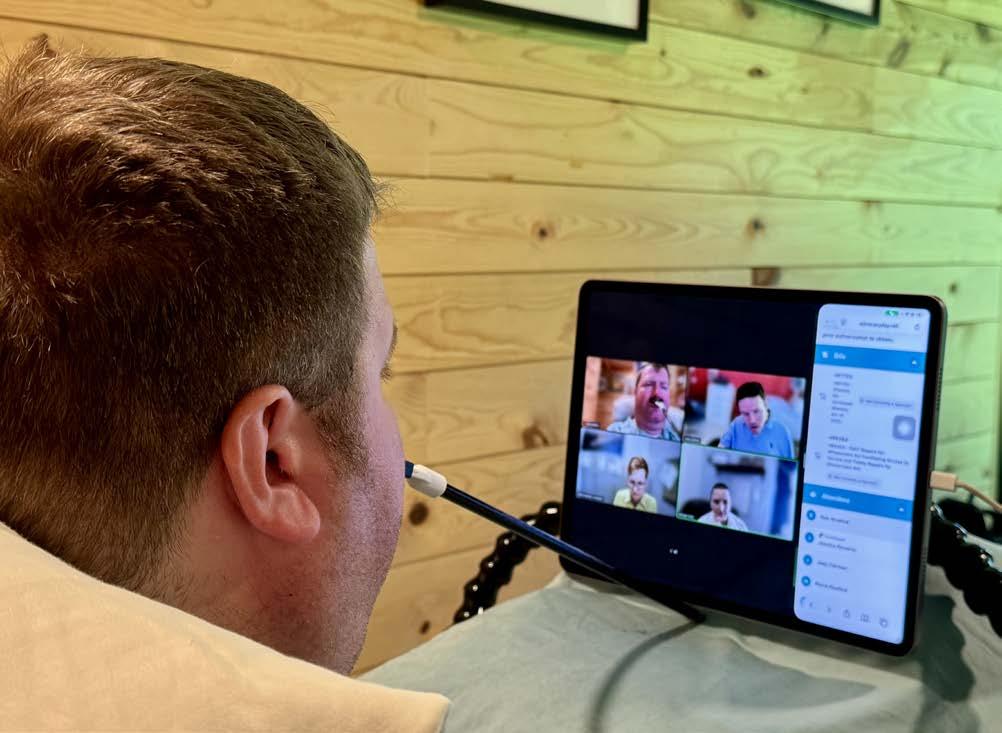
I have attended the event in the past, but usually we are rolling through the halls of the Senate and House offices in Washington, DC. This year the event was held completely virtually via Zoom.
The Minnesota team consisted of design engineer and disability advocate Rob Wudlick, Maria Koullick from Coloplast, and me. Throughout the day we met virtually with the staff of representatives from across the state, including U.S. Representative Brad Finstad, U.S. Representative Kelly Morrison, U.S. Senator Tina Smith and U.S. Senator Amy Klobuchar.
About United Spinal and Roll on Capitol Hill
The United Spinal Association has fought for the independence and rights of individuals with mobility disabilities since its founding by wounded World War II veterans in 1946. Over the decades, the organization has consistently transformed personal lived experience into systemic federal policy, including playing a key role in passing the Americans with Disabilities Act (ADA).
Fourteen years ago, United Spinal launched Roll on Capitol Hill as its signature legislative advocacy event. This was created to put wheelchair users directly in front of lawmakers and put human faces on complex healthcare, insurance, and civil rights issues.
According to Annie Streit, Grassroots Advocacy Manager for United Spinal, the strategic decision to alternate between virtual and in-person events every other year was born out of financial practicality, but it has yielded a powerful secondary benefit: maximizing community reach.
“Last year in person, we had around 100 advocates,” Streit said. “This year virtually, we have 188 advocates representing 37 states.
The real power of Roll on Capitol Hill is to hear stories from actual constituents on how policies can impact people’s everday life.
Going virtual allows us to bring in ‘rookies’… first-time advocates who might find traveling to D.C. intimidating or logistically impossible. It gives them a platform to see how accessible and empowering storytelling can be.”
The three-day event featured a day of learning about the issues, a busy slate of virtual legislative meetings the next day, followed by an advocate-led debrief session to share strategies for follow-up and local advocacy. This year, the stakes were incredibly high, with advocates focusing heavily on defending home care infrastructure, protecting medical equipment customization, and reversing counterproductive insurance mandates.
The 2026 legislative agenda
Below is a list of some of the issues that we discussed with the legislative staff during Roll on Capitol Hill.
1. Defending home and communitybased services (HCBS)
Like all Americans, people with disabilities want to be full participants in their communities. Home care, provided through Medicaid, has been essential in supporting Americans with disabilities who want to work, raise children, and contribute to society. However, the care economy is already stretched thin and suffers from decades of underinvestment, with severe shortages of care workers leaving our society unable to meet the need. Any policies or programs to prevent fraud in home care must be crafted so that they do not harm the
people in need of those services.
2. Halting competitive bidding for critical medical supplies
Advocates sounded an urgent alarm regarding a Centers for Medicare & Medicaid Services (CMS) final rule that added ostomy, tracheostomy, and urological supplies to Medicare’s Competitive Bidding Program. CMS plans to artificially shrink the nationwide market for these highly individualized prosthetic items down to just 7-10 mail-order suppliers.
Because these supplies require precise clinical fits to prevent life-threatening skin breakdowns, severe urinary tract infections, and emergency hospitalizations, a “one-size-fits-all” mail-order system is dangerous. The Minnesota contingent urged lawmakers to cosponsor the forthcoming Access to Medical Supplies Act, spearheaded by Representatives Greg Murphy (R-NC) and Jimmy Panetta (D-CA), which would halt this bidding expansion for five years while a clinically informed review takes place.
3. Creating common-sense coding for ultralight wheelchairs
For a decade, an administrative bureaucratic hurdle has penalized wheelchair users who want upgraded frames made of titanium or carbon fiber. These advanced materials significantly reduce daily wear and tear on an individual’s shoulders and wrists over a lifetime of use.
Under current guidelines, users choosing these materials must pay the entire cost of
Executive Director Heidi Holste
Managing Editor
Joey Carlson
Assistant Editor............................................................................................................................................................................ John Kuziej
Contributing Writer Sandra Bond, Jane
the wheelchair upfront out-of-pocket and wait months for baseline reimbursement. Advocates rallied support for the Choices for Increased Mobility Act (H.R. 1703/S. 247), a cost-neutral bill that simply creates new billing codes so suppliers can bill consumers solely for the cost of the material upgrade.
4. Eliminating unnecessary red tape for wheelchair repairs
When a customized wheelchair breaks down, a user’s entire life stops. While traditional Medicare has eliminated the requirement for prior authorization for repairs, private Medicare Advantage plans still demand this redundant paperwork, even for parts that were already approved when the chair was built. This red tape pushes the median repair time to 14 days, with some users waiting up to six months, drastically increasing the risk of pressure injuries and rehospitalizations. We pressed for the passage of the Facilitating Access to Service and Timely (FAST) Repairs for Wheelchairs Act (H.R. 9364), introduced by U.S. Representative Ayanna Pressley (D-MA), to eliminate repair prior authorizations across all Medicare Advantage plans.
Stories from Minnesota
The real power of an event like the Roll on Capitol Hill is that legislative staff get to hear stories from actual constituents on how policies can impact people’s everyday life. We shared how disruptions in getting our wheelchairs repaired negatively affected our health. We talked about how finding the right catheter helped keep us out of the hospital. And we shared how important living in communities is for people with disabilities.
If you would like to learn more about United Spinal and how you can get involved in your local chapter, sign up at https:// unitedspinal.org/membership-form.
EDITORIAL: Editorial submissions and news releases on topics of interest to persons with disabilities, or persons serving those with disabilities, are welcomed. We reserve the right to edit all submissions. Editorial material and advertising do not necessarily reflect the view of the editor/ publisher of Access Press.
DEADLINE: 15th of each month.
CIRCULATION/DISTRIBUTION: Distributed the 1st of each month through more than 200 locations statewide. Approximately 1,400 copies are mailed to individuals, including political, business, institutional and civic leaders.
SUBSCRIPTION: Free and accessible to anyone in MInnesota, visit www.accesspress.org/subscribe ABOUT ACCESS PRESS: A monthly newspaper published for persons with disabilities by Access Press, Ltd.
POSTMASTER: Send address changes to Access Press, PO Box 40006, Industrial Station, St. Paul, MN 551048006
INQUIRIES AND ADDRESS CHANGES should be directed to: Access Press, PO Box 40006, Industrial Station, St. Paul, MN 55104-8006; 651-644-2133; email: access@accesspress.org Website: accesspress.org
Editor-in-Chief/Executive Director Tim Benjamin (2001-2020)
Joey Carlson participates virtually in Roll on Capitol Hill.
Rob Wudlick participates virtually in Roll on Capitol Hill.
NEW
AT ACCESS PRESS
Meet John: Powered by lived experience, journalism expertise, and undying hometown fandom
By Randall Oldenburg, Ad Sales Representative
Disabled from birth, I am an enthusiastic thinker. Those I work with often comment that my mind works in interesting ways that are helpful in solving complex problems. Unfortunately, my brilliance is mostly limited to the abstract: Please don’t ask me to change a tire! As a passionate crisis survivor, I believe everyone deserves to feel connected to their communities and their authentic selves. Connecting with people and ideas brings me a lot of joy. My core value is honesty, and my main goal is to be proud of myself when I’m an old man looking back on my life. I hope my story helps others.
Music is a very important component of my happiness and health. I have a diverse taste in music on purpose. Sharing a song, you like or find meaningful is a great way to connect with me. I am a very imaginative person who enjoys roleplaying games. I also have a passion for promoting positive,
By John Kuziej, Assistant Editor
I was diagnosed with cerebral palsy at age 2, which has shaped my career and recently led me to Access Press as the assistant editor.
When I was 6 years old, I had dorsal rhizotomy surgery and spent six weeks at Gillette Children’s Hospital. As a diehard Minnesota Twins fan, it was especially difficult because my hospital stay was in the summer and I couldn’t attend games.
During my recovery, Twins reliever LaTroy Hawkins and MLB Hall of Famer Harmon Killebrew visited me. The Children’s Miracle Network connected me with Killebrew, and I stayed in touch.
Shortly after my recovery, The Children’s Miracle Network invited me to attend events and advocate for people with disabilities. This was the first time I realized how empowering it was to help give the disability community a voice.
Combining journalism and lived experience
In high school and college, I worked as a play-byplay announcer for team sports, but I always felt like something was missing.
Even in the broadcast booth, my desire to be a voice for the disability community remained. So, I decided to leave Minnesota for graduate school.
I was fortunate to get accepted into the Sports Journalism program at Arizona State University, and while in school, I worked as a graduate assistant at the National Center on Disability and Journalism (NCDJ).
While working at NCDJ, I promoted disability coverage across the globe and provided reporters with the tools they needed to represent the community in the news.
In addition to working with NCDJ, I also worked as a reporter for Cronkite News, helping to expand coverage
consent-based relationships within the disability community and broadly. I really love giving good hugs and validating people without flattery.
In my ideal world, I amass enough resources to influence systems to be more humanistic (and can afford a steady supply of peanut butter crackers for myself).
When I’m not helping Access Press do their great work, you’ll probably find me consuming content related to Magic: The Gathering or Dungeons & Dragons or doing something with one of my friends at The Arc Minnesota. I spend way too much time journaling and am currently fixated on the question of what kind of small business I would like to start.
If ever you work with me, be advised that I love making others laugh, and will sometimes be a bit much in pursuit of that. I love humanity, and enthusiasm can be hard to hide!
Thank you for supporting accessible news, and the people with disabilities who value it.
Catching COVID-19 multiple times increases risk of Long COVID
Some people may think that COVID-19 is a thing of the past. There has even been a dangerous myth that has spread, the idea that if you’ve already had COVID-19 once and recovered completely, you are safe from developing Long COVID in the future. This line of thinking seems logical, but recent studies and health data reveal a different reality.
What the recent numbers show Recent studies have looked closely at people who have caught the virus multiple times and found:
• Twice the risk: You are roughly twice as likely to develop Long COVID during a second infection compared to your first.
• The multiplying effect: The risk
of long-term fatigue, heart issues, and cognitive struggles (“brain fog”) climbs even higher with a third or fourth infection.
• Compounding existing conditions: For those already living with disabilities or chronic illnesses, a repeat infection can permanently worsen baseline health and exacerbate existing symptoms. COVID-19 is not a “one-and-done” condition. Immunity from a past infection does not guarantee safety from future infections or Long COVID.
Remember, this doesn’t mean you need to fear the disease. Just stay aware and do simple things such as washing your hands and keeping your distance from those that are infected. By protecting ourselves from repeat infections, we protect the overall health of our entire community.
I am excited to learn more about what the Minnesota disability community needs and how we can work together to improve the quality of life for all Minnesotans with disabilities.
of adaptive sports and disability issues in Arizona.
After completing my master’s degree, I moved to Roanoke, Virginia, where I have worked for the last two years as a TV news producer at WDBJ7
Producing has given me the opportunity to expand coverage of the disability community in Southwest Virginia by having guests on my show to promote Special Olympics Virginia and by making sure information vital to the community is provided.
My vision for Access Press
I will now be taking the lessons I’ve learned in the classroom and newsroom to Access Press.
The disability community is resilient, capable, and strong. I believe it’s important to showcase this and make sure we get representation in the media.
I am grateful to be joining Access Press as an assistant editor. I am excited to learn from you about what the Minnesota disability community needs and how we can work together to improve the quality of life for all Minnesotans with disabilities.
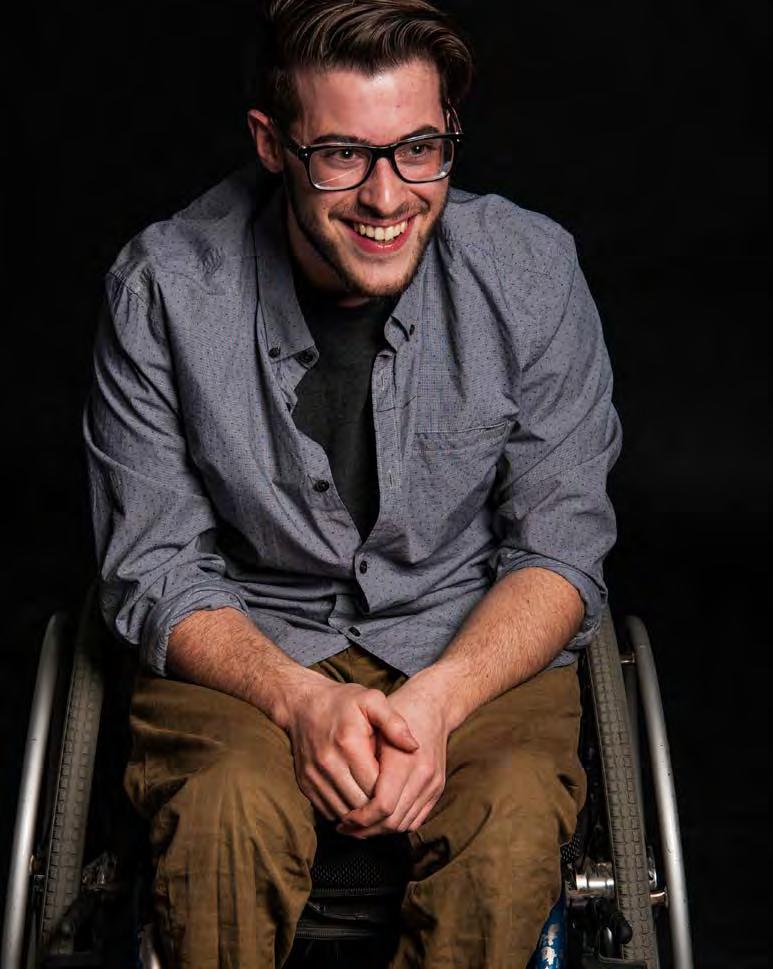
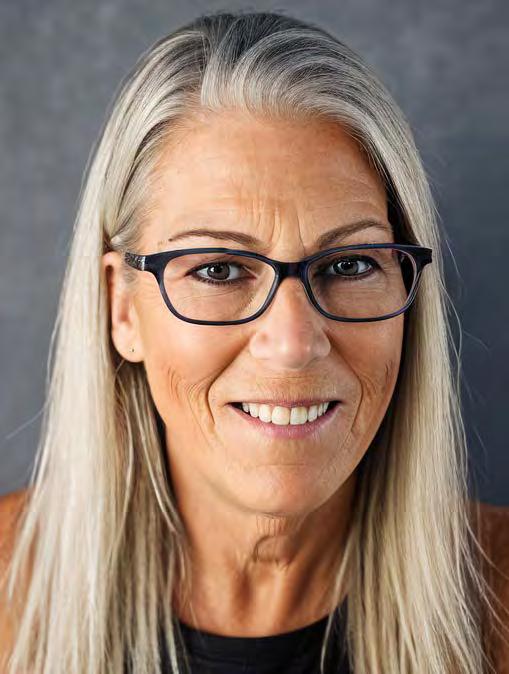
John Kuziej
Randall Oldenburg
Randall Oldenburg
By Access Press Staff
By Sandra Bond
Minnesota’s disability service providers support thousands of our state’s most vulnerable citizens every day. We provide homes, stability, and services for individuals who depend on consistency and trusted relationships to live safely and with dignity in their communities.
Today, many of those providers are facing a crisis that was not of their making.
The Department of Human Services’ Revalidate 2026 initiative was intended to strengthen oversight and comply with federal Medicaid requirements. Fraud prevention and accountability are important goals that we support. Taxpayer dollars should be protected, and bad actors should be removed from the system.
However, what has unfolded has exposed a troubling reality: legitimate providers who have spent years serving Minnesotans in good faith have become collateral damage in an administrative process that has been poorly executed and overly broad.
Many providers with no high-risk programs on their licenses and no history of fraud found themselves swept into a process that has resulted in disenrollments, terminations, interrupted payments, and lengthy appeals. These providers were not the focus of the federal revalidation directive, nor were they the providers that triggered concerns about fraud. Yet they have been forced to bear the burden of proving they deserve to continue serving the people who depend on them. The state continues to point providers toward the appeals process as the solution, but that misses the fundamental issue: legitimate providers who were never involved in the
By Frank Murphy
On the 27th anniversary of the landmark Supreme Court decision Olmstead v. L.C., the disability community should have been celebrating decades of hard-fought progress toward independent living. Instead, the Department of Justice’s (DOJ) Office of Legal Counsel (OLC) quietly released an opinion June 18 that challenges the right to live in the community.
Written in response to White House inquiries, the memo argues that the “integration mandate” derived from the Americans with Disabilities Act (ADA) and the Rehabilitation Act is not a legal mandate at all, particularly for people with serious mental illness or disabilities.
“This is potentially devastating for the rights of people with disabilities,” said Jennifer Mathis, deputy director for the Bazelon Center for Mental Health Law, and a former top DOJ official. What is the integration mandate?
The integration mandate says that people with disabilities have the right to receive care and services in their communities, rather than being segregated in institutions. It is the mechanism that has led states to invest in Home and Community-Based Services (HCBS), allowing thousands to leave nursing homes, psychiatric facilities, and congregate care settings.
A shift in federal enforcement
Now, the federal government is in retreat. The DOJ opinion essentially tells federal agencies—and receptive states—to roll back enforcement of the ADA’s integration mandate. It argues that institutionalizing people with disabilities is not inherently discriminatory unless it is completely arbitrary and
mistakes. The financial and emotional toll is significant, particularly for small providers already operating under increasing regulatory requirements, new licensing fees, and shrinking margins. Every hour spent navigating appeals and administrative disputes is an hour diverted from supporting individuals with disabilities, families, and guardians who rely on these services every day.
The financial strain is compounded by another policy decision that continues to threaten the stability of disability services across Minnesota: the implementation of the state’s flat-rate reimbursement system.
Providers have repeatedly warned that the flat-rate system fails to adequately account for the true costs of delivering services. At the same time, providers are now absorbing newly implemented licensing fees and increasing regulatory costs. The result is a system that demands more while providing less.
providers willing to undertake some of the most important work in our state.
When providers are forced to devote resources to navigating administrative obstacles instead of delivering care, the impact is felt by the people who depend on those services. When reimbursement systems fail to keep pace with costs, providers struggle to maintain the staffing and support necessary to meet growing needs. And when uncertainty spreads throughout the disability services system, vulnerable Minnesotans are left wondering whether the supports they rely on will still be there tomorrow.
Minnesotans with disabilities should not be forced to suffer because of administrative failures, regulatory overreach, or systemic instability.
Protecting access to care is about more than preserving organizations—it is about preserving the safety, dignity, independence, and wellbeing of thousands of Minnesotans.
high-risk service areas targeted by the federal
review are now spending valuable time and resources defending their right to operate. Rather than focusing exclusively on bad actors, the process has created significant financial, administrative, and emotional burdens for providers who have spent years serving Minnesotans with disabilities in good faith.
For many organizations, appealing a termination requires countless hours gathering records, responding to requests, seeking legal assistance, and navigating bureaucratic hurdles. Those are resources that should be directed toward caring for Minnesotans with disabilities—not correcting government
As financial pressures mount, providers face increasingly difficult decisions about staffing, capacity, and long-term sustainability. For individuals with disabilities and their families, that uncertainty can mean fewer service options, disruptions in care, and the loss of trusted relationships that are essential to health, safety, and quality of life.
The consequences are not abstract.
Every administrative disruption, delayed payment, termination notice, or unsuccessful appeal affects real people. It affects individuals who rely on stable housing and consistent support. It affects families who trust providers to care for their loved ones. It affects guardians who fear losing critical services. And it affects communities that depend on a network of
Most importantly, the stakes extend far beyond providers or government systems.
They affect people who rely on stable homes, consistent care, and trusted support networks every day.
They affect families seeking reassurance that their loved ones will continue to receive the services they need.
They affect communities that are stronger and more inclusive when individuals with disabilities can thrive.
At the center of all of this are Minnesota’s most vulnerable citizens.
And they deserve better.
Sandra Bond is the President of Minnesota Association of Residential Service Homes (MARSH).
New DOJ memo sparks deep concerns over threat to disability rights
unsupported by any rational justification. By lowering the bar to justify institutionalization, the DOJ provides cover for states to cut community services and default to larger, segregated care models.
The DOJ memo arrives as states are grappling with significant federal cuts to Medicaid, the primary funding source for HCBS. Several states have already cut payment rates for caregivers and provider organizations.
Advocates warn of devastating impacts
Without federal pressure and enforcement from the DOJ, the burden of fighting for community integration falls to people with disabilities and their families. This means more
lawsuits, more administrative appeals, and a heavier reliance on chronically underfunded Protection and Advocacy systems. For individuals with cognitive or psychiatric disabilities or those without a strong family advocate, navigating this complex legal landscape may be virtually impossible.
sheltered workshops and facility-based day programs, trapping people with intellectual and developmental disabilities in segregated, sub-minimum wage employment.
DOJ’s legal reasoning suggests that institutionalization is an acceptable solution to systemic failures like homelessness, implying that recent increases in the homeless population can be traced to the Olmstead decision. Real solutions require investing in accessible housing, mobile crisis services, peer supports, personal assistance, and transition services, not locking people away out of budgetary convenience.
Protecting the legacy of Olmstead
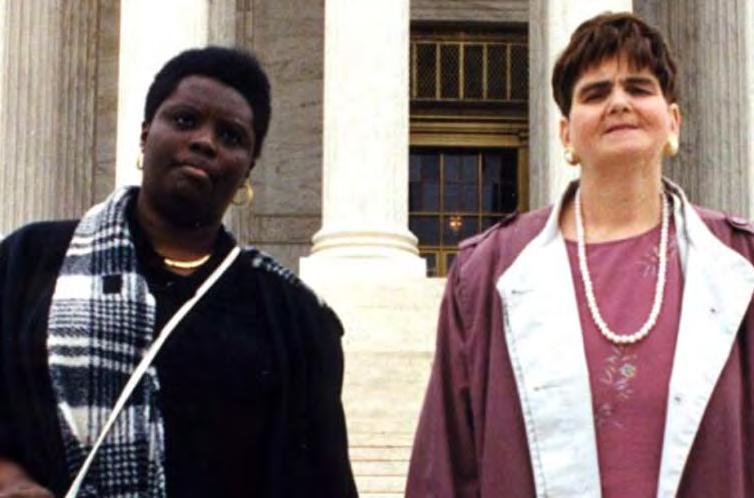
The legacy of Lois Curtis and Elaine Wilson is not abstract. It lives in every person who receives services at home instead of in a facility, every worker with a disability who has the chance to earn a real wage, every family that can stay together because community supports exist, and every state that has chosen integration over segregation.
That legacy is now at risk. Congress, federal agencies, and state policymakers should not treat community living as optional or expendable. States should strengthen Olmstead protections in law, maintain enforceable Olmstead plans, protect HCBS investments, and reject the idea that institutions are an acceptable substitute.
The courts will decide what legal weight
expensive problems to be managed out of sight.
Lois Curtis and Elaine Wilson were plaintiffs in the 1999 Olmstead Decision.
Sandra Bond
A new $17.7M recreation center offers more for the disability community
By John Kuziej
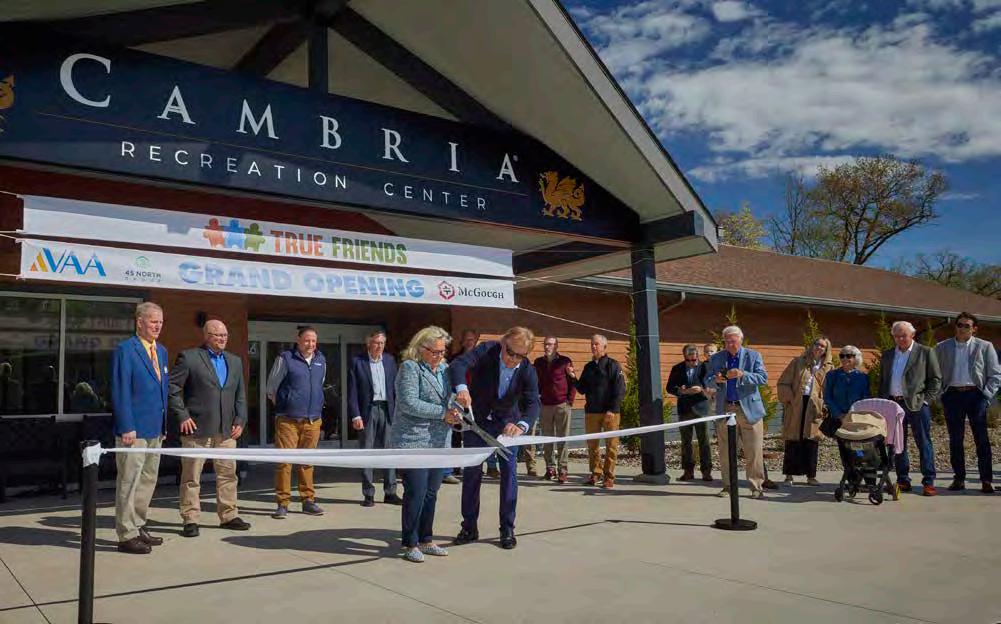
A more-than-decade-long partnership between True Friends and Cambria has led to a multimillion-dollar investment in the disability community.
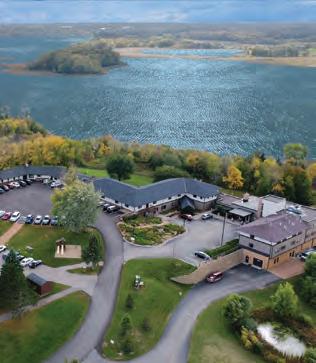
One of True Friends’ locations, Camp Courage in Maple Lake, Minn., now features a new 26,600-square-foot recreation center. Funding for the project came from many donors, including the state of Minnesota and the Camp Cambria Foundation, and totaled $17.7 million.
“The old facility worked, but as it got older, there were so many limitations. It wasn’t really supporting our participants, campers, and our guests in the way that it needed to,” Daniel Roers, marketing and communications manager at True Friends, said.
“So being able to tear down that old facility that was at the end of its life and replace it with something that just has so much more longevity was so needed.”
New recreation center is built to last Cambria used quartz in the structure so it can withstand continuous use from mobility devices, water exposure, and high traffic.
“The last building was here for 50 years, so hopefully this one’s here for 100,” Shelly Nelson, senior vice president of communications and community outreach at Cambria, said.
Offering more space and accessibility
The new structure is roughly 7,000 square feet larger than the previous facility, offering campers and guests more opportunities.
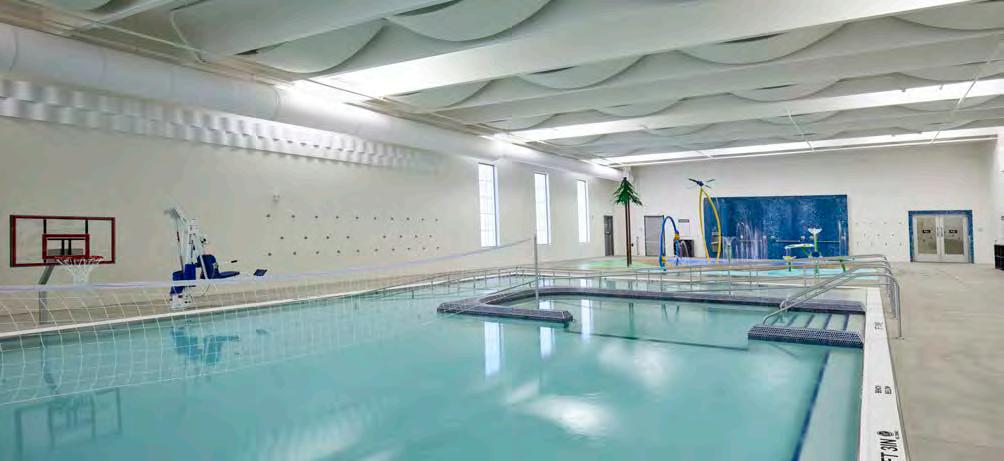
Highlights include an ADA-accessible aquatic center with a temperaturecontrolled, zero-entry pool, a 12,900-squarefoot gymnasium with a stage for performing arts, and a climbing wall.
DISABILITY PRIDE
From page 1
of other states when it came to disability protections. Kurt Strom, leader of what was then the Minnesota State Council on Disability (MSCOD), told the Star Tribune that because Minnesotans were historically more enlightened about programs and services for people with disabilities. He said the state human rights law already provided assistance. The ADA would provide protections above and beyond what the state law provided.
“I think this bill sends a message that the government firmly backs the rights of the disabled people in this country,” said John Healy. He was communications manager for the Minnesota Multiple Sclerosis Society. “It’s the emancipation, in a way, for many disabled Americans,” Healy said.
Minnesota ADA celebrations continued after 1990, typically with small events. That changed in 2015.
How did Disability Pride Month begin?
Disability Pride Month began in July 1990 in the United States to celebrate the passing of the ADA. The American Bar Association tells us that the first Pride Day was in Boston in October 1990.
The celebration of disability identity and inclusion evolved with the first Disability Pride parade in Chicago in 2004. Other events were held around the nation. But it was not until 2015 that an official Disability Pride Month was designated.
Disability Pride Month in July has never been formally declared by federal officials. Many major cities and states including Minnesota declare the special month each year.
Several histories give credit to New York City Mayor Bill de Blasio, who in 2015 declared July as Disability Pride Month. 2015 marked the 25th anniversary of the ADA and Minnesota responded with activities that began in July and ended in October. The kickoff was a Family Day on July 26, 2015, with activities at the Minnesota History Center. Activities were capped by an employment fair and related survey.
MSCOD organized the event. Joan Willshire, executive director of the council, said the broad focus was meant to engage as many people and families as possible. The event was so large, shuttles were run from remote parking lots to the History Center. A wide array of accommodation was offered.
A highlight of that anniversary was the TPT documentary The ADA at 25: Disability Rights in Minnesota.
Key disability pride events in Minnesota
Communities across the Twin Cities metro and Greater Minnesota have organized an expansive calendar of accessible spaces for connection, culture, and visible advocacy throughout July 2026.
July 9: Rochester’s disability pride celebration (5 pm–8 pm), Cascade Lake Park, Rochester. A free community festival featuring a local DJ, an open mic, adaptive bike trials, outdoor games, and disability pride bingo. A free food truck meal will be provided to the first 100 guests who check in.
• July 16: The 4th annual ACT disability pride festival (10 am-2 pm), Minnesota State Capitol steps, St. Paul. Serving as the central hub for the state’s celebration, this major festival brings together self-advocates, allies, and community organizations from across Minnesota. The day features powerful speeches, local performers, resources, and community tables.
• July 18: Duluth disability pride rally & art showcase (1 pm–5 pm), Bayfront Festival Park, Duluth. Celebrating on the shores of Lake Superior, the event begins with a pride “roll-and-stroll” along the Duluth Harbor Basin. It culminates in an art market exclusively showcasing disabled makers, painters, and writers, alongside live music from regional neurodivergent musicians.
• July 22: Virtual workshop: the intersections of disability & queer identity (6:30 pm- 8pm), Online via Zoom. Bridging LGBTQ+ Pride Month and Disability Pride Month, this panel examines the lived experiences of queer people with disabilities (QPwD). Self-advocates and experts will address intersectional barriers to housing, healthcare, and social inclusion. Real-time CART captioning and ASL interpretation are provided.
July 26: 36th anniversary of the Americans with Disabilities Act Statewide / Virtual. On the exact anniversary of the ADA signing, the Minnesota Council on Disability (MCD) website and local community boards will host virtual panels, educational webinars, and grassroots digital rallies to honor the giants of the movement.
• July 28: St. Cloud disability pride community resource fair (11 am–3 pm), Lake George Park, St. Cloud. Centered on independence and equity, this event unites more than 40 local resource providers, adaptive recreation clubs, and advocacy groups. Features food trucks, a live DJ,
accessible lawn games, and a public storytelling stage.
Interested in ADA and ADA event history?
Many useful resources are online including past Access Press coverage at www.accesspress. org. Another resource is the American Bar
In planning the facility, the architects, construction workers, and designers made sure to consider accessibility by talking with the people who would use it every day.
“Our architects, people who were in on the initial thought process, talked a lot with campers who had been using those facilities,” Roers said, “and asked, ‘What did you guys want to see in this?’ And we got a lot of input from people who use the facility.”
The input received led to the addition of a viewing ledge that runs the length of the gym, allowing campers and guests to feel engaged in the action even from the sidelines.
“That viewing ledge has a ramp, so that you can go up onto it and watch everything that’s going on on the floor, but also feel like you’re part of it, and feel engaged,” Nelson said.
Designed to feel inviting
Not only does the new gym offer ways for people to feel more a part of the action, but Cambria also wanted the wall designs to feel more inviting.
“We made it in one of our really fun, colorful designs to brighten the space,” Nelson said. “Because otherwise it’s like a lot of white and a lot of concrete, so we’d use this great teal and white swirling design.”
This aligns with True Friends’ mission to provide life-changing experiences for people with disabilities.
“A lot of our campers who come here, at all of our programs and all our locations, they say it feels like home,” Roers said. “It feels like a second home, so being able to provide this new facility gives them another reason to feel like we’re working for you. We want you to have awesome summers, we want you to have awesome opportunities.”
Association and its Commission on Disability Rights. Learn more at https://www.americanbar. org/groups/diversity/disabilityrights/. Jane McClure is the retired editor of Access Press.
Mid-Minnesota Legal Aid - MN Disability Law Center
V-651-646-8342 info@mcil-mn.org www.mcil-mn.org
V-612-334-5970 mndlc@mylegalaid.org mylegalaid.org/our-work/disability MN Consortium for Citizens with Disabilities
V-612-455-1232 info@mnccd.org www.mnccd.org MN Governor's Council on Developmental Disabilities
SMILES Center for Independent Living
ASSISTED
V - 651-296-4018 admin.dd@state.mn.us mn.gov/mnddc
V -507-345-7139 bdanberry@smilescil.org https://smilescil.org
V-952-938-5511
BRAIN INJURY
ACCESS PRESS DIRECTORY
MENTAL HEALTH
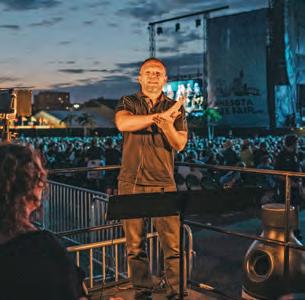
Concert ASL Interpretation Available!
ASL
Wilderness Inquiry welcomes all abilities into the outdoors this summer
By Joey Carlson
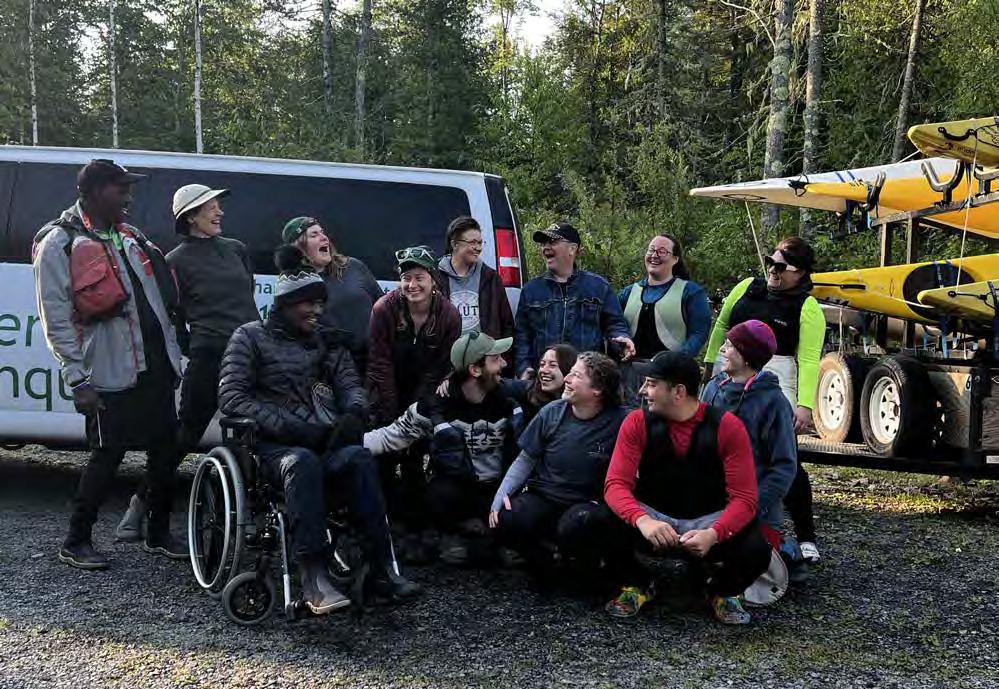
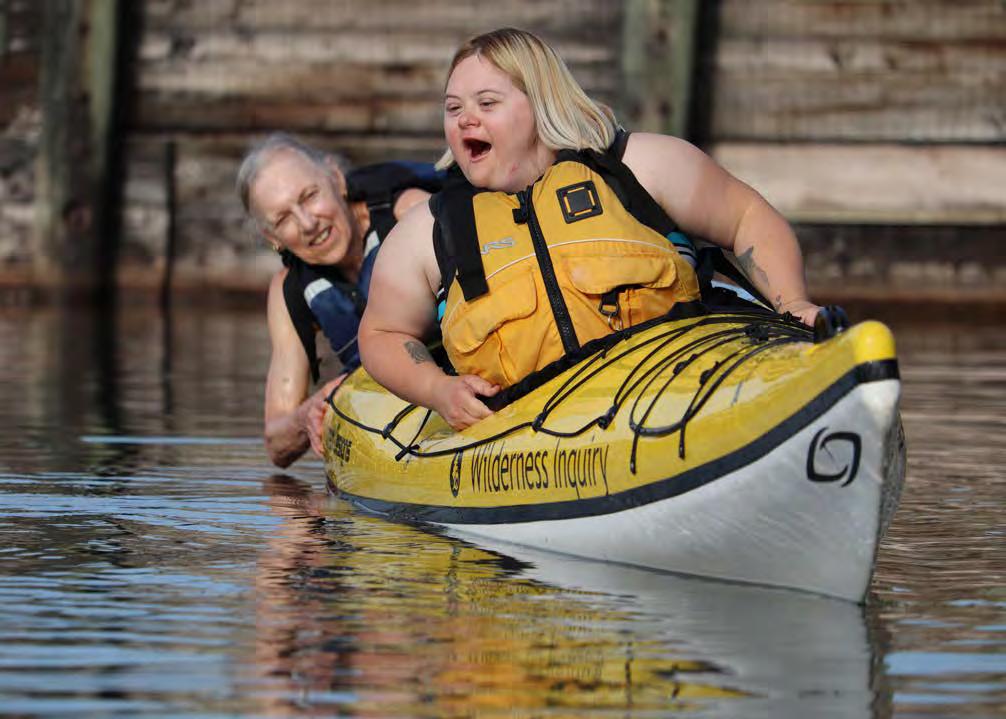
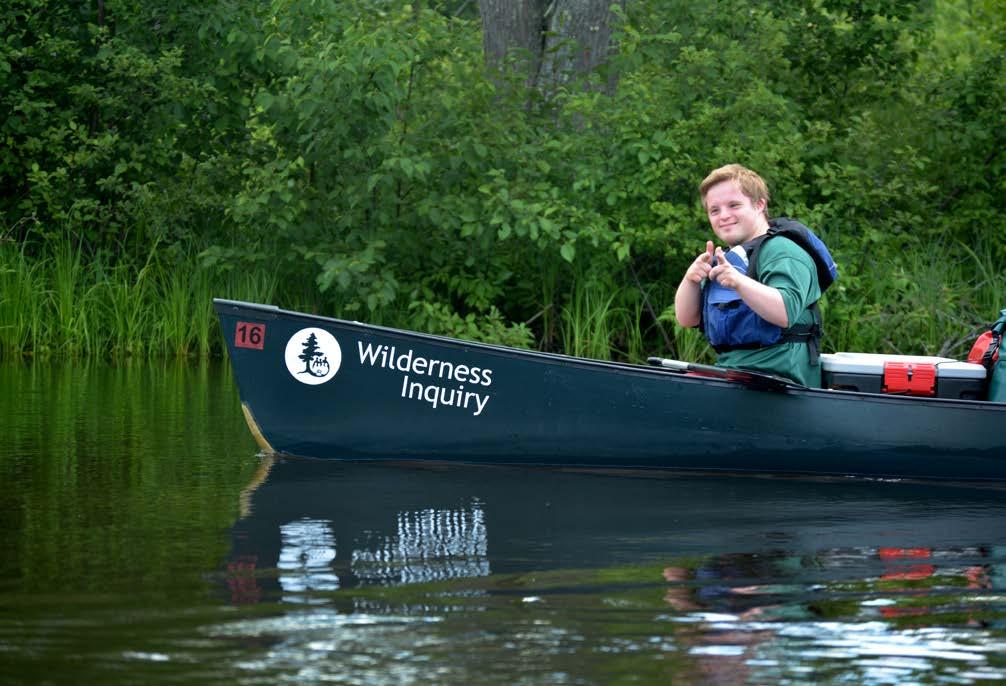
For nearly 50 years, the Bloomington-based non-profit Wilderness Inquiry has proven that people with disabilities can have fun outdoors. The organization strives to strip barriers that can keep people with disabilities stuck in their homes.
According to Anne Strootman, Wilderness Inquiry’s Participant and Volunteer Engagement Manager, the success of this unique model mostly relies on shifting perspectives rather than altering landscapes.
“One of the things that we really feel is important is that we don’t change the wilderness, we just change how we interact with it,” says Strootman.
By centering outdoor adventures around human connection and adaptability, the organization has plenty of ways for people with disabilities to dive into nature this summer.
How Wilderness Inquiry handles inclusive design
Wilderness Inquiry builds accessibility into the core of its travel and activity experiences rather than treating it as an afterthought. They achieve this through a framework that prioritizes flexibility, safety, and community integration.
To ensure every trip is safely balanced, the organization utilizes an internal system called the Universal Program Participation
Model (UPPM). The UPPM assesses the overall group dynamic and matches participants with the adaptive equipment and support needed to have a safe and fun adventure for everyone in the party.
Creative and adaptive accommodations
• No PCA required: While personal care attendants (PCAs) are always welcome, Wilderness Inquiry does not require participants to bring their own caregivers. A robust network of trained volunteers and trip assistants steps in to provide extra help with everyday activities and trail navigation.
Innovative adaptive gear: From customdesigned adaptive seating and paddles to simple, low-tech solutions, like laying down snow fencing over beach sand to create an instant wheelchair path, the team finds creative ways to conquer rugged terrain.
Lodge-based vs. tent camping: For travelers who need reliable access to electricity or refrigeration for medications and CPAP machines, the organization offers a massive catalog of comfortable, lodge-based trip options alongside traditional tent-camping excursions.
• Slower-paced, focused journeys: In addition to fully integrated trips where people with and without disabilities travel together, they offer specific disability-focused and neurodiverse itineraries that feature slower pacing and front-loaded support structures.
This is what fraud looks like.
KNOW THE WARNING SIGNS.
Find your fit: summer activities
Whether you are a seasoned explorer or a beginner anxious about leaving home, Wilderness Inquiry offers a wide range of programming options this season.
Testing the waters close to home
If an overnight excursion feels too intimidating, local day programs offer the perfect low-pressure environment to test out new adaptive equipment. Coordinated on the Minneapolis Chain of Lakes and the Mississippi River, these day trips utilize massive, highly stable 10-person canoes. Equipped with specialized dock loading systems and custom seating, these boats ensure that not everyone has to actively paddle to enjoy the water safely.
Overnight and base camp trips
The Apostle Islands Base Camp: Located on Lake Superior, this fully accessible facility was intentionally engineered 15 years ago to offer accessible wilderness infrastructure.
• Adults with disabilities & neurodiverse tours: Specific multi-day trips are scheduled throughout July and August, including dedicated tours to the Apostle Islands designed for adults with disabilities and neurodiverse individuals.
• The “Kayak and Create” series: Running through July and August, these
DRUG
unique 4-day base camp packages allow participants to sea kayak in the mornings and spend their afternoons learning specialized crafts—such as watercolor painting, photography, wild foraging, or basket weaving—from resident local artists.
Connect with Wilderness Inquiry
If you want to see their adaptive equipment in person and speak directly to their team, mark your calendar for the upcoming Adaptive Demo Day on August 1. Wilderness Inquiry will host an exhibition booth alongside the Minnesota Spinal Cord Injury Association, giving the community a hands-on look at how to overcome outdoor obstacles.
To learn more about upcoming summer trip openings, check out scholarship options, or view detailed itinerary accessibility features, visit WildernessInquiry.org
SCAN QR CODE TO LEARN MORE ABOUT ADAPTIVE DEMO DAY
& ALCOHOL
TREATMENT
for Adults with Cognitive Impairments
• Located on 180 acres along beautiful Lake Independence, Vinland Center provides drug and alcohol treatment for men with brain injuries, cognitive impairment, and/or multiple disabilities.
• There are many causes of brain injury, and each brain injury is unique.
• Our staff members are highly trained to work with people living with disabilities caused by brain injuries.
763.479.3555 • VinlandCenter.org
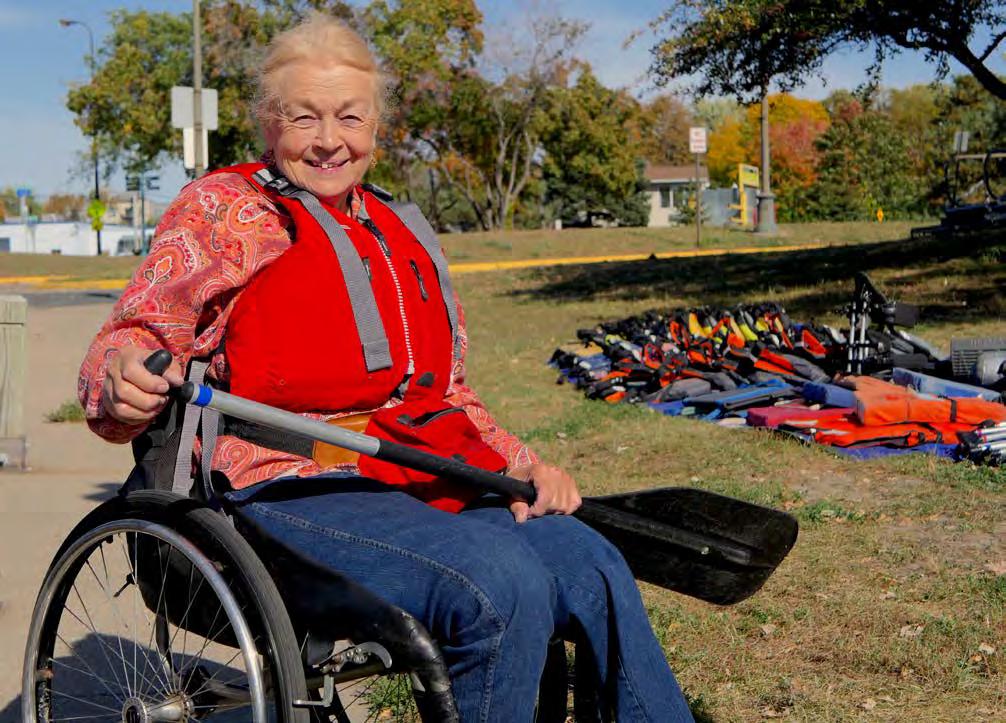
Learning to paddle gives many a sense of independence.
Many love kayaking and canoeing in the Apostle Islands with Wilderness Inquiry.
The Wilderness Inquiry Canoemobile delivers paddling fun accross the region.
Wilderness Inquiry allows people with disabillities to try outdoor adventures like canoeing and kayaking.
By Joey Carlson
For some Minnesotans with disabilities, venturing into the wilderness can feel intimidating. But for Sam and Tracy Tabaka, nature isn’t just an accessible playground, it is the backdrop of their love story, and the foundation of a shared mission to prove that the outdoors belongs to absolutely everyone.
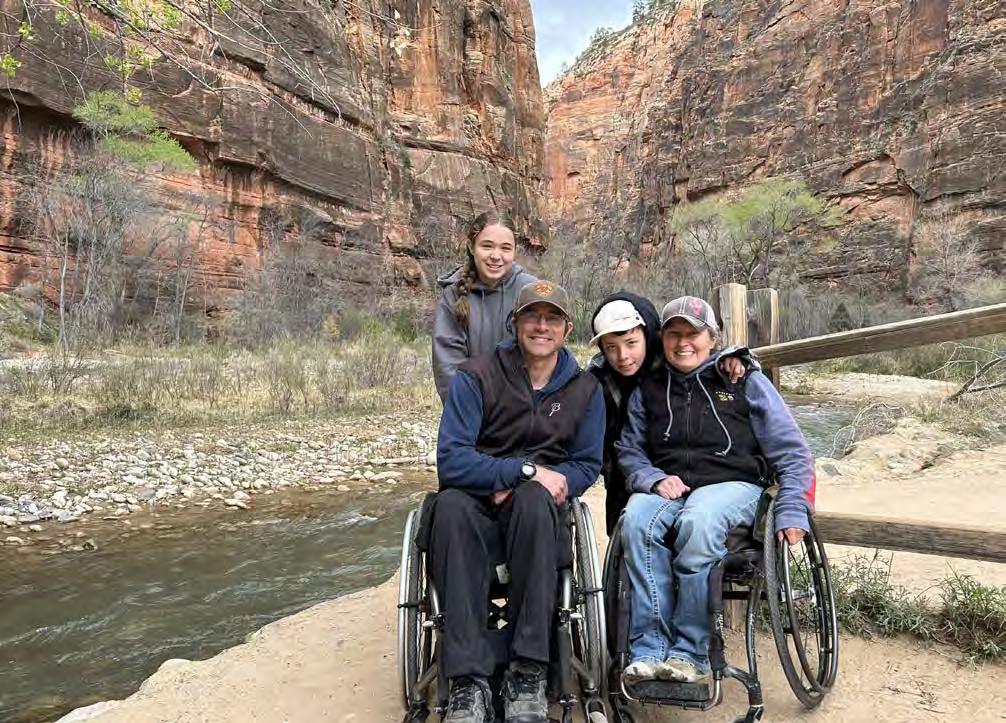
The Tabakas are a married couple from Minnesota who both use wheelchairs for mobility due to spinal cord injuries, Sam following an ATV accident and Tracy from a motor vehicle crash. But their shared journey didn’t start with just being fellow wheelchair users. It started with a spark of adventure.
Years ago, they met while mono-skiing at a winter sports camp at Spirit Mountain in Duluth. They fell hard for the sport, and even harder for each other. They married a few years later and started a lifetime of outdoor adventures and raising a family together.
Initially, Sam was working a standard corporate desk job, but a beautiful career pivot was on the horizon, gently sparked by his wife’s example. Tracy started working for Three Rivers Park District a year before Sam did. Because he loved being near her, Sam found himself spending his free time hanging out in the parks with Tracy. When a position opened at the Three Rivers Outdoor Recreation School Sam happily applied and has been working At the school for more than 15 years.
“When I started at Three Rivers, we had some adaptive equipment, but not a lot of programming,” Sam recalls. “That is what both Tracy and I have worked on over the years. But just in the last couple of years, it’s like the word got out, finally.”
Today, the couple balances guiding community groups with raising their own family. Whether they are navigating rough terrain on e-assist off-road handcycles just to keep up with their two active kids or tenderly guiding a first-time paddler into a specialized kayak, Sam and Tracy live out the philosophy that nature has room for everyone.
This summer, Three Rivers is rolling out an expansive lineup of adapted programs and specialized gear. Make sure to check it out. You may find you’re next passion. Or maybe even find that special someone!
Get involved at Three Rivers
If you or a loved one are looking to get out into the parks this season, Three Rivers has several great options to choose from.
“Try it” single-day adaptive programs
Three Rivers hosts single-session evening and weekend events where trained instructors help you adapt a specific sport to your body and comfort level.
Adaptive cycling demo day
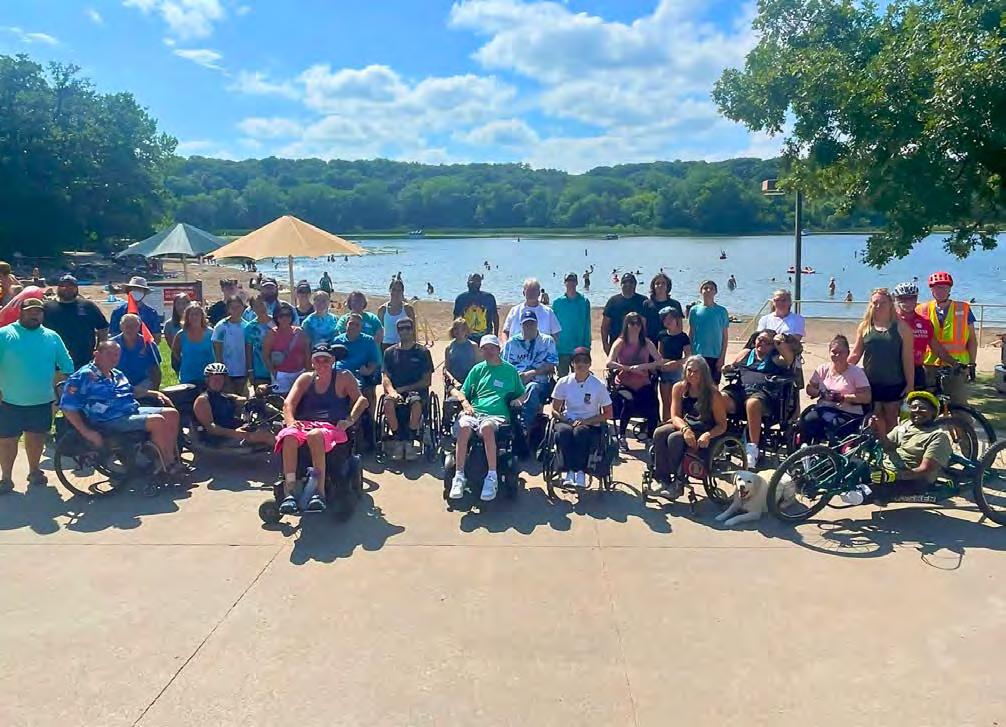
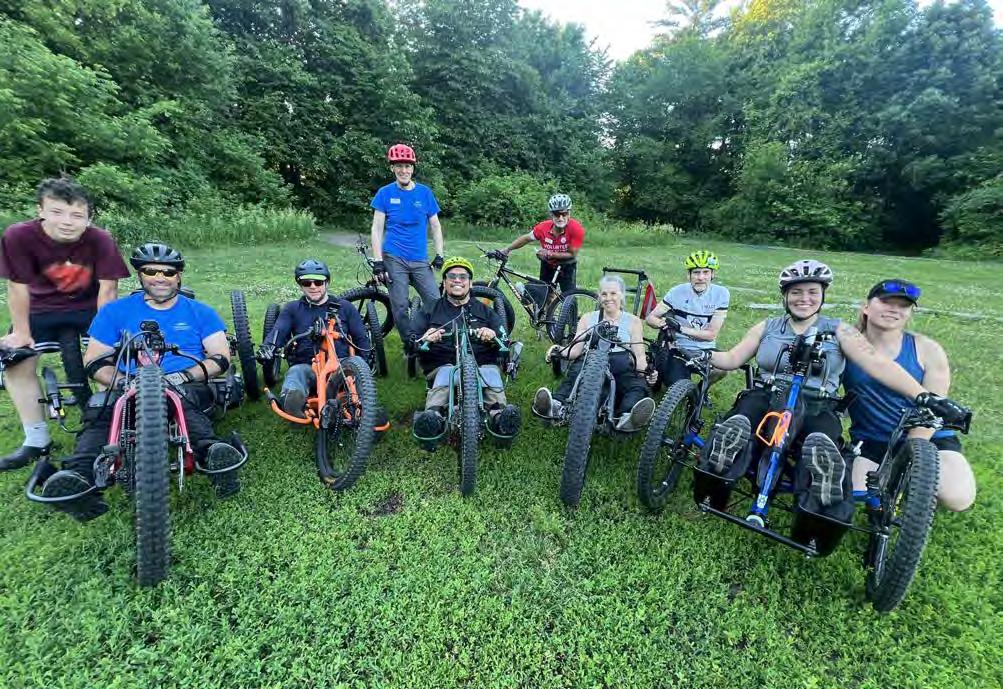
July 8, 6:30 p.m. – 8:30 p.m. Fish Lake Regional Park. Drop by to try out the district’s specialized fleet of adaptive cycles, including off-road handcycles and a foot-pedal trike.
Adaptive lake kayaking sessions
• July 23: Fish Lake Regional Park, 5:30 p.m.
– 8:30 p.m.
• August 9: Bryant Lake Regional Park (Time TBA).
Staff work one-on-one with paddlers on land to individualize boats using high-back seats and side supports before heading out on the water.
MNSCIA adaptive demo day
Saturday, August 1. Adaptive Activities: 10 a.m.
– 2 p.m. Food & Socializing: 2 p.m. – 3 p.m. Fish Lake Park (14900 Bass Lake Rd, Maple
Grove). Free event celebrates MNSCIA’s birthday. All mobility disabilities, friends, and family are welcome to participate or simply observe and socialize.
Available Activities:
• Get out on the water with adaptive kayaks and paddleboards.
• Test out a variety of adapted handcycles, including a power-assist mountain trike.
• Learn about adaptive SCUBA, fishing, hunting, vacations, and outdoor devices. Independent & ongoing activities
High-tech accessible geocaching
Geocaching has quickly become one of the park district’s most popular adaptive activities. Sam Tabaka currently maintains eight fully accessible geocaches across the system and is actively building a ninth. You can find them at:
• French Regional Park (3 accessible caches)
Lowry Nature Center / Carver Park (3 accessible caches)
• Mississippi Gateway Regional Park (2 accessible caches, with a 3rd returning soon following park construction)
Chlorinated swim ponds & beach wheelchairs
For independent summer fun, Three Rivers offers a unique alternative to traditional lakes at Elm Creek Regional Park and Lake Minnetonka Regional Park:
• The ponds: These family-friendly areas feature a sandy beach completely surrounding a circular, chlorinated swimming area with a maximum depth of 4 to 5 feet.
• Full access: Both locations feature a smooth concrete ramp leading directly from the beach into the water.
• Free gear: Free-to-use beach wheelchairs are available on-site to roll directly into the water or to use for transfers at the water’s edge.
Dedicated youth summer camps
Designed specifically for youth with physical and cognitive disabilities, these structured camps provide all necessary specialized equipment and instruction.
• Adapted camps for youth (ages 9–16): Hosted at Fish Lake Regional Park, these multi-day camps allow youth to try kayaking, archery, fishing, and geocaching.
• Autism outdoors camp: In partnership with the Autism Society of Minnesota (AuSM), this program at Lowry Nature Center gives youth and teens on the spectrum a structured space to build outdoor skills, start campfires, and paddle.
Learn more at ausm.org.
Full inclusion services for regular programming
You do not have to limit yourself strictly to programs labeled “adapted.” Three Rivers partners with the non-profit Reach for Resources to provide free inclusion services.
If a child, teen, or adult with a disability wants to join any standard recreation program or nature camp across the district’s 27,000 acres, you can request an inclusion staff member to provide dedicated, one-on-one support.
How to register
Because specialized equipment and adaptive program slots are limited, early registration is highly recommended.
You can browse active summer sessions, check gear availability, and request inclusion accommodations by visiting the reservation portal at ThreeRiversParks.org or by calling their outdoor recreation desk at 763-694-7717.
Affordable Senior Apartments
Affordable Senior Apartments
Housing with Care*
For qualifying senior households age 62 or better. Metro & Greater MN locations available. Accessible apts, available for seniors in these locations. Income limits apply.
Immediate openings in Worthington and Albert Lea, Minnesota
Housing with Care*
* 24-hour Assisted Living Services * Adult Foster Care
*
Sam and Tracy Tabaka with their daughters.
Group poses at an adaptive cycling day.
2026 Special Olympics USA Games leave a legacy of inclusion
By Joey Carlson
The 2026 Special Olympics USA Games have concluded in the Twin Cities. But they left our city with the spirit of competition, inclusion, and joy. Beyond the leaderboards, the true impact of the Games can be measured by the new relationships formed, confidence gained, and partnerships made with the community and corporations that make accessibility possible.
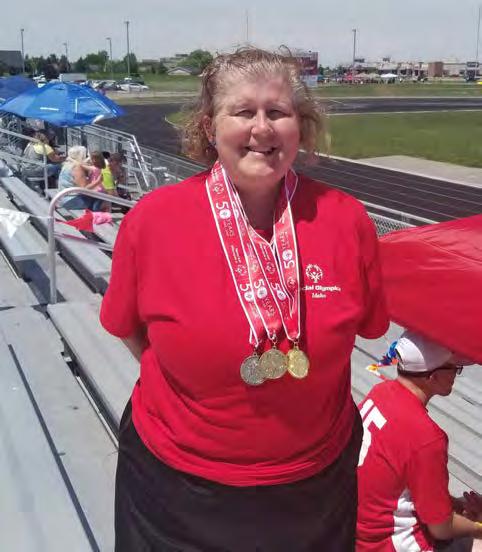
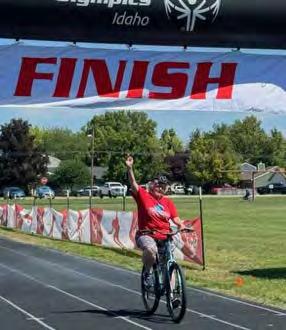
A 45-year journey from the podium to volunteer Tina Johnson’s history with the Special Olympics began 45 years ago in North Dakota. Over the decades, she competed nationwide in sports ranging from swimming and track to floor hockey and volleyball. Her athletic achievements include a gold medal in volleyball at the 2006 USA Games, a silver medal in bocce in 2010, and a bronze medal in basketball in 2014.
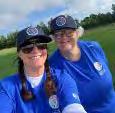
For the 2026 Games, Johnson traveled from Boise, Idaho, to the Twin Cities to trade her athlete’s jersey for a volunteer vest. Joined by her niece, Ann Cirullo, she spent her time catching up with old friends, watching tennis matches, and volunteering as a golf ball spotter.
“While I was unable to compete in the 1991 Games in the Twin Cities, I enjoyed being able to come back this year and make it special by sharing the experience with my family and friends and being able to volunteer with my niece,” Johnson said. “Being new to golf, it was fun to be able to volunteer for that event and to try to learn from the athletes.”
Family traditions and inclusive workplaces
Johnson originally introduced Cirullo to the Games years ago, sparking a lifelong family tradition of advocacy. Cirullo, who lives in the Twin Cities, works as a human resources partner for Bank of America, a corporate sponsor of the Games.
For Cirullo, experiencing the event alongside
OPENING CEREMONIES
From page 1
athletes “skyscrapers” of hope and resilience.
With the United States quickly approaching its historic 250th birthday, Shriver pointed out that there is no truer or more profound way to honor the core American principle that “all people are created equal” than right there at the Games.
“If you want to rebuild your hope, America, if you want to reunite our country... look here. Here are your leaders right here,” Shriver proclaimed, gesturing to the assembly of athletes, before ending his speech with a fanpleasing mic drop.
Calling all champions
The cultural centerpiece of the ceremony was a spectacular, unified artistic production titled Calling All Champions. The presentation kicked off with a gripping spokenword performance by popular Minnesota hip-hop artist Nur-D and Interact Center performer Michael Wolfe. Together, they shared a beautiful message about uncovering the brilliant spark inside everyone that society so often rushes past.
The stadium was then swept away by an extraordinary routine from the Interact Center for the Visual and Performing Arts unified dance team. The performance was exceptionally exciting because it featured jumping stilts champion Johnny Rivero and world-renowned hoop dancers, the Sampson Brothers.
Representing a powerful flowing river, the dancers motivated the entire crowd to stand up and wave their personal rally towels in an overwhelming wave of collective celebration. The entire routine was set to an exclusive composition by Jim Papoulis, featuring a soaring performance of “We Will Be Brave” by the legendary Twin Cities ensemble, Sounds of Blackness.
Oaths of honor and a new tradition
Before the competitions began, representatives stood up to dedicate themselves to the ideals of fair play and camaraderie. Moving oaths were recited by officials Martha Velasquez and Colleen Costello, alongside coaches’ representative Jamal Goodlow of Special Olympics Oregon. The athletes then proudly stood to recite their time-honored pledge: “Let me win. But if I cannot win, let me be brave in the attempt.”
In a beautiful new addition to the traditional protocol, a Supporters’ Oath was introduced to formalize the commitment of the audience.
Led by 2026 Games Board Chair Adam Jerpee and his son, Special Olympics athlete Steven Jerpee, thousands of fans pledged to uplift every single participant and cheer with unfiltered enthusiasm throughout the upcoming week.
Johnson highlighted both the personal and professional sides of inclusion.
“Sharing the Games with Tina is incredibly special and seeing her inspire the next generation is a powerful reminder of the movement’s lifelong impact,” Cirullo said.
“As a Bank of America employee, it makes me deeply proud to work for a company that backs this community through a 50-year partnership with the Special Olympics and over 30 years of inclusive employment through Support Services. It’s a beautiful demonstration of what happens when we invest in true inclusion and support something much bigger than ourselves.”
From the 1991 Twin Cities World Games to this summer’s celebration, the goals of the Special Olympics remain focused on smashing stigmas and fostering unconditional belonging. That enduring strength continues to thrive through the dedication of families, community members, and legacy competitors like Johnson who return to pass the torch to the next generation.
Commemorating 20 years of the Games
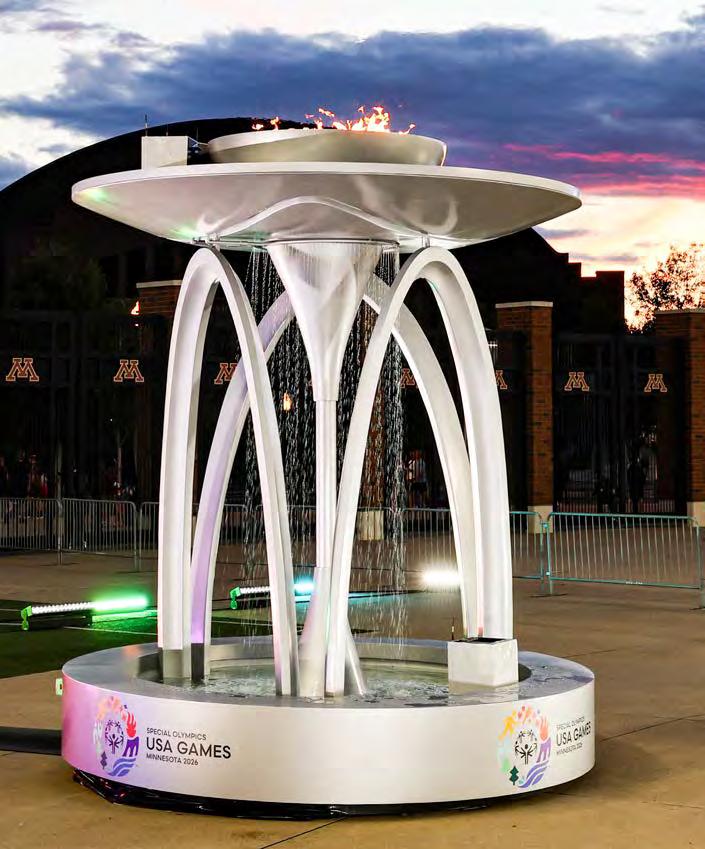
The emotional apex of the evening belonged to the arrival of the Flame of Hope. Having traversed over 10,000 miles across 13 states over a 23-day journey, the torch finally crossed into Huntington Bank Stadium.
To celebrate the 20th anniversary of the national USA Games (which began in 2006), the torch run featured an incredible relay where the flame was passed sequentially between legendary athletes representing every past iteration of the national games. When the stadium cauldron was finally ablaze, Bruce Harrington, a Special Olympics Florida unified soccer athlete, stepped up to the microphone alongside his unified partner, Trey Steel, and shouted, “We declare open the 2026 Special Olympics USA Games! Let’s go!”
The grand finale
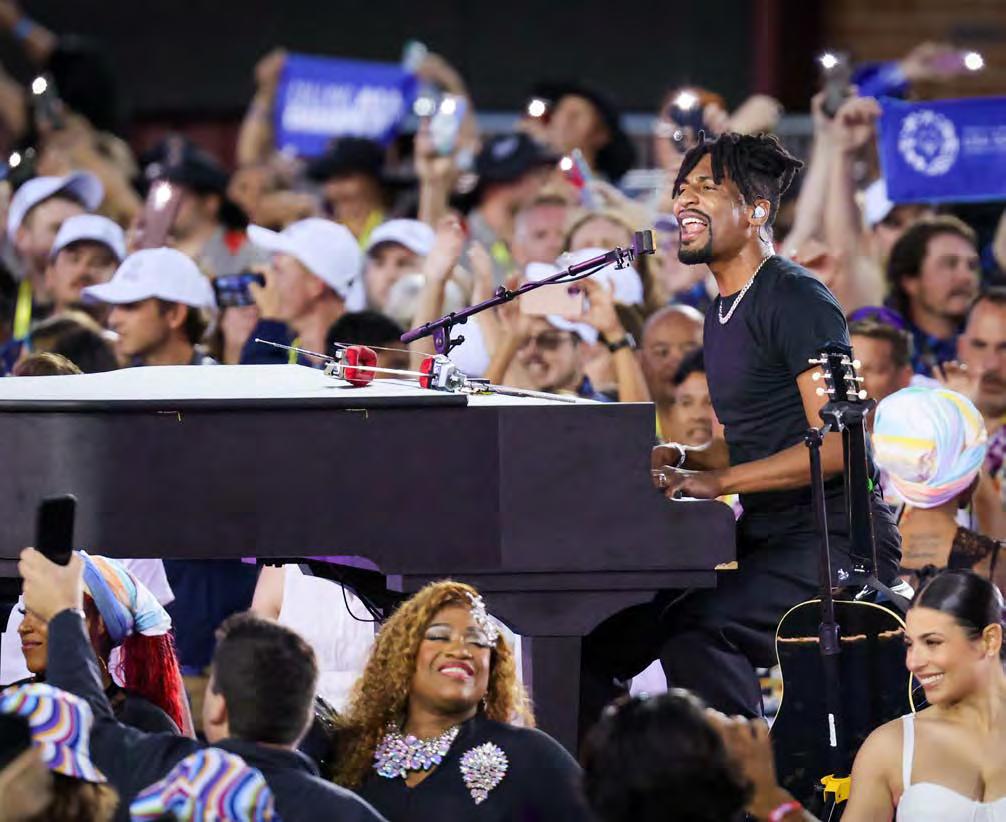
With those words and a burst of roaring cheers, the games were officially underway. To send the crowd into the night, Academy Award and eight-time Grammy winner Jon Batiste delivered a show-stopping performance that perfectly captured the emotional core of the night. Batiste closed out the historic evening by dancing and singing as a massive, joyful conga line of athletes snaked across the stadium floor.
This perfect finale set the stage for five days of competition across 16 sports that left thousands of lives changed for the better.
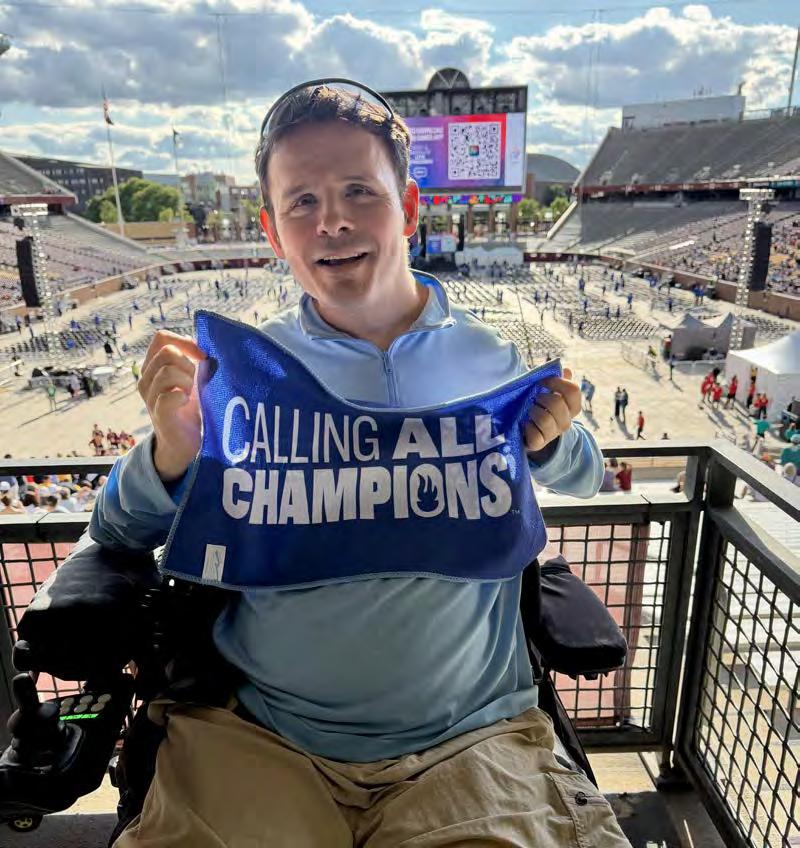
Fans and athletes were all given towels to wave that featured the slogan, Calling all Champions. The cauldron burns with The Flame of Hope.
Jon Batiste finished the festivities with a musical set that had everyone dancing.
Tina Johnson finishes cycling event.
Tina Johnson medals in track and field.
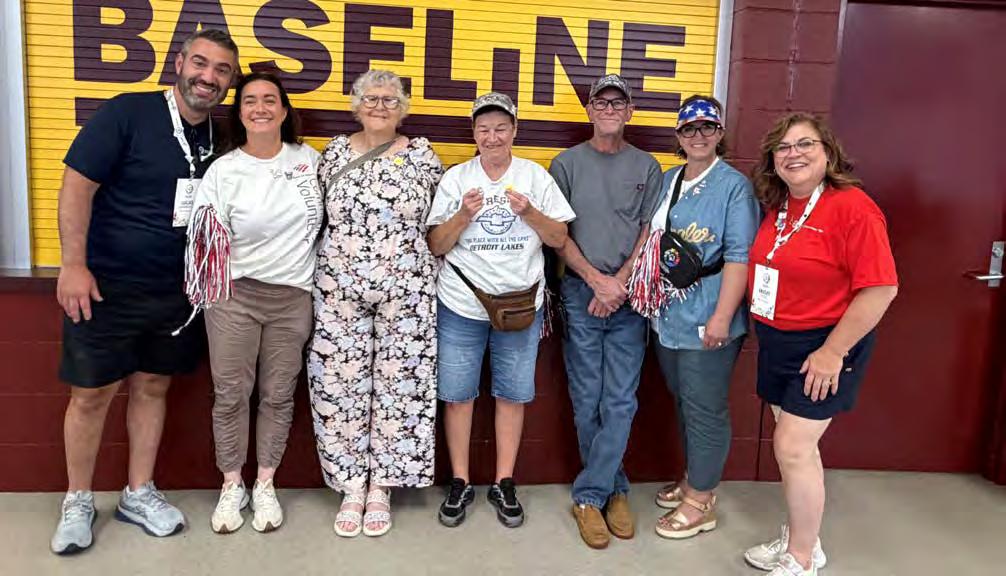
Ann Cirullo and Tina Johnson enjoyed the 2026 Special Olympics USA Games alongside family members and Bank of America executives. Pictured from left to right are Lucas Giambelluca, Ann Cirullo, Tina Johnson, Theresa Johnson, Kent Johnson, Jeri Kjerstad, and Briget Fields.
Ann Cirullo (left) and Tina Johnson (right), volunteered at the golf event in 2026 Special Olympics USA Games.
HISTORY NOTE
Vending machine operations still provide jobs for the blind
By Jane McClure
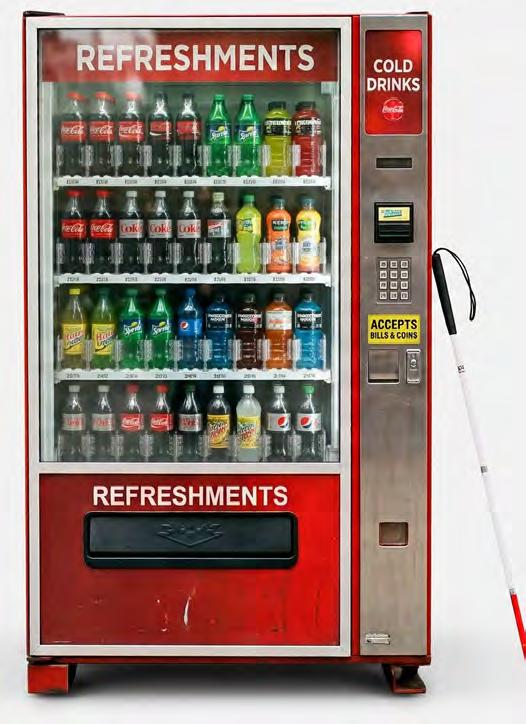
Put coins or bills in a vending machine, push buttons and wait for a candy bar, can of soda or bag of chips to drop down. If you have sought a beverage or snack in a federal building or other government facility, chances are that the person who stocked the machine lives with visual disabilities.
The Vending Facility Program authorized by the Randolph-Sheppard Act provides persons who are blind with remunerative employment and self-support through the operation of vending facilities on federal and other properties. The program became law in 1936. It is named for its lead Congressional sponsors, Representative Jennings Randolph (D-West Virginia) and Senator Morris Sheppard (D-Texas).
President Franklin Delano Roosevelt signed the bill into law on June 20, 1936. Ninety years later the act’s program is still in place.
Minnesota has additional measures to provide vending machine jobs, overseen by the Department of Employment and Economic Development (DEED). The state has gone above and beyond federal requirements, starting in 1941. That year state officials appropriated $2,500 specifically to help launch vending stands run by blind entrepreneurs. By May 1, 1947, vendors were officially provided rent-free locations to sell soft drinks, candies, tobacco, and other merchandise in state buildings.
Over time the vendors organized by state and had their own association. Many had longstanding working relationships with the National Federation of the Blind. Organizing was needed to force changes. For several years vendors had to hire sighted persons to handle their bookkeeping. That changed over time. In 1951, vendors set up their own loan committee.
The program went through amendments, most recently in 1974. Amendments were meant to protect vendors. Blind and visually disabled vendors had many diverse types of businesses, which expanded starting in the 1960s. The start of the skyway systems in downtown St. Paul and Minneapolis created a boon for vendors as they could set up small concessions shops and newsstands.
In FY 2023, a total of 1,428 blind vendors operated 1,780 vending facilities located on Federal and other property. According to the federal Rehabilitation Services Administration, the program generated $747,455,376 and the average vendor earnings amounted to $103,085.50.
Opportunities for jobs for people with visual disabilities have expanded greatly over the years, under the leadership of State Services for the Blind, DEED, National Federation of the Blind Minnesota and other groups. Still, some find meaningful and self-supporting employment by stocking and servicing vending machines.
Learn more at https://rsa.ed.gov/about/programs/randolphsheppard-vending-facility-program
Each state has its own vendor program rules to complement the federal act. These are called miniRandolph-Sheppard Acts. Learn more at https://www. publichealthlawcenter.org/resources/mini-randolph-sheppardacts-50-state-review
Another useful source of historic information is the National Federation of the Blind Minnesota website, at https://nfbmn.org/about/history
The History Note is a monthly column sponsored by the Minnesota Governor’s Council on Developmental Disabilities, http://mn.gov/mnddc or www.partnersinpolicymaking.com.
Spokes Fighting Strokes rolls into Minnesota for another year
By John Kuziej
Spokes Fighting Strokes is a nonprofit working to help stroke survivors regain mobility, independence, and connection.
“I’m kind of a social person,” Dave Bancroft, a stroke survivor, said. “So this allows me to get out and socialize with people, and when I get on my trike, and I leave home, I make all the choices, and I can decide what I want to do, where I want to go.”
Through free clinics across the country, the organization helps stroke survivors and others with balance challenges find independence. The clinics will return to Minnesota for a third year at the end of July.
Dan Zimmerman, the president of Spokes Fighting Strokes, had a serious stroke almost 21 years ago and was told by doctors he would need a wheelchair for life and never be able to talk again.
Zimmerman became depressed until he discovered adaptive trikes, and after years of cycling, he started to notice the benefits.
“After five or six years since the stroke, I began to talk, with no therapy,” Zimmerman said. He conducts a nationwide tour each year with recumbent trikes, allowing people to experience adaptive trikes free of charge. The goal is to reach every stroke survivor to show them that recovery is possible through cycling.
“My life now is helping people out of their misery by riding a trike,” Zimmerman said. How adaptive trikes work
The organization uses adaptive recumbent trikes and adapts them to the needs of the rider.
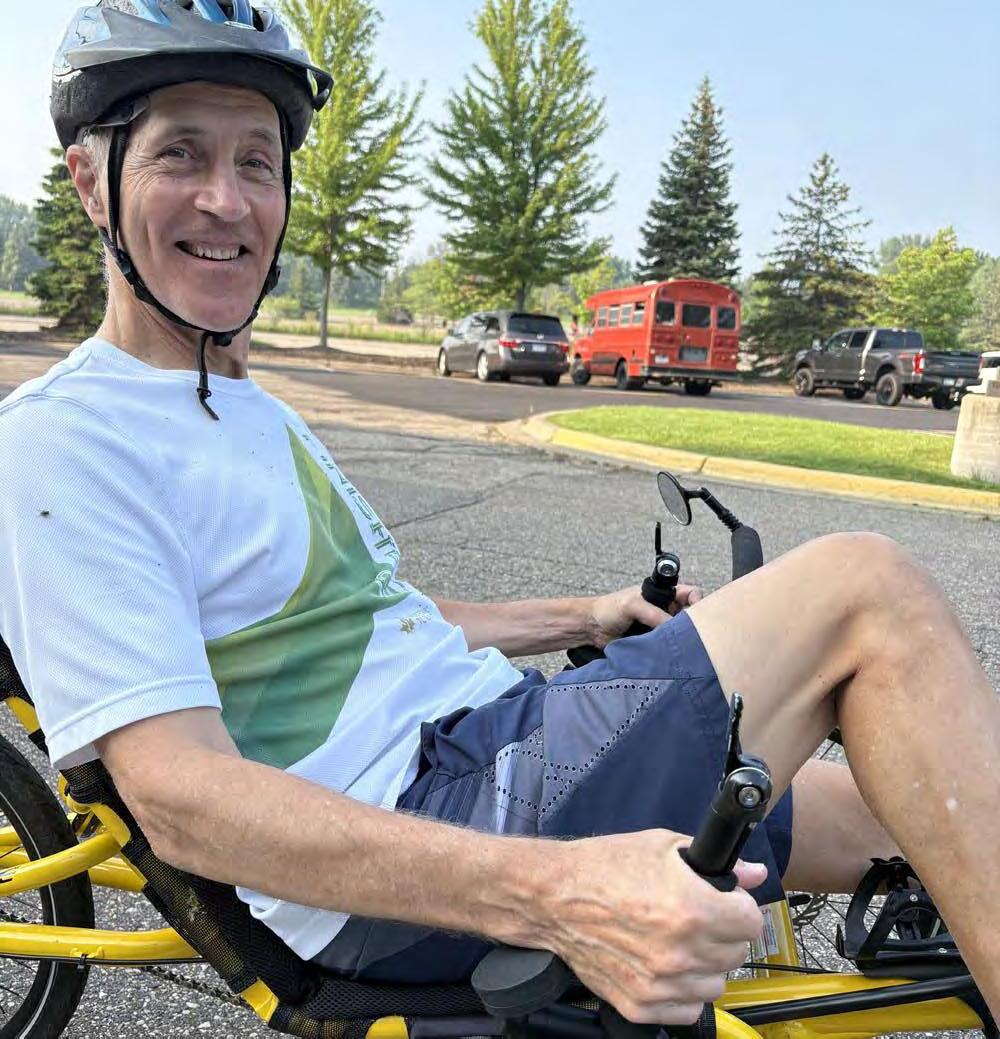
The trikes, known as tadpoles, have three wheels – two in the front and one in the back. This allows riders to pedal with their feet and steer with their hands, helping them balance, even if they have limited mobility in their arms and legs.
“Sometimes trikes have a negative connotation,” Bancroft said. “When people think of a trike, they think back to being a little kid. This is totally different. These are like sports cars you sit in and ride.”
The physical benefits cycling offers
In addition to the social and emotional benefits for stroke survivors, another important aspect in the recovery process is getting physical exercise. Adaptive cycling provides that opportunity that might be hard to find elsewhere.
“I feel that it allows me to get my cardio exercise,” Bancroft said. “Whereas, if you go to a gym, they don’t have equipment that’s adapted so that you can use it.”
Returning to Minnesota
Spokes Fighting Strokes will host free clinics at the Church of the Open Door in Maple Grove from July 22 to July 29. More information can be found at spokesfightingstrokes.org. Organizers encourage anyone with balance issues to come out and give it a try.
“People rarely think they can ride a trike, but it’s easy to ride. One hand and one leg powers the trike,” Zimmerman said.
The event offers more than just an opportunity to try adaptive trikes. It also gives participants a chance to reconnect with friends
and family in ways they never thought possible before.
“I know for me, being a grandparent, to be able to go out with my grandkids on their bikes, we can be going out on rides together,” Eric Anderson, a volunteer with Spokes Fighting Strokes, said.
Recovering with a community
While Spokes Fighting Strokes gives people a
chance to exercise, shared experiences and similar challenges help stroke survivors feel less alone in their recovery.
“To get with people in the community that have similar issues in life and be able to bond,” Anderson said, “and share stories and build relationships … to deal with a group of people who are on the same journey, at different spots along the way, gives you hope but also allows you to give hope to others.” 0