
Rideshare firms may leave metro on May 1
Transportation network companies Uber and Lyft could end service in Minneapolis and beyond May 1, if a dispute over pay cannot be resolved. That is causing consternation for Twin Cities area residents with disabilities who rely on rideshare services. Many are wondering how they will get to get to and from work and school, and to other destinations.
The Minneapolis City Council set the controversy in motion in March by passing an ordinance requiring rideshare companies to pay drivers at least $1.40 per mile and 51 cents per minute on rides to, from and through the city. The increase would start May 1.
Lyft officials said they would end service in Minneapolis. Uber would drop service in Minneapolis and surrounding communities, and at Minneapolis-St. Paul International Airport.
Mayor Jacob Frey vetoed the ordinance. The veto was then overturned by the council, in what is called an override vote.
As Access Press went to press, there was a proposal to reconsider the vote slated for April 11.
State officials have jumped into the fray, noting that the council voted before a state report on rideshare was released. That report recommends rideshare wages of 49 cents per minute and 89 cents per mile.
Gov. Tim Walz has also called for a compromise. But at events in late March, he expressed skepticism about the ability to find a compromise. He has called out the debate as “playing chicken” with people with disabilities.
Metropolitan Council, which oversees Metro Transit and the Metro Mobility paratransit service, is also watching the situation closely.
As of late March state lawmakers were considering what if anything they could do. House Republicans want to pre-empt efforts like the one in Minneapolis, and retain the major rideshare companies.
Other smaller rideshare firms and the remaining taxi companies have announced that they would help fill the void if Uber and Lyft leave.
But Minneapolis and St. Paul have lost many of their taxi companies in the face of competition with transportation network companies. Taxis can be more expensive than a rideshare company. Another issue is that costs may not be covered by waivers.
One challenge for people with disabilities is that riders use state waivers to get rides and it’s not clear if taxi rides would be covered by those. ConnectAbility of MN is trying to help disabled Minnesotans find other options, and has put an emergency plan into action. ConnectAbility estimates that losing Uber and Lyft would affect thousands of clients, including 2,128 Minneapolis residents.
But transportation network companies haven’t always provided the access for disabled riders that is needed. Rideshare companies have been criticized for not having accessible vehicles, and in some
RIDESHARE To page 3
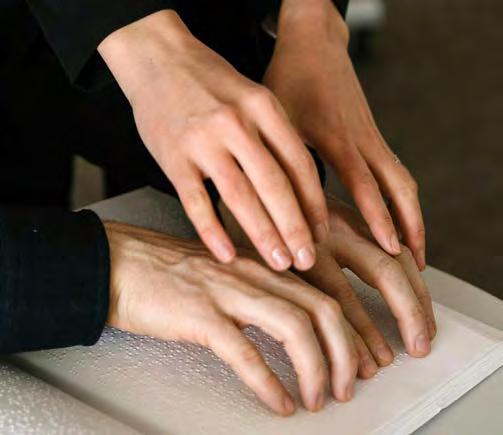
Volunteer Braille Services ends decades of service to readers
Volunteer Braille Services (VBS), which provided Braille materials of all types for almost 60 years, is closing down. The nonprofit provided countless Minnesotans with an array of transcribed documents over the years.
The closing is another loss for Minnesotans with visual disabilities. BLIND Inc., which provided a wide array of services, suspended its operations as of January 1.
VBS turned down a request to talk to Access Press. Others who work with Minnesotans with visual disabilities see the VBS closing as significant.
Braille is a system of raised dots that can be read with the fingers by people who are blind or who have low vision.
Although other reading options are available besides Braille and Braille use has declined, advocates for its use contend that learning and using Braille is still important for people with visual disabilities. Braille skills can help people find and retain employment.
Matt Kramer is executive director of Vision Loss Resources. While Vision Loss Resources didn’t work directly with VBS. Kramer noted
BRAILLE To page 5

Some bills clearing initial hurdles at capitol; others
With the first bill deadline in the rearview mirror, Minnesota disability advocates are pushing forward on bills that are still viable this session.
It’s been a mixed bag thus far as some bills didn’t meet a key March 22 deadline. It’s also still a time to tread lightly when it comes to funding requests. The most recent financial forecast indicates improvement since November 2023, with the 2024-25 biennium projected to end with a surplus of $3.715 billion. That is an increase of $1.324 billion compared to previous projections.
Advocates are being counseled to consider amendments to existing bills if their proposals didn’t meet the March deadline, or to lay groundwork for 2025.
Large rallies
Rallies have attracted large crowds, with a third large group expected March 27 for Disability Advocacy Day. Mental Health Day on the Hill drew more than 500 people March
7. More than 1,500 packed the rotunda for Disability Services Day March 19.
Rallies not only provide a show of support for bills, they also provide time for advocates to meet with state lawmakers.

wait

NONPROFIT ORG. U.S. POSTAGE PAID TWIN CITIES, MN PERMIT NO. 4766 Volume 35, Number 4 WWW.ACCESSPRESS.ORG April 2024 AARM
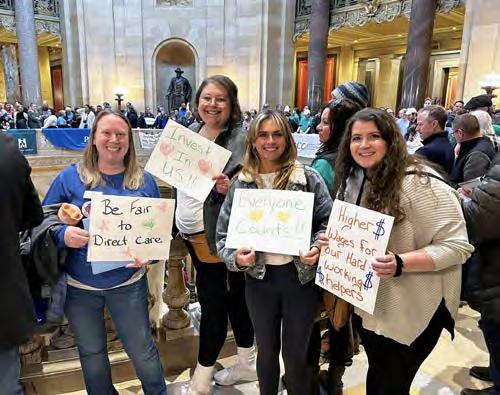
PEXELS Direct care staff compensation was a major issue at Disability Services Day. BILLS To page 3 PAGES 7-10 Looking for services and support? The Access Press Directory can help! Check out pages 6 and 11, and pull the pages out of the print issue to save and refer to when needed. COVID-19 STORIES FROM OUR DISABILITY COMMUNITY
The raised dots of Braille are read with the reader's fingers

Changing
COVID-19 guidelines could become problematic
In March we marked the four-year anniversary of the day our lives changed. The nascent COVID-19 pandemic brought a global shutdown many of us assumed would be for only a few weeks.
We were so wrong.
For those of us who live with many types of disabilities, the pandemic has forever changed our lives. The wait for the initial vaccines, when a hierarchy of need was set, was a huge frustration for those who couldn’t be the first to get their shots.
Special education students fell behind. People who need care and supports couldn’t find enough workers. Businesses that provide needed services for Minnesotans with disabilities shut down.
People whose disabilities and illnesses already caused isolation found themselves more isolated than ever. No one can underestimate the vast mental health impacts that isolation has caused throughout our community. How many of us have friends we’ve just seen again, or seen on a screen, because they fear health risks for themselves or for loved ones?
So much of our energy in the first years of the pandemic was directed toward not getting sick and in many cases, not making our disabilities worse. We masked up, maintained social distance and upped the hand washing. A cough or a sniffle in public caused us to maintain distance and then hurry to our test kit supply.
So it’s understandable that there are mixed feelings about the decision to relax guidelines on respiratory illnesses including COVID-19, RSV and the flu. The change comes from the federal Centers for Disease Control and Prevention (CDC).
COVID-19
is very different from other viruses. Cases can be asymptomatic. That creates risk of transmission before a person becomes ill. COVID-19 is much more easily transmitted than some other respiratory ailments.
The guidelines state that individuals who are sick should stay home and away from other people. That hasn’t changed. What has changed is that the recommended five-day isolation period is gone if certain conditions are present.
If someone has been free of fever and without symptoms for at least 24 hours, that person doesn’t have to quarantine. There are caveats, of course. The CDC urges people to continue to limit contact with others, mask up, test and avoid indoor spaces if possible for the next five days.
If symptoms come on again, it’s time to restart the clock.
CDC leadership has promoted the change as providing more clarity. We at Access Press would agree with that aspect of this change. The pandemic has gone on for so long. Attitudes about self-care and safety have changed. This kind of a reset and change can provide needed guidance.
In four years we have seen much more access to treatments and prevention strategies. We’re also seeing fewer hospitalizations and deaths from respiratory illnesses including COVID-19.
But we also see red flags in media comments by health professionals who believe that the latest CDC change represents an oversimplification. COVID-19 is very different from other viruses. Cases can be asymptomatic. That creates risk of transmission before a person becomes ill. COVID-19 is much more easily transmitted than some other respiratory ailments.
We also very much appreciate that this causes concern, especially for people with disabilities and their allies. Our colleagues at the news website Disability Scoop did a fine job of outlining concerns focused on this change. There’s a growing sense in parts of our community that the guideline changes don’t serve us well and put us at risk.
Among groups raising red flags are the American Association of People with Disabilities (AAPD) and the Autism SelfAdvocacy Network. Leaders contend that curtailing the isolation guidelines is problematic. One statistic cited is that in February 2024, about 20,000 people were being hospitalized with COVID each week.
And we certainly agree that people with intellectual disabilities were just as likely as others to get COVID-19, and had threeand-a-half times the risk of death during the first two waves of the pandemic. We appreciate that the CDC in its announcement acknowledged that risk but for people with disabilities and their loved ones, that kind of statement can ring hollow.
A helpful piece of advice from AAPD is that people should seek reasonable accommodations as needed – at work, home, school and in the community. One good suggestion is for employers of all types to expand their paid time off policies to help their workers stay home while sick and recovering.
The key to all of this is vaccination, vaccination, vaccination. The CDC indicates that of those hospitalized for COVI D -19, more than 95 percent had not been vaccinated. Only about one in five eligible people in our country have gotten their vaccines this winter.
And that, quite frankly, strikes us as problematic when dealing with a disease that will not go away. Why people will not take steps to protect their health and the health of others is quite simply, astounding.
The Minnesotan magazine served readers with visual disabilities HISTORY NOTE
The closing of Volunteer Braille Services and suspension of services by BLIND, Inc. represent changes for Minnesotans with visual disabilities. The Minnesotan, a monthly magazine for Minnesota’s blind community, and founder Frank Jordan, are part of that history of change.
In 1924 the first monthly magazine in Braille was published in Minneapolis. News accounts noted that the publication was to provide an open forum for Minnesota’s blind community. It was believed that the publication was the first of its kind in the United States.
The Minnesotan was produced by the Minnesota Council of Agencies for the Blind. The council was based at the Minneapolis Society for the Blind.
“Current events in the state, achievements of blind people in Minnesota, serial fiction and humorous paragraphs are included in the raised pages of the magazine,” said a March
30, 1925 Minneapolis Journal article. Other magazine goals were to provide information about services available through the state, other public and private agencies.
Minneapolis resident Frank Jordan chaired the magazine’s publication board. The board included community members and representatives from the state department for the blind and the state school for the blind at Faribault.
The magazine was free to readers. Its first two issues were financed by the Minneapolis Kiwanis Club, a service organization. Copies were printed in Braille, at a printing plant outside of Minnesota. Some copies were set and printed for readers who didn’t use Braille.
One feature was radio programs “to emphasize the enjoyment the blind may derive from the radio.”
The publication offered a key for readers to translate. At the time, some people with visual disabilities were using the New York
Point System. Like Braille, it is a tactile system. It was invented by William Bell Wait (1839–1916), a teacher at the New York Institute for the Education of the Blind. Wait advocated the New York System as more logical than either the American Braille or the English Braille alphabets. The three scripts competed in what was known as the War of the Dots
The Minnesotan continued for several more issues. It was a project championed by the energetic Frank Jordan, a man who had been blind since childhood.
Born near Hinckley, Jordan lost his sight due to an illness at age three. His obituaries note that Jordan was determined to support himself. He first sold newspapers on a downtown Minneapolis street corner.
He got a job with the Minneapolis Society for the Blind in 1920, teaching rug weaving to others who had lost their sight. He became head weaver at the society’s Victor shops on Nicollet Avenue. The shops became a national

Website: accesspress.org
email: access@accesspress.org phone: 651-644-2133
Editor ............................................................................................................................................................................................ Jane McClure
Board of Directors Tim S. Benjamin, Mark Daly, Brendan Downes, Catherine Hunter,
................................................. Jane Larson (Chair), Brandon Miller, Lynda Milne, Manley Olson, John Tschida, Kay Willshire
Business Operations and Advertising Manager Mary Graba
Advertising Sales .......................................................................................................................................................... Katarina Mulheran
Production In-Fin Tuan
Digital Production Tricia Donovan, Scott Stadum
Co-Founder/Publisher Wm. A. Smith, Jr. (1990-96)
Co-Founder/Publisher/ Editor-in-Chief Charles F. Smith (1990-2001)
Editor-in-Chief/Executive Director Tim Benjamin (2001-2020)
model of disability employment.
Jordan soon immersed himself in work on state legislation for people with visual disabilities. He was appointed to a state commission in 1921, and was one of the people instrumental in creation in a state department for the blind in 1923. It initially administered pensions to blind people and supervised work training programs.
He married Delsie Smith and bought a house on Washburn Avenue.
Jordan died in 1931 at age 46, following a heart attack. He is buried in St. Charles, where his wife’s family was from.
The History Note is a monthly column produced in cooperation with the Minnesota Governor’s Council on Developmental Disabilities. Past History Notes and other disability history may be found at www.mnddc.org
EDITORIAL: Editorial submissions and news releases on topics of interest to persons with disabilities, or persons serving those with disabilities, are welcomed. We reserve the right to edit all submissions. Editorial material and advertising do not necessarily reflect the view of the editor/publisher of Access Press.
DEADLINE: 15th of each month.
CIRCULATION/DISTRIBUTION: Distributed the 1st of each month through more than 200 locations statewide. Approximately 750 copies are mailed to individuals, including political, business, institutional and civic leaders.
SUBSCRIPTION: Free and accessible to anyone in
MInnesota, visit www.accesspress.org to subscribe.
ABOUT ACCESS PRESS: A monthly newspaper published for persons with disabilities by Access Press, Ltd.
POSTMASTER: Send address changes to Access Press, PO Box 40006, Industrial Station, St. Paul, MN 55104-8006
INQUIRIES AND ADDRESS CHANGES should be directed to: Access Press, PO Box 40006, Industrial Station, St. Paul, MN 55104-8006; 651-644-2133; email: access@accesspress.org Website: accesspress.org
APRIL 2024 Volume 35, Number 4 Pg 2
EDITORIAL
Feigal is remembered for his dedication to mental health advocacy
Peter D. “Pete” Feigal had an unwavering dedication to mental health advocacy and the need to treat mental health and physical health issues equitably. He was remembered in March at a memorial service in St. Paul, after his death February 23.
He was 68 years old.
Feigal was a longtime disability advocate as well as a writer and an artist. He was well known for his award-winning, detailed military artwork.
His life story was one of hardship and perseverance, as recalled in 2008 when he was given the Access Press Charlie Smith Award. The award is presented for outstanding service to Minnesotans with disabilities.
Feigal gave more than 1,600 talks on mental health topics. He wrote a column for Access Press, Tilting at Windmills. That was also the name of the theater group he founded.
Feigal’s leadership posts included the presidency of the National Alliance for the Mentally Ill (NAMI) Minnesota. He was also active in People Inc. programs.
Sue Abderholden, executive director of NAMI Minnesota, said:
“Pete was an incredible advocate for our mental health movement. He traveled the state sharing his story of living with bipolar disorder which he had titled 'How Harley Davidson Saved
RIDESHARE
From page 1
cases, refusing to accommodate riders who have service animals.

Me From the Insane Asylum.’ Pete did make people laugh, but he also provided people with hope. He courageously shared his story at a time when people were “anonymous.’”
“As Pete so eloquently put it ‘It’s no shame, no sin, to get knocked down. It is perhaps the greatest teacher in our lives. Our wounds, terrible and painful as they are, are not unbearable. With medicine and therapy, with spirituality, creativity, volunteering,
Greater Minnesota residents with disabilities face transportation issues of their own. Just as there are demands at the state capitol to address the Minneapolis rideshare controversy, there are also calls to improve transportation options statewide.
BILLS
From page 1
Hosted by the Minnesota Mental Health Legislative Network, Mental Health Day on the Hill always starts with a policy briefing before the rotunda rally for speeches from state lawmakers and advocates. This year’s theme was to shine a spotlight on mental health.
“We are in the midst of a mental health crisis, so we are advocating for funding the treatment and services people with mental illnesses need,” said Sue Abderholden, executive director of NAMI Minnesota, the National Alliance on Mental Illness. “We know that our mental health system cannot meet the needs. People are experiencing long wait times, boarding in the ER, increasing interactions with police, and increasing suicide rates. We need to continue to direct resources to our mental health system.”
See the rally on Facebook, at https:// www.facebook.com/watch/live/?ref=watch_ permalink&v=596704992672774
Find updates on mental health legislation at https://namimn.org/recent-legislative-updates/ Disability Services Day March 19 drew a huge crowd, with some organizations sending 100 or more participants. Led by umbrella organizations ARRM and MOHR, the day was a time to bring forward an array of priorities.
These include an array of housing regulatory issues, improvements to the disability waiver rate system, providing more employment supports and addressing the state’s critical workforce shortage. One focus is to promote the work of the Best Life Alliance and its calls for improvements for disability supports and services. Another key message is that when it comes to staffing, the work is not done.
Yet another key message from ARRM and MOHR leadership at the rally was that community members need to make themselves heard, and to continue talking to their state lawmakers about important policy bills.
A unique aspect of this rally was to have service providers and clients from around Minnesota introduce their legislators, who then addressed specific bills. A highlight for the crowd was to hear from Gov. Tim Walz, who called for everyone to build on the many disability service gains from the 2023 session. Find the MOHR legislative priorities at https://mohrmn.org/
Fin d the ARRM legislative priorities at https://www.arrm.org/
State lawmakers are told that too many greater Minnesota residents with disabilities and elders are missing important rides for health care and medical appointments. Some have had to use ambulances as a costly ride home from hospitals.
Medicaid recipients are required under
Moving ahead – or not?
One key bill Walz signed into law in March is a compromise on school resource officers and use of force. This is seen as resolving disagreements that started after the 2023 session, and resulted in many law enforcement agencies pulling their officers out of schools.
At issue was use of prone restraint. The new changes allow officers to use the measure but within specific circumstances. School staff are banned from doing so. Improved training and creation of a model policy are also part of the new law. Law enforcement and community groups are expected to weigh in policy development. The Peace Officer Standards and Training Board, or POST Board, will adopt the final version of the model policy and training protocol.
Other bills are still in the hopper or waiting in the wings. One flash point has been efforts on subminimum wage, which as of late March had stalled in the Senate. The bill has drawn a sharply divided reaction, with advocates and labor unions calling it an equity measure. Foes contend it will take away opportunities for some people with disabilities.
For other updates on bills, check with specific advocacy organizations on their bills. One of the most comprehensive lists is on Minnesota Council on Disability’s website, at https://www.disability.state.mn.us/ about-our-public-policy/bill-tracker/ Budget, targets out
The Walz administration released a onepage supplemental budget proposal as this issue of the paper went to press. The House and Senate released budget targets.
These documents determine how much
with focusing not on our wounds, but on what we love, with hope, patience and kindness our wounds in many ways can heal.’ Pete had an impact on many people’s lives. He will be missed.”
A Pine Island native, Feigal struggled with mental illness since age 12. As a teen he spent a year in a closed mental health unit. He became estranged from his family and community, left home and didn’t return for 20 years. He dealt with homelessness and suicidal thoughts.
During the 2008 Charlie Smith award presentation, presenter Vicke Dalle Molle said: “. . . after years of struggle, Pete began to see his hardships in a new way. His life became ‘a gift to be opened, not a problem to be solved.’ He used adversity as his teacher; hope as his mentor.”
Molle, longtime executive director of the Southeast Minnesota Center for Independent Living (SEMCIL), recalled that the first time she heard Feigal speak was at Mayo Clinic. She didn’t know that was where he’d spent a year as a teen.
“In his presentation, Pete described just enough of his stay on the unit for the audience to have an understanding of what it was like for an adolescent to be removed from his family, shut off from friends and his community, and made to feel ashamed of who he was,” Molle
said.
Feigal also recalled little kindnesses that formed the good memories of his stay. A janitor had a small cart of books to share. “These were the people who didn’t forget that the kids on the unit were kids, who knew they should be treated as normal kids would want to be treated. (People) understood that the kids weren’t to be blamed or shamed, identified solely on the basis of their illness. They needed to be loved, valued and recognized as people,” Molle said.
As an adult, Feigal was diagnosed with multiple sclerosis. He eventually lost his sight. But he always lived by the belief that whatever happens in life, treat it as a gift, not a problem. Second, focus on and celebrate strengths. And third, don’t let others define who you are by your disability.
He used his life experiences to educate people across the country on what life is like for people with mental illness and other disabilities. His message of hope, determination, opportunity and possibility encouraged others to tell their stories.
Feigal is survived by a sister and her family, and special friends Tim Willey, Mike Lunde, Chris Dietz, Alden Drew and Kris Heckler. Memorials preferred to NAMI Minnesota or People Incorporated.
federal law to have transportation if it is needed. But transportation companies are having the same hiring and costs struggles other employers face. Many companies are turning down as many as 100 ride requests per day. Some companies are cutting service areas. Rural transportation companies, medical and social services associations are pushing for a needed rate increase to keep Greater Minnesta transportation companies operating. Last session the per-mile rate was raised for the first time since 2015, In January, nonemergency medical transportation companies saw their first reimbursement since 2015, from $1.30 to $1.43 per mile. For rides for a passenger who needs a lift or ramp, and help with a chair, the rate increased from $1.55 to $1.77. But that is seen as inadequate.
money the various finance committees have to allocate for the 2024-25 fiscal year and the following year.
It’s a big change from the $72 billion state budget signed almost a year ago. The current $226 million budget proposal is focused on far fewer priorities, which Walz described as providing safe communities, clean drinking water and support for children and families.
A big focus is the crisis facing rural ambulance services, most of which are run by volunteers. Another is to replace contaminated wells or provide water treatment. A third is for a revamp of the state’s child welfare and social services reporting system. The budget leaves about $2 billion of the state’s anticipated surplus in place.
Walz also has proposed a $989 million bonding bill
The budget totals about $447 million over the span of 2024-25.
The budget and targets don’t leave a lot of room for new spending, which disappoints many advocacy groups. Some departmental targets are for only a few million dollars.
While spending requests have been pared down, there are still measures with costs in mental health, personal care, special education and other areas that are pending.
Editor Jane McClure prepared this issue’s legislative coverage.





APRIL 2024 Volume 35, Number 4 Pg 3 Invest in pity free, disability journalism. Make your tax-deductible gift today! 651-644-2133 access@accesspress.org
Responsive PCA Choice Services Independent Living Services ADA Information & Referral Covid Community Coordination Transitional and Housing Services Contact us today! www.mcil-mn.org 651-646-8342 530 North Robert Street Saint Paul, MN 55101 Transitional and Housing Services Independent Living Services ADA Minnesota Information COVID Community Coordination Advocacy & Referral Services Contact us today! 651-646-8342 www.mcil-mn.org Responsive PCA Choice Services Independent Living Services ADA Information & Referral Covid Community Coordination Transitional and Housing Services Contact us today! www.mcil-mn.org 530 North Robert Saint Paul, MN 55101 Live your most independent life, follow your path! Live your most independent life, follow your path!
∏∏f In Memoriam f∏∏ Got news to share? Drop us a line or call 651-644-2133 access@accesspress.org
Peter "Pete" Feigal
FROM OUR
Continuous Medicaid eligibility supports healthy families, communities
From the This is Medicaid coalition, MidMinnesota Legal Aid
When Minnesotans get the health care they need, they can live their lives fully, in the communities they choose, and contribute to building their futures. Minnesota has a strong history of investing in health care and can continue to make the state’s health care system more equitable so that it works for everyone, regardless of income, address, age, disability, race, ethnicity, or gender.
“Churn” disrupts care. Medicaid churn happens when people are repeatedly dropped from Medical Assistance (MA) due to process and paperwork problems or small eligibility changes, only to re-enroll months later. It is a chronic problem that causes costly disruptions to care for Minnesota patients and the providers and state agencies that serve them.
During the COVID pandemic, Minnesota complied with federal requirements to keep people enrolled during the public health emergency, thereby reducing the chances for
disruptions in coverage.
Since the end of the public health emergency, states have begun to redetermine eligibility (“unwinding”), and we are seeing a return to churn and a costly spike in the number of Minnesotans losing care and coverage. Over a quarter of disenrollments have been “procedural,” meaning the person was not determined ineligible, they just may not have received their renewal notice or been able to complete the process, and likely do not have another source of coverage. This is a national and a local problem, and while Minnesota DHS is taking many steps to mitigate coverage loss during this moment of transition, we need long term solutions to prevent the destructive, wasteful cycle of churn.
Minnesota needs continuous MA eligibility for adults to provide stability and security for enrollees and health care providers; to reap the full benefits of continuous eligibility for children by keeping parents covered; and to learn and improve from the eligibility
lessons of the pandemic. Once determined eligible for MA, enrollees would be eligible for 12 months, without the threat of losing coverage due to changes such as small fluctuations in income or issues with periodic data matching. Thirty-four states already offer this for children, and five states have continuous eligibility for some or all adults. New York, New Jersey, and Oregon have 12-month adult CE, Massachusetts covers certain vulnerable adult populations and is awaiting federal approval to include all adults, and Kansas covers adult parents and caregivers.
Continuous eligibility protects Minnesotans from losing coverage due to system or human error, and encourages confidence in scheduling and keeping medical, dental, and mental health appointments with trusted providers for the whole family
Continuous eligibility offers a bridge of coverage to adults transitioning to better
Guardians ask, what could Waiver Reimagine mean to you?
For those who don’t follow DHS waiver policy change, listen up! DHS is working on a massive project to streamline Minnesota’s Medicaid waivers. It’s called Waiver Reimagine and the second phase is due to launch in 2026. The second phase is primarily about instituting individual waiver budgets.
Historically in Minnesota, Medicaid waiver budgets have been based on need and if on a traditional waiver, decided by individual teams and do not have a budget cap. CDCS (Consumer Directed Community Services) budgets are based on need and determined by an algorithm and do have a budget cap.
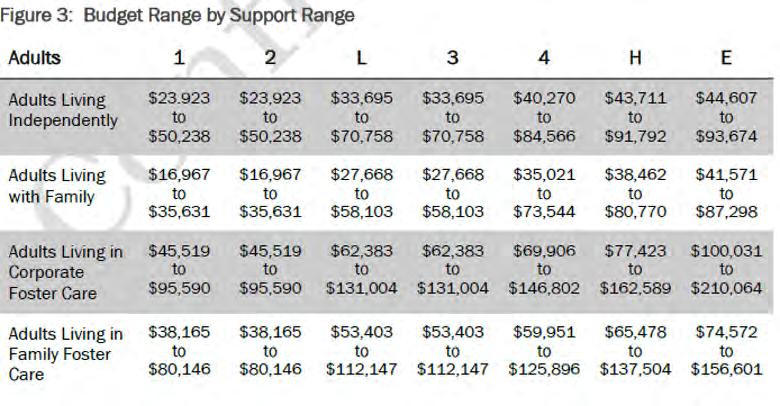
Under Waiver Reimagine, the current four waiver types: Developmental Disabilities (DD), Community Access Disability Inclusion (CADI), Brain Injury (BI), and Community Alternative Care (CAC)) will go away and there will be two waivers, yet to be named, but something like Living Independently and Living in Residential Care. All individual budgets will be capped and based on both need (good) and where a person lives (bad). It is bad because this falsely suggests a person’s support needs change based on location. Subject to change of course, here are the latest published budget ranges. See Figure 3: Budget Range by Support Range. Need levels are listed across the top from low to high and will be determined by the new MNChoices 2.0 Assessment.
Where you live is on the left.
As you can clearly see, larger budgets are provided for those receiving services in provider-controlled settings and smaller budgets are provided for those living
independently. This is bad.
Under the Olmstead decision, people with disabilities have a civil right to be full members of their communities and live in the most integrated community setting appropriate to their needs. Budgets based on where a person lives are anti-Olmstead as DHS is providing less money to live in one’s own home versus a provider-controlled setting.
DHS also must adhere to independent living first policy under Minn. Stat. §256B.4905, subd.
8. Providing budgets that are less for independent living versus providercontrolled setting is not supporting independent living first.
Waiver Reimagine budgets that provide more money for those living in providercontrolled settings are at direct odds with Olmstead and Minnesota living independently promises.
So how many Minnesotans might this
affect? Well, the HRSI Fiscal Impact Study estimates that 6000 waiver recipients will experience a budget reduction! This includes nearly 1:2 on a CAC waiver and 1:5 on a DD waiver. One must ask, if this many waiver recipients are to receive budget cuts, without any change in need, is this budget framework really working?
Do you know what your current waiver budget is? If not call your case manager and ask. If you are one of the 6,000 expected to receive a cut, you might want to contact your legislator and tell your story. Legislation (SF4733) addresses concerns around Waiver Reimagine and is being sponsored by Sen. John Hoffman, Chair of the Human Services Committee.
Concerned Guardians
Lisa Vala, Plymouth
Pat Hannon, Plymouth
Jane Steinhagen, Edina
Jackie Olson, Edina
Laura Hunt, Edina
paying jobs, and stabilizes access to mental health care and critical medications for vulnerable adults.
Continuous eligibility strengthens health equity -- research shows people of color are at greater risk of losing Medicaid coverage for procedural reasons and due to short-term fluctuations in income.
Continuous eligibility ensures that individuals who are enrolled in Medicaid have uninterrupted continuous coverage. Consistent access to medical care and checkups improves health outcomes, supports health equity, and lowers administrative burdens on enrollees. The 2022 Minnesota DHS report “Building Racial Equity into the Walls of Minnesota Medicaid” noted that enrollees who had gaps in coverage of more than six months were less likely than those who were continuously enrolled “to have a regular source of care, more likely to forego health care for financial reasons, and more likely to report problems paying medical bills.





APRIL 2024 Volume 35, Number 4 Pg 4 For your FREE estimate, call 800-649-5215 651-399-3075 Learn more at amramp.com Changing our customers’s lives, one ramp at a time. • Low cost • FREE home evaluations • Rent or buy • Installed in days “It is important that our clients who struggle with stairs are able to maintain their freedom, dependence and community ties.” Kent Fordyce KENT’S ACCOUNTING SERVICE, LLC 612-889-2959 fordyce6@aol.com Fax: 952-472-1458 6371 Bartlett Blvd Mound, MN 55364 Certified ProAdvisor 2022 | 2005-2021
COMMUNITY
Source: HRSI Recalibration of Provisional Individual Budgets for Adult – March 2021
Medical aid in dying has become a personal issue as his disability progresses
by Tom Albin
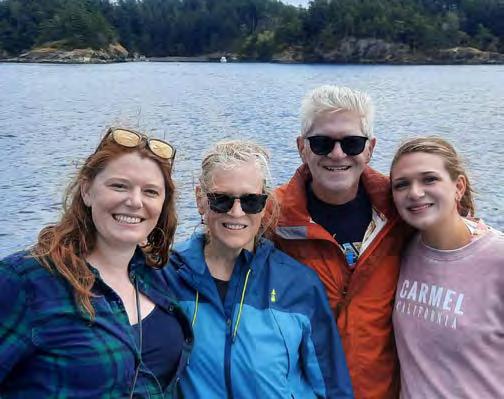
For nine years, Minnesotans have pleaded with our lawmakers to allow terminally ill adults the option of medical aid in dying. Last year, this topic became personal for me, so I joined the fight.
For more than two years I’ve been living with ALS, a fatal disease that causes progressive muscle weakness. ALS attacks the nerves in my brain and spinal cord causing severe weakness. I have the “bulbar” form which first affects my swallowing, speech and breathing, then my limbs.
My voice is strained and hoarse, and I can’t speak fast or loudly anymore. If I’m at a party, I’m not able to engage in the conversation as much as I want. I love to joke around, so that’s tough for me. The disconnect in speaking is hard and it’s going to get worse. Eating, too, is difficult and painful, and choking is common for me.
Nevertheless, I’m very much enjoying life. I have ice cream every week. I watch and still play hockey, I love listening to music and taking walks in nature. I meet up with friends often for a meal, coffee, or a beer. I’ve been very blessed that my friends have stepped up so that I don’t feel alone, even though ALS is commonly a very isolating disease.
I also know what lies ahead. Eventually, I will become weaker and weaker, become unable to eat without a feeding tube and unable to breathe on my own (I already have one but can also eat real food when I have enough energy). I don’t know how rapidly I will decline but when that begins to happen, I want to be able to die on my terms, in as little pain as possible.
BRAILLE
From page 1
be a ripple effect. “We have had several students who have used their service in the past and who were very satisfied with them.”
Jay Maruska is Braille Supervisor for Minnesota State Services for the Blind, part of the Department of Employment and Economic Development. The state provides materials for Minnesota adults who are legally blind, with six full-time Braillists and a number of volunteers. Priority is for K-12 textbooks, but the state can provide other Braille materials as requested. Maruska has had regular contact with VBS and said its services will be missed.
People who prepare Braille documents use machines called Braillers. The predominant machine is the Perkins Brailler, which was invented in 1951.
The transcribers are also called Braillers. Volunteer Braillers were the heart of VBS.
VBS had roots in a 1950s campaign to provide school materials for blind children. The effort attracted volunteers from around the United States, including members of the Temple Israel Sisterhood in Minneapolis.
VBS spun off from that effort. It appears that volunteers went back and forth between
I've been following the End-of-Life Options Act since I received my diagnosis, attending nearly every legislative hearing. What I've learned is that the bill authors have responded to feedback and made improvements that protect vulnerable individuals.
For example, the bill emphasizes that disability or advanced age alone do not qualify a person for the option of medical aid in dying. The individual must have a terminal diagnosis with a six month or less prognosis, the accepted standard for hospice care. The individual must also be capable of giving informed consent for their own healthcare which eliminates people with developmental or cognitive limitations like dementia.
the two programs. Some histories indicate VBS began in 1967; others say 1968. VBS began in the basement of a Robbinsdale savings and loan office. It later moved to Golden Valley.
Volunteers took a free six-month training course to become Braillers. By 1980, more than 100 volunteers had trained through VBS.
Most Braillers in VBS’s early days were women. Patronizing news coverage sometimes focused on how “housewives” kept themselves busy. Volunteer knew their work was important.
Martha Schafer of Crystal was among the VBS volunteers featured in a 1980 Star Tribune story. The Crystal woman used her dining room table for her Braille volunteer work. The article noted that her volunteer work meant family meals were in the kitchen.
The article stated:
“To be a Braillist, you’ve got to be serious about it. . . . You need interminable patience.”
VBS provided Perkins Braillers if volunteers agreed to transcribe at least 60 pages of Braille each month. Most volunteers put in about 10 hours weekly converting books and documents to Braille.
At the time of her death in 2007, Schafer’s 40 years at the keyboard had produced almost 160,000 pages of documents. Family members said her own love of reading
inspired Schafer to make sure that others could read, too.
Times changed for Braille. By 1988, only one woman affiliated with Temple Israel was preparing large-print manuscripts for distribution by the Jewish Braille Institute of America. The remaining Sisterhood Braillists were working out of their homes, with
The bill requires that oral and written requests be made only by the terminally ill person themself and in compliance with ADA guidelines. Requests for medical aid in dying may not be made by a surrogate decisionmaker, including a guardian, conservator or other healthcare proxy. Or by a family member. The bill prohibits insurers, including public and private insurers, from denying or altering healthcare benefits or services just because medical aid in dying is a legal option. It also creates strong penalties for coercion, which is an attempt to force or prevent someone from choosing medical aid in dying.
I am living with a disability which is going to progress. Until then, I'm living my life fully and benefitting from the many protections disability rights advocates have fought for. But I am capable of making my own decisions about how I treat my disease. The time will come when my death is imminent; that's when I will want the option to leave this life on my own terms.
We have a daughter who lives in Washington, where medical aid in dying is available, but my wife and I don’t want to leave Minnesota. It’s been our home for 35 years. It’s where we’ve built our community and social support, and it’s where my medical team is. It doesn’t make sense to have to leave my home just to have some say in the last stretch of my life.
Minnesota lawmakers, rightly, have made bodily autonomy a priority by protecting reproductive and gender-affirming medical care. The right to make decisions about our own bodies should apply at the end of life, too.
Tom Albin is a resident of Minneapolis.
assignments from States Services for the Blind. VBS kept going but by 2011, VBS and other organizations were trying to promote use of Braille as opposed to other options. By then VBS was the only nonprofit offering Braille transcription in Minnesota.


APRIL 2024 Volume 35, Number 4 Pg 5 Albright Townhomes Minneapolis 612-824-6665 1 BR Cornerstone Creek Apartments Golden Valley 763-231-6250 1 & 2 BR (for developmentally disabled individuals) Diamond Hill Townhomes Minneapolis 612-736-9341 2 & 3 BR Elliot Park Apartments Minneapolis 612-338-3106 2 BR Franklin Lane Apartments Anoka 763-427-7650 1 & 2 BR Hanover Townhomes St. Paul 651-292-8497 1 BR Hilltop Manor Eveleth 218-744-5169 1 BR Hopkins Village Apartments Hopkins 952-938-5787 1 & 2 BR Village Apartments Hopkins 952-938-5787 1 & 2 BR Lincoln Place Apartments Mahtomedi 651-653-0640 2 BR Olson Towne Homes Minneapolis 612-377-9015 1 BR Park Plaza Apartments Minneapolis 612-377-3650 1 & 2 BR Prairie Meadows Eden Prairie 952-941-5544 2 & 3 BR Raspberry Ridge Hopkins 952-933-3260 1 BR Slater Square Apartments Minneapolis 612-340-1264 EFF & 1BR Spirit on Lake 612-724-3029 1 & 2 BR Talmage Green Minneapolis 612-623-0247 2 BR Trinity Apartments Minneapolis 612-721-2252 1 BR (sr) Unity Place Brooklyn Center 763-560-7563 2 BR Vadnais Highlands Vadnais Heights 651-653-0640 3 BR Visitation Place 651-647-2550 1, 2 3 BR Willow Apartments Little Falls 320-632-0980 1 BR Woodland Court Apartments Park Rapids 888-332-9312 1 BR HOUSING FOR VETERANS AT RISK OF HOMELESSNESS Veteran's East Apartments Minnneapolis 612-208-1712 EFF Veteran's & Community Housing Minnneapolis 612-333-0027 EFF TRELLIS MANAGEMENT MAY BE ACCEPTING APPLICATIONS for our accessible waiting lists at the following affordable communities: We may be accepting applications for our large number of mobility impaired accessible units. Please call us for more information. Make the news! Receiving an award? Joining a board? Moving to new space? Winning a race? Filling a top post? Send us your “boast”! Marking a key date? Please don’t be late! Access Press welcomes submissions for the People and Places pages. Submissions are due by the 15th of each month. Questions? Call 651-644-2133 or email access@accesspress.org
will
there
FROM OUR COMMUNITY
Tom Albin and family
SUBMITTED PHOTO

Janice
Ronna Linroth
Brandon Miller
Lynda Milne
Ann and Larry Roscoe
Walter Siebert
Joel Ulland
Kay Willshire
Tamarack Habilitation Tech, Inc.
GOLD ($500-$999)
Jeff Bangsberg & Anita Boucher
Anne L. Henry
Kim Kang
Steve Kuntz
Jim Musselman
Debra J. Shriver
Robyn Wade
Courage Kenny
Just Comfort
SILVER ($150-$499)
Alexandra
BRONZE ($75-$149)
ADVOCACY
Advocating Change Together
Cow Tipping
V-651-641-0297 act@selfadvocacy.org www.selfadvocacy.org
V-507-201-9678 bboyce@cowtippingpress.org https://cowtippingpress.org
Mayor's Advisory Council for People with Disabilities V-651-266-8902 michele.severson@ci.stpaul.mn.us https://bit.ly/stpadvisory
MCIL
V-651-646-8342 info@mcil-mn.org www.mcil-mn.org
Mid-Minnesota Legal Aid - MN Disability Law Center V-612-334-5970 mndlc@mylegalaid.org mylegalaid.org/our-work/disability
MN Consortium for Citizens with Disabilities V-651-274-2098 info@mnccd.org www.mnccd.org
MN Governor's Council on Developmental Disabilities V - 651-274-2098 admin.dd@state.mn.us mn.gov/mnddc
SMILES Center for Independent Living
V -507-345-7139 smiles@smilescil.org https://smilescil.org
Upstream Arts V -612-331-4584 info@upstreamarts.org www.upstreamarts.org/
ASSISTED LIVING
Opportunity Partners
V-952-938-5511 info@opportunities.org www.opportunities.org AUTISM
ProAct
Reach
FRIEND ($50-$74)

APRIL 2024 Volume 35, Number 4 Pg 6
SERVICES
V-612-224-9101
Partners V-952-938-5511
ACCORD
info@accord.org www.accord.org Opportunity
info@opportunities.org www.opportunities.org
V-612-224-9101
Partners V-952-938-5511
BRAIN INJURY ACCORD
info@accord.org www.accord.org Opportunity
info@opportunities.org www.opportunities.org CASE MANAGEMENT
info@accord.org www.accord.org CHEMICAL HEALTH Avivo V -612-752-8000 contact@avivomn.org www.avivomn.org COMMUNITY LIVING MCIL V-651-646-8342 info@mcil-mn.org www.mcil-mn.org Opportunity Partners V-952-938-5511 info@opportunities.org www.opportunities.org Reach for Resources V-952-200-3030 info@reachforresources.org www.reachforresources.org EDUCATION Advocating Change Together V-651-641-0297 act@selfadvocacy.org www.selfadvocacy.org Avivo V -612-752-8000 contact@avivomn.org www.avivomn.org Upstream Arts V-612-331-4584 info@upstreamarts.org www.upstreamarts.org EMPLOYMENT/VOCATION Avivo V -612-752-8000 contact@avivomn.org www.avivomn.org Opportunity Partners V-952-938-5511 info@opportunities.org
V-651-846-9274
ACCORD V-612-224-9101
www.opportunities.org PAI
mduffy@paimn.org www.paimn.org
V-651-686-0405
aballard@proactinc.org www.proactinc.org
for Resources V-952-200-3030
V-763-786-8334
https://rise.org
V-320-251-0087
www.wacosa.org GOVERNMENT
Advisory Council for People with Disabilities V-651-266-8902 michele.severson@ci.stpaul.mn.us https://bit.ly/stpadvisory Minnesota Commission of the Deaf, DeafBlind & V-651-431-5961 mncdhh.info@state.mn.us www.mn.gov/deaf-commission HEARING DISABILITIES
Commission of the Deaf, DeafBlind & V-651-431-5961 mncdhh.info@state.mn.us www.mn.gov/deaf-commission HOUSING NARI of MN V-612-332-6274 info@narimn.org www.narimn.org/ Reach for Resources V-952-200-3030 info@reachforresources.org www.reachforresources.org HOUSING - CONSTRUCTION AND REMODELING NARI of MN V-612-332-6274 info@narimn.org www.narimn.org/ Refined Homes V-651-699-2489 tricia.w@refined-homes.com https://refined-homes.com INFORMATION/REFERRAL RESOURCES ADA Minnesota; a program within MCIL V-651-603-2015 711 relay service www.adaminnesota.org LEGAL Mid-Minnesota Legal Aid - MN Disability Law Center V-612-334-5970 mndlc@mylegalaid.org mylegalaid.org/our-work/disability ii ACCESS PRESS DIRECTORY Thanks to ALL OF YOU for supporting Access Press BENEFACTOR ($1000 & up)
info@reachforresources.org www.reachforresources.org Rise
info@rise.org
WACOSA
info@wacosa.org
Mayor's
Minnesota
Chevrette
Jane Larson
Bartolic Dena Belisle
Benjamin
Marilyn
Anonymous Rosebud Elijah
Enders
Ann
Dale
Laura Fedock Kent Fordyce Vicki Garrets Robert Gregory Craig Dunn & Candy Hart Pam Hochrein Judy Hunt Rick & Susie MacPherson
Musselman Manley Olson
W. Traynor & Jen Peterson Julee Quarve-Peterson Hilary and Stuart Ratner Ken Rodgers Linda Wolford Amanda & Mark Tempel Hammer Residences, Inc.
Tim S.
Gretchen Bratvold John &
Clark Tom Clark Mark Daly Yoshiko S. Dart
Joel
Lee
&
Erickson
Brian
Mark
Sarah Berg Jesse Bethke-Gomez Jean Christy Richard Cloud Margot Cross Daniel Ness Dawn R. Doering Dean Doering Anonymous Ellen J. Emanuel Steve & JoAnn Erbes Dale Erickson Claudia Fuglie Lael Gatewood Marjorie Goldberg Mike Gude Terry Hagenah Hammer Residences Ellen & Skip Houghton Maren Hulden Catherine Hunter Dale Janiszeski Barb Kane Kim Keprios Megan Keyser Sue Kohler Steve Larson Michelle & John LeBlanc Gene Martinez John Marty Tom & Kay Milne Eric S. Nelson Daniel Ness Annette M. Pantel Mark Payette Reach for Resources Laurie Sack Carrie Salberg Anita & Luther Schermer/ Granquist Stephanie Schwartz Jon Skaalen Laurene Tomaszewski Lisa Vala Cathy Wick Zekerya Yargici Leslie Zaricor Richard Ziton
Nora Aileen Beall Joanna & Richard Cortright Paul Bauer & Pat Cretilli Nancy N. Eustis Thomas Fogarty Give Lively Foundation Burl Gilyard Ann Griffith Phil Jacobsma Laura Johnson Mark Knutson Tag Krogseng Sandy Lane Kenneth Latkin Shelley Madore Andrea McKee Twyla M. Misselhorn Debra Norgaard William & Joan Overby Annette M. Pantel Sonja Peterson Donn Poll Alina Schroeder Mike Schwartzbauer Gwendolyn Short Diane Sprague Katherine Tomlinson Dick VanWagner Katheryn J. Ware MAIL YOUR SPONSORSHIP AND SUBSCRIPTION TO : Access Press, LTD. PO Box 40006, Industrial Station St. Paul, MN 55104-8006 DONATE ONLINE: www.accesspress.org/donate MORE DIRECTORY LISTINGS on page 11
By Jane McClure
How do you measure four years?
In mid-March 2020, our lives were forever changed by the sweeping global pandemic of COVID-19. The worry leading up to the mass shutdown was palpable. That was especially true for those of us who live with disabilities.
Four years in, Access Press shares our community pandemic stories
Oddly, it reminded me of growing up in rural Iowa and preparing for incoming blizzards. In those pre-high tech forecasting days, we often didn’t know how much snow we’d get, whether the snow would blow and drift, and whether or not we’d lose power. We didn’t know how long we’d be cooped up.
As the pandemic threat materialized, I made myself some masks and tried to keep safe distance at a time when my work had me in close contact with many people. We were in the midst of Minnesota’s 2020 legislative session. Access Press was then housed in the offices at Capitol Ridge. That meant near-constant contact with people in elevators and commons areas.
Some of us thought, this will only be for a few weeks. (Some still are rueful about leaving office plants and lunch leftovers behind.)
Our last big disability rally day of the 2020 session was Mental Health Day on the Hill. Fewer allies were present as groups from around the state canceled their usual trips to St. Paul.
And then everything shut down. Minnesota went into a state of emergency on March 13, 2020. Other legislative rally days were canceled. Legislative committees, other meetings, work, worship services, school and other aspects of our lives swung to online
Streets were empty. Businesses that remained open were places we hurried to get in and out of.
Some of us lost our jobs. Some of us swung to full-time virtual work.
Who remembers the nightly ritual of banging pots and pans at 7 p.m. to support health care workers? Public health was challenged in ways none of us had seen before. We watched as ICUs filled up.
We were careful not to waste food and
Four years in, I think about the friends and family members we lost. I think about the friends I seldom if ever see in person because they are still striving to keep themselves or their loved ones safe.
toilet paper. Hand sanitizer was a prized commodity.
For those of us with disabilities, many of whom already were living with isolation, our lives became more challenging. The lockdown added to our loneliness.
Some of us lost the all-important day activity centers, as the shutdown became permanent in some cases.
Others lost members of our direct support staff and personal care teams. Family members sometimes picked up the slack. Too many of us spent even more time alone, without proper care. How many died due to lack of proper care? We likely will never know. COVID-19 on top of the ongoing personal care crisis was just too much.
Four years in, COVID-19 is still with us despite the best efforts to promote vaccinations. As someone old enough to remember obediently lining up in a tiny school gym for our polio vaccines, I cannot imagine why people are still so opposed to staying safe.
Four years in, I think a lot about the many unsung heroes who kept us safe. I think about those who made sure we got our vaccines and masks and everything else we needed.
Four years in, I think about the friends and family members we lost. I think about the friends I seldom if ever see in person because they are still striving to keep themselves or their loved ones safe.
Some of us are still cooped up.
Our COVID-19 Stories, which appear in this special section, are stories about members of Minnesota’s disability community and how they have coped with COVID-19. We’ve changed the names and promised confidentially to those whose stories we share. Health matters are very personal and we respect that.
Each story focuses on a different aspect of COVID-19 and includes useful links to other resources. We hope you find the stories and links informative. How do you measure four years?
Loss of key senses has meant she had to learn to smell and taste again
My name is Claudia. I’m 70 and am retired from a career with the state. Since then I have been an active community volunteer, keeping up a neighborhood flower garden and taking part in a quilting circle. I have four grandchildren and we have fun repairing bicycles and keeping them in good order.
I’ve had other health issues, including cancer. I had one surgery repeatedly postponed during the pandemic. It was hard for me emotionally.
I have had fibromyalgia for many years and it can be very disabling. It has led to bouts with depression.
“Zealous” is a good word to describe how I’ve taken care of myself with vaccinations, masking, hand washing and overall precautions. I almost always isolated myself at the height of the COVID-19 pandemic. Even going out for a walk felt risky. I was glad to be out of the Twin Cities and living near family in Willmar.
I’ve had two bouts with COVID-19. One was mild. The other had me down for the count for almost two weeks. I was tired for another couple of weeks after that.
What affected me the most was losing my senses of smell and taste. After more than a year, I still do not have either one back in full. With encouragement from my doctor, I’ve taken part in research studies.
It’s been quite the learning experience! I learned that people can lose their sense of smell for different reasons – a head injury, infections, aging, polyps or growths in the nasal passages. COVID-19 is not the only cause. But COVID-19 has drawn attention to the loss of these senses. Not being able to smell foods meant that meals and snacks tasted bland for

me. Some foods typically like didn’t taste good at all.
I enjoy gardening and working outdoors. You don’t know how not being able to smell affects you until you’re outside digging in the dirt. I
really missed those smells of fresh earth and new plants and blooming flowers.
Heck, I even missed the smells of new inner tubes and grease and all else that goes with bike repair. My grandkids tease me when they see me sniffing the
air during our Saturday morning repair sessions.
My abilities to taste and smell are coming back. It takes time, through a scent therapy or scent training program. That means having different vials of scent and training yourself to smell, all over again.
It is not what you would call a linear process. I’ve felt as if I am doing better, and then face setbacks. The only good thing is that I did lose some weight because I was not tempted to snack so much.
What has helped me is a website my doctor recommended, called https:// abscent.org.uk/covid-19/ It has videos and links to studies from all over the world.
To anyone who loses the sense of taste and smell, I’d say don’t give up. Listen to your doctor and care team.
From Access Press: Lots of good information is available about the loss of smell and taste that results from COVID-19. The issue has gotten more attention as the pandemic has gone on. One useful sources of information is one the National Institute of Aging website, at https://www.nia.nih.gov/ news/lingering-covid-virus-tonguelinked-long-term-taste-loss
APRIL 2024 Volume 35, Number 4 Pg 7
Jane McClure
MY COVID STORY: CLAUDIA
BY THE NUMBERS Coronavirus Cases: 1,897,498 Deaths: 16,393 Recovered: 1,879,833 As of March 20, 2024. Source: Woldometer
STORIES FROM OUR DISABILITY COMMUNITY ISTOCK
COVID-19
MY COVID STORY: CRAIG
A busy young man lost his work and was bored and unhappy
Craig lives with intellectual disabilities. He is 22 and has finished school in the St. Paul Public Schools. He makes his home with his parents in St. Paul. His older brothers and sisters are working or in college. His parents both work outside of the home.
“I like to work,” Craig said. He has had jobs since his early high school years, delivering fliers, walking dogs, and bussing and washing dishes in a restaurant. Craig lost all but his dog walking job when the COVID-19 pandemic began.
Craig’s parents were very careful to keep him isolated during the early months of the COVID-19 pandemic. It was very hard for all of them. Craig was bored and unhappy, with very little to do. It was difficult for him to see family members being active and out in the community.
But like many people with his type of disability, Craig is immunocompromised. He could not risk getting sick.
One worry Craig’s family had was whether he would remember to wear a face mask while out in public. They also worried about people being in close contact with him.
People with intellectual and developmental disabilities were left out of early rounds of COVID-19 vaccination in Minnesota. That promoted a change. org petition in early 2021 to Gov. Tim Walz. This effort was led by the Down

Syndrome Association of Minnesota (DSAMN).
Craig was diagnosed with COVID-19 in early 2021, before he was eligible for a vaccine. The state’s priorities at that time were to first vaccinate senior citizens, health care workers, educators and longterm care facility residents.
“I didn’t like being sick,” Craig said. His mother became sick before he did and likely exposed him to the virus despite taking precautions.
Craig was sick for more than two weeks. The worst part of COVID-19 was a headache and “coughing a lot. I don’t like
coughing.”
He’s found another restaurant job and is back at work. He continues to mask up and observe social distancing. “I am very careful,” he said.
From Access Press: The National Library of Medicine states that “People with intellectual disability are especially vulnerable to the physical, mental and social effects of the pandemic. Cognitive impairments can limit understanding of information to protect them relying on carers to be vigilant on their behalf during quarantine. Restrictions on usual activities are likely to induce mental stress
But like many people with his type of disability, Craig is immunocompromised. He could not risk getting sick.
especially among those who are autistic leading to an escalation in challenging behaviors...“
Several interesting articles on COVID-19 and intellectual; and developmental disabilities can be found at https://pubmed.ncbi.nlm.nih. gov/32404232/
Some studies indicated that people with intellectual and developmental disabilities are three times more likely to die of COVID-19, compared with patients without such disabilities.
The Center for Community Solutions released a study in mid-2023 indicating that people with intellectual and development disabilities struggled greatly during the pandemic. The center is a nonpartisan think tank based in Ohio. Read more at https://www. communitysolutions.com/research/ the-ongoing-impact-of-covid-19on-individuals-with-developmentaldisabilities-their-families-and-providers/
Children with respiratory illnesses must be vigilant against the virus
Elise is 12 and in seventh grade in Minneapolis Public Schools. She lives with her mother, stepfather and two siblings. Her father, stepmother and stepbrother are also family members she spends time with.
Elise likes science and English classes. She and her family have pet dogs and cats to dote on. She loves Taylor Swift, and enjoys drawing and beading.
Elise plays sports through the recreation center in her neighborhood. Soccer is her favorite sport. She would like to play on a high school team when she gets older.
“I have had COVID two times,” said Elise. Both cases have been mild. She was tired and had headaches, along with a fever, both times.
But as she got older, Elise experienced COVID-19 and testing in different ways.
“I was 9 when I first got sick,” she said. Elise hadn’t been vaccinated then. It was just before vaccines became widely available for children.
She remembers not liking having her mother put a swab up her nose, to test for the virus. She also remembers having body aches and pains, along with being tired. “I just wanted to sleep.”
Now that she is older, Elise can use the swabs herself. When she had COVID-19 the second time, Elise had been vaccinated and boosted. She thinks that having had the shots helped her not feel as sick, even though she doesn’t like shots.
Elise has had asthma for much of her life, so her family is careful about COVID-19. Elise uses an inhaler as needed. She has found that after her bouts with COVID-19, she has to use the inhaler more frequently for a time.
Elise said children and teens should get vaccinated, especially if they go to school in-person and take part in activities and sports. “You won’t be as sick.”

While children are as likely to get COVID-19 as adults, most children are less likely to become severely ill. Mayo’s website notes that up to 50 percent of children and adolescents might have COVID-19 with no symptoms.
But other children and teens have gotten very sick.
Certain medical conditions might increase a child's risk of serious illness with COVID-19. These include obesity, diabetes, asthma, congenital heart disease, genetic conditions and conditions affecting the nervous system or metabolism.
The Mayo research also shows that there have been disproportionately higher rates of COVID-19 in Hispanic and non-Hispanic Black children than in non-Hispanic white children Babies under age 1 might be at higher risk of severe illness with COVID-19 than older children, according to Mayo.
And for families like Elise’s, Mayo offers an online guide about how to prepare children for those unpleasant nasal swabs. Learn more at https://www. mayoclinic.org/diseases-conditions/ coronavirus/in-depth/coronavirus-inbabies-and-children/art-20484405
APRIL 2024 Volume 35, Number 4 Pg 8
From Access Press: The Mayo Clinic offers much useful advice for parents and guardians. According to Mayo,
children represent about 18 percent of all reported COVID-19 cases in the U.S. since the pandemic began.
MY COVID STORY: ELISE
COVID-19 STORIES FROM OUR DISABILITY COMMUNITY TAKE YOUR BEST SHOT! Vaccines are your best protection against COVID-19. Discuss which vaccine is best for you with your health care provider. Learn more at www.health.state.mn.us/diseases/coronavirus/vaccine/basics.html
COVID-19 STORIES
FROM OUR DISABILITY COMMUNITY
MY COVID STORY: GARY
Long COVID, unknown duration of ailments, is a worry for this retiree
Gary is a retired university professor, with a distinguished career teaching English. An academic award is given in his name at a school where he taught for many years. He recently downsized and moved to be closer to family and friends in the Upper Midwest.
Gary’s retirement plans included travel, gardening and work at colleges and universities near his new home. He looked forward to filling in for staff sabbaticals and as a part-time adjunct professor of English. That all changed with COVID-19.
Gary lives with several disabilities including MS. He also has a compromised immune system. He has been faithful about keeping up with vaccines for COVID-19 and other conditions that affect people in their 70s and older. He masks up in public and takes other steps to not become ill.
But Gary was unable to ward off COVID-19, and has had a few bouts of the disease. He has struggled with Long COVID effects. Those struggles have caused setbacks in his ongoing efforts to stay healthy.
A bout of COVID-19 in early autumn has led to another round of weeks of fatigue, brain fog, flu-like symptoms and a couple of falls for Gary. He is using a walker again. “I just get so tired,” he said. He had enjoyed walking around the condo complex where he lives, and visiting a nearby park. “Now I have days when I can barely get from one end of my condo to another. Making dinner can wear me out.”

At one point Gary lost his sense of smell and his sense of taste.
Another worry for Gary is that because he lives in a smaller community, it has been a challenge to find services and supports. He has limited personal care attendant help. He relies on Meals on Wheels more often than he would like. “I miss cooking,” he said.
Gary’s greatest fear is that despite his taking precautions, he could wind up with Long COVID issues for the rest of his life. “I know that not everyone who has Long COVID recovers fully and
that really is scary for me. It’s not how I planned to spend my retirement.”
From Access Press: Symptoms of Long COVID can include shortness of breath, extreme fatigue, headaches, dizziness, brain fog and memory issues. Symptoms may last for months or years, affecting mental health, quality of life and financial stability.
Long COVID and post-COVID conditions can be considered a disability under the Americans with Disabilities Act (ADA) in certain cases.
Some people with Long COVID
MY COVID STORY: LUCY
Long COVID can include shortness of breath, extreme fatigue, headaches, dizziness, brain fog and memory issues. Symptoms may last for months or years, affecting mental health, quality of life and financial stability.
have mild to moderate symptoms that gradually get better after several months. Others may have more severe symptoms and face challenges returning to work, school, family life, exercise and other activities that help them to thrive. A subset of people will have very severe symptoms that leave them newly disabled by Long COVID. It isn’t yet known yet know if these effects will be permanent.
The Minnesota Department of Health (MDH) was one of the first state health departments in the country to have a program and staff dedicated to Long COVID and post-COVID conditions. Read more at https://www.health.state. mn.us/diseases/longcovid/index.html
Lung inflammation and its many complications can linger over time
My name is Lucy. I work in communications. I also have an active side business making and selling jewelry and knitted items. I volunteer with my children’s schools, our church and a few community groups. My family and I live in Eagan. I’m 53 years old.
My family and I have been attentive about keeping up on our vaccines and boosters to combat COVID-19. My husband had a mild bout with COVID-19 at the tail end of the Minnesota State Fair. Our son was also ill at about the same time.
We have always masked up, washed hands and tested frequently.
I have arthritis and it’s important for me to stay active and keep moving.
After Thanksgiving, I became quite ill with COVID-19. Being flat on my back for a few weeks was no fun. My family really had to pick up the slack with household chores and Christmas preparations. I had to take a leave of absence from my job and cancel some holiday-time craft shows that I sell my wares at.
I developed pneumonia and inflamed lungs. It was terrible! I felt terrible. My lungs hurt so much. All I could some days was make squeaking noises.
Talking hurt! (My kids may have liked that.)
At one point I had acute respiratory distress syndrome and had to go to urgent care.
I am now using an inhaler for breathing problems. My lungs do not hurt as much. There are days when the pain returns.
I am back at work but have had to cut back on my volunteer activities and my side businesses. I miss all of those things.
My arthritis has been affected because I am not as physically active. I was in a

water aerobics class that disbanded during the pandemic and I have not found a substitute.
The big worry for me is worrying about permanent lung damage. My doctor said
that is possible. I am being monitored very carefully. It could take a year or more for my lungs to recover. I am hopeful that will happen.
I would urge everyone to get
vaccinated against COVID-19, despite what happened to me. I cannot imagine what would have happened had I not been vaccinated.
From Access Press: There is much good information online about COVID-19 and its impacts on a person’s lungs and respiratory health. The Johns Hopkins University School of Medicine has detailed information on what COVID-19 can do to a patient’s lungs. The web link includes information on the different medical conditions COVID-19 can create, and the short-term and longterm impacts on lung health: https:// www.hopkinsmedicine.org/health/ conditions-and-diseases/coronavirus/ what-coronavirus-does-to-the-lungs
An eye-opening study on lung damage and COVID-19 was recently released by the University of Minnesota. Researchers found that one in four people had impaired lung function due to the disease.
Read the study at https://www.cidrap. umn.edu/covid-19/1-4-covid-survivorshad-impaired-lung-function-1-yearstudy-shows
APRIL 2024 Volume 35, Number 4 Pg 9
STAY SAFE IN MINNESOTA What is happening in Minnesota with COVID-19? How many cases are in my home county? What are the latest variants? Learn more at www.health.state.mn.us/diseases/coronavirus/stats/index.html
ISTOCK
ISTOCK
WORK WITH YOUR CARE PROVIDER TO STAY
PROTECT YOURSELF
VACCINES ARE YOUR BEST PROTECTION AGAINST BEING SICK KEEPING YOUR VACCINES UPDATED IS A MUST IF YOU LIVE WITH DISABILITIES!
EMPHASIZE TO YOUR CARE PROVIDER THAT WORKERS NEED TO HAVE THEIR VACCINES UPDATED TOO.
FAMILY MEMBERS AND CAREGIVERS MUST DO SO, TO0.
PREPARE
PLAN WHAT YOU WILL DO IF YOU OR YOUR DIRECT PROVIDER GETS SICK.
CREATE A CONTACT LIST OF FAMILY, FRIENDS, NEIGHBORS AND LOCAL SERVICES AGENCIES THAT CAN PROVIDE SUPPORT.
URGE HELPERS TO BE VACCINATED AND DIRECT THEM TO VACCINE RESOURCES.
PLAN AT LEAST TWO WAYS OF COMMUNICATING FROM HOME AND WORK THAT CAN BE USED IN AN EMERGENCY.
HAVE ENOUGH HOUSEHOLD ITEMS AND GROCERIES YOU WILL NEED FOR A FEW WEEKS, AT LEAST 30 DAY SUPPLY OF MEDICINES AND ANY MEDICAL EQUIPENT OR SUPPLIES.
FOR MORE INFO, PLEASE VISIT www.cdc.gov/coronavirus/2019-ncov/vaccines/ stay-up-to-date.html www.cdc.gov/handwashing/when-howhandwashing.html


APRIL 2024 Volume 35, Number 4 Pg 10 Access Press received a Community Engagement and Diverse Media Grant from the Minnesota Department of Health to provide information about Covid-19 and vaccinations to our readers and the community of people with disabilities. There will be many informational items we will share with you. Source: Centers for Disease Control and Prevention.
HEALTHY





MEDICAL SUPPLIES/EQUIPMENT
Handi Medical Supply
HME Medical Shop
V-651-644-9770 ayana.soria@handimedical.com www.handimedical.com
V - 800-258-6313 customerservice@hmemedicalshop.com www.hmemedicalshop.com
National Alliance on Mental Illness (NAMI) V-651-645-2948 namihelps@namimn.org www.namimn.org
Reach for Resources
MENTAL HEALTH
Avivo
ACCORD
BrightPath
Fraser
V-952-200-3030 info@reachforresources.org www.reachforresources.org
V -612-752-8000 contact@avivomn.org www.avivomn.org
V-612-362-4400 info@accord.org www.accord.org
V-651-462-2380 services@brightpath-mn.com www.brightpath-mn.com
V - 612-861-1688 fraser@fraser.org www.fraser.org
National Alliance on Mental Illness (NAMI) V-651-645-2948 namihelps@namimn.org www.namimn.org
Reach for Resources
RECREATION
PAI
BrightPath
V-952-200-3030 info@reachforresources.org www.reachforresources.org
V-651-846-9274 mduffy@paimn.org www.paimn.org
V-651-462-2380 services@brightpath-mn.com www.brightpath-mn.com
Fraser V - 612-861-1688 fraser@fraser.org www.fraser.org
RECREATION-ADAPTIVE RECREATION - HOBBIES
Lake Harriet YC - Adaptive Sailing V-928-264-2069 pavawin@gmail.com https://lhycsailing.com/adaptive
RECREATION-HOBBIES/CLUBS/SOCIAL
Reach for
Young Dance
RECREATION-TRAVEL/CAMPING
Hammer Travel
V-952-200-3030 info@reachforresources.org www.reachforresources.org
V-612-423-3064 info@youngdance.org www.youngdance.org
V -1-877-345- info@hammertravel.org https://hammertravel.org/
Inquiry V-612-676-9400 info@wildernessinquiry.org
APRIL 2024 Volume 35, Number 4 Pg 11
GROUPS
Resources
RECREATION - MOVIES/PERFORMING ARTS/SPECTATOR
Wilderness
www.wildernessinquiry.org RESIDENTIAL/GROUP HOME PROGRAMS BrightPath V-651-462-2380 services@brightpath-mn.com www.brightpath-mn.com Opportunity Partners V-952-938-5511 info@opportunities.org www.opportunities.org SERVICE ANIMALS Can Do Canines V-763-331-3000 marketing@candocanines.org www.candocanines.org Helping Paws V - 952-988-9359 info@helpingpaws.org www.helpingpaws.org Pawsitive Perspectives Assistance Dogs (PawPADs) V-612-643-5671 info@pawpads.org www.PawPADS.org SKILLED NURSING FACILITIES ACCORD V-612-362-4400 info@accord.org www.accord.org SOCIAL SERVICES MSS V-651-778-1000 info@mssmn.org www.mssmn.org SUPPORTS - OTHER TYPES BrightPath V-651-462-2380 services@brightpath-mn.com www.brightpath-mn.com Phoenix Alternatives, Inc. (PAI) V-651-846-9274 mduffy@paimn.org www.paimn.org VISION IMPAIRMENT Minnesota Commission of the Deaf, V-651-431-5961 mncdhh.info@state.mn.us www.mn.gov/deaf-commission WAIVER CASE MANAGEMENT ACCORD V-612-362-4400 info@accord.org www.accord.org Advocating Change Together V-651-641-0297 act@selfadvocacy.org www.selfadvocacy.org Reach for Resources V-952-200-3030 info@reachforresources.org www.reachforresources.org www.truefriends.org | 952.852.0101 | info@truefriends.org True Friends provides life-changing experiences to children and adults with disabilities through a variety of programs at five Minnesota locations. Locations Camp Courage Maple Lake, MN Camp Eden Wood Eden Prairie, MN Camp Friendship Annandale, MN Camp Courage North Lake George, MN Where experiences & all abilities adventures are ope n Programs • Camp • Travel • Horse Therapy • Team Building • Respite • Retreat Centers ACCESS PRESS DIRECTORY Want to be in the spotlight? Access Press offers advertiser spotlights! It’s a great way for an advertiser to prepare copy, which photos, and tell readers about themselves. It’s also a great way to highlight a special month focused on a specific disability or topic. Spotlights include a page 1 banner and a page 3 article Don’t delay! Reserve your 2024 spotlight today! Email for more details: ads@accesspress.org Be part of our Access Press Directory 651-644-2133 ads@accesspress.org Next edition: July 2024
SAVE seeking stories
SAVE-Suicide Awareness Voices of Education, www.save.org, announced that it has created a website for Minnesota parents to share stories about how social media platforms have harmed their children’s mental well-being, and by association, resulted in suicidal ideation, self-harm and suicide.
The website is www.save.org/mnkidscode. It offers parents the opportunity to share detailed experiences of their children’s encounters with social media platforms. While all information provided will be confidential unless authorized by a parent, the website will provide insight into growing concerns that social media platforms are ignoring the negative impact that social media is having on children today.
“SAVE believes that Big Tech has an obligation to create products that are safe for children before they put them into the marketplace,” said Erich Mische, executive director of SAVE. “The Minnesota Kids Code bill does nothing more than that – requires them to create nothing, market nothing, and profit from nothing that harms and hurts our kids. We’ve heard Big Tech’s reasons why they can’t make their products safe – it’s now time for us to hear from parents what those unsafe products have done to their children.”
More parents and organizations supporting making social media platforms safe for children and youth are joining the fight to pass legislation like the Minnesota Kids Code. This has led to more pushback from Big Tech giants to keep any legislation requiring social media platforms from changing their business practices.
“We’ve heard just the tip of the iceberg of stories from parents whose children are being bullied, stalked, and terrorized on social media platforms,” said Mische. “The increasing body of evidence that shows that repeated exposure to violent content, and content that is targeted specifically to young children, is creating mental health trauma and in turn higher rates of suicidal ideation and suicides, demands we act now to protect children.”
Anyone have a story about how a child’s mental health was negatively impacted by social media, or resulted in suicidal ideation or suicide, can go to www.save.org/mnkidscode (Source: SAVE)
Trail plan is rejected
The Minneapolis Park & Recreation Board opted March 20 not to move forward with the Soo Line Community Garden trail project. The project was seen as a way to increase disability access to the Whittier neighborhood garden and Midtown Greenway.
Disability rights advocates including the Minnesota Council on Disability point out that there is an almost 1.5 mile trail section that is completely inaccessible to the bare minimum access standards under the Americans with Disability Act (ADA).
The project was brought forward six years ago by Hennepin County transportation planners. Planners said the garden is the best place to build a paved trail to the Midtown Greenway bikeway, within the stretch between Humboldt and Stevens avenues. That stretch lacks ADA-compliant ramps. Planners say the trail would only take a small area. Project foes disagreed about potential impacts. They said the trail would remove a community gathering space and create an unsafe situation for children in the garden. Bicycling groups disagreed on where a
"Unwinding" process for health care programs winding
The expiration of the continuous enrollment condition authorized by the Families First Coronavirus Response Act (FFCRA) was a very significant health coverage transition event. States were required to maintain enrollment of nearly all Medicaid enrollees during the COVID-19 Public Health Emergency.
Continuous coverage helped Minnesotans access care during a global pandemic and maintained high insurance coverage rates in the state. It also allowed the state to receive billions in additional federal funding under the Families First Coronavirus Response Act, the first major federal stimulus package passed by Congress. Those federal funds were used during the public health emergency to help pay for health care services, make COVID-19 testing and treatment accessible at no cost to Minnesotans, and help
trail should go, with some wanting the route through the garden and others asking for a different route that bypasses the garden.
The other potential route is county land, which was set aside years ago for a future rail project.
The Park Board and county officials have clashed over project engagement as well as the trail location. Last year, Hennepin County asked to extend the project by one year in order to improve engagement. The project has a $1.1 million federal grant that hangs in the balance if the project plans are not completed.
But gardeners will not be tilling the soil at Soo Line at all this year. Just before the March 20 meeting, the Park Board announced that polluted soil found at the garden means it will be closed for this growing season.
(Source: Access Press, Star Tribune, Minneapolis Park Board)
Care careers promoted
Minnesota is taking an innovative approach to support new Americans to develop careers in the long-term care workforce.
The state will offer grants to organizations to support new Americans to get and keep jobs and grow careers in long-term care. Applications for the first round of grants opened in mid-March.
With a workforce shortage impacting care providers across Minnesota, the grants will simplify the path to long-term care careers for people born outside the U.S. regardless of their immigration status.
“These grants bring together a great opportunity with a tremendous human resource,” said Minnesota Department of Human Services Commissioner Jodi Harpstead. “We’re grateful the legislature and Governor Walz created this tool to help new Americans while addressing one of our major workforce challenges.”
Grants will go to organizations that can connect new Americans with employment, help them navigate language and cultural barriers, and provide supportive services like training and licensing. Funds will also support career enhancement and growth, including services like transportation and child care supports.
The first round of grant applications will be open until May 6. The Minnesota Department of Human Services will announce the grant awards later this year.
(Source: Minnesota DHS)
Hospital reduces services
Financial pressures are forcing North Memorial Health to eliminate 103 jobs as well as outpatient mental health services at its flagship hospital.
Officials said the health system is struggling at its Robbinsdale medical center with continued growth in patients covered by government-sponsored health plans, which pay less for services than commercial health insurers. Elimination of a $22 million subsidy from Hennepin County is also a factor.
Staff it will work with about 3,400 current mental health patients to find new outpatient providers between now and August 30, which is the expected close date.
North Memorial is also planning to eliminate its level-two neonatal intensive care unit in Robbinsdale, which means the hospital's nursery will be staffed and equipped only for newborns with normal deliveries.
“We're truly at a point where we're struggling to survive the headwinds that are facing all of health care, but more
support the direct care workforce, however the majority went into the state’s general fund.
The end of the continuous enrollment condition on March 31, 2023 ,meant that states had up to 12 months to return to normal eligibility and enrollment operations.
Minnesota’s unwinding performance continued to improve, according to the Minnesota Department of Human Services (DHS). Roughly 260,000 Minnesotans were in the December and March renewal groups and needed their eligibility reviewed by February 29. Approximately 175,000 of those enrollees, or 67 percent, remained eligible, based on the latest data released by DHS.
There were about 15,000 Minnesotans, or 7 percent, ineligible for Medical Assistance or MinnesotaCare, with some qualifying
importantly survive the payer mix that we serve here in Robbinsdale,” Trevor Sawallish, North Memorial chief executive. “And it's reaching a critical point.”
The share of inpatients covered by lowerpaying Medicare and Medicaid government insurance programs is significantly higher at the Robbinsdale hospital, Sawallish said, than the statewide average. North Memorial's Maple Grove community hospital, meanwhile, had the highest share of commercial insurance coverage of any hospital in Minnesota in 2022, according to state Health Department data.
Commercial insurers are thought to provide the highest reimbursement rates, in general, to health care providers. Medicare payments typically are lower, followed by rates from Medicaid and related state-federal programs for lower-income residents.
The announcement raises red flags for health care professional groups and those in Minnesota’s mental health services community.
North Memorial Health becomes the third Hennepin County-based health system to cut a significant number of jobs in less than a year.
(Source: Star Tribune)
St. David’s to expand
The downtown Minneapolis YWCA building on Nicollet Mall will soon be occupied by St. David's Center for Child and Family Development. The Minnetonka-based nonprofit provides mental health and autism services to children.
St. David’s announced in March that it's buying the 120,000-square-foot building. The sale comes more than six months after the YWCA announced that it would close the facility. The YWCA has been on Nicollet Mall for almost 100 years. The November 2023 closing sent facility users and members scrambling for new options. The YMCA also closed its Minneapolis Uptown facility.
St. David's Center currently works with 5,000 children a year in its preschool, mental health and autism services. The nonprofit plans to expand its programs to serve an additional 1,500 children a year in the new building, helping it meet the rising demand for mental health help.
"Families are struggling and children are struggling more than they ever had," said Julie Sjordal, CEO of St. David's. "We have to increase capacity in order to meet community need."
YWCA CEO Shelley Carthen Watson indicated that the nonprofit received three
instead for affordable insurance through MNsure, the state’s health insurance marketplace. Around 70,000, or 27 percent, closed for procedural reasons, or not completing their renewal paperwork.
Increasing automatic renewal rates have greatly improved Minnesota’s renewal results. Minnesota is nearing the end of the Medicaid unwinding. More than 1.2 million enrollees have been through the renewal process and only a couple months remain in the year-long effort.
Learn more at https://mn.gov/dhs/ renewmycoverage/tools-for-partners/ background/ and at https://www.cbpp.org/ research/health/unwinding-watch-trackingmedicaid-coverage-as-pandemic-protections-end
(Source: Minnesota DHS, CMS)
offers for the downtown building, including from private developers and other nonprofits, but the organization prioritized a deal that would keep its early childhood center open on site, which St. David's will do.
No details have been announced about the future of the Uptown facility.
St. David's and the YWCA signed a purchase agreement for the downtown building in February and hope to close the sale by summer, pending approvals from the state and Hennepin County due to previous bonding funding.
(Source: Star Tribune, WCCO-TV)
Student absences cited
Since the start of the pandemic, the number of students with disabilities who are chronically absent from Minneapolis Public Schools has doubled or nearly doubled in more than a third of schools. More than 1,600 do not attend classes on a regular basis, according to The 74, a nonprofit news site.
In four schools, the number has tripled, and in two there has been more than a fourfold increase. Attendance has improved in just six of the 55 traditional schools for which the district recently released five years of schoollevel attendance data.
The district did not post data regarding 14 specialized schools that serve students with profound needs, including self-contained special education programs. At some of those programs, attendance is not reported at all.
The numbers illuminate a largely unexamined facet of a national crisis coming out of the pandemic’s school disruptions. Historically, students with disabilities are the demographic group most likely to suffer from high rates of absenteeism. And they are so vulnerable to the resulting harms that federal civil rights laws require educators to take special care to make sure they get to school — and that they get help catching up once they are there.
Indeed, within weeks of the first COVID school closures in 2020, the U.S. Department of Education warned that shifts to remote learning did not absolve education leaders of their responsibilities to this population. Minnesota was quick to adopt a law requiring school systems to identify special education students who needed extra help making up academic and developmental losses, and offering to help defray the cost. It’s unclear how many received these recovery services.
Overall, according to data recently posted by the Minneapolis district, the number of

APRIL 2024 Volume 35, Number 4 Pg 12
REGIONAL NEWS To page 13 REGIONAL NEWS
PEOPLE & PLACES
Blazing Cats, Hawks with titles in Minnesota 2024 state adapted hockey tournaments
Adapted floor hockey teams from throughout Minnesota took over the gym at Coon Rapids High School March 8-9 to compete for the state CI and PI titles.
Defending CI champs Blazing Cats of Burnsville/Farmington/Lakeville capped an 11-0 season by defeating the Trojans of New Prague/TCU/LSH/Belle Plaine/Jordan, 13-3, to reclaim the crown. The CI division is for athletes with cognitive disabilities.
It was a high-scoring weekend as the Cats scored 15 goals in a first-round win over the Mankato Knights.
Blazing Cats senior defenseman Caden Roseth led all scorers, with nine goals and an assist. Senior forward Clarke Ruhland added three goals for the repeat champions.
For New Prague/TCU/LSH/Belle Plaine/ Jordan, junior defenseman Trystan Seger scored two goals in the title game.
Dakota United topped Stillwater/ Mahtomedi 12-7 for third place. Junior forward Makai Smith and senior forward Kyle Jacobson tallied three goals apiece for the Dakota United Hawks. Junior forward Mason Mora-Clark provided the offensive spark for the Ponies, scoring all seven goals.
Maple Grove defeated Mankato 10-9 in overtime for the consolation title. It was the first time Mankato had qualified for the state tournament.
Senior forward Alec Singh netted six goals for the Maple Grove Crimson. Sophomore forward Davaris Woods paced the Knights with four goals and one assist.
Merz wins inaugural award
Natasha Merz, Assistant Commissioner of Aging and Disability Services at the Minnesota Department of Human Services, as the inaugural recipient of the Jim Wolford Community Impact Award. The award is presented by Lifeworks Services, Inc. The award honors the memory of Jim Wolford, founder and owner of local IT firm, Atomic Data, and longtime champion of the Lifeworks mission. He passed away suddenly in 2023. Lifeworks will present the award annually to a person or organization who has significantly advanced disability inclusion through advocacy, policy, employment, or fundraising, and who lives into Wolford’s call to action: to cherish people and build communities where everyone is valued.
The inaugural award will be presented at the 2024 Lifeworks Annual Celebration April 18.
REGIONAL NEWS
From page 12
students with disabilities who are chronically absent rose from 29 percent in the academic year that ended in 2019 to a peak of 53 percent in 2022 and then 46 percent in 2023. However, those averages conceal huge variations among individual schools, ranging from 21 to 80 percent in 2023.
The state and the district use different calculations to determine whether a student is chronically absent. Under the state’s definition — students who miss 10 percent or more of school days for which they were enrolled — Minneapolis’s 2022 special education absenteeism rate was 61 percent, versus 39 percent statewide. The district counts only students who are enrolled for 95 or more days.
Minneapolis officials declined The 74’s request for an interview for this story. In a statement, special education officials said attendance is a topic of quarterly discussions district leaders have with school administrators about student learning outcomes in general. They also suggested that families are keeping children with disabilities home over health concerns.
The Individuals with Disabilities in Education Act, the law that guarantees disabled children’s rights, requires districts to identify children who need supports — a mandate that extends to tracking down missing pupils and investigating whether their disability factors into why they are not in school. If it does — common reasons include an environment that is hostile or overwhelms a child with sensory issues — the school must make appropriate accommodations.
(Source: The 74)

The St Cloud Area Crush and South Suburban Jets were the other tournament qualifiers.
CI all-tournament team members are Ruhland, Roseth and Riley Deutsch, Burnsville/Farmington/Lakeville; Seger, Brady Nelson and Elliot Soukup, New Prague/ TCU/LSH/Belle Plaine/Jordan; Colin Price and Mark Manwarren, Dakota United; Mora-Clark and Chase McCann, Stillwater/ Mahtomedi; Singh, Maple Grove and
“It is an honor to carry on Jim’s legacy through this award. He was a pillar in our community, and tirelessly advanced disability inclusion through his support of the Lifeworks mission,” said Gertrude Matemba-Mutasa, Lifeworks president and CEO. “Natasha is the type of changemaker Jim encouraged all of us to be – one who challenges deficiencies and inequities within the system while keeping all Minnesotans and their needs at the forefront of decision-making.”
Merz’s legislative work in 2023 resulted in the adoption of 30 significant disability and aging-related laws and policies. She drives the Department of Human Services' renewed commitment to community engagement to increase the reach and impact of disability and aging services in Minnesota.
“People, sometimes someone we know, sometimes strangers, are behind everything we do. People like Jim Wolford, and
Hospital plans are opposed
The Minnesota Department of Health (MDH) has found that moving forward with a new, freestanding rehabilitation hospital in Roseville is not in the public interest based on a required review by the agency’s Health Economics Program of statutory criteria and other requirements.
MDH’s analysis of the project found that the proposed 60-bed rehabilitation hospital would establish unneeded, costly capacity and may destabilize the existing rehabilitation care delivery system in the Twin Cities metropolitan service area where the facility is intended to be built.
“MDH and its Health Economics Program take our statutory role in the public interest review process seriously and go to great lengths to provide transparent, impartial reviews of all proposals for new hospitals,” said Minnesota Commissioner of Health Brooke Cunningham. “As Minnesota is facing high and rising health care costs, it is important we ensure that any proposal truly is in the best interest of all Minnesotans. By law, there is a high bar to clear. Our analysis indicates that this project does not meet that burden and, therefore, MDH is unable to recommend that it is in the public interest.”
Minnesota law prohibits the construction of new hospitals, expansion of bed capacity at existing hospitals, or redistribution of beds within the state without specific authorization from the legislature or unless a proposal meets defined statutory exceptions. Minnesota Statute, section 144.552 allows an organization seeking to obtain a hospital license, and with it an exception to the moratorium, to submit a proposal to MDH for review and assessment as to whether it is
Dhaanojak Okumo, Mankato.
In the PI Division, the Dakota United Hawks defeated Robbinsdale/Hopkins/ Mound Westonka Robins 5-1 for the state title. Dakota United finished 12-1-1. The PI division is for athletes with physical disabilities.
Sophomore forward Jae Bahma scored three unassisted goals for Dakota United. Eighth-grade forward Grady Lease netted the lone goal for Robbinsdale/Hopkins/Mound Westonka.
organizations full of passionate people like Lifeworks, are what lights my fire for this work,” said Merz. “I’m grateful and honored that Lifeworks would recognize me as someone who makes a community impact for people.”
Lifeworks’ mission is to partner with people with disabilities to drive change by increasing opportunity and access in the community. Travel program reopens
True Friends has announced the return of its True Friends Travel program, which returns this spring with trips starting in April. True Friends is a nonprofit agency providing life-changing experiences that enhance independence and self-esteem for children and adults with disabilities. True Friends programs include camp, respite, retreats, team building, therapy and adaptive riding, and Travel; serving more
in the public interest. The final decision to grant an exception for a proposal rests with the Minnesota Legislature.
In 2023, Nobis Rehabilitation Partners submitted a letter of intent notifying MDH of its plan to construct a $42.9 million, 60bed, freestanding specialty hospital to serve certain patients with rehabilitation needs residing in the seven-county Twin Cities metropolitan area. The final application was deemed complete and ready for review last fall. A public meeting was held in December 2023.
MDH made its findings after a detailed evaluation. The finding is based on the assessment of the statutory criteria for documented need, an analysis of potential financial impact on other acute care hospitals offering rehabilitation services, the ability

The Hawks won in 2004, 2005, 2006, 2016 and 2022. The team finished second last season.
The defending champs from Brainerd went home with the third place trophy this year, topping the Rochester Raiders, 7-4.
Freshman forward Travis Blankenship scored three goals and added three assists for the Brainerd Warriors. Junior forward Andrew Westerman struck twice for the Raiders.
The Maple Grove Crimson defeated the Minneapolis South Tigers, 7-1 for the consolation crown. Freshman forward Ben Pfeifer led Maple Grove, scoring six of the team’s goals.
Other teams in the PI tournament were the St. Paul Humboldt Hawks and South Suburban Flyers.
Pi all-tournament team members are Bahma, William Warder and Cayden Needham, Dakota United; Nick Johnson, Jayda Johnson and Jose Leon Estrada, Robbinsdale/Hopkins/Mound Westonka; Blankenship and Aiden Olson, Brainerd; Westerman and Cooper Morrissey, Rochester; Jorge Rosas-Bravo, Minneapolis South and Evan Bartlett, Maple Grove.
Coming up next are the spring tournaments, including adapted bowling and softball in May, with track and field wrapping up the year’s activities in June.
than 25,000 individuals each year.
True Friends Travel had shut down due to the COVID-19 pandemic.
True Friends Travel offers vacations to a variety of destinations for adults with disabilities. Trips are fully accessible and planned to meet each traveler’s unique needs. More than 20 trips will be offered this year in Minnesota and throughout the United States, with destinations that include Walt Disney World, Wisconsin Dells, Twin Cities Arts and Theatre, a Ladies Spa Weekend, and many more.
Staff are highly trained to meet a variety of needs so travelers can focus on fun, adventure, and creating lifelong memories on their vacation. To learn more about the program and register for upcoming trips, visit www.truefriends.org/travel.
for current hospitals to maintain staff, the extent to which the new hospital would serve nonpaying or low-income patients, and the views of affected parties.
“The current and future health care needs of our communities require innovative and novel approaches to complex problems,” MDH State Health Economist Stefan Gildemeister said. “We appreciate the proposal for a freestanding hospital Nobis has brought forward. However, our analysis indicates that this project attempts to solve a problem that does not exist within the proposed service area and, in fact, could create greater systemic challenges if approved.”
(Source: MDH)
APRIL 2024 Volume 35, Number 4 Pg 13
HANDI MEDICAL SUPPLY T MANKATO
The Hawks, in gray, took on the Robins, in yellow, in the CI title game
SMUGMUG
All about Radio Talking Book
Radio Talking Book is not just for listeners with visual disabilities. Anyone with difficulty reading or turning pages can enjoy the service.
The service has 23 new books on this month, with no rebroadcasts.
Hear programming on a hand-held mobile device, for either iOS or Android. Visit the Apple App Store for iOS, or Google Play for Android, and download the Minnesota Radio Talking Book app.
The sampling published monthly in Access Press doesn’t represent the full array of programming. Listen to live or archived programs online at www.mnssb. org/rtb, and learn more about programs.
Missed a book broadcast? Access it for one week following its original broadcast in the online weekly program archive.
For help accessing the archive, contact Ronnie Washington at 651-539-1424 or SSB.Equipment@state.mn.us
If the book’s broadcast is no longer available in the archive, contact staff librarian Dan Gausman at 651-539-1422 or dan.gausman@state.mn.us.
Books broadcast on the Minnesota Radio Talking Book Network are available for loan through the Minnesota Braille and Talking Book Library in Faribault. The catalog is at www.mnbtbl.org. Click on the link Search the Library Catalog. Call the Minnesota Braille and Talking Book Library at 800722-0550, Mon-Fri, 9 am-4 pm CST.
For updates, go to the Facebook site Minnesota Radio Talking Book.
Audio information about the daily book listings is on the National Federation for the Blind (NFB) Newsline. Register for NFB Newsline by calling 651-539-1424. The NFB Newsline service provides access to more than 500 magazines and newspapers. Visit www.nfb.org/programs-services/nfbnewsline or call 612-562-7803
Comments about current books that could be broadcast or other programming issues? Contact Joseph Papke at 651-5392316 or joseph.papke@state.mn.us
Chautauqua*
Monday – Friday 6 a.m.
Rules, nonfiction by Lorraine Daston, 2022. A panoramic history of rules in the Western world from ancient to modern times. Read by
Lynn Middleton-Koller. 11 broadcasts; begins
Thu, April 4.
Ultra-Processed People, nonfiction by Chris Van Tulleken, 2023. A manifesto to change how people eat and think about the human body. Read by Carol McPherson. 15 broadcasts; begins Mon, April 22.
Past is Prologue*
Monday – Friday 11 a.m.
The Wager, nonfiction by David Grann, 2023. A page-turning story of shipwreck, survival and savagery, culminating in a court martial that reveals a shocking truth. Read by Jim Tarbox. 10 broadcasts; begins Monday, April 1.
Catholicism, nonfiction by John T. McGreevy, 2022. A magisterial history of the centurieslong conflict between “progress” and “tradition” in the world’s largest international institution. Read by Carol Lewis. 19 broadcasts; begins Mon, April 15.
Bookworm*
Monday – Friday 12 p.m.
Homestead, fiction by Melinda Moustakis, 2023. A novel set in 1956, pre-statehood Alaska, about the turbulent marriage of two unlikely homesteaders. Read by John Schmidt. 10 broadcasts; begins Mon, April 8.
Tom Lake, fiction by Ann Patchett, 2023. A beautiful and moving novel about youthful love, married love, and the lives parents have led before their children were born. Read by Yelva Lynfield. 14 broadcasts; begins Mon, April 22.
The Writer’s
Voice*Monday – Friday 1 p.m.
Touch the Future, nonfiction by John Lee Clark, 2023. A revelatory collection of essays on the DeafBlind experience and the untapped potential of a new tactile language. Read by Yelva Lynfield. Eight broadcasts; begins Thu, April 4.
Empress of the Nile, nonfiction by Lynne Olson, 2023. The remarkable story of the intrepid French archaeologist who led the international effort to save ancient Egyptian temples from the floodwaters of the Aswan
Dam. Read by Michelle Juntunen. 17 broadcasts; begins Tue, April 16.
Choice Reading*
Monday – Friday 2 p.m.
The Sun Walks Down, fiction by Fiona
McFarlane, 2023. A many-voiced, manysided story of a 6-year-old boy lost in 1883 colonial Australia. Read by Holly Sylvester. 14 broadcasts; begins Thu, April 11. – L
Night Journey*
Monday – Friday 7 p.m.
In a Hard Wind, fiction by David Housewright, 2023. When asked to investigate a murder in a seemingly idyllic Minnesota town, Rushmore McKenzie finds that all the evidence points directly at his client. Read by Robb Empson. Nine broadcasts; begins Tue, April 2.
Gangland, fiction by Chuck Hogan, 2022.
A masterly epic thriller about the secret right-hand man of one of the most infamous unprosecuted mob bosses in American history. Read by John Holden. 12 broadcasts; begins Mon, April 15. – L
Off the Shelf*
Monday – Friday 8 p.m.
The Incredible Events in Women's Cell Number 3, fiction by Kira Yarmysh, 2023. A startling, vivid novel following a woman who is arrested at an anti-corruption rally in Moscow and sentenced to 10 days in a special detention center, where she shares a cell with five other women from all walks of life. Read by Therese Murray. 14 broadcasts; begins Wed, April 3. - L
Big Swiss, fiction by Jen Beagin, 2023. A love story about a sex therapist’s transcriptionist having an affair with one of the patients, as well as a deft examination of infidelity, mental health and sexual stereotypes. Read by Jodi Lindskog. 14 broadcasts; begins Tue, April 23. – L, S, V Potpourri*
Monday – Friday 9 p.m.
Hollywood: The Oral History, nonfiction by Jeanine Basinger & Sam Wasson, 2022.
The real story of Hollywood as told by such luminaries from the American Film Institute’s treasure trove of interviews, reveals a fresh history of the American movie industry from its beginnings to today. Read by John Gunter. 35 broadcasts; begins Thu, April 4.
Good Night Owl*
Monday – Friday 10 p.m.
Ascension, fiction by Nicholas Binge, 2023. A mind-bending speculative thriller in which the sudden appearance of a mountain in the middle of the Pacific Ocean leads a
All times listed are Central Standard Time.
Abbreviations V – violent content R –racial epithets L – strong language S –sexual situation G – gory descriptions
group of scientists to a series of revelations that challenge the notion of what it means to be human. Read by Laura Young. 13 broadcasts; begins Wed, April 3. – L Critical Mass, fiction by Daniel Suarez, 2023. A space-tech thriller where a group of pioneering astropreneurs must overcome never-before-attempted engineering challenges to rescue colleagues stranded at a distant asteroid. Read by Stuart Holland. 21 broadcasts; begins Mon, April 22.
RTB After Hours*
Monday – Friday 11 p.m.
Wild Things, fiction by Laura Kay, 2023. A warmhearted, hilarious queer romcom about what happens when a group of friends are actually brave enough to live the dream and give up their dreary city apartments to buy a house in the country together. Read by Dan Sadoff. 11 broadcasts; begins Mon, April 8. – L, S The Duchess Takes a Husband, fiction by Harper St. George, 2023. A scandalous arrangement between a London rogue and an American duchess leads to lavish stakes in this period romance. Read by Holly Sylvester. 11 broadcasts; begins Tue, April 23. – L, S
Weekend Program Books
Your Personal World. 1 p.m. Sat, presents Breaking the Age Code by Becca Levy, read by Jan Anderson; followed by Life is Hard by Kieran Setiya, read by Parichay Rudina. For the Younger Set, 11 a.m. Sun, presents Fearless by Kristin F. Johnson, read by MaryBeth Redmond; followed by The Complicated Calculus (and Cows) of Carl Paulsen by Gary Eldon Peter, read by Lynn Middleton-Koller. Poetic Reflections, noon Sun, presents From From by Monica Youn, read by Mary Knatterud – L, S, R; followed by The Best American Poetry 2023 edited by David Lehman and Elaine Equi, read by Jim Ahrens. The Great North, 4 p.m. Sun, presents Confluence: A History of Fort Snelling by Hampton Smith, read by Yelva Lynfield.
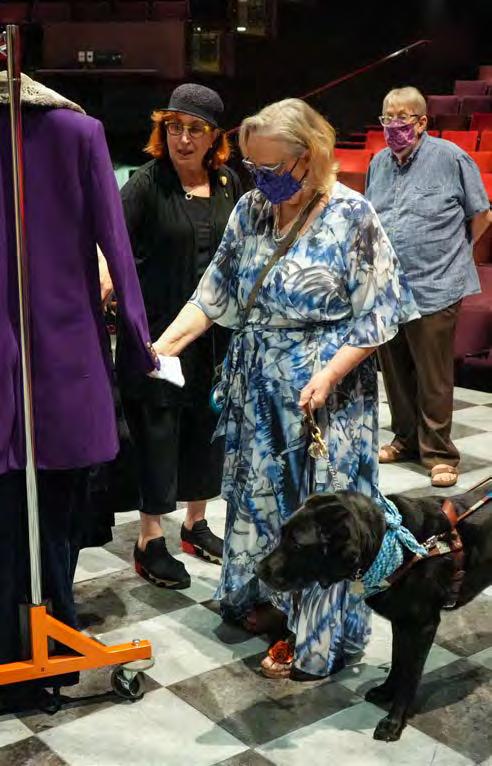
APRIL 2024 Volume 35, Number 4 Pg 14
RADIO TALKING BOOK
Explore
services —
Greater access for all For a complete list of services, upcoming accessibility performances and more, visit www.guthrietheater.org/access. • ASL Interpretation • Audio Description • Open Captioning • Relaxed Performances • Sensory Tours • Assistive Listening Systems • Braille/Large-Print Programs WHAT WE OFFER PHOTO: AARON THOMAS
We are committed to creating inspiring theater experiences that can be fully enjoyed by our entire community.
our wide range of accessibility
a core value we’ve been committed to since our first ASL-interpreted performance in 1979.

ENJOY !
DSAMn Gala
The Down Syndrome Association of Minnesota hosts the Self-Advocate Gala, 7-9 p.m. Fri, April 5 at the Mpls Marriott Northwest, 7025 Northland Drive Brooklyn Park.
The Self-Advocate Gala will include a night of desserts, dancing, friends and fun for individuals with Down syndrome, ages high school through adult. Cocktail attire suggested. A designated caregiver is required to check-in and out each attendee. Preregister. FFI: https://dsamn.org/events/ self-advocate-spring-gala
What’s Up Dock?
What's Up Dock? at Interact Center for the Arts plays with idols, icons and pop culture, visions that linger in our collective memory – alternately dreamy, odd, funny, chilling – that might equally reflect our culture and ourselves. What's Up Dock? is partly a study of the characters that haunt certain pockets of American culture. Come and spot favorite characters. Mingling in the sea of familiar faces are more nuanced icons: images of personal significance to their creators that further explore what makes something iconic in the first place. Interact Gallery is at 755 Prior Ave N, Suite 002D, St. Paul. The gallery is open by appointment through April 18. FFI: https:// interactcenterarts.org/
Lifeworks gala
The 2024 Lifeworks Annual Celebration is Thu, April 18 at the Depot, Mpls. The fundraising gala celebrates disability inclusion as the key that unlocks opportunities for people with disabilities across our communities. This year’s event will be emceed by A.J. Hilton of WCCOTV and will feature stories of people with disabilities that partner with Lifeworks, and live and silent auctions. All proceeds of the evening directly benefit Lifeworks programs that serve more than 3,000 people with disabilities each year. Tickets are $150. FFI: lifeworkscelebration.org
Expo is April 20
Sat, April 20 is the Discover Abilities Expo, a showcase of all-things adaptive sports and recreation in Minnesota. Many organizations that provide adaptive sports or recreational opportunities in Minnesota will be hand.
The expo is designed both for individuals with disabilities (primary user of services) to learn about and try
Conferences
DSAMn Conference

adaptive recreational opportunities as well as healthcare professionals, educators, students, volunteers and more to learn about adaptive sports and recreational opportunities. It is held at the University of Minnesota Recreation & Wellness Center, Mpls. and organized by the Courage Kenny Rehabilitation Institute Sports and recreation Team. FFI: 612-775-2311, daniel. edmondson@allina.com
Goo Goo Dolls at PACER
The 2024 PACER Center benefit will feature the band the Goo Goo Dolls.
The 41st annual benefit is Sat, April 27 at Mpls. Convention Center. Tickets are now available at a range of prices. Formed by Rzeznik and Takac in Buffalo, NY during 1986, the Goo Goo Dolls have quietly broken records, contributed a string of staples to the American songbook, connected to millions of fans, and indelibly impacted popular music for three-plus decades. FFI: 952-838-9000, pacer@pacer. org, www.pacer.org
The Art of We
The Art of We: Are Still Celebrating, Upstream Arts’ Annual Community Celebration and Fundraiser, is 6-9 p.m. Tue, May 21 at Luminary Art Center, Mpls., or online. The free annual celebration honors
OPPORTUNITIES
The annual Down Syndrome Association of Minnesota conference and retreat is Sat, April 6th at the Minneapolis Marriott Northwest in Brooklyn Park. This conference is targeted toward individuals with Down syndrome and their families/ caregivers. The self-advocate retreat is for individuals with Down syndrome in high school or older. Conference keynote speakers are Brian Chicoine, MD & Kareem Neal. FFI: https://dsamn.org/events/savethe-date-statewide-learning-and-youthadult-conferences-2
Spinal cord injury information
Attend a spinal cord injury workshop April 10 followed by the MN Neuromodulation Symposium April 11-12 at the University of Minnesota. The annual symposium is being held in conjunction with the Neuromodulation for Spinal Cord Injury Conference. The symposium will bring together basic scientists, engineers, clinicians, industrial practitioners, entrepreneurs and SCI community members to discuss challenges and opportunities in neuromodulation. There is a discount for community members and a caregiver, bringing the cost down to $50 per event. FFI: neuromod@umn.edu
Children and families
PACER workshops sampling
PACER Center offers many useful free or low-cost workshops and other resources for families of children with any disabilities. Some in-person workshops are offered at PACER Center, at Greater Minnesota locations and also offered online. Other workshops are online and livestreamed at this time. Advance registration is required
for all workshops. At least 48 hours’ notice is needed for interpretation. Check out PACER’s website and link to the newsletter of statewide workshops that allows participants to pick and choose sessions designed for their needs. Access Press only lists a sampling of the workshops offered.
Effective Communication With the Individualized Education Program (IEP) Team is 4:30-6 p.m. Wed, April 3. Online. The webinar focuses on 10 communication strategies that will help parents advocate effectively for their child at IEP team meetings. The presentation will be followed by a Q&A segment.
Resolving Disputes Through the Special Education Process is 4:30-6 p.m. Wed, April 10. Online. The webinar is a detailed review of options Minnesota parents have in the special education process to resolve disagreements with the school district. The presentation will be followed by a Q&A segment.
Getting Help for Children and Youth With Mental Health Needs in noon-1 p.m. Wed, April 24. Online. Navigating home, school and community support and services for children and youth with mental health needs can be a challenge. Learn more about the support and services available, where to begin and what to do during the wait to access care.
Wrapping Up the Year is 6:30-7:30 p.m. Wed, April 24. Online. As the end of the year approaches, questions can arise. Learn about Extended School Year eligibility, IEP students in summer school, support in camp programs, and how to set children up for success in the fall.
Tech for Teens Club : Ocean Spill Scenario is 10-11 a.m. Sat, April 13 at PACER Center. Ocean oil spills can have lasting impacts. In this workshop, learn about oil spills and the variety of ways to clean a spill, then test cleaning methods in an oil spill scenario.
the community of program participants, partners, artists, and supporters to celebrate another year of work at the intersection of art, disability, and learning. It is also a fundraiser. Sponsors are still needed. Preregister. FFI: https://www. upstreamarts.org/
Open Flow Forum
The Artists with Disabilities Alliance meets via Zoom 7-9 p.m. the first Thu of the month. Upcoming dates are April 4 and May 2. Virtually join artists with disabilities and supporters to share visual art, writing, music, theater and artistic efforts or disability issues. Facilitators are Tara Innmon and Andy Sturdevant from Springboard for the Arts. Anyone needing accommodations including ASL interpreting or captioning should contact Sturdevant at Springboard. Funding is available for access needs. FFI: 651-2940907, resources@springboardforthearts.org, openflowmn@gmail.com.
Resources to Enjoy!
The Enjoy! listings are for arts events as well as banquets, fundraisers, walks and other fun events by and for disability services organizations. Schedules may be subject to change, so check with a venue or organization before making plans. Arrange
FFI: PACER, 952-838-9000, 800-5372237, www.pacer.org
Info & Assistance
Many classes available
NAMI Minnesota (National Alliance on Mental Illness) has set up a wide variety of free and in-person online mental health classes. Choices include Hope for Recovery, Transitions, Ending the Silence, Understanding Early Episode Psychosis for Families, In Our Own Voice, Family to Family, Positive Psychology, Creating Caring Communities, smoking cessation, a suicide prevention class called QPR –Question, Persuade and Refer, a special QPR class for Agricultural Communities
Post your event online
Access Press is moving more event listings online. There is a word limit and we require that those posting information include event costs as well as accommodations. Are ASL and AD offered? Is there companion seating? A quiet room? Fidgets? COVID-19 protocols?
Accommodations are much more than a ramp for many of us. That kind of information can help someone decide whether or not to attend an event.
To post an event, go to www.accesspress. org, click the resources tab at top right, and go to the post an event line. This is for Minnesotafocused, disability community events. it is not for business advertising for events that aren’t sponsored by a disability group or organization or that do not have a disability focused. Consider that a small web or print ad can also generate interest in an upcoming event. For questions about ads, email ads@ accesspress.org
Access Press reserves the right to reject events if they do not meet our guidelines. Call the editor at 651-644-2133 ext. one or email jane@accesspress.org with events questions.
for disability accommodations well in advance at any event.
Disability service organizations typically send e-news blasts and have social media. Both are other ways to find out about events.
The Minnesota Access Alliance (MNAA) provides an Accessible Arts & Culture Calendar for arts patrons who use accessibility accommodations such as audio description, captioning, ASL interpreting and sensory-friendly accommodations. Link to more details at https://calendar.mnaccess. org. Be sure to check the listing or venue to find out any COVID-19 protocols and if an advance reservation is needed for an accessibility service.
Accessible events can be submitted to the MNAA Calendar (and MinnesotaPlaylist.com) To receive a free monthly events calendar, email mactfactor@icloud.com and/or info@ mnaccess.org. Ask for the entire events list or specific lists for ASL interpreting, captioning, audio description, sensoryfriendly accommodations or disabilityrelated topics.
For other accessibility resources or upcoming webinars presented by MNAA, sign up for emails at https://mnaccess.org
and many more.
NAMI Minnesota’s Online Support Groups moved to a new and improved platform, HeyPeers. HeyPeers provides a safe, easy to access environment exclusively designed for online support group meetings. The classes and online support groups are designed for family members and caregivers, persons living with a mental illness, service providers, and also the general public. Find a complete listing of these classes and how to join in by going to namimn.org and clicking on “Classes” or go straight to https://namimn.org/ education-public-awareness/classes/ scheduled/

We will
access@accesspress.org
APRIL 2024 Volume 35, Number 4 Pg 15
METES & BOUNDS MANAGEMENT Company manages the following Section 8 & Section 42 (Tax Credit) properties in Minnesota. Income and rent restrictions apply. Section 8 Boardwalk Wayzata 952-473-0502 Dewey Place/The Pines Foley 320-968-7791 Greenwood Wadena 218-631-2575 Highwood Homes Prior Lake 952-447-6961 Linderhof Park New Ulm 507-354-5964 Mission Oaks Plymouth 763-559-5770 Rustic Creek Two Harbors 218-595-1018 Todd 27 Long Prairie 320-732-6154 Town Square East Grand Forks 218-773-3631 Victory Duluth 218-722-2629 Section 42 (Tax Credit) Abbott Apartments Mpls 612-338-5588 Crosby Country Crosby 218-546-8400 Eastwood Village Oakdale 651-773-1949 Nature's Edge St. Cloud 320-203-7726 Parkside Rochester 507-281-9003 Valley High Rochester 507-536-4797 Valley View Byron 507-775-2821 Metes & Bounds is an equal housing opportunity housing company FIND YOUR NEW HOME WITH AT HOME APARTMENTS Call 651-224-1234 or visit AtHomeApartments.com for an apartment or town home Equal Opportunity Housing Classified rates: $20 (first 12 words); $1/word beyond 12. Deadline: 20th of each month.
email total cost of classified ad. Email your classified to
CLASSIFIEDS FOR RENT
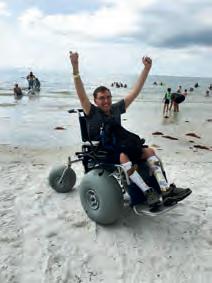















APRIL 2024 Volume 35, Number 4 Pg 16 www.accessiblespace.org Accessible, Affordable Housing Call 800-466-7722 TTY/TDD 800-627-3529 For adults with qualifying disabilities. Over 50 barrier-free apartment communities & homes throughout the Metropolitan Area, Greater Minnesota & throughout the Midwest. Locations also available in many other states. Income limits apply. Immediate openings in Hibbing, MN! Affordable Senior Apartments For qualifying senior households age 62 or better. Metro & Greater MN locations available. Accessible apts, available for seniors in these locations. Income limits apply. Immediate openings in Worthington and Albert Lea, Minnesota Housing with Care* * 24-hour Assisted Living Services * Adult Foster Care * Independent Living Services * Eligibility for or selection of ASI services is not requred to qualify for housing. ASI services are not available in all locations. CORPORATE ADULT LICENSE FOSTER WITH ASLEEP OVERNIGHT STAFFING AVAILABLE IMMEDIATELY IN METRO AREA Call Today! ADVERTISE IN ACCESS PRESS TODAY! Call 651-644-2133 Email ads@accesspress.org You are not alone. mn.gov/autism EXPERT SEXUAL HEALTH CARE. IT’S WHAT WE DO. •Birth Control •STI Testing and Treatment • HIV Testing • Cancer Screenings • PEP/PrEP • Transgender Hormone Therapy •UTI Screening and Treatment •Annual Exams • HPV Vaccines • And More! Services Include: Care, no matter what. Whether in person or online, with or without insurance, we offer the care you need. Low- to no-cost options available. PPNCS.ORG | 1.800.230.PLAN (7526) Travel with True Friends! Check out our Travel Catalog to plan your adventure: www.truefriends.org/travel More than 20 destinations in 2024, including: Country Jam USA Magic of Disney Ultimate NASCAR Wisconsin Dells Tanque Verde Ranch Royal Caribbean Cruise And many more!
