A
Catalog Of Small Machines
A publication of the Driftless Writing Center
Volume VI: Winter 2026
Editor: Mark MacAllister
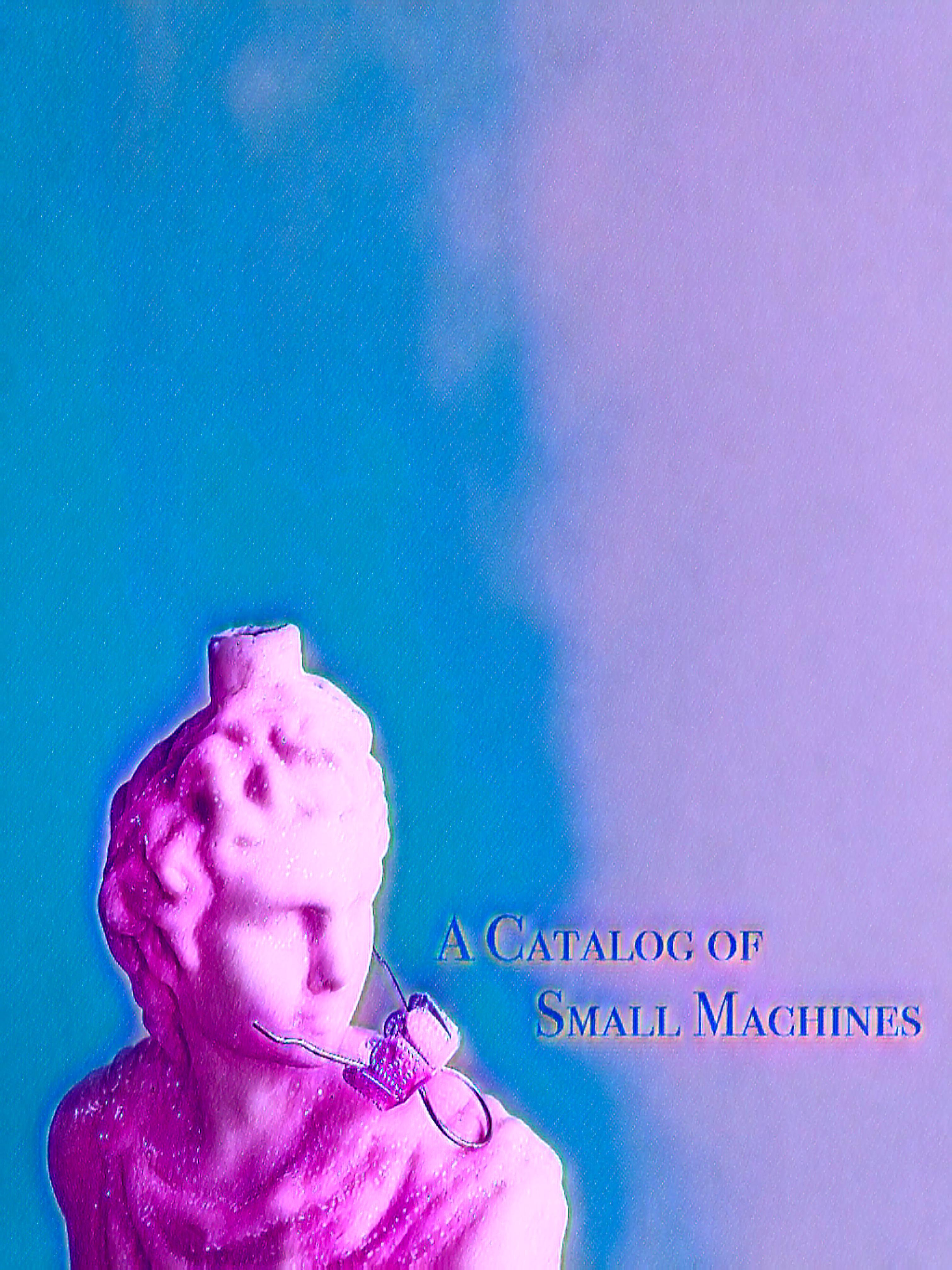
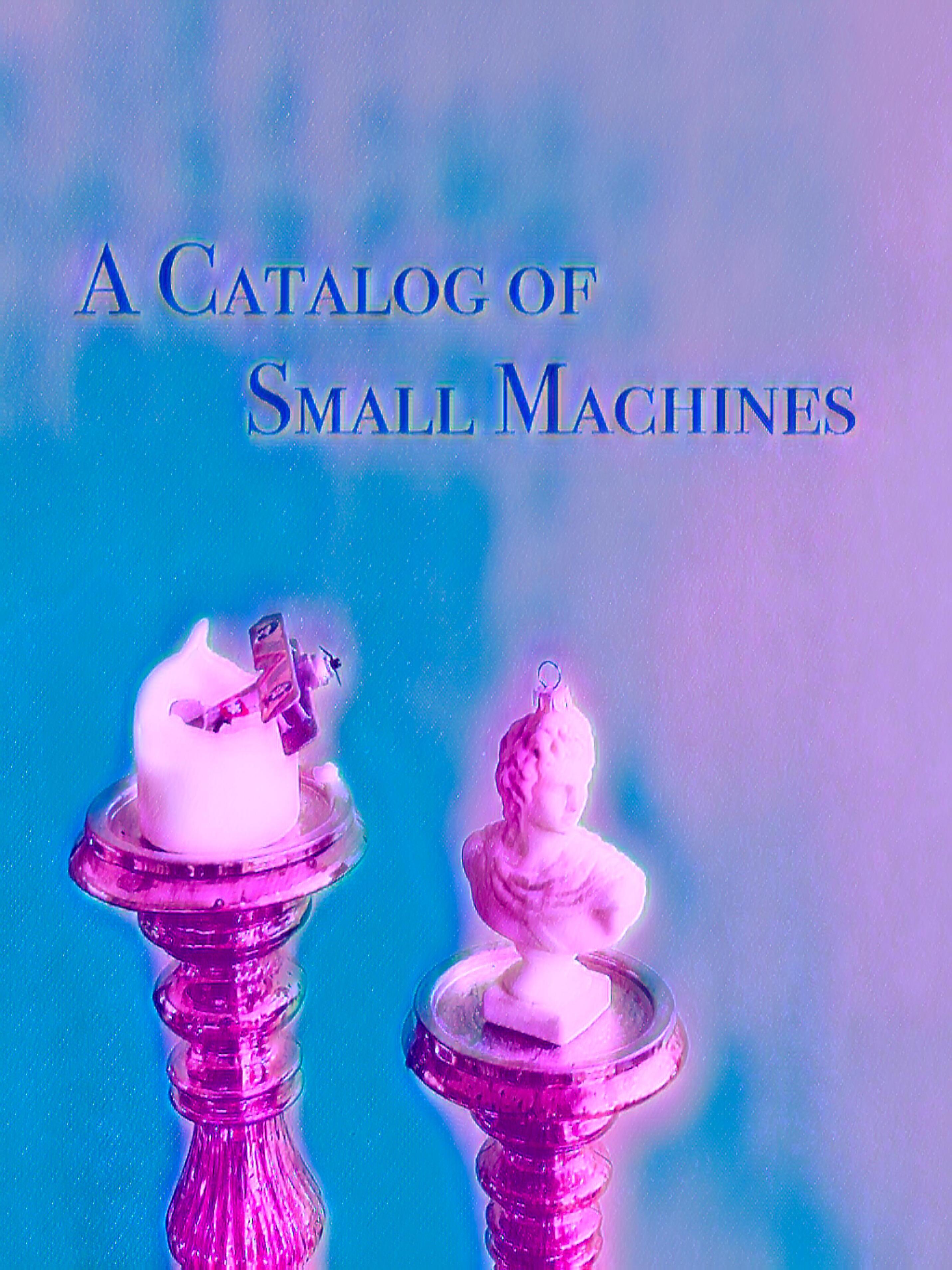
Covers: Katrin Talbot
A poem is a small (or large) machine made of words.
— William Carlos Williams
Maureen Adams • Angel Watch
Maureen Adams
Angel
Watch
• Death
Your breathing was a metronome holding beat for our last days together. Initially ragged and noisy you lurched forward to grab the air. Sadly, we got used to that pattern and found a steadiness in it to lean on.
Just as Hospice forewarned your respirations changed toward the end as your organs began taking themselves offline. Then your breathing yielded to a quiet rhythm that lulled us, too. Our lives in the room shifted
getting softer, closing in, sensing something profound approaching. We each had alone time at the head of your bed reminding you of the value you added to our years. You had passed the baton. We could carry it now. Your breaths would stop occasionally
as was also predicted. We, in concert, would hold our breaths and glance tentatively from one face to another. After a measure or two of rest your rhythm would restart. This happened several times that morning until the last time at six o’clock
when you just never restarted. That was the hardest moment. There were so many before, more difficult than we thought we could bear, but that final moment, your passing, was both a beautiful and gut-wrenching release. We sat in silence for a stanza.
• Deliverance
We sat in silence for a stanza, absorbing the weight of it. Then we breathed again and dried our tears. We called absent family members and notified Hospice and Memory Care staff. Two assistants whom you had loved came teary-eyed and bathed your body. They dressed you in clean clothes we laid out:
warm shirt and comfy pants with, of course, your favorite cap. The room was peaceful. The small tree lit with a strand of white LEDs, and soft Christmas music playing in the background. The funeral director arrived
wheeling a gurney. We helped him wrap your body in a crisp white sheet, like a small child tucked snuggly into bed. As one, we helped raise and place your body on the cart adorned finally with a red velvet cloth. At precisely nine o’clock, a nod to your fervent punctuality,
we meandered like a small somber parade through Memory Care to the stained glass vestibule. There Pastor said a prayer over your body and Sister led a song as fellow residents and staff circled around, seeing you off, wishing you well, a faithful angel heading home.
Devin Ambrosia • My Body
Devin Ambrosia
My Body
My body is an oak — roots, trunk, branches, leaves. I am the tree and its 10 million acorns. I am the baby squirrel, curled up in my nest.
My body is the temple, sacrifice, flame. I am the goddess and the gift pleases me. I am the supplicant, washing my own feet.
My body is a blaze of honest desire. I am stardust and shadow. I light my way through the dark, a glittering constellation.
Jane Barnard • Six Riffs on Aging
Jane Barnard
Six Riffs on Aging
My Kick-the-Bucket List
In planning trips requiring hiking and physical agility, I work backwards. Let’s see, how many US National Park trips have I got left in me? Maybe Yellowstone in ‘25, Grand Tetons in ‘26, still walking not drooling in ‘27. There are 63 Parks, minus the few I’ve knocked off the list so far. That makes… (Stop there dear. The math is not good here. even if you double up. Just save Death Valley for last and you won’t have to travel too far.)
Pandemic
Nora Ephron wrote I Feel Bad About My Neck. Yes Nora, I do feel bad about your neck, and mine. So let’s raise a glass to sagging skin and gravity which, apparently, is a law.
But.
Walking outside today. I pushed my mask down to gulp fresh winter air, and realized that the mask is cupping my chin, firming it. I’ve saved thousands on a chin lift! Thanks pandemic!
Did I mention (you probably did darling, but apparently nothing stops you) that I finally got my first Covid vaccine after those endless months of waiting? I was so excited, gladly willing to be pierced by an icepick sized needle. And all it was — was a tiny prick. Kind of like my ex-husband.
Knitting on the Plane
Picture me knitting on a long flight. As the plane was climbing to altitude, my ball of yarn slipped off my lap and rolled back behind me, down the aisle which the flight attendants had left uncluttered. Just for me, apparently. Once the seat belt sign turned off, I had to slink down the aisle peering shamelessly at passengers’ feet as the yarn unwound without mercy, past several glaring and apparently fiberunfriendly passengers. I finally had to ask a sleeping three-piece suit — in the V of whose wing-tips it had landed perfectly — to hand it to me, please. He squinted his beady rat-eyes and glared. No handmade sweater for you, pal.
I took a flight right after 9/11 and was astonished that the TSA did not forbid circular bamboo needles which, in addition to being pointed, form the perfect garrote. Guess they figured, incorrectly, that a nicely-coiffed older woman wouldn’t strangle anyone.
“Mature Skin”
Behold my bathroom shelf crowded with cosmetics older than God, the bottles, tubes and jars of moisturizer I’ve accrued over a lifetime. All that plastic waste heading for the junk-heap. I say, save the planet instead. Lay all the aging women in a row in a farmer’s field and with a crop duster, moisturize ‘em all at once. Page 6
Shock of the Selfie at 75
Darling you were crushed utterly to see your face in glaring bathroom light this morning, wrinkled as it looks. Was it the angle harsh and unforgiving? Are you heartsick at age so cruel, and you so kind? Aging is tough enough without the blight upon the spirit, the need, peculiar to women over age 10, to look good. It’s the lie, the delusion swallowed whole: women and beauty, beauty or die. Isn’t the highest compliment “She doesn’t look her age”?
This lie, it’s a leaf-blower on all my lovely days, scattering them away every which way, until I end up shuffling along the sidewalk like Yeats’ terrifying image: “a tattered coat upon a stick.”
And there’s more: there’s Shame, my Dark Familiar. (Did you buy the lie, darling?) The shame of an old woman, stuck to me like skin, the hopeless thing with wrinkles, not feathers?
The Hell with It
Ernest Hemingway would have died rather than get old. And he did. He shot himself. A short sentence. Anything rather than a long sentence, a life sentence. As Ursula K LeGuin wrote of him, “Death sentences are short and very, very manly.” Life sentences aren’t. They go on and on. And voila, I’m still here, with a pantry full of the human condition.
Aging well takes guts. I’m half-coward but I don’t give up. I say to younger women desperately buying retinol cream, toss the white flag and fear not, darlings. Aging only seems worse when you dread it ahead of time. Like childbirth. (Oh wait that actually IS worse.) Some days it’s a relief to be invisible. No more whistles, no leers, no cat-calls. You walk past the construction site happily unseen. Jackhammers do not pause.
Finally, you can be you.
Again.
Bushy • PEACE
Deb Bushy
PEACE
Today in a nutshell... Suffering becomes a ceasefire. Peace settled in. My Soul took a deep breath. My body already knows. I finally ended the chasing. I have what is already mine. I stopped the wanting and needing... All I got was a waste of time. I learned that life is always a mystery. I always receive more than I ever need. For the future me... I attract. I allow.
I’m forever grateful. I made it to now.
Today! I already came.
Deb
Kelli Cummins-Brown • St. Nick Kelli Cummins-Brown
St.
Nick
“Guess what?” So many of our conversations start like this. Before I could answer, words start tumbling out of my 5 year old. “So…,” she draws out dramatically, only to speed up, “St. Nicholas comes tonight! Tonight! He’s gonna put gifts in our stockings! It isn’t even Christmas!”
She keeps marveling at this as I stand dumbfounded. St. Nick, that’s Santa Claus and today is early December. We’ve been at this school for three days and Wisconsin for a week. “Um, tell me more,” I encourage, like a counselor who thinks a breakthrough is imminent.
“You know, St. Nick, we learned all about him at school today. He brings gifts, you know, like candy and chocolate and toys and stuff and puts it in the Christmas stockings, and he does it TONIGHT!” “But,” she says solemnly, “only GOOD children get them.” Without skipping a beat, she quickly adds, “And I’ve been good and babies are good, so we will both get presents; I know it,” referring to her toddler sibling.
Quickly, almost unconsciously, I start to reset expectations. “Well, you know, we’re not from here, so probably St. Nick won’t come to our house and so I think that’s ok, right?”
“Oh Mommy,” she says with growing understanding of my ignorance,“ I asked Mrs. Booker, and she said of course St. Nick will come — just open up the chimney so he can get down. I’m so excited, Mommy!” She has a lisp that makes it sound like ‘es-cited’ and starts to break my reserve. Thinking maybe it’s a different Christian calendar, I ask, “So does St. Nick come instead of Santa Claus?” With wide blue eyes and almost vibrating with joy, she squeaks out, “Oh, that’s the best part, Santa still comes too!” Wanting to hedge my bets, I say, “Well, I’m not sure St. Nick has our address yet since we’ve just moved here, so I just don’t want you to be disappointed if it doesn’t happen. Let’s go brush our teeth, do stories so you can get to bed — I suppose St. Nick would want you to get a good night’s sleep.”
She somehow skips up the stairs holding her blanket, Garfie, and disappears into her room as I flag my husband, busy with the toddler. I question, “Do you know about St. Nick up here? St. Nick brings presents tonight. They do St. Nick and Santa Claus.” His skeptical face is just staring at me, and I retort, saying, “Let me look it up. Ok, it’s real; it’s a Milwaukee thing from German, Polish, ok, most European immigrants, hmm...yeah candy….” I pause for a moment and look up.
“Just don’t do it,” he says with the confidence of a CEO; “It’s too late, nothing is open. Or, just put something we have already in the stocking; they won’t care.” I slowly nod and say, “Ok, yeah, yeah, I mean I’d have to go into town, to Walgreens I guess?”
Upstairs, with bedtime routine completed in record time and cocooned with her Dora the Explorer blanket under her body on each side, like a mummy that can breathe, she asks, “Can you wake me up early, Mommy, so I can see what St. Nicholas brought me before I go to school?” I counter with a new idea, “Well, maybe St. Nick comes while you are at school today,” buying me maybe some time. “That’s not how it happens,” she deadpans back at me, takes a breath, and continues, “I might have to eat some of his candy from St. Nick, because...you know, he’s a baby and all.” “Well, he’s a toddler,” I start, then don’t go on. “Goodnight! Love you! Sleep snug as a bug in a rug,” are bouncing between us.
Going downstairs I resolve with, "Ok, I’m going to go to into Kohl’s — they are open late. But I’m NOT getting them candy, just some toys. They don’t need cavities.” My husband counsels, “We don’t need to do it just because.” I’m already grabbing my coat and purse and counter, “I don’t want my kid to be the only one without a St. Nick story tomorrow.”
I walk out of Kohls with a Barbie play swing set, including a Chelsea doll and dog and a Barbie doll with a riding outfit and horse. I cave and stop at Walgreens and grab chocolate coins, as that seems appropriately old-fashioned.
My husband opens Barbie packaging as I stuff stockings and place the horse and swing on the fireplace. Satisfied, we head to bed knowing we won’t need to set an alarm.
“Mommy, Daddy, wake up! Let’s go see what St. Nick brought!”
Page 10
Catalog Of Small Machines — Winter 2026
Cynthia Dorfman • Squared Like a Farmer’s Arms
Cynthia Dorfman
Squared Like a Farmer's Arms
This chest rests as the homeliest piece in my collection of country antiques. Perhaps it began with a single shingle — simple cedar from forest frontiers when America was young with eager pioneers. They looked to the land at New York’s north end for resources at hand. One man revealed he was good with wood, his assigned contribution. Each person found a place in the universe of townsmen.
Sturdy and strong, squared off like a farmer’s arms, the chest, neither commode nor chifforobe, is a stocky set of drawers in a frame of poplar. A.k.a. “the guest room dresser” stores stories in its compartments with papers and pictures. Dressed to impress with mahogany veneer, its dark stain looks formal against its bespoke form. Allusions to shingles in its slatted back, these vertebrae could catch a splinter in your palm. On occasion, these slats disengage. They must have slipped in the shipping from generation to generation.
The back is rustic, the face a matte mask. The mahogany finish is pocked from the aging of glue drying with the changing of seasons. Its wooden skin is nicked along the apron kicked by feet when scuffling. No pie crust apron, it lays plain and straight across the base, curling at the corners like a schoolmarm’s frown. As a Finn jumps from hot sauna to snow, this chest of drawers traveled in reverse from North Country blizzards to sands of San Diego. It followed the family from station to station. My father was a Marine.
The chest is a member of the family of furnishings crafted in what was said to be a factory. In fact, this place was perhaps a barn, floored in dirt, with surplus shingles stored in the rafters when production moved on to finer things. My mother claimed the chest was made by the Buckley’s in a village called Cape Vincent. Their name was carved from the German “Buchler” by the father, a Hessian soldier who remained after the American Revolution.
I found it listed as “Bureau” in the household inventory of a great grandmother. Relegated to the “Back Chamber,” the chest’s value was given then as $10 in the presence of an inelegant “slop dish” in front of the backsplash.
Now, the backsplash comes loose from frequent moves. The curves on each end round down like a duck’s neck dipping toward a crumb. Its stains come from times when pitchers and bowls were the daily rituals, and droplets of perfume were spritzed from careless girls. The top, maple, neither birdseye nor tiger, lacks decorative grain hewn from a tree that ran out of sap. Scarred with a watermark from soda can condensation, no polish with bees wax and lemon could ever blot it out.
Today, the knobs are loose from overuse. Exposed screws threaten to scratch the skin. The threads are worn from turning with each turn of a descendent. The chest contains the history of those gone before, varnished with the fingerprints of past existence.
Matthew Duffy • Waltzing Away with the Holocene
Matthew Duffy
Waltzing Away with the Holocene
I watch urine cling to stainless steel panel before it descends to the pit of the all-season state park restroom
A woft of stagnant human waste with a hint of ammonia at the bluff-climb trailhead
Ambient temperatures approach another record in December and I leave my coat in the hybrid car
I hike above white pine canopy I remove black polyester fleece gloves absorbing the low sun to trace lichen-covered boulders with warm fingertips
Today, I contemplate the terms of my existence, how many more miles I have on my knees, the frequency of freezing lakes, and how many more times I can embrace an epoch
Page 12
Susan Freiss • Creed
Susan Freiss Creed
I believe in the welling-up the trembling of a single oak leaf lifting on a breezeless afternoon heralding the smallest mouse with pinprick black eyes and clover stem bones delicately suspending living flesh under a minuscule pelt of gray.
Her nearly invisible paw prints on spare snow. She finds seeds dropped by sparrow and finch themselves oversized mice with wings two, three seeds will suffice her needs.
I believe in the colors the male finch’s blush of red brush of subtle blood or bloom deepening as we enter spring the female finch’s brown blending with stalk, sparrow and leaf. I relish his gory glory and seek her subtly.
Lamia Kosovic • Absence in the Dust: Unveiling Lamia Kosovic
Absence in the Dust: Unveiling
Ink bleeds on a dusted glass. Archive of cuts, non-surgical. A child in a respirator dreamt of forests burned to ashes. The glitch.
Scars kept fragments, etched into deserted landscapes under postapocalyptic skies. A flashback with its own rhythm.
Memory helmet hums static, trapped voices flicker. The blunt ax waits, silent, a stranger’s edge carving absence in the dust.
The veil is thinning. The words are crossed.
Al-Qalb. The Heart is reclaiming its station. Always anew. Page 14
Dee Lambert • Memorial Day
Dee Lambert
Memorial Day
Small town America, Hot, promise-of-summer day.
Flags fly down the two block Main Street. Here and there small groups of people on the sidewalk… Just happened to remember what day it was today.
It’s not much of a parade; A group of veterans, long past their military prime, No longer a real march, more like a shuffle really. Grayer, bellies that hang over the belts, that hold the flags upright. The “Greatest Generation” folks no longer walk at all, They’ve earned the right to ride.
A few men on the sidewalk remove their caps And hold them to their hearts as the flags pass by. A quiet sign of respect, Still found in small towns everywhere… It moves me every time.
The High School Band, the few kids who made it, Sweat in their formal uniforms, Cuss under their breath, having to do this silly thing. Not really understanding — not yet.
They march past me, playing “The Stars and Stripes.” Through the shimmer of my tears they vanish. I see another band from long ago.
Two little girls is what I see, marching proudly on the dusty street, A red-head and a brunette. One played the French Horn, the other the clarinet.
It was Time that marched past me. The red-head no longer plays the clarinet. She’s busy with a husband and a child. Sometimes she still comes with me to watch This year’s children play.
The French horn too is silent. I will pick some wildflowers later, Her favorite kind, Daisies and wild Geraniums And lay them by the tree, that marks her grave, This Memorial Day. A Catalog Of Small Machines — Winter 2026
Victor Lee Lewis • Seeds of an Autocosmology
Victor Lee Lewis
Seeds of an Autocosmology
As I spent the longest days, nights, months and years of my life in the crucible of Lonnie the Pimp’s house, thanks to Catholic school, I also spent lots of time gratefully theologizing. I got frequent, urgent but frustratingly vague teachings about my invisible and precious “eternal soul." I tried often and earnestly to feel my inmost soul, straining my eyes, staring deeply and long into the blue sky. I tried always to see through it, into the heart of the world outside, beyond appearances. Whatever soul I had, I felt sure it was connected to the vast everything that spread out past the casual mortal eye. Looking out for heaven, and feeling within for my soul simultaneously, this was my most frequent and potent preteen prayer. I did that a lot while I lived there. I needed whatever that vain, persistent contemplation gave me. It always brought me to the same place, the same embodied interim conclusion in my silent inquiries. “I am here. Mystery is there. We’re connected.” I never quite sensed that I was one with the mystery, but I felt involved with it, one big mystery with one itty-bitty one.
Though terrified by Catholic theology and the thuggish classroom management of my nunteachers, I am grateful for their earnest invitations to engage in theological reflection, to entertain and abide with life's deepest questions. I am even more grateful that I discovered the capacity to seek out better versions of their questions, and my own better answers for the questions they invited us to ask (than the ones they force-fed us.) I spontaneously added scientific inquiry to my spiritual inquiry , gratefully ignorant of the 400 year-old rift, torn between the Universe of Nature and the Creation of God.
When I first decided on a memoir project, about 10 years ago, this one you’re reading now, I had intended it to be a longform first-person reflection on the intellectual lives of children. It would be about how children had clearer moral vision, to be sure, but also deeper thoughts and more complex understandings than most grownups both then and now seem to realize. Children see a lot. And, they (we) are often spot-on. I felt like a small, developing, but full human being, with all the same material and metaphysical parts as grownups. My insides were filled with light, and not just putty, or water and dirt. I felt that most kids knew the kinds of things that I knew, and also knew that I knew. I wanted to speak for all of us, small in size and experience, but completely developed in the light of our consciousness, intelligence and wholeness. We were already real, in ways the grownup world refuses to admit.
Everything changed when I read Brian Swimme’s Cosmogenesis. Reconnecting with Brian, the most excitable and exciting of all my teachers, I sussed that it was the Universe always animating and illuminating me, through its own light, which is also my own. All of that cosmos was me, in little Victor form. The universe is always pressing for expression and self-illumination in me, as me. Who or what else could I be? My light, passion and relentless loving curiosity about the world, is only a mind of the Universe yearning to catch glimpses of its own splendiferous Self. Each of our selves, another of its innumerable selfies, arching for the perfect pose in which to be best captured and appreciated. I realized then, that I am meant to write a cosmology. And, the cosmology, this autocosmology, is meant to be a Portrait of the Universe as a young Black boy; this portrait is to be painted for the the starry-eyed manchild, using the steady florid hyperlexic hand of the man he would someday become, the man the Universe and the boy both dreamed would grow up to tell this story.
Grown-up Victor, always and only feels most real, while abiding in the questions of that little starmanchild that fell to Earth. Little Vic, my personal sun, soul and tiny self-radiant candle that faced insensible storms, refuses to this day to cease in shining. (Despite needing to learn for a long time to shine mostly in secret, or face-down in comics, or only at night while others slept, or on the inside, and
Page 16 A Catalog Of Small Machines — Winter 2026
even often behind his own back, or in defiance of the harsh enshadowing will of his stern, punitive superego, (super-duperego) and the parents who taught him to attack himself.
A Catalog Of Small Machines — Winter 2026 Page 17
Mark MacAllister • Valentine's Day Weekend
Mark MacAllister
Valentine's Day Weekend
Our first hike
Shining Rock Wilderness likely fit us together
37 years later West Virginia waterfall trail wide and well-blazed
out into the snowmuffle overnight flurries continued all afternoon steady temperature and seamless sky
no brighter no dimmer at noon than it was at sundown our pace practiced and familiar uphills flats and downhills
the first promised waterfall the second
an owl crossed uptrail entered an old growth stand had I been alone I would have followed it in found the certain maroon stripe where some small thing had been struck made dizzy then gashed then lifted quietly away
— Alexei Navalny, an anti-Putin activist, was serving a 19-year sentence in a Russian Arctic prison. He died—likely he was murdered—on 16 February 2024.
Alex Newman • Feral No More
Alex Newman
Feral No More
My thumb is pressed hard on the button of the penlight as I move it down one wall and across the hardwood floor then up the opposite wall.
Emily, a skinny tortoiseshell cat, shakes her head side to side trying to follow the light, before pouncing. Emily is seven. And it’s probably the first time she has ever played.
Until recently, she lived in a horse barn surviving on mice and garbage and having countless litters. Her teeth are rotted, many fallen out, and the rest cause her to drool. She winces when eating.
I foster for a friend’s rescue organization — by the time Emily came to me, she and the kittens had parasites. Two of the kittens were so thin I wasn’t sure they’d survive the first night. They did, but as the six litter boxes filled up with the results of their parasitic illness, I wondered what I’d gotten myself into.
Emily was my first foray into fostering cats, but I’m not the only one who does this. And it’s mostly women who care for these feline gals who show up at shelters or rescues out of nowhere — on the side of the road, roaming in colonies, dropped off by Good Samaritans who find them in window wells or under decks, outside liquor stores. They almost always have newborn kittens. Adorable and playful. But it’s the moms who have my heart.
I am not a patient person. And Emily was hissy and skittish. A little like me on a bad day. So I approached her how I’d like to be treated as a single mom — with empathy and support, but at a respectful distance. She and I ultimately created a playbook that I would use with all the feral mammas who came into my home office: leave them be as they hide inside the filing cabinet, or under a stack of pillows on the daybed; let them watch — or glare — from the safety of the cat tree. And let them approach when ready — sniffing my hand, my feet, the printer, moving on to a paw extended from the far reaches of the cat tree to pat my head. Sometimes this has taken weeks, sometimes months as they grew accustomed to the sound of my voice while I made work calls.
In order to relax there has to be trust and that takes time. I get it. When dealing with food scarcity and homelessness, trust isn’t easy to come by, especially if you’re also on the lookout for predators — hawks, blue jays, raccoons, coyotes, foxes.
It was little like my own life as a single mom. While I never went homeless or hungry, I worried constantly about money. Friends urged me to date but I was too tired and too busy keeping my head above water financially and emotionally to even notice men. If a man ever made observable overtures, I’d probably have done what lady frogs do when they don’t like the look of a suitor — lie on my back in the water and pretend to be dead. Feral mammas haven’t learned this defense.
My feline moms could also turn on a dime, going from snarly to saccharine in a New York minute. One day hiding under a bookcase, the next glomming onto your lap, computer, desk, the back of your chair, desperate for the affection that they’ve missed all those years.
I’m a sucker for happy endings and I’ve had a goodly amount as a foster. Emily now lives with a couple who tolerate her continued hissing at the woman, while she openly flirts with the guy. Chami, a gorgeous silvery long hair, was adopted by friends a month before the husband’s terminal cancer diagnosis. Through his last weeks, she never left his bed and now that he is gone, she is glued to his wife’s side.
And another, whom I dubbed Miss Kitty, spent months perched on the cat tree, dangling her arms over the side as she amused my colleagues on Zoom. But she avoided touch until, six months in, my hand brushed the tip of her tail. She didn’t bolt. A few weeks later, she let me pat her head. Then I couldn’t get rid of her, meowing at my feet, rolling around in my workspace. She’s now happily ensconced with a friend of mine and two other cats. A Catalog Of Small Machines — Winter 2026
As heartwarming as these happy endings are, in any given city, thousands of cats are living homeless and hungry and probably pregnant. Not all can be saved, obviously. But we can help the one that’s right in front of us. And we can give her the same as what single human moms need: food, safety and a supportive community. Page 20
Cosima Sinclair • Bravery Cosima Sinclair
Bravery
During a lifetime, there are many kinds of bravery that are needed.
When only two or three, I remember our new dog mickey running up and jumping on me. This was scary at first, but my dad told me not to be afraid, to be brave.
When five or six, mom had signed me up for a swimming class at the local YMCA. Mom never learned to swim, and wanted me to be safe in water. I hated the highly chlorinated water in my eyes. The drill sergeant instructor insisted that we must put our face in the water while learning how to float. I could not relax, always ended up submerged in the water, my eyes burning. I never learned to swim. I was not brave yet. My mother finally gave up on this precaution.
As a young child, going to your first day of kindergarden. mom drops you off, and into the unknown you go. If you had a sibling in school already, that probably helped, but either way, it's a whole new world. Bravery was required — not to cry or make a fuss.
My mom got a letter ahead of time with directions on where to take me, my teacher's name, and what to bring the first day. I remember bringing a small rug for taking a short mid-morning rest. Afterward, there was a half-pint container of milk and some cookies. Very comforting. School was a place with other kids my age, books, crayons and paper. I learned to read and count. I loved it. Our teacher, Mrs. Baumgardener, was very pretty and kind.
I can remember going out to recess and sensing which kids were the bullies. Even when kids are pretty young, they can be bullies. I hated this, and felt I had to be strong so that I could be brave and stand up to them. Growing up I watched a lot of westerns and learned how to be strong, brave, and stand up to the bad guys.
My mother had many times when she had to be brave. When I was nine, I was diagnosed with a collapsed lung — maybe from birth. I was in the Kenosha Hospital a month, before my mother had me taken to the UW Madison Hospital, correctly diagnosed, and a benign tumor removed. My lung inflated and I was okay. Then, two years later, my five year-old brother, Jimmy, was diagnosed with cancer in one eye. My parents had to take him to Chicago for an operation to remove the eye. When I think about it now, I realize how brave my mother had been. I don't know how she did it — she was with us in the hospital a lot, yet made sure the kids at home were okay — and dad. It had to have been nerve-wracking for her at times. I felt her bravery helped me to be brave.
Thinking of more recent examples of bravery, I think of my mother again. At 86, she suffered from dementia and paranoia. Life had been cruel to her in her later years. She had lost her partner, and then, four years later, two sons to lung cancer. But, her spirit was not totally broken. Somewhere, deep inside, she knew she had to be brave for her remaining kids and grandkids.
And, I had to be brave to see her through this. At first, I arranged for assisted living, but she just couldn't adapt. The last six years she lived in a nursing home — which isn't much of a home. She had good days and bad days. Mom had been a nurse's aid and home aid visitor in her life, and on good days, she befriended people at the nursing home and tried to help them. Sometimes she tried to help them too much, but her heart was in the right place. She liked to roam around, and everyone knew her. She was a character — and brave.
I think women have to be especially brave — given the statistic that seventy percent of married women will become widows. It's something we don't like to think about. I know. Even when you have signs — hope springs eternal. And don't those comfortable, long-standing routines in life seem so real and inviolate?
The path of bravery for widows can be bumpy. It's hard in the last stage of life to have to learn a new way to live. Some days you're brave, and some days you're not. Many baby boomer widows have less family nearby to cushion the blow. If there are kids, very likely they're spread all over the country and have very busy lives. So, for many widows, we're in new territory. Right now, I'm studying the Stoics. They're helping me be more consistently brave.
Trish Stachelski • Jacques Cousteau in the Back of My Mind
Trish Stachelski
Jacques Cousteau in the Back of My Mind
summer’s dead ale-wive fish smell sandpipers skitter in and out of the lapping waves
we pull off our clothes enter the cold water free swim to the wreck to see it one more time skeleton of skeletons rusted pulleys copper portholes in the shifting sand open and shut the view each day the ancients’ hard work
our work now
Jacques Cousteau on board the Calypso pulls the rope, pulls his friend to the surface.
He holds a Bolivian frog who breathes through its skin and you — in Lake Titicaca — you hold the frog. I take your picture.
— For Paul
Talbot • The Silking Katrin Talbot
The Silking
On the walk to the coop, last night’s spun webs tether me
Now, I am the weaver, the bane, the vandal —
Every morning, the spider’s stunning amnesia, my body a nemesis of forged hope
Page 24
Katrin
Erin Ruzicka Trondson • Hunting & Tracking
Erin Ruzicka Trondson
Hunting & Tracking
A stand high above a field was the promise of reading all day in a tree
snow dusted dirt, a salt and pepper ground a pin hole in my thin glove to press and turn pages
spine pearls press against the tree trunk and the sound of nothing padded with silence
no noise but so much there. Then the crackviolently breaks the quiet, a lowered rifle
let’s track her, my father says and we are in motion pulverizing leaves below the snow crust
the blood was bright against the white not a trail of breadcrumbs, but nourishment none-the-less
I grew up on venison and when we say that in the rural midwest we mean deer meat
was absorbed into our marrow and pushed out in bone growth and the roots of our hair
the spotting lessened, her gait must have slowed and then we find her (we tracked her down)
a silent pile of fur next to a bloom of red snow
Stephen Weiser • Masks
Stephen Weiser Masks
I never liked wearing masks. The first time I wore one, I was in kindergarten on Halloween. My father took us trick-or-treating through our old neighborhood in Fall River, Massachusetts. I wore a Mickey Mouse mask and hated the stiff plastic pressing against my face and the eyeholes that blocked my peripheral vision. My Dad took us to Miss Trainor’s house, the mean strict principal of the “Lincoln stinkin’ school.” When she opened the door, I thought she looked like a monster. I don’t recall much about the candy we collected that night, but I do remember one thing clearly: I never wanted to wear a mask again.
While I did not like masks, I was attracted to my mother’s makeup stand. I loved pressing my face into her huge container of face powder, softer than anything I had ever felt. I discovered her red lipstick, smeared it across my lips, and then dashed to the bathroom to scrub it off before I could be caught. I also wanted to try on her clothing and walk around in her high heels, but I was too afraid to admit that I wanted to get dressed up as a girl.
Up through high school and college, I relied on make-up learning how to use foundation for my disguises, including Charlie Chaplin and once one of the munchkins. But I never had the nerve to dress in drag.
The first time I went out in drag, I was in my twenties living in Chicago. My boyfriend and I dressed up for a showing of John Water’s Pink Flamingos with Divine. A friend had given me a pink Mexican party dress. It was low cut, hugged my waist and flared dramatically when I twirled. I brushed on a light foundation of powder, dabbed some rouge, carefully applied eyeliner and eyebrow pencil, and painted my lips a bold red. I made a conscious decision not to hide my chest hair, calling the look “Radical Drag.”
In contrast, my handsome blond boyfriend wore a sleek black evening gown. Unlike me, he was flawless with his smooth chest and back. Heads turned as we entered the theater lobby. I twirled and twirled, the skirt flaring as if it had been made for me.
With age, I realized the importance of having a good foundation to cover my maturing stubble. This became important the time I created the persona of Dolly Goldstein, a Jewish country-andwestern singer. Dressed in a white satin cowboy shirt, tight white jeans, and a towering blonde wig, I leaned into the character. But again, it was the foundation — layer upon layer — that evened and smoothed my complexion, making my transformation possible. To me this was more than getting dressed up for Halloween; it was performance art that I began to take very seriously. As Dolly, I sang with a twang my own country and western song that I had composed:
I'm so happy I know you, I'm so happy I know you...and I hope that you are happy toooo.
Then came my forties. The illusion of beauty slipped away, replaced by the elegance of age. At one party, I donned a severe black wig with bangs and a stunning black cocktail dress. I looked like Bette Davis in All About Eve. I told everyone that they had better buckle up their seat belts, because it was going to be a bumpy ride.
As I got older, I no longer looked glamorous in makeup; instead, I resembled my Aunt Sylvia. An acquaintance of mine — a stuck-up interior designer — reluctantly invited me to his Halloween party as a favor to his best friend. I decided to go as an old lady who shuffles through the streets with grocery carts loaded with trash. Transforming myself to look like a bag lady took work: thick coats of foundation, messy strokes of blush and lipstick. My wrinkles showed through the cracks in my make-up.
Page 26 A Catalog Of Small Machines — Winter 2026
I boarded the Broadway bus in Lincoln Park, shuffled past the driver without paying my fare. When I entered the party, I dragged my cart across the host’s polished floors, scratching his newly waxed kitchen floor tiles. He never invited me again.
Later, I kept up the tradition of dressing up with my Husband, Andrew. He looked like church lady or some old school marm. In contrast, with my faux fur coat and floral blue dress, I looked like I had just left the Temple sisterhood meeting. One night, we arrived at a dinner party dressed as old ladies, to the hosts’ surprise. It wasn’t even Halloween.
Through the years, I needed more and more foundation to achieve the effect I wanted. And I learned one thing: If you have a good foundation, you never need a mask.
Author Notes
Author Notes


Maureen Adams writes from a basement corner in the Driftless Region of Wisconsin. She seeks beauty, meaning, and utility in observations around her, especially things that may be repressed, overlooked, or on the very edge of ruin. Her work has appeared in Trouvaille Review, Creative Wisconsin Magazine, Capsule Stories, A Catalog of Small Machines, Moss Piglet, and the WFOP 2024 Poetry Calendar. She was an award winner in the 2022 Muse Prize through Wisconsin Fellowship of Poets.
Devin Ambrosia (they/them) loves to dance, read fantasy and sci fi, eat, and be a feral foraging forest freak on the South Shore of Gitchigammi. Devin writes visionary fiction for Shousetsu Bang*Bang, a free adults-only webmagazine of erotic 18+ art and short stories. They also dabble in poetry, painting, and collage. Find their current and upcoming projects at bit.ly/devinambrosia
Jane Barnard reads/performs excerpts from The Poet as Pain Relief: A Comic Memoir. It's about surviving aging, depression, and other unexpected silver linings with humor and hardwon grace. The memoir, a work in progress, is her “spiritual punctuation in this earthly sentence,” a woman's journey through tough times with hope and angels. And punchlines.
Jane has a Master’s Degree in English from Marquette University and a Diplome Annuel from the Sorbonne. Her publications include Children of the Quadrilateral, from The Bitter Oleander Press (translation of French Surrealist poet Benjamin Peret), the Driftless Writers anthology, Moss Piglet, and others.
Jane is a seasoned speaker with experience in comedy, drama and teaching. She was a reader at the Art + Lit Lab’s Watershed series in 2023. She hopes to be reincarnated as a cross between Dorothy Parker and Betty White.

Deb Bushy spends her free time writing, being inspired by and creating art from her solitary walks in the natural world.
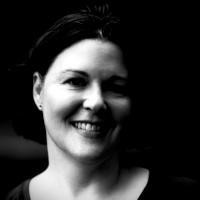
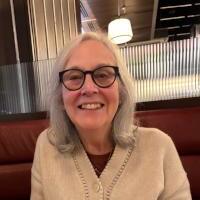
Kelli Cummins-Brown moved to Wisconsin from the Great Plains in 2011 and has celebrated numerous St. Nicholas mornings with her family, always needing to confirm store-front windows, the internet, or her children which morning they should awake to a visit from St. Nick.
Being able to roll Oconomowoc, Wauwatosa, and Mukwonago off her tongue is a point of pride, and she's thrilled to discuss the etymology of a bubbler. She makes her Wisconsin creative writing debut in A Catalog of Small Machines.
Cynthia Dorfman writes from Maryland and Wisconsin. Her work has appeared recently in Bramble literary magazine and Journal of Expressive Writing. The piece published here is in response to the prompt "One Lasting Thing." Page 32

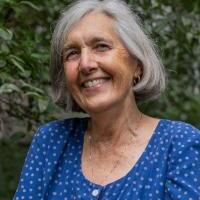
Matthew Duffy is a writer from the Maa Wákąčąk ("Sacred Earth") area on ancestral HoChunk land in Wisconsin. He is an active member of the Driftless Writing Center. His technical writing appeared in IBPSA, and his poetry appeared in Ink Waves and A Catalog of Small Machines. Matthew serves as the Editor of the Alder Fork Journal for the Aldo Leopold Chapter of Trout Unlimited. He teaches a creative writing workshop at River Arts in Prairie du Sac.
Susan Freiss writes poetry to clothe the sound within vibrant silence, to hear what she might discover and share. She is a mother, grandmother, gardener, teacher, and community activist in Madison, Wisconsin. She has plucked the courage to join the literary conversation she has long been quietly living and learning within. Her poetry can be found on the Madison Vets for Peace website and in the Amethyst Review

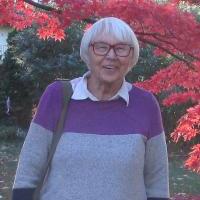
Lamia Kosovic is a writer and philosopher living in Madison, WI. She holds a PhD in Arts and Philosophy and an MA in Digital Media Studies. Lamia published Re-imag(in)ing of Posthuman (2006), Violence of Sensation (2017), "Cyberpunk Pheriphery" in Cybernetics Imaginations (2025), and several articles and chapters in academic journals.
Hildegard (Dee) Lambert was born in Vienna, Austria, came to the US in 1955, and has lived in the Driftless Area since 1979. She has been writing since her teen years, and has been published in a number of anthologies: A Long Walk on a Short Road (UW-Rock Co.); A Catalog of Small Machines (2023, 2024); Voices of the River Valley (2022); the WFOP calendar (2024, 2025, 2026); Bramble (Winter 24/25); and Museletter (2024). She is currently working on a WWII novel and still writing poetry. Dee is a member of WFOP and Shake Rag Alley poets.
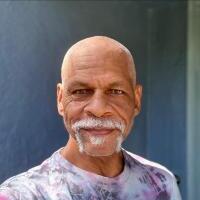

Victor Lee Lewis, MA, CHT, SEP candidate, is a emerging autocosmologist, community chaplain, trauma-whisperer, Emotional Freedom Techniques (EFT) coach and Trainer, NLP hypnotherapist, NLP trainer, and public speaker. In real life, he is a karaoke king and incorrigible foodie. As Universe-at-large, he often wonders, “Does this human body make me look like love?”
Mark MacAllister grew up in northern Illinois, spent a great deal of formative time on his grandparents' dairy farm in southwest Wisconsin's Driftless region, and learned to write at Oberlin College. He now lives in Pittsboro, North Carolina but travels often to the Wisconsin Northwoods and to Michigan's Upper Peninsula to hike and bike the backcountry.
Regarding "Valentine's Day Weekend," Mark notes "I wrote the poem nearly two years ago and then put it away, thinking This piece is already outdated and not worth sharing. I'm not sure that's the case anymore."
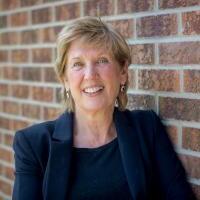

Alex Newman is a writer and editor from Toronto, Canada who by happy accident fell in with this amazing group of Wisconsin writers in the Driftless area.
Cosima Sinclair lives in Madison, is currently writing memoir fiction, daily feeding & watering the backyard wildlife, and caring for a forty-acre getaway four hours north. Her current dream is to de-clutter enough so that she can hire a cleaning lady. And, paint (abstract-primitive).
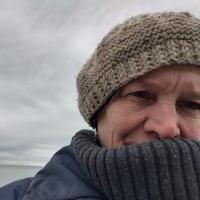
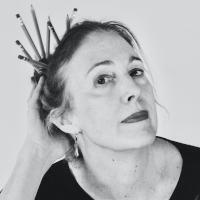
Trish Stachelski grew up in Milwaukee, Wisconsin and studied poetry with writers in the driftless area of Richland Center and La Crosse, Wisconsin. Her short poems have appeared in Hummingbird: Magazine of the Short Poem. She completed an MFA in Creative Writing at Hamline University in St. Paul, Minnesota. She likes to spend time in nature, walking and gardening and traveling. She lives near the Mississippi River with her family.
Australian-born Katrin Talbot’s collection
The Square Footage of Awe is just out from Kelsay Books. The Devil Orders A Latte (Fernwood Press) and Falling Asleep at the Circus (Turning Point Books) and The Waiting Room for the Imperfect Alibis (Kelsay Books) are her other full-length collections. She has seven chapbooks, two Pushcart Prize nominations and quite a few chickens. www.katrintalbot.com Instagram: @ktalbot21
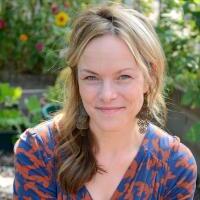
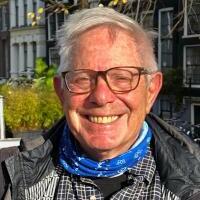
Erin Ruzicka Trondson is the winner of the third annual Apprentice House Chapbook Competition for her manuscript Nesting. Her current manuscript was a finalist for the LenaMiles Wever Todd Poetry Prize. Trondson’s poetry has also appeared in such journals as Marrow, Midwest Review, A Catalog of Small Machines, So to Speak, Cold Mountain Review, Cheat River Review, About Place Journal, and Connections She was a day fellow at Edenfred’s art residency program, part of the Terry Family Foundation in Madison. She holds a BA and MS from UW Madison. She lives in Madison, WI with her family.
Stephen Weiser (aka "Stephen from Wonewoc") is an artist who lives in a state of radical amazement surrounded by woods on a ridge in the Driftless. Since January 2025 he has spent the evening of the second Monday of the month story telling at the Madison Moth at the High Noon Saloon. A longtime resident of the Midwest, his heart and soul are never far from his roots in southeastern New England and his hometown of Fall River, Massachusetts.
A Catalog Of Small Machines — Winter 2026