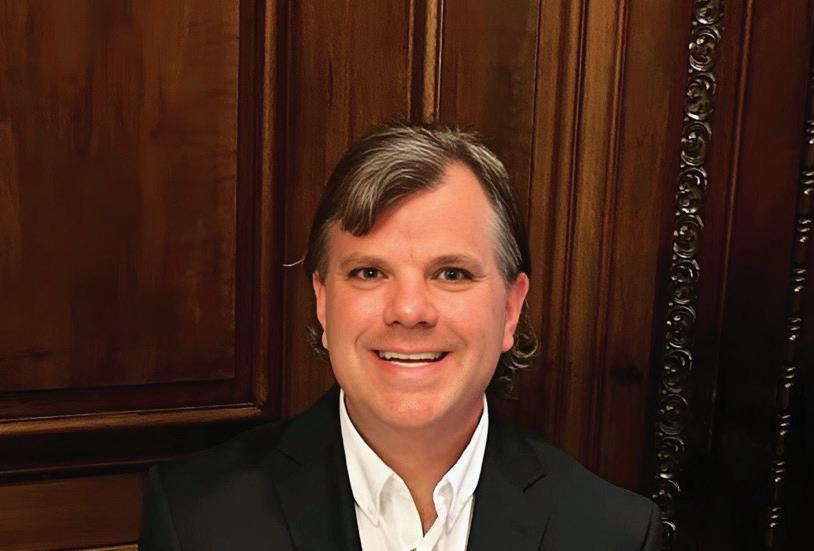
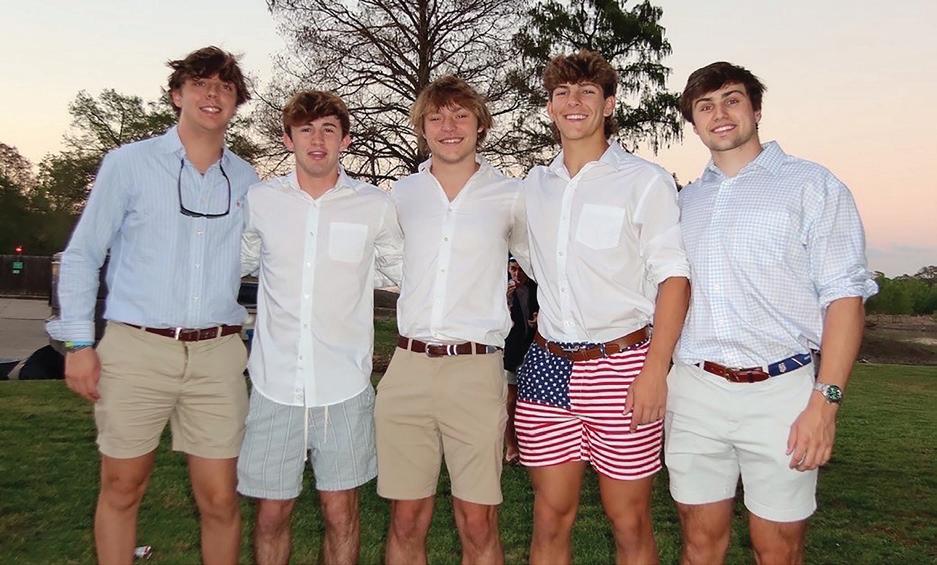
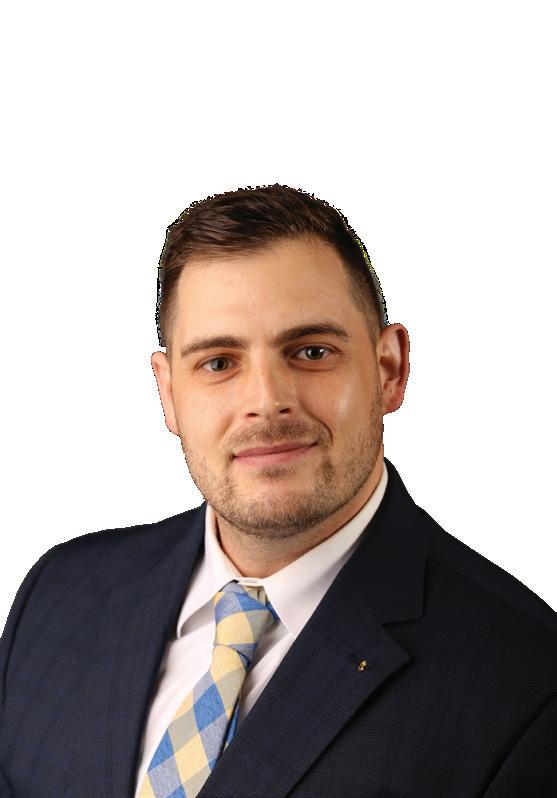
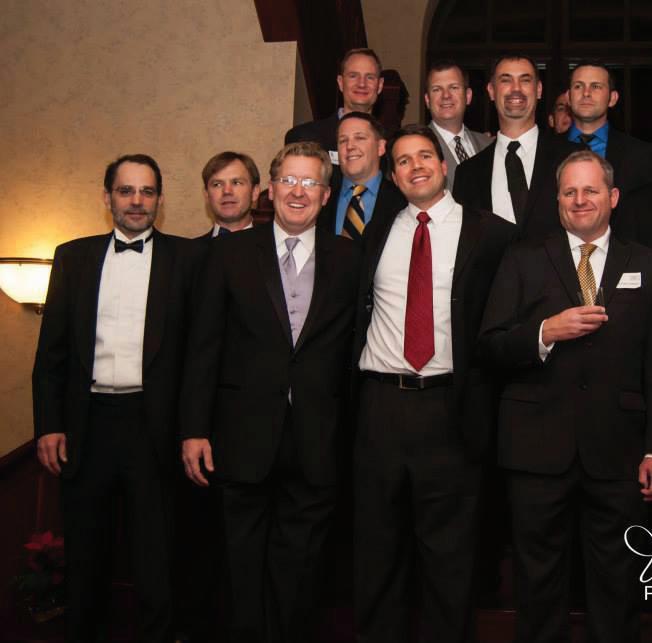
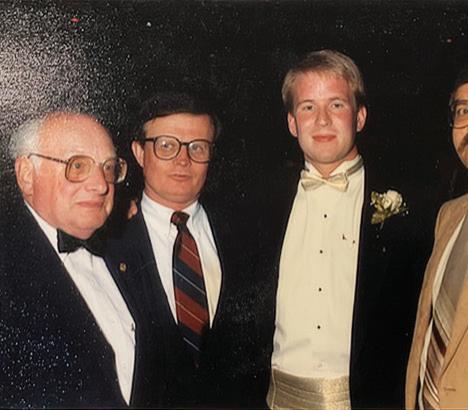
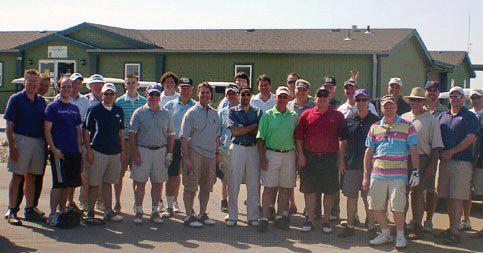
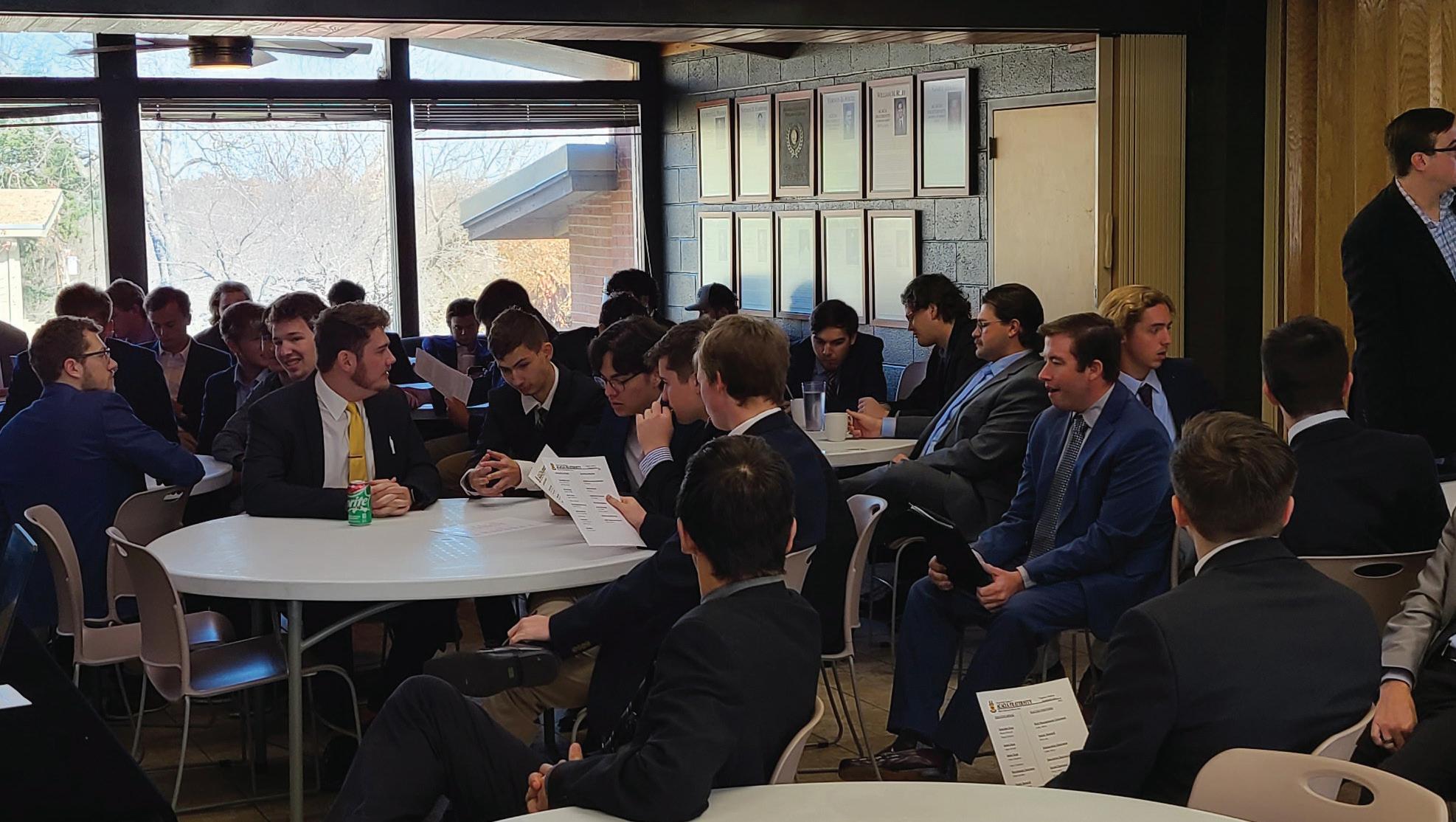
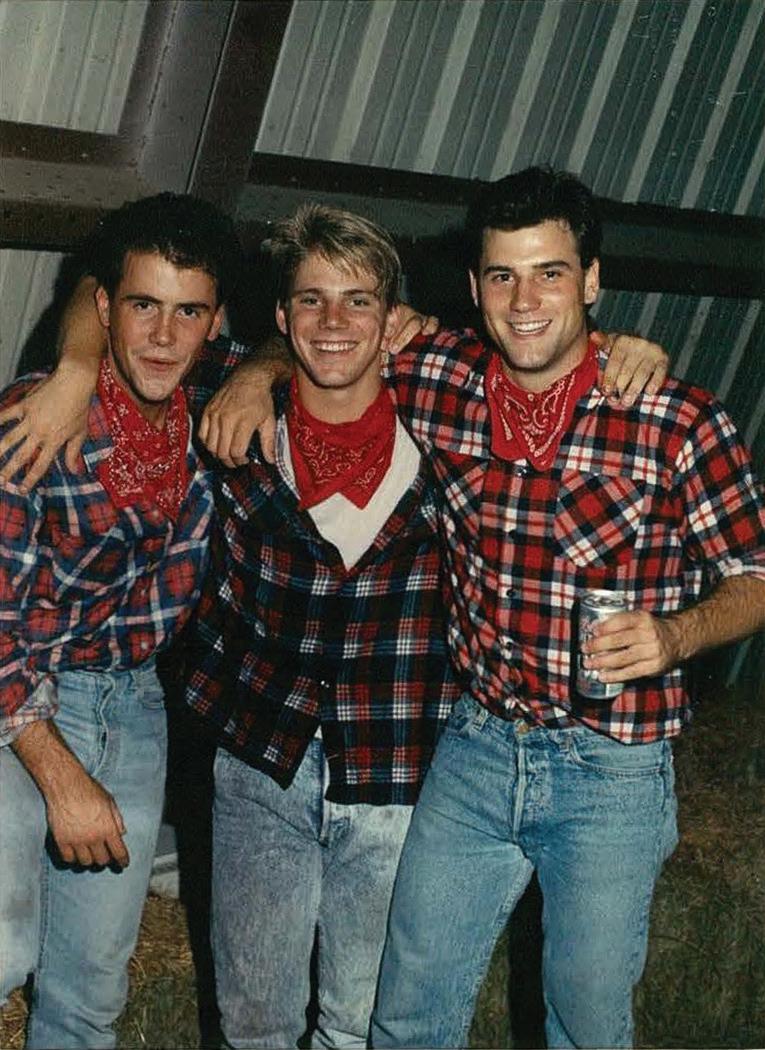
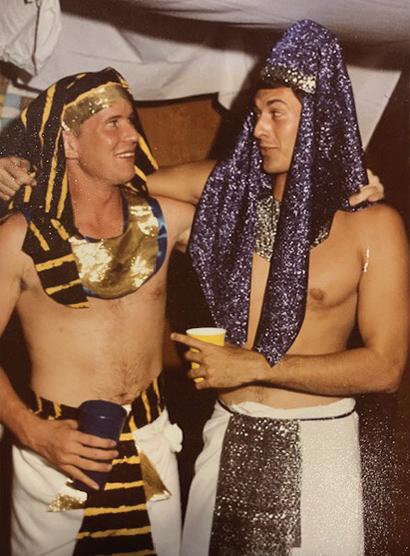
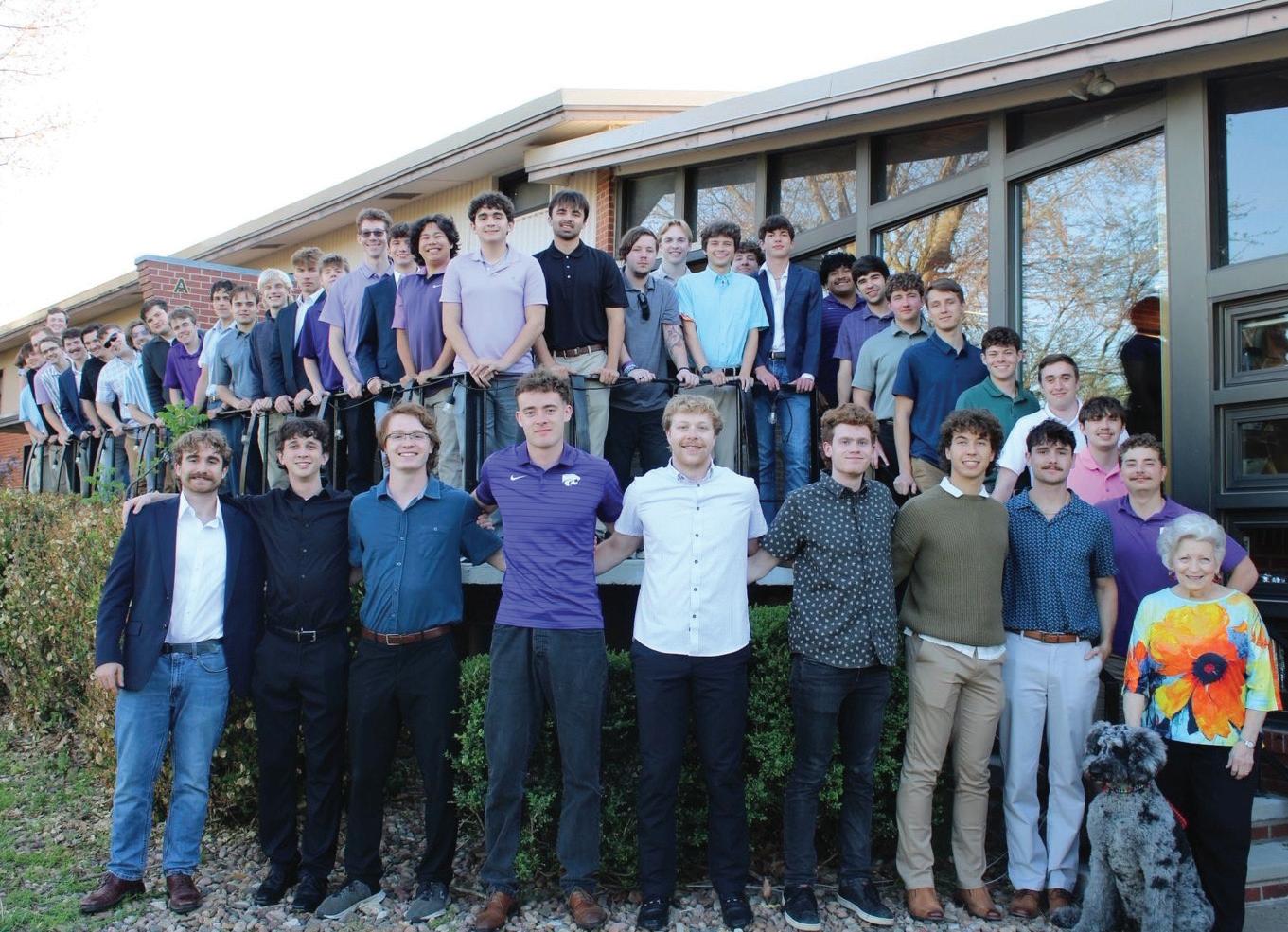
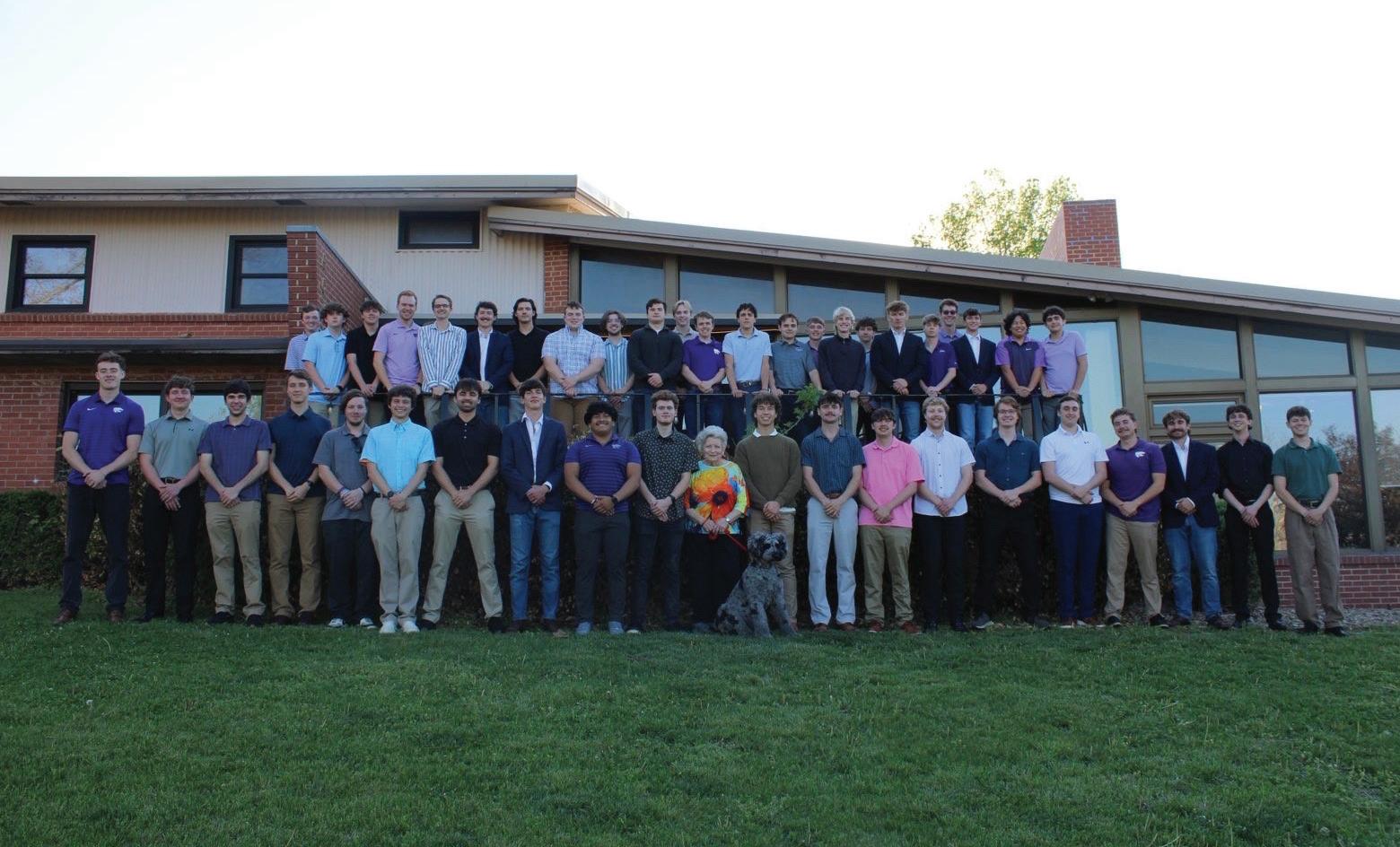
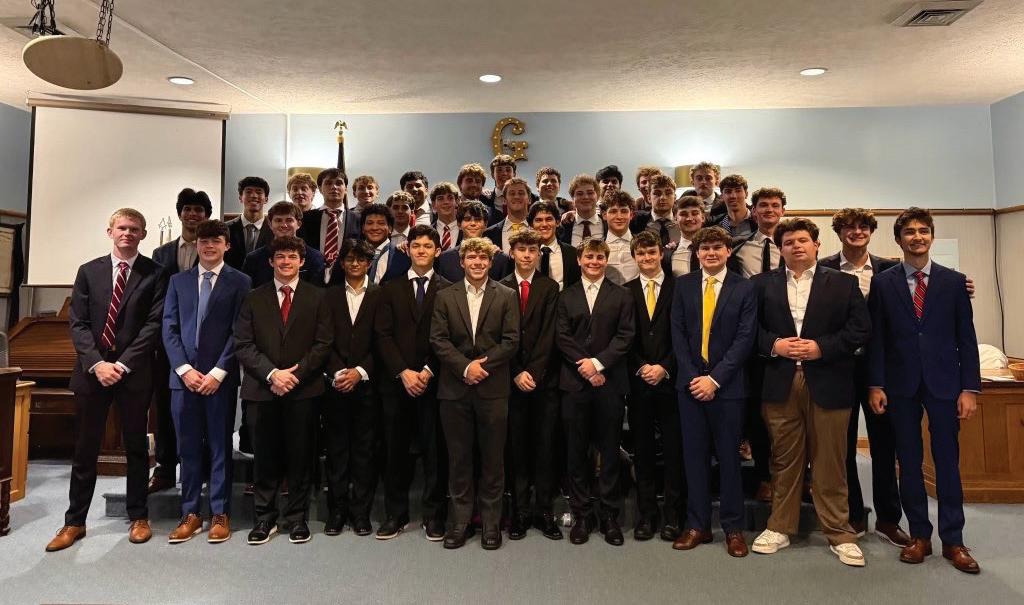
Joining Acacia is one of the best decisions I have ever made. It has given me so much throughout my life, both professionally and personally, and I am grateful for the lifelong friendships I have made along the way.
When I went through rush at LSU in 1994, I knew right away that Acacia was a good fit for me. I pledged that fall and went on to serve as Junior Dean, and the brothers I lived alongside became some of my closest friends.
After graduation, I spent 25 years in marketing and made my home in New Orleans. Through Acacia, I have built friendships with LSU alumni across generations and brothers from chapters across the country. Many of our alumni even hire Acacia undergraduates as interns and bring them on fulltime after graduation.
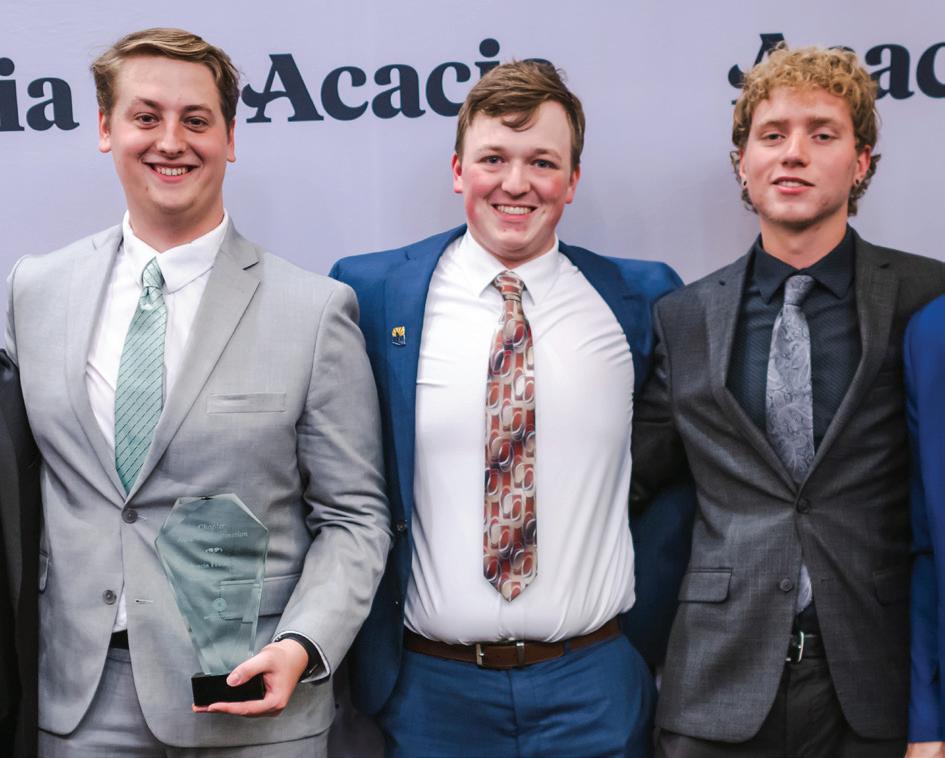
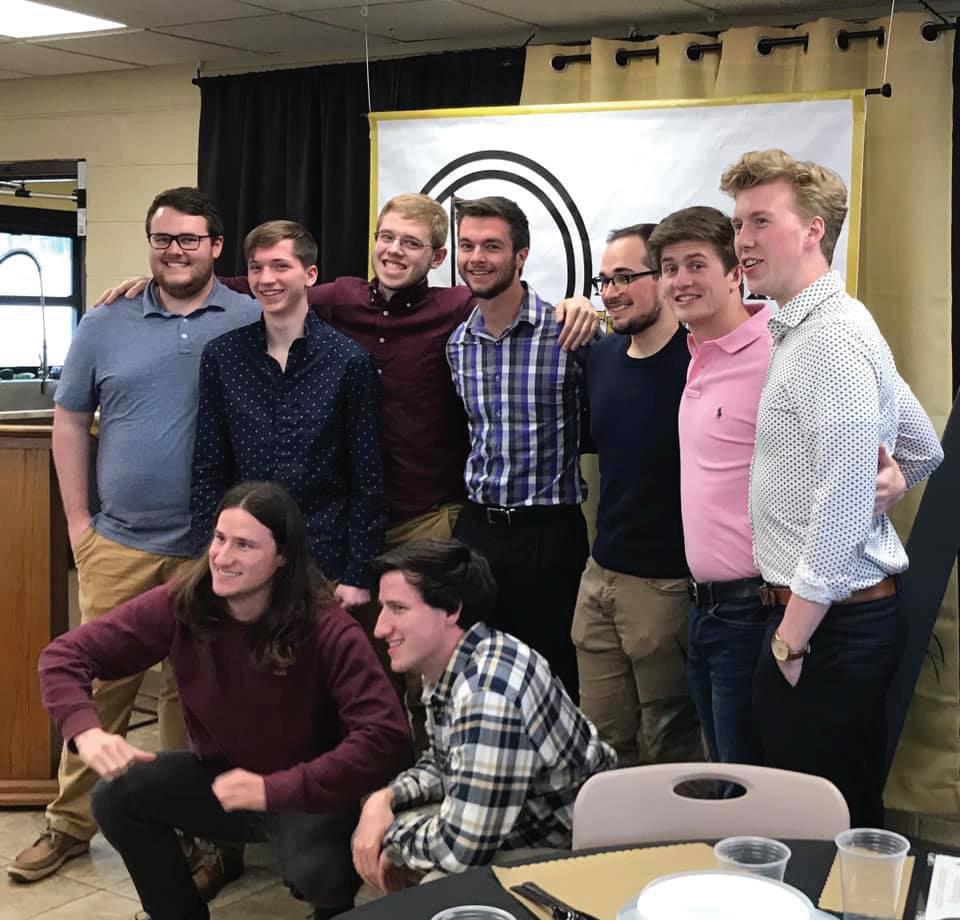
In 2018, I had the honor of helping to recharter the LSU chapter,
Did you Know? Each Acacia chapter has a Chapter Fund through the AFF, which can support scholarships, educational seminars, and attendance at events.
which has thankfully been successful. The young men who rebuilt the chapter, and those leading it today, have outstanding character and work ethic. It is an honor to work with them.
I have been on the LSU housing corporation for 12 years, 8 as Chapter Advisor, and I serve on the AFF fundraising committee and the Acacia Fraternity National Housing Corporation (AFNHC).
I believe it is imperative that we have the funds to help chapters who need houses. I share life skills with these young men, and they have taught me a great deal in return about leadership and getting everyone on the same page.
I give to the LSU chapter fund of the AFF, but I also think it is important to support all chapters. As much as Acacia needs financial support, we also
need alumni to volunteer. Believe it or not, every time I have alumni speak to the chapter, both sides get a lot out of it, and the alumni usually want to engage more afterward.
I am also grateful for the dedicated staff at Acacia Headquarters, the Council, and the Acacia Fraternity Foundation, as well as the LSU House Corporation, the Fundraising Committee, and all of our donors. Their hard work and generosity make so much of what our brotherhood accomplishes possible.
If you are an Acacian who has not yet given back, I would encourage you to start. Every gift to the AFF makes a difference, and your time is just as valuable.
It has been an honor to give back to a fraternity that has given me so much, and I plan to keep doing it for a long time to come.
The Acacia Fraternity Foundation, founded in 1989, is Acacia Fraternity's nonprofit educational foundation to support Acacia’s purpose of “Preparing Tomorrow’s Leaders”. The Foundation provides scholarships to student Acacians, supports the educational and leadership activities that strengthen our brotherhood, and helps Acacia fufill its vision of providing training, support, and guidance to every undergraduate member. Your continued support ensures that the spirit of Acacia lives on through future generations.
Make a gift today at acacia.org/donate and help advance the lifelong success of every Acacian.
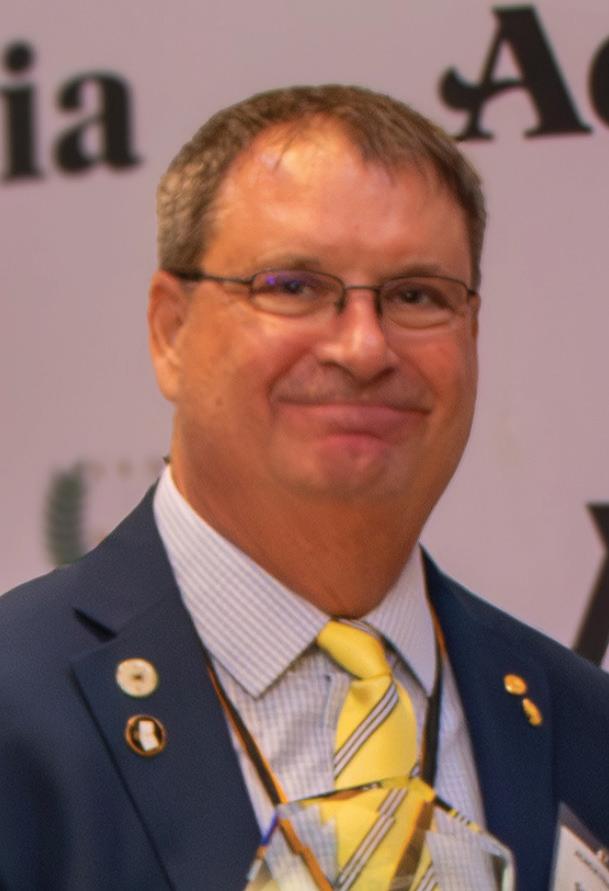
Foundation Donor: Terrance A. Ruona
Chapter: Louisiana State ’94
9 CULTURE MATTERS: VINCENT PROFETA, OHIO ’08
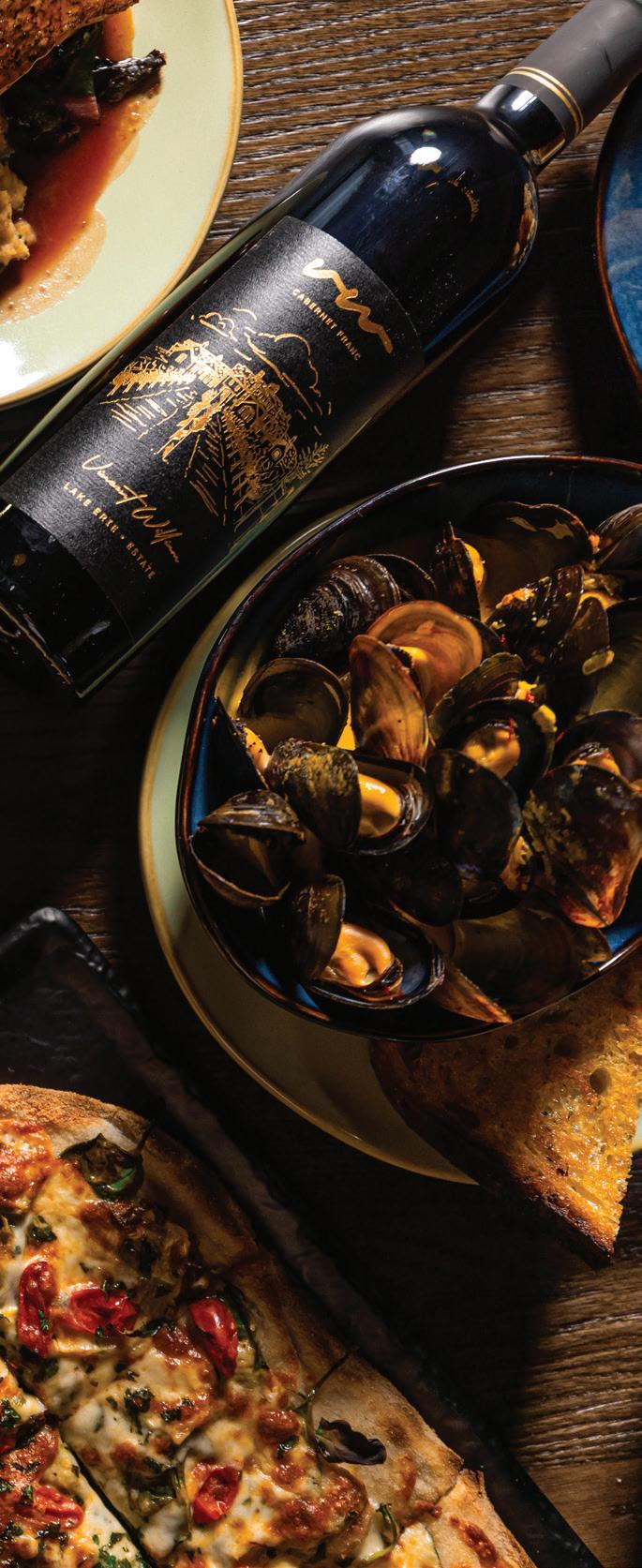
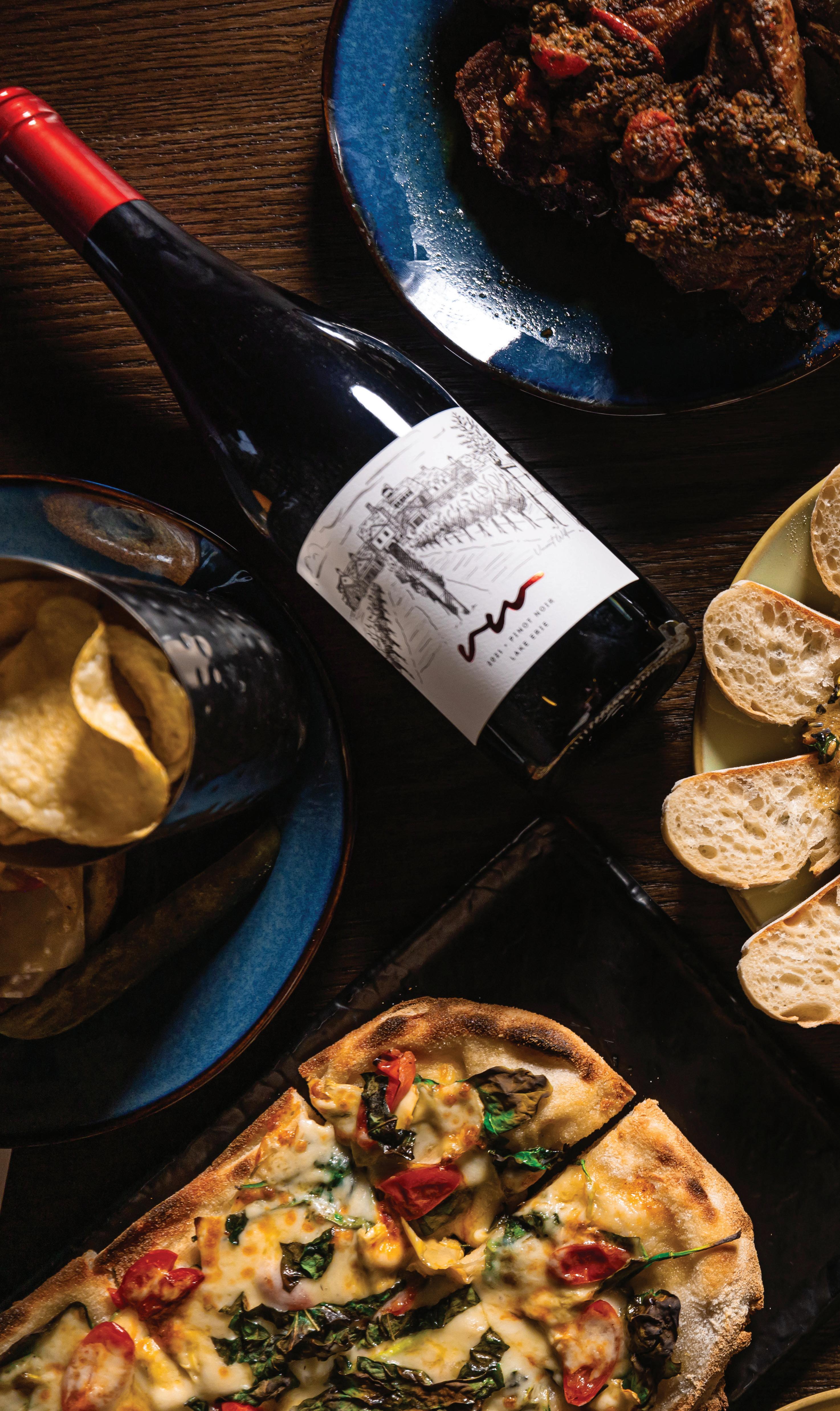
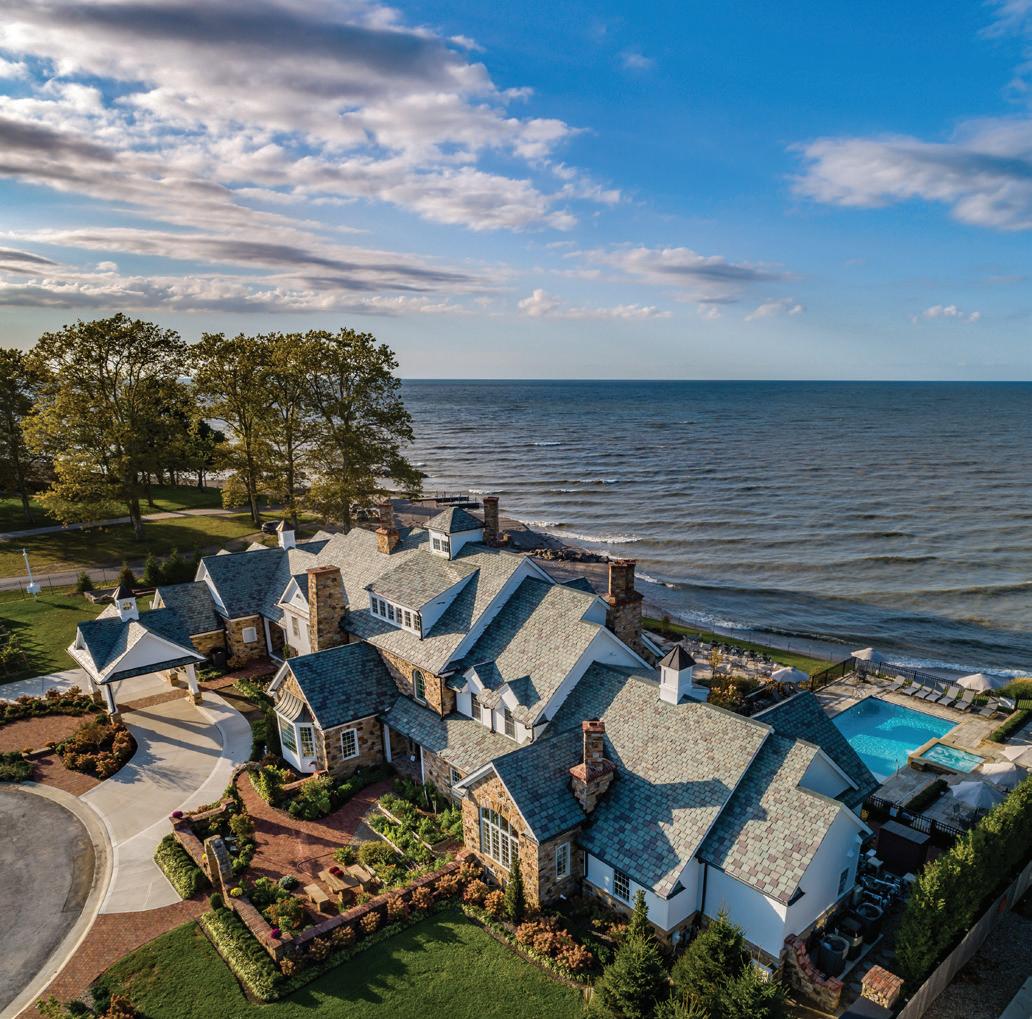
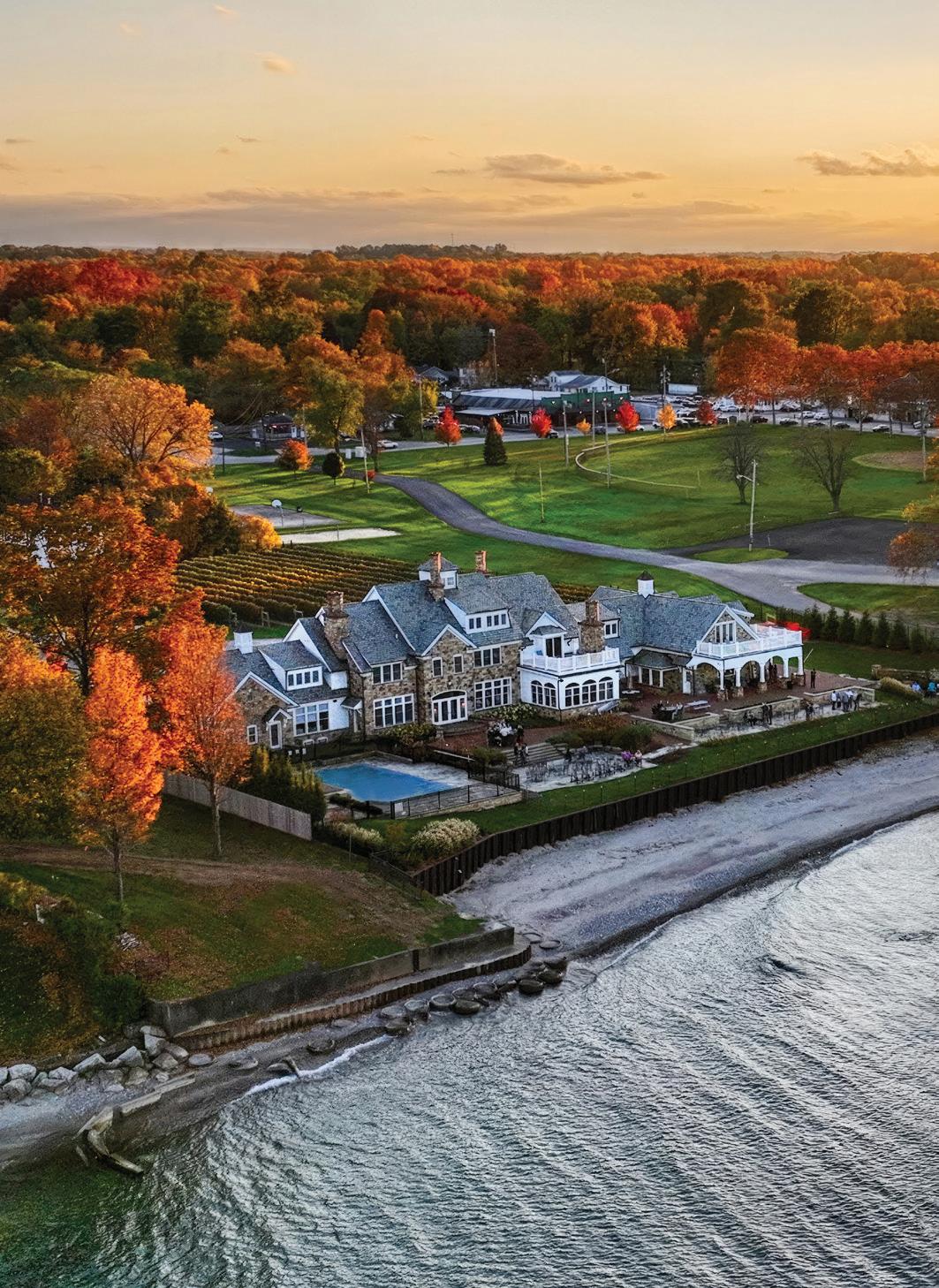
Read about how Vincent Profeta’s early days building Acacia Fraternity at Ohio University — from 15 members to nearly 70 — laid the foundation for a career spanning tech startups, major acquisitions, and a family winery on the shores of Lake Erie.
WHY ACACIA MATTERS FOR YOUNG MEN TODAY
For generations, skeptics have asked whether Fraternity still serves a purpose. Discover how a deepening crisis among young men — isolation, lost direction, and a hollow vision of manhood — has made brotherhood not a relic of the past, but a remedy for the present.
27 CHAPTER PROFILE: KANSAS STATE CHAPTER
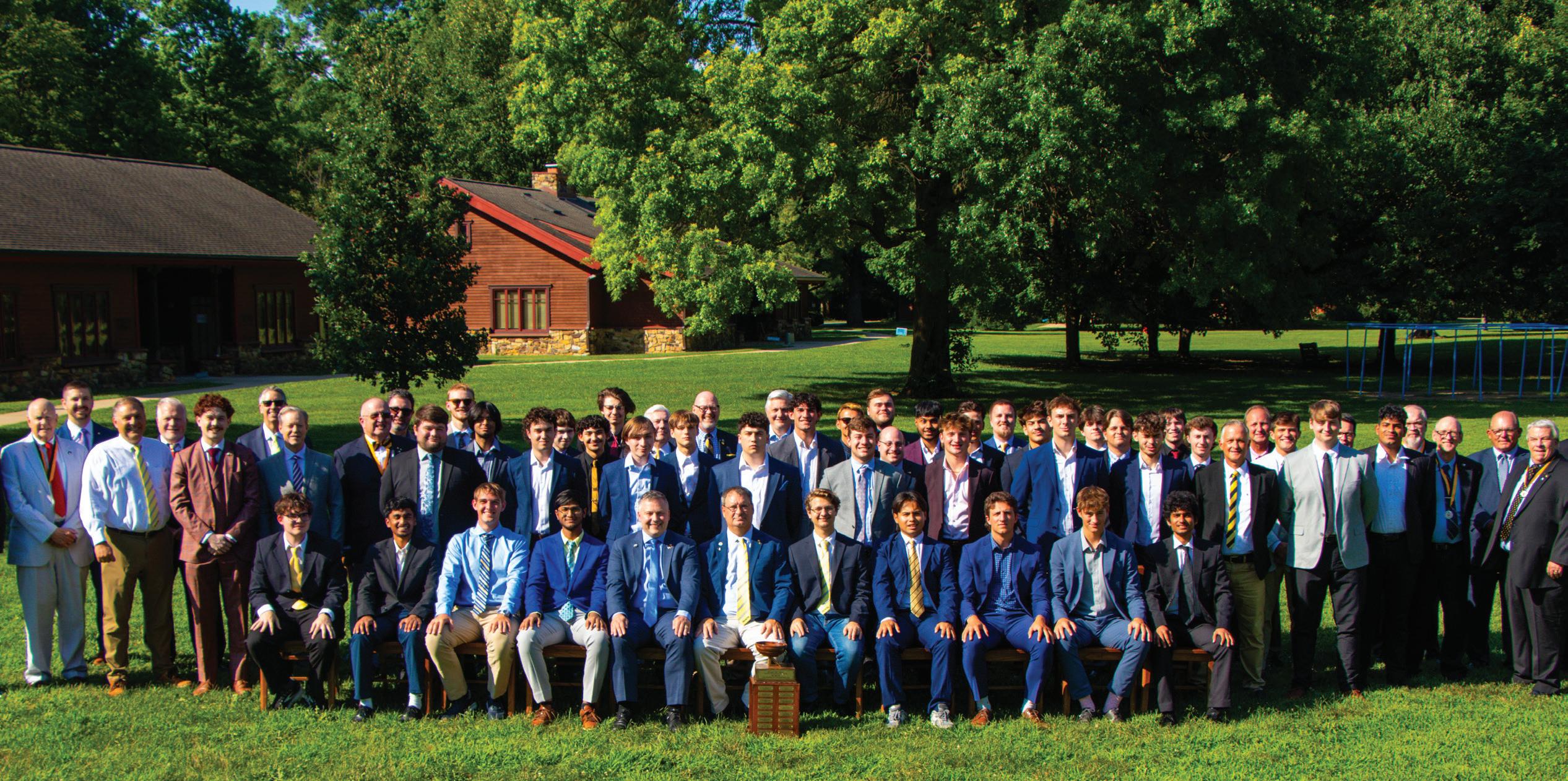
The Kansas State Chapter’s third Malcolm Award was no accident. Discover how more than a decade of intentional recruitment, early leadership development, and unapologetic authenticity built a chapter that treats excellence not as a goal, but as the expectation.
It is also an issue that asks an important question: why does fraternity matter today?
In recent years, much has been written about the challenges facing young men. Declining college enrollment, isolation, uncertainty about the future, and a growing need for meaningful relationships and mentorship have all shaped the experience of today’s students. For Acacia, these challenges are not abstract. They are part of the environment in which our chapters recruit, educate, lead, and serve.
That is why the work of our fraternity matters so deeply. At its best, Acacia gives young men something they urgently need: a place to belong, a standard to strive toward, brothers to walk beside them, and mentors to help guide the way. Through leadership development, Human Service, academic support, alumni involvement, and the shared responsibility of chapter life, Acacia continues to offer a path toward purpose.
You will see that path throughout this issue.
You will read about the 2026 Lee Kearney Officer Summit and the undergraduate leaders who came together to sharpen their skills and strengthen their chapters. You will find a feature on the Kansas State Chapter, whose recognition as the Malcolm Award winner in 2024 reflects years of intentional effort, strong alumni support, and a culture of excellence. You will see updates from
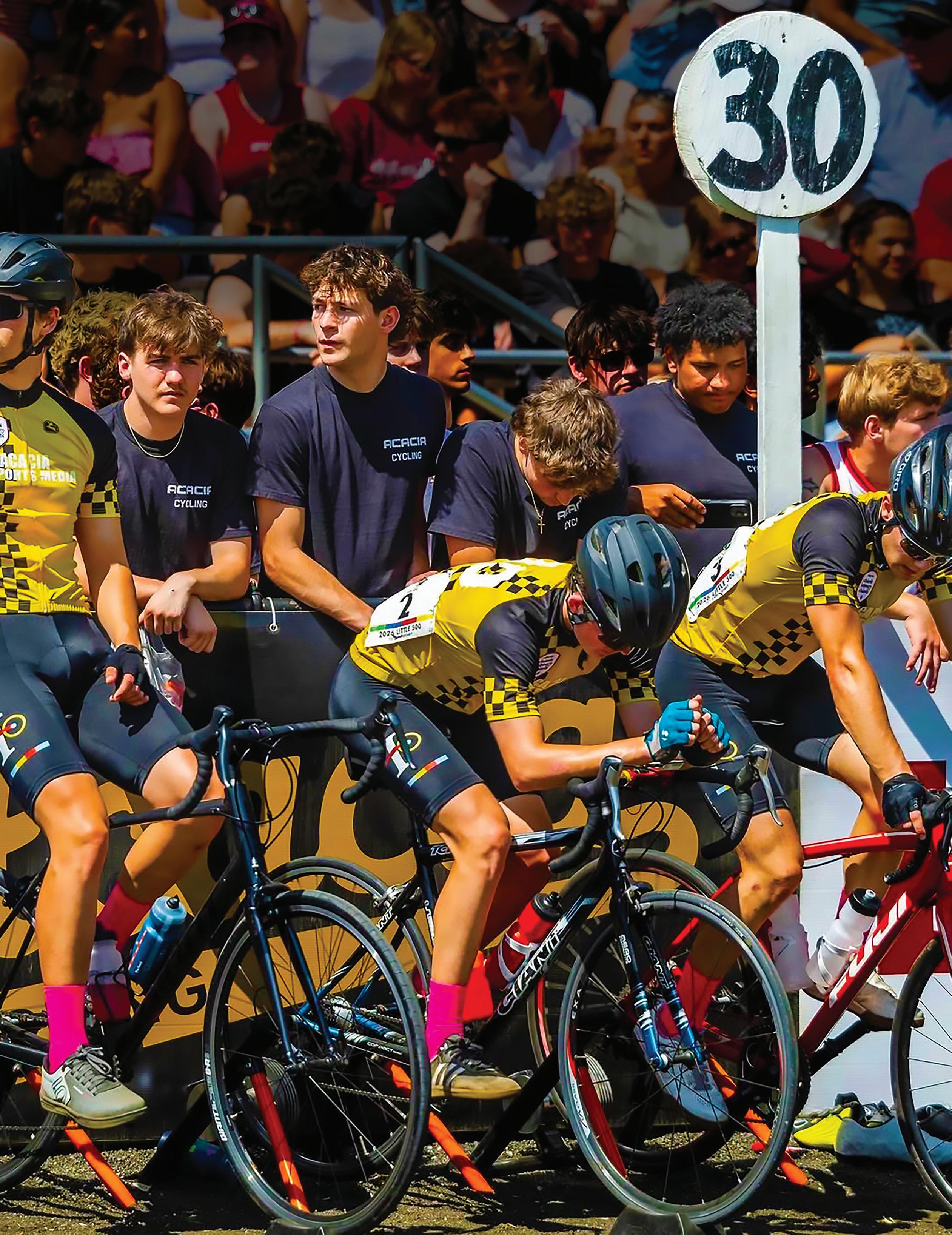
The cover of this issue captures something familiar to every Acacian: brothers working together toward a shared goal. Each issue of The Triad offers a snapshot of Acacia at a particular moment in time. This summer, that snapshot is full of motion: brothers racing in the Little 500, undergraduate leaders gathering at Officer Summit, chapters celebrating milestones, alumni continuing to give back, and Acacians across North America preparing to gather in Kansas City for Conclave 2026.
chapters across the Fraternity, stories of alumni achievement, and a look at how Headquarters is structured to better support the undergraduate, alumni, and Foundation experience.
You will also find important reminders that Acacia’s future is not something we wait for. It is something we build. Our continued growth, including expansion efforts such as Indiana, depends on brothers who believe in the value of this experience and are willing to invest their time, talent, and treasure in its success.
This summer, we also invite every Acacian to look toward Kansas City. Conclave 2026 will be more than a business meeting. It will be a chance to celebrate our brotherhood, shape the future of the Fraternity, reconnect with brothers from across generations, and continue the work of lighting the path for those who will follow.
Thank you for reading, for sharing your stories, and for continuing to believe in what Acacia can do for young men, for our campuses, and for the communities we serve.
Fraternally, Benjamin Turconi, California ’12 Editor, Triad of Acacia Fraternity
Letter from the INTERNATIONAL PRESIDENT
Brothers,
This summer reminded me, once again, what makes Acacia truly remarkable. From the Darold Larson Acacia Leadership Academy to the countless ways our brothers live out their commitments on campuses and in communities across North America, we continue to see the depth of our Fraternity’s impact. It has been a privilege to serve as President of the International Council during such a vibrant time in Acacia’s history.
This past year, I have witnessed something profoundly moving: we have seen brothers step up as leaders in their communities, mentors to younger generations, and stewards of our Fraternity’s legacy. Whether facing challenges or celebrating triumphs, we have done so together—with purpose, integrity, and the unshakable conviction that our brotherhood matters. These are not just stories; they are the living expression of Knowledge, Truth, and Virtue in action.
As we look ahead to Conclave 2026—July 29 to August 2 at the Kansas City Marriott Country Club Plaza—I invite you to mark your calendars for our highest gathering. This will be a celebration of our brotherhood and a critical moment to shape the direction of our Fraternity as we approach our 125th anniversary. We approach this milestone not with nostalgia alone, but with the energy and innovation that have always defined us. Our best chapters ahead lie not in our past, but in the promise of what we can accomplish together.
I want to highlight an important call to action: Recognition strengthens our brotherhood, honors our ideals, and inspires others to follow in our footsteps. I encourage each chapter to nominate deserving brothers and alumni for the Order of Pythagoras, the Award of Merit, and our Chapter Excellence Awards.
We are also seeking Fellows to assist at Conclave and other leadership programs. These brothers facilitate discussion, mentor participants, and help bring our leadership experiences to life. If you are interested, please reach out—space is limited, but your commitment will be considered for opportunities throughout the year.
To each brother reading this: your voice matters. Your actions matter. The choices you make to live our values, to support your chapter and your brothers, and to lead with distinction ripple far beyond what you may see. Continue to nominate deserving brothers for recognition. Continue to invest in our leadership development programs. Continue to challenge yourselves and one another to grow. This is how we strengthen Acacia— not through mandates, but through the daily commitment of individual brothers choosing to uphold what we stand for.
It has been the honor of my life to serve alongside you. The brotherhood of Acacia is something truly special, and I am grateful beyond words for the trust you have placed in me. As we look ahead, let us continue to stand for good—for each other, and for all who follow in our footsteps.
Fraternally,
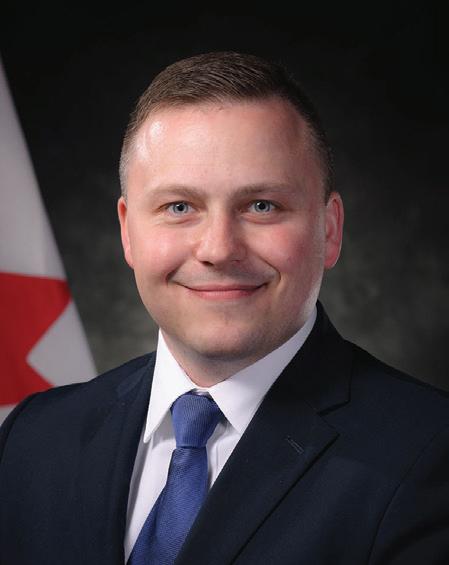
Justin M.M. Kaplan, Carleton ’07 International President Acacia Fraternity
WHAT’S AHEAD FOR ACACIA
OHIO STATE AND MIZZOU RETURNS –FALL 2026
The Ohio State and Missouri Chapters will be re-established next fall! Help support recruitment, housing plans, and scholarships.
LEADERSHIP & EDUCATION
64th Biennial Conclave and Leadership Academy from July 31 - August 2
CHAPTER EXCELLENCE AWARDS
Recognizing topperforming chapters annually in growth, service, scholarship, and operations.
GET INVOLVED
Volunteer as an advisor, career mentor, or event speaker.
Visit: acacia.org/volunteer SUPPORT THE FRATERNITY
Make a gift to the Acacia Fraternity Foundation to invest in our next generation of leaders.
Visit: acacia.org/donate
You may have heard that “leaving a legacy” is important to fraternity foundations like Acacia. But what makes legacy giving so different from writing a check or donating online? Legacy gifts…
1. Focus on the future.
The support we receive from annual gifts each year is critical. But a legacy gift is like a support system we can count on to help us continue to offer valuable training and programming for our brothers for generations to come.
Ask yourself: If you could live forever, would you continue to help student Acacians pursue virtue, knowledge, and truth? If the answer is yes, a legacy gift can immortalize your support.
2. Don’t affect your current finances.
You can take care of your top priorities –yourself and your loved ones – now while providing for the Acacia Fraternity Foundation (AFF) in the future.
Two of the most popular gift types:
• A gift in your will: A few sentences are all it takes to include the AFF in your will.
• A beneficiary designation gift: Name the Acacia Fraternity Foundation as a beneficiary of your retirement plan, IRA, donor advised fund, or life insurance policy.
3. Help you recognize Acacia’s role in your life.
If Acacia has significantly impacted your life or the life of someone you love, a legacy gift is a heartfelt way to honor that relationship.
Through your legacy gift, you have a special chance to reflect the steadfast and resourceful leader you are today far into the future. And, if you tell us about this gift now, we can ensure it’s used exactly as you intend.
Please contact Darold Larson at (317) 6953142 or dlarson@acacia.org to discuss how helping future Acacians become transformative leaders can establish your legacy.
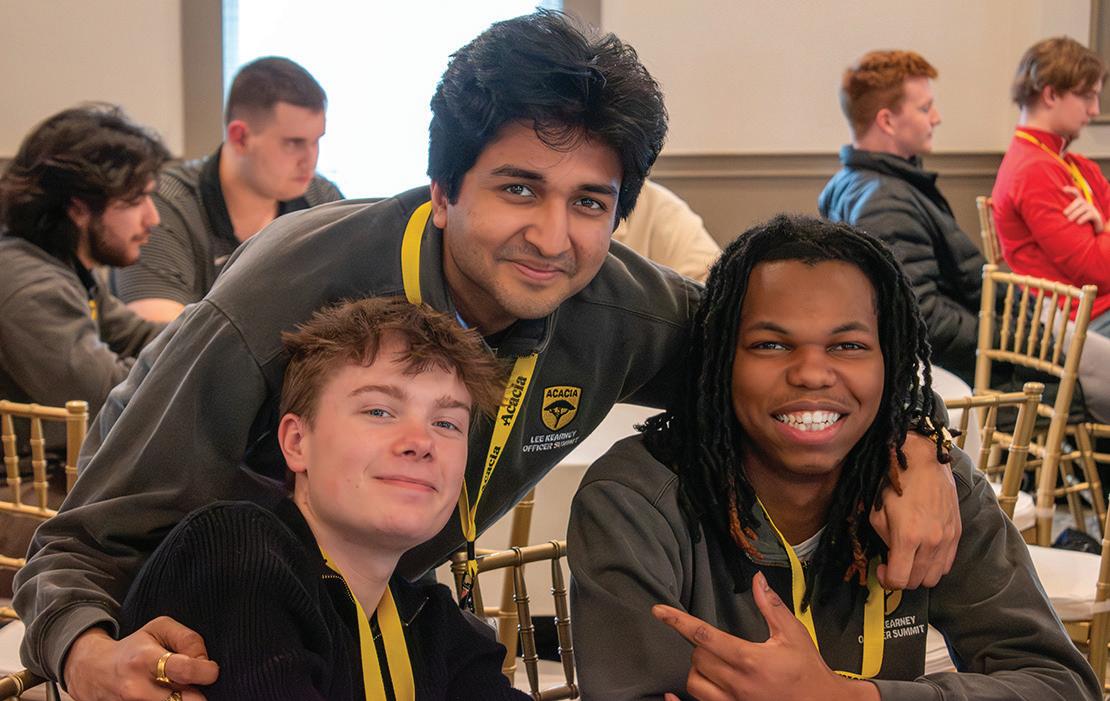
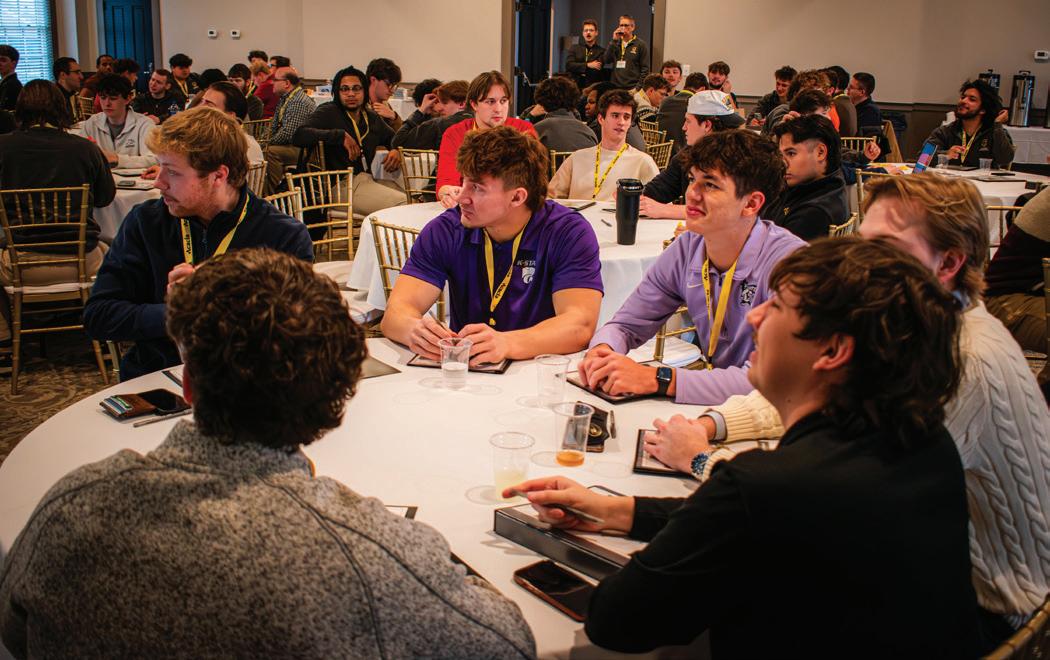
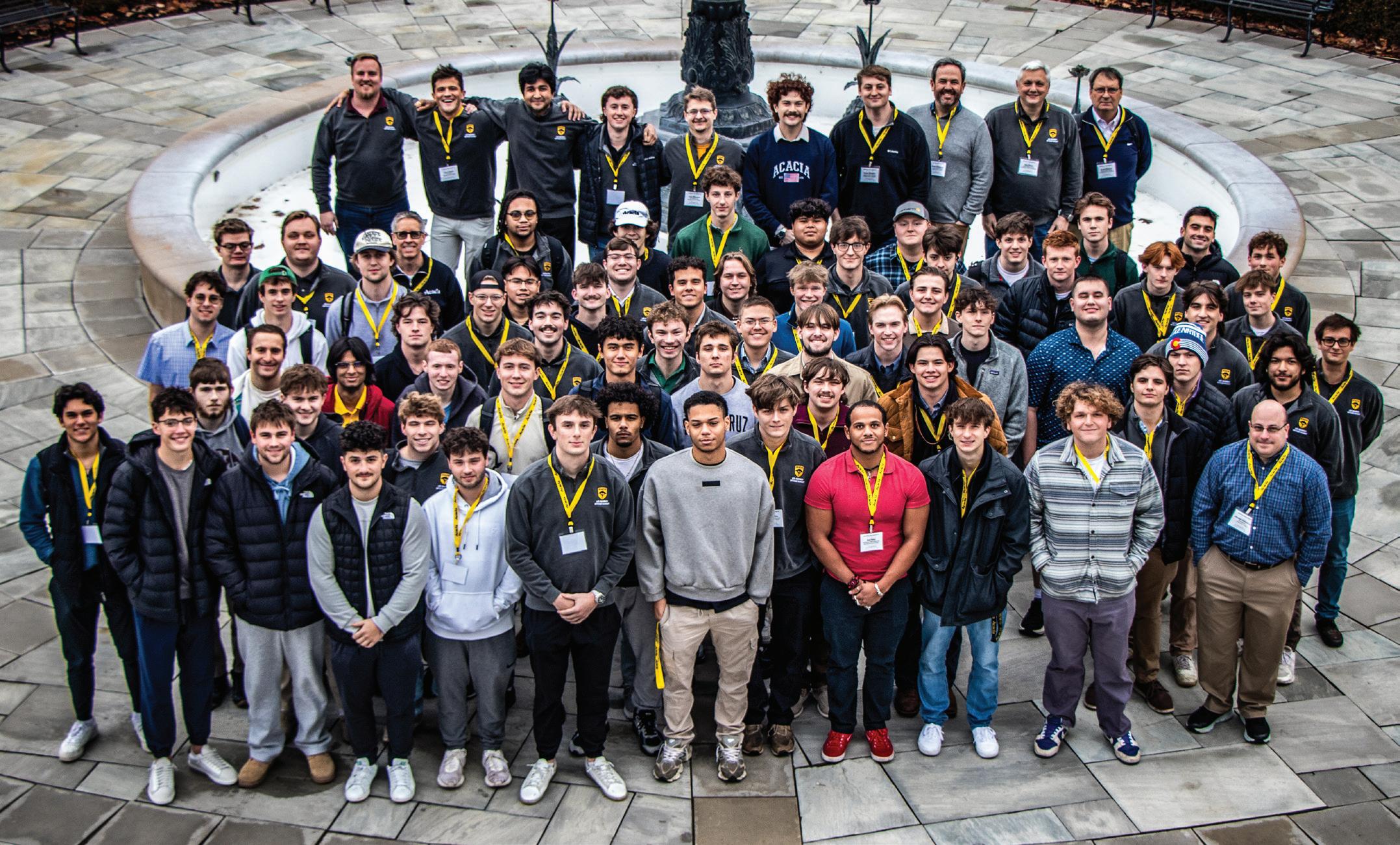
From January 8 to 11, nearly 100 undergraduate leaders and alumni volunteers gathered in Carmel, Indiana, for the 2026 Lee Kearney Officer Summit, marking the largest Officer Summit Acacia Fraternity has hosted in several years.
This year’s Summit also represented a meaningful return. For the first time in several years, the program was held at Acacia International Headquarters, giving chapter leaders the opportunity to learn, collaborate, and connect in the very place where the daily work of the Fraternity is carried forward.
For many attendees, that setting made a lasting impression. Walking through Headquarters, seeing Acacia’s history on display, and interacting directly with staff helped bring the international organization to life. The weekend was more than leadership training. It was a reminder that each chapter is part of a larger brotherhood, connected by shared values, shared purpose, and a commitment to Human Service.
The Summit brought together Venerable Deans, Recruitment Chairs, Treasurers, Senior Deans, Pledge Educators, and other key officers for three days of focused development. Sessions were designed to move beyond theory and into practical application, giving
officers tools they could take directly back to their chapters.
In role-specific tracks, recruitment leaders examined strategies for building a stronger year-round recruitment culture. Treasurers reviewed budgeting practices, financial systems, and accountability standards. Senior Deans and Pledge Educators explored how to create meaningful pledge education programs that reflect Acacia’s values and prepare new members for lifelong brotherhood.
Throughout the weekend, the energy among attendees was evident. Chapter leaders openly shared successes, challenges, and ideas for growth. Conversations continued well beyond the formal sessions, carrying into meals, breakout discussions, and informal moments throughout the weekend. That exchange of ideas remains one of the greatest strengths of Officer Summit, as brothers learn not only from Headquarters staff and alumni facilitators, but from one another.
Attendees also heard from alumni who spoke about the long-term impact of leadership within Acacia. Their reflections helped connect the responsibilities of chapter officers today with the lasting influence of fraternity membership after graduation. The
work being done in chapters does not only shape the undergraduate experience. It builds habits, relationships, and commitments that can guide brothers for the rest of their lives.
The weekend also provided time for fellowship and connection. Shared meals, team activities, and a social outing to a local bowling alley gave brothers the chance to build relationships across chapters. Those connections often become a valuable source of encouragement and support long after the Summit ends, especially when officers face challenges during the year.
As the largest Officer Summit in years, the 2026 gathering reflected the momentum of Acacia’s undergraduate leaders and their commitment to strengthening their chapters. Hosting the event at Headquarters reinforced an important message: Acacia is not simply a local experience. It is an international brotherhood, strengthened by every chapter, every officer, and every brother who chooses to lead with purpose.
Acacia Fraternity is grateful to each attendee, alumnus, volunteer, and staff member who invested his time and energy in the 2026 Lee Kearney Officer Summit. By strengthening their own leadership, these brothers returned home better prepared to strengthen their chapters and, in turn, Acacia as a whole.
Culture Matters How Acacia Helped Shape Entrepreneur
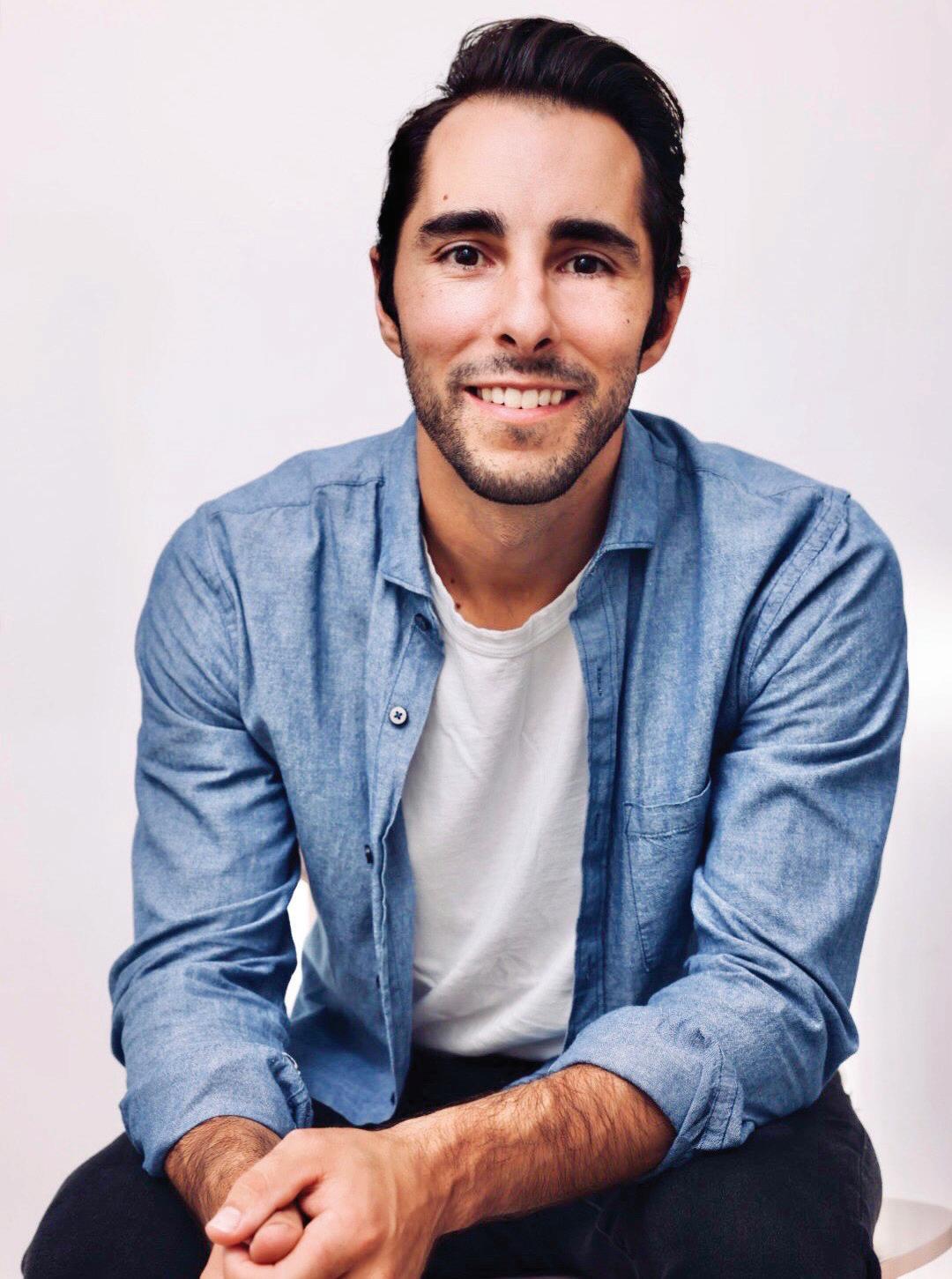
Vincent Profeta, Ohio ’08
Drawn to Build
Long before he was helping launch a winery on the shores of Lake Erie, building startup products in Austin, or leading engineering teams at cutting-edge tech companies, Vincent Profeta, Ohio ’08, was learning one of the most important lessons of his life inside a small fraternity at Ohio University.
The lesson was simple: culture matters.
Today, Profeta helps lead Vincent William Wine, a growing winery, restaurant, and inn located in Madison, Ohio along the shores of Lake Erie. He has worked in startups, launched companies, contributed to major acquisitions, and helped bring new technology products to market. But when he reflects on where many of his leadership instincts first developed, he
points back to his years in Acacia Fraternity at Ohio University.
“A lot of what I learned through Acacia and IFC connects directly to what I’m doing now,” Profeta says. “Probably more than I realized at the time.”
When Profeta arrived at Ohio University, Acacia was far from the largest fraternity on campus. In fact, that was exactly what attracted him to it.
“I think I was drawn to joining a fraternity because I wanted to be part of something,” he says. “But I was also drawn to the idea of helping build something.”
At the time, Acacia had roughly 15 members. Unlike larger, more established fraternities, the chapter felt unfinished in the best possible way — full of opportunity, momentum, and room for influence.
“It felt like there was an opportunity to get involved early, have an impact, and help shape what the chapter could become,” he says. “It wasn’t some huge machine where you were just another person joining.”
By the time Profeta graduated, the fraternity had grown dramatically to nearly 70 members. Looking back, he sees those years as some of
the earliest evidence of what would become a defining theme in his life: building culture within an organization and getting them to believe in a vision.
That instinct would later carry him into the startup world, where he worked on emerging technologies and entrepreneurial ventures across Austin’s fast-growing tech scene. But before the startups, the acquisitions, and the winery, there was Acacia.
And there was brotherhood.
“Acacia gave me some of my best friendships, my first real leadership opportunities, and a sense of brotherhood that shaped how I think about people and culture,” Profeta says.
He eventually became Vice President of Acacia and later served as President of Ohio University’s Interfraternity Council. The experience forced him to learn how to communicate, lead meetings, recruit members, handle conflict, and manage competing priorities — lessons that would later prove invaluable in both business and life.
“At the time, it just felt like college life,” he says. “But looking back, those were real-world leadership experiences.”
The fraternity environment at Ohio University during that era carried a unique energy. Social media had not yet fully consumed college life. Smartphones were still in their infancy. Dating apps where in the near future but had not yet replaced traditional dates, social events, and weekend meet-ups at a local college hang-out. Students lived more in the moment.
“It felt more raw and real,” Profeta recalls. “People were more present. You weren’t documenting every second of your life online.”
Inside Acacia, that authenticity became part of the fraternity’s identity.
“We had athletes, musicians, smart guys, quieter guys, outgoing personalities — a little bit of everything,” he says. “It wasn’t one type of person trying to be the same version of each other.”
That diversity became one of the chapter’s greatest strengths. While other fraternities sometimes projected polished sameness, Acacia felt genuine. Acacia felt different. Acacia felt real life.
“It felt like a real brotherhood,” he says. “People could be themselves.”
Profeta credits older fraternity brothers and
mentors with helping shape his understanding of leadership and influence. Watching different people work together to create an institution for themselves and others was inspiring. Culture was shaped. Culture took hold. Culture defined their growth and their future.
“We were a really small fraternity, and I learned a lot by watching how different people built relationships, handled responsibility, and got people to buy into something bigger than themselves,” he says.
One of the experiences that still stands out most is “5cacia Race,” a philanthropic and community initiative built by members of the fraternity during his time there.
Inspired by one brother to memorialize his grandmother, others quickly jumped in to create an event that still exists today. Held each April in Athens, Ohio, the 5cacia for pancreatic cancer research is now in its 18th year and has raised more than $100,000.
“At the time, it felt like we were just trying to create something meaningful,” he says. “Looking back, it was one of my first lessons in building culture and creating something that lasts beyond your own time there.”
That idea — building something sustainable beyond yourself — now echoes throughout Profeta’s professional life.
After Ohio University, he built a career at the intersection of engineering, design, and entrepreneurship. He worked on products ranging from the Nike Skateboard App to Honeywell HomeKit initiatives, helped scale companies like Wikibuy through its acquisition by Capital One, launched his own company, PipeSearch, and joined the founding team of Royal.io, a music technology platform connected to artists including Nas.
Eventually, life pulled him back to northeastern Ohio when his family decided to open Vincent William Wine in the Grand River Valley.
The transition from software startups to hospitality may seem dramatic, but Profeta sees familiar patterns everywhere.
“In hospitality, recruiting the right people and building the right culture matters just as much as it does in tech,” he says. “That connects directly back to what I learned in Acacia.”
Today, as the winery enters a new stage of growth — hiring chefs and a general manager, building leadership teams, refining operations, and expanding the guest experience — Profeta finds himself relying on the same interpersonal skills first sharpened in fraternity life.
“You can have the vision, the property, and the ideas,” he says, “but getting the right people to believe in it is what moves the business to another level.”
Even as his career expanded, the friendships from Acacia endured.
When asked what fraternity experience he would most want to relive, Profeta does not mention major parties or headline moments. Instead, he talks about the ordinary days: latenight conversations, hanging around the house, getting ready for events, and simply being surrounded by people navigating the same stage of life together.
“Those everyday moments become the things you remember most,” he says.
Now entering another major chapter — marriage, fatherhood, and continued entrepreneurship — Profeta carries those lessons with him more than ever.
His advice to current fraternity members is straightforward: enjoy the experience, but understand its deeper value.
“Take the experience seriously, but not yourself too seriously,” he says. “The relationships, leadership lessons, and opportunities to build something meaningful with other people can shape you if you let them.”
For Profeta, Ohio Acacia was never just a social organization. It was the first startup he ever helped build, and it shaped who is today.
CHAPTER ANNIVERSARIES
Active Acacia chapters founded in the following years celebrate milestone anniversaries this year.
Sometimes, it is easy to forget how much history each chapter has seen during it’s time, here’s a look at what was happening when each of these chapters were founded.
Illinois & Wisconsin
1906
The first Grand Prix motor race took place in Le Mans, France, marking the beginning of modern auto racing
The Great San Francisco Earthquake in California and Mount Visuvius erupts in Italy
Willis Carrier receives patent for an “Apparatus for Treating Air” - the first modern air conditioner
Washington State Kansas State (rechartering date)
1935
The board game “Monopoly” goes on sale for the first time
First Penguin Books published, starting the paperback revolution
The first canned beer, “Krueger’s Cream Ale.” is sold by American company, Krueger Brewing Co.
RADAR (Radio Detection and Ranging) is first demonstrated in England
2001
Apple launches the first iPod
Launch of Wikipedia
Harry Potter and the Sorcerer’s Stone is released in theaters
Providing Purpose
Across the country, young men are struggling in ways that are easy to measure and hard to ignore. The encouraging part is that the answer is something Acacia has been practicing for more than a century: brotherhood
Over the decades, in nearly every era of our history, people — our own members among them — have stood up and asked the same question of organizations like ours: “Do fraternities still serve a purpose?” It is a fair question, and an old one. The honest answers have always been there, but they are easy to miss, because a handful of sensationalized stories tend to overshadow the daily good that fraternity does. It is the same trick memory plays on the highway: we remember the wreck we once passed, not the thousand uneventful miles or the stranger who waved us in with a smile. It could be argued that the answer has never been more certain than it is today; that fraternity, and Acacia Fraternity in particular, serves more of a purpose now than at any point before it.
To see why, look at the young man Acacia exists to reach. By almost every measure we have — school, work, health, friendship — boys and young men are falling behind, and the researchers who study it no longer hesitate to call it a crisis. Start with the classroom. Richard Reeves, whose book Of Boys and Men brought the issue into the open, points out that the college-degree gap has not just flipped but widened: men led women by thirteen points when Title IX passed in 1972, and women now lead by about fifteen. By the fall of 2024, women made up roughly 57 percent of undergraduates and
men just 43. And the trouble does not end at graduation; in fact, it deepens. Men now account for nearly three of every four “deaths of despair” from suicide, overdose, or alcohol. Reeves is careful to remind us this is not a contest with women and girls — we can root for both at once.
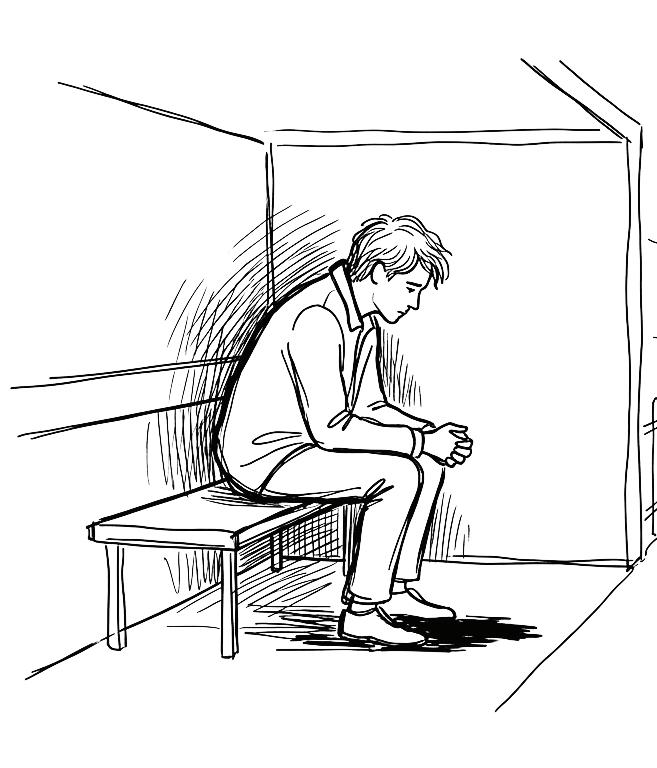
Beneath the numbers is something harder to chart. Warren Farrell and John Gray named it years ago in The Boy Crisis: a purpose void. The old answers to the question of what a man is for — provider, protector, leader — faded without anything compelling to take their place, and a generation of capable young men was left adrift. Three forces made it worse. First, the pandemic cut them off from the very people who teach a young person how to
"Young men are still asking the old questions: Who am I? What is my purpose? What does it mean to be a good man?"
A healthy fraternity gives those questions a real-world community, not an algorithm.
belong, at the exact age they needed them most. Second, life online sold them a polished, impossible version of the world and convinced them they could never measure up. And third, a culture obsessed with being the best at one thing taught them to chase a single skill (think of the parents who steer a sevenyear-old toward one club sport) while never building the broad, ordinary competence adulthood asks of all of us.
None of this means young men stopped asking the oldest question: “What does it mean to be a good man?” They only stopped feeling free to ask it out loud, worried the question itself might be held against them. So they asked it somewhere else. As one school head, Rob Zimmerman, has written, in place of real and humane models of manhood, too many of our young men were handed “a seductive but empty substitute” online. Surely we can do better than that.
Here is where we can find real reason for hope. The answer to isolation, aimlessness, and a missing model of manhood is one every Acacian already knows in
his bones: brotherhood. Think back to your own first weeks on a big campus. How easy was it to disappear? Go to class, grab a bite, scroll your phone (or maybe a periodical depending on your age), sleep in your dorm room, and repeat — a young man can spend four years that way and never once be missed. Fraternity makes that nearly impossible, in the best way. It surrounds him with people, and as one accomplished brother likes to put it, when you surround yourself with extraordinary people, you tend to do extraordinary things.
The research bears this out. Gallup, studying more than 30,000 graduates, found that fraternity and sorority members
Source: U.S. Department of Education, NCES IPEDS, Fall 2024 enrollment table for Title IV institutions. Belonging Challenge
DATA POINT
Men are now a minority of undergraduates nationally. Fall 2024 IPEDS data reported 42.7 percent male and 57.3 percent female undergraduate enrollment at Title IV institutions.
Brotherhood builds better men
Fraternities can be a practical response to isolation, delayed independence, and underdeveloped life skills when they are grounded in standards, mentorship, service, and accountability.
were more likely to be thriving in every element of well-being it measured — purpose, social, financial, physical, and community — than the classmates who did not join. In a later survey of 10,000 alumni, more than half of fraternity and sorority members had found work within two months of graduating, against barely a third of everyone else. The North-American Interfraternity Conference reports that fraternity men are about 20 percent more likely to graduate, and that more than eight in ten would do it all over again.
Read those findings as a brother and none of them will surprise you, because you have lived them. There is the older member who has already aced the course you are dreading, and the standard that
keeps your grades from slipping. There are the brothers who notice when you have gone quiet, and the ones you can lean on when you stumble, which is the only way any of us ever learns to pick himself back up. There is the chapter house, a real and supported first step out from under your parents’ roof, with rent to pay, chores to keep, meetings to attend, and a budget to balance. The treasurer learns to manage money he will be managing for the rest of his life; the rush chairman learns to sell and to lead; every member learns to connect with people on a human level, which is a skill no classroom teaches and every employer wants. There are, in short, lots of skills analogous to business and a great deal more besides. We have been providing all of these benefits for more than a century.
A chapter does not simply give a young man somewhere to belong. It gives him people to answer to, work worth doing, and a picture of the man he might become.
THE ACACIA DIFFERENCE
Acacia Fraternity is especially well positioned for this moment because its identity is not built around status alone. It is built around action, service, and growth. Human Service is not just a slogan to decorate a wall. It is a developmental expectation.
For a young man searching for direction, Acacia offers a practical path: join a brotherhood, take on real responsibility, learn from alumni, serve the community, and build habits that prepare him to lead beyond college.
Acacia was built for this before the moment ever arrived. Fourteen Master Masons founded our Fraternity at the University of Michigan in 1904, and we remain the only international men’s fraternity to take a Greek word, rather than letters, for our name. That word points to a verb: Human Service. Virtue, Knowledge, and Truth are not just decorations on a crest or esoteric teachings from our ritual — they are guardrails, and they are exactly the guardrails a young man adrift most needs. More than 1,000 undergraduate brothers carry them today across 23 active chapters, alongside some 35,000 living alumni around the world.
Consider what that looks like in practice. When the a chapter opens the fall semester with a twoday retreat — working with their alumni to take stock of one another’s strengths, set goals, and rekindle the brotherhood that everyday operations can wear thin — they are doing, in miniature, exactly what the wider culture has forgotten how to do for its young men. It gives them perspective, a plan, and one another. A young man who spends a weekend like that is not adrift; he knows where he is going, and he knows who is going with him.
And those bonds do not expire at graduation. The network a young man joins at eighteen can still benefit him at forty. The encouraging news is that young men are looking for this again. They are returning to fraternities precisely because they are searching for connection and purpose; administrators at campuses such as Ohio University, where the Greek community grew from 954 members in 2022 to 1,823 in 2024, say so plainly. Acacia is part of that story. We re-chartered our chapter at UC Berkeley in 2023, welcomed a new chapter at James Madison the same year, returned to Indiana University this last year, and will return to The Ohio State University and Mizzou in the fall of 2026.
It is fair to ask about the cost, especially now. The price of college has risen astonishingly — roughly 265% since 1965, while the cost of nearly everything else rose closer to 134% (the chart that follows lays it bare). Set against a degree that can run past $24,000 a year, international dues of a few hundred dollars a semester (chapter dues vary too much to list here), are a modest line on a
CAMPUS SNAPSHOT
Selected Acacia campuses show why fraternity remains relevant in a changing enrollment environment.
large bill. And measured against what they return — stronger grades, surer footing after graduation, and a network that lasts a lifetime — they may be the soundest investment on the whole page. With all of these benefits, one could consider that one of the greatest acts of service we can provide to college students today is to offer them the gift of membership. And thanks to the generous support of brothers that give back to the Acacia Fraternity Foundation, we are able to keep dues for membership significantly lower than they would be.
To our undergraduate brothers: the young man sitting alone in the dining hall is your next recruit, and the invitation you extend may be the most important thing that happens to him in college. To our alumni: an hour at a chapter event, a word of mentorship, a gift to the Foundation — this is how the purpose void gets filled, one young man at a time. The lesson here holds for everyone, from a first-year stepping onto campus for the first time to the brother looking back on a life’s work and wondering what comes next: put yourself among extraordinary people, and you will do extraordinary things. The crisis is real, but so is the answer, and we are already holding it. It has fourteen founders, three virtues, and a single word for a name. All that remains is for us to keep doing what Acacia has always done: taking a good young man and helping make him a great one.
Sources: IPEDS, K-State Institutional Research, CollegeData and public university enrollment reporting.
The Rising Cost of College
One year at a public four-year college — average tuition, fees, room, and board. Figures adjusted for inflation: https://www.bls.gov/data/inflation_calculator.htm 1965–66
$10,334 → six decades 2025–26
$24,148
Sticker price (current dollars) Adjusted for inflation (2025–26 dollars) ≈ 24× jump in the sticker price, 1965 → today
2.4× increase after adjusting for inflation 265% vs 134% tuition & fees vs. overall prices, since 1965
Source: Hanson, Melanie. “Average Cost of College by Year” EducationData.org, 2025-09-23, https://educationdata.org/average-cost-of-college-by-year
Letter from the Executive Director of OPERATIONS AND GROWTH
It is with a profound sense of responsibility and optimism that I write to you as your new Executive Director for Operations and Growth. Stepping into this role, I am keenly aware that I am not merely joining the headquarters staff but becoming a steward of a legacy that has flourished for over a century.
Our foundation is not built on mere social proximity, but on the enduring principles found in our Preamble. As we look toward the future, our operations must be a direct reflection of our commitment to “strengthen the ties of friendship, one with another,” and to “prepare ourselves as educated men.” In a world that is increasingly fragmented, the Acacia spirit of brotherhood provides a necessary sanctuary for character development and intellectual pursuit.
The Acacia Credo serves as our operational North Star. It reminds us that our primary duty is to “seek the truth and follow it.” As we modernize our growth strategies and streamline our operations, we do so with the intent of making the Acacia experience more accessible and impactful for the modern collegiate man, without ever diluting the “Human Service” that defines our existence.
• Preparing Educated Men: We are reinvigorating our support systems to ensure our members are not just students, but scholars who give a good account of their stewardship.
• Integrity in Action: Growth is not simply a matter of numbers; it is a matter of quality. We will expand our chapters by seeking men who embody our values and are ready to strive for the highest degree of excellence.
My vision for our operations is built on three pillars that honor our past while embracing the future:
1. Sustainable Expansion: We will target campuses where the need for a fraternity dedicated to “Truth, Virtue, and Knowledge” is greatest, ensuring each new associate chapter has the operational support to thrive for generations.
2. Alumni Synergy: We are developing new platforms to bridge the gap between our active members and our distinguished alumni, fostering a lifelong commitment to the “ties of friendship.”
3. Operational Excellence: By leveraging modern technology, we will simplify chapter management, allowing our brothers to spend less time on paperwork and more time on leadership and service.
As we move forward, I ask for your continued dedication to the ideals we all swore to uphold. Let us work together to ensure that Acacia remains a beacon of light on every campus we inhabit. I look forward to seeing many of you in the coming months as we embark on this next chapter of our journey.
So Live!
Brotherly yours,
J. Scott Cleland, Ohio ’88 Executive Director of Operations & Growth Acacia Fraternity
NEWS & UPDATES
(as submitted by chapters during Spring 2026)
The updates below have been submitted by chapters. If you have any questions or would like to get in touch with the chapter, please reach out to communications@acacia.org.
5 CALIFORNIA
VENERABLE DEAN DANIEL DALEON
As the fall semester began, we were proud to induct a record 16 pledges since our refounding in 2019, all of which have now been initiated. The California Chapter currently stands strong with 44 brothers.
Our most notable philanthropy events last fall were a trip to CityTeam, a local food kitchen and community outreach center in Oakland brothers and pledges volunteered, and Acacia Claus. In this event, we raised money for Shriners Children’s Hospital over the course of a week, concluding on Friday with a fan-favorite Acaciadillas fundraiser on our front porch.
The California chapter has also seen its social status rise greatly over the last semester, hosting 6 greatly successful parties. We see this as an important aspect of human service and serving our community as well. We are excited for the future of our house.
The gentlemen of the California Chapter are and will continue to be men of action. So live!
83 CALIFORNIA OF PA
VENERABLE DEAN RICHARD STEFANYSZYN, JR
The Acacia CUP chapter continued its commitment to community service this semester, through our newly implemented Adopt-A-Block program, where members regularly worked to clean and maintain local streets throughout California, PA.
Through consistent participation and teamwork, brothers dedicated their time to improving the surrounding environment and building stronger community connections. As a result of these efforts, the chapter proudly accumulated nearly 200 service hours in the fall of 2025, reflecting our ongoing dedication to human service.
85 CARLETON
VENERABLE DEAN NOLAN ISA
This past year marked one of the most successful in our chapter’s recent history, beginning with a landmark recruitment season that saw a fall pledge class of 14 initiates, tied for the largest outside of our founding class. We also had a winter class of 8, representing the most successful recruitment cycle of any fraternity in Ottawa.
Not only initiating the largest class in Ottawa, but we are honored with the great pleasure of welcoming our newest sweetheart, Lea Major, to join our chapter of which she has shown tremendous support over the past three years.
On the individual honors front, Robbie Raikou and David Johnston were each awarded the prestigious Order of Pythagoras, as well as Justin Kaplan being recognized with the Award of Merit in acknowledgment of his extraordinary dedication and service to the fraternity.
Our chapter made a strong showing at this year’s GreekO’s competition, earning a podium placement after several years of last-place finishes, with standout firstplace performances in football, cornhole, tug-of-war, and poker. Thanks to the alumni who came out to compete alongside us, and we’d love to see more out next year as we set our sights on first place.
Philanthropically, our brothers participated in a wide range of community initiatives, including Movember, the Terry Fox Run, Relay for Life, the Tri Delta 5K, and our very own ACACIA Epilepsy Canada Basketball Tournament. We were also proud to claim victory at the AOPi Arthritis Volleyball Tournament, further demonstrating our commitment to both competition and cause.
Looking ahead, early recruitment efforts are already gaining significant momentum, with strong interest from prospective students eager to engage in Greek life and learn what ACACIA has to offer, and we look forward to building on this remarkable year together.
14 CORNELL
VENERABLE DEAN KEVIN RIVERA
The Cornell Chapter has experienced a school year that can be described as nothing short of transformational. From a revival of our social presence on campus in the Fall, to our strongest recruitment class in 4 years in the Spring, the Chapter took the renewed sense of energy we had going into the Fall, and turned it into results.
For those that are aware of our situation or have kept up with our Triad articles, you will know that our Chapter has been struggling for the past several years. With shrinking numbers each year, consistent
operations and especially recruitment have been incredibly difficult. That all changed when our IHQ Chapter Coach, Justin McGrath, moved into the Chapter House this past Fall. With his guidance, wisdom, and active leadership, we succeeded in putting our name back on the map and recruiting not simply to survive, but to grow. With our 6 new Brothers initiated this Semester, we look to the future with optimism and a renewed sense of responsibility to better the Fraternity’s record. Bolstered also by our growing alumni support through our Acacia 120 Campaign, The Cornell Chapter is back and here to stay!
9 ILLINOIS
VENERABLE DEAN KYLE PORTER
Following a highly successful 39-member fall pledge class, the chapter continued its growth by welcoming 5 additional members this spring. Academically, members have maintained a strong standard with an average GPA of 3.5. Outside the classroom, our members remain actively involved across campus, highlighted by a sophomore brother recently setting the club lacrosse single-season save record.
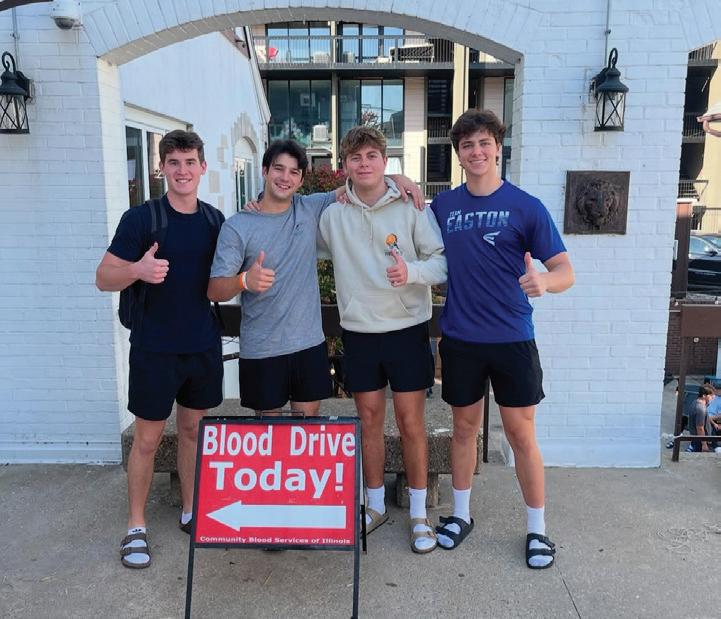
The chapter also demonstrated its commitment to giving back by hosting a blood drive philanthropy event last semester. Looking ahead, we are preparing for our annual Sinnick Block event, held in honor of our brother Jason Sinnick, who passed in 2016.
Overall, the chapter continues to grow in both size and impact on campus.
20 IOWA
VENERABLE DEAN THOMAS RADJA, III
“Fall semester for the Iowa chapter has had several strong highlights and meaningful moments. We brought back our Acacia Hot Ones event, which was a great success, raising $5,000 for the Stead Family Children’s Hospital while also bringing members and the community together.
In addition, we continued our tradition of AcaciaClaus, collecting toy donations to help brighten the holidays for children at the hospital. These events not only supported a great cause but also strengthened our chapter’s sense of service and brotherhood.”
95 JAMES MADISON
VENERABLE DEAN MATTHEW OUIMETTE
The James Madison Chapter of Acacia had a great Fall 2025 semester mainly focusing on strengthening brotherhood, staying active on campus, while still keeping academics a priority. Brothers were involved across campus while still continuing to support each
other’s personal and academic growth.
The chapter also is staying connected with alumni and is working to maintain strong relationships. As the chapter looks ahead to Spring 2026, members are excited to continue building momentum through recruitment, philanthropy, and brotherhood while representing the Acacia chapter at JMU.
27 KANSAS STATE
VENERABLE DEAN QUINTIN HOPPE
The chapter has been doing very well to start the year initiating 18 new brothers, one of the largest initiations in recent memory. Now we have begun recruiting our next pledge class for the fall with several successful events like Casino Night and the Acacia Leadership Scholarship. At K-State’s Fraternal Excellence Awards we were the runner up chapter for the Excellence in Achievement Award.
At the K-State Fraternal Excellence Awards several of our members won awards brother Gage Graham won Chapter President of the Year, brother Adam Spencer won Wildcat of the Year, and finally our house mother Mama Cash won House Director of the Year. We have also had great success with a book study with our alumni focused on personal development and leadership.
52 LOUISIANA STATE
VENERABLE DEAN THOMPSON BLANCHFIELD
The Louisiana State Chapter continues to build momentum this spring, recognizing brothers for their academic achievement, leadership, and commitment to Human Service.
The chapter also celebrated its annual spring awards. Patrick Chudzinski was honored with the Christian Taulli Senior of the Year Award. Sam Smith was recognized as the Jason Whittle New Member of the Year, while Robby Kinstle received the Michael King Human Service Award for his commitment to serving others. In recruitment, Xavier Powell, Hamilton Ogden, and Thompson Blanchfield were recognized with the Marco Perez III Excellence in Rush Award.
Through these accomplishments, the Louisiana State Chapter continues to demonstrate strong leadership, academic success, and a commitment to the values of Acacia.
84 MILLERSVILLE
VENERABLE DEAN JERED MACKISON
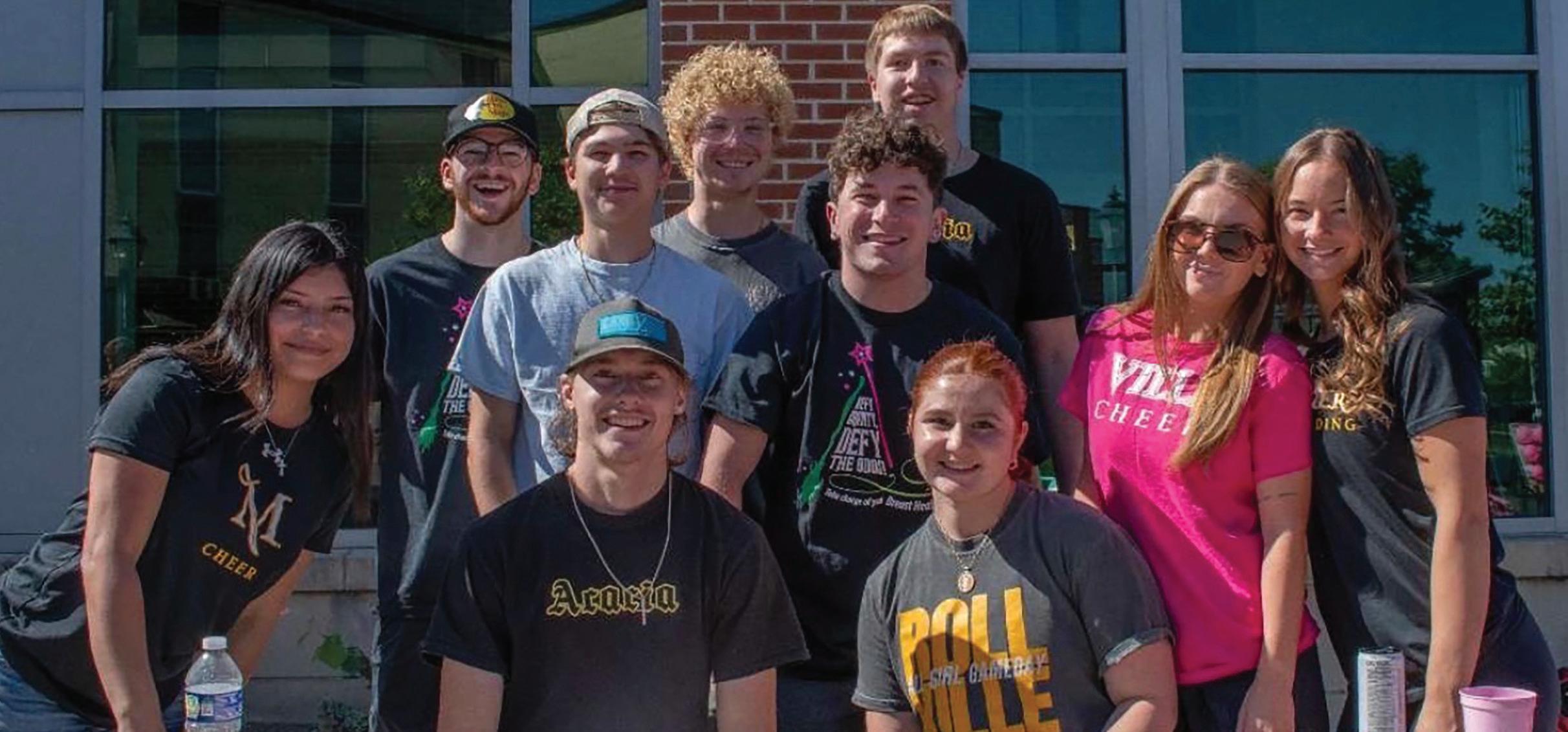
The Millersville Chapter has had an excellent start to the 2025-2026 school year, with a highlight being the initiation of 11 members this past fall. We hosted our own Walk Like MADD event in October, in addition to collaborating with Millersville’s Cheer Team during the campus’s Breast-A-Ville event. The chapter accepted donations as apart of Acacia Claus during the holiday season, and the gifts were donated to Habitat for Humanity. In March, a crew of 13 active brothers and alumni attended an Acacia gathering for the Greater Philadelphia Area with members of Nationals being present as well - special thank you to Millersville Alumni Kenny Smith for reaching out and helping rally the troops for this outreach event!
4 NEBRASKA
VENERABLE DEAN ALEXANDER WAGNER
The Nebraska chapter initiated five new members in the fall and currently has one spring pledge. Last semester, we accumulated over 550 community service hours as a house. We also held our annual “Pie an Acacian” philanthropy and raised over $800 for Shriners Children’s Hospital. We were also honored with the Helping Hands Award from a local Knights of Columbus council for regularly assisting with their parish’s Lenten fish fries. Individually, Brother Gavin Fee was recognized with an award for best multimedia project for UNLimited Sports in the Nebraska J school, and Brother Alex Wagner received the Critical Language Scholarship, funded by the U.S. State Department, where he studied Arabic in Oman for two months. Brother Jack Dynek was also initiated into the Order of Omega, an honor society recognizing Greek leaders on campus. Over the summer, we will focus on recruitment and remodeling bedrooms in the house.
42 OHIO
VENERABLE DEAN EVAN SHAHEEN
Spring has arrived, and this is an exciting season for our chapter. We started off the semester with a successful Spring Rush, welcoming an enthusiastic group of new members who have been embracing the values and traditions of our fraternity. Their energy has brought a new spark to our house, and we are excited to see them grow into leaders of our brotherhood.
March marked our annual Founders Day celebrating and honoring the Acacians who came before us. The event gave the active brothers and alumni alike the chance to reflect on our shared history and look ahead into a brighter future. We thank the alumni for their efforts and insight to make this chapter something greater every year.
Pie an Acacian was one of our most popular March events, giving students and community members the chance to throw a pie in the face of a willing brotherall for a good cause. All proceeds go to the Lustgarten Foundation for Pancreatic Cancer while instilling our values of Human Service and sparking many laughs to connect us with the campus.
On St. Patricks Day, our brothers took to Court Street for a community cleanup, helping keep the area safe and welcoming after celebrations. Armed with gloves and trash bags, we spent a quick hour of the day collecting litter and making a positive impact in our college town. Events like this remind us that being an Acacian means giving back to the community while leading by example.
35 OREGON STATE
VENERABLE DEAN GRAYSON BRADNER
This last year has seen a lot of growth for Oregon State Acacia, in the fall we initiated 22 new members and just initiated 5 more at the end of our winter term. We’ve accomplished a lot when it comes to philanthropy as well. In the fall, we hosted a 5K run and in the winter we sold roses and valentines grams all to raise 2.5K for Shriners Children’s Hospital.
Our freshmen also participated in Oregon State’s annual “Sing” competition, where they paired with the ladies of Kappa Alpha Theta to perform a singing and dancing routine in front of thousands of people. Their hard work paid off, earning them 1st place in the competition.
21 PENN STATE
VENERABLE DEAN ALEXANDER RODE
The Penn State Chapter of Acacia has had a great start to the year, focusing on our community and our growth as leaders. During THON this February, our Independent Dancer Couples did something incredible by raising the
2nd and 3rd most money out of all couples at Penn State. To help push our fundraising even further, eight brothers shaved their heads to show their support for the fight against childhood cancer. In January, our new executive board traveled to our headquarters in Indiana for the Lee Kearney Officer Summit. They returned with great ideas for recruitment and chapter management that we are already putting into action.
We look forward to seeing many of you back at the house for Blue White Weekend on April 25th. We are also getting ready to represent Penn State at the International Conclave in Kansas City this summer. We are proud of what we have achieved and are excited for what is next for our brotherhood.
15 PURDUE
VENERABLE DEAN MITCHELL
MCLAUGHLIN
The Purdue University chapter is proud to announce the launch of its Leadership and Professional Development Initiative (LPDI). Through this program, brothers are paired with mentors in their fields of interest, helping them build professional skills and connections. This has already led to several internship opportunities. The chapter has also partnered with Purdue’s Leadership Department to further strengthen a culture of leadership and community service. As part of this initiative, we will host workshops with industry professionals, retreats, and other events.
We have also raised over $2,400 for Shriners Children’s Hospital and hosted a philanthropy event with AGD sorority, raising an additional $1,200 while also building stronger connections on campus and seeing great participation from the chapter.
The Samekh Chapter is also very grateful for the opportunity to complete major renovations within our residence this summer. This includes around 15 rooms, two bathrooms, and a formal common area. These renovations are made possible through the generosity of our alumni, totaling $1.4 million in improvements. Overall, it has been a great year so far for the Samekh Chapter, and we are excited to continue our momentum.
44 RENNSELAER
VENERABLE DEAN ADRIAN CONNOR
This semester has proved to be a strong period for the Rensselaer Chapter, with four new members initiated in the spring and soon two more over the summer. This will have been the chapter’s strongest period of growth in 4 years.
In addition to our membership growth, we have worked hard this semester to form and grow our relationships with other organizations, both social and philanthropically. Socially, we have hosted multiple live band nights with GZ Basement, a campus organization who organizes events with local musical artists.
Philanthropically, the chapter has given dozens of hours and raised hundreds of dollars with TASP (The Animal Support Project). We hope to continue our momentum into the fall semester with more recruits and stronger campus relations. We look forward to seeing our alumni during semi-formal in the fall, and encourage any actives nearby to come visit. So Live!
80 SAINT CLOUD STATE
VENERABLE DEAN TYLER FOSSO
The Fall 2025 semester was a strong period of growth, engagement, and impact for our chapter, highlighted by meaningful philanthropic success and continued recruitment efforts.
Our chapter demonstrated a strong commitment to service through several successful initiatives:
- Acacia Claus: Raised over $6,000, marking one of our most impactful fundraising efforts to date.
- Salvation Army: Organized donation efforts to support the local community as part of our spring philanthropy focused on feeding the homeless.
- Polar Plunge: Brothers actively supported the event through both volunteering and participation, helping raise awareness and funds for the Special Olympics.
We continue to build the future of our chapter through dedicated recruitment and retention. We successfully inducted 7 new members in the Fall semester and an additional 2 members this Spring. These efforts reflect our focus on sustainable growth and long-term member engagement.
67 TRINE
VENERABLE DEAN THOMAS GUISINGER
This past fall semester our chapter raised over $450 dollars for our philanthropy cause: “Acacia Clause”. Each fall semester we raise money for Parkview children’s hospital to give Christmas gifts to children. This year we have been able to record a ton of philanthropy hours to support this cause with events such as tabling, jar collections, and picking up trash in parks. Our philanthropy chair, Ethan Merkle, has done a great job scheduling events and pushing us to get all our philanthropy hours in.
Another big accomplishment was through my participation in a Trine event this spring semester called “Big man on Campus”. This event is hosted by a sorority on campus, and the purpose is for members of other fraternities to raise money for breast cancer awareness, all this money goes to the Vera Bradley foundation. We were able to raise over $1,200 dollars towards breast cancer awareness throughout the entire event.
38 WASHINGTON STATE
VENERABLE DEAN COLE ERICKSON
Last fall, the Washington State chapter initiated 10 new members. In addition, the chapter earned the Community Engagement Award, placing it in the top 20% of all chapters within the WSU community.
This achievement reflects the chapter’s unwavering commitment to involvement and the positive impact we continue to have on our peers.
On the alumni side, many alumni returned for football games to spend time with active members, highlighting the continued growth of the connection between past and current Acacians.
12 WISCONSIN
VENERABLE DEAN RYAN MCLAUGHLIN
With the fall semester beginning September 3rd, the brothers have been busy working hard inside and outside the classroom, including our new Greek Basketball Association (GBA) team becoming nationally ranked.
Over the summer, many of our brothers were given the opportunities to work across the nation, while the house was undergoing great renovations.
And a big thank you to all of our alumni that were able to attend and meet the new members at our Founders’ Day in April. Hoping to continue the excellence of our chapter moving forward into 2026.
ASSOCIATE CHAPTER UPDATES
30 INDIANA
VENERABLE DEAN HENRY TEMPLES
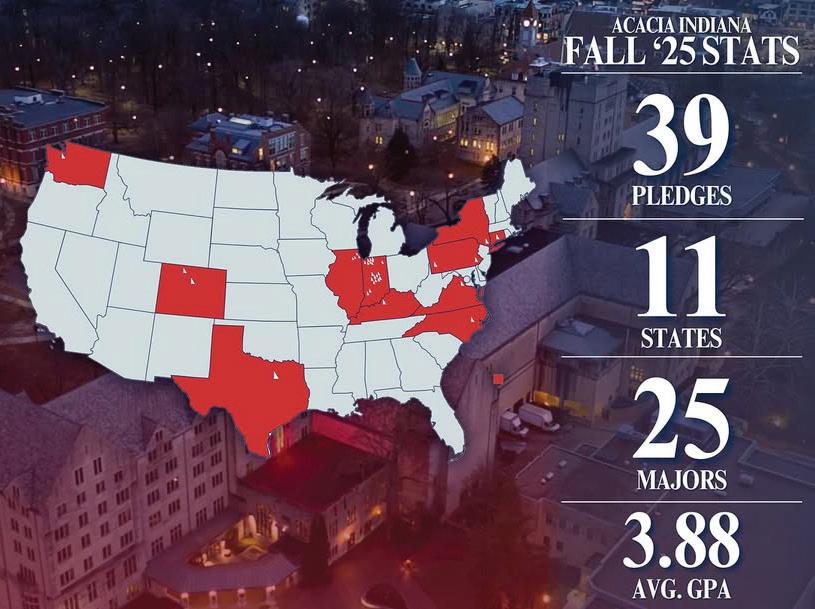
This past semester marked a major step forward in strengthening our presence on campus and within the IFC community. Our chapter continued to build momentum through consistent brotherhood development, strong campus involvement, and impactful philanthropy efforts. We are proud to have officially initiated 39 members into the refounding class of the Indiana Acacia Chapter during the fall semester.
This milestone represents more than just growth in numbers. It reflects the foundation of a brotherhood built
76 PITTSBURGH-JOHNSTOWN
VENERABLE DEAN CHRISTOPHER MICHAELS
The UPJ Chapter has had a successful fall term for the 2025-2026 academic year. We are proud to say that our chapter received three Acacia “REACH” awards for Academic Achievement, Campus Involvement, and Campus Leadership. Currently, we have a 3.17 overall GPA, the highest of any fraternity or sorority on campus. We were also recognized at the Mountain Cat Awards for Academic Excellence, Chapter Officer of the Year (Chris Michaels), and Jeremiah Dilts received the Commitment to Values award.
6 TEXAS
VENERABLE DEAN AKILAN SIVAKUMAR
The Texas Acacia chapter has seen steady growth throughout the last few semesters. This semester is no exception as we have recruited an eight-person pledge class.
This semester, we expanded our philanthropy efforts and worked with SAFE Alliance to raise money for foster children and abuse survivors through a gala.
The brothers also got together this semester and decided
on accountability, leadership, and long-term vision. Each member of this class was selected not only for who they are today, but for the role they will play in shaping the future of Acacia at IU. As a refounding chapter, every decision carry weight, and this class sets the standard.
This spring, we initiated another 29 men, bringing our total to 68. These men now represent the next generation of Acacia. Lastly, we had our first elections to solidify the leaders of Acacia. We are ready to leave our mark on campus and fulfill our long legacy.
To end the semester, we raised $1,400 in just four days during our ‘Acacia Brings the Heat’ fundraiser for Acacia Claus, where our brothers took on the Carolina Reaper and One Chip challenge, resulting in one of the most successful fundraisers on campus.
Between our philanthropy, our work with the local Masonic lodge and welcoming our new members we look forward to building upon our newly created chapter throughout the coming year.
to step into Intramural basketball once again. Acacia won two games to make the playoffs. Although we ended up losing in the playoffs, the brothers are fired up and have a great team for next season to hopefully win it all!
To maintain our strong connection with the alumni, we plan to host a Texas History Night on April 13th where the alumni from different eras of Texas Acacia will share their stories and memories with the active chapter.
From coast to coast, Acacia chapters made meaningful strides in the last year, and the International Headquarters was right there to support them every step of the way. This snapshot highlights key data points that showcase the strength of our brotherhood, the success of our programs, and the momentum we’re building together.
49,410
Miles traveled by undergraduates to attend 2026 Lee Kearney Officer Summit
Chapters Represented by members on IFC Councils 21%
Increase of Initiates in 202526 vs. 2024-2025 academic year +12.1%
3,140
Items of Acacia Merchandise sold from April 2025 to April 2026
Growth of active members during 25-26 academic year +204
Days spent by staff on the ground for Chapter Visits/ Support >700
4:5
Pledge to Initiation Retention Ratio
Kansas State Acacia: Building Excellence Across Generations
How authenticity, culture, and consistency have shaped one of Acacia’s premier chapters
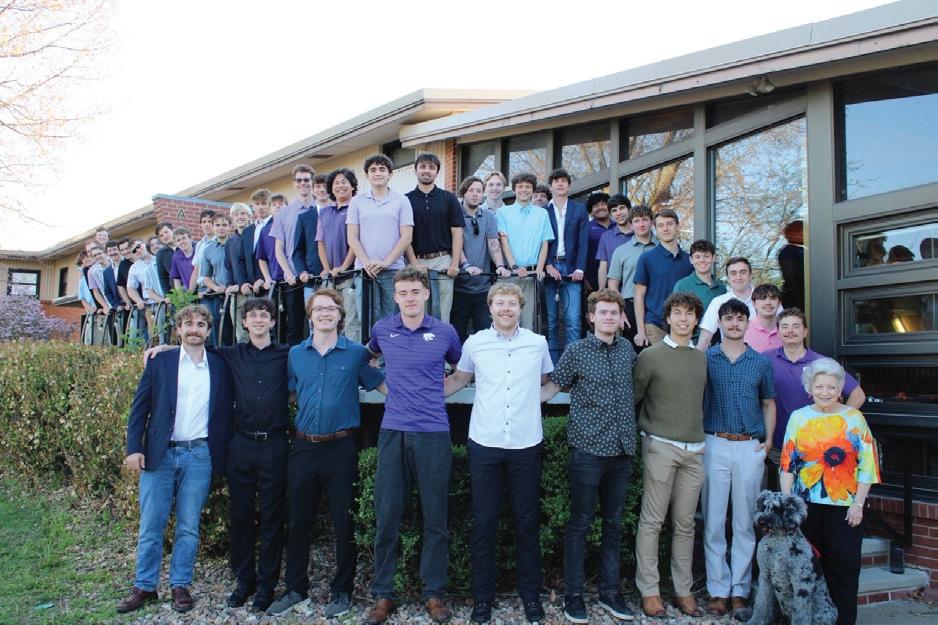
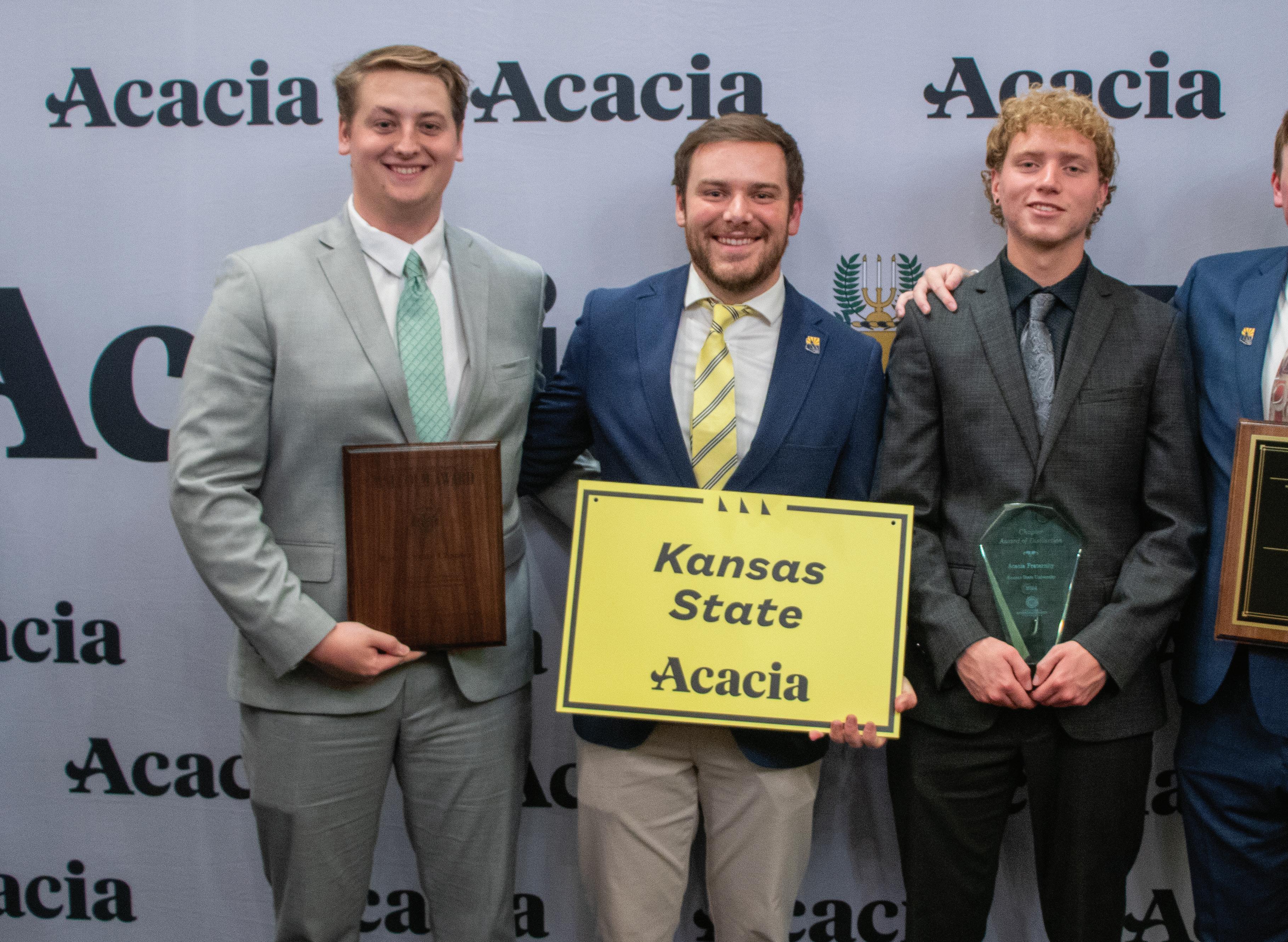
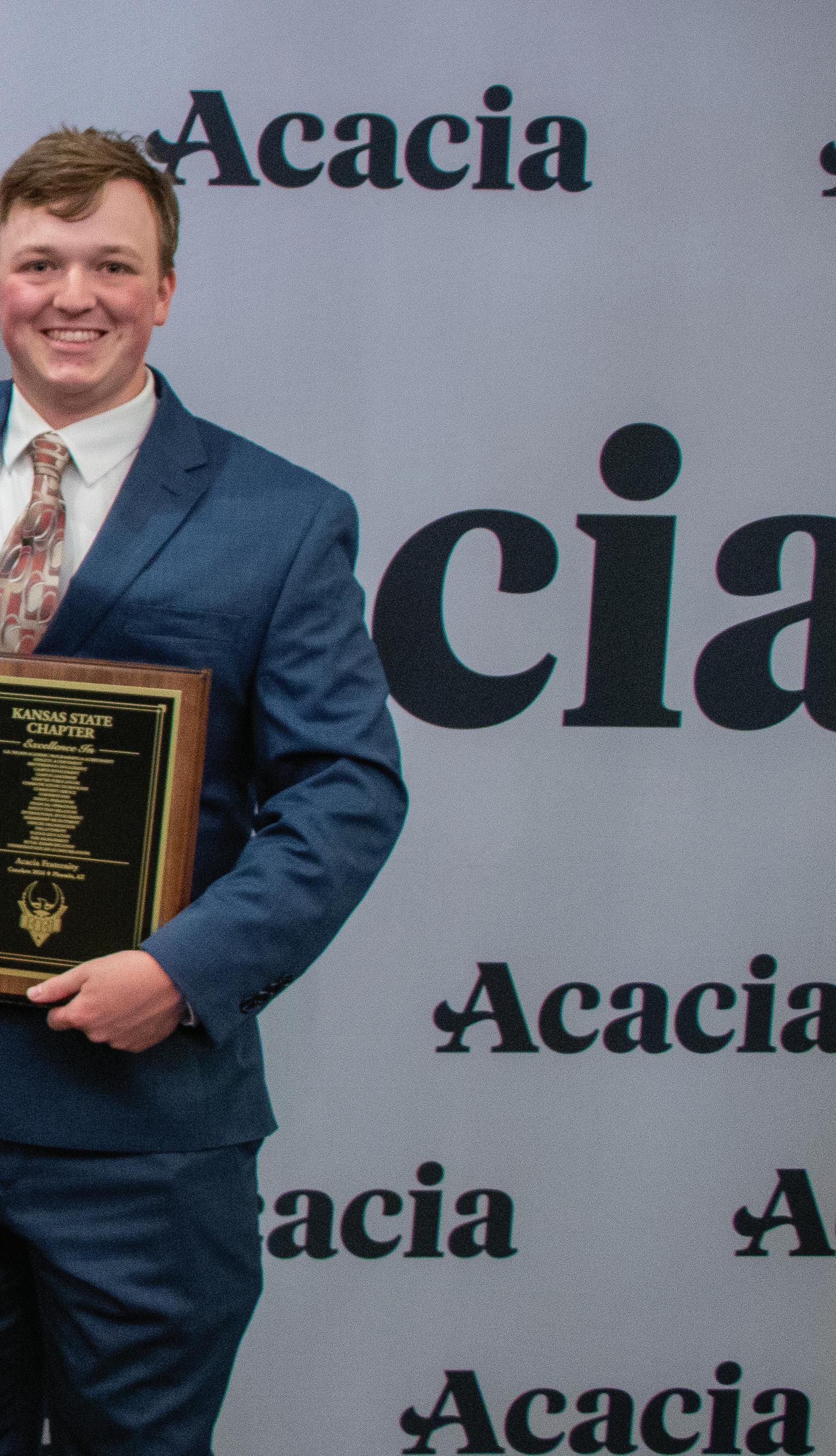
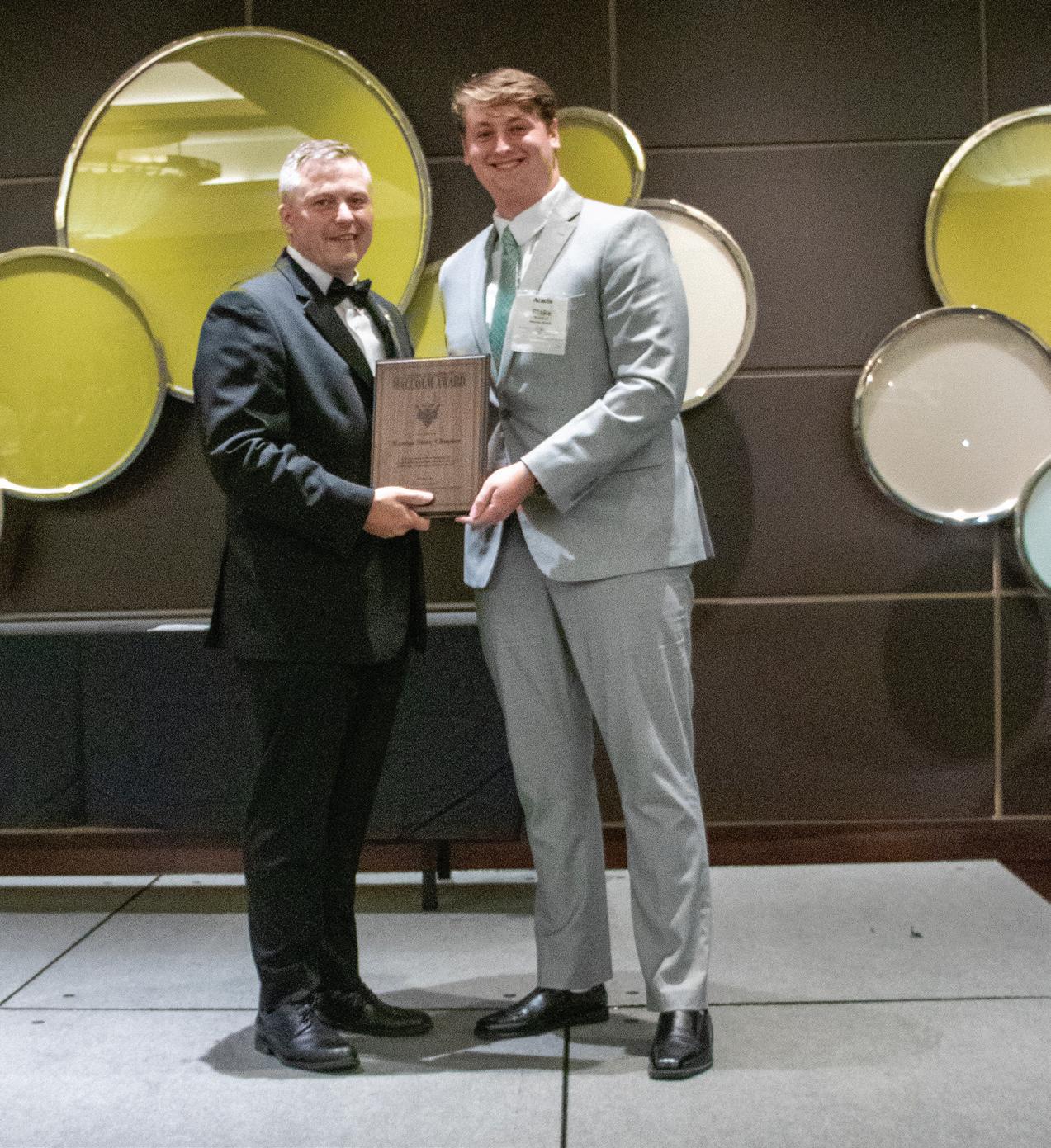
At Kansas State University, excellence is not a goal. It is an expectation. That distinction matters. Goals can be reached and set aside but expectations are carried forward. They become the standard against which every pledge class, every officer team, and every year of chapter operations are measured. It is the standard Kansas State Acacia has set for itself, and the standard that earned the chapter the 2024 Malcolm Award for Chapter of the Biennium. The Founders Achievement Award, also known as “The Malcolm,” recognizes Acacia’s chapter of the biennium and serves as our highest chapter honor, and 2024 marked the chapter’s third official win.
“It felt like I made adifference,and thatreallymeanta lot to me.”
-Blake Gamber Kansas State ’23 Chapter Advisor
Ask anyone close to the chapter what the award really represents, though, and the answer is the same. It was not a final destination. It was the confirmation of something that they had been building for more than a decade after their first Malcolm in 2012 and second in 2016.
“It’s just a continuance of the excellence we’ve been building since 2012,” says Derek Dawes, Kansas State ‘86, and the president of the chapter’s housing corporation board. “That’s what we expect now, not just from the board perspective, but from what Acacia is. Excellence is what we expect going forward.”
A Foundation Built on Identity
The Kansas State Chapter was originally founded in 1913 and rechartered in 2001, launching its modern era with a deliberate focus on building something sustainable.
From the start, the chapter made choices that reflected a long-term vision rather than short-term ambition. Choices about who to recruit. Choices about how to develop members. Choices about what kind of reputation was worth pursuing.
Those choices produced a chapter that Derek describes as probably the most respected fraternity on campus among Greek leadership and university officials. Medium in size, but exceptional in impact. Consistently recognized at awards banquets, constantly at the top of the scholarship rankings, and continuously involved in the organizations and offices that shape campus life.
“We know what we’re good at, and we’re going to be good at it,” says Blake Gamber, Kansas State ‘23, the chapter’s Venerable Dean when they received the Malcolm and now its Chapter Advisor (it should also be noted that Blake was elected in 2024 as one of two Undergraduate Counselors to serve on the International Council of Acacia Fraternity for two years). “We’re not trying to be the biggest chapter on campus or the one with the ‘greatest’ social events… We’re just consistent.”
Asked to distill the chapter’s identity into a single word, Blake does not hesitate. Authentic.
And it is that word, authentic, that perfectly captures the essence of the chapter and how they operate. The Kansas State chapter is unapologetically authentic and proud of who they are. The chapter has never tried to imitate a different kind of organization or chase status it does not value. It has succeeded by understanding its identity clearly and protecting it intentionally, year after year, class after class.
The ALS Program: Culture Begins Before Move-In Day
The clearest turning point in the chapter’s modern history came in 2011, when alumni Brian (Kansas State ’84) and Brad (Kansas State ’86) Nelson helped establish the Acacia Leadership Scholarship (ALS) program. Funded through alumni donations and held as an endowment with the Kansas State Foundation, the ALS became what alumni call the “lifeblood and driving force” of the chapter’s recruitment. It was the chapter’s second major capital campaign, and arguably its most important investment.
The program’s logic was straightforward. Identify high-character, highpotential students before they arrived on campus, and introduce them to Acacia early through a shared commitment to leadership, scholarship, and service. Students who came to K-State already connected to the chapter, already knowing brothers, and already understanding what Acacia stood for joined for the right reasons. They became genuinely invested members from the beginning.
“We’re very picky,” Blake says. “When it comes to who we want to bring to the house for interviews, and who we ultimately want to give the scholarship to, we are very particular about who they are before they even step foot on campus.”
That selectivity creates a compounding effect. Members arrive with purpose, and the chapter’s education process reinforces it immediately. Blake calls it a “day zero” mentality. Professionalism and continuous improvement are not goals to work toward over time. They are the starting point. From the first day, the expectation is clear: you are here to become a better man. That is what it means to be an Acacian at Kansas State.
Rebuilding With Intention
Like many chapters of all fraternal organizations across the country, Kansas State faced real challenges during and after COVID-19. What distinguished their recovery was not how quickly they returned to normal, but how deliberately they built something better.
Leaders like Max Immenschuh, Kansas State ‘20, and Braden Black, Kansas State ‘21, were instrumental in stabilizing the chapter during that period. Blake credits Immenschuh (among many others) as a foundational figure, someone universally respected across generations who helped restore the culture of accountability the chapter had always been built on.
The Fall 2021 and Fall 2022 pledge classes proved to be a genuine turning point. These were members who arrived already invested, stepped into responsibility early, and carried that energy forward for years. “There were a lot of guys who were very heavily invested in the fraternity really early,” Blake recalls. “And that was reflected in the recruiting of the next class, and then the next.”
Internal reforms followed. Under Masen Kindler, Kansas State ‘22, the chapter moved away from rigid officer pipelines, including a longstanding two-year recruitment chair cycle, in favor of merit-based leadership selection that valued capability over seniority. Committee structures were strengthened. Officer accountability improved. Most importantly, ownership of chapter excellence expanded beyond the executive board to the membership at large.
Small wins compounded into larger ones. Philanthropy grew more meaningful, social media better reflected the chapter’s identity, and operations became sharper. Then came the moment that, in Blake’s telling, showed the chapter what it was truly capable of. An internal chapter mental health
initiative grew into a formal partnership with the National Alliance on Mental Illness (NAMI) to establish a NAMI chapter on the K-State campus.
“That was kind of a defining moment,” Blake says. “Oh, we can actually do something much larger than just, hey, let’s have better recruitment. That was, let’s do something big, let’s go for something crazy.”
The 2024 team did not build a Malcolm Award winning chapter from scratch. They put their stamp on years of accumulated work, and they did it authentically. Not for the awards, but because it was simply who the chapter had become. “It wasn’t just something to put on the award submission,” Blake says. “This is just the chapter. This is who these guys truly believed in.”
It was taking that leap to make an impact on their campus along with the other facets of being a strong chapter that led to Acacia at Kansas State University being recognized with the Chapter Award of Distinction from the North American Interfraternity Conference (NIC) in 2024. One of only seven chapters recognized across dozens of men’s fraternities and thousands of chapters.
The Brothers Who Make It Work
One of the chapter’s most distinctive traits is the competence of its youngest members. Most of the men living in the house are freshmen and sophomores, and underclassmen regularly step into leadership roles that, in years past, might belong to seniors.
“It’s amazing to see these young men step up in leadership positions right out of high school,” Derek says. “I’m totally impressed.”
This trend in leadership competency among younger members traces back to the front end. Recruit the right people, and development accelerates naturally. The chapter’s new member education process prepares young members for leadership immediately, and a culture of mentorship gives younger officers the support they need to thrive. That mentorship comes from advisors, from senior members, and from alumni who stay involved long after graduation.
Officer selection, Derek notes, has been entirely selfdirected by the chapter. The alumni board does not influence it. It is the chapter identifying what it needs, finding the right person, and holding itself accountable to its own standard. “They know what good looks like,” Derek says. “They’re just continuing it.”
When Blake returned to the house last year as advisor, younger members he had never met approached him to talk through chapter challenges with the same intensity he remembered from his own time. “It’s a culture-driven thing,” he says. “If something’s not right, they want to focus on it. They want to perfect it.”
Alumni engagement has been the connective tissue across generations. The annual STAG event has brought brothers together for more than 30 years. A system of era chairmen, generational liaisons who maintain connections across graduation decades, helps keep the network active. At 2005 Hunting Avenue, the open-door policy is genuine. Alumni drop by unannounced, are welcomed immediately, and leave feeling the same sense of belonging they felt decades earlier. The house has not moved in 70 years. Every Acacian who has ever come through knows exactly where it is.
The chapter’s reach extends well beyond the house. Members serve as campus tour guides, work in the Greek Life office, and participate in IFC and student government. The POGO fund supports a local veterinary hospital, and conversations are underway about partnering with a nearby elementary school as certified crossing guards. It is the kind of unglamorous, genuinely useful service that reflects a chapter serious about its place
in the community. Six buildings on the K-State campus bear the names of Acacia alumni, more than any other fraternity. Notable alumni in the chapter’s history include a Kansas governor and senator, a Manhattan mayor, three university presidents, and Hall of Fame football coach Gary Patterson, Kansas State ’80.
The Standard Going Forward
After Conclave 2024, Blake stood before the chapter at their first fall meeting and delivered a message that said everything about where the chapter’s mindset lives.
“I hope you guys realize,” he told them, “this is the standard. This is to be expected.”
With Conclave 2026 set for Kansas City, practically in the chapter’s backyard, the goal is simple. Do it again. A Malcolm repeat, then a three-peat. The expectation, as Derek puts it, is now self-fulfilling. They are the ’91 Chicago Bulls with a roster of undergraduate and alumni leaders as dedicated to excellence as Michael Jordan and Phil Jackson.
On the facilities side, alumni and housing corporation leadership are developing a long-term vision to modernize and expand the property at 2005 Hunting Avenue. The plan would increase on-site capacity from 37 to 52 students, with potential to accommodate 60 through the use of three adjacent properties.
A posthumous gift from Robert L. Derstein, Kansas State ‘57, provided meaningful early momentum, and the alumni network has responded with strong support.
Over the past decade, Kansas State Acacia has earned numerous local and national awards and has been recognized multiple times by Acacia Fraternity as one of its top chapters. Its undergraduate members have built a strong model grounded in scholarship, leadership, and service. Now, the alumni board hopes to provide facilities that match the strength of the chapter experience and allows for more brothers to live at 2005 Hunting Avenue. The investment is about stewardship, ensuring the physical home matches the quality of the experience it houses.
What makes the chapter exceptional is not only its record of achievement, but the way that achievement has been earned. Kansas State Acacia has not tried to become something it is not. It has succeeded by knowing its identity, recruiting men who fit that culture, developing leaders early, and staying committed to steady improvement.
As the chapter looks toward Conclave 2026 in Kansas City and the next era of life at Kansas State University, the challenge remains the same: honor the legacy, meet the moment, and prepare the way for those who will follow.
For Kansas State Acacia, excellence is not a destination. It is a responsibility. It is their journey. And across generations of brothers, that responsibility continues to be carried forward by steady helmsmen.
Support the vision for the future of 2005 Hunting with a gift today. Reach out to Derek Dawes (newdane1@gmail.com) or Kurt Roberts (kjroberts90@ksu.edu) for direct gifts or the AFF ED, Darold Larson (dlarson@acacia.org) for tax-deductible gifts.
ALUMNI NEWS
ARKANSAS
George A. Beattie, ’55, #75 – As of May, Carole and I have been married for 64 years!
FRANKLIN
Robert E. “Bob” Wilson, ’57, #554 - I am still publishing, mainly in The Astrophysical Journal, at age 89. A recent article appeared in The Astrophysical Journal (ApJ), vol. 990, pp. 190-205, 2025, with co-author W. Van Hamme.
ILLINOIS STATE
Marc A. Woodbury, ’72, #6 - After 40 years in the travel industry, I retired to North Carolina and took up a new career restoring an 1850s, 13,000-square-foot brick antebellum home in Edenton. After 10 years, I retired again to Oro Valley, AZ. My wife of 25 years passed away from cancer in 2023.
LONG BEACH
David R. Worden, ’66, #129 - I am winding down my commercial real estate brokerage practice and transitioning into the wine industry in Napa. On the family front, I have six grandkids, and they are all winners!
MISSOURI
Brian J. Consiglio, ’15, #1005 - I am a writer at Mizzou, where I write research stories for a general public audience on the Show Me Mizzou website (showme.missouri.edu).
MORNINGSIDE
Brian M. Clarke, ’95, #6 – I was recently promoted to Senior Vice President of Sales for Saputo USA. Saputo USA is one of the largest producers of extended shelf-life cultured and fluid dairy products and Mozzarella Cheese; and is the largest manufacturer of Blue Cheese, String Cheese and Goat Cheese in the US. We are also the largest importer of specialty cheeses from around the world.
ILLINOIS
Edward A.H. Schmidt, ’55, #831 - We had a large, successful mechanical contracting business in the Twin Cities for 35 years. Sadly, none of our sons were interested in carrying it on, so I closed it down and sold the building and machines. Sylvia, the girl who came to all the Acacia dances and social events on the University of Illinois campus, wore the 3-4-5 pin proudly until our marriage 67 years ago. She gave the world four wonderful sons and made me very happy and proud. She has been resting in peace at Fort Snelling National Cemetery in Minneapolis, Minn., since 2024.
INDIANA
Scott T. Williams,’89, #1521 - I am the Managing Partner of the Dallas office of Crowell & Moring.
Max E. Skirvin, ’63, #847 – Two of my children, Lori and David, are retired. My other son, Mark, is currently the Associate Athletic Director at IU.
OREGON STATE
Allan N. Hytowitz, ’66, #396 - I have a complimentary copy of the Dyop vision test for any Acacia optometrist or ophthalmologist who would like to use it. The Dyop test, available at www.dyop.org, will be online and free for teachers and parents to use for acuity and color screening to detect probable symptoms of dyslexia, migraines, and epilepsy. It is described in my paper explaining how Snellen is now a major cause of myopia. My wife, Sarah, is a retired elementary school teacher, and my son, Neil, is a sixth-grade science teacher.
OKLAHOMA
Paul D. Borchardt, ’62, #752 - I served as a Naval Supply Officer from 1965-1969 on active duty and from 1969-1971 in the reserves. I owned and operated Wonderland Amusement Park from 1969-2026 and Borchardt’s Coin Machines from 1971-2022.
SHIPPENSBURG
Joel Romaine, ’69, #99 – I retired in 2005 from an administrative/executive position after a lifetime career with the Texas Medical Association and continue to enjoy retirement in Austin.
SYRACUSE
Anthony J. DiNicola, ’69, #495 – I retired in 2012 after 38 years as an architect.
RENSSELAER
James A. “Jim” Witkop, ’88, #625 – After 20 years serving in various roles, I retired from the U.S. Department of the Interior on December 31, 2025. I am currently exploring my options.
TEXAS
Jon Hornaday, ’56, #406 – I retired in 2005 from an administrative/ executive position after a lifetime career with the Texas Medical Association and continue to enjoy retirement in Austin.
SHARE YOUR UPDATE!
We’d love to hear from you, please go to acacia.org/update to provide an update on career, family, or personal achievements for the next Triad.
ALUMNI NEWS
ACACIA & FRIENDS NEW ENGLAND GOLF TOURNAMENT
(SUBMITTED BY JOHN
DAVIS, NEW HAMPSHIRE
’82)
On September 21, 2026, Acacia alumni and friends throughout the New England Region are invited to gather at Pembroke Pines Country Club in Pembroke, NH for the Acacia and Friends New England Invitational Golf Tournament. The day will feature an afternoon shotgun start at 1:30pm, along with a light lunch and a post-golf buffet, reception and awards celebration.
The event is open to all Acacia alumni and friends living in New England, and we encourage attendees to bring fellow brothers, friends, sons and daughters for a great day of golf and Acacia memories.
Darold Larson, Executive Director of the AFF, will be in attendance along with International Council members to
SAINT CLOUD STATE
(SUBMITTED BY JARED MOSICH, ST. CLOUD ’15)
meet everyone and share news about the expansion and continued success of Acacia Fraternity across the nation.
Participation is $85 per golfer, which includes green fees, cart, light lunch and post-golf buffet. A foursome sponsorship is available for $400 and includes a $5 mulligan for each golfer and a tee sign. Additional sponsorship opportunities are also available, including for the buffet and reception, the beer cart and other items.
As arrangements are still being finalized, those interested in attending or sponsoring are encouraged to reach out early so a spot can be reserved. Please contact Darold Larson at dlarson@acacia.org or (317) 695-3142 or John Davis at johncdavis@comcast.net or 617-320-4437.
In October 2025, we hosted another successful Al Grewe Memorial Golf Scramble, achieving our strongest turnout in recent years. The continued growth of this event reflects the strength of our alumni network, and we are already looking forward to building on this momentum in Fall 2026. We remain committed to supporting the undergraduate chapter through scholarship opportunities, with the next round of recipients to be announced in the near future. Looking ahead, we are especially excited to celebrate a major milestone—our chapter’s 50th Founders Day at SCSU on March 13, 2027. Formal invitations will be shared soon, and we encourage all brothers to spread the word as we aim to bring together as many alumni and active members as possible for this memorable occasion.
IOWA HOUSING CORPORATION
(SUBMITTED BY BYRON TABOR, IOWA ’78)
The capital campaign for the house improvements is getting close to the $350,000 goal. Balance is currently $338,415. If you can get us closer please reach out to Byron Tabor (#644) at wibatman@gmail.com.
The work schedule for this summer is starting to gel. A general contractor is being chosen and things are going to get started soon. As part of the appraisal I discovered that 202 Ellis was built in 1928. Time to start planning our centennial celebration!
OHIO UNIVERSITY ACACIA ALUMNI ASSOCIATION
(SUBMITTED BY AARON KELLENBERGER, OHIO ’88)
The Ohio University Acacia Alumni Association (OUAAA) has been busy this past fall and winter with various initiatives from social events and fundraising to active and alumni leadership programming.
In the fall, OUAAA hosted two social events including a gathering at the Ohio University vs. Ohio State University football game in Columbus Ohio as well as an active and alumni brotherhood held at the chapter house in Athens during homecoming. In February, the Association sponsored the second annual Active & Alumni Leadership Summit during Founder’s Day Weekend. This event brough together leadership from the active chapter and alumni association in the collaboration and alignment of goals, initiatives, and activities between both groups. There was also a designated time for all undergraduates and alumni members to participate in brainstorming sessions on topics
such as brotherhood, philanthropy, leadership, community involvement, and professional development.
At the conclusion of the Leadership Summit, the Association hosted a celebration of the year’s accomplishments by recognizing 12 different honorees including Acacian of the Year, Parent of the Year, and Alumni of the Year in addition to an Order of Pythagoras and an Award of Merit. The Association was also able to award two $500 undergraduate scholarships and three $200 book awards to a freshman, sophomore, and junior active member.
With a little more than two years of reimaging and refounding the Association, we are excited about where Ohio Acacia is headed and how our alumni members can help play an active role in guiding, supporting, and partnering in the undergraduate members’ hard work.
CURRENT EXPANSIONS
The Fall 2025 semester saw the return of our Indiana Chapter in Bloomington. Led by Chapter Growth Specialist, Ryan Junko, Ohio ‘21, our expansion at Indiana University is a perfect example of intentional and well-planned expansion. In coordination with the Indiana Acacia Alumni Association and the Indiana Acacia Housing Corporation Board, the International Headquarters has had ‘boots on the ground’ for the entire academic year and laid the foundation of what is already a high performing associate chapter.
In Fall 2025, 39 men became the first refounding fathers of our 30th chapter. These young men hailed from 11 states across the US in 25 majors, demonstrating a strong coalition of men with unique backgrounds and interests - but all united through shared values and a commitment to Human Service.
This past spring, they have already enacted a committment to our ideals and made Human Service a priority through 7 Days of Service, volunteering with New Hope for Families, and the Hoosier Hills Food Bank. The goal is simple: to ensure Indiana Acacia is recognized not only within the Greek community but throughout Bloomington as an organization that contributes meaningfully.
We look forward to repeating this successful blueprint of expansion with the return of our Ohio State and Missouri chapters next fall!
Reach out to communications@acacia.org if you are interested in supporting our upcoming expansions through advising, member recommendations, or through a financial gift.
FUTURE EXPANSIONS
6 OHIO STATE
FALL 2026
The Ohio State University
13 MISSOURI
FALL 2026
University of Missouri
Interested in helping with advising members, building alumni associations, or donating to support these expansions? Reach out to the HQ for more information at communications@acacia.org.
This is a list of all brothers reported between 11/15/2025 and 5/15/2026. Please contact Acacia Headquarters at communications@acacia.org for more information about a brother or to inform us of a brother’s recent passing.
What’s in a Name? Message from the AFF Executive Director:
At a recent Acacia gathering in Philadelphia, I had the pleasure of meeting a newly initiated Brother, Alex D. Garber, Millersville ’25. He could have skated straight onto the ice with the Hanson Brothers from the 1977 film Slap Shot. The resemblance was uncanny. As often happens in fraternity life, that’s how a nickname is born. That moment, lighthearted and spontaneous, got me thinking: Whether the names we give or the ones we earn — what’s in a name?
Fraternity life has always had a way of naming things. Sometimes it’s formal — roll numbers, initiation dates, chapter designations. But more often, it’s informal. It’s the nicknames that stay with us, much like my own undergraduate experience: Pups, Bugs, Magoo, Smokey Pig, Hoop King, Bickleton, Mongo, Brenatar… and in my case, simply “Art” — a name carried over from my high school days. Why do we do it? Because naming is bonding. At some point, a name becomes more than a label — it becomes a story. A shared understanding. A signal that you belong.
Which brings us to our own name, Acacia. From time to time, the question surfaces: Is our name a detriment? It doesn’t sound like the others; it takes explanation and invites a second question. The ’70s brought the use of “AKAK” which emerged in some circles, offering a sense of familiarity within the traditional fraternity system. I am firmly in the Acacia camp, as I subscribe to our name’s sense of uniqueness and choose distinction over imitation.
And yet, from the very beginning, that distinction was intentional. In the early years of the Fraternity,
there were quiet pressures to conform — to look and sound like the traditional Greek-letter fraternities. But Acacia chose a different path.
As reflected in the historical work of William S. Dye, Jr., Penn State ’09, The First Half Century, Acacia was never intended to be a replica. It was meant to stand on its own. “The question was never simply about a name — it was about identity.” Over time, that same question has resurfaced in different forms.
In our earliest years, the original 26 chapters were identified by Hebrew names — a distinctive practice that further set Acacia apart. That tradition was discontinued, perhaps seen as a bridge too far on the uniqueness scale. Yet even today,
some chapters take pride in that heritage, and the idea of revisiting it quietly resurfaces.
More Than a Name: Our history is marked by traditions uniquely our own, not found among our Interfraternity friends. Elements of the Acacia experience that set us apart. We look to Pythagoras as a guide. We speak of geometry as a framework for life. We carry a traveling card, complete with a litany on the back, a quiet reminder of a shared journey that extends far beyond four years. We recognize the white-throated sparrow — steady and enduring. And now, Acacia even has an official card game, Euchre, where strategy meets fellowship.
These are not borrowed traditions; they are the marks of Acacia.
Mementos of George F. Patterson Jr., Cincinnati ’42, and other memorabilia are a fixture at Acacia Fraternity Gatherings
And then there are the porcelain membership mugs — etched with chapter, coat of arms, initiation year… and often, a nickname on the back. They say: you were here. More importantly, you belonged.
A Name That Requires Something of Us! There is an unofficial toast for Acacia that begins: To the fraternity that can spell, and can lay claim to be three to four letters better than the rest… Because our name does require something of us. It asks us to explain and to represent. It asks us to live in such
a way that, when someone hears “Acacia,” they understand the men behind it.
At the recently convened Lee Kearney Leadership Summit, I posed a simple question to the attendees: How do you sell Acacia? What’s the elevator pitch? Too often, the answer comes back: “We’re just a social fraternity — like the rest.” An opportunity lost. Acacia was never meant to be “just.” It was built to be different. To challenge. To develop. To endure.
The name is carried by those who came before and by those who choose to carry it forward today. If you’ve ever been known by a name only your brothers would understand, then you are part of this story still being written.
As you read this summer edition of The Triad, we approach the close of our fiscal and academic year.
Thanks to the generosity of Brother Daniel (Danny) R. Lang, Northwestern ’59, we invite you to
The Acacia Fraternity Foundation (AFF), founded in 1989, is Acacia Fraternity’s non-profit educational foundation. A 501(c)(3) tax-exempt organization, the AFF exists to provide scholarships to student Acacians and to support the worthy educational and leadership activities of the fraternity. You also receive this magazine at no cost, thanks to the foundation!
The efforts of Acacia Fraternity are made possible by the generousity of our donors. Please consider making a gift to support the next generation of Acacians. Scholarships support worthy endeavors such as our award winning leadership programs, education for members, and scholarships to our top undergraduates. Help us reach our goals by considering a gift to Acacia today. So Live!
celebrate Acacia’s distinctiveness. Your donation to the Exceptional Fund is currently being matched, increasing the impact of each contribution to Acacia’s educational efforts to promote growth, leadership and legacy. We encourage you to participate in this initiative.
So, what’s in a name?
A fraternity steeped in tradition—122 years and counting.
Proud to be an Acacian,
Darold W. Larson
Executive
Director
Acacia Fraternity Foundation email: dlarson@acacia.org mobile: (317) 695-3142
P.S. Hope to see “Hanson” (Brother Garber) at the Kansas City Conclave—along with many others, geometrically challenged or not— as we continue to strengthen the ties that bind… not four years, but for life.
You can support Acacia Fraternity by visiting acacia.org/donate OR
Just scan this QR Code:
Acacia Fraternity International Headquarters
CHANGE SERVICE REQUESTED
www.acacia.org | communications@acacia.org
If your son has recently moved, we’d love to have his new address to keep in touch with fraternity publications like The Triad. Please send us (or ask him to send us) a quick update at: communications@acacia.org or 317-872-8210.
Feel free to keep and read this Triad! We’ll send him another copy.