
So far, 2020 has been nothing short of eventful as COVID19 continues to dominate the year. The economic consequences of the pandemic are undisputable, creating the worst economic slowdown since the Great Depression of 1929.
Under the shadow of this pandemic, Abu Dhabi Ports has successfully displayed great fortitude by rising to this unique challenge and showcasing organisational resilience which has become a necessity rather than just a competitive edge for organisations. We have also continued to solidify new opportunities that will reshape the future of trade, thanks to the directives of our wise leadership.
In this issue of Trade Pulse, we will walk you through our main successes during the first half of 2020, which were made possible only with the continuous support of all stakeholders.
In this regard, I would like to mention the visit of H.H. Sheikh Khalid bin Mohamed bin Zayed Al Nahyan, Member of the Abu Dhabi Executive Council, and Chairman of the Abu Dhabi Executive Office, during his recent official visit to Khalifa Industrial Zone Abu Dhabi (KIZAD). During the visit H.H. reviewed the developmental plans for logistics sector, and launched Matqa Gateway’s ATLP (Advanced Trade Logistics Platform).
Another milestone was the consolidation of ZonesCorp into our organisation’s industrial cities and free zone portfolio. With this integration Abu Dhabi is now entering into a new era in our nation’s industrial history, one that will enable us to adapt to constantly evolving market demands for the next 50 years.
ZoneCorp’s integration not only positions Abu Dhabi as a world-leading manufacturing base but elevates its position within the global supply chain by allowing trade to adapt quickly when confronted by obstacles, while remaining agile and flexible to embrace positive change.
Despite this year’s ongoing challenges, we have performed strongly across all of Abu Dhabi Ports’ businesses. We have continued to reach shipment and safety milestones, broken ground on significant infrastructure developments, introduced a range of tenant relief packages, and launched new and innovative digital services.
Additionally, we also brought to market a new feeder services company, SAFEEN FEEDERS, to support our shipping clients and to link Abu Dhabi to ports serving the UAE, the broader Gulf region and Indian subcontinent.
Thank you for your continued support of Abu Dhabi Ports as we endeavour to better serve the changing needs of the world’s growing maritime, trade and logistics community.
We wish you the best and thank you in advance for your genuine interest in our journey of success.
Enjoy this issue of Trade Pulse!

In this edition of Trade Pulse, we ask industry
experts:
The beauty of the industry is that supply chains are constantly evolving. As the leading international provider of air, sea, and road freight services, we are in a fortunate position to have the global network and local expertise to support our customers in times of change.
Given the uncertainties and integration of supply chains worldwide, we anticipate that more companies will further diversify their production bases to bolster against shock. Our Group’s Strategy 2025 will focus on core competencies and digitalisation to put us in a stronger position to effectively meet our customers’ evolving needs.
Our Saloodo! digital freight platform and global digital solution myDHLi have now been rolled out to the entire Middle East and Africa region, thereby digitally connecting all our network and customers.
The fundamental process of supply chain management has not changed due to COVID-19. We continue to source goods both locally and from around the world, and this will not change as consumers continue to demand a wide variety of products.
What has changed is how we work. Never has it been more important to ensure excellent communication and information sharing with every part of our supply chain.
Past performance cannot be the only parameter by which to predict future demand, both in the short- and long-term.
The sharing of thoughts, ideas, and collaborating as one supply chain, is now more important than ever and will continue to be vital in navigating towards a successful recovery.
We can expect lots of change from this disruption. One of the key areas of change is a more risk-averse approach to sourcing in the supply chain. Another is an increasing shift away from low-cost labour and higher adoption of automation, robotics, and the use of data across all operations.
While many companies are now scaling back and looking at their budgets, Abu Dhabi Ports is significantly investing in its infrastructure.
Additionally, we are in a position where we can choose to take the opportunity to make the investments and scale solutions and build ahead of current thinking and trends. We see Abu Dhabi Ports progressively moving towards aggressive digitalisation and adopting wider use of data and technology, not only within the supply network but across all our businesses.

What is the size of the liquid and gas terminal market? And how significant is the non-oil business in your industry?
On a global scale, the UAE terminal market is significant with major hubs for mid-stream and downstream distillation in Fujairah which in itself sits at the mouth of the Arabian Gulf, one of the world’s most important and strategic chokepoints in international shipping and trade. As regional economies continue to adapt and move away from oil, we find ourselves in a unique position whereby we can provide customers operating at KIZAD and the region a wide range of opportunities in liquid bulk products and gases, in addition to supporting our overseas expansion strategy through our terminal activities in Abu Dhabi. ACT is confident our position in the downstream chemical and gases market and long-standing experience and local knowledge will prove vital in developing this area of the economy in the decades to come.
2020 is witnessing the development of ACT’s first terminal in the UAE and specifically in Abu Dhabi; what are your strategic objectives of setting up a liquid and gas terminal in at Khalifa Port?
As of now, there is no commercial tank terminal in Abu Dhabi. It is with good reason that Khalifa Port is Abu Dhabi Ports’ flagship port and one of the fastest growing ports in the world. ACT seeks to be a part of its exciting ecosystem, and play its role in contributing to Abu Dhabi growth story by enabling trade in liquid bulk and gases.
Our greenfield terminal project at Khalifa Port (ACTAD) is ACT’s first project outside of Saudi Arabia industrial ports of Jubail and Yanbu. We are committed to partnering with the world’s leading experts to define and ensure success in Abu Dhabi to the benefit of world’s largest and reputed oil, gas, chemical producers and traders.
How does the strategic partnership with Abu Dhabi Ports enable more operational efficiency in the UAE and the region?
Abu Dhabi Ports’ support was paramount in ensuring our greenfield liquid bulk terminal at Khalifa Port was realised. Thanks to our strong relationships and existing international client base we were easily able to shift some of the flows to Khalifa Port and setup a new Abu Dhabi distribution hub that serves KIZAD, ZonesCorp and ICAD. By undertaking strategic and long-term planning and investment in line with the Government’s long-standing commitments to increase energy production and manufacturing, we plan to make a robust contribution, and deliver a host of efficient and safe value-added services at the most competitive prices.
Are you considering any new investments in Abu Dhabi?
Most recently, ACT signed a 50-year concession with Abu Dhabi Ports for an additional 50k sqm and optional 150k sqm of terminal yard. Our new port facility will offer import and export tanks for liquids and gases and will be built over several phases.
The project’s first stage, slated for commissioning in the second half of 2022, entails the deployment of 40 storage tanks sized 2,500 cubic meter each.
We expect the terminal’s second phase will commence following expansion of the surrounding area and will consist of a number of larger industrial storage tanks and spheres with piped connections to Khalifa Port’s industrial hinterlands. Upon completion, the new bulk liquid storage terminal at Khalifa Port will provide companies operating at KIZAD and across the region new opportunities to reduce their logistics and related Capex costs by outsourcing their liquid and gas storage, and transfer operations. ACT seeks to participate in this development by engaging and partnering with manufacturers and producers in terms of co-investments, raw material supplies and off-take agreements.

Following the January 2019 announcement of your waste lead-acid battery processing and recycling plant’s construction at KIZAD, how is the development of the facility progressing and what is your longterm vision?
Development of our waste lead-acid battery processing and recycling plant at KIZAD is well on track to meet our launch deadline in Q1 of 2021. With an initial capacity of 200,000 metric tonnes of used lead-acid batteries (ULAB) processing, and a projected recycling rate that will exceed 99 percent, our recycling facility at KIZAD will serve as one of the largest resource reclamation sites of its kind in the Middle East.
Of course, this is just the first phase of development. Ultimately, we hope to expand our capacity up to 350,000 metric tonnes of ULAB processing and introduce 2-billion-watt hour battery manufacturing, while also working with KIZAD, and other local partners, to develop an in-region, advanced research and development capability.
In what ways has working with KIZAD helped accelerate your business objectives and activities for the Middle East region?
Several key factors made the China-UAE Industrial Zone at KIZAD the ideal location for us to establish a base in the Middle East.
For starters, Abu Dhabi’s geographic location with its wide range of multimodal connectivity solutions provides us with a variety of options to reach our clients across the region. Additionally, we greatly appreciate the UAE’s favourable business policies and geopolitical stability — two factors that make the country highly attractive for investment.
Bolstered by KIZAD’s expanding logistical services and tariff incentives, we are well-positioned to build our UAE project into one of the largest and most advanced circular economy industry centres active in an overseas market.
Once launched, how will your waste lead-acid battery processing and recycling plant support the growth of Abu Dhabi’s economy?
With the completion of the first phase of our UAE facility we aim to boost our annual revenues and create more than 150 jobs in the emirate. We expect, in time, to substantially increase our annual revenue, while also creating more than 800 jobs in Abu Dhabi along the way.
Our project, like many others in the China-UAE Industrial Zone, is playing a key role in strengthening the bilateral ties between our two nations and represents a vital step in achieving the goals set out by the Belt and Road Initiative (BRI). We are also honoured to be playing a leading role in supporting Abu Dhabi’s efforts to foster a sustainable, non-oil economy.
“Development of our waste lead-acid battery processing and recycling plant at KIZAD is well on track to meet our launch deadline in Q1 of 2021.
With an initial capacity of 200,000 metric tonnes of used lead-acid batteries (ULAB) processing, and a projected recycling rate that will exceed 99 percent, our recycling facility at KIZAD will serve as one of the largest resource reclamation sites of its kind in the Middle East.”
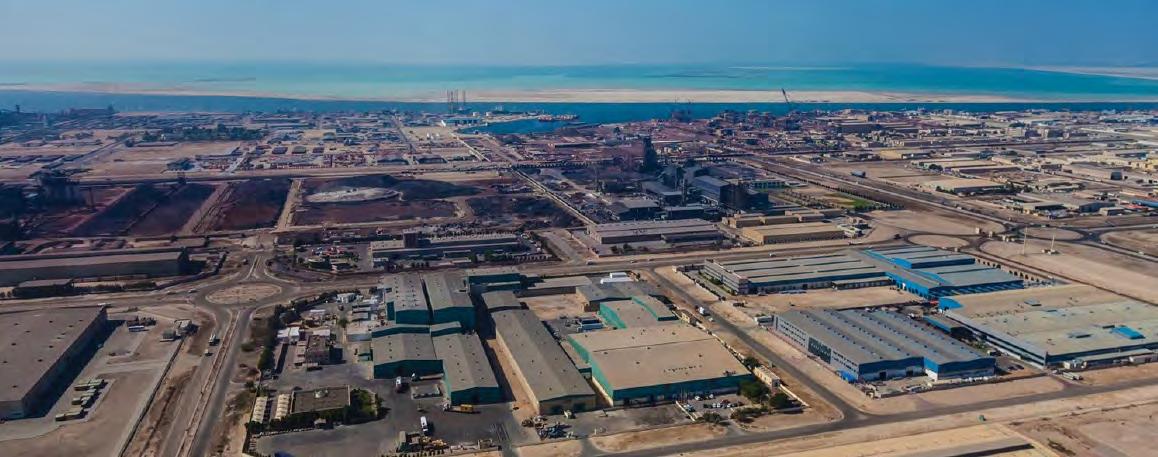
ADQ, one of the region’s largest holding companies with a diverse portfolio of major enterprises spanning key sectors of Abu Dhabi’s non-oil economy, recently announced the merger between two of its portfolio companies. Under a decree by Abu Dhabi Executive Council, the Higher Corporation for Specialized Economic Zones (ZonesCorp) joins Abu Dhabi Ports.
As part of Abu Dhabi Ports, ZonesCorp will benefit from strategic alignment with Khalifa Industrial Zone Abu Dhabi (KIZAD), one of the world’s largest industrial zones spanning 410 square kilometres, which is owned and managed by Abu Dhabi Ports. Together, the group’s industrial portfolio is set to facilitate greater industrial diversification and provide infrastructure support in a cost-efficient manner, while also significantly increasing the contribution of industrial activities
to the emirate’s GDP. This will, in turn, help achieve greater value for stakeholders including customers, partners, and employees.
H.E. Khalifa Sultan Al Suwaidi, Chief Investment Officer at ADQ, commented: “As Abu Dhabi continues to grow as a key player in international trade and logistics, ADQ is further reinforcing this value proposition by merging ZonesCorp into Abu Dhabi Ports. There will now be an even greater opportunity to facilitate industrial diversification and deliver efficient infrastructure support.”
H.E. Falah Mohammed Al Ahbabi, Chairman of Abu Dhabi Ports and Chairman of the Higher Corporation for Specialised Economic Zones, said: “This transition of ZonesCorp to Abu Dhabi Ports is beneficial to all parties involved – partners, employees, and, most importantly, our customers. Abu Dhabi Ports is an
expert in developing the industrial and manufacturing sector and is constantly innovating to operate and maintain an integrated world-class business environment. By grouping economic zones within Abu Dhabi Ports, there will be better related operational alignment, increased expansion and enhanced positioning to attract substantial direct foreign investment.”
Capt. Mohamed Juma Al Shamisi, Group CEO of Abu Dhabi Ports, said: “By working together more closely, and more strategically, we will leverage our strengths in order to boost the competitive value of our industrial zones within the global marketplace.
ZonesCorp’s integration enables increased scale, improved services and positions Abu Dhabi as a world leading manufacturing base, and elevates the emirate’s standing within the global supply chain.”
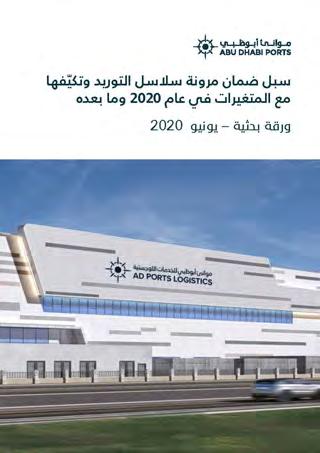
Supply-chain resilience will play a pivotal role in determining whether companies engaged in global trade are able to weather the logistical challenges presented by COVID-19, said Abu Dhabi Ports in a whitepaper launched at a recent high-level expert webinar hosted by the company.
According to industry experts from around the world who contributed their insights and perspectives to the whitepaper entitled “Ensuring Supply-Chain Resilience in 2020 and Beyond”, supply-chain resilience is vital to the sustainability of any business, as it determines its ability to maintain operations in the event of a disruption. They pointed out that companies with superior resilience tend to not only defend and maintain
their businesses during disruptive times but also benefit from advantages and rewards that emerge once the crisis has abated.
The global logistics experts also shared their views and experiences on how companies can cope with external trade shocks, and even realise competitive advantage during the unprecedented logistical turbulence brought on by the COVID-19 pandemic.
Echoing the sentiment, Abu Dhabi Ports believes that companies with resilient supply-chains position themselves for greater success based on their appetite for risk, the establishment of a risk management culture, and investment in technology.
In an effort to collaborate and keep trade flows open during the ongoing COVID-19 crisis, Abu Dhabi Ports has joined 19 of the world’s leading port authorities in signing a first-of-its kind virtual declaration.
The Ports Authorities Roundtable (PAR) Declaration calls on member ports to work together in protecting seafarers and maintaining the global supply chain.
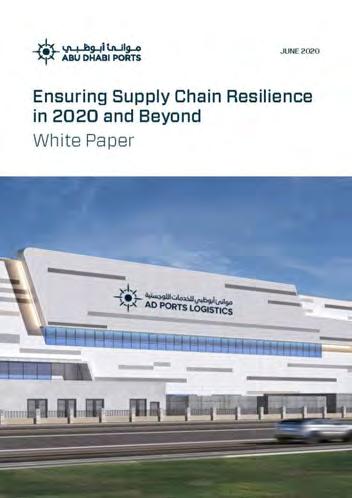
‘Ensuring Supply Chain Resilience in 2020 and Beyond’ White Paper here.

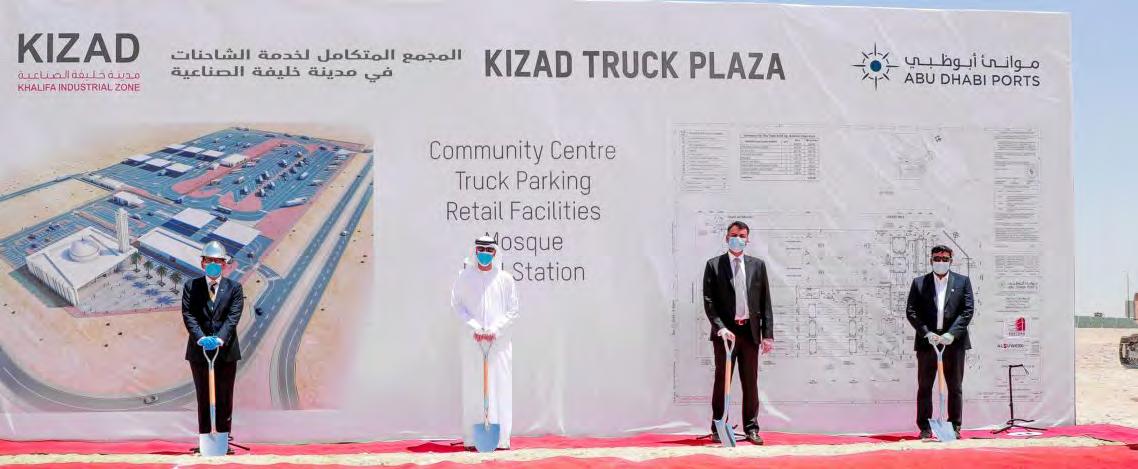
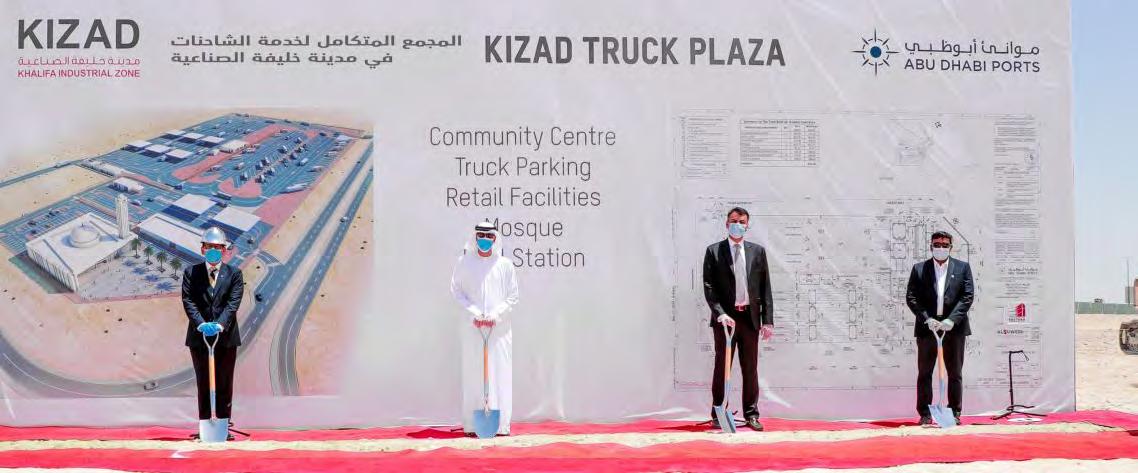
The Khalifa Industrial Zone Abu Dhabi (KIZAD) recently broke ground for a new dedicated truck plaza, incorporating refuelling and rest facilities within the Industrial Zone.
The plaza, covering an area of more than 930,000 sqft or 87,000 sqm, roughly equal to 12 soccer fields, will cater to the needs of workers and visitors at KIZAD’s growing industrial zone. It will include a first-of-itskind dedicated ADNOC Distribution service station for trucks, comprising two main canopies and six diesel bay canopies, and a community centre with 275 shaded truck, bus, and car parking spaces.
It will include a first-of-its-kind dedicated ADNOC Distribution service station for trucks, comprising two main canopies and six diesel bay canopies, and a community centre with 275 shaded truck, bus and car parking spaces. It will also house several retail outlets, including a convenience store, restaurants, a car care service, and a mosque. The project is a significant step forward in providing truck drivers and workers within KIZAD with refuelling and rest facilities.
Abdullah Al Hameli, Head of Industrial Cities and Free Zone Cluster, Abu Dhabi Ports, said: “KIZAD Truck Plaza
is another important milestone in realising KIZAD’s vision to support all of its customers and the community across Abu Dhabi’s industrial and logistics supply chain. We are confident that integrated facilities at the Truck Plaza will ultimately improve the quality of lives of the broader industrial zone community.
Undertaking this new development and collaborating with ADNOC reflects our commitment towards enhancing KIZAD’s attractiveness for both local and global investors. Additionally, this is part of our journey to support the lives of our bourgeoning population of tenants, workers, and residents.”
The truck plaza in Khalifa Industrial Zone (KIZAD) covers an area of more than 930,000 sqft, roughly equal to 12 soccer fields!
Abu Dhabi Ports announced the establishment of a new feeder services company, ‘SAFEEN FEEDERS’ to serve the Group’s mainliner shipping clients and support the region through increased connectivity and optimised shipping costs within and beyond the region.
SAFEEN FEEDERS introduces a new feeder service linking Abu Dhabi to ports serving the UAE, the broader Gulf region and Indian sub-Continent.
The new pendulum service called the UAE-Indian Sub-Continent Gulf Service (UIG), will be executed in partnership with Bengal Tiger Line (BTL), one of the world’s most renowned feeder service operators, through a vessel sharing agreement via a 21-day rotation calling at nine regional ports located across the UAE, Saudi Arabia, Bahrain, Pakistan, and Western India.
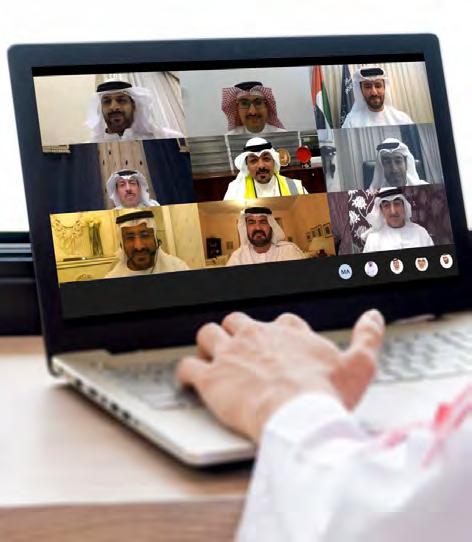
Abu Dhabi Ports held a virtual roundtable workshop with port operators from across the Arabian Gulf, to tease out shared experiences, challenges faced, and best practices when dealing with COVID-19.
The roundtable workshop, hosted by video conference and held in cooperation with the Arab Sea Ports Federation (ASPF) Regional Office based in Abu Dhabi, included presentations from ports and port operators, and touched upon shared experiences relating to business continuity, health and safety, performance, and sea operations.
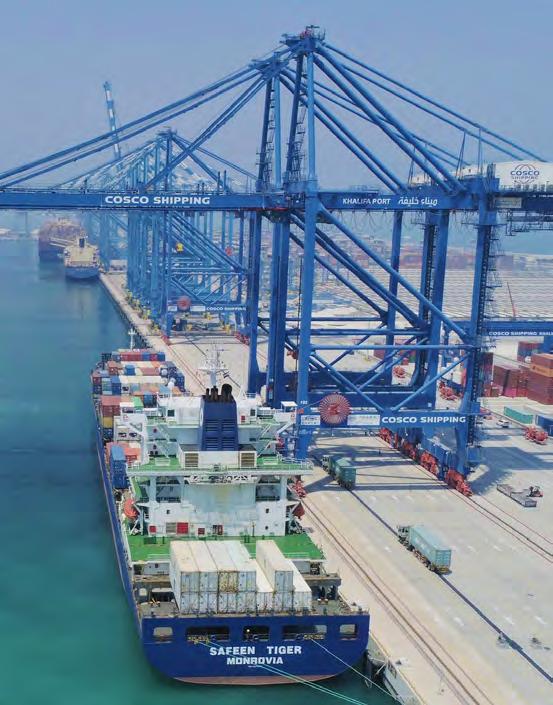
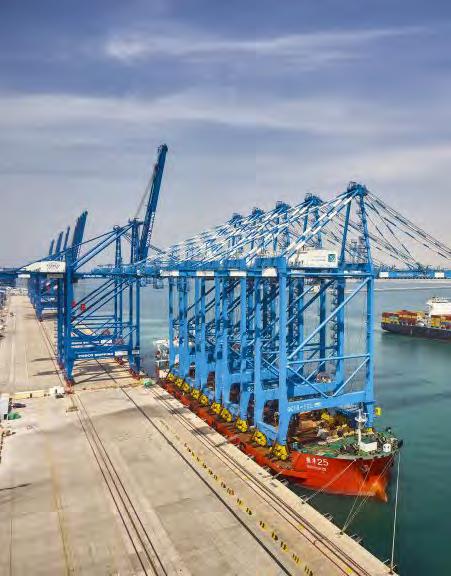
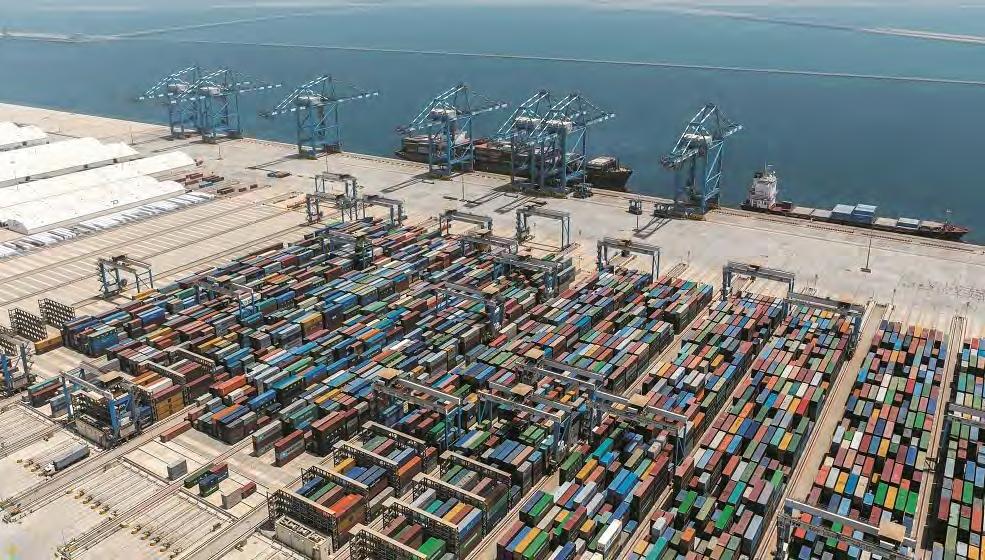
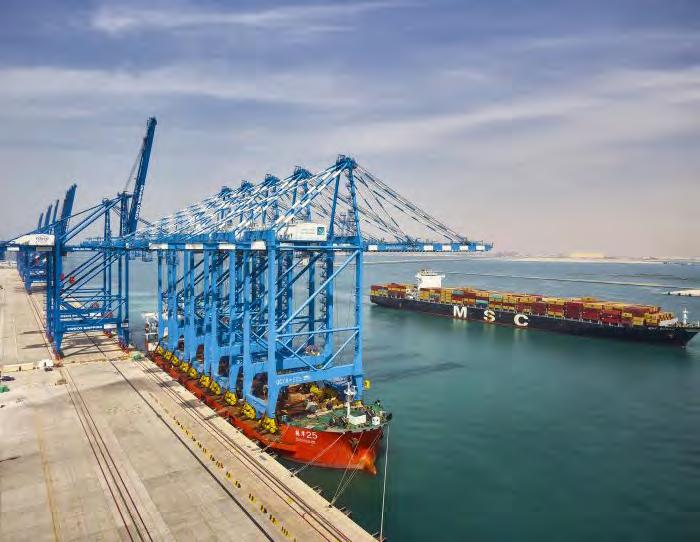
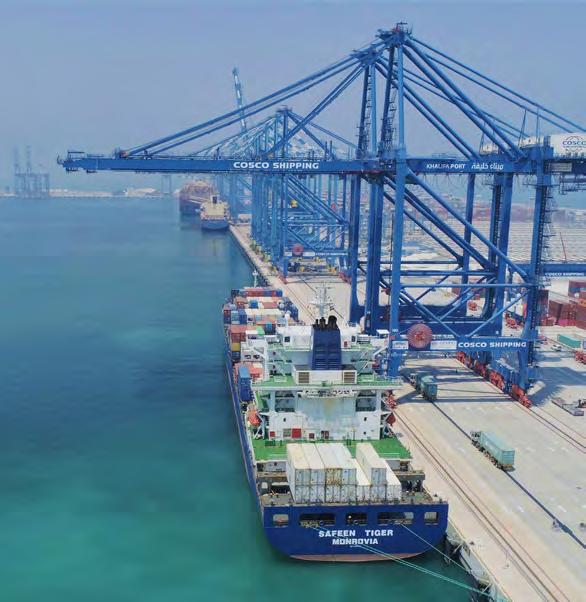
As part of its ongoing expansion efforts, Abu Dhabi Terminals (ADT), recently announced the delivery of its latest batch of Ship-to-Shore (STS) cranes.
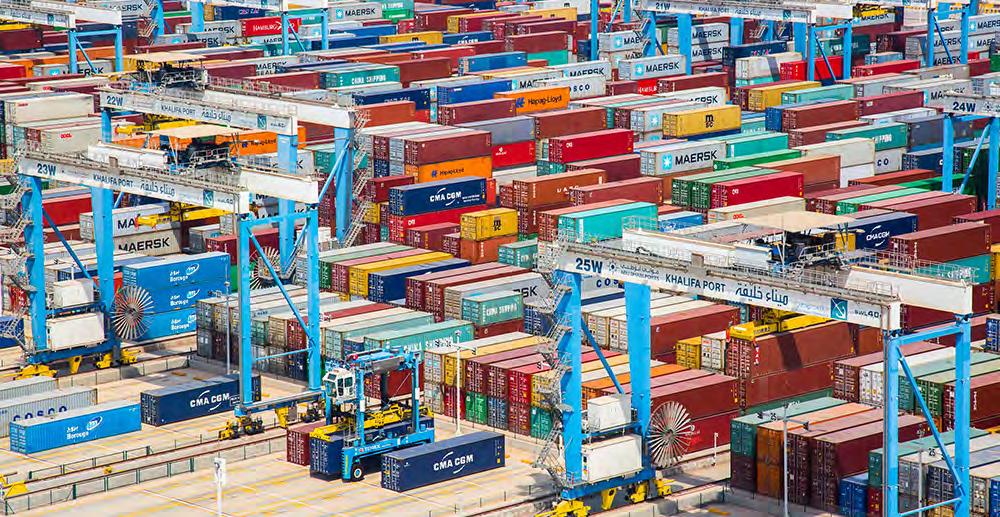
ADT is the management company and operator of Khalifa Port Container Terminal (KPCT), the region’s first semi-automated terminal and one of the most technically advanced terminals of its type.
The five new cranes each with a 73 metre reach, 52 metre height and a lifting capacity of 90 tonnes are integral to ambitious plans that aim to increase capacity at KPCT to 5 million TEU (twenty foot-equivalent units) by the end of 2020.
The STS cranes are among the largest in the world and will play a key role in ADT’s technologically advanced operational ecosystem at Khalifa Port, Abu Dhabi Ports’ flagship semi-automated deep-water port.

Khalifa Industrial Zone Abu Dhabi (KIZAD) announced that it has successfully brought online a new set of services, which will enable customers to access more of its services from anywhere in the world, in collaboration with Maqta
Gateway, developer and operator of the first Port Community System in the UAE, and a wholly-owned subsidiary of Abu Dhabi Ports. The rollout brings the total number of KIZAD digital services to 84, which are available to customers through the online portal.
Abu Dhabi Ports announced major initiatives to address concerns of its customers across its industrial and economic zone subsidiaries to alleviate the challenges faced by companies in light of the COVID-19 pandemic.
The relief package includes several measures to support and safeguad existing customers including a three-month rent deferment for Q2, a freeze on late payment penalties and an exemption from Tawtheeq fees.
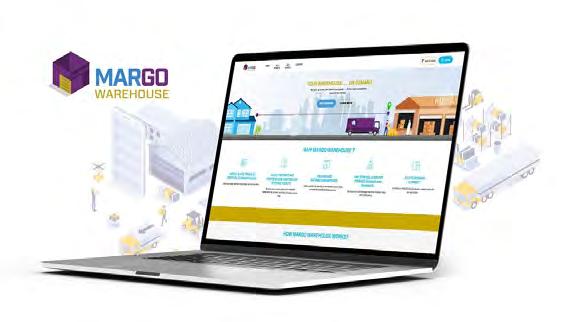
Maqta Gateway, the digital arm of Abu Dhabi Ports, has expanded its digital logistics solution, MARGO, with the addition of a new commercial offering for warehouse storage.
The new offering presents customers with the unique opportunity to book standard warehouses or specialised temperature controlled-storage facilities to safely store their perishable goods. Storage can accommodate food items and medical supplies for
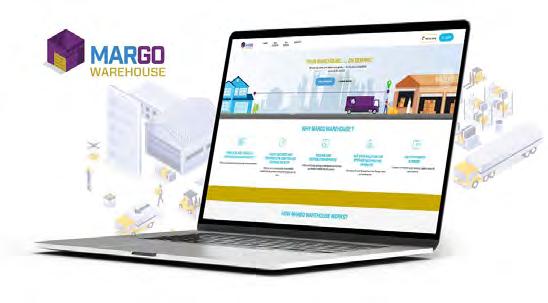
short and medium periods of time and can be booked through simplified paper-free booking processing and remotely managed reservations. This new service leverages the simplicity, convenience, and cost-effectiveness of the existing MARGO platform.
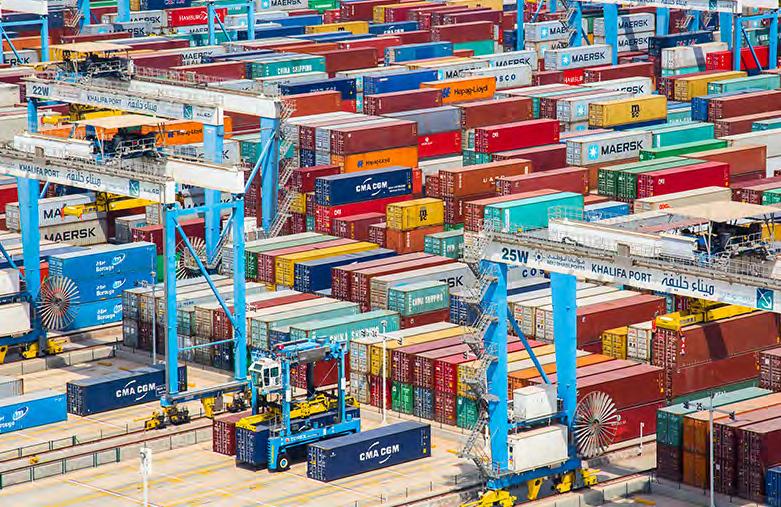
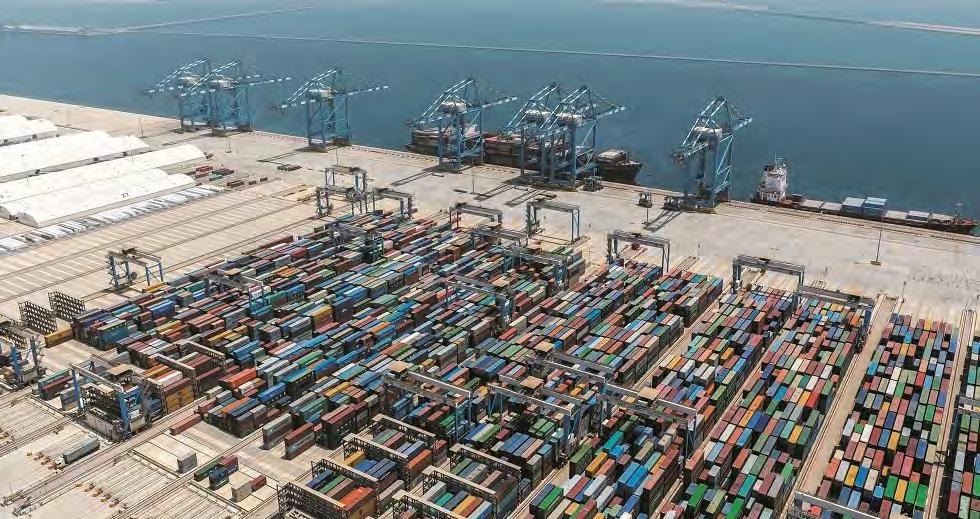
On its first anniversary, Khalifa Port’s CSP Abu Dhabi Terminal, has announced it has accomplished over 800,000 hours
without lost-injury time (LTI) and surpassed the 540,000 TEU mark since its operational soft launch last April.
Abu Dhabi Ports’ Corporate Services Department was recently awarded the coveted Procurement Excellence Gold Award from the UK-based Chartered Institute of Procurement & Supply (CIPS) as part of the institute’s Advanced Procurement Excellence Programme (PEP). Serving as the world’s largest professional body dedicated to upholding the global standard in procurement and supply management, the institute recognised Abu Dhabi Ports’ efforts in elevating its procurement function’s role in providing vital input into the company’s strategic business decisions, enhancing customer experience, and ultimately driving its business success.


On average, a large container ship travels 75 percent of the distance to the moon every year. So, in its lifetime, it travels to the moon and back nearly 10 times!
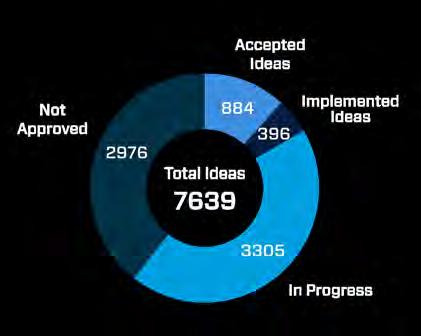
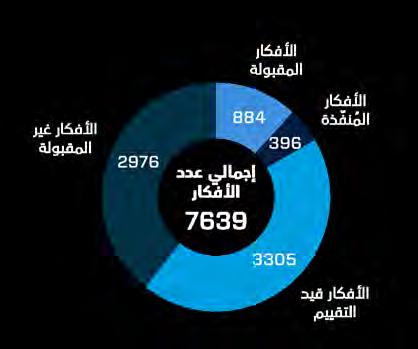
More than half of the 7,639 ideas sent to Abu Dhabi Ports’ award-winning employee suggestions scheme, IBTIKAR, have been accepted, implemented or are in progress
At 5m sqft, the new development of warehouses, light industrial units, showrooms and cool and cold stores is approximately 3.5x as large as the Pentagon near Washington, D.C.

In a single year a large container ship could carry over 200,000 loads of cargo