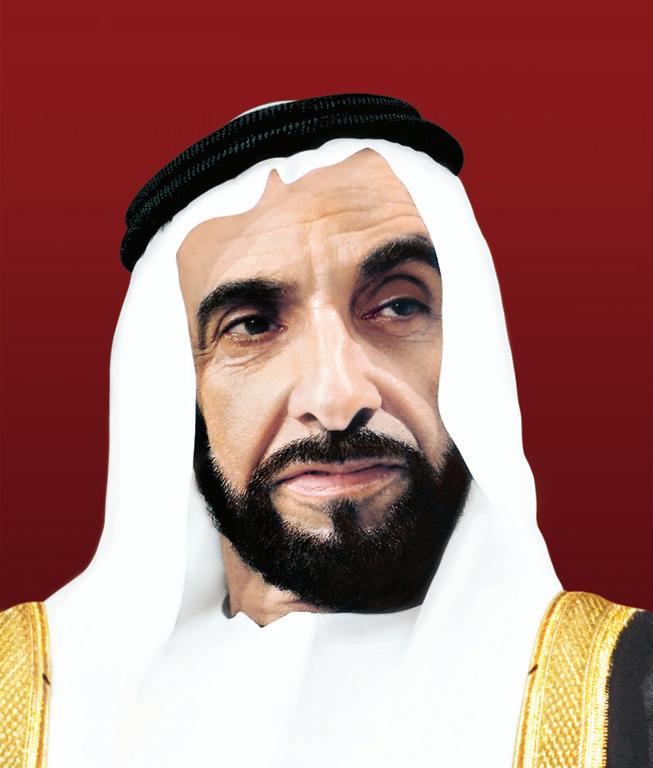
Late Sheikh Zayed bin Sultan Al Nahyan Founder of the United Arab Emirates
“
On land and in the sea, our forefathers lived and survived in this environment. They were able to do so because they recognised the need to conserve it, to take from it only what they needed to live, and to preserve it for succeeding generations. ”
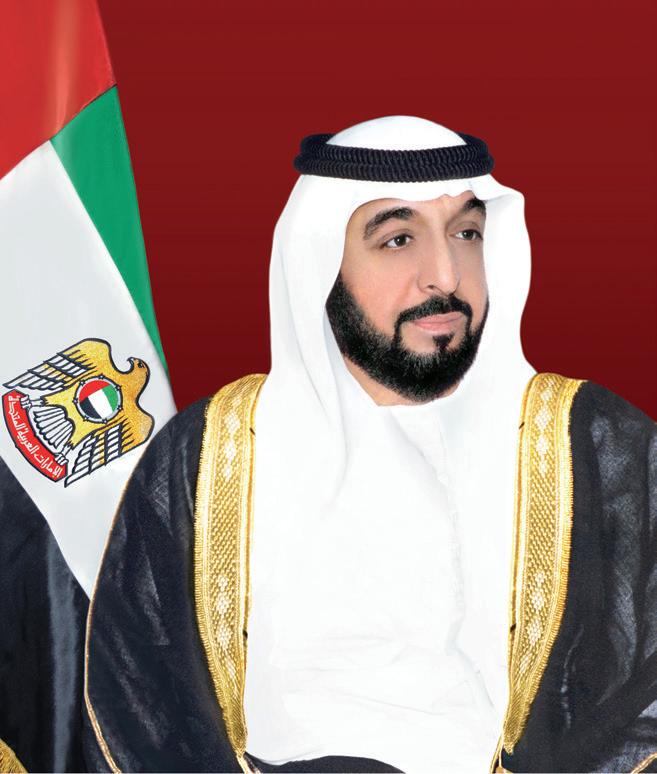
HH Sheikh Khalifa bin Zayed Al Nahyan President of the United Arab Emirates
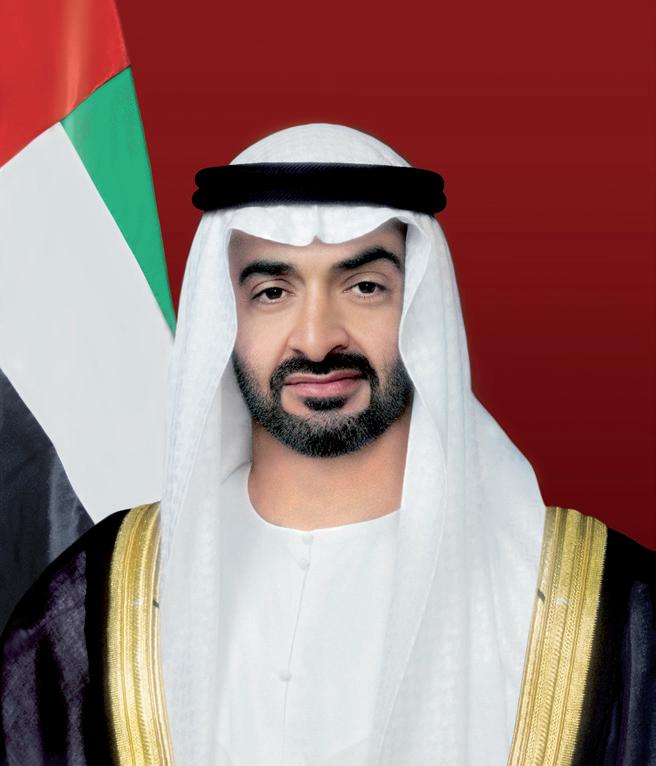
HH Sheikh Mohammed bin Zayed Al Nahyan
Crown Prince of Abu Dhabi
Deputy Supreme Commander of the UAE Armed Forces
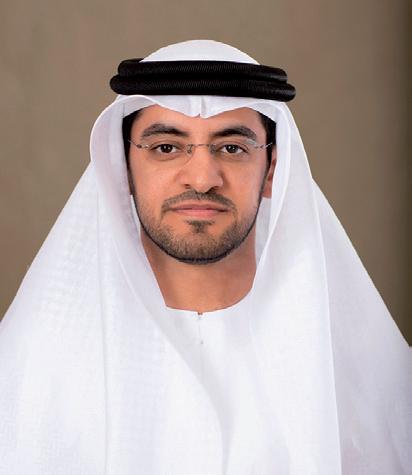
E.
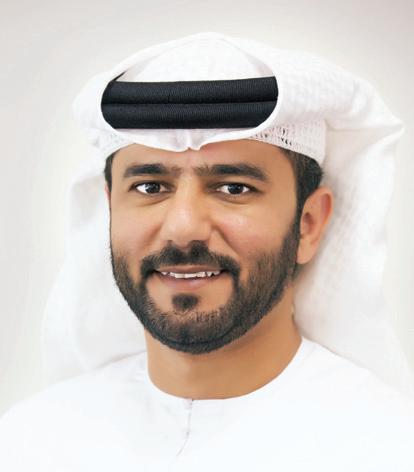
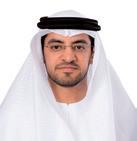
Mohammad Al Ahbabi Chairman
H.
Falah
Chairman’s Statement
On behalf of the Board of Directors, I am pleased to present to you Abu Dhabi Ports’ sustainability report for 2018.
This is our first sustainability report, but sustainability has been central to our business for many years. Social and environmental stewardship is reflected across all aspects of the way we operate and plan our growth. Our sustainability strategy seeks to balance the commercial, environmental, and social dimensions of development in a long-term and global perspective, in alignment with best practice international definitions of the field.
Our mission is to promote Abu Dhabi as a premier trade, industrial and logistic hub, nurture long-lasting relationships with our customers, and increase shareholder value.
In support of the Abu Dhabi Economic Vision 2030, we aim to contribute to a sustainable,
high-value-added and diversified economy. Our business is closely connected to the environment, and so our critical sustainability goals are wide-ranging. They include reducing our emissions, conserving natural resources, integrating sustainability into our supply chain, supporting the UAE’s economic diversification, innovating in new technologies and services, and enhancing community responsibility.
This report exhibits how we aim to contribute towards the benefit of our society and environment through our business model, work principles, and sustainability activities.
As we continue our journey as an international enabler of trade, I welcome the support from our partners, stakeholders and the global community.
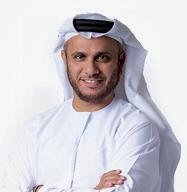
Mohamed Juma Al Shamisi Group CEO
Group CEO’s Statement
“As we continue to grow as a business, our sustainability programme will continually evolve and adapt to meet and respond to the needs of our environment, our community, our nation and the global maritime industry.”
Inclusive growth, low-carbon transformation, the circular economy, the ethical use of technology and public health and safety are some of the major challenges that must be addressed by corporations today in order to be truly sustainable. Abu Dhabi Ports has been navigating these challenges for many years and embraces the opportunity to lead on critical industry issues.
Abu Dhabi Ports is fully committed to the triad of sustainability principles- economy, environment and society. They are embedded into our business strategy, our key performance indicators, and the way we reward our people and partners. Our aim is to contribute to up to 15% of Abu Dhabi’s non-oil GDP by 2030. We have also master planned and developed the infrastructure for a whole new economic city in Khalifa Industrial Zone Abu Dhabi (KIZAD) that is an integrated pillar of the nation’s economic and urban development.
We know that sustainability isn’t achieved on the sidelines and that for our business to be viable, our core business model must be underpinned by sustainable practices. We continue to create breakthrough innovations and forge strong global partnerships, thereby facilitating the transfer of technology and attracting investment, while contributing to the development of society and safeguarding
the environment. This is reflected in several decisions we have made during planning and development phases: the introduction of an Environmental Breakwater to safeguard the Ras Ghanada Coral Reef, the development of the Hot Metal Road at KIZAD to help reduce energy use, and the establishment of Abu Dhabi Maritime Academy to ensure that our workers are prepared for the future of the industry. We have developed the community ports in Al Dhafra Region to connect the UAE’s remote communities to infrastructure and trade, generate employment and support the oil and gas and fishing sectors.
Our contribution extends beyond our business practices. We promote cooperation between businesses, governments, society, and the general public. We have partnered with several NGO’s, such as Emirates Red Crescent and Make-A-Wish Foundation - UAE to support social welfare programmes.
As we continue to grow as a business, our sustainability programme will continually evolve and adapt to meet and respond to the needs of our environment, our community, our nation and the global maritime industry.
I would like to thank our stakeholders, partners, customers and everyone at Abu Dhabi Ports whose dedication and consistent efforts have helped make 2018 such a strong and positive year for us.
About the Report
Abu Dhabi Ports has adopted the Global Reporting Initiative (GRI) Sustainability Reporting Standards to prepare its first sustainability report. The GRI Standards are the first global standards for sustainability reporting and feature the global best practice for reporting on a range of economic, environmental and social impacts. Abu Dhabi Ports Sustainability Report 2018 has been prepared in accordance with the GRI Standards: Core option.
While preparing the report we have adhered to the following reporting principles to ensure report quality:
In addition we have followed the below mentioned reporting principles to definie the report content:
Stakeholder Inclusiveness
Identifying stakeholders, and understanding their expectations and interests.
Sustainability Context
Reporting our performance spanning across the three pillars of sustainability: people, planet and profit.
Completeness
Covering material topics and boundaries, to reflect economic, environmental, and social impacts.
Materiality
Reflecting significant economic, environmental, and social impacts, and the aspects that substantively influence the assessments and decisions of stakeholders.
Embedding a Sustainable Culture
Our Vision
To be the preferred provider of world-class integrated ports and industrial zone services.
Our Mission
We enable maritime trade businesses by effectively managing ports and integrated assets and services, promoting Abu Dhabi as a premier trade hub, creating long-lasting relationships with customers, and maximising shareholder value.
Our Values
11
PORTS AND TERMINALS
32
THOUSAND VESSELS CALLED OVER CRUISE PASSENGERS
350,000
65
AED BILLION INVESTMENT IN KIZAD
Abu Dhabi Ports at a Glance
Established in March 2006, Abu Dhabi Ports is a master developer and manager of ports and industrial zones in Abu Dhabi. It owns, manages and operates 11 ports and terminals along with an industrial zone spread across 410 square kilometres.
Abu Dhabi Ports is a government of Abu Dhabi entity. Its core objective is to facilitate the diversification of the economy by stimulating trade and tourism. It enables maritime trade businesses by effectively managing ports and integrated assets and services, promoting Abu Dhabi as a premier trade hub.
It is located at the crossroads of trade between Europe, Asia, and Africa, making it pivotal in linking Abu Dhabi to global markets and thereby, enabling economic development through the movement of goods, equipment, materials, and by supporting the tourism industry.
Situated in the heart of strong development markets including Middle East, Africa, and South Asia regions, the ports offer access to approximately 4.5 billion consumers within four time zones.
Abu Dhabi Ports manages 11 ports and terminals through seven business subsidiaries. Operations are based in Abu Dhabi, UAE and in Guinea. Abu Dhabi Ports plays a crucial role in building Abu Dhabi’s economy by contributing AED 19.6 Billion to the GDP which is 3.6% of Abu Dhabi's Non-oil GDP. Abu Dhabi Ports also supports 60,000 jobs in Abu Dhabi and 91,000 jobs in the UAE.
The Ports are in a phase of unprecedented expansion and growth, which is reflected in operational performance with an increase in cruise passengers, vehicles, and TEUs handled.
Figure 1: No. of cruise passengers
Figure 2: No. of vessels called
Figure 3: TEUs handled
Figure 4: No. of RoRo units handled
Key Achievements
Economy
AED 2 Billion Revenue
3.6% of Abu Dhabi’s Non-Oil GDP
AED 65 Billion Investment in KIZAD
95% Local SuppliersBoosting Local Economy
858 Direct and 90K Indirect Employment Opportunities
Conservation of Ras Ghanada Coral Reef
34% Reduction in Fuel Consumption
66% Solid Waste Recycled
Environment
Estidama Pearl 2 Rated Warehouses
Hot Metal Road, Eight Lane Modular Path to Reduce Energy
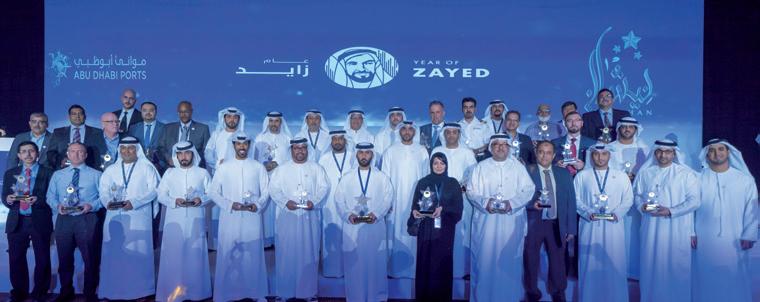
ADAEP Award - Won 5 Categories, Including the Main Award
Seatrade Middle East and Indian SubcontinentPort Authority Awards
Abu Dhabi Ports CEO Recognised in Top 25 CEO Powerlist
25 Shipping Lines, Direct Link to 70 Ports
Five Year Plan to Achieve 9.1 Million TEU Capacity
Partnership with the Global ‘Make-a-Wish Foundation’
‘Warehouse of Giving’ in Collaboration with Emirates Red Crescent
Safe OperationsZero Fatalities Over Last 9 Years
Operating Five Community Ports
Maritime Academy for Training, Awareness and Skill Development
Our Services
Sustainability at Abu Dhabi Ports begins with our value system and a principle-based approach to doing business. We are committed to the ten principles of the UN Global Compact (UNGC) that addresses Human Rights, Labour, Environment and Anti-corruption. While providing our services we ensure that we are abiding by the requirements of the UNGC principles.
Ports & Terminal Operations
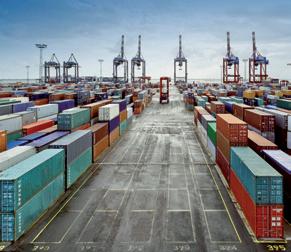
To facilitate UAE’s diversification agenda, Abu Dhabi Ports acts as a business enabler to provide vital infrastructure for the global maritime industry. Our portfolio consists of commercial, community, logistics and leisure ports providing container, general cargo, bulk and Roll on - Roll off (RoRo) services.
Industrial & Freezone
Through KIZAD and Khalifa Port FTZ, Abu Dhabi Ports offers warehousing solutions, land lease, licensing and freezone offices to support the needs of industries and logistics companies. Khalifa Port FTZ is the largest free zone in the Middle East. The industrial and free zone hub has excellent access to markets through world-class transportation infrastructure with multi-modal connectivity by road, ports, air and future rail networks.
Marine Services
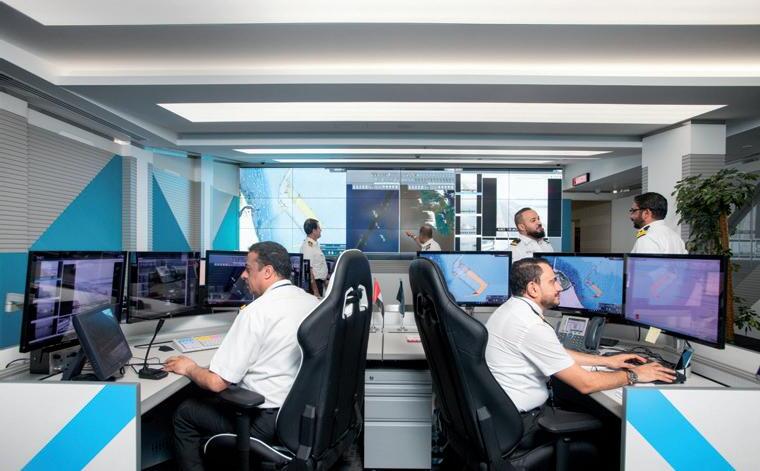
SAFEEN provides a host of marine services to support the maritime industry including Vessel Traffic Services (VTS), pilotage, harbour tug and towing, mooring and bunkering services. These are in addition to a wide range of add-on marine and navigation services.
Cruise Services
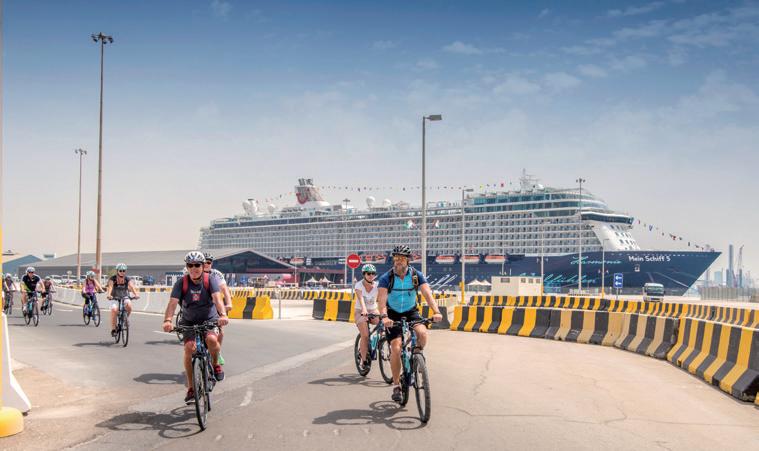
Through our cruise terminal, we strive to deliver efficient, fast and smooth operations for arriving vessels from regional and international cruise lines. With over 900 metres of berth space and 7,800 square metres of modern, spacious terminal, we can host three vessels simultaneously.
Digital Solutions
Abu Dhabi Ports provides smart and innovative digital solutions to trade and port communities. Our services are designed to increase the efficiency and productivity of maritime business interactions, encouraging transparency, access to real-time information and optimising resource consumption.
Support Services
To deal with emergency or contingency within
Maritime Training
In order to equip fresh graduates and professionals with skills required for the maritime industry and to promote awareness, we established Abu Dhabi Maritime Academy that offers globally recognised maritime courses by partnering with international maritime institutions and consultancies.
Our Ports & Terminals
Khalifa Port
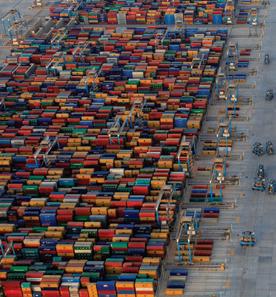
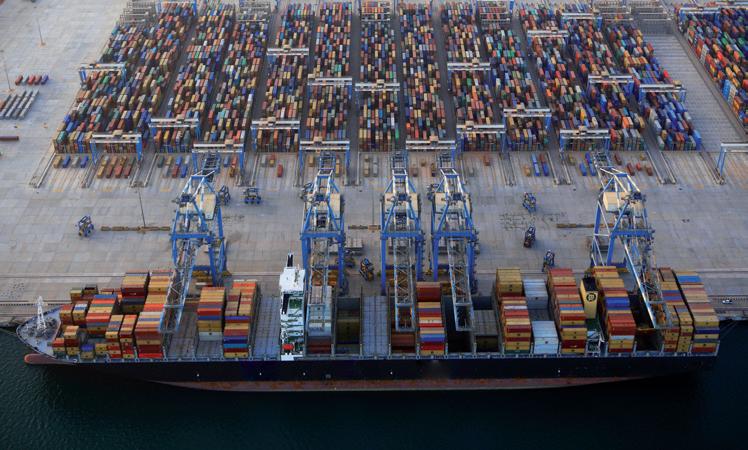
Khalifa Port is one of the most technologically advanced ports in the world whose construction was carefully planned to keep environmental impact to an absolute minimum. The flagship port handles general cargo, bulk, container and RoRo. It serves multiple shipping lines, offers direct links to more than 70 international destinations, and boasts an intermodal transport network facilitating efficient transportation and logistics across the sea, road, and air.
Abu Dhabi Ports has taken a strategic decision to develop its ports and terminals through collaboration with leading companies in line with Abu Dhabi’s Vision
In 2012 Abu Dhabi Ports signed a 30-year concession agreement with Abu Dhabi Terminals (ADT) to operate and manage the container terminal at Khalifa Port. As one of the largest semi-automated facilities worldwide it is able to handle the largest container vessels in service and provides state of the art technology, systems and processes for maritime traffic.
In 2018 Abu Dhabi Ports strengthened its Khalifa Port operations at ADT by signing a 30-year concession agreement with Geneva-based MSC Mediterranean Shipping Company, a global leader in transportation and logistics. The agreement includes an AED 4 billion investment in operational yard and equipment to expand capacity to handle more than 5 million TEUs over the next 4 years.
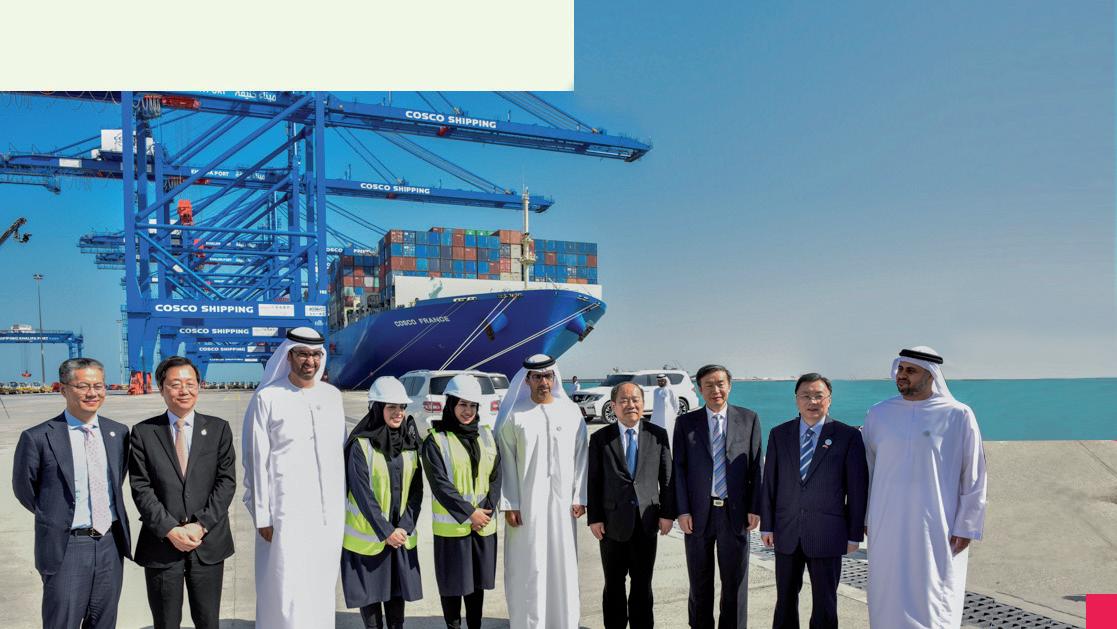
In the same year Abu Dhabi Ports inaugurated CSP Abu Dhabi Terminal at Khalifa Port in December. The terminal positions Abu Dhabi as the regional hub for COSCO SHIPPING’S global network of 37 ports further connecting the emirate to the major trade hubs along the ‘Belt and Road Initiative’. The deep-water, semi-automated container terminal includes the largest container freight station in the Middle East, covering 275,000 sqm. The CSP Abu Dhabi Terminal has a design capacity of 2.5 million TEUs with 1,200 metres of quay.
Abu Dhabi Ports also signed an agreement with Autoterminal Barcelona , a leading multimodal car terminal operator, to create a new joint venture company called Autoterminal Khalifa Port . The RoRo terminal
will be spread across 300,000 square metres with more than 550 metres of dedicated quay. With highly efficient storage and berthing, the terminal will be able to process a high volume of vehicles with the ability to store approximately 17,000 vehicles. This new terminal will position Abu Dhabi Ports as a leading RoRo terminal operator in the region.
Khalifa Port is one of the fastest growing ports in the world with the ability to serve the largest ships at sea and is undergoing further expansion to serve general cargo, bulk and other commodities through a new quay and logistics area due to open in 2020. Khalifa Port’s total capacity is expected to reach 9.1m TEUs by 2024.
Fujairah Terminals
Abu Dhabi Ports signed a 35 year concession agreement in June 2017 with Fujairah Port. Under the agreement, Abu Dhabi Ports is investing in excess of AED 1 billion into the rejuvenation of the Port and will develop and manage the operations of containers, general cargo, RoRo, and cruise through Fujairah Terminals. It is the only multi-purpose port on the eastern seaboard of the country close to the east-west shipping routes supporting international trade.
Free Port
Established in 1978, the Free Port in Zayed Port offers cargo services, logistics, and recreational facilities to support projects on small islands within the UAE. It caters to smaller vessels, tugs, barges and service crafts. It handles general and bulk cargo including petroleum and chemicals and is a critical supply link for the Oil and Gas sector.
Port of Kamsar
Kamsar Container Terminal (KCT) is an independent commercial terminal operated by Abu Dhabi Ports for the aluminium industry in Guinea, West Africa and can accommodate general cargo, container, and RoRo vessels. The terminal has 2 berths and is capable of handling ships up to 140 metres overall length.
Mugharraq Port
Mugharraq Port is an international port strategically located in the Al Dhafrah Region offering general cargo handling facilities and supports ferry and logistics connections to Delma and Sir Bani Yas Island. The Port is currently undergoing an AED200 million expansion improving infrastructure, increasing facilities and handling capabilities to cater to demand. Going forward the Port will provide essential services for the offshore Oil and Gas industry.
Musaffah Port
Musaffah Port is the second oldest port after Zayed Port. Located in the Musaffah industrial area, the Port is famed for being served by one of the busiest channels in the world, the 53 kilometre Musaffah channel, the second longest channel in the region. Musaffah Port offers a general cargo terminal with a wide range of facilities such as breakbulk and RoRo operations. Musaffah Industrial area provides warehousing for multiple industrial and commercial sectors including steel, dredging, shipbuilding and off-shore construction.
Zayed Port
Zayed Port was established in 1972, and is located on the northeast tip of Abu Dhabi. It covers an area of 5.3 square kilometres and consists of 21 berths, with total berth length of 4,375 metres along with warehousing and cold storage facilities. It was the main port in Abu Dhabi for almost 40 years. Following the transition of container and RoRo cargo to Khalifa Port, Zayed Port continues to service the general cargo and bulk sector and has established itself as a world class hub of cruise tourism for Abu Dhabi. It is one of the biggest commercial ports in the capital with the ability to handle up to 14 ocean-going vessels at any time.
Abu Dhabi Cruise Terminal
Abu Dhabi Cruise Terminal was inaugurated in December 2015, and it is the first dedicated permanent cruise infrastructure in Abu Dhabi operating from Zayed Port, an ideal location close to the city. More than 366,000 passengers arrived through the cruise terminal in 2018 via numerous cruise lines.
A unique additional cruise stop is also available - Sir Bani Yas Cruise Beach - the first and only dedicated cruise beach of its kind in the region, offering tourists an incredible cruise stop adventure. It was developed by Abu Dhabi Ports, to meet the demand for beach calls by the world’s leading cruise lines. Sir Bani Yas Cruise Beach is set against the landscape of Sir Bani Yas Island, a natural and cultural landmark of the UAE.
Community Ports
Abu Dhabi Ports community ports extend from Shahama near the city of Abu Dhabi to the Al Dhafra Region. All the ports play an important role in serving the local community, specifically supporting the fishing communities and facilitating the current redevelopment on the surrounding islands. The ports in Al Dhafra also support the oil and gas sector by offering general cargo handling, support logistics and passenger ferry connections.
Shahama Port
Shahama Port is a prime, mixed-use port, and is set to become a commercial, leisure and tourist city hub. It is under the process of being upgraded and upon completion, Shahama Port will become the largest onestop shop for leisure boat users.
Al Sila Port
A port that supports the local fishing industry and provides cargo services, along with recreational activities. The Port is undergoing an expansion programme to increase its offering to cater to general cargo service the Oil and Gas industry.
Delma Port
Delma Port serves as a general, multipurpose port to handle cargo, passenger ferries and fishing vessels at Delma island.
Al Mirfa Port
A community port that caters to fishing and leisure vessels. It also has a dedicated space for retail and local businesses.
Our Business Subsidiaries
Abu Dhabi Ports manages and operates subsidiary companies to offer a full spectrum of integrated maritime operations, Industrial Zone and associated services. We operate the following business units:
Khalifa Industrial Zone Abu
Dhabi (KIZAD)
200+ national and international investors
17.4km2 of land leased
AED 65 billion investment
KIZAD is one of the world’s foremost portintegrated industrial zones and a leading hub for manufacturing, logistics and trade across diverse sectors. Unveiled in 2010, it became operational in 2012 and forms a core pillar of Abu Dhabi Economic Vision 2030, which seeks to diversify the emirate’s economy. KIZAD is spread across 410 square kilometres of land and is intrinsically linked
KIZAD offers free zone and non-free zone solutions for land leasing, pre-built warehouses and offices and features a number of clusters, including an Auto City for automotive logistics, trade, distribution and assembly. Other clusters specialise in sectors such as food and beverage, metals, polymers, oil & gas, logistics and energy. By investing in infrastructure, technologies and innovation, local and international talent, KIZAD aims to be the destination of choice for companies looking to set up their manufacturing and logistics base in the region. The focus is to provide an ecosystem where the customers are able to have advantages of best cost, speed and scale for their operations.
Abu Dhabi Marine Services ‘SAFEEN’
SAFEEN, the marine arm of Abu Dhabi Ports, provides a range of maritime and quayside support services which includes VTS, vessel berthing and un-berthing assistance, navigational support, inspections, shipping maintenance and ferry management, and landing craft services. It also maintains all aid-to-navigation buoys and beacons along the coastline and waterways, ensuring the safe and efficient movement of vessels around the Emirate.
SAFEEN’s team comprises of more than 250 certified and trained professionals who work together to deliver safe, superior and cost-effective services. SAFEEN operates a modern fleet and uses the latest port equipment and continuous training to deliver safe and environmentally responsible services. SAFEEN has clocked up more than 1.5 million working hours without ‘Lost Injury Time’.
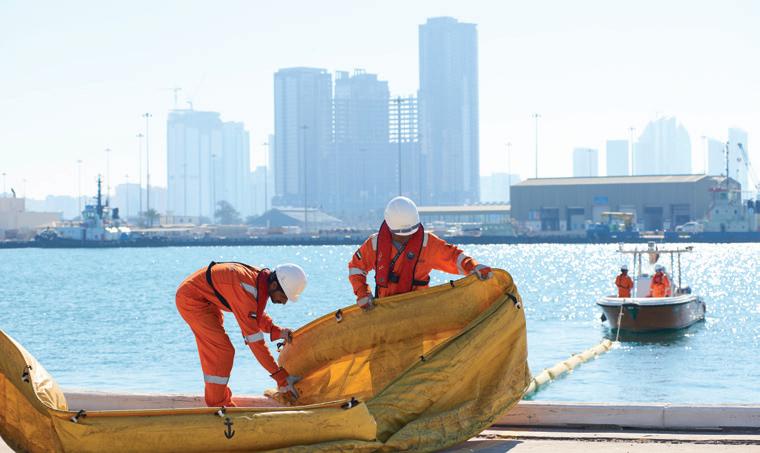
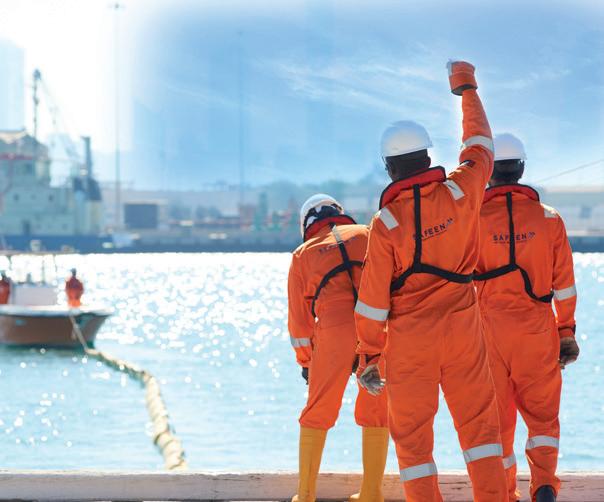
The protection of marine environments is a priority for SAFEEN. The oil spill response team is qualified as per IMO level 1 and 2 requirement and oil spill tier 1 equipment are maintained ready for response across all Abu Dhabi Ports.
SAFEEN is also a regular recipient of industry distinctions including – the International Maritime Organisation (IMO) for safety management, the International Safety Management (ISM) certification, and the International Standard for Maritime Pilot Organisations (ISPO) – the industry gold standard.
85,000
Annual Ferry Passengers
Annual Towage Operation
6,400
9,800 Annual Pilotage
27,000
Annual Vessel Calls
Abu Dhabi Maritime Academy
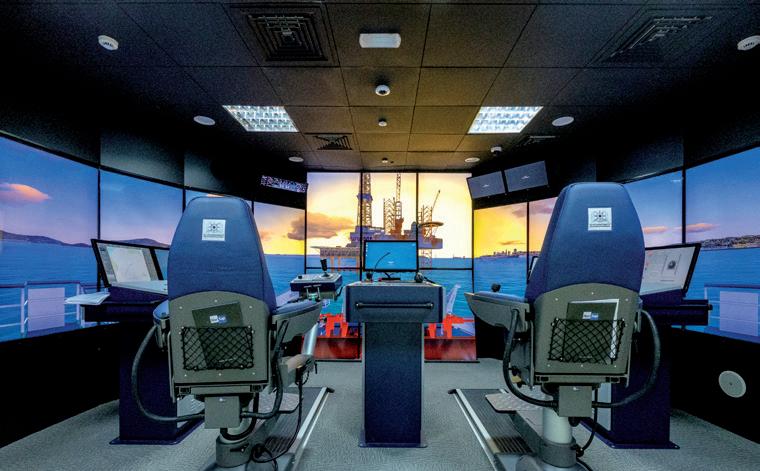
Abu Dhabi Maritime Academy is a centre of excellence within the UAE’s maritime industry, providing a turnkey solution for its training and educational needs. The Academy boasts state-of-the-art maritime simulators and teams of highly qualified, skilled, and internationally experienced instructors who deliver a variety of courses to prepare and equip the next generation of maritime officers in the UAE.
Maqta Gateway
Maqta Gateway was established in 2016 with a vision to position Abu Dhabi Ports as a leader in the development of integrated, digital global trade. It is steering Abu Dhabi Ports' mandate of the digital transformation of Abu Dhabi’s maritime, trade and government services.
Maqta has developed several products including the Licensing Management System, Vessel Management System, Verified Gross Mass, and Maqta Payment Gateway. It also provides training services to customers and partners so that they can seamlessly benefit from the online platforms created by Maqta.
Governance
Board of Directors
Our board of directors comprises of visionary leaders who guide and propel Abu Dhabi Ports forward as we seek to create sustainable growth and maximise value for all our stakeholders.
Aligned with the Abu Dhabi Economic Vision 2030, our leadership team aims to contribute to a sustainable, diversified and high-value-added economy that encourages enterprise, entrepreneurship, and innovation to integrate Abu Dhabi Ports with the global economy.
Our Board of Directors’ responsibility is to reflect the commitment to excellence that projects our brand as a forward-thinking, pioneering company in the region and international markets.
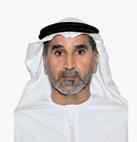
H. E. Falah Mohammad Al Ahbabi Chairman
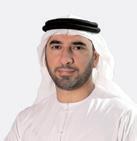
H.E. Mohamed Mubarak Ali Al Mazrouei Board Member
H.E. Staff Major General Pilot Faris Khalaf Khalfan Al Mazrouei Board Member
H.E Abubaker Seddiq Al Khoori Board Member
H.E. Khalifa Mohammed Hamad Fares Al Mazrouei Board Member
Sustainability Committee
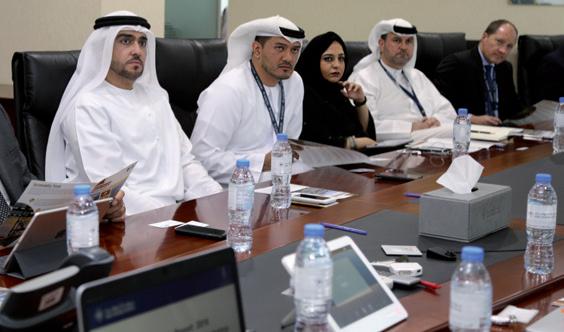
The Sustainability Committee is an eight-member team and is responsible for overseeing the development and implementation of our strategy and policies on sustainability. The committee meets every quarter and comprises of members drawn from different departments. The committee members are appointed for a term of one year and are currently headed by the Chairperson from the Corporate HSE department.
Our Commitment to UN SDGs
The United Nation’s Sustainable Development Goals (UN SDGs) are a global blueprint for governments and organisations to address today’s most significant development challenges. The UN SDGs are a set of 17 goals which are at the core of the United Nation’s 2030 Agenda for Sustainable Development. Abu Dhabi Ports is committed to working together with governments, private sector companies, institutions, and civil society organisations in the UAE and globally to support the attainment of the UN SDGs by 2030.
We understand our role in shaping a sustainable future for all. As part of our annual sustainability committee’s review meeting, we assessed how the UN SDGs aligned with our own sustainability strategy. We found 8 of the 17 UN SDGs were directly relevant to our business and sustainability agenda.
Good Health and Well-Being
We conduct regular road safety campaigns in partnership with regulatory bodies and put continuous efforts towards the attainment of goal 3.6 of the UN SDGs. All our employees are provided with health coverage along with frequent health check ups.
Quality Education
We have several programmes in place such as NAWRAS and PIER programme, where youth and adults gain exposure to the maritime industry and develop skills for career development. Our maritime academy is a leading maritime education and training provider in the UAE and the region.
Decent Work and Economic Growth
We contribute 3.6% of the non-oil GDP and provide direct and indirect employment to 90,000 people in the UAE. We are focused on diversifying the UAE’s economy by supporting the industrial as well as the tourism sector.
Reduced Inequalities
We believe in inclusive growth and in providing equal opportunities to everyone. 20% of our senior management are women and overall 42 different nationalities work within our organisation.
Industry, Innovation and Infrastructure
We manage Abu Dhabi’s maritime and industrial (KIZAD) infrastructure. As we expand we are dedicated to developing high quality, sustainable and resilient infrastructure to support the businesses, grow the economy and generate employment.
Climate Action
Addressing climate change is one of the top priorities of our sustainability strategy. We keep track of our GHG emissions through the annual greenhouse gas inventory created for our operations. We have taken several measures to reduce our GHG intensity by reducing energy and water consumption as well as by integrating renewable energy into our operations.
Responsible Consumption and Production
At Abu Dhabi Ports, we are committed to the efficient use of natural resources and have taken several measures to reduce water, fuel, electricity and paper consumption. We manage our waste responsibly and have achieved significant reductions in waste generation and disposal.
Life Below Water
Careful management of marine biodiversity is a key feature of our sustainability strategy. We have invested in safeguarding the Ras Ghanada coral reefs and undertake marine water quality monitoring to ensure the conservation of marine biodiversity.
10
MATERIAL TOPICS IDENTIFIED
7
STAKEHOLDER WORKSHOPS CONDUCTED
8 STAKEHOLDER GROUPS CONSULTED
Stakeholder Inclusiveness
We believe that engaging directly and openly with our stakeholders is the only way to properly align our business practices with their expectations. Through direct engagement, we have strengthened our accountability with the people most closely connected to our business and this has resulted in increased levels of trust.
Due to the nature of our business, our stakeholders range from employees, shareholders and regulatory bodies to suppliers, customers and those who hold other relationships with Abu Dhabi Ports, such as local communities and civil society. Our consultation with these groups is an ongoing process at Abu Dhabi Ports, wherein we continually engage throughout the year through various channels [including meetings, internal communication focus groups and feedback sessions].
To achieve this we identify our different stakeholder groups, develop engagement programmes, and collect feedback that can help us make informed decisions for organisational growth that factor all stakeholders.
While defining the focus of our first sustainability report, we have taken into consideration the expectations and interests of our stakeholders.
This section of the report provides information on our identification process and the methods used to collate feedback. Further, we have used this section to describe our materiality analysis process and the resultant material indicators.
Stakeholder Consultation Workshops
As part of the assessment process, workshops were undertaken to ensure that the stakeholders were given clearly-defined input mechanisms. The workshops focused on making participants aware of Abu Dhabi Ports’ intention to include their views in the development of this sustainability report and to inform them about what Abu Dhabi Ports has been doing to advance its sustainability agenda.
Five workshops were conducted for internal stakeholders and two workshops for external stakeholders. One of the external workshops focused on private sector companies and civil society organisations that Abu Dhabi Ports engages with. The other external workshop was directed at local and federal government bodies and regulatory authorities. Through the external workshops, Abu Dhabi Ports
engaged with stakeholders across six groups including regulatory bodies, NGOs, suppliers, customers, and community and industry peers.
Following the workshops, feedback was collected regarding what topics the stakeholders felt were most important for the sustainability report. A questionnairebased survey specifically developed to collate feedback included a wide range of sustainability topics relevant to Abu Dhabi Ports and was distributed during the workshop. The participants rated the sustainability topics on a scale of 1 to 10 and the results were analysed to prioritise topics and develop a materiality matrix.
Engaging with our Stakeholders
We acknowledge the wide range of stakeholders across our value chain who are influenced directly or indirectly by our operations. Provided below is the list of groups that were identified, why, and how we engage with them.
Stakeholder Group
Shareholders
Reason of engagement Engagement process
• To understand the expectations and implement s trategies in line with expectations.
• A pproval of several strategic issues.
• To understand employee expectations, assist in professional and personal growth.
Employees
Customers
Suppliers
Regulatory bodies
NGOs
Communities
Industry peers
• Improve work culture and acquire skills relevant for the business function.
• To understand the need of customers.
• G et information on any challenges they are facing.
• Receive feedback on our performance.
• To keep them abreast of our requirements.
• To understand challenges they might face.
• To receive feedback on optimising our supply chain.
• Understand the changing regulatory framework.
• Update them on our performance.
• C ompliance with HSE & security obligations.
• P roject implementation and fundraising.
• P articipate in the drives and events of our mutual concern.
• Understand their concerns and expectations.
• Maintain and manage community ports
• E ngage in community welfare activities.
• K nowledge sharing.
• C ollaboration.
• To keep abreast of the latest developments in our industry
• C o-develop infrastructure for the maritime industry
Board meetings
Internal communications, training & events, stakeholder workshops & performance reviews
Port community system, stakeholder workshops, one to one meetings, annual customer forum
Supplier registration & screening, publications & events, stakeholder workshops, one to one meetings, surveys
Stakeholder workshops, one to one meetings, official correspondence
Stakeholder workshops & one to one meetings, events & publications
Events and exhibitions, one to one meeting, publications
Materiality Assessment
Every organisation faces numerous economic, environmental, and social topics that it can report on. The sustainability topics that merit inclusion in an organisation’s sustainability report are those that can reasonably be considered to reflect the organisation’s economic, environmental, and social impact, or influence the decisions of stakeholders. We considered a combination of internal and external factors using various methodologies through stakeholder consultation when assessing whether a topic was material to Abu Dhabi Ports or not. Provided below is the methodology we followed to conduct the materiality analysis.
Finalisation of Abu Dhabi Ports Material Topics
Sustainability brain storming session
The sustainability brain storming sessions were conducted to identify the key sustainability issues that the organisation is focusing on across departments, functions and subsidiaries. These sessions further included discussions on guidelines, principles, and boundaries for the proposed sustainability report.
Questionnaire distribution
Based on the outcome of brain storming session a questionnaire was developed and was distributed to stakeholders during the consultation process. The questions were based on GRI standards and covered topics across economic, social, and environmental issues.
Alignment with national and international plans and commitments
The prioritised topics were compared with national and international plans, and commitments such as the Paris Climate Agreement, UAE Energy Strategy 2050, and UN Sustainable Development Goals. The list of material topics was then finalised and approved by the leadership of Abu Dhabi Ports.
Prioritising sustainability issues
The results of the questionnaires received for both internal and external surveys were analysed and the topics were prioritised based on the feedback from our stakeholders.
Material Topics
The survey conducted for stakeholders included more than thirty sustainability topics taken from the GRI standards, and from national and international goals and commitments. The stakeholders rated these topics on a scale of 1 to 10, with 10 being the most significant and 1 being the least significant topic. All the topics were described in the context of Abu Dhabi Ports’ operations and boundaries. The results were compiled, analysed and plotted on a graph. All the topics that were rated above 8 were considered material. Visual representation of the prioritisation of the topics is depicted below:
Environmental
GRI 302 : Energy
GRI 303 : Water
GRI 306 : Effluent and w aste
GRI 305 : Emissions
GRI 307 : Environmental c ompliance
Social
GRI 413 : Local c ommunities
GRI 405 : Diversity and equal opportunity
GRI 404 : Training and e ducation
GRI 406 : Nondiscrimination
Economic
GRI 201 : Economic performance
3.6% OF NON-OIL GDP
18% GROWTH IN REVENUE
95% LOCAL SUPPLIERS
280+ SUPPLIERS ENGAGED
Mobilising the Economy
A key measure of Abu Dhabi Ports' sustainability is its ability to sustain and enhance its economic performance. Since its establishment in 2006, Abu Dhabi Ports has aligned itself with the economic plans and directives of Abu Dhabi Government’s Economic Vision 2030, by playing a pivotal role in the growth of the Emirate, and contributing 3.6% of Abu Dhabi’s non-oil GDP growth.
Abu Dhabi Ports' financial results have always been characterised by growing revenues, robust capital structure and healthy profitability. The company has experienced steady growth as the UAE’s maritime trade hub across general and bulk cargo, container volumes and RoRo traffic. An overview of the company’s economic performance for the last 3 years is provided below:
Direct Economic Value Generated
Direct Operating Costs
The development of Khalifa Port has seen Abu Dhabi Ports make a substantial investment in capital over the past 12 years.
Since 2006, capital spending by Abu Dhabi Ports and KIZAD companies is estimated to have made an average total value added contribution to Abu Dhabi’s economy of AED 5.3 billion.
All figures are in billions AED
Refer page 89 for the list of entities included in the financial statement
By operating ports, Abu Dhabi Ports is enabling visitors arriving into Abu Dhabi, and therefore supporting the growth of tourism. The spending of around 330,000 visitors further contributes to the economy of the emirate. In total, the operations of Abu Dhabi Ports contributed more than AED 25.5 billion to Abu Dhabi’s GDP in 2018, up by 21% compared with 2015.
The results demonstrate the crucial role that Abu Dhabi Ports plays as the UAE’s regional and increasingly global maritime trade
Figure 5 : Total economic impact on Abu Dhabi
Sustainable Procurement Practices
With the majority of our operations and services based in Abu Dhabi, we have consciously focused on growing the local economy. We have a proud history of engaging largely with suppliers, manufacturers and service providers who are based in the UAE. Abu Dhabi Ports continued to support businesses based in the UAE throughout 2018. Through our procurement process, we ensure that local suppliers are prioritised over others without compromising quality.
Our annual spend on suppliers for the last three years is provided below:
95% of the suppliers in 2018 were from the UAE.
Local suppliers
Suppliers outside UAE
In 2016 spending was higher compared to 2017 as we initiated work on major projects including the CSP Abu Dhabi Terminal. In 2018 we continued the expansion of Khalifa Port and enhancement of KIZAD, as well as other capital expenditure projects.
In 2016 and 2017 we connected with 300-400 suppliers annually. In 2018 we engaged with 281 suppliers, consistent with previous years.
Figure 6: Annual spend on suppliers
Figure 8: Number of suppliers engaged
Figure 7: Percentage of local and external suppliers
The procurement process at Abu Dhabi Ports is guided by our Corporate Procurement Policy, which establishes standard policies and guidelines applicable to all procurement activities. As part of the supplier registration process, all suppliers are assessed on the three pillars of sustainability 'Environment, Economy, and Society'. The suppliers are required to provide self-declaration and information on the following:
Whether they have a written plan documenting how their organisation addresses and implements sustainable business practices in protecting the environment.
If they pursue sustainable economic initiatives such as waste reduction, recycling, efficiency in transportation and energy consumption.
At present, several major projects are being executed within our operations as part of our expansion plans. We understand the underlying HSE risk of expansion projects and therefore, the HSE performance of all construction contractors are assessed at regular intervals. Through the above process, we ensure that we extend a positive impact on the environment, economy, and society, beyond our boundaries and integrate them into our supply chain.
Whether they take reasonable measures to operate in an ethically and socially responsible manner and raise awareness amongst their employees about the sustainability objectives of the firm.
Sustainable procurement also ensures that we are continuously assessing the need to purchase, thereby reducing consumption quantities, saving energy and water and promoting reuse and recycling. These efforts minimise risks across the supply chain, help to reduce GHG emissions, improve energy efficiency and promote ethical and socially responsible business.
Anti-Corruption
All of our employees are bound by the code of conduct, which includes provisions on anticorruption. All of our contracts also include anti-bribery provisions to safeguard our business needs and discourage unethical business practices.
In addition to complying with the requirements contained in the corporate policy, each employee is made aware of our whistle blower policy. The policy and guidelines are shared with all employees along with a dedicated e-mail and hotline number to report any fraud or unethical conduct.
All employees are provided with an email as well as hotline number to report any fraud or unethical conduct. All employees are informed to only proceed with any action when the answer to the below questions is 'Yes'.
• Is this action legal and ethical?
• D oes it follow company policy?
• D oes it comply with the code of business conduct?
58% EMIRATISATION
54% REDUCTION IN EMPLOYEE TURNOVER
87.5% JOB SATISFACTION
42 NATIONALITIES
Our People, Our Strength
Abu Dhabi Ports ensures that its people stay at the forefront. We encourage our employees to enhance their skills and develop competence and confidence. Inclusive growth, Emiratisation and fostering a culture of sustainability are of paramount importance to us.
Promoting diversity, improving gender equality and increasing Emiratisation are at the core of employee well-being at Abu Dhabi Ports. We invest in our people to not only develop better professionals but also to improve quality of life, progress and prosperity.
Our corporate culture is based on ethical conduct, provision of equal growth opportunity, respect for each other and performancebased compensation. We strive to increase our employees’ innovation, engagement, productivity, and satisfaction.
We conduct employee satisfaction surveys annually. Conducting these surveys is a useful way to gather insight into what is important to our employees. Measuring the key drivers of satisfaction within Abu Dhabi Ports allows us to assess whether our employees are content or not.
While there are no standard drivers of satisfaction, some frequently evaluated factors are: progress, recognition, salary, remuneration, job role, growth opportunities, leadership, and overall work environment.
Employee satisfaction surveys provide an opportunity for open feedback. Establishing a two-way communication ensures that employees realise that their opinions are valued. The information acquired from the satisfaction surveys allows us to recognise the opportunities for improving employee satisfaction at Abu Dhabi Ports.
Over the past years, we have seen increasing satisfaction levels in our employees.
In 2016, 72% of employees reported high levels of satisfaction. With continuous efforts to improve this percentage, Abu Dhabi Ports proudly states that the reported level of satisfaction in 2018 reached 85%.
Abu Dhabi Ports ensures equal employment opportunities by selecting applicants based on their competence, experience and qualifications. This is evident from the diverse work-force that we have which includes 42 nationalities. The number of female employees has also increased by 13% in the last three years.
Figure 9: Job satisfaction
Figure 10: Number of male and female employees
Employee training programmes present a key opportunity to increase the knowledge base of all employees. Enhancing our workforce with employees who can replace each other as needed, work in teams or work independently. Training and development programmes provide both the employees and Abu Dhabi Ports with benefits that make the investment worthwhile.
These programmes create a supportive workplace, where employees who receive training are more capable of performing well in their job roles. Many employees gain access to training they wouldn’t have otherwise sought out for themselves.
The training and development programmes provided by Abu Dhabi Ports are attended by employees across all tiers – top management, middle management, and workforce. The training requirements are assessed based on the business needs and accordingly the training sessions are planned across the tiers.
"I undertook the course on Maritime Operations, wherein I gained theoretical as well as practical knowledge on vessel handling."
Mahra Al Shamsi
Figure 11: Average hours of training for Male & Female
12 :
Employee turnover is an important indicator of job satisfaction. Overall employee satisfaction has been growing and is reflected in the turnover rate. In 2016, the employee turnover rate was 6% which decreased to 3% in 2018. The overall number fell from 50 in 2016 to 23 in 2018.
:
Promoting Local Employment - Emiratisation
The UAE vision 2021 aims to make the UAE one of the best countries in the world by the Golden Jubilee of the Union. Building a competitive knowledge economy is one of the six pillars of National Agenda. The UAE aims to achieve this by unlocking the potential of citizens and enabling them to be a driving force of the UAE’s economic development.
To overcome the structural division in the labour market, the UAE Government launched the Emiratisation campaign which mandates the inclusion of Emiratis in the job sector.
In line with the UAE vision 2021, Abu Dhabi Ports is focused on providing opportunities to local professionals. The number of Emirati employees have increased from 328 in 2016 to 364 in 2018.
14:
Figure
Percentage of local employees excluding blue collar
Capability Development Programmes for Emiratis
UAE Nationals have unique opportunities to explore exciting and challenging careers within Abu Dhabi Ports while undergoing training and skill development programmes that equip them with the skills and know-how to work in the ports and industrial sector. We provide opportunities at all levels, from secondary and high school graduates to professionals with several years of experience. We have multiple programmes to cater to the needs of Emiratis at different levels of their career progression.
NAWRAS Programme
This program is for secondary and high school candidates wherein they gain practical knowledge and experience of working in the ports industry. It offers comprehensive training for prospective ports supervisors, port operators and clerks.
Developee Programme
The Developee Program is for fresh university graduates wherein they undergo on the job training. This provides fresh graduates a chance to grow and acquire the business knowledge and training they need to achieve their career aspirations.
PIER Programme
Ports International Executive Road (PIER) is for experienced professionals, designed to advance employees’ readiness for top leadership positions.
Mentoring Programme
Sanad is a two-way development programme where experienced employees mentor UAE national professionals and prepare them for future challenges and opportunities.
AlNoukhba Leadership Programme
AlNoukhba is designed for senior level employees. it was created as a direct response to the need for succession planning to systematically develop the leadership skills of current and future leaders of Abu Dhabi Ports.
Industry experts work with the succession candidates to develop their skill set on strategic thinking, leadership, innovation and change, stakeholder engagement, commercial and customer focused port leadership, finance and risk management, through a comprehensive and intensive learning programme.
Certified CEO Programme
An online leadership programme for aspiring and experienced executives which aims to equip them with the knowledge and skills necessary to successfully carry out executive leadership functions. This solution has been designed to be completed in ones’ own time, using compatible devices and delivered through a modern and intuitive Virtual Learning Environment
Fostering a Culture of Sustainability
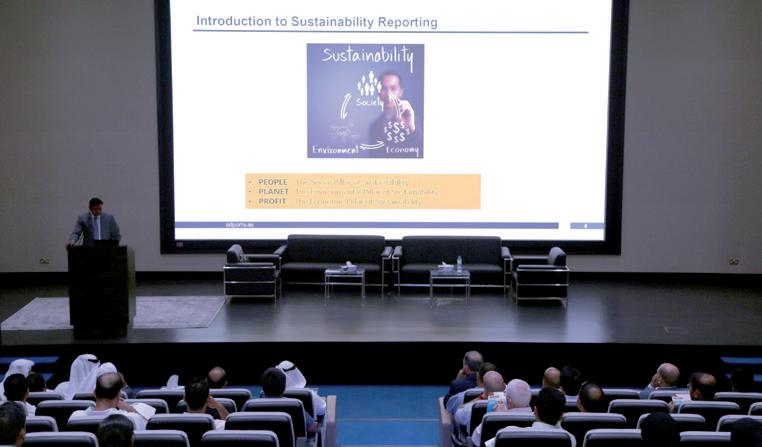
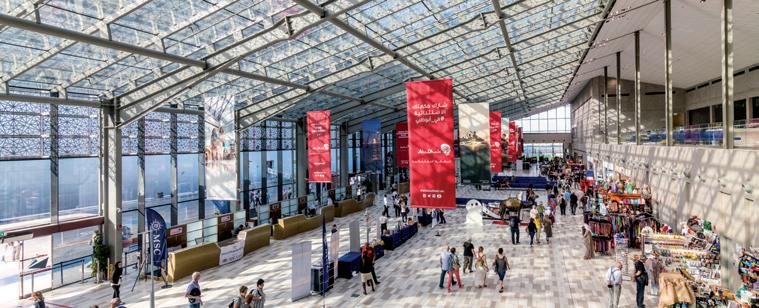
Abu Dhabi Ports held ‘Sustainability Week’, a 3-day event at the Cruise Terminal in Mina Zayed. This stakeholder event was held to raise local community awareness, encourage partner and customer engagement and promote knowledge sharing and establishing a culture of sustainability amongst corporations in Abu Dhabi.
Under the theme of ‘Sustainable Businesses for a Sustainable Community,’ the forum featured a range of interactive workshops and audio-visual demonstrations to advocate dialogue around overcoming challenges in implementing sustainable strategy. A series of awareness lectures as well as presentations on key research and studies also took place alongside an exhibition of visiting companies as well as a photo gallery and competition.
The event welcomed representatives and exhibitors from local academic institutes in order to emphasise the need for partnerships on sustainable thinking and innovation between academia and businesses.
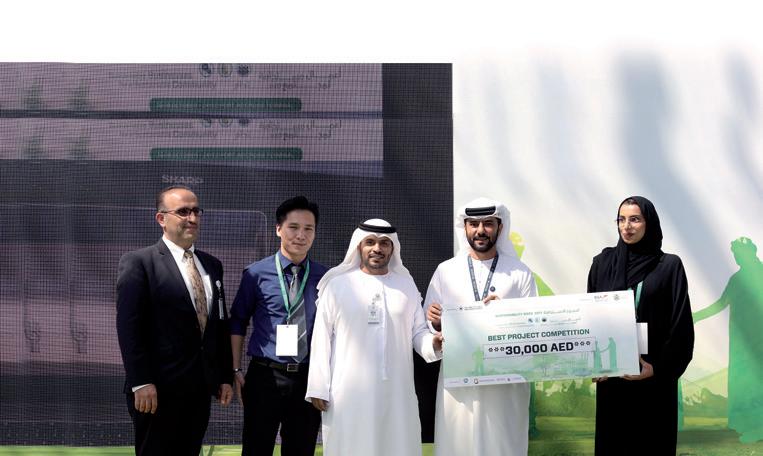
The institutes presented their research topics on sustainability, health, safety & environment, green belt, power & water conservation, waste disposal, and protection of marine environment. The best research and projects were rewarded by Abu Dhabi Ports. Other attendees at the event included government entities, business partners and port customers.
Giving Back to Society
At Abu Dhabi Ports we believe in giving back to society and the community where we operate. We are aligned with national and international philanthropic organisations to develop events, initiatives and support programmes that educate local communities about the maritime business by linking our CSR activities with our business. Two such important partnerships are with Make-A-Wish Foundation UAE (MAW) and Emirates Red Crescent.
Warehouse of Giving
Abu Dhabi Ports has donated a warehouse to Emirates Red Crescent in an effort to help and support families across the UAE. Named the “Warehouse of Giving” and spread across 550 m2 in Zayed Port, this facility offers
Granting a Wish to Critically Ill Children
Abu Dhabi Ports has partnered with Make-AWish Foundation UAE to help raise awareness about the activities taken by the foundation as well as granting wishes for critically ill children, leading the way on our international CSR activities for the very first time.
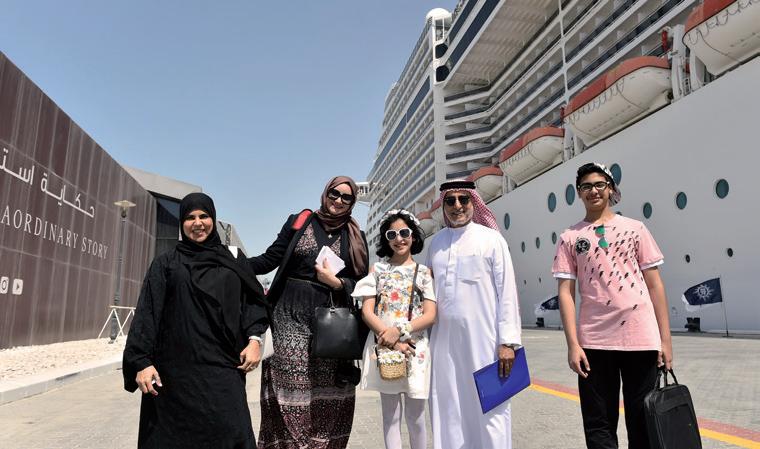
Abu Dhabi Ports and Make-A-Wish Foundation UAE, joined efforts in 2018 to grant the wish of Ghaya – an 11-year-old girl who suffers from Type 1 diabetes – to go on a cruise with her family, departing from Abu Dhabi Cruise Terminal at Zayed Port.
Volunteer Programme
As part of our CSR initiatives, we have created a volunteer programme for our employees, because we understand that time is a precious commodity and plenty of staff wish to contribute. We believe that volunteering is a great way for us to give back to the community while promoting teamwork. Our volunteer programme gives employees an opportunity to engage in social welfare initiatives such as blood donation drives, hospitals visits and distributing Iftaar meals.
Blood Donation Drive
In collaboration with the Red Crescent, we hold annual Iftar tents during the Holy month of Ramadan in Zayed and Khalifa Ports as well as in the Port of Kamsar in Guinea.
The Rahma Run
We hold activities at Zayed Port in support of cancer patient treatments and to raise awareness of a healthy lifestyle. Rahma Run is held at Zayed Port by the Cancer Patient Care Society who we are commited to supporting.
Initiatives Supported by Abu Dhabi Ports and its Employees.
Abu Dhabi Ports holds an annual blood donation drive for its employees and stakeholders by collaborating with different health clinics.
Seafarers Day
Every year, we celebrate Seafarers’ Day. To mark this day, we hand out gift packages to sailors in Khalifa Port, Musaffah Port, Zayed Port and Free Ports and organise health checkups.
Ramadan Iftar Tents
IBTIKAR - Ideas to Innovate
We believe that innovation starts from within. Abu Dhabi Ports IBTIKAR programme is an in-house suggestions scheme open to all our internal and external stakeholders which follows a systematic approach to ensure a reliable method in dealing with ideas and suggestions.
Our objectives behind this programme are to ensure the delivery of real results, stimulate feasible ideas, and align our services based on a stakeholder-centric approach.
IBTIKAR has been accredited by IdeasUK, marking a new milestone for Abu Dhabi Ports to become the first ports company to receive this acclaim worldwide. IdeasUK is one of the most prominent associations for the promotion of employee involvement programmes in the UK and globally.
EVALUATION
DECISION/ REWARDING
SUBMISSION
SCREENING
To date we have received 4,272 ideas of which 4.3% have been implemented, 8.5% have been accepted, 34% are being processed and 43% have been rejected.
Figure 15: Number of Innovative Ideas Received per Annum
16% REDUCTION IN ENERGY CONSUMPTION OF TUG BOATS
11% REDUCTION IN CO2 EMISSIONS PER TEU
9% REDUCTION IN CO2 EMISSIONS FROM WATER
34% DECREASE IN FUEL CONSUMPTION
Energy and Emissions
The UAE Energy Strategy 2050, the Agenda for Sustainable Development 2030, the Sustainable Development Goals (SDGs) and the Paris Climate Agreement have emphasised the need for all industry sectors to measure performance, set reduction goals and track progress towards energy reduction GHG emission targets. The UAE Energy Strategy 2050 seeks to increase consumption efficiency of corporates by 40%.
Ports and terminals with equipment-heavy operations and associated transport networks are significant energy consumers and GHG emitters.
Abu Dhabi Ports' energy consumption is largely driven by fossil fuels with the use of diesel/gasoline in running equipment, tugs and vehicles, whereas electricity provided
by the local utility company is consumed by cranes, offices and warehouses. At Abu Dhabi Ports, asset specific energy efficiency measures are identified, scheduled and implemented on an ongoing basis.
The energy consumption is recorded and reported on a monthly basis by different business units. The data for the last three years has been provided below:
In recent years, we have focused on expanding our operations which has resulted in increased TEU and automobiles handled at our ports and terminals. We have undertaken several measures to optimise the usage of electricity and fuel which has resulted in a significant reduction in consumption of electricity as well as fuel.
Figure 19: Fuel consumption per running hours of tug-boats
Green House Gas Emissions
The historic Paris Agreement of 2015, for the first time, brought all nations into a common consensus to undertake ambitious efforts to combat climate change and adapt to its effects, with enhanced support to assist developing countries to do so.
The Paris Agreement aims to strengthen the global response to the threat of climate change by keeping the rise of global temperature well below 2 ° C above pre-industrial levels and to pursue efforts to limit the temperature increase even further to 1.5° C. The recent report published by the Intergovernmental Panel on Climate Change (IPCC) stated that urgent and
unprecedented changes are needed to keep the temperature rise between 1.5° C and 2 ° C.
The report further says that the world has about 12 years for global warming to be kept to a maximum of 1.5° C, beyond which even half a degree will significantly worsen the risks of drought, floods, extreme heat and poverty for hundreds of millions of people.
In line with the national as well as global efforts to mitigate global warming induced climate change, we keep track of our Green House Gas (GHG) emissions and undertake measures to reduce the same within our operations and beyond. We follow the GHG Protocol Corporate Accounting and Reporting Standard to measure our emissions. In accordance with the GHG Protocol, the scope 1, scope 2 and scope 3 emissions are accounted for.
Scope 1 emissions
Scope 1 emissions include:
• Fuel combustion in running our equipment
• Fuel combustion in company-owned vehicles and boats
Scope 2 emissions
Scope 3 emissions
Scope 2 emissions includes emissions from:
• E lectricity consumption by cranes and offices/ warehouses
• Water consumption in our operation as well as offices/ warehouses
Scope 3 emissions include:
• Vessels visiting our ports. The emissions have been accounted for their activities within our water limits.
Fuel, electricity and water consumption data is collected by the AMD department and is then shared with the HSE department. The HSE department utilises IPCC default emission factors and local grid emission factors to convert the activity data to GHG emissions. The GHG emissions from different sources are provided in the following page.
Figure
Energy Efficiency and GHG Mitigation
Optimising energy and water use with renewable energy integration can make a major contribution to moving the world towards a climate resilient path. We have undertaken several measures to reduce GHG emissions within our operations. Some of them are discussed below:
Modular Path
Abu Dhabi Ports has constructed an eightlane highway for moving ultra-wide equipment between investors’ facilities in KIZAD and the Khalifa Port. The dedicated highway for use between KIZAD and Khalifa Ports decongests the roadway used by the general public.
The efficient movement of vehicles results in reduced idling, thereby reducing fuel consumption and corresponding GHG emissions from transportation. The highway also reduces the risk of traffic incidents and environmental noise and air pollution .
Hot Metal Road
The Hot Metal Road at KIZAD is a specially constructed roadway that enables transport and delivery of aluminium in molten form. The molten aluminium is transferred to preheated 14.5 tonne trailer-mounted crucibles via overhead crane. The crucibles are designed to keep the metal in a liquid state for up to 18 hours at temperatures of 780°C. The trailer-mounted crucibles are then driven to customers that utilise the molten metal to manufacture a variety of products.
In a business as usual scenario, aluminium
Marine Units Performance Monitoring and Management System
Continuously improving and enhancing efficiency and effectiveness of tug operations is one of the key goals for SAFEEN.
We are in the process of implementing the “Marine Units Performance Monitoring and Management System”, where live operation and performance data can be monitored and recorded based on which improvement measures can be undertaken. The fuel consumption and air emissions data can be very useful in managing fuel-efficient operations, thereby, leading to substantial savings in fuel consumption as well as related GHG emissions and other air pollutants.
Cold Ironing
The parameters that the system would monitor include the following:
Cold ironing or the Alternate Maritime Power (AMP) is an efficienct pollution control measure wherein the diesel engines of the vessels are turned off and the electricity is supplied using shore electric power as a substitute. At Khalifa, Zayed and Musaffah Ports we have provided the cold ironing facility to harbour crafts and long stay yachts. The ships in turn switch off their auxilary power units which reduces noise and air pollution.
Lube and hydraulic oil consumption
Green Infrastructure
Buildings consume more than 40% of primary energy in most countries. The building sector has the largest potential for reducing GHG emissions and mitigating global warming compared to other sectors.
At Abu Dhabi Ports, we have adopted Estidama’s Pearl Rating System for designing and constructing our buildings and warehouses.
Adoption of the Estidama guidelines ensures that the buildings and warehouses reduce or eliminate the negative impact and foster a positive impact. It helps mitigate the harmful effects on the environment, encourages occupant safety and comfort while positioning us as a responsible and sustainable corporate citizen. From a more critical business perspective, our green buildings and warehouses also lower operating costs, ultimately improving our financial performance.
Several new buildings and warehouses owned and operated by us are developed in accordance with Pearl 2 requirements.
Some of the buildings that have recently achieved pearl rating include:
• A l Mirfa Port Administration Building
• A l Mirfa Port Fish Market
• A l Mirfa Port Restaurant
• K IZAD Logistics Park – Phase II and III
Our green warehouses are positively impacting different facets of sustainability
Digitally Steering Sustainability
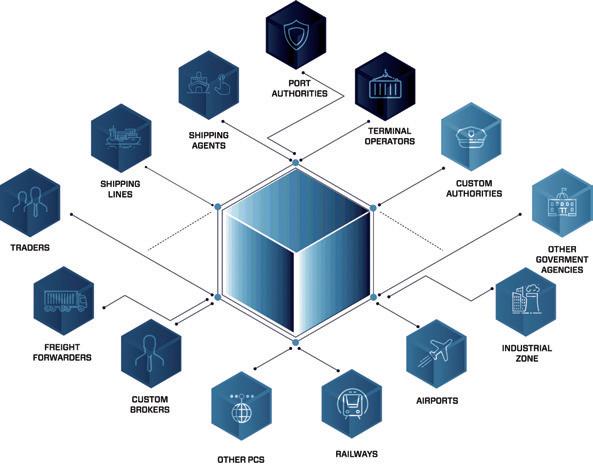
Maqta Gateway developed the first of its kind Port Community System (PCS) in the UAE. PCS is an IT platform linking stakeholders to improve cargo flow efficiency and transparency by providing singlewindow capabilities while automating processes.
PCS provides several benefits to port users including:
Single point of contact and realtime information at any time of the day and anywhere via mobile devices
Reduced paperwork, administrative and processing times
Accelerated development and trade in the Emirate
Through the PCS and MAMAR we have enhanced our positive impact on the three facets of sustainability.
27.3 tonnes reduction in CO2 emissions
3.75 million less physical visits for our customers
Increased security and decreased risks through increased transparency it was designed to increase transparency, reduce costs, and provide customers with speedy and efficient access to information regarding transactions, shipments, and logistics in real time.
76,800 man-days of work are saved
AED 421.6 million savings for stakeholders and customers
Standardised information exchange and messaging
Port Community System
31% DECREASE IN WASTE LANDFILL PER TEU
37% HAZARDOUS WASTE RECYCLED
66% SOLID WASTE RECYCLED PROVISION OF WASTE MANAGEMENT FACILITY FOR VISITING VESSELS
Responsible Waste Management
Waste is not only an environmental problem but also an economic loss. Poor waste management has several implications including pollution, GHG emissions, negative effect on ecosystems and biodiversity.
Ports act as the interface between marine and land waste management and disposal system for vessels and terminal operations. The waste from vessels and terminals can end up in the marine environment and cause severe damage to marine ecosystem and biodiversity.
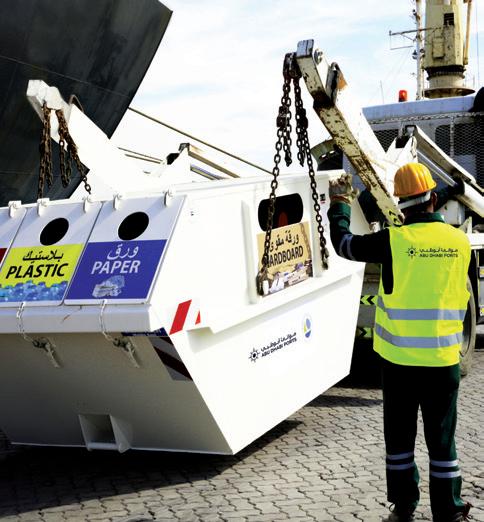
As a responsible port and terminal operator, Abu Dhabi Ports has developed a Waste Management Plan (WMP) to manage the waste received from vessels and the waste generated
The Objectives of the WMP
Describes the waste management strategy and defines the principles of waste management adopted by Abu Dhabi Ports.
Describes identification, classification, segregation and disposal options of waste.
during operations of our ports, terminals and industrial area. The plan provides guidance for the effective management of hazardous and non-hazardous waste.
The plan has been communicated to all concerned departments, personnel, customers and partners. We also prepare an annual waste generation and reduction report which is shared with the regulatory bodies in Abu Dhabi.
Describes the waste reception and storage facilities at the port.
Avoids and reduces the environmental impact of waste generated by vessels and Abu Dhabi Ports operations.
Defines the monitoring, recordkeeping, reporting, and complaints procedures.
Minimises waste generation, promotes recycling and prohibits unlawful disposal/ discharge of waste.
Assists the stakeholders in achieving their legal obligation towards the management of waste.
CO2
At Abu Dhabi Ports, we have adopted a five-tier waste management hierarchy. The preferred approach is to “Avoid” waste generation in the first place. This involves making choices within our operations to reduce the consumption of goods and materials so that the resultant waste is avoided. The second tier approach includes “Reducing” the use of goods and materials whose consumption cannot be avoided. This is followed by the option of “Re-using” the material that has been discarded.
The opportunity of “Recycling” the waste is explored in cases where the reuse of waste cannot be undertaken, and as a last resort, the waste is “Disposed” of in an environmentally responsible manner in accordance with existing regulations.
UAE is signatory to the International Convention for the Prevention of Pollution from Ships (MARPOL). The convention includes regulations aimed at preventing and minimising pollution from ships - both accidental pollution and that from routine operations.
Our WMP has been developed in line with MARPOL and includes the compliance requirements, implementation procedures and monitoring methodologies for the following six pollution sources:
• P ollution by Oil
• P ollution by Noxious Liquid Substances
• P ollution by Harmful Substances Carried by Sea in Packaged Form
• P ollution by Sewage from Ships
• P ollution by Garbage from Ships ir Pollution from Ships
Our waste management system is also in line with the Abu Dhabi Waste Management Center (Tadweer) requirements.
We follow Tadweer’s “Bolisaty” system to manage our waste collection and disposal information. Bolisaty is a unique, smart E-manifest system. Through this system’s trip tracking feature, we ensure that the waste is picked up by a designated waste hauler and disposed off at the pre-decided waste management unit.
Our Performance
Waste generated at Abu Dhabi Ports is broadly categorised as marine waste and land waste. Waste generated onboard ships and vessels is categorised under marine waste. It includes waste largely collected from visiting vessels. It consists of sewage, bilge water, waste oil, and cargo residue. The land waste consists of all the waste generated at our ports, terminals, offices, workshops, and tenants within our premises.
Land waste typically consists of general waste, food waste, green waste, textile, cans, tires, metal waste, trade effluent, used oil and sewage. Land and marine waste are further divided into solid and liquid waste. For reporting purposes, solid waste is subdivided into hazardous and non-hazardous waste whereas liquid waste is sub-divided into sewage and trade effluent. Trade effluent consists of three types of liquid waste - oily sludge, oily water, and recycled liquid. The sewage is disposed at the sewage treatment plant whereas the trade effulent is treated and disposed as per authority guidelines.
Figure 25: Solid waste generated
We ensure that the recyclable liquid waste is segregated, stored and sent to the recycling facility at frequent intervals. Most of the liquid waste collected originates from visiting vessels. As a ports operator, we do not have any control on the type of waste generated.
Figure 27: Sewage collected from vessels called
Figure 28: Trade effluent collected from vessels called
In our efforts to manage our environmental footprint and to make our operations sustainable, we have focused on reducing waste generation in accordance with the waste management hierarchy adopted by Abu Dhabi Ports.
Through consistent engagement with recycling companies and employee awareness campaigns, we have been successful in increasing waste segregation and recycling. This remarkable growth in recycling of solid waste is reflected in the reduced quantity of solid waste disposed to landfills.
Clean Up Campaigns
At our ports and industrial area, we conduct frequent clean up campaigns. One such campaign was conducted in cooperation with the Centre of Waste Management – Abu Dhabi (Tadweer) at KIZAD. The campaign saw participation from over 100 volunteers from Abu Dhabi Ports and 12 companies at KIZAD, who joined together to remove waste from the
area. The waste was then segregated, sorted and sent for recycling. The remaining waste was disposed in accordance with Tadweer's guidelines.
Figure 30: Solid waste landfilled
Figure 29: Hazardous waste generated
Figure 31:
Our Performance - Container & Cruise Terminal
Our waste generation has been increasing on a year to year basis due to of our expanding operations. However, we have been able to improve our waste recycling and disposal performance for both our container and cruise terminals as reflected in the graphs below:
90%+ COMPLIANCE WITH DISCHARGE CRITERIA POLLUTANTS
9% REDUCTION IN WATER CONSUMPTION
100%
COMPLIANCE WITH AMBIENT SEAWATER QUALITY OBJECTIVES
NEW CORAL GROWTH AT RAS GHANADA
Water & Marine Biodiversity
Clean, accessible water for all is an essential part of the world we want to live in. There is sufficient fresh water on the planet, however, due to geographic, infrastructure, or economic reasons, millions of people globally do not have access to clean and safe water. Water scarcity affects more than 40% of the global population and is projected to rise. It is a scarce and a precious resource specially in this region. We understand the value of water explicitly as most of the water we utilise in this region comes from desalination. This has instilled an approach to rational use of water in our operations.
We keep track of our water consumption for all major operations and seek to reduce the consumption as well as losses that occur within our system.
We have also identified and implemented measures to reduce water within our operations. Examples include:
Wash water generated at our container terminals is treated and reused.
Commissioning of a sewage treatment plant of 6.700 cubic metre capacity in KIZAD. The treated sewage effluent is supplied to a forestation project in Shahama area.
Switching from sprinkler irrigation to drip irrigation etc.
Retrofitting faucets and fixtures at Abu Dhabi Ports HQ which reduced the water consumption by 22%.
The above graph depicts the water consumption at Khalifa Port, Zayed Port, and Musaffah Port
Port
Figure 36: Water consumption break-down in million M3
Figure 37: Annual water consumption
Air & Water Quality Monitoring Programme
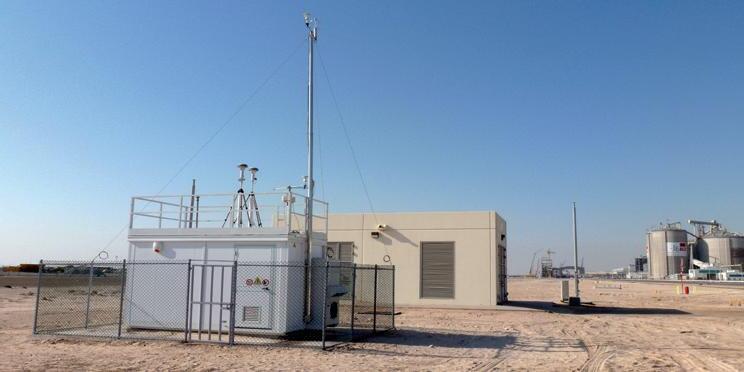
Abu Dhabi Ports has developed and implemented a state-of-the-art air quality management programme in accordance with the requirements and standards of the local authorities and industry best practices. The goal being to safeguard public health and the environment by preventing and reducing air pollution throughout the development/ construction and operation of our ports and KIZAD.
38: Year 2018 percent compliance for criteria
We have established air quality monitoring stations at two locations, one at our industrial zone area and another at Khalifa Port. The number and location of these stations are identified based on a scientific study carried out by Norwegian Institute, and in consultation and agreement with the local environmental authority. The design of the monitoring stations is modular to facilitate the addition and removal of pollutants analyser as needed. The stations are capable of monitoring the following:
• Differentiate between anthropogenic and natural PM
• Standard weather parametres - wind speed, wind direction, temperature, rainfall, solar radiation, humidity and barometric pressure
The aim of the Air Quality Programme is to preserve and enhance air quality to support healthy, clean air through programme planning, development and guidance, industrial source control, major new source review, coordination of permit, and regulatory compliance.
Figure
A water quality and ecological monitoring programme has also been established in the area between the western boundary of Khalifa Port’s footprint and the western side of the biggest Ras Ghanada breakwater. This area includes all habitats that are considered to be of critical biodiversity value. Habitats chosen for monitoring include dense and sparse coral, and dense seagrass.
The monitoring consists of visits every four months to 85 stations at which short, geo-referenced video-clips are taken. These stations were installed in January 2008 for the baseline survey, and are visited subsequently in fixed intervals to retrieve and collect data.
Figure 39: T at mixing zone in o C
Figure 40: TDS at mixing zone in grams per liter
In order to ensure the seawater discharge effluent quality, continuous on-line monitoring for pH, temperature, turbidity and total dissolved solids (TDS) has been carried out at seawater outfall discharge from KIZAD.
Additionally, the ambient seawater quality is monitored continuously at seawater intakes for industries within KIZAD’s premises and in Ras Ghanada (coral and seagrass), the marine sensitive area close to Khalifa Port harbor. In addition, the grab seawater samples are also taken quarterly at Khalifa Ports (10 locations), Zayed Ports (2 locations) and Musaffah Port (1 location). A complete analysis, for all relevant parametres, is carried out by a third party to ensure compliance with regulatory requirements.
Safeguarding Marine Environment
As a responsible ports operator, we take several measures to safeguard marine water. A number of projects have been undertaken such as the creation of environmental breakwaters, water quality monitoring, etc.
Plastic accumulating in our oceans and on our beaches has become a global crisis. Tonnes of plastic can be found in swirling convergences that make up about 40 percent of the world’s ocean surfaces. At current rates plastic is
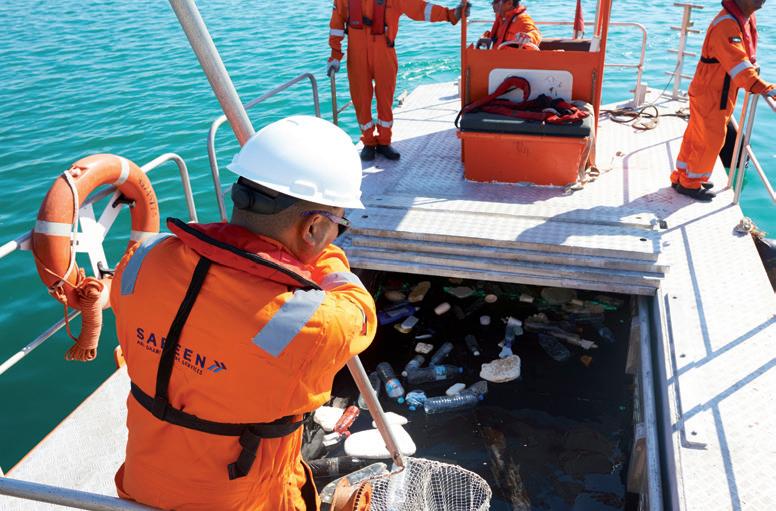
expected to outweigh all the fish in the sea by 2050. Abu Dhabi Port has commissioned Trash Vessels that collect the debris from its water limits. The specially designed vessels skim the debris floating on the surface which is largely plastic waste consisting of films and bottles. The collected waste is then temporarily stored, segregated and either recycled or disposed to landfill depending upon the type of waste.
Figure 41: Water discharge quality at Ras Ghanada
Preserving Marine Biodiversity
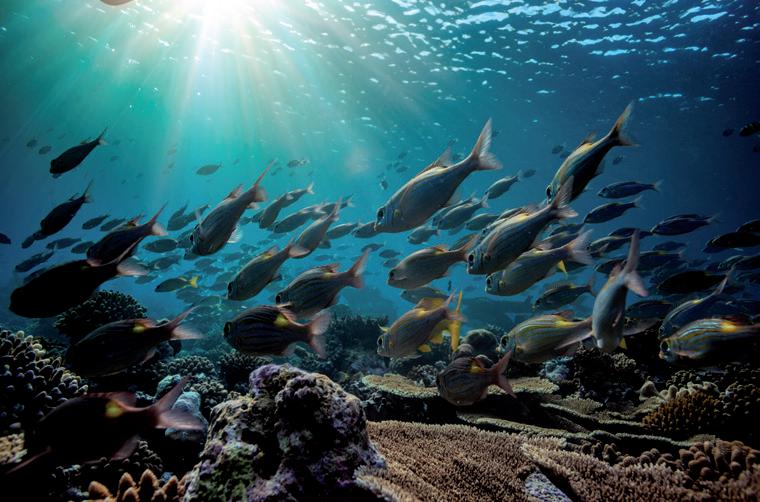
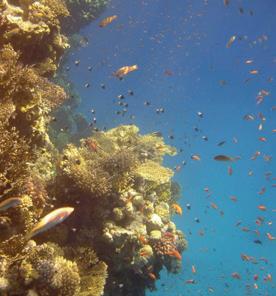
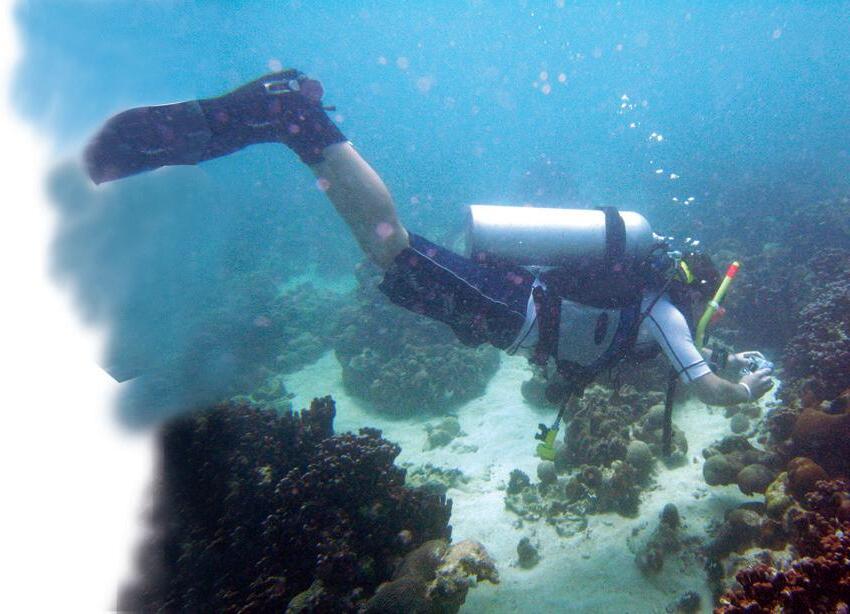
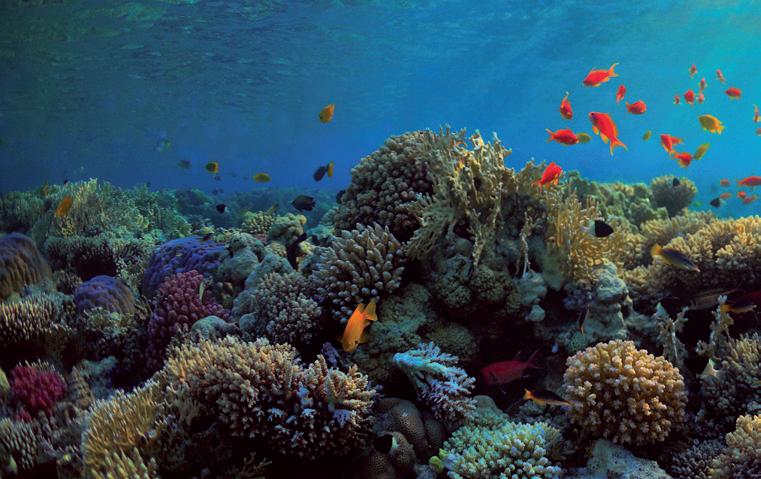
Spread across 25 square kilometres of seafloor, Ras Ghanada is the UAE’s largest and most precious coral reef and sea meadow providing a habitat for more than 20 species of hardy corals and fish.
During the early planning stages of Khalifa Port, it was identified that the reef was in close proximity to the proposed Port site. Wanting to ensure minimal environmental impact, Abu Dhabi Ports engaged a team of renowned international marines scientists to conduct a number of environmental impact assessments with the support of the Environment Agency Abu Dhabi
Following their recommendations, Abu Dhabi Ports decided to change the location of Khalifa Port investing billions of dirhams to build a manmade island four kilometres off-shore.
Two causeways were built connecting the port with the mainland whilst preserving the
Furthermore, an eight kilometre environmental breakwater was constructed to cut down seaswells and contamination and shield from higher temperature generated by the port’s operations.
The breakwater is made of granitic rock instead of traditional concrete, which remarkably has transformed into another ecosystem almost the same size as the original coral reef.
Abu Dhabi Ports conducts regular inspections of the coral reef as part of a monitoring programme led by marine experts and scientists to ensure it remains healthy with marine life unaffected.
35%
DECREASE IN NUMBER OF LTI FREQUENCY RATE IN LAST 3 YEARS 139%
INCREASE IN NUMBER OF HSE OBSERVATIONS
ZERO FATALITIES IN LAST 9 YEARS
83%
INCREASE IN CLOSING OF CORRECTIVE ACTIONS INITIATED FROM HSE OBSERVATIONS
Working Safely
Health and safety management is an integral part of the way we operate and do business. Safe operations of our ports and the industrial zone is key to our business success.
The safety of our employees, port users and operations is ensured through an ‘Integrated Health, Safety and Environment Management System (IHSE MS)’. The IHSE MS element on Risk Management and Controls provides a structured approach to managing the hazards and associated risks of our operations and services. IHSE MS has been developed to ensure all operations and activities within Abu Dhabi Ports that may have HSE impacts, are systematically identified, prioritised, and controlled in a proactive manner. The implementation of the IHSE MS on ground is rigorously evaluated through frequent audits.
SENYAR is a unique electronic application designed specifically for Abu Dhabi Ports using a state-of-the-art information technology.
SENYAR is a key milestone for Abu Dhabi Ports digital transformation strategy. It has enabled HSE matrices analysis in real time improving accuracy and availability of HSE information for all users.
Abu Dhabi Ports is certified by Abu Dhabi Occupational Safety and Health Centre (OSHAD) and the Department of Transport Abu Dhabi (DoT). We are also OHSAS 18001:2007 certified. Occupational Health and Safety Assessment Series (OHSAS) is one of the most sought after certifications in occupational health and safety management. These certifications demonstrate our commitment to ensuring and safeguarding the health and safety of our employees and port users.
SENYAR offers digital solutions to automate HSE functions, activities and services that include adverse weather condition, incident reporting, investigation, incident cost and corrective actions. It also empowers Abu Dhabi Ports management and employees with HSE performance measures in a timely manner.
In accordance with our IHSE MS, we measure our safety performance through KPIs, such as lost time injuries (LTI), incidents and fatalities. Abu Dhabi Ports is proud to report that there has been no fatalities for over 9 years. The key indicators of our safety performance are discussed in the following section.
Figure 45: Serious injuries
Figure 46: Number of marine incidents
Figure 47: Man hours worked
Figure 44: HSE observations
Figure 43: Land incidents
Figure 42 : LTI frequency rate
Business Continuity Management System
The Business Continuity Management (BCM) system has been established to ensure that we maintain continuous provision of critical services to customers and communities. Business continuity policy and procedures are established and integrated with IHSEMS, Quality Assurance, Operation, and Business Management Systems.
In 2017, Abu Dhabi Ports achieved ISO 22301:2018 certification for Business Continuity Management. Abu Dhabi Ports, in coordination with all business units across the organisation has carried out Business Impact Analysis (BIA), in order to prepare the Business Continuity Plan (BCP), resulting in improved
reliability of overall operations coordination and to achieve greater efficacy.
Abu Dhabi Ports has invested in IT and infrastructures to reduce IT Recovery Point Objective (RPO) for critical IT applications. Major and minor Business Continuity drills in participation with critical departments are conducted to strengthen our co-ordination, response time, resources and resilience. BCM strengthens Abu Dhabi Ports’ position towards achieving the Ports strategic objectives and excellence performance as well as Abu Dhabi vision 2030.
Abu Dhabi Ports HSE Awards “NEESHAN”
As part of our efforts to reinforce safe practices and pursue excellence in HSE, Abu Dhabi Ports launched a new initiative “NEESHAN” in 2017. It recognises contributions from departments, teams, investors, stakeholders and partners for their role in improving Abu Dhabi Ports’ overall HSE
performance and reducing the risk of HSE incidents. Winners are nominated and selected by Abu Dhabi Ports’ management following their periodic walkabouts, ground inspections and on-the-job site visits to monitor compliance with the health and safety standards.
As part of the Neeshan Awards, an annual ceremony to honour the winners is organised. Winners receive certificates of appreciation, monetary rewards and honorary commemorative plaques. The categories include:
Individual Awards:
Best Individual HSE Performance, Best HSE Representative, Best Ibtikar HSE Suggestion, Best HSE Observation and Best HSE Auditor.
Department Awards:
Performance, Best Risk Management, Best Contractor Management, Best Management of Change, Best Waste Management, Best HSE Initiative, Best Business Continuity and Best HSE Observations Close-out.
Tenant & Contractors-Awards:
Best HSE Performance, Best Waste Management Performance and Best HSE Initiative.
Government entities that actively engage with Abu Dhabi Ports and employ HSE standards are also invited and honoured for their efforts.
Working Safely in the Heat Campaign
We believe that raising awareness on health and safety issues is critical to avoiding risks and incidents. Therefore, campaigns and training related to health and safety are consistently organised at Abu Dhabi Ports.
Abu Dhabi Ports conducts an annual “Working Safely in the Heat” campaign across its ports and KIZAD, in collaboration with UAE Ministry of Labour and OSHAD. This campaign started in 2013 and has since been undertaken each year. The campaign raises awareness about the risks of working in the heat with an aim to prevent heat-related illnesses during the summer months. Workers and visitors are made aware of early signs of heat-related exhaustion and the precautions that should be undertaken to avoid heat stress. It also includes site inspection and management walks to Abu Dhabi Ports’ workplaces to monitor employee welfare. The campaign team distributes electrolyte drinks, water bottles, and giveaways to the workers, to assist them to acclimatise with the hot season.
Crisis Management
Abu Dhabi Ports has developed a Crisis Management Plan to minimise and mitigate undesired consequences to the business in the event of a crisis.
Abu Dhabi Ports collaborates with external emergency response authorities to carry out major crisis and emergency management drills, so that in case of an emergency, streamlined and coordinated actions can be taken.
Truck Drivers Safety Campaign
Abu Dhabi Ports has been conducting an annual Truck Drivers Safety Campaign since 2015 to promote safe driving among port users.
‘Be Aware & Drive with Care’ is held at Khalifa Port and Zayed Port annually. We impart safe driving tips to around 2,000 people each year who regularly drive inside the port premises. The campaign involves our partners, and the support of the local authorities. It aims to preempt traffic incidents inside the port premises and beyond. Drivers also get a chance to attend free-health screening offered by our healthcare partners.
Abandon Vessel Drill
We recently conducted a safety drill on a ferry operating between Mugharrag Port and Delma Island. It was conducted in coordination with the Department of Transport (DoT) and other partners to ensure the safe evacuation of all passengers and crew onboard the ferry in the event of an emergency. A 100 passenger life raft, one of the largest of its kind in the UAE, was deployed and inflated at open sea during the drill.
The drill enhanced the communication and coordination efforts between the Abu Dhabi Marine Service and its partners that included the DoT, the Critical Infrastructure and Coastal Protection Authority (CICPA) and Abu Dhabi traffic police. The exercise was carried out under the supervision of Abu Dhabi Ports’ western region harbor master, who acted as the incident commander. The exercise was completed successfully proving the efficiency of our emergency response plan.
GRI Content Index
GRI 101: Foundation 2016 General Disclosures
102-1
Stakeholder engagement
102-40
102-41
Key topics and concerns raised
Reporting practice
Al Howaitha General Contracting & Logidtics Ltd
Abu Dhabi ports Marine Services LLC
102-45 Entities included in the consolidated financial statements Alawaid Project Management & Poperty LLC
Abu Dhabi Freezone LLC
Al Yaher General Trading Ltd
Khalifa Industrial Zone Company PJSC
102-46
102-49
102-50 Reporting period
102-51 Date of most recent report This is the first report
102-52 Reporting cycle Annual
102-53 Contact point for questions regarding the report
102-54 Claims of reporting in accordance with the GRI Standards This report has been prepared in accordance with the GRI standards : Core Option
Material Topics
GRI 200 Economic Standard Series Economic Performance
103-1 Explanation of the material topic and its Boundary
GRI 103: Management Approach 2016
GRI 201: Economic Performance 2016
103-2 The management approach and its components
103-3 Evaluation of the management approach
201-1 Direct economic value generated and distributed
GRI 300 Environmental Standards Series Energy
103-1 Explanation of the material topic and its Boundary
GRI 103: Management Approach 2016
GRI 302: Energy 2016
103-2 The management approach and its components
103-3 Evaluation of the management approach
302-1 Energy consumption within the organisation
302-3 Energy intensity
302-4 Reduction of energy consumption Water
103-1 Explanation of the material topic and its Boundary
GRI 103: Management Approach 2016
GRI 303: Water 2016
103-2 The management approach and its components
103-3 Evaluation of the management approach
303-1 Water withdrawal by source Emissions
103-1 Explanation of the material topic and its Boundary
GRI 103: Management Approach 2016
103-2 The management approach and its components
103-3 Evaluation of the management approach
Emissions
GRI 305: Emissions 2016
Effluents and Waste
GRI 103: Management Approach 2016
GRI 306: Effluents and Waste 2016
305-1 Direct (Scope 1) GHG emissions 61
305-2 Energy indirect (Scope 2) GHG emissions
305-4 GHG emissions intensity
305-5 Reduction of GHG emissions 62,63,64
103-1 Explanation of the material topic and its Boundary 69
103-2 The management approach and its components 70,71
103-3 Evaluation of the management approach 71
306-1 Water discharge by quality and destination 73
306-2 Waste by type and disposal method 74,75
306-4 Transport of hazardous waste 74 Environmental Compliance
103-1 Explanation of the material topic and its Boundary 70
GRI 103: Management Approach 2016
GRI 307: Environmental Compliance 2016
103-2 The management approach and its components 71
103-3 Evaluation of the management approach 71
307-1 Non-compliance with environmental laws and regulations No non-compliance observed during the reporting period
GRI 400 Social Standards Series
Training and Education
GRI 103: Management Approach 2016
103-1 Explanation of the material topic and its Boundary 47,48
103-2 The management approach and its components
103-3 Evaluation of the management approach
GRI 404: Training and Education 2016
404-3 Percentage of employees receiving regular performance and career development reviews
Diversity and Equal Opportunity
103-1 Explanation of the material topic and its Boundary
GRI 103: Management Approach 2016
GRI 405: Diversity and Equal Opportunity 2016
103-2 The management approach and its components
103-3 Evaluation of the management approach
GRI 103: Management Approach 2016
103-1 Explanation of the material topic and its Boundary
The management approach and its components
103-3 Evaluation of the management approach
GRI 406: Nondiscrimination 2016 406-1 Incidents of discrimination and corrective actions are taken
Non-discrimination
GRI 103: Management Approach 2016
103-1 Explanation of the material topic and its Boundary
103-2 The management approach and its components
103-3 Evaluation of the management approach
GRI 413 :Local Communities 2016 413-1 Operations with local community engagement, impact assessments, and development programs