BTS and Pre-leases the Preferred Development Option for I&L
The industrial and logistics sector has been booming in Hungary, with leading Central and Eastern European industrial park developers and operators and Hungarian players active. 15
Industrial Demand Becoming Ever More Complex
Industrial and logistics sector developers and park operators are creating ever more highly specified, energy-efficient, ESGcompliant and sustainabilityaccredited complexes in response to tenant demands. 16
Italian Smile of Success
Hungary’s Bud Spencer Worship Still Full of Beans
Wandering through his local supermarket, David Holzer couldn’t help but smile when he spotted a selection of cans of Bud Spencer Beans. It made him wonder once again how the Italian actor became such a surprising cult figure in Hungary. 26
Retail consumption, industrial production, and inflation: KSH released three significant datasets after the long Easter weekend. With the exception of industry, the numbers brought a positive surprise. 3
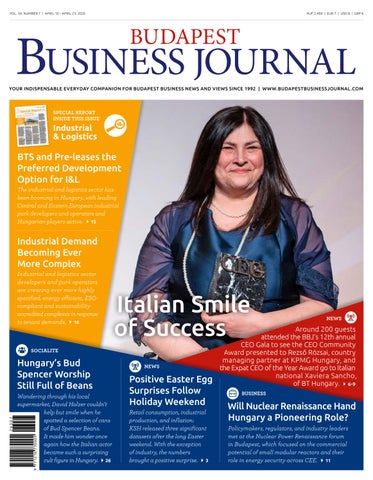
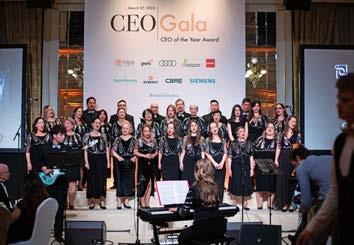
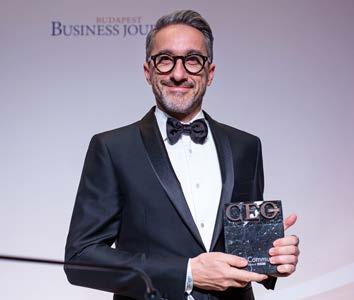
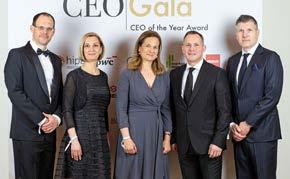
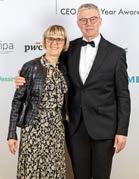
Around 200 guests attended the BBJ’s 12th annual CEO Gala to see the CEO Community Award presented to Rezső Rózsai, country managing partner at KPMG Hungary, and the Expat CEO of the Year Award go to Italian national Xaviera Sancho, of BT Hungary. 6 - 9
Will Nuclear Renaissance Hand Hungary a Pioneering Role?
Policymakers, regulators, and industry leaders met at the Nuclear Power Renaissance forum in Budapest, which focused on the commercial potential of small modular reactors and their role in energy security across CEE. 11
Retail consumption, industrial production, and inflation: the Central Statistical Office released three significant datasets after the long Easter weekend. With the exception of industry, the numbers brought a positive surprise, and the lower-thanexpected price growth could even pave the way for another interest rate cut in the near future.
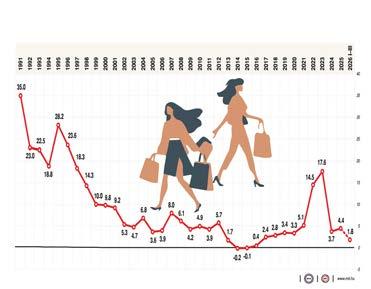
Inflation Trends in Hungary (1991–March 2026) Change compared to the same period of the previous year, %
Prices of alcoholic beverages and tobacco products rose by 0.2%. Motor fuel prices increased by 4.6% while clothing prices rose by 1.9%.
Significant Risks
As for the outlook, the Iran war, the blockade of the Strait of Hormuz, and the uncertainty surrounding its potential resolution have introduced significant risks into forecasts. Market tensions over the past month-and-a-half have led to a surge in energy prices and a notable weakening of the forint.
“We saw a significant recovery in the days following Easter, but strong market volatility does not support the reduction of inflation expectations. Official interventions are masking pent-up price pressures in the system, although the deterioration in labor market indicators may partly offset this effect,” Nagy noted.
“Global inflation, driven by the conflict in the Middle East, will gradually reach Hungary in the coming months. At present, we expect inflation to be around 5%
in the second half of the year. At the same time, given the favorable figures at the beginning of the year, the average annual inflation rate may remain below 4%,” the Erste Bank analyst said.
The Hungarian Central Statistical Office (KSH) published its retail sales data for February on April 8. Overall, retail sales volume increased by 3.8% on an annual basis, according to calendaradjusted data. The figures did not come as a surprise. Based on seasonally and calendar-adjusted data, the volume increased by 0.4% on a monthly basis in the second month of the year.
As for the detailed breakdown, sales volume adjusted for calendar effects increased by 2.2% in food and food-type mixed stores, 5% in nonfood retail, and 6.4% in fuel retail compared to February 2025.
“Based on the long time series, it is still clear that retail sales are gradually, but moderately, expanding,” Erste Bank analyst János Nagy wrote in a note. “In parallel with the further increase in budgetary welfare expenditures and the expected continued positive trend in real wages, store sales may gradually increase further this year.”
Spending may also be supported by the slowdown in inflation observed at the beginning of the year. Overall, it appears that household consumption growth remains the most important
support for GDP expansion this year.
Industrial production data for February was also released on April 8, but here the news was less welcome.
“According to KSH, the volume of industrial production in February
2026,
adjusted for working-day effects, decreased by 1.5% compared to the same period of the previous year, falling short of both our expectations and the consensus. On a monthly basis, output declined significantly, by 1.8%, erasing the improvement seen in January,” Nagy said.
KSH will publish more detailed data on April 15. So far, only the usual brief commentary has been released, indicating that production volume decreased in most manufacturing subsectors compared to February 2025. Among the most important subsectors, the production of computers, electronics, optical products, and electrical equipment expanded, while the production of vehicles and food, beverages, and tobacco products declined.
German Uncertainty
Uncertainty in the outlook is still driven by the lack of clear signs of real improvement in the German economy, Hungary’s most important single trade partner, Nagy notes. Rising energy prices resulting from the Iran war also pose a significant downside risk.
Source: KSH/National Archive/MTI
“All in all, we can still count on the impact of previous large investments: the capacities of BMW, BYD, CATL, and Mercedes should lead to an expansion in industrial production, mostly expected in the second half of 2026. Given the data from the first two months, consumption remains the only stable pillar of improving economic activity. The manufacturing industry is still unable to deliver balanced performance,” he said.
Inflation data for March was also released. According to KSH, consumer prices increased by only 0.4%
on a monthly basis, pushing annual inflation up to 1.8% from 1.4% in February.
“The figure was lower than our expectation of 2.1% and the consensus of 2.2%. It is also encouraging that the annual core inflation index decreased further, from 2.1% in February to 1.9%,” Nagy commented on the new data.
According to him, the structure of inflation did not bring any major surprises. Food prices decreased by an average of 0.1%, while service prices increased by 0.2%. Household energy prices remained unchanged; within this category, district heating prices increased by 18.4%, while piped gas prices decreased by 3.3%.
“Global inflation, driven by the conflict in the Middle East, will gradually reach Hungary in the coming months. At present, we expect inflation to be around 5% in the second half of the year. At the same time, given the favorable figures at the beginning of the year, the average annual inflation rate may remain below 4%.”
March data shows that prices are still under control. The effects of the Iran war are currently most visible in fuel prices, although the price cap has dampened these. The March inflation figure remains below the 2–4% tolerance band of the National Bank of Hungary (MNB), so lower-than-expected price growth could pave the way for another interest rate cut in the near future.
For now, the conditional two-week ceasefire announced on the morning of Wednesday, April 8, in connection with the Middle East conflict remains fragile. However, if the current favorable international sentiment persists until the end of April, the MNB may consider a further easing following the February rate cut. This will also depend on how the longer-term effects of the month-long war on consumer prices unfold, according to the leading economic news portal, Portfolio.
ZSÓFIA CZIFRA
CEO Gala 2026
Xaviera Sancho Named BBJ Expat CEO Award 2026
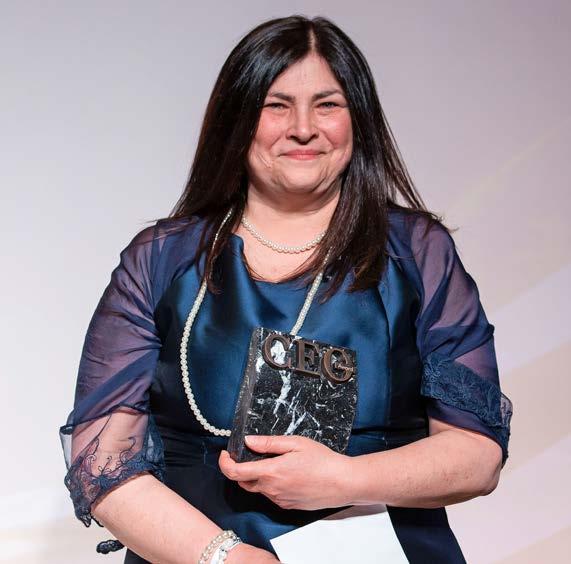
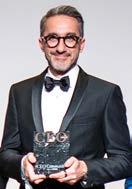
Italian executive Xaviera Sancho, managing director of BT Hungary, took home the Expat CEO Award 2026 at the Budapest Business Journal ’s 12th annual CEO Gala, held in the Grand Ballroom of the Corinthia Hotel Budapest on March 27. The Community Award this year went to Rezső Rózsai.
Now into its second decade, the CEO Gala and the Expat CEO Award has become a fixture of Hungary’s business calendar, recognizing international executives who not only deliver strong corporate results but also contribute to the broader development of the local business environment and professional community. The Community Award, introduced in 2022, highlights business leaders with an outstanding impact on society and community building.
“The BBJ is Hungary’s only Englishlanguage economic bi-weekly, and we have always played a key role in providing information to expat CEOs working and living in Hungary. It was only natural that we should found an award to recognize their efforts annually,” explains Balázs Román, the CEO of the Budapest Business Journal
This year’s black-tie, invitation-only CEO Gala once again drew a crowd of more than 200 guests, bringing together leading figures from Hungary’s business community, alongside international executives, diplomats and investment promotion experts.
Before the doors opened to the Grand Ballroom, attendees gathered in the reception area, where they enjoyed a selection of delicacies and drinks provided by the event’s partners, setting the tone for an evening of celebration and high-level business engagement.
Panels of Experts Choose Honorees in Final Deliberations
As has always been the case, the awardwinners were decided by professional juries shortly before the start of the gala.
The Expat CEO Award jury comprised Írisz Lippai-Nagy, CEO of the American Chamber of Commerce in Hungary;
Barbara Zollmann, CEO of the GermanHungarian Chamber of Industry and Commerce; Gergő Karbuczky, deputy CEO and chief operating officer of the Hungarian Investment Promotion Agency, the official event partner of the CEO Gala; and Balázs Román, BBJ CEO. The panel was completed by last year’s winner, Ana Maria Vargas.
The Community Award jury included Andrea Solti Istenes, president of the Hungarian Business Leaders Forum (the official partner for this award); Tamás Botka, publisher of the Budapest Business Journal; and Róbert Keszte, last year’s winner.
Hall of Fame: Expat CEO Award Past Winners
The award was won for the first time in 2015 by Spain’s Javier González Pareja (then CEO of Bosch Magyarország); in 2016, the winner was German Joost Lammers of Budapest Airport. In 2017, it was his countryman, Joerg Bauer, then President of GE Hungary, followed in 2018 by our first Brazilian-German winner, Marc de Bastos Eckstein, of Thyssenkrupp Components Hungary
Kft. The year 2019 was a landmark that saw the first woman winner, Finland’s Taira-Julia Lammi, then country managing director of ABB Kft. She was followed in 2020 by Briton Melanie Seymour, head of Blackrock Budapest from 2017-2019. Dutchman Erik Slooten, then CEO of Deutsche Telekom IT Solutions Hungary, won in 2021. He was followed in 2022 by Italian
and to help integrate the country into global value chains. None of this would be possible without your leadership and commitment,” he told guests.
“They came to a foreign country, built trust, recognized Hungary’s potential and played an active role in shaping its future. This requires a special kind of leadership, one that successfully combines global best practices with local knowledge,” the HIPA COO said.
“Looking at previous winners of the Expat CEO Award, a clear pattern emerges. These leaders do not simply manage successful operations. They raise standards, introduce new technologies and bring fresh ways of thinking. They are innovators, builders and ambassadors, not only of their companies, but of Hungary as well,” Karbuczky added.
Welcoming gala guests into the Grand Ballroom, BBJ editor-inchief Robin Marshall set the tone for an evening centered on the strength of the CEO community in Hungary.
“This is the premier platform for connecting with a remarkable community of CEOs, of course, but importantly, also their partners, members of the diplomatic corps, and key players with the government,” Marshall said.
Expat Execs Boosting Hungary’s Economy
HIPA Deputy CEO Gergő Karbuczky was next to address the audience, highlighting the importance of collaboration between international businesses and Hungary’s economic ecosystem.
“For HIPA, this event is one of the highlights of the year, as it brings together a community that is central to our mission. As you know, our objective is clear: to attract world-class investors to Hungary
Giacomo Pedranzini, CEO of Kometa 99 Zrt. Czech citizen Veronika Spanarova, managing director and country head for Hungary of Citi, became the first winner from the Central and Eastern European region in 2024. In 2024, Dane Chresten Bruun, senior vice president of EMEA Manufacturing in the Lego Group, took home the award. Last year, it was won by Ana Maria Vargas, country director at J&J Innovative Medicine Hungary.
“Looking at previous winners of the Expat CEO Award, a clear pattern emerges. These leaders do not simply manage successful operations. They raise standards, introduce new technologies and bring fresh ways of thinking. They are innovators, builders and ambassadors, not only of their companies, but of Hungary as well.” – Gergő Karbuczky
After the HIPA Deputy CEO’s speech, guests were treated to a musical performance by the Singing Lawyers Budapest. Founded in late 2024 to build a community through music for practicing lawyers and law students, their repertoire blended classical, contemporary, and folk-inspired pieces, adding a rousing cultural dimension to the evening.
Community Award Recognizes Corporate Responsibility
The first major highlight of the night was the presentation of the CEO Community Award. Presented by the BBJ in partnership with the Hungarian Business Leaders’ Forum, it honors business leaders who demonstrate a strong commitment to community building, act as role models, and make a meaningful social and economic impact in Hungary. This year’s three nominees came from a wide variety of backgrounds.
Orsolya Erdődy has been managing director of the award-winning Budapest Festival Orchestra since January 2020, having previously been its deputy managing director from November 2011. Amongst other things, Erdődy is also the chief music advisor to the Pannonhalma Archabbey.
BENCE GAÁL
Xaviera Sancho
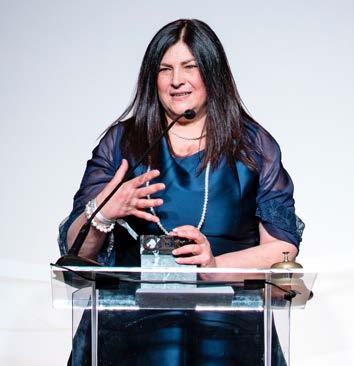
“I would like to thank everyone here, colleagues, partners, and friends, because what I have found in Hungary is more than just a professional environment. It has become a second home and, in many ways, this [gesturing to the audience] is a second family. That sense of community is something truly special, and it’s something we must continue to build together.”
– Xaviera Sancho
Péter Noszek, CEO of Nestlé Hungária, has held his current role since January 2018. He has worked in New Zealand, Australia, the Philippines, the United Kingdom, and Switzerland, as well as Hungary. In January of this year, he was elected chairman of the prestigious Managers Association of Hungary.
Rezső Rózsai has been the country managing partner at KPMG Hungary since October 2019. He began his career at the firm almost 30 years ago, in September 1997. He is also a board member of the Hungarian Business Leaders’ Forum and the Joint Venture Association.
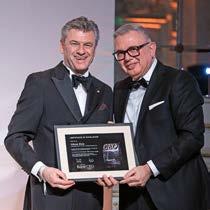
The Community Award was presented to Rezső Rózsai by last year’s winner, Róbert Keszte, head of global operations at Aumovio.
“I have to say that this award is not coming to me alone. I have to thank my colleagues who are sharing knowledge in the business community, who are awarding a lot of extra pro bono work to the communities who really deserve it and really need it. So, I would like to thank you again for the great award and this is empowering us to work even harder in the future,” said Rózsai.
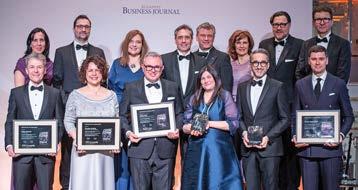
Following the announcement, the other finalists were invited to the stage to receive certificates of recognition.
Honoring International Leadership for More Than a Decade
BBJ editor-in-chief Marshall once again took the stage to introduce the main event of the evening.
“Your Excellencies, Ladies and Gentlemen, we now come to the […] presentation of the Expat CEO of the Year Award. We launched this back in 2015 because, while there was, quite rightly, plenty of recognition for Hungarian CEOs, many of whom do outstanding work and many of whom are present tonight and form a vital element of our CEO community, there was nothing to celebrate the contributions made to the Hungarian economy by expat company leaders. We thought we should do something about that.”
This year’s nominees included Italian national Xaviera Sancho, general manager of BT Hungary, who has been a senior manager and country leader at BT Hungary since February 2024, having worked for BT for 19 years; Polish national Pawel Tokarzewski, country manager for Hungary at Eli Lilly and Company, who has worked at Eli Lilly for almost 14 years and has been the country manager for this country since June 2023; while Greek national Nikos Zois, managing director of Heineken
“I have to say that this award is not coming to me alone. I have to thank my colleagues who are sharing knowledge in the business community, who are awarding a lot of extra pro bono work to the communities who really deserve it and really need it. So, I would like to thank you again for the great award and this is empowering us to work even harder in the future.” – Rezső Rózsai
Hungária, has run the company’s Hungarian operation since October 2021, and has worked for the brewer for 30 years because, as Marshall joked “Why would you give up a job like that?”
To announce the identity of the winner, Marshall invited back to the stage the 2025 Expat CEO of the Year, Ana Maria Vargas, country director at J&J Innovative Medicine Hungary. It was she who described the hard task the jury had faced in picking one person from the three candidates, and it was she who opened the envelope containing the name of the 2026 winner: Xaviera Sancho.
“I’m especially honored because I was nominated alongside such outstanding colleagues. Being part of this group already felt like recognition, so to receive this award is incredibly meaningful,” Sancho said.
“I would like to thank everyone here, colleagues, partners, and friends, because what I have found in Hungary is more than just a professional environment. It has become a second home and, in many ways, this [gesturing to the audience] is a second family. That sense of community is something truly special, and it’s something we must continue to build together,” she noted.
All finalists were recognized on stage, underlining the strength and diversity of Hungary’s international business leadership community. Tokarzewski became the first Pole to be nominated for the award; Zois was the first Greek. Sancho is only the second Italian nominee, both of whom won.
Marshall brought the formal part of the gala to a close, wishing guests a pleasant evening before giving his now familiar sign-off, quoting the late Irish comedian Dave Allen: “Goodnight, thank you, and may your God go with you!” The evening continued with more networking, live music by Singing Lawyers Budapest, as well as drinks, cheese, and desserts in Corinthia’s elegant Valetta II Lounge, offering guests further opportunities to connect and celebrate.
Alongside HIPA as the CEO Gala’s official event partner, while the major sponsors, without whom it could not have happened, included Penny, Audi, PwC, Synergy, Siemens, CBRE, Taylor Wessing and Market Asset Management. Special Effects provided sound, lighting and technical support, Prime Time Communications assisted with event organization, and the Corinthia Hotel Budapest hosted the evening.
Hall of Fame: Community Award Past Winners
In 2022, the Budapest Business Journal issued certificates of appreciation on behalf of the CEO community to two people who had done much to look after the broader world in their day-to-day work in Hungary throughout the COVID-19 pandemic and in developing the LifeSaver app. Those certificates went to Gábor Csató, CEO of the Hungarian National Ambulance Service, and Amanda Nelson, then CEO and chairwoman of Vodafone Hungary. In 2023, the CEO Community Award was launched, with the inaugural winner Andrea Solti Istenes, country chair and president of the board of Shell Hungary and president of the Hungarian Business Leader’ Forum. The 2024 award was shared by Gabriella Heiszler, presidentCEO of Spar Magyarország, and Arne Klehn, then multi-property general manager of the Budapest Marriott Hotel and Marriott Executive Apartments, and now GM of the JW Marriott Berlin. In 2025, the award was presented to Róbert Keszte, head of global operations at Aumovio.
Rezső Rózsai
2 Business Nuclear Power Renaissance Could
Give Hungary a Pioneering SMR Role
Policymakers, regulators, and industry leaders met at the Nuclear Power Renaissance: Accelerating the Deployment of SMRs in Hungary and Central and Eastern Europe forum in Budapest, which focused on the commercial potential of small modular reactors, their role in energy security, and their contribution to decarbonization across CEE.
“Dialogues like the one today are essential. While the ‘atomic age’ of the 20th century was about scale and state power, this ‘modular age’ of the 21st century is about flexibility, resilience, and partnership,” she noted Together, the United States and Hungary, and our allies in Central and Eastern Europe, are not only planning reactors; our partnership is laying the foundation for energy independence and shared growth over many decades to come.”
energy demand, supporting industrial development, and securing long-term economic growth,” Rudich said.
“Together with GE Vernova Hitachi and our Hunatom partners, we believe the
BWRX-300
offers
The March 31 event highlighted Hungary’s growing role in small nuclear reactors, the next wave of nuclear energy development in the region, and came at a decisive moment for nuclear energy in Hungary. The country recently signed an intergovernmental nuclear energy agreement with the United States, laying the foundations for cooperation in civilian nuclear energy development. The European Commission has also now adopted its SMR Strategy. Together, these developments are helping position Hungary as a regional center for the deployment of advanced nuclear technologies.
In her opening remarks, Caroline Savage, Chargé d’Affaires at the U.S. Embassy in Budapest, underlined the importance of U.S.-Hungarian cooperation and the role of American nuclear technology in strengthening energy security in the region.
“The United States sees Hungary as a key partner in the region in the field of nuclear energy, and the country has been selected for the Phase
Front-end Engineering and Design study to prepare for the deployment of small modular reactors,” she said.
The global energy environment and the role of nuclear power in long-term energy security and system stability were addressed by Attila Aszódi, a nuclear safety expert and the dean of the natural sciences faculty at the Budapest University of Technology and Economics.
Security of Supply
“The key question today is how to ensure security of supply and how to manage fluctuating electricity prices. A new situation has emerged in which new technologies are both welcome and necessary, and small modular reactors will play an important role,” he said.
Last year, SGE, the Warsaw-based European SMR development platform, signed a memorandum of understanding with Hunatom (a state-owned company focused on developing and coordinating projects in the nuclear energy sector), creating a framework to examine the possible deployment of BWRX-300 SMR technology in Hungary.
Robert Rudich, SMR’s chief business development director, said Hungary “has the experience and capability” to take on a leading role in the region.
“Hungary […] combines comprehensive nuclear expertise with a strategic mindset that recognizes the role of new nuclear technologies in meeting growing
nuclear power plants face a number of challenges, and SMRs may provide answers to these challenges,” she said.
Róbert Griljov, a member of Hunatom’s supervisory board, spoke about nuclear project development and the company’s role in advancing Hungary’s nuclear ambitions.
“Without nuclear energy, we have no chance of achieving the climate goals set by the EU. Hunatom has sufficient experience in project preparation and implementation to transfer this to SMR projects. This experience is an additional advantage and can accelerate the deployment of the technology,” he said.
Speakers at the forum agreed that small modular reactors could play a key role in meeting rising electricity demand while strengthening energy independence and supporting the region’s climate targets. By the close of the event, participants had also committed to continuing dialogue and cooperation so that these strategic ambitions can be turned into concrete projects over the coming years.
That broader regional context is central to SGE’s role in the discussion. Founded in
2019
and headquartered in Warsaw, the company is a co-investor in the standard design of the BWRX-300, the SMR technology developed by GE Vernova Hitachi Nuclear Energy. The platform has positioned itself around what it describes as a combination of proven technology and a new business model, and says that approach has allowed it to become Europe’s leading SMR project developer.
Hungary a fast path to building new nuclear capacity. The early, costefficient deployment of this first-ofits-kind technology supports industrial expansion, creates new investment opportunities, and keeps pace with rising energy demand,” he added.
Deputy State Secretary for Energy Policy Márk Alföldy-Boruss discussed Hungary’s energy strategy and the role SMRs could play in meeting national climate and energy policy targets.
“Nuclear energy will be a key pillar of the energy strategy. Parliament has amended Hungary’s atomic energy law, which creates the possibility of deploying small modular reactors. Small modular reactors are promising in terms of fast and costefficient implementation. We are pursuing fruitful international cooperation with every supplier country involved,” he said.
The regulatory perspective, including licensing frameworks and the safe introduction of new nuclear technologies, was outlined by Andrea Kádár, president of the Hungarian Atomic Energy Authority.
Technological Leap
“The [atomic energy law] amendment has made it possible for us to take the necessary steps toward licensing, and now the next phase will be the development of safety regulations, which will define the specific requirements. Small modular reactors represent a kind of leap in nuclear technology. Conventional
“Together, the United States and Hungary, and our allies in Central and Eastern Europe, are not only planning reactors; our partnership is laying the foundation for energy independence and shared growth over many decades to come.”
SGE is currently building partnerships and projects in more than half a dozen European countries. Its main focus is on Poland, where it has begun development at three sites with the global energy company Orlen. According to the company, the first unit is scheduled for delivery by 2032.
For Hungary, the importance of that partnership lies not only in access to a specific technology, but in the possibility of joining a broader European development track that is already moving from planning into implementation. The message of the Budapest forum was clear enough: SMRs are no longer being discussed only as a distant technology option, but as a realistic part of future energy planning in Hungary and in the wider region.
From left, roundtable panelists Andrea Kádár (Hungarian Atomic Energy Authority), Ákos Horváth (Hun-Ren Center for Energy Research), Márk Alföldy-Boruss (Ministry of Energy), Róbert Griljov (Hunatom), Robert Rudich (SGE), and moderator Attila Aszódi (Budapest University of Technology and Economics).
3 Special Report
Industrial & Logistics
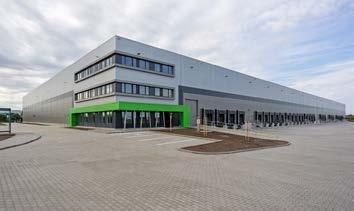
BTS and Pre-leases the Preferred Development Option for I&L
The industrial and logistics sector has been booming in Hungary, with leading Central and Eastern European industrial park developers and operators and Hungarian players active.
GARY J. MORRELL
The market has expanded on the back of growing logistics demand and the need for space to meet significant foreign direct investment, notably in the electric vehicle and EV-related industries.
It continues to thrive, despite concerns about moderating demand expressed by some analysts, notably in logistics. Analysts see fewer speculative development project starts, while BTS projects, particularly in the production sector in regional hubs, are expected to gain momentum.
All industrial developers at the higher end of the market are developing in line with demand for more highly specified, sustainable industrial and logistics space to keep pace with market demand and ESG-related expectations and regulations.
Continued significant industrial demand from Asian manufacturers and automotive suppliers is expected, with
472,000 sqm
under construction, according to Cushman & Wakefield.
The vacancy rate has risen to about 12% amid sustained speculative development over recent years. At the turn of the year, the total modern industrial stock in Hungary amounted to 6.1 million sqm.
In Greater Budapest, the modern industrial stock exceeded four million sqm, while that in the Hungarian countryside beyond the capital has surpassed two million sqm, according to the Budapest Research Forum, which comprises CBRE, Colliers, Cushman & Wakefield, Eston International, iO Partners and Robertson Hungary.
One of the largest recent transactions was an 80,000 sqm pre-lease in CTPark Budapest Érd.
iO Partners has traced a total stock of close to four million plus sqm of industrial stock in the Budapest area. A further 308,000 sqm was under construction as of the turn of the year. As much as 50% of that demand is from Asian firms.
Outside of the Greater Budapest area, as of Q3 2025, developer-led logistics stock has exceeded two million sqm. Of the buildings under construction in Hungary in the third quarter of 2025, 20% were built-to-suit, 18% were fully pre-leased, and the remaining 62% were speculative.
The IGPark Kecskemét South has been developed by Innovinia. According to the company website, there are currently three buildings with a combined 57,000 sqm of space, and further development potential.
Overall vacancy stands at about 11% aginst the backdrop of strong development activity. This figure is actually 12.8% in Greater Budapest, but in the secondary cities, vacancies are 8.6%.
Prime Investment
Reflecting the dynamism in the market, industrial is seen as a prime investment possibility.
“The industrial asset class remains a favorite among investors, even if the fundamentals have weakened (with a large pipeline and flat demand). We should witness more transactions in big box logistics in particular from HelloParks, which has started to dispose of assets in the platform on an individual basis,” says Benjamin Perez-Ellischewitz, principal at Avison Yong Hungary.
“At Innovinia, we observe a resilient industrial-logistics demand landscape so far; however, given the rapidly shifting international environment, the real estate market must also navigate a degree of unpredictability,” comments Balázs Czifra, director of sales, asset management and business development at the company, which was previously called Infogroup.
“While traditional logistics remains a fundamental pillar, the primary growth engine has shifted toward high-tech manufacturing and complex assembly, particularly within the advanced automotive components and electronics sectors,” he notes.
“Geographically, we are seeing a strategic shift beyond the capital.
While Greater Budapest remains a vital logistics hub, regional destinations such as Debrecen, Kecskemét, Nyíregyháza, and Pécs are experiencing unprecedented demand,” Czifra says.
“This trend is driven by their strategic proximity to major OEM plants and the localized availability of a specialized technical workforce, which is becoming a decisive factor for high-value industrial investment,” he adds.
The theme of the Hungary stand at the recent annual MIPIM spring real estate conference and expo in Cannes, France, was, once again, “Industrial Excellence,” reflecting the significant FDI Hungary has attracted and the resulting boom in the industrial development markets in Budapest and regional centers to meet that demand.
Hungarian I&L representatives attending MIPIM included HelloParks, Innovinia, inPark, Faedra, and Wing Industrial.
Stable but Selective
Ferenc Gondi, managing director of CTP Hungary, says that the industrial market will remain stable yet increasingly selective. He believes demand will come from production and logistics in equal volumes. Geographic diversification will increasingly be in focus.
“Occupiers will continue prioritizing energy-efficient, ESG-aligned buildings that reduce operational costs and support long-term goals. Development activity is likely to concentrate on future-proof, high-spec projects, while investment appetite will favor institutional-grade assets in prime logistics hubs,” he says.
“Although external economic pressures remain, Hungary’s strategic position, strong FDI base and a wellestablished logistics infrastructure provide a solid foundation for continued demand in the industrial and logistics segment,” Gondi adds.
“Current and future demand plays a crucial role in shaping the balance between speculative and build-to-suit developments. As tenant requirements become more specific, BTS projects gain traction, particularly for largescale logistics operations,” comments Valter Kalaus, managing partner of Newmark VLK Hungary.
“However, a relative lack of modern stock in certain areas and strong demand for immediate occupancy keeps speculative development relevant. Developers must balance risk and flexibility to remain competitive,” he adds.
“Due to current market unpredictability, we maintain a strategic preference for BTS projects to ensure stability and precise alignment with tenant requirements.
Simultaneously, we continue to launch speculative developments, as we believe our prime locations, superior building quality, and long-term ownership model provide a strong guarantee for securing high-quality tenants,” says argues Czifra of Innovinia.
“Our speculative buildings are intentionally engineered with a flexible, modular approach, ensuring they can be easily customized to meet specific individual needs. This balanced strategy allows Innovinia to remain agile while providing the high technical standards the modern market demands,” he adds.
“At Innovinia, we remain firmly convinced that the industrial sector is the most resilient and attractive asset class for long-term investment. The ongoing structural shift toward regionalized manufacturing and the increasing demand for highspecification, sustainable assets ensure that industrial properties will continue to outperform traditional commercial real estate. However, the era of ‘easy growth’ has been replaced by a more selective market where building quality, energy independence, and technical flexibility are the primary drivers of value,” Czifra concludes.
Logistics Service Providers
8
7
3
2
Budapest, Váci út 92. (1) 512-7777 ugyfelszolgalat@ railcargo.com 4
2071 Páty, Szent József út 4. (23) 889-000 info.budapest@ kuehne-nagel.com
2310
Richárd Nyírő
Szigetszentmiklós, Leshegy utca 30. (1) 278-7878 info.hu@ dbschenker.com
2330 Dunaharaszti, Raktár utca 2. (24) 506-700 gw.hungary@ gw-world.com
Szabolcs Fülöp Olivér Sziller Zsuzsa CseriSzilágyi
Florian ZehetleitnerKorbutt, Roman Stolicny, Péter Szabó
4030 Debrecen, Vámraktár utca 3. (52) 510-120 info@trans-sped.hu
2085 Pilisvörösvár, Ipartelep utca 1. (26) 532-000 offer.budapest@ dachser.com
János Boda András Riegler
9400 Sopron, Mátyás király utca 19. (99) 577-206 info@gysevcargo.hu
1133 Budapest, Váci út 92. (1) 430-8551 office.rcl.hu@ railcargo.com
2330 Dunaharaszti, Jedlik Ányos utca 31. (24) 502-002 hungary.info@ raben-group.com
4 Socialite
Hungary’s Bud Spencer Worship is Deep Rooted and Still Full of Beans
Wandering through our local supermarket, I couldn’t help but smile and be more than a little curious when I spotted a selection of cans of Bud Spencer Beans. There were only three or four, suggesting either that the supermarket had been cautious in its order or the beans had been snapped up by Hungarian fans of the man who became an unlikely film star and an even more surprising cult figure in Hungary. I hoped it was the latter.
Feeling a bit like a student who’d cheated on an assignment by getting AI to write it, I did some good oldfashioned journalistic legwork and asked my Hungarian wife why the Spencer cult came about. She simply says, “He looks Hungarian.”
Bud in Pest
Google’s dratted AI instant answers, which I have not yet learned how to switch off, tells me that Hungary’s Spencer worship is a manifestation of a love that “stems from his plebeian appeal and the exotic settings of his films, which offered a rare glimpse of life outside communist-controlled societies during a time of restricted travel.”
Additional Googling revealed that Hungarians warmed to Bud because of his ability to laugh in the face of all-pervading criminality and the fact that he was a pro water polo star. Hungarians love water polo and are extremely good at it; it enjoys
a popularity here that far exceeds anything I have witnessed in other countries.
According to Dénes Kemény, who coached the Hungarian men’s national water polo team to a hat trick of Olympic gold medals between 2000 and 2008, quoted on the “Time” magazine website, it’s because of the enormous number of thermal springs in this country.
When the sport, which began in Great Britain in the late 19th century, arrived here, players were able to train in the warm water for longer than in other countries.
Improved Fundamentals
“If you can stay in the pool to practice when the water is 80, 85 degrees, your fundamentals, movements, and coordination will improve a lot. We had this advantage over countries who could play in sea, lake, or riverside only four, five months a year,” Kemény explained.
Fittingly, Spencer played his last professional water polo game against Hungary in 1967. In that same year,
the big bear, born in Naples in 1929 as Carlo Pedersoli, was spotted by Italian film director Giuseppe Colizzi and offered a role in Spaghetti Western movie “God Forgives.… I Don’t!”
The movie, which U.S. showbiz bible “Variety” described as “long on action, short on storyline,” paired Pedersoli with an actor named Mario Girotti for the first time. Carlo was renamed “Bud,” after Budweiser beer, and “Spencer” after tough guy American actor Spencer Tracy. Girotti was given a list of 20 names and 24-hours in which to find his new identity, and went for Terence Hill because he liked it the most and it reminded him of his mother’s initials. The pair would make 18 more movies together, with Spencer playing, as a German magazine wrote in an obituary for him, a “phlegmatic, grumpy strong-arm man with a blessed, naive child’s laughter and a golden heart.” Hill would become a successful television director as well as an actor.
Indeed, the statue of Bud unveiled in 2017 at Corvin Sétány in District VIII makes him look exceedingly Hungarian, remarkably like a friend of mine named László, if László had trimmed his beard. The inscription on the statue is a quote from the eulogy given to Spencer by his buddy Hill: “Mi sohasem veszekedtünk” (“We never argued”).
The marketing character created by the iconic Hungarian brand Trapper Jeans when it launched in 1978 bears a marked resemblance to Bud Spencer, but was based on Hungarian actor Mihály Kocsis, sometimes called Trapper Misi.
There was a summer Bud Spencer & Terence Hill film festival from 2007 to at least 2017 on the shores of Lake Velence. Not surprisingly, Bud Spencer and Terence Hill movies were a staple of the festival, along with beans. Given that their movies are uniformly awful, you’d have to be a serious fan to give up a weekend of your life.
“Bud Power,” is the trademarked name for the range of canned beans launched by Spencer’s enterprising grandsons Alessandro and Carlo Pedersoli Jr., who followed in his grandpa’s sporting strongman footsteps by becoming a mixed martial arts fighter. The menu of the Bud Power website also lists a Bud Power beer, but the page is “404 not found.”
Perhaps the Spencer boys ran into problems from notoriously litigious U.S. American beer giant Budweiser, which has been battling the Czech Budweiser Budvar brewery since 1907. To date, there have been more than 100 court cases around the world concerning the battle for market dominance between the two. Currently, Budweiser Budvar has the right to the name “Budweiser” in Europe, while the U.S. company goes under the name “Bud.” In the States, Czech Budweiser is “Czechvar,” which hardly rolls off the tongue and down the gullet.
But, I digress. The beans come in three varieties: Original, Tex-Mex and BBQ Sauce. Original is “Authentic, Italian.” With Tex-Mex, “the legend just got spicy.” BBQ Sauce is “perfect for any grill or campfire feast.” Reading that, I couldn’t help but remember the legendary farting scene from Mel Brooks’ 1974 comic masterpiece “Blazing Saddles,” which satirized precisely the kind of movies Spencer and Hill made.
Somewhat oddly, each variety has precisely 1,250 reviews from Spencer fans. Valerio M. loves them, writing cryptically of the Original variety, “And we all know, even angels eat beans. Especially since Bud Spencer taught them.”
I must confess, I’ve yet to try the beans. But, and I say this without any trace of irony, I admire the Bud Power brand’s proud claim to be “the companion of those who face life like Bud Spencer: with their head held high, a smile on their face, and perhaps…. a pan of steaming beans in their hand.”
DAVID HOLZER
Photo by
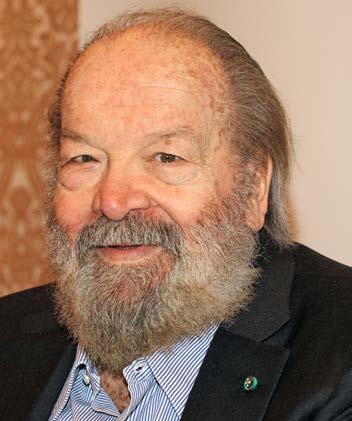
File photo shows Bud Spencer (Carlo Pedersoli) promoting his autobiography “My Life, My Movies” at a press conference at the Regent Hotel in Berlin, Germany, on June 14, 2011.
Photo by vipflash / Shutterstock.com
Fagioli alla Bud Spencer Canned Beans packaging display.
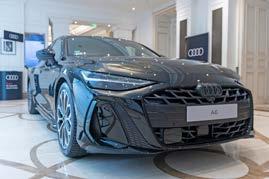
Audi plug-in hybrid models.
With an all-electric range of over 100 km.
The combined fuel consumption of the new Audi A6 Avant models is 6,5–7,5 l/100 km, and their combined CO₂ emissions are 48–64 g/km, combined electric energy consumption: 15.0–16.1 kWh/100 km. The stated values were determined during type approval with the factory equipment and are valid at the time of publication of the advertisement. These figures are measured according to WLTP, do not refer to individual vehicles, and are not part of the product information; they serve to compare different vehicle types in accordance with the current provisions of Regulation (EC) No 715/2007. The values may be influenced by certain additional equipment, accessories, as well as driving habits and other non-technical factors (e.g. environmental conditions). The car shown in the image is an illustration and may include optional equipment.