BBJ Editor-in-chief: Robin Marshall • Editor: Bence Gaál • Sales: Erika Törsök • Contributors: Annamária Bálint, Mihály Kovács • Lists: BBJ Research (research@bbj.hu) • News and press releases: Should be submitted in English to news@bbj.hu • Layout: Zsolt Pataki • Cover image: Arelix / Shutterstock.com • Publisher: Tamás Botka, Business Publishing Services Kft. • Address: Madách Trade Center, 1075 Budapest, Madách Imre út 13-14. • Telephone: +36 (1) 398-0344 • Advertising: AMS Services Kft. • CEO: Balázs Román • Sales: sales@bbj.hu • Circulation and subscriptions: circulation@bbj.hu • www.budapestbusinessjournal.com • ISSN 3141-7744 • © 2026 Business Publishing Services Kft. All rights reserved. • We are committed to sustainability — this publication is printed on recycled paper using environmentally responsible processes. Feeding the Future Under Pressure
HUNGARY’S DROUGHT CRISIS FORCES RETHINK ON WATER MANAGEMENT
Hungary’s increasingly severe drought situation has moved from an agricultural concern to a national policy challenge, forcing the government, water management authorities, environmental organizations and researchers to confront a problem that has been building for years.
After an extremely dry spring, officials and experts are warning that the country is not simply facing another difficult season. Rather, the accumulated impact of repeated dry years, falling groundwater levels and outdated drainage-oriented water management has created a structural problem. The central question is no longer only how to help farmers through one droughthit year, but how Hungary can keep more water in the landscape before the next crisis arrives.
At its first off-site cabinet meeting in Ópusztaszer, the new government placed the drought among its immediate priorities. Prime Minister Péter Magyar said the cabinet had discussed preparations for 17 decrees, while water management experts were also present to brief the government on the severity of the situation.
As an immediate intervention, the government said it would provide a HUF 2 billion framework and declare a vis maior situation in agriculture because of the drought. Magyar also said EU-funded water management developments worth HUF 257 bln would be implemented, while the authorities would take steps to declare the severe water shortage status for 2026.
The situation poses a serious production risk for farmers, which may have an unfavorable impact on both this year’s yields and the economic stability of agricultural businesses.
As a result, groundwater reserves have remained persistently below average levels. In much of the Great Plain, groundwater levels were 1-2 meters below the 30-year average.
The effects are visible in agriculture, forestry and local ecosystems. Areas that had already been vulnerable to drought, including the Homokhátság region between the Danube and Tisza rivers, are seeing wells dry up, questions arise over the viability of certain crops, and forests suffer from dieback. According to WWF Hungary, drought no longer resets after one dry year; water shortage accumulates.
The measures came against the backdrop of warnings from water management professionals that the situation had been worsening for five years. József Gacsályi, deputy director-general of the National Water Directorate, described the national water situation as alarming, saying that the system was missing the equivalent of a year’s average rainfall.
A
PROBLEM YEARS IN THE MAKING
The scale of the water deficit is striking. By the end of April, Hungary’s accumulated rainfall deficit over the previous five years had reached 462 mm, while in several parts of the Tisza Valley it exceeded 900 mm.
WWF noted that while long-term climate research traditionally requires 30 years of data to identify a statistically significant trend, the rapid acceleration of climate change is forcing experts to draw conclusions from shorter, five- to 10-year patterns. In this reading, Hungary’s recent sequence of dry years is enough to demand a change in policy.
That change, according to both environmental organizations and water management professionals, must be built around water retention. Hungary’s historical water management logic has often focused on drainage: removing excess water quickly from
HEINEKEN HUNGÁRIA INVESTS IN ENERGY
EFFICIENCY AND LOGISTICS
AT SOPRON BREWERY
Heineken Hungária is continuing the modernization of its Sopron brewery with a combination of logistics capacity expansion and energy-efficiency investments designed to support long-term growth while reducing the environmental footprint of its operations.
The latest developments mark another milestone for the historic brewery, which has been operating in Sopron for more than a century and remains an important part of Heineken’s Hungarian manufacturing base. The investments are intended to strengthen operational efficiency, optimize the supply chain, and support the company’s wider sustainability ambitions, including its target of reducing emissions from direct operations and purchased energy.
NET ZERO PRODUCTION
One of the key elements of the development program is the transformation of the brewery’s energy supply under Heineken’s Net Zero Production program. Within the global Heineken group, the Sopron brewery was among the first sites to enter the implementation phase of the program, which aims to cut the carbon footprint of production through major energy-efficiency and decarbonization measures.
At the Sopron site, the project focuses on recovering waste heat
This large-scale, multiyear project clearly demonstrates that our sustainability investments, which form the basis of our strategy, are deeply embedded in our business activities and operational processes.
As part of the investment, the commissioning of a heat pump system has already begun, with the full transition expected to be completed by the end of October. According to the company, the environmental impact of the project will be substantial, with annual carbon dioxide emissions expected to fall by more than 1,400 tonnes.
The program is being implemented in cooperation with Siemens as part of several long-term international energy projects within the Heineken group. The system recovers heat generated in fermentation tanks and redirects it to the packaging plant, where it is used for heating purposes instead of steam from a natural gas-fueled power plant. The highperformance heat pump system uses thermal energy extracted from fermentation to produce hot water, helping to decarbonize the entire packaging process.
RECOGNITION FOR SUSTAINABILITY
generated during brewing processes and using it to produce hot water. This allows the brewery to replace a significant portion of its fossilbased energy use, reducing reliance on steam produced from natural gas. The solution plays a central role in lowering emissions linked to production and packaging activities.
The impact of the investment has already gained professional recognition. In October 2025, the Business Council for Sustainable Development in Hungary awarded Heineken Hungária’s decarbonization program its “For a Sustainable Future” award in the Business Solutions / Climate Protection and Adaptation category. The award recognized the Sopron brewery’s contribution to reducing emissions and advancing the company’s broader sustainability targets.
THE NEXT ERA OF THE FOOD INDUSTRY IS ALL ABOUT ADAPTABILITY
Over the past 35 years, Nestlé has not only built well-known consumer brands in Hungary, but has also established significant export capabilities, manufacturing facilities, and a supplier network. The company now exports products manufactured in Hungary to nearly fifty countries, while its three domestic plants play a key role in the company’s global operations. We spoke with Péter Noszek, managing director of Nestlé Hungária, about the competitiveness of the Hungarian food industry, the rationale behind investments, and the factors that will shape the sector’s next decade.
Nestlé has been present in Hungary for more than three decades. How would you describe the company’s role today in the Hungarian food industry and the broader economy?
Péter Noszek: In terms of market size, Hungary is not a major location on Nestlé’s global map; however, the significance of our operations goes far beyond that. With our three factories, two logistics centers, and more than 3,000 employees, we now operate more as a production and export hub than as a mere commercial actor.
However, our economic impact extends far beyond our own operations: we work with an extensive network of suppliers, logistics partners, agricultural stakeholders and retail partners. For a global manufacturer, a local presence is no longer solely a matter of employment; it is also linked to productivity, export and competitiveness.
An independent analysis by PwC found that 0.5% of Hungary’s GDP is linked to Nestlé’s operation in the country. In addition, through our direct, indirect, and induced effects, we support a total of more than 22,000 jobs in Hungary annually.
Nestlé’s products made in Hungary reach almost 50 countries. Which product categories or capabilities are most important in strengthening Hungary’s position in international food supply chains?
PN: One of the most significant changes in recent decades is that Hungary is increasingly moving away from being viewed as a simple
HUNGARIAN AGRICULTURE MUST COMPETE ON KNOWLEDGE, NOT PRICE
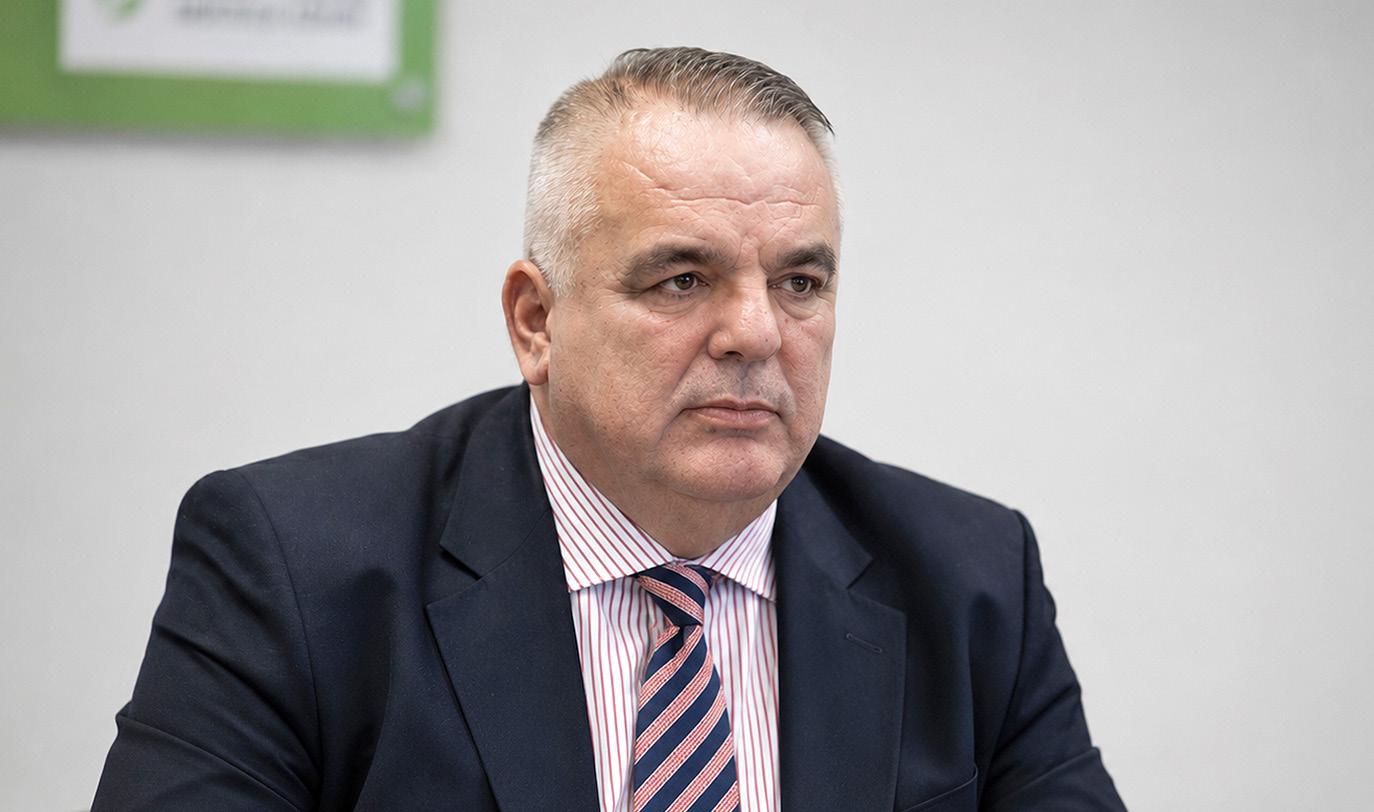
Zoltán Drucskó, chief operating officer of IKR Agrár Kft., brings together legal, strategic and operational experience in a role that connects the company’s integrated business model with the everyday realities of Hungarian farming. Having worked extensively in agricultural law, corporate strategy and business development, he argues that long-term success in agriculture rests on three pillars: science, trust and systemic partnership.
In this interview, Drucskó discusses the uncertainty facing Hungarian agriculture, from unpredictable input prices and the growing impact of climate change to the constantly evolving EU regulatory environment. He explains how IKR Agrár’s integrated model, developed over nearly 55 years as an agricultural integrator in Hungary, is designed to give farmers access to financing,
agronomic advisory, input supply, precision farming solutions and biological innovation within one system.
What is the biggest challenge facing Hungarian agriculture today?
Zoltán Drucskó: The simplest answer is: uncertainty. Unpredictable input price movements, the increasingly extreme effects of climate change on yields, and the constantly evolving EU regulatory environment - all of this weighs
simultaneously on the farmer who is trying to make their future plannable using their own land and their own resources. None of these three pressures will disappear in the short term.
IKR’s response to this situation is the integrated model: we do not sell a product, we offer a system within which the farmer can access financial support, agronomic advisory, input supply, precision technology and the results of biological innovation all in one place. Resilience does not come from a single product - it comes from a functioning partner network.
“IKR Agrár – Building a Plannable Future”
What does the biological shift mean, and why now?
ZD: The biological shift means that alongside intensive cultivation based on mineral fertilizers and chemical crop protection, soil life and the deliberate support of microbiological processes are playing an ever greater role. The most tangible example from our side is mIKRofert Glomo Start, developed as the result of IKR’s own research and development program.
The mIKRofert Glomo Start is a microgranulated biological starter containing seven mycorrhizal fungal species, applied in a single pass at sowing. Mycorrhiza enters into symbiosis with the plant’s roots and fundamentally changes the way plants utilize water and nutrients. The results achieved on our trial plots
MAKING PHYSICAL RETAIL UNITS WORK HARDER
Physical stores remain a crucial link between producers, consumer goods companies, retailers and households, argues György Suta, consumer products and retail sector lead and tax partner at EY Hungary. For more than a decade, the retail industry has been debating the same question: Are physical stores becoming obsolete? The rise of e-commerce, combined with cost pressures and shifting consumer behavior, has fueled repeated predictions about the gradual decline of brick-and-mortar retail. Yet this narrative is increasingly outdated. The more relevant question today is not whether stores still matter, but whether they are being used to their full potential.
Recent global analysis by EY suggests that widespread store closures would be a strategic misstep. While digital channels continue to grow faster, physical retail still represents the majority of sales in most markets and categories. More importantly, stores continue to play a critical role not only as points of transaction, but as centers of experience, trust and brand engagement.
This perspective is highly relevant in the Hungarian context. The domestic retail market is not experiencing a structural decline of physical retail, but rather a period of adjustment. Consumer behavior has evolved in response to recent economic conditions: households have become more deliberate in their spending, more value-conscious and increasingly selective. At the same time, retail activity shows signs of stabilization and gradual recovery. Sales volumes have been strengthening across key categories, supported by improving real incomes and a more predictable inflation environment, even if consumer sentiment remains cautious.

AGRICULTURE FACES ANOTHER TEST AFTER A YEAR OF EXTREMES
Hungarian agriculture entered 2026 carrying the scars of one of the most difficult years in recent memory. After a series of weather, disease and market shocks in 2025, the sector is once again confronting a familiar but increasingly urgent question: how to remain productive in an environment where volatility is no longer the exception, but the operating norm.
In 2025, agriculture delivered one of the most severe negative surprises in the Hungarian economy. Then-Minister of Agriculture István Nagy described the year-end situation as one marked by “almost biblical plagues,” referring to prolonged drought, spring frosts, avian influenza and even an outbreak of foot-andmouth disease. The phrase may have sounded dramatic, but the figures suggest the assessment was not exaggerated.
According to data from the Central Statistical Office (KSH), agricultural production volumes fell by approximately 3.6%-4.3% year-on-year in 2025, while the decline in overall gross value added approached 4%. By late summer, drought-related losses had already exceeded HUF 100 billion. Agriculture’s contribution to Hungary’s GDP outcome for the year was negative, shaving 0.1 percentage points from growth.
The headline figures only partly capture the strain felt across the sector. For producers, 2025 was not merely a weaker year in statistical terms. It was another reminder that the basic conditions of farming are changing. Extreme weather increasingly affects planting decisions, yield expectations, water management, input use and financial planning. For many farmers, the challenge is no longer how to optimize a stable production model, but how to manage risk in a system that is becoming less predictable.
A SPLIT CROP PICTURE
The crop sector in 2025 presented a sharply divided picture. Wheat performed relatively well, while maize and several summer crops suffered a catastrophic year.
The wheat-sown area slightly exceeded 1 million hectares, broadly in line with the trend of recent years as farmers have shifted toward more
CLIMATE, COSTS AND COMPETITIVENESS TEST HUNGARIAN AGRICULTURE’S FUTURE
Hungarian agriculture remains productive in several key areas, from crop and seed production to parts of livestock farming, but climate change, high input costs, labor shortages, weak processing levels and uneven access to innovation are forcing the sector to rethink how it can preserve its competitiveness and build resilience in the years ahead.
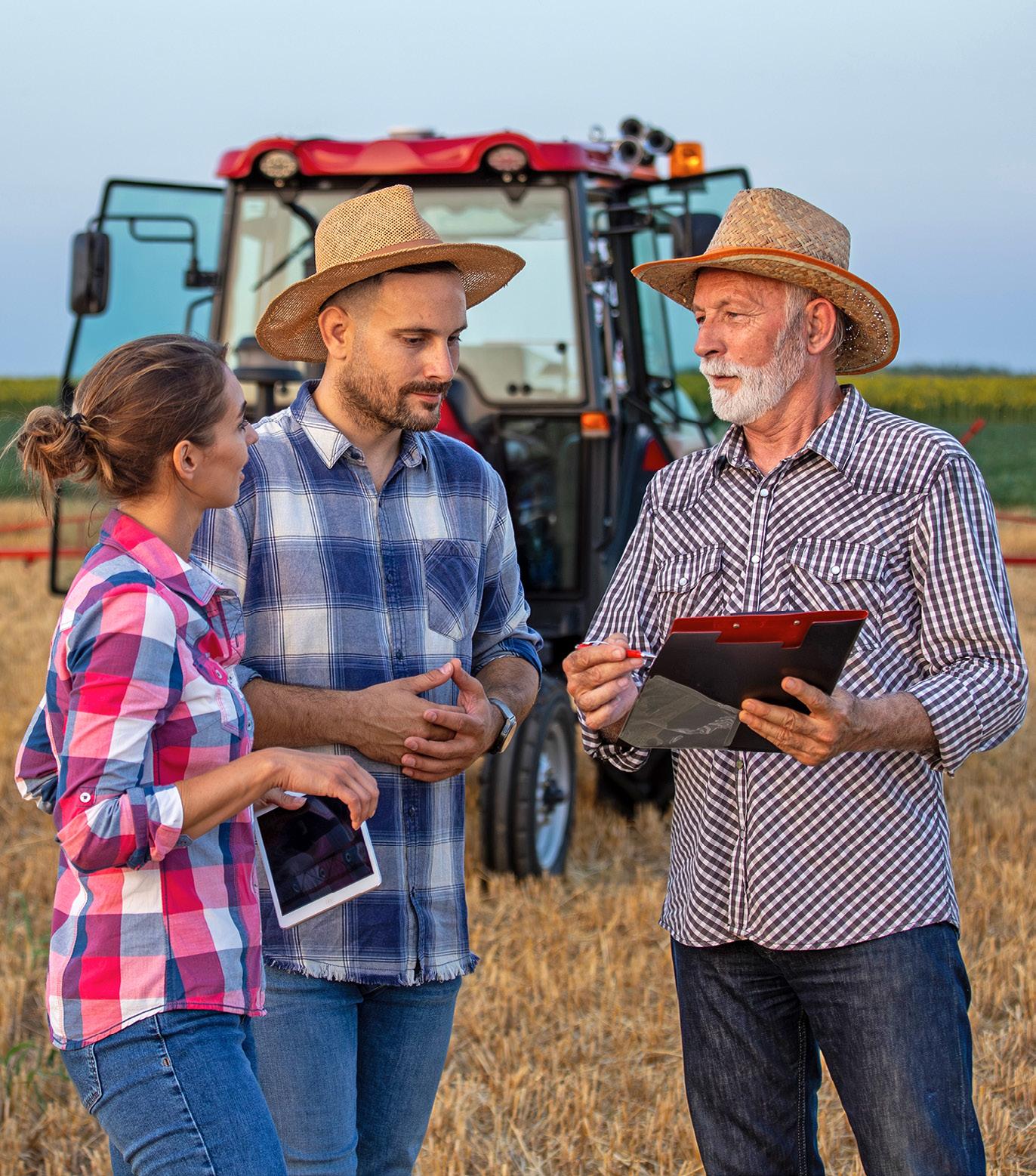
In this Market Talk, we asked two leading agricultural experts about the current state of the sector, its most pressing challenges and the role of innovation, sustainability and policy in shaping its future.
Katalin Süle is deputy national president for general agricultural economy affairs at the National Chamber of Agriculture (NAK), while Dóra Drexler is managing director of the Hungarian Research Institute of Organic Agriculture.
How would you assess the current state of Hungarian agriculture, and what are the main factors shaping the sector’s performance today?
Dóra Drexler: Hungarian agriculture today shows a mixed picture. One of the most decisive factors shaping the sector is climate variability, with recent years clearly demonstrating the increasing frequency of droughts and extreme weather events. Structural duality is another defining feature: highly efficient large-scale farms coexist with smaller, more vulnerable producers who often struggle with access to capital, technology uptake and market integration.
FOOD LOGISTICS MOVES FROM BACK-OFFICE FUNCTION TO RISK MANAGEMENT TOOL
Food logistics is becoming a strategic business function for food industry and FMCG companies as regulatory pressure, cost constraints and waste-reduction goals make traceability, food safety and value-added warehouse services increasingly important across the supply chain.
For food industry and FMCG players, the question is no longer only whether a product reaches the store on time. It is also whether it arrives safely, verifiably and ready for commercial use. As regulatory expectations tighten and companies face pressure to reduce costs and waste, food logistics is becoming a matter of quality control, compliance and business risk management.
The scale of food waste in the European Union remains significant. In 2023, 58.2 million tonnes of food waste were generated in the EU, equivalent to an annual average of 130 kilograms per person. Almost half of that loss was generated outside households, across production, processing, manufacturing, retail, food service and catering. This shows that there is still room to reduce losses in industrial and commercial processes, not only at the consumer level.
According to European Commission estimates, the market value of food waste generated in the EU is EUR 132 billion. This is effectively a cost paid jointly by participants across the chain through inventory losses,
labor, energy use and discarded products. In a sector where margins are often under pressure, reducing such losses is not only an environmental objective but also a direct business interest.
MANDATORY TARGETS
RAISE THE PRESSURE
The pressure is not only commercial. According to the European Commission, last year’s amendment to the Waste Framework Directive introduced mandatory food waste reduction targets to be achieved by 2030.
The targets include a 10% reduction in processing and manufacturing, and a 30% per capita reduction jointly across retail and consumption, including restaurants, catering and households, compared with the 2021-2023 average.
In practice, this means that measurable, auditable and optimizable operations are becoming the expected standard across food supply chains. Companies will increasingly need to show not only that they comply with formal requirements, but also that their logistics,
warehousing and product-handling processes support waste reduction in a documented and verifiable way.
This is especially relevant for food producers, FMCG companies and retailers operating with fast-moving products, promotional cycles, seasonal peaks and products that may be sensitive to time, temperature or handling conditions. In these cases, a delay, labeling error, incorrect storage condition or poorly prepared promotional unit can quickly become a source of waste, added cost or commercial disruption.
TRACEABILITY BECOMES CENTRAL
The key concepts are traceability and food safety, both on paper and in the warehouse. EU food law requires traceability throughout the chain. Under Regulation (EC) No. 178/2002, operators must be able to identify from whom they received goods and to whom they passed them on, following the “one step back, one step forward” principle.
The EU’s food hygiene regulation, Regulation (EC) No. 852/2004, also requires food business operators to operate HACCP-based procedures. These requirements become highly practical questions in logistics: separation of goods, hygiene, temperature control, documented processes and rapid intervention if any deviation occurs.
As a result, logistics providers and warehouse operators are no longer merely handling physical movement. They are becoming part of the product
COSTS, LABOR PRESSURES AND
SUSTAINABILITY DEMANDS RESHAPE HUNGARY’S
FOOD INDUSTRY OUTLOOK
Hungary’s food industry remains an important production and export base, supported by industrial expertise, established manufacturing capacity and strong international links. However, companies in the sector are operating in an increasingly complex environment shaped by challenges such as persistent cost pressure, changing consumer demand, competition for skilled labor, supply chain resilience and rising sustainability expectations.
AGRICULTURE, FOOD AND ENVIRONMENT ROLES REDRAWN
The Tisza government structure separates core agricultural and food industry responsibilities from wider environmental, water management and circular economy functions, creating a clearer division of ministerial roles in areas that are central to the country’s agro-food sector.
Under the new setup, Szabolcs Bóna serves as Minister of Agriculture and Food, with responsibility for agricultural policy, food chain supervision, the food industry, land affairs, mapping related to agricultural subsidies, fisheries and game management.
László Gajdos, Minister of the Living Environment, oversees forestry, waste management, the circular economy, environmental protection, nature conservation, water management, water protection, water utility services and the management of water administration bodies.
The structure marks a notable institutional separation between production-oriented agro-food policy and the wider environmental systems that increasingly shape farming, food processing and rural development. While agriculture, food safety and food industry regulation are concentrated under Bóna’s ministry, Gajdos’s portfolio covers many of the resource, sustainability and infrastructure issues that directly affect the long-term operating environment for farmers and food companies.
For the agro-food sector, the change is significant because it creates two clearly defined policy centers. One is responsible for the competitiveness, regulation and support framework of agriculture and food production. The other deals with the living environment, including forests, water, nature protection, waste and circular economy systems. The separation may allow each portfolio to pursue more specialized policy objectives, while also increasing the need for coordination
HUNGARY’S FARMLAND
MARKET COOLS AS FARMING ECONOMICS
COME UNDER PRESSURE
Hungary’s farmland market slowed sharply in 2025, with fewer transactions, less land sold and only minimal price growth after more than a decade of strong appreciation, according to OTP Mortgage Bank’s latest farmland value map.

by
The data point to a market that remains strategically important but is becoming increasingly selective. Farmland continues to be seen as a stable long-term asset, yet the economics of agricultural production are under growing pressure from drought, limited irrigation, high input costs, labor shortages and weaker commodity prices.
According to OTP Mortgage Bank’s 2026 Farmland Value Map, the number of farmland transactions fell by around 14.4% in 2025 compared with the previous year, while the total area sold dropped by 16.5%. The average price of farmland sold rose only 1.3%, from HUF 2.236 million per hectare in 2024 to HUF 2.264 mln/ha in 2025.
That marks a clear slowdown in a market that has shown uninterrupted price growth for more than two decades. In longer-term perspective, however, farmland has still been a strong store of value. OTP’s analysis shows that one hectare of farmland bought in 2010 had, on average, quadrupled in price by 2025, broadly matching the increase seen in Hungary’s residential property market over the same period.
The result is a paradox for the agriculture sector. Land remains valuable, and in many cases increasingly scarce, but the market is no longer moving with the same momentum. Owners are often reluctant to sell, while buyers face more difficult financing conditions and weaker farming returns.
A MARKET LOSING
MOMENTUM
The slowdown is visible both in the number of deals and the volume of land changing hands. Based on preliminary, filtered data from the National Tax and Customs Administration, the number of farmland sales fell from 40,100 in 2024 to 34,300 in 2025. When measured by area, the decline was even sharper: 38,600 hectares of farmland were sold, down 16.5% year-on-year.
This means that not only were there fewer transactions, but the average size of the plots sold also decreased. For agriculture, that matters because scale is one of the key determinants of efficiency. Smaller, fragmented land sales are less likely to support the creation of economically viable,