Understanding Deaerators: Types, Applications, and Enhancing Boiler Efficiency
A deaerator is an essential component in many industrial systems, especially in power plants and chemical processing industries. It plays a crucial role in improving the overall efficiency and longevity of boilers by removing dissolved gases like oxygen and carbon dioxide from the feed water before it enters the boiler. These gases, if not removed, can cause significant damage to the boiler system through corrosion and scaling. In this article, we will explore what a deaerator is, how it works, its various applications, types, components, and the importance of proper maintenance to ensure optimal performance.
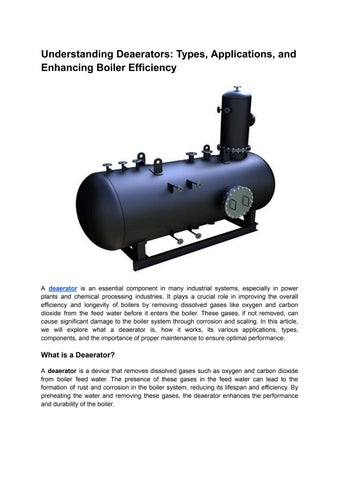
What is a Deaerator? A deaerator is a device that removes dissolved gases such as oxygen and carbon dioxide from boiler feed water. The presence of these gases in the feed water can lead to the formation of rust and corrosion in the boiler system, reducing its lifespan and efficiency. By preheating the water and removing these gases, the deaerator enhances the performance and durability of the boiler.