CRUISE CONNECT
Navigating Emergencies: Enhancing Evacuation Strategies for Safer Cruising
Explore how technology and human-centered design are revolutionizing evacuation strategies in the cruise industry.

“
Navigating Emergencies: Enhancing Evacuation Strategies for Safer Cruising
Explore how technology and human-centered design are revolutionizing evacuation strategies in the cruise industry.
“
The cruise industry is navigating an era of unprecedented transformation. As we embrace innovations like alternative fuels and advanced automation, we also face the increasing complexity of ensuring passenger and crew safety. This edition of the ABS Cruise Ship Newsletter directly addresses these challenges, focusing on the critical need to enhance emergency evacuation strategies for the ships of tomorrow.
This mirrors the strategic imperative of the Coast Guard’s Force Design initiative: to build a more agile and proficient service, ready for a rapidly evolving maritime domain. Our marine inspectors are adapting their expertise to meet the sophisticated technology and novel risks presented by new vessel designs and fuels like methanol and hydrogen.
The path forward demands collaboration. The partnership between the Coast Guard, ABS and industry is essential to ensuring safety remains at the forefront of innovation.
“ Emergency procedures must evolve to address fuel-specific behaviors and risks, and crew training is essential for effective response.
The insights within this newsletter are a testament to our shared commitment to navigating the future of cruising, safely and securely.
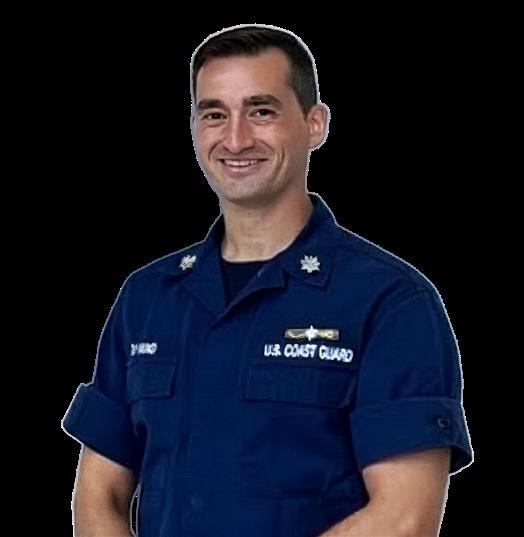
CDR John Di Nino Commanding Officer, U.S. Coast Guard Cruise Ship National Center of Expertise (NCOE)
Lead Author: Whitney Mantooth, Senior Engineer, ABS
As the cruise industry weighs the adoption of alternative fuels, including liquefied natural gas (LNG), methanol, hydrogen and blended fuels, new safety considerations emerge for emergency evacuation procedures. These fuels introduce unique risks around fire behavior, detection and response. Hybrid and full-electric propulsion systems add related challenges. Addressing these calls for engineering innovation, thoughtful technology integration and well-prepared crews.
Each alternative fuel presents distinct hazards:
Liquefied natural gas is cryogenic, odorless and stored under pressure. It can form vapor clouds and poses asphyxiation risks. ABS LNG
Bunkering: Technical and Operational Advisory helps industry stakeholders manage the safety, compatibility and efficiency of LNG fuel transfer at sea.
Methanol burns with nearly invisible flames in sunlight and is both flammable and toxic. ABS Methanol Bunkering: Technical and Operational Advisory provides comprehensive guidance to help the maritime industry safely and efficiently integrate methanol as a marine fuel.
Hydrogen is stored under high pressure, has colorless flames and often requires thermal imaging for detection. ABS Materials for Liquid Hydrogen, Liquid Ammonia and Liquid Carbon Dioxide Containment Systems Advisory provides insights into the material selection for the cargo and fuel containment systems for these liquefied gases that is key to their safe operation.
Electric batteries can experience thermal runaway, leading to intense fires and toxic gas release. They are often also difficult to extinguish. ABS Requirements for Use of Lithium-ion Batteries in the Marine and Offshore Industries addresses the growing use of largescale battery systems in vessels and offshore facilities.
Blended Fuels (e.g., biofuel blends) introduce compound hazards due to mixed physical and chemical properties, impacting leak and fire detection, fire behavior and emergency response. The ABS Biofuel-1 notation is a classification mark awarded to vessels that meet specific requirements for using biofuel blends up to 30 percent (B30) in compliance with both IMO and ABS regulations.
These characteristics complicate traditional fire suppression and evacuation procedures and amplify the need to update them for passenger vessels. For example, extinguishing a hydrogen flame without stopping the leak may create an explosive mixture. While methanol is harder to ignite than many conventional fuels and burns at a slower rate, its flames can be nearly invisible in bright light. Water alone may not be sufficient to extinguish a methanol fire, and alcohol-resistant foam is generally considered a more effective suppression medium. Emergency procedures must evolve to address fuelspecific behaviors and risks, and crew training is essential for effective response.
The risks associated with alternative fuels and vessel-specific arrangements should shape firefighting measures. This includes selecting appropriate deluge systems, providing adequate pumping and water storage capacity, establishing fire detection and control measures, defining minimum crew requirements, and setting training protocols to support effective emergency response.
Passenger vessels present unique challenges, including high occupancy, diverse passenger needs and lean crews, so firefighting strategies must be efficient and comprehensive. In these environments, automation, decision support tools and scenario-based training can play an important role in emergency response by helping crews assess available capability and manage complex situations without compromising safety.
Explore the latest ABS publications to support your next project in the ABS Knowledge Center by visiting www.eagle.org/knowledgecenter or scanning the QR code.
There are several engineering solutions that can help model, simulate and assess the risk of alternative fuels and electrification systems. These can involve modeling the dispersion of a gas or liquid, simulating evacuation routes to identify bottlenecks and leveraging realtime data to pinpoint potential hazards.
Simulates how fires behave under different conditions. This is especially important for fuels like hydrogen and methanol, which have unique combustion characteristics. When integrated with passenger evacuation modeling (PEM) and human factors engineering (HFE), fire dynamics simulations help predict flame spread, heat release rates and toxic exposure zones, enabling more accurate evacuation planning.
Simulates crowd movement and identifies bottlenecks during emergencies. It can be used to optimize evacuation routes and supports compliance with MSC.1/Circular.1533 – Revised Guidelines on Evacuation Analysis for New and Existing Passenger Ships. When paired with fire dynamics modeling, PEM can integrate the unique risks posed by alternative fuels, including invisible flames, toxic vapors and delayed hazard recognition. This combined approach provides more robust data to evaluate evacuation strategies, helping operators maintain Required Safe Egress Time (RSET) ahead of Available Safe Egress Time (ASET).
Aligns systems, procedures and interfaces with human capabilities. It supports accessibility and inclusivity, reduces cognitive load during high-stress situations and helps crews make decisions more effectively. For vessels using alternative fuels, it can be applied to alarm management, evacuation procedures and emergency response planning to identify where cognitive overload may occur and where adjustments may be needed.
Detect gas leaks and identify flames that may be invisible to the naked eye. This is particularly relevant for hydrogen and methanol hazards. Infrared and thermal imaging systems provide real-time warning and situational awareness to support faster and safer evacuation decisions.

Supports immersive training for emergency scenarios. It can be used to visualize evacuation routes, hazard zones and equipment operation. In training environments, it can also overlay instructions and alerts within the crew’s field of view to strengthen situational awareness and decision-making.

Mirror vessel conditions using sensor data to support operational awareness, human-centered risk evaluation and continuous improvement. For vessels using alternative fuels, digital twins can provide dynamic insight into fuel-specific risks, helping support evacuation timelines and operational integrity as conditions change. By incorporating crew feedback and operational data over time, they can also help refine procedures and system configurations to enhance reliability and safety.
Integrate data from multiple shipboard sources to support real-time situational awareness and time-critical decision-making during emergencies. These systems can combine inputs from fire and gas detection, evacuation monitoring and vessel condition sensors to help crews anticipate hazard escalation, manage evacuations and maintain RSET ahead of ASET. Integrated capabilities may include:
• Fire and gas detection with trend analysis and automated alerts.
• Muster status and evacuation progress tracking to identify delays or incomplete assemblies.
• Passenger density and crowd movement monitoring to detect congestion and bottlenecks.
• AI-enabled CCTV for anomaly detection, behavioral analysis and enhanced situational awareness.
• Progressive damage and stability assessment to inform safe operational and evacuation decisions under degraded conditions.
Empowering Crews Through Technology and Training
Technology and training are central to preparing crews to manage emergencies. This is achieved through enhancing situational awareness and reducing cognitive burdens. Examples:
1. Scenario-based training using AR and PEM allows crews to rehearse emergency procedures in immersive environments. These tools simulate crowd movement, visualize hazard zones and incorporate fire dynamics to prepare crews for the unique risks of alternative fuels.
2. Feedback loops driven by crew input and operational data help refine evacuation procedures and system interfaces. Through human performance modeling, areas of cognitive overload are identified, enabling targeted improvements that enhance crew effectiveness and safety.
The future of maritime safety lies in designing, training and leading with safety at the core. As new technologies and operational changes are introduced, the essential test is whether they improve safety in practice.
As technology continues to advance, emergency preparedness must remain central so that innovation does not come at the expense of safety. Whether through advanced modeling, human-centered design or digital integration, progress will depend on a strong commitment from operators and owners.
The ABS Singapore Innovation and Research Center (SIRC) is a multidisciplinary technology center supporting marine and offshore stakeholders across the Pacific region. As a strategic research and development center, SIRC advances work across digitalization, the energy transition and applied research, with a strong focus on safety, particularly as the industry explores new fuels and operating concepts.
The center works with shipowners, shipyards, technology providers, government agencies and research institutions across the region to keep research aligned with industry operational needs and translate results into practical guidance, tools, and methods that support the safe and responsible adoption of new and emerging technologies. In addition, SIRC brings deep domain knowledge in safety innovation, modeling and simulation, visualization, autonomy, AI, robotics and additive manufacturing (AM). These capabilities support ABS classification and advisory work and inform the development and updating of ABS Rules, Guides and related technical standards.
Advancing Emergency Planning and Evacuation Strategies
Within SIRC’s broader portfolio, one area of safety innovation focuses on improving how emergency response plans (ERPs), including muster and evacuation arrangements, are evaluated under realistic conditions. Traditional consequence assessments and procedural reviews may not capture the dynamic interactions between people, systems and environmental conditions during an incident. Full-scale exercises can provide valuable operational insight, but their cost and complexity often limit how often they are used.
To help narrow this gap between document-based evaluation and performance under realistic conditions, SIRC has developed a coupled simulation framework that links hazard progression with human and procedural actions. The framework comprises three core components:
1. Dispersion modeling: Uses computational fluid dynamics (CFD) and validated empirical models to estimate how hazards such as toxic gas, fire and smoke evolve under representative maritime conditions.
2. ERP and human-response simulation: Uses discrete event simulation (DES) to model ERP steps and equipment operations as time-sequenced events with probabilistic delays. Agent-based modeling (ABM) represents crew and, where relevant, passengers as decision-making agents whose actions and movement evolve in response to alarms, assigned roles, training levels, hazard conditions, crowd dynamics and physiological constraints. Both run within a Monte Carlo engine that performs hundreds to thousands of iterations to capture operational, environmental and human variability. Outputs include distributions of key response metrics, such as time to complete ERP actions, muster and evacuation time, and exposure profiles, along with risk and performance indicators that can be used to compare mitigation options, identify ERP sensitive steps, and refine procedures and muster and evacuation arrangements.
3. Immersive multi-player virtual emergency drills: Use interactive environments, including virtual reality (VR), to allow teams to rehearse realistic emergency scenarios together, focusing on coordination, communication, stress response, and situational awareness. Insights from these exercises are used to refine modeling assumptions, validate procedures and strengthen training and readiness before operational deployment.
Inputs
Ship/port layout, leak scenarios, env conditions, ERP, personnel details.
Monte Carlo Engine
Sample Uncertainty
Environment, equipment delays, human variability
Run Dispersion Model
Run Agent-Based Model
Compute Metrics
Evacuation time, exposure, risk indicators
Core Modeling and Simulation Components
1. Hazard and Dispersion Modeling
2. ERP and Human Behavior Modeling
3. Immersive Multi Player VR Drills
Aggregate Results
Distributions and comparative risk metrics
Identify Drivers
Bottlenecks and sensitivities
Refine ERP, Evacuation Strategy and Training Other scenarios?
Update Assumptions and Procedures
Based on VR observations
and
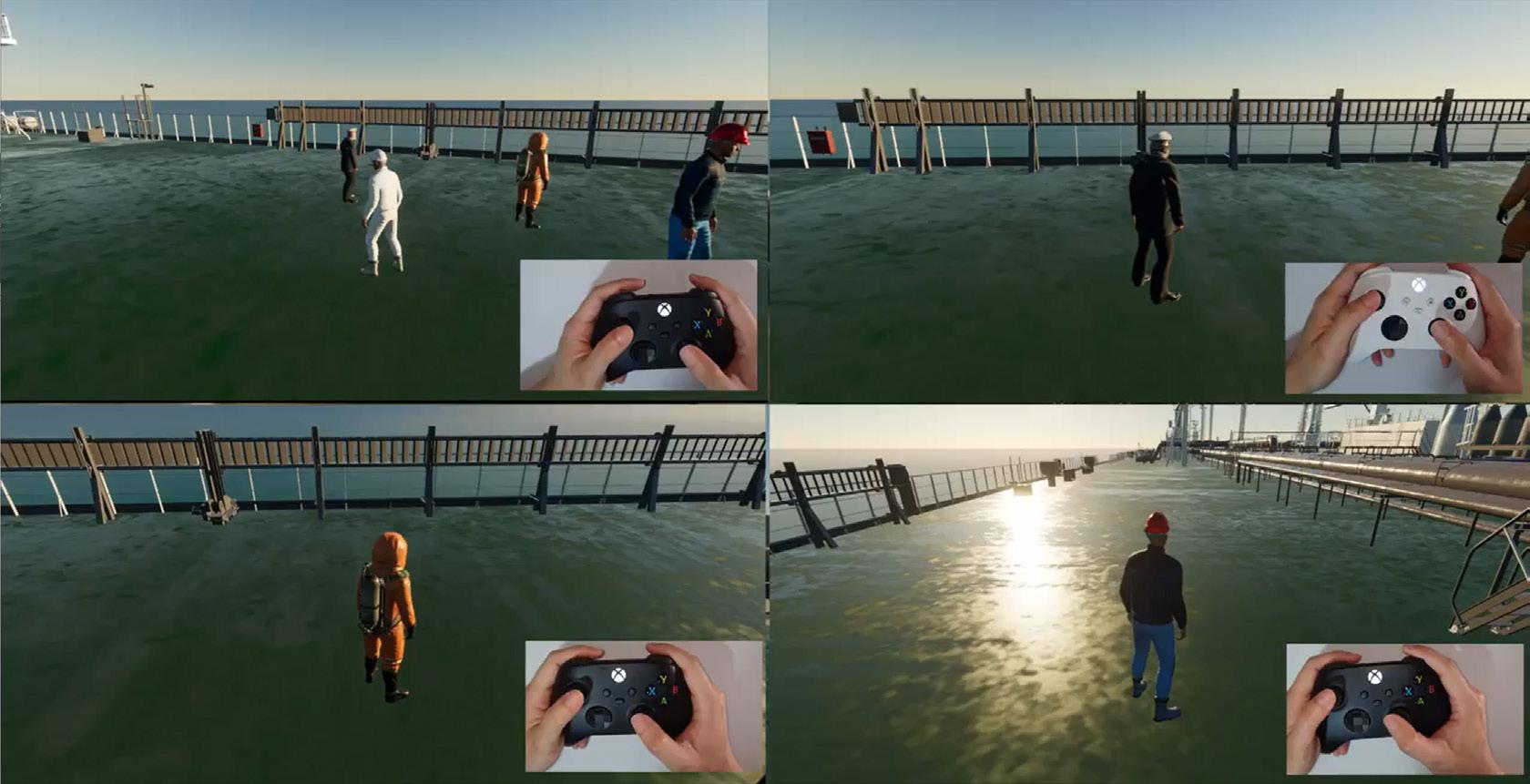
For cruise ships, evacuation compliance assessments are often centered on passenger movement under orderly conditions. In practice, emergencies can involve behaviors and constraints that are harder to capture in conventional analyses. These can include panic, herding, family groups refusing to split or reduced mobility when the ship is listing.
Building on its modeling and simulation capabilities, SIRC can extend evacuation assessment beyond “time-to-evacuate” by linking ship-specific layouts with hazard development and human response. This enables structured “what-if” evaluations that surface bottlenecks, identify risk hotspots and support the refinement of emergency procedures and mitigation concepts.
As illustrated in the theatre evacuation scenario, simulation is used to compare mitigation options to better understand how interventions may influence evacuation performance and congestion outcomes. Using the same framework, additional stressors relevant to cruise operations, such as fire, smoke, blackout, overcrowding with counterflow and ship listing (tilt) can also be explored. Results can be summarized using practical indicators including total evacuation time (TET), Required Safe Egress Time (RSET), congestion hotspot heatmaps, muster station utilization, individual risk indicators and exposure-related measures, supported by probabilistic variation to reflect operational and human uncertainty.
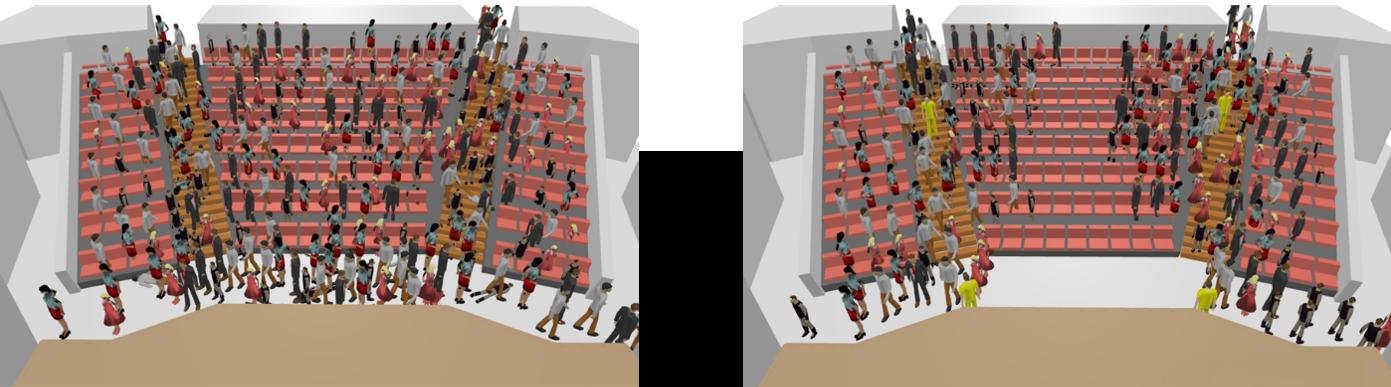
Evacuation time does not meet requirements
Potential casualties (e.g. stampede)
Evacuation time does meet requirements
Minimize casualty
Conclusion
Emergency preparedness requires evaluation methods that reflect how hazards, systems and people interact in real time. The center’s combination of modeling, simulation, and immersive virtual emergency drills provides a structured, repeatable way to identify bottlenecks, compare mitigation options and strengthen readiness as the industry introduces new technologies and operating concepts.
“ “ The future of maritime safety lies in designing, training and leading with safety at the core.

Lead Author: Avery Barlow, Engineer, ABS
As the passenger vessel sector explores alternative fuels to support regulatory compliance, methanol is drawing growing attention as a practical marine fuel option. But while methanol offers potential emissions benefits and operational flexibility, it also introduces safety challenges that must be carefully addressed, especially on cruise vessels, where emergency response and evacuation depend on protecting large numbers of passengers under complex operating conditions.
Why Methanol Requires Special Attention
Methanol is a low-flashpoint, toxic fuel with fire behavior that differs significantly from conventional marine fuels. On passenger vessels, those differences matter because they can affect not only machinery spaces, but also ship layout, bunkering arrangements, ventilation design, muster strategies and route protection.
Several methanol characteristics create unique emergency response challenges.
• Low flashpoint: Methanol is a low-flashpoint fuel, increasing ignition risk compared with conventional fuels.
• Nearly invisible flame: Methanol burns with a faint blue flame that can be difficult to see, particularly in daylight.
• Toxicity: Methanol and its vapors can pose health risks even at relatively low exposure levels.
• Vapor behavior: Methanol vapor can accumulate in hazardous areas if not properly detected and ventilated.
• Different fire behavior: Methanol burns at a lower heat release rate than diesel, which can reduce radiant heat but increase the risk of a fire going undetected.
For cruise vessels, methanol’s fire behavior and toxity make it more than an engine-room topic. It is a whole-vessel safety issue that directly influences emergency preparedness and evacuation planning.
As owners evaluate methanol as a marine fuel, compliance and safety planning are shaped by both regulatory requirements and practical implementation. The IMO’s interim guidance for methyl/ethyl alcohol fuels, together with the ABS Requirements for Methanol and Ethanol Fueled Vessels, provide an important framework for fire safety, detection, bunkering and system design. Beyond class requirements, ABS also supports owners through advisory services such as risk assessments, operational reviews and performance-based studies to help translate requirements into vessel-specific solutions.

One of the most important safety concerns with methanol is fire detection. Because methanol flames are difficult to see with the naked eye, traditional visual recognition may not be enough for timely response. Infrared-based technologies are especially promising because methanol emits detectable infrared radiation despite its low visible flame signature.
For passenger vessels, early detection is essential as delayed recognition can impact crew response time, route availability, muster efficiency and overall safe egress capability.
ABS Requirements call for:
• Fixed fire detection and fire alarm systems in spaces containing methanol fuel systems
• Smoke detectors used in combination with other detectors that are more effective at identifying methanol fires
Methanol also presents a distinct firefighting challenge. Water alone is generally not the most effective standalone solution for methanol spill fires. Research has shown that very large quantities of water may be needed to fully extinguish a methanol fire, and as the water dilutes the fuel, there is potential for burning liquid to spread and create running fires.
Key methanol fire safety considerations include:
• Water alone is often insufficient for effective spill-fire suppression
• Alcohol-resistant foam is generally a more suitable extinguishing medium
• Foam-and-water combinations may provide faster extinguishment and better fire control
• Suppression strategy must consider passenger safety, not just fire knockdown performance
• Continuous vapor detection in spaces where methanol vapors may accumulate
• Improved fire recognition arrangements in machinery spaces, such as portable heat-detection devices
Because methanol fires require different detection and suppression strategies than conventional fuel fires, the IMO interim guidance and ABS requirements emphasize that the firefighting medium should be suitable for methanol fires. In practice, that has opened the door to more tailored solutions for cruise applications.
ABS is working with industry partners to evaluate methanol firefighting arrangements that can improve extinguishing performance while reducing secondary risks. For cruise owners, this is especially important because the best suppression solution must also account for available space, system complexity, impact on passengers and crew and integration with the vessel’s overall safety strategy.
Bunkering operations and vessel design also play a significant role in reducing risk and protecting evacuation capability. Methanol bunkering arrangements often draw on safety philosophies adapted from gas-fuel systems, modified to address liquid-fuel toxicity and spill behavior.
Typical methanol bunkering design features may include:
• Double-walled piping with nitrogen pressurization
• Methanol tanks fully inerted with nitrogen
• Temporary passenger exclusion zones during bunkering
• Tank location and cofferdams
• Ventilation zoning
• Gas detection and shutdown logic
These arrangements are typically strengthened through structured hazard reviews and operational studies. ABS supports owners with services such as hazard identification studies, bunkering risk assessments, and SIMOPS evaluations to examine how fueling activities interact with port operations, hotel loads, passenger movement, and emergency readiness. For cruise vessels, these assessments can help determine whether bunkering strategies, exclusion zones and shutdown logic are practical without compromising passenger safety or vessel operations.
For passenger vessels, the real challenge is keeping escape, muster and abandonment viable under fuel-related casualty conditions. That means methanol hazards must be evaluated not only for fire intensity, but also for their effect on the ship’s emergency response environment.
Key evacuation-related considerations include:
• Vapor dispersion into occupied or adjacent spaces
• Protection of escape routes and muster areas
• Thermal radiation and localized fire exposure
• Crew ability to identify and isolate the hazard quickly
• Passenger movement during bunkering or casualty response
To support these decisions, ABS can apply evaluation modeling and performance-based safety studies to examine how methanol-related hazards may affect emergency response. This can include vapor dispersion studies, fire consequence analysis, and evacuation modeling to assess route tenability, congestion, and muster performance under casualty conditions. For passenger vessels, these tools help owners and designers understand how fuel-system risks interact with the human side of emergency response. The same principles can be applied more broadly to passenger vessel emergency planning and evacuation studies.
Infrared cameras and related detection technologies may also help improve situational awareness during bunkering and emergency response. ABS has supported these kinds of evaluations through SIMOPS assessments for methanol bunkering, including work with Royal Caribbean Group.
New fuel choices for the cruise sector require new safety thinking. Success will depend on aligning fuel-system innovation with practical, vessel-specific solutions for detection, suppression, operations and evacuation. Through classification requirements, IMO-aligned guidance, risk assessments, SIMOPS studies and performance-based evaluation modeling, ABS is helping the industry address methanol’s unique challenges so that innovation in fuels is matched by innovation in safety.
“ “ Success will depend on aligning fuel-system innovation with practical, vessel-specific solutions for detection, suppression, operations and evacuation.
• What challenges do you face in developing effective evacuation procedures on your vessels?
• How do you envision technology enhancing passenger safety during emergencies?
• What innovations would you like to see in life-saving equipment and communication systems?
The demand for adventure and expedition cruises is on the rise as travelers seek unique, off-the-beaten-path experiences. This trend includes polar expeditions and cultural immersion cruises that offer deeper connections to diverse environments and communities. To meet the growing interest, ships are being tailored for specialized journeys, incorporating features that enhance exploration and comfort. The ABS Harsh Environment Technology Center plays a crucial role in supporting the development of these vessels, helping them address the challenges of remote destinations while providing exceptional experiences for passengers.