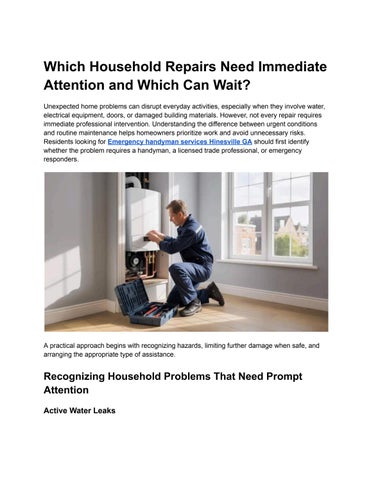
Which Household Repairs Need Immediate Attention and Which Can Wait? Unexpected home problems can disrupt everyday activities, especially when they involve water, electrical equipment, doors, or damaged building materials. However, not every repair requires immediate professional intervention. Understanding the difference between urgent conditions and routine maintenance helps homeowners prioritize work and avoid unnecessary risks. Residents looking for Emergency handyman services Hinesville GA should first identify whether the problem requires a handyman, a licensed trade professional, or emergency responders.
A practical approach begins with recognizing hazards, limiting further damage when safe, and arranging the appropriate type of assistance.
Recognizing Household Problems That Need Prompt Attention Active Water Leaks
Water escaping from a supply line, valve, faucet connection, or plumbing fixture can damage cabinets, flooring, and surrounding materials. A small drip may be manageable through scheduled maintenance, but an uncontrolled leak requires prompt attention. If it is safe to do so, the relevant shutoff valve can be used to isolate the water supply. Homeowners should avoid electrical equipment in wet areas and should not enter standing water where electrical hazards may be present. A plumbing professional may be required when the leak involves concealed piping, damaged supply connections, or complex repairs.
Doors That Cannot Securely Close An exterior door that does not latch or lock can create a security concern. Loose hinges, broken hardware, damaged frames, and misaligned components are common causes. A door that simply rubs against the jamb may be suitable for scheduled repair, while one that cannot secure an entry may need more urgent service. The repair should restore proper alignment and dependable closure rather than temporarily forcing the hardware into place.
Electrical Warning Signs Electrical problems require particular caution. Sparking outlets, burning odors, exposed live wiring, repeated breaker trips, and unusually hot switches may indicate serious hazards. These conditions should not be treated as ordinary handyman repairs. Power should be isolated only when it is safe to do so, and a qualified electrician or emergency service should be contacted as appropriate. Homeowners should never attempt to conceal electrical symptoms through improvised fixes. Safety Tip: If a repair involves immediate danger, such as fire, gas leakage, electrical arcing, or structural collapse, contact the appropriate emergency service rather than relying on a routine handyman appointment.
How to Prioritize Multiple Repairs Sometimes several household problems develop at once. A loose cabinet hinge, leaking sink connection, damaged door frame, and malfunctioning light fixture may all require attention, but they do not carry the same level of urgency. A useful prioritization process considers safety, active damage, loss of essential functionality, and the likelihood that delay will make the problem worse.
First Priority: Immediate Safety Hazards Problems involving exposed electricity, uncontrolled water near electrical systems, suspected gas leakage, or unstable structural components require immediate risk assessment. The appropriate response may involve emergency services or a licensed specialist.
Second Priority: Active Property Damage Water leaks, exterior openings allowing rain into the home, and unsecured doors may require prompt corrective action. The goal is to prevent further deterioration while arranging an appropriate repair.
Third Priority: Important Functional Problems A nonworking interior door, deteriorated cabinet hardware, or damaged trim can affect everyday use without necessarily creating an emergency. These repairs should still be scheduled before additional wear develops.
Fourth Priority: Cosmetic Issues Minor paint defects, superficial scratches, and other nonhazardous appearance problems can usually be addressed through planned maintenance. Prioritizing work helps homeowners make better use of available resources.
Understanding the Limits of Handyman Work Handyman services can assist with many general repairs, but some projects involve regulated trades or specialized safety requirements. Electrical wiring, significant plumbing modifications, structural alterations, and certain mechanical installations may require licensed professionals or permits. The distinction depends on the work involved and applicable Georgia and local requirements. Homeowners searching for a Handyman contractor Hinesville GA should describe the issue accurately so the provider can determine whether the requested service falls within its permitted scope. It is particularly important not to assume that every company advertising general repair services is authorized to perform all electrical or plumbing work.
Temporary Protection Versus Permanent Repair An urgent response may involve limiting damage before a permanent repair can be performed. For example, controlling a water leak may require isolating a supply line before replacing damaged components.
A temporary measure should not automatically be considered a permanent solution. The condition should be reevaluated to determine whether additional work is necessary.
Preparing Information Before Requesting a Repair A clear description of the problem can improve communication with a service provider. Homeowners should identify which fixture or area is affected, when symptoms began, and whether the problem is worsening. Photographs can help document visible conditions when taking them is safe. It is useful to explain whether electricity, water, or access to an essential room has been affected. Avoid dismantling unfamiliar equipment merely to provide more details. If a problem presents an immediate hazard, safety should take priority over taking photographs or documenting damage.
Urgent Repair Considerations in Hinesville Hinesville, Georgia experiences humid weather and periods of significant rainfall. Moisture intrusion through damaged doors, exterior trim, or deteriorated seals can become especially concerning during wet conditions. Homeowners may also experience sudden maintenance issues after storms or periods of prolonged weather exposure. A loose exterior component should be assessed for its actual condition rather than assuming every storm-related defect requires the same repair method. When several problems arise simultaneously, separating immediate hazards from routine tasks helps create an effective repair plan. Local property owners may benefit from coordinating general repairs with plumbing, electrical, and other specialized services when necessary.
Preventing Small Defects From Becoming Urgent Repairs Routine inspections can reveal developing problems before they interrupt household activities. Cabinet plumbing should be checked for visible moisture, doors should be observed for alignment changes, and damaged caulking should be addressed before water penetrates vulnerable materials. Exterior fixtures, trim, and window seals also deserve periodic attention. A Home maintenance Hinesville GA plan may include documenting minor concerns and scheduling several related repairs during a planned visit. Preventive work cannot eliminate every unexpected failure, but it can make the property easier to manage. For ordinary repair concerns, homeowners can review general handyman repair services to determine whether the work is appropriate for a handyman or requires a specialist.
Frequently Asked Questions 1. What qualifies as an emergency handyman repair? Urgent situations may include an unsecured exterior door or a defect causing active property damage. Immediate dangers involving electricity, gas, fire, or structural instability require appropriate emergency or specialist assistance.
2. Can a handyman repair an electrical emergency? Some electrical tasks require a licensed electrician. Dangerous symptoms such as sparking, overheating, and exposed live wiring should be handled by qualified professionals.
3. What should homeowners do when a plumbing fixture starts leaking? If safe, isolate the affected water supply and protect nearby belongings. Arrange prompt professional assistance for uncontrolled leaks or damaged connections.
4. Is a damaged interior door considered an emergency? Usually not unless the problem prevents safe access, creates an entrapment concern, or presents another immediate hazard.
5. Should several small repairs be scheduled together? Combining related tasks may be practical when they do not require immediate intervention and fall within the service provider's scope.
6. How can homeowners reduce unexpected repair problems? Periodic inspections, prompt attention to moisture, secure hardware, and routine maintenance can help identify developing defects. Address urgent household repair concerns with appropriate safety precautions and qualified assistance. Contact us to discuss general home repairs and suitable service options.