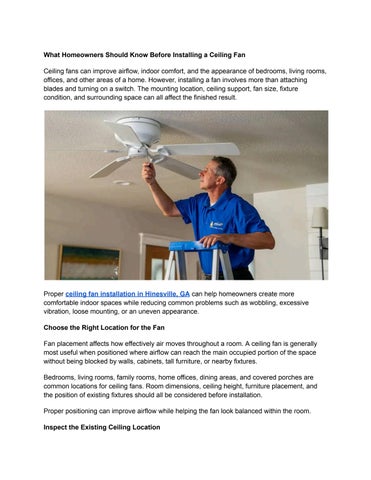
What Homeowners Should Know Before Installing a Ceiling Fan Ceiling fans can improve airflow, indoor comfort, and the appearance of bedrooms, living rooms, offices, and other areas of a home. However, installing a fan involves more than attaching blades and turning on a switch. The mounting location, ceiling support, fan size, fixture condition, and surrounding space can all affect the finished result.
Proper ceiling fan installation in Hinesville, GA can help homeowners create more comfortable indoor spaces while reducing common problems such as wobbling, excessive vibration, loose mounting, or an uneven appearance. Choose the Right Location for the Fan Fan placement affects how effectively air moves throughout a room. A ceiling fan is generally most useful when positioned where airflow can reach the main occupied portion of the space without being blocked by walls, cabinets, tall furniture, or nearby fixtures. Bedrooms, living rooms, family rooms, home offices, dining areas, and covered porches are common locations for ceiling fans. Room dimensions, ceiling height, furniture placement, and the position of existing fixtures should all be considered before installation. Proper positioning can improve airflow while helping the fan look balanced within the room. Inspect the Existing Ceiling Location
Replacing a standard light fixture with a ceiling fan may appear simple, but the mounting location should be checked before installation. Ceiling fans are heavier than many light fixtures and create continuous movement while operating. The ceiling box, mounting bracket, surrounding support, and fixture opening should therefore be suitable for the new fan. Older mounting locations may also have loose hardware, previous repair marks, damaged drywall, or other conditions that should be addressed before installation begins. Select the Correct Fan Size Ceiling fans are available in many different blade spans and configurations. A small fan may provide limited airflow in a large room, while an oversized fan may dominate a compact space. Homeowners may also want to think about: blade span room layout ceiling height fan speed options light kit requirements design style available clearance Choosing a fan that matches the dimensions and layout of the room can improve both airflow and appearance. Consider Ceiling Height Ceiling height influences the type of fan and mounting method that may be appropriate. Rooms with lower ceilings often use flush-mounted or low-profile fans. Higher ceilings may require a downrod so the fan sits at a more practical height. Adequate clearance should also remain between fan blades and nearby walls, doors, cabinets, or other fixtures. Proper clearance allows the fan to rotate without obstruction. Use Secure Mounting Support A ceiling fan rotates continuously during normal use, making secure mounting especially important.
Loose or unsuitable mounting hardware can lead to vibration, wobbling, unusual noise, or movement around the ceiling fixture. In some situations, surrounding drywall may also become damaged when the fixture is not properly supported. The fan should rely on appropriate structural support and compatible mounting hardware rather than the ceiling surface alone. Check the Fan for Wobbling A properly installed ceiling fan should rotate smoothly. Some minor movement can occur, but excessive wobbling may indicate loose screws, uneven blades, incorrect blade positioning, damaged components, or a mounting issue. Testing the fan after installation can help reveal these concerns before regular use. Small adjustments to blade alignment or visible hardware may help improve stability when the problem is minor. Consider Fans With Lighting Many ceiling fans include integrated lighting or support optional light kits. These fixtures can provide both airflow and illumination from a single ceiling location. Fan-and-light combinations are commonly used in bedrooms, living rooms, dining areas, and other spaces where a central ceiling fixture is already present. Homeowners should consider brightness, light direction, fixture style, control options, and existing room lighting before selecting a combination unit. Replace Aging Ceiling Fans Older ceiling fans can develop problems after years of regular use. Persistent wobbling, unusual sounds, loose components, damaged blades, poor airflow, or visible deterioration may indicate that replacement should be considered. Some homeowners also replace fans simply because an older fixture no longer fits the style of an updated room. A new fan can improve functionality while helping refresh the appearance of the ceiling area. Repair Drywall Around Old Fixtures Removing an older ceiling fan or light fixture can reveal cosmetic damage around the mounting location.
Old anchor points, small cracks, paint differences, oversized openings, or damaged drywall edges may remain visible after the previous fixture is removed. Minor drywall repair can create a cleaner finished appearance, particularly when the new fan canopy is smaller than the fixture being replaced. Coordinate Fan Installation With Other Home Improvements Ceiling fan installation may be completed alongside other home maintenance projects. Homeowners may choose to coordinate fan replacement with drywall repairs, trimming repair, ceiling fixture updates, closet installation, or other general handyman work. Handling related projects together can help reduce unfinished maintenance issues throughout the room and create a more consistent finished appearance in Hinesville, GA. Maintain Ceiling Fans After Installation Routine maintenance can help a ceiling fan continue operating smoothly. Dust should be removed from fan blades periodically, and visible screws or hardware can be checked for obvious looseness. Homeowners should also pay attention to new noises, unusual movement, or changes in airflow. Problems that continue after basic maintenance may require further inspection. Conclusion Proper ceiling fan installation in Hinesville, GA can improve airflow, indoor comfort, and the appearance of a room. Selecting the right fan size, checking the mounting location, considering ceiling height, maintaining secure support, and testing the fan after installation can help create better long-term results. Combining fan installation with drywall repair and other appropriate home improvement work can also help homeowners keep interior spaces functional and well maintained. FAQs 1. Can a ceiling fan replace an existing light fixture? In many cases, yes. However, the existing ceiling box and mounting support should be checked to determine whether they are suitable for a ceiling fan. 2. Why does a ceiling fan wobble? Wobbling may result from loose hardware, uneven blades, incorrect mounting, damaged components, or an imbalance in the fan.
3. How do I choose the right ceiling fan size? Fan size depends on room dimensions, ceiling height, available clearance, and desired airflow. 4. Can a ceiling fan include lighting? Yes. Many ceiling fans include integrated lights or optional light kits. 5. Can drywall be repaired around a ceiling fan? Yes. Small holes, cracks, fixture marks, and other cosmetic drywall damage can often be repaired. 6. When should an old ceiling fan be replaced? Replacement may be appropriate when a fan develops persistent wobbling, excessive noise, damaged components, poor airflow, or visible deterioration. Get dependable home repairs and improvements with our professional Handyman services Hinesville GA, providing practical solutions for projects of all sizes. For reliable workmanship and convenient service, contact us today.