Aboriginal & Pacific Art is delighted to present
Spinifex Country
In association with Spinifex Arts Project, Tjuntjuntjara, Western
Australia.
1 – 30 July, 2026
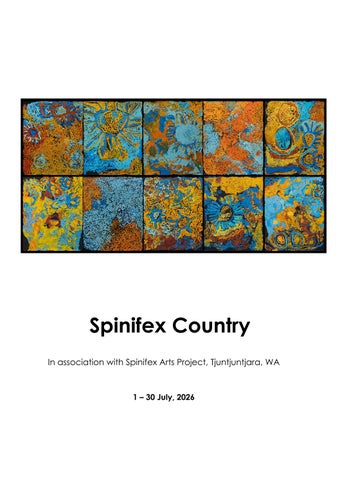
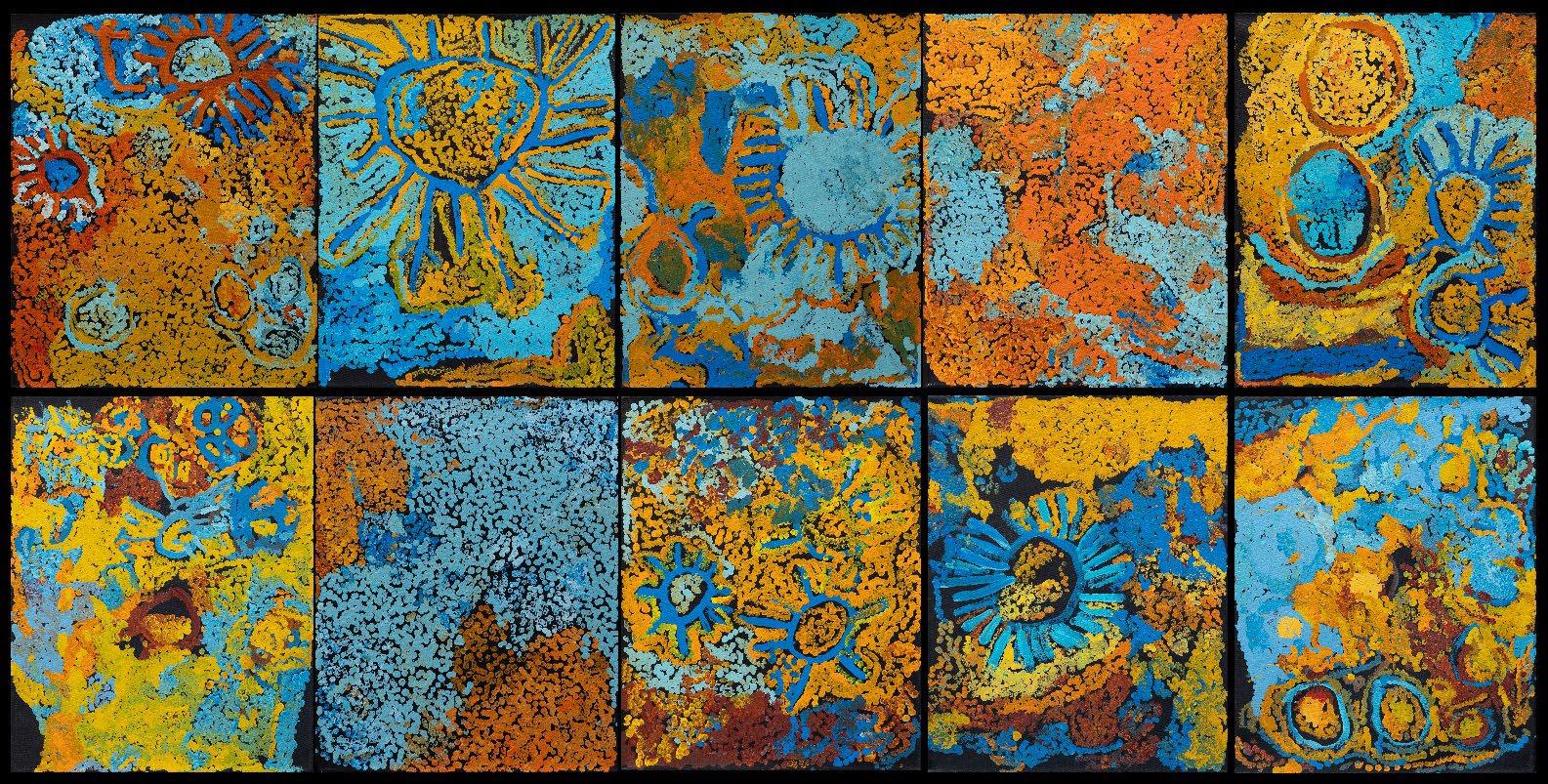
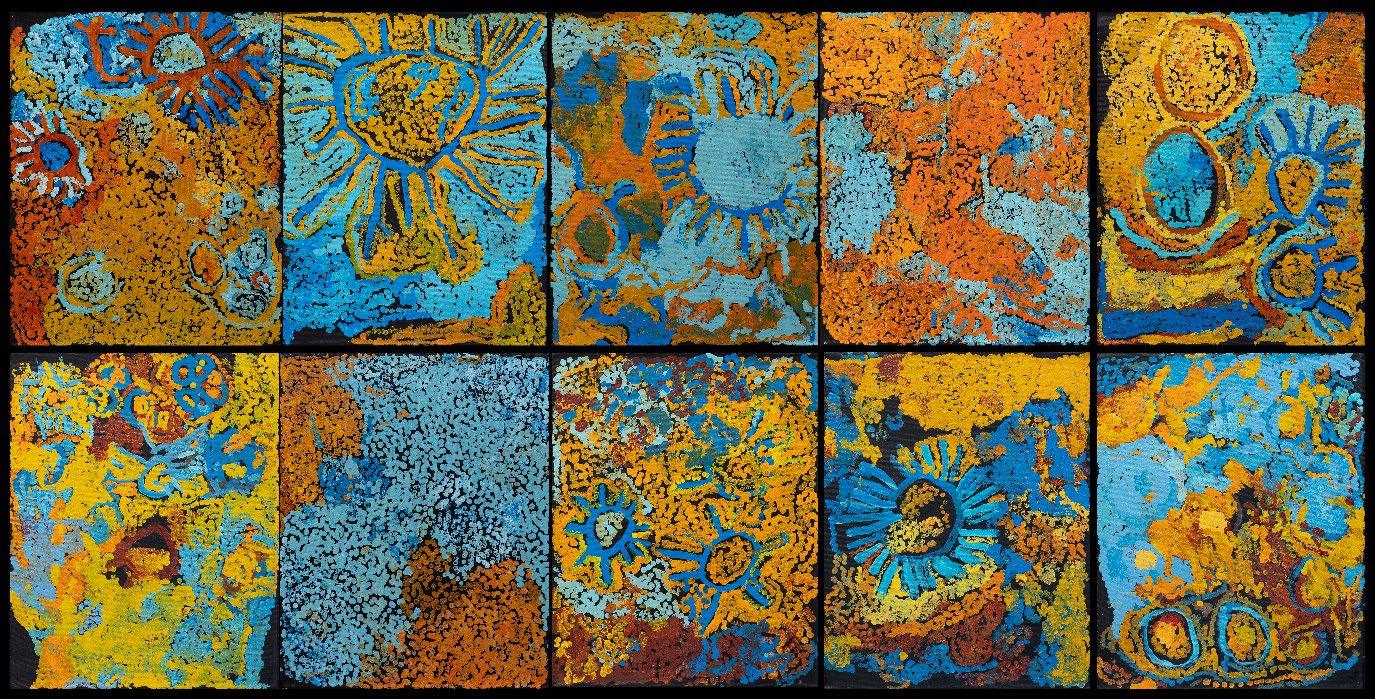
Front page: Simon Hogan, ‘Lingka’, #26-101, 75cm x 60cm x 10 panels, Acrylic on Linen


Lingka
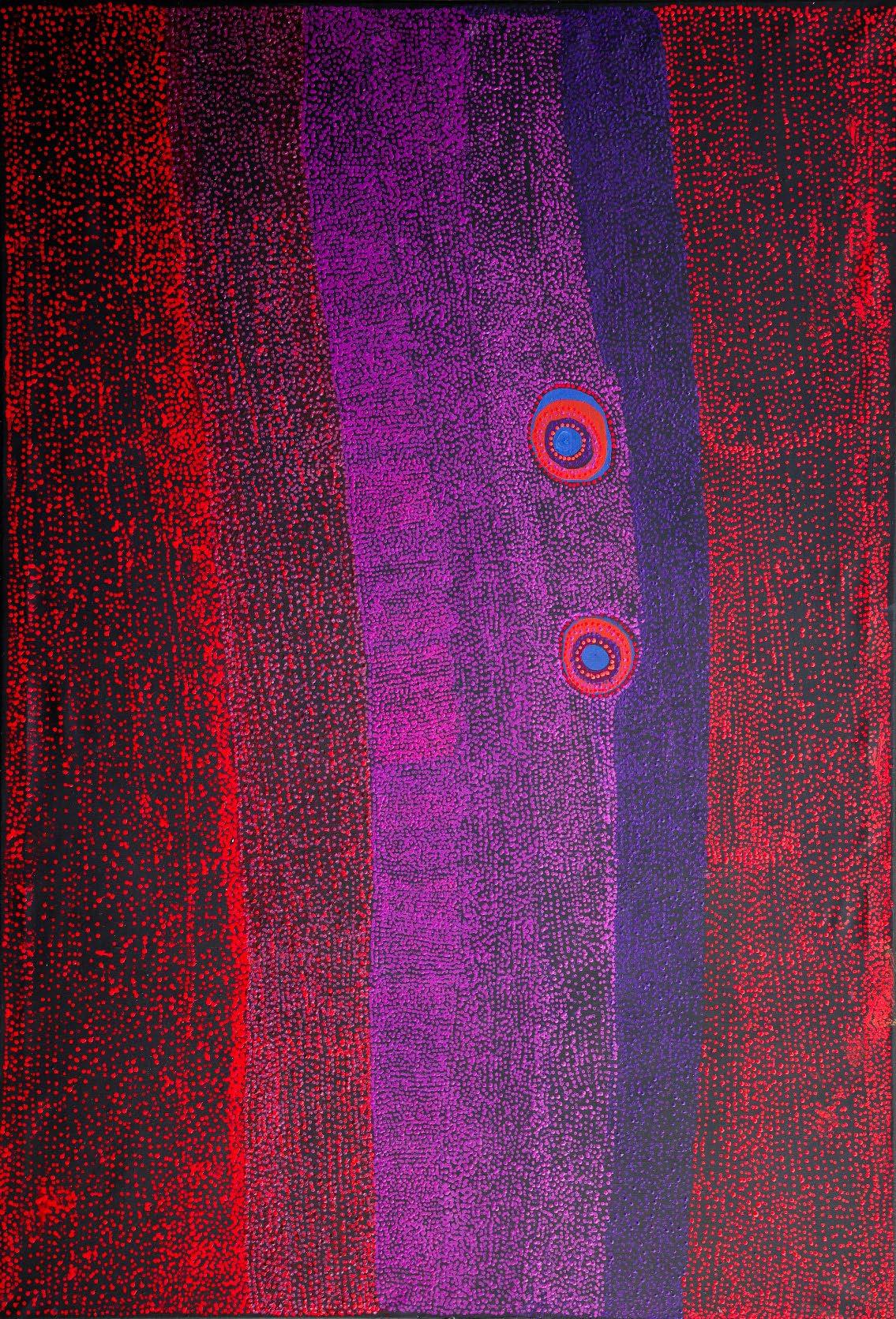
Simon Hogan paints history, past and present, with the gentle authority of one who has lived many lives. Born in the heart of Spinifex country in the early ‘1930’s, Simon was already an initiated man when the Australian government sent out patrol officers to collect natives from the area of possible contamination by atomic testing at nearby Emu Fields and later Maralinga. Simon moved to Mount Margret Mission near Laverton but famously, walked the 1000km plus back to his traditional country. This feat amongst many others was said as his legend grew. He was a pioneer for the Spinifex people to return to their traditional country and succeed in gaining native title in the year 2000. Although he has a wealth of knowledge of sites within his vast country, he now mostly paints his significant site of Lingka, centrally located in traditional Spinifex Lands.
Kamanti
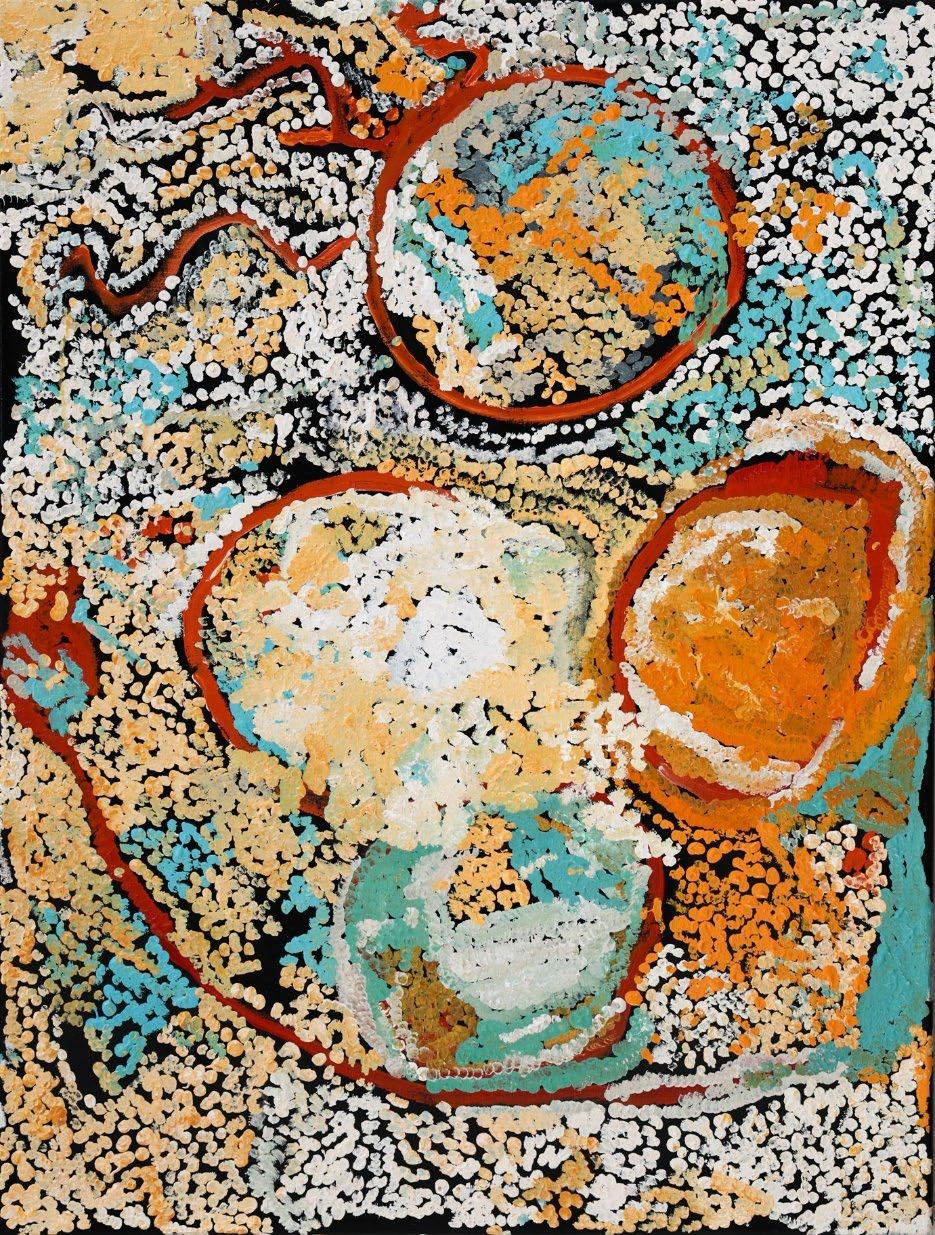
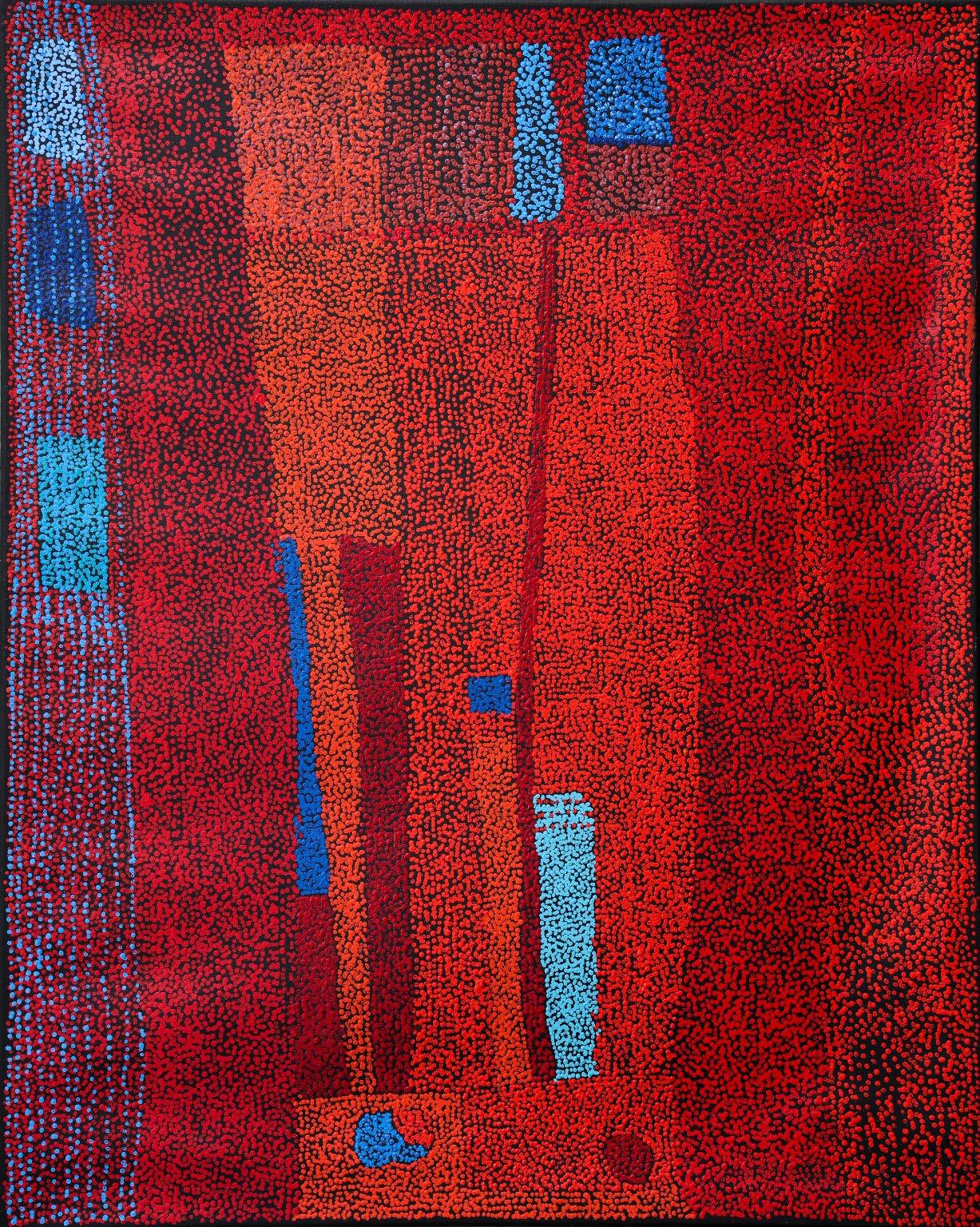
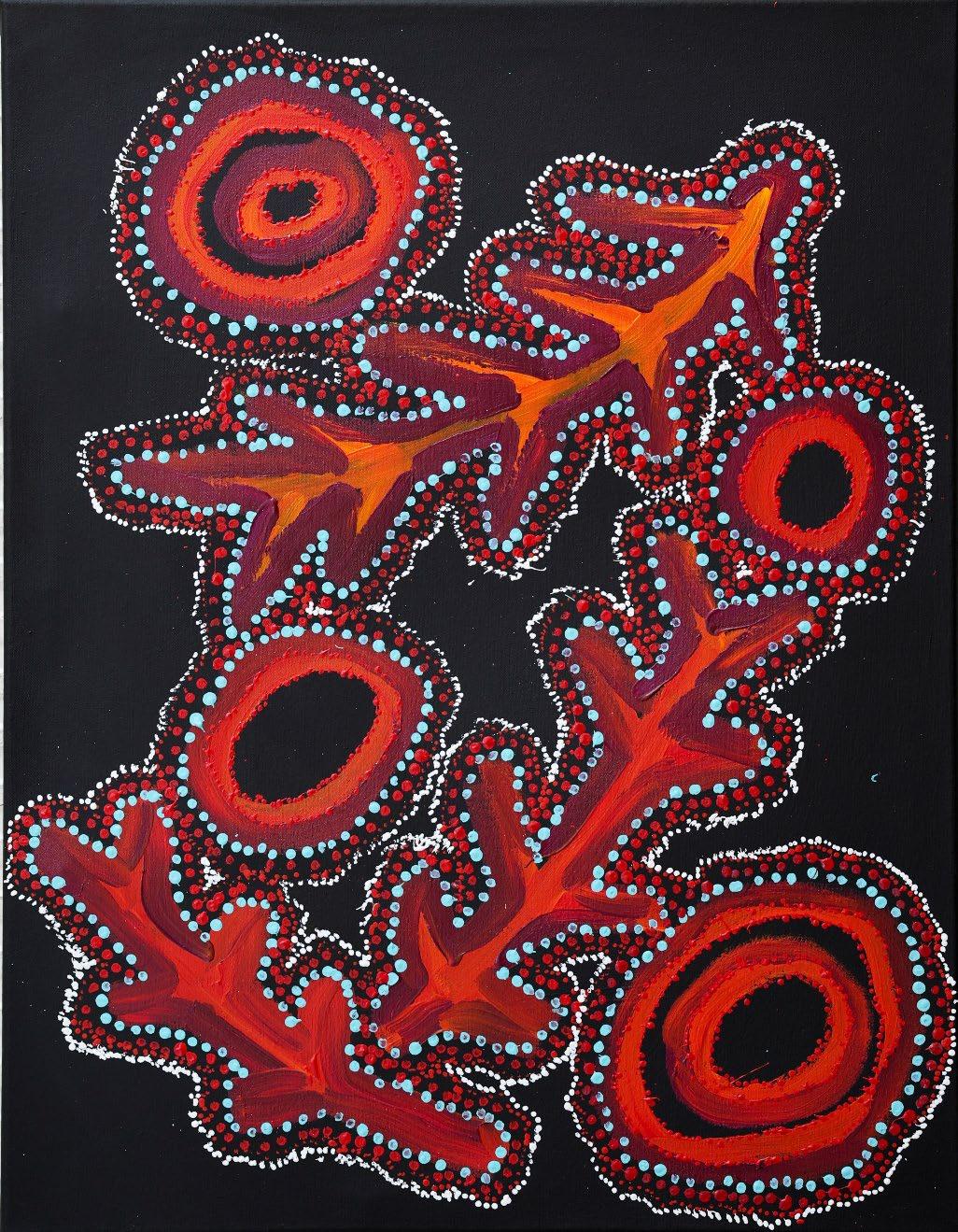
Noli Rictor depicts the significant site of Kamanti, located in the northern reaches of traditional Spinifex country Surrounded by the many rockholes, Kamanti is a site associated with the Wati Kutjara Tjukurpa (Two Men Creation Line) and is an epic narrative following the movement of a father and son water serpent who traverse the Spinifex Lands on ceremonial business. This arid but spiritual environment was the birthplace of the creation beings who shaped the landscape as they moved through it, leaving indelible physical reminders of their power and presence in the form of creeks, rocky ridges or a type of tree. But mostly they left their place of abode: the life giving and sought after source of precious water in some form of catchment. Noli had located Kamanti in the Spinifex estate, representing the many rockholes he travelled to as a young boy that surround it. He has represented Papatatjara, Kuru Ala, Kulinmara, Purpur, Tjilitjipi, Kulpanya, Punyutjara.
Lake Baker
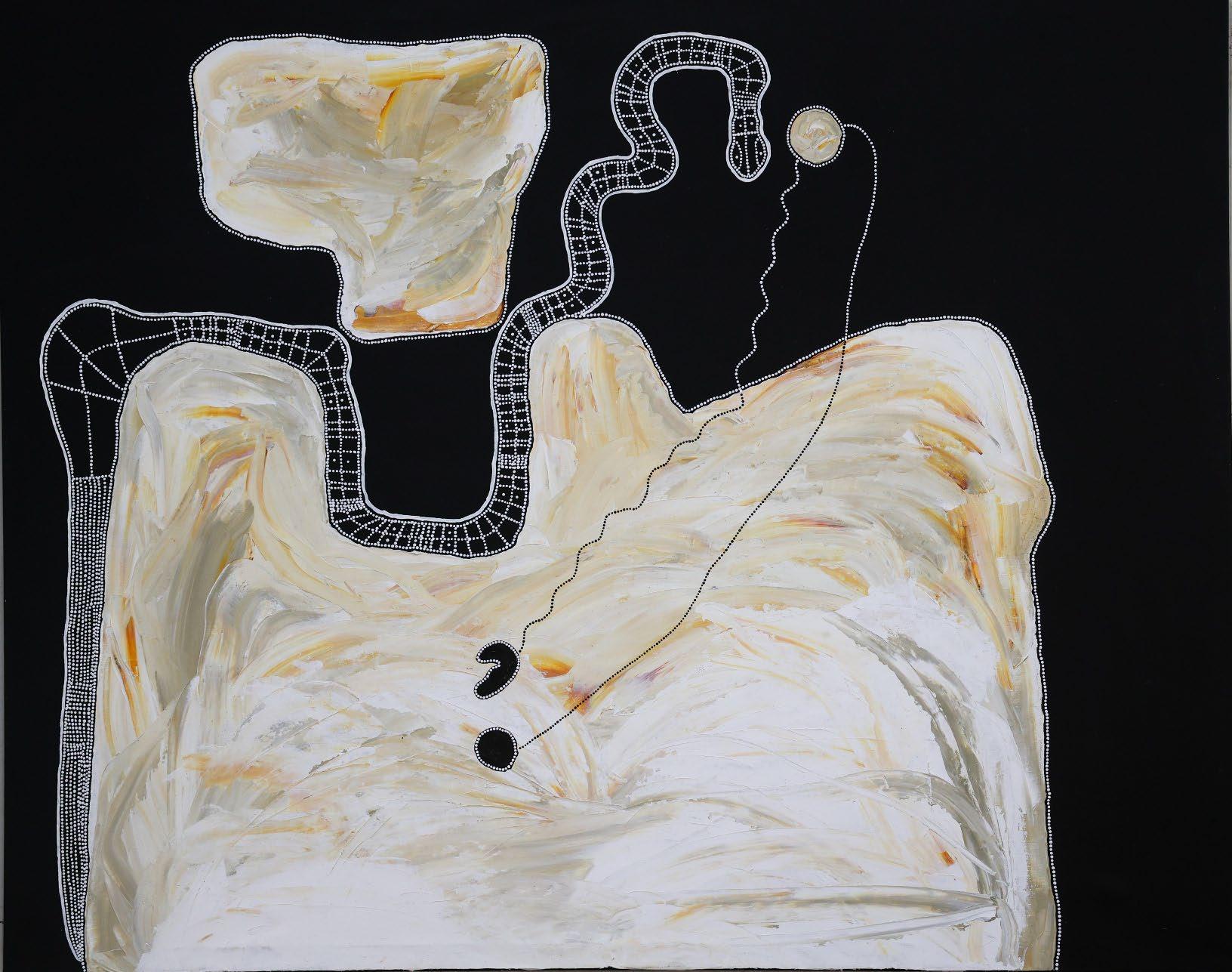
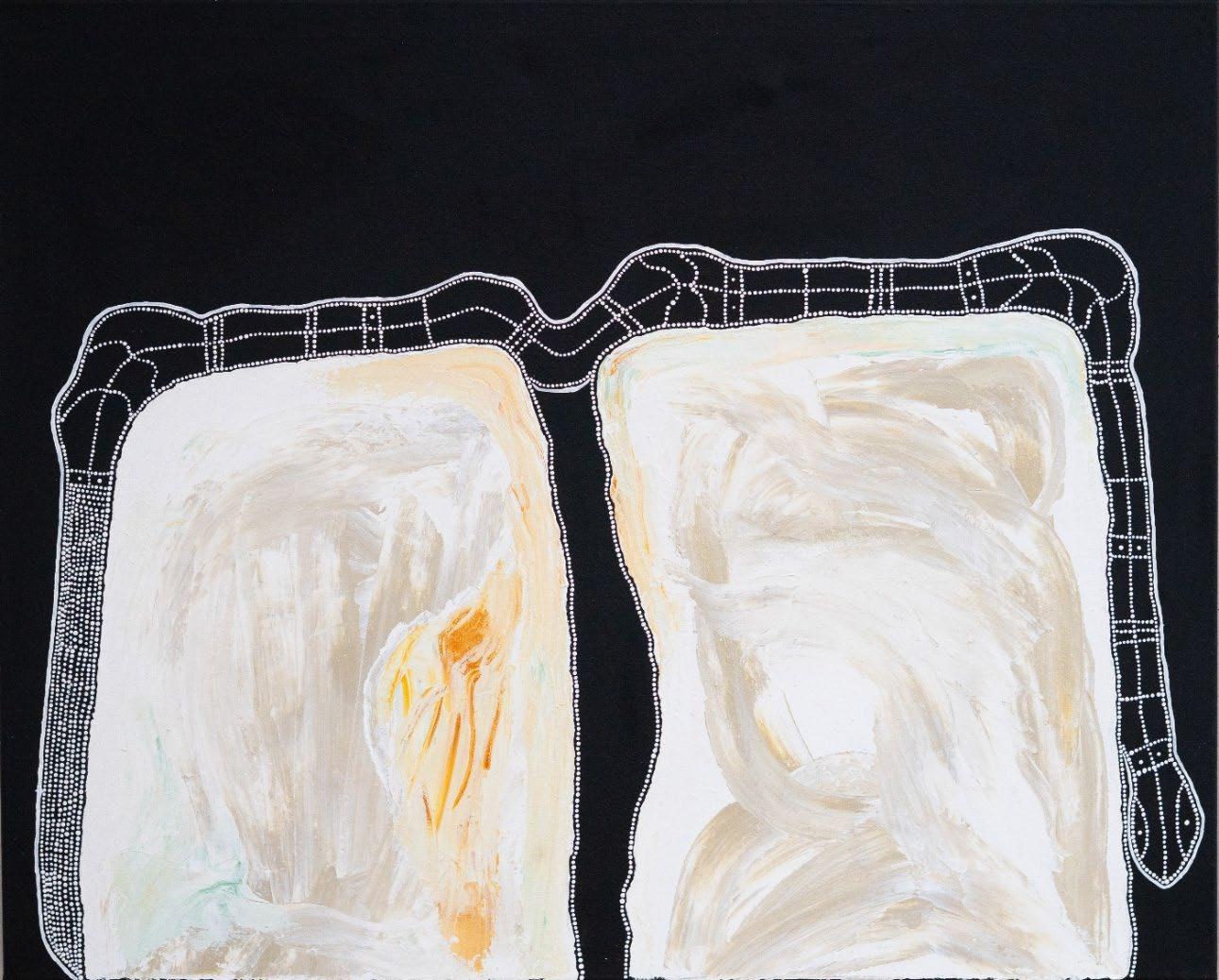
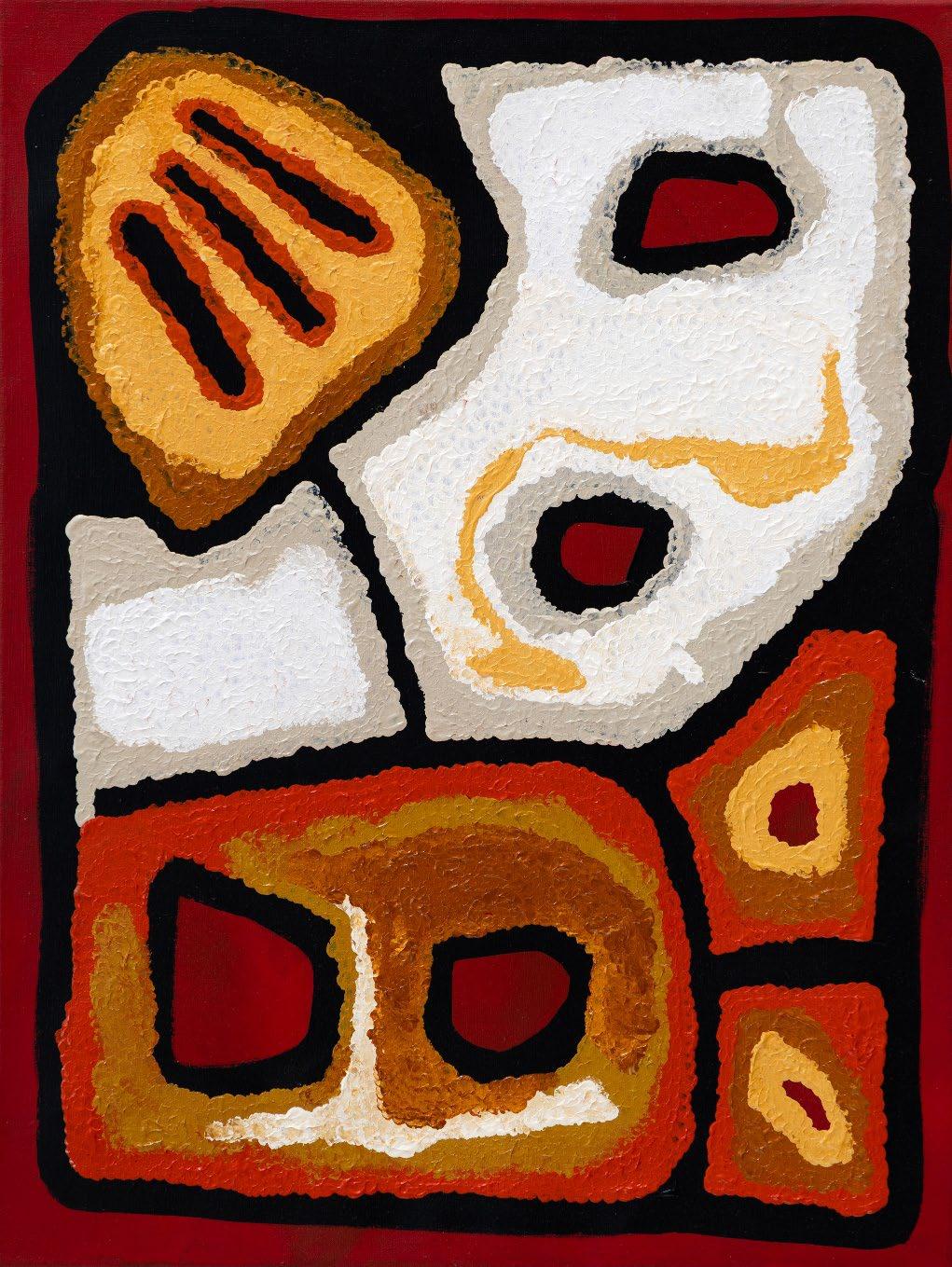
Timo Hogan does not paint the picture. He paints the story. And the story is the big picture. He calmly applies the paint to Lake Baker with the quiet authority of someone recreating the country they know intimately. For here at Lake Baker, Timo tells of the religion within the landscape and the inhabitants that made it so. He surveys the Wati Kutjara Tjukurpa (Two Men Creation Line) of his birthright and brings this into focus on the twodimensional plane. In this composition Timo has depicted the Two Men as the physical manifestation of two small grass knolls upon the lake. The two men carefully monitor the lakes expanse as the ever-present Wanampi (powerful water serpent) defines the perimeter of the lake, always watching, aware of the Two Men. These characters that Timo talks of are the Creation beings. In this work, Timo has used sand collected from lakes north of Tjuntjuntjara to provide texture to Lake Baker. Timo created these works to explore the tactile contrasts of Lake Baker and often talks of the changes in the Lake he observes when he visits as pana (sand) blows onto the lake in drought and how this sand is later replaced with the crystalline salts after great desert floods. As wind and rain change the lake the indelible marks of its creations beings remain stark.
Yuwar
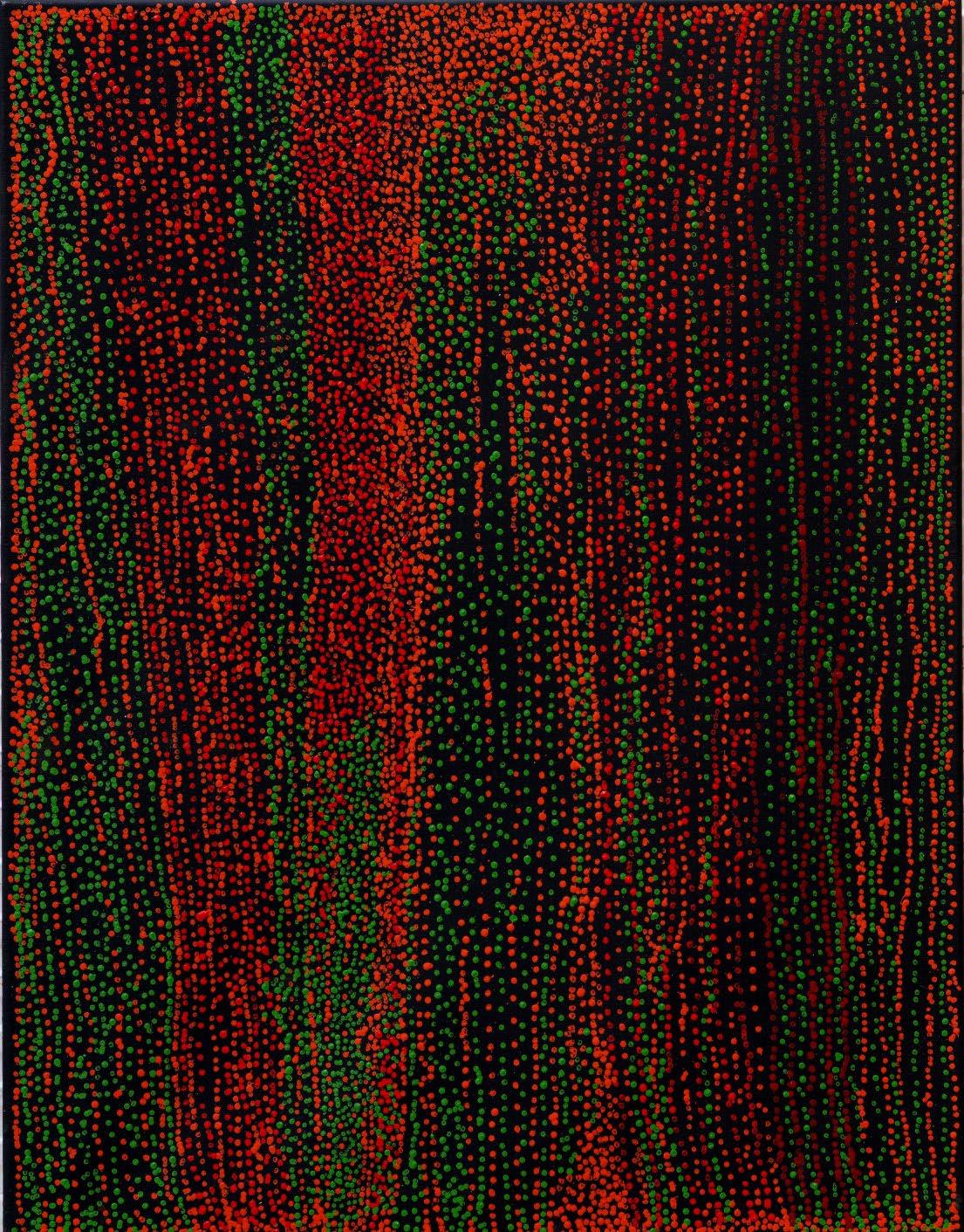
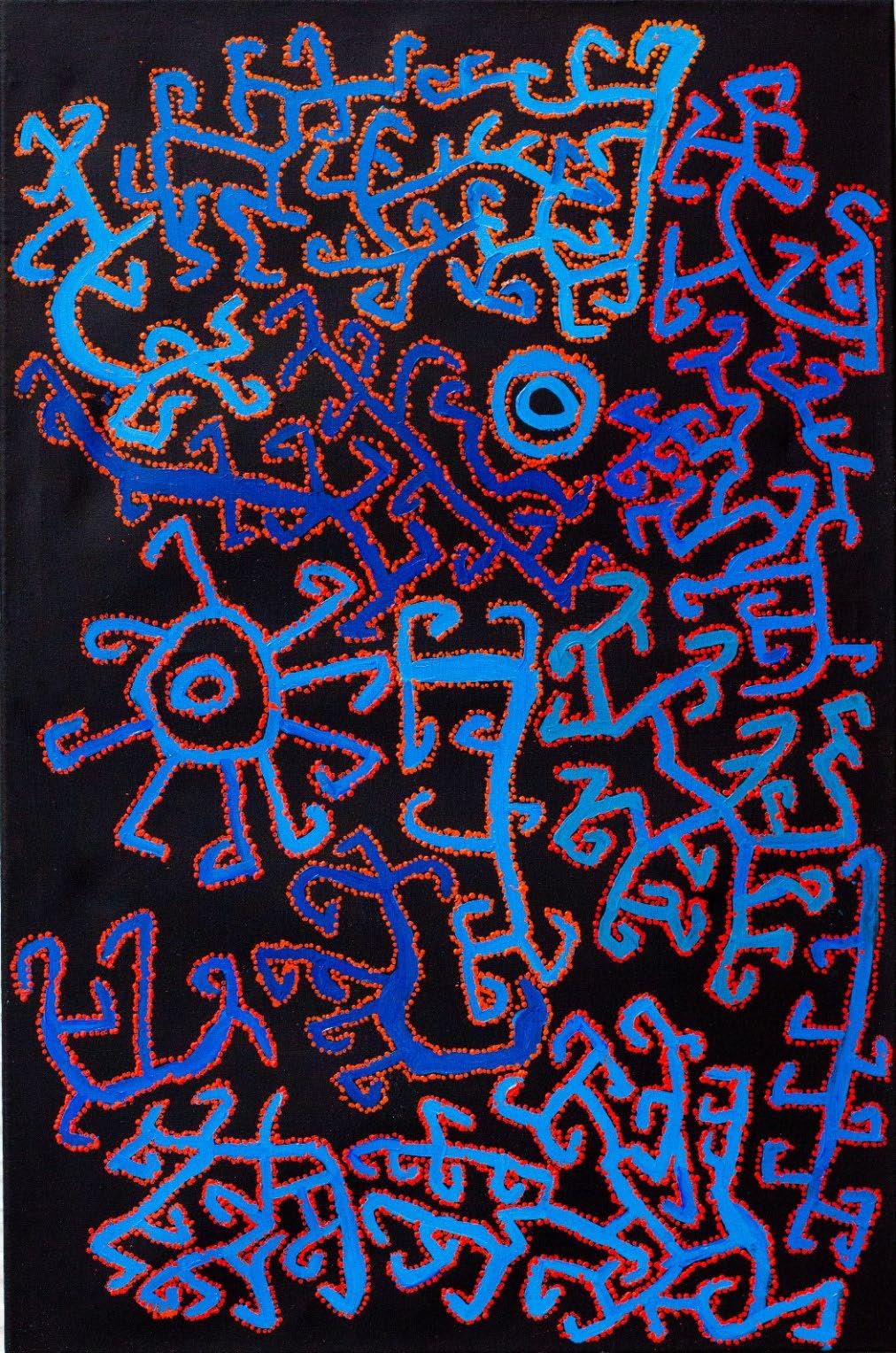
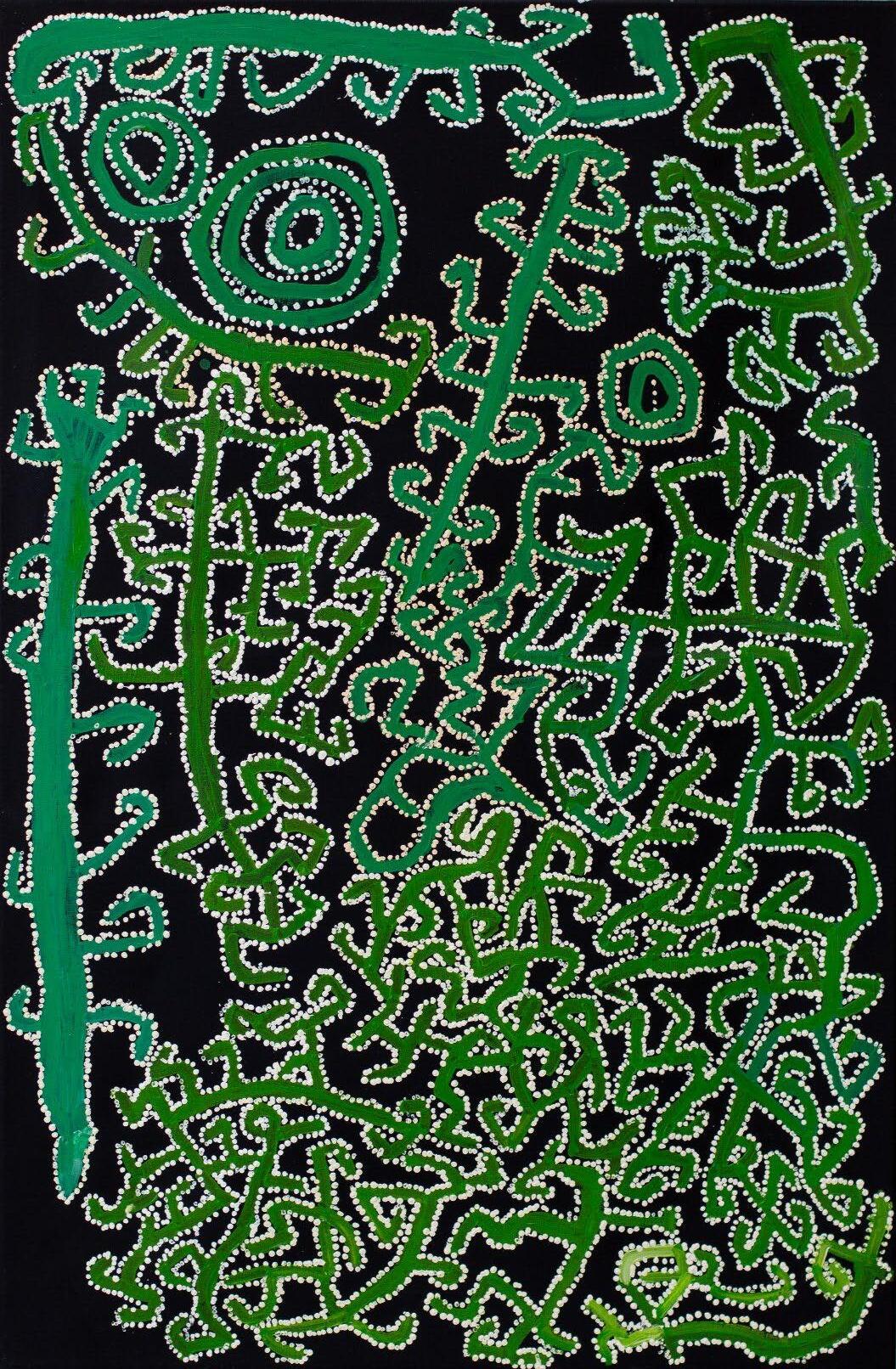
Ned Grant intertwines himself within the landscape, unable to separate. He is a manifestation of the enormity of place that is Spinifex Land. With all its labyrinthine religion within the physical, the flora, the fauna, the manta (ground). He moves under it, through it, above it, encompassing all. Religion is everywhere, it is sung, it is danced by firelight, and it resides in and drives Ned Grant to paint. Here he depicts the Ngalta (Desert Kurrajong) in its spiritual incarnation and the embodiment of his religion at the significant site of Papatatjara. It is at this site that holds the Tjulpu Tjuta Tjukurpa (Many Birds Creation Line), a narrative that follows a group of NyiiNyii (Zebra Finch) as they journey south to the coast to save the world from rising seas. These are creation beings who shape the immediate landscape as they move through it. It is they who made the physical and the moral compass that still guides Spinifex People today.
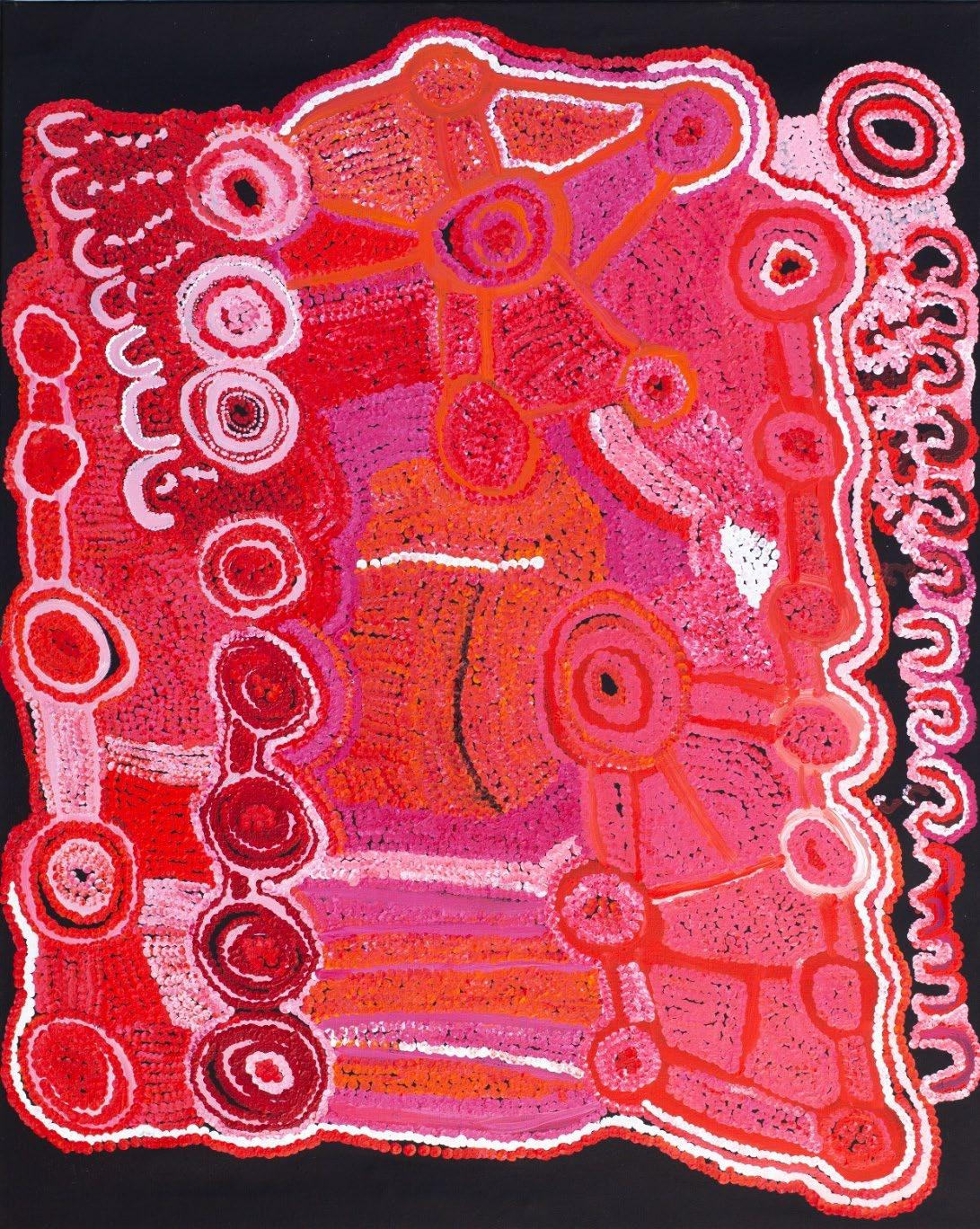
Wayiyul
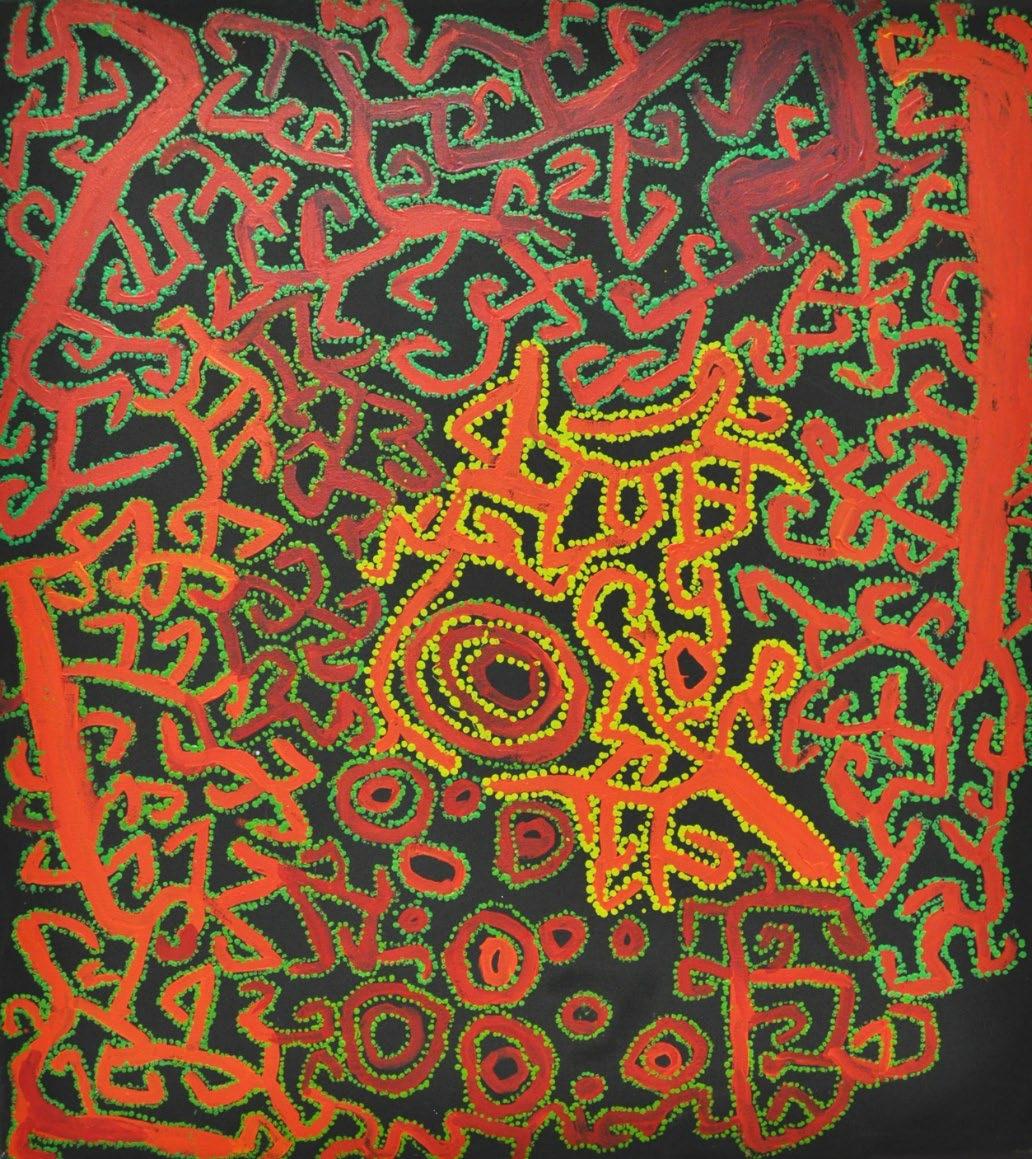
Ngalpingka Simms has painted Wayiyul country, associated with the Minyma Tjuta Tjukurpa (Seven Sister's creation story). This country is close to Karilywara (Patjarr) in the Ngaanyatjarra Lands of Western Australia. It is where Ngalpingka was born and grew up, living a traditional nomadic life with her family. She knows this country intimately, in both a physical and spiritual sense. Her knowledge of the country extends to the ancestral beings that created this landscape. Wayiyul is a Kungkarangkalpa (Seven Sister's) area which is a powerful and sacred Western Desert story pertaining to many woman’s groups. The sisters camped at Wayiyul as you can see by the semicircular motifs in the painting and were being followed by Nyiiru the lustful old man who was trying to take one of the women to be his wife, the elder sister. He has been stalking them camping some distance from where they stop and hiding behind his windbreak, poking his head over to take a look. The women are disturbed by his constant pursuing of them and quickly take off to camp away from him. They travel to (roundels are the sites) Karilywara, Miputjara, Tikatika, Wanarn, Yalarra and Blackstone yapu pulka where they sit down and rest. They travel all the way to Docker River and beyond. This is an important and true story from the Tjukurpa. Ngalpingka was a little baby at Wayiyul with her mother.
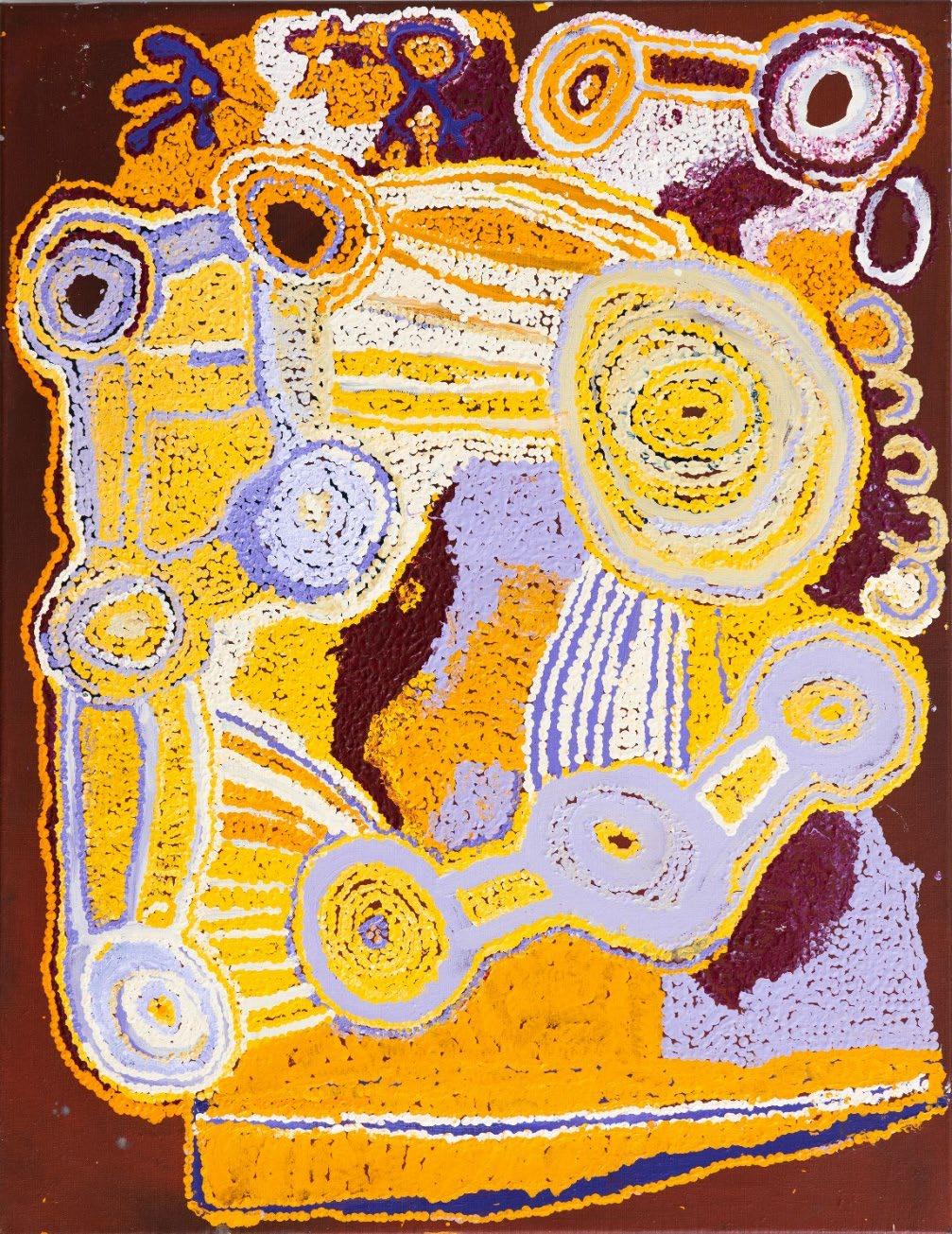
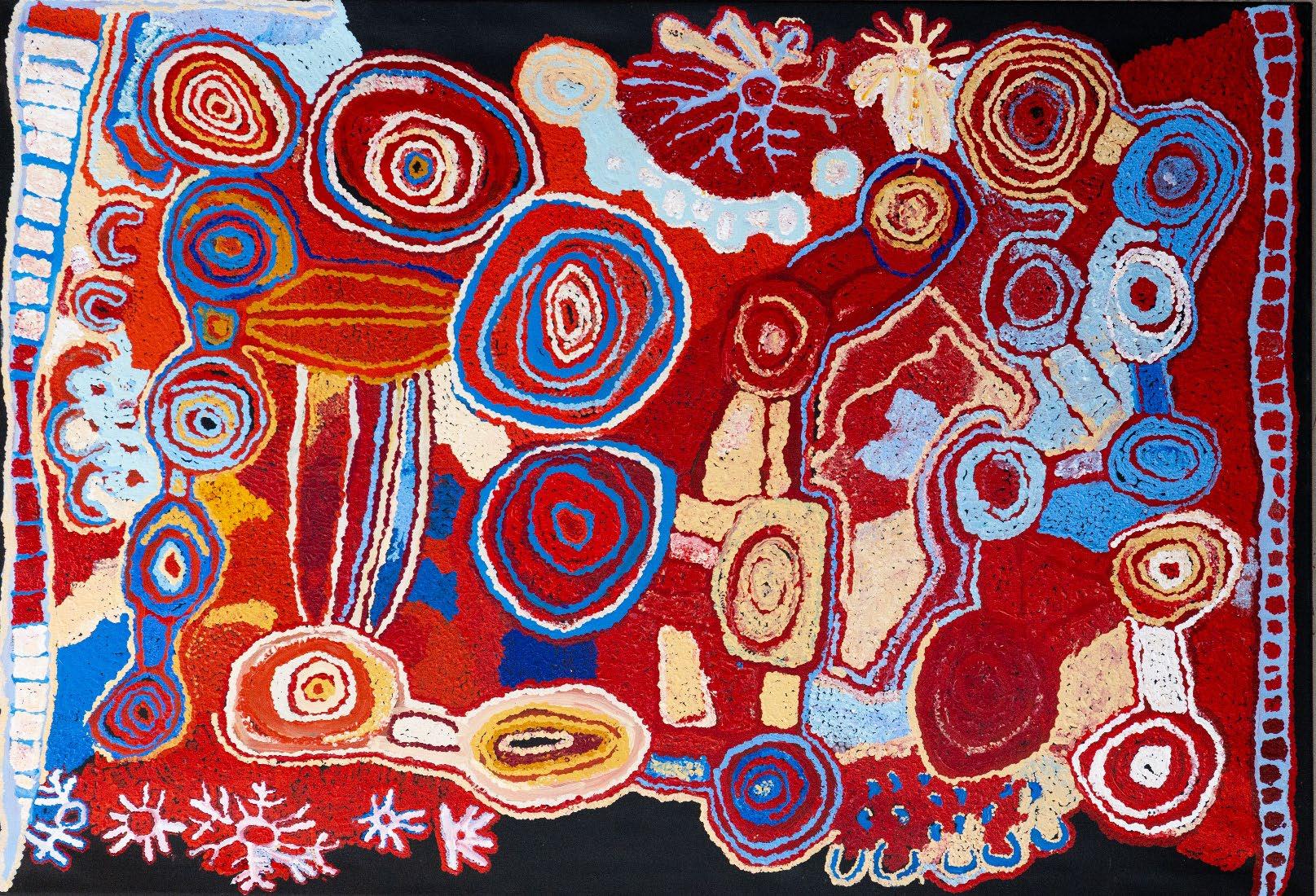
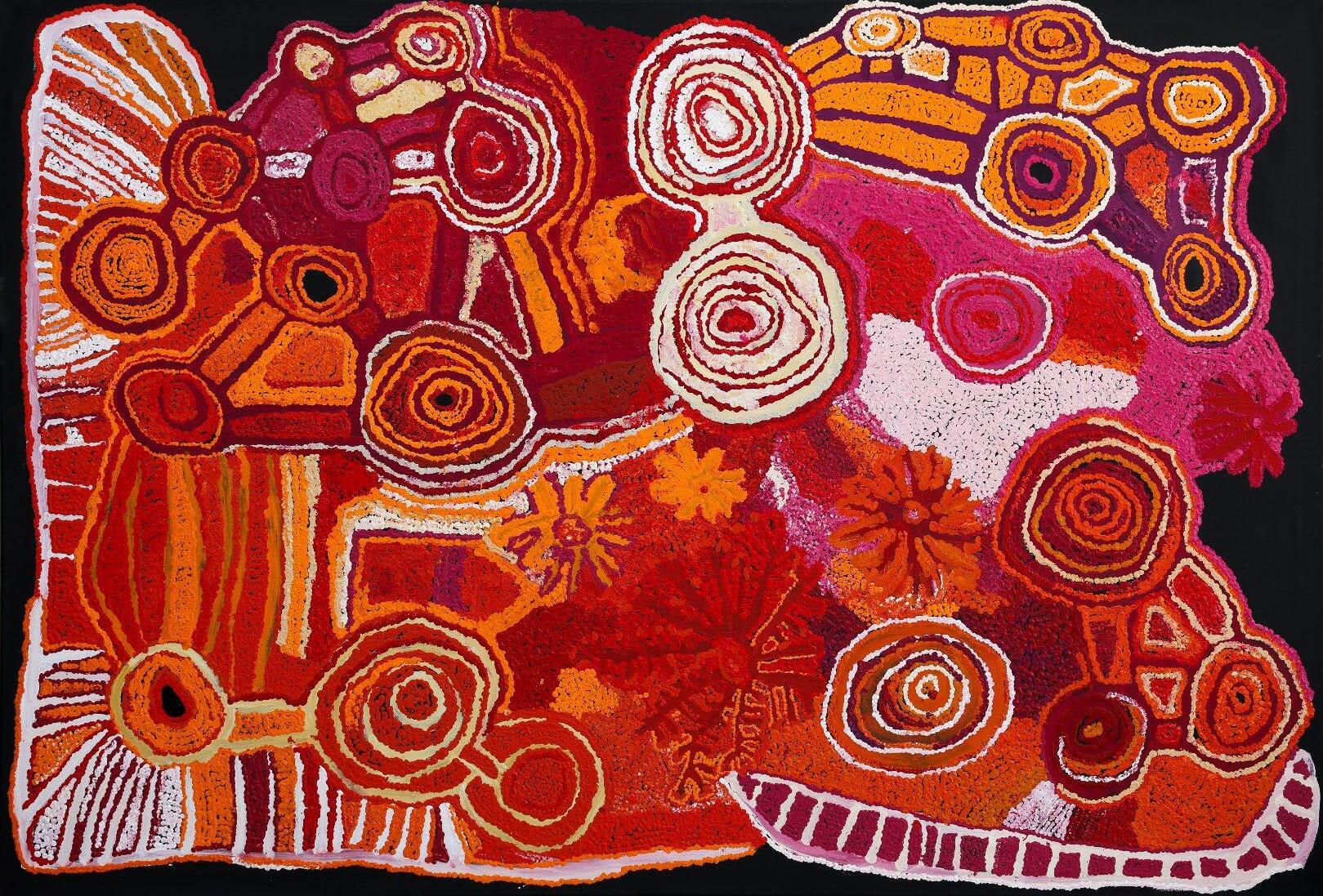
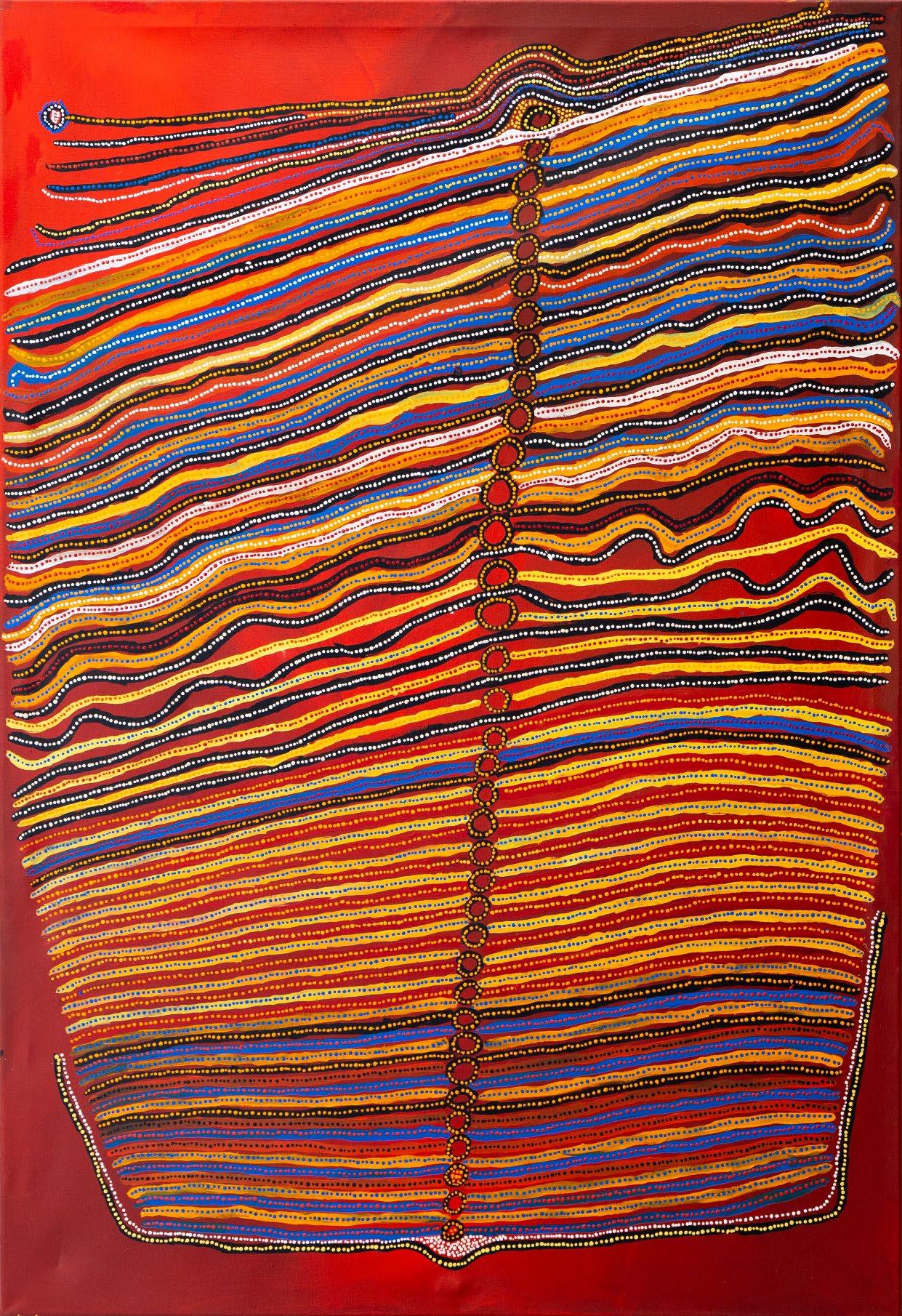
Tali Tjuta
“Ilkurlka road nyangatja. Tali Tjuta (sand hills) right up all the way through my country. [They] built the road following the kapi… each rockhole. That road goes over the sand dunes… up and over. At the top talingka you can see those tali, they are kali kali.”
- Lennard Walker
Tuwan
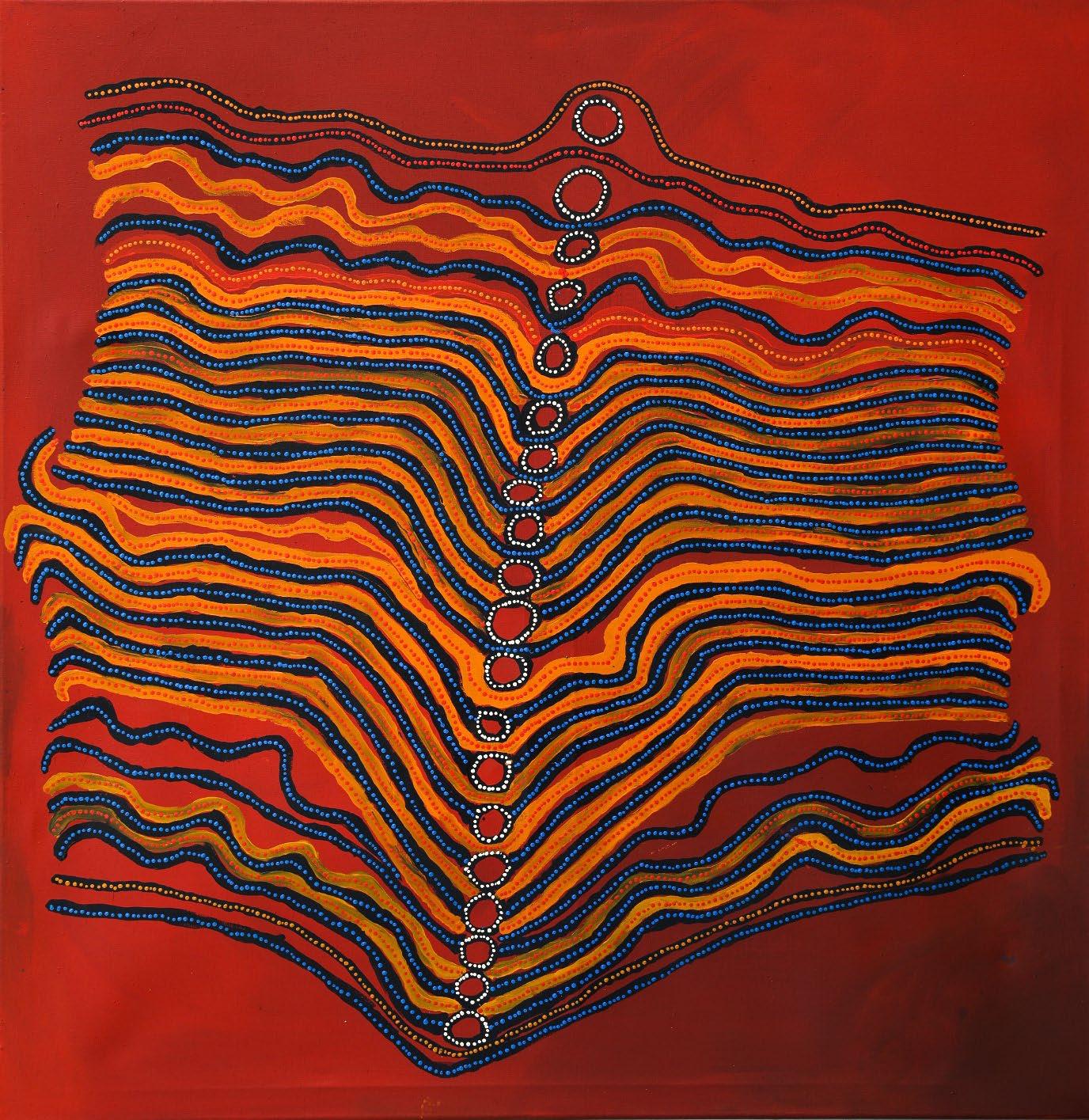
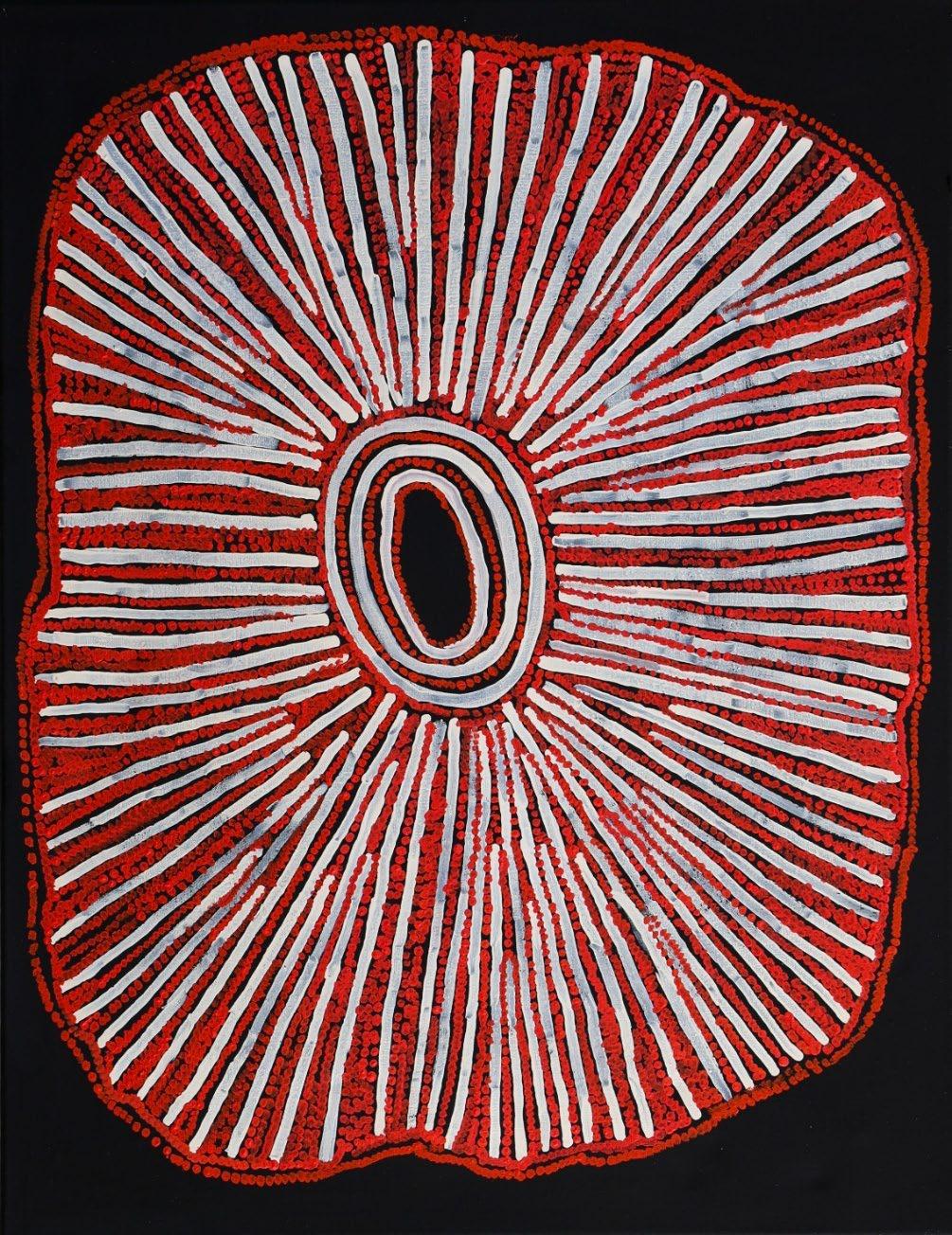
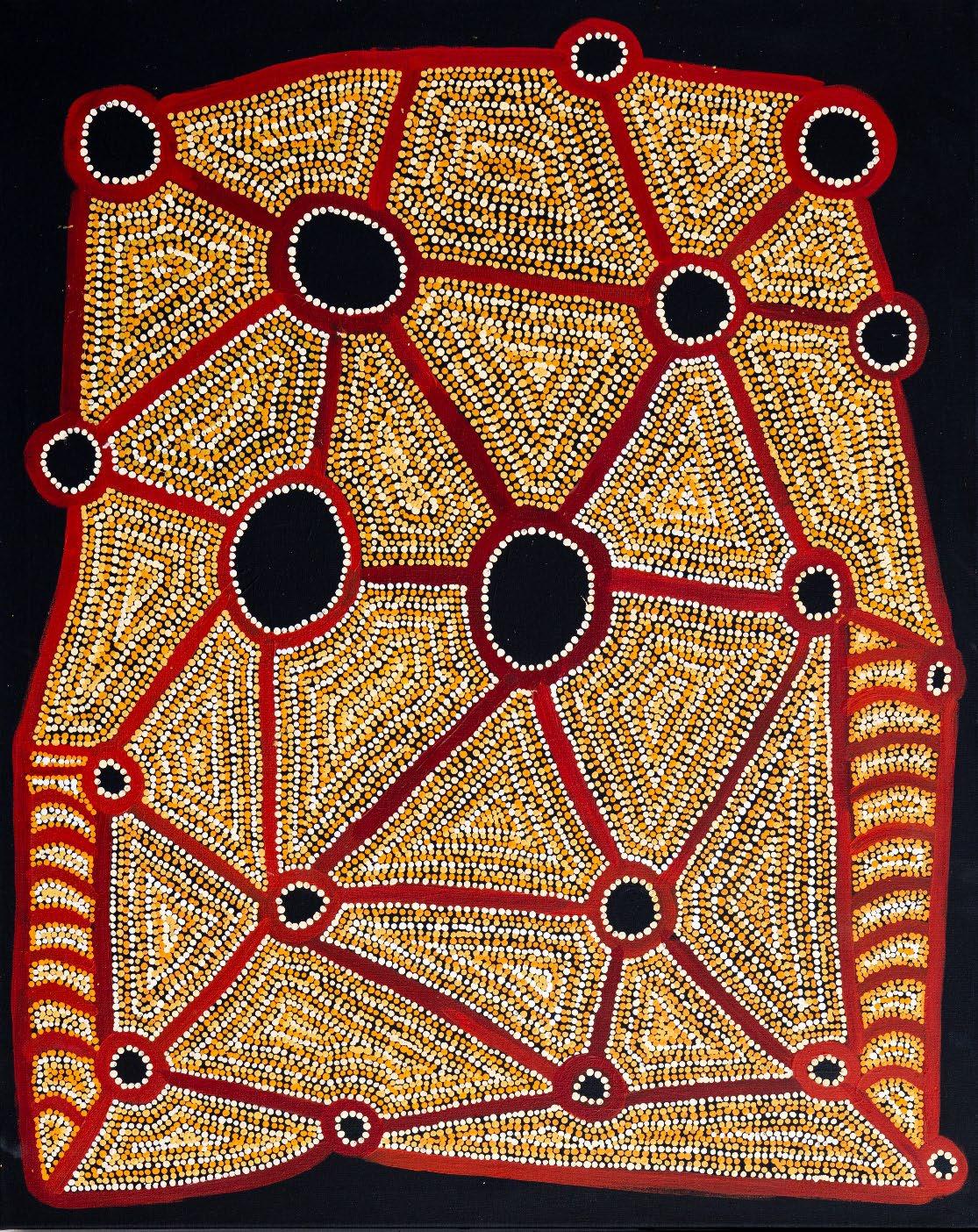
Ian Rictor paints with a quiet reverence for the country that he depicts, from his relatively recent nomadic movements over the endless interior that makes up Spinifex Lands. Ian walked from water source to food source and beyond, this was a cultural and family existence for survival in an arid land before his family were found and 'brought in' by relatives in late 1986: making them the last known traditional hunter gatherer in Australia. Ian's compositions centre on the life affirming sites he depicts, and each are multilayered with meaning. In this composition, Ian has depicted the significant site of Tuwan situated in the heart of Spinifex Country. It is here that the Nyii Nyii Tjukurpa (Zebra Finch Creation Line) resides. This is a powerful Men's narrative that follows a group of Zebra Finch Men as they travel south to stop the rising seas.
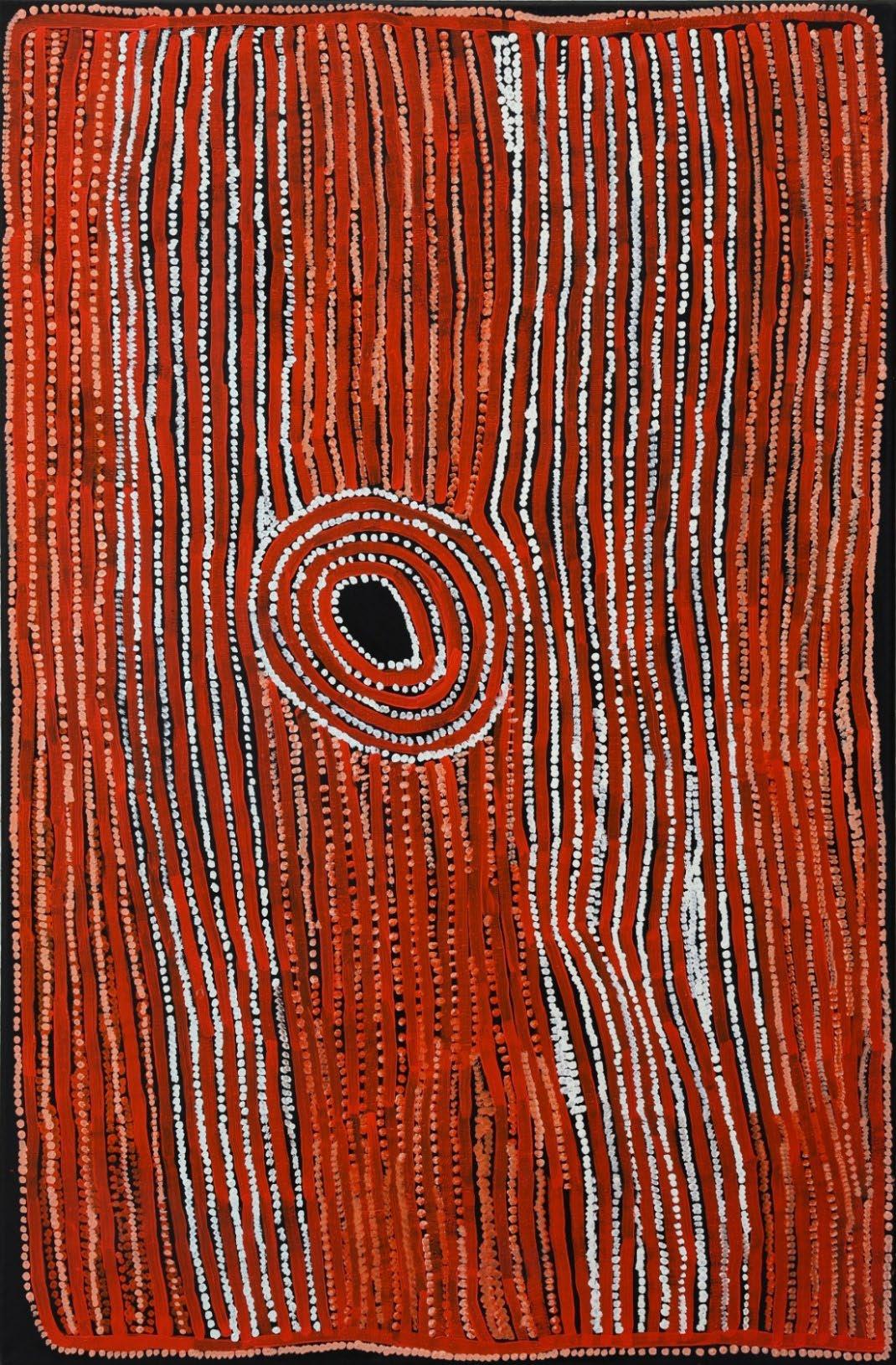
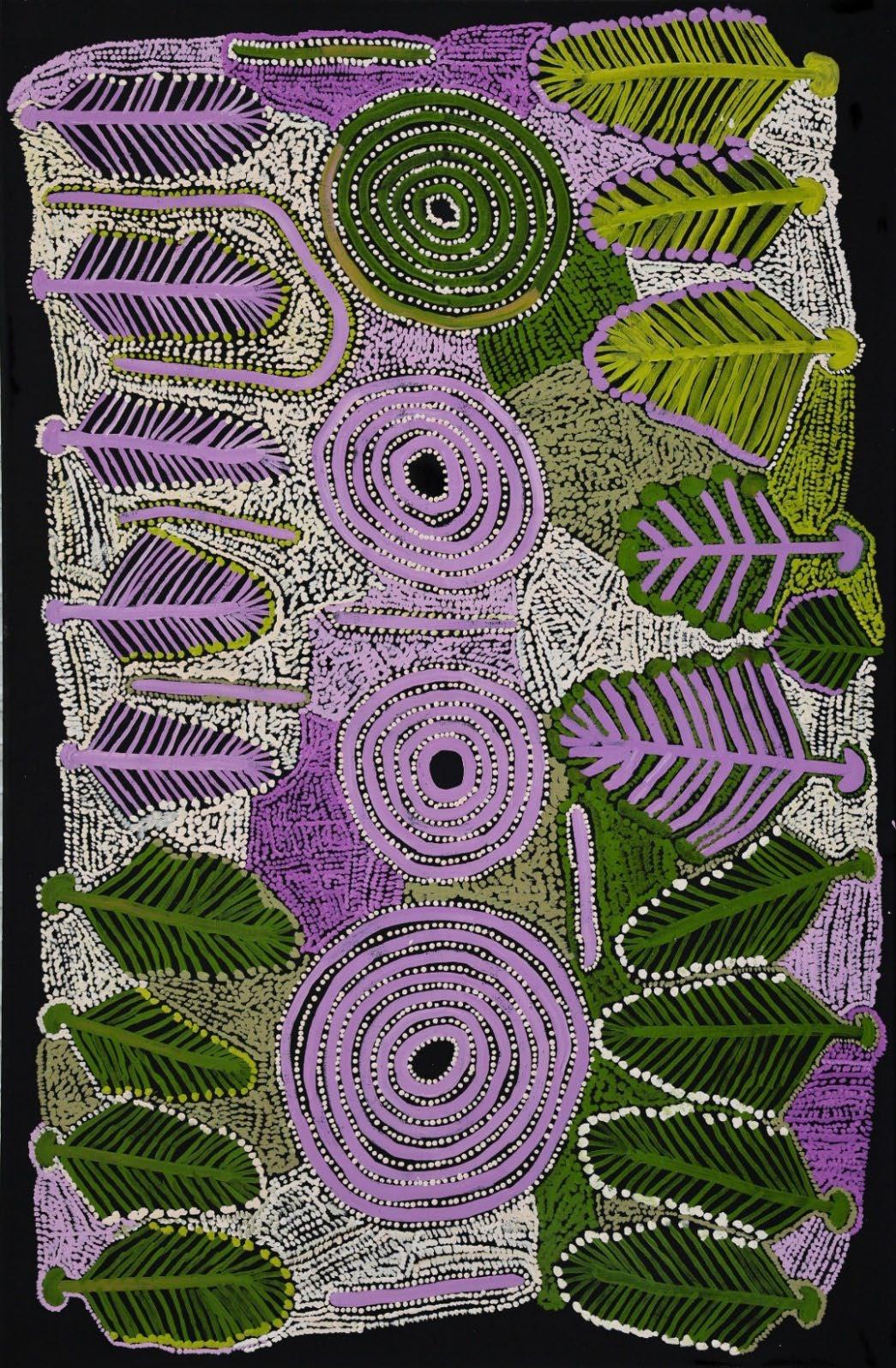
‘Tuwan
#25-471
137 x 90cm
Seven Sisters
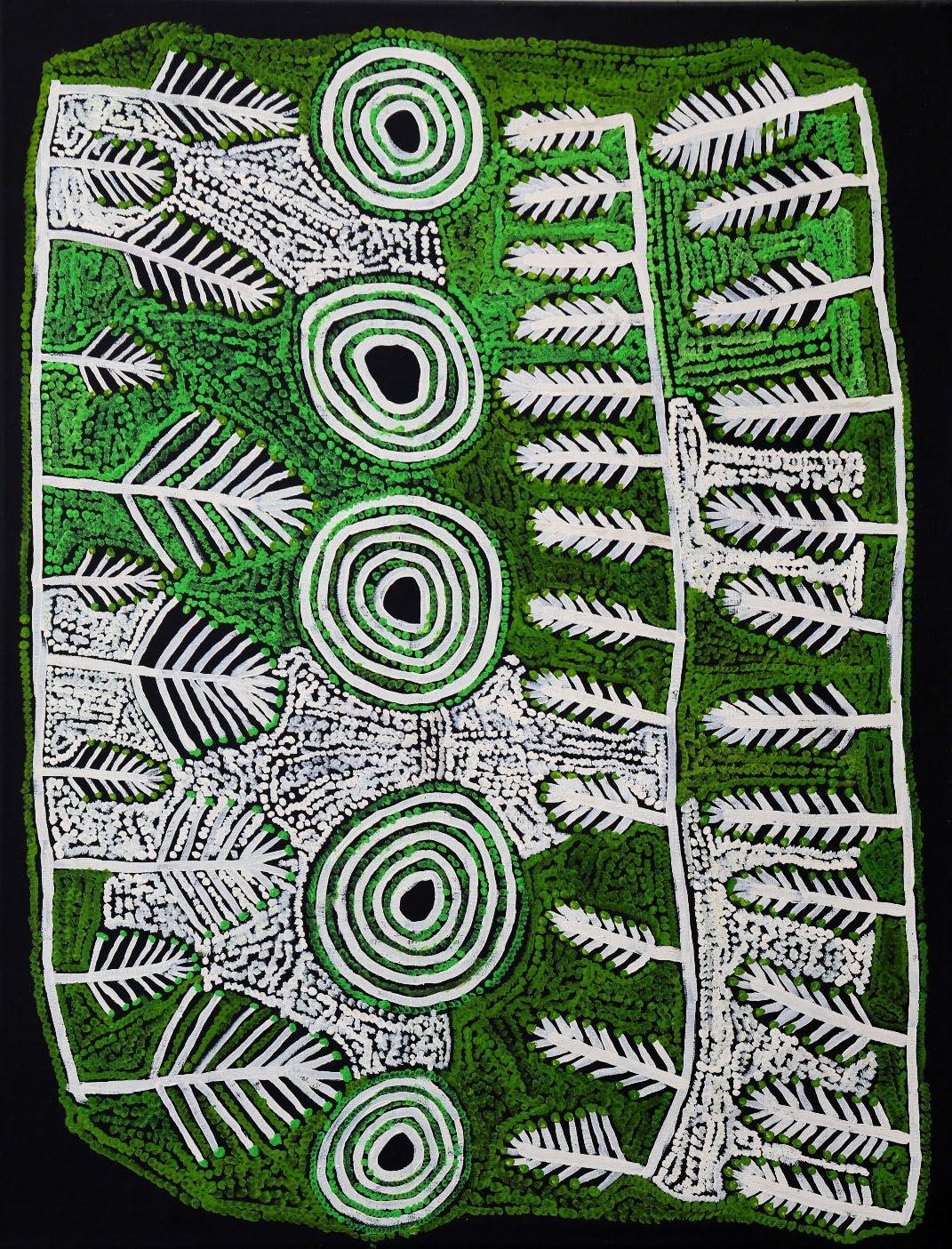
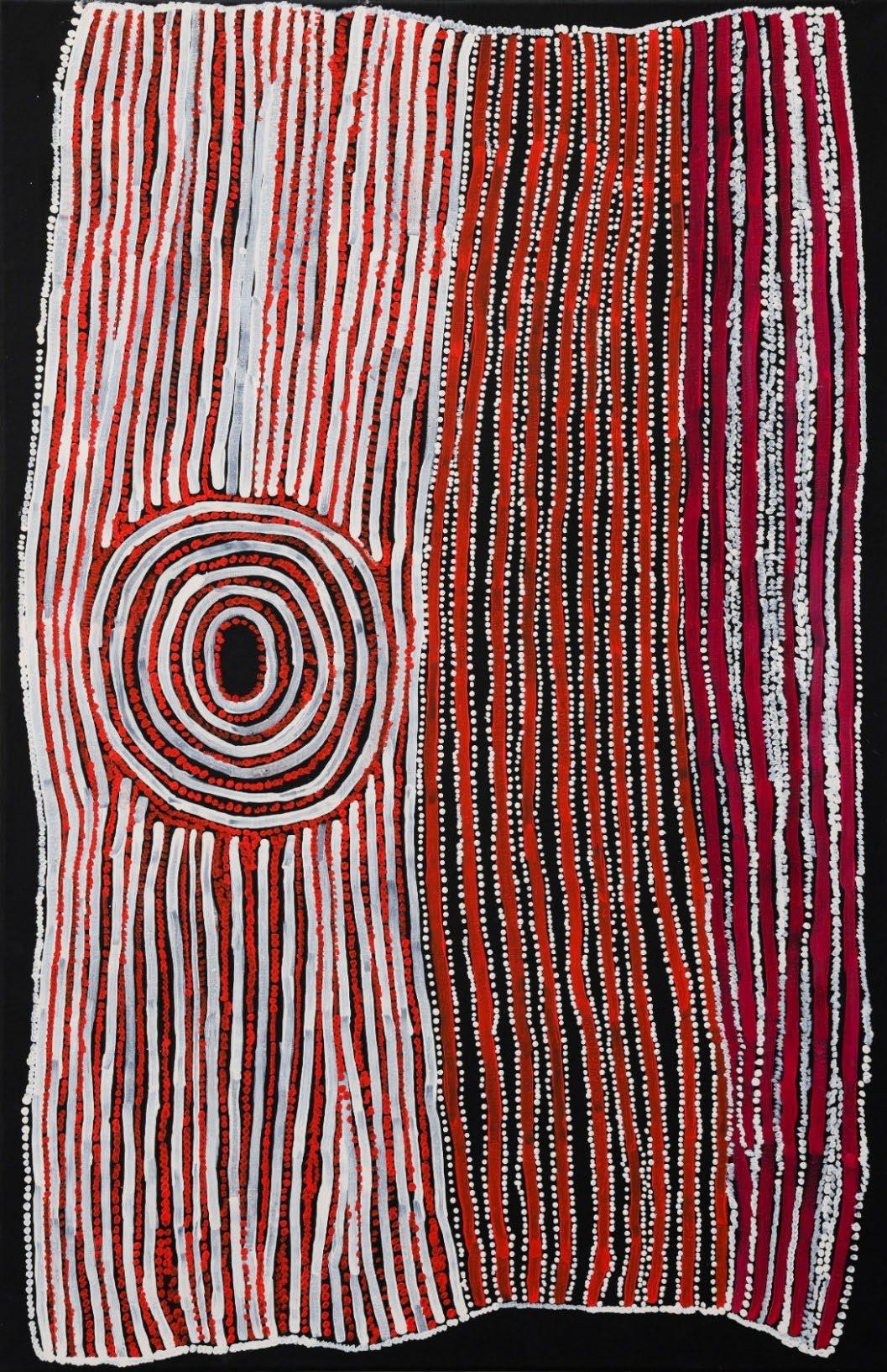
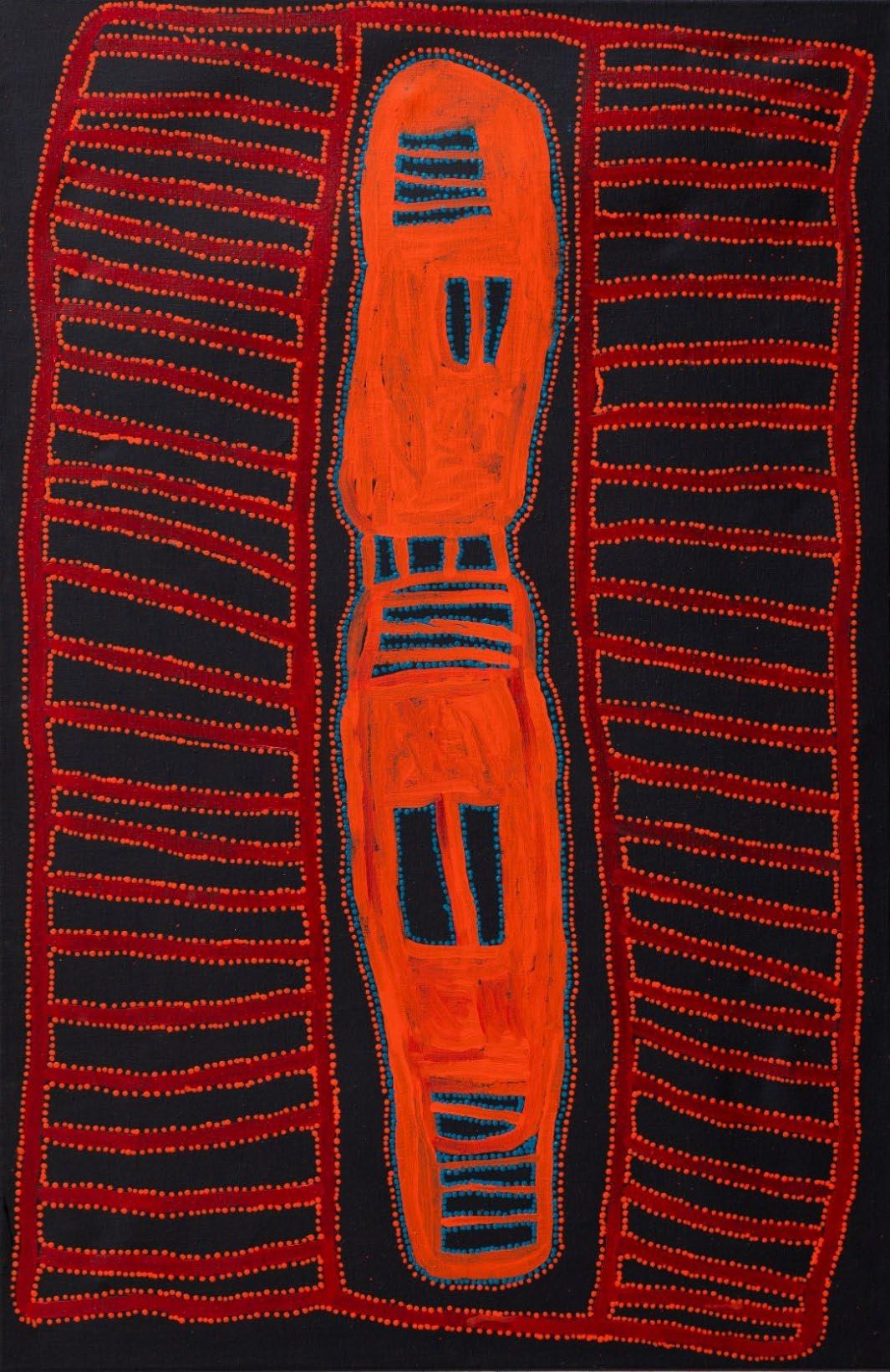
Kungkarangkalpa is a major Western Desert Tjukurpa also known as the Seven Sisters. Tjukurpa is the Pitjantjatjara concept for describing the formative creation where ancestral beings create the world. These beings are Anangu ancestors, who can take the form of people, plants or animals. They traverse the country; forming the world we live in, creating the waterholes, the trees, the clay pans, the rocky outcrops, the sand hills and the Spinifex plains. These land formations are the physical manifestation of the creation energy and tangible evidence that this Tjukurpa is true. This Tjukurpa of the Seven Sisters is an epic songline in the Western Desert and tells the story of many women traveling throughout the desert hunting and carrying out ritual obligations all the while being pursued by a cheeky old man in pursuit of a wife. Nyiru the man, can change form and does this on occasion to trick the women. Many parts of the story are secret and involve a sexual element. Only the public details of this story are allowed to be put down in paint.
Tjuntjun
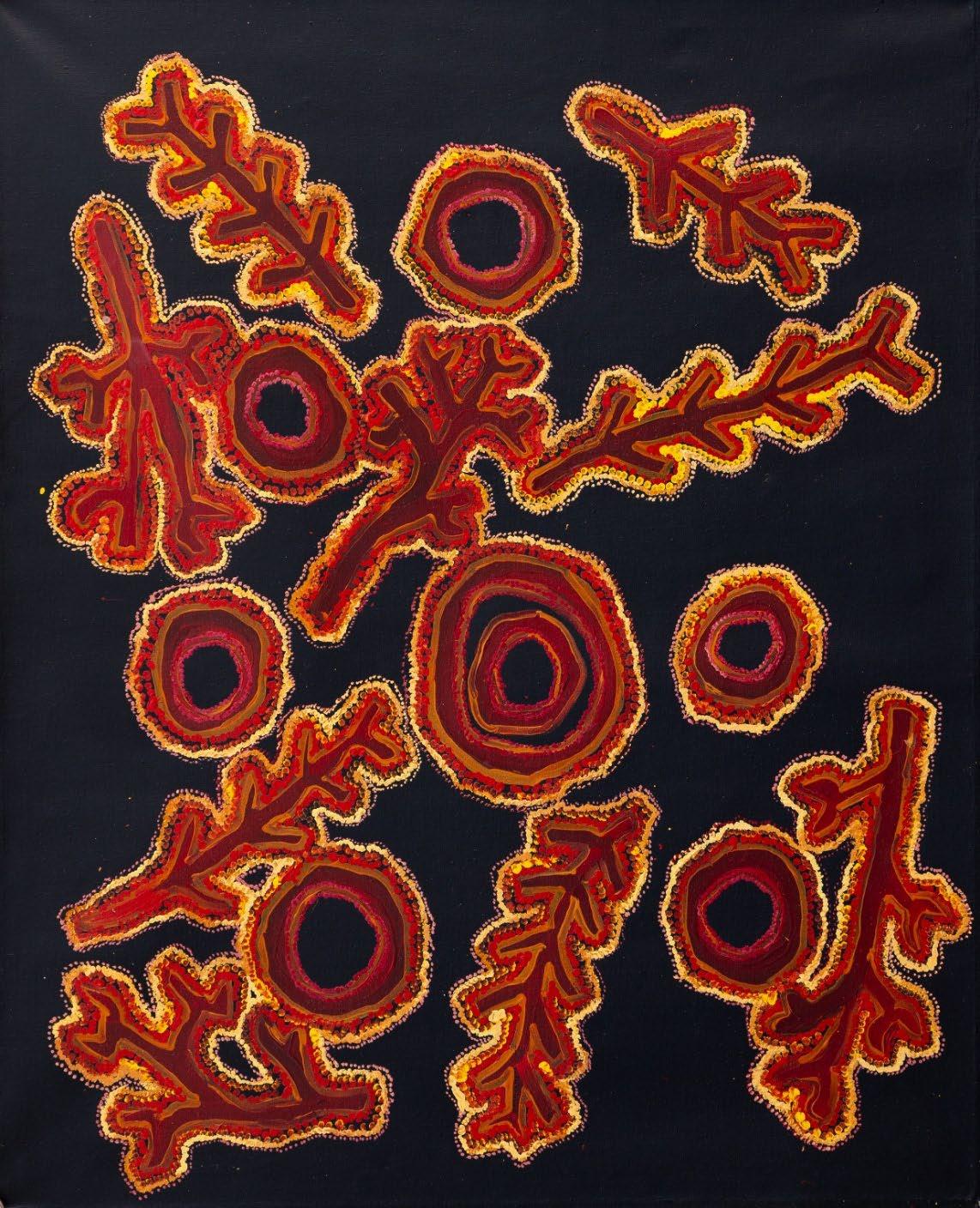
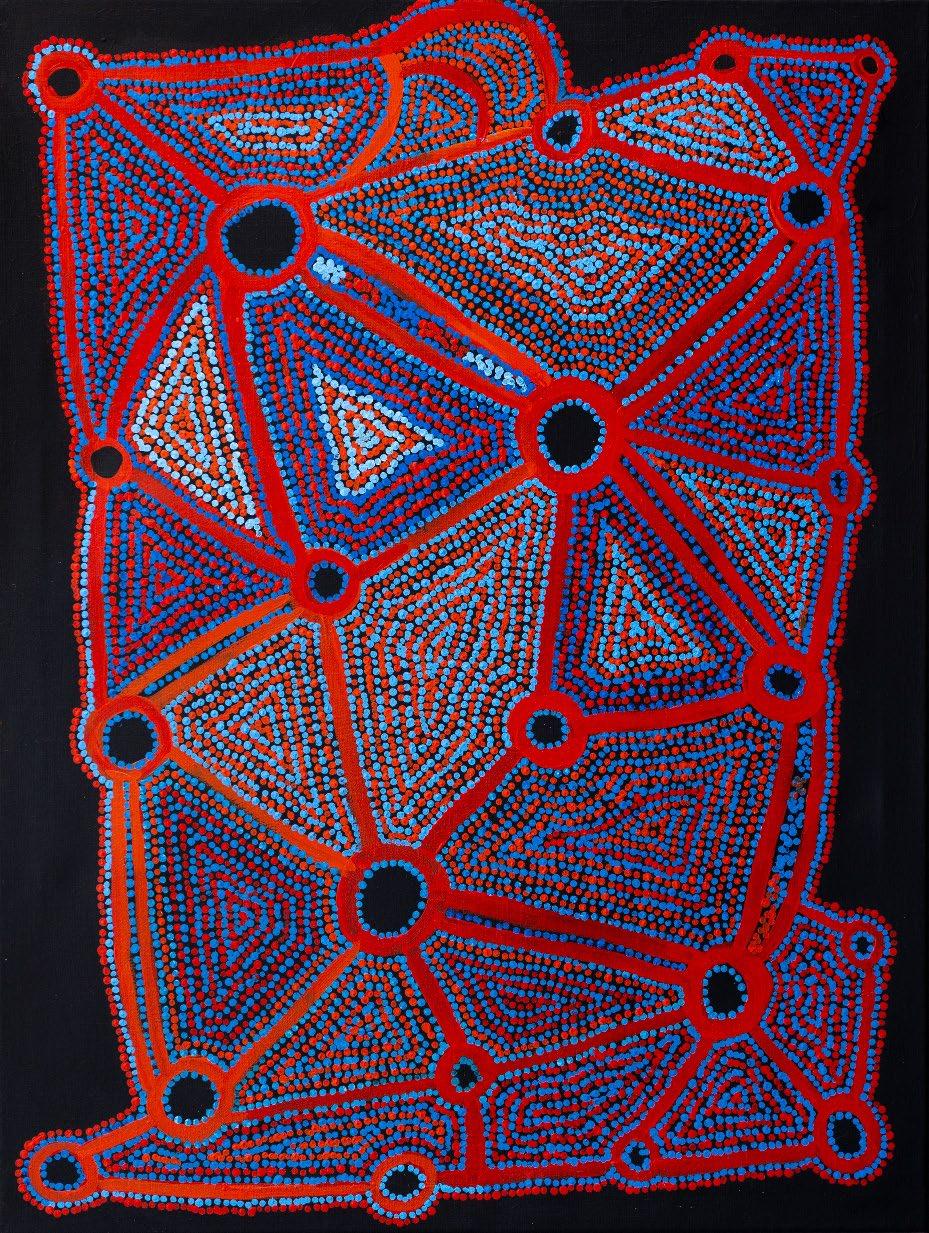
“These are the rockholes my mother painted; Tjun-tjun, Ilkurlka, Pirapi, Upi, Tjawanya, Karnka, Warurungka, Unpun, Takari, Mulyaya, Talitjulpul, Mamatju and Wangalritja. Spinifex country has many rockholes. I travelled with my mother before she passed in a helicopter, and she showed me the places. The old people travelled everywhere, walking from rockhole to rockhole. They knew all the places.”
- Maureen Donnegan
Kanpala
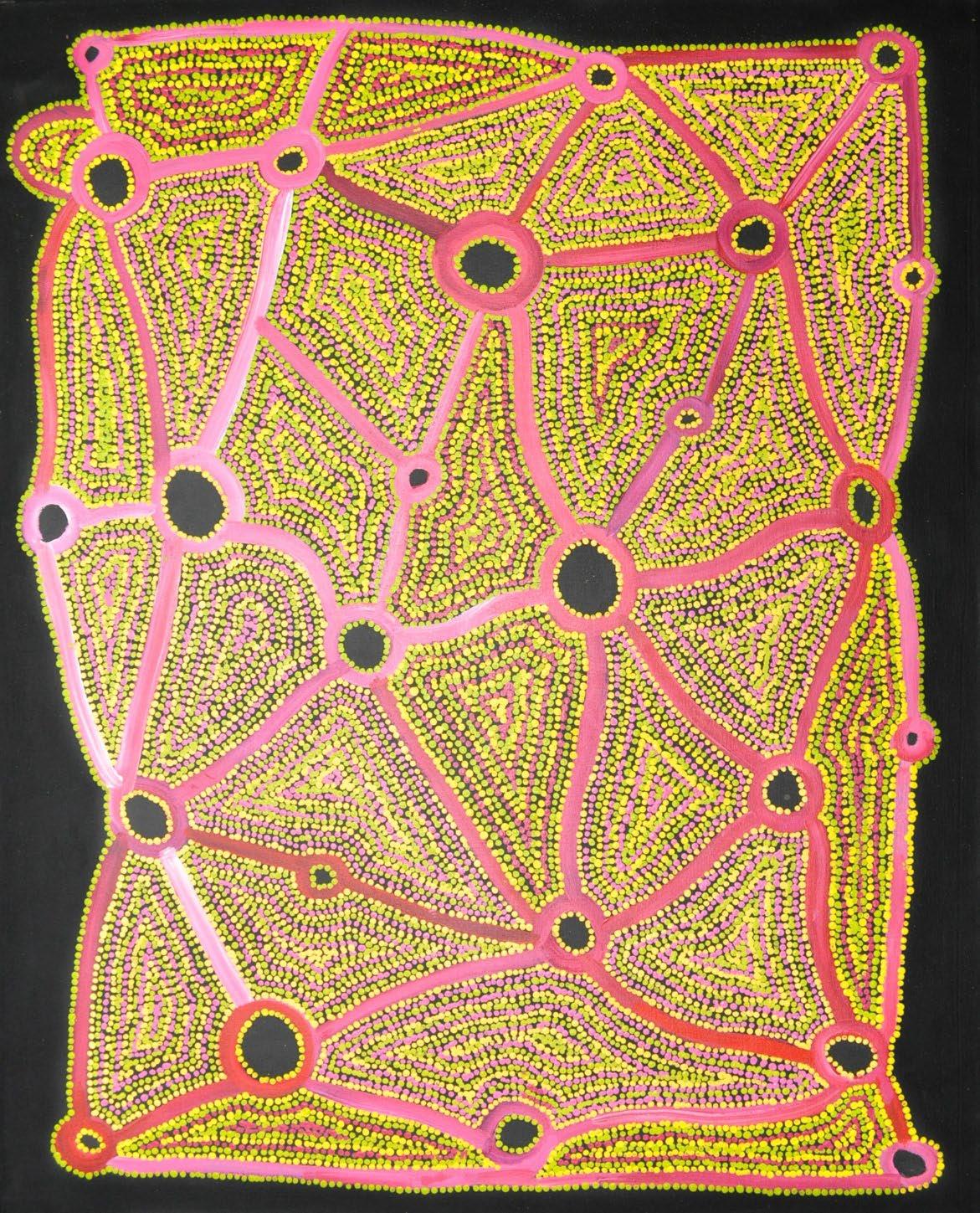
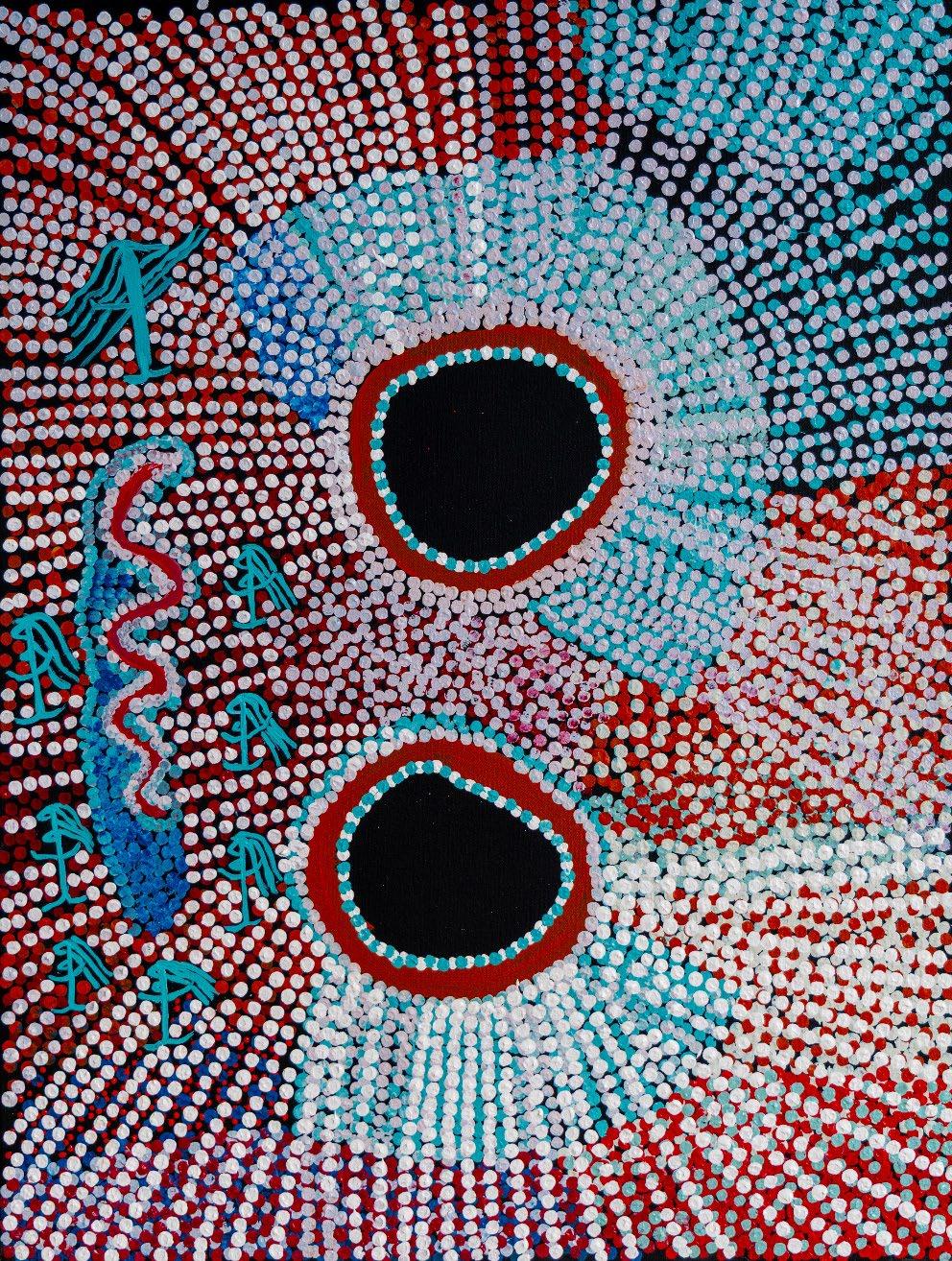
Michelle Anderson has painted her grandmother’s birthplace, an area known as Kanpa. Kanpala means "at Kanpa" where Michelle’s kami (grandmother) Myrtle was born. Here Myrtle spent the first part of her life with her immediate family living a traditional western desert lifestyle. Kanpa is a place with the pititjaḻiḻi (scorpion) story present. This place is characterised by a large rocky outcrop which symbolises a notable woman from the area. This woman discovers the place and announces to the rest of her people it is sacred. Michelle’s painting maps this storied place in Spinifex Country.
“The old people would walk from rockhole to rockhole collecting wild foods on the way. They knew the bush plants that were good to eat, how to make flour by grinding the small millet seeds they collected and then baking bread on the fire. They knew the special plants for medicine. This country is good country.”
-
Michelle Anderson
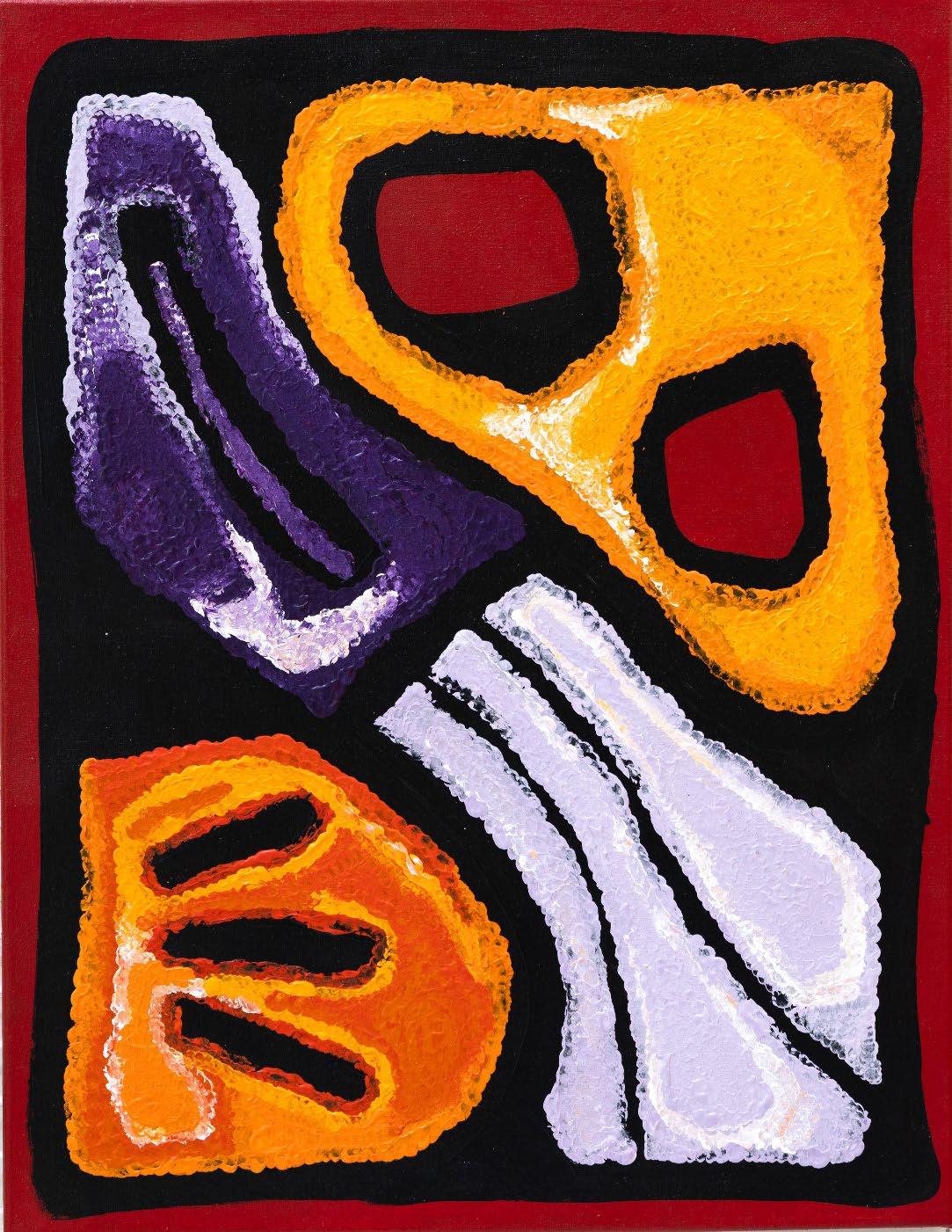
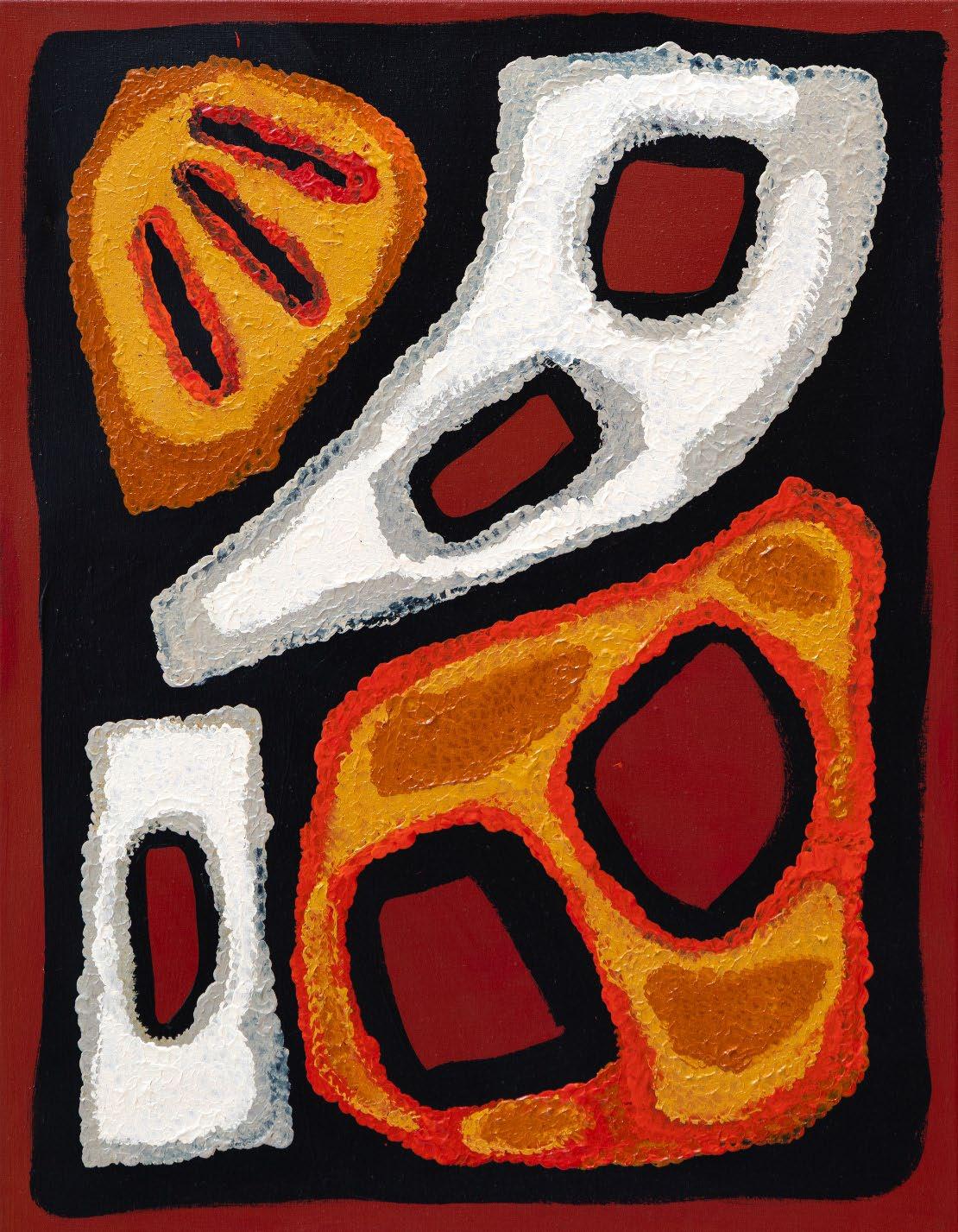
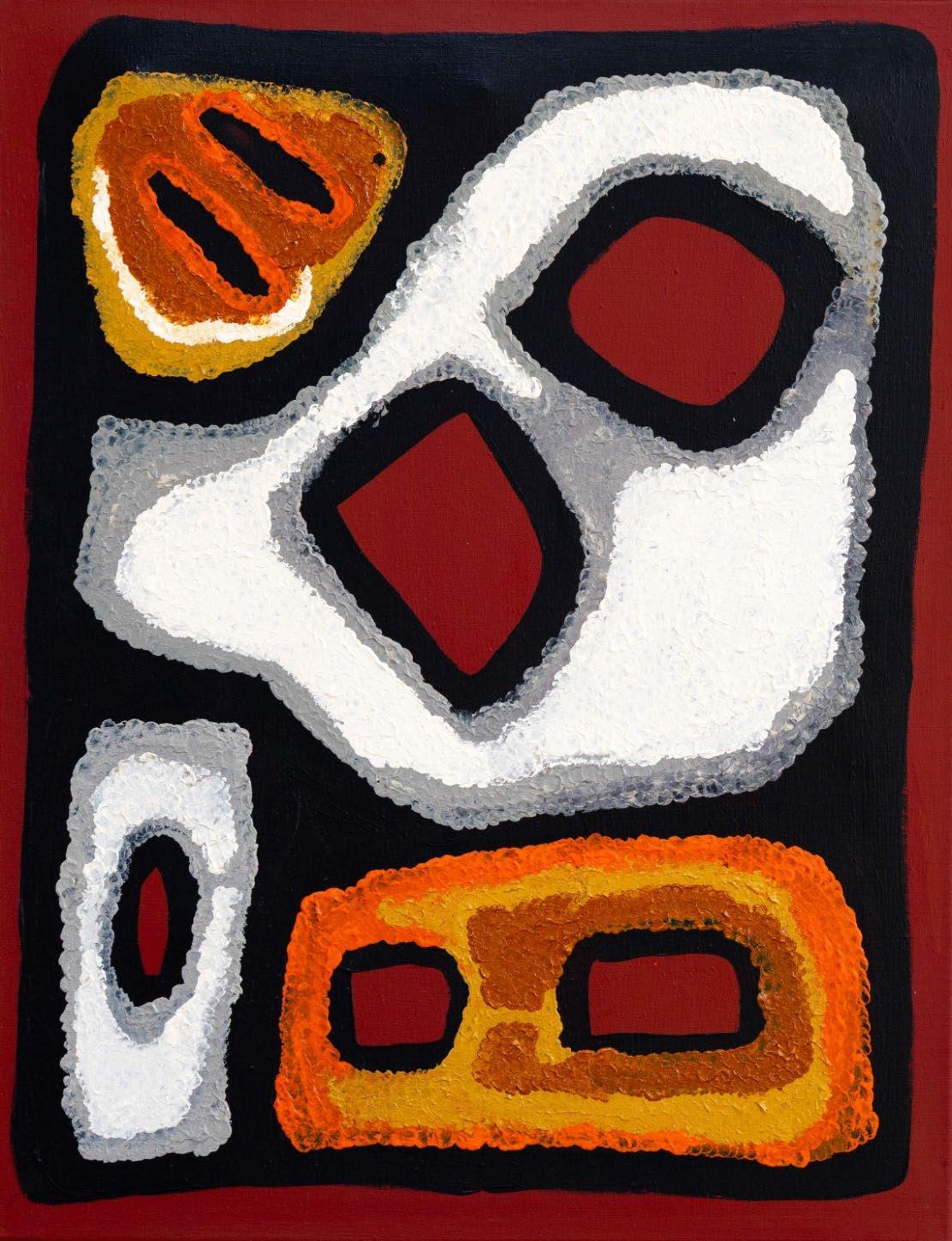
The Spinifex Arts Project was established in 1997 as part of the Native Title documentation process. Both Native Title paintings, the Men’s Combined and the Women’s Combined, document the entire Spinifex area showing claimants’ birthplaces and important stories that traverse and give form to the area. These paintings were formally included in the preamble to the Native Title agreement ratified before the Federal Court in November 2000. Celebrating the success of the land claim process the Spinifex People bequeathed ten major paintings to the People of Western Australia, to be housed at the Western Australian Museum.
The Spinifex artists continue to paint traditional stories and document kinship responsibilities with acrylic paint on linen, often using a vibrant, unrestricted palette. Spinifex works have become widely known in the fine art world and the now growing body of work is internationally acclaimed and housed within major art and museum collections both in Australia and overseas.