July/August 2026

Archaeologists and Community Historians on The Trail of Chinese Cowboys in Eastern Oregon
Members’ Magazine of Jefferson Public Radio


July/August 2026
Archaeologists and Community Historians on The Trail of Chinese Cowboys in Eastern Oregon
“Aside from the excellent Applegate wines I’ve had from producer, Vineyard, made such an impression on me over the last few years that I from the July the attitude, which are
“But Aside from the excellent Applegate wines I’ve had from Willamette producers, the wines of one producer, Troon Vineyard, made such an impression on me over the last few years that I drove seven hours from the Mendocino Coast in July to pay a visit to Applegate Valley, While I admire the way Troon farms and its empirical attitude, the proof is in the wines, which are invariably fresh, lively and expressive,”
—Eric Asimov The New York Times
—Eric Asimov, The New York Times
JPR Foundation
Officers
Liz Shelby – Medford
Vice President
Cynthia Harelson –Medford/Grants Pass
Treasurer
Andrea Pedley – Eureka
Secretary
Ex-Officio
Rick Bailey
President, SOU
Paul Westhelle
Executive Director, JPR
Directors
Ken Silverman – Ashland
Ron Metzger – North Bend
Rosalind Sumner – Montague
Dan Mullin – Eugene
Karen Doolen – Medford
JPR Staff
Paul Westhelle
Executive Director
Darin Ransom
Director of Engineering
Sue Jaffe
Membership Coordinator
Valerie Ing
Classical Music Director / Host
Abigail Kraft
Business Support Manager/ Jefferson Journal Editor
AJ McCalla
Host
Mike Green
Assistant Producer/ Jefferson Exchange Host
Dave Jackson
Music Director/Open Air Host
Danielle Kelly Open Air Host
Soleil Mycko
Business Manager
Natalie Golay
Jefferson Exchange Senior
Producer
Calena Reeves
Marketing & Administration Manager
Heather Holben
Audience Services Coordinator
Vanessa Finney Reporter/Host
Roman Battaglia
Regional Reporter
Justin Higginbottom
Regional Reporter
Jane Vaughan
Regional Reporter
Milt Radford
Morning Edition Host
Dave Young
Operations Manager
Liam Moriarty
Digital Editor
Maria Carter
News Director
Morgan Ackley
Jefferson Exchange Assistant
Producer/Weekend Host
Kara Everitt
Jefferson Exchange Assistant
Producer/Weekend Host
Kenyon Mayers
Music Librarian
Theo Greenly
Southern Oregon Coast Reporter
Peyton Gast
Snowden Intern
JPR News Contributors
Juliet Grable
JEFFERSON JOURNAL (ISSN 1079-2015), July/August 2026, volume 50 number 4. Published bi-monthly (six times a year) by JPR Foundation, Inc., 1250 Siskiyou Blvd., Ashland, OR 97520. Periodical postage paid at Ashland, OR and additional mailing offices.
POSTMASTER: Please send address changes to The Jefferson Journal, 1250 Siskiyou Blvd. Ashland, OR. 97520
Jefferson Journal Credits:
Editor: Abigail Kraft
Managing Editor: Paul Westhelle
Poetry Editor: Amy Miller
Design/Production: Impact Publications
Printing: Oregon Web Press

Chelsea Rose
Researchers at the Southern Oregon University Laboratory of Anthropology (SOULA), in collaboration with Oregon Public Broadcasting (OPB) and the Oregon Historical Society, are uncovering the hidden history of Chinese American cowboys in Eastern Oregon. Archaeological digs at the historic Stewart Ranch in Grant County have revealed artifacts like workwear, spent ammunition, and ceramic dishes, highlighting the experience of the Chinese Americans working as ranch hands, buckaroos, and cooks on ranches across eastern Oregon.
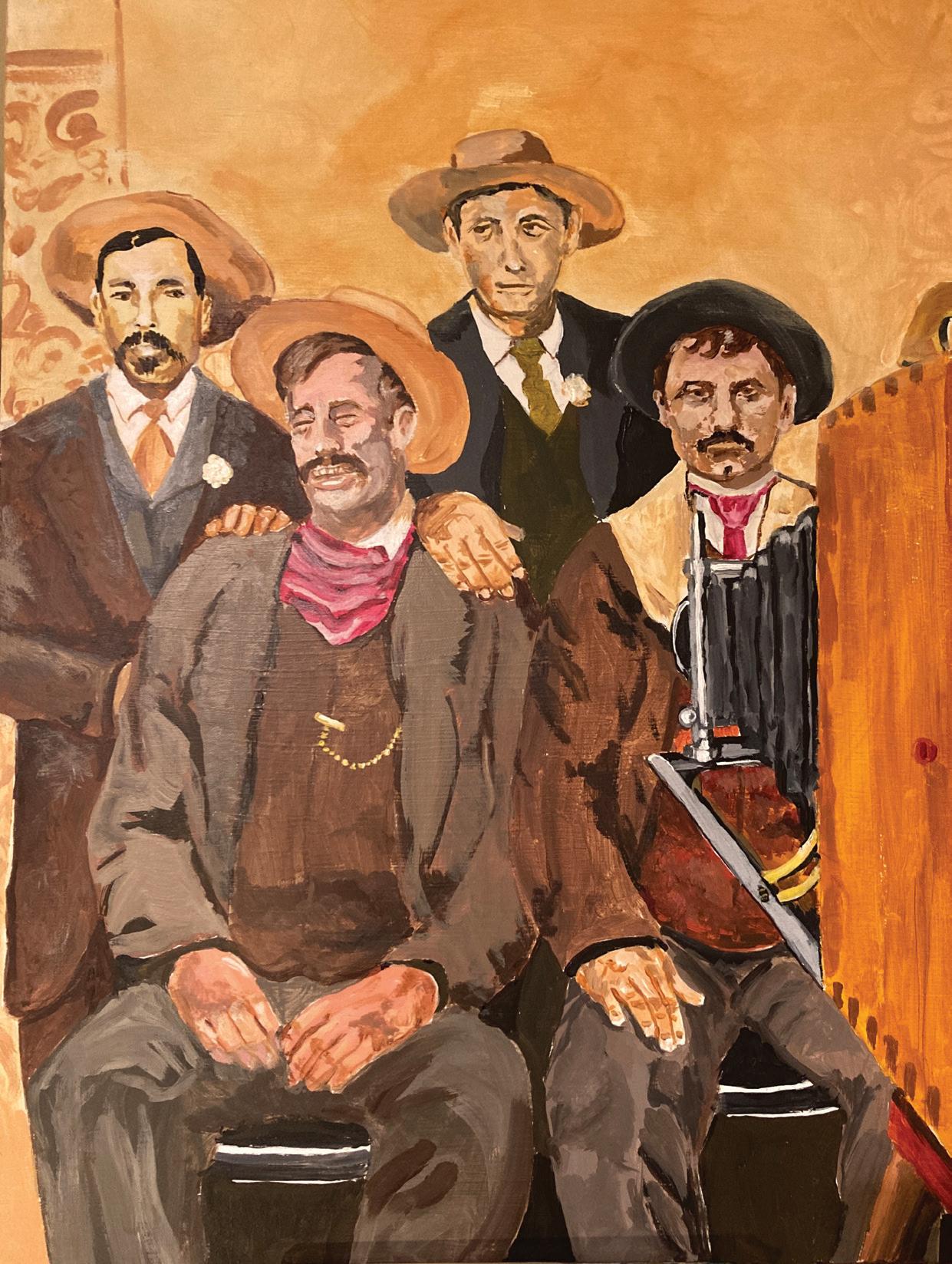
cover: Cowboy Markee Tom by Dale Hom. 18" x 22", acrylic on board. Currently available for exhibition along with the entire series—Chinese Pioneers of the Western Frontier
editor’s note: The painting depicts a group of gentlemen shortly before a studio photograph was taken which can be seen on page 6 of this issue.
OF DALE HOM – DH.XFED@GMAIL.COM

WESTHELLE
I’ve got to level with you. The fiscal year that ended on June 30th was a rugged one.
Last July, when our fiscal year started, we lost all our federal funding after President Trump and Congress eliminated all current and future support for public broadcasting. Then in early May, a national consultant hired to develop a plan to restructure Southern Oregon University in response to enrollment declines and an impending fiscal crisis, recommended that SOU eliminate its annual support for JPR.
Yet, through it all, JPR has persevered -- thanks to the amazing support of our listeners!
A broad-based increase in listener support has lifted us up and helped us continue to do our work and serve the region. With the foundation of our core funding model shifting rapidly, it’s clear that sustaining this increase in public support in the years ahead will be critical to our future.
JPR has a long history of adapting to change and is well positioned to respond to both funding challenges and a dynamic media environment. In the face of these changes, we continue to stay focused on identifying clear priorities and aligning our strategy with our organizational capacity to sustainably achieve them.
One of our priorities for the coming year is expanding our local news capacity. The decline of access to local news in Southern Oregon and Northern California has created information gaps that make it harder for people to engage in local decisions, meaningfully participate in civic life, and protect themselves against natural disasters. With fewer local reporters on the ground, consistent coverage of city and county governance, courts, and schools is not possible. And, when wildfires and other emergencies take place, there are fewer news organizations monitoring public safety channels, fact-checking information and providing timely alerts to citizens. This lack of local reporting leaves residents with less shared information about their communities and contributes to greater isolation and political polarization.
In July, we’ll be welcoming a new reporter to the JPR newsroom to cover the Southern Oregon Coast. And, beginning this year and continuing over the next three years, we’ll be adding up to five additional regionally-based reporters to strengthen our local journalism. More reporters in the field will allow our newsroom to provide more communities with reliable, fact-based journalism and improve our coverage of environmental issues, housing, public health, education, tribal issues, and local government. It will also enable us to produce more consistent, insightful reporting from across Southern Oregon and Northern California communities on a regular basis, with deeper attention to the issues that shape everyday life, especially in rural and under-covered areas.
Your continued investment in our mission is the engine of this work. Thank you for showing up for JPR in such a big way this fiscal year. While JPR’s service to our region spans over 57 years, in many ways it feels like a new beginning.

Paul Westhelle is JPR’s Executive Director.
By Chelsea Rose
Recent investigations have linked Chinese Americans with more than 30 historic ranches in Eastern Oregon, including one south of Dayville in Grant County.
This story is a special collaboration with the Southern Oregon University Laboratory of Anthropology and the Oregon Historical Society, with support from Roundhouse Foundation
Dale Hom looks out over the wild expanse surrounding Stewart Ranch in Grant County, one of dozens of historic ranches that have been linked with early Chinese immigrants in Eastern Oregon.
Hom, a retired forester and artist, has been part of a wider movement to add Chinese pioneers back into Western scenes like this one.
The site is now part of the Oregon Department of Fish and Wildlife’s (ODFW) Phillip W. Schneider Wildlife Area , accessible only by a rugged dirt road. This remote location has helped to preserve the early ranch and kept the modern world at bay, allowing researchers to search for evidence of the little-known Chinese cowboys and ranch hands employed here in the early 20th century.
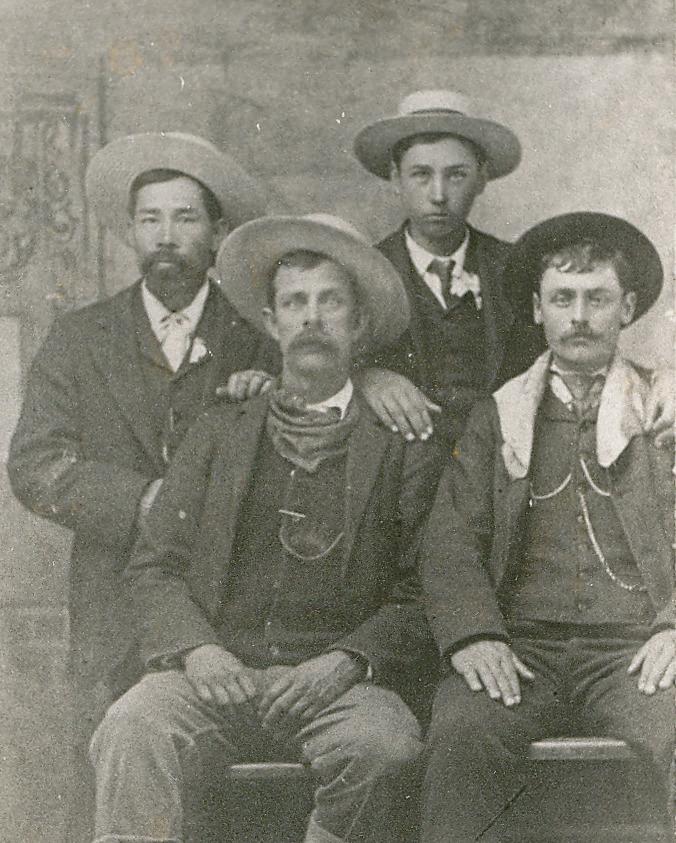
above: Chinese American cowboy Markee Tom (L, on far left) photographed circa 1900. Tom worked for the J.C. Moore family at their ranch near Dayville, Ore., as a cook and ranch hand. Dale Hom’s 2023 painting (R) imagines the informal shared moment between friends just before the photograph was taken.
COURTESY OF THE KAM WAH CHUNG STATE HERITAGE SITE AND DALE HOM
Over the course of a hot and dusty week in July 2025, Southern Oregon University archaeologists and project partners dug into the compacted soils of Stewart Ranch in search of tangible traces of men who’ve left only sparse paper trails in the documentary record.
Men like Buckaroo Sam, Markee Tom, Fon Chung, Jim Lee, Tom Lim and Hi Moon. Working as cowboys, cooks, shepherds, foreman and even as ranchers themselves, these individuals have been hidden in plain sight on the Oregon frontier.
Scholars have worked hard to tease fact from fiction and update the archetypal American Cowboy. While Wild Bill Hick-
ok, Wyatt Earp and other white cowboys may be real historical figures, historians have estimated that, in reality, one in four cowboys were Black
The original cowboys came into the American West from Mexico as early as the 18th century. These vaqueros — a name that stems from vaca, the Spanish word for cow — brought with them the pointed boots, wide-brimmed hats, bandanas and chaps that form the core suite of cowboy material culture that defines the genre to this day.
The term buckaroo is an anglicized version of vaquero and is often used interchangeably with “cowboy.” However, the buckaroo tradition is more specific to California and the Great Basin, which extends up into Eastern Oregon.
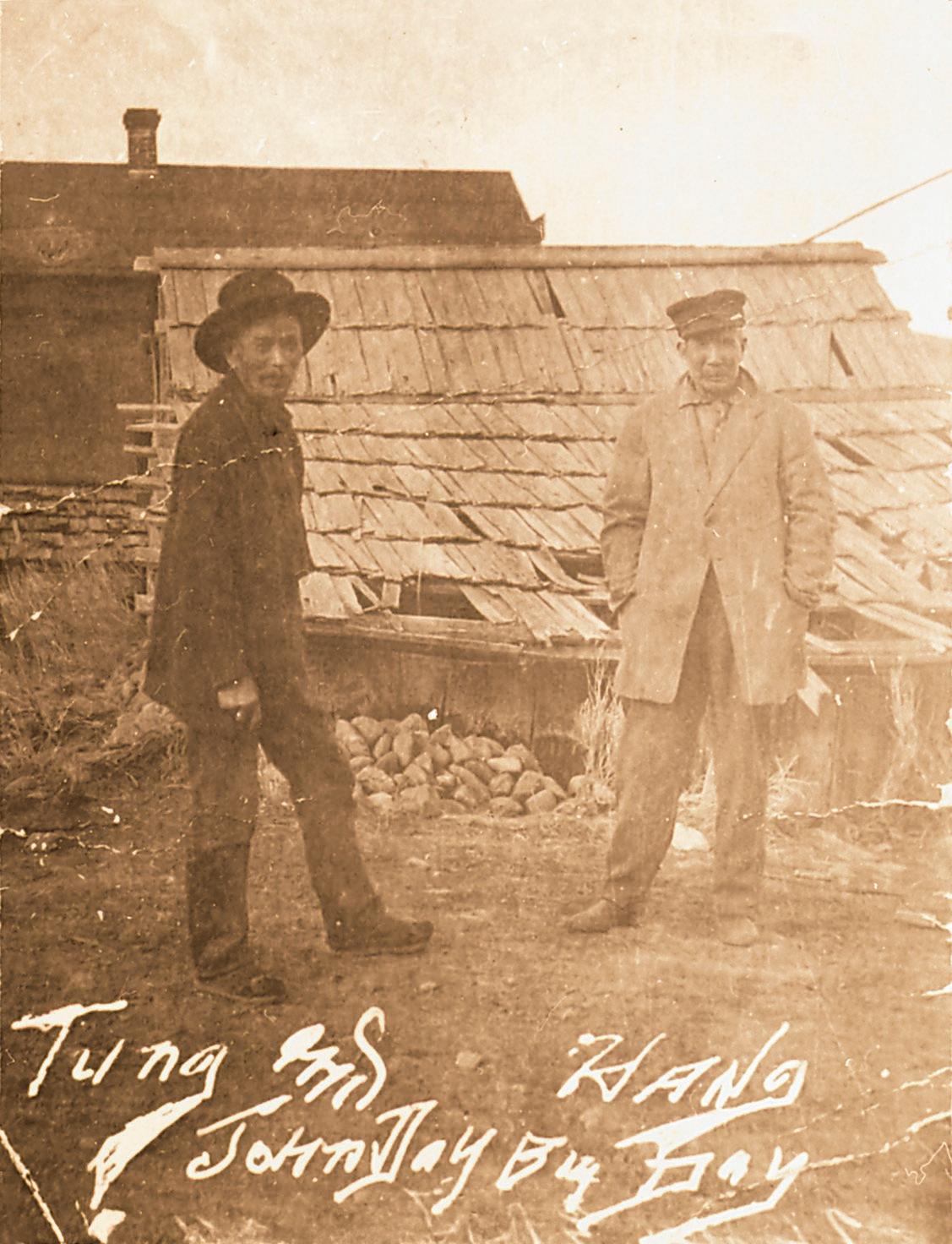

Buckaroo Sam’s obituary on the May 8, 1935 edition of the East Oregonian (above); photograph of elderly Buckaroom Sam (right) in the John Day Chinatown.
AND THE
COURTESY OF THE
Over the 20th century, mainstream American cowboy culture and imagery was romanticized into a fantasy version that largely erased its Mexican, Black and Chinese heritage.
Work is underway to reclaim those lost histories.
In 2021, the Oregon Historical Quarterly published Dale Hom’s comic, “ They Called Him…Buckaroo Sam” in a special issue dedicated to Oregon’s Chinese diaspora.
Hom draws from his personal experience as a Chinese American who spent decades exploring the great outdoors and pairs it with the scattered photographs, newspaper clippings and oral histories to imagine the life of a Chinese cowboy — giving visibility to these men for the first time.
Buckaroo Sam has been linked to the now publicly-owned Stewart Ranch. According to his obituary printed in the May 8, 1935 East Oregonian, Sam was “considered one of the best horseman” and “qualified as a real hand with his riding, roping or any of the work of a western cow hand.”
Locals described Sam as never without his red handkerchief and skilled at hand rolling cigarettes without losing tobacco. He had a distinctive scar and potentially some paralysis on his face from getting bucked off a horse.
Stewart Ranch also had a series of Chinese cooks, including Jim Lee and a man named Chung. Lee was described as a “re-
ally, really good cook” in an oral history by Eminger Stewart — grandson of ranch founder and namesake Eminger “Billie” Stewart. “Particularly good with desserts.”
After his tenure working on cattle and sheep ranches, Jim Lee worked in, and even owned, restaurants across Grant and Baker counties.
Ongoing efforts to rustle up evidence of early Chinese American cowboys fall under the umbrella of the Oregon Chinese Diaspora Project (OCDP), a grassroots, multi-agency collaboration that focuses on documentation of early Chinese Oregonians in rural parts of the state.
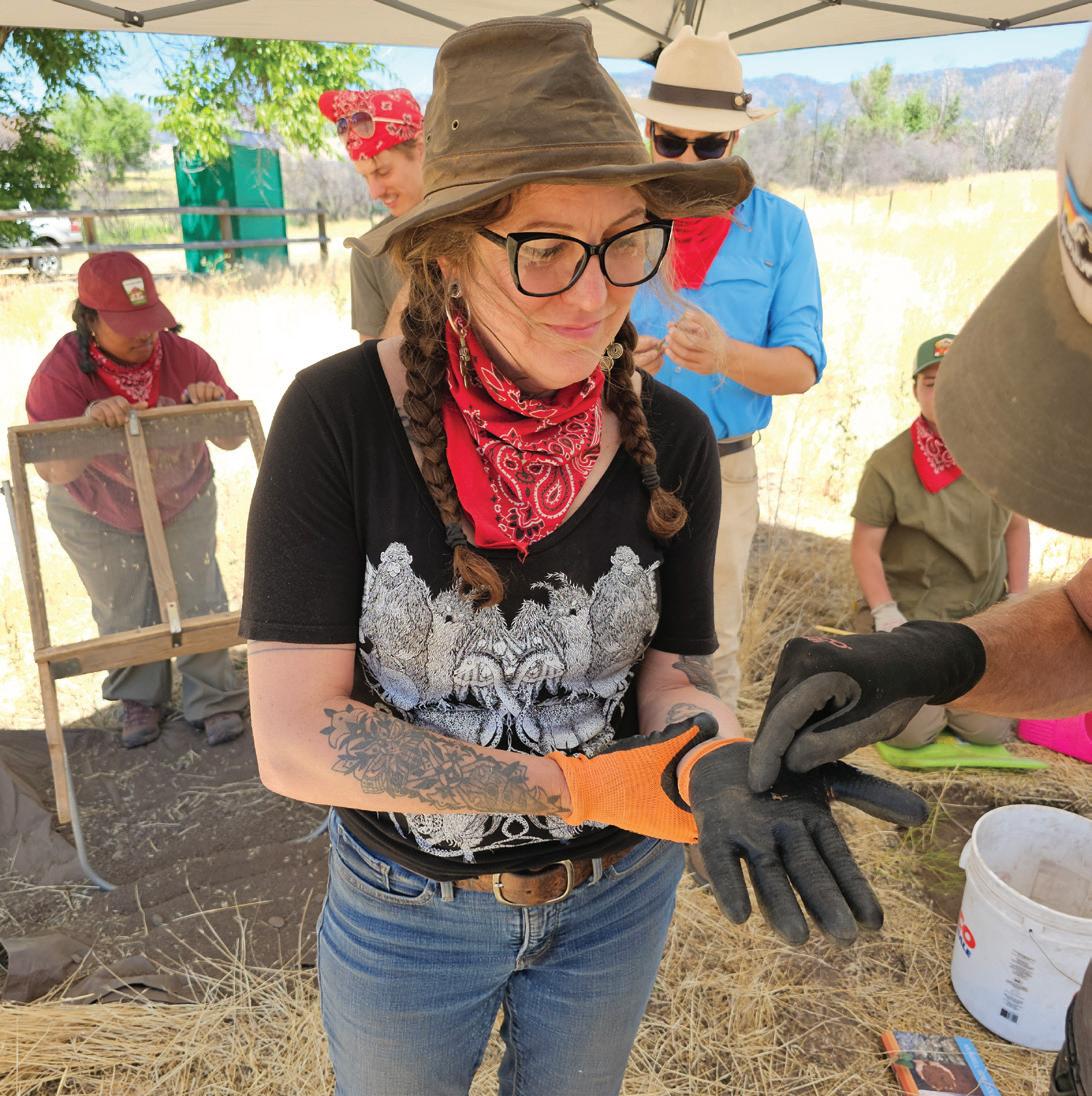
Southern Oregon University Laboratory of Anthropology (SOULA) partnered with ODFW archaeologists on a summer field school at Stewart Ranch, where investigations focused on two historical bunkhouses associated with the property.
The collaborative project included community outreach, public programming and field assistance from local volunteers and the Burns Paiute Tribe’s Youth Opportunity Program.
SOULA’s excavations at the site targeted bunkhouses and
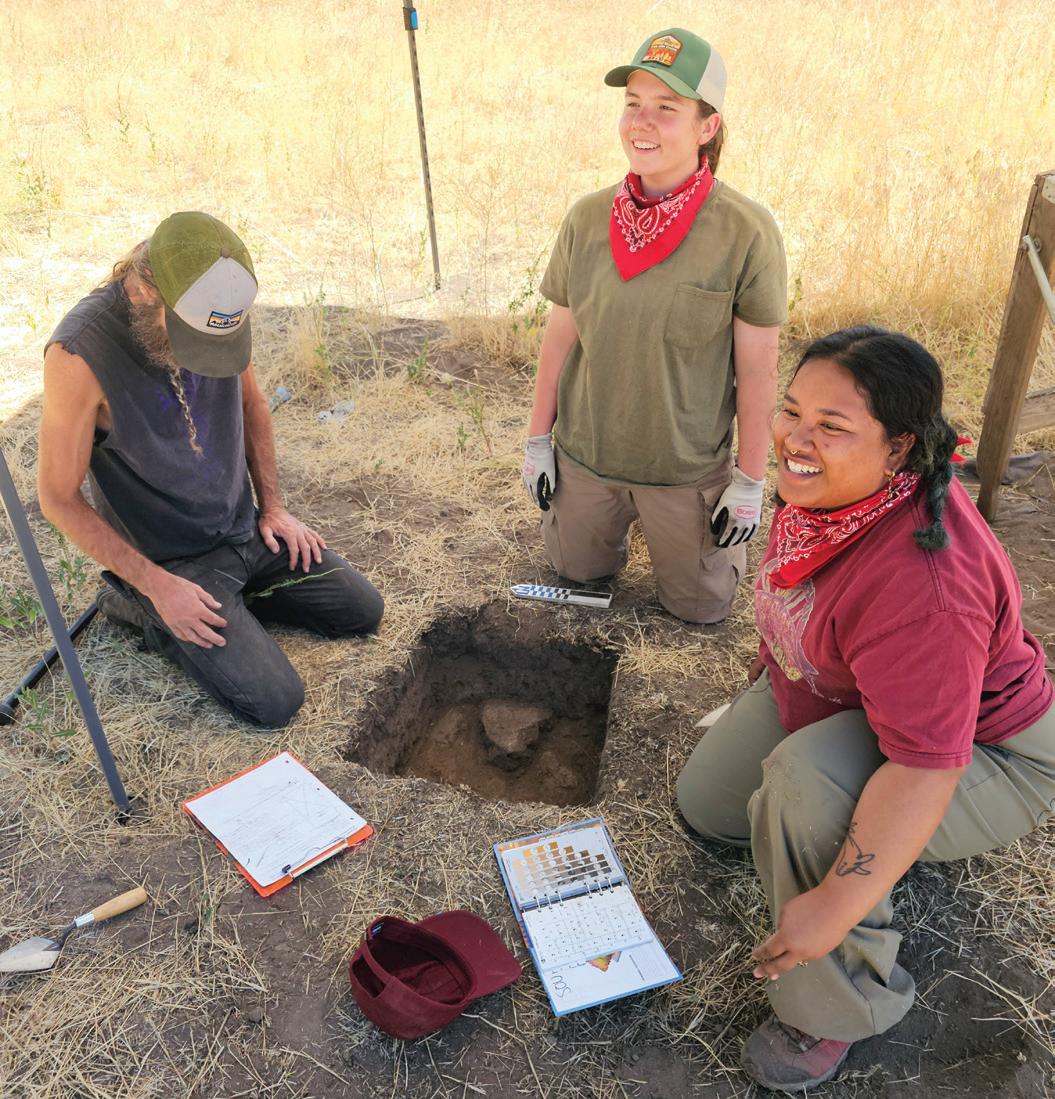
areas where food remains and trash might be discarded by Chinese American cowboys and cooks.
The team recovered buttons, broken dishes and bottles. They also discovered flakes representing the byproducts of stone tools made by Indigenous peoples that lived at the site long before the first livestock arrived.
Buttons and rivets reflect sturdy workwear, spent ammunition suggests hunting or protecting livestock from predators and food remains provide a glimpse into the meals prepared by the Chinese cooks working on site.
Katie Johnson, a zooarchaeologist with SOULA, found evidence of hearty communal meals in the animal bones recovered from outside the cookhouse.
Elements representing lower limbs from mammals would be tougher, “So you would’ve put them into stews or soups where you can make a large portion to share with the group that’s working there.”
The fragmented bones show beef and deer were enjoyed, along with cuts from a medium-sized mammal that could represent sheep—mutton reportedly being one of Jim Lee’s signature dishes.
While Indiana Jones emphasizes the adventurous side of archaeology, in reality the bulk of the work is tedious and happens away from the dig site.
Artifacts from the Stewart Ranch dig are being carefully cleaned and sorted in the lab by staff and students. Time-consuming research continues, including scouring historical newspapers and photographs as well as ongoing conversations between project partners and stakeholders.
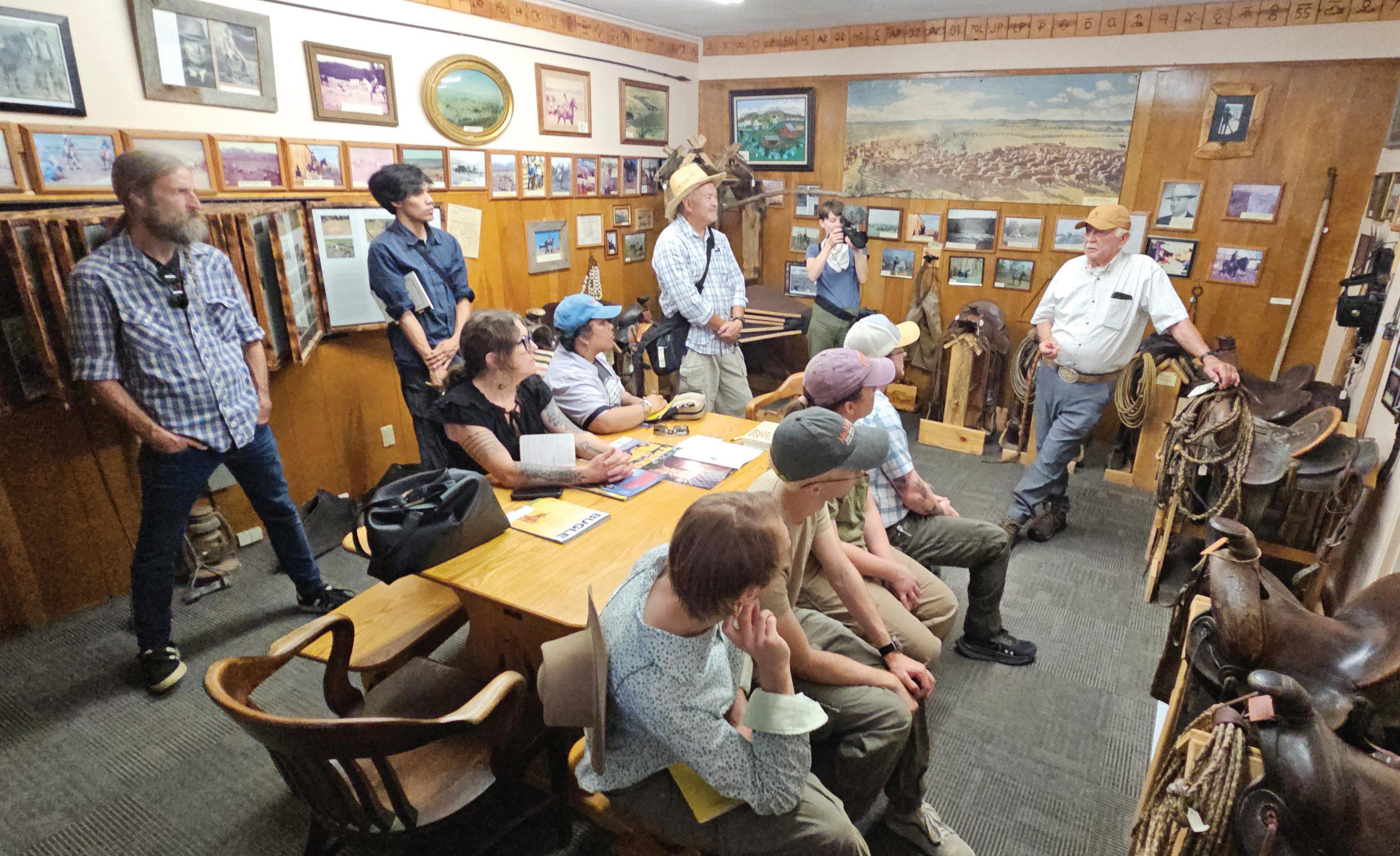
Much of the OCDP’s access comes from local partnerships with the Grant County Ranch and Rodeo Museum and Friends of Kam Wah Chung in John Day, who helped make connections


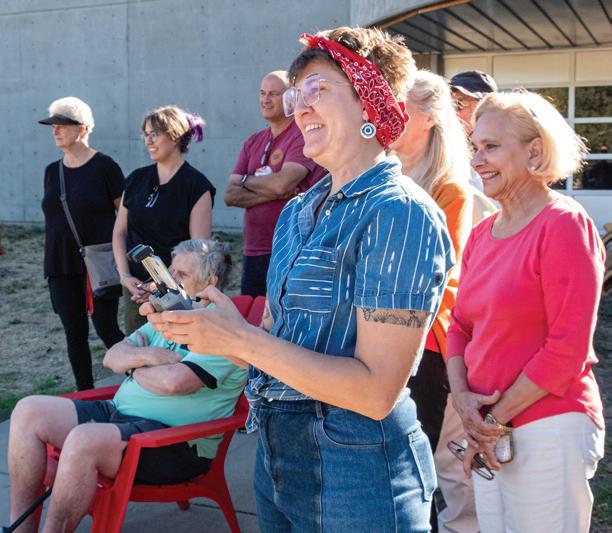


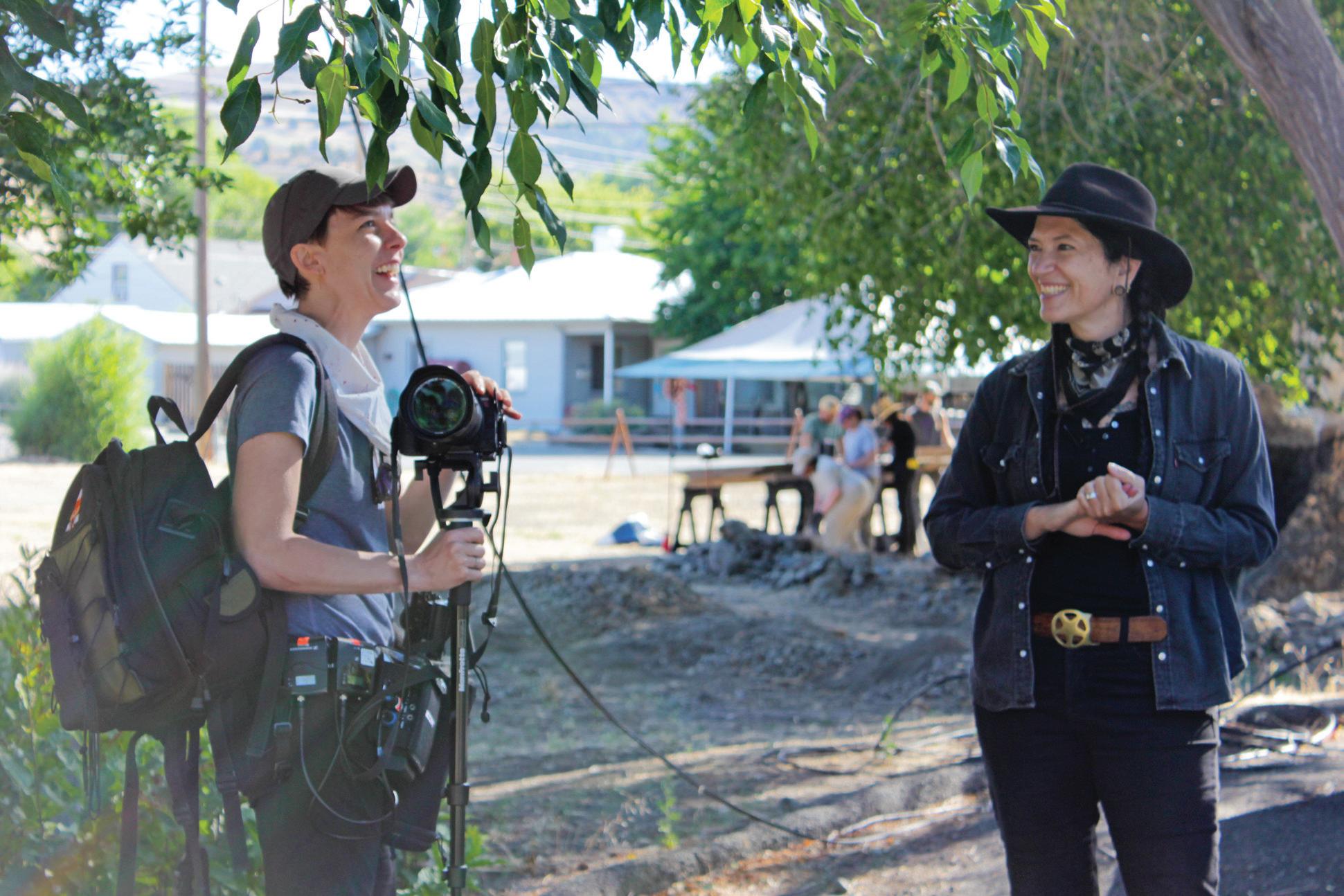
between the project and local ranching family descendants.
As the project continues, the OCDP will rely on these community relationships to interpret and contextualize findings and track down and access additional sites.
Archaeology allows for small finds to make big changes, and is actively helping to counter the erasure of Chinese Americans from Oregon history.
Decades of anti-Chinese sentiment, culminating in state, federal, and local laws effectively deterred or prohibited, in some cases violently, many Chinese Americans from building generational roots. Census records for Grant County listed more than 40% of its total population as being of Chinese descent in the 1870s. In 2020, that dropped to less than 1% reporting Asian ancestry.
While the dozens of Chinatowns in Eastern Oregon were abandoned by the early 20th century, the Chinese Americans who stayed, built careers and lived out their lives in these communities — including some of the former ranch hands.
Jim Lee spent his final days under the care of the Catholic Home in Baker City. According to a local rancher that was one of Lee’s friends and former employers, he left the Catholic Home his sizable estate upon his death.
Buckaroo Sam retired to the John Day Chinatown when he got too old for cowboying. He lost his home and savings to a
catastrophic fire in 1927. The family that ran the city’s Benson Hotel took him in, where he performed odd jobs in exchange for room and board.
An oral history with Loyce Phillips, granddaughter of the hotel owners, is on file at the Kam Wah Chung State Heritage Site. In it, she speaks with great fondness about Sam, how he helped the family and took particular care to watch out for her.
A fuller and more complex picture of life in Eastern Oregon is emerging, allowing for what Dale Hom describes as a “retelling of a story” by artists, archaeologists and others helping to sweep away the dust of time.
“The more we find out, the greater it expands on what it means to be an American and be an American cowboy here out in the West.”
This story was written and reported by Chelsea Rose, edited by Arya Surowidjojo, and digitally produced by Winston Szeto. The short documentary was filmed and edited by Christie Goshe.
Chelsea Rose is the director of the Southern Oregon University Laboratory of Anthropology (SOULA) and host of the Underground History podcast, which airs during the Jefferson Exchange on JPR’s News & Information service and can be found on all major podcast platforms
2026–2027
Fry Street Quartet with Toby Appel, Viola & Monica Ohuchi, Piano
October 2
Balourdet Quartet with Adam W Sadberry, Flute
October 17
Arcis Saxophone Quartett
November 6
Jupiter Quartet
November 21
Aris Quartet
January 30
Leticia Moreno & Friends
February 12
I Fagiolini
February 27
Pavel Haas Quartet
March 12
Curtis on Tour: Canellakis Sextet
April 2
Chamber Music Society of Lincoln Center
April 30
Neave Piano Trio
May 15
In collaboration with Anima Mundi Productions: Catalyst Quartet
May 22









Smokejumpers are trained to put on their jumpsuit in under two minutes after hearing that siren.
Climatologists are predicting an active fire season after a dry winter. Firefighters around the west are standing ready. That includes crews at California’s only smokejumper base.
This spring at a U.S. Forest Service base in Redding, smokejumper cadets leaped from a training tower and whizzed down a zip line as instructors shouted encouragement.
Rookies who pass the six weeks of grueling physical and mental trials will get the chance to jump out of an airplane, hike miles through the backcountry and fight fire in remote forests this summer.
The job attracts a certain type of person.
Brandon Swezey joined the program last year. He said he has wanted to become a smokejumper since learning about the job on his first day as a fire engine crew member.
“It just seemed like the coolest job there was,” he said. “The lure of it, the tradition.”
He was right — for him, it is the coolest job ever. He still remembers his first jump with a smile.
“It makes this loud whoosh sound, and it kind of hits you,” Swezey said. “Out you go and next thing you know, you’re on the ground and you got a big adrenaline dump.”
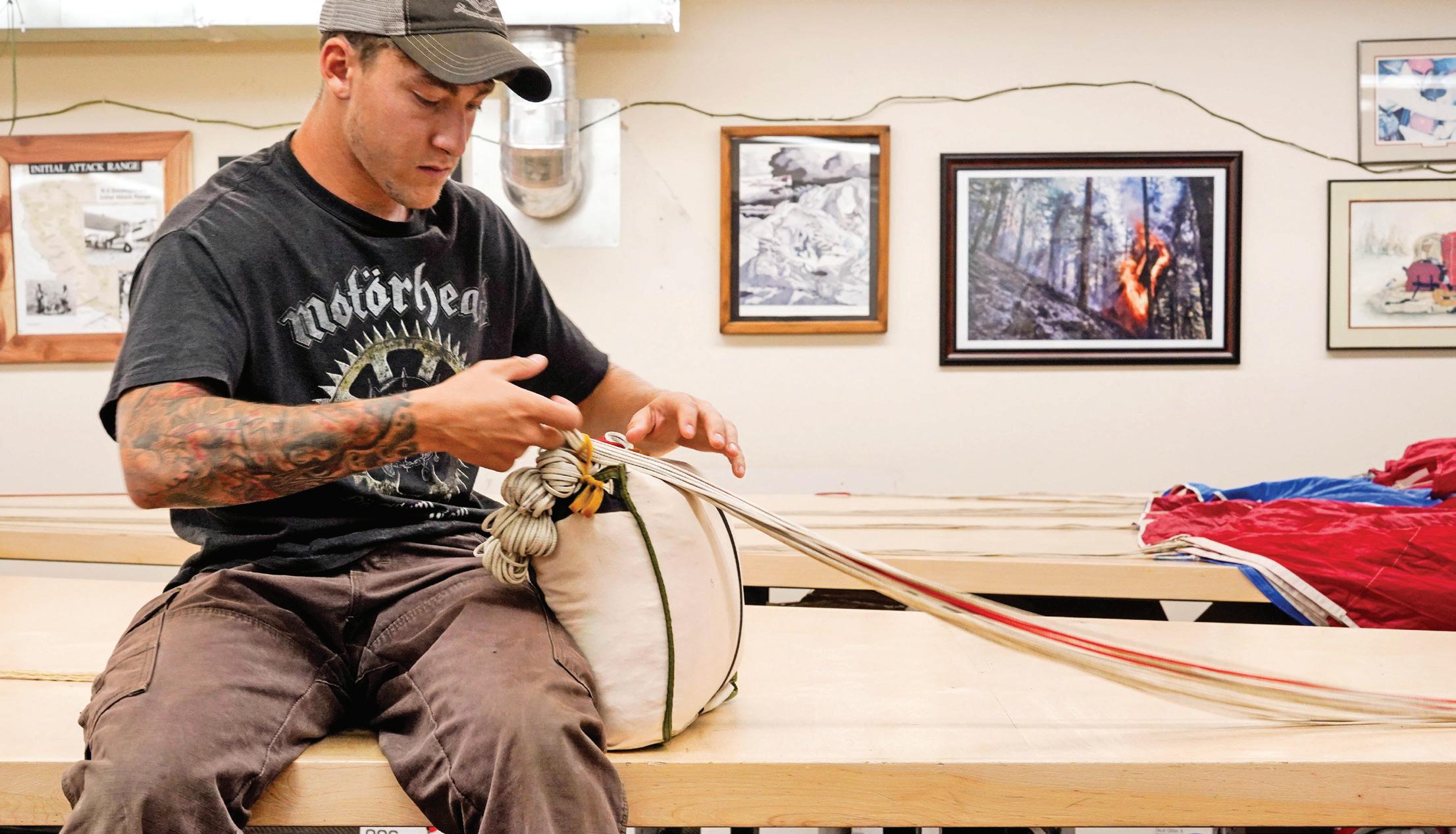
Jumping out of airplanes is only one part of the job. Swezey quickly learned that smokejumpers also must be skilled at climbing up and down trees.
He landed in a tree during one early jump. He wasn’t injured, luckily, and used his training to rappel down.
Smokejumpers aren’t the only things that get caught in trees. Planes drop supplies during an operation, but the cargo boxes regularly end up in the forest canopy. Smokejumpers must climb the trees to retrieve them.
Smokejumpers become such skilled arborists they are often called to remove tree limbs and other hazards at campsites during the winter.
Continued from previous page
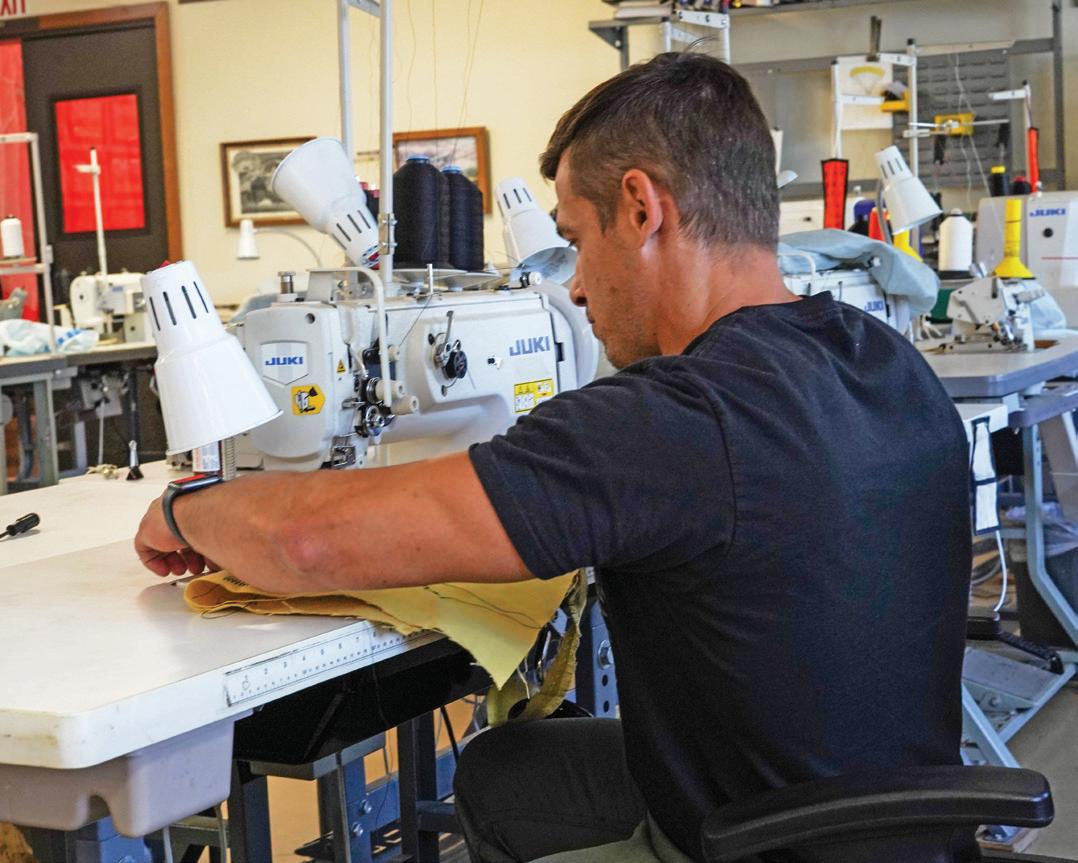
Swezey was also surprised he would need to learn how to sew.
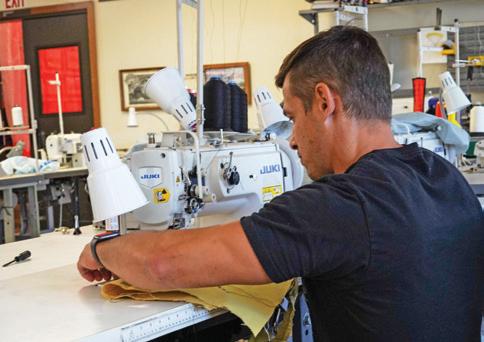
Inside what smokejumpers call “the loft,” assistant operations manager Matthew West hunches over a sewing machine. Here, smokejumpers use rows of machines to sew much of their own jumpsuits and repair gear worn or damaged during fire assignments.
West said there are a few reasons for manufacturing their own gear.
“It’s cost-effective,” West said. “It’s pretty unique. There’s nobody else that parachutes into wildfire.”
He said that it takes longer to become skilled at manufacturing gear than it does to learn how to jump out of a plane.
West, a smokejumper for 13 years, is coming up on his 300th jump. He said one of the biggest changes he has seen is the transition from a round canopy, designed for paratroopers, to the more maneuverable ram-air parachute seen in the sports world.
“We were given 10 years to complete that,” West said. “It was pretty challenging to get everyone through it.”
Smokejumping began in 1940, and the Redding base opened in 1957. While technology has changed, the philosophy of smokejumping has pretty much stayed the same.
“Our policy in our forest is that when there’s a fire that breaks out, you go get it,” said Bob Doucette, public affairs officer with the Forest Service.
He said only overly dangerous conditions will keep smokejumpers from deploying. About 30 smokejumpers have lost their lives since the program’s founding.
“You’re not going to have like a massive fire and then send people headlong right into it,” Doucette said. “You got to be safe about how you attack it.”
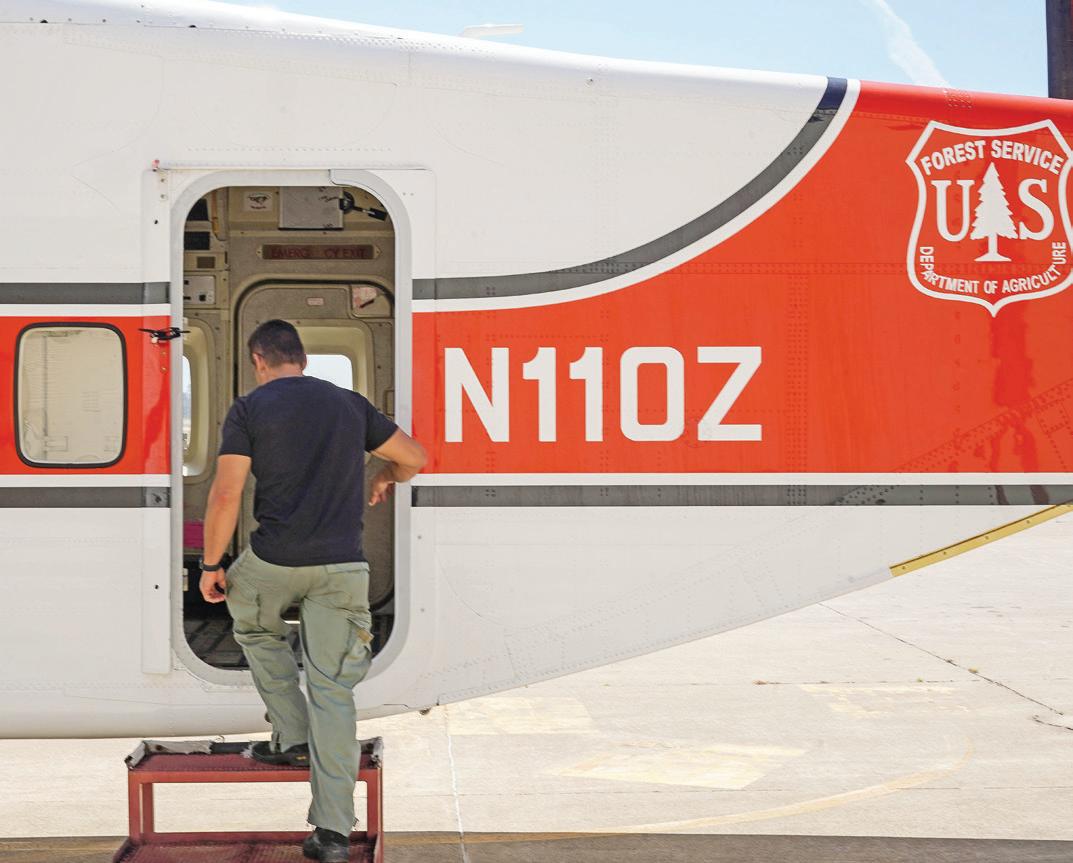
Out on the runway, a Short C-23 Sherpa sits packed and ready for the first alarm of fire season. Smokejumpers are trained to put on their jumpsuit in under two minutes after hearing that siren. The support crew drops enough supplies for the smokejumpers to be self-sufficient for 72 hours. But smokejumpers can fight fires for weeks with resupply runs.
Last year, Redding smokejumpers parachuted into 59 fires across the region.
West said the hardest part of the job is not jumping out of planes or firefighting. It’s the weeks away from family and loved ones that can take the biggest toll.
“Once fires start happening, you’re going to be spending a very limited amount of days, or time at all, at home with your family,” West said.” That’s the most challenging part for me.”
Swezey said the job isn’t for everyone. Only half of his class made it through training.
To become a smokejumper, he said, is a lot like jumping from a plane.
“You kind of got to be all in,” he said.
Justin Higginbottom is a regional reporter for Jefferson Public Radio. He’s worked in print and radio journalism in Utah as well as abroad with stints in Southeast Asia and the Middle East. He spent a year reporting on the Myanmar civil war and has contributed to NPR, CNBC and Deutsche Welle (Germany’s public media organization).
ALEJANDRO FIGUEROA
Fossil fuel companies, farms, unions and business groups are taking the state Department of Environmental Quality to court over a program they call “economically infeasible.”
Abipartisan group of Oregon lawmakers is asking state environmental regulators to pump the brakes on enforcing a set of civil fines against Pacific Seafood while the company appeals.
In May, the state Department of Environmental Quality levied $3.2 million in combined civil penalties against three Pacific Seafood-owned processing facilities for allegedly discharging fish guts, chlorine, oil and grease into waterways up and down the Oregon Coast.
Pacific Seafood criticized DEQ’s permit requirements, calling them unreasonable and impossible with current technology.
DEQ officials counter that other seafood processors have had no issues installing the necessary equipment to comply with regulations.
“The recently imposed wastewater treatment requirements by DEQ are significantly more stringent than those applied to seafood processors in any other state or country,” said Amy Wentworth, a spokesperson with Pacific Seafood. “Regulations that are out of step with the broader industry landscape create real challenges for maintaining efficient and sustainable operations.”
Now, in a recent letter to DEQ , seven lawmakers with the Oregon Coastal Caucus are raising concerns over the agency’s “broader regulatory framework.” They said the environmental agency’s onerous rules for seafood processors could further hurt rural economies.
The lawmakers are asking DEQ to put a pause on penalties and instead work with Pacific Seafood on a resolution with reasonable timelines.
“Our coastal communities, fishing families, and seafood workers depend on a regulatory system that supports, not undermines, their ability to thrive,” the lawmakers wrote in the letter. “The coast deserves a collaborative partner in DEQ, not a penalty collector.”
As part of the appeals process, DEQ has already scheduled a settlement meeting with Pacific Seafood in June. The company does not have to pay the penalties until an agreement is reached.
Clackamas-based Pacific Seafood employs more than 3,000 people and is one of the largest seafood processors in the country with more than 40 locations that harvest, process and distribute seafood.
Lawmakers also criticized DEQ’s actions at the Pacific Seafood Charleston facility near Coos Bay –which the agency says failed to install a wastewater treatment system by an April 2023 deadline.
Its dispute with DEQ revolves around permits required under the federal Clean Water Act. They are known as National Pollutant Discharge Elimination System , or NPDES, permits. NPDES permits start with a federal “floor” – the minimum conditions required to protect the environment and waterways –and state regulatory agencies can enforce or draft additional requirements.
Pacific Seafood and coastal lawmakers say DEQ has required seafood processors to discharge wastewater at much cleaner levels than the standards set for municipal drinking water.
But Harry Esteve, a spokesperson for DEQ, disputed that comparison.
“Municipal drinking water has certain standards and discharge of industrial wastewater has certain standards,” Esteve said. “We disagree with that claim.”
Lawmakers also criticized DEQ’s actions at the Pacific Seafood Charleston facility near Coos Bay – which the agency says failed to install a wastewater treatment system by an April 2023 deadline.
In 2021, Pacific Seafood applied for a new wastewater permit at that Charleston site. But DEQ only started drafting conditions for that permit in March 2026, even though it required the company to install a treatment system before those requirements were final, according to the lawmakers.
Continued from previous page
“Despite the absence of final permit conditions, the company has been encouraged to pursue significant capital investments in wastewater infrastructure, while being informed that future permit limits may not reflect achievable treatment capabilities and could ultimately render those investments obsolete,” the lawmakers wrote.
Back in April, Wentworth with Pacific Seafood told OPB the company had been working with the agency since 2017 to bring the Charleston site into compliance.
“DEQ’s regulatory pressures have already forced Pacific Seafood to shut down portions of its crab operations in Charleston to meet existing permits, resulting in the elimination of 35 jobs,” Wentworth wrote in an email. “Now DEQ is penalizing us with an outrageous fine and attempting to harm our reputation for not installing a treatment system for a permit they have not written.”
Esteve said Pacific Seafood had signed a memorandum of understanding with DEQ and agreed to install a water treatment system, but it failed to do so by the deadline that the company had agreed to.
“The large part of the penalty is the economic benefit that they received by not installing the appropriate technology and
that creates a non-level playing field for other seafood processors who do uh um invest in technology that allows them to meet their water quality permits,” Esteve said.
The lawmakers asked DEQ to pause public comments directed at Pacific Seafood until a constructive dialogue happens.
The lawmakers added they would like to convene a meeting with DEQ leadership, the governor’s office and Pacific Seafood executives to discuss “achievable, and science-based path forward with reasonable timelines.”
Alejandro Figueroa is a is a JPR content partner from Oregon Public Broadcasting. Alejandro is a reporter and producer covering food production and agriculture through a climate change lens. His reporting comes to JPR through the Northwest News Network, a collaboration between public media organizations in Oregon and Washington.


“Individually, we are one drop. Together, we are an ocean.”


ALEX BAUMHARDT
About one in five Chinook juveniles tested in the Upper Klamath River near the Oregon-California border were infected with lethal levels of the parasite.
In early June, in an act of urgency after finding many young Chinook salmon dead in the vegetation along the Upper Klamath River near the Oregon-California border, scientists drove to an Oregon expert with several of the fish carcasses they normally would have mailed.
Dead fish typically sink to the depths of the river or become food for scavengers, so the number of carcasses raised alarms.
“These are juveniles, they’re small, so for there to be so many that you can see groups of them along the sides of the river and in the vegetation along the sides of the river, that’s concerning,” said the expert, Oregon State University fish parasitologist Sascha Hallett, who has studied parasitic species in the Klamath Basin for more than two decades.
Even before Hallett dissected the fish she could tell they had died from a lethal waterborne parasite the size of a blood cell: ceratonova shasta.
For the last few months, state, federal and tribal scientists have become increasingly concerned about the fast spread of the parasite in Chinook salmon, who are carrying it into the Upper Klamath River and Chinook spawning grounds in Oregon for the first time.
Ceratonova shasta is found only in the Northwest and it only attacks salmon and trout. It has been around for at least a century, causing largescale fish die offs in the Lower Klamath Basin in California during the past two decades, and is considered a key threat to the survival of several endangered salmon and steelhead runs in the river.
But four former hydroelectric dams that were removed in 2024 and that had inhibited fish migration into the upper river, also curbed the parasite’s movement, Hallett explained.
Scientists hoped the removal of those dams would improve river conditions and temperatures, and prevent mass disease, infection and die-offs commonly caused by warm stagnant water. But ongoing drought
and abnormally warm air and water temperatures are creating the perfect conditions for the parasite to thrive, Hallett said.
U.S. Fish and Wildlife Service officials at the CaliforniaNevada Fish Health Center reported June 1 that 46% of the nearly 700 young Chinook salmon they tested in three locations on the Upper Klamath River near the Shasta River between mid-March and mid-May were infected with the parasite.
About one-fifth of those infected carried lethal levels of the parasite, which is incubated in a worm about the size of an eyelash and spread through the water. Once the parasite enters the fish through its gills, it moves to the intestines and begins to spread, causing hemorrhaging.
On a call Thursday morning with dozens of scientists, federal fish and wildlife biologists told Hallett and others that at one testing area near the Fall Creek Hatchery near the site of the former Iron Gate Dam that used to block the Upper and Lower Klamath, more than 50% of the Chinook found in traps were dead, and at another site 80% were dead, she said.

Continued from previous page
Even before she got the samples driven to her lab from California, Hallett several weeks ago got some young Chinook carcasses from the Oregon Department of Fish and Wildlife that were found in part of the river west of Klamath Falls, and that showed signs of advanced disease from the parasite.
“What’s significant is this is the first time we’ve had mortalities of Chinook juveniles in Oregon since dam removals,” she said.
Scientists assumed the parasite would move further upriver as the salmon returned to former spawning grounds in Oregon that were previously out of reach, but they did not expect so much of the parasite would appear in the Upper Klamath so quickly, she added.
She and a team of researchers at Oregon State, along with federal, tribal and California partners, will continue monitoring the relationship between river temperature and the proliferation of the parasite and studying dead Chinook in the Upper River to learn more about how quickly and severely it’s moving through their bodies.
She said the dead Fall Creek Hatchery Chinook oddly did not immediately begin migrating toward the ocean this spring
once released, but hung around the area where the parasite was prevalent for several weeks.
“Some of the questions are: why didn’t they move downstream?” Hallett said. “Further downstream the parasite is not present at such high levels, so if the fish could have moved downstream sooner, they wouldn’t receive such a high dose, and they would have gotten to the ocean sooner too, where it’s cooler water, which would have helped slow down parasite development.”
She described the river as a “system in transition” since the dams were removed, but the discovery of the parasite’s expansion as “shocking and unfortunate.”

Alex Baumhardt covers education and the environment for the Oregon Capital Chronicle, a professional, nonprofit news organization and JPR news partner. The Oregon Capital Chronicle is an affiliate of States Newsroom, a national 501(c)(3) nonprofit supported by grants and a coalition of donors and readers. The Capital Chronicle retains full editorial independence, meaning decisions about news and coverage are made by Oregonians for Oregonians.
RUNNING YOUR BUSINESS KEEPS US UP AT NIGHT, TOO.
We can help you lower your costs with cash incentives for energy efficient upgrades. Learn more at energytrust.org.
JANE VAUGHAN
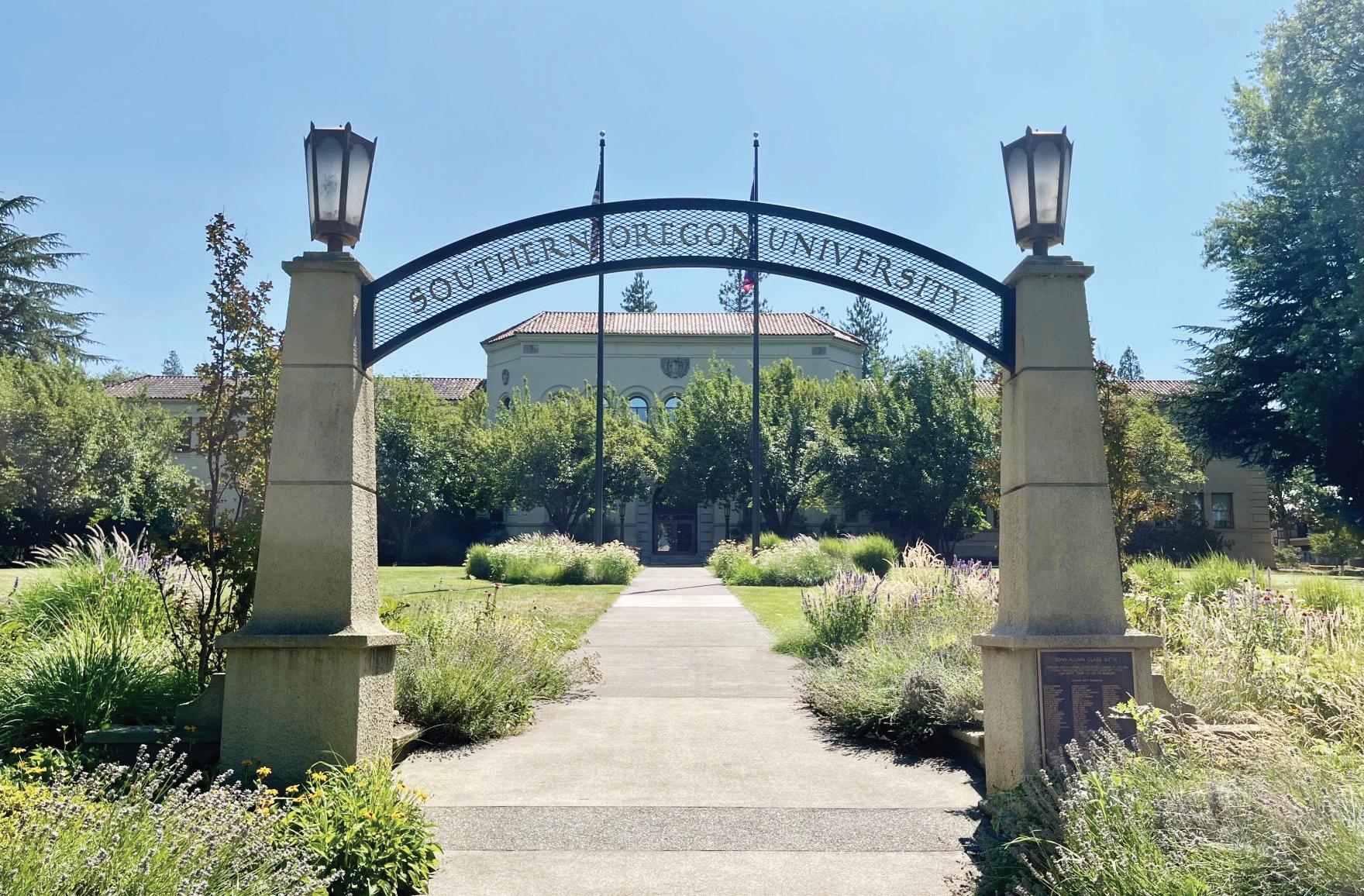
The unanimous vote approves more than $20 million in cuts as Southern Oregon University works to stabilize its finances and avoid running out of cash.
After months of financial uncertainty, on June 18 the university’s board unanimously approved a plan aimed at stabilizing the institution’s finances and keeping it viable for the long term.
Southern Oregon University leaders say the so-called Vitality Plan , which calls for more than $20 million in cuts — about one-fifth of the university’s budget — will stabilize the institution and put it on a path to financial sustainability.
The university is facing a severe financial crisis after years of declining enrollment and structural budget deficits. Without major changes, leaders say SOU would run out of cash by next June.
The plan eliminates three bachelor’s degree programs, restructures academic departments and cuts the equivalent of
about 66 full-time positions after two previous rounds of significant reductions in recent years.
Approving the plan also satisfies a state requirement for SOU to receive a $15 million financial rescue package. The university is set to receive the first $7.5 million, with the remaining funding expected to be considered this fall.
Still, some trustees and employees worried about the cost of implementing the plan and its effects on staff and students. Student Body President Sophia Smith urged trustees to make sure this is the last major restructuring.
“SOU does not have the resiliency left within its community, students, staff, faculty, administration and even within this very board to endure more,” she said. “This has to be it.”
Many on campus say they feel defeated by the repeated cuts.
Continued from previous page
“It’s really hard lately to try to find that hope,” said Sage TeBeest, program coordinator for creative arts and president of SEIU 503 Sublocal 84, which represents classified staff at the university. “But I don’t want to give up. I want to keep fighting.”
Even supporters acknowledge questions remain about whether the plan can be implemented successfully and financed as projected.
The proposal emphasizes mentorship and practical and experiential learning. Trustee Hala Schepmann noted those approaches already define many academic programs.
“But those are the most expensive things to deliver. Those are the hardest things for our institution to deliver,” she said during Wednesday’s committee meeting. “How is this going to be financially viable and sustainable?”
Faculty members questioned the financial assumptions behind the proposal and how implementation will be funded.
“Our single biggest risk right now is not taking the time to fully vet the cash flow analysis,” Maggie Vanderberg, chair of the computer science department, said during Wednesday’s committee meeting. “We’re being asked to trust numbers we cannot verify, which is part of the reason that we’re here in the first place.”
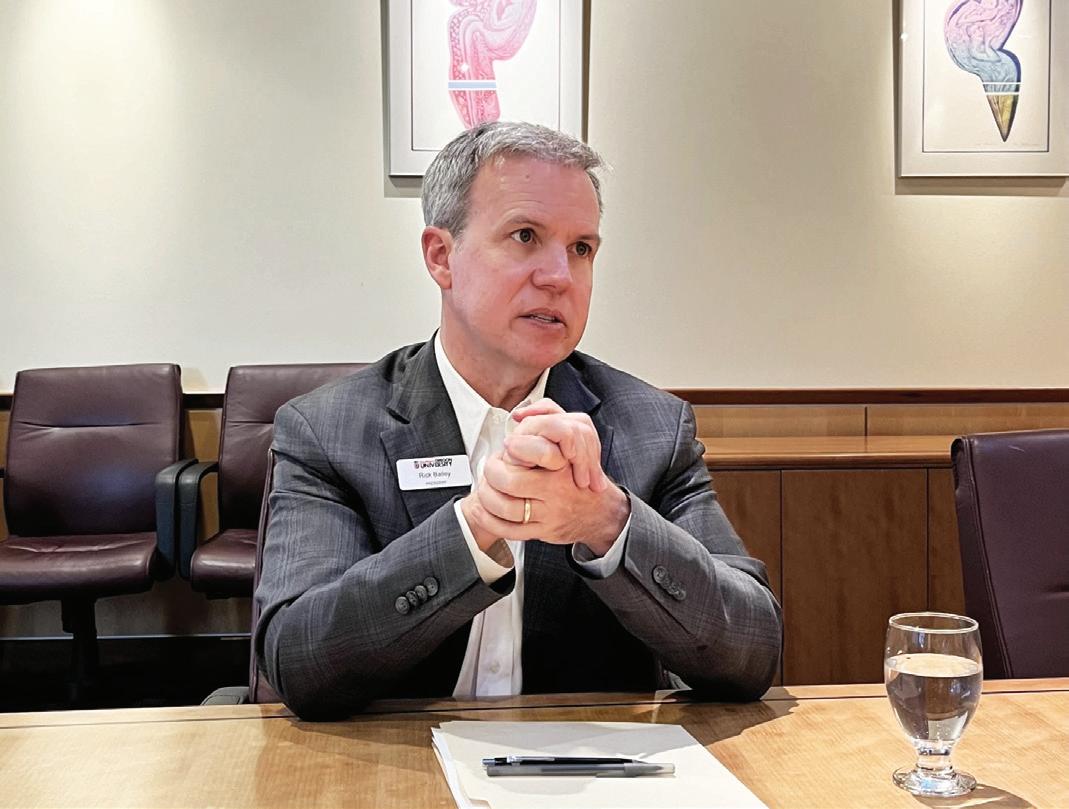
Some trustees have praised President Rick Bailey’s work on the plan and the amount of community feedback it incorporates.
Trustee Daniel Santos supported the plan, saying he’s not one hundred percent confident they’ll succeed, but he’s confident they’re going to try.
“For those who express concerns, whether they’re faculty, staff, students, or even trustees or the administration, that really isn’t any choice,” he said. “We can’t go back and say no, we’re not going to do this. That’s not the choice. The choice is, let’s go with this, let’s go with the team we saddled up with and make this happen.”
University leaders have cited several factors behind the crisis. Oregon ranks 46th nationally in state funding per four-year student. Leaders have also said the university’s budget and finance offices have been understaffed, financial reporting has been inadequate and financial policies need strengthening.
Another challenge is the transition to the Workday software system.
During a June 17 committee meeting, Project Manager Hart Wilson said implementing the Vitality Plan will likely require additional work and expense within Workday.
“It may be that we have some significant work to do to reorganize how that structure is set up,” Wilson said. “There’s significant impact on Workday from doing this.”
Faculty and staff also say they feel caught between wanting more flexibility and more specificity in the plan.
“I want three more years to figure this out,” Trustee Ashley King said Wednesday. “But I’d also like to know tomorrow if I have a job.”
Many implementation details, including which employees will lose their jobs, will be determined this summer. The university also plans to hire a full-time project manager to oversee implementation.
Students will also be affected.
The university will phase out bachelor’s degree programs in human service, music industry and production and financial mathematics.
Dean of Students Carrie Vath said Wednesday that nine incoming students are currently enrolled in those majors and that the university is developing plans to support them.
“A lot of students are saying they’re not coming back, and they are planning to transfer,” Vath said.
Bailey said fewer students have registered for fall classes than at the same point last year.
He acknowledged the emotional toll of the changes while arguing that the alternative would be far worse.
“We are fighting for the survival of this institution, and the thing that has kept me going through this is thinking about what the anxiety and emotional loss would be if we close the doors of this place. That is so much worse,” Bailey said. “We have to all come together to figure it out in the midst of all of the challenges that we’re facing.”
JPR is licensed to Southern Oregon University, but our newsroom operates independently. Guided by our journalistic standards and ethics, we cover the university like any other organization in the region. No university official reviewed or edited this story before it was published.

Jane Vaughan is a regional reporter for Jefferson Public Radio. Jane began her journalism career as a reporter for a community newspaper in Portland, Maine. She’s been a producer at New Hampshire Public Radio and worked on WNYC’s On The Media.

JEN BAIRES
Industry sources estimate there are 125 data centers across the state.
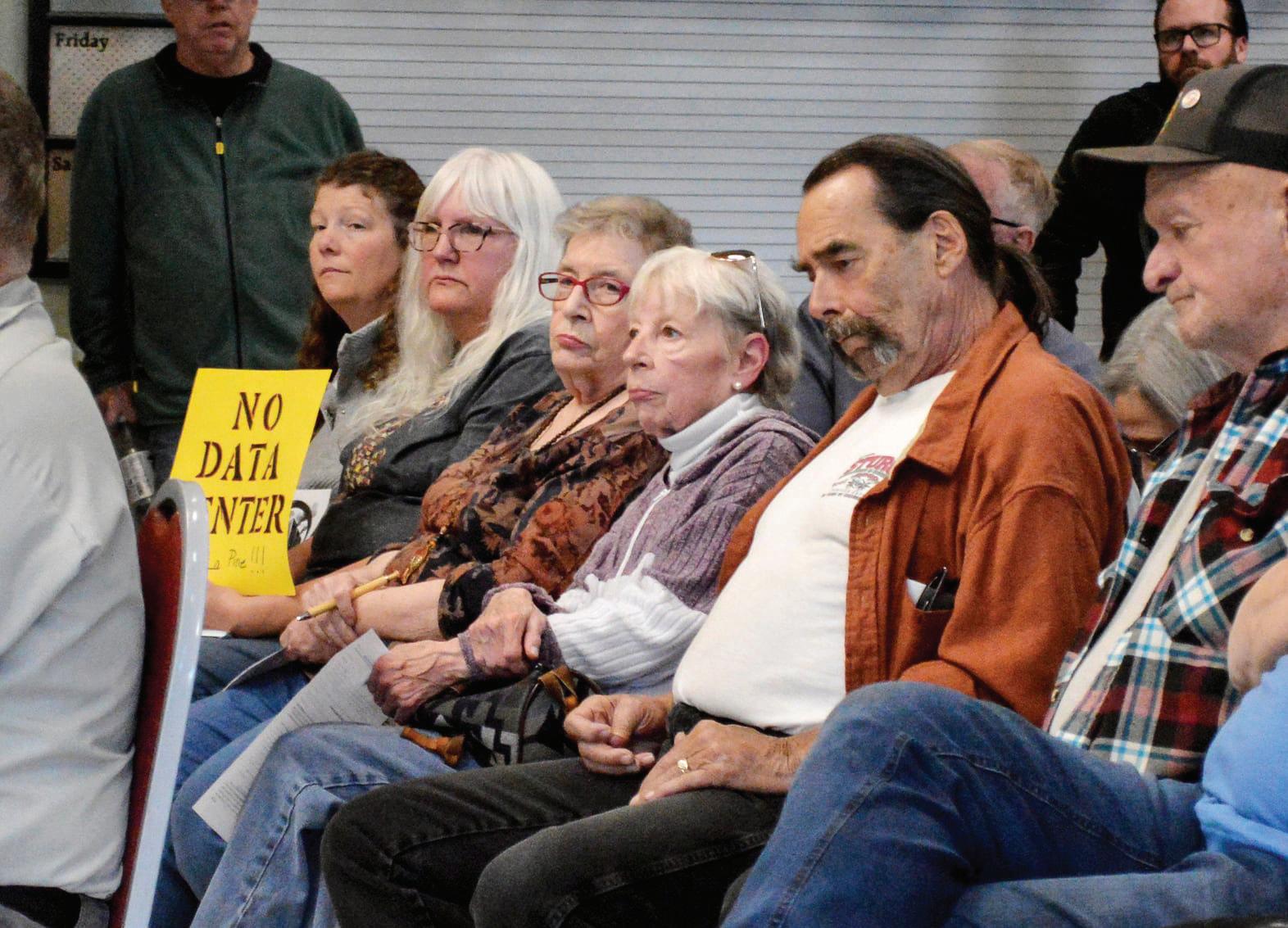
Residents in La Pine turned out in droves against the 20-megawatt data center bid.
La Pine officials have rejected a pitch to bring a data center to their Central Oregon city, despite estimates from a developer that it could have brought hundreds of millions of dollars in investments and hundreds of jobs.
At a packed meeting in late May, residents spoke for hours against the proposed data center before city councilors voted to shut the project down.
The decision comes as data centers’ rapid expansion across Oregon and the U.S. have spurred similar opposition from other communities concerned about environmental impacts and economic benefits. Last year, state leaders passed legislation requiring data centers pay for the energy and transmission infrastructure needed to power them, and pay their fair share for electricity.
La Pine residents voiced multiple concerns over the proposed facility. They said it could potentially contaminate groundwater and release hazardous material into the air. They
worried about the fragility of the power grid in rural Central Oregon and its ability to handle a 20-megawatt data center. That’s about 15 times the electricity used by households in a typical city the size of La Pine.
Opponents also said they doubted the developer’s promise of jobs and multi-million-dollar payouts to the electric company and the city.
“If we’re going to sell land to something, sell it to something that’s going to provide jobs and is going to be something that the community can grow,” said Heather Roberts who lives in La Pine. “We have brothers and sisters to the south that don’t have an affordable grocery store. We could really grow as a community and if you guys need resources or ideas, the community obviously wants to show up.”
To shouts and applause, city councilors in the city of roughly 3,200 voted unanimously against pursuing the sale to the developer, Boxminer.io. It was a big win for project opponents, who quickly mobilized a campaign just weeks after the proposal first came before the council in March. Continued on page 23












Continued from page 21
Jeff Keller, the developer behind the project, had presented a plan to build a data center on 19.5 acres in the La Pine Industrial Park, which is jointly owned by private parties and Deschutes County.
Keller said the project would mean millions in annual revenue for the city and Midstate Electric Cooperative, a utility that powers the area. The head of the local economic development group that brought the project to the city with Keller said the project represented an $800 million investment in La Pine. Keller estimated at that meeting that it would bring in up to 200 full-time jobs and would utilize a “closed-loop” cooling system that would minimize water use and wastewater discharge. He later lowered his employment estimate, saying the project might only bring 50 or 60 jobs.
City staff refuted many of Keller’s claims in a report presented by City Manager Geoff Wullschlager i n that May 27 meeting. The report found millions of dollars in discrepancies between Keller’s estimates of revenue for the city and Midstate Electric versus the city’s own estimates.
Keller attended the standing-room-only meeting remotely to defend his company’s proposal.
“I didn’t think it was going to be this problematic to try to put in an industrial use, especially a high-end, high-tech industrial use, in an industrial park,” he said.


But many La Pine residents delivered a clear message that they would not welcome a data center.
Amy Milliken was among them. She’s part of an advocacy group opposing data centers in the region and said she was both surprised by the council’s vote and the solidarity she found among people across the political spectrum.
“It was a shock that it would be such a nonpartisan issue,” Milliken told OPB after the city council vote. “It was amazing how many people came out across party lines. It became an issue for Republicans and Democrats and non-political folks as well.”
Industry sources estimate there are 125 data centers across the state. Hillsboro, which hosts the most data centers in the state, is currently exploring its options to pause further development.
Jen Baires is a JPR content partner from Oregon Public Broadcasting. Based in Bend, Oregon, Jen contributes stories to OPB from communities around Central Oregon. Her reporting comes to JPR through the Northwest News Network, a collaboration between public media organizations in Oregon and Washington.









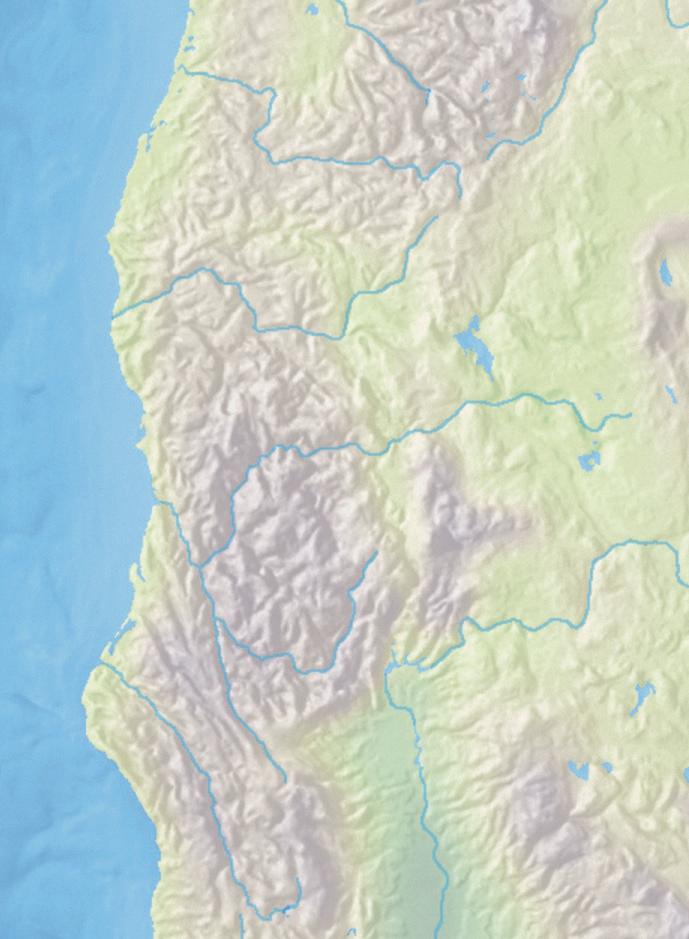
FM Transmitters provide extended regional service. (KSOR, 90.1FM is JPR’s strongest transmitter and provides coverage throughout the Rogue Valley.)
FM Translators provide low-powered local service.
Monday through Friday..
5:00am Morning Edition
8:00am First Concert
12:00pm Siskiyou Music Hall
2:00pm Performance Today
4:00pm All Things Considered
6:30pm The Daily
7:00pm Exploring Music
8:00pm State Farm Music Hall
Saturday
5:00am Weekend Edition
8:00am First Concert
10:00am WFMT Opera
2:00pm Played in Oregon
KSOR 90.1 FM
KSRG 88.3 FM
FM
Coquille 88.1 FM
July 4: Aida by Giuseppe Verdi, Paris Opera
July 11: The Makropulos Affair by Leos Janacek, Royal Opera of London
July 18: Boris Godunov by Modest Mussorgsky, Royal Opera of London
July 25: The Marriage of Figaro by W.A. Mozart, Glyndebourne Festival Opera
Aug 1: The Elixir of Love by Gaetano Donizetti, Gran Teatre del Liceu, Barcelona
Aug 8: Pelleas et Melisande by Claude Debussy, Teatro alla Scala, Milan
Aug 15: Faust by Charles Gounod, Bavarian State Opera, Munich
Aug 22: Luisa Miller by Giuseppe Verdi, Vienna State Opera
Aug 29: Die Fledermaus by Johann Strauss II, Vienna State Opera
3:00pm The Chamber Music Society of Lincoln Center
4:00pm All Things Considered
5:00pm New York Philharmonic
7:00pm State Farm Music Hall
Sunday
5:00am Weekend Edition
9:00am Millennium of Music
10:00am Sunday Baroque
12:00pm American Landscapes
1:00pm Fiesta!
2:00pm Performance Today Weekend
4:00pm All Things Considered
5:00pm Chicago Symphony Orchestra
7:00pm State Farm Music Hall
KSRS 91.5 FM
KNYR 91.3 FM
KOOZ 94.1 FM
MYRTLE POINT/COOS BAY
Coos Bay 90.5 FM / 89.1 FM
Etna / Ft. Jones 91.1 FM Gasquet 89.1 FM Gold Beach 91.5 FM
KZBY 90.5 FM
COOS BAY
KLMF 88.5 FM KLAMATH FALLS
KNHT 102.5 FM RIO DELL/EUREKA
Grants Pass 101.5 FM Happy Camp 91.9 FM Lakeview 89.5 FM Langlois, Sixes 91.3 FM
LaPine/Beaver Marsh 89.1 FM




Monday through Friday..
5:00am Morning Edition
9:00am Open Air
3:00pm Today, Explained
3:30pm Marketplace
4:00pm All Things Considered
6:00pm World Café

8:00pm Folk Alley (M) Mountain Stage (Tu) American Routes (W) The Midnight Special (Th) Open Air Amplified (F)
10:00pm XPoNential
3:00am World Cafe
Saturday..
5:00am Weekend Edition
9:00am Wait Wait...Don’t Tell Me!
10:00am Radiolab
FM Transmitters provide extended regional service.
FM Translators provide low-powered local service.
KSMF 89.1 FM
KSBA 88.5 FM COOS BAY KSKF 90.9 FM KLAMATH FALLS
11:00am Snap Judgement
12:00pm E-Town
KNCA 89.7 FM BURNEY/REDDING
KNSQ 88.1 FM MT. SHASTA
KVYA 91.5 FM CEDARVILLE/ SURPRISE VALLEY
1:00pm Mountain Stage
3:00pm Folk Alley
5:00pm All Things Considered
6:00pm American Rhythm
8:00pm The Retro Cocktail Hour
9:00pm The Retro Lounge
10:00pm Late Night Blues
12:00am XPoNential
Sunday..
5:00am Weekend Edition
9:00am TED Radio Hour
10:00am This American Life
11:00am The Moth Radio Hour
12:00pm Jazz Sunday
2:00pm American Routes
4:00pm Sound Opinions
5:00pm All Things Considered
6:00pm The Folk Show
9:00pm WoodSongs Old-Time Radio Hour
10:00pm The Midnight Special 12:00am XPoNential
Callahan/Ft Jones 89.1 FM Cave Junction 90.9 FM
91.9 FM Yreka 89.3 FM
KSJK AM 1230
TALENT
KAGI AM 930
GRANTS PASS
Monday through Friday..
12:00am BBC World Service
7:00am 1A
9:00am The Jefferson Exchange
10:00am Here & Now
12:00pm BBC News Hour
1:00pm Today, Explained
1:30pm The Daily
2:00pm Think
3:00pm Fresh Air
4:00pm The World
5:00pm On Point
6:00pm 1A
7:00pm Fresh Air (repeat)
8:00pm The Jefferson Exchange (repeat of 9am broadcast) 9:00pm BBC World Service
AM Transmitters provide extended regional service.
FM Transmitter
FM Translators provide low-powered local service.
KTBR AM 950 ROSEBURG
KRVM AM 1280
EUGENE
KSYC 103.9 FM YREKA
Saturday
12:00am BBC World Service
7:00am Inside Europe
8:00am Left, Right & Center
9:00am Freakonomics Radio
10:00am Planet Money/How I Built This
KHWA 102.3 FM MT. SHASTA/WEED KPMO AM 1300 MENDOCINO KNHM 91.5 FM BAYSIDE/EUREKA
KJPR AM 1330
SHASTA LAKE CITY/ REDDING
11:00am Hidden Brain
12:00pm Living on Earth
1:00pm Science Friday
3:00pm Unexpected Elements
4:00pm The Ezra Klein Show
5:00pm Radiolab
6:00pm Selected Shorts
7:00pm BBC World Service
Sunday..
12:00am BBC World Service
7:00am No Small Endeavor
8:00am On The Media
9:00am Throughline 10:00am Reveal
11:00am This American Life
12:00pm TED Radio Hour
1:00pm The New Yorker Radio Hour
2:00pm Fresh Air Weekend
3:00pm Milk Street Radio
4:00pm Travel with Rick Steves
5:00pm This Old House Radio Hour
6:00pm The Moth Radio Hour
7:00pm BBC World Service
Ashland/Medford 102.3 FM
Klamath Falls 90.5 FM / 91.9 FM Grants Pass 97.9 FM
96.9 FM
96.3 FM
98.7 FM
By Justin Higginbottom
New data shows student vaccination rates in Oregon are at historic lows.
Students in Josephine County have the lowest school vaccination rates in Oregon, according to new data from the Oregon Health Authority.
Only 80% of the county’s K-12 students were up to date on all required vaccinations during the 2025-26 school year, compared with a statewide average of 90%.
Josephine County also had the state’s highest rate of nonmedical exemptions from at least one required school vaccination. Nearly 20% of students had an exemption, compared with a statewide rate of 8.6%.
“It’s not just people who may not trust in the vaccine,” said Dr. Howard Chiou, medical director for communicable diseases and immunizations at the Oregon Health Authority. “We also know that there’s a good number of people who often face challenges accessing vaccines.”
Jackson County also posted relatively low vaccination rates. About 85.5% of students were up to date on required vaccinations, while 13.6% had a nonmedical exemption.
State health officials said student vaccination rates in Oregon are on a decade-long decline.
“The overall trend is worrisome and moving in the wrong direction this year,” said Chiou. “The situation here in Oregon really has changed.”
Chiou said one in three Oregon schools has a vaccination rate below the 93% threshold needed for herd immunity, putting those schools at risk of a measles outbreak
Parents can review vaccination rates for individual schools on OHA’s website

“There’s a lot of variation in vaccination rates across schools,” he said. “What I really want to do is make sure that we are all empowering families to make really informed decisions for themselves and their families.”
Some charter and religious schools in Josephine County reported particularly low vaccination rates. At Woodland Charter School in Grants Pass, for example, 39% of students were up to date on all required vaccinations, while 48% had nonmedical exemptions.
The state’s nonmedical exemption rate for kindergarten students has climbed to nearly 11%, up from about 7% during the 2021-22 school year. Chiou said kindergarten vaccination rates can help predict future trends among school-age children.
By Justin Higginbottom
Law enforcement has targeted illegal cannabis grows for decades. But deputies are increasingly on the lookout for cases of human trafficking at those sites.
Sheriff’s departments in Northern California are usually the ones making contact with people at illegal cannabis grows. But earlier this month, it was a worker who reached out to the Mendocino County Sheriff’s Office.
The man told officers that the grow’s owner had forced him to work in squalid conditions for two years without pay. Investigators allege the person was housed without sufficient food or bathroom access while the owner, Jesse Upton, used physical abuse to prevent them from leaving the property.
Authorities arrested Upton and charged him with human trafficking for forced labor, assault with a deadly weapon and illegal cannabis cultivation.
Mendocino County Sheriff Matt Kendall said human trafficking cases associated with illegal cannabis have become so common that his deputies now receive training to identify potential victims.
“This is kind of embarrassing, but when I was a younger man, we probably walked right over the top of victims who we were looking at as suspects,” Kendall said.
He said some clear warning signs are poor living conditions and the worker not having the ability to leave. Some victims don’t have identification and cannot speak English. Some might not even know what state they are in.
Kendall said human trafficking and forced labor at illegal cannabis farms has likely always existed.
“I would say we are realizing what we are seeing now, because these signs have been there for years,” he said.
But Kendall thinks things could be getting worse.
“The economics in marijuana have dramatically changed over the last decade,” he said.
Illegal farms, like legal cannabis businesses, are making less money after marijuana prices plummeted. And labor is one of the largest operating costs.
“We are no longer in the heyday where everybody was growing illegally, but everybody was turning a huge profit,” he said. “You normally don’t see problems until there’s not enough money to go around.”
In March, the Humboldt County Sheriff’s Office charged a licensed cannabis grower with human trafficking after a tip from the Mexican consulate.
Recently, sheriff’s departments from Humboldt, Lake, Mendocino, Trinity and Siskiyou Counties joined together to create the Northern California Coalition to Safeguard Communities The non-profit aids in investigations and provides victim services.
By Justin Higginbottom
Project partners say the solar panels could help irrigation districts conserve water and generate revenue during drought conditions.
Crews have installed more than 1,700 solar panels on a reservoir in Central Point. The first-of-its-kind project in Oregon will generate revenue for the Medford Irrigation District while conserving water during hot summer months.
The panels float on a re-regulating reservoir that the district fills with surplus flows and releases during drier periods.
The Medford Irrigation District expects to generate around

$75,000 per year from selling solar-generated power, with 10% of that electricity going to low-income households through the Oregon Community Solar Program
The district will use the money for a slate of modernization projects, including converting canals to enclosed piping.
“The irrigation communities are looking for more tools in their toolkit to make their water supply [last] longer, but also have financial resources to be able to modernize their systems that are often 100 and or 125 years old,” said Julie O’Shea of the non-profit Farmers Conservation Alliance, a partner in the project.
She said floating solar panels can also prevent evaporation and lower the reservoir’s water temperature.
Medford Irrigation District manager Jack Friend said the panels could help combat aquatic moss, which grows in warmer water and chokes up reservoirs during the summer.
“This kind of helps us be a little bit more resilient and flexible,” Friend said. “We’re seeing some pretty significant droughts back-to-back right now that are kind of historical for our system.”
While this is the first project in the state, other irrigation districts are considering installing similar systems.
“Everyone is kind of looking at it to see where they can fit it in and where it works,” Friend said.
O’Shea said the project will provide valuable information for other districts.
Oregon State University researchers found that adding floating solar panels to every federally owned reservoir could power 100 million homes in the U.S. Although they note there could be ecological costs depending on the location.
By Roman Battaglia
UC Davis outlined a proposal for a school in Shasta County as local leaders seek to address rural physician shortages.
Leaders from the University of California, Davis, School of Medicine presented a proposal Tuesday to Shasta County supervisors outlining how the university could establish a medical education program in the region.
UC Davis officials said the university has worked in Shasta County for more than 50 years, helping coordinate local residency programs that have trained more than 300 doctors.
Debbie Lupeika, associate dean of rural and community-based education, said UC Davis has already received approval to establish a branch campus in Northern California.
“Davis is going to have a branch campus in the North State
somewhere,” she said. “But we need to partner with the community that wants to partner with us.”
She said Redding is an attractive option.
Shasta County Supervisors have been exploring ways to bring a medical school to the area to address the shortage of rural physicians.
The county has also received a proposal from Simpson University, a private, Christian school based in Redding.
While Simpson previously asked for a $10 million county contribution, County Supervisor Kevin Crye said he was told the university is now seeking the money elsewhere.
Lupeika said UC Davis is open to partnering with Simpson on a program. The two institutions have already worked together on student pathway programs for medicine in Shasta County.
Under the UC Davis proposal, the county would need to help fund the school.
“I think some communities are worried they have to shoulder the whole burden, that’s not it, it’s half and half,” said Lupeika. “So Davis will contribute, the community needs to contribute. Sometimes that’s buildings.”
UC Davis’ plan would be a slower start than what Simpson has proposed. A branch campus in the North State would start with about six to 12 students. Students would complete the first two years in Sacramento, followed by two years in Redding.
University officials said the goal would be to expand enrollment and eventually develop a full four-year regional school, a process expected to take a decade.
Simpson proposed campus would open in 2030, with a starting class of 150 to 200 students.
County Supervisor Matt Plummer pointed to the success of other branch-campus medical schools, such as UCSF Fresno and the UC Riverside School of Medicine, which began as a branch of UCLA.
“There’s a precedent across the state for starting a small branch campus and growing that to a medical school that’s fully established, independent, and hundreds of students,” he said.
The county is deciding whether to allocate funds to the project during budget discussions next month.

By Roman Battaglia
The Medford City Council has approved an engineering study to look at the costs of building a minor-league baseball stadium at two possible locations.
Medford is moving forward with a study aimed at answering a question that has loomed over discussions about bringing the Eugene Emeralds to town: How much would a new baseball stadium actually cost?
City leaders approved $250,000 for the effort, matched by the team’s owner. The study will examine possible stadium sites, estimate construction costs and help determine whether the project is financially viable amid questions about funding and the future of a larger downtown redevelopment plan.
The Eugene Emeralds have been exploring a move to Medford after Lane County voters rejected efforts to build a ballpark that would meet new Minor League Baseball standards.
The city selected DLR Group and KNO Construction to conduct the study. DLR Group designed PK Park, where the Emeralds previously played, as well as numerous other minor league ballparks.
The study will examine both the proposed Hawthorne Park site and the cost of renovating Harry & David Field, home of the Medford Rogues summer collegiate baseball team.
Council Member Jessica Ayers said she wants more information about the team’s financial commitment before the city spends additional money on the project.
“I would really like to have a better idea of what they’re willing to contribute,” Ayers said. “As far as the capital stack goes, I’m not seeing that it works without a significant investment from them.”
Council Member Nick Card said the city needs preliminary design work before it can develop a reliable cost estimate.
“ I would love to not have to spend any money until we know that we’re going to go forward,” Card said, “but that isn’t the reality of this kind of a project.”
The study will also evaluate site-specific challenges, including a sewer line that runs along Bear Creek through Hawthorne Park.
Card said funding the study demonstrates that Medford is serious about pursuing the project and willing to work with potential development partners.
The proposed stadium was originally envisioned as part of Creekside Quarter, a larger development that would also include a convention center and hotel.
In 2025, Medford voters approved an increase to the hotel tax to fund the development of the conference center. However, council members said they have received few recent updates from the project’s developer. Saturdays at 9pm
Council members, including Mike Kerlinger, questioned whether Harry and David Field can fulfill the broader redevelopment goals behind the stadium proposal.
“This started with the idea of economic redevelopment in downtown Medford, which we’ve been talking about since dang near I was born,” Kerlinger said.
The study is expected to be completed by mid-October. City staff said it would be accompanied by a financial plan, including how much the Emeralds would contribute towards the stadium.
By Justin Higginbottom
The Jackson County Sheriff’s Office is removing bed space at its jail amid rising costs.
The Jackson County Sheriff’s Office will close its jail basement in July, reducing jail capacity by about 20%, or 60 beds.
Sheriff Nate Sickler said the cuts are necessary as law enforcement costs, including labor and inmate medical care, continue to outpace revenue.
“There’s really no way forward,” Sickler said. “This is not a trend that I think is reversible, just from the way that the county government is set up.”
The sheriff’s office receives most of its funding from the county’s general fund. Closing the 60 jail beds will save the department about $1.5 million, the sheriff said.
Sicker said closing the basement is the only way to prevent a reduction in services for patrol and investigations. Still, he said the reduction in jail capacity will affect public safety.
“We will definitely see a negative impact, I believe, just based on our previous closures of the basement,” he said.
The sheriff’s office has closed the jail basement three times in a little more than a decade. Sickler said some people may be more likely to ignore court dates when they know jail space is scarce.
“They tend to take advantage and be a little bit more brazen,” he said.
Sickler said the county recently had to switch providers for inmate medical care, which doubled the cost. This year the county also settled a $1.3 million excessive force lawsuit filed by an inmate.
In 2020, more than 70% of voters rejected a tax measure to help fund a jail expansion. Since then, residents appear split on the issue. A 2024 survey in Jackson County showed 43% supported creating a law enforcement levy of $1.57 per $1,000 of assessed property.
Sickler said a ballot measure would likely be considered again in the future.
“It’s probably the only way that we’re going to be able to ever afford to increase service levels in our county,” he said. “But when the time is right, of course, because we don’t need to do it just for it to fail.”
By Roman Battaglia
More than a century after California condors disappeared from Oregon, one bird’s journey signals progress for the endangered species.
ACalifornia condor flew into Oregon last month, becoming the first free-flying condor documented in the state since 1904.
Condor B9, a little more than two years old, was released into the wild last year by the Yurok Tribe’s condor restoration program . The tribe has been releasing condors since 2022.
The visit marks another milestone in efforts to restore the critically endangered species. California condors nearly went extinct in the 1980s, when the last 22 birds were captured for a captive breeding program. Conservation efforts have since helped rebuild the population and reestablish condors in the wild.
Yurok Tribe Wildlife Department Director Tiana Williams Claussen said B9 is an especially curious bird.
“She flew almost 100 miles per day,” Williams Claussen said, “which means she was really utilizing the landscape the way that only a condor can, really taking advantage of those mountains and riverways that give good flight corridors.”
Condor B9 traveled in a roughly 380-mile loop over four days, flying north from Redwood National Park through Redding before entering Oregon and passing near Medford, Cave Junction and Brookings.
Williams Claussen said condors are highly social, so she would not be surprised if other birds follow B9 into Oregon in the future.
“Our condors are doing exactly what condors need to do,” she said. “Exploring and learning the landscape in a way that is very wild and free and a good indicator of their success over the long term.”
The Oregon flight is one of several recent milestones for the Yurok condor program. In March, two condors built a nest in the cavity of a redwood tree and laid the first egg produced by the Northern California flock, but it failed to hatch
“Even with the egg loss, that was still a really amazing milestone for us,” Williams Claussen said. “It’s pretty common that eggs will fail in that first year, as these naive parents are really figuring it out.”
Williams Claussen said they currently have 23 condors in the wild, all of which recently passed health checkups. The tribe hopes to release additional condors this summer.


Two people open their laptops and do a search for the same news topic. They live in the same city. They are roughly the same age. They pay the same taxes, breathe the same air, send their kids to the same schools. What they see on their screens, however, has been individually curated by algorithms that have been studying their behavior for years, and what they see is not the same. By the time they close their laptops and go about their day, they will inhabit different versions of reality.
This is not a hypothetical. It is the designed and documented outcome of the recommendation engines that now mediate most of our information consumption, which is arguably the most consequential technological development of our lifetimes.
The mechanics are straightforward enough. YouTube, Facebook, TikTok, Instagram, Google Search, these platforms don’t show you the actual world. They show you a model of the world constructed from your behavioral data: what you’ve clicked on, how long you’ve watched, what made you stop scrolling, what made you share. The goal of that model is not accuracy, it’s engagement. And engagement, it turns out, is not driven by truth or balance or nuance. It’s driven by outrage, fear, and the neurological warmth of tribal confirmation.
Guillaume Chaslot learned this from the inside. Chaslot joined Google in 2010 and worked on YouTube’s recommendation algorithm. What he found disturbed him enough that, after he left Google, he built a nonprofit, AlgoTransparency, which is dedicated to exposing what the algorithm actually does. The system he helped build, he has said, was optimizing for a single metric: watch time. Not quality. Not accuracy. Not what was good for the person watching. Just time on screen. And the content that maximized watch time, he found, was conspiracy theories, outrage, and increasingly extreme ideological material because those things are, neurologically speaking, harder to look away from than the truth. When Chaslot proposed internal fixes such as algorithms designed to break filter bubbles and present dissenting viewpoints, he was told it wasn’t a good idea to work on that. Shortly after, he was fired.
Facebook’s version of this story is even more starkly documented, thanks to Frances Haugen, a former product manager who, in 2021, walked out of the company with tens of thousands of pages of internal research. What those documents showed was that Facebook’s own engineers knew the algorithm was amplifying hateful, divisive, and emotionally extreme content.
One internal document, as reported by The Wall Street Journal, noted that the platform’s core mechanics—virality, recommendations, engagement optimization—were a significant
YouTube, Facebook, TikTok, Instagram, Google Search, these platforms don’t show you the actual world. They show you a model of the world constructed from your behavioral data.

driver of why misinformation and divisive speech flourished. Proposed fixes were considered and largely rejected. Not out of malice, Haugen has been careful to say, but because of the numbers and the bottom-line. Safer content meant less engagement, and less engagement meant less revenue. The algorithm stayed.
“Facebook makes more money when you consume more content,” Haugen told 60 Minutes. “And it turns out the content that keeps you consuming is the content that makes you angry.”
So here is what we have built, largely without intending to: a global system for the personalized curation of reality, optimized for emotional activation, running continuously, invisibly, and at a scale that dwarfs anything in the history of human communication.

EUREKA, CALIFORNIA THURSDAY~SUNDAY
OCTOBER 1~4 · 2026 4 DAYS 8 STAGES 130+ SHOWS
Continued from previous page

HOT CLUB O f CO W TO WN R ICK ESTRI N & THE N I G HTC A TS
KID ANDERSEN'S GREASELAND ALL STARS featuring little village recording artists
MARCEL SMITH & THE SONS Of THE SOUL REVIVERS
JIM PUGH MICHAEL DOUCÉT DUKE ROBILLARD
SAX GORDON NATHAN JAMES SEAN McDONALD
NICK MOSS BAND featuring DENNIS GRUENLING
DEKE DICKERSON & THE WHIPPERSNAPPERS • THE CENTURIES
STEVE LUCKY & THE RHUMBA BUMS featuring MISS CARMEN GETIT
NAOMI UYAMA & HER HANDSOME DEVILS • GROOVUS • LAURA WINDLEY
TOM RIGNEY & FLAMBEAU • JOEL PATERSON TRIO • BLACK MARKET TRUST
CARL SONNY LEYLAND’S BOOGIE WOOGIE BOYS • MISS JUBILEE • ALICE SPENCER
BENNY AMON’S NEW ORLEANS PEARLS • COLIN HANCOCK’S TEXAS STOMPERS
DAVE STUCKEY’S HOOT OWLS • DAVE BENNETT & THE MEMPHIS SPEED KINGS
DAVE KOSMYNA’S INCENDIARY SIX • DAVE STUCKEY & THE HOT HOUSE GANG
KRIS TOKARSKI’S CHICAGOANS • MIKIYA MATSUDA’S ALCATRAZ ISLANDERS
KATIE CAVERA & THE LOST BOYS • SAN LYON • ON THE LEVEE JAZZ BAND
CHARLIE HALLORAN & THE TROPICALES • THE NEW ORLEANS NIGHT OWLS
THE LOVESTRUCK BALLADEERS • MIKE DAVIS & THE NEW WONDERS
JONATHAN STOUT & THE CAMPUS FIVE featuring HILARY ALEXANDER
THE HOT BAKED GOODS • TOMMY HARKENRIDER’S MEMPHIS KINGS
DAN BARRETT’S OLD-FASHIONED JAZZ BAND • DAWN LAMBETH
JOSH COLLAZZO’S JAZZBOREE • TJ MULLER’S JAZZ-O-MANIACS
JONATHAN DOYLE SWINGTET • HAL SMITH'S SWING CENTRAL
CLINT BAKER'S JAZZ BAND • HOLLAND COOTS JAZZ BAND MARK CAPARONE’S BACK-O’TOWN ALL STARS
NICE ‘N EASY • NOIR • REDWOOD DIXIE GATORS • SoHUM GIRLS
ꖒ GUEST A RTISTS ꖒ
RILEY BAKER DAN BLOCK RYAN CALLOWAY SEAN CRONIN
MIKE DAVIS CHRIS DAWSON RON DZIUBLA NATE KETNER ETHAN LEINWAND
DENNIS LICHTMAN DALTON RIDENHOUR SAM ROCHA JAKE SANDERS
ANDY SCHUMM DANNY TOBIAS MATT WEINER JACOB ZIMMERMAN



The printing press transformed civilization. The broadcast television era transformed it again. But neither of those technologies could look at you individually, study your psychology in real time, and construct a version of the world specifically calibrated to keep you engaged.
The philosophical implications of this are hard to overstate. Humans have always lived inside information bubbles, but those bubbles had permeable membranes and it wasn’t uncommon to encounter people who disagreed with you. The friction was inconvenient but epistemically vital.
Algorithmic curation has removed that friction, replacing it with a frictionless stream of digital content that always confirms, always validates, always enrages in a satisfying direction. The philosopher’s term for the result is “epistemic closure.” The algorithm’s term for it is a “highly engaged user.”
But the algorithm isn’t malicious. It’s just optimized for engagement, and that’s what makes it so different from previous information threats. Propaganda requires intent. The recommendation engine requires only a metric. Point it at human psychology and tell it to maximize engagement, and it will find, with the relentless efficiency of machine learning, every crack and crevice in our cognition where fear and outrage and tribal identity can be pried open. It doesn’t even need to lie. It just needs to choose which truths to show you.
Neil Postman warned us 40 years ago that every medium of communication carries within it a hidden curriculum—a set of values and assumptions that shapes the consciousness of its users independent of any specific content. Television, Postman argued in Amusing Ourselves to Death, didn’t just change what we watched; it changed how we thought. It rewired our tolerance for complexity, our appetite for nuance, and our capacity for sustained attention.
The printing press gave us the Reformation and the Wars of Religion—a century of catastrophic conflict seeded by the sudden, uncontrolled democratization of information. The recommendation engine has given us something structurally similar: a sudden, algorithmic fragmentation of shared reality, happening too fast and too invisibly for most people to even notice it’s

The two people doing a search for the same news topic but being served up different versions of reality can’t have a rational conversation about the world. They’ve been carefully, efficiently, and profitably sorted into their various information silos one scroll at a time by a machine that doesn’t care what
It only cares that they keep on scrolling.
Scott Dewing is a technologist and human writer who hasn’t (yet) been fully replaced by AI.
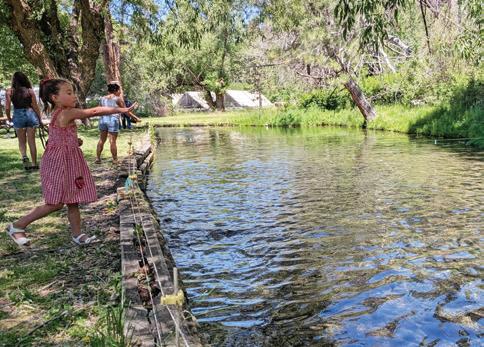
ROMAN BATTAGLIA
About 75% of the fish they release are sterile triploid trout, preventing them from breeding with wild fish.
Five years after the Two Four Two Fire destroyed its main building, the Klamath Fish Hatchery has reopened in a new facility built for resilience.
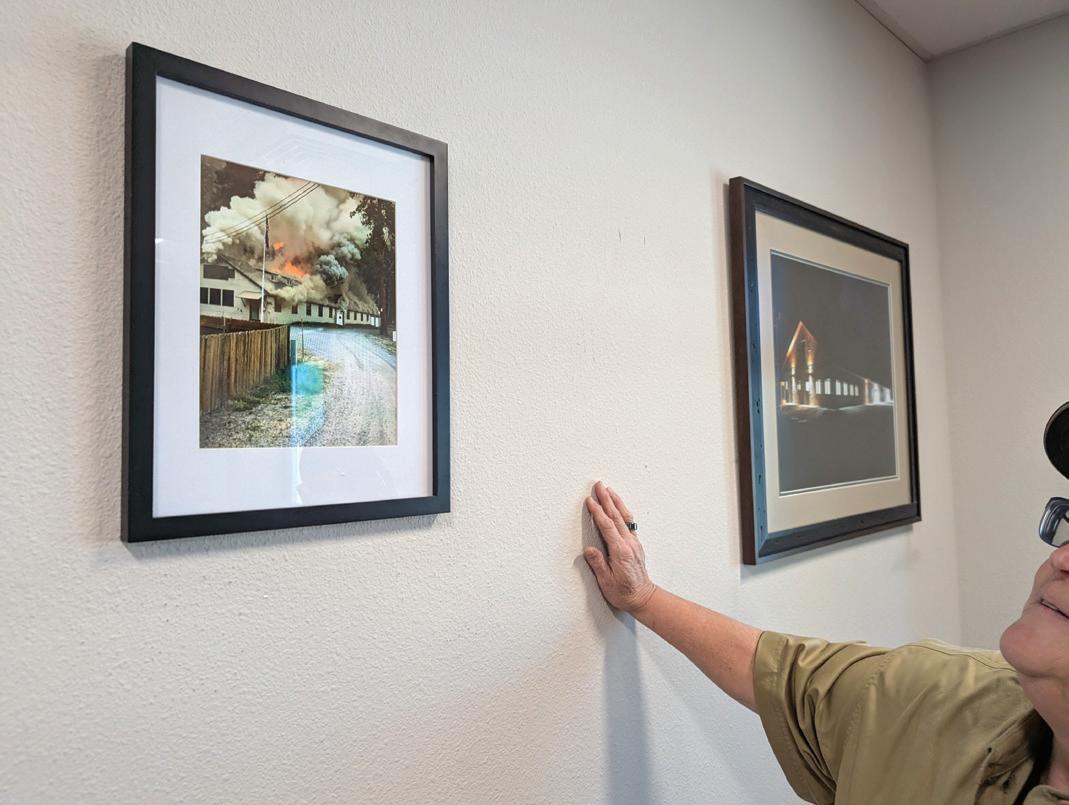
Aframed photograph in the Klamath Fish Hatchery office in Chiloquin shows the old wooden building engulfed in flames. Five years later, staff are working from a new facility built to better withstand a future wildfire.
The Oregon Department of Fish and Wildlife reopened the hatchery’s main building in early June, after the Two Four Two Fire destroyed the original structure in September 2020.
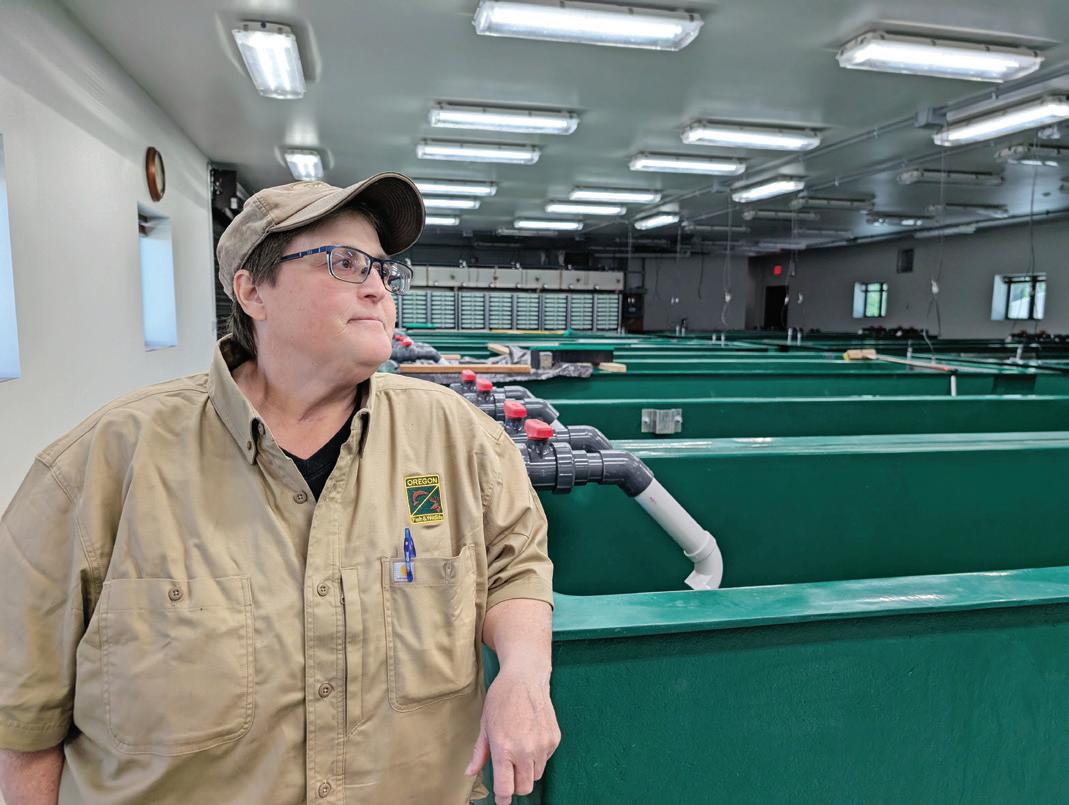
“It was completely destroyed by the time they got it out,” Hatchery Manager Gayle Mitchell said, looking at the photograph.
Mitchell and other staff were told to evacuate.
“We were like, ‘Okay, we’ll evacuate, but it’s not going to do anything,’” said Mitchell. “We found out how wrong we were.”
The hatchery manager at the time returned after the evacuation and saw smoke coming from the 100-year-old building. Firefighters focused on protecting nearby staff homes, where Mitchell and other employees live, but could not save the hatchery itself.
The hatchery is spring-fed, allowing water to continue flowing through the facility even after power was lost. The cold spring water also makes it an ideal place to raise trout.
Most of the fish survived the fire.
“We had some brown trout inside that building, but everything else made it,” said Mitchell.
Although the hatchery lost its main building, fish production continued.
“Every year we put out about a million fish, 100,000 pounds, give or take,” she said. “Since the fire it dipped for a few years, but last year we were back up at over 900,000 fish going out.”
Staff moved into a construction trailer that served as office space for nearly five years. The arrangement became even more challenging during the COVID-19 pandemic.
“We were working out of the garden shed, but then we couldn’t breathe each other’s air,” Mitchell said. “So it’s like 14 degrees out, and they’d open the roll-up door, and we’d sit there for our meetings in the morning.”
The fire also destroyed the trays used to hatch fish eggs. Staff had to bring in already hatched fish from other hatcheries, a riskier process than transporting the eggs.
The hatchery struggled to maintain its previous production levels following the fire. But the system was able to compensate for that.
“Our Oregon Department of Fish and Wildlife folks are very resilient and creative, and you really wouldn’t have noticed that
they were struggling at the hatchery by the fish they were catching here,” said George Gregory, manager of the Lake of the Woods Resort, one of the many lakes stocked by the Klamath Hatchery.
This hatchery is one of 33 operated by the Oregon Department of Fish and Wildlife. The fish help support recreational fishing while reducing pressure on native fish populations, Mitchell said.
Continued from previous page
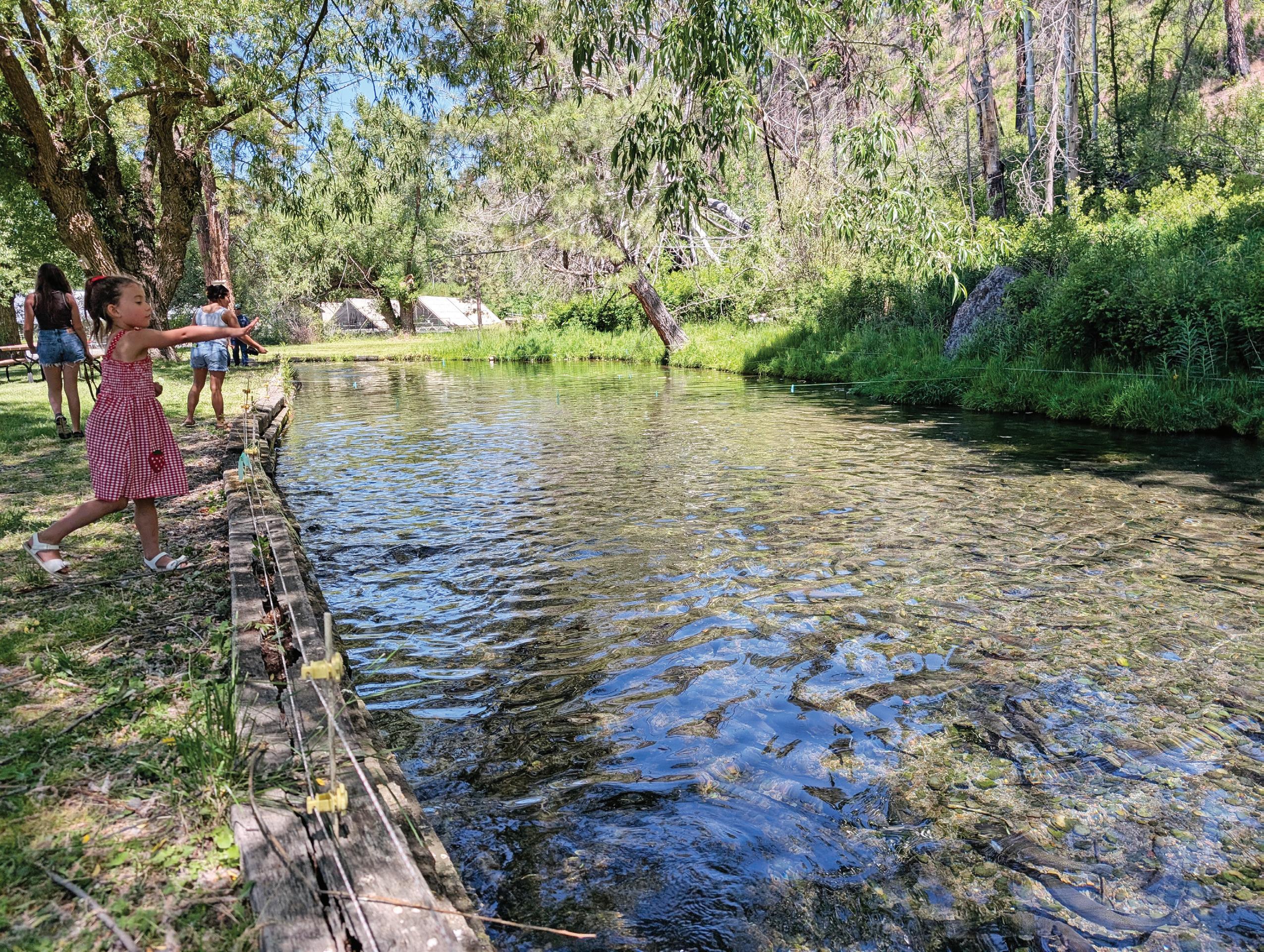
“It lets the wild fish be wild,” she said.
The hatchery stocks fish in lakes across southeast Oregon. Gregory said they see lots of people come to fish at Lake of the Woods.
“Our lake is not really conducive to trout self-propagating,” Gregory said. “So without the stocking program, the fishing here wouldn’t be nearly as good.”
About 75% of the fish they release are sterile triploid trout, preventing them from breeding with wild fish.
The new hatchery building is where most of the fish begin their lives. Inside, rows of incubation trays hold thousands of trout eggs shipped from hatcheries in Oregon and California.
“We get eggs in, and we put them in these baskets here,” Mitchell said as she pulled open one of the trays. “Depending on the size of eggs, we can put 5,000 to 10,000 eggs or so in here.”
The Klamath Hatchery doesn’t produce any of its own eggs. Instead, it receives them from other hatcheries in Oregon and California. It usually takes around one to three weeks for the eggs to hatch, depending on how far along they are when they arrive.
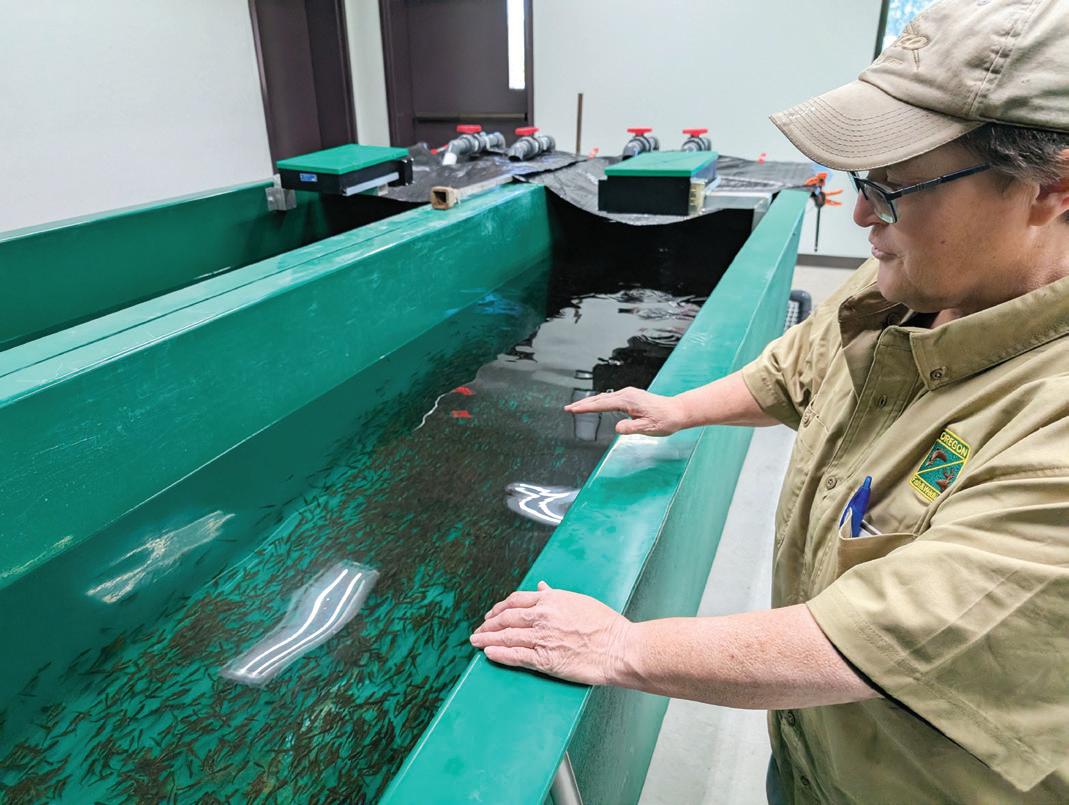
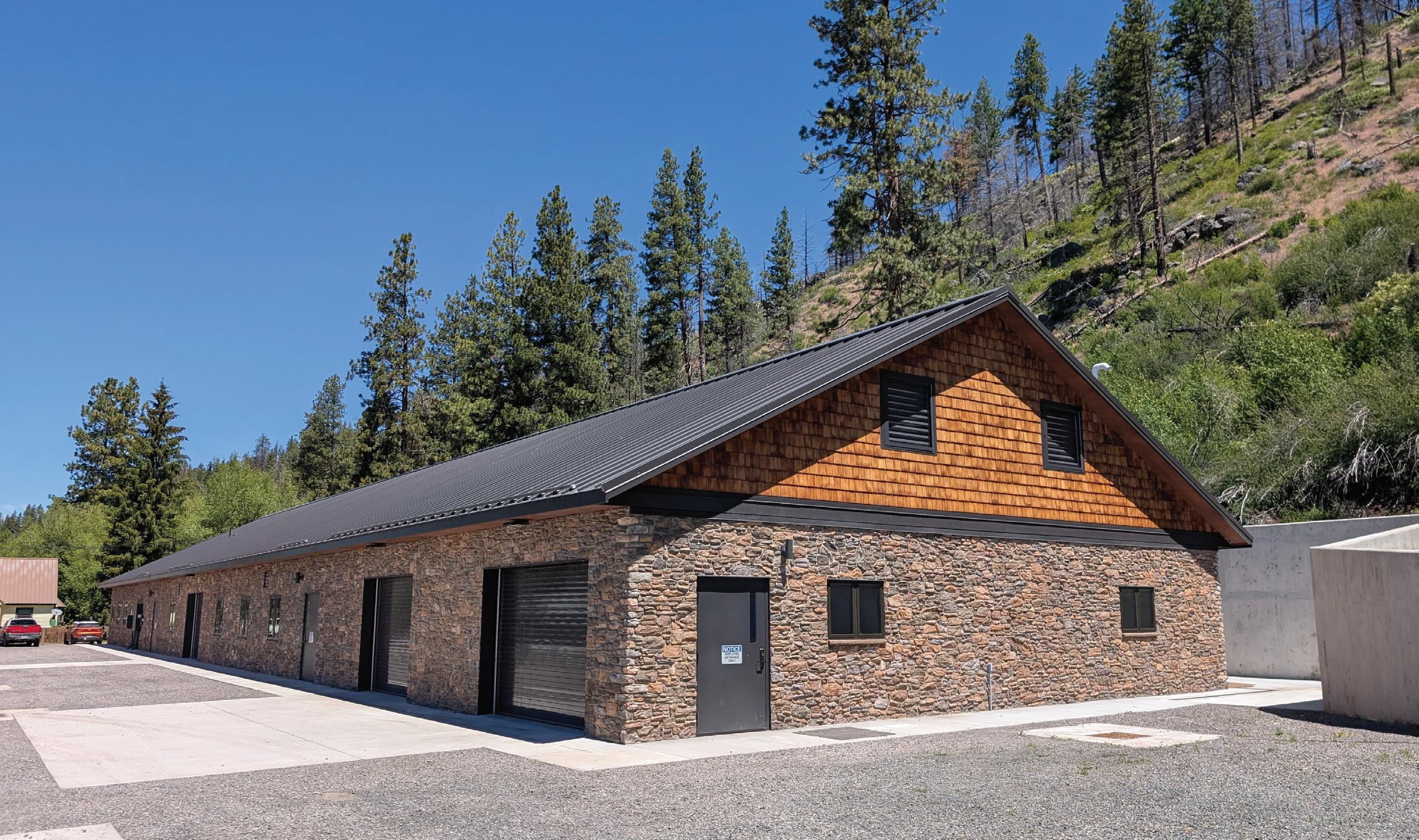
After hatching, most of the fish are moved to outdoor ponds to grow. But some are kept in smaller tanks inside to keep them from growing too big, so they can be stocked in remote lakes by horseback.
“They put them in bags of oxygen and put them in saddle packs,” said Mitchell. “And then they take them three, four miles up to a lake that otherwise would not be accessible.”
Some other tanks are used for special fish, like a small number of salmon the hatchery is raising for conservation research. In another tank, the brown trout are mostly swimming at the bottom.
“They don’t like a lot of activity. They don’t like to be hand fed,” Mitchell said. “So we’re able to put them in here, put them on automatic feeders, and just try to keep our interactions with them at a minimum.”
The new building also comes with some upgrades.
“We have a lot more egg trays. We have more tanks in here,” said Mitchell. “The lighting and the heating system is so new and fancy. It’s given us all gray hair because we can’t figure it out.”
The building includes a large maintenance shop, with tools for staff to repair everything from fish screens to tractors. During the rebuild, tools were spread across buildings, making it difficult to do maintenance work.
“You’d spend 12 hours trying to find the right tools,” Mitchell said. “Having everything here has made it much more efficient.”
Building the replacement hatchery proved more complicated than expected.
After construction began, crews discovered the site could not support the weight of the new building without reinforcement.
“They had the budget, and then they found out the soil wasn’t good,” said Mitchell. “So they had to drive piles in it.”
The unexpected work added roughly $2 million to the price tag.
Crews also discovered indigenous and historic cultural resources during site cleanup, prompting a survey to ensure the building could be built in the original location.
The new hatchery was designed with wildfire in mind. The structure is built from concrete and other fire-resistant materials intended to better withstand future fires.
Behind the hatchery, a stream serves one final purpose. Fish remaining after the stocking season are released there to grow into trophy-sized trout.
“When we have free fishing days, we let kids come here and catch a fish out of here,” said Mitchell. “It’s just a great place to come sit, watch some fish, hang out, see them in a more natural setting.”
Many of the trophy fish have already been shipped out this year, and the rest will be cleared out by July, headed to one of 50 lakes in Oregon for someone to catch.

Roman Battaglia is a
for
After graduating from Oregon State University, Roman came to JPR as part of the Charles Snowden Program for Excellence in Journalism in 2019. He then joined Delaware Public Media as a Report For America fellow before returning to the JPR newsroom.



So much has changed since JPR began in 1969. In many ways, public radio has grown up. What was once a struggling—almost experimental—operation has become a permanent and positive presence in the lives of so many in Southern Oregon and Northern California and across the nation.
We continue to seek and depend on regular membership contributions from supporters, especially new generations of listeners. But in the long run our future will depend, more and more, on special gifts from long-time friends who want to help Jefferson Public Radio become stronger and more stable.
One of the many ways that friends can choose to express their deep commitment to public radio here in our region is by supporting Jefferson Public Radio in their will or trust. This is a way to make a lasting contribution without affecting your current financial security and freedom.
To support Jefferson Public Radio in your will or trust, consult your attorney or personal advisor. The legal description of our organization is:
“The JPR Foundation, Inc., an Oregon non-profit tax-exempt corporation located in Ashland, Oregon.”
If you would like more information about making a bequest to support Jefferson Public Radio call Paul Westhelle at 541-552-6301.

For over two decades, The Folk Show has featured an eclectic blend of all things folk and some things not-so-folk. Singer/songwriters, Americana, bluegrass, Celtic, traditional, old-time, and some surprises are featured each week.
Hosted by Frances Oyung, Cindy DeGroft, Eric Houghton, Noah Lindsday.
Sundays 6pm–9pm
JPR’s Rhythm & News Service www.ijpr.org

jazz sunday 12:00pm on jPR’s Rhythm & news Service

Recently I heard an interview with I’m With Her—the folk collaborative consisting of Aoife O’Donovan, Sarah Watkins, and Sara Jarosz. When asked about the well-earned title, “supergroup,” they graciously accepted the honor, but said that the goal was not to be a supergroup, but a great band. They went on to say that often, a supergroup tends to be just another version of what its members did before joining the collaborative.
I learned about this right before their recent performance at The Holly Theatre in Medford, Or. The concept of being a band, not a supergroup changed the way I listened to their music that night, and about the word supergroup. The criteria for supergroups are pretty flexible, but generally, it’s a band made up of successful solo musicians and members of successful bands. A brief Google search includes: The Highwaymen—Johnny Cash, Waylon Jennings, Willie Nelson, and Kris Kristofferson; The Highwomen (their 21st century female counterparts)—Brandi Carlile, Amanda Shires, Maren Morris, and Natalie Hemby; Crosby, Stills, Nash, and Young, and The Traveling Wilburys— Tom Petty, George Harrison, Bob Dylan, Roy Orbison, and Jeff Lynne.
I’m a huge fan of The Traveling Wilburys, but after hearing the members of I’m With Her talk about it, I realized their songs tended to be vehicles for each of the members to display their singing/songwriting prowess with a tight band accompanying them. They were definitely great. Jeff Lynne of ELO fame produced their albums, and around the time of their first release, contributed his studio genius to albums by Roy Orbison, George Harrison, and Tom Petty, each of which included other members of the Wilburys, and sounded like they may as well have been Traveling Wilburys albums. Supergroup and great band, yes, but they weren’t pushing the boundaries, just making great music. That can be said of The Highwaymen, and The Highwomen. They did great things together, but didn’t break any new ground. Their music was more of an extension of what each individual had done previously.
Another of my favorite collaborative bands is Oysterhead— Les Claypool (Primus), Stewart Copeland (The Police), and Trey Anastasio (Phish). They got together in the late ’90s for the New Orleans Jazz and Heritage Festival to play a one-off show. They wound up recording an album together and touring. I would call them a great band, before a supergroup. Three players from three different backgrounds and styles, joining forces for something that highlighted their individual talents while stretching the boundaries of heavy progressive rock.
A more recent dream team of a band is The New Basement Tapes. In 1975, Bob Dylan and The Band released The Basement

Grammy-winning contemporary folk supergroup, I'm With Her. The band consists of three highly accomplished singer-songwriters and multi-instrumentalists (from left to right): Sara Watkins, Aoife O'Donovan, and Sarah Jarosz.
Tapes. In 2014, he assembled a group of musicians to complete songs he’d written that didn’t wind up on the 1975 release. The New Basement Tapes—Elvis Costello, Rhiannon Giddens, Jim James (My Morning Jacket), Taylor Goldsmith (Dawes), and Marcus Mumford (Mumford & Sons) released Lost on the River. It’s a collection of well-made songs under the watch of producer T-Bone Burnett. Each member takes a turn at lead vocals on songs that range from folk to rock. The dynamics of the album give it the New Basement Tapes a great band feel. It’s more of a supergroup however as the individual styles of the members stand out as opposed to a unique collaborative sound.
When I went to see I’m With Her at the Holly, I listened with the hopes of understanding the difference between supergroup and great band. With two studio albums,
As supergroups go, it’s hard to find a trio with more raw talent. Continued on page 39

Continued from page 37
multiple Grammy Awards, and a new live album, they are now an established trio however we decide to define them.
Each of their past projects has leaned toward the progressive side of folk and bluegrass. Sarah Watkins and her brother Sean remain part of the trio Nickel Creek along with Chris Thile. They play highly technical folk and bluegrass with extended jams and gorgeous harmonies. Aoife O’Donovan got her start in Crooked Still. In 2020, along with producer Jeremy Kittel and Teddy Abrams, the former conductor of the Britt Festival Orchestra, O’Donovan released the song cycle Bullfrogs Croon, based on the poetry of Peter Sears, the former Poet Laureate of Oregon. It was first performed at the Britt Festival in Jacksonville, Oregon. Sara Jarosz, was nominated for her first Grammy Award in 2009 at the age of 18. She graduated with honors from the New England Conservatory of Music in 2013, earning a degree in contemporary improvisation. She’s considered a master of several stringed instruments and a creative songwriter.
As supergroups go, it’s hard to find a trio with more raw talent. Their songs don’t follow and specific format—other than
being almost exclusively acoustic and folky. Instead, they use their talents as a group to write and compose dynamic songs with unique individual parts and changes. When singers sing and harmonize together for long enough, their combined voices start to become one. Think Simon and Garfunkel, Gillian Welch and David Rawlings, Lennon and McCartney. With 10 years of performing together, I’m With Her has a definite, unique vocal style, and like their playing, they use complex arrangements to give their tunes the “I’m With Her” sound. That makes them their own great band.
Maybe the difference between supergroup and great band is a matter of semantics, but questions like that keep me up at night.

Dave Jackson curates the music on JPR’s Rhythm and News Service, manages music staff and hosts Open Air, JPR’s hand-picked house blend of music, JPR Live Sessions and Open Air Amplified. The exploration of music has been one of his lifelong passions.
“We


with Mike Green
Join Host Mike Green and Producer Natalie Golay for in-depth conversations about the issues and ideas vital to our region.
Weekdays – Live 9–10 AM
Rebroadcast 8–9 PM
Jefferson Public Radio’s News & Information Service
Email: exchange@jeffnet.org
Calan Taylor, Bandon · 1999 Volkswagon Vanagon
“The van I donated is called the Hushpuppy… named after the girl from Beasts of the Southern Wild. In its early life it was used as a road trip mobile… It’s been to the south end of Baha twice, used for going into the woods [for] mushroom picking, and lots of family camping trips. Over the last four years it’s primarily been used as a surf-rig. My favorite memory is [from] Baha. We came into San Juanico, [or] Scorpion Bay, on this road… that’s used for the Baha 1000. We had been travelling down it for about 30 miles, and for the last 20 miles had to keep the van going above 30 miles per hour, otherwise [we’d] sink into the sand. We were essentially flying over 4-wheel drive terrain in a front-wheel drive van and somehow made it. We always knew we would donate it to JPR at the end of its career. It’s a good way to send it off into its next life.”
Thinking about selling your car, boat, motorcycle, truck or other vehicle?
Avoid the hassle and get a tax deduction by donating it to JPR instead!
Simply call 844-577-2886 or fill out the web form at www.jprauto.org and we’ll take care of the rest, including pick-up, at no cost to you.
YUKI NOGUCHI
The FDA could approve the first blood test that can detect multiple cancers, around the end of the year, setting the stage for it to become widely available.
Blood tests on the horizon, and under federal regulatory view, may be about to transform cancer care — and survival.
The Food and Drug Administration has been evaluating a blood test called Galleri (pronounced like “gallery”) as a breakthrough device that can detect many different types of cancer in one test. FDA could approve it later this year, clearing the way for such testing to become broadly available. If that happens, experts say such tools have the power to revolutionize cancer screening as it exists today — making it far easier, more comprehensive, and more accessible to a greater number of people.
Currently, in the U.S. it’s common to screen for five cancers — breast, colon, cervical, prostate, and lung — each requiring its own scan, like a CT test, or exam, like a Pap smear. By compar-
ison, the Galleri test can detect small amounts of DNA or other cancer markers for up to 50 cancers in a single vial of blood.
Galleri and another test called Cancerguard by Exact Sciences are both multi-cancer early detection tests that already can be ordered in the U.S. under a special FDA designation . A more rigorous FDA approval process will be necessary for the tests to be covered by Medicare and other insurance.
Still, the stage is set for a new paradigm.
“It’s a real fundamental shift in how we think about cancer screening,” says Megan Hall, vice president of medical affairs for Grail, a research company founded to bring Galleri to market. “Instead of screening for individual cancers, we can now screen an individual for multiple cancers simultaneously.”
The testing industry, and cancer advocates, successfully pushed for government insurance to
Continued on page 43

Contribute at least $60 annually, or become a sustainer with ongoing monthly contributions of any amount. Do your part to support public radio in southern Oregon and northern California and you'll also receive an annual subscription to the Jefferson Journal.
Please fill out the form below and mail it to: Jefferson Public Radio Attn: Membership 1250 Siskiyou Blvd Ashland, OR 97520
Contributions can also be made online at ijpr.org/support
Enclosed is my gift for $___________. The JPR services I enjoy are: Classics & News Rhythm & News News & Information

Open Air is a home for music people -- a place where you can hear the latest indie rock/pop, AAA and Americana, plus blues, jazz, world, and alt.country. The program is hosted and curated each day by people who share your passion for new music from emerging artists as well as favorites from legends of the past. It’s the music you already love plus the new artists you’re about to.
Hosted by Dave Jackson and Danielle Kelly
Weekdays 9am–3pm
JPR’s Rhythm & News Service www.ijpr.org
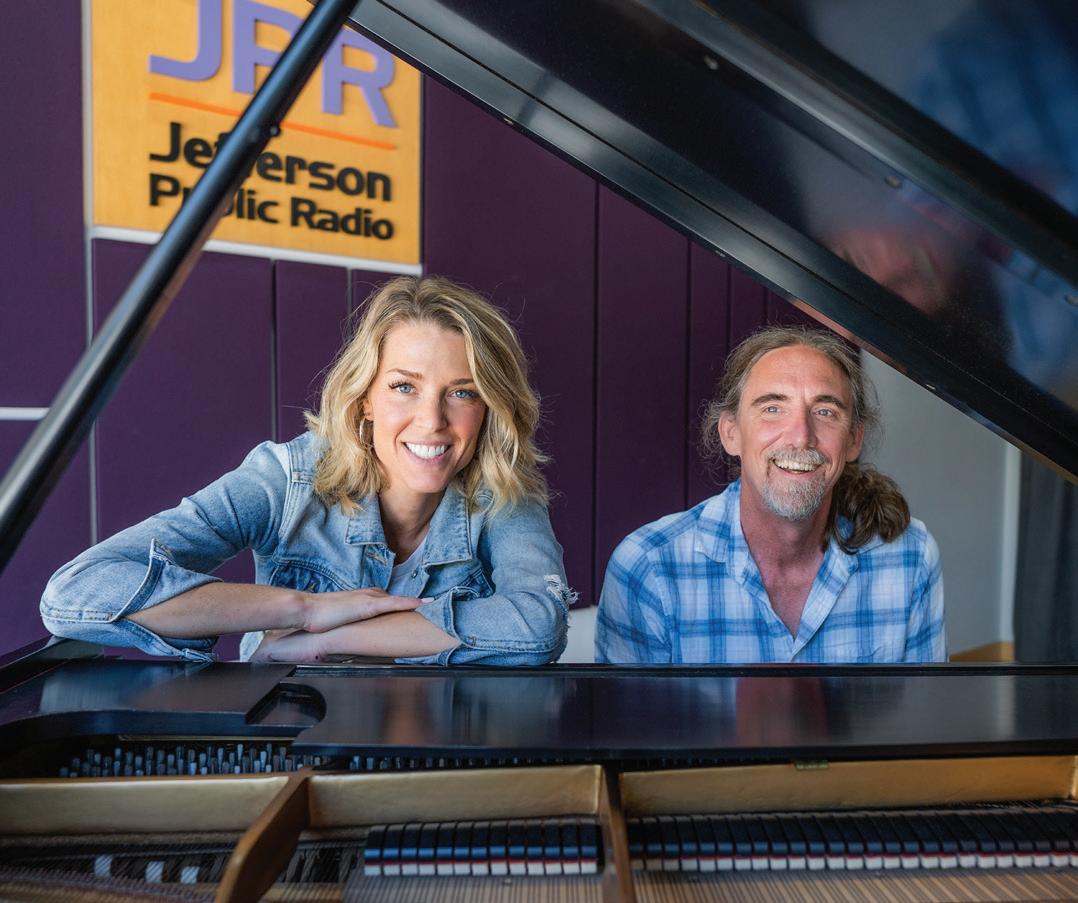
Continued from page 41
cover multi-cancer early detection, known as MCED, after the category gets the more thorough FDA vetting.
As part of its spending package passed in February, Congress voted to allow Medicare to reimburse the cost of multicancer detection tests starting in 2028. Grail sets the retail price for the Galleri test at $950. Cancerguard’s price is $659. It is unknown how much the companies will charge commercial insurers if the FDA grants them full approval.
Grail is doing two large-scale population studies of people over 50 on the Galleri test. One study is looking at more than 142,000 patients in the U.K. through the National Health Service, or NHS. Another study, called the Pathfinder 2, involves 35,000 patients in North America.
The NHS study did not meet a primary goal of seeing a significant reduction in incidence of Stage 3 and 4 cancers over time, Grail announced in February. In late May, at the American Society of Clinical Oncology meeting, the company released research that says that the two studies, taken together, nevertheless, show a promising trend.
“The third year alone, we saw a 26% reduction in Stage IV cancers — pancreatic cancer, liver cancer, lung cancer, gastric cancer and a handful of others,” says Hall.
Grail is promoting the idea that the Galleri test should be used in conjunction with other screening tests, not as a replacement to any done now. The legislation passed by congress that may eventually allow Medicare to cover the test also specifies that Galleri should not replace other screening tests.
So: What does that mean for people who fear cancer, or live with it?
At the moment, only a handful of common cancers have a screening test that can detect disease before a person has symptoms, when it may be at a more curable stage.
Oncologist Arif Kamal, chief patient officer at the American Cancer Society, says Grail is one of hundreds of companies pursuing the promise of blood tests — competing over levels of sensitivity, accuracy, and reliability. He says if implemented well, the simplicity of such tests could make routine screening easier and more accessible.
The science is sound and the technology is solid, Kamal says, so the only question is how quickly the technology will evolve. Blood tests, whether they detect one cancer or many, “are all getting at this idea that you can find, in the blood, early signals of a cancer’s presence or its evolving resistance to existing therapy,” he says.
Similar technology has already changed the way UCLA lung-cancer specialist Jonathan Goldman treats patients. Oncologists use blood tests, sometimes called “liquid biopsies” to monitor patients who already have a cancer diagnosis to see if treatment is working or if cancer may be returning. They also use it to identify a cancer’s specific genetic type, which in turn
can allow physicians to choose more effective treatments when available.
“Blood-based testing has become central to the way that we think about lung cancer and other cancers because the systems have become so sensitive,” says Goldman.
The future, he says, are blood tests that may be able to predict if a person is likely to contract the disease.
“It’s possible that at some point our blood testing could become so sensitive that you could find that very small number of cells that would be at risk for causing cancer occurrence years later — but we’re not there yet,” Goldman says.
Indeed, Grail medical advisor Hall says the Galleri test is not a diagnostic tool; rather, by identifying the volume and type of DNA fragments and other cancer markers in the blood, the test results offer what are essentially predictions about the source of the cancer.
A diagnosis will always require a follow-up exam, but the test offers solid guidance for doctors, Hall says.
“That cancer signal origin prediction is a really important feature of the technology because it directs your physician on where to go to look to confirm the presence or absence of that cancer,” she says.
Improvements in blood tests, meanwhile, dovetail with rapid developments in treatments for various cancers, making the disease ever more survivable or even curable.
Therefore, the ability to catch cancer at Stage 3 versus Stage 4 has never been more significant for survival, Hall says. “The treatment landscape has evolved so much over the past five to 10 years, that there are now a lot of treatments even for Stage 3 … and that’s a really big deal.”
Copyright 2026 NPR

Yuki Noguchi is a correspondent on the Science Desk based out of NPR’s headquarters in Washington, D.C.
©2026 National Public Radio, Inc. NPR news report “A Blood Test That Screens for Multiple Types of Cancer? It May Be Available Soon” by Yuki Noguchi was originally published on NPR.org on June 22, 2026 and is used with the permission of NPR. Any unauthorized duplication is strictly prohibited.
SUPERABUNDANT
HEATHER ARNDT ANDERSON


Remember when grilled pizza had kind of a moment 10 years ago? Before every dough head had an Ooni in their backyard, we plebes were out here making our summer pizzas on actual grills. Did the dough get stuck and burn a little (or more than a little)? Absolutely. But did those slightly charred pizzas taste like a triumph? You better believe it.
You can certainly make your own dough for this, but since you’ll already be grilling the peaches and chicken, you may as well make it easy on yourself and use a pre-made flatbread like naan or a fluffy Greek pita — it’ll only be on the grill long enough to get toasty and melt the cheese. (Of course, you can still make the flatbread yourself if that’s how you roll.)
We find that with ripe peaches, the best cheese pairings are going to be at the opposite ends of the pungency spectrum — we either want to go hard with a smoky blue or stinky Époisses, or we’ll play it subtle with a mild and creamy mascarpone or burrata. Your mileage may vary!
Makes 8 flatbread pizzas
Ingredients
1 pound skinless boneless chicken breast
Salt and pepper
½ teaspoon paprika
½ teaspoon onion powder
½ teaspoon garlic powder
2 ripe peaches or nectarines, pitted and sliced into inch-thick wedges
Olive oil
8 naan or Greek pita
8 ounces soft or semi-soft cheese, grated, sliced or torn into bite-size pieces
Fresh thyme and/or parsley for garnish
Instructions
1. Butterfly the chicken breast and then pound it into a flat paillard using a meat mallet or rolling pin to about ½ inch thick. Sprinkle both sides with a generous pinch of salt and pepper, the paprika, onion powder and garlic powder and a drizzle of olive oil.
2. Drizzle the sliced peaches with olive oil and sprinkle with a pinch of salt and pepper.
3. Heat your grill to medium-high, then brush the cooking surface with oil. Grill the chicken until cooked through and charred on the edges, about 3 minutes on each side. Set aside to rest.
4. Grill the peaches until grill marks form and the edges are caramelized, about 1 minute on each side.

5. Slice the grilled chicken into bite-sized pieces, then arrange on the flatbreads with the grilled peaches and cheese. Return the pizzas to the grill until the bread is warmed through and cheese is melted and gooey (if you’re using an oozy cheese, stop cooking when the bread is hot), about 2 minutes.
6. Sprinkle with fresh herbs, then slice and serve.

OPB’s “Superabundant” explores the stories behind the foods of the Pacific Northwest with videos, articles and a weekly newsletter. Every week, Heather Arndt Anderson, a Portland-based culinary historian, food writer and ecologist, highlights different aspects of the region’s food ecosystem. Her work comes to JPR through the Northwest News Network, a collaboration between public media organizations in Oregon and Washington.
JACK SEYBOLD AND DIXIE KINSER
Will I recognize Death when he comes? Will I say aloud, “Oh, he’s here”? This dizziness with mild exertion, will it wink away, or will the world tilt before my swimming eyes as I take a knee, then tumble to inert waiting on dewy grass?
I resort to slow inhaling watching for clarity to emerge like a figure stalking from a fog. Through a creeping disquiet, short of panic, I listen for my steady electronic pulse wondering if this time the failing music of blood will check, and cease.
Always it passes, like a stranger I have seen before without asking his name. I will see him again, know him better each time. When at last he introduces himself with a steady stabbing gaze and intimate smile, I must nod and surrender, follow him.
— Jack Seybold
Writers may submit original poetry for publication in Jefferson Journal
Email 3–6 poems, a brief bio, and your mailing address in one attachment to jeffmopoetry@gmail.com , or send 3–6 poems, a brief bio, and a self-addressed, stamped envelope to: Amy Miller, Poetry Editor Jefferson Journal 1250 Siskiyou Blvd. Ashland, OR 97520
Please allow eight weeks for reply.
When I read poetry, Let me sit on the floor or ground— Close to the earth, In tune with it—
As it spins.
Then let my mouth
Spew words as if they were
Watermelon seeds
Searching for fertile ground. Let words flow
In rhythm with the earth
Singing praises for her gifts
Yes, let me read aloud.
— Dixie Kinser
Jack Seybold published a novel, The Rising: Journeys in the Wake of Global Warming (with Tom Pollock), and has appeared in 30 theater productions after retiring to Ashland, Oregon, following a 36-year teaching career. His poems have appeared in Spring Harvest, The Journal of Humanistic Psychology, and Peace Corps Writers. He served in Brazil in the Peace Corps and holds a master’s degree in English linguistics.
Although Dixie Kinser was born in Kansas, most of her life has been spent in Southern Oregon’s Rogue Valley. Her career has included teaching high school and college English, and special education. After retiring from teaching, she became a visual artist; her work has been exhibited in state and national shows as well as several galleries and businesses.














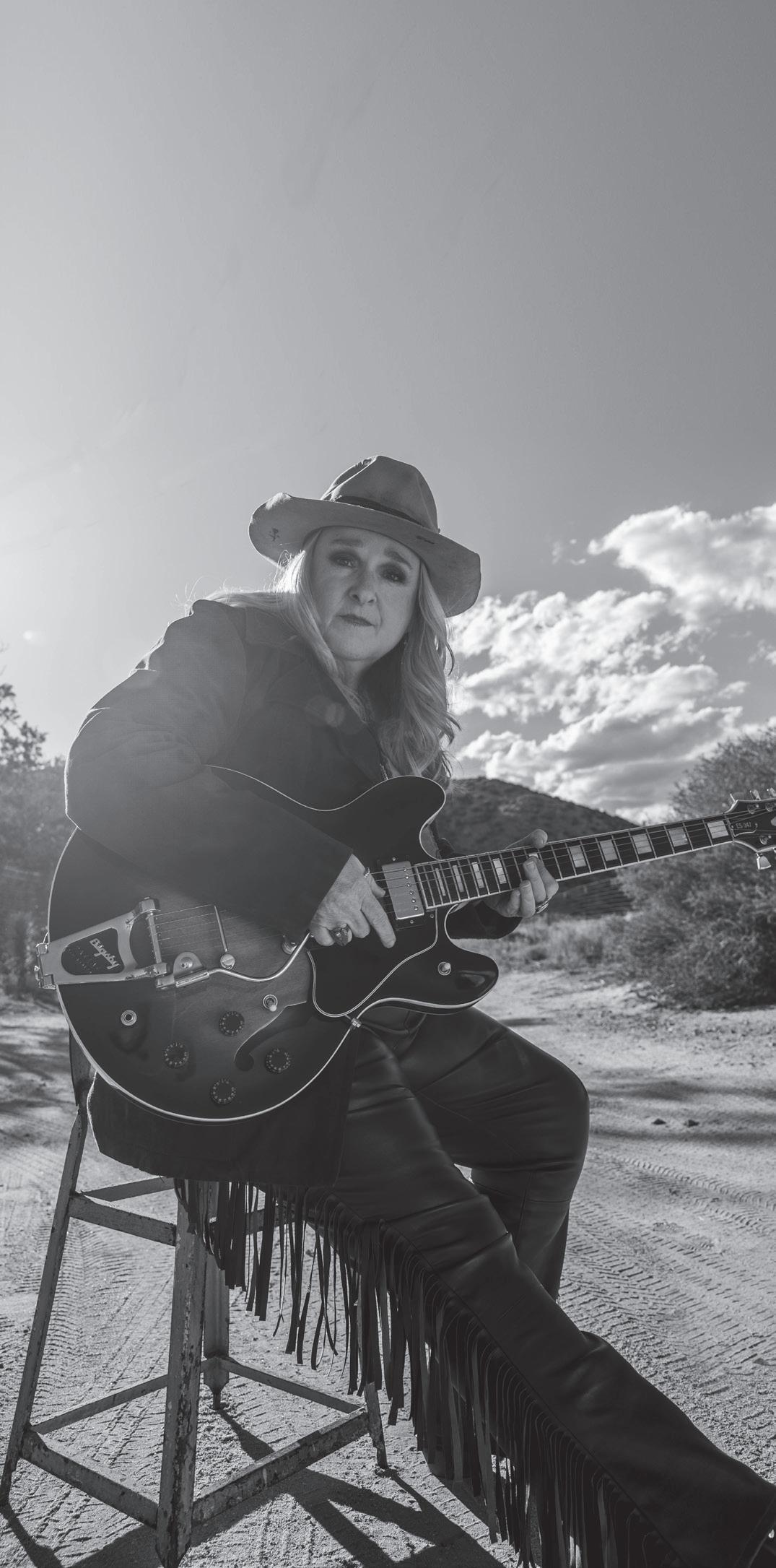













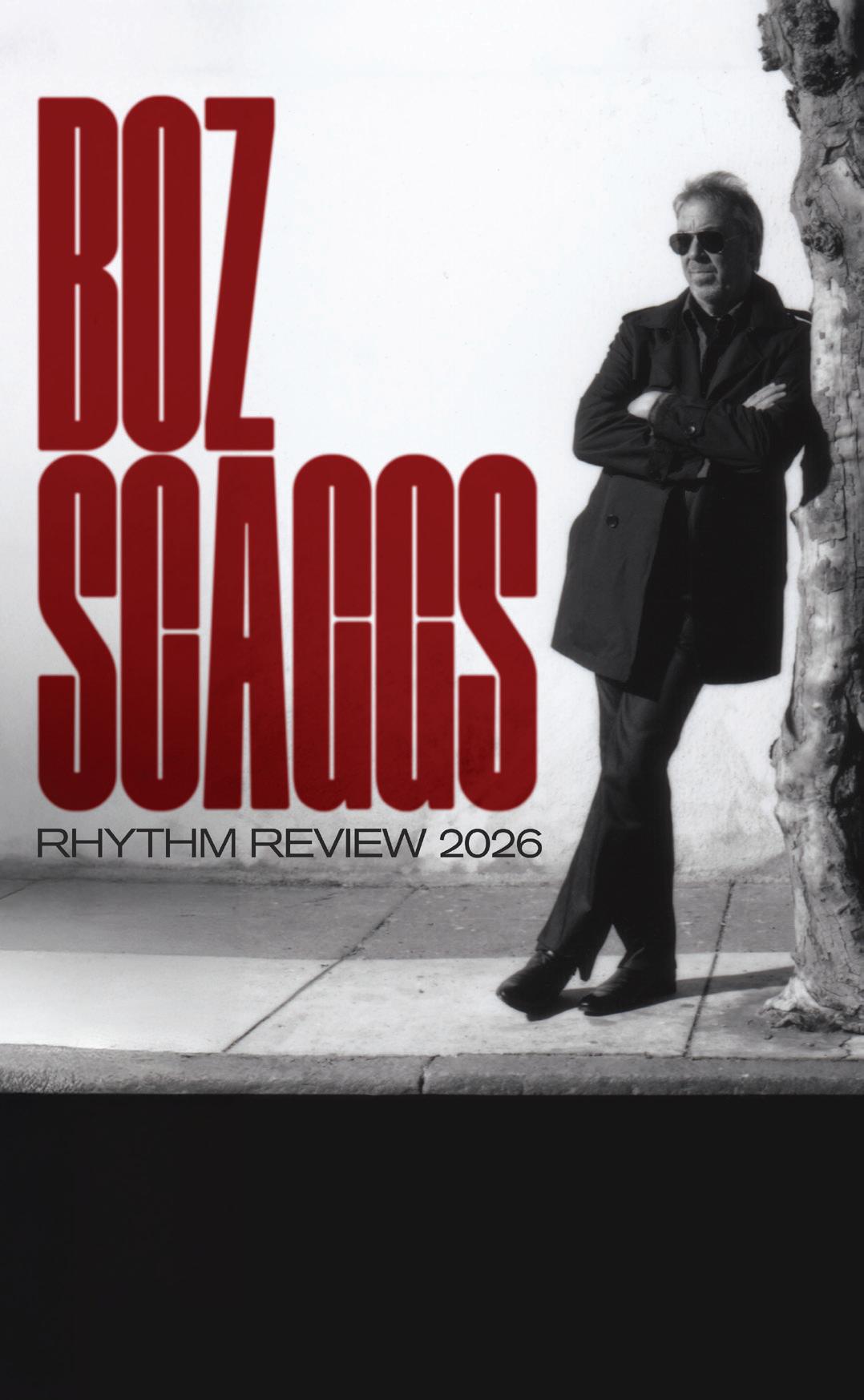


Southern Oregon University
1250 Siskiyou Blvd. Ashland OR 97520-5025