

What if your idea is the answer ?
What if you pondered how you could help make Oregon even better? What if your generosity improved peoples’ lives in beautiful, powerful ways? What if you left a legacy that helped feed hungry Oregonians for generations to come? We’re your statewide community foundation, and together we turn your ‘What ifs’ into powerful ‘Why nots.’ What if you joined us?
JPR Foundation
Officers
Liz Shelby – Medford
Vice President
Cynthia Harelson –Medford/Grants Pass
Treasurer
Andrea Pedley – Eureka
Secretary
Ex-Officio
Rick Bailey
President, SOU
Paul Westhelle
Executive Director, JPR
Directors
Ken Silverman – Ashland
Ron Metzger – North Bend
Rosalind Sumner – Montague
Dan Mullin – Eugene
Karen Doolen – Medford
JPR Staff
Paul Westhelle
Executive Director
Darin Ransom
Director of Engineering
Sue Jaffe
Membership Coordinator
Valerie Ing
Classical Music Director / Host
Abigail Kraft
Business Support Manager/ Jefferson Journal Editor
AJ McCalla
Host
Mike Green
Assistant Producer/ Jefferson Exchange Host
Dave Jackson Music Director/Open Air Host
Danielle Kelly Open Air Host
Soleil Mycko
Business Manager
Natalie Golay
Jefferson Exchange Senior
Producer
Calena Reeves
Marketing & Administration Manager
Heather Holben
Audience Services Coordinator
Vanessa Finney Reporter/Host
Roman Battaglia
Regional Reporter
Justin Higginbottom
Regional Reporter
Jane Vaughan
Regional Reporter
Milt Radford
Morning Edition Host
Dave Young
Operations Manager
Liam Moriarty
Digital Editor
Maria Carter
News Director
Andrew Crackel
Jefferson Exchange Assistant
Producer
Maddie Peterson
Jefferson Exchange Assistant
Producer
Marley Johnsen
Weekend Announcer
JPR News Contributors
Juliet Grable
JEFFERSON JOURNAL
FEATURED
JEFFERSON JOURNAL (ISSN 1079-2015), May/June 2026, volume 50 number 3. Published bi-monthly (six times a year) by JPR Foundation, Inc., 1250 Siskiyou Blvd., Ashland, OR 97520. Periodical postage paid at Ashland, OR and additional mailing offices.
POSTMASTER: Please send address changes to The Jefferson Journal, 1250 Siskiyou Blvd. Ashland, OR. 97520
Jefferson Journal Credits:
Editor: Abigail Kraft
Managing Editor: Paul Westhelle
Poetry Editor: Amy Miller
Design/Production: Impact Publications
Printing: Oregon Web Press

By Mike Francis and Nick Budnick
A newly obtained federal report provides undisclosed details of how employees repeatedly observed—and even recorded on video—troubling behavior by a Medford nurse who cared for dozens of patients who’d been prescribed fentanyl. It took 18 months for hospital leaders to connect the situation to a surge in blood infections.
Clash Over How Elections Should Run in Shasta County
By Roman Battaglia
In most places, a county clerk race draws little attention. In Shasta County, it’s become a referendum on how elections should be conducted.

APPLEGATE VALLEY OREGON
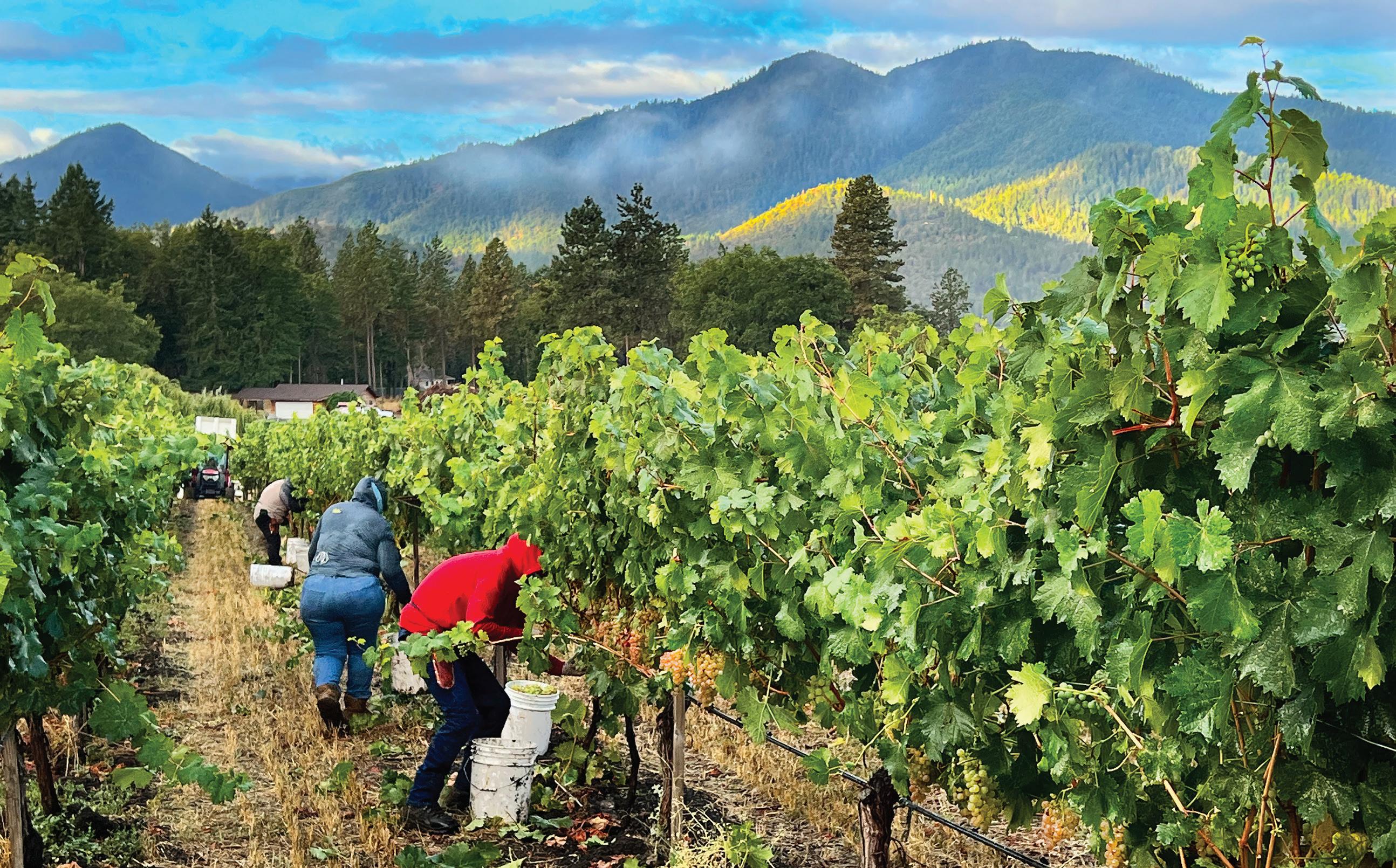
“Aside from the excellent Applegate wines I’ve had from producer, Vineyard, made such an impression on me over the last few years that I from the July the attitude, which are
“But Aside from the excellent Applegate wines I’ve had from Willamette producers, the wines of one producer, Troon Vineyard, made such an impression on me over the last few years that I drove seven hours from the Mendocino Coast in July to pay a visit to Applegate Valley, While I admire the way Troon farms and its empirical attitude, the proof is in the wines, which are invariably fresh, lively and expressive,”
—Eric Asimov The New York Times
—Eric Asimov, The New York Times
TUNED IN
PAUL WESTHELLE
Press Freedom Gets a Win in Defunded Public Media Era
Just prior to the beginning of our Spring Fund Drive, a federal judge in Washington, D.C. ruled that the key provision of Executive Order 14290, issued by President Trump in May 2025 to prohibit any direct or indirect federal funding of NPR and PBS, is unconstitutional. While the decision is a resounding victory for the First Amendment, editorial independence, and public media, it does not change the fact that Congress rescinded all federal funding for local public media stations last summer and there is no funding being provided to stations, NPR or PBS now or in the foreseeable future.
The court ruled that President Trump’s executive order, titled “Ending Taxpayer Subsidization of Biased Media,” violated the First Amendment, stating that the Constitution does not allow the government to restrict funding based on viewpoint or retaliate against organizations because they report information the government dislikes. It also makes clear that in the event Congress restores federal funding for public media organizations, that funding must be awarded consistent with the First Amendment.
In his ruling, U.S. District Judge Randolph Moss wrote: “the First Amendment draws a line, which the government may not cross, at efforts to use government power—including the power of the purse—‘to punish or suppress disfavored expression by others.’” He concluded that Executive Order 14290 crossed that line and was not a reasonable attempt to regulate a federal program.
Responding to the court’s decision, NPR President and CEO, Katherine Maher, called the ruling “a decisive affirmation of the rights of a free and independent press— and a win for NPR, our network of stations, and our tens of millions of listeners nationwide.” She said, “The court made clear that the government cannot use funding as a lever to influence or penalize the press, whether as a national news service or a local newsroom ...”
It’s encouraging that the courts reinforced the importance of the First Amendment and did not allow a dangerous precedent to stand that would enable the executive branch to punish public media organizations for their editorial content. That said, this was a victory in principle only. In practice, the Corporation for Public Broadcasting remains dissolved, there is still no federal funding for stations, no support for local journalists in rural communities, no funding to replace aging public media infrastructure, and no resources to execute emergency alert services. Local stations are still grappling with both the short-term and long-term consequences of this new reality as they seek new ways to support their work.
Here at JPR, truly amazing listener support has enabled us to weather the shortterm fiscal impact of lost federal funding. It has also created a solid foundation on which we can build a new sustainable business model that will support our future. Public radio in our region remains a vital civic and cultural resource thanks to the dedicated support of JPR listeners who give so generously during fund drives and throughout the year.

Paul Westhelle is JPR’s Executive Director.
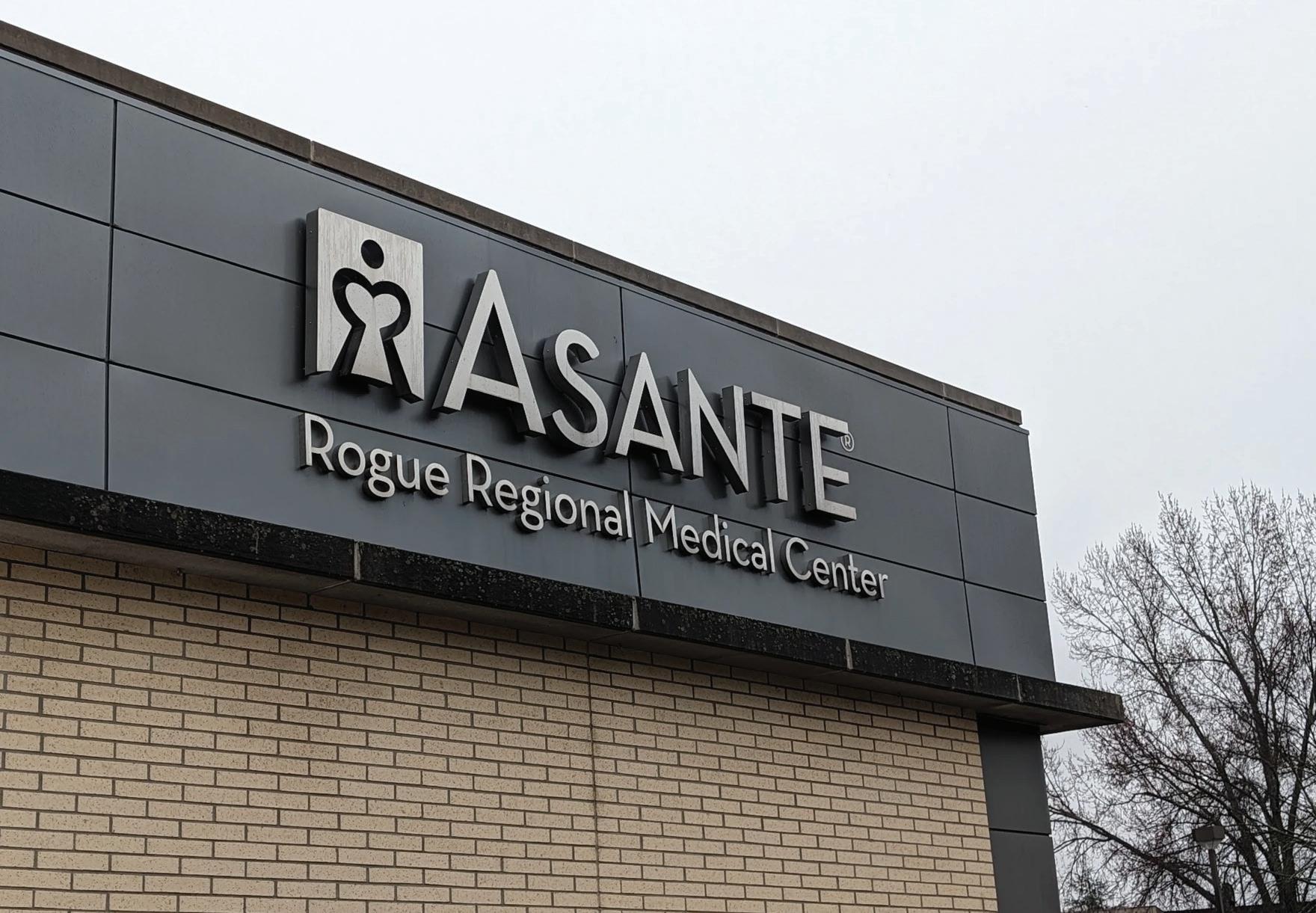
Asante Rogue Regional Medical Center in Medford, January 4, 2024.
Before Asante Deaths and Drug Diversion Went Public, A Year of Missed Warnings
By MIKE FRANCIS AND NICK BUDNICK | THE LUND REPORT
A newly obtained federal report provides undisclosed details of how employees repeatedly observed—and even recorded on video—troubling behavior by a Medford nurse who cared for dozens of patients who’d been prescribed fentanyl. It took 18 months for hospital leaders to connect the situation to a surge in blood infections.
More than two years after news broke that a nurse in Medford may have swapped tap water for fentanyl in patients’ IVs, allegedly leading to infections linked to a dozen or more patients’ deaths, a 303-page federal investigation obtained by The Lund Report details a series of safety lapses that endangered patients.
Chief among the investigators’ findings: For more than a year, starting in May 2022, coworkers were flagging and documenting suspicious behavior on the part of one nurse in the Intensive Care Unit, or ICU. But not until July 2023 did hospital management take action that led to the nurse’s firing.
Citing internal hospital documents, investigations and interviews with coworkers and managers at Rogue Regional
Medical Center—along with three unannounced inspections starting in January 2024—the federal report cites repeated “systemic failures” and concluded the hospital featured “limited capacity” to provide “safe and adequate care.”
Asante administrators and employees at the hospital failed to address the recurring suspicious behavior of a nurse in any concerted way, even when some of that behavior was caught on video, according to the report. At times that behavior included falling asleep on the job or, at other times, seemingly ignoring a manager’s instructions to protect patient safety.
Managers failed to account for missing drugs. Hospital administrators failed to establish a system that would effectively detect, much less control, infections and outbreaks even as the deaths mounted. Nor were the policies they established followed.
Asked for an interview or their perspective on the federal investigation by The Lund Report, Asante officials did not respond. For two years they’ve largely declined to comment on the situation.
Of the 45 or more patients who suffered infections at Rogue Regional Medical Center between July 17, 2022 and July 18, 2023, at least 19 died, according to the report.
“ The hospital failed to report the outbreak to either the local public health authority or the state public health authority in a timely manner.” Conclusion from Federal Investigators’ report
The report comes as a former nurse at Rogue Regional, Dani Marie Schofield, faces 44 counts of second-degree assault in a criminal trial scheduled to begin later this year. Prosecutors say patients were harmed because Schofield replaced the fentanyl that was prescribed with non-sterile tap water.
Schofield has pleaded not guilty to the charges. Reached by The Lund Report in January 2024, Schofield denied wrongdoing and said she quit of her own volition. “The truth will, I’m sure, come out,” she said.
The federal report does not name Schofield or other employees, often referring to them using acronyms based on their job title. The report refers to the nurse suspected of diversion as “RN4.”
The federal investigation conducted by the Centers for Medicare & Medicaid Services, known as CMS, was obtained under the federal Freedom of Information Act. It traces the evolution on parallel tracks of hospital staffers’ drug diversion suspicions and responses, along with rising awareness of mounting blood infections. Finally, the two developments converged for hospital leaders in a manner the federal report indicates was months overdue.
David DeVillenueve, a Medford attorney who’s filed several lawsuits in the case, said that despite his firm’s lengthy investigation of the situation, much of the report’s contents surprised him.
“Pretty shocking,” he said. “The hospital had numerous, numerous opportunities to where they should have known, and they should have done something. And they didn’t. And people got hurt because of it.”
Drug theft suspicions surfaced as infections increased
The first documented concerns about RN4’s behavior surfaced in May 2022, according to the report. In a hospital document dated May 17, a bedside nurse describes RN4 apparently emptying a syringe of Dilaudid, an opioid painkiller, into a waste bin while pouring saline into the bin.
The bedside nurse said they “did not see that [RN4] was depressing the [flange] of the syringe,” and then RN4 turned away and seemed to be protecting something in a jacket.
When the bedside nurse checked the bin for used needles, the Dilaudid syringe wasn’t present. When the bedside nurse confronted RN4 about the missing syringe, RN4 laughed and said it was there. Upon the bedside nurse’s second inspection, the syringe could be seen.
“I spent the remainder of my shift watching [RN4] closely for impairment,” the bedside nurse told an internal reviewer. “I reported all of these observations and concerns to leadership.”
That same month, according to the report, the hospital started to notice infections in the intensive care unit. By the end of September 2022, the report says, it had identified a “cluster” of such infections, all involving organisms that ‘could grow in liquids such as tap water.” They were infections involving “organisms we had never seen in our careers,” according to one employee.
Despite having identified the outbreak, hospital administrators didn’t report it to the Oregon Health Authority until seven months later, on April 19, 2023, according to the report.
“The hospital failed to report the outbreak to either the local public health authority or the state public health authority in a timely manner,” federal investigators concluded.
More of RN4’s coworkers reported their concerns. An undated hospital document includes multiple reports between mid-May and early December 2022 of “behaviors and activities suspicious for drug diversion,” as well as reports of RN4’s apparent “impairment.”
A report of an informal “coaching” session with RN4 from September 2022 reviewed several cases of missing medications and noted that RN4 hadn’t followed approved procedures for handling narcotics. Additional cases of drug mishandling, the coaching document said, “may result in disciplinary action.”
Despite such internal reviews, the federal report says, no documentation exists to show that pharmacy managers or the hospital rapid response diversion team was notified, nor that there was any follow-up investigation.
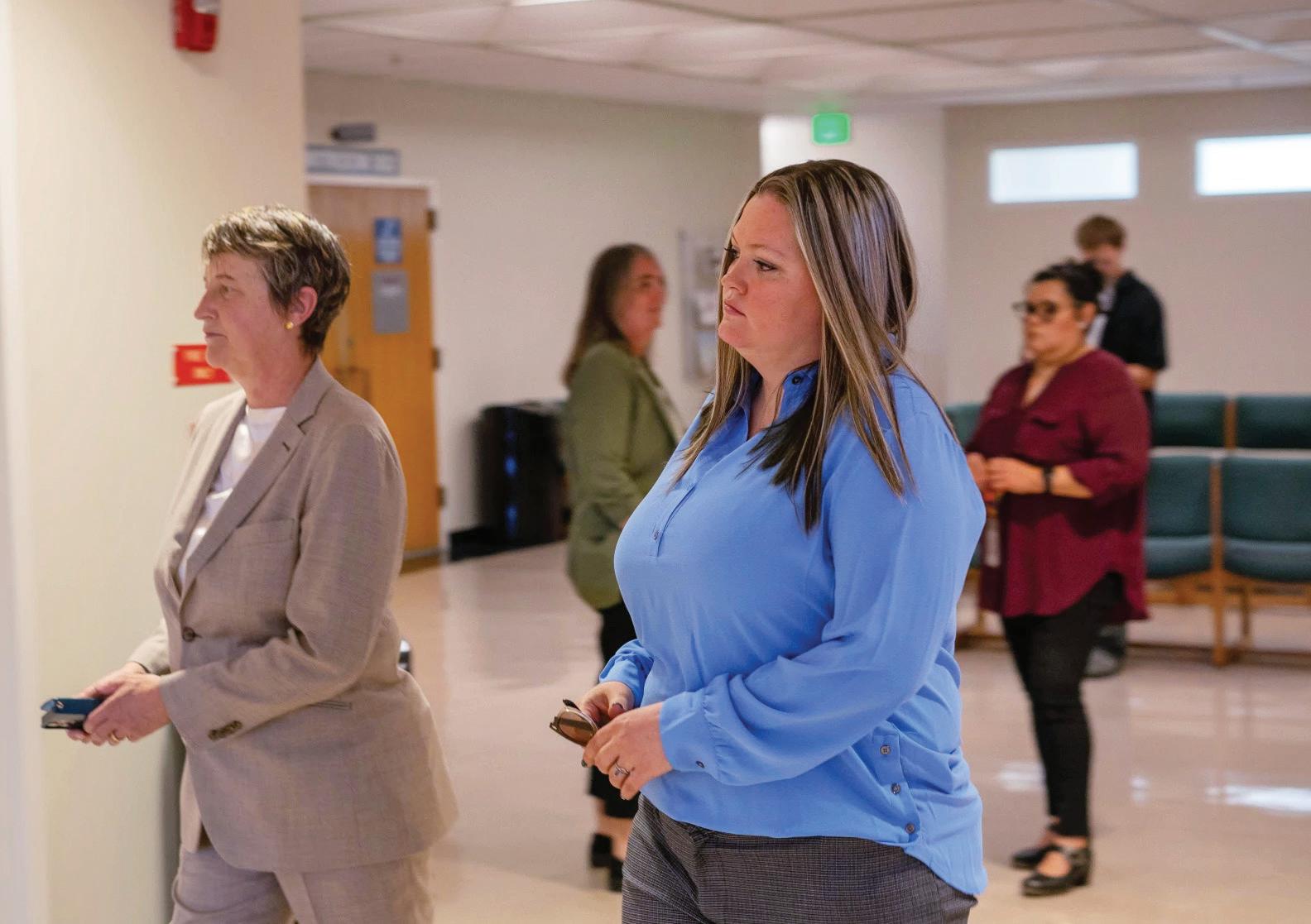
Dani Marie Schofield attends a pre-trial hearing with her attorney at Jackson County’s courthouse in Medford on May 28, 2025.
The lack of hospital follow-up is a recurring theme throughout the federal report. The connection between RN4 and the apparent drug diversion wouldn’t be made for another year.
An email to the supervisor of the intensive care unit on Dec. 13, 2022 compiled observations of multiple coworkers, who wrote that RN4 “is very rude, unwilling to collaborate, short-tempered ... we have all noticed a change in [their] behavior in the past few months ... seems angry all the time ...” The same month, hospital video captured RN4 falling asleep at a desk while drinking from a water bottle. RN4 was observed multiple times to be very sleepy, and to take extended, unexplained bathroom breaks, leaving patients unattended.
A Dec. 28 report, apparently made by the supervisor of the intensive care unit, noted some “missing volumes” of fentanyl, which led a supervisor to closely observe RN4 for several hours during a shift. During that time, the supervisor noticed a syringe of unusual size in RN4’s pocket, RN4’s unusually slow gait, and a period of standing, swaying in a patient room and “not interacting with anything.” Meanwhile, the patient, who was intubated, seemed distressed, grimacing and gripping the bed’s siderails, but RN4 didn’t seem to notice, according to the federal report.
The supervisor was so concerned that they brought RN4 to their office and said RN4 must submit to a “fit for duty” exam.
Drug test for nurse omitted fentanyl
Despite management referring the nurse for a Dec. 28, 2022 “fit for duty” evaluation along with a drug test, both steps were botched, according to the report.
Again, the federal report notes, “there was no documentation that reflected [the appropriate report] had been completed. There was no further documentation of investigation into these concerns including with respect to RN4’s assigned patient(s), potential presence and extent of harm related to RN4’s lack of awareness and response to their intubated patient’s symptoms of distress.”
The hospital, federal investigators concluded, failed “to ensure each patient’s rights were protected and promoted, including the right to receive care in a safe setting…Those failures contributed to patient harm and created the likelihood of harm to other patients.”
The drug test was another issue. One internal document reported that RN4’s drug screening in December “came back negative.” However, according to the federal report, “The drug test did not include testing RN4 for fentanyl.”
The report quoted an individual described as Asante’s “chief legal officer” saying that “RN4 should have been tested for fentanyl but was not.” Not only that, the hospital diversion team should have been called in sooner and an evaluation done of RN4, the employee added, “but ‘culturally’ there was a gap.”
Despite the accumulating concerns, RN4 was given a glowing performance review for the year ending Dec. 31, 2022. “[RN4] is a top-notch critical care RN .... combines sound theoret-
ical knowledge with strong clinical skills to provide excellent patient care,” the review reads. “[They are] honest and kind, acting with integrity ... We are so lucky to have [them in] ICU!” RN4 “exceeds expectations” in all categories, according to the review.
Supervisors and peers had concluded RN4’s behaviors “were a medical issue,” according to the federal report. They were advised by human relations to continue to watch and take notes.
According to the federal report, an ICU manager was asked if any plan was developed at this point “to address RN4’s concerning behaviors in order to ensure patients received safe care when RN4 was assigned to and caring for patients.” The manager’s response was that “no plan had been put into place.”
By that time, according to the report, at least nine patients who were treated and infected had died.
More reports led to a firing
Concerns about RN4’s behavior continued to accumulate throughout the first half of 2023. One internal report described RN4’s suspicious movements in a patient room and, when confronted, RN4 said they didn’t remember being in that room, while conceding it was possible.
Meanwhile, volumes of fentanyl continued to be missing or unaccounted for.
Other staffers described the nurse’s frequent, extended bathroom breaks and absence from patients they were supposed to be attending. In one case, one of RN4’s patients pulled out an IV tube.
In an internal document described the launch of another inquiry into RN4’s fitness for nursing duty, one employee said they never know “which RN4 is going to show up.”
On July 25, 2023, a manager told investigators, they again spoke to the nurse about leaving their patients unattended, reminding them that with some patients on oxygen pumps, “if that pump stops ... it only takes a few seconds for [their] patient to suffer harm. Even if [RN4] thinks [they are] only going to be gone for a few minutes using the bathroom, that could be life or death for someone if their IV pump stops.”
On July 26, 2023, RN4 was told they must submit to a drug screen. This time, RN4 refused. An internal document showed that RN4’s employment was terminated on that day.
The federal investigation indicated the hospital’s handling of the nurse’s situation was too little, too late: “Hospital staff and others observed numerous incidents of behaviors and activities suspicious for drug diversion, impairment, and other patient safety concerns involving RN4 and ICU patients. Behaviors and activities were documented for over a year beginning at least May 2022 through July 2023 when the nurse’s employment terminated. Prevention, identification, investigations, and response to those incidents that reflected potential abuse, neglect and patient harm, were not conducted
or were not timely, clear and thorough to ensure they did not recur.”
Complicating things, according to the report, may have been Asante’s failure to internally account for drugs and potential diversion by facility—instead aggregating them across the system’s hospitals in Medford, Grants Pass and Ashland.
“I didn’t give data by hospital,” a pharmacy manager told the federal investigator. “We were not separating out the data. We manage our [drug diversion] surveillance as a system.”
Connection to infections took months
Meanwhile, infections had continued to mount.
During the first half of 2023, the hospital continued to notice a pattern of intensive care patients becoming infected. On April 27, 2023, hospital staffers met with the hospital infection prevention unit at the Oregon Health Authority, which alerted hospital staff to the possibility that the infections were linked to tap water and drug diversion, according to the report.
At least 12 patients had died with infections before that meeting; another seven died afterward, according to the federal report.
Still, the report noted, “although behaviors and activities were documented for over a year beginning at least May 2022, there was no documentation that reflected nursing leadership was notified until 01/10/2023, which was eight months after initial concerns were identified.”
In September and October of 2023, according to the federal report, Asante hired an infectious disease expert from UCLA to study the pattern of infections, and the expert concluded that the “root cause” of the infections may have been drug diversion—depriving patients of their prescribed medications and substituting something else.
After that conclusion, the hospital started reviewing internal records, including time cards, and “determined that each patient who experienced an infection had been prescribed IV administration of fentanyl and that one nurse, RN4, was associated with the care of all involved patients,” according to the report.
Before November 2023, “We had no clue it was tied to the RN,” a hospital staffer told investigators, according to the report.
As the federal investigators noted, “the hospital made no association between RN4’s drug diversion and [infections] until November 2023, seven months after the meeting with [the Oregon Health Authority] in which potential staff drug diversion and increased [infections] were discussed.”
Families notified, lawsuits and indictment follow
Starting in November 2023, about 18 months after the first suspicions arose about RN4, Asante reached out to the affected patients or their surviving family members to explain the infections.
After January 2024, when federal investigators began their investigation, they found that hospital managers could not consistently provide a date for when the hospital infection control unit identified the outbreak of infections associated with its Intensive Care Unit. In different interviews, the hospital provided four separate dates for when that realization occurred, investigators wrote: “September 2022, October 2022, April 2023, and October 2023.”
The federal report characterizes the inconsistencies as “further evidence” that the hospital infection control unit “failed to fully develop, implement, or follow systems and processes to detect, investigate and control infections and outbreaks.”
Eleven lawsuits were filed on behalf of at least 14 patients, some of them citing Schofield by name as the alleged perpetrator. Many of the suits have since settled and the rest are on hold pending Schofield’s criminal case. That tally does not include any claims that were settled by patients or their families prior to filing in court.
Schofield’s nursing license expired in April 2024, having been relinquished for the previous five months due to a pending investigation by the Oregon State Board of Nursing. That investigation was subsequently put on hold due to the criminal case. In January 2024, Schofield told The Lund Report that she’d been cooperating with the board’s investigation.
Schofield, who has continued to maintain her innocence of all allegations, is scheduled for an eight-week trial starting Sept. 14.
CMS’s conclusions from its early 2024 surveys were finalized on March 25, 2024 in a “statement of deficiencies,” a form normally shared with a hospital for correction. They don’t appear to have been relayed to the public.
Following a follow-up visit in April 2025, the feds found that Asante “had implemented processes and systems to the extent that deficiencies … were determined to be corrected and it was back in substantial compliance” with the federal agency’s conditions of participation in the Medicare and Medicaid programs.
Asked why Asante leadership did not share information with the public about the federal safety concerns—as other hospitals have done after federal inspections and similar revelations—CEO Tom Gessel and other Asante executives did not respond.
This article was republished with permission from The Lund Report, an independent nonprofit health news organization based in Oregon. Nick Budnick can be reached at Nick@thelundreport.org .
YOU CAN’T CONTROL THE WEATHER, BUT WE’LL HELP YOU WEATHER THE STORMS.
We offer resources and cash incentives to reduce your energy costs and make your home more resilient. Learn more at energytrust.org.


Two Candidates Clash Over How Elections Should Run in Shasta County
By ROMAN BATTAGLIA
In most places, a county clerk race draws little attention. In Shasta County, it’s become a referendum on how elections should be conducted.
The Shasta County Clerk issues marriage licenses, registers business pseudonyms and processes passport applications. The clerk also serves as the registrar of voters, overseeing elections in the county.
Former Assistant County Clerk Joanna Francescut is facing her former boss, County Clerk Clint Curtis. County supervisors appointed Curtis in a controversial decision last year.
Curtis outlines changes to the system
Curtis moved from Florida, where he was working as a lawyer, and had never run an election before. Supervisors selected him for his plans to radically change how elections are conducted.
“The elections have basically been given to the bureaucrats,” Curtis said. “They run them, they block observation, they do whatever they pretty much want to and tell you to go away, ‘Don’t look here. We got under control,’ and so we’re changing all that.”

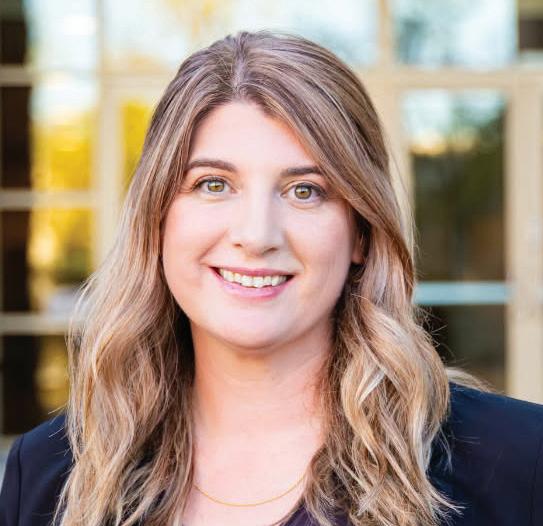
“They can observe everything, and candidates can count their own.” —Clint Curtis
“I never once got a chance to step up and implement my priorities” —Joanna Francescut
Clint Curtis, left, and Joanna Francescut, both candidates for Shasta County Clerk
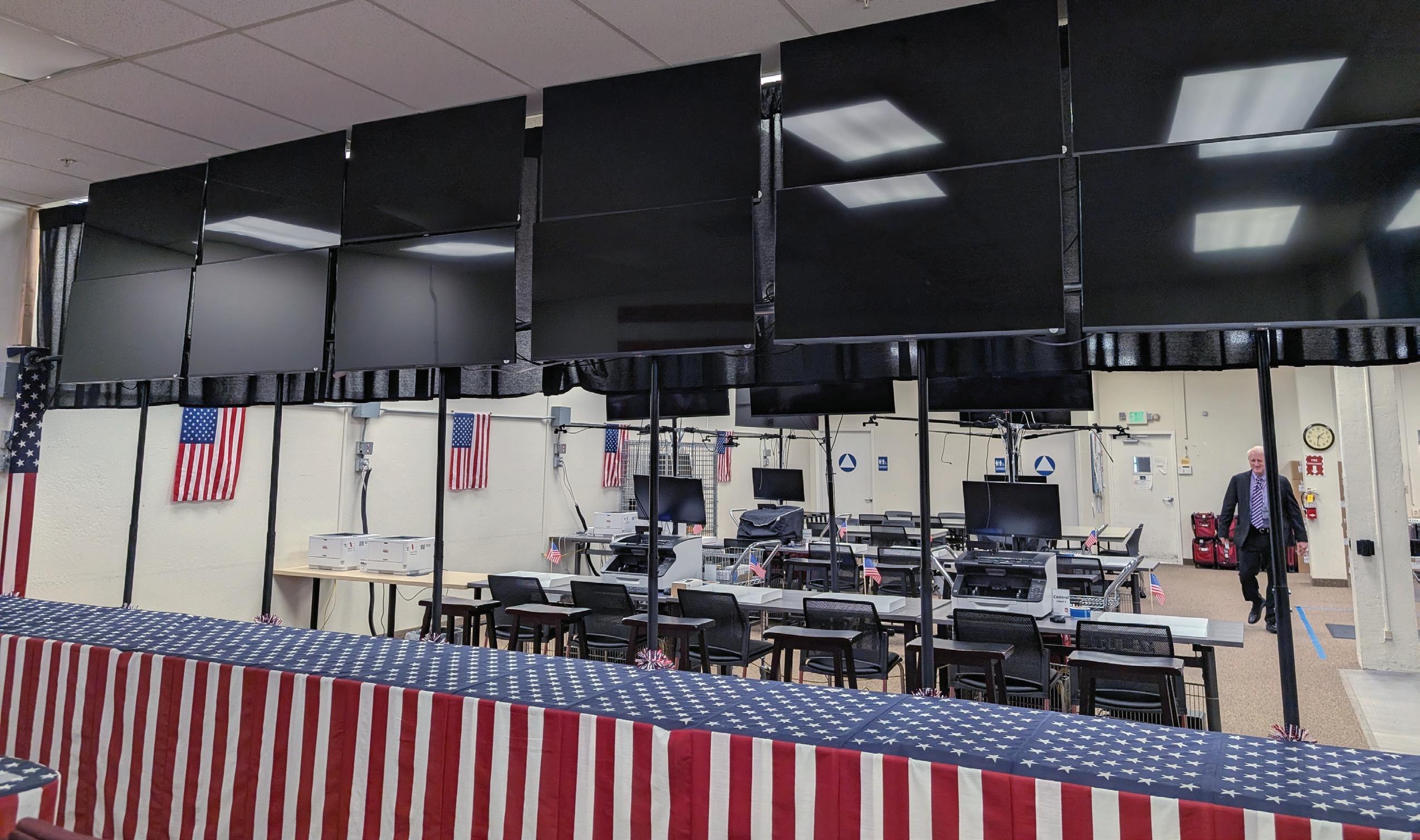
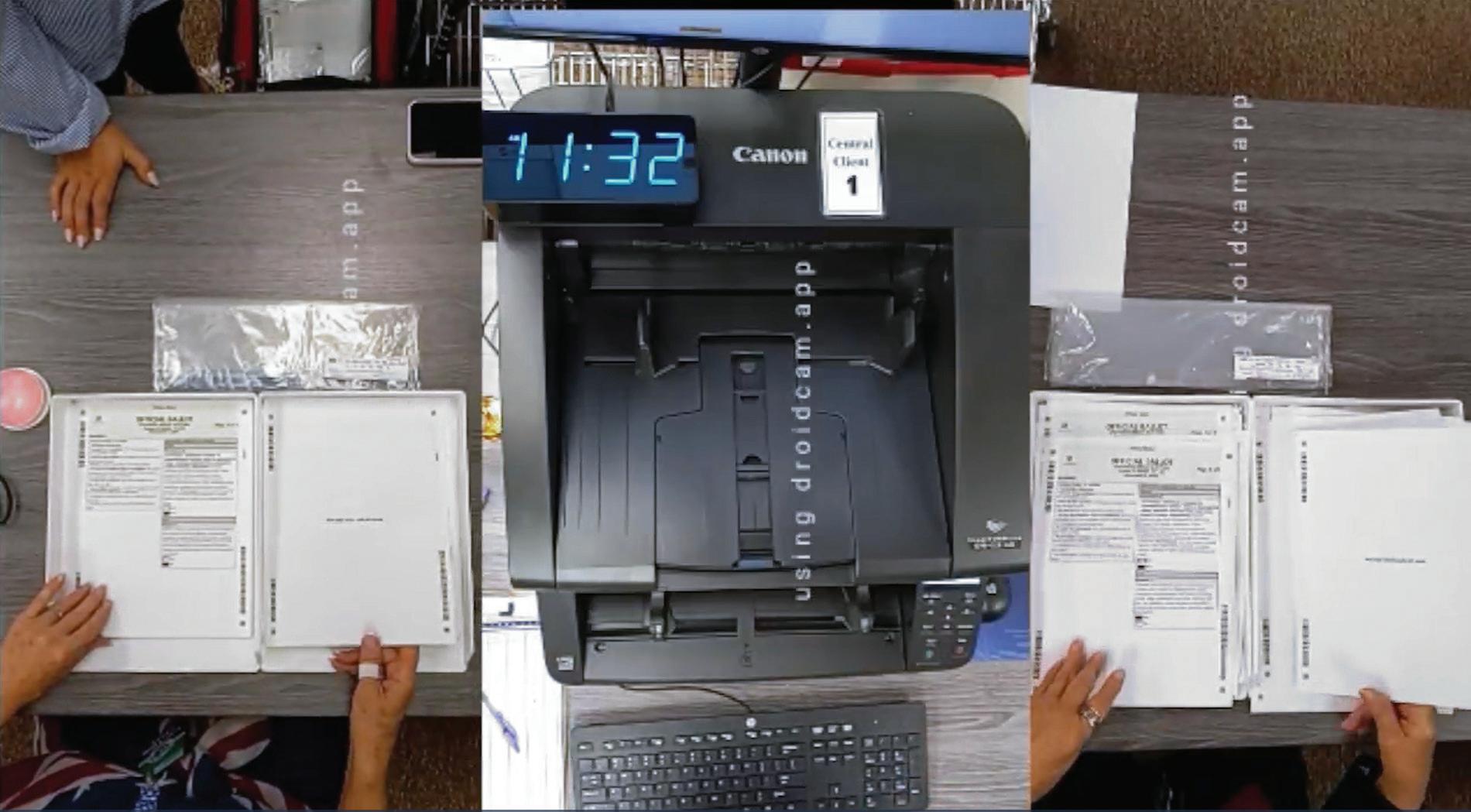
The observation area Curtis created before the November 2025 election. The monitors show the different ballot counting stations and other areas of the office.
Support JPR Today
Contribute at least $60 annually, or become a sustainer with ongoing monthly contributions of any amount. Do your part to support public radio in southern Oregon and northern California and you'll also receive an annual subscription to the Jefferson Journal.
Please fill out the form below and mail it to: Jefferson Public Radio Attn: Membership 1250 Siskiyou Blvd Ashland, OR 97520
Contributions can also be made online at ijpr.org/support
Enclosed is my gift for $___________.
The JPR services I enjoy are: Classics & News Rhythm & News News & Information
Now, Curtis is that bureaucrat, and he wants to introduce his vision of transparency to Shasta County. He has already set up cameras to film the ballots being scanned and tabulated.
“As far as observing, they can observe everything, and candidates can count their own,” he said. “If they find an error, they can tell us about that, and we can get down there and drill down and find if it’s correct.”
Although in reality, the camera system needs some tweaks. During the November election, the livestream camera resolution was so low, it was almost impossible to read the ballots. Curtis said he wants to fix that.
Curtis also faced additional problems during his first election, including failing to submit a ballot report to the state on time and slower check-in times after eliminating electronic poll books. Curtis blames those hiccups on staff, which he claimed have done it purposefully.
“This job is extremely easy. It’s not hard at all,” he said. “Now for me, it was a little harder because I didn’t necessarily have the staff 100% on board, so I had to keep, you know, like pushing a rock uphill to get them to do little stuff.”
Curtis said he does not trust computers in the election system or members of either political party, arguing that someone will always try to cheat their way into office.
Shasta County has been at the center of a debate around elections for years. In 2023, the far-right majority on the Board of Supervisors voted to terminate the county’s contract with Dominion Voting Systems, leaving officials without a way to conduct elections. Supervisors wanted election workers to hand-count ballots, though research has shown it’s less accurate, more expensive and slower than machine counting.
Before the county could try its hand-counting system, the state legislature banned the practice in most elections. Curtis said he’s using ballot-counting machines right now only because the law requires it.
“I’d want to get rid of them,” he said. “But even that needs to be on camera.”
Even if he were able to start hand-counting ballots, Curtis said he would livestream the process because humans can’t be trusted either.
Francescut emphasizes experience in office
Joanna Francescut brings 17 years of elections experience and said she is motivated by public service.
She said some of Curtis’ transparency measures were already underway before he took office.
“We weren’t able to implement any new video cameras because we didn’t have the appropriate space on the server,” she said. “We had just purchased a new server right before I got fired that would allow for more video cameras and more streaming and that type of work to happen. But that was because I was making steps to plan and working with IT.”
Supervisors passed over Francescut twice when appointing someone to fill the clerk seat. The first time was in 2024, when the longtime clerk Cathy Darling Allen stepped down for health reasons and Tom Toller was appointed, and again last year, when they chose Curtis.
Francescut, who said she worked well with Toller, described her role as supporting the office’s leadership.
“I was following the direction of the county clerks,” said
Francescut. “I never once got a chance to step up and implement my priorities and make sure that I can make the changes that I want to have happen, happen within Shasta County.”
One of her priorities would be moving the elections office out of its current location on Market Street.
“Where we count ballots, it’s tough to manage,” she said. “Having that balance between secure elections and transparent elections and allowing that work to happen, it’s tough in our current location.”
A new building is something both Francescut and Curtis agree on.
“If I had a new building, we could do our own printing in house,” Curtis said. “One of my concerns is that we don’t know how many ballots are printed. We don’t know where they’re mailed to. We really don’t have any control over anything.”
A new building will require money the elections office doesn’t have. The Board of Supervisors declined Curtis’ proposal to lease a former Joann Fabrics building and purchase additional equipment.
Debate over transparency and trust
Curtis has spent much of the campaign criticizing his opponent.
Shortly after he started as county clerk, Curtis fired Francescut.
“She has no concern for the public at all,” he said. “She treats them as if they are the villain.”
Francescut disputed that claim but acknowledged the office has gotten a bad rap in the past. She also said that what Curtis has done has mostly been for show.
“I really think it’s important that people are aware that he hasn’t made it that much more transparent,” she said. “Stuff that we had observable is no longer observable because he had to change the layout of the office.”
Francescut said she’s more focused on working with local
community members than her predecessor, Cathy Darling Allen.
“One thing that Cathy was great at was educating our legislatures, educating people at the state level,” Francescut said. “But at the community level, we weren’t … helping people understand that process change, or why it was changed, or what happened to make that change, and then people would get frustrated.”
Francescut said her critics sometimes overlook that the clerk’s office hasn’t been lock-step with the state lawmakers. She said the office opposed a 2022 law that made vote-by-mail permanent for all California voters, arguing it adds complexity and costs for rural areas.
“If we would have left it as is, the voters that wanted to choose to vote by mail would continue to choose that,” she said. “Things like that have had an impact on the trust in elections locally.”
How and when to vote
Ballots will be mailed to voters by May 4 and must be returned to a drop box or postmarked by June 2.
Curtis removed most of the county’s drop boxes after taking office. The county’s website lists the four remaining locations. Voters can also go to their local polling place on Election Day to vote in person or drop off their ballot.
Because only two candidates are running, the winner will be decided in June.
Roman Battaglia is a regional reporter for Jefferson Public Radio. After graduating from Oregon State University, Roman came to JPR as part of the Charles Snowden Program for Excellence in Journalism in 2019. He then joined Delaware Public Media as a Report For America fellow before returning to the JPR newsroom.
A screenshot of the livestream from the November 2025 election. Broadcast in 720p resolution, it can be difficult to make out how the votes on each ballot were cast.
SHASTA COUNTY ELECTIONS DEPARTMENT




CHELSEA ROSE
The Game That Defined a Generation UNDERGROUND HISTORY
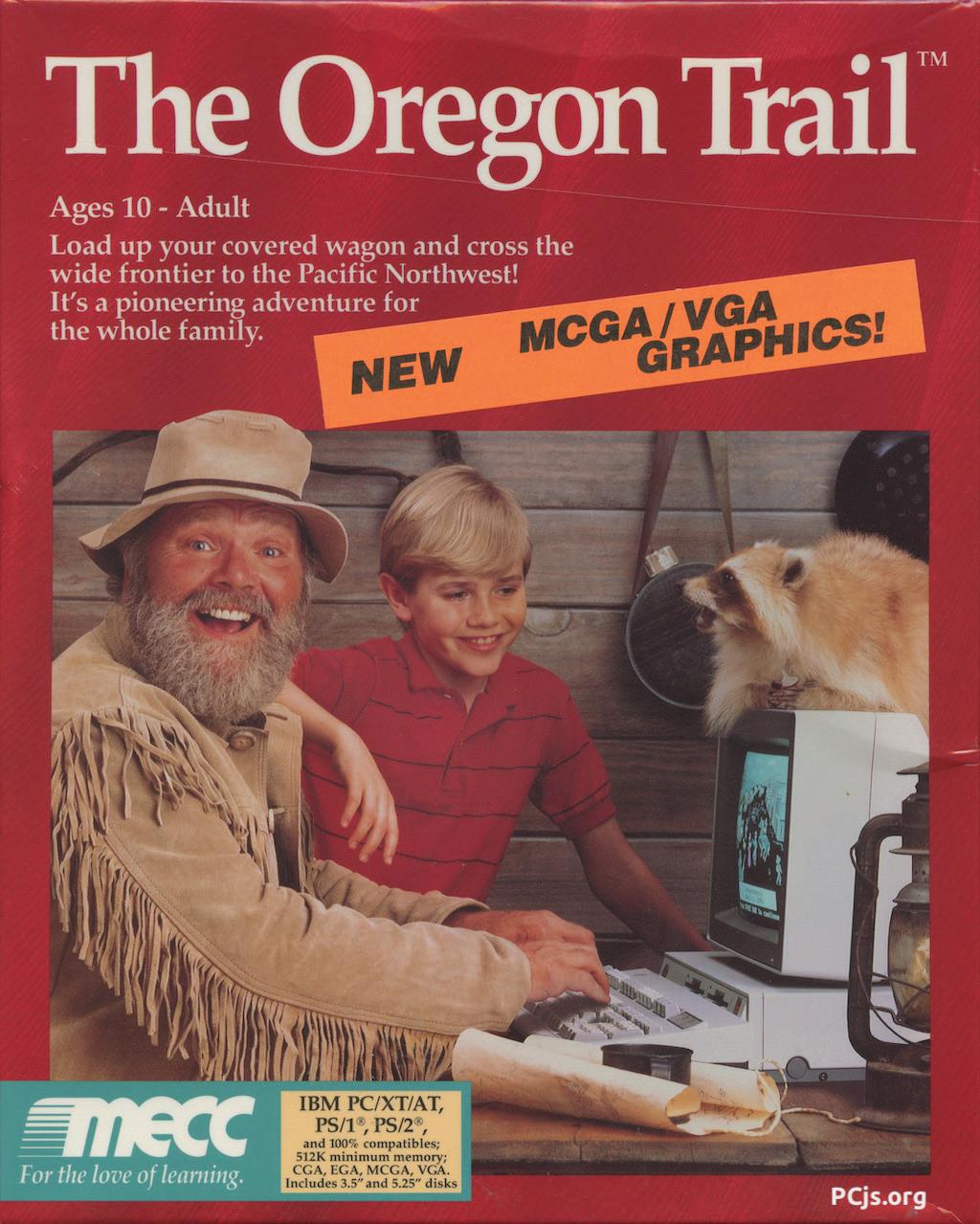
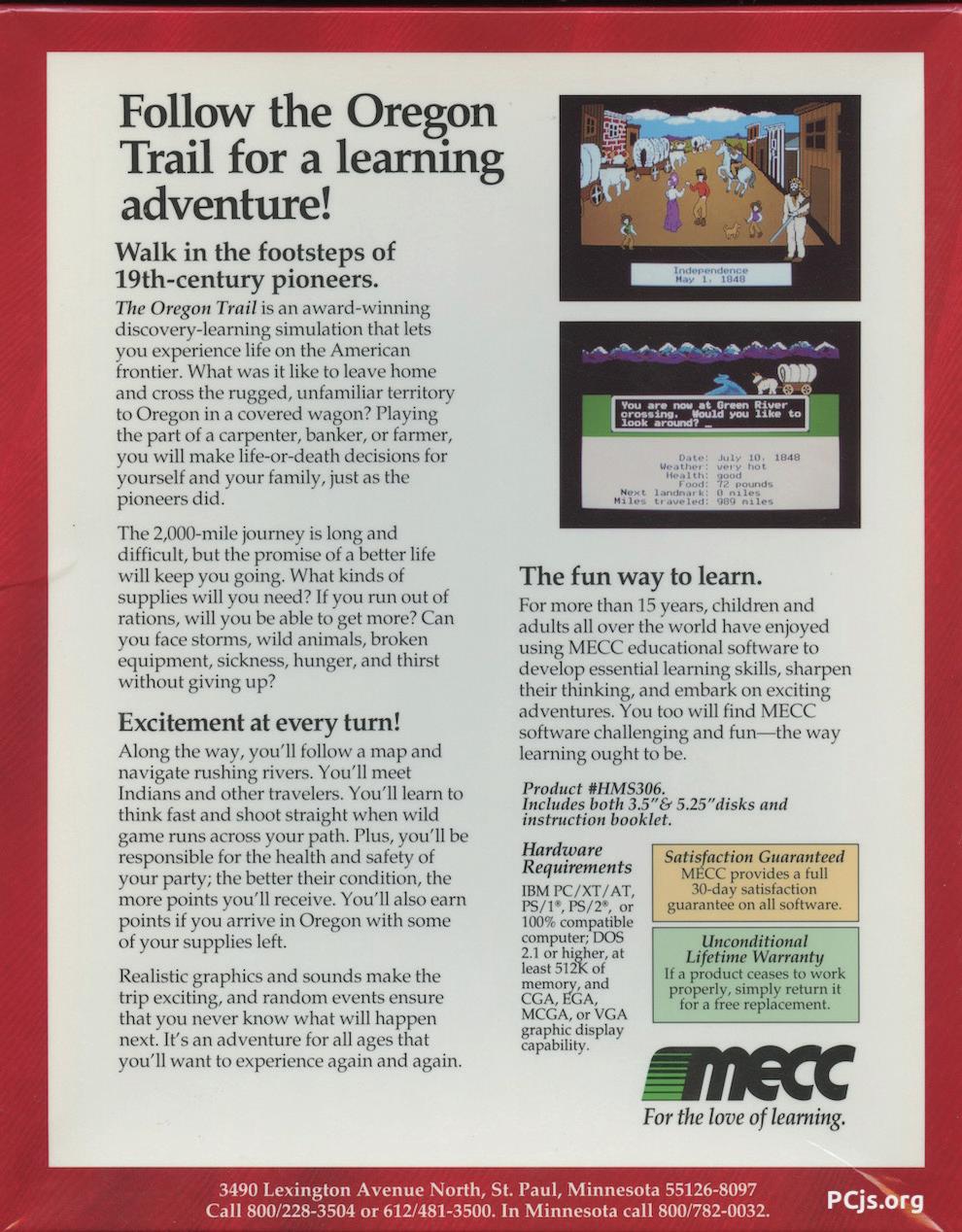
Did you grow up shooting buffalo, buying sacks of flour, and doing your best to avoiding dysentery? If you answered yes to any of these questions, you may be part of the Oregon Trail Generation: comprised of young Gen X-ers and elder millennials that loaded up onto pixelated wagons and traveled from the analog into the digital age. On a recent episode of Underground History, I spoke with Philip Bouchard, creator of the 1985 game that defined a generation, and our podcast producer, Charlie Zimmermann, who recently gave a series of talks on what the game got right about the historic migration.
Bouchard designed the game off of an earlier iteration made by a group of teachers, with the shared goal of creating engaging educational content that could fit on a floppy disc and be played during a 45-minute class. To put it into perspective, this pioneering game took up less space than just one photo on your phone’s camera roll. Yet its lo-tech graphics have become iconic and are recognized even by those far too young to remember the cramped computer labs of yore.
My main memory of the game was the schadenfreude I felt as the more annoying members of my class got dysentery or its less catchy, albeit more deadly cousin, cholera. The attention given to these maladies in the game was no accident- Bouchard wanted to dispel prevailing myths about Indigenous violence against emigrants and highlight the actual hazards on the route: namely disease, accidents, and taking ill-advised short cuts.
While the game’s designers worked to update errors in the prevailing narrative where they could, it was the 80s, and culturally still palatable to make a light hearted adventurous play date out of the violence and horror of manifest destiny and settler colonialism. By the end of the decade the New Western History Movement was challenging and deconstructing Western stereotypes, shifting the way scholars and educators interpreted and spoke about the complex historical events like the Oregon Trail migration, and subsequent versions of the game worked to reflect these changes and expand Indigenous storylines.
Zimmermann noted that the original game’s strong points included first person accounts gleaned from primary sources like trail diaries, and some of the real-life characters players could meet along the way. For those of us who actually live at the end of the Oregon Trail, names like Stephen Meek and Moses Harris might be familiar, but for kids playing from around the nation, they were being introduced to Western landmarks and infamous charac-
My main memory of the game was the schadenfreude I felt as the more annoying members of my class got dysentery or its less catchy, albeit more deadly cousin, cholera.
ters for the first time.
Several folks I spoke to about the game overwhelmingly remember shooting buffalo more than anything else. While this was an entertaining component, the designers built in educational decision points that brought kids back into the game, as no matter how many buffalo or squirrels you killed, you could only bring back a certain amount of meat to the wagons. A fact grounded in the realities of the time, and highlighting the wanton waste of resources that led to the near extinction of buffalo.
Whether you chose to begin this journey as a banker, carpenter, or farmer, Zimmermann believes the game did a pretty good job of presenting one view of the Oregon Trail experience, given the time it was created and the technical limitations. Bouchard noted that there were several other story lines they had to cut or simplify in order to keep the game within the range available on the floppy discs of the day. Something practically unthinkable today, where we can trace the entire route on google maps or pull up primary sources on our phones. But what is missing in approaching the journey in this modern fashion is the guide, and all of the skill and responsibility that goes with showing someone the way. Thank goodness for the educators and innovators that continue to strive to bring us into the future by helping us better understand the past.
Chelsea Rose is the director of the Southern Oregon University Laboratory of Anthropology (SOULA) and host of the Underground History podcast, which airs during the Jefferson Exchange on JPR’s News & Information service and can be found on all major podcast platforms
Michal/Yungen Duo
September 12
Dover Quartet
October 12
Reverón Piano Trio
October 18

Galvin Cello Quartet
November 2
Stile Antico
November 14

Dudok Quartet
Amsterdam
January 16

Baltimore Consort
January 30
The Esmé Quartet
February 21
Mandelring Quartett
March 14
Trio Bohémo
March 28

Borromeo/Verona Octet
April 18
Amit Peled, cello & Daniel del Pino, piano
May 2

Canadian Brass
May 17



ALL SCIENCE SNAPSHOTS
JES BURNS
Potatoes On the Moon?
Oregon State University Scientists Show It Could Work
Picture it: You’ve traveled three days—nearly 250,000 miles.
You step off the space shuttle onto the powdery surface of the moon. You think to yourself, “Man, fries would hit hard right about now.”
Well, you could be in luck.
Researchers at Oregon State University have shown that potatoes can be grown in moon dirt, a substrate called “lunar regolith.” But you have to add a little compost to get a decent harvest.
The moon is covered in a fine rocky sediment created by millions of years’ worth of meteoroids hitting the surface. This regolith is completely sterile—no life, no microbiome, and very little nitrogen and carbon, all of which plants need to grow well.
Because actual moon-dirt is hard to get a hold of, the researchers used several Earth-made analogs that mimic the surface sediment from different lunar regions. Then they added different amounts of vermicompost, nutrient-rich organic matter made by worms.
Over the course of two experimental plantings, the OSU researchers grew Modoc variety potatoes in the different regolith/compost mixes, as well as in a native soil from Eastern Oregon for comparison.
The scientists found that while the potatoes did grow in pure lunar regolith, the plants were severely stunted. But with

the addition of even 5% compost, the potatoes in some varieties of moon-dirt grew relatively well.
In addition, testing showed that the overall nutrition of the “moon-grown” plants were very similar to those grown terrestrially.
Of course, growing conditions on Earth are very different from the conditions plants would face on the moon. For example, there’s less gravity and more radiation, which could impact production.
Despite this, the research provides a promising indication that with the addition of a little compost, fresh French fries could be on the lunar menu in the future.
Now, if we could just engineer a FryDaddy to work in space...
The research is available in the online archive BioRxiv. It is currently published as a preprint, meaning it has not yet been peer reviewed.
Inflating Robot Developed in Washington Aims to Pick Apples as Gently as Humans
The Pacific Northwest is an apple-growing powerhouse. About 80% of the United States’ fresh apple crop is grown in Oregon and Washington
But farms have been experiencing worker shortages for various reasons, including the impacts of immigration crackdowns, an aging domestic workforce and challenges getting temporary international workers approved through the federal guest worker visa (H-2A) program .
Now engineers at Washington State University are working on ways to make sure fruit doesn’t rot on the trees by developing robots that can pick apples as gently and efficiently as humans do
The new innovation from WSU is a soft robotic arm that inflates to extend a claw towards the target fruit. It then deflates to retract. The inflatable arm is made of a heavy-duty but pliable fabric that can bend and flex if the arm accidentally contacts a branch while extending toward the target fruit.
The advantage of the soft inflatable arm is that it’s less likely to damage the trees as it maneuvers in. It’s also less likely to injure someone if they get too close.
The arm can support a little over 2 pounds—enough to accommodate the apple-grabbing claw and a single ripe apple.
So far, the inflatable robot arm isn’t very fast—extending and retracting at a rate of about one foot per second, plus time to locate the apple, position itself and pluck the fruit. That amounts to one apple every 25 seconds. Humans can pick an apple about every three seconds, according to the university.
This file photo at an Oregon State University research farm shows potatoes being grown in the rows between solar panels in 2021. Now another OSU research group is looking at whether potatoes could be grown on the moon.

All Science Snapshots
Continued from previous page
The arm is designed to be used in modern apple orchards, where trellis systems are used to train trees into shapes that are more productive and easier to access.
“The design is capable of reaching the roughly 60% of apples that our collaborator growers estimate to be the cheapest and quickest to pick,” the engineers say in the resulting research paper.
With this kind of capability, an automated apple picker like this won’t be replacing human workers any time soon, but it could help bridge the gap in farm worker availability.
The research is published in the journal Smart Agricultural Technology

In these All Science Snapshots, “All Science. No Fiction.” creator Jes Burns features the most interesting, wondrous and hopeful science coming out of the Pacific Northwest.




left: Washington State University’s apple picking robot has an inflatable arm designed to be gentler on the trees. The unit is lightweight and designed to function in modern trellised orchards.
JPR NEWS FOCUS EDUCATION
JANE VAUGHAN
For many students, these industries might make more sense than a four-year university. They offer good-paying jobs that students can enter relatively quickly.
With An Economy in Flux, More Oregon Students Are Choosing Hands-On Education
The number of Oregon high school students enrolled in career and technical education courses has grown by more than 15% over the past five school years.
Once a week, 18-year-old Eleanor Rodriguez starts high school at 6 a.m.
But instead of sitting at a desk and solving math problems at Klamath Union High School, she’s checking hospital patients’ vitals, helping them get dressed and monitoring how they’re doing.
She’s working toward 40 hours of clinical rotations as part of a new certified nursing assistant program.
“I could see it as like a pathway to my future goals,” said Rodriguez, who wants to work in neonatology. “It’s also a really great way to get some real experience in high school, where I’m graduating with a skill that makes me employable.”
This focus on real-world skills and career relevance is a hallmark of career and technical education, also known as CTE.
The goal is to get students prepared for the real world so they can start working as soon as possible.
From dental assisting to agricultural mechanics
It’s not just about the trades, said Bridgette O’Brien, a teaching specialist at Southern Oregon University. Students are hungry for what she calls career-connected learning.
“They are as aware as any of us that information is so easy to access. They don’t necessarily need a download of information in a new form,” she said. “They’re looking for something that resonates much more deeply, that they can feel more in their bodies and their hands and their feet.”
Interest in such programs has increased recently. In the last five years, Oregon’s K-12 schools have opened almost 100 new CTE programs. According to data from the Oregon Department of Education, the number of high school students enrolled in career and technical education courses has grown by more than 15% over the past five school years.
Grants Pass School launched a dental assisting program this year in partnership with Rogue Community College.
An agricultural mechanics shop in Klamath County School District recently hosted a program for elementary school students to complete woodworking projects aimed at sparking an interest in hands-on learning.
Providence Medical Center partnered with St. Mary’s School to pilot an internship program that allows students to rotate through health care professions.
These programs are effective, too. Almost 98% of high
schoolers concentrating in these classes graduate in four years, compared to the statewide average of just 83%.
Two years ago, the state supported this growth with over $7 million in grants
‘There is possibility’
High schools and colleges aren’t competing for these students. Instead, they’re collaborating.
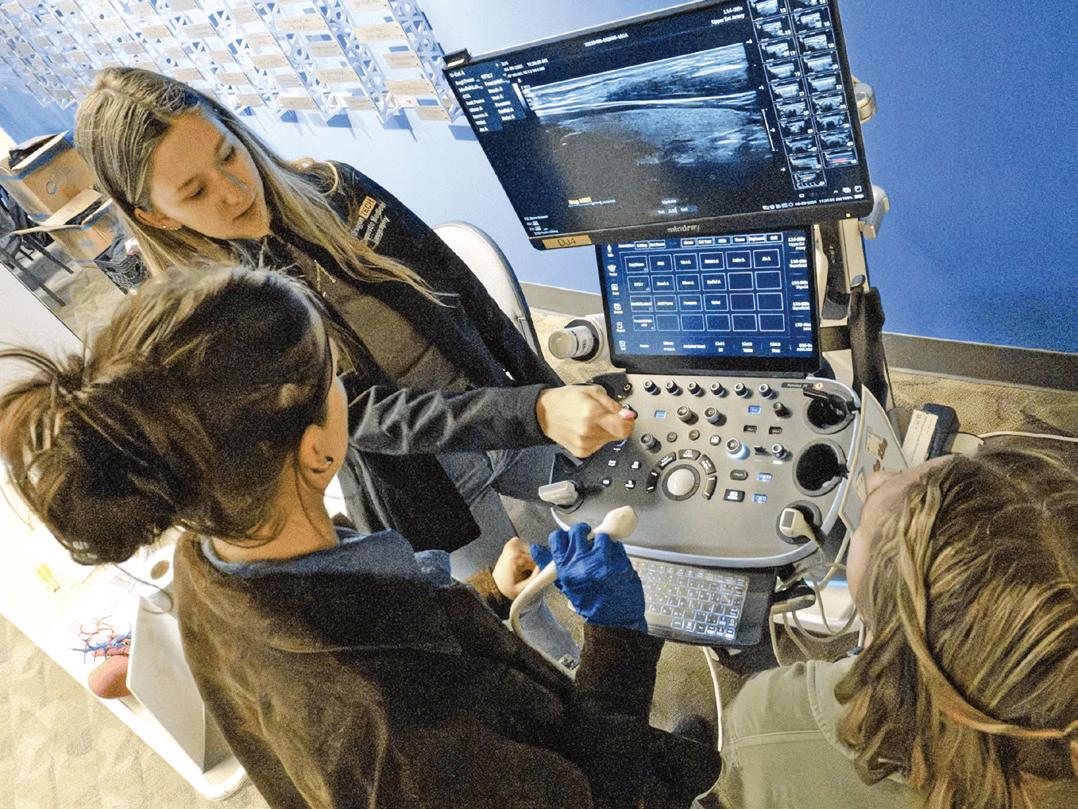
Medical imaging technology students at the Oregon Institute of Technology. A welding student at Rogue Community College.

Rodriguez’s CNA program is part of a new CTE campus that opened in Klamath Falls in the fall. The campus is a partnership between Sky Lakes Medical Center, Klamath County School District, Klamath Community College and the Oregon Institute of Technology
The partnership gives students more options and clearer pathways into jobs or college. Some students can graduate and go straight to work. Others receive more training in college. But they don’t have to choose.
“It was always one of those things where you were told you’re either going to college, or you’re going to work,” said Laura Meyer, director of nursing and allied health at RCC.
JPR News Focus: Education
“They see the purpose there,” said Jessica Gross, clinical pipeline program manager at Sky Lakes. “Versus ‘I have to take geometry. What am I ever going to do with geometry?’”
The jobs can also offer a sense of security.
Rodriguez said the COVID-19 pandemic and the rise of artificial intelligence have made her and her classmates rethink their futures.
“This hands-on, actively doing something kind of work is very valuable because you’re giving yourself an insurance plan,” she said.
The regional workforce is in dire need of workers, especially in health care, construction and manufacturing.
“Now, college has kind of come to high school and said, ‘Hey, let’s do both.’”
The coursework can also create new choices for students, said Ashleigh Carter, a professional development instructor at Sky Lakes.
“A lot of the people in our community don’t really have the opportunity to pay for school outright, or the realistic expectations of their life, maybe, have been set lower because their economic background isn’t very strong,” she said. “These kinds of programs help us show them that there is possibility.”
Sometimes that means exposing them to careers they’ve never heard of.
“They think physician. They think nurse, physician assistant, nurse practitioner, because that’s what they see,” said Michelle Preston, associate dean for the College of Health, Arts and Sciences at Oregon Tech. “But there are so many other health care professions out there that they may not need a degree, and they can go right into the workforce.”
‘What am I ever going to do with geometry?’
For many students, these industries might make more sense than a four-year university. They offer good-paying jobs that students can enter relatively quickly.
“Do I need $100,000 worth of debt first?” said Steven Hobbs, dean of allied health and sciences at KCC. Or, he said, a student could spend about $8,000 on training, get licensed, start working and return for more education later once they’re earning a salary.
For many students, the appeal is simple: the lessons connect directly to real jobs.
At the same time, the kind of skills the labor market rewards may be changing.
Bret Anderson, an economics professor at SOU, said high-paying jobs have traditionally favored skills like coding and analytical thinking.
“In the last few years, it’s been revealed that the labor market may not be rewarding those skills quite like they were in the past,” he said. “The question is, what is the labor market going to favor in terms of who’s going to benefit in this moment?”
Now, Anderson said, employers are placing greater value on soft skills, like relationship building and good judgement— skills that Rodriguez and other students practice as they tend to those hospital patients.
Meanwhile, students are gaining more opportunities to explore careers in health care and beyond.
RCC recently announced plans to expand its transportation technology facilities to help meet a shortage of automotive and diesel mechanics in the region.
Last fall, Oregon Tech created a construction management degree. The program initially enrolled about 10 students, but they aim to increase enrollment ten-fold with the help of grantfunded scholarships.
The new CTE center in Klamath Falls is currently focused only on health care, but the plan is to grow into other industries.
Jane Vaughan is a regional reporter for Jefferson Public Radio. Jane began her journalism career as a reporter for a community newspaper in Portland, Maine. She’s been a producer at New Hampshire Public Radio and worked on WNYC’s On The Media.
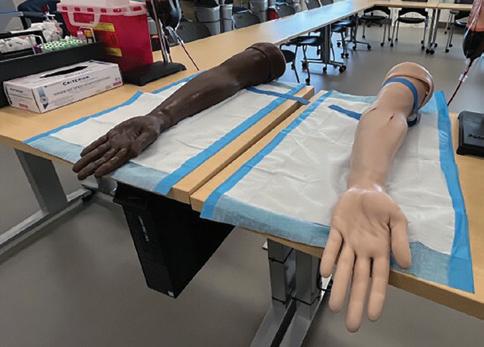
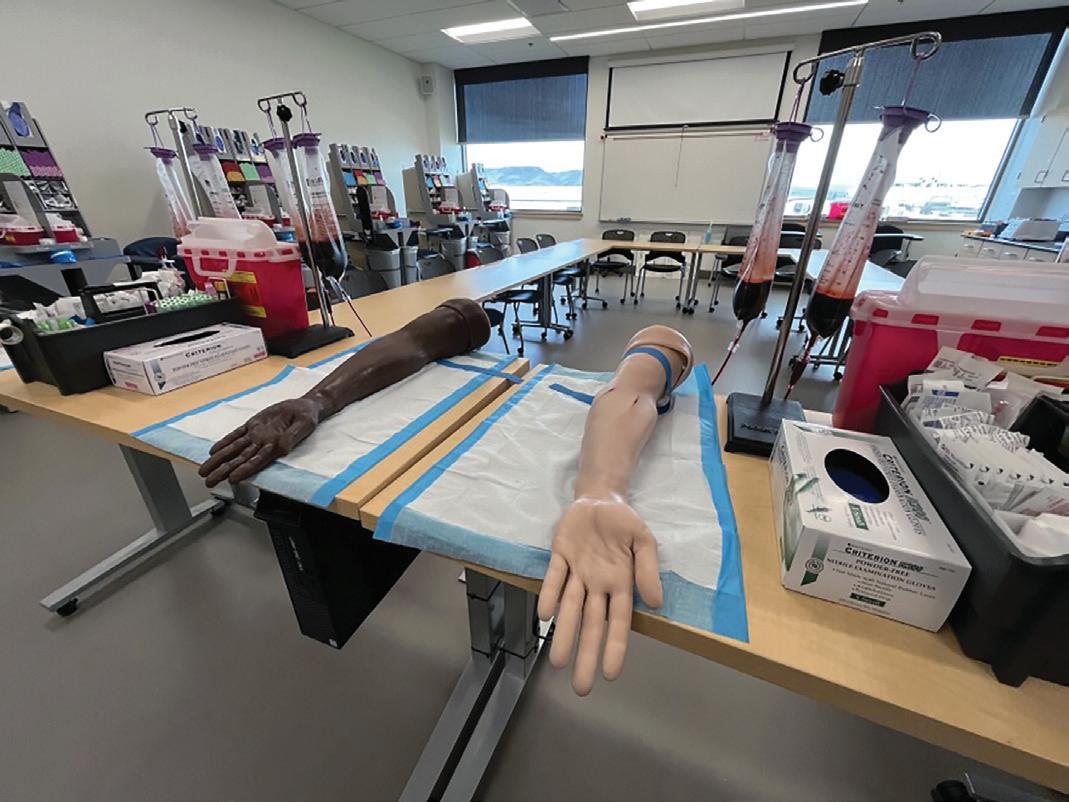
The phlebotomy lab at Rogue Community College. Shown on Feb. 12, 2026.
Part of the team affiliated with Klamath Falls’ new CTE campus.
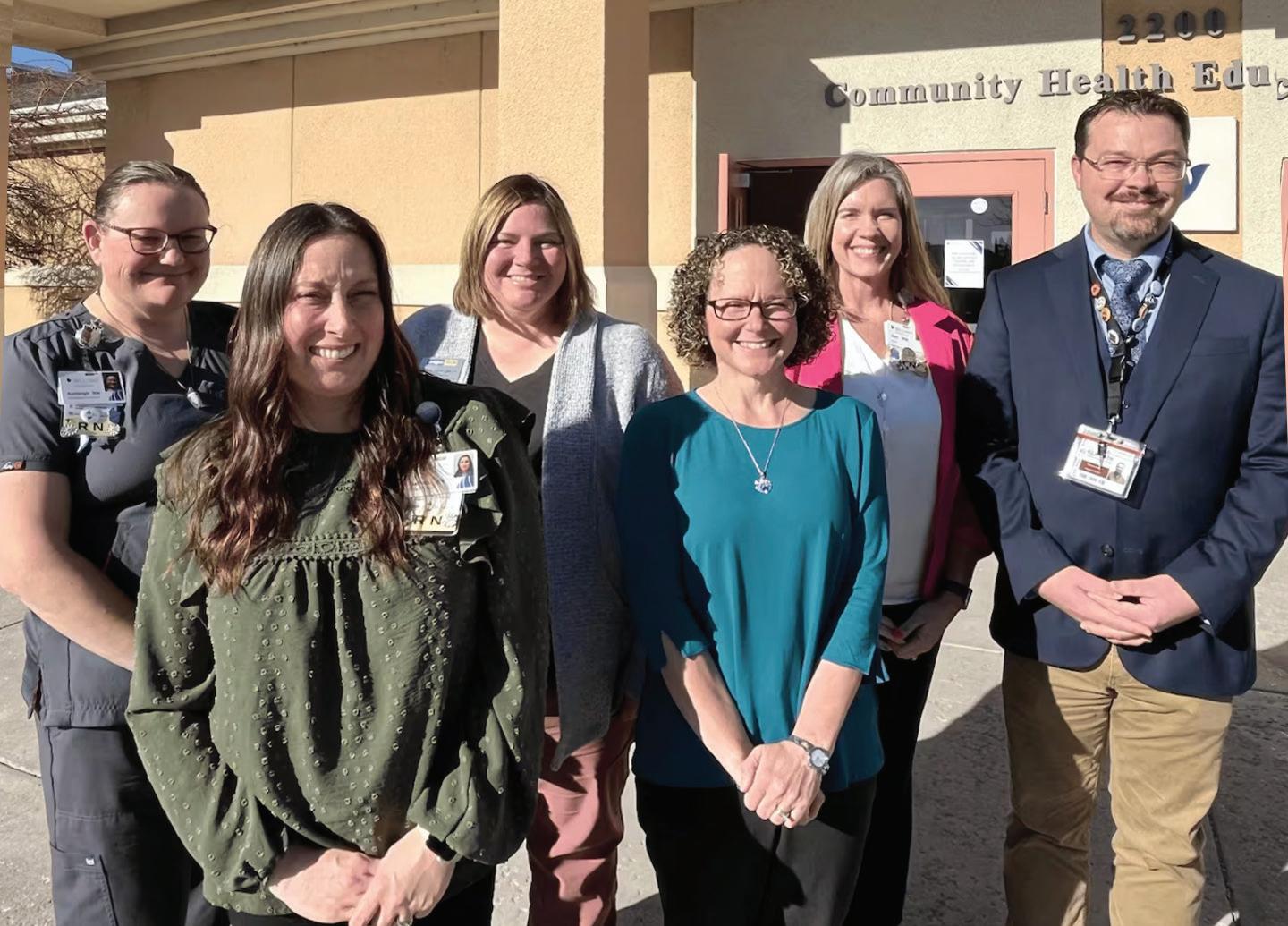
From l-r: Ashleigh Carter, professional development instructor at Sky Lakes; Jessica Gross, clinical pipeline program manager at Sky Lakes; Mary Jane Owen, associate director of educational partnerships and outreach at the Oregon Institute of Technology; Michelle Preston, associate dean for the College of Health, Arts and Sciences at Oregon Tech; Jennifer Jacobs, director of training and development at Sky Lakes; and Steven Hobbs, dean of allied health and sciences at Klamath Community College. Shown on Feb. 5, 2026.
JANE VAUGHAN/JPR
JANE VAUGHAN/JPR

JONI AUDEN LAND
LAW & JUSTICE
“There are multigenerational families that have been here since the 1800s,” he said. “It doesn’t take long to prosecute enough people to where you’ve pissed off half the county.”
‘It’s Untenable’: Lake County District Attorney Suddenly Resigns, Cites Lack of Funding
Lake County District Attorney Paul Charas said a lack of funding has made it difficult to prosecute cases in the rural Oregon county.
Lake County District Attorney Paul Charas will resign from his position, a little more than a year into his four-year term, citing a chronic lack of funding that has made it difficult to prosecute cases.
Charas told OPB that the lack of resources inhibits his ability “to do my job ethically and morally.”
“It’s untenable down here in terms of what resources have been allocated to this office,” Charas said.
The Lake County District Attorney’s Office currently has a total annual budget of around $202,000. Charas said the vast majority of that goes toward employee expenses, not including his own, leaving very little to cover the actual cost of prosecuting crimes.
He’s also the only prosecutor in a county the size of New Jersey, with a population of around 8,000. Charas regularly juggles dozens of different cases at once, and said that made the job personally difficult at times.
“There are multigenerational families that have been here since the 1800s,” he said. “It doesn’t take long to prosecute enough people to where you’ve pissed off half the county.”
His office only has $2,500 per year to spend on trials and witnesses, according to the annual budget. Charas said that equates to about $55 per case; he said he can’t afford to hire expert witnesses, which can hurt his ability to prosecute certain cases.
“It makes it difficult to do it properly,” he said. “We don’t have the resources to handle everything in-house.”
Since coming to office in January 2025, Charas has asked the Oregon Department of Justice to take on 10 cases, including homicides, because he doesn’t have the resources.
District attorneys receive their salaries from the Oregon Legislature, but county governments set their annual budgets. Counties also often supplement a district attorney’s salary.
Lake County Commissioner James Williams said Thursday that his entire county has faced revenue issues for years, beyond just the district attorney’s office.
“Mr. Charas knew Lake County’s [district attorney] budget and the hardship that Lake County as a whole was facing before he took the oath of office,” Williams said.
Continued on page 23

A sign outside Lakeview, the seat of Lake County, Oregon. The Lake County District Attorney announced he would resign due to the lack of resources his office possesses.




















JPR News Focus: Law & Justice
Continued from page 21
Williams said the county has had conversations about putting a levy out to residents to fund public safety in Lake County. But he’s skeptical that, with such a small population, it could generate revenue and that residents have the appetite for more taxes.
“Cost of living is already going up and there’s only so much a community can sustain,” he said. “I don’t think it’s even palatable to consider.”
Many district attorneys’ offices across the state have had to manage a lack of resources and prosecutors. In Central Oregon’s Jefferson County, the only candidate for district attorney was suspended in 2018 for lying to state investigators while in office. That county also has a backlog of cases, due to a lack of prosecutors.
Oregon has had a well-documented shortage of public defenders for years. But Union County District Attorney Kelsie McDaniel said there’s also a shortage of prosecutors in many counties—her office currently has two vacancies.
She also has experienced trying to prosecute cases on tiny budgets. Her budget for investigations was recently $2,000 for a whole year.
“You have one murder trial with expert witnesses, you’re going to suck through that in no time flat,” McDaniel said.
She said she hopes the Legislature can start providing special funding for district attorneys, in order to bolster their budgets and make salaries more competitive with urban markets.
Local governments throughout Lake County have felt budgetary constraints in recent years. The county is overwhelmingly made of public land, leaving a very small tax base. That, combined with the bankruptcy of the Ruby Pipeline, means local revenues have slowed to a trickle.
As a result, Lake County and the town of Lakeview have made cuts to local services. The town has reduced its staff by 74% to nine total employees, according to staff. 911 services have been outsourced to Klamath County, and the Lake County Sheriff’s Office has less than 10 deputies for the entire county.
Gov. Tina Kotek announced Wednesday that her office is accepting applications for those interested in replacing Charas as district attorney. Applications are due May 8.
Charas said he will remain in office until Aug. 4.

Joni Land is a general assignment reporter, producing stories for OPB, a JPR news partner. Their reporting comes to JPR through the Northwest News Network, a collaboration between public media organizations in Oregon and Washington.

STATIONS & PROGRAMS
Classics & News Service







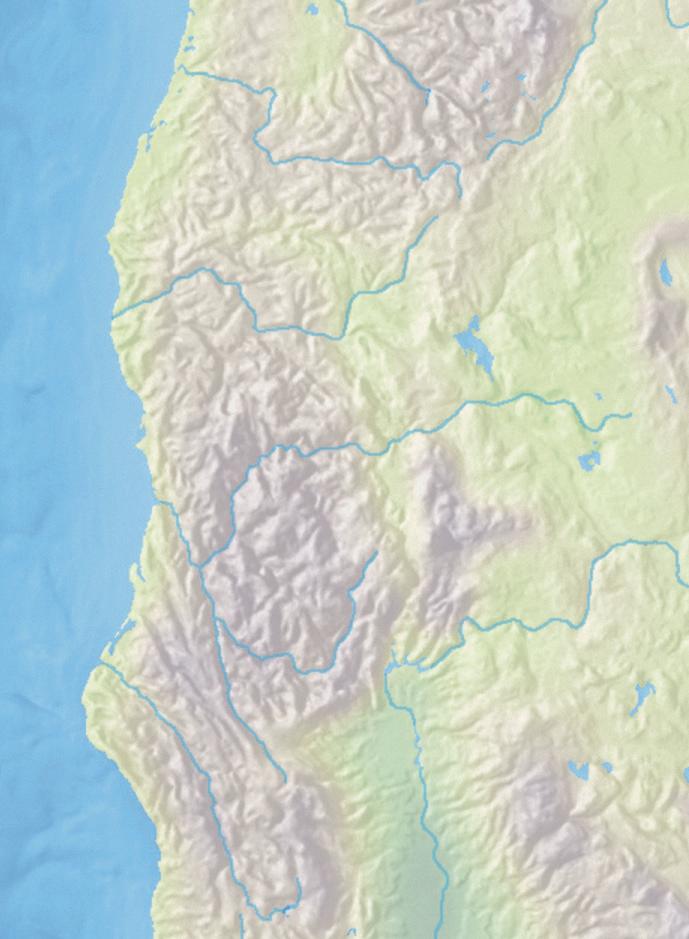
FM Transmitters provide extended regional service. (KSOR, 90.1FM is JPR’s strongest transmitter and provides coverage throughout the Rogue Valley.)
FM Translators provide low-powered local service.
Translators
88.1 FM
Monday through Friday..
5:00am Morning Edition
8:00am First Concert
12:00pm Siskiyou Music Hall
2:00pm Performance Today
4:00pm All Things Considered
6:30pm The Daily
7:00pm Exploring Music
8:00pm State Farm Music Hall
Saturday
5:00am Weekend Edition
8:00am First Concert
10:00am Met Opera
2:00pm Played in Oregon
Stations
KSOR 90.1 FM
KSRG 88.3 FM
3:00pm The Chamber Music Society of Lincoln Center
4:00pm All Things Considered
5:00pm New York Philharmonic
7:00pm State Farm Music Hall
Sunday
5:00am Weekend Edition
9:00am Millennium of Music
10:00am Sunday Baroque
12:00pm American Landscapes
1:00pm Fiesta!
2:00pm Performance Today Weekend
4:00pm All Things Considered
5:00pm Chicago Symphony Orchestra
7:00pm State Farm Music Hall
KSRS 91.5 FM
KNYR 91.3 FM
KOOZ 94.1 FM
MYRTLE POINT/COOS BAY
Coos Bay 90.5 FM / 89.1 FM Etna / Ft. Jones 91.1 FM Gasquet 89.1 FM Gold Beach 91.5 FM
METROPOLITAN OPERA
May 2: Eugen Onegin by Pyotr Tchaikovsky (Live in HD)
May 9: La Fille Du Regiment by Gaetano Donizetti
May 16: Listener’s Choice (an archival favorite chosen by listener voting)
May 23: Turandot by Giacomo Puccini
May 30: El Ultimo Sueño De Frida Y Diego by Gabriela Lena Frank (MET Premiere)
WFMT OPERA
June 6: The Bartered Bride by Bedrich Smetana
June 13: Fidelio by Ludwig van Beethoven
June 20: Lady Macbeth of Mtsensk by Dmitri Shostakovich
June 27: Ariodante by George Frideric Handel
KZBY 90.5 FM
COOS BAY
KLMF 88.5 FM KLAMATH FALLS
KNHT 102.5 FM
RIO DELL/EUREKA
Grants Pass 101.5 FM Happy Camp 91.9 FM Lakeview 89.5 FM Langlois, Sixes 91.3 FM
LaPine/Beaver Marsh 89.1 FM

La Fille du Régiment. Set high in the Austrian Alps, this delightful rom-com tells the story of Marie, an intrepid young orphan raised by a regiment of French soldiers.
STATIONS & PROGRAMS
Rhythm & News Service



Monday through Friday..
5:00am Morning Edition
9:00am Open Air
3:00pm Today, Explained
3:30pm Marketplace
4:00pm All Things Considered
6:00pm World Café

8:00pm Folk Alley (M) Mountain Stage (Tu) American Routes (W) The Midnight Special (Th) Open Air Amplified (F)
10:00pm XPoNential
3:00am World Cafe
Saturday..
5:00am Weekend Edition
9:00am Wait Wait...Don’t Tell Me!
10:00am Radiolab
FM Transmitters provide extended regional service.
FM Translators provide low-powered local service.
Stations
KSMF 89.1 FM
KSBA 88.5 FM
BAY KSKF 90.9 FM
11:00am Snap Judgement
12:00pm E-Town
KNCA 89.7 FM BURNEY/REDDING KNSQ 88.1 FM MT. SHASTA
KVYA 91.5 FM CEDARVILLE/ SURPRISE VALLEY
News & Information Service
1:00pm Mountain Stage
3:00pm Folk Alley
5:00pm All Things Considered
6:00pm American Rhythm
8:00pm The Retro Cocktail Hour
9:00pm The Retro Lounge
10:00pm Late Night Blues
12:00am XPoNential
Sunday..
5:00am Weekend Edition
9:00am TED Radio Hour
10:00am This American Life
11:00am The Moth Radio Hour
12:00pm Jazz Sunday
2:00pm American Routes
4:00pm Sound Opinions
5:00pm All Things Considered
6:00pm The Folk Show
9:00pm WoodSongs Old-Time Radio Hour
10:00pm The Midnight Special 12:00am XPoNential
Translators
Callahan/Ft Jones 89.1 FM Cave Junction 90.9 FM
89.3 FM
Stations
KSJK AM 1230
TALENT
KAGI AM 930
GRANTS PASS
Monday through Friday..
12:00am BBC World Service
7:00am 1A
9:00am The Jefferson Exchange
10:00am Here & Now
12:00pm BBC News Hour
1:00pm Today, Explained
1:30pm The Daily
2:00pm Think
3:00pm Fresh Air
4:00pm The World
5:00pm On Point
6:00pm 1A
7:00pm Fresh Air (repeat)
8:00pm The Jefferson Exchange (repeat of 9am broadcast) 9:00pm BBC World Service
AM Transmitters provide extended regional service.
FM Transmitter
FM Translators provide low-powered local service.
KTBR AM 950
ROSEBURG
KRVM AM 1280
EUGENE
KSYC 103.9 FM
Saturday
12:00am BBC World Service
7:00am Inside Europe
8:00am Left, Right & Center
9:00am Freakonomics Radio
10:00am Planet Money/How I Built This
102.3 FM
KJPR AM 1330 SHASTA LAKE CITY/ REDDING
11:00am Hidden Brain
12:00pm Living on Earth
1:00pm Science Friday
3:00pm Unexpected Elements
4:00pm The Ezra Klein Show
5:00pm Radiolab
6:00pm Selected Shorts
7:00pm BBC World Service
Sunday..
12:00am BBC World Service
7:00am No Small Endeavor
8:00am On The Media
9:00am Throughline 10:00am Reveal
11:00am This American Life
12:00pm TED Radio Hour
1:00pm The New Yorker Radio Hour
2:00pm Fresh Air Weekend
3:00pm Milk Street Radio
4:00pm Travel with Rick Steves
5:00pm This Old House Radio Hour
6:00pm The Moth Radio Hour
7:00pm BBC World Service
Translators
Ashland/Medford 102.3 FM
Klamath Falls 90.5 FM / 91.9 FM Grants Pass 97.9 FM
96.9 FM
96.3 FM
98.7 FM
NEWS BRIEFS
California Reopens Salmon Fishing, But Crescent City Fishermen Still Shut Out
By Justin Higginbottom/JPR News
Regulators will allow Chinook salmon fishing along California’s coast for the first time in three years, but restrictions remain in areas of Northern California.
The Pacific Fishery Management Council will allow commercial fishing for Chinook salmon off California’s coast after a threeyear ban aimed at helping populations recover from drought.
Recent signs suggest salmon populations are rebounding, said California Department of Fish and Wildlife information officer Steve Gonzalez.
“Salmon are on a three-year cycle, so the three years where the fishery was closed kind of reflects the three years prior that there was a drought,” Gonzalez said. “What we’re seeing now is the first year of a wet winter, and then other policies that we changed and improved on.”
Those changes include dam removals along spawning areas in the Klamath River, he said.


“This fish is iconic for the state of California, for the tribal nations, for families going out fishing with their kids,” Gonzalez said. “It’s hopeful news.”
But fishermen in Crescent City aren’t celebrating. Commercial salmon fishing is remains prohibited within protected areas, including the Klamath Management Zone, which covers Crescent City and Eureka.
Rick Shepard, a Crescent City Harbor District commissioner, said the restrictions continue to harm the local economy.
“It’s devastating to the harbor and to the community,” he said. “At one time, one of the largest revenues for the harbor and for our community was salmon fishing.”
Shepard said he supports conservation efforts, but he said his harbor hasn’t been able to enjoy the successes of that work.
This morning, he said, he caught his limit of salmon in nearby Brookings, Oregon, which he described as teeming with fish and people.
“And we’re sitting here…. It’s a vacant parking lot in my harbor,” he said. “Nobody’s here.”
Sport fishermen out of Crescent City will be allowed to catch around 3,900 Chinook salmon this summer. Shepard said that the limit could be reached in a week.
Commercial fishing below Point Arena in Mendocino County is scheduled to begin in May.
Grants Pass Couple’s Second Attempt to Leave Library District Fails







Josephine County Commissioners rejected the petition to leave the library district, deciding Mike and Winnie Pelfrey can reasonably access services.
n April 15, Josephine County commissioners denied a Grants Pass couple’s second attempt to withdraw their property from the Josephine Community Library District, concluding they can reasonably access the service.





Mike and Winnie Pelfrey have sought for years to opt out of the district and avoid paying its property tax. Commissioners approved an earlier petition in 2023, but it was later withdrawn after legal action.
With a new board and a revised petition process, the couple filed again.
At a public hearing, Mike Pelfrey argued he does not benefit from library services, offering a range of objections.
“I have trouble sleeping at night,” he said. “No one from the library has showed up at my house to read a book to me to help me go to sleep.”
Pelfrey also criticized the presence of homeless individuals and activist groups at the library and said the taxes he pays exceed what the district describes on its website.
The district charges out-of-district residents $60 a year for a library card, which it says is roughly equivalent to what in-district households pay through taxes. Pelfrey said he paid $116 to the district last year. County data shows the assessed value of the couple’s property is much higher than the county average.
Mark Bartholomew, legal counsel for the library district, told commissioners that while he personally does not use the library, state law does not allow property owners to opt out of paying the tax.
Bartholomew said it is virtually unheard of for requests like the Pelfrey’s to be approved.
“That’s just simply because the law does not permit it,” he said.
Under Oregon law, property owners must show they cannot feasibly receive a district’s services to be excluded from its boundaries.
Commissioners said the Pelfreys do not meet that standard.
“There are no unique geographical, physical, logistical or other extenuating circumstances that would render service infeasible for this specific parcel,” Commissioner Gary Richardson said.
The Pelfreys live less than two miles from the nearest library branch.
Richardson said the board had little discretion under the law, given the facts of the case. Commissioners voted unanimously to deny the petition.


Medical Examiner’s Office Confirms Missing Family Found in Columbia River
By OPB Staff
The Martin family disappeared while visiting the Columbia River Gorge in December 1958.
The Oregon State Medical Examiner’s Office has identified the remains of a family that had been missing for more than 60 years.
Just over a year ago, investigators pulled the Martin family’s wrecked car from the Columbia River and recovered the remains of three people.
On April 16, the Hood River County Sheriff’s Office announced that the people inside were Kenneth Martin, Barbara Martin and Barbie Martin. Their remains were confirmed through DNA analysis by Othram, Inc., a forensic genetics laboratory.
“Othram uses the identity inference method, which allows scientists to identify individuals from DNA evidence even when no direct comparison sample is initially available,” Sgt. Joel Ives, a spokesperson with the sheriff’s office, said in a statement.
The family disappeared on Dec. 7, 1958, while visiting the Columbia River Gorge to collect Christmas greenery, according to the sheriff’s office.
A few months later, two siblings, 13-year-old Virginia and 11-year-old Susan Martin, were found downstream from the Columbia River. But their older sister, Barbie, and parents, Kenneth and Barbara, were not located despite several searches.
Last year, police worked to pull the vehicle out of the water after a private diver, Archer Mayo, alerted authorities that he had located a car in a catch-basin area of the river that he believed belonged to the Martin family.


INSIDE THE BOX
SCOTT DEWING

This is a massive, uneven, fast-moving displacement that our education systems, social safety nets, and retraining infrastructure are not equipped to handle.
White-Collar Winter is Coming
In a scene eerily reminiscent of the Queen of Hearts in Alice’s Adventures in Wonderland decreeing, “Off with their heads!”, Salesforce CEO Marc Benioff didn’t mince words when announcing the replacement of roughly half of the company’s customer service workforce with AI.
“I’ve reduced it from 9,000 heads to about 5,000, because I need less heads,” Benioff said in a recent interview.
Welcome to the opening act of “white-collar winter”—the first era in human history in which cognitive labor, not just physical labor, faces systematic replacement by machines. And unlike the factory floor automation of the 20th century, this one is moving faster than any workforce transition in history.
Agentic AI—the term for AI systems that don’t just answer questions but autonomously pursue goals, make decisions, and execute multi-step tasks without direct human supervision—is the technology driving this transition. It is categorically different from the chatbot you’ve grown accustomed to. An AI agent doesn’t wait to be asked. It acts. And in 2026, it is acting at scale.
In 2025, more than 54,000 job layoffs were directly attributed to AI, according to data from Challenger, Gray & Christmas (CGC), a global employment outplacement firm. Since companies began citing AI as a reason for layoffs in 2023, more than 71,000 jobs have been eliminated with AI explicitly identified as the cause.
The hatchet came down particularly hard on white-collar jobs in 2025. Amazon eliminated 14,000 corporate roles. Microsoft cut a total of 15,000 jobs. UPS deployed agentic AI logistics systems that optimized routes, managed loads, and implemented dynamic pricing—then shut down 73 facilities and eliminated 20,000 jobs.
As an opening salvo for 2026, Amazon announced plans to eliminate 16,000 corporate positions. A month later, Block CEO Jack Dorsey cut the fintech compa-
ny’s workforce nearly in half, to fewer than 6,000 employees, in what became the largest single AI-attributed layoff event in corporate history. Oracle then delivered the single largest blow of the quarter, laying off 30,000 employees globally.
This trend will likely continue. Gartner predicts that 40 percent of enterprise applications will include autonomous AI agents executing entire business workflows independently by late 2026. The World Economic Forum (WEF) projects 92 million human job roles will be displaced globally by 2030.
The official reassurance from some economists is that AI will create more jobs than it destroys. The WEF’s own Future of Jobs Report 2025 projects 170 million new roles emerging alongside those 92 million displaced for a net gain of 78 million positions.
Historically speaking, that’s been the playbook. The Industrial Revolution wiped out hand-loom weavers and created railway engineers. Automation hollowed out assembly lines and gave us software developers.
But there is a structural problem with the “net gain” argument. The new jobs created by agentic AI will overwhelmingly require AI literacy, technical sophistication, and continuous upskilling.
A 55-year-old middle manager whose institutional knowledge and team leadership skills took three decades to develop doesn’t quickly pivot to becoming an AI agent product manager.
Gartner predicts that through 2026, 20 percent of organizations will use AI to flatten their organizational structure, eliminating more than half of current middle management positions.
This is a massive, uneven, fast-moving displacement that our education systems, social safety nets, and retraining infrastructure are not equipped to handle. But the long-term economic transformation should give us even greater pause.
McKinsey estimates that AI could deliver an additional $13 trillion in global economic output by 2030. PwC puts the AI contribution to the global economy at $16 trillion by the same year. KPMG projects AI-driven productivity gains could add $3 trillion to U.S. GDP by 2030, and $3 trillion by 2050. These are extraordinary, civilization-changing numbers. And therein lies the problem. When machines and software replace human labor, the economic gains accrue to capital—to the owners of the machines and software—not to the workers those machines replaced.
Inside the Box
Continued from previous page

Researchers studying the long-term, post-AI economic landscape are increasingly frank about where this trajectory leads.
Yale economist Pascual Restrepo’s recent modeling of the post-AI economy concludes that humans will become “economically negligible” as wages stagnate and our share of economic output dwindles.
Economist Pascal Stiefenhofer at Newcastle University put it more bluntly: “The emergence of [AI]...reduces the marginal productivity of human labor, ultimately pushing wages toward zero.”
This is the probable outcome of the economic forces already in motion, accelerated by a technology that is, for the first time in history, capable of replacing not just our muscles but our minds.
Guns replaced spears. Tractors replaced farmhands. Industrial robots replaced assembly line workers. Each transition was wrenching, but each left cognitive work that machines couldn’t touch securely in the human domain.
Agentic AI is different. It is coming for the cognitive domain itself—for the analysis, the judgment, the communication, the management, and the creative problem-solving that white-collar workers believed was their permanent competitive advantage over machines.

But the future isn’t necessarily all doom and gloom. There are scenarios in which this could all turn out well. AI-generated abundance could be broadly distributed through universal basic income funded by taxes on AI-generated productivity, cooperative ownership of AI infrastructure, and aggressive reskilling programs. Some of that policy conversation is happening, but not enough of it and not fast enough.
Technology does not wait for the social contract to catch up with it. By the time policymakers finish debating, the middle of the workforce will already be hollowed out.
The great irony in all of this is that the same AI systems now eliminating jobs are also being asked to help solve the problem of their own economic disruption—to model solutions, draft policy proposals, and analyze transition pathways.
We are asking the machine that is rewriting the economy to tell us how to survive being rewritten and overwritten by it.
And the machine, for all its impressive capabilities, doesn’t have any skin in this game.
Scott Dewing is a technologist and human writer who hasn’t (yet) been fully replaced by AI.


MONICA SAMAYOA
Oregon’s Ambitious Greenhouse Gas Reduction Program Faces a Fresh Legal Challenge ENERGY
Fossil fuel companies, farms, unions and business groups are taking the state Department of Environmental Quality to court over a program they call “economically infeasible.”
Oregon’s ambitious greenhouse gas reduction program is facing legal challenges again, a year after it restarted following a previous court decision.
This time, more than two dozen groups, including gas utilities, labor unions and trade associations, are once again challenging the state’s authority to implement the Climate Protection Program, which was created through an executive order rather than legislation.
The groups also claim the program will “inflict substantial and irreparable harm” to businesses that could face millions of dollars in costs and Oregonians, who see some of those costs reflected on their utility bills.
“We can work collectively to reduce greenhouse gas emissions, but we cannot do so through a program that is economically infeasible and simply piles costs onto Oregon’s families, businesses and even governments,” Oregon Business & Industry President and CEO Angela Wilhelms said in a statement. “We can support ideas that are affordable, accountable and legally sound, but the Climate Protection Program fails on all three counts. That’s why this coalition saw a need to take legal action.”
On April 16, nearly 30 petitioners led by the Oregon Business & Industry filed an Oregon Court of Appeals petition against the Oregon Department of Environmental Quality, which oversees the Climate Protection Program. The program imposes gradual limits on greenhouse gas emissions from oil and natural gas companies, like NW Natural, Avista Corporation and Cascade Natural Gas, with a target of 90% reduction by 2050. The program also allows fossil fuel suppliers to reduce emissions through the program’s Community Climate Investment credit program; if regulated entities do not reduce their emissions, they must buy credits at the cost of $136 per ton of carbon emissions.
The state’s effort to reduce its greenhouse gas emissions means tackling some of the hardest industries to regulate—fossil fuel industries.
Fossil fuels, like oil and gas, have been an essential part of people’s lives, heating homes and fueling vehicles. But as the climate crisis worsens and science indicates the burning of fossil fuels continues to make human-caused climate change worse, companies and industries that rely on these commodities are facing bleak trade-offs in states pushing them to reduce carbon emissions and move toward renewable energy sources.
This presents a critical challenge for industries whose busi-
The state’s effort to reduce its greenhouse gas emissions means tackling some of the hardest industries to regulate—fossil fuel industries.

A blue flame burns on a natural gas stove.
ness model relies on the distribution and delivery of fossil fuels. NW Natural has long criticized the Climate Protection Program for imposing limits or fees on its use of natural gas while not imposing similar limits and costs on electric companies that use gas to generate power, officials with the company have told OPB in the past. Electric utilities are required to end use of greenhouse gas emitting fuels by 2040 under a separate program passed by the state Legislature, but they do not have to purchase emissions credits for the fossil fuels they use before then.
In the lawsuit filed, petitioners argue the program’s compliance costs are the highest in the nation and don’t allow for affected companies to link with other neighboring cap-andtrade programs like Washington, California and Québec. Earlier this year, those three jurisdictions have agreed to link their programs, creating a massive cap-and-trade program, and they are currently drafting an agreement.
“It’s a ‘cap’ without a legitimate ‘trade’ component and has no legislative oversight, making it an outlier versus every other program out there,” Alliance of Western Energy Consumers CEO Bill Gaines said in a statement. His group is a plaintiff in the lawsuit and represents businesses from Oregon, Washington and Idaho in rate proceedings and regulatory proceedings that directly affect energy costs.
“The (Climate Protection Program) is a real problem because it doesn’t link to market-based carbon programs in neighboring states, and the costs are dramatically higher. This is an issue that can only practically be addressed by the Oregon Legislature.”
But the idea of a cap-and-trade program has been a controversial issue in the state Legislature for many years. Republican lawmakers shut down the Oregon Legislature two years in a row to stop majority Democrats from passing a cap-and-trade bill.
Environmental groups argue the Climate Protection Program is needed to help the state reduce its greenhouse gas emissions. Oregon is already two years behind its own schedule. If this program goes away, the state may not reach any of its goals.
Climate Protection Program’s legal challenges
The first iteration of the Climate Protection Program was created under former Gov. Kate Brown’s Executive Order 20-04 as an attempt to regulate emissions after legislators failed to pass their own climate policies. Brown’s order directs certain state agencies to take action to reduce greenhouse gas emissions and mitigate the impact of climate change.
When it launched in 2022, it was deemed one of the strongest climate action programs in the nation.
But the fossil fuel groups who would be regulated under the program filed a lawsuit in early 2022 looking to block its implementation entirely.
In late 2023, the Oregon Court of Appeals invalidated the program saying DEQ failed to comply with public disclosure requirements when adopting rules under the federal Clean Air Act. That earlier lawsuit also challenged the Oregon Department of Environmental Quality’s authority to enforce the program.
Rather than appeal the court’s decision, DEQ decided to restart. The rebooted Climate Protection Program began imple-
mentation in January 2025. A court decision on whether the agency had authority to implement the program never came.
DEQ staff have said in the past that they were confident in the agency’s authority, but the lawsuit filed on April 16 brings up that concern once again.
The groups suing claim that “much has changed” since Brown’s executive order, including inflation, supply chain disruptions, federal shifts in energy policy and meeting energy demand.
“Notwithstanding these seismic economic shifts, the new Rule sticks with an essentially similar structure to the original iteration, fails to address the substantive legal flaws, and includes no concrete protections for Oregonians against the exorbitant increases in energy costs and associated affordability impacts this Rule will produce,” the lawsuit claims. “… [we] are asking the Court in the contemporaneous Petition to decide whether this sweeping regulatory program oversteps the Environmental Quality Commission’s limited authority under Oregon law.”

Monica Samayoa is a science and environment reporter for Oregon Public Broadcasting, a JPR news partner. Her reporting comes to JPR through the Northwest News Network, a collaboration between public media organizations in Oregon and Washington.


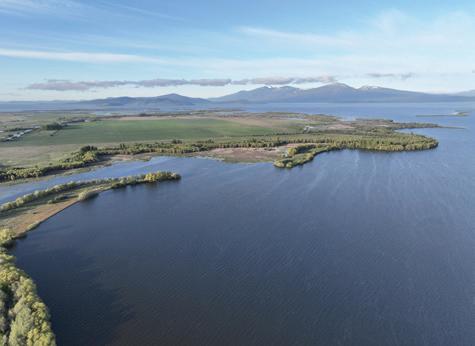
JPR NEWS FOCUS FOOD & AGRICULTURE
ROMAN BATTAGLIA
Snowpack levels are a key factor. In the Klamath Basin, snowpack is about 4% of average for this time of year—the lowest level since 2015, during a previous drought.
An Extremely Dry Winter Will Leave Farmers in The Klamath Basin with Less Water Than They Need.
The federal Bureau of Reclamation has announced this year’s water allocation for farmers who rely on Upper Klamath Lake, setting it at 221,000 acre-feet—just over half of what growers typically need.
An acre-foot is enough water to cover one acre to a depth of one foot. Roughly two acre-feet equals the volume of an Olympic-sized swimming pool.
Snowpack levels are a key factor. In the Klamath Basin, snowpack is about 4% of average for this time of year—the lowest level since 2015, during a previous drought.
The bureau is limiting water use from Upper Klamath Lake to meet federal requirements. Court orders and agreements with local tribes require the agency to maintain lake levels to protect endangered sucker fish and release water downstream to support salmon in the Klamath River.
Last year, farmers received enough water to meet their needs for the first time in six years. A drought that began in 2020 sharply reduced irrigation supplies, including a complete cutoff in 2021, prompting a standoff by some growers
“It’s much less than what we want to hear, although realistically not less than what we expected at this time,” said Elizabeth Nielsen, executive director of the Klamath Water Users Association, which represents farmers in the basin.
The association also criticized the existing regulations for allocating water in the Klamath Project.
“Right now, our drought problem is made worse by an ESA (Endangered Species Act) regulatory framework that was hurriedly adopted at the end of 2024,” said Scott Seus, president of
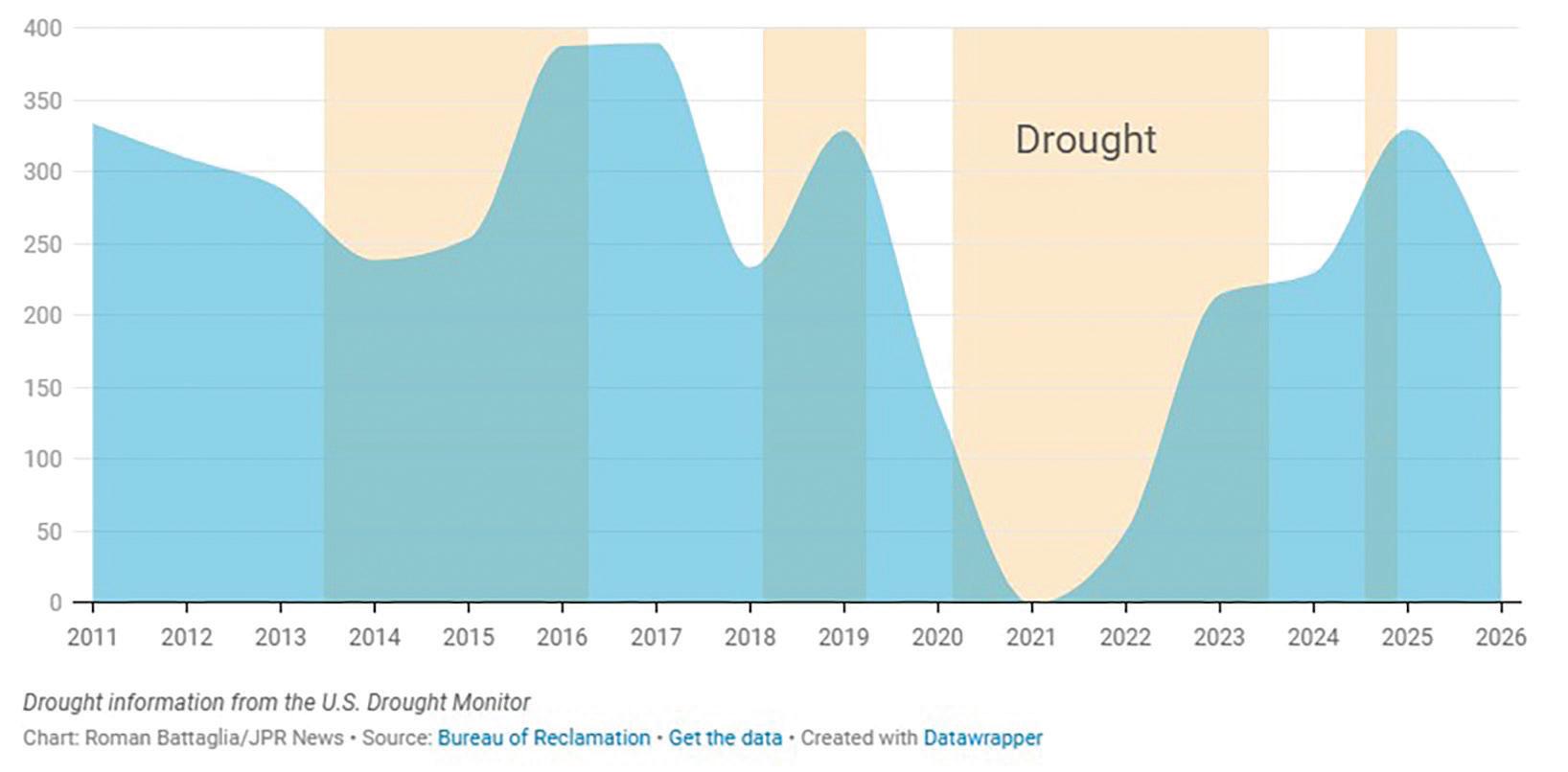
The bureau said the allocation is an initial estimate and could increase later in the year depending on conservation efforts and water conditions.
The agency also announced $19.1 million in drought resilience funding. Some of that money will go toward paying farmers to keep their land idle, with about 40,000 acres expected to be affected this year.
Roman Battaglia is a regional reporter for Jefferson Public Radio. After graduating from Oregon State University, Roman came to JPR as part of the Charles Snowden Program for Excellence in Journalism in 2019. He then joined Delaware Public Media as a Report For America fellow before returning to the JPR newsroom.Professional Journalists awards, more than a dozen Northwest
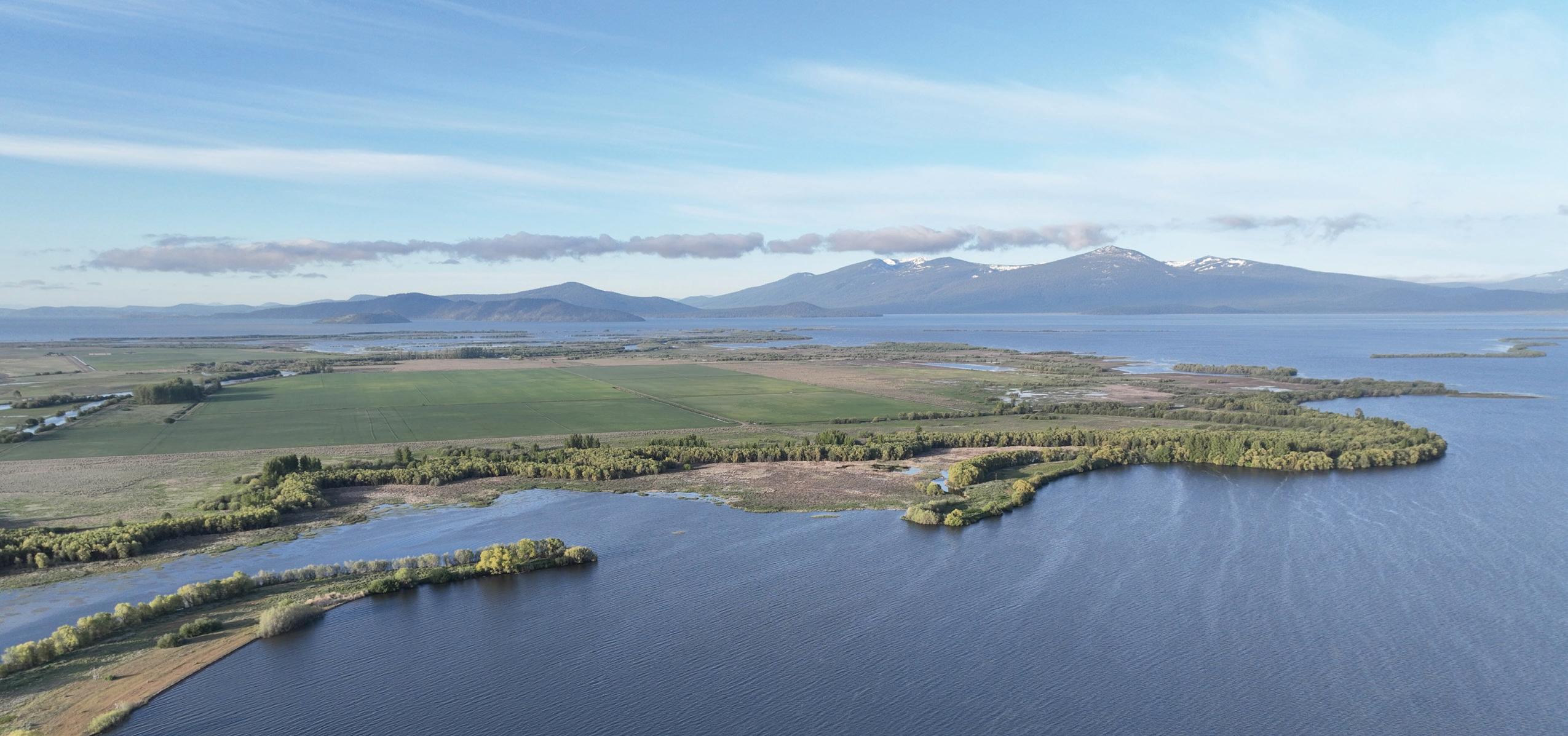
Aerial shot of Agency Lake, Upper Klamath Lake, May 19, 2024.
A dry winter leaves Klamath Basin Farmers with less water
Initial water allocations to Klamath Project Irrigators from Upper Klamath Lake, in Thousand Arce-Feet

Thank you to these generous donors...
7 Devils Brewing Company
Abacela Winery
Abbie Lane Farm
Ali@Urban Edge Salon
Amistad
Applegate Valley Wine Trail
Arbor House Restaurant
Art Bop Beer Co.
Art on First
As You Like It Guest Room
Ashland Creek Inn
Ashland Danceworks
Ashland Springs Hotel
Bambu Restaurant
Bar Juillet
Barking Moon Farm
Bee Regenerative
Bella Union Restaurant
Bloomsbury Books
Blue Collar Berry Patch
Brick & Fire Bistro
Britt Festival
Café Lumina
Calathea Home & Gift
Camelot Theatre
Chamber Music Concerts
Cliff Creek Cellars
Clyde’s Corner
Cocorico
Cowhorn Kitchen
Denny Bar Company
Dos Mariposas
Eagle Point Eye Care, PC
Epic Wellness NW
Etna Brewing Co.
Eugene Ballet
Fry Family Farm
GlowHaus Aesthetic
Gold & Gems Fine Jewelry
Great American Pizza Company
Green Springs Body Works
Green Springs Inn
Harana Cafe
Hearsay Restaurant
Heim - Sweets & Crafts & Things
Higher Power Mindful Raw Foods
Hill Station
Historic Rogue Theatre
Holly Theatre
Hopscotch
Iruai Wine
Kixx
Joey’s Hot Sauce
Jupiter Row
Kaleidoscope Pizzeria & Pub
Kate Jack Jewelry
Kobe Restaurant
Kriselle Cellars
La Clinica & The Learning Well
Lake Shasta Caverns
Le Mera Flower Farm
Leslie Crabtree
Louie’s of Ashland
Luminous Well-Being
Lymphatic Glow
Manzanita Home & Flower
McMenamins Pubs & Breweries
Medford Food Co-op
Mix Bakeshop / ReMix Coffee Bar
Momentum River Expeditions


Moonstone Crossing Winery
Mt. Ashland Ski Area
NAMA Ashland
Natalia Newman Photography
Northwest Nature Shop
Nous Restaurant
NW Ceramics
Oregon Cabaret Theatre
Oregon Shakespeare Festival
Out ‘n’ About Treehouse Treesort
Paschal Winery & Vineyard
People’s Choice Acupuncture
Pheasant Fields Farm
Piccadilly Cycles
PLAYA
Por Ti Nail + Lash Co.
Press For Oil
Ravissant Cellars
Redding Roots Revival Music Festival
Redwood Coast Music Festival
Remotion Wine
Resistance Wine Company
Rogue Creamery
Rogue Stoneware
Rogue Valley Growers & Crafters Market
Rogue Valley Symphony
Root to Fruit Chef
Runnymede Farm
Rusted Gate
Salant Family Ranch
Sargent Heirloom Woodworks
ScienceWorks Hands-On Museum
Sesame Collective
Shepherd’s Dream
Shooting Star Nursery
Skunk Train
Slow Burn
Southern Oregon Repertory Singers
Spring + Vine
Steelhead Water
StoneRiver Vineyards & Winery
Studio Sunless
Tagliaferro Ceramics
Talent Maker City
Terrene Winery & Cidery
The Butterfly Club
The Crown Jewel
The Gold Room at Jacksonville Inn
The Kitchen Company
The McCall House
The Miners’ Bazaar
The Red Tree House
Tlalli
Trader Joe’s
TreeWizWoodCarvings
Troon Vineyard & Farm
Tu Tu’ Tun Lodge
Turtle Bay Exploration Park
Upper Five Vineyard
Upper Rogue
Vital Salts
Vitality Health & Wellness
Walkabout Brewing Co.
Wall Flowers Wreaths and Garlands
Waxing by Krystal
Weisinger Family Winery
Whistling Duck Farm
Wild Wines
Wilde Gild Collective
Wilkins-Oliva Family
Willow-Witt Ranch
Wine Hopper Tours
YALA
Zi Spice

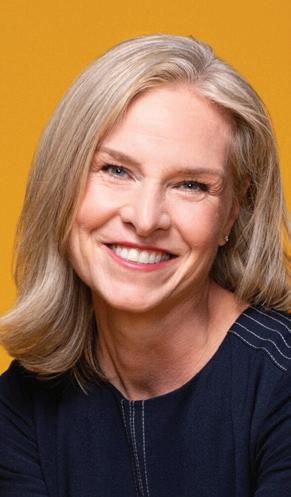



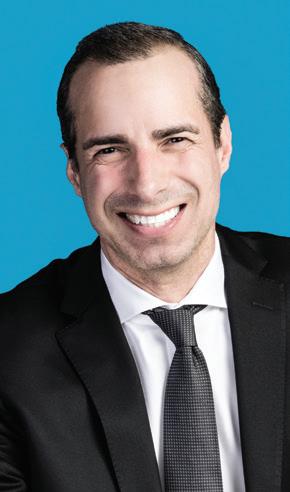
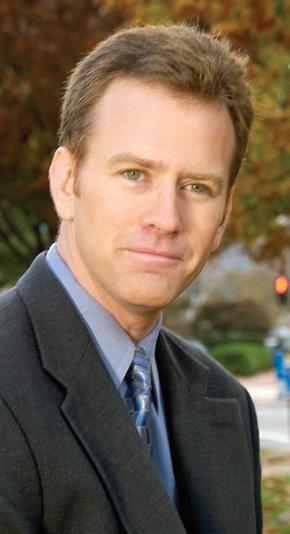
A Legacy of Public Radio...
So much has changed since JPR began in 1969. In many ways, public radio has grown up. What was once a struggling—almost experimental—operation has become a permanent and positive presence in the lives of so many in Southern Oregon and Northern California and across the nation.
We continue to seek and depend on regular membership contributions from supporters, especially new generations of listeners. But in the long run our future will depend, more and more, on special gifts from long-time friends who want to help Jefferson Public Radio become stronger and more stable.
One of the many ways that friends can choose to express their deep commitment to public radio here in our region is by supporting Jefferson Public Radio in their will or trust. This is a way to make a lasting contribution without affecting your current financial security and freedom.
To support Jefferson Public Radio in your will or trust, consult your attorney or personal advisor. The legal description of our organization is:
“The JPR Foundation, Inc., an Oregon non-profit tax-exempt corporation located in Ashland, Oregon.”
If you would like more information about making a bequest to support Jefferson Public Radio call Paul Westhelle at 541-552-6301.

For over two decades, The Folk Show has featured an eclectic blend of all things folk and some things not-so-folk. Singer/songwriters, Americana, bluegrass, Celtic, traditional, old-time, and some surprises are featured each week.
Hosted by Frances Oyung, Cindy DeGroft, Robin Terranova, Taurie Michelle, Eric Houghton, Noah Lindsday.
Sundays 6pm–9pm
JPR’s Rhythm & News Service www.ijpr.org

jazz sunday 12:00pm on jPR’s Rhythm & news Service
MARY LOUISE KELLY
LAKSHMI SINGH
AYESHA RASCOE
ROBIN YOUNG
A MARTINEZ
STEVE INSKEEP

RECORDINGS
I think what I’ve learned in trying to define the genres we play, is that genres are kind of silly, and we’d rather draw from a deeper well.
What Kind of Music Do You Guys Play?
W
hen I talk about JPR and our eclectic music show, Open Air, I’m often asked to define the kind of music we play. My flippant, egotistical response is usually “good music.” In reality, it’s kind of complicated.
The core of what you hear on Open Air is from two vague genres—AAA (or Adult Album Alternative) and Americana.
AAA dates back to the early days of FM radio where hosts were free to explore full albums instead of just hit singles. It’s mixed with indie music from the ’80s and ’90s. The current AAA charts include bands like The Black Keys, Fantastic Cat, Tyler Ballgame, Boy Golden, Beabadoobee, Mon Rovia, and Noah Kahan. The category now includes a lot of classic rock as well. Going back, artists like Suzanne Vega, Melissa Etheridge, Dave Matthews Band helped to define the genre. One of the reasons it fits what we like to do is because it’s so broad. It includes just about everything that doesn’t fit into narrow categories like metal, industrial, hip hop, and K-pop, though it doesn’t necessarily exclude them. I imagine when Gen Alpha turns 35, we’ll start playing K-pop too.
Americana is just as hard to define. It’s considered contemporary music that incorporates elements of country, folk, bluegrass, R&B, blues, rock and gospel. Historically it includes artists like Bob Dylan, John Prine, and Emmylou Harris. Newer artists include Gillian Welch and David Rawlings, Jason Isbell, Lucinda Williams, and Charley Crockett. It’s a little bit country, and a little bit rock and roll.
But we try to go further. We fill in the cracks between the newer music we play with music from all sorts of genres and all around the world. During each shift, we try to find a balance which includes jazz, soul, funk, classic rock and indie artists, as well as musicians from our region.
Everyday, I get close to 200 emails from promoters. It’s both exciting to be exposed to so much, and overwhelming given that we have a limited number of hours to fill each day.
Among my favorite recent discoveries is Cheikh Ibra Fam. He’s a Senegalese singer and multi-instrumentalist who got his start in Orchestra Baobob before launching a solo career in 2022. He is almost his own genre blending afro-pop, funk, jazz, soul and reggae. We’re really enjoying his new album Adouna.
Also recently from the Southern Hemisphere is the Australian beat poet and freestyle rapper Flash Poetry. His rhythmic poetry takes on current events and social justice issues, over various forms of music including rock and jazz as well as hip hop.
Arlo Parks is an artist we’ve been following over the course of her career which began late last decade. She’s an indie-pop

artist from Britain. Her 2021 album Collapsed in Sunbeams earned her that year’s Mercury Prize—a British prize for the best album of the year by an artist from England or Ireland. She also won artist of the year in 2021 at the Brit Awards. We’re playing her new release Ambiguous Desire. For this record, she immersed herself in New York City night life. Her introspective songwriting is accented by dance grooves.
José González is another hard to categorize artist. He’s a Swedish indie-folk singer and guitar player. We’ve been following him going back to his band Junip. There are a few key songs in our massive library that stand out for me—Junip’s Line of Fire is one of them. It’s more of a rock song than a lot of his other work, starting with a stripped-down rhythmic three-chord progression on a nylon-string guitar (his signature guitar sound) accompanied by a droning synth. By the end, there’s a big sound with a full band added to the original progression. He’s mostly known for ethereal acoustic folk music. We’re enjoying his new release Against the Dying of the Light. His distorted, rhythmic acoustic guitar sound shines through on songs that celebrate humanity, warn about artificial intelligence, and take on issues of equality.
José González and Arlo Parks fit well into the AAA genre, but given their unique sounds, they fit because they are hard to
DAVE JACKSON
Recordings
Continued from previous page
categorize elsewhere.
As I’m writing this, Johnny Blue Skies (the alter-ego of Sturgill Simpson) is #12 on both the AAA and Americana charts with his latest single Situation. Ironically, given his ongoing battle against pop country, he has spoken out against being categorized as Americana, instead preferring the label Country.
Where does Brandi Carlile belong? She’s kinda country, kinda folk, a little rock and roll, and a singer/songwriter who draws comparison to Joni Mitchell. What about Dominique Fils-Aimé?
I think what I’ve learned in trying to define the genres we play, is that genres are kind of silly, and we’d rather draw from a deeper well. It gives us the freedom to explore artists playing all kinds of music.
So, there you have it, all cleared up. A perfect answer to the question “what kind of music do you play?” Or not.

Dave Jackson curates the music on JPR’s Rhythm and News Service, manages music staff and hosts Open Air, JPR’s hand-picked house blend of music, JPR Live Sessions and Open Air Amplified. The exploration of music has been one of his lifelong passions.

creative agency Black Cub Productions
ENVIRONMENT
JUSTIN HIGGINBOTTOM
“Southwest Oregon has 22 out of the top 50 communities [in the state] most at risk for wildland fire.”
Bureau of Land Management public affairs officer, Kyle Sullivan
A Dry Winter Has Forecasters Predicting a Potentially Active Fire Season in Oregon
Federal agencies are trying to minimize the threats from large wildfires by first clearing fuels near communities.
Chainsaws were buzzing along Grants Pass’ Cathedral Hills Trail System in mid-April, part of a 240-acre fuels reduction project meant to reduce the risk of wildfire amid warnings from climatologists
Workers with Grayback Forestry cut down small-diameter trees—below 8 inches for hardwoods like oak—and piled the timber to be dried out and burnt in the fall.
Sean Hendrix, base manager at Grayback, said that while the trees are too wet to burn now without producing large amounts of smoke, they should be wetter. Oregon is coming off a dry winter and record-low snowpack
“In fire and fuels we talk about fuel moisture,” he said. “Live fuel moisture just three weeks ago, they were 60%. In the middle of May they should be 160% saturated.” That means the weight of the water contained in a tree this time of year should be about 1.6 times the weight of its dry matter.
Hendrix’s company has contracted with the Bureau of Land Management for this project. Grayback, one of dozens of forestry contractors in Southern Oregon, can employ over 200 workers for springtime fuels reduction and wildfire fighting in the summer.
He said that firefighting season isn’t too far away.
“It is starting earlier. If we wouldn’t have got this last rain, they could be calling fire season now,” Hendrix said.
Workers with Grayback Forestry stack timber into burn piles in Josephine County on April 15, 2026.
Fuels reduction projects are prioritized in areas near homes such as this trail system, said Bureau of Land Management public affairs officer Kyle Sullivan.
“We don’t have all of the funding in the world to treat every acre every year,” he said. “Southwest Oregon has 22 out of the top 50 communities [in the state] most at risk for wildland fire. And so we need to be strategic about where we’re doing our fuels reduction treatments.”
The homeowners near this trail system are members of the Firewise USA program. The initiative from the National Fire Protection Association brings residents together to mitigate fire risks on their properties.
“There’s a lot of people here in Southern Oregon and throughout the nation that don’t really know their neighbor
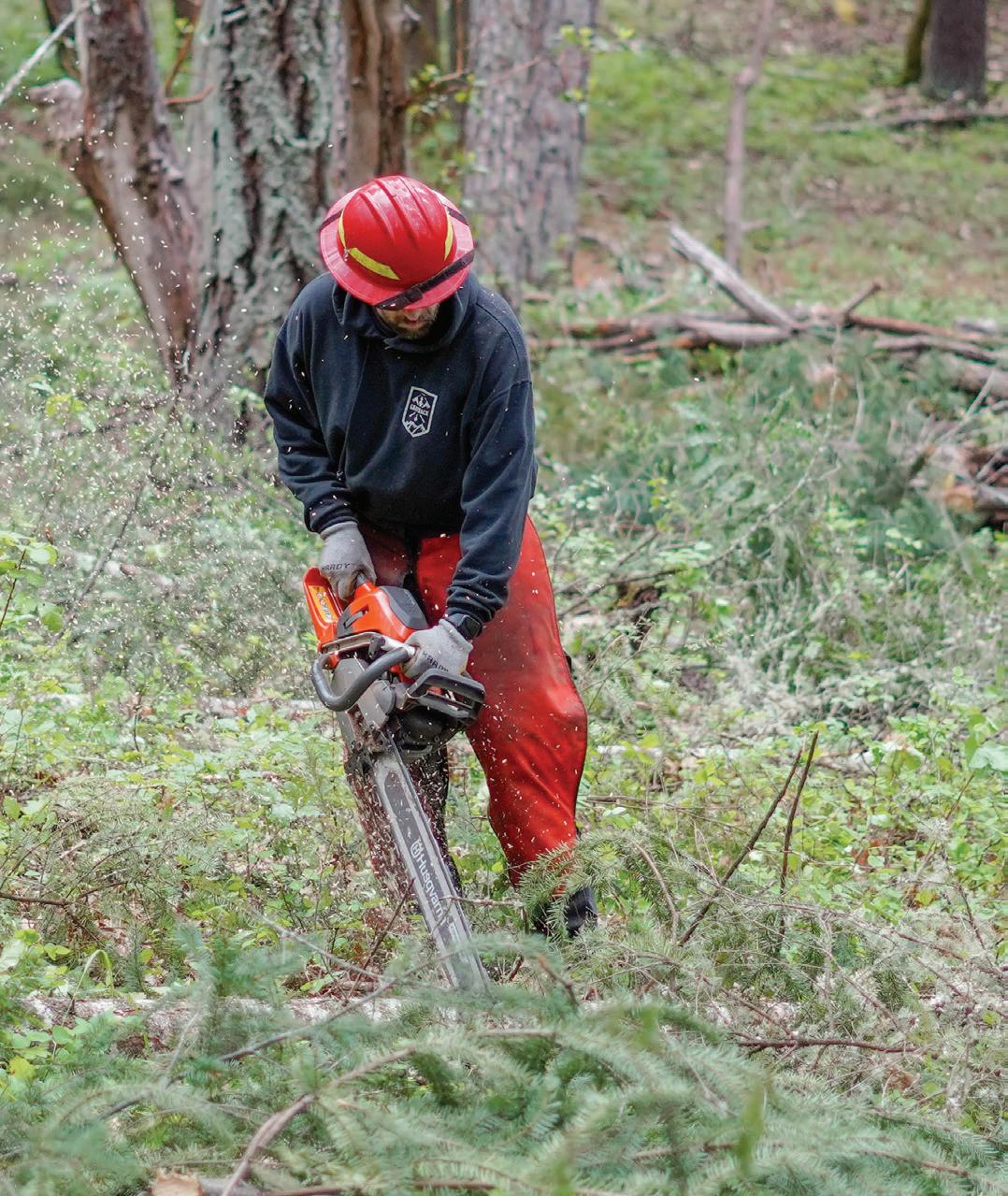
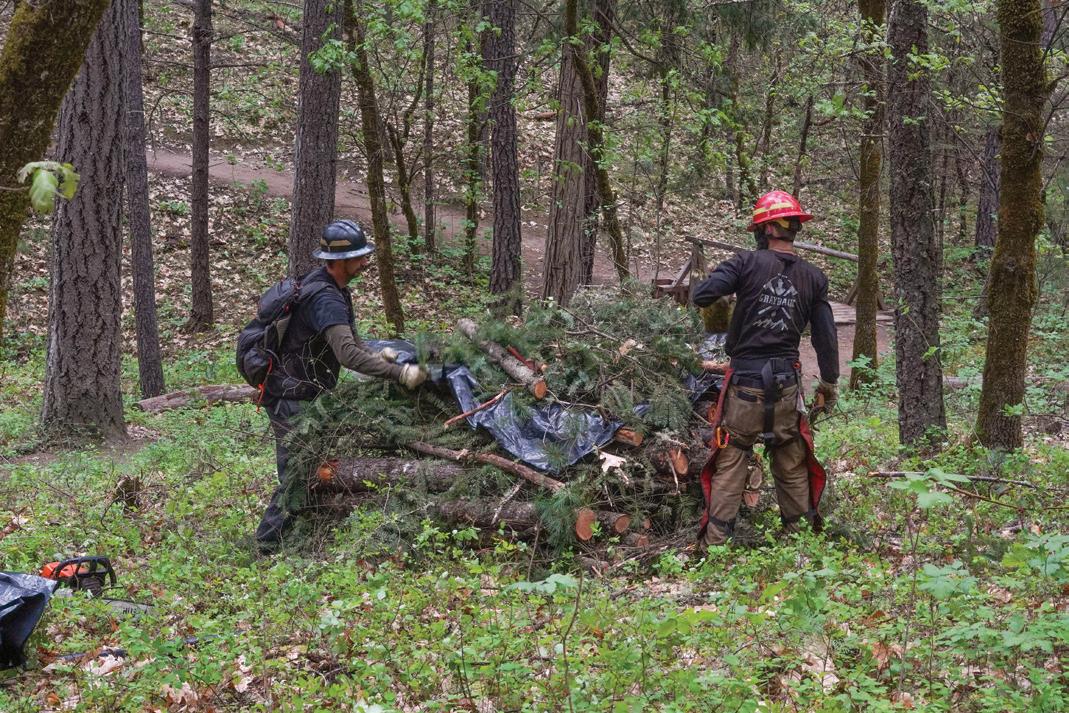
Workers with Grayback Forestry preforms fuels reduction work near Grants Pass on April 15, 2026.
A Nature Notes Sampler II is a broad collection of radio com mentaries based on Dr. Frank Lang’s popular series that aired on JPR since the publication of the first volume in the year 2000. This collection of es says offers Dr. Lang’s same eclectic, often humorous view of the natural world in the mythical State of Jefferson and beyond.
Over 100 of Dr. Lang’s commentaries have been collected in this second vol ume. Make it your first collection of Nature Notes, or add it to the original publication for a complete set!

Order A Nature Notes Sampler II for $19.95 postpaid.
Environment
Continued from previous page
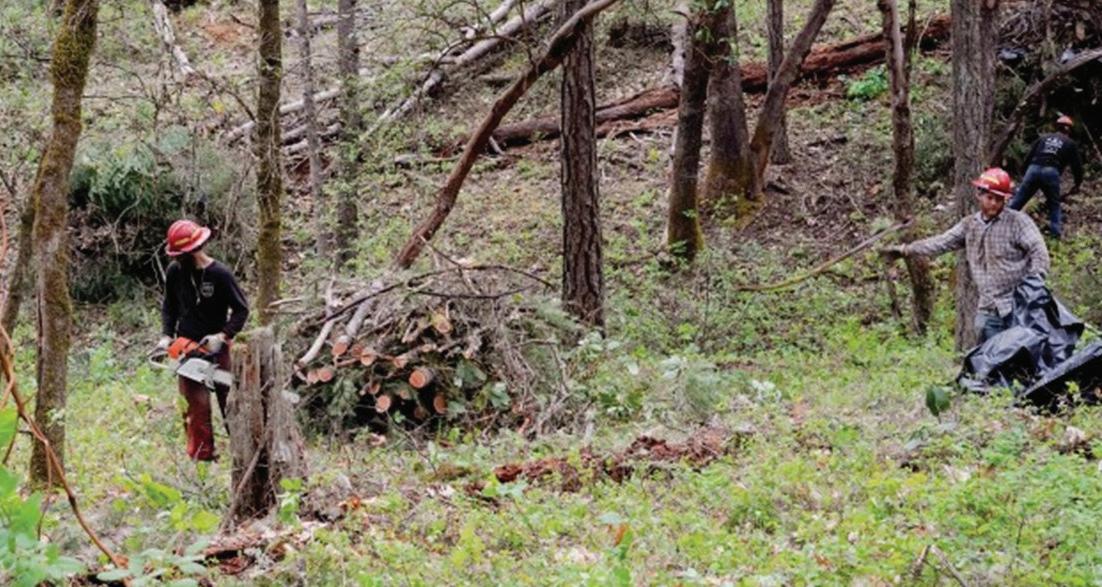
and Firewise brings a community together,” said Josephine County Firewise coordinator Mike McLaughlin. “They develop an action plan for three years, and they focus on not only their individual homes but potentially maybe road structures coming in.”
Workers first treated this area in 2009. But forests require follow-up fuels reduction as vegetation regrows.
Cathedral Hills Trail System visitors should check for closures during the project.

Justin Higginbottom is a regional reporter for Jefferson Public Radio. He’s worked in print and radio journalism in Utah as well as abroad with stints in Southeast Asia and the Middle East. He spent a year reporting on the Myanmar civil war and has contributed to NPR, CNBC and Deutsche Welle (Germany’s public media organization).
Cheryl Baker, Alturas 2002 Saturn L-Series
“For the past 20 years I’ve driven this dependable 2002 Saturn for my commute to work at the Modoc County library, while listening to the great news, music, and programs on JPR. People recognized me in that car because I’ve driven it for so long. In fact, I was at a gas station and a friend said he didn’t recognize me because I was in a different car! Now I’ve retired from being a county librarian, and I’m ready to pass the car on to a new owner by donating it to Jefferson Public Radio. It’s just a great way to be able to support JPR and NPR. We listen strictly to public radio, and really appreciate having that service available to us in our little [rural] community.”
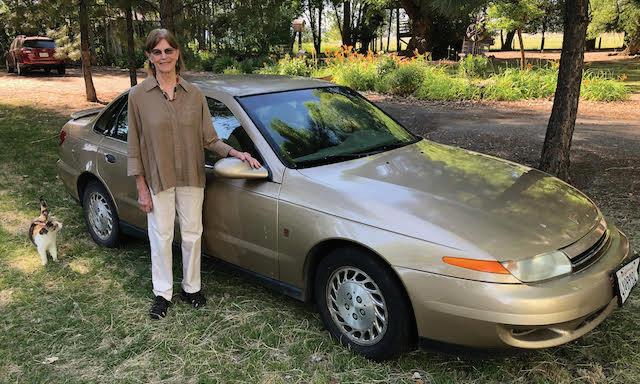
Hassle Free · Tax Deductible · Free Pickup
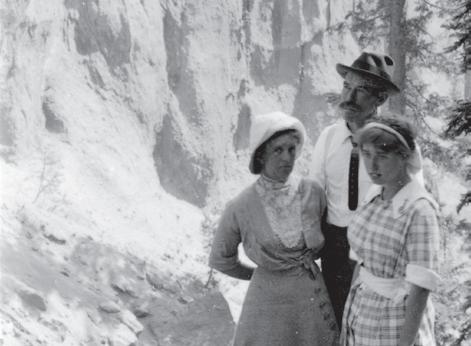
NOAH
THOMAS AND BRANDON SWANSON
Medford Teen Chases Pro Downhill Mountain Biking
Alyana Van Horn is making a name for herself on the national stage in one of the most dangerous extreme sports.
In April 2025, Alyana Van Horn and her dad Izaak Van Horn made the long drive from their home in Medford, Oregon, to Port Angeles, Washington.
They’re both competitive mountain bikers, and they spent much of the drive talking about Izaak’s many hospital visits.
“He’s had three surgeries on his shoulder,” Alyana said.
“My shoulders came out of the socket doing everything,” Izaak added. “And then I broke my elbow a year and a half ago mountain biking”
“There is not good luck with shoulders in the Van Horn family,” Alyana said.
Alyana and Izaak spent eight hours in the car that day so Alyana could compete in the opening race of the NW Cup—the flagship downhill race series in the Pacific Northwest. According to Izaak, his daughter, who also goes by Aly, intended to leave with a gold medal.
“Aly wants to win. She’s got some kind of drive in her,” he said. “And as it turns out, she has the skills and the fitness to back it up.”

At 17 years old, Alyana was competing in the expert class— which is one level below pro. How she performed at races, like the NW Cup, would determine whether she could turn pro and make mountain biking an actual career.
“If she does well this season, she could get to race on the world stage,” Izaak said. “For a kid like her that’s kind of the dream.”

Alyana Van Horn waits at the top of the Dry Hill Park course in Port Angeles, Wash., in April 2025.
JPR News Focus: Sports
Continued from previous page
From hobby to passion
Alyana started tagging along on her dad’s mountain biking trips when she was a kid.
“I think I was around seven years old when I started riding,” Alyana said. “I just remember it was for me. I liked it.”
She was a quick learner and showed real talent early on. Eventually Alyana began competing in races.
“Somewhere along the line, a fire was lit in that kid,” Izaak said. “She did one of her first downhill races and won.”
Izaak realized racing was becoming more than a hobby for his daughter. He and his wife Julie started planning their lives around Alyana’s races, and it paid off—she kept winning. Before long, mountain biking looked like it could become a viable career path.
A dangerous career
The premise of downhill racing is simple: Start at the top and race to the bottom as fast as you can.
But the terrain changes everything. Riders have to navigate steep drops, jagged rocks, and mangled roots—all while moving at dangerously fast speeds down a mountain. In a sport measured by fractions of a second, the pressure was real for Alyana.
“It’s up to me to remember places on the trail to look out for,” she said. “There are just little things that could go wrong and end my run real quick.”
Competitions split riders into categories based on age and skill level. Alyana raced in the top junior category for girls ages 17 and 18. Riders typically get a full day of practice runs to learn the course. On race day, everyone gets a single run, and the fastest time wins.
The emphasis on speed makes downhill racing one of the more dangerous extreme sports. Over the years, Alyana has sustained multiple serious injuries. In 2022, a crash at Mount Bachelor fractured her eye socket and cheekbone.
“My bones will never be 100% again. I have three metal plates and a handful of screws in my face,” she said holding up a cupped hand. “Like a handful, as in over 15 screws.”
As a parent, Izaak has had to accept the injury risk his daughter faces every time she rides.
“I see a lot of parental anxiety, and if I have that, it’s no longer fun,” he said. “I just have to trust in her strength, and her skill, and her decision-making through experience.”
Race day
The day of the NW Cup race last year, Dry Hill Park in Port Angeles, Washington, was packed with riders and spectators. Sponsor tents, an announcer’s booth, and a food truck sat near the finish line. Music blared from a large speaker system.
After riding the course multiple times the day before, Alyana was prepared for her race run.
“This is it,” she said, strapping on her protective gear. “This is the race of the weekend.”

In downhill racing, no single win makes you a pro. It takes several victories across an entire season. A win here would bring Alyana one step closer to a professional career.
Alyana waited at the top of the course with other riders in her category. When her name was called, she walked her Specialized race bike up to the start gate, where a judge stood ready to count her down.
In downhill, there’s no pack to fight through. Riders launch individually, battling the clock rather than each other.
After the countdown Alyana was off—threading through tight forest corners where trees crowded both sides of the trail, forcing precision on every turn. Rocks and roots jutted out of the dirt. The track was steep and relentless.
A few minutes later she burst out of the tree line toward the finish. The area was packed with spectators and other riders. Izaak stood near the finish gate, cheering as she crossed.
“Is this Aly?” he asked, craning his neck. “Let’s go Aly!”
Aly crossed the finish line and caught her breath. She looked up at the screen showing race times. Her name was at the top: 2 minutes and 48 seconds. First place.
Izaak ran over to embrace his daughter.
“You got it, kid!”
Over the rest of the 2025 season, Aly ended up winning five of her 13 races. It was enough to move her into the pro class. She is currently ranked fourth in the nation with USA Cycling
Noah Thomas is a documentary film producer for “Oregon Field Guide” and Oregon Public Broadcasting. Brian Swanson is a photographer/cinematographer for OPB. Their reporting comes to JPR through the Northwest News Network, a collaboration between public media organizations in Oregon and Washington.
From left, Alex Van Horn, Izaak Van Horn, and Alyana Van Horn prepare to ride down Mount Bachelor in August 2025.
NOAH THOMAS / OPB

JPR NEWS FOCUS LAW & JUSTICE
CONRAD WILSON
The law allows employers an exemption to not cover abortions and contraceptives if it violates their religious beliefs.
Federal Court Rules Oregon Law Requiring Insurance To Cover Abortion, Contraception Is Unconstitutional
On April 14, a federal judge in Oregon ruled that a state law requiring insurance plans to cover abortions and contraception violates the Constitutional rights of Oregon Right to Life.
In his decision, Kasubhai said he would later issue a written opinion. He also asked attorneys for the nonprofit and the state’s Department of Justice to address the “specific relief requested” by the end of this week.
For now, Kasubhai’s decision appears to mean the Reproductive Health Equity Act, passed by Oregon lawmakers in 2017, can’t apply to Oregon Right to Life.
The law mandates all health insurance companies “not impose on an enrollee a deductible, coinsurance, copayment or any other cost-sharing requirement” on contraceptives and abortions, as well as other health care such as screenings for sexually-transmitted infections.
The law allows employers an exemption to not cover abortions and contraceptives if it violates their religious beliefs. The Keizer-based nonprofit sued in 2023, saying while Oregon Right to Life did not qualify for the religious exemption under the law, it should be allowed one, and argued the law violated its First Amendment rights.
The group’s lawsuit was dismissed in 2024, after a different federal judge found the group was “not affiliated with any religious practice or institution and does not have any religious requirement for being an employee or director,” and therefore did not qualify.
That ruling was reversed by the U.S. Court of Appeals for the Ninth Circuit last fall.
“At this time, we do believe the impact is limited, as this ruling addresses a specific religious exemption claim brought by one organization,” Oregon Attorney General Dan Rayfield said in a statement Tuesday.
Neither attorneys nor staff for Oregon Right to Life immediately return OPB’s request for an interview or comment.
Planned Parenthood Action Oregon expressed deep disappointment, saying the state law provides basic, essential health care.
Executive director Christopher Coburn warned in a statement the ruling has the potential to create barriers, but also added their health care facilities remain open and abortion is still legal in Oregon.
“At its core, this decision is about whether people can actually use their health insurance to get the care they need,”
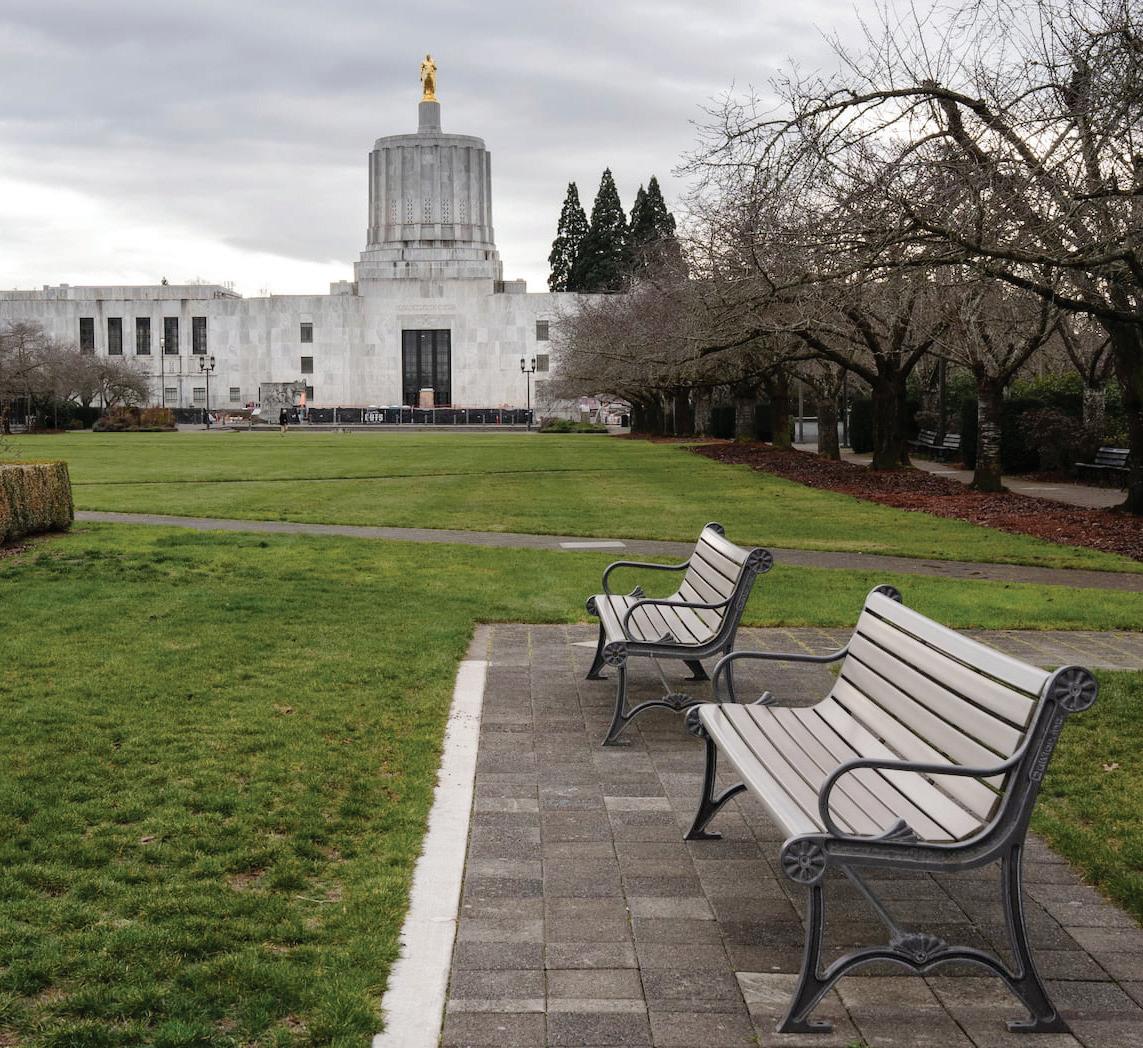
Coburn said. “Stripping away coverage doesn’t eliminate the need for care; it just puts it further out of reach for too many people.”
Oregon Democrats also expressed alarm, arguing that employers or insurers denying health care isn’t religious expression or about free speech.
“At a time when reproductive rights are under attack across the country, Oregon has been a leader and a safe harbor. We are not going to back down now,” Oregon Gov. Tina Kotek said in a statement.
She also noted that “the law is still in effect, and the judge has not issued any injunction barring the State from applying or enforcing this ruling.”

Conrad Wilson is a reporter and producer covering criminal justice and legal affairs for Oregon Public Broadcasting, a JPR news partner. His reporting comes to JPR through the Northwest News Network, a collaboration between public media organizations in Oregon and Washington.
The Oregon State Capitol in Salem, Ore. on Monday, Feb 2, 2026.

HEATHER ARNDT ANDERSON

Greet Oregon Strawberry Season with This Glorious Tiramisu
This was supposed to be a basic non-recipe recipe.
I was originally planning an easy-yet-elegant alternative to classic strawberry shortcake — the first precious, local strawberries grown under protection (they deserve it!) tossed with just a sprinkle of sugar, topped with a dollop of mascarpone whipped cream and a crumbled amaretti cookie.
I was going to serve it in vintage punch glasses; it was going to be just lovely.
But then I smelled the perfectly ripe Albions at the fancy grocery store — the pulchritude! The olfactory poetry!
Ripe strawberries are transcendent, all at once offering sweetness, umami, and bright acidity, like a slightly tropical rose with a hint of burnt sugar.
They aren’t even a true berry!
(Strawberries are technically an aggregate accessory fruit; the fleshy part grows from the flower’s receptacle instead of the ovaries, which makes the exterior “seeds” the actual fruits.)
Anyway, my original idea was already edging toward tiramisu territory, so I figured I may as well just make a whole casserole pan of the stuff.
To try and keep this simple enough to let the fruit shine, I did resist the urge to add cardamom to the strawberries, and I took a few shortcuts like spooning the pureed fruit over the lady’s fingers instead of dipping the cookies.
(This recipe also skips the marsala wine, but if you wanted to take this to the next level, you could dunk the lady’s fingers in strawberry lambic before arranging them in the pan).

Serves 12
Notes: To make the strawberry “shortcake” I’d originally planned: Instead of neatly layering the components in a pan, just spoon the diced, macerated strawberries into little serving bowls, add dollops of the mascarpone mixture, and sprinkle a coarsely crumbled amaretti or lady’s finger (the crispy kind) over the top.
You can leave out the egg yolk if you want, or use pasteurized eggs if you’re concerned about food safety.
Save the egg whites, and you can make your own amaretti from scratch!
Try popping this in the freezer for a couple of hours before serving — it’ll be easier to slice into neat portions, but also just tastes really good semi-frozen.
Ingredients
2 pints fresh strawberries (or 2 10-ounce bags of frozen strawberries)
½ cup plus 2 tablespoons sugar, divided
1 cup heavy whipping cream
1 teaspoon vanilla extract
2 egg yolks
1 8-ounce tub mascarpone, slightly softened
¼ teaspoon fine sea salt
7 ounces of lady’s finger cookies
1 snack-sized bag (about ½ cup) freeze-dried strawberries
Instructions
1. Hull and roughly chop the strawberries. If you’re using frozen berries, let them thaw first (no need to chop) and reserve the juices. Toss them with 2 tablespoons of the sugar in a bowl and set aside.
2. In a large mixing bowl, whip the cream with 1 tablespoon of the sugar and the vanilla until firm peaks form, about 4 to 4½ minutes if you’re using an electric mixer. You want the whipped cream to be stiff enough to stand up on its own, but spoonable.
3. In a separate bowl, beat the egg yolks (see note) with the remaining sugar until it’s lightened in color and texture, about 2 to 3 minutes. Add the mascarpone and salt and continue beating until the mixture is smooth and creamy, another 2 or 3 minutes. Fold the mascarpone mixture into the whipped cream until fully combined.
4. Blend the macerated strawberries into a rough, slightly chunky puree, then spread an even layer of the puree in the bottom of a 9x13-inch baking dish. Lay the lady’s fingers into the puree until the entire bottom of the pan is covered (you might need to break some to fit), then spread another thin, even layer of the strawberry puree over the top. Follow with half of the mascarpone mixture, spreading it evenly across the juiced-up lady’s fingers.
5. Repeat this process of strawberry puree, lady’s fingers, and more puree, then finish by spreading the other half of the mascarpone mixture across the top. Cover and refrigerate for at least 8 hours, but overnight is better.
6. When you’re ready to serve, grind the freeze-dried strawberries into a powder, then sift the powder over the top of the tiramisu (straining out any seeds in the process). You’ll have to work fairly quickly, especially if it’s a rainy day — humidity will cause the powder to get sticky and harder to sift.

OPB’s “Superabundant” explores the stories behind the foods of the Pacific Northwest with videos, articles and a weekly newsletter. Every week, Heather Arndt Anderson, a Portland-based culinary historian, food writer and ecologist, highlights different aspects of the region’s food ecosystem. Her work comes to JPR through the Northwest News Network, a collaboration between public media organizations in Oregon and Washington.
POETRY
DIEGO GIOVANNI
In the Mouth of the Maíz
I was born in the space between borders—where passports argue over my name, and tongues twist trying to pronounce the spirit of a people I only halfway know.
I ache for the Nahuatl songs my blood remembers but my mouth forgets— for the cadence of a drum carved from the same trees as my bones.
The Aztec sun burns behind my ribs, its fire caught in my mother’s eyes, who got it from her mother, who raised her with hands that could break corn from the cob and still cradle the world when it fell apart in her kitchen.
Mi abuela wore her silence like a shawl, but her eyes—her eyes spoke in glyphs. They told stories of maize and obsidian, of gods who bled so we could bloom.
I never asked her enough. I was too busy learning to be American. To blend. To vanish.
In Mexico, I am too soft-tongued, a gringo ghost in brown skin. In America, I am “exotic,” a checkbox, a spicy sentence.
But I feel it—in the soles of my feet when they touch earth still warm with memory. In the way my hips move to drums I’ve never been taught. In the tears that come when I hear a language I almost understand.
I am the ache between colonizer and creation. I am the fire they tried to drown but still smolders in the breath of my poetry.
So I dig—through stories, through songs, through names whispered in prayer and shouted in protest. I dig until I find her again—my grandmother, barefoot and unshaken, planting seeds in both soil and soul.
And maybe that is enough for now—to carry her strength like a map, to let the yearning guide me home.
— Diego Giovanni
Diego Giovanni is a Chicano poet from South Central Los Angeles, now in Portland, Oregon. Deeply influenced by Miguel Piñero, Jimmy Santiago Baca, and Pablo Neruda, his work blends political urgency with lyrical intimacy. Diego’s poetry addresses the struggles of Black and Brown communities, the weight of silence, and the complexity of love in a broken world. Known for his raw delivery and unapologetic voice, Diego writes because silence is no longer an option and many still sit too quiet.
Writers may submit original poetry for publication in Jefferson Journal
Email 3–6 poems, a brief bio, and your mailing address in one attachment to jeffmopoetry@gmail.com , or send 3–6 poems, a brief bio, and a self-addressed, stamped envelope to: Amy Miller, Poetry Editor Jefferson Journal 1250 Siskiyou Blvd. Ashland, OR 97520
Please allow eight weeks for reply.


































Southern Oregon University
1250 Siskiyou Blvd.
Ashland OR 97520-5025