NEWS, INFORMATION AND EDUCATION FOR OPTICIANS
JULY 2022
Call us to book your demonstration
LOOK, SEE & FEEL YOUR BEST
GLACIER EXPRESSION
TM
LOOK BETTER
SEE BETTER
FEEL BETTER
UP TO 70% LESS REFLECTIONS*
INCREASED CONTRAST SENSITIVITY
IMPROVED VISUAL ACUITY
*THAN OTHER PREMIUM AR COATINGS
01954 785 100 I www.shamir.com/uk
JULY 2022
contents features 16.
CPD – C-102575 Modern management of presbyopia Part two: contact lenses by Robin Rohu
14.
16.
22.
CPD MCAs – C-101055 Public awareness of diabetes and understanding its effects on ocular health by Amna Wajid
24.
In practice Mind matters by Antonia Chitty
26.
Special Schools Special project finally bears fruit by Alex Webster
24.
22.
26.
stay in touch
DO Online DO Twitter DO Instagram ABDO Facebook ABDO Twitter ABDO LinkedIn
regulars 5.
DO Dispatches
6.
Newsome's Notes
6.
News
14.
Product spotlight
28.
Jottings
29.
DO'ing something different Eyecare FAQ OA Corner
30.
Notices
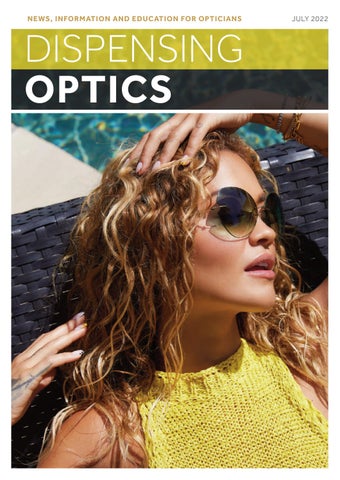
Front Cover Rita Ora wears Silhouette Fisher Island 8182 8540. IMAGE: Silhouette
J U LY 2 0 2 2
DISPENSING OPTICS
3
Keep their future sharp The Blitz Kidz frame range features a range of fun, stylish and comfortable eyewear with a combination of acetate, stainless steel, and TR90 models. Created for children aged 6 months to 12 years old, the collection offers a choice of bright colours and fashionable eye shapes. Perfect for today’s younger patients. To find out more, email sales@norville.co.uk or call 01452 528686
A new lens specifically designed for managing myopia in children
NEW ADDRESS: Norville, Waterwells Drive, Gloucester GL2 2AA Gloucester
Livingston
Seaham
Safety Eyewear
01452 528 686
01506 434 261
01915 238 023
01204 381 224
sales@norville.co.uk
livingston@norville.co.uk
seaham@norville.co.uk
safety@norville.co.uk
DISPENSING OPTICS The Professional Journal of the Association of British Dispensing Opticians Volume 37 No 7
DO Dispatches
EDITORIAL STAFF Publisher
Sir Anthony Garrett CBE HonFBDO
Editor Email
Nicky Collinson BA (Hons) ncollinson@abdo.org.uk
Assistant Editor Email
Jane Burnand jburnand@abdo.org.uk
Design and Production Email
Duncan Taylor-Jones dtaylor-jones@abdo.org.uk
EDITORIAL/ADVERTISING Telephone Email Website
0797 903 3542 ncollinson@abdo.org.uk www.abdo.org.uk
SUBSCRIPTIONS UK Overseas
£150 £175, including postage
Apply to:
Edward Fox FBDO Association of British Dispensing Opticians Godmersham Park, Godmersham, Kent, CT4 7DT
Telephone Email Website
01227 733911 efox@abdo.org.uk www.abdo.org.uk
ABDO CPD Head of CPD
Alexandra Webster MSc PGDipE FBDO CL FHEA FBCLA ABDO CPD, Unit 2, Court Lodge Offices, Godmersham Park, Godmersham, Canterbury, Kent CT4 7DT
Telephone Email
01206 734155 abdocpd@abdo.org.uk
CPD REVIEW PANEL Josie Barlow FBDO CL Andrew Cripps FBDO PG Cert HE FHEA Kim Devlin FBDO (Hons) CL Stephen Freeman BSc (Hons) MCOptom FBDO (Hons) Cert Ed Clare Hayes FBDO CL SFHEA Claire McDonnell FAOI Graeme Stevenson FBDO (Hons) CL Alex Webster MSc PGDipE FBDO CL FHEA FBCLA Gaynor Whitehouse FBDO (Hons) LVA EDITORIAL COMMITTEE Nicky Collinson BA (Hons) Antonia Chitty PhD MCOptom MCIPR MPRCA Alex Webster MSc PGDipE FBDO CL FHEA FBCLA Max Halford FBDO CL Debbie McGill BA (Hons) Sir Anthony Garrett CBE HonFBDO Jo Holmes FBDO
UPSKILLING FOR THE FUTURE We have passed the halfway stage of the year already, and so much has happened. However, there is plenty more in the pipeline. First, and most importantly, is the General Optical Council's (GOC) review of the Opticians Act. I hope as many members as possible take the time to read ABDO’s considered response to the GOC's call for evidence and then take the opportunity to personally respond to the regulator. If you wish to discuss any aspect of this first, please feel free to contact me or any other senior member of the ABDO team who will be happy to help. The future of the profession has rarely looked so positive, with more and more career options opening up for our members. The great step forward in paediatric dispensing training is just one small example of how we are focusing on upskilling the dispensing workforce. Later in the year, we will announce further plans to provide a wider range of qualifications designed to meet the needs of the future. As summer holidays beckon, it's worth remembering that this is still a very difficult time for many. The war in Ukraine casts a long shadow over us all. Its impact on inflation is clear – and this has serious implications for practice and household budgets alike. At ABDO, we will continue to monitor the impact on the sector and support members in any way we can. Finally, please take time to read about the ABDO awards on page 30. If you know someone worthy of recognition for what they have done for the profession, please don’t hesitate to let us know.
Sir Anthony Garrett ABDO general secretary
DISPENSING OPTICS IS PUBLISHED BY ABDO, Unit 2, Court Lodge Offices, Godmersham Park, Godmersham, Canterbury, Kent CT4 7DT Dispensing Optics is printed by P&P Litho Ltd, Ashford, Middlesex TW15 1AB © ABDO: No part of this publication may be reproduced, stored in a retrieval system, or transmitted in any form or by any means whatever without the written prior permission of the publishers Dispensing Optics welcomes contributions for possible editorial publication. However, contributors warrant to the publishers that they own all rights to illustrations, artwork or photographs submitted and also to copy which is factually accurate and does not infringe any other party’s rights ISSN 0954 3201 AVERAGE CIRCULATION: 7,421 copies (July to December 2021)
J U LY 2 0 2 2
DISPENSING OPTICS
5
OUR MONTHLY COLUMN FROM THE ABDO PRESIDENT DARYL NEWSOME
Newsome's Notes More than meets the eye
I
n my last article, I wrote of change and development. This month, I reflect on what has been established and what I hope will continue. Optical professionals fulfil many roles: eye examinations, spectacles dispensing, contact lens fitting, low vision services, minor eye conditions services (MECS) and so on. We also fill a huge social role and provide a first contact space for patients. I have seen an optician perform CPR on a patient who has had a heart attack. I have watched a member of my support staff sit down and cry with a recently bereaved elderly patient. I have watched a colleague contact social services with safeguarding concerns over a child and an adult. For some of our patients, we are the first point of contact for needs beyond optical ones. The healthcare sector uses the phrase, 'Make every contact count'. The new Focus on Health and Wellbeing section on the ABDO Clinical Hub can help all of us to have these meaningful conversations. We are in a privileged position and must not miss the opportunity Our safeguarding obligation is real to help. Depending on where you’re working, there may be many commissioned services in which you can participate including healthy living opticians, MECS, primary eyecare assessment and referral services. But we should not limit ourselves to just those things we can get paid for. Just like our duty to refer when we see someone with pathology, our safeguarding obligation is real and serves ourselves, our patients and our society well. The little old lady with the broken specs and a black eye: does she fall often? Could you refer her to your local falls team? Do you know how? Should you know how? Is the whole story a fall? Is there a chance there is a case of abuse? If you are suspicious, what would you do? Is this our job? It undoubtedly is and the General Optical Council's standards of practice make this clear. We serve our communities in so many ways that we don't speak of; but being socially aware is part of our professional responsibility. Although not financially rewarded, the reward comes from within when you do the right thing. It is the inner you that pats yourself on the back and says: "Well done".
Daryl Newsome FBDO R CL SMC (Tech) President of ABDO
6
DISPENSING OPTICS J U LY 2 0 2 2
Optical bodies concur on combined sight test ABDO and the Association of Optometrists (AOP) have officially stated their support for maintaining a combined approach to refraction and the eye health check, currently forming the sight test. The optical bodies have set out their stance on the issue as each encourages its members to respond to the General Optical Council's (GOC) call for evidence on the Opticians Act by the 18 July deadline. Alistair Bridge, ABDO head of strategy, said: "ABDO agrees [with the AOP] that patients should continue to benefit from a sight test that involves both an eye health examination and a refraction. This is a major strength of the UK’s system of eyecare, and enables eye and other health issues to be addressed at an early stage, in line with the wider policy focus on preventative health care. "We welcome the GOC’s consultation on enabling dispensing opticians to support optometrists by carrying out refraction as part of the sight test. This is a change which ABDO has long called for, and we agree with the GOC that this could free up optometrists to undertake a wider range of clinical activities. "However," Alistair continued, "it would require dispensing opticians to be appropriately trained, competent and indemnified – and they would also need to carry out the refraction under the oversight of an optometrist. This would ensure that the vital principle that a refraction must be combined with an eye health examination is upheld.” When polling its members on the issue via its online community forum, the AOP received a high number of responses that asked for the current system to be upheld. AOP members cited ‘protecting the public,’ ‘the increased risk of missed pathology,’ and maintaining ‘high professional standards’ as key factors. Carolyn Ruston, AOP policy director, said: “... it's reassuring to see that feedback aligns with our emerging position to what is a really significant consultation for the profession." The GOC’s call for evidence includes views on the protection of title and restricted activities, remote care and the regulation of businesses. The review is also seeking evidence on the sale of supply of optical appliances and the fitting of contact lenses. The call for evidence closes on 18 July 2022 and submissions to the consultation can be made online. ABDO has published a detailed response to the call for evidence addressing the full range of issues it covers, which is available to view in the Consultations section of the ABDO website. Members with any questions or thoughts are invited to email Alistair Bridge at abridge@abdo.org.uk
NEWS
JULY 20 2 2
Safeguarding tools reminder As well as encouraging all members to complete its adult and child safeguarding courses, ABDO is highlighting the availability of the NHS England Safeguarding app. Developed to act as a comprehensive resource for healthcare professionals, carers and citizens, the app provides 24hour, mobile access on up-to-date legislation and guidance across the safeguarding life course. It also provides information on how to report a safeguarding concern, and has a directory of safeguarding contacts for every local authority in England searchable by region. The app can be accessed via Apple iOS, Google Play or downloaded by visiting any device’s appropriate app store and searching for ‘NHS Safeguarding’.
In addition, ABDO offers members two online distance-learning Level 2 safeguarding courses designed specifically for dispensing opticians. "We recommend safeguarding training is undertaken a minimum of every three years," said Alex Webster, ABDO head of CPD. "Both our child and adult safeguarding courses can be accessed through the CPD pages of the ABDO website and are CPD accredited." An app for Wales can be found at https://safeguarding.wales. Resources for Scotland can be found at www.gov.scot/policies/child-protection – and for Northern Ireland at www.publichealth.hscni.net/directorate -nursing-and-allied-healthprofessions/nursing/safeguardingchildren-and-young-people
Eyewear artworks depict fragile eco system 'Seastainable' eyewear brand Sea2see's 5 Oceans collection is being showcased in a unique series of artworks by acclaimed photographer, Weston Fuller. The five photographic artworks reflect the diverse, wild and natural beauty of the world's five oceans, with specific reference to marine plastic pollution. The eyewear collection came to fruition as the brand turned five years old and each work represents one ocean: the Atlantic, Pacific, Southern, Arctic and Indian. “We have been developing this for over eight months," explained François van den Abeele, Sea2see founder and CEO. “It is symbolic of who we are and what we have achieved in pioneering a sustainable – or as we say 'seastainable' – and circular system for producing eyewear designed for people everywhere around the world. "This is the second time we have worked with Weston Fuller. Our intention was to bring focus on the climate emergency and the threat of plastic pollution in the sea with a powerful visual experience through memorable, emotive photographic works of art.” The 5 Oceans collection features six unisex models with marine-inspired shading, and details such as seashell and wave effects on the fronts and sides.
Indian Ocean by Weston Fuller for Sea2see
Win a trip for two to Silmo ABDO members are once again being offered the chance to win a trip for two to Silmo Paris by entering an exclusive prize draw. The prize includes two return economy flights from a UK airport to Paris, and two nights' bed and breakfast accommodation in a double room at a four-star hotel. The winner will also receive two passes to the show, taking Trip up for grabs place at the Paris Nord Villepinte from 23-26 September, including the Silmo d'Or Awards. To enter the draw, email your name, ABDO membership number and mobile phone number to silmoprizedraw@abdo.org.uk by 23:59 on Sunday 7 August, with 'Silmo Competition' in the subject line. The winner will be chosen and notified on Monday 15 August, and full terms and conditions can be found on the ABDO website. Last year’s competition winner, Sally Spurrett, who was unable to attend the 2021 show will also attend this year as a guest of Silmo. Keep up-to-date with all show news at www.silmoparis.com
Anatomy of a frame design
The new SI-20119 style from Stepper (pictured) is "a great example of why TX5 and titanium are the perfect combination for eyewear that's fit for purpose" says Stepper managing director, Peter Reeve. The frame's TX5 (plastic) and titanium elements offer both weight and skin allergy benefits. The TX5 front is moulded into its final form, including facial contour design and the renown Stepper bridge, creating a frame that "works in harmony with the wearer’s anatomy". Svelte titanium sides offer rigidity and strength, holding the frame securely in place. The SI-20119 is available in smoke, grey-blue mottle and blue in size 54-17. J U LY 2 0 2 2
DISPENSING OPTICS
7
NEWS
JULY 2 0 2 2
Royal College plumps for NRC The Royal College of Ophthalmologists' (RCOphth) examinations team has committed to using ABDO’s National Resource Centre (NRC) as the permanent UK host venue for all UK sittings of the Refraction Certificate examination from 2023 onwards. Dylan Costello, RCOphth head of examinations, stated: “The team at the ABDO NRC, led by Mat Stringer, are always a joy to work with. Their excellent, modern, state of-the-art venue is a natural UK home for our Refraction Certificate examination, offering UK candidates a venue that is easily accessible with its central UK location. We look forward to a long and fruitful
collaboration with them.” Mat Stringer, NRC operations manager, said: "It makes perfect sense for the NRC to provide the Royal College of Ophthalmologists, their students and examiners with a venue for their refraction exams in 2023 and 2024. "Our teams work seamlessly together and the NRC is the perfect facility with the clinical bays, reception, briefing and de-briefing areas all synced for seamless examinations. I hope this collaboration will continue for many more years," Mat added. The Refraction Certificate exam will take place at the NRC every May, September and December.
Visions of the Big Apple New York’s angular architecture, and the reflection of light on the Manhattan city skyscrapers, proved the inspiration for Silhouette’s New York Sky sunglasses. Utilising the brand’s ultra-light SPX+ material, combined with single-join hinges, the two new designs feature accent rings made from wafer-thin SPX+ – giving the lenses a floating appearance. New York Sky model 8184 (pictured) is a curved diagonal design for women; with one option featuring 23-carat gold-plated metal. The men's model New York Sky 8733 is a hexagonal aviator shape. The lightweight material composite on both styles combines both shiny and matte surfaces, elegantly layered to produce a luxury feel. The lenses feature Silhouette’s patented Light Management Technology, providing greater comfort with increased contrast and colour brilliance along with 100 per cent UV protection.
Soothing spray option New Zaspray from Théa is a threein-one solution designed to deliver long-lasting relief from itchy, dry eyes, especially when caused by allergies. According to the company, Zaspray is an easy-to-use, soothing spray that's 100 per cent preservative free. It is formulated to help restore tear film stability, keeping the ocular surface hydrated and lubricated. The spray delivers a fine mist in a precise measured dose and is touted as "a great alternative for those who struggle using drops".
8
DISPENSING OPTICS J U LY 2 0 2 2
Centre offers state-of-the-art facilities
Eight more practices acquired Bayfields Opticians and Audiologists, backed by investors BGF, has acquired another two multi-site optical groups – increasing the number of practices within the group from 33 at the start of the year to 41. Prism operates five practices across the North West, trading as Oldbury & Cruickshank Optometrists in Macclesfield, set up by Nigel and Jean Oldbury; I Wear Opticians in Nantwich and Tarporley; and Broad Opticians in Alsager and Sandbach. Nigel and Jean Oldbury will help facilitate a smooth handover and then retire from the business. Robert Stanley, co-owned by John Edwards and Jerry Salmon, the son of the original founder, Donald Salmon, has five practices across the Oxford region. Following the deal, David Salmon will retire from his role; however, John Edwards will continue in his position to help drive the practices forward. John said: “Bayfields has gained a strong reputation in the independent market – not only for its insatiable appetite to grow, but also its firm commitment to maintaining an unequivocal focus on the community and clients in which it serves. "We’re delighted to be joining the Bayfields family and have every confidence that the business Jerry and I have worked hard to build in recent years will continue to thrive under the Bayfields banner.”
TX5/Titanium Stepper (UK) Limited 11 Tannery Road Tonbridge Kent TN9 1RF 01732 375975
www.steppereyewear.com
Style shown not available in all markets.
NEWS
JULY 2 0 2 2
Bee therapy with a transient sting Manuka honey is the active ingredient of Optimel Dry Eye Drops and the Optimel Manuka + Forte Eye Gel, recently launched by the Body Doctor. The Optimel eye drops and preservative-free gel are designed to treat evaporative dry eye disease, meibomian gland dysfunction (MGD), aqueous tear deficiency and blepharitis. Bacterial-killing properties
Manuka honey’s active ingredient is called methylglyoxal (MGO), which is said to help kill bacteria around the eyelids and create a 'microenvironment' on the ocular surface. Within this, the Optimel formula is said to help heal the surface of the eye and prevent further damage thanks to honey's anti-bacterial properties. Body Doctor clinical consultant, Andrew Price, said: “...I am using these products more and more as an adjunct to the more conventional heat plus approach patients use at home. "However, the formulations have a noticeable transient stinging sensation, comparable to several other active eye drop formulations, such as chloramphenicol or ocular hypertensives. Therefore, I tell patients this is completely normal and indicates the more active effect and that these are not the conventional dry eye drops possibly used previously.”
Contact lens tome published The 2022 edition of the product manual of the Association of Contact Lens Manufacturers (ACLM) lists technical details for all the contact lenses, solutions and materials produced by ACLM member companies, and covers the overwhelming bulk of products available in the UK. The Year Book can be ordered from the ACLM website, www.aclm.org.uk, which is aimed at encouraging new wearers and supporting existing ones, and which also has a restricted area for eyecare practitioners. There is a range of payment options, and purchasers receive free access to the tables in the Year Book Online. Access is free for up to 12 months for all those who have purchased the Year Book, as well as qualifying students at the various training establishments.
Eyeing up the Nordic region CooperVision has acquired EnsEyes, supplier of orthokeratology (ortho-k) and scleral contact lenses in Europe’s Nordic region. The company will operate within the CooperVision Specialty EyeCare Group. Headquartered in Kolding, Denmark, EnsEyes has partnered with practitioners in Denmark, Sweden, Norway and Finland for the past decade providing customised lenses and professional education. The acquisition is expected to help accelerate growth of specialty lens adoption across these markets. “We have collaborated with EnsEyes for years, including its use of MyProcornea for lens ordering," said Juan Carlos Aragón, president, CooperVision Specialty EyeCare. "Joining CooperVision will give its highly respected team more resources for growth, further build the expertise of our organisation, and support eyecare professionals’ soaring enthusiasm for specialty fitting.”
10
DISPENSING OPTICS J U LY 2 0 2 2
Pro sports styles debut
The Harrier Mini
A range of Performance Pro Ultra sunglasses has been released by Bushnell in a license agreement with performance sports eyewear company, Mirage Occhiali. Entirely made in Italy, the sunglasses evolved from three key pillars of design – performance, protection and comfort – stated Bushnell. The Falcon, Harrier and Harrier Mini styles come with three performance lenses – one for targeted shooting, one for multipurpose outdoor use, and one clear to grey photochromic. Ultra-light polycarbonate lenses provide superior optics, UV and HEV filtration, and have passed all high mass impact and ballistic standards. Purefit frame technology for fit, comfort and an ultralight weight is enhanced by a rimless and seven base shield designed for a wide field of view. Model Falcon features Megol rubber nose pads and tips with moisture absorbing properties allowing for a no-slip-grip. Harrier and Harrier Mini have adjustable Megol rubber tips and adjustable nose pads.
Style protection: Available in seven di昀erent colours.
Brown
Graphite Green
Grey
Amber
Amethyst
Emerald
For more information contact your lens supplier or visit transitions.com transitions.com
Transitions and Transitions Signature are registered trademarks and the Transitions logo is a trademark of Transitions Optical, Inc. used under license by Transitions Optical Ltd. GEN 8 and Light Under Control are trademarks of Transitions Optical Limited. ©2022 Transitions Optical Limited. Photochromic performance is in昀uenced by temperature, UV exposure and lens material. Lens colours simulated for demonstration purposes. Frames by RAY-BAN® – Lenses Transitions® Amethyst.
Sapphire
NEWS New man in the field The Charmant Group has appointed a new field sales manager for the UK, the Netherlands and Flanders. Nick Bandy is now responsible for managing the direct sales teams in these geographical areas, as well as reinforcing customer relationships and developing new business opportunities. Nick has more than 18 years’ experience in the optical industry – leading and training teams across the UK. He said: “I’m delighted to be joining Charmant at such an exciting time and being part of the growth plans. We already have a strong market presence and I look forward to enhancing that further with the teams”.
Pulsed light partnership Positive Impact has announced a new collaboration with Lumenis BE, the energy-based medical device company for eyecare and aesthetic applications and inventor of intense pulsed light (IPL) technology. PI will now provide professional support, education and clinical training in the UK for OptiLight, said to be the first and only light treatment FDA-approved for the management of dry eye disease due to meibomian gland dysfunction with its patented Optimal Pulse Technology. EMEA Lumenis Vision sales director, Paris Hatzianastasiadis, said: “We are delighted to introduce OptiLight to the UK market and offer a root-cause treatment that elevates dry eye management. With our one-of-a-kind technology, and Positive Impact’s experienced team to support our activities on the ground in the UK, we can improve health and quality of life for dry eye patients.” PI managing director, Nick Atkins, added: “OptiLight fits perfectly with our business ethos of only working with bestin-class products that offer differentiation and generate sales for the independent practice. I have long felt that the future of successful dry eye management, both clinically and commercially, lies with professional inpractice treatment options."
12
DISPENSING OPTICS J U LY 2 0 2 2
Insta sunwear sunshine Music and fashion icon Rita Ora is spreading a little Insta sunwear sunshine this summer in a new partnership with Silhouette. In a series of stunning shots, the singer is showcasing the Austrian brand's 2022 sun collection amongst her 20 million+ social media followers. Commenting on the pop icon's Futura Dot'gram, Silhouette brand director, Atissa Tadjadod, said: "Rita Ora is the perfect fit for the Futura Dot and its heritage. Music legends wore the Futura back in the 1970s, making it a coveted collector's item. Rita Ora is now carrying on this tradition.”
Ora wearing the Futura Dot
Green light for coating boost Maui Jim has introduced its MauiGreen mirrored lens treatment to its extensive prescription portfolio. The fully-applied green mirror treatment – inspired by the lush, rainforested hills of East Maui – is available in single vision and progressive prescriptions for both sunglasses and ophthalmic frames. All Maui Jim sun prescriptions are available in mirror colour options of Blue Hawaii, Maui Sunrise, Hawaii Lava and now MauiGreen. Glazed using its most advanced lens material, MauiBrilliant, Maui Jim claims its sun styles provide
optics "nearly as clear as glass with just one third of the weight". The sunglasses also feature patented PolarizedPlus2 technology for premium colour enhancement and clarity, while also blocking 100 per cent of harmful UV rays. “We’ve seen an enormous increase in consumer interest and market demand for green styles recently,” says Diego de Castro, senior director of brand marketing and management for Maui Jim. “We are excited to expand our current offerings to include prescription colour options that fit a variety of personal styles and aesthetics.” MauiGreen mirror lenses
JULY 20 2 2 Dye departs for career break
Embracing the light
General Optical Council (GOC) acting director of regulatory strategy, Marcus Dye, has departed the organisation after seven years of service. Marcus held the position since January 2022 following his tenure as acting director of strategy from January 2020. Before that, he was head of standards and CET, and standards manager. During his time at the GOC, Marcus led and introduced new standards of practice for optometrists and dispensing opticians and standards for optical students. He authored and led on the first pieces of supporting guidance to the standards on consent and candour, and oversaw the development of the new business standards and confidentiality guidance. Marcus also oversaw the first three cycles of CET and commenced the review of the scheme, leading to the introduction of CPD in January 2022. Most recently, he led the GOC’s response to the Covid-19 emergency. Marcus said: “It has been a great honour to work with GOC staff, council and stakeholders over the past seven years and to be at the forefront of some major, transformational projects. I will be taking a career break and I am looking forward to taking some time out to travel. I want to wish Leonie [Milliner] and the entire team success as they continue to strive for world-class regulation.”
IOT has launched its new photochromic lens in Europe – named Neochromes. The light-activated lenses, developed by industry leading researchers and engineers, quickly adapt to changing light conditions. According to IOT, Neochromes lenses are: "crystal clear indoors, darken in seconds, fade back in three minutes, and offer high performance in a broad range of temperatures". The lenses provide protection from UV and blue light, are suitable for all indoor and outdoor activities, and are available in a wide range of materials. 'Embrace the light' Campaign visual for lens launch is the tagline for the launch, supported by a marketing campaign aimed at active consumers. The campaign focuses on the "comfort, protection, convenience and simplicity of Neochromes lenses". "New Neochromes lenses are an attractive alternative for laboratories and opticians in search of solutions to help them differentiate, and diversify their offering," said a spokesperson from IOT.
Ever dreamed of owning
YOUR OWN PRACTICE? If owning your own practice has been something you’ve ever given serious thought to, join us at the ABDO “Become an Independent Optician” twilight session.
The organisations and businesses attending will include - AIO, SightCare, NEG, Eyeplan, Eyewear Styling Academy, Myers La Roche, Performance Finance and Specs Network.
This informal gathering is the perfect opportunity to network, share ideas and hear from independent practice owners about the key to their business success as well as speaking with organisations and businesses that support the independent optician sector.
As part of the wrap-up session we will run a Q&A forum where you will have the opportunity to ask questions of the experts in the room. Don’t miss this great opportunity to find out more about taking those first steps to become an independent optician.
WHERE: ABDO National Resource Centre, Aqueous II, Aston Cross Business Village, Birmingham. B6 5RQ WHEN: TUES 1 1 OCTOBER 2022 3.00pm - 7.00pm NOTE: There is no charge to attend this event and refreshments will be provided but places are strictly limited so book early to guarantee your place.
For more information and to book your place visit www.abdo.org.uk/indy
J U LY 2 0 2 2
DISPENSING OPTICS
13
PRODUCT SPOTLIGHT - CHILDREN'S EYEWEAR
KIDS’ STUFF Fit, comfort and protection are critical components when it comes to dispensing children's eyewear. This month we showcase some of the latest options to consider for your youngest patients... Bright, bold and born in Brazil Go Eyewear has hit the summer season running with a range of children's sunglasses in its Bulget Kids collection. Bulget Kids offers 100 per cent protection from UV rays with polarised lenses in all of its sunglasses. The frames are specially designed and manufactured to fit young faces and small noses, offering lightweight styles in bright colour combinations. Born in the cosmopolitan city of Sao Paulo, Brazil, Bulget Occhiali is part of the Go Eyewear Group and has been creating spectacles and sunglasses synonymous with design, technology and quality since it launched internationally in 2009.
Too cool for school Chic, colourful and comfortable, Esprit Kids eyewear spells high quality fashion frames that kids love and parents trust when it comes to protecting their children’s eyes, says manufacturer Charmant. Two unisex styles enhance this young collection. Featuring joyful colour contrasts, model ET33445 is a rectangular style that comes in black, brown and blue with sporty side stripes that match end-tip tones. Model ET33446 is a softer, rounded frame in fresh purple, red and grey with dynamically coloured side stripes and end-tips. Made with Ultem material, these cool French styles are designed to be flexible and durable, lightweight and comfortable.
Fun and comfort one-stop-shop Kids expect their sunglasses to be fun and comfortable to wear while parents demand the best protection. The new Invu Kids Collection is designed to offer the best of both these worlds. Bright, translucent colour treatments take care of the fun side while the use of a soft thermoplastic material makes the sunglasses flexible and comfortable. For parents, the renowned ultra-polarised lenses by Swiss Eyewear Group, which is shatter resistant and offers 100 per cent UV protection from UVA, B and C rays, provide peace of mind.
Anatomically-designed for all ages Miraflex children’s eyewear, available from Dibble Optical, continues to provide options for children of all ages in an abundance of colours, sizes and seven different shapes. Miraflex has been developing children's eyewear for more than 20 years. Dibble Optical managing director, Barry Dibble, said: "Miraflex glasses offer an anatomically-designed bridge that eliminates the need for nose pads, which are the most common problems for children. The frames are made of a special lightweight plastic material, making them gentle on the skin and safe for use, even on infants. The soft elastic band wraps behind the head and ensures the frames stay seated properly on the face, even on the most adventurous kids."
14
DISPENSING OPTICS J U LY 2 0 2 2
Bulget Kids model BGK9022
Esprit Kids model ET33446 in purple
Invu Kids sunglasses model K2204B
Specialist Miraflex caters for infants and up
PRODUCT SPOTLIGHT - CHILDREN'S EYEWEAR Living the Hi life Louis Stone Optical (Group) offers a bright and dynamic range of children's spectacles known as Hi frames. For younger children, the flexible TR90 material and silicone safety bands with locks are described by the company as ideal for their comfort and reducing the risk of them getting lost. The company has also found that many of its adult frames have become very popular amongst teenagers, and so recently introduced some of these into the collection. These include models Icy 305 (Flex) in Pink Pop, and Sweet and Sour in size 49 x 18 -142.
Icy model Sweet and Sour
New elements of the Matrix Alongside its Lazer Junior collection for youngsters, Matrix Kids extends Continental Eyewear's popular Matrix Eyewear range and is suited to children as well as young adults. The collection offers trendy and "affordable" acetate styles in a variety of colours and shapes – from classic to contemporary – with options to suit every young person. Matrix Kids 007 (pictured) is said to be a popular unisex style. The retro circular styling of the rims makes for a flattering shape, which sits comfortably on the face. This model is available in black, navy, purple and tort.
Matrix Kids 007 in tort
Sea-bottle styles for eco kids The latest releases in the Eyespace Rock Star collection incorporate 12 sustainable frames made with rPET: recycled ocean plastic incorporating sea bottles and marine plastic waste. Deep and bright colourways reflect the colours found underwater, while a duo colour technique is presented in vibrant combinations. Shortlisted for the 2022 Love Eyewear Awards, Rock Star model Beluga is a rectangular eye shape with a lowered bridge. It comes in a black eye front with contrasting green sides (C1), and a navy eye front with sky blue sides (C2). Each frame in the new sea-bottle collection is provided with biodegradable demo lenses and frame bags.
Rock Star Beluga (C2)
Getting the London look Mondottica has launched its latest styles for children from Pepe Jeans London. For boys, Pepe Jeans London’s Logan PJ4058 frame is steeped in the brand’s history in jeans. The acetate sides feature denim pattern laminations, and the styles comes in khaki green with a bright green logo on the outer sides, for a fun pop of colour. With a new school year looming, young spectacle wearers might also like a glance at model Anja PJ4061. The frames give a subtle take on the cat-eye shape, emboldened by rich milky hues and twisted colouring on the sides.
Licensed to thrill young bookworms International Eyewear has added two unisex Roald Dahl styles to its licensed eyewear collection aimed at children from seven to 10 years: models RD23 and RD25. RD23 C1 is inspired by The Fantastic Mr Fox and comes in Fox Havana, decorated with Quentin Blake illustrations. RD23 C2 is a round eye shape with a keyhole bridge, and celebrates the story of Matilda in Gutsy Lavender. RD25 C2 is another Matilda style in Miraculous Mottle, featuring Matilda Woodworm on the sides. Finally, comes RD25 C1 in Golden Mottle. Inspired by Charlie and the Chocolate Factory, the design features digitally printed sides adorned with illustrations of the story’s hero, Charlie Bucket.
Pepe Jeans London model Anja PJ4061
Celebrating the magical world of Roald Dahl
NEXT MONTH'S PRODUCT SPOTLIGHT Practice management software J U LY 2 0 2 2
DISPENSING OPTICS
15
CPD LEARNING DOMAINS Communication Clinical Practice Contact Lens Speciality
Modern management of presbyopia PART 2: Contact lenses
PROFESSIONAL GROUPS By Robin Rohu PGDipE PgCert FBDO CL Prof Cert LV FHEA
P CLOSING DATE: 7 October 2022 ANSWERS PUBLISHED: November 2022 CPD CODE: C-102575 MCQs AVAILABLE ONLINE: 1 July 2022
This CPD session is open to all FBDO members and associate member optometrists. Successful completion of this CPD session will provide you with a certificate of completion of one non-interactive CPD point. The multiple-choice questions (MCQs) are available online only from Friday 1 July 2022. Visit www.abdo.org.uk. After member login, scroll down and you will find CPD Online within your personalised dashboard. Six questions will be presented in a random order. Please ensure that your email address and GOC number are up-to-date. The pass mark is 60 per cent.
CPD CODE: C-102575 16
DISPENSING OPTICS J U LY 2 0 2 2
resbyopia is a refractive error that originates from the eye having an insufficient ability to accommodate for near vision targets due to ageing1. Presbyopia is the final phase of a continuous loss of amplitude of accommodation. This decline begins before adulthood; however, it does not typically manifest in visual symptoms until the subjective amplitude of accommodation reduces to three to four dioptres around the age of 452. After the age of 55, most patients are unable to sufficiently alter the refractive power of their eyes. It should be noted that patients will potentially have a pseudo-accommodative ability partly due to depth of focus effects produced by pupils that become progressively more miotic2. The current life expectancy within the UK is approximately 80 years of age. This means that phakic patients spend approximately half their life as a presbyope and more than 20 years with an insufficient ability to accommodate2. Patients who are presbyopic will likely use an optical appliance to assist them when viewing a near vision target. This article aims to review the involutional changes that may occur as part of the normal process of ageing, and how presbyopia is managed using contact lenses.
AGE-RELATED OCULAR CHANGES Ageing produces involutional changes, which typically lead to a decline of biological functions. Several involutional changes occur within the ocular surface and adnexa that have been reported in literature, including:
• A reduction in lacrimal output and alterations to the output composition3 • A reduction in number of functional meibomian glands and alterations to the lipid secretions4 • The development of conjunctivochalasis5 • A significant increase in the prevalence of ocular surface disease (dry eye)6,7 Pupil diameter has been shown to have an inversely proportional relationship with age. Pupil diameter at a luminance level of 220cd/m2 was found to be approximately 5.5mm in patients aged 20 to 29 years old, 4.5mm for patients aged 50-59 years, and 3.5mm for patients aged 70-79 years8. In a study conducted by Rico-delViejo et al, which investigated the effect of ageing on the ocular surface: a positive correlation was found between age and increased bulbar redness; increased corneal and conjunctival staining; a reduction in the functional performance of the meibomian glands; a reduction in the eyelid margin thickness, which is correlated with lid wiper epitheliopathy; an increase to eyelid laxity, which is linked to dry eye symptoms; a reduced tear meniscus height; and a decrease in tear secretion, which is associated with an increase in inflammatory markers9. Additionally, contact lens wear produces several involutional changes within the ocular surface and adnexa. Current literature suggests that contact lens wear is not associated with meibomian gland drop-out, however, there is data to suggest that the meibum of contact lens wearers has a 3˚ higher melting point compared to nonwearers10. Changes to the meibum composition may result in increased tear
osmolarity, increased tear evaporation rates and a reduction in tear film stability11-13. Higher order aberrations modestly increase as the eye ages, however, as presbyopia develops the natural compensatory mechanism produced by the crystalline lens is lost14. Ageing produces optical performance alterations due to the disruption of the compensatory effect between the anterior cornea and internal aberrations. This disruption results in an increase in high-order aberrations. Spherical aberration and horizontal coma typically increase in aging eyes15. Alterations to the tear film parameters have been shown to induce high order aberrations during dynamic aberrometry. These changes in high order aberrations are more significant in patients with tear film instability and ocular surface damage16,17.
METHODS OF PRESBYOPIC CORRECTION WITH CONTACT LENSES Given the challenges that practitioners face in correcting presbyopia, it is prudent to explore the potential options that are available to patients.
Monovision Monovision is a method in which contact lenses can be used to correct two focal lengths, typically distance and near vision. Full monovision is where the dominant eye is fitted with the distance correction and the nondominant eye is fitted with the near vision correction. Monovision is based on the principle of inter-ocular blur suppression (IBS). This means that the visual system can alternate suppression between the two eyes. In effect, if a patient is viewing a target in the distance, the near vision image is suppressed.
PHAKIC PATIENTS SPEND AROUND HALF THEIR LIFE AS A PRESBYOPE
Estimates of successful outcomes when fitting new monovision wearers is approximately 60-70 per cent18-20. Stereopsis is negatively affected during monovision; however, it is not considered to be a significant cause of fitting failure21. The predictability of success is enhanced if the binocular visual acuity of the patient when wearing contact lenses is similar to that of the spectacle visual acuity, assuming there are no major reductions in stereopsis or contrast sensitivity22. Despite its proven effectiveness, the binocular rivalry and image suppression associated with this form of correction is
PLAN YOUR CPD TODAY For all the latest available CPD from ABDO, visit www.abdo.org.uk. All online and face-toface interactive CPD events open for booking can be found on the Events pages. CPD articles and recorded lectures can be accessed in your personal membership area. Resources to help you plan and reflect on your CPD are available in the Professional Development Toolbox. GOC registrants are now responsible for submitting their own CPD and points are no longer uploaded by providers. On successful completion of this CPD session, log into your MyGOC account and follow the steps to submit this session using your certificate of completion as evidence. For more information on the new GOC CPD scheme, visit www.optical.org
likely to require a period of cortical adaption23,24. The use of soft toric lenses with monovision enables astigmatism to be corrected. Astigmatism that is equal to or greater than 0.75DC should be corrected, assuming that there is an improvement to the visual performance and that the power range and lens design is available to dispense.
Partial monovision When a near vision addition exceeds +2.00DS, it may reduce the visual performance that the patient experiences. This is because as the reading add increases, the binocular stereoacuity will decrease. Factors such as low levels of illumination or optotypes that provide near-threshold stimuli (for example, the lowest line a patient can read during distance visual acuity assessment) also play a part in enhancing the negative effect of the increasing add. Partial monovision is where a practitioner will give the distance prescription to the dominant eye and a reduced near prescription to the non-dominant eye. J U LY 2 0 2 2
DISPENSING OPTICS
17
CPD Enhanced monovision Enhanced monovision is where a practitioner will fit one eye with a multifocal lens and the other eye with a single vision lens. The rationale for this approach is that it may improve binocular summation and provide stereoacuity to a monovision wearer who is experiencing blur as their reading addition increases. The most common approach is to fit the dominant eye with a single vision lens and the non-dominant eye with a multifocal lens.
primary viewing zone in the centre of the lens, and a secondary viewing zone in the periphery of the lens. Concentric bifocal lenses are available as centre-distance or centre-near. These lenses can be classed as biconcentric26. Alternating bifocal designs (Figure 1), also known as translating designs, work on the principle that the eye’s typical primary gaze position for a given task will encourage viewing through the appropriate area of the lens. For example, as the eye looks downward towards a near vision target.
Modified monovision Modified monovision can be achieved in several ways, for example, using different add powers, such as fitting a low add multifocal to the dominant eye and fitting a medium to high add in the nondominant eye. Another way of achieving modified monovision is fitting a centre distance multifocal in the dominant eye and fitting a centre near in the nondominant eye. The practitioner is using different lens designs for each eye to improve the vision at one focal length at the expense of another.
FIGURE 1: Alternating bifocal contact lens
Reversed monovision Reversed monovision is where a practitioner fits the dominant eye with the near vision correction and the nondominant eye with the distance correction. This offers the patient the potential to achieve a higher performance from their near vision. This form of monovision is likely to have a negative impact on the distance visual acuity, thus driving status and occupational vision needs would need to be confirmed.
Bifocal contact lenses British Standards BS EN ISO 183691:2017 states that bifocal contact lenses are defined as a contact lens having two optic zones usually for distance and nearvision correction25. Modern bifocal contact lenses are only available as rigid gas permeable (RGP) materials. Bifocal contact lenses can be manufactured using different surface geometry designs including, alternating, concentric and diffractive, though the latter is not currently a commercially available design. Concentric bifocal designs are a type of simultaneous image contact lens. These contact lens designs have a
18
DISPENSING OPTICS J U LY 2 0 2 2
as: “a contact lens designed to provide two or more zones of different corrective powers”25. Multifocal lens options have proliferated significantly in recent years27 – and are available in a variety of lens types and modalities26.
Simultaneous designs An aspheric lens surface incorporates a rotationally symmetric surface design, which introduces spherical aberrations. This surface design produces progressive graduation in refractive power from the geometric centre of the lens to the periphery of the lens. Centre-distance lenses introduce positive spherical aberrations in the periphery of the lens. Centre-near lenses introduce negative spherical aberrations in the periphery of the lens14. Simultaneous design multifocal contact lenses result in multiple retinal images being presented at the retina simultaneously, the in-focus and out-offocus images. Patients are likely to require a period of cortical adaption (where the correct visual input is selected by the brain with the out-offocus image being supressed) of up to 15 days28 to adjust to the power profile of these lens designs. It is not unusual to encounter complaints of 'ghosting' and 'blur', particularly in dark conditions when pupil diameter increases29,30. There are three categories of simultaneous image contact lens designs: • Aspheric multifocal contact lenses (Table 1 - page 19) • Annular design multifocal contact Lenses (Table 2 - page 19)
FIGURE 2: Diffractive bifocal contact lens
Diffractive bifocal contact lenses (Figure 2) are historical designs of bifocal contact lenses that uses refraction to correct distance vision, and a combination of refractive and diffractive optics to correct near vision. The back surface of the lens utilises a diffractive 'zone plate', which effectively splits incident light passing through the lens into two focal points – typically distance and near.
Multifocal contact lenses British Standards BS EN ISO 183691:2017 defines multifocal contact lenses
• Extended depth of focus (EDOF) multifocal contact lenses (Table 3 - page 19) Simultaneous vision multifocal contact lenses have the potential to offer patients an acceptable level of visual acuity, however, some patients' subjective response to their overall vision performance may be sub-optimal due to dysphotopsias, such as 'ghosting'34, 'haloes'35 and various other description of glare perception that do not alleviate over time due to cortical adaption. Decentration of a simultaneous vision multifocal contact lens is more likely to induce unwanted aberrations. It is therefore argued that good centration of
a multifocal is highly important. As the lens design becomes more complex, for example the lens design has a higher magnitude of spherical aberrations, there is greater likelihood that this will have visual implications to the patient26. Theoretical modelling suggests that EDOF lenses are less susceptible to the issues related to ocular aberrations, pupil size and decentration36. This is attributed to the lens design producing varying high order aberrations. A study by Martinez-Alberquilla et al attempted to evaluate the visual performance, ocular surface integrity and symptomatology of EDOF lenses compared to a conventional multifocal contact lens37. The study concluded that visual performance, ocular surface integrity and symptomatology when fitted with EDOF lenses, was comparable to a conventional multifocal lens design. The only statistically significant difference was that the visual performance improved when fitted with EDOF lenses under mesopic conditions for low spatial frequencies.
Orthokeratology Orthokeratology (ortho-K) is the process of intentionally altering the anterior corneal curvature using specialist contact lenses to temporarily and reversibly ameliorate refractive error after lens removal. Modern ortho-K lenses incorporate reverse geometry lens designs, which are worn overnight to reshape the anterior cornea and provide temporary management of refractive error. Considering refractive error, good patient candidates include myopes whose max spherical error is approximately -4.50DS with a maximum of -1.50DC with-the-rule astigmatism, though cyls up to -3.00DS may be fitted well with a toric lens design38. It is possible to manage presbyopia using ortho-K with a monovision correction: for example, a presbyopic emmetrope may be corrected using one lens only. This approach was highlighted in a 2013 study where thirteen emmetropic presbyopes achieved functional near vision using ortho-k in the non-dominant eye without compromising the distance vision39. The study did highlight that only a +1.00D change after one week of use was achieved.
Aspheric multifocal contact lenses are available in a range of designs FRONT SURFACE ASPHERIC LENSES
Front surface aspheric lenses typically generate negative spherical aberrations, which results in greater negative power in the periphery of the lens. This effectively creates a centre-near design lens.
BACK SURFACE ASPHERIC LENSES
Back surface aspheric lenses typically generate positive spherical aberrations, which results in greater positive power in the periphery of the lens. This effectively creates a centre-distance design lens.
For both front and back surface aspheric multifocal contact lenses, there is a limit to the amount of additional plus power that can be generated increasing the asphericity of the lens22.
BI-ASPHERIC LENS SURFACE LENSES
Bi-aspheric lens surface designs enable higher add powers to be achieved as these powers often require more complex surface geometry. However, this lens surface design produces abrupt changes in refractive power14.
TABLE 1: Aspheric multifocal contact lenses
Annular design multifocal contact lenses Somewhat confusingly, annular design multifocals14 have been assigned various names such as zonal aspherics24 and concentric multifocal contact lenses26. For the purposes of this article, the term annular design multifocals will be used.
These lenses incorporate a central zone, which may be chosen to correct distance or near vision. This central zone is surrounded by one or more rings of alternative power. In centre distance zonal aspheric lenses, these surrounding zones may use refractive power to generate intermediate and near adds. In centre near zonal aspheric lenses, these surrounding zones produce the required power to correct distance vision10.
Contact lenses that exhibit a monomodal through-focus image quality curve, which is linked a power profile that gradually transitions in power33. Contact lenses that exhibit a bimodal through-focus image quality curve are linked to a power profile that has a second peak33. TABLE 2: Annular design multifocal contact lenses
Extended depth of focus contact lenses EDOF lenses are an innovative multifocal lens design available to practitioners. The lens surface design is described as a non-monotonic (constantly varies in refractive power), nonaspheric, non-diffractive, and aperiodic (irregular). The variation in lens surface refractive power is generated through computer algorithms, which result in the purposeful manipulation of multiple high order aberrations to increase the depth-of-focus9.
A potential issue with conventional multifocal contact lenses is the negative impact that variations in pupil size and illumination may have on the quality of vision31,32. EDOF lenses attempt to ameliorate the negative subjective visual response from presbyopic patients.
TABLE 3: Extended depth of focus contact lenses
J U LY 2 0 2 2
DISPENSING OPTICS
19
CPD • Multifocal lenses (aspheric lenses with a low add in each eye) • Multifocal lenses (aspheric lenses with a high add in each eye) • Multifocal lenses (low add, centre distance for the dominant eye and centre near for the non-dominant eye) • Multifocal lenses (high add, centre distance for the dominant eye and centre near for the non-dominant eye)
It is worth noting that at this moment in time, more research is needed to better understand and evaluate the effectiveness of ortho-k for the correction of presbyopia. Another example is a presbyopic myope who may be corrected using ortho-k in the dominant eye to neutralise the refractive error for distance only. Although this approach does not correct the presbyopia, the outcome may result in patient achieving satisfactory levels of vision for distance and near. Although ortho-k can be used to correct presbyopia, it is less predictable and consistent compared to correcting myopia38. Ortho-k is not currently licensed in the UK for the correction of presbyopia (or hyperopia). Therefore, it can only be used 'off-label' by practitioners. It is prudent to ensure that informed consent is obtained prior to commencing fitting39,40. The correction of presbyopia with ortho-K lenses requires the central back optic zone radius to be fitted steeper than the flattest keratometry reading. Assessing the fit with fluorescein results in a central island pattern, which demonstrates that the central corneal region is steepening. This region is followed by an annulus of corneal flattening38. As the central cornea becomes increasingly steep, this results in an increase in positive refractive power. Early studies on the structural changes to the cornea demonstrated that corneal epithelium thickens more in the centre compared to the midperiphery41,42. Recent research using pachymetry demonstrates central stromal thickening and mid-peripheral epithelial thinning43. The timeframe to correct approximately +1.50 dioptres is
20
DISPENSING OPTICS J U LY 2 0 2 2
approximately one week. However, the largest refractive change takes place after the first night of wear44,45.
CONSIDERATIONS FOR SUCCESS Several studies that attempt to evaluate the effect of visual function when using contact lenses to correct presbyopia fail to attempt to directly compare the different options of correction. There are valid reasons for this issue, as there are many direct and indirect factors that impact on the visual function when using multifocals to manage presbyopia. These include: • Patient selection • The methods used to measure visual acuity, stereopsis, and contrast sensitivity • The refractive power of the reading addition • The diameter of the pupil • The contact lens surface design, which generates the contact lens power profile • The patient’s ocular dominance, aberrations and cortical adaption of the patient to the retinal images37 A 2018 study looked to better understand how visual performance may be affected by presbyopic contact lens correction, to support patient understanding of the adaptation requirement to multifocal contact lenses. To reduce the variables found owing to ageing that may also affect these visual factors, the study was conducted on nonpresbyopic participants aged 18-30 years. The study compared the following presbyopic contact lens corrections immediately following application, without time allowed for adaptation: • Monovision contact lenses
Stereopsis demonstrated the greatest reduction when using monovision contact lenses. Stereopsis was reduced with all multifocal options in this study but to a lesser degree compared to monovision. With a period of neural adaptation, simultaneous design multifocal contact lenses can allow the wearer to improve binocular visual function in a way that is not possible with a monovision correction as stereopsis there will not improve45-47. Therefore, although the initial contact lens on-eye experience in the testing room may be recorded more favourably for monovision, once neural adaptation has taken place, the multifocal correction may allow for a better real-world visual experience37. One study has highlighted that patients have a preference towards multifocal lenses that optimise the distance visual acuity49. Comparisons of the spectacle acuity for the distance versus the multifocal distance acuity is often cited as a useful metric of predicting success. However, this is likely to be an unfair comparison as a considerable number of presbyopic spectacle wearers use progressive power lenses (PPL)49. PPLs produce surface aberrational astigmatism in the periphery of the lens, which is perceived by patients as 'distortion'. A recent study compared the visual performance of presbyopic patients who were habitual PPL wearers who were then fitted with multifocal contact lenses. The study revealed that 70 per cent of participants preferred multifocal contact lenses compared to their PPL spectacles50, and that that there was a strong preference for multifocal contact lenses when patients were 'dining out' and 'working out'. There are a considerable number of parameters and 'bulk' properties available to consider when prescribing contact lenses for a patient51 (Table 4- page 21).
It is prudent to attempt to identify candidates who have a greater likelihood of acceptance of presbyopic contact lens correction52. • Ametropia: Greater requirement for distance correction is linked with a higher acceptance compared to emmetropes • Ocular surface physiology: Tear breakup time and tear prism height indicate appropriate stability and volume • Is the patient a current contact lens wearer? • Does the patient have realistic expectations and are they willing to accept some compromise? • Degree of presbyopia22: lower adds are generally correlated with increased acceptance
INNOVATION IN BIOMATERIALS AND LENS DESIGN Contact lens discontinuation is associated with lens discomfort and ocular dryness53,54. As mentioned earlier, ageing is correlated with reduced lacrimal output and a reduced functionality of the meibomian glands. Physical-chemical properties that can help to reduce the impact of ocular dryness is an area of interest for contact lens manufacturers. Innovation within contact lens manufacturing has led to the integration of surface treatment and TABLE 4: Contact lens parameters and properties that may be considered when fitting patients
• Total diameter • BOZR • Back surface design • Optical design • Edge profile • Thickness • Power • Colour (tint) • UV protection • Wearing modality • Replacement frequency • Surface treatment • Internal wetting agent • Oxygen permeability • Water content • Modulus • Refractive power24 • Centre of gravity24
internal wetting agents within biomaterials to enhance the biocompatibility with the ocular surface55-61. Interpenetrating hydrogels are formed when a primary material has a secondary material embedded within the polymer-network. Yanez et al demonstrated that interpenetrating networks of HEMA and polyvinyl pyrrolidone (PVP) could be developed to enhance comfort of contact lenses. The idea behind this approach to chemical engineering is that the PVP would 'leech' from the lens and thus function as a wetting agent. This manufacturing method formed the basis for research that is ongoing into double-network hydrogels. This is where two hydrogel materials are interconnected through chemical engineering to form a novel hydrogel material. The purpose of double-network hydrogel formation is to improve the 'bulk' properties of a biomaterial. Formation of these novel biomaterials has been shown to improve the biocompatibility of the hydrogels61-66. Liquid crystal contact lenses is one area where innovative lens design is being explored for its potential to correct presbyopia67,68. The liquid crystal lens has anisotropic refractive indexes. Once a voltage is applied, this realigns the molecules within the material to alter the lens power by approximately +2.00 dioptres. Presently, PMMA is the most commonly used material to support the liquid crystal phases. Therefore, further work is required to enable this technology to be available in a lens material that will enable good ocular health69.
CONCLUSION In conclusion, a holistic approach to assessing current visual correction requirements, vocational needs, previous and current concerns (optical, therapeutic, and cosmetic), alongside effective communication between team members, and between the practitioner and patient, helps deliver an effective service and dispense. With the technological advances in lens design over the last few years, it is imperative to keep abreast of these innovations so that the most appropriate lenses can be offered to the patient at the time of dispense.
REFERENCES: References and a bibliography are available with the online version of this article.
ROBIN ROHU is the programme leader for the Low Vision (Hons) and a lecturer for the Contact Lens Certificate and Ophthalmic Dispensing programmes at Bradford College. He is the treasurer for the Pennine Lancashire Local Optical committee and a member of the BCLA and BUCCCLE. He is currently working towards his Master of Education.
LEARNING OUTCOMES FOR THIS CPD ARTICLE DOMAIN: Communication 2.1: Appropriately adapt your communication to provide presbyopic patients with information in a way that is understandable to the individual.
DOMAIN: Clinical Practice 5.3: Understand the latest contact lens options available for the management of presbyopia. 7.5: Provide effective patient care for presbyopic patients and recommend contact lens options based on current good practice.
DOMAIN: Contact Lens Speciality Understand up-to-date contact lens options available to support presbyopic patients and consider ageing and pathological changes that may be present and require consideration for suitable contact lens selection and patient care.
Communication Clinical Practice Contact Lens Speciality
J U LY 2 0 2 2
DISPENSING OPTICS
21
MCAs
Multiple choice answers Public awareness of diabetes and understanding its effects on ocular health by Amna Wajid BSc (Hons) CPD CODE: C-101055 Published in March 2022
How much does type 2 diabetes cost the NHS each year? a. £6.8bn b. £7.8bn c. £8.8bn d. £9.8bn c is the correct answer. Currently, type 2 diabetes currently accounts for nine per cent of the NHS budget. With the prediction that there will be an estimated 578 million diabetics globally by 2030, this can only rise. Which of the following is not considered a sightthreatening consequence of diabetes? a. Retinopathy b. Maculopathy c. Retinal detachment d. Keratoconus d is the correct answer. Keratoconus has not been linked with diabetes. Retinopathy may be caused by diabetes and can be quantified as background, preproliferative and proliferative. Maculopathy is also another effect of diabetes. Both retinopathy and maculopathy are both screened for during a diabetic eye screening test (Symes et al 2014) – https://www.ncbi.nlm.nih.gov/pmc/articles/PMC4173734/#: ~:text=Vision%2Dthreatening%20consequences%20of%20 diabetes,with%20catastrophic%20loss%20of%20vision. Maculopathy can lead to retinal detachment although there are also many other causes.
PROLIFERATIVE DIABETIC RETINOPATHY
22
DISPENSING OPTICS J U LY 2 0 2 2
Which of the following statements is false? a. The World Health Organisation (WHO) estimates that there are 1.5 million diabetics in the UK who have some form of diabetic retinopathy b. If a patient has diabetes, they are also more likely to develop cataract or glaucoma c. The WHO suggest that diabetic retinopathy is the second leading course of blindness in the UK d. The WHO report that diabetic retinopathy is the fifth leading cause of visual impairment in the world c is the correct answer. This year, the WHO published an information assessment and management of diabetic retinopathy. Within this information, they stated that diabetic retinopathy is currently the fifth leading cause of low vision and the fourth leading cause of blindness in the world. These are concerning figures when you take into account the UK has 1.5 million people with diabetic retinopathy and the number is expected to grow. Which of the following is not an expectation/responsibility of an eyecare practitioner in relation to a diabetic patient? a. Monitoring blood glucose levels b. Ensuring that diabetic eye screening is available to the patient c. Early detection of ocular changes d. Raising patient awareness around the need for regular eye screening due to the possible effects of diabetes a is the correct answer. Eye care practitioners are not expected, nor trained, to monitor blood glucose levels. However, the eyecare practitioner will most likely have a conversation about how well glucose levels are managed by the patient as this can cause the vision to fluctuate
DIABETIC MACULA OEDEMA
Images courtesy of Community Eye Health Journal
Six of the following questions were presented online to entrants to comply with the General Optical Council’s best practice specifications for this type of CPD.
OTHER 8.8% MY OPTICIAN 14.6%
MY GP / DOCTOR’S SURGERY 41.6%
ONLINE WEBSITES 20.4%
LEAFLETS 14.6%
leading to a poor subjective refraction result. The eyecare practitioner should offer information around ocular effects of diabetes, and is expected to ensure the patient has access to eye screening even if the practice does not offer this. The patient should be made aware that they are free to go elsewhere for the screening with no detriment to the care the eyecare practitioner provides Complete the sentence: research by Ullah et al, Foreman et al and Gupta et al has shown that: a. those who have had diabetes for five years or under, are less likely to realise that diabetes may have an effect on the eye b. those who have had diabetes for over five years are less likely to realise that diabetes may have an effect on the eye c. there is no relationship between duration of diabetes on understanding of ocular conditions d. there are no ocular effect caused by diabetes a is the correct answer. In separate studies, Ullah et al, Foreman et al and Gupta et al all concluded that those who had diabetes for five years or less showed a lower understanding of the potential ocular effects the disease may cause. However, research conducted by Fenwick et al and Achigbu et al found that there were no links between duration of disease and understanding of ocular effects. In the study findings disseminated in the article, which of the following were the diabetic participants least likely to associated as a possible ocular consequence of diabetes? a. Cataract b. Dry eye c. Blurry vision d. Blindness d is the correct answer. Research has shown that diabetic retinopathy and blindness are some of the least associated consequence of diabetes participants listed. Whilst blurry vision, cataract and dry eye were the most listed consequences. This shows that more education is needed. This responsibility primarily falls to the GP but, equally, the eyecare practitioner has a duty of care to raise awareness amongst their diabetic patients.
In the article, Figure 11 shows results from a questionnaire entitled: ‘What source do you think have provided you with the most information regarding diabetes and eyecare’. Which of the following results is incorrect? a. 41.6 per cent said GP b. 16 per cent said leaflets c. 20.4 per cent said online resources d. 14.6 per cent said their eyecare practitioner b is the correct answer. This information shows that the diabetic patient still receives most of their information from their GP or doctor. The second largest contributor to patient understanding comes from online websites, whilst only 14.6 per cent of respondents said ECPs were the best source of information. This would suggest that ECPs need to be more proactive in offering information and advice. Which of the following statements is incorrect in relation to responses from the questionnaire detailed in the article? a. Of the 84 participants, 16 were unsure if they had received any information regarding eyecare from their ECP b. Of the 84 participants, 30 did not know there was a difference between an eye test and diabetic screening c. Of the 84 participants, 64 knew that they should have a diabetic screening every year d. Of the 84 participants, 50 per cent knew there was a difference between an eye test and a diabetic screening test d is the correct answer. From the tables shown, 33 people out of 84 (39.29 per cent) knew that there was a difference between an eye test and diabetic screening. Sadly, this low percentage could indicate that more education from both GP and ECP is needed on the purpose of a screening and the risks associated with diabetes. Which of the following statements is true as supported by the studies discussed within this article? a. There is very good awareness amongst diabetics of the potential ocular effects b. The sample sizes of the studies discussed is not large enough to confidently represent the diabetics in the UK c. There is a very good understanding of the frequency of diabetic screening needed d. There is very good confidence in the information given by eyecare practitioners around potential ocular effects b is the correct answer. The studies cited give an eyecare practitioner good insight into patients and their understanding around a variety of subjects such as consequences of diabetes, recall schedules and differences between screening and a standard eye test. However, the sample sizes in the studies are not large enough to confidently apply the findings to the 1.5 million diabetics currently in the UK. J U LY 2 0 2 2
DISPENSING OPTICS
23
IN PRACTICE – WELLBEING ANTONIA CHITTY
Mind matters
H
ave you been feeling stressed lately? Maybe your anxiety levels have risen and you’re not quite sure why. Perhaps you are finding it hard to get motivated in the mornings, or turning down nights out with friends. The past few years have been testing for everyone, and 2022 has its own set of challenges. In this article, we look at wellbeing and learn how coaching can help you come through difficulties and thrive.
Working productively
Feeling secure
pandemic took its toll on wellbeing for almost everyone. Cut off from family or friends, uncertain about the future, facing changing guidelines in the workplace and everyday life, it’s no surprise that we feel stressed, anxious, tired or depressed. If this sounds like you, there is something you can do about it. Wellbeing is something that you can control. There are a range of different models of wellbeing (Figure 1) and thinking about these can help you know which areas are causing issues and where to focus your efforts.
Making a contribution
WELLBEING
Realising your ambitions
Having positive relationships in your life
Feeling fit and healthy
FIGURE 1: Different models of wellbeing
What does wellbeing mean for you? A dictionary definition defines it as "a state of being comfortable, healthy or happy". But that’s just the start. There are many aspects to wellbeing, including physical and mental health. Your own sense of wellbeing may involve time with family and/or time on your own to recharge. It may be about how you feel when you wake up: are you raring to start the day or hoping you can hide under the duvet? Fitness can be a key part of wellbeing, as well as being happy with your body. And for many people, wellbeing has a spiritual element. Wellbeing affects how we live our lives, at home and at work, and equally, conflict and challenges in home or work life can be detrimental to our wellbeing. The
24
DISPENSING OPTICS J U LY 2 0 2 2
SPACE TO EVOLVE Improving your wellbeing can be hard to work on alone. Peter Greedy is an optometrist and founder of Well Man Walking, through which he offers personal development, leadership and executive coaching. He says: “Coaching is a safe space for people to chat to clarify their own ideas and move their ideas along. If you look at the origin of coaching, it comes from sport. People looking for the extra edge in their performance hired an expert to chat to them, analyse their performance and help them to perform better.” Since its early days, coaching has evolved dramatically. Peter explains: “A coach is focused on facilitating personal development or achieving a goal.
Coaching can be a space to let you process your own thinking. The coach helps you process and facilitate what you want to achieve. And a coach can hold you accountable too.” If you are an optician, you might want to change jobs or move to a new position or do an additional qualification. You might be dealing with anxiety and stress, either at work or at home. Peter continues: “An optical practice is a small team. Friction in relationships can be stressful – those are scenarios that I deal with quite frequently.” Explaining his process when coaching someone in this situation, Peter says: “I’d ask questions to try and find out the cause of the stress and build strategies to address the situation in the workplace. This could be how to relate to someone better. I would work with the individual around their own values, and how to set boundaries around values and behaviours. “We may let people speak to us in a dehumanising or negative way. Employers need to value the person and separate the person from the task or what’s being done. If you have a problem with your boss, you may want to practise scenarios with a coach, so you can confidently say, ‘You can give me constructive feedback, but the language you’re using isn’t appropriate’. "If you give people tools and sample sentences to help, and the courage to address the situation, it will be responded to well. People may be apologetic, taken aback and realise what’s said to them is fair comment.”
PERSONAL WELLBEING Peter also has advice for you if you want to work on your own wellbeing. He suggests: “I use a framework based on a book called Burnout. I have adapted their tools. There are seven things you can do for stress: move, breathe, relate, laugh, cry, hug, create.” Peter continues: “Exercise generally is very good. There is a lot of things around
WELLBEING COACH, PETER GREEDY
mindfulness and using breathing to centre yourself. Talking to people can improve how you feel. Think if you have a safe person to talk to. There is good science around the value of a good belly laugh – and a good cry. There is research that shows a full body hug for 20 seconds, completely enveloped by someone in a safe space changes your body and destresses you. And creating something is also calming, whether you like to make music, draw, craft or do gardening.” If you are feeling stressed right now, why not note down Peter’s framework on a piece of paper. What could you do to get moving on a regular basis? A walk at lunchtime can help you stay on top of your stress levels throughout the day. If you struggle to find a separate session for exercise, why not park your car a little
THERE'S ALWAYS VALUE IN A GOOD LAUGH
further from work or get off the bus one stop earlier so you build in a little exercise at the start and end of each day. There are a number of different ways to help you focus on your breathing. You could listen to a podcast on mindfulness, or take part in an online yoga session via a YouTube video. The great thing about learning to use your breath to destress is that it is a tool that is always there for you. Note down the last time you had a good laugh. What were you doing? Is there a podcast that always cracks you up do you have a favourite comedian you can watch online? Or is it a night out with mates? Whatever makes you laugh, book some time in to do it on a regular basis. A problem shared is a problem halved: it’s not just a cliché but also important advice. Note down who you
CASE STUDY Practice owner and optometrist, Pam Robertson of Angus Optix, Forfar, says: “I used a business coach from SightCare throughout lockdown and beyond. It helped keep my head straight when all the poop was hitting the fan. I can’t imagine running my business now without one “I’m a member of SightCare. When they introduced SightCare Premium with business coaches, I thought it was worth having a go. Coaching helped me feel more focused, and accountable. We did a business analysis – things that I needed or I would like to have, what to attack first, what angle. We had dedicated staff training days to get the rest of the team on board. I was involved but the coach facilitated the days, which meant there was a neutral facilitator and the day had structure “Now, it’s invaluable, and I can’t imagine running the business without a coach. He was a sounding board for when I had tough days, and someone with whom I could celebrate small wins. SightCare has a good network for peer-to-peer support and regular meetings, and this reinforces coaching. People share the same coach, and we can share ideas. “Coaching has undoubtedly improved my wellbeing. My practice might have survived lockdown but I wouldn’t. It is even more important now. I look at things differently, and I’m a calmer person. I can vent to my business coach, so I’m calmer as a boss too. It does get tough when there are challenges, but you have someone there who can help you see if from another point of view.”
might be able to share your problems with. This supporter could be a partner, parent or friend. Alternatively, you could look for a coach, mentor or counsellor. Whoever you choose, just explaining the causes of stress to someone else can help you find clarity. You may not want to cry, but sometimes it can be a great release too – the line between laughter and tears can be very narrow. Don’t be afraid to let it out and cry when you need, on your own, or with your supporter. And whether you are laughing, crying or just sharing how you feel, finishing with a hug can help both of you feel better. Finally, think about how you like to create, and write some time in your diary to give you the creative space you need. While your hands are busy and your mind is focused on creating, your subconscious can work away on problems, leaving you feeling clearer by the end.
RESOURCES • Find out more about coaching with Peter Greedy at www.wellmanwalking.com. Peter also recommends the podcast from Steven Bartlett, Diary of a CEO, found on most podcast providers. • Take part in the ABDO mentoring programme at https://abdo.onpld.com • Learn more about Coaching through SightCare Premium www.sightcare.co.uk/sightcare-premium ANTONIA CHITTY PHD, MCOPTOM, MCIPR, MPRCA is ABDO head of communications and IT and author of 20 books.
J U LY 2 0 2 2
DISPENSING OPTICS
25
PAEDIATRIC DISPENSING – SPECIAL SCHOOLS ALEX WEBSTER
Special project finally bears fruit
O
n 28 April, the inaugural Special Schools Practical Dispensing Training Day was held at the ABDO National Resource Centre (NRC) in Birmingham. It was fantastic to welcome those dispensing opticians (DOs) who have signed up to be members of the teams delivering eyecare services in England’s Special Schools – and to see such a complex project finally brought to fruition. As part of their training, delegates gained hands-on experience with ABDO's new range of paediatric heads – to help increase their understanding of the best approaches to dispensing this patient group, and to boost their confidence in their already well-honed dispensing skills. They were also able to spend valuable time with training day facilitators, Alicia Thompson, Miranda Richardson, Debbie Anderson and Geri Dynan.
DOS AT THE FOREFRONT It was a number of years ago, in the early stages of the Special Schools Project, that ABDO involvement ensured DOs were rightly included in the professional team providing eyecare services within the Special School environment. As training needs were being established for those optometrists and DOs delivering the care, Debbie McGill, ABDO head of policy and public affairs, ensured that NHS England (NHSE) understood the clinical skills required to accurately dispense children – and to negotiate funding for eight new paediatric head models to support this. Together with Richard Everitt and his team from NHSE, Debbie and Alicia Thompson, ABDO director of professional examinations, decided on the appropriate range of children to model the new heads on. The aim was to ensure that the new heads would give DOs a better understanding of how the facial features of children who attend Special Schools may differ, depending on their age, ethnicity and any special characteristics they may have. The next stage was to source the required children, so that they could be
26
DISPENSING OPTICS J U LY 2 0 2 2
scanned and measured, and their exact likeness captured. When the Covid-19 pandemic hit, and social distancing measures were introduced, complications undoubtedly arose. However, Alicia and the team at the ABDO NRC did an amazing job of ensuring that the children and their parents could attend the centre for measuring in a safe and supportive environment. This was no mean feat, with many of the children being clinically vulnerable. The heads themselves were created by the talented model maker, Richard Martin, founder of special effects company, RMFX. He was able to perfectly capture the likeness of the child models. The Covid-19 pandemic continued to cause delays in our ability to timetable the training but, finally, working with the team at NHSE, we scheduled two days in 2022 to offer training for all the DOs currently signed up to the scheme. A final important point to make, regarding the long journey from concept to reality for this project, is that none of this would have ever taken place and the service provision wouldn’t be in existence if it hadn’t been for the research undertaken by the team at the charity, SeeAbility. This research provided the evidence needed for change to support children with learning and physical disabilities to access eyecare and, therefore, ultimately support their learning, development and interaction with the world and people around them.
EVIDENCE-BASED TRAINING The April training day commenced with a brief refresher session on facial measurements before practical hands-on sessions took place. The course attendees went 'back to basics' with their facial rulers to uncover the importance of the spectacle bridge fit on successful spectacle wear, whilst considering the reality of working with children and the need to be able to accurately visually assess measurements. All the sessions were led by Alicia Thompson, who brought to the workshops the valuable knowledge she has amassed
undertaking her PhD in paediatric facial anthropometry. A unique aspect of the Special Schools provision is the way the funding by NHSE covers a specific range of frames. A number of these frame manufacturers provided ABDO with samples to use in the afternoon workshops, allowing attendees to literally 'get to grips' with how these frames may be suitable to consider for different children with different facial characteristics. We were joined on the day by representatives from Swissflex and Centrostyle, which supplied frames, along with Erin's World, Tomato Glasses UK and the Millmead Optical Group. In the final session of the day, attendees practised making modifications to frames, as even the most suitable and well considered frame may require additional modification to ensure it will fit perfectly for the individual child – whatever their facial features and needs. Although the DOs attending the course varied in their years of clinical experience and their specific experience of working with children with additional learning and/or physical needs, overall feedback obtained showed that confidence increased across the board in: • taking and/or estimating facial measurements; • applying these measurements to frame selection; • understanding how the development of children and differences in ethnicities and special characteristics may impact facial measurements and frame choice; • and confidence in adjusting and modifying frames to ensure a good dispensing outcome for individual children At the time of writing, I was looking forward to welcoming our second cohort of DOs signed up to deliver this service to the practical training day in mid-June. ALEXANDRA WEBSTER MSc, PGDipE, FBDO CL, FHEA, FBCLA is ABDO head of CPD.
Inaugural training day for DOs involved in Special Schools eyecare services
J U LY 2 0 2 2
DISPENSING OPTICS
27
JOTTINGS KIKIS CACOULLIS
Another calling
A
fter training full time at City and East London College, I qualified as a dispensing optician in 1982. Today, while I continue to practise and enjoy the work in my optical practices, I have another professional orientation: as a registered counselling psychotherapist and clinical counselling supervisor. As a counsellor, I work with people with various mental health difficulties – offering short interventions to longerterm therapy more appropriate for those at the ‘heavier end of psychopathology’ such as those clinically diagnosed with significant mental health issues. The clinical supervision aspect of my work involves regularly meeting supervisees and overseeing how they are working with their counselling clients. In this role, I primarily help the counsellor/s develop their skills and understanding of how to put theory into practice when working with their clients. We work collaboratively, to maintain professional adherence to the ethical codes and standards of the counselling and psychotherapists professional bodies. For example, to ensure that a counsellor is not working outside of their level of competency; or that when ethical issues arise, we work to protect clients, counsellors, organisations and the integrity of the professional bodies we are affiliated to.
training team. However, I felt I wanted to do even more – so I began a part-time course at the University of Warwick studying counselling and psychotherapy on my day off from optical practice. I studied for three years and worked at two voluntary placements as a trainee counsellor: one at the Rape and Sexual Violence Project and the other at St Martin's Counselling Centre, where I began working with clients with significant mental health issues such as schizophrenia and bi-polar disorder. As I was studying whilst continuing to practise, I was extremely grateful to the staff who kept my three practices running smoothly. Their support was particularly valuable when I had deadlines for assignments, presentations and research projects to complete.
TRANSFERABLE SKILLS
Even after having been fully qualified and practising as a therapist for several years, I felt the urge to continue studying. So I returned to the University of Warwick to complete a degree, and additional training in cognitive behavioural therapy and several other modules such as drug and alcohol addiction. Most of us at one point or another in our lives have experienced difficult times, leaving us feeling low, anxious or angry. Some of us may have suffered for longer periods of time and been unable to reach our potential as a result. My belief is that, with the right intervention, most people can be helped to turn things around and live more fulfilling lives. I hope I can play a small part in some of those people's journeys, whilst continuing on my path in optics.
My interest in this ‘other’ professional work began many years ago, when I answered an advertisement to train to become a Childline telephone counsellor at a new base opening in Birmingham. The weekly training was intense yet rewarding, and after the several weeks of training and assessments in many aspects of childhood/adolescent trauma, bullying, abuse and other situations, I was accepted as a Childline phoneline volunteer. Having by this time worked as a dispensing optician for several years, I found that many of the skills I had developed, such as listening, respecting the patient’s perspective and being genuine, were readily transferrable to my role at Childline. I was in the first cohort of volunteers to begin taking calls at the new base, while the phone system was still being installed around us. While nervous at first, I felt well supported by the supervisors who helped dissipate the emotional impact upon me from listening to some of the children's situations. I quickly began to find satisfaction in being able to empower the children and take action when necessary. I stayed at Childline for some years, taking on additional responsibilities such as being part of the
28
DISPENSING OPTICS J U LY 2 0 2 2
A DO HAS MANY READILY TRANSFERABLE SKILLS
Kikis Cacoullis is director of Cacoullis Opticians (Oldbury) and RT Knight Opticians (Sedgley) in the West Midlands. He is a registered British Association of Counsellors and Psychotherapists counsellor with a small private practice, a clinical supervisor on the MSc Integrative Counselling and Psychotherapy Course at the University of Warwick, and works with several qualified counselling therapists.
DO’ING SOMETHING DIFFERENT
DOGS AND NEW TRICKS
S
tephen and Helen Golding (nee Denton) are locum dispensing and low vision opticians in Greater Manchester, Cheshire and North Wales. In their spare time, they train their dogs for agility competitions around the country. They currently have four, ranging in age from nearly 14 years to 19 months. Their veteran dog, who retired at grade six during lockdown, is now doing the fun dog sport, Hoopers, where dogs navigate a series of hoops, tunnel and barrels without the risks of traditional agility courses such as tight turns. "Hoopers is great for bonding with your dog," says Stephen, "and as it's all on the flat, dogs of all ages can compete. "They say you can't teach an old dog new tricks, but our veteran was recently placed first," Stephen continues.
"The youngster was from a 2020 lockdown litter, and has just started competing at grade two. His mum, my other dog, is grade three. Helen’s dog has been shown at Crufts having qualified for life, and is also a grade two agility dog." Both Helen and Stephen also judge agility for the Kennel Club and independent shows. "Once invited by the show organiser, we have to design grade appropriate courses – from beginners to experienced dogs and handlers," Stephen explains. "Occupational progressives are a great help, as we can spend a number of hours on two screens designing courses for each show. A typical day's judging will have four to five course changes and up to 300 dogs competing. Being a judge teaches good communication and man management skills as you are responsible for your ring party and their actions.
A GOLDING AGILITY DOG IN ACTION
"Having the best corrected eyesight is important as some of the decisions are based on fine margins. We can be out in the sun all day, so sun protection is paramount. We both use photochromic lenses as the light conditions can vary throughout the day. If one of us is scoring, our working distances vary from using a tablet to a timer over a metre away," Stephen adds.
OA CORNER PART 19
EYECARE FAQ
CONTACT LENS AFTERCARE
SOCIAL MEDIA TIPS: DRY EYE AND SPORTS
Contact lens aftercare, and how the optical assistant (OA) can help with contact lens compliance, is the focus of this month's OA Corner. As dispensing optician Sue Deal highlights, the OA has an important role to play in contact lens compliance, and a vigilant OA is invaluable to an optical practice. What signs of contact lens over-wear and solutions non-compliance to look out for, explaining the importance of aftercare appointments to patients, and why and when to defer to the practice contact lens practitioner, are all covered in OA Corner Part 19. Read the full article on DO Online.
J
uly is dry eye month, and EyecareFAQ has plenty of resources to inform your patients about this common condition. This month also sees the start of the Commonwealth Games and the Woman’s Euros 2022 – both great opportunities to promote sports eyewear. Suggested social media posts: 'What is dry eye? Dry eye syndrome, or dry eye disease, occurs if the eyes don't make enough tears, or the tears evaporate too quickly'; 'What are the signs of dry eye? If your eyes both become irritated as the day goes on, and this happens every day, you may have dry eyes. You may feel that your eyes are simply irritated or that they burn. Some people find their eyes are gritty on waking.' Find Q&As on all these topics and in the EyecareFAQ section of the ABDO website and graphics in the EyecareFAQ resources for members section. Find EyecareFAQ on the ABDO website, Facebook, Twitter, Pinterest and Instagram.
CAN YOU SPOT THE SIGNS OF OVER-WEAR?
J U LY 2 0 2 2
DISPENSING OPTICS
29
NOTICES ABDO AWARDS MEMBERS ARE INVITED TO NOMINATE COLLEAGUES FOR THE FOLLOWING AWARDS: Life Membership: awarded to distinguished members of the profession who have given considerable service to the Association over many years.
CALL FOR
ECO CASE STUDIES
Are you, your practice or your optical business helping to make the sector greener? Why not share your work towards sustainability in the ABDO SEE Hub?
Medal of Excellence: awarded to members who have given outstanding service to the Association. Honorary Fellowship: this award is given to non-dispensing opticians who have been of great help to the Association over many years. If you would like to nominate a colleague for one of the above awards, please send details of their service given to the Association to jburnand@abdo.org.uk by 5 September 2022.
Add your case study to the SEE Hub at www.abdo.org.uk/dashboard/see-hub/see-hubcase-study
Visit DO Online Jobs Vacancies to place your recruitment adverts – or search for new opportunities. Your advert will reach some 8,000 ABDO members via eNews direct, making DO Online one of the most cost-effective platforms for DO recruitment. Vacancies are also promoted through ABDO’s active social media channels. FREE BRONZE ADVERTS FOR MEMBERS.
30
DISPENSING OPTICS J U LY 2 0 2 2
abdo COLLEGE
Optical Support Courses from ABDO College Optical Support courses from ABDO College are great for new staff induction and development of your existing support teams. Optical Support courses lead to qualifications awarded by the Association of British Dispensing Opticians. They are for all staff whether you work in retail optics, manufacturing, sales or technical support.
For further information and to apply for these and other courses Visit www.abdocollege.org.uk/courses Call the ABDO College Courses Team on 01227 738 829 (Option 1) or email info@abdocollege.org.uk
KEEPING EXCELLENCE IN YOUR SIGHTS
A P R I L 2 0 2 2 DISPENSING OPTICS
31
MANAGEMENT & LEADERSHIP TRAINING COURSES Take your career to the next level in 2022 ABDO Management & Leadership training is a great way to turn your informal learning and management skills into a recognised qualification. • Study online with tutor support • Develop your management and leadership skills • Recognised Level 5 CMI qualification Applications close 8 August for the September 2022 intake
COURSES ON OFFER: • Management and Leadership Diploma • Management Essentials Certificate • Continuing Improvement Certificate • Growing Leader Certificate DISCOUNT FOR ABDO MEMBERS
Find out more and apply at www.abdo.org.uk/mlt