Meet the Decoding Dragon
When you have prepared everything you need for the lessons, read this to your student:
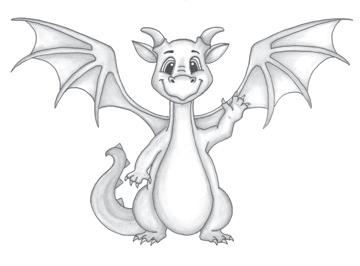
Once upon a time, in the land of books and words, there lived a very clever dragon. She was the Decoding Dragon.
The Decoding Dragon loved words. She loved how letters worked together so words could be read and written. She was not a loud dragon or a fiery one. She was a thinking dragon. She watched carefully and helped children learn how to read words and how to write them clearly on the page.
A long time ago, a troublesome creature started sneaking into reading and writing lessons. This creature was called the Guessing Monster. The Guessing Monster whispered things like, “Just guess,” or, “Look at the picture,” or, “Don’t worry how it’s spelled.” When children followed the Guessing Monster, reading became confusing and writing became messy and uncertain.
That was when the Decoding Dragon stepped in.
She reminded children to look closely at the letters, say them out loud, and think about how words were made. She showed them how reading and writing belonged together. When the children could write a word, it became easier to read the next time they saw it.
In this book, the Decoding Dragon will be your guide. She will help you practice reading words, spelling them, and writing sentences that make sense. She will show you how to take your time, form your letters carefully, and think about what you want to say.
Every time you open this book, imagine the Decoding Dragon beside you, helping your reading grow stronger and your writing grow clearer, one word at a time.
Before We Begin
Sit down comfortably . Put your feet on the floor. Hold your pencil gently like an artist holds a paintbrush .
The Decoding Dragon is here with you .
She is not in a hurry . She likes careful readers and careful writers .
If something feels tricky, that’s okay . The Decoding Dragon likes tricky things . That is how learning happens . Today, you will read some words . You will also write some words . That is how these lessons work .
The Decoding Dragon is ready . Let’s begin .
the, off, on, you
NOTE: The, off, on, and you are very common words and most students will know how to read and spell them by now . Go ahead and skip this lesson or parts of this lesson if your student can read and spell the words below . If not, give them some extra practice by following this routine .
< th e> spells the, as in “The bug flies.”
What does <th e> spell? [the]
Good . Write it down . [Student writes the .]
Our stories and lessons are going to use that word a lot, so let’s make sure you can read and spell it .
<o ff> spells off, as in “Get off the bed!”
What does <o ff> spell? [off]
Good . Write it down . [Student writes off .]
<o n> spells on, as in “The book is on the shelf ”
What does <o n> spell? [on]
Good . Write it down . [Student writes on .]
the off on you
<y ou> spells you, as in “You are great!”
What does <y ou> spell? [you]
Good . Write it down . [Student writes you .]
Set the scene for the lessons
We are going to read the story below, bit by bit . Start with the top word, and then go to the next line and read the two words together. When you see a period, you are going to stop and I’m going to ask you something about what you just read Ok?
After we’ve finished the story, I’m going to get you to put your writing hat on and write a sentence . I can help you anytime .
Comprehension questions
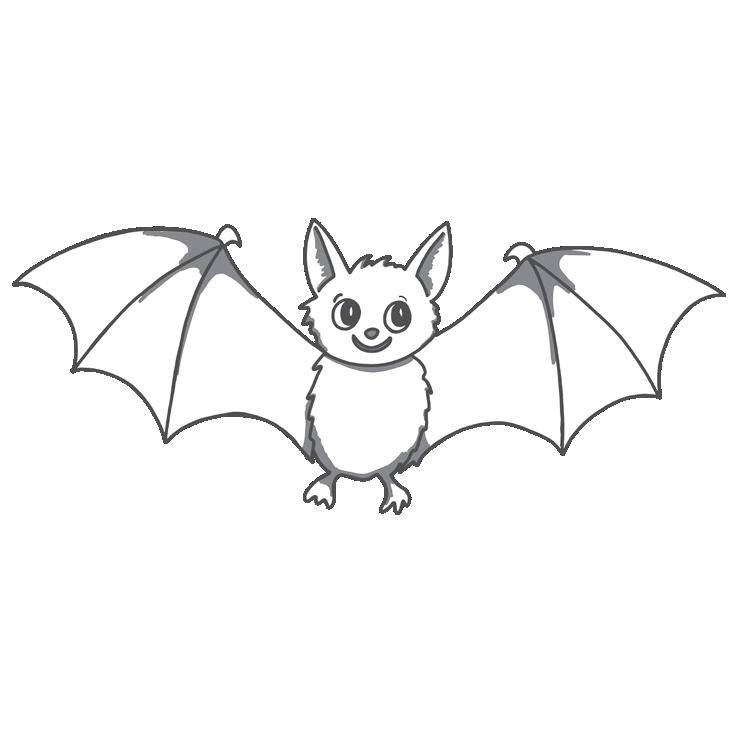
• Who is this sentence about? [a bat]
• What did she do? [She sat .]
• Where is she sitting do you think? [Student answers. Any answer is fine.]
The
The bat
The bat sat.
The bat sat on
The bat sat on a
The
bat sat on a sad
The
bat sat on a sad cat.
Comprehension questions
• Wait a minute, she’s sitting on something now . What is it? [a cat]
• Do you think the cat is okay with that? [No!]
• What tells you that? [She’s a sad cat .]
Now I’m going to get you to write a sentence using the letter <a> . Here it is:
Dictation sentence
The sad cat sat.
Let’s do some more reading practice .
The
The cat
The cat had The cat had a The cat had a bad
The cat had a bad mat.
Comprehension questions
• Who is this sentence about? [the cat]
• What does the cat have? [a (bad) mat]
• What kind of mat would a bad mat be? [Any sensible answer is fine.]
We are going to practice the letter <a> as in at . That’s its most common sound . That sound will be in all the words you see below with an <a> in them .
Comprehension questions
• Who is this sentence about? [a rat]
• What did she do? [She sat .]
• Where is she sitting do you think? [Student answers. Any answer is fine.]
The
The sad
The sad rat
The sad rat sat.
The sad rat sat in
The sad rat sat in a
The sad rat sat in a bag.
Comprehension questions
• Wait a minute, she's sitting in something now . What is it? [a bag]
• Do you think the rat likes sitting in the bag? [No!]
• What tells you that? [She's a sad rat ]
Dictation sentence
The rat is in the bag.
This is an exclamation mark . We use this at the end of sentences when we want to show strong feelings .
Write an exclamation mark while saying the following:
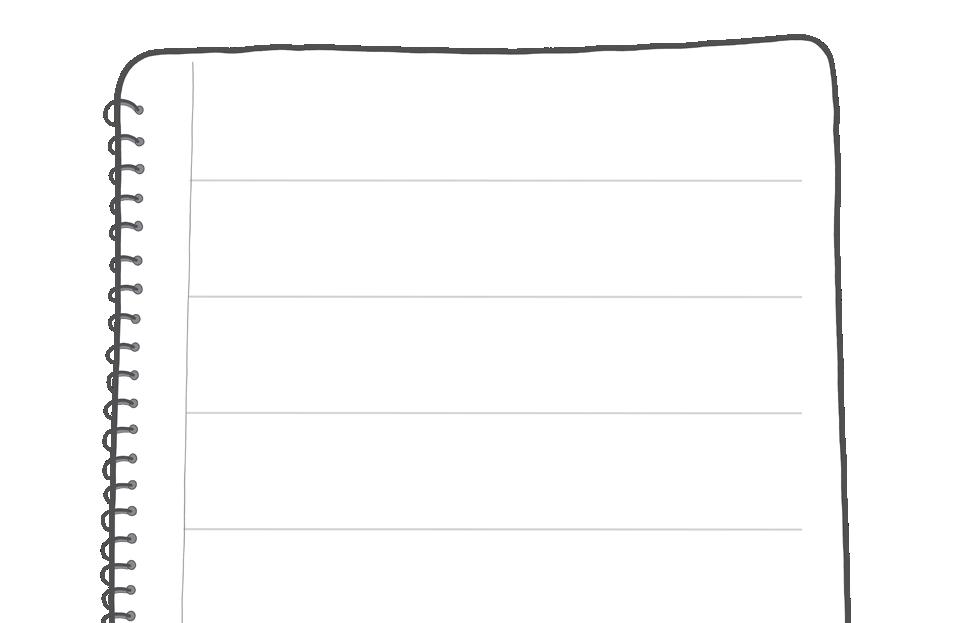
It starts nearly but not touching the top line, goes down to near the bottom line but not touching, and ends with a dot . You try it three times and show me your best one .
[Student writes at least 3 exclamation marks in their exercise book. Offer corrective feedback if necessary .]
Their page should look like this:
Our next story ends with an exclamation mark . Let’s read it now .
We are going to practice the letter <e> as in get That’s its most common sound . That sound will be in all the words you see below with an <e> in them .
Comprehension questions
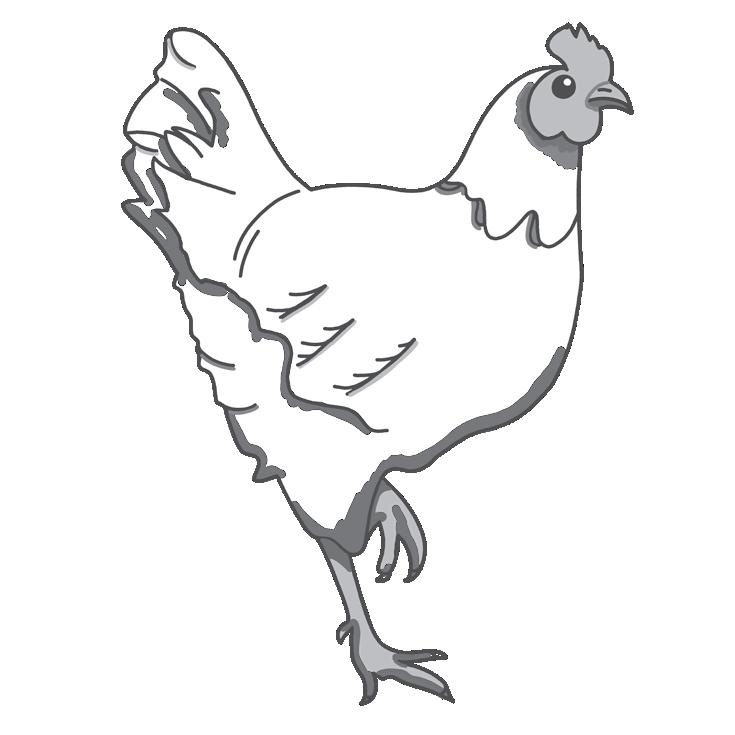
• Who is this sentence about? [the red hen]
• Looks like she wants to do something . What could it be? [Student answers .]
Let the Let the red Let the red hen. Let the red hen get
Let the red hen get wet!
Comprehension questions
• What are we going to let the red hen do? [get wet]
• Why do you think she wants to get wet? [She might be too hot etc .]
Dictation sentence (Read with strong emotion to note an exclamation mark .)
Get a pet!
Comprehension questions
• Who is this sentence about? [The red hen again!]
• What did she do? [She sat .]
The
The red
The red hen
The red hen sat.
The red hen sat on The red hen sat on the
The red hen sat on the bed.
Comprehension question
• What is the red hen doing now? [sitting on the bed]
Dictation sentence
I met the hen.
I I bet I bet the I bet the men I bet the men fed I bet the men fed the I bet the men fed the pet.
Comprehension questions
• Who is the sentence about? [the men]
• What do you bet they did? [fed the pet]
• What kind of pet are you imagining? [Any answer is fine.]
Dictation sentence
Let the cat get fed.
The The man
The man and The man and the
The man and the vet
The man and the vet set
The man and the vet set the
The man and the vet set the net.
Comprehension questions
• Who is the sentence about? [the man and the vet]
• What kind of animal do you think they might have set the net for? [Any answer is fine.]
Dictation sentence (Read with strong emotion to note an exclamation mark .)
Get the net!
We are going to practice the letter <i> as in it
That’s its most common sound . That sound will be in all the words you see below with an <i> in them .
Comprehension questions
• Who is this sentence about? [a pig]
• What did the pig do? [It hid .]
The
The pig
The pig hid.
The pig hid the big
The pig hid the big lid.
Comprehension questions
• What changed in the story? [The pig hid something .]
• Was it a big or a small lid? [big]
Dictation sentence (Read with strong emotion to note an exclamation mark .)
It is a bit big!
Comprehension questions
• Who is this sentence about? [a big pig]
• What did the pig do? [It sat .]
The
The big
The big pig
The big pig sat. The big pig sat in The big pig sat in the
The big pig sat in the bed.
Comprehension questions
• Where did the big pig sit? [The pig sat in a bed .]
• Is a big pig sitting in a bed normal? [No!]
Dictation sentence (Read with strong emotion to note an exclamation mark .)
The pig hid the bat!